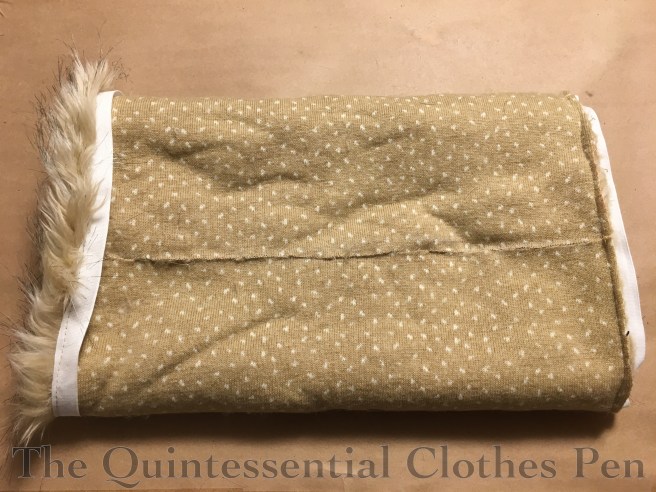
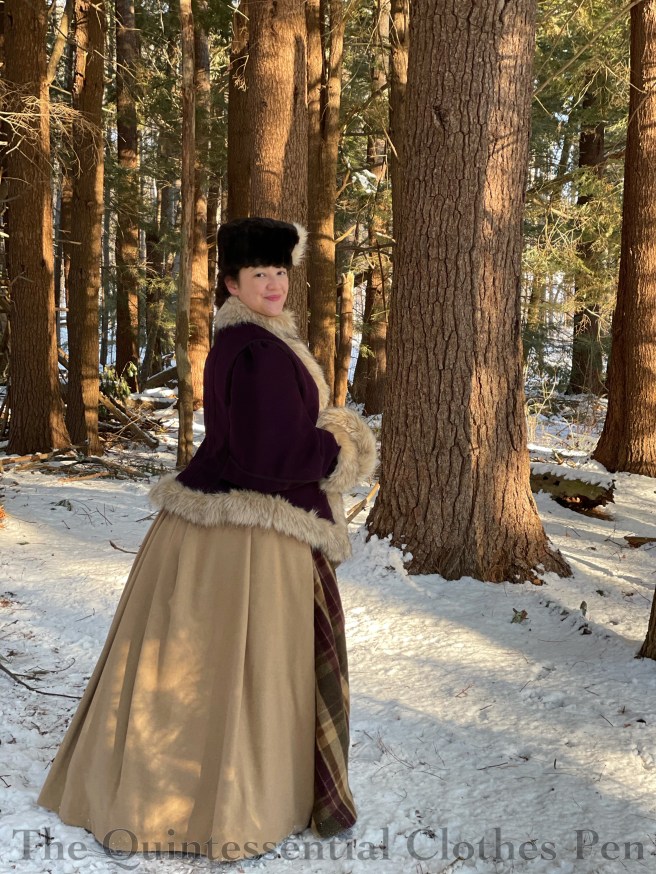
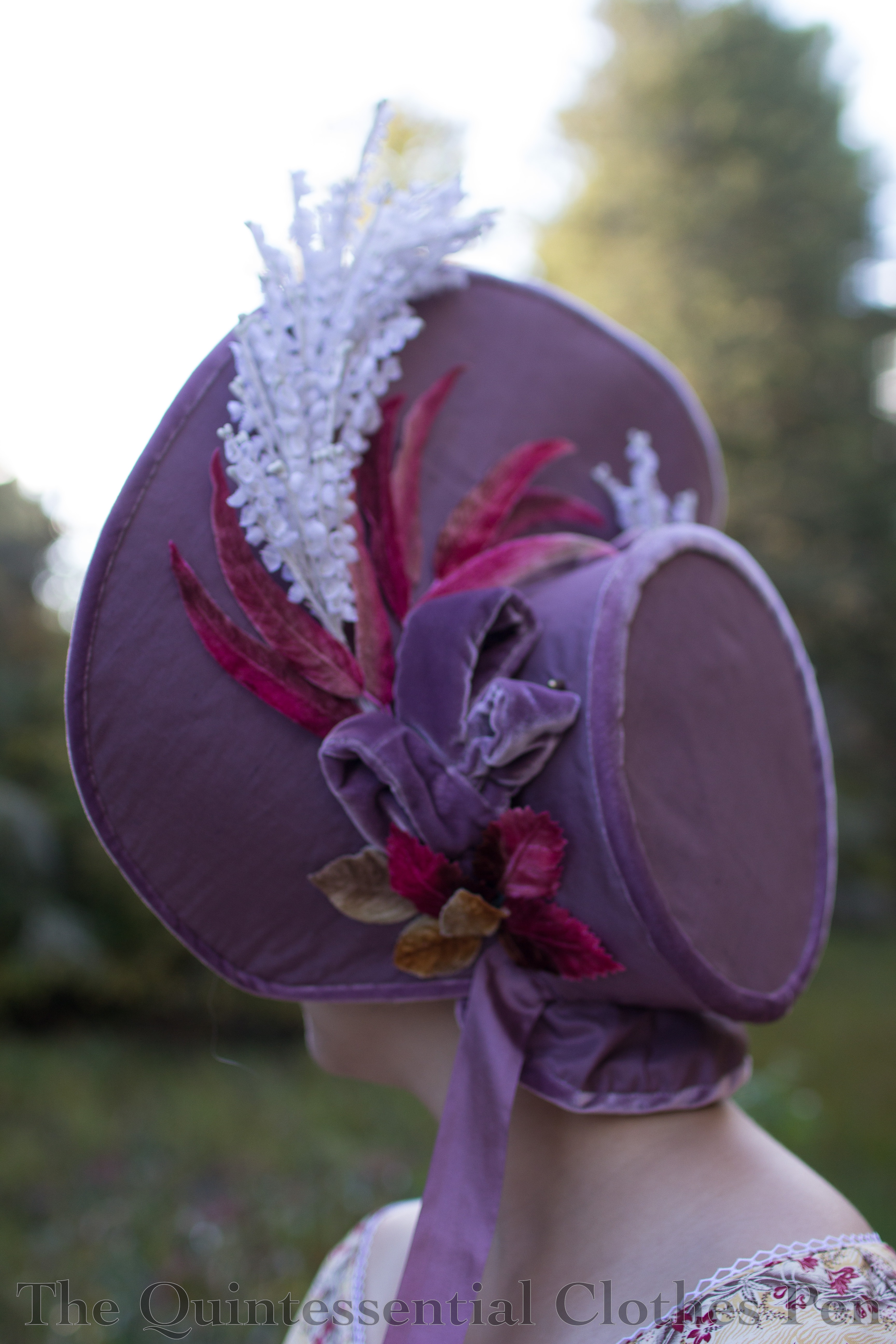
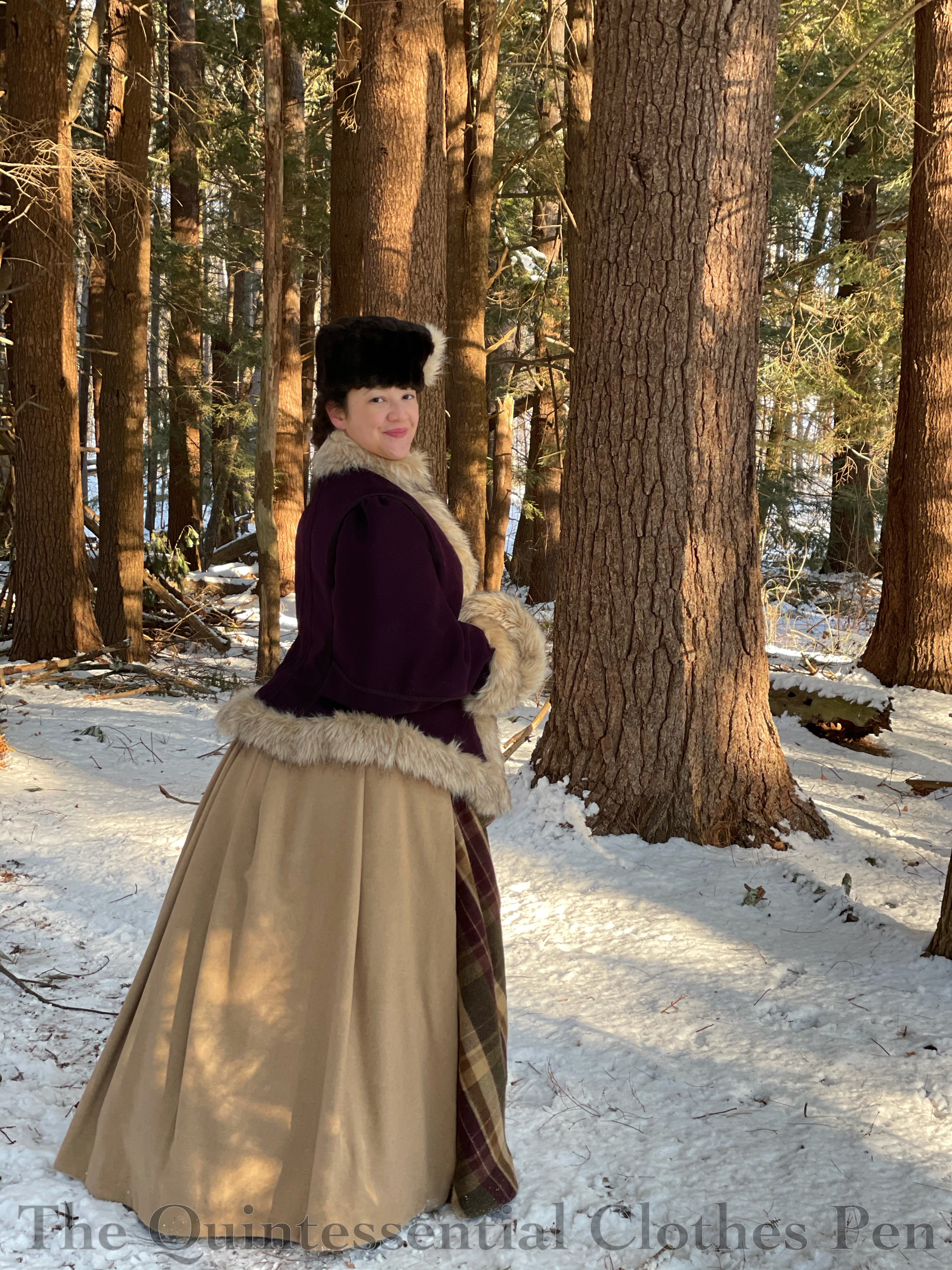
1884 Plaid Wool Dress Details

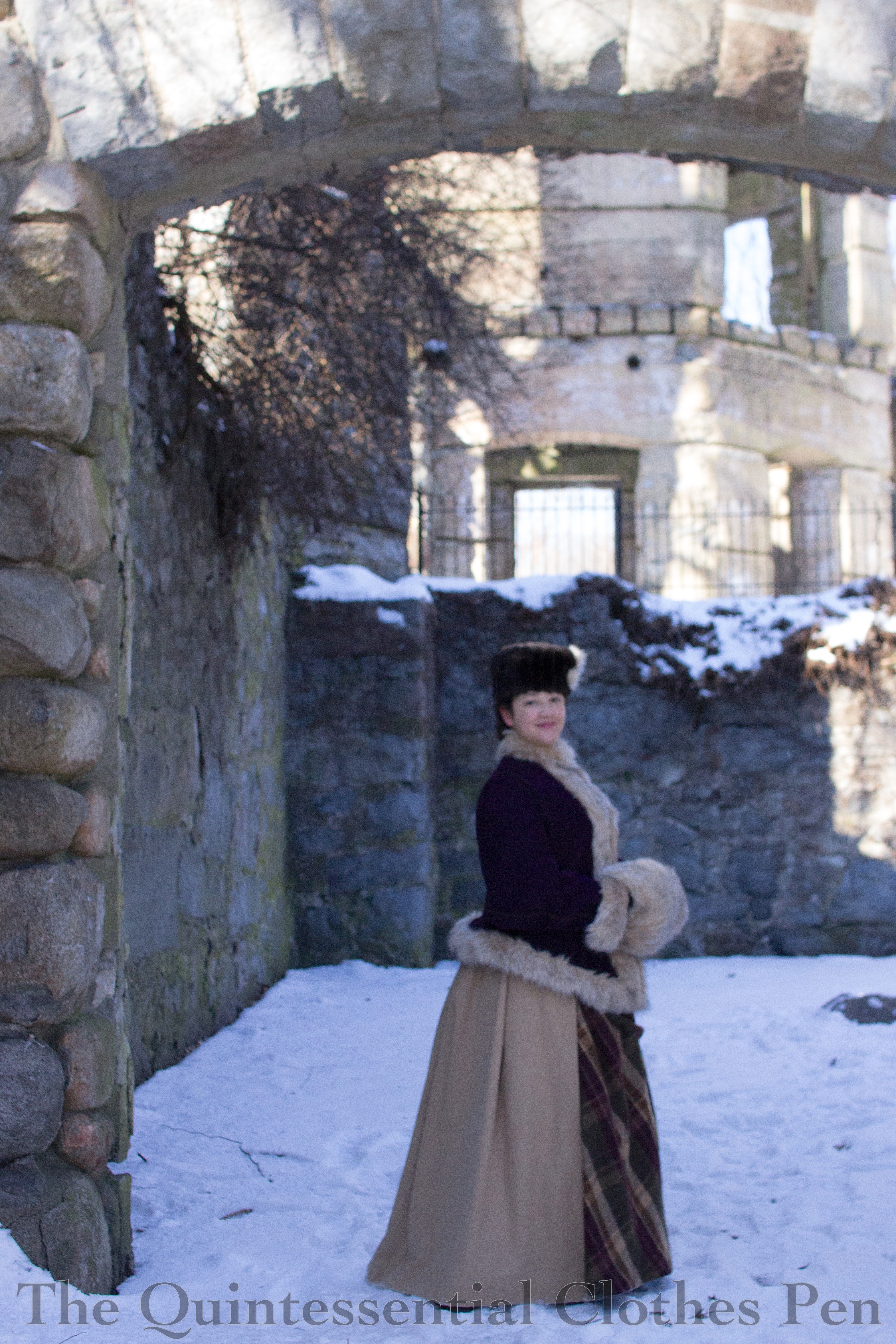
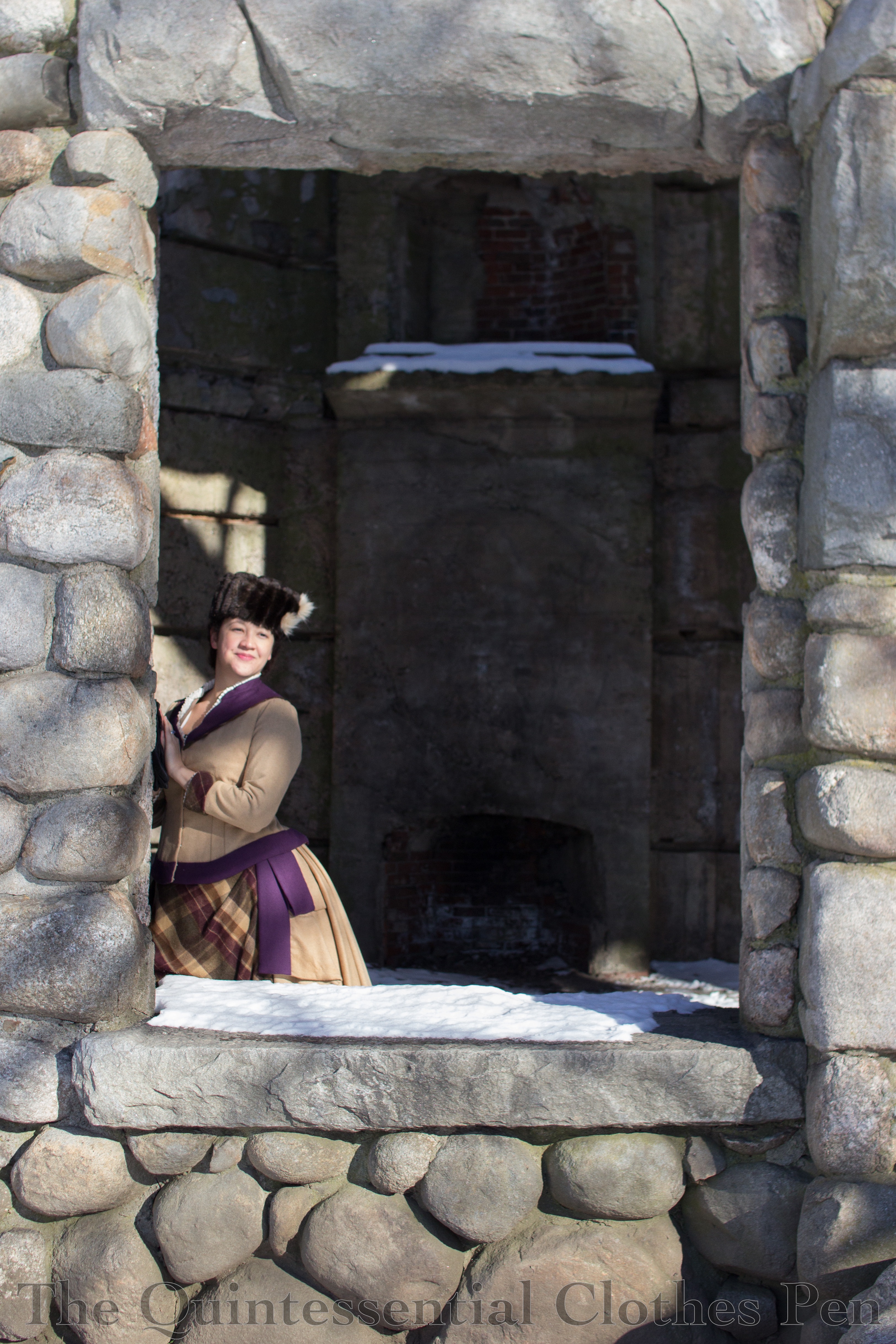
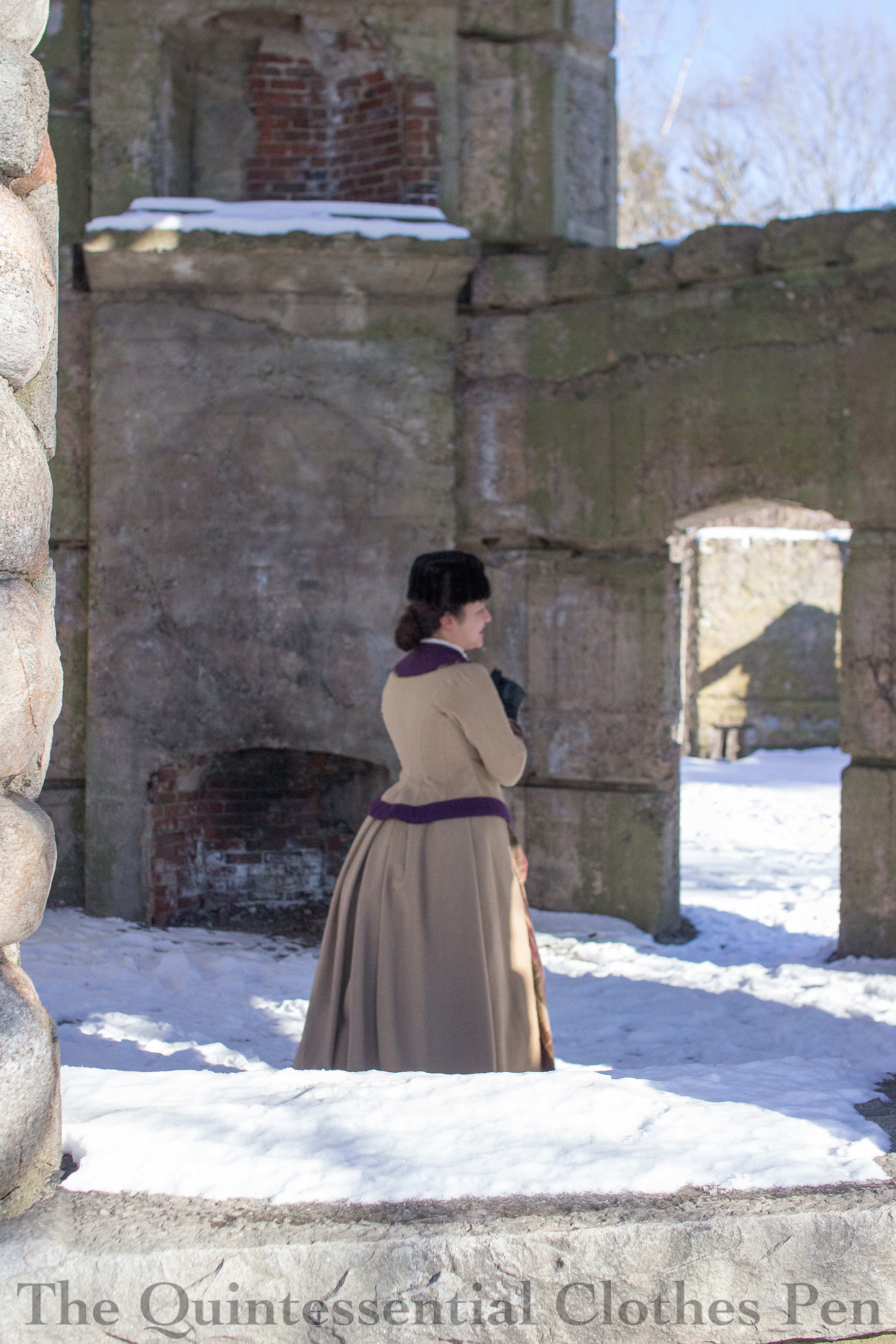
I’m very excited to share the details of my (somewhat) new 1884 Plaid Wool Dress! It’s ‘somewhat new’ because I actually finished it 8 months ago, but at that point it was July and the temperature was absolutely not acceptable for wearing a wool dress for photos! Instead of putting the dress away, I kept it out, waiting for colder weather and the opportunity for a photo shoot. I was hoping for snow… and this winter, I got it!

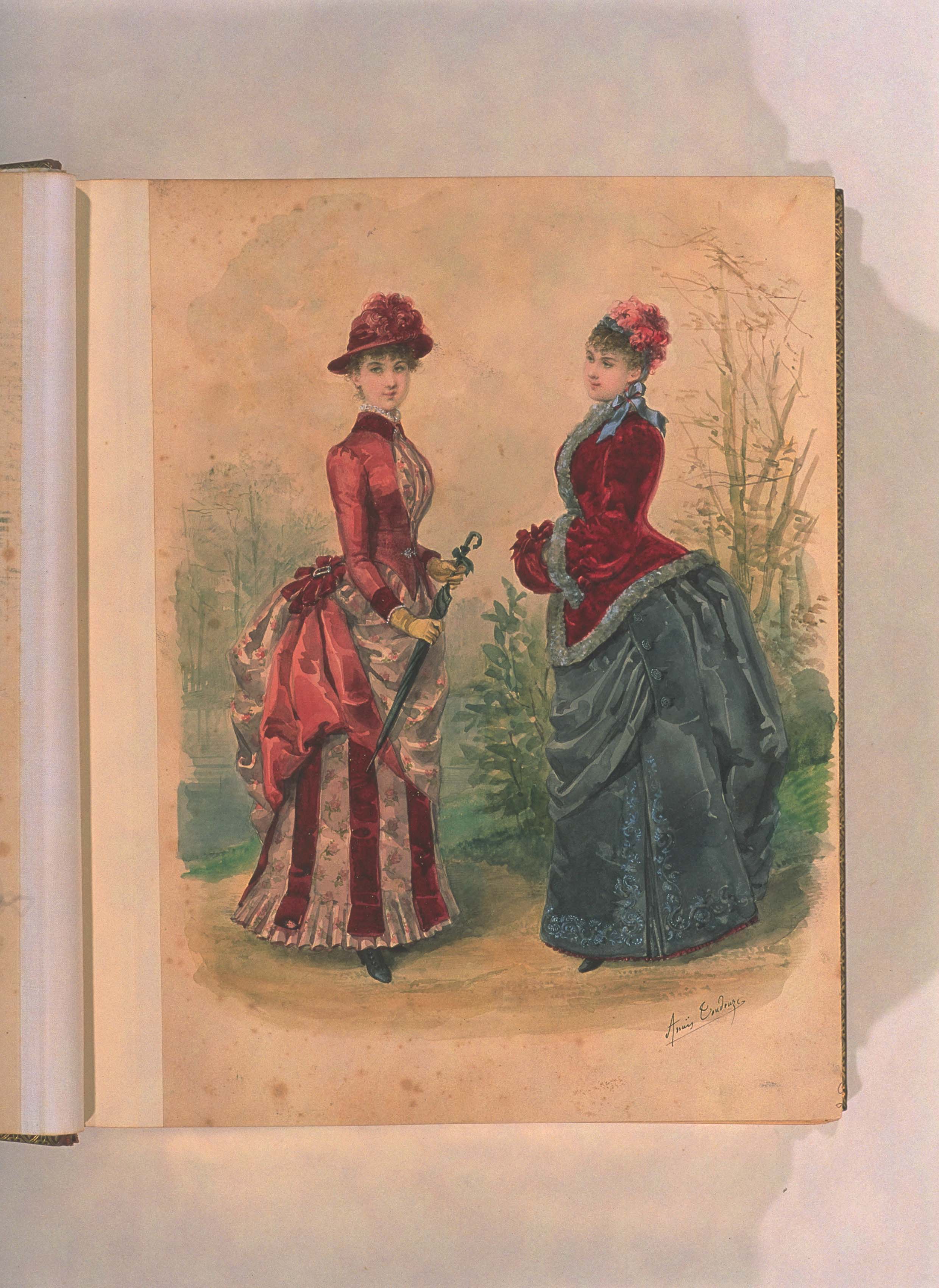
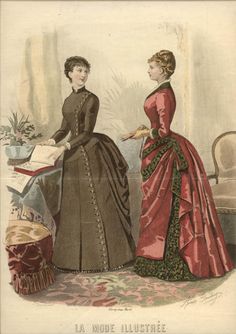
This dress is entirely inspired by the dress on the right in the fashion plate below from La Mode Illustree. I love the relative simplicity of the overall design and the waterfall of folded fabric on the skirt. Unfortunately, I don’t have an official source of the fashion plate or the year it is from, though my best guess is 1884.

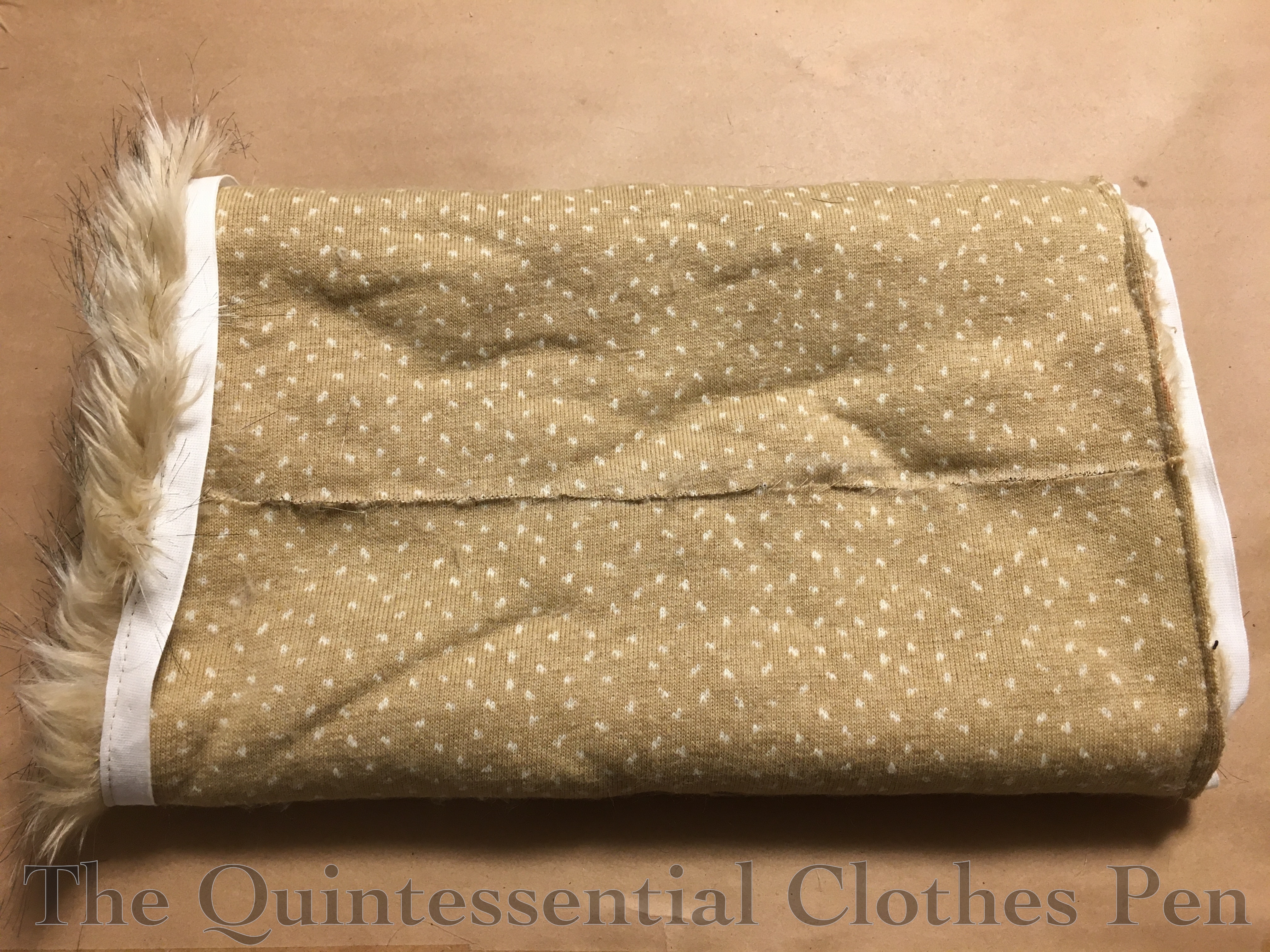
I thought the design would be a great use of the tan and plaid wools that have been in my stash since 2012 (wow… that’s longer than I remembered!).  In addition to those, a small piece of plain purple wool had made its way into my stash over the last eight or nine years and when I started this dress in November 2017 I decided it would be a nice addition to the tan and plaid wools in the form of trim. While not an exact match to the purple in the plaid, I think it helps to perk up the plaid and bring out the non-tan tones (the green and purple).

Skirt Construction

I started the process of this dress with the skirt. I wanted the fabric to hang just like the fashion plate, so I decided to drape a custom pattern as opposed to starting with anything that already existed. The only exception to that (in the skirt) is a base of drab greyish-brown cotton. The base pieces were adapted from a Janet Arnold pattern.

I used the skirt base for the front and side areas, in order to have something for the wool layers to be attached to. In the back of the skirt there is nothing but the tan wool.

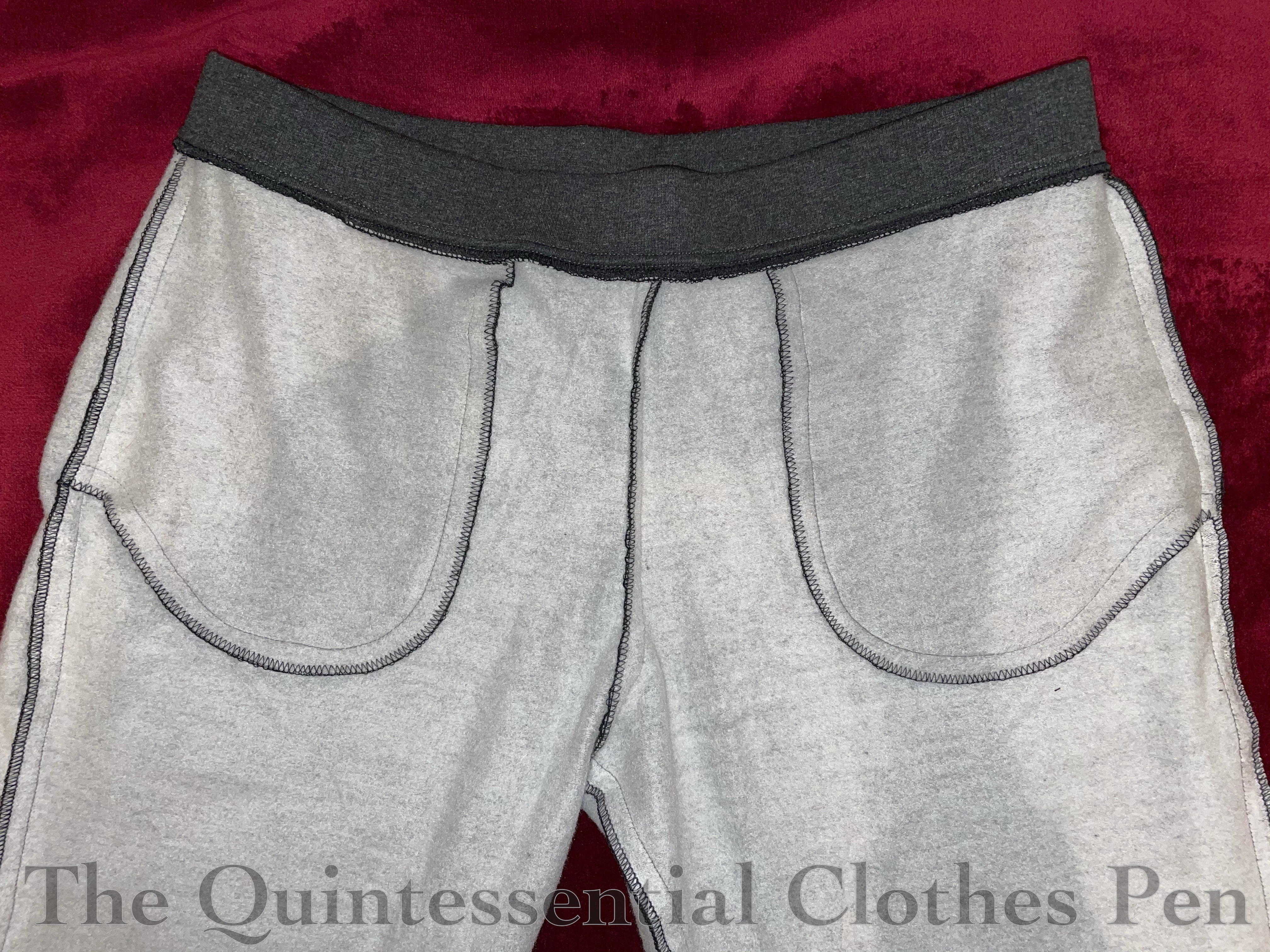
Here is a look at the inside of the finished skirt. You can see the tan waistband along the top and the drab cotton base with tacking stitches all over it. The tacking stitches are holding the plaid fabric in place–you can just see the plaid selvedge poking out on the right side.

The pleats in the plaid aren’t part of the original fashion plate, which instead has a draped apron-type front. I tried that, putting my plaid with a vertical grain and a tan apron over top, but I really hated how it looked in wool–too heavy and rather unattractive. I played with the fabrics until I settled on the bias plaid. I hinted at the draping in the fashion plate by adding tucks to the plaid to help it drape just slightly rather than just being flat. You can see the resulting folds pretty clearly in the next photo.

The various overlapping pleats of the plaid front, waterfall side, and back were complicated. I was trying to achieve a back that looked like this dress held by the Met, in addition to the various lovely folds shown in the fashion plate.

It’s easy to draw things, but sometimes they don’t really work in actual fabric… I found that with the waterfall, especially. There’s actually an added loop of fabric tucked between the folds that isn’t part of the side piece at all! It’s just a little fake bit to help create the look of the fashion plate. I couldn’t figure out any other way to do it!

Given these various challenges and lots of other things to keep me busy in life, this poor skirt sat in a half finished state on the dress form in my sewing room for at least a year. I couldn’t remove it without marking everything… and I couldn’t make up my mind about what I wanted! (I say poor skirt, but it was sort of poor me, as I definitely reached a point of wanting the dress to get put away!)

Eventually, I did make up my mind and remove the skirt, but the partially finished skirt still sat around for ages before I finished it. Part of marking the skirt also meant figuring out the facings of the waterfall bits, because the fully finished edges had to be set into the waistband. Mr. Q actually asked at one point after the skirt was off the dress form whether I had intended it as decoration in my sewing room because it was there for so long… Nope!

All the various pleats on the skirt wound up making for a rather thick layer of things to sew through for the waistband. Here’s what the side with the waterfall trim looks like on the inside. I count at least 9 layers of wool in one spot! Given that, I decided to cut the inner side of my waistband on the selvedge of the fabric and leave it hanging down into the skirt instead of turning the seam allowances up as you would normally do for a waistband.

Setting the hems on the skirt was another challenge, though this was due to the fact that I did it by myself. It involved dressing in my corset, bustle, petticoat, and skirt, twisting and contorting while putting pins in the hem to mark the floor, then standing to look in the mirror to see if they were even, then adjusting… many times!

I eventually had everything marked to my satisfaction and could move on with the sewing. All sections of the hem are finished with wide bias strips of the drab cotton, the goal being to make the hems durable and less likely to catch on twigs, etc. than if they had more textured wool exposed (and I can say, after romping about the woods in this dress, that the hems did an admirable job!).

After using the drab cotton for both my 1896 Bicycling Ensemble and to line my 1863 Apricot Evening Gown I was starting to run low for this project. I cut the skirt base pieces, cut the bodice lining pieces, and then used pieced scraps to make the wide bias to hem the skirt. As you can see in the above photo, some of my bias pieces were only 6″ or so in length. And in the photo below, you can see the only bit of wide bias that was leftover when I was finished!

The final skirt detail to share is a hidden patch pocket! The skirt opens on the side front, along one side of the plaid, and underneath that opening is a pocket, perfectly sized to fit a cell phone and keys. The pocket is oddly low, near the knees, but that is because I wanted to make sure that any bulk from items in the pocket would press in towards my legs and not make an unsightly bulge on the exterior of the dress.

The photo below shows the pocket, as well as some of the hooks and thread loops that allow the tan fabric to attach to the plaid wool.

Bodice Construction

In addition to this rather complicated skirt, there was also a bodice to be made! The bodice is actually pretty straightforward. The pattern is adapted from the one I used for my 1885 Frills and Furbelows summer dress which in turn was adapted from a Janet Arnold pattern.

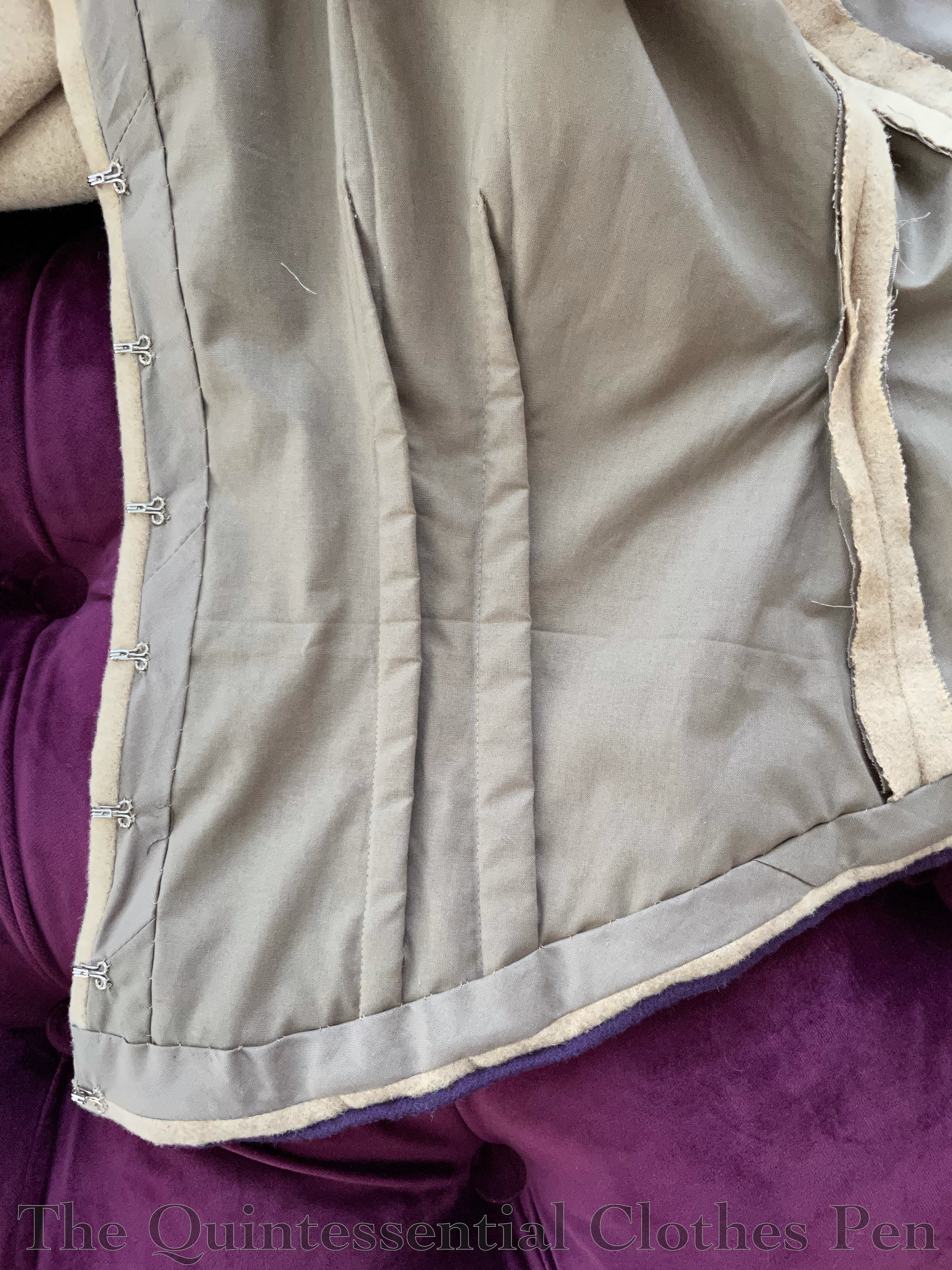
The bodice is completely flat lined in the drab cotton. There is a ribbon waist tape to help keep the back of the bodice tight against the body and to keep the bodice from riding up while being worn.

The bottom and front/neck edges are finished with bias strips of the drab cotton. The seam allowances are unfinished. The bodice closes in front with hooks and loops.

There are two other details I want to discuss, as well. First, there are the bust pads! I came across these in this c. 1885 extant dress and decided I wanted to give them a try to see if I could get that really exaggerated bust to waist ratio in my inspiration fashion plate (here’s the link to it again).

Turns out… no. I did not achieve that bust to waist ratio… but I think that’s more a factor of my waist size than anything. (It’s not as small as it was 10 years ago…) To keep the proportions of the fashion plate I would drastically need to increase the bust size. Perhaps in another dress.

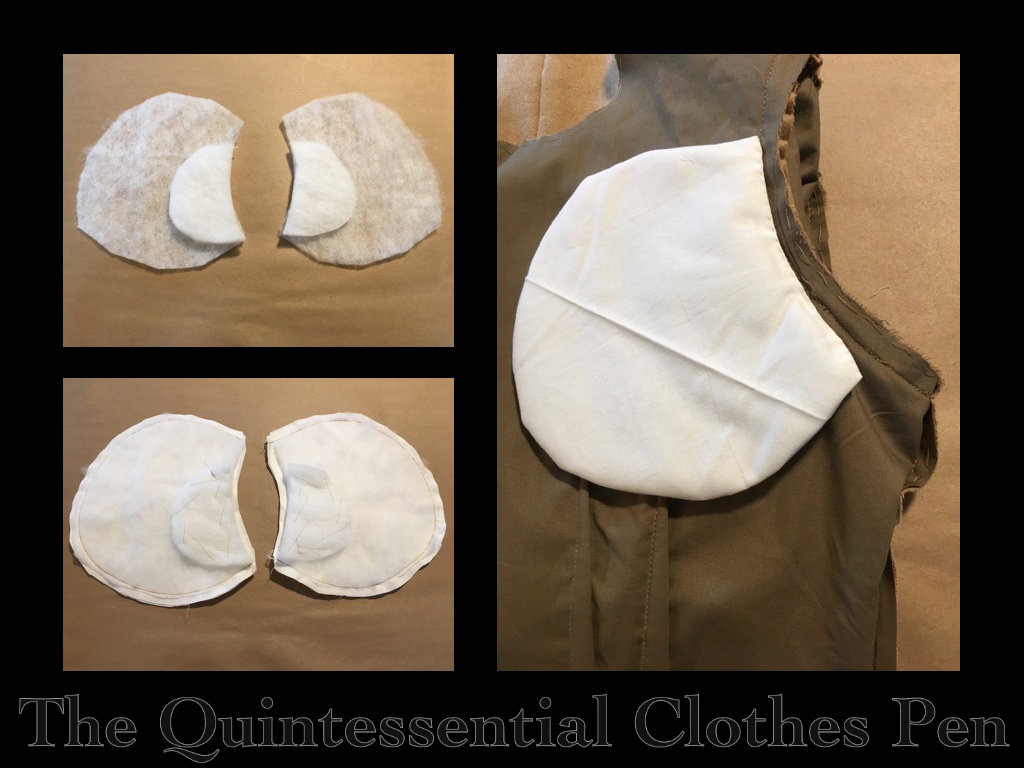
In the meantime, this dress tried out the bust pads. They are made from cotton scraps with shaped batting layers inside. Below you can see the steps to creating the pads. Once sewn, these were tacked inside the bodice to keep them in place.

The second detail still to discuss is the neck ruffle. I finished this dress shortly after completing my 1875 Reception Dress last summer and I had my antique fluting iron on the brain. After pondering the fashion plate neck and sleeve ruffles for awhile I decided to use my fluting iron to ruffle some cotton to use for my dress’s neckline and cuffs.

I was well practiced by this point, having fluted lots of silk for the 1875 dress, so away I went! The cotton strips are cut on the grain and folded along the long edge–no hemming required!

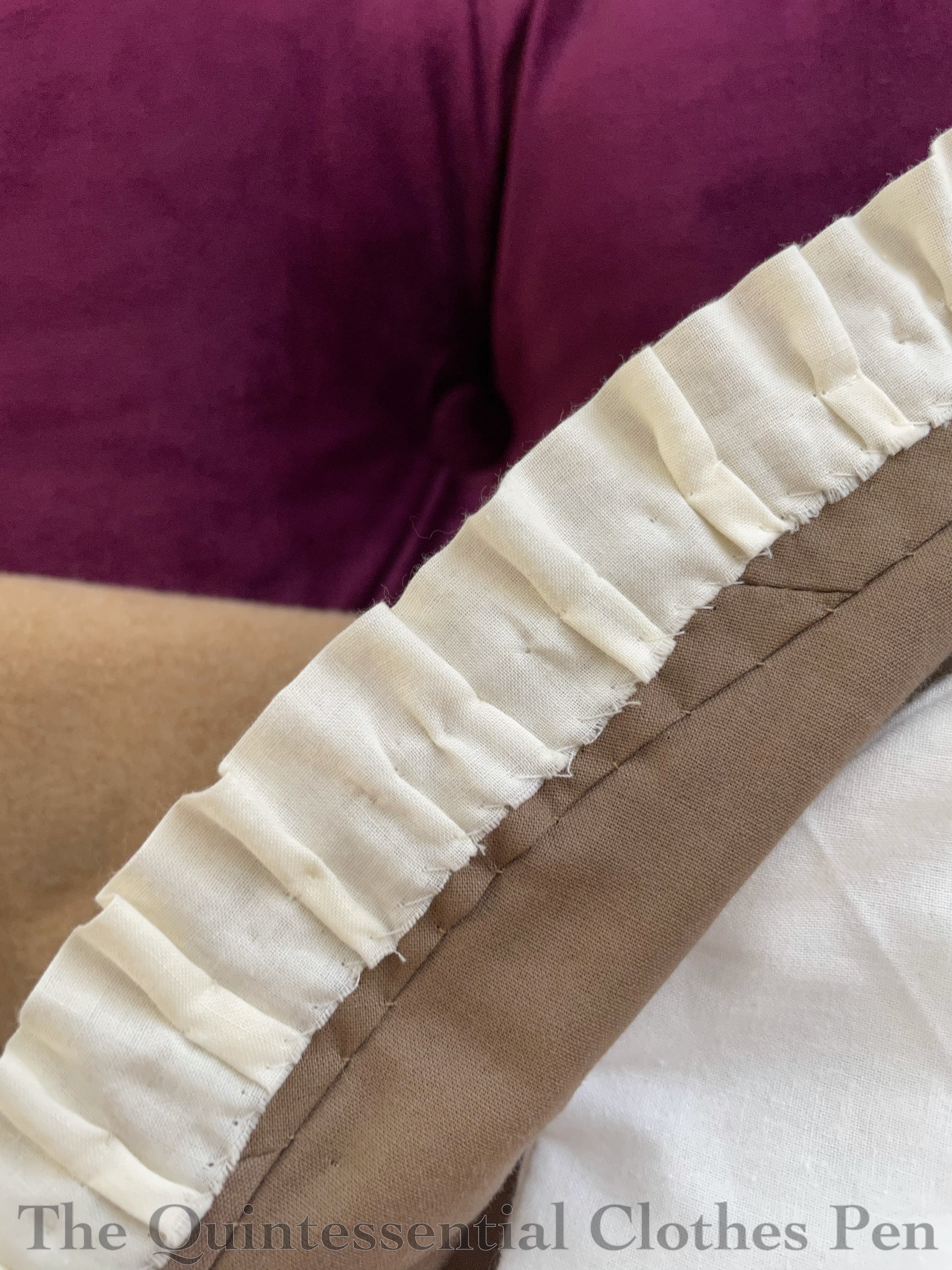
Attached to the neckline the trim looks like this. The waves are a little crushed where they are tacked down, but the folded edge maintains a nice wavy shape. I found that my cotton frayed more than I wanted it to, so I went back and whip stitched over the raw edge to keep it tidy.

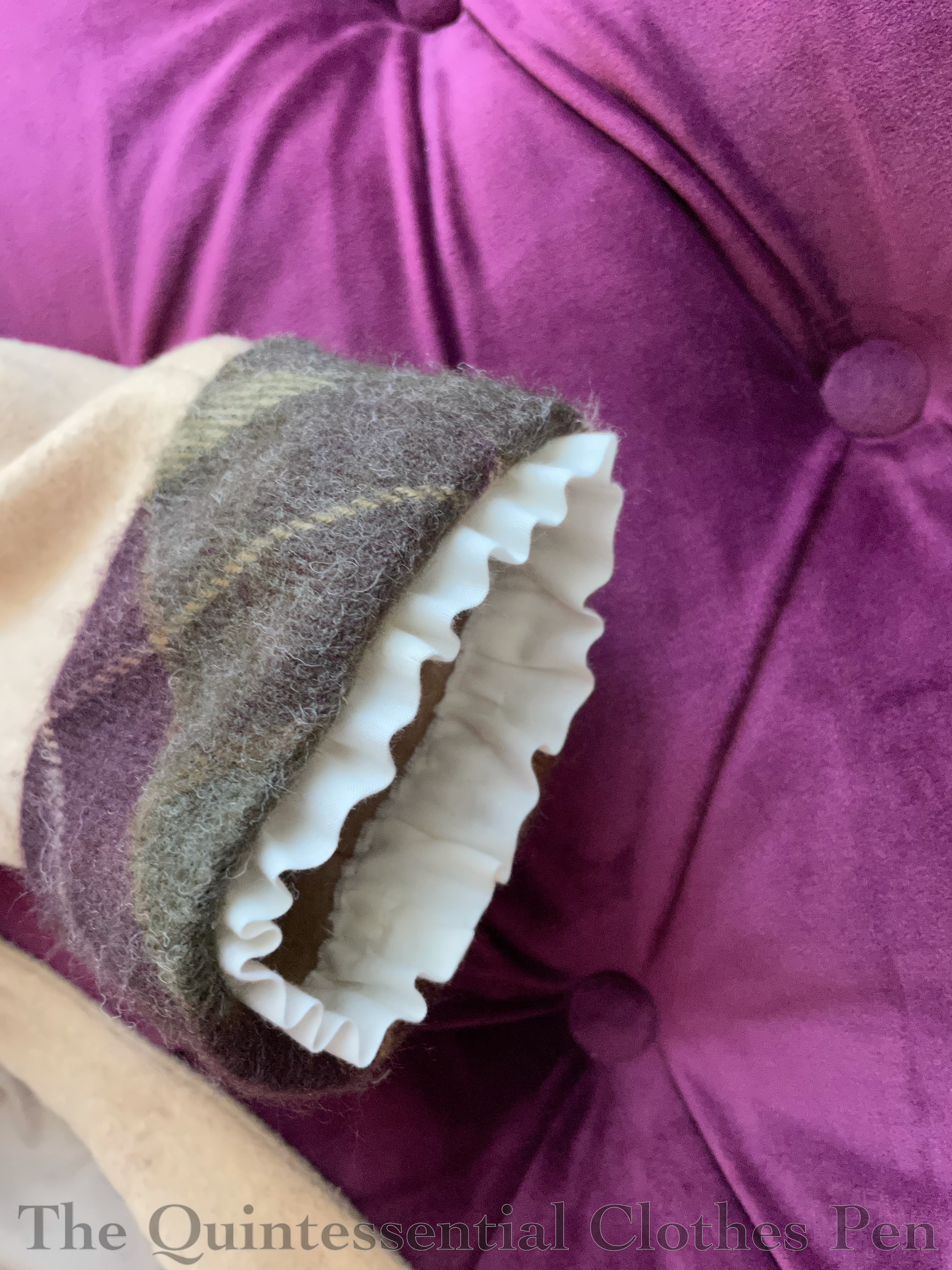
I used the same cotton for small ruffles on each cuff, as well. Like the neck ruffle, these are hand sewn inside the finished sleeve openings.

You can see the finished effect of the ruffles in the next photo! Subtle, but adding a nice edge finish.

While the ruffles are sewn to the inside of the finished bodice, the purple bodice trim and plaid cuffs are sewn similarly but on the outside of the finished bodice. I didn’t want them to add bulk by turning all the way under into the bias edging, so they have the raw edges turned under and then they are hand sewn to the outside of the bodice.

I decided the purple trim around the neck wasn’t quite interesting enough and so I added a narrow fold of bias cut plaid to help transition between the two solid colors. This also helps the bodice to feel that it belongs with the skirt, so that the only plaid isn’t just on the skirt front and cuffs.

Final details

Both skirt and bodice are mostly assembled by machine with hand finishing, including trimming, hemming/facing, closures, etc.

I used about 8 yds of the different wools and drab cotton for the ensemble. These materials, plus notions etc., cost just under $30. This was definitely helped by the fact that most of the fabrics were purchased for just $3 per yard at the local discount fabric store!

The skirt is a bit heavy, being made of about six yards of wool and cotton, but it’s not unreasonable. And, it’s quite warm! I was perfectly warm in the approximately 20 degree Fahrenheit cold for all of these photos except for my nose, chest, and hands. Never fear, though, I was wearing the additional layers of my newly completed mantle and muff except for during these photos! (And there will be posts coming up about them as well, with lots more photos!) With all my layers the only part of me that was cold was my nose!

In the end, I’m more pleased with the overall dress than I expected to be! I was always excited about the skirt and the purple swoop of the upper bodice trim, but once I started making the dress in wool I was worried the bodice might be too plain and maybe even boring… but I like the fit and shaping very much (especially in the back!) and I think that helps balance out the relatively simple style. It makes sense for a wool dress to be well tailored but more simple in decoration and style than its silk counterparts.

Also, I’m very pleased that my idea from 2012, to use these fabrics for a bustle dress, has finally been achieved! I think there’s still a yard or so of tan wool in my stash, but I’ve sewn my way through a good 8 yards of it. That’s great stash busting!

Fabric Stash Additions From The Later Part Of 2020

I’ve picked up a few patterned cotton fabrics over the last few months at my local discount fabric store. (Everything in the store is $3 per yard. Crazy!) I enjoy all of them and want to document their new status here. Hopefully, I can link back to this post when I eventually make garments out of them… This is encouragement to not let them languish in the stash for too long!

First, there is this light blue-ish grey cotton print. The mixture of colors and style of the printing reminds me of fabrics from the 1830s and 1840s. In fact, I used this very fabric to make an 1830s dress for a friend (you saw it in my posts last fall about apple picking). After seeing how wonderfully that dress turned out I decided I needed one of my own. And so… my stash has gained 7 yards of this.

I justify it by the price and the fact that I have very specific plans already. In the spirit of trying out different 1830s sleeve shapes, I want to make a dress from 1836 that has sleeves that are fitted around the upper arms but full around the elbow and down to the wrists.

Second, there is this purple mosaic looking fabric that has an Art Deco vibe. This one doesn’t have a specific plan, but I couldn’t pass up the colors, so I got 1 yard.

The mosaic Art Deco fabric came in four colorways: the purple above, as well as pink, orange, and… lime green! The lime green reminds me of palm fronds and Egyptomania styles.

On its own it’s a bit bright, but I also came across a teal fabric with gold metallic squares on it that I liked but couldn’t think of a use for… until I put it next to the lime green fabric. It helps bring out the blues in the pattern which tones down the lime green a bit. I’m thinking of a short sleeved 1920s summer dress like this using the teal as trim on the lime green.

I’m hoping to get around to the 1830s dress sooner rather than later, but the 1920s dress is lower on the priority list. Unless (maybe) this year brings the ability to reconvene and have 1920s summer events… and then maybe this dress will shoot up the to do list ladder! Ahhh, dreaming!

A Magical Walk Through The Woods

My last two posts were aimed at sharing photos of my black wool 3/4 circle skirt and 1950s boysenberry raglan cardigan. Those posts both included a bunch of photos, all of which were taken during a magical walk through the woods, but there were many wonderful photos in addition to those that I didn’t feel needed to be added to the garment documentation posts.

Accordingly, I’ve decided to share more in this post!

Hopefully this is a nice ‘armchair’ outing into the snowy, magical woods! Welcome to the adventure!

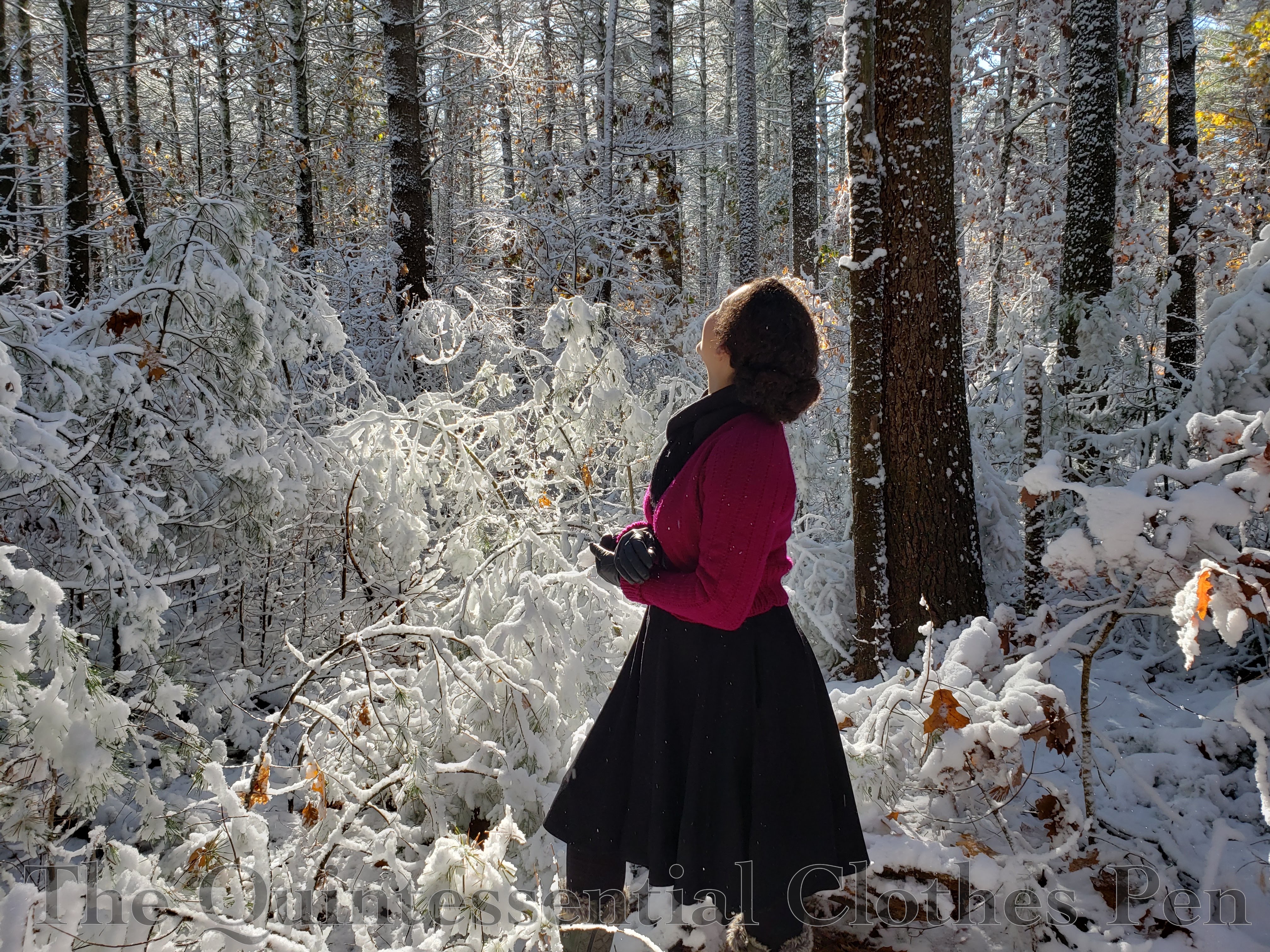
This snow was very early–occurring on October 30. Due to that early date, there was a beautiful mix of iconic golden bronze New England leaves still on the trees as well as on the ground, mixed with the snow.

The snow was rather sticky, as you can see in the photos, so not only was it clinging to the trunks and branches, but it also clung to the leaves. The combination of slanting sunlight filtering through the trees created an incredible glow.

The snow, only a few inches deep, created a quiet hush over the woods. It provided enticing opportunities to step off the paths, something that is less likely during other seasons, when branches are full of leaves and poison ivy might be lurking in the undergrowth.

In between photos, I donned my coat and orange vest. Safety is important when it’s hunting season in the woods!

I found it quite tempting to pause and listen to stillness, admiring the majestic height of the pine trees and the beauty of the forest.

It was fascinating to see how the wooded areas bathed in shadows retained much of the snow throughout the walk, while areas that were in more direct sunlight were quite clear of snow. Look at the contrast!

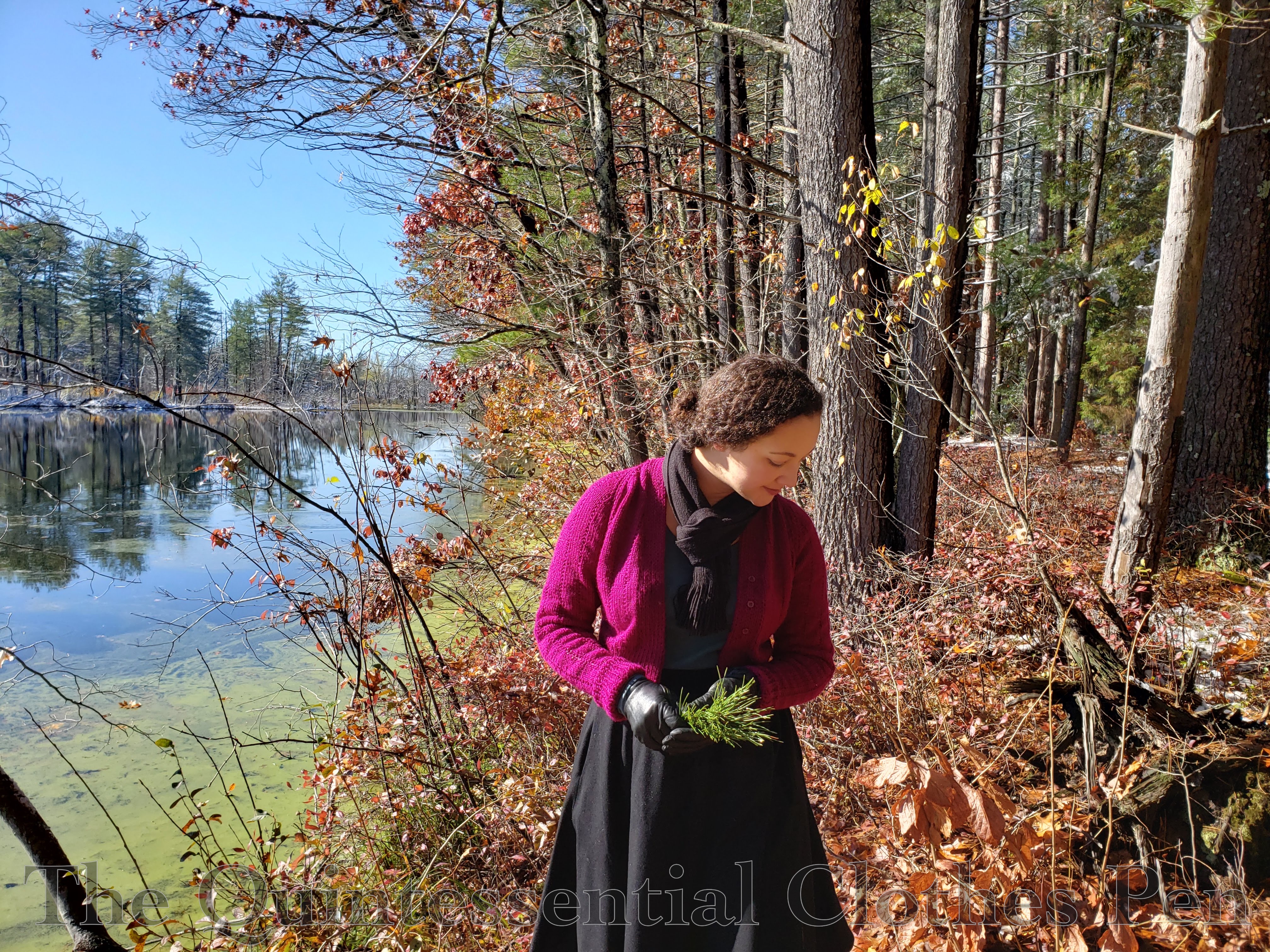
The colors were so vibrant! The mix of bronze leaves on the trees and ground, green algae on the river, boysenberry sweater, and blue sky are such a contrast to the snowy scenes that we found only a mile or so back on the wooded path.

The colors look even more vibrant in this photo. I think the green branch really brings out the green in the river and pops against the purple of the sweater.

By this point in the walk my down coat was rather too warm, combined with all my other layers. The snow felt the same way, I think, as most of it had melted, leaving bare leaves and trees.

The pine trees in this part of the forest were a different variety. I’m not an expert on tree types, but these remind me more of drooping Douglas Fir trees than the very tall pine trees.

Scattered around were also many baby pine trees, pushing their way up through the snow and leaves to get their share of sunshine!

There are always many photos that don’t make the cut, but I found some of the ones from this outing to be particularly amusing, so I thought I’d share a few outtakes, too!

This is probably the most logical one. As the day warmed up the sticky snow was falling off the trees in clumps and landing everywhere… including on my head! Easy to dust off, but amusing!

Next, I have this photo, in which I believe I’m trying to keep a branch from poking me in the head. I actually love the background… this little gully is lovely, with the floating leaves and curved shape leading out to the river. But… my arms remind me of a family joke about ‘keeping the elephants’ away, which is amusing.

Lastly, my favorite outtake. The ‘what??? confusion’ face! This one just makes me laugh.

I hope you enjoyed this beautiful, snowy armchair outing!

1950s Lady’s Raglan Cardigan In Boysenberry

I finished knitting another sweater!

This is actually my fourth sweater. The first was my 1917 Knitted Sweater of Angorina, the second hasn’t been posted to the blog, and the third was my 1920 Sweater of Determination. Each sweater has been a learning experience in some way, and this one was no different!

One thing I learned with this sweater was about multiple different ways to increase and decrease symmetrically on each side of a piece (a sleeve for example). This was a rabbit hole I went down that I think was sparked by my wondering why the stitch instructions were different for the left and right side raglan armholes.

The method of increasing or decreasing is an important one made by the pattern designer because every stitch has a different look and different types of stitches may or may not look symmetrical when knit up. Also, the increase and decrease stitches have a slant to them, so it’s important that the slants are going in the correct direction. This resource clearly outlines different increase and decrease methods.

You can see the decorative symmetry of the shaping on the armsceyes in this pattern in the photo below. I love how it looks!

I also learned how to K2Tog TBL (Knit 2 Together Through The Back Loop). I’d K2Tog before, but not through the back loop. I found this explanation of K2Tog TBL to be the most helpful.

And, I learned about picking up stitches along an already finished edge, which is something I hadn’t encountered in any of the things I’ve made so far. This technique is used for the cuffs on the new sweater. I found this information and this information super helpful in terms of figuring it out and making it look nice.

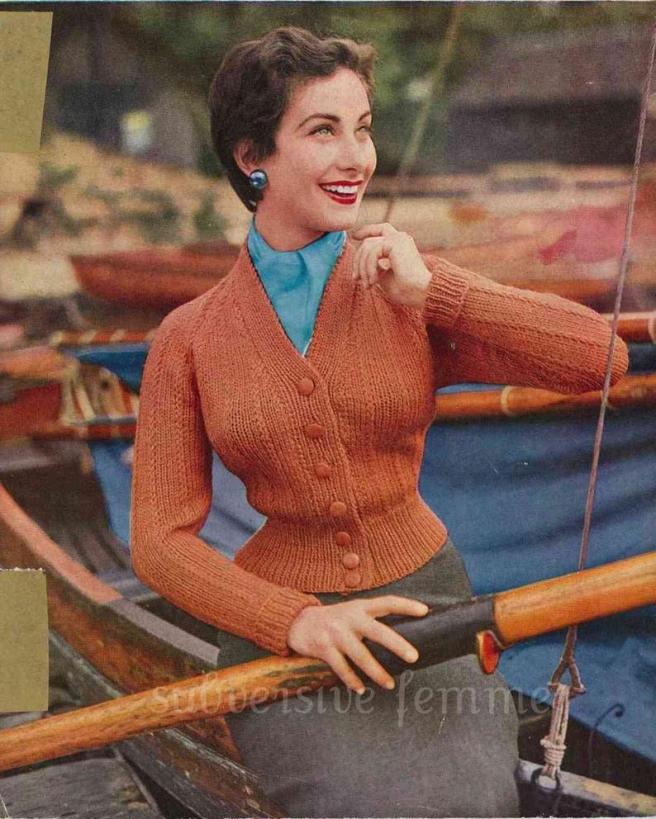
The pattern for this sweater is a PDF download from Subversive Femme on Etsy. It is the 1950s Fitted Raglan Cardigan pictured below. The pattern was easy to download and the quality was clear and easy to read.

My cardigan (the end result) generally follows the pattern image, so that’s great! There are a few differences:

1- My understanding of the instructions created a vertical pattern that doesn’t quite match the one pictured on the orange sweater. I’m not sure if I was doing something wrong or not, but I don’t mind how mine turned out.

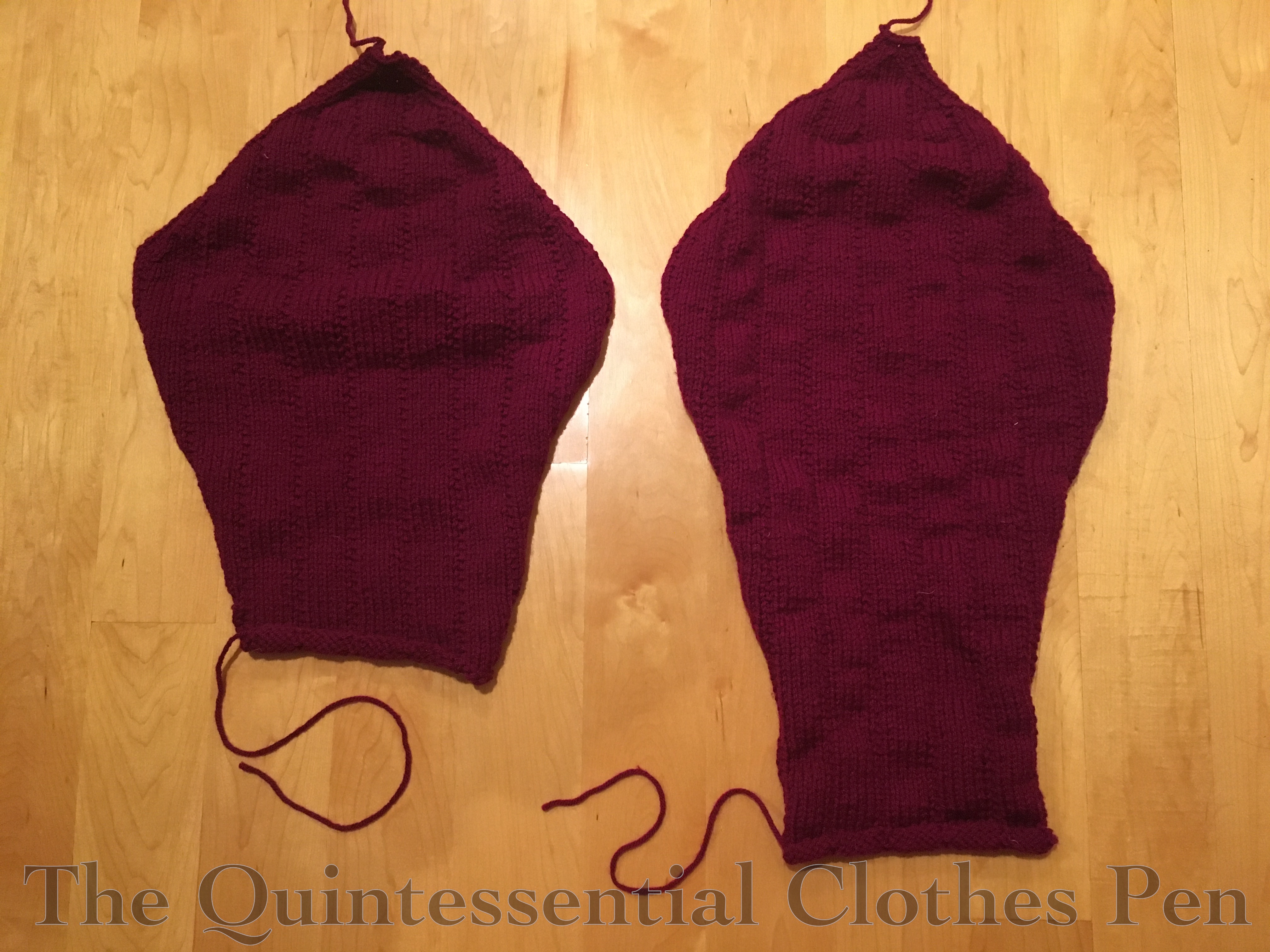
2- The pattern image clearly shows full length sleeves, but the instructions definitely produced ¾ sleeve sleeves with weird proportions in terms of circumferences around the arms. After making one, I puzzled for a bit, then decided to take it apart and knit a new sleeve with alterations to make it longer.

Below, you can see the comparison of the sleeves: the original sleeve that follows the directions is on the left and my altered version is on the right.

3- I made up the sweater in a bust size 38″ (the largest size included in the pattern). As much as I love my sweater, it is a bit small. I’d prefer it to be an inch or two longer in length, a bit bigger in terms of torso circumference (the buttons don’t really stay closed), and definitely bigger in the size of the armsceyes (it’s a bit tight under my arms). This makes sense, since my bust measures 40″. Someday I might make another version of this sweater and adjust the pattern to have more space in the areas where I need it.

The pattern seems to have been published by a yarn company and states quite clearly that “Correct results can only be obtained by using Lee Target in ‘Motoravia’ Double Knitting Wool.” Well, I didn’t use that… I used Red Heart With Love acrylic yarn in boysenberry, because I had a bunch of it in my stash (enough, I thought or at least hoped). It was leftover from my Deauville sweater, I liked the color, and it also seemed to be a similar weight to the Lee Target wool, which Ravelry has great information on and photos of.

I figured that if the sweater was a complete disaster I wouldn’t have spent tons of money on yarn for it. In the end, I didn’t have quite enough yarn and had to order another 6oz, but luckily I found the right yarn, in the right color, on Etsy and the skeins don’t have dye lots, so I had enough to finish the project!

Being acrylic, this cardigan is quite warm. It’s great for being outside in the cold, but I’ve found that wearing it inside can sometimes make me too warm. That’s true of most acrylic sweaters I own. I can’t count on them being part of an outfit all day, because I often take them off at some point.

This sweater took about 46 hours of knitting to make, plus another 4 ½ hours of unknitting (either to take apart the sleeve that was too short or because I’d mixed up a stitch somewhere along the way and had to go back and fix it). It was made over the course of about 10 months.

For materials, I used about 18 oz/925 yds of yarn and 7 plastic buttons that I found in a coordinating shade of deep pinky/purple, after a lengthy hunt on Etsy. The total cost of the materials was about $20, plus some shipping for the buttons and extra skein of yarn.

I had a wonderful time tromping through the woods after an early snow last October to document the new sweater and the black wool ¾ circle skirt I’m wearing with it. Despite the fit being a bit small, I’m very pleased with the cardigan and have added it into my regular wardrobe rotation even outside of a photo shoot walk.

While it’s fun to make historical things that only get worn on special outings, there’s also an added bonus when things can be worn more often for everyday life!

Vintage Inspired Black Wool ¾ Circle Skirt

I’ve found it so easy to make wool circle skirts to fill out my wardrobe with warm, vintage inspired styles. I started with the brown wool ¾ circle skirt I posted about in 2017. Last year, I posted about the burgundy wool ½ circle skirt I made. In between those, in the first months of 2019, I decided to add a black ¾ circle skirt. It’s a great basic!

It really is basic: a ¾ circle skirt with side seams and a center back seam.

I used 1 ¾ yards of 60″ wide wool, a scrap of interfacing, thread, a zipper, and a few yards of hug snug for the hem. The total materials cost was about $33.

The side seams allowed for the easy addition of pockets! Here are my pockets ready to be set in. They’re made from the black wool and have serged seam allowances to keep everything tidy.

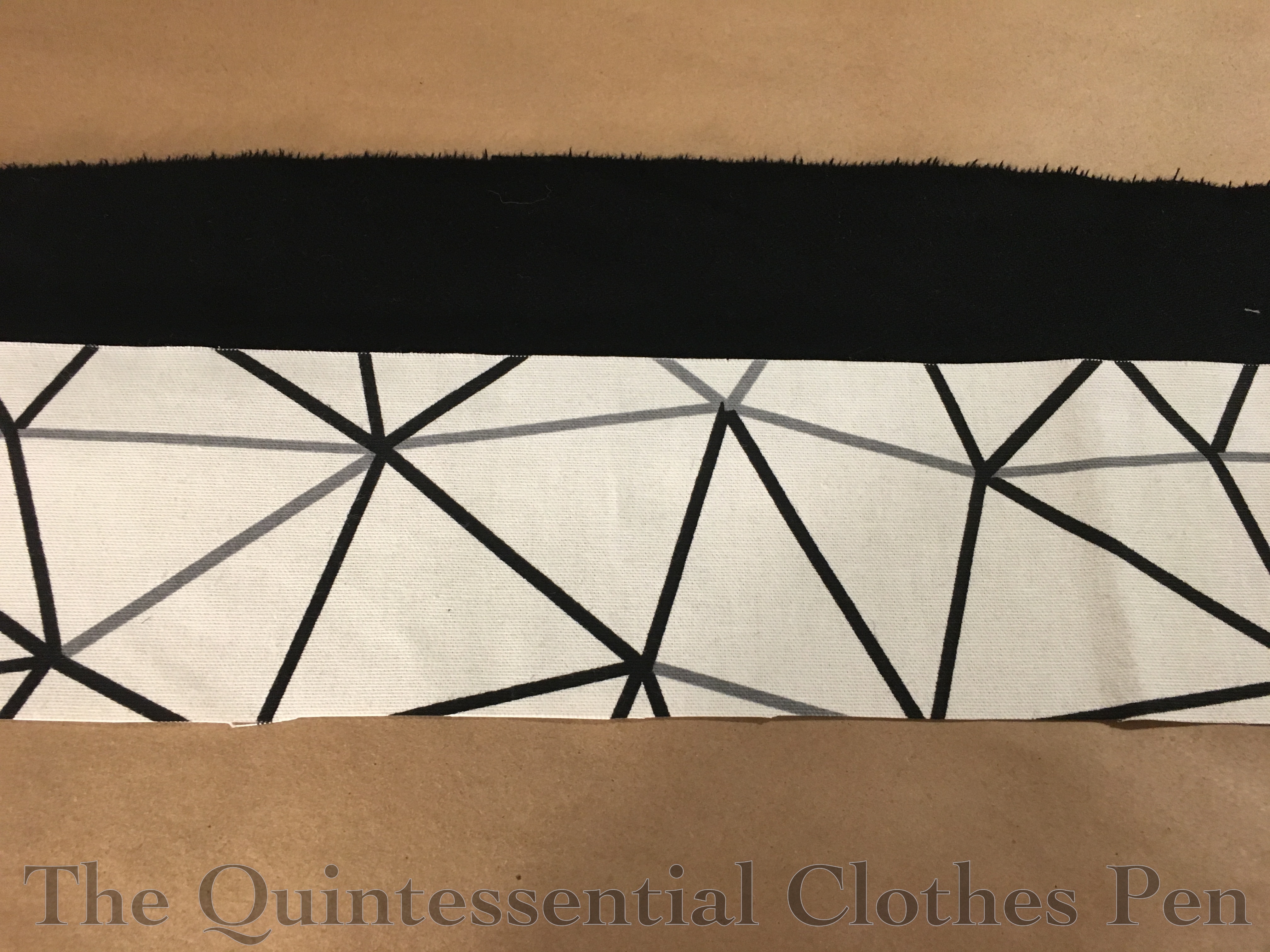
The main circle part of the skirt is set into a basic rectangle waistband. The waistband is interfaced with a strip of upholstery canvas to keep it from crumpling while being worn. Because my wool fabric is opaque I used this random geometric scrap for the interfacing.

The waistband closes at the back with a button and buttonhole above a lapped zipper. The geometric interfacing was showing when I cut my buttonhole open (top photo, below), which just wouldn’t do! To fix it, I used a black sharpie to darken the white threads that were showing (bottom photo, below). It worked like a charm!

Here’s a back view of the skirt. You can see the zipper lap and also just barely see a pocket opening on the right side.

This skirt is mostly machine sewn with the edges finished with a serger. The waistband is finished by hand. The hem is faced with black hug snug sewn by machine and then hemmed by hand for an invisible finish.

I’ve been wearing this for well over a year, but hadn’t yet found a moment to take photos. This day was perfect, as I was also documenting the completion of my sweater (a post on that will be forthcoming!). Plus, we had the most magical snowy winter woods to take these photos. It felt like Narnia!

How To Make A Gaiter Mask Out Of A T Shirt

I haven’t posted about mask making on the blog. It’s felt as though doing so would sort of confirm the situation of wearing them. Ignorance is bliss, right? Or something?

Last weekend, I was going skiing and finally decided that the masks I’d been using weren’t going to cut it for that activity. Instead, I made new gaiter style ones!

I made my new gaiter masks from old t shirts in the spirit of recycling, extending the use of clothing I already own, and using what I had on hand. I was excited, took photos of my process, and wanted to share them, hence the inspiration for finally sharing about mask making.

Gaiter masks made from old t shirts!

The (Rather Lengthy) Background

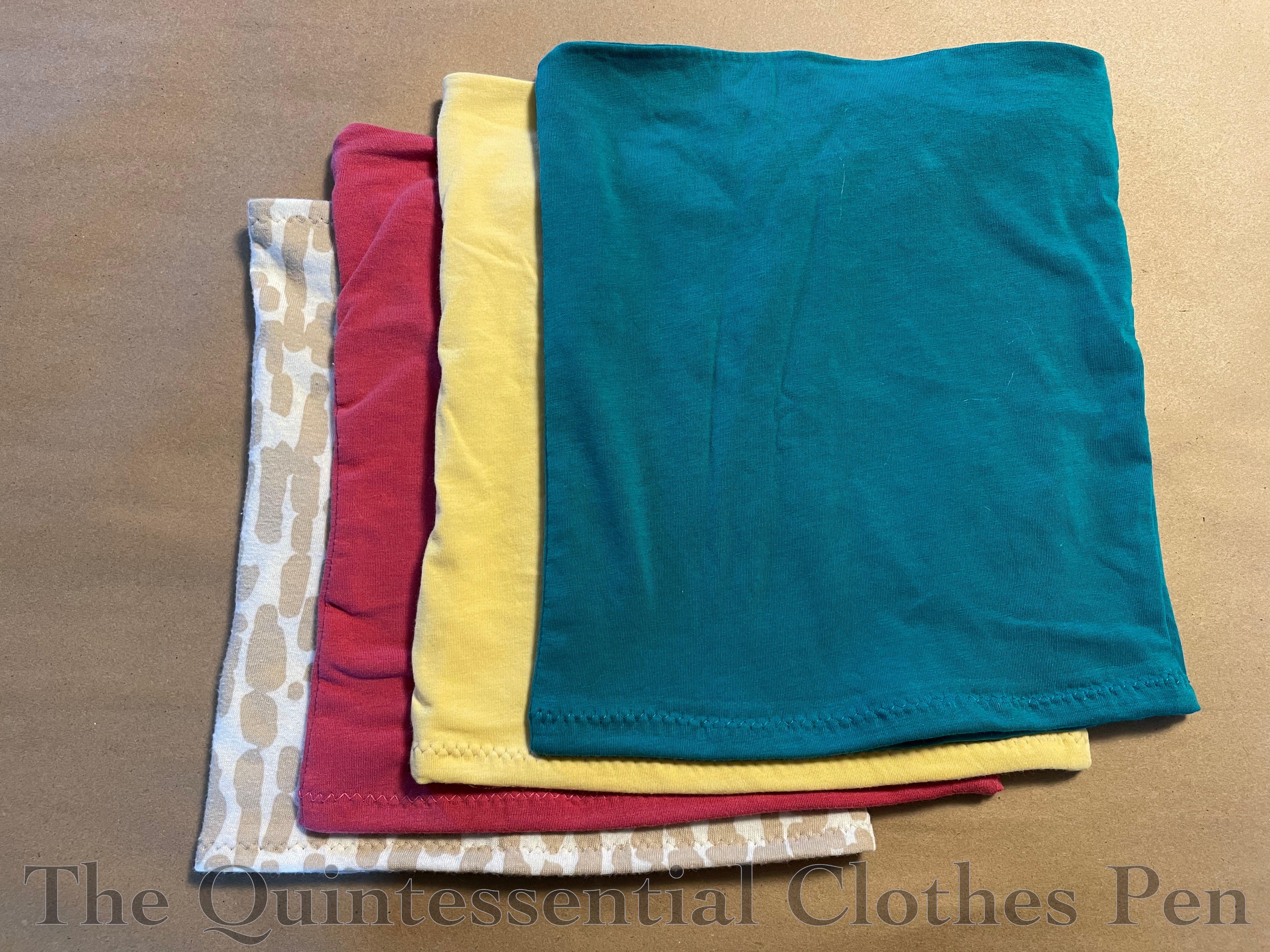
I’ve made it through the last 9 months using self-made masks with ties. Here’s a colorful assortment of my masks, made from cotton scraps of old projects, random fat quarters I had in my stash, and old sheets for most of the ties. Recycling again!

I have very few subtle masks… I made enough to wear them every day and still be able to launder them no more than every few weeks. This is only a sampling!

I have a single mask that has elastic (made specifically to match my 1834 yellow dress, because tying a mask on with 1830s hair and a bonnet just did not seem feasible!). My preference for masks with ties come from the fact that I wear glasses most of the time and don’t like the feeling of more things behind my ears. Also, it’s nice that the lower ties can double as a neck cord when needed, such as when I’m driving between errands.

But for skiing, a tie mask with a helmet was just not going to work for me. I don’t even think the ties are long enough to go over a helmet. And ties under the helmet? It would be a pain to adjust, so I wasn’t inclined to do that, either. I’ve seen people wearing the gaiter style masks for months, especially for physical activities, but I don’t like the idea of breathing through polyester and I’ve been stubborn about wearing the masks I had already made.

In my mulling over the idea of a gaiter style mask, I realized I could make my own, to whatever specifications I want! However, I didn’t have fabric yardage easily accessible that was stretchy. But then I had the thought that my donation pile had a number of t shirts that no longer fit… and that recycling them into gaiters would be a wonderful way to keep their life going!

So, without further ado… a tutorial!

The Tutorial

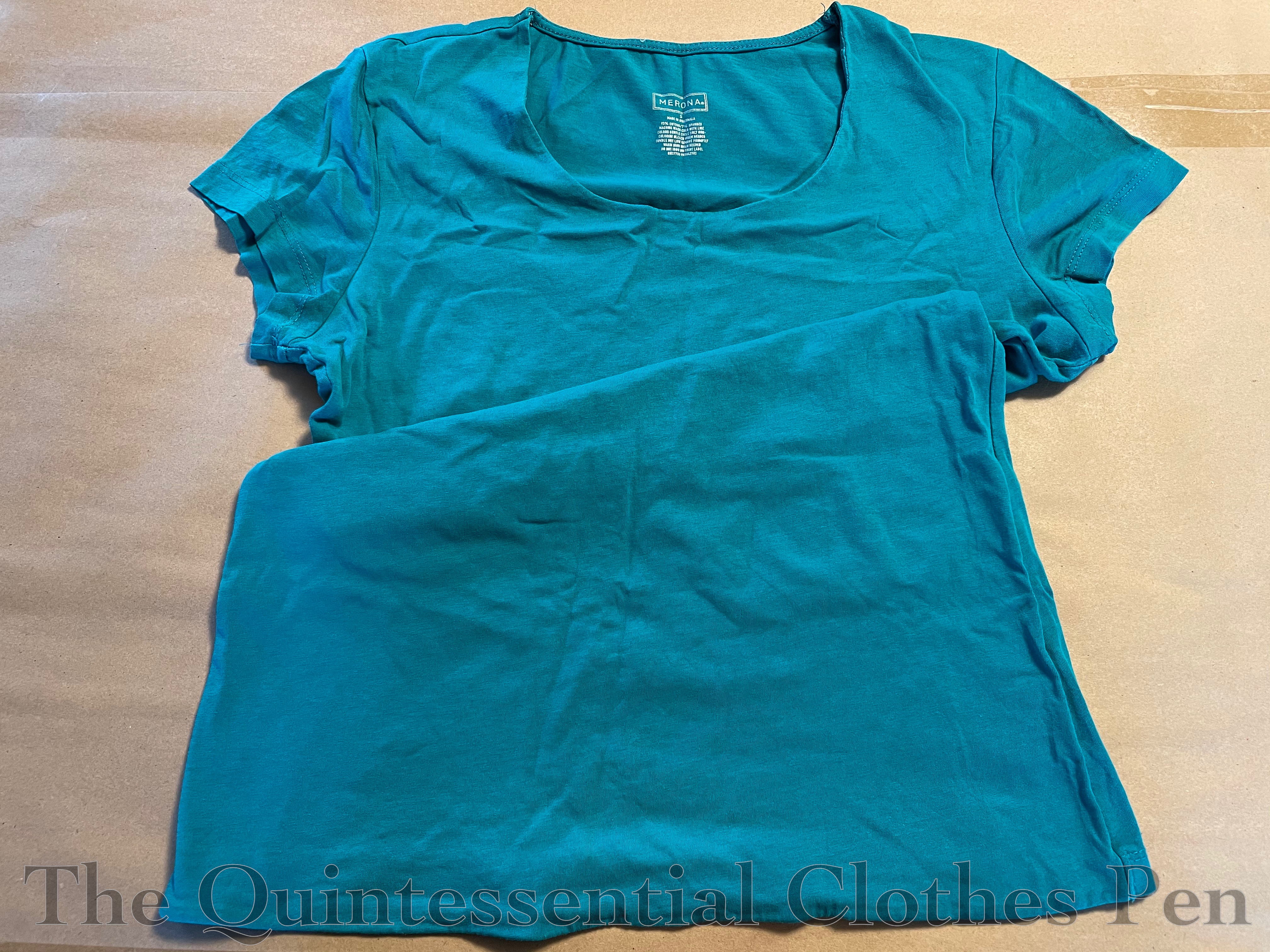
I started by laying one of the old t shirts out on my table. I smoothed out the layers, but didn’t worry too much about it being perfect. It’s a knit that’s been folded for quite awhile, so there were some wrinkles to contend with, as you can see.

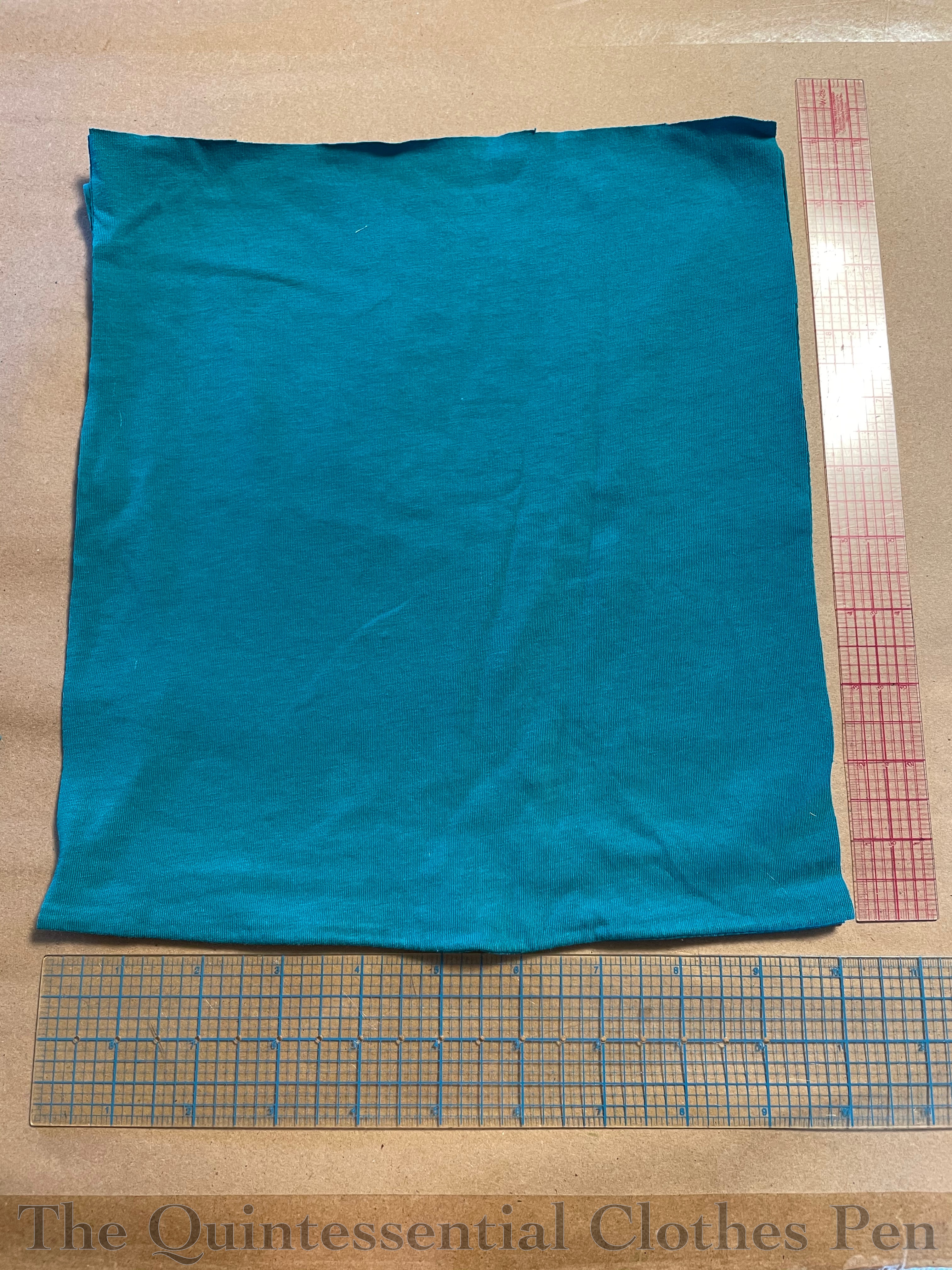
I measured a rectangle 10″ wide by 11″ tall and cut through both layers of the shirt at the same time, leaving me with what you see below, as well as an oddly shaped scrap I’ll keep that and see what other creative uses for it I can come up with! (If you have a small-ish or large-ish head, or a t shirt that is really stretchy or really not-stretchy, you might need to adjust the measurements.)

Finishing the gaiter mask is much faster and easier if the bottom edges of the rectangles use the finished bottom edges of the t shirt as the ‘cut edge’. That means not cutting anything off that side!

Pin the vertical edges right sides together and stitch them with a straight stitch on the machine using ¼” seam allowances. (You can use a straight stitch because you’re not trying to preserve vertical stretch.)

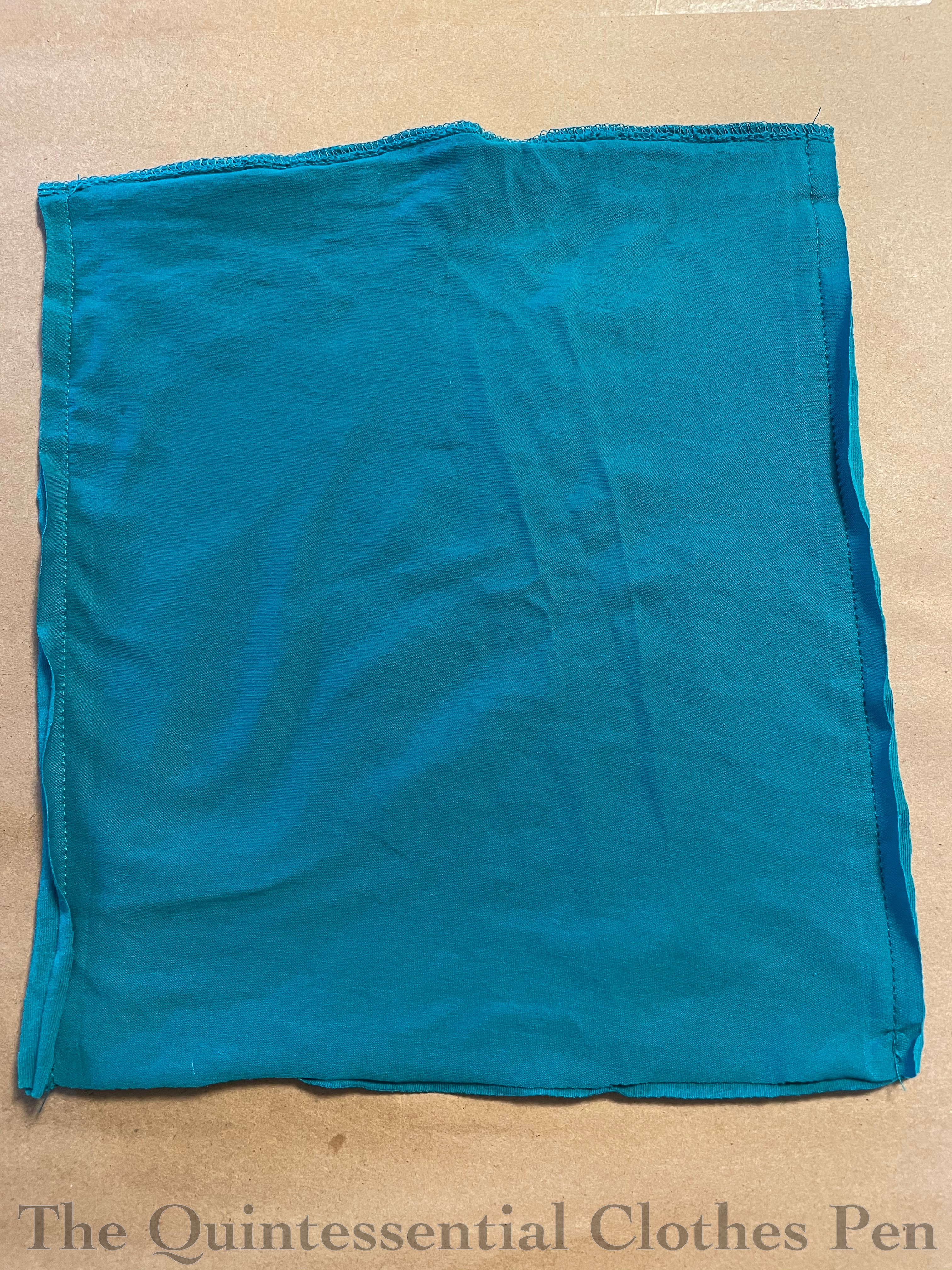
Here’s what my gaiter looked like after sewing the sides. The fabric should make a tube!

Once turned right side out it should look something like the photo below. If you’ve used the finished t shirt edge for one side then you’re close to being done!

In my case, the t shirt I used was two layers of fabric in the front, which is why the left and right sides of the top edge in the photo below aren’t finished in the same way–they weren’t on the original t shirt either. The two layers allowed me to seam the vertical seams in a way that encased the raw edges between the double layer side of the mask. Nice!

But most t shirts are not two layers in the front, so how to finish those raw edges of the seam allowance? They won’t fray, because the fabric is knit, but if you don’t want them flapping around you can flat fell them using a zig zag stitch.

The tan and white gaiter mask below is halfway through having the seam allowances flat felled. I’ve pushed all the layers of seam allowance to one side and am using the machine to zig zag over the cut edges. It’s a little tricky to make sure that only the part you’re intending to sew gets under the presser foot of the machine, but going slowly and checking where all the layers are makes it completely do-able. (I had enough of the tan and white fabric to make this whole mask double layer, but not all t shirts have enough fabric to make that possible.)

Here is what that looks like when finished. (This gaiter also has a hem already, which is the next step!)

Finishing the top and/or bottom edges of the tube is the last step!

In the tan and white example above, the edges are already finished because I used two layers of fabric and turned them right side out before stitching the sides. To keep the layers in place I zig zag stitched near the top and bottom edges through both layers as a final step. (I used a zig zag so that the stitches would allow the fabric to stretch without breaking the thread.)

Back to the teal example we’ve been looking at, I simply folded up the raw edge of the fabric and top stitched over the edge with a zig zag (in the same way as for the seam allowance finish on the tan and white example). I used ½” seam allowance for the top and bottom edges. It looks like this when complete!

And that’s it! Each gaiter took me about 30 minutes to make.

Final Assessment

I wore the teal gaiter while skiing! I don’t plan to wear these every day, but for that purpose the gaiter style was great!

I did find that it tended to slip down as it absorbed the moisture of my breath, in combination with the head movement required to check behind me, etc. while skiing. Due to this, I had to pull it up somewhat regularly. I eventually tucked it into my helmet a little better and that made it stay in place. Another solution would be to take tucks in the sides to make the top circumference smaller. Or, perhaps, for next time (or for you!), make each rectangle ½” smaller across (so only 9.5″ instead of 10″) to make the gaiter a little more fitted.

The two layers of fabric on the front of my gaiter felt thick enough for virus protection while still easy to breath through. All that condensation made for a pretty damp mask after a few hours though… It was fine while I was out in the cold, but after taking it off in the car on the way home I had no desire to put it on again without a wash (though that’s true with any mask, regardless of the style)!

Whether this inspires you to make a gaiter mask or not, I hope my t shirt recycling inspires you to also consider recycling textiles (or other materials) in some way… perhaps in a way you hadn’t considered before!

Summary of 2020: Looking Forward To 2021

I think it’s fair to say that 2020 was a year of unexpected challenges. Despite that, I remain grateful for many things, including the ability, materials, and motivation to sew. The motivation came and went, if we’re being honest, but it was more often present than not. Keeping my hands busy while making things helps me, sometimes.

Let’s look at what I turned out this year!

Projects I completed in 2020

January: c. 1855 Wool Cape

February: Burgundy Wool ½ Circle Skirt

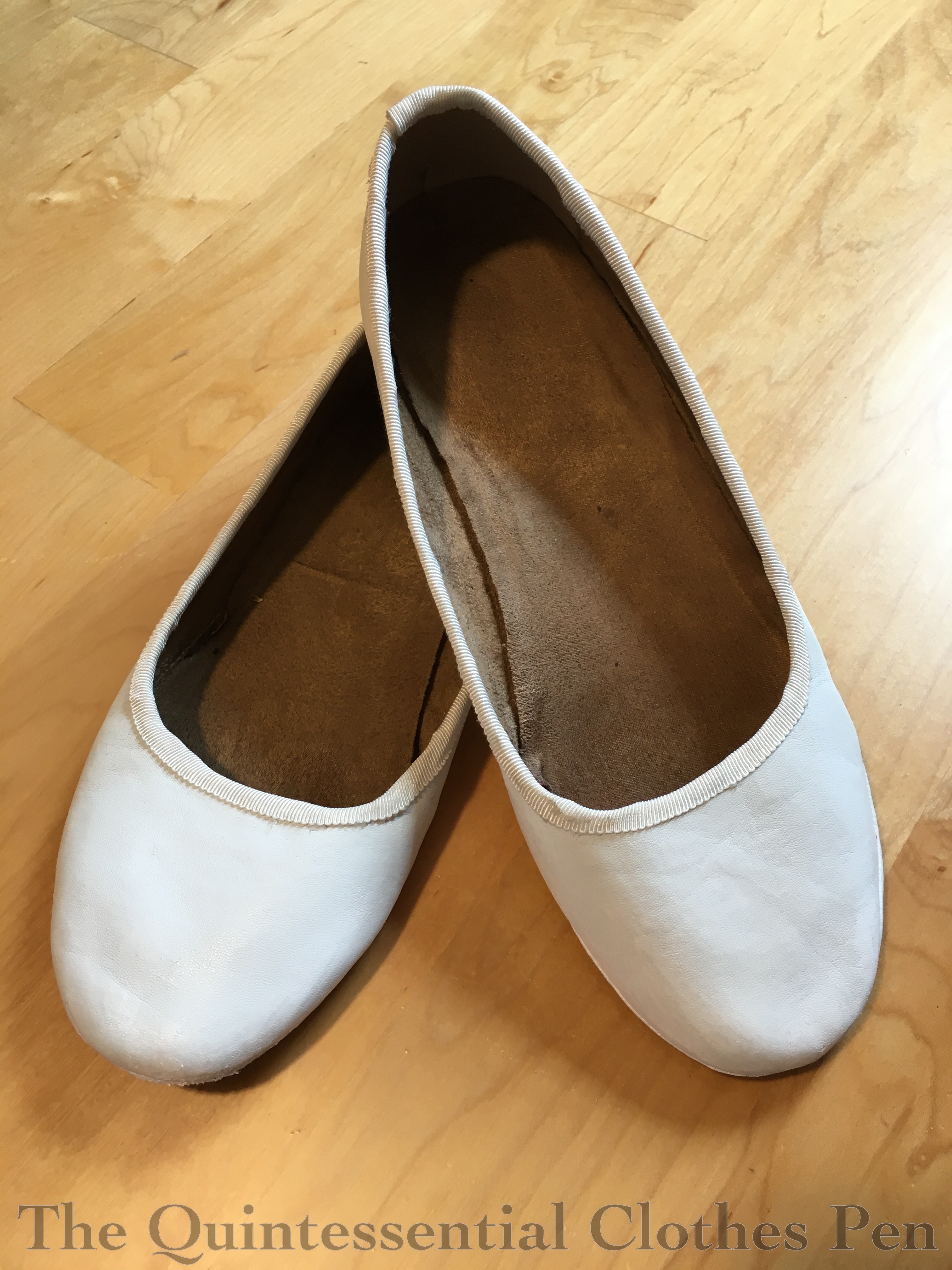
April: Regency Shoe Revive (HSM #2)

May: The Amazing Balayeuse (HSM #8)

May: c. 1880 Petticoat (HSM #5)

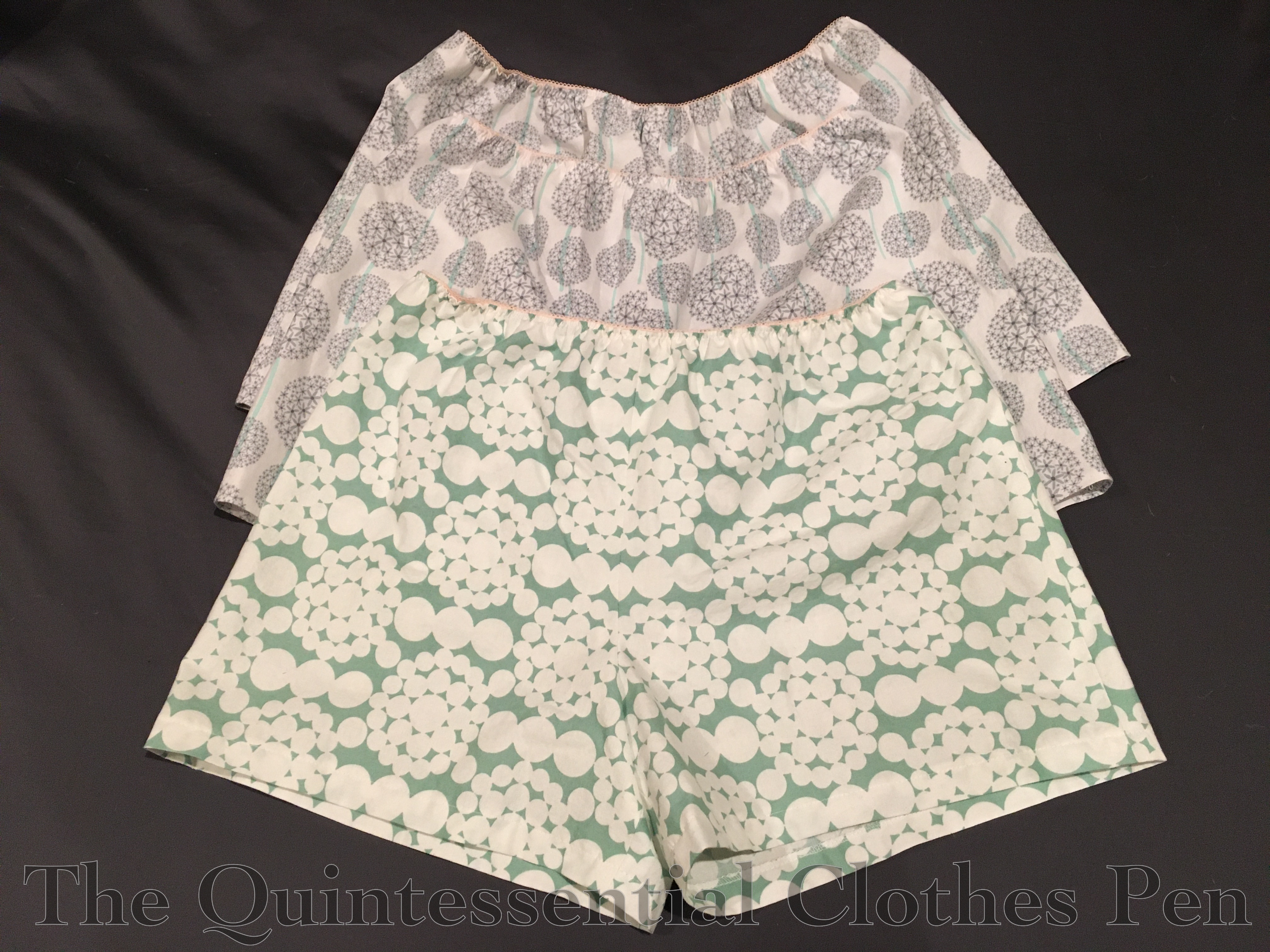
June: New Dotty Tap Pants

July: 1875 Hat (HSM #7)

July: 1875 Reception Dress (HSM #10)

August: Updated 1953 Dot Dress

August: Updated Anne Adams Dress/Skirt

September: 1830s/1840s Corded Petticoat

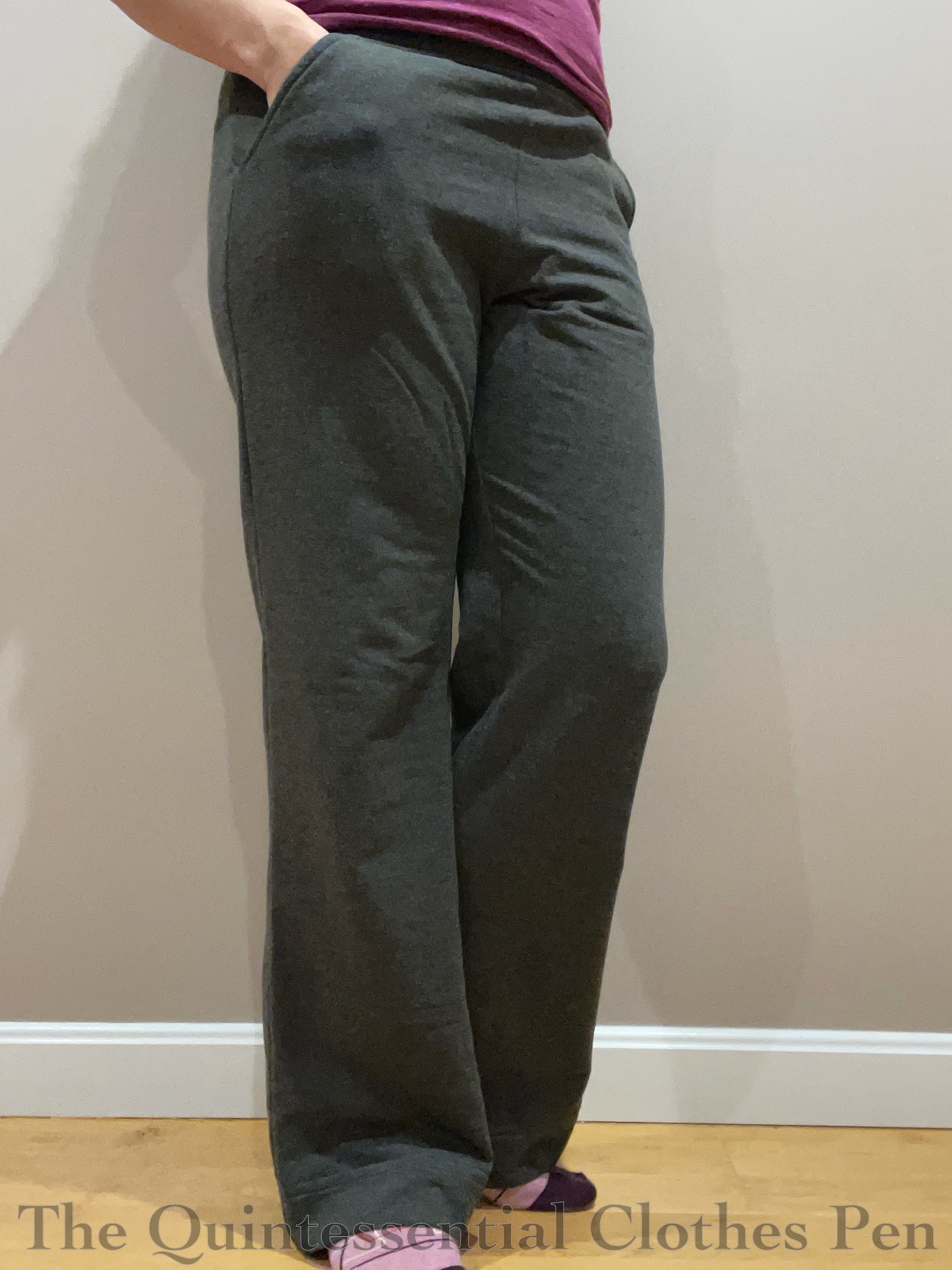
October: Plum Pants With Pointed Pockets

November: 1831 Bonnet

November: 1834 Yellow Dress (HFM #9)

December: 1925 Coat

General Blog News

The blog had its 10 year anniversary in November! Wow! I guess I have plenty to say! Also, the blog hit 400 followers this year! Thanks for reading and joining me on my sewing adventures!

I participated in the Historical Sew Monthly for the eighth year. This year I was able to complete 6 out of 12 challenges, which is more than I’ve done in the last few years. Yay for that!

Additional Opportunities 

The year’s main highlight in this area was joining Maureen Taylor on her podcast The Photo Detective in February. We discussed the 1885 summer ensemble I was wearing when we met, the apricot 1863 dress I made last year, and other historical clothing topics as well.

Event Recap

This year’s event season was cut short, but before things shut down I attended 3 balls and 1 other event (tea, picnic, outing etc.). I’ve also been grateful to attend 3 socially distanced outings in the later part of the year.

To Do Lists

Last year’s to do list was completed by July! It was great to finish off a few projects that had been sitting around the sewing room for a few years: namely, my 1925 Coat and an 1885 wool dress that I don’t have photos of yet. (It was far too warm in July to consider photos of a heavy wool bustle dress!) The 1875 ensemble was a big project that I had fun making. I’m looking forward to getting more photos of that in the future.

I also did a pretty good job at the things on the ‘maybe’ list from last year in the form of my 1875 hat, 1830s cotton day dress, and some modern dresses, pants, and skirts. Some of those were remakes, but I think they still count.

So, for 2021’s ‘definitely’ to do list, we’re keeping expectations modest in scope (Is that cheating? Can you cheat on your own to do list?):

  • 1885 wool mantle (already done in the first days of the new year!)
  • Small muff to go with my 1885 mantle (already done in the first days of the new year!)
  • Updating a hat to go with my 1885 mantle (already done in the first days of the new year!)
  • 1838 cotton day dress bodice (this is close to being done!)

The ‘maybe’ to do list:

  • The 1790s stays I started in the winter of 2018
  • 1790s petticoat
  • 1790s dress
  • 1836 cotton day dress
  • Modern dresses, pants, and skirts

I’m so grateful to continue to find joy in sewing. I hope that joy continues and brings sparks of inspiration to each of you in some way, as well. Wishing all of us joy, gratitude, and good health!


Presenting A Coat From 1925

A few years ago, I decided I wanted a 1920s coat. The goal was to make it for an event, but I ran into some construction problems along the way that caused me to give up work for awhile. In January, after letting it sit for about two years, I was tired of looking at the half finished project and worked up the determination to actually finish it.

Though I’ve only worn it once so far, I’m very pleased that I finally finished this coat! It is quite decadent and elegant to wear (and it’s nice to have completed the project so I can put it away)!

My inspiration started with the pattern below. I was intrigued by the flared side pieces and overlapped closure. I enlarged this pattern and did a little adjusting for my proportions.

With the pattern ready to go, I purchased the exterior fabric of the coat and got to work. The exterior is made out of fleece backed velvet upholstery fabric from Fabric.com. Thankfully it isn’t super stiff, like some upholstery fabrics are. The fleece backing is actually quite soft and the exterior has a low pile and lovely sheen. It shows every little brush against the nap though, so I was super careful while making it, transporting it, and wearing it to keep the pile brushed the right way.

The inside body of the coat is lined in tan silk shantung. This was a remnant I purchased years ago from a local discount fabric store. I’ve never found a good use for it until now, when I managed to just squeeze out the pieces I needed for the coat.
Unfortunately, that’s also where the problems started. I cut the sleeve linings on the cross grain of the silk (because I was running low on fabric). I know that grain and cross grain can behave differently, but these were drastically different! The sleeves were so constricting!

Also, I hadn’t widened the sleeves enough to actually move in even without the silk lining! I could get my arms in the sleeves but there was no way I was going to bend them or use them for any useful purpose. Oops!

What to do???

Well, with the event I had intended this for fast approaching… I gave up. I put the project on the back of a chair (so it wouldn’t get marks in the pile!) and moved on.

Two years later, I decided it was time to finish the coat. In the spirit of forging ahead and in order to make things work, I changed a few things from my original vision.

For the sleeves, I scrapped the silk linings, opting to just leave the arms of the coat unlined. This worked because of the softness of the fleece backing. In addition, I was able to cut cuff facings and binding for the armhole seam allowances out of my failed sleeve linings.

I thought I could let out the under sleeve seam and it would be enough extra fabric to make the sleeves comfortable. The needle holes had left scars on the fabric, but I figured no one would see it. Unfortunately, that wasn’t enough!

So, I ripped out the let out seam, dug out my fabric scraps, and pieced a section down the entire length of the arm. The piece is about 1″ wide at the wrist and 2″ at the armsceye. What was I thinking with my original pattern??? Thankfully the added piece is not obvious, since it’s on the underside of the arm. And I suppose that if you didn’t know where sleeve seams should be it wouldn’t look out of place!

As well as actually fitting my arm (and allowing for movement!), the bigger armsceye on the sleeve allowed me to move the sleeve up on the shoulder a bit, too, which helped the coat not look oversized.

In addition to the sleeve changes, I also changed the front edges of the coat from that nice jag with buttons to straight from collar to hem. I realized there was no way to do buttonholes I would be happy with in my very thick velour and that the angle I had very carefully sewn just would not lie flat. A slight tug line at the inside corner really bothered me.

I looked at these two pages from a 1925 Sears catalog to help with the design choices at this point.

These helped me decide on the button closure. There is one button and corresponding thread loop on the hip and another below the collar.
The Sears images also helped me decide on the location of the fur trim. The bands and collar are made faux fur leftover from my 1814 Wizchoura Ensemble, also from Fabric.com. The collar is especially warm and comfy when buttoned shut, though it’s also a lot around the face… so I think wearing it open is more likely! This combination of red pile exterior and tan fur shows up multiple times on my 1920s Outwear Pinterest board and it was nice to use fur I already owned instead of buying more.
I decided against fur trim on the cuffs and instead kept the French cuff look, set off with two buttons. This was a feature from the original pattern that was supposed to mirror the jag on the front edges that I eliminated.

I didn’t change the flared side pieces of the pattern and I’m very pleased with the end result. They give a 1920s flip to the otherwise very straight shape of this coat.

The six buttons on the coat are from Farmhouse Fabrics. They’re big, about 1 ¼” across, and they have a wavy pattern on them that helps make them interesting looking without being distracting. They match the velour so well!

All together, the materials used on this coat are: 2 ½ yards of the fleece backed velvet, approximately 2 yards of silk shantung for the lining, scraps of faux fur used on my 1814 Wiztchoura, 6 large buttons, and thread. The total cost of these materials is about $70, including shipping.

I didn’t keep track of the number of hours spent making, altering, and finishing this coat, but I would guess that it is around 30-40. There was some serious frustration in there (or despair, as Anne of Green Gables might say!).

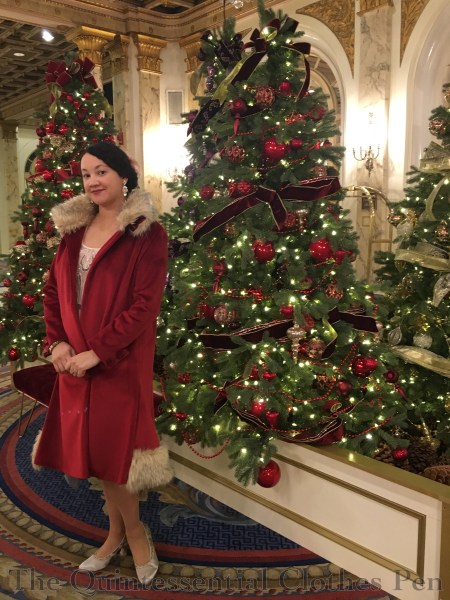
As you can see in all the photos, when I finally wore this coat in January 2020 at the Fairmont Copley Plaza Hotel, the Christmas decorations were still up. I loved (and still do!) how festive the coat looks with the decorations, but by the time this post was written it seemed a bit late for the holiday look here on the blog, so I decided to save this post for this 2020 holiday season. Now, after many months of missing fabulous indoor spaces and events, I’m particularly pleased that I have these photos to share!

An 1830s Apple Picking Adventure

I’ve been promising photos of this adventure for months at this point, I think! It’s been awhile coming because I wanted to finish posting about my new dress and its accessories before moving on to these photos. In case you missed them, there are two posts about my 1834 Yellow Dress, a detailed construction post and a post sharing sewing secrets about the dress, as well as a post about my 1831 bonnet construction. There’s also a post about the corded petticoat I made for this ensemble.
But enough about sewing for now! Let’s share a beautiful day full of dazzling sunlight and gorgeous fall leaves. And apples!

This outing started with the idea that I wanted to go apple picking for my birthday. It was determined by my friends at some point over the summer that apple picking should be done in 1830s dresses. The result was lots of sewing… and new dresses all around! (And as you’ve seen, we also took tons of photos to document the new dresses!)

But back to the point: apples!

The orchard we went to had a variety of apples available to choose from, some of which were historical heirloom varieties! They varied in size, quite small (2″ or so across) to large (4″ or so), and color, from very dark red, to yellow, to nice medium red.

It was fun to hunt in the trees for apples that were special enough to make it into our collection bags.

We often went father away from the paths than most people, which helped us find areas without other people for photos and good looking apples!

We couldn’t have had better weather! It was a perfectly comfortable temperature and the sun was beautiful.

It was also a bit breezy, which was lovely and fresh feeling.

The leaves were starting to change, adding pops of orange, red, and yellow to the sea of green foliage.

One can work up an appetite apple picking! We had a picnic lunch on a local town common to refresh ourselves before another round of photo taking.

I imagine we made a spectacle at the apple orchard. Mostly because of our clothes, of course, but also because of the photo chains! It’s hard to see, but there are actually three of us taking photos in this photo, which is being taken by a fourth person!

Isn’t this apple tree magical looking? It reminds me of some sort of gateway into another (pandemic free…) land.

In this year of curtailed historical adventures, it was especially wonderful to have a sunny outing full of fun and laughter! Plus, we had yummy apples to eat at the end of the day and to take home with us!

More Of The 1834 Yellow Dress (HSM #9)

Today’s post is going to share more details about and photos of my new 1834 yellow dress. If you missed my last post about this dress, it was a lengthy one sharing oodles of construction details and photos. You can read that past post here.

Here is a reminder image of the fully accessorized dress!

The biggest accessory is my newly completed 1831 bonnet. There is a recent (lengthy) post about the construction of that here, if you want to learn more about it.

I also added smaller accessories, in the form of a petersham belt and brand new reproduction buckle. The wide petersham is a length of ribbon I purchased from The Sewing Place–I highly recommend their many colors and widths! The buckle is a fabulous reproduction buckle from Ensembles of the Past. It’s a bit hard to see the wonderful detail in this photo, but there’s a photo later in the post that shows the detail much better! The Ensembles of the Past blog also has a post sharing how to easily use ribbon to make an endlessly (and easily) adjustable belt out of ribbon! I highly recommend both the buckles and a read through the blog post!

Back to the dress itself. Let’s start off with the Historical Sew Monthly details. Challenge #9 is Sewing Secrets:

Hide something in your sewing, whether it is an almost invisible mend, a make-do or unexpected material, a secret pocket, a false fastening or front, or a concealed message (such as a political or moral allegiance).

In this dress, I have two secrets, both of which I mentioned in the dress construction details post. One is pockets in the skirt and the other is that the bodice of this dress is detachable.

First, the pockets. Yay! My pockets are made from the dress fabric. They are French seamed and set into the side front seams of the skirt. On the inside, they look like this.

On the outside, they look like this. They’re a secret because they camouflage so well that you really can’t see them at all unless I pull them open or my hand is disappearing inside!

Second, the bodice detaches. This is very unusual (and possibly unheard of) for the 1830s, though it becomes common practice by the 1850s and 1860s. This system allows me to attach the current bodice, which I’ve dated 1834, or a second bodice that I have in the works which is dated 1838. That opens a whole world of possibilities in terms of showing changing bodice and sleeve styles without needing to create an entire second dress!

A bit closer up, you can just barely make out a loop on the skirt waistband that connects to a hook at center front. There are hooks and loops all around the skirt and bodice waistbands to connect them together.

Now that we’ve seen the relevant dress features, let’s look at the other HSM facts:

Fabric/Materials: 7 ¼ yds of reproduction print cotton, 1 yd muslin, a scrap of canvas for the waistband of the bodice, and a scrap of flannel for the cartridge pleats.

Pattern: Adapted from Janet Arnold’s Patterns of Fashion 1, with adjustments for fit and style, as well as The Workwoman’s Guide.

Year: 1834.

Notions: 2 ½ yds narrow cotton yarn for cording, 2 ½ yds of narrow white lace, and about 23 hooks and loops.

How historically accurate is it?: 95%. The pattern, silhouette, construction methods, and fabric are all quite good, but there is machine sewing on the interior seams.

Hours to complete: 25.75 hours.

First worn: In early October, for an apple picking outing, picnic, and photos!

Total cost: Approximately $60.

In addition to the HSM details, I want to share some more photos as well. These photos were taken during an all day outing in October. There’s still a post coming that will share apple picking photos from the outing, but there were many good ones from our later in the day photo shoot as well.

These next photos were taken in a neat conservation area that has beautiful, varied scenery that includes a pond area, open fields, wooded paths, huge rhododendrons, a meandering river, and this lovely row of pine trees.

I enjoy the line of trees and the interesting perspective they provide. So here you go, a front and back view of this ensemble.

Farther along our walk through this beautiful area we stopped to take some artistic detail shots of the sleeves of this dress. First up, the mancheron on the shoulder of the dress. There’s some pretty good pattern matching to admire and it’s fun to see the gathers up close, too.

Here’s another view of the mancheron and sleeve puff, with the zig zag cuff trim in the background.

I can’t decide if I like that photo or this next one best! The next one is similar, but the focus of the photo is on the zig zag cuff trim instead of the mancheron.

The last detail photo shows the cuff trim in even greater detail, as well as my new belt buckle from Ensembles of the Past!

I purchased the ‘antique gold’ color. I love it! It’s substantial in weight, has precise and delicate details, and will probably outlast me in terms of durability. (This is just my opinion–I’m not paid to say these nice things!)

The last photos I have to show you are a bit of a teaser for the apple picking photos that are still to come. We had the most gorgeous autumn New England day!

The sky was a brilliant blue. The temperature was wonderfully comfortable–neither hot nor cold. The leaves were changing and were starting to crown the trees in vibrant red, yellow, and orange.

And a fresh breeze lifted our spirits and our bonnet ribbons! I’ve so missed events and outings. This was much needed (socially distanced) relief for weary souls. I hope that you have also found relief and joy in these trying times!