Orange Boven Hat, 1814 (HSM#4)

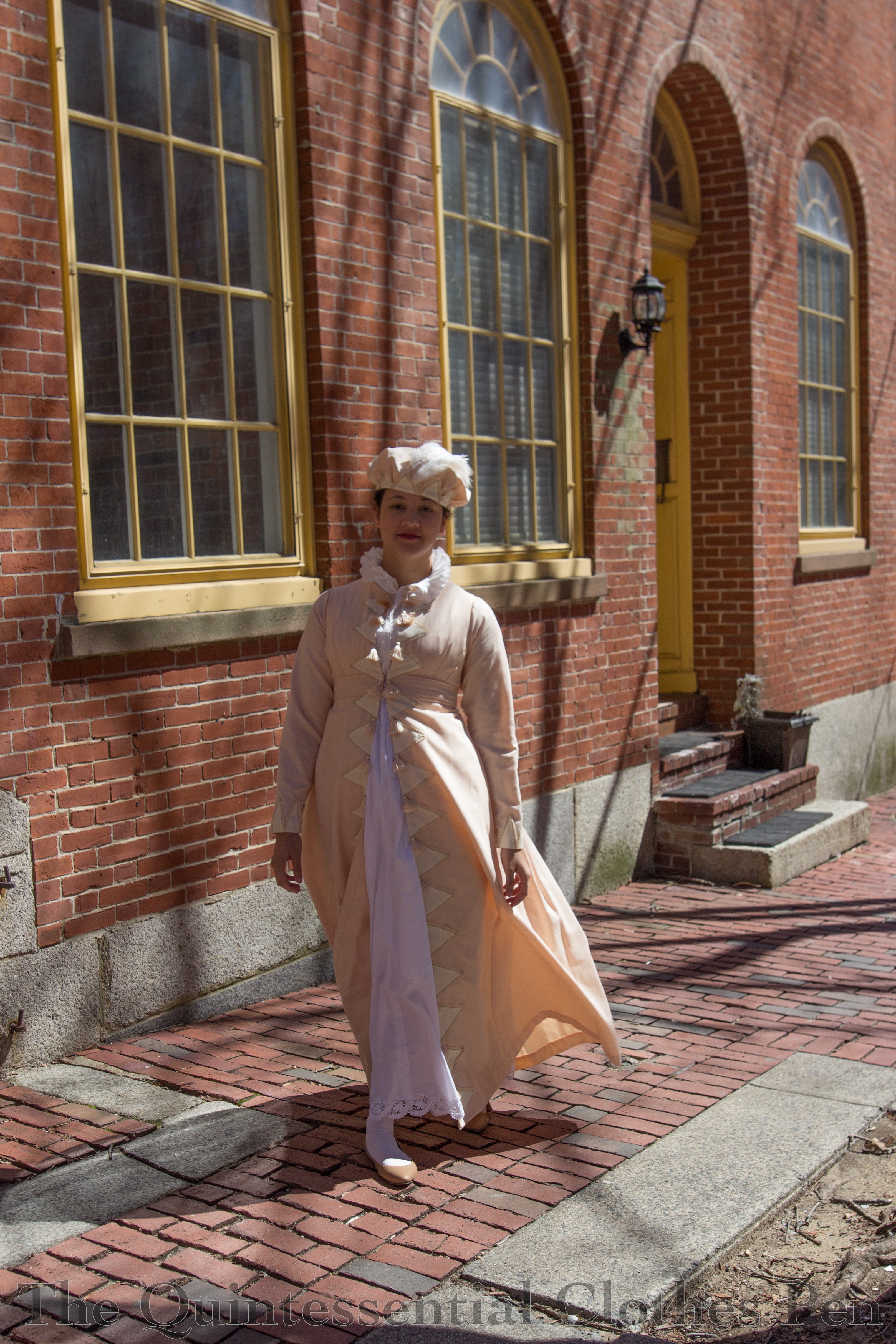
I am pleased to report that I made a garment which qualifies for the HSM challenge #4: Circles, Squares, and Rectangles! I wasn’t sure I had anything on the sewing list that would do, but then I remembered years ago when I started this hat and it was only two pieces, a circle for the crown and a rectangle for the binding. Perfect! (I’m not counting the triangular trim. That’s just the trimming!)

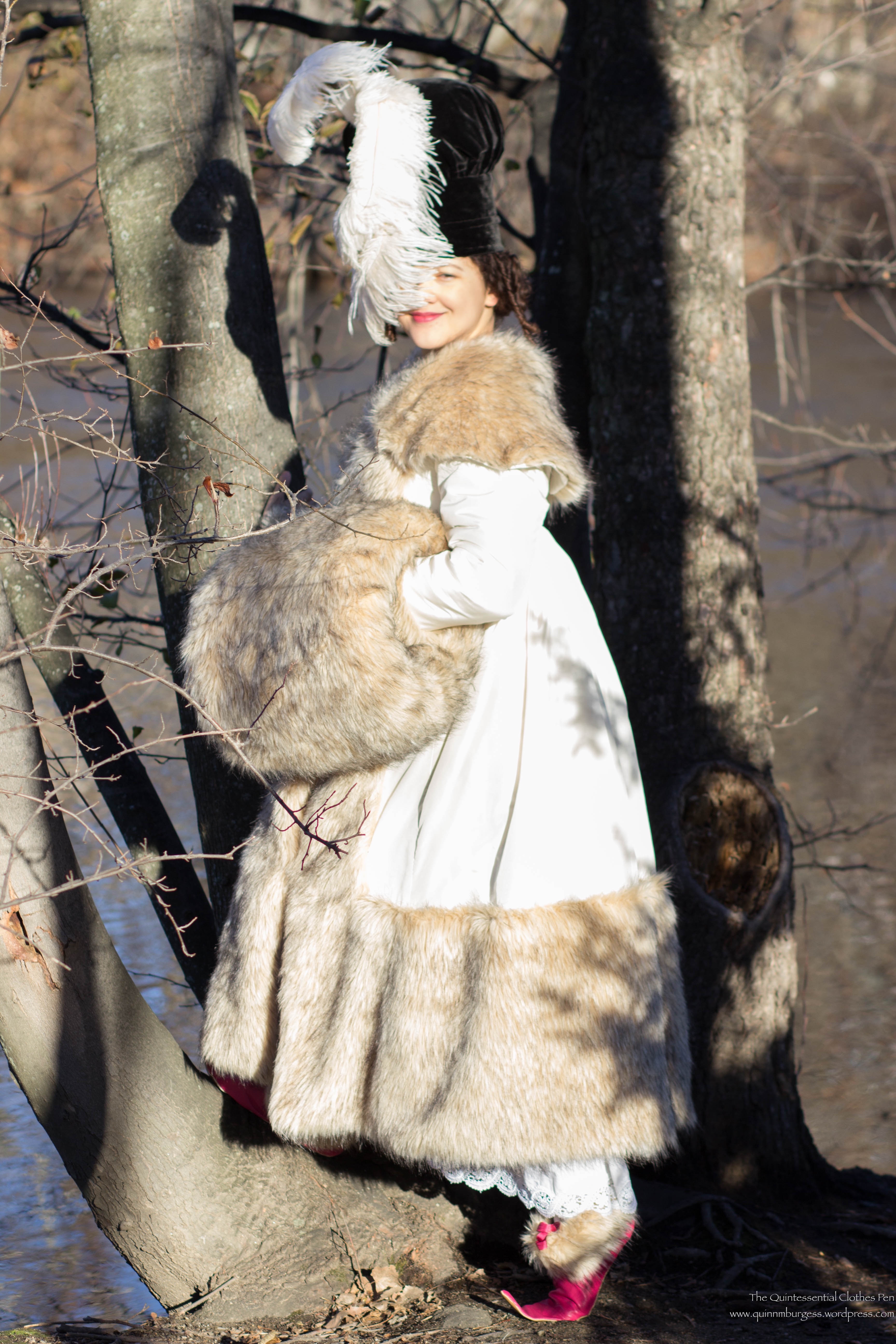
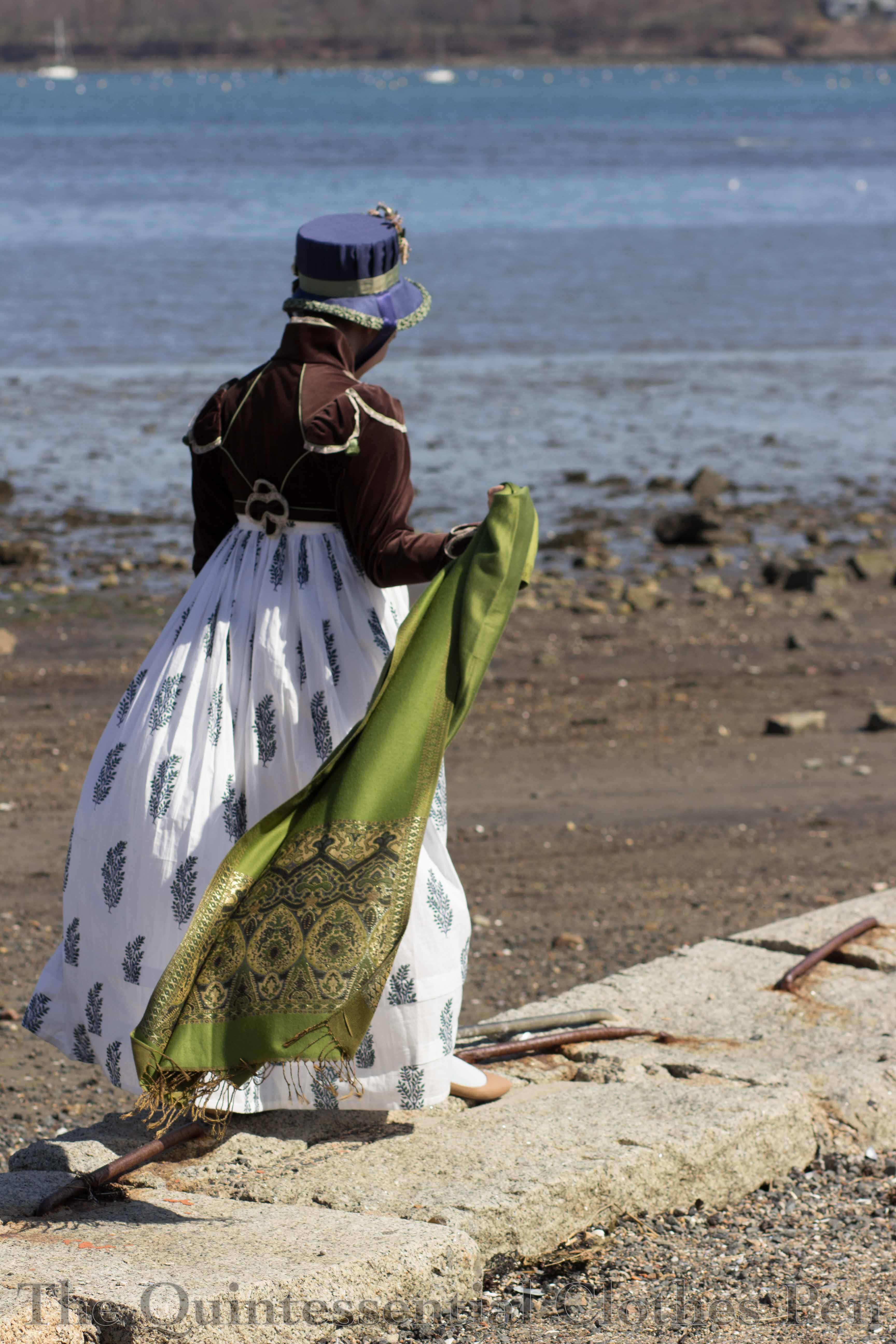
As you might guess from the photo, this hat is part of a matching ensemble: a pelisse and hat from 1814. I’ve got lots of details planned regarding the inspiration for this ensemble as well as more pictures of the finished outfit, but for now this teaser will have to suffice. It gives context to the rather silly hat.

Just the facts:

Fabric: Pale peach cotton and cream (likely) poly/cotton blend.

Pattern: My own based on my head measurements.

Year: 1814.

Notions: Thread, two ostrich feathers, and about 1 yard of vintage lace.

How historically accurate is it?: I’m going to go with 95% on this one. It’s entirely recognizable in its own time and made in a way that is straightforward and consistent with historic garments. The materials are not 100% accurate.

Hours to complete: If I’m only counting the hat, about 3 or 4, since it is entirely hand sewn.

First worn: April 9 for a Regency tea.

Total cost: About $8 for the hat without the pelisse.

A Chemisette (HSM #3)

I’ve wanted a Regency chemisette to complete my daytime looks since 2012, even going so far as to purchase a specific tool with the intent on using it for a chemisette ruffle. (Unfortunately, my cast iron crinkle cutter has been a very useful doorstop for the last few years but hasn’t been used at all for its actual purpose! To be fair, it still hasn’t been used for its actual purpose, but at least I know now that I have a chemisette pattern that fits, which makes me more likely to try it out for a more finely pleated collar version in the future.)

I’m so happy with this chemisette! I had sized up a chemisette pattern from Janet Arnold years ago, but it didn’t fit me as is, so for this I used the pattern for a pelisse I’m working on as a starting point for fit and the Janet Arnold pattern as a reference for grain lines and overall shape.

The fabric is ‘silky cotton voile’ from Dharma Trading. I used it for Annabelle, one of my mid-19th century dresses and had the perfect long straight scraps left for cutting out a chemisette! The weight of the fabric is lovely and so comfortable to wear and it’s nice and sheer just like a chemisette should be. Plus, it behaved so well, finger pressing as I did the seams and the pleats on the two collar layers.

I decided to add this garment to the list of Regency things I’m trying to get together for an event in April rather at the last minute. I was going on vacation with a very long travel time ahead of me and decided that having a hand sewing project would suit me very well. I found the time to cut the pieces and then hand sewed most of it while I was away, using nail clippers as my scissors. (I didn’t want to get in an argument with TSA about how the length of the blade on my thread snipping scissors actually is within their regulations.)

The chemisette uses a combination of running, whip, and slip stitches for the seams and narrow hems. It ties below the bust using a 1/4″ cotton twill tape. I thought of putting a closure at the neck, but decided against it as there are images of chemisettes being worn open at the neck (like this) and I really like that look on me rather than the head-on-a-platter look of it closed (see a mix of styles including that here). If I had closures but decided to wear the chemisette open at the neck you would see them and I don’t love that idea.

March’s HSM challenge is The Great Outdoors and I’m calling this chemisette a fit for the challenge, as I intend to wear it with a pelisse for an outdoor promenade. Plus, chemisettes are useful for protecting the skin from the sun (which of course you are so much more likely to be exposed to while outdoors!).

So, here are just the facts.

Fabric: Leftover bits of silky cotton voile from another project.

Pattern: Based off of my own, but referencing those in Janet Arnold.

Year: c. 1810.

Notions: Thread and 1/4″ cotton twill tape.

How historically accurate is it?: I’m going to go with 100% on this one. The materials are good and so is the method.

Hours to complete: I didn’t pay attention because I was leisurely sewing this while on vacation. Maybe 8-10?

First worn: Will be worn in April.

Total cost: All from the stash! Free!

My Favorite Winter Things Skirt

In December last year, I was inspired by a friend to make a Christmas themed skirt. After looking through literally every single the winter and holiday themed cotton prints at Fabric.com, I settled on a print that is not directly Christmas themed. That way I can wear it all through the winter!

img_2261-1

Making the skirt fulfilled one personal goal while simultaneously breaking another. The first goal was that when purchasing fabrics a garment should be made right away, as I did with my winter wool skirt. The other goal was to go away for the holidays without any sewing or knitting project in order to give my wrists a break. But I was so excited about my fabric that I took it with me and started hand sewing the skirt anyway, in a low key way. I didn’t finish it on the trip, but I finished it soon after returning home. At that point, I just wanted it done, so I finished it up mostly by machine.

img_2204-1

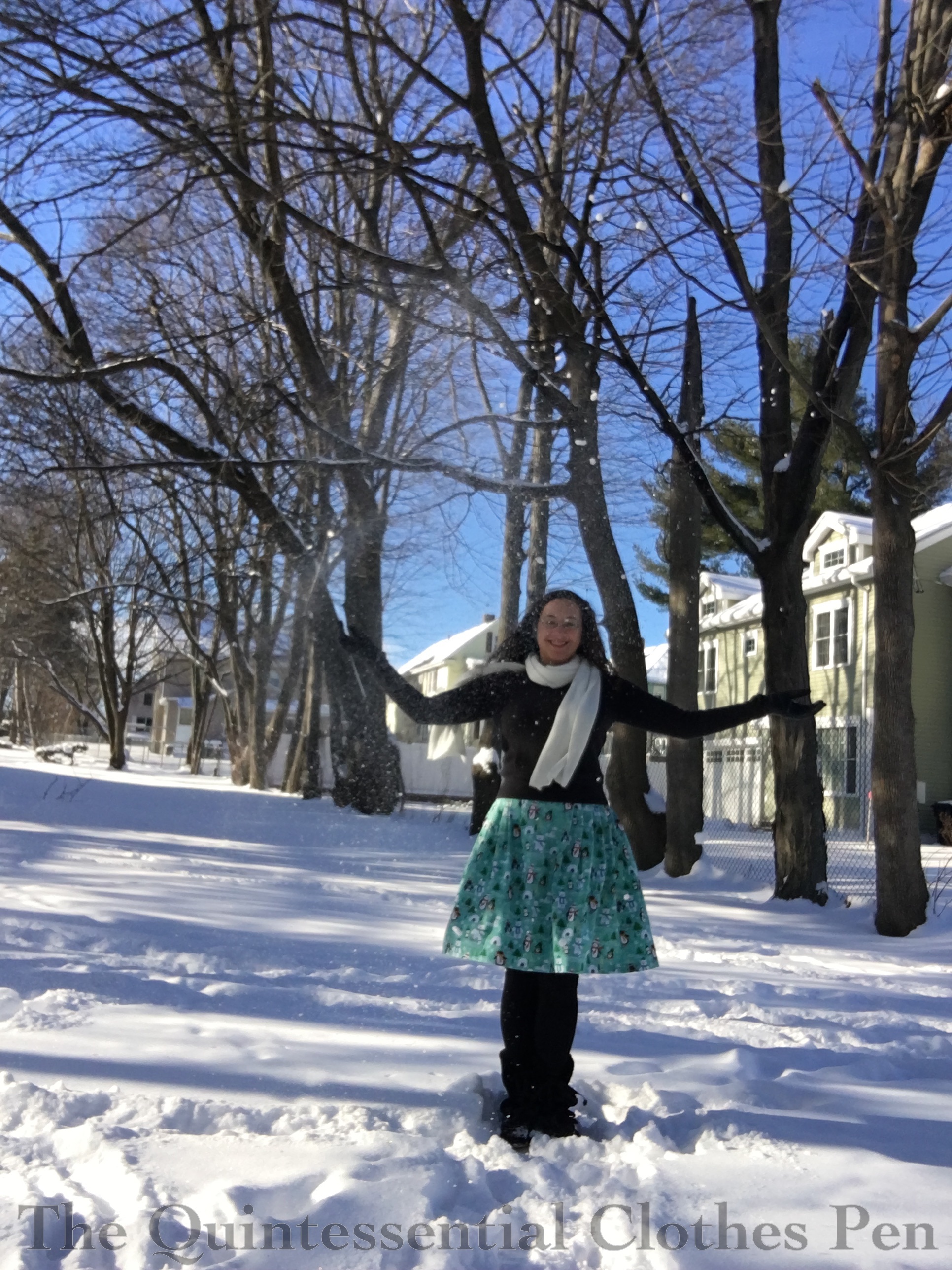
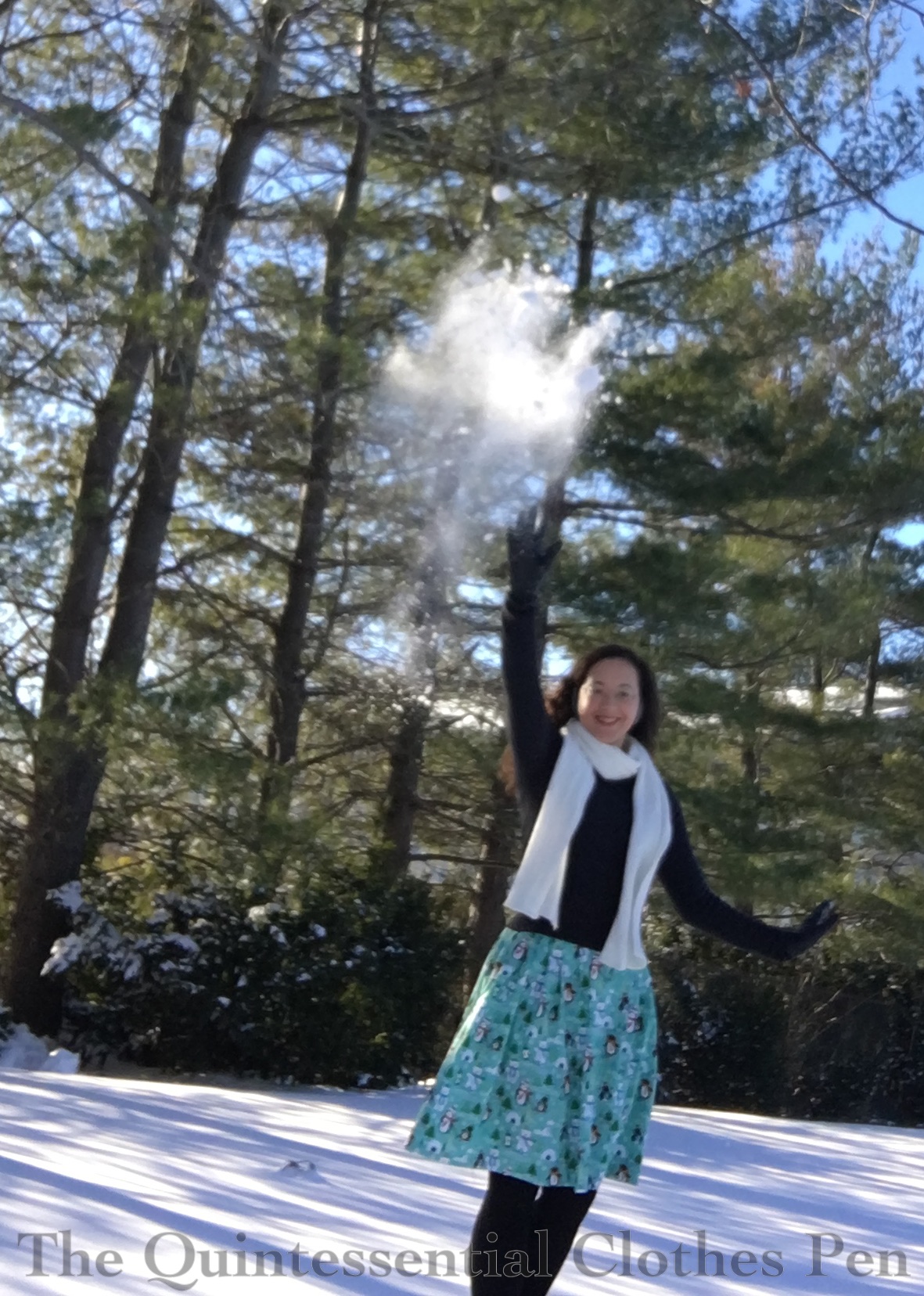
I decided to take the pictures on the only really snowy day we’ve had here so far this winter. We’d had a storm the night before with about 6″ of fresh snow that was just begging to be played in and have this skirt as a companion.

I didn’t have anyone to take pictures for me, so out I went to explore the area around my house, finding random objects to support my phone (trash can, bleachers…) and using the self timer. I made a stand for my phone out of a cardboard box and it worked pretty well once I found something heavy enough to anchor the base. As a result of me taking pictures by myself, I have lots of pictures and lots of bloopers, as well as more far away shots than normal, as I wasn’t able to use the zoom feature with the timer.

img_2209-1

I wound up having lots of fun playing in the snow by myself. I bundled up in multiple pairs of fleece lined tights, a wool sweater, and my new carriage boots, amongst other things. The boots did great in the ankle deep snow! My feet were nice and warm and the snow brushed right off (I did spray them with stain/water repellant ahead of time).

img_2288-1

img_2216-1

img_2228-1

The skirt makes me smile, hence the name of this post. Penguins and polar bears are some of my favorite things, so what could be better than these silly guys having winter fun–skating, sledding, and skiing! Plus, they’ve got winter accessories and fox friends (and igloos!). Some days just need the extra boost of silly. I like to think that the skirt is fun, not juvenile…

img_2293-1

Regardless, I enjoy it. It’s just two widths of 44″ wide cotton seamed into a tube with a waistband and an invisible zipper. The pleating pattern was stumping me, because I wasn’t sure what I wanted to do, but I went looking through Lily’s creations at Mode de Lis (since she often makes such lovely things out of cottons) and decided I liked the pleating pattern of her flamingo dress, so I copied it–flat in front for about 6″, then knife pleated towards the back around each side until center back when the two pleating directions meet. And I like it! It’s different than my other skirts. (She’s got lots of closeups of the pleating pattern, if my explanation makes no sense to you. I would normally have taken pictures of the pleating, but I couldn’t do it myself and I didn’t think pictures of the skirt flat would do it justice. The snowy background is essential!)

I had hoped to have a winter fun day with friends this weekend, but we have no snow, so I though this post would be perfect to remind me that I did take the time to get outside and have some fun in the snow the last time we had some.

img_2254-1

Vernet Project: Petticoat and Muff Details

As the end of this year draws nearer, I feel the urge to complete my plan to share all the details of my 1814 Vernet Ensemble before the end of 2016. In order to do that, I have the smaller garments to discuss (petticoat and muff) and the witzchoura itself, which I know some people have had questions about for probably about a year. Sorry to keep you waiting!

As I’m saving the witzchoura to be the grand finale, today I want to share some details about the petticoat and muff. First, here are some repeat pictures of the full ensemble in case you’ve started reading since this project was unveiled. Both of these pictures are from my Vernet Project photo shoot in 2015. They give you a good glimpse at the petticoat and the muff.

IMG_1985

The muff exterior is the same faux fur as the trim on the witzchoura. The lining is an ivory cotton flannel, which feels warmer on the hands than a silk lining and which I don’t think is out of the realm of possibility in terms of historical reasonability (a theory I have tested out with multiple muffs over the last few years).

In order to get the distinctly Regency style of a beehive style muff, the inner flannel lining is substantially smaller in dimension than the exterior fur. Layers of high loft polyester batting fill in the shape and the fur actually wraps to the inside of the lining for a few inches on each side and is gathered to fit the smaller circumference of the lining. The result is a very large and very cozy muff. (This method is different than making the interior and exterior the same or similar in dimensions, resulting a muff that looks like my 1822 one. The blog post sharing details about that muff has lots of great images of both types of muffs from this period, if you want to see more. Also, it’s worth noting that polyester batting would not have been used to keep one’s hands warm in the early 19th century, but that I chose that materials because I had it on hand and it is not visible.)

IMG_2004

The petticoat is the only piece of my Vernet project that existed before I agreed to participate. It started life as part of a dress, but was removed and languished for years. Turns out I had made it too narrow to dance in, which isn’t very useful in my life. On the bright side, I had just enough of the cotton fabric left to add another panel, thus making the hem circumference much more wearable.

The petticoat had an attached sleeveless bodice before the addition of extra fabric in the skirt, so after adding fullness I was able to simply reattach the bodice. The edges of the bodice are narrow hemmed and it closes at center front with a tie at the waist and a button and loop at the bust. This past blog post discusses extant sleeveless underdresses or petticoats such as this. As with everything else in this project, both this petticoat and the muff are entirely hand sewn.

img_1632-1

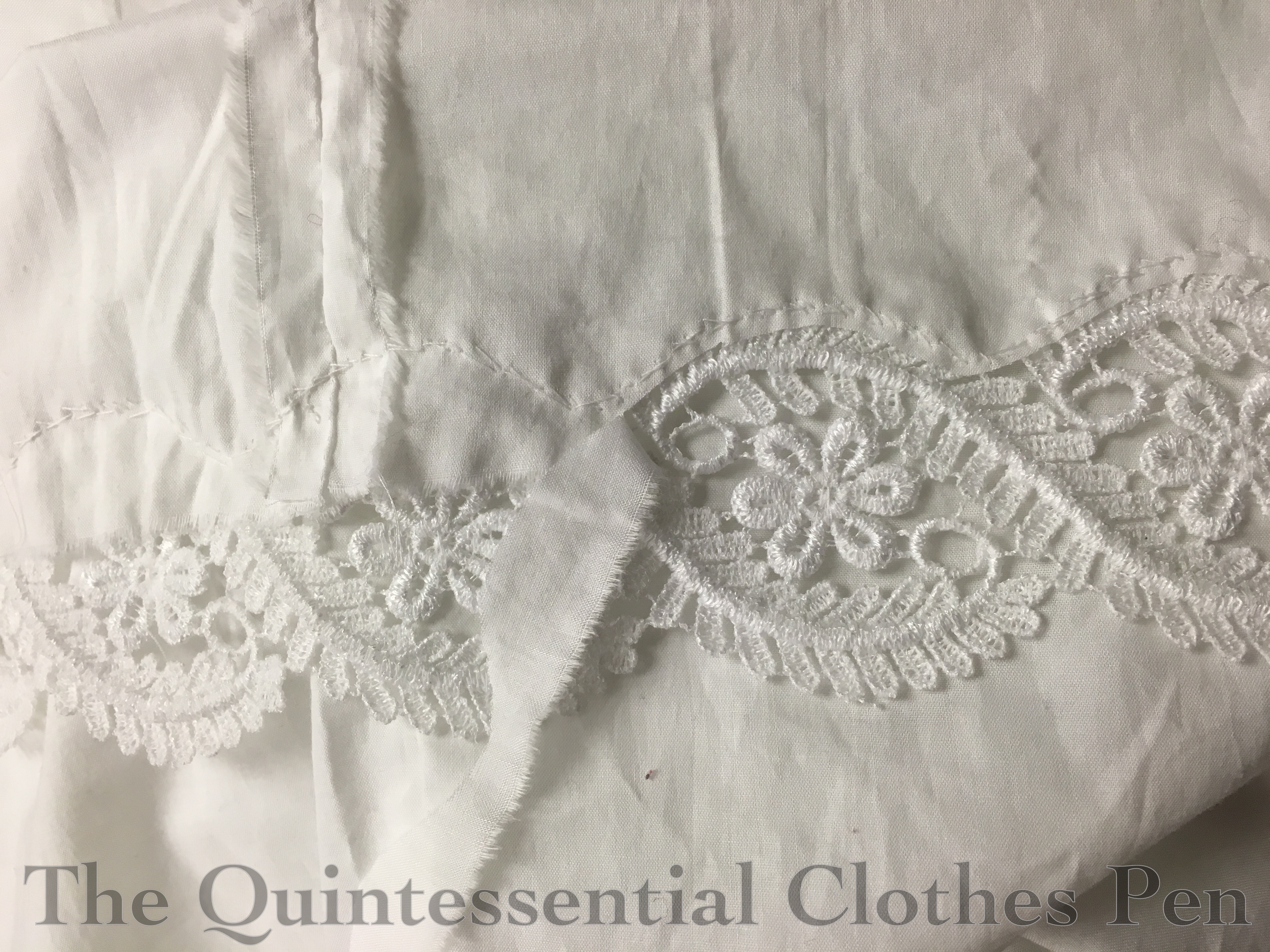
The only other changes I needed to make to the petticoat to use it for the Vernet Project were at the hem. I started by adding lace that mimicked the shape of the embroidery seen in my Vernet fashion plate. I whip stitched the lace on with small stitches and then cut away the fabric behind the lace, creating a lovely scalloped hem.

img_0284-1

After trying on the petticoat with the finished hem, I decided it was too long and took a tuck above the hem to shorten it. You can see the tuck in one of the photo shoot pictures early in this post.

This final picture is from when I was hemming the witzchoura. While I had that garment on the dress form I also put the petticoat on to determine the placement  of the lace on the previously hemmed petticoat.

img_0279-1

And that’s it! Those two garments were minor in scale compared to the toque de velours, silly shoes, and the witzchoura itself, both in terms of materials and sheer volume of work involved.

Sophie, 1861 Cotton Print (HSM #8)

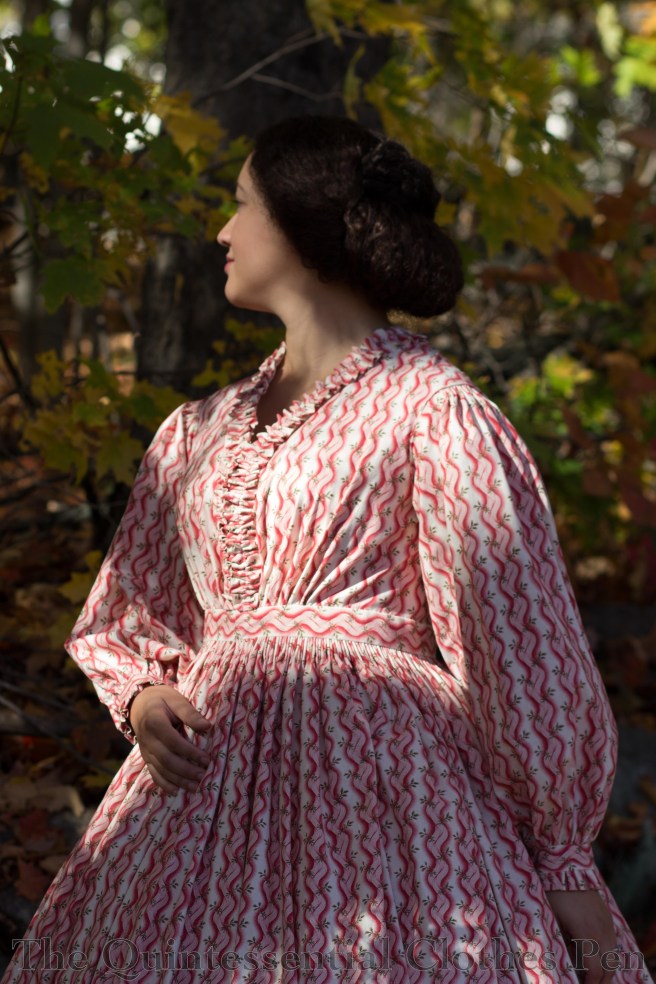
Last week, I introduced Eleanor, a newly made plaid gown from 1862. Today’s introduction is to Eleanor’s friend, Sophie. Sophie actually came first, back during the summer when I was intending to participate in the same dance performance for which I’ve worn Georgina in the past (here are a selection of past posts about Georgina: the construction which is similar in some ways to Sophie, Georgina in action, and Georgina with a new collar).

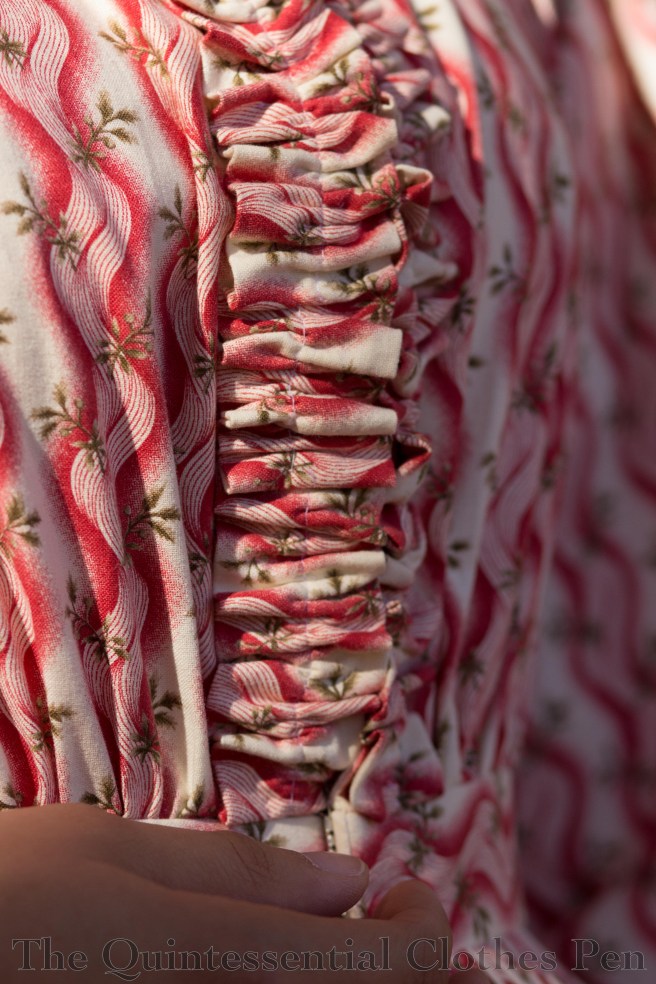
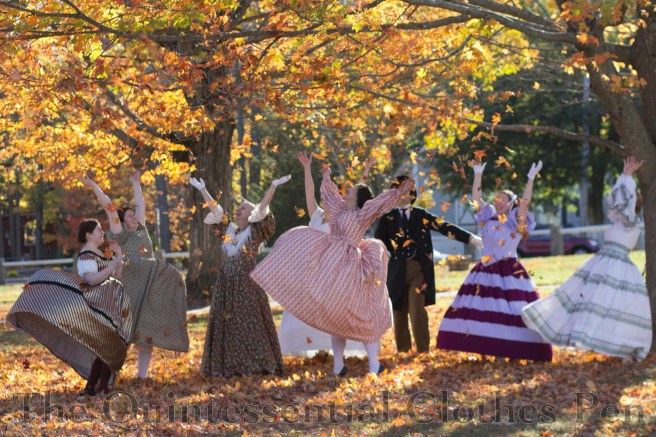
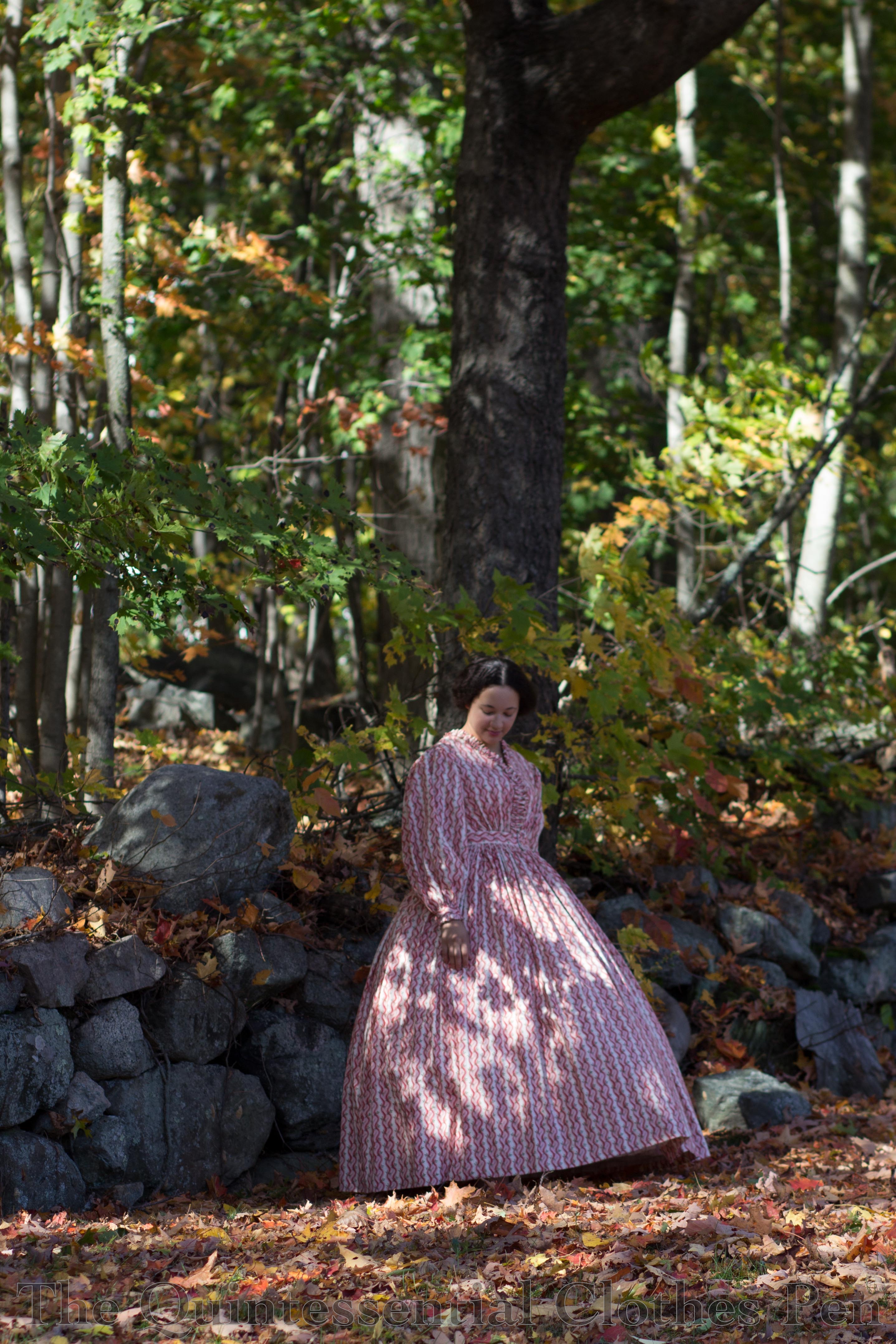
This year, the performance was rescheduled due to rain and I couldn’t attend the new date, meaning that the new dress, Sophie, languished until October, when I was able to wear it during part of a recent mid-19th century dance weekend. The nice thing about the delay is that the pictures all have stunning fall leaves, which would not have been in the case in the summer.
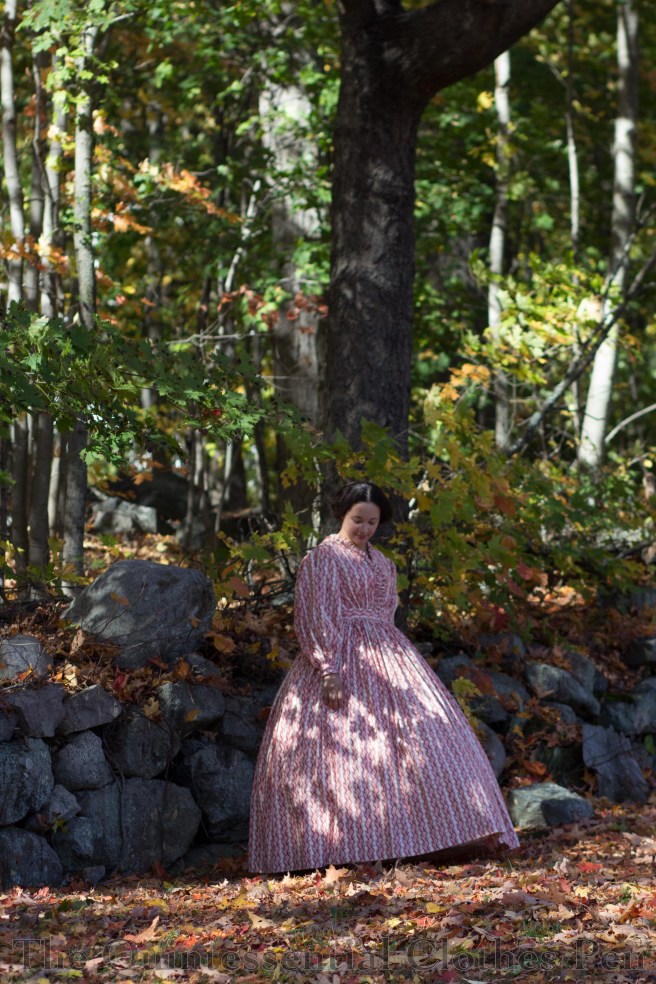
img_3450-1

Also, had I worn this dress on the first intended date, it would not have been entirely completed. Having extra time allowed me to officially finish all the trim and closures which made this dress the perfect entry for the Historical Sew Monthly challenge #8 “Pattern – make something in pattern, the bolder and wilder the better.” I didn’t have any pictures of the dress on a body at that point, so I submitted a rather sad picture of the dress on a hanger at that time. It’s exciting to have real pictures now!

Just the facts:

Fabric: 7.5 yards cotton print.

Pattern: Adapted from Past Patterns #701, 1850-1867 Gathered and Fitted Bodices.

Year: 1860-1863 based on my extant inspiration, but I’m calling it 1861.

Notions: Thread, hooks and bars, muslin scraps, and narrow yarn for cording.

How historically accurate is it?: I’m going to go with 95% on this one. This is as accurate as I can be given the research I have done and the materials I used, though the use of a facing on the front edges is guesswork. Regardless, this would be entirely recognizable in its time.

Hours to complete: Unknown. A fair bit.

First worn: October 23 for an afternoon tea and dance games.

Total cost: $23.

img_3451-1

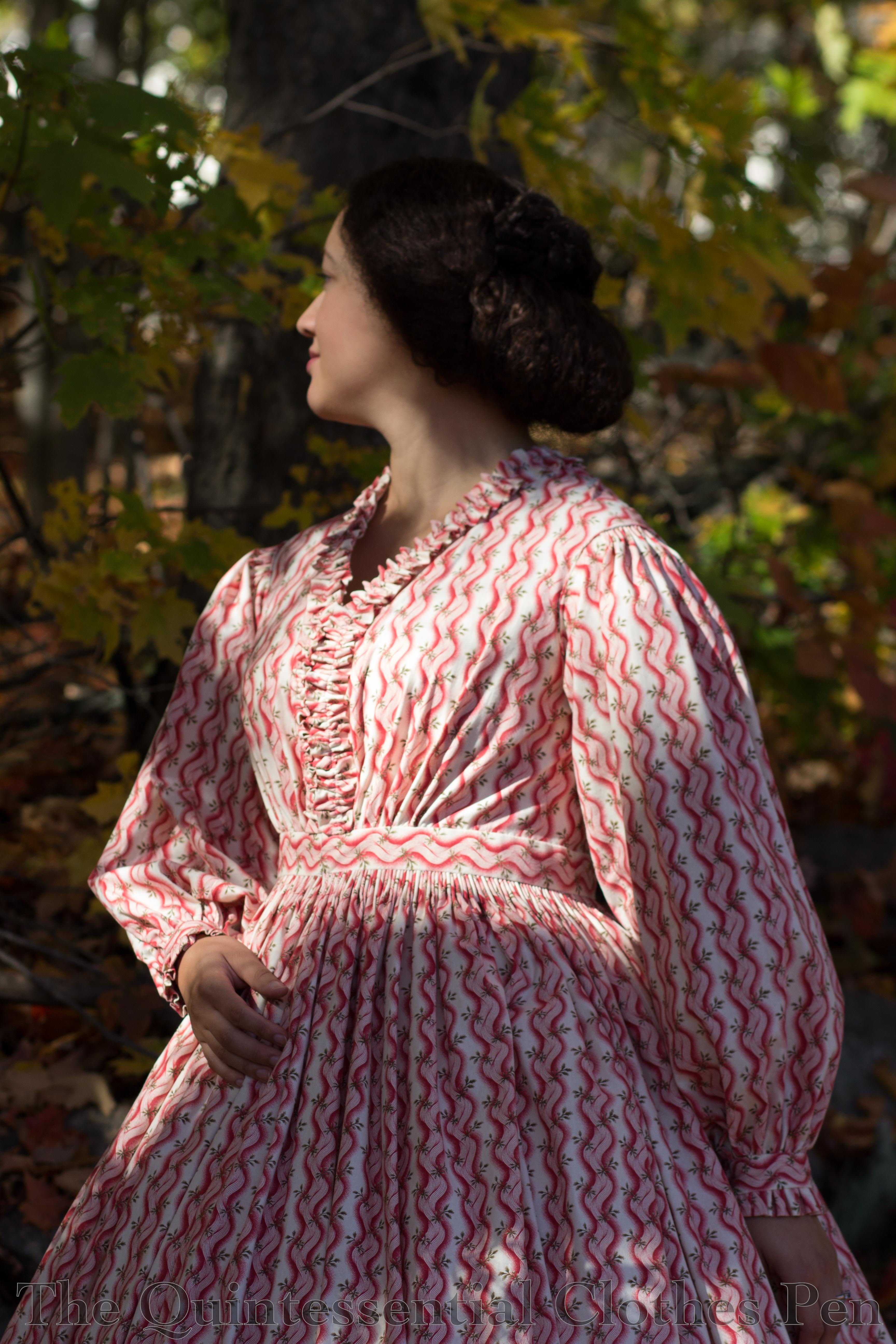
Sophie was directly inspired by this extant dress at the Kent State University Museum. I was considering what to wear for the performance, thinking that I’d worn Georgina enough to want something new, that I’d had an 1860s cotton print fabric in my stash for a few years, and then I remembered this dress. I decided to leave off the ruffle on the skirt (and also didn’t have enough fabric), but was so pleased that my cotton print is so perfectly suited for playing with the pattern in the same way as the extant dress!
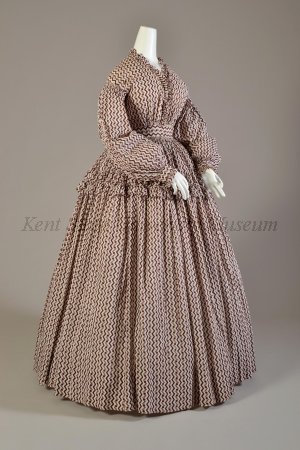
19861270001

Dresses from this period with v necks are not common, but they do exist. This Pinterest board has lots of examples. My Pinterest board has a few other dresses that helped move me along as well.

As I mentioned in my post about Eleanor, finding and making use of subtle differences between dresses from similar years brings me joy. For example, Sophie has a v neck, no boning, cartridge pleated sleeves, gathered trim, and is actually sewn together as a dress, rather than hooking together at the waistband as with all my other dresses from this period.
img_3461-1

img_3464-1

img_3467-1

In other ways, Sophie is similar to Georgina, being partially machine and partially hand sewn, having a cartridge pleated skirt, cuffs with little ruffles at the ends, and pockets.

img_3462-1

Personally, I love having pockets in day dresses. It brings me peace of mind to know that modern things like my keys are close by and not sitting around somewhere. Plus, chapstick, fan, gloves, etc. are also excellent choices for stashing in pockets. These pockets, which you can see the top of in the picture below, are sewn in the same way as Georgina’s pockets, shown here. I love this collection of references to pockets from the 1840s, 50s, and 60s that Anna Worden Bauersmith put together. I’ve been waiting for just the right moment to share it for what seems like ages.
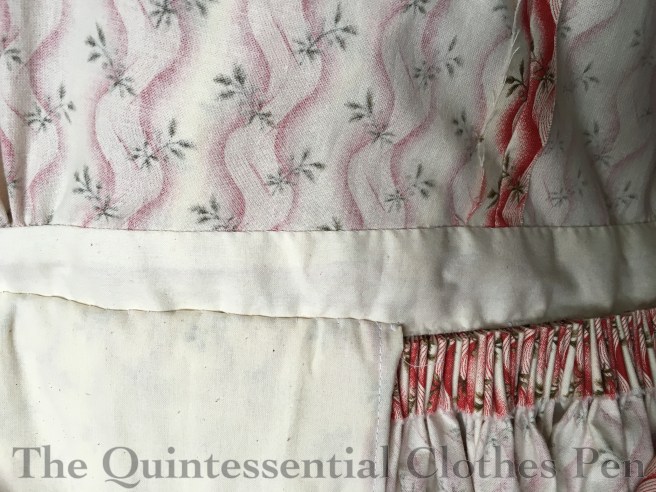
img_1871

Here are two more interior shots of the dress. The first shows the muslin facings. I don’t have documentation for this method being used to finish a lightweight summer cotton dress, but it makes sense that this method might have been used to finish the edges nicely while keeping the main body of the dress breathable and light. The second picture shows in the inside of the top of the sleeve, particularly to show the cartridge pleats.
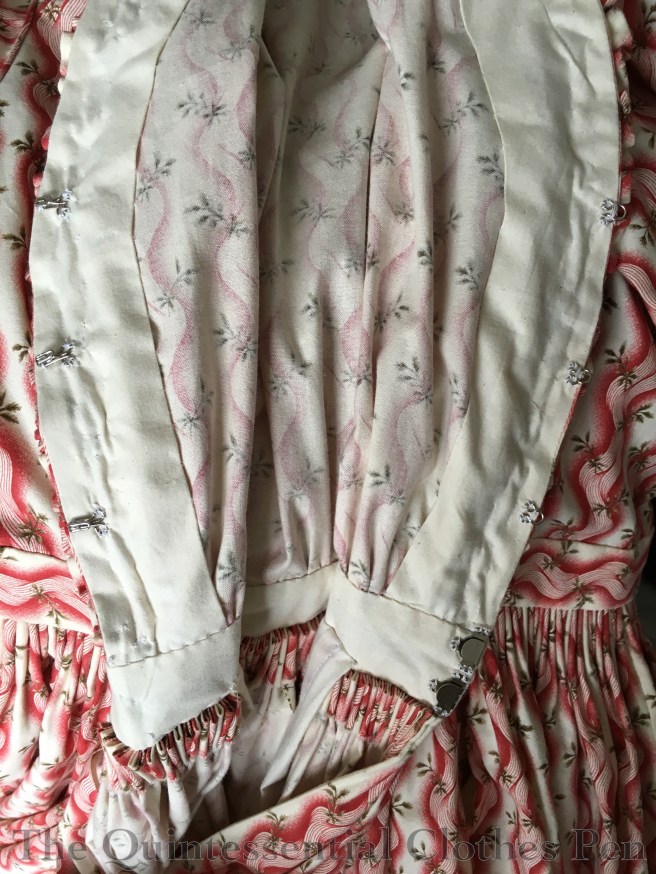
img_1874

img_1872

In addition to the dress, I also made a new cage crinoline. I’ve been wanting a slightly smaller, less bell shaped one, particularly to wear with cotton dresses. I love my old cage crinoline (seen here) for evening dresses, but it is just a bit too much for a more practical daytime look. The new crinoline shape just looks ‘right’ with the cotton dress. The difference is subtle, but pleasing. Unfortunately, it did not perform well in its first wearing. The vertical tapes were sliding all over the place and causing the hoops to drop and be tripped on. Not good! It needs revision before being finished and shared, so for now you’ll just have to believe that I’m wearing it with this dress.

Now that you’ve heard all about the dress itself, here are some pretty pictures of it in action. These first ones are in the spirit of the development of rural cemeteries in the mid-19th century, which you can read more about in this blog post at Plaid Petticoats.
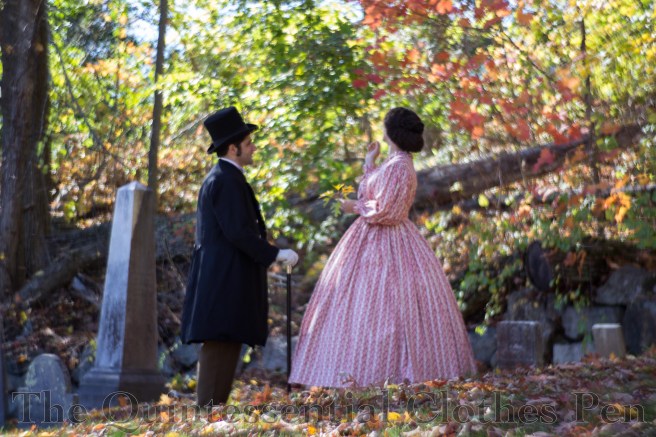
img_3492-1

img_3480-1

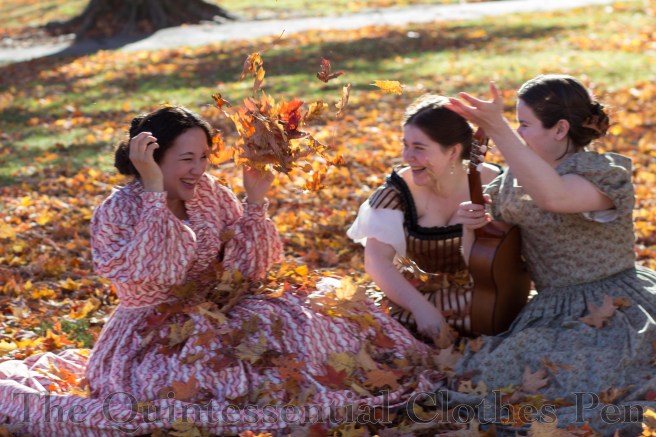
The next few are a celebration of the autumn season. The gorgeous leaves were beckoning us to have some laughs. Incidentally, I tend to jump in the air with my arms up whenever I’m having an amazing time in this period. Take this memory, for example. I’m doing pretty much the exact same thing!

img_3522-1

img_3525-1

img_3526-1

img_3543-1

We have so many things to be grateful for. I am always thankful for the many blessings in my life, particularly at this time of year. I hope that your life is also overflowing with blessings and reasons to give thanks, in autumn and always.

img_1956-1

Tiki Bubble Dots

img_2023-1

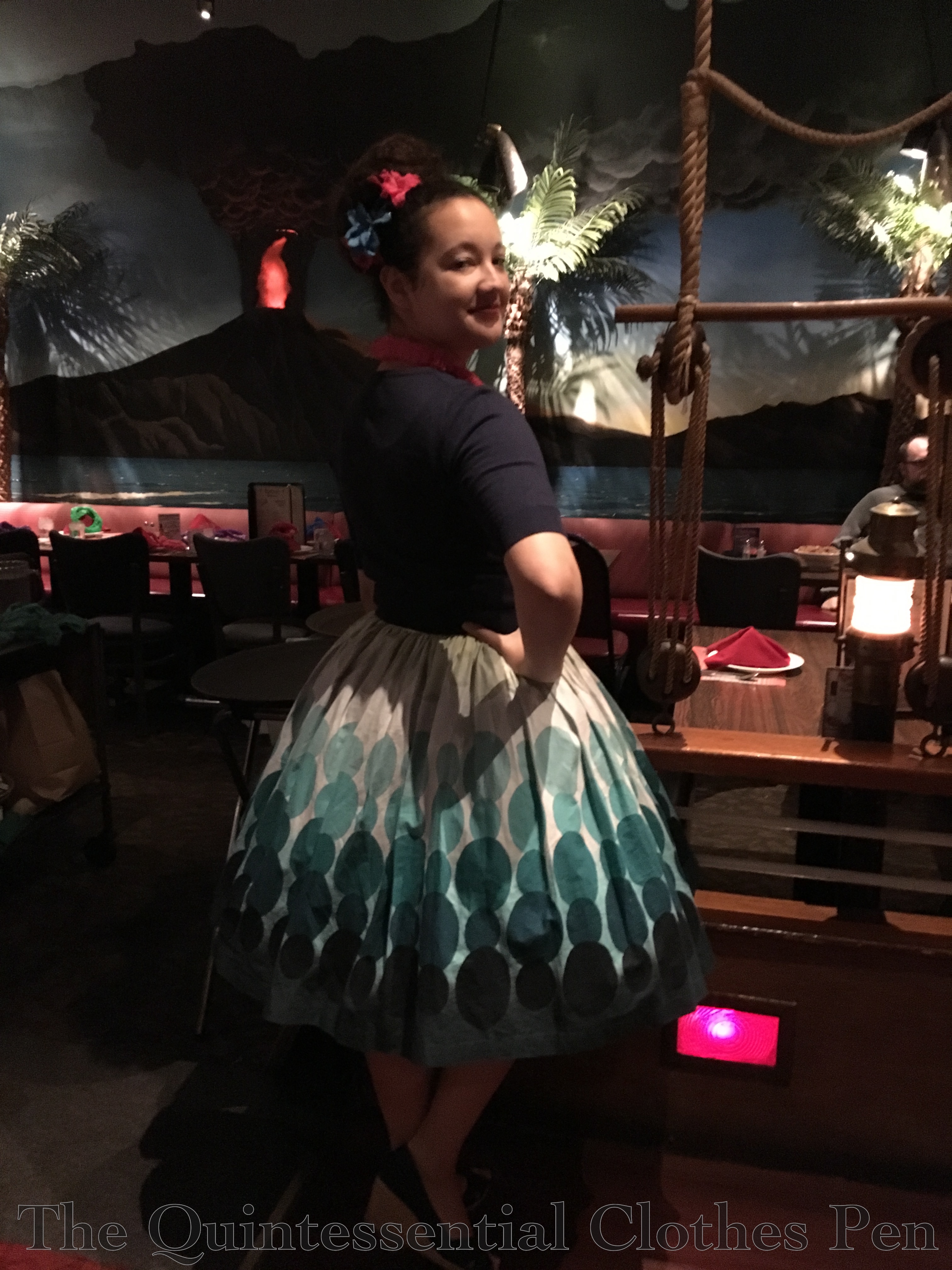
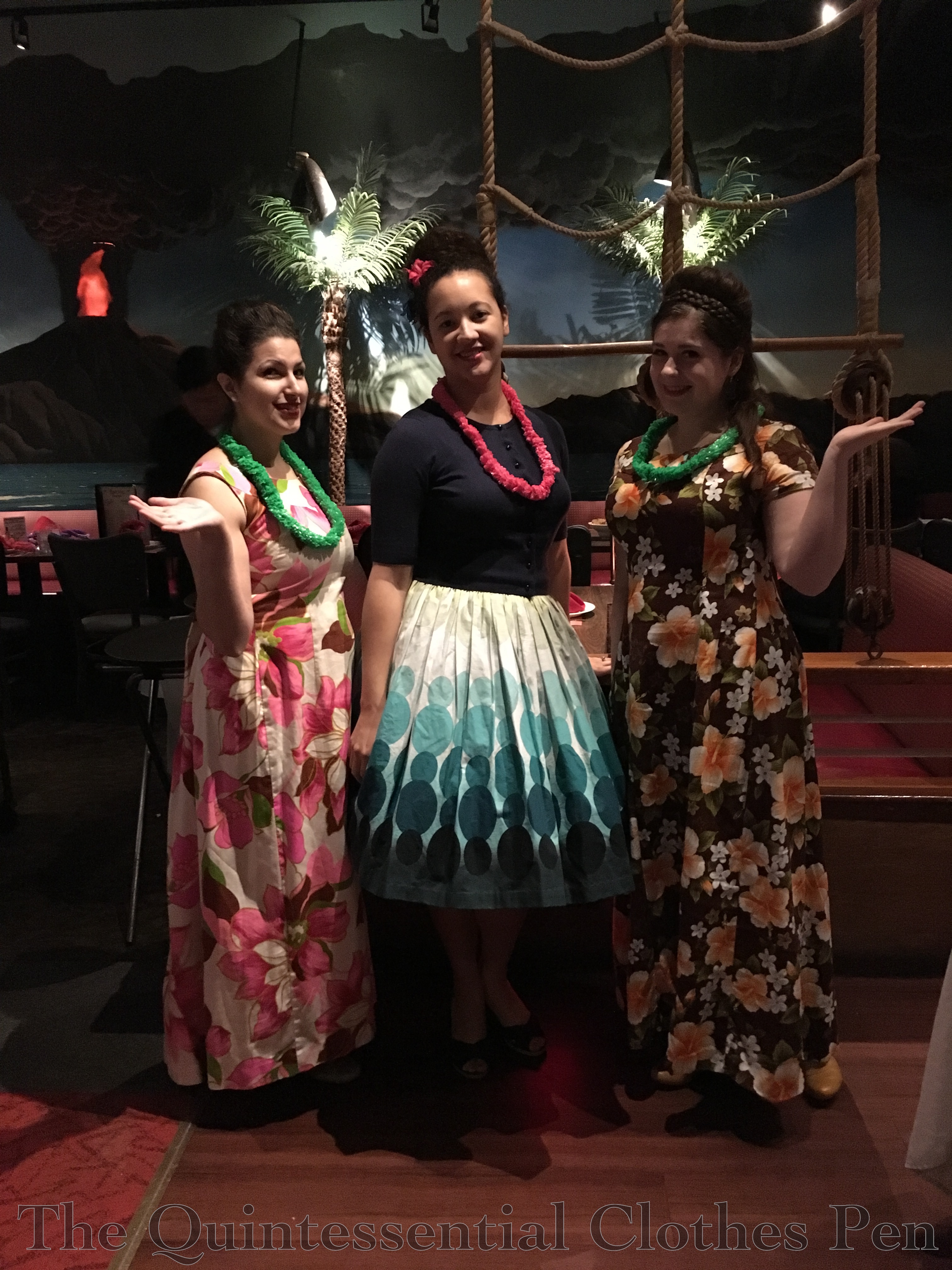
On a recent Saturday evening, I was to be found with the usual suspects at a local tiki themed restaurant. We were wearing, of course, 1950s and 1960s tiki-party themed clothing. What else would you wear, really?

img_2022-1

I took the outing as a sign that I needed to complete a revamped petticoat. There will be more on that later, as I haven’t taken pictures yet and I’ll be wearing it again soon. I will say simply that I am quite pleased with the shape I achieved!

The revamped petticoat was needed to puff out my Bubble Dot Skirt (which I’d made and posted about this summer) into a nicely full 1950s shape. I wore it with a 1950s fifties inspired cardigan, espadrilles, a super hair bun, some tropical flowers, and a down coat (not pictured, obviously) to stay warm outside!

We had lots of fun. The restaurant is intense in its decor. We were seated in a ship, including furled sails and rigging. There were fountains and volcanoes and thatched roofs and all sorts of other interesting things.

And it was a great excuse to wear a full petticoat with my Bubble Dot skirt! Now I’m thinking I need a less full one to wear with it on normal days. Something to make it A-line but not be obtrusively large and obvious. (This desire is also sparked by watching The Crown. Some of the skirts are so understated but perfectly A-line!) Do you have any ideas?
img_2010-1

Picturesque Regency Moments

During this year’s Regency Dance Weekend, we captured some of my all time absolute favorite shots of my Tree Gown. I saved them for this post rather than including them in the overview of the weekend.

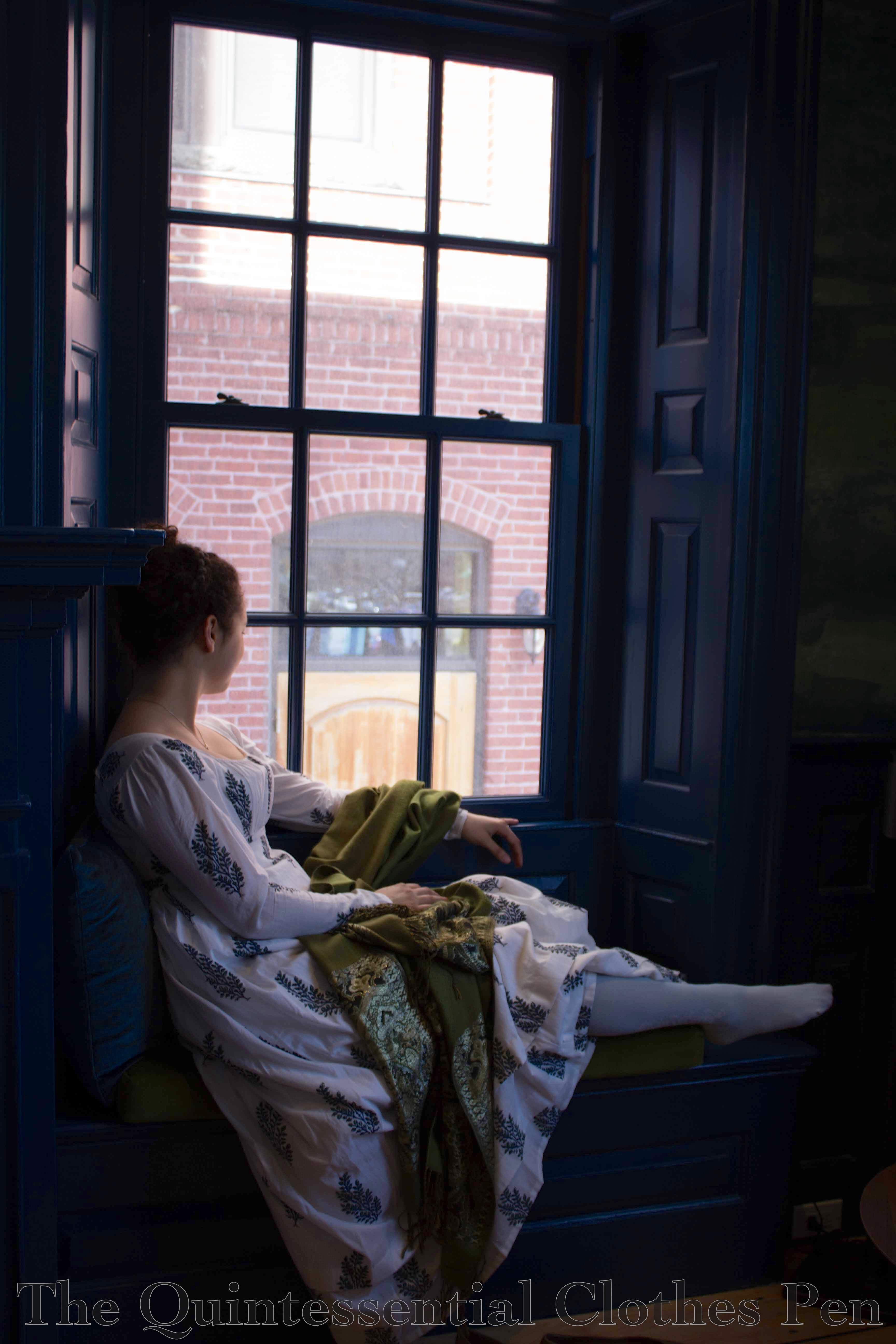
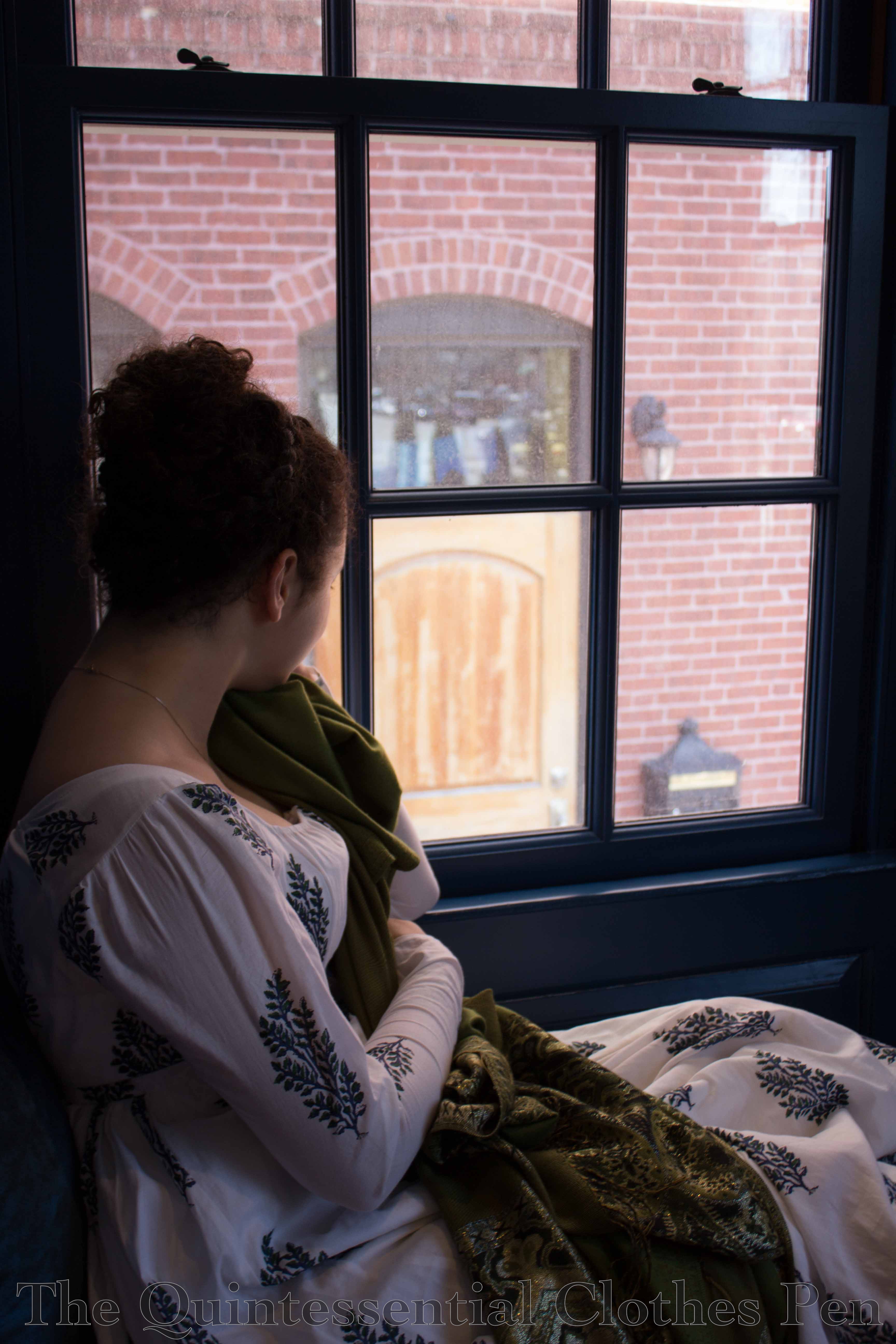
These first few were taken at our hotel. While the blue walls don’t scream Regency to me, they do coordinate nicely with my dress and make for a stunning background. The idea behind these is along Lizzy Bennet lines–lounging in a windowsill while comfortably contemplating life. This gown has the most beautiful drape to the skirt! It’s soft and full without being too fluffy.

img_2579-1

img_2583-1

img_2591-1

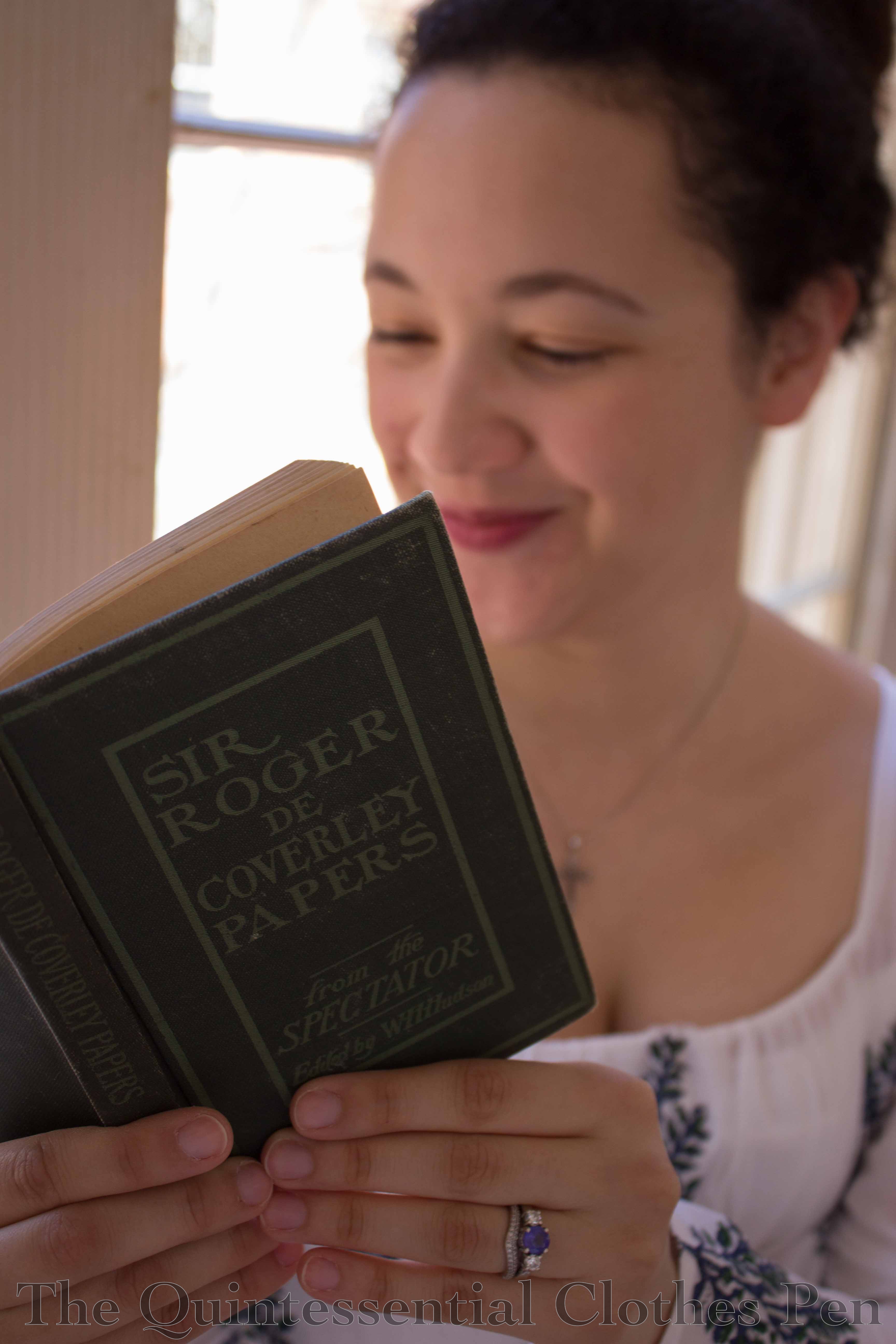
The next batch was taken at tea. One of my friends had brought the book and it is perfect for us, since we know a dance called Sir Roger de Coverley that was danced during this period. I had to pose with it!

img_2627-1

img_2630-1

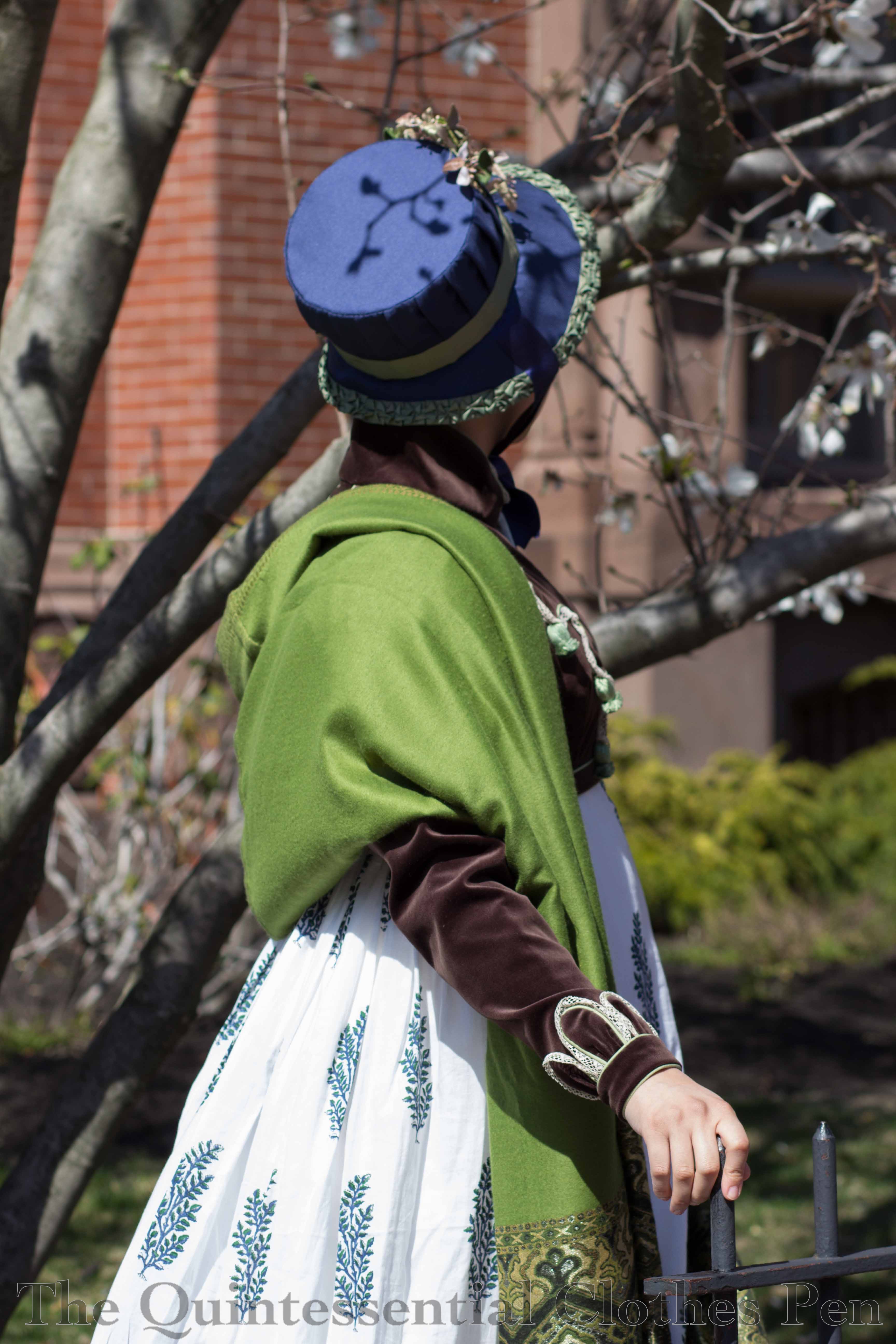
Then we went on our promenade, where we got some excellent photos of the gown with accessories: shawl, spencer, and bonnet. I like how the tree mimics the flowers on my bonnet.

img_2652-1

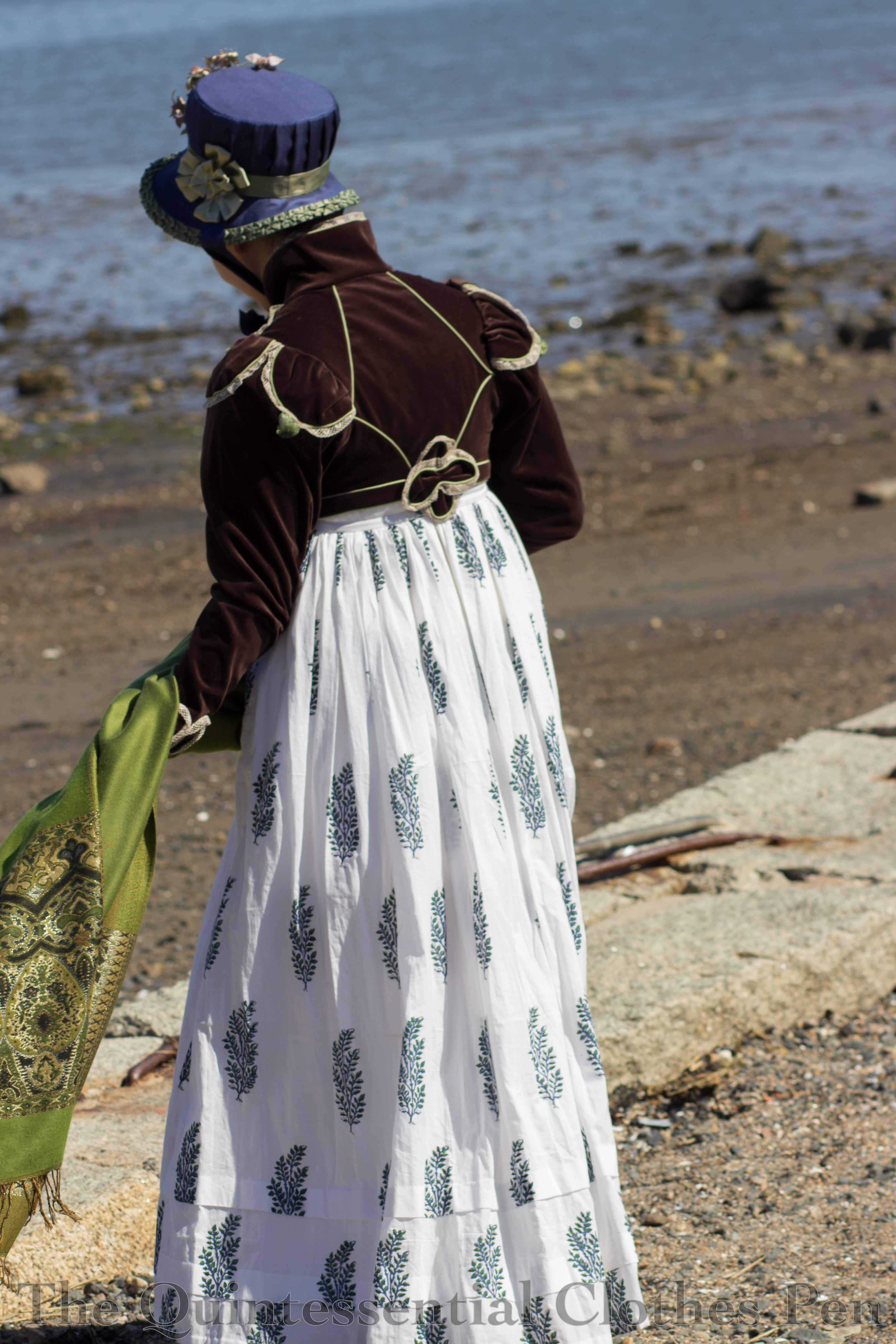
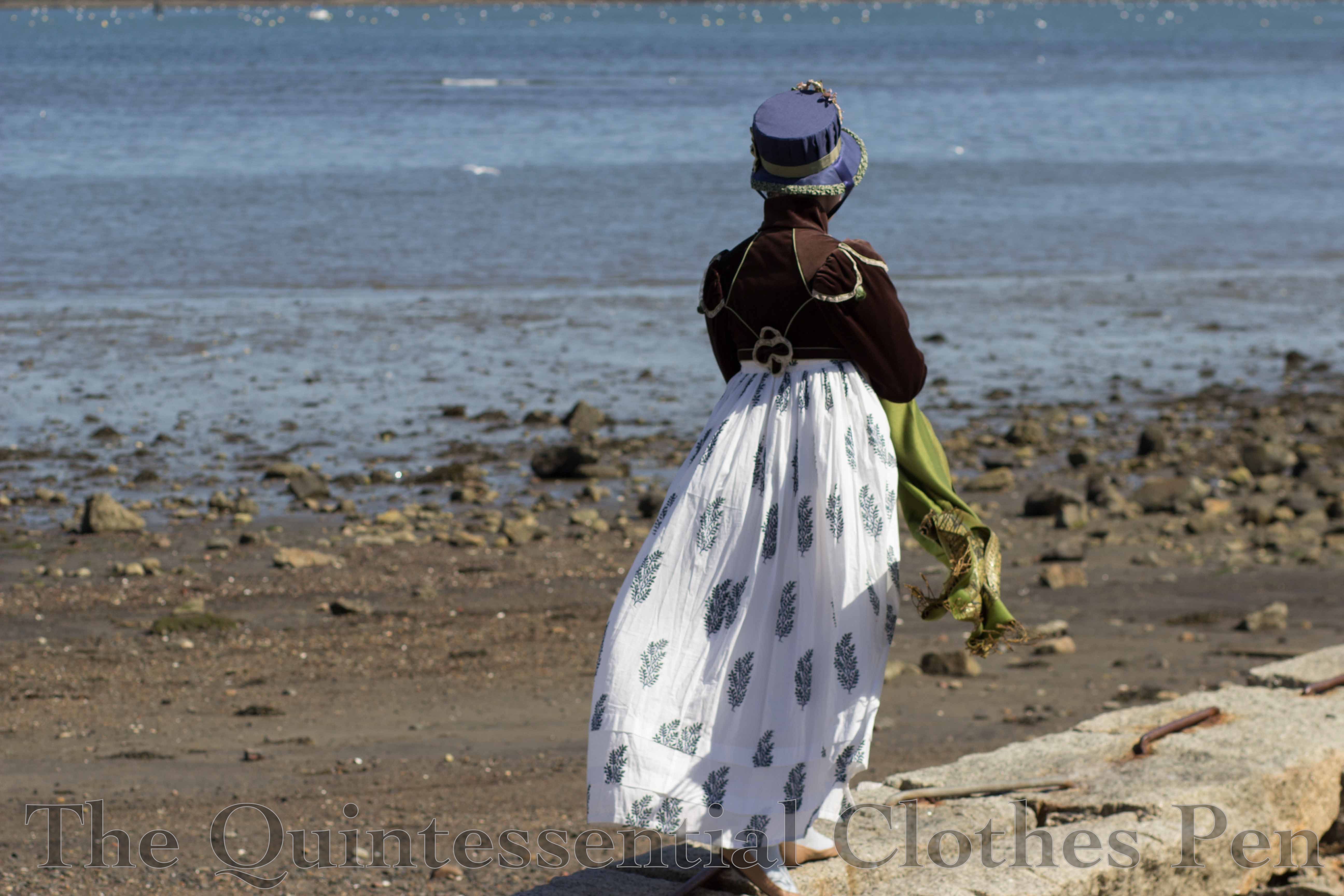
Mixing up my Jane Austen stories, these pictures by the water remind me so much of Persuasion and the unfortunate visit to Lyme. I just love everything about this outfit! The fabrics, the details in the trimmings… it all coordinates so well without being perfectly matching!

img_2703-1

img_2712-1

img_2706-1

Bubble Dots At The Aquarium

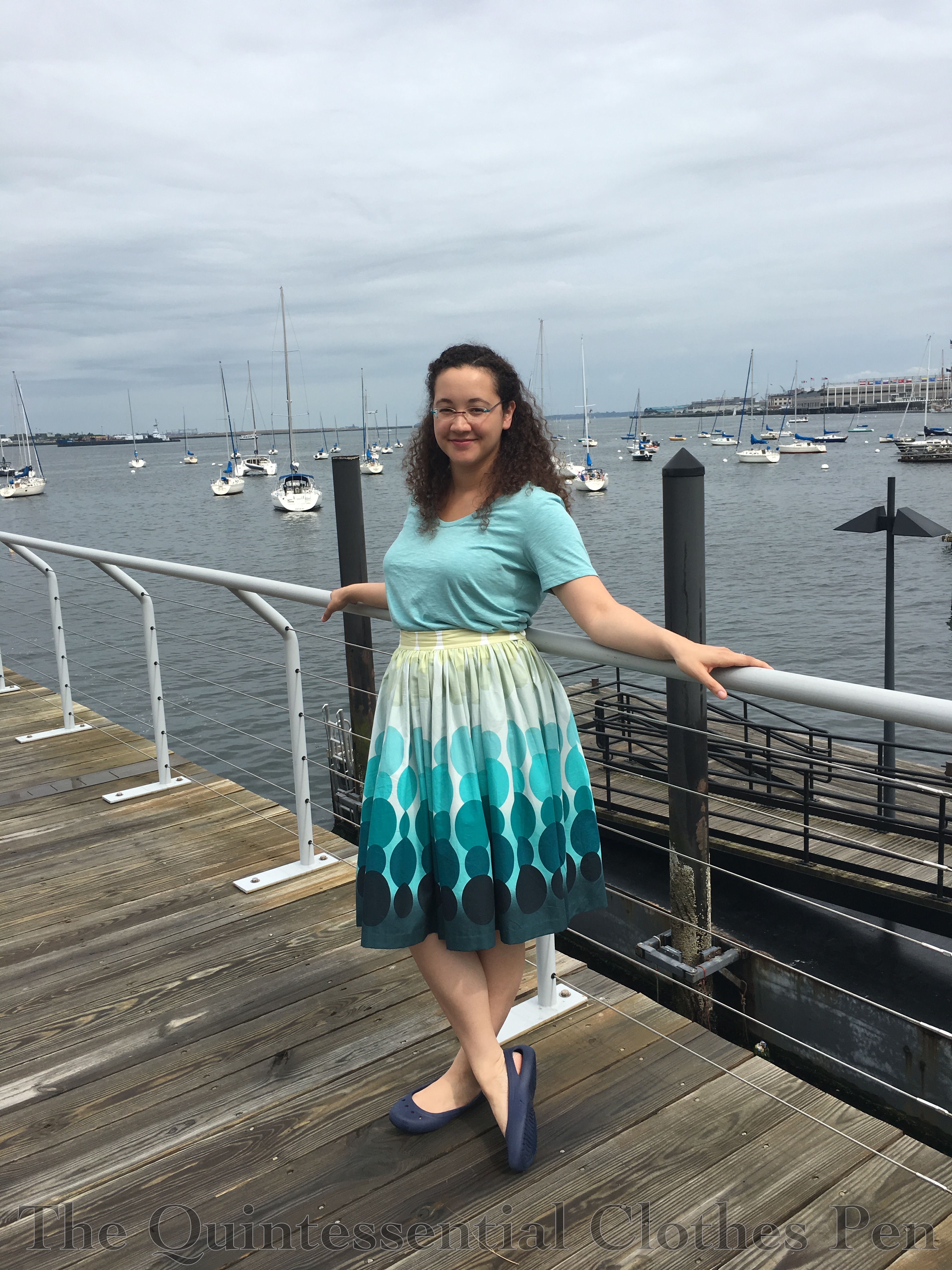
This summer I found some time to make some everyday modern clothes. Here’s one of those garments, a simple gathered skirt made interesting due to the ombre printed fabric, which reminds me of rising bubbles.

IMG_1672 (1)

I’d seen this fabric at the store, didn’t buy it, then saw it again about a month later and decided (or was convinced by friends…) to purchase it. I finished off the bolt with somewhere around 3 yards, which was perfect for a full hem.

IMG_1661

It looks pretty snazzy with a petticoat under it, so I’m hoping to have some excuse to wear it someday as 1950s instead of modern. In the meantime, I’ve worn it with a variety of white and oatmeal colored tanks and tees, both of which are nice continuations of the ombre effect of the skirt pattern.

The skirt is a mix of hand and machine sewing. The only seam is serged. The hem is hand sewn to be invisible. The zipper is hand picked because I didn’t feel like dealing with a machine zipper foot. The buttonhole is hand sewn because I didn’t feel like dealing with a buttonhole foot. And the inside of the waistband is sewn down by hand to keep things tidy.

IMG_1645 (1)
Hand picked zipper. Cute curved tab on the waistband to echo the dots with a lone vintage button from the stash.
IMG_1644 (1)
Look at that pattern matching!
IMG_1646 (1)
Tidy seam and hem.

For pictures, I wore this to the aquarium. It seemed fitting, with the bubble dots! I greatly enjoyed the larger animals–penguins of three types, seals, and sea turtles. I went with Mr. Q, who remembers going to see Myrtle the sea turtle when he was young and on school field trips. Sea turtles have long life spans, so Myrtle is still there, floating around. The aquarium has this to say about her:

Myrtle, our green sea turtle, lives in the Giant Ocean Tank. She has lived at the Aquarium since June 1970. She is approximately 80 years old, weighs more than 500 pounds, and eats lettuce, cabbage, squids, and brussels sprouts.

Yikes!

IMG_1653
Hi Myrtle!

There was another large turtle in the giant ocean tank as well, named Ari.

IMG_1652 (1)

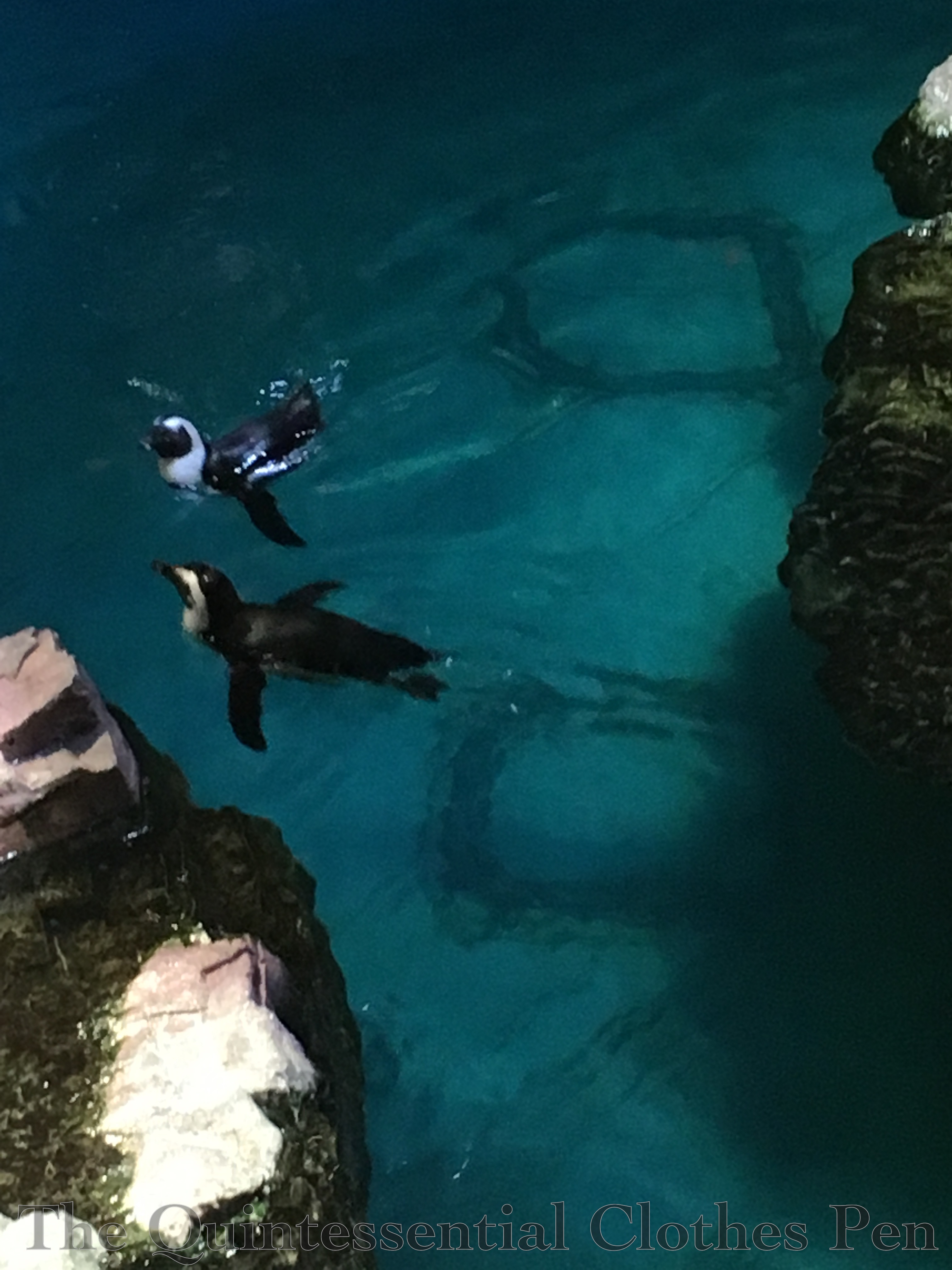
And penguins! They are so cute and funny!

IMG_1656 (1)

IMG_1657 (1)

IMG_1655 (1)

All the water in the tanks came out looking like the same colors in my skirt in these pictures. Perfect!

c. 1920 Bathing Boots

I had already decided this spring that a 1920s bathing suit was on the sewing list for this summer when Gina, of Beauty From Ashes, contacted me and asked if I’d like to test an Edwardian bathing boot pattern for her. I’m pretty sure I squeaked! “Of course!” But then I realized that there was no way I was going to have time to work on the boots before summer when I returned from my trip to Versailles. Luckily, that timing was just fine.

217ca1fa-bbe6-4199-8273-16e146a188bfGina had taken the boot pattern from a pair of extant boots that she owns, sized the pattern for her own feet,  and then made a pair herself (of course with a lot of work on the pattern  along the way). To the right are Gina’s boots, which you can read more about in her post, here.

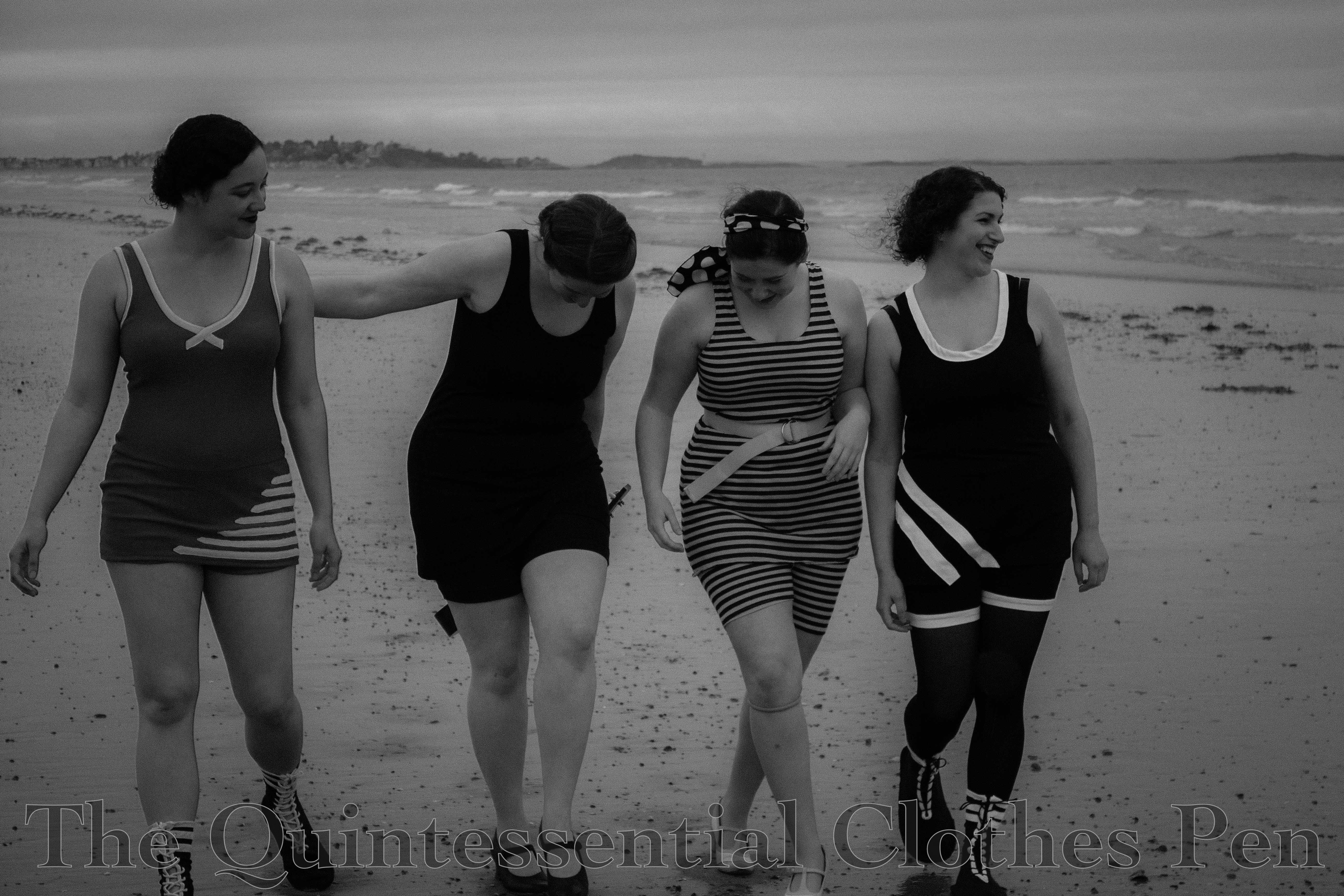
The idea coincided so closely with my plan for the 1925 bathing suit that I really wanted to push the boot date towards the 1920s and wear them together. I did some digging into bathing boot history in Women’s Shoes in America, 1795-1930 and found some great info supporting my plan, including information about the wearing of stockings with swimsuits and how that practice changed from the end of the 19th century through the 1920s. The following are excerpts from pages 137-139. There’s lots more detail about stockings and bathing shoes in the late 19th century that I haven’t included here, so if that interests you I highly suggest you get your hands on the book.

Bathing shoes were always optional, depending on how rough the terrain was and how tender the feet…

The most common bathing shoe at all times is a low slipper fitted with tapes that cross over the instep in varying arrangements and tie round the ankle. These are shown as early as 1867…

As long as bathing garments covered most of the legs, that is until the late 1870s, stockings were not considered absolutely necessary…

In the late nineteenth and early twentieth centuries, black stockings were very often worn for bathing without any shoe at all… When bathing shoes are shown, they are usually lighter than the stocking…and the commonest style is still the low slipper, presumably cork-soled, with tapes to cross once or twice and tie round the ankle…

About 1915, a new style of bathing footgear appeared, a mid-calf high boot, solid on the sides and back of the leg, but open down the front and laced across the opening… [and] the acceptance of real swimming (as opposed to splashing in the waves) brought about changes in bathing costume… Closer-fitted knitted suits appeared in the 1920s, and gradually the long black stockings were discarded (the last fashion picture I find including them is from 1922). In the late 1910s and early 1920s, short stockings were worn gartered someplace below the knee, but soon even these disappeared and bare legs began to appear in the early 1920s. Bathing shoes were still worn over bare feet when rough ground made them desirable, but they were a matter of utility, not modesty.

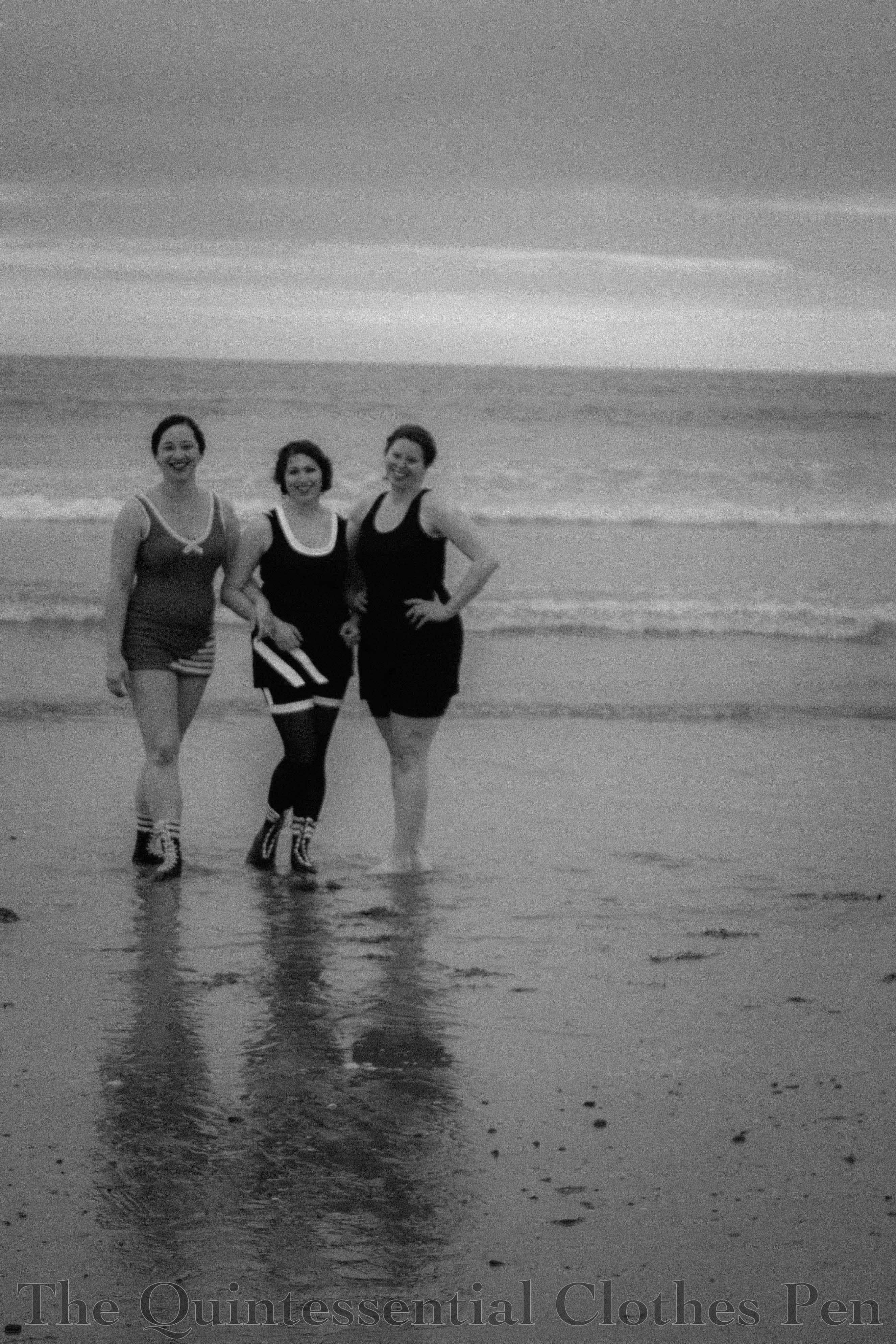
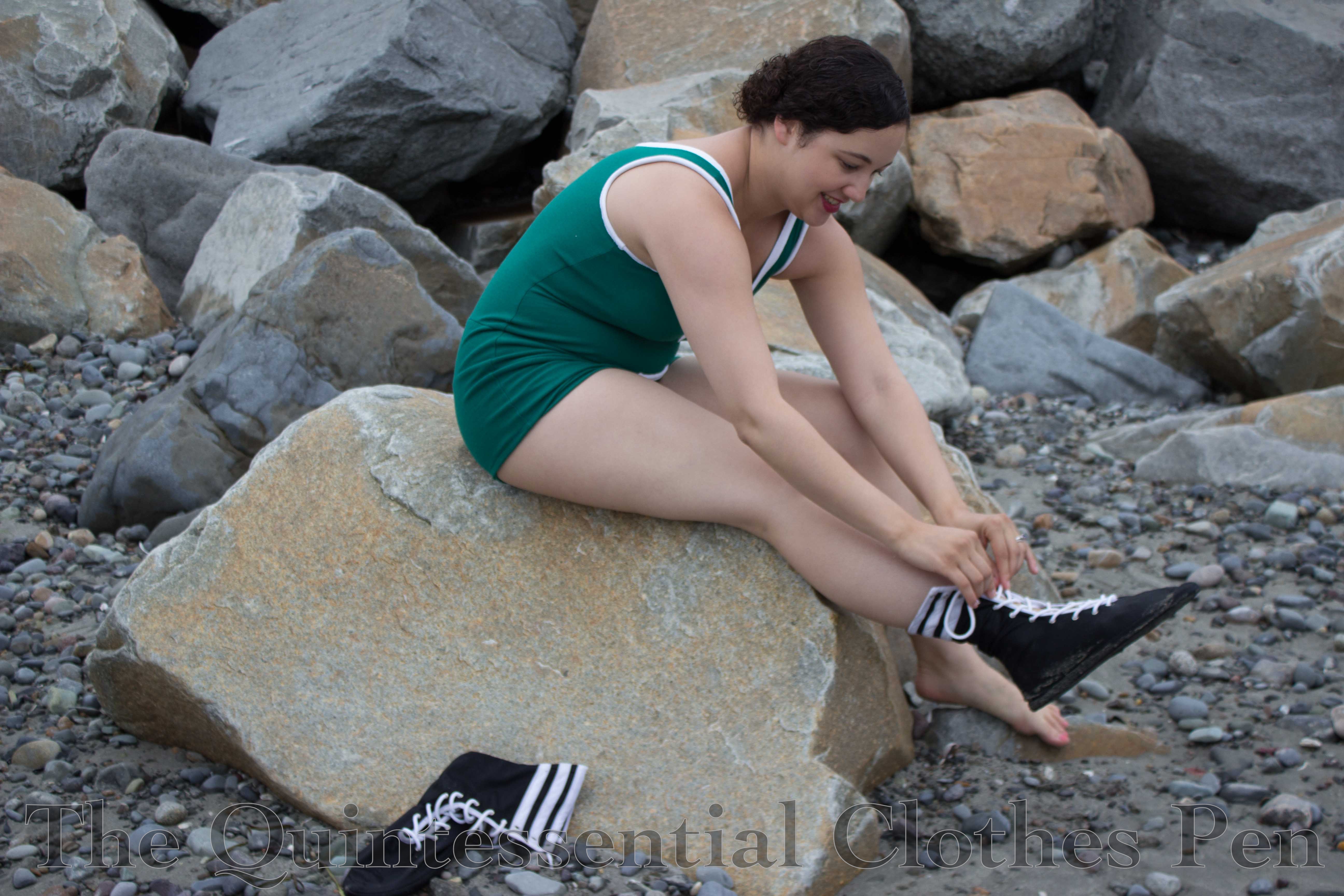
Such useful information when deciding what accessories I wanted to wear with my swimsuit and boots! I thought of taking pictures with stockings and without but decided that was too much of a hassle and settled instead for pictures with boots and without. You’ve already seen the pictures without boots. Now for a few with! (Yes, a friend also joined the pattern testing and wore her bathing boots to the beach, too!)

IMG_2895-2 (1)

IMG_2883-2 copy

After wearing the boots in the water I took them off for pictures of the suit, but then decided to put them back on. As you might expect, they are less exciting to put on when feet and boots are already wet and covered with sand… though I think all the sand in the boots did give my feet a good exfoliation!

IMG_2941 (1)

IMG_2979 (1)

As for construction, here’s a quick run-down. I chose to make my boots out of navy cotton twill and white cotton canvas. Despite the fact that green boots exist, I didn’t want to try and match my greens. Plus, both the navy and white fabrics were in the stash and are neutral enough to wear with any future bathing suit I might decide to build.

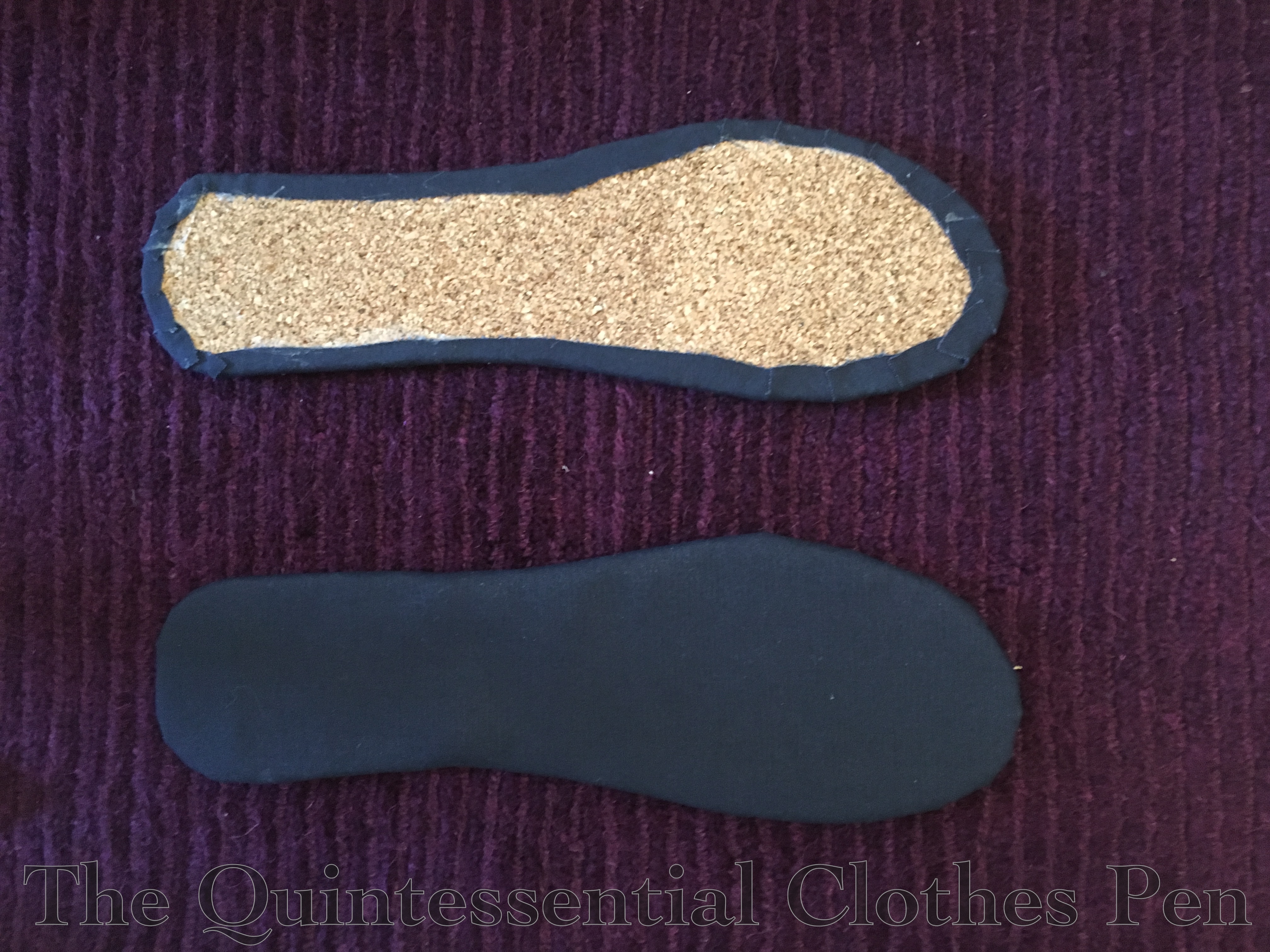
Each outsole has two layers of cork bound in bias. Nice and sturdy for walking, but too thick for a sewing machine, which meant a lot of unexpected hand sewing for this project.

IMG_1599 (1)

The insoles are a single layer of cork with the fabric glued in place. I just slipped in insoles into the boots for wearing, which meant I could take them out to let them dry after wearing. Given that they were soaked through this was great.

IMG_1600 (1)

The uppers were fully finished before attaching them to the soles. This part is all machine sewn.

IMG_1606 (1)

Finally, I hand sewed the uppers to the soles.

(I’ve made this all sound very easy and speedy, but I’ll admit that I took a shortcut and purchased cheap eyelets and a cheap eyelet setter to get the right look with high hopes for the quality. Unfortunately, I was disappointed. The eyelets were such a pain! The setter squashed them unevenly and then I needed pliers to make them look somewhat reasonable and trim off sharp bits. There are 44 eyelets. It took a long time. And it made my hands hurt. It would have been faster for me to hand sew the eyelets. Plus, they rusted after just the one wearing the water! And they got rust on my shoelaces, which was also a pain because the standard round shoelaces barely fit through the eyelets and getting them laced was hours all by itself. Ugh! For next time, I found narrower laces that will be so much easier to use, so I can at least take them out after wearing the boots without it taking forever. Or maybe I just won’t wear them in the water. Anyway, I don’t suggest you follow my example on the cheap eyelet front.)

IMG_1608 (1)

I am so grateful to Gina for sharing her pattern with me! It takes a lot of work to perfect a pattern and I probably would not have attempted bathing boots without having one already made and in hand.

1919 Ivory Eyelet Dress (HSF #7)

I have a three evening gowns from the 1920s, but only two daytime ensembles. For summer events from the Ragtime dance period and the 1920s in general, I wanted a new addition in the daywear lineup, so I kept my eyes open while out shopping for other projects. I came across the fabric for this dress a few months ago before I had time to sew, but with a general plan in mind.

IMG_1622

Fast forward to about a month ago and I started actually planning the dress. I had thought to make a dress from about 1916 with a distinct a-line shape (a silhouette like this), but reconsidered that plan when considering the very linear effect of the tucks in the fabric. The linear fabric was much more suited to the period from 1919 to 1922 and so down that road I went.

IMG_1628

Just the facts:

Fabric: 4.5 yards pre-tucked ivory cotton.

Pattern: Adapted from Past Patterns #9127, Ladies’ Dress 1918-1920.

Year: 1919, explained in detail further along in the post.

Notions: Thread, snaps, and a hook and bar.

How historically accurate is it?: 95%. Accurate pattern from the period, reasonable fabric, and accurate finishing methods. Woo!

Hours to complete: 30? I took my time to enjoy the process, hand sewed more than was absolutely necessary in order to watch Netflix and not dig out the sewing machine, and fiddled with the bodice for awhile to get a style I was satisfied with.

First worn: July 17 for a Ragtime tea dance.

Total cost: $30 for the fabric.

(Edit: I forgot to mention what HSF challenge this was for when I originally published the post. It’s for challenge #7: Monochrome.)

IMG_1626

Why did I decide on 1919 for the year of my dress? The pattern dates to 1918-1920, putting my dress squarely in the middle, but I also looked at the details that changed with each year from 1918-1922 to confirm the plan.

3a57a53918caa3169851de5ee4e07f00
1918. Skirts have just ceased being the A-line shape of the prior three years, but they still have fullness and waists remain high.
c7f197805c10c37b29edb75dc9474571
1919. Still some full skirts, but the silhouette is narrowing.
42a3c1119c5fe26a015e785a9c6ce956
1920. Slimmer skirts with high waists.
6f15eba27b2b6312a8cc5d2e5851dc39
1921. Slimmer skirts with a dropping waistline.
8fa6917ee7b0b47dc885ad5c3fada90c
1922. The waistline has dropped to hip level and drape effects are fashionable.

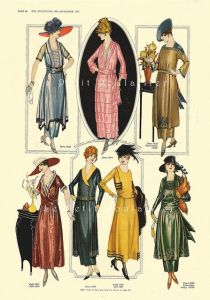
1919 is the year when the features I most wanted all come together: full skirt, high waist, playing with the linear nature of my fabric going both vertically and horizontally, and skirt tucks. These features can be seen in the following most inspirational images.

fb02413f850f398dc842e2f9628c33ec
c. 1915
def974fc2efd8f1405bc5f1789b45392
c. 1915
0c121e6a1372e33bef4ca33340f96061
c. 1920
090083175fa5efb1cb137c925c241252
1919

Plus, these two fashion plates, from 1920 and 1921.

And construction? I kept it simple, with a few unfinished edges in the skirt (gasp!), pinking on the seams and exposed edges in the bodice, and as few closures as possible. No fuss. The bodice closes off center in front but the skirt closes in back because I was originally planning to make a separate blouse and skirt. When I decided I didn’t feel like dealing with a peplum, and that even with a peplum a blouse was likely to come untucked (as happens with my 1917 blouse when I wear it), I just hand sewed the now-bodice to the inside of the waistband  and sewed snaps around the other side to keep it together, as you can see. This way, it’s easy to separate the two pieces in the future.

IMG_1637

All in all, a pretty quick project as my projects go. Comfortable, flattering, easy to alter (a component of sewing projects I am trying to incorporate more often as I move forward with projects), satisfying to wear, plus it goes well with my Astoria shoes. Win!

SaveSave