Victorian Egyptomania & Mummy Unwrapping

It is evening. The rain is pouring down outside. Hurry up the front steps, push open the heavy front door, and join the gathering of late Victorians interested in archeology and ancient Egypt that are inside. The guests have been brought together for opportunity to see artifacts, listen to a lecture on Egyptology, and finally to witness the unwrapping of a mummy.*

img_1976-1

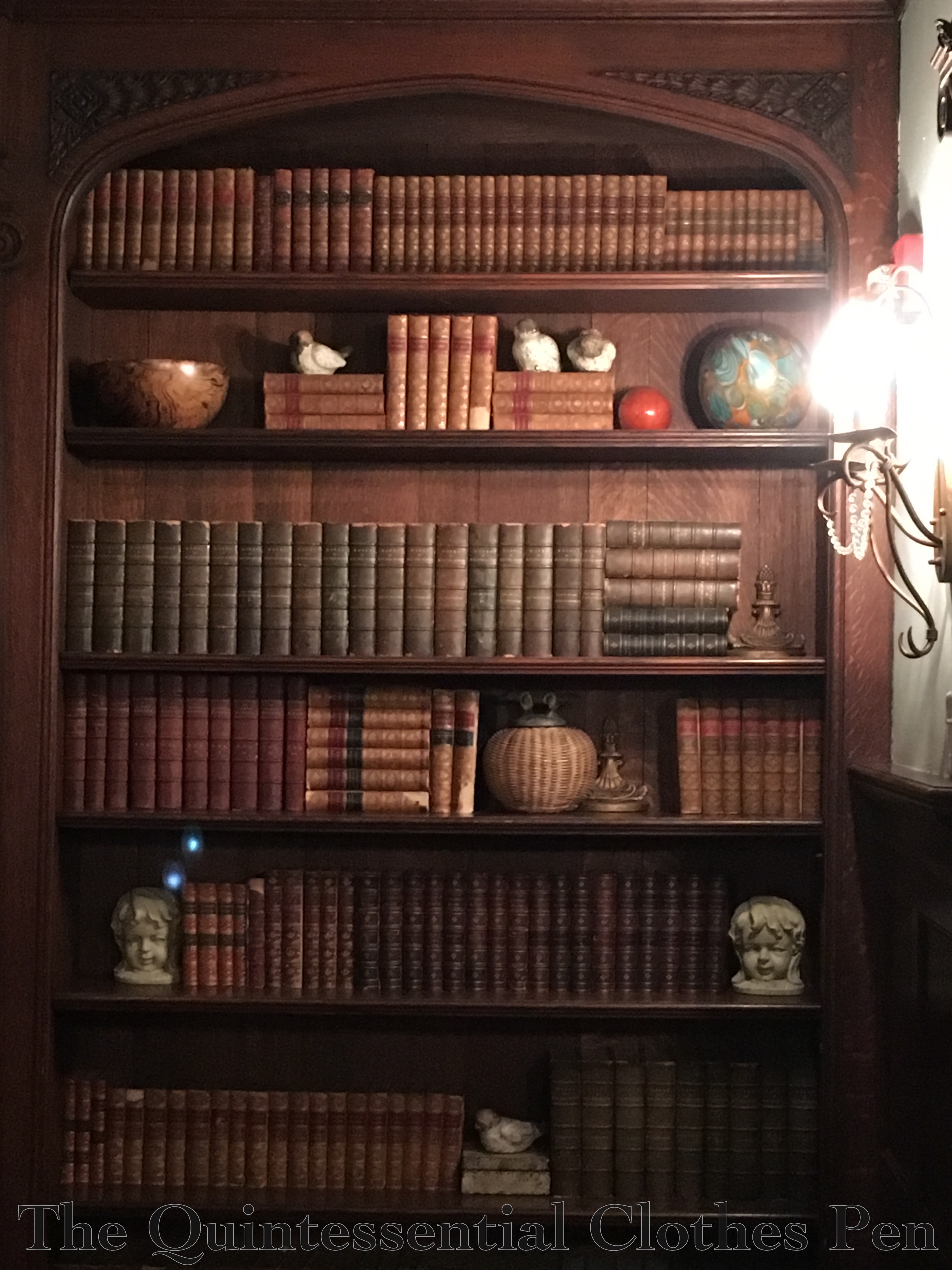
The location is the Tudor style Bosworth Castle.** Dark wood, intricate detailing, and interesting artifacts abound. The rooms are filled with the light chatter of guests greeting friends and curiously examining artifacts. A pianist provides background music in the main hall. There are tables and mantels filled with artifacts and interesting objects to explore.

img_1964-1

img_1974-1

img_1978-1

img_1988-1

img_1987-1

img_1989-1

img_1984-1

img_1979-1

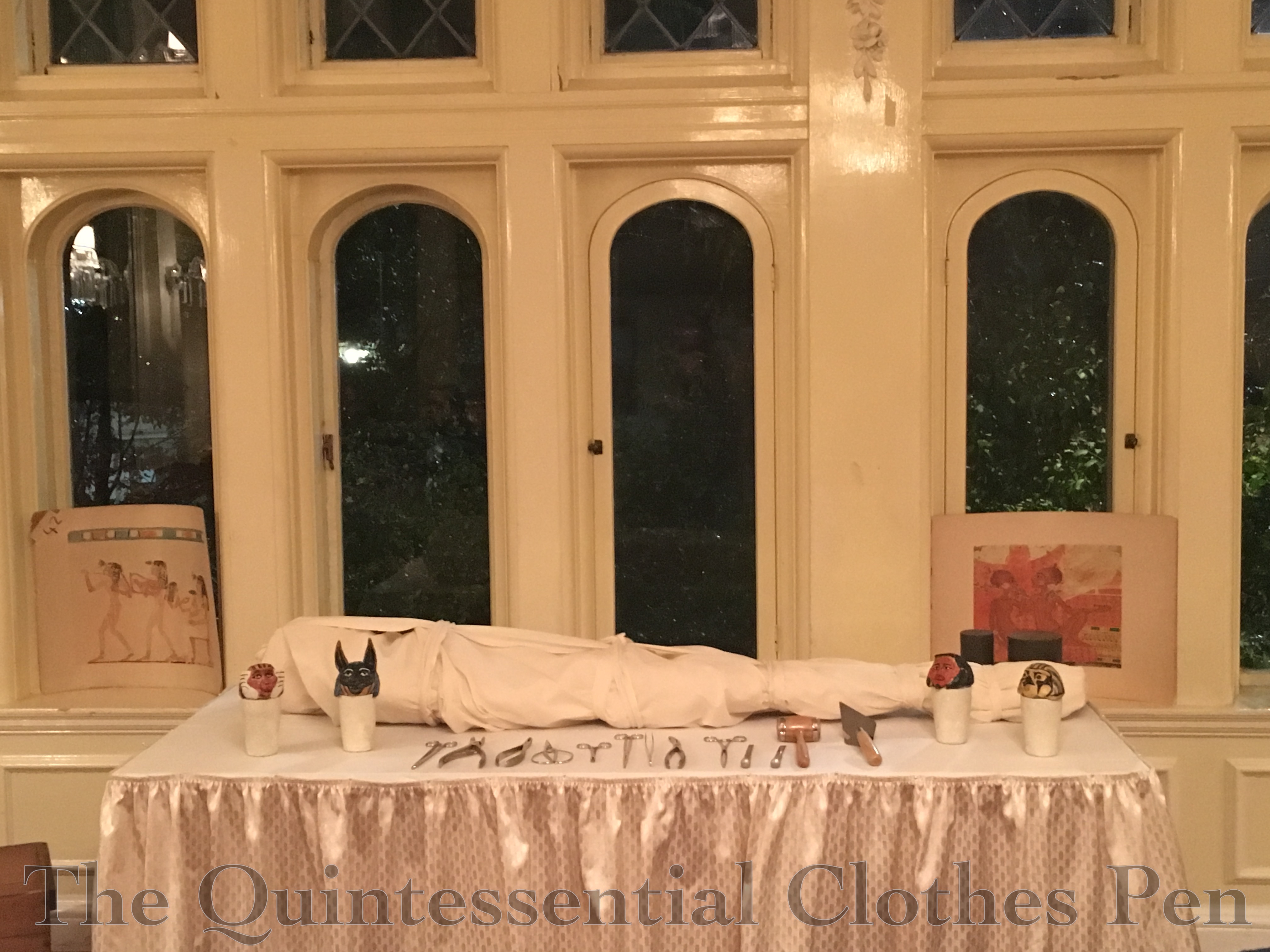
In one room, the mummy rests on a table with its canopic jars. Tools are laid out, ready for the unwrapping which will occur later in the evening.

img_1980-1

Following the lecture and mummy unwrapping, guests are invited to ask questions and look more closely at the mummy and his amulets. It is concluded during the unwrapping that the mummy is indeed a prince, as suspected.***

img_1992-1

Guests are given souvenirs from the evening as they depart, including a note regarding the identity of the mummy and a scrap of his wrappings.

img_2002-1

*No mummies or artifacts were harmed in the course of this event. The evening included a discussion of Victorian archeology compared to modern methods and used a recreation of a mummy as well as reproduction tools.

**This event was created and hosted by the Archeology Department of Boston University. It was hosted in a building a BU actually called the Castle, though the Bosworth part was added for fun.

***Actually, the character of the mummy was decided specifically because the mummy of the prince does not actually exist, allowing for some creative liberties. In fact, the amulets were all placed just so within the wrappings to allow for their context to be explained during the unwrapping. The mummy was carefully crafted to look, and even smell, authentic while of course sticking to modern materials. It was quite impressive!

Picturesque Regency Moments

During this year’s Regency Dance Weekend, we captured some of my all time absolute favorite shots of my Tree Gown. I saved them for this post rather than including them in the overview of the weekend.

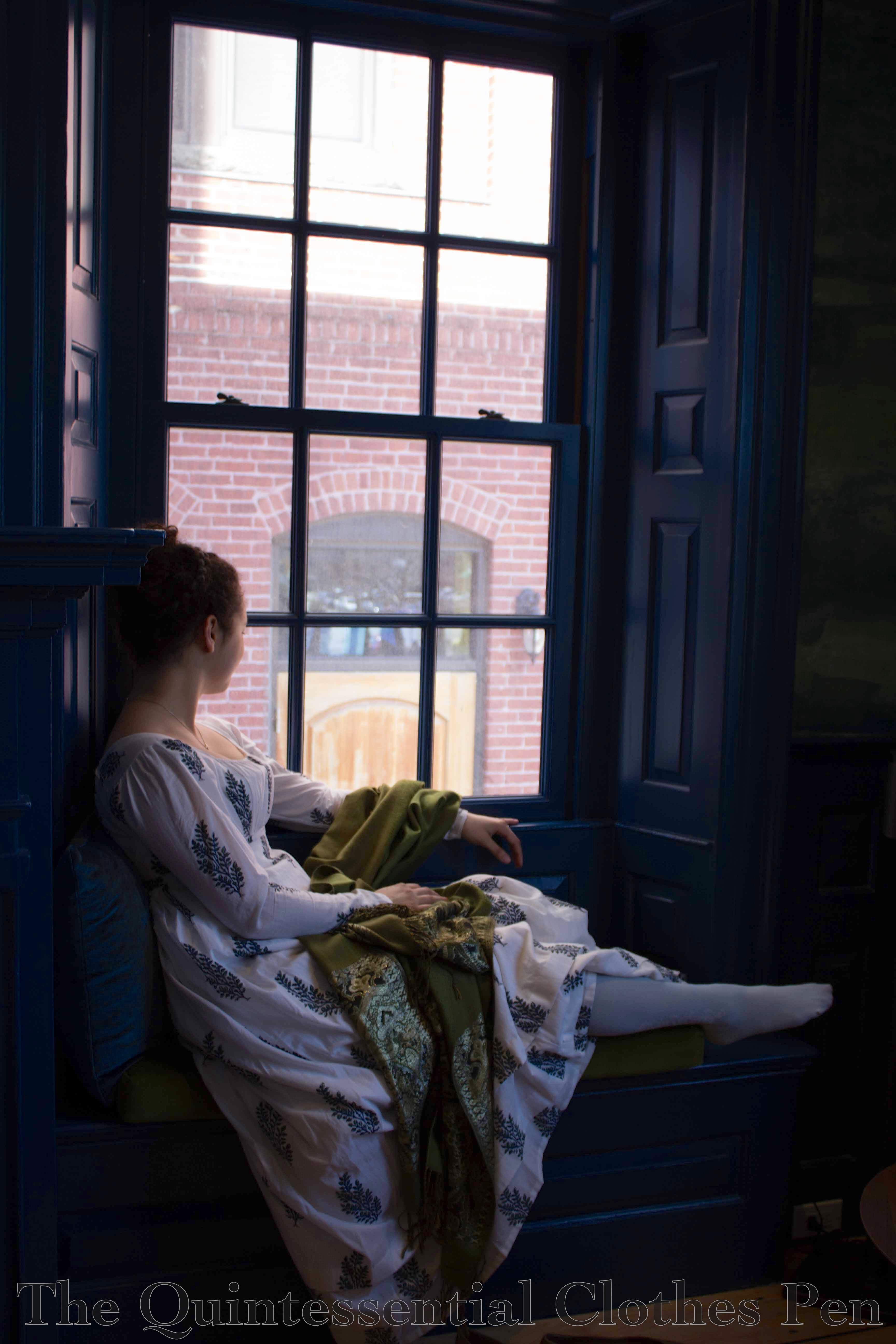
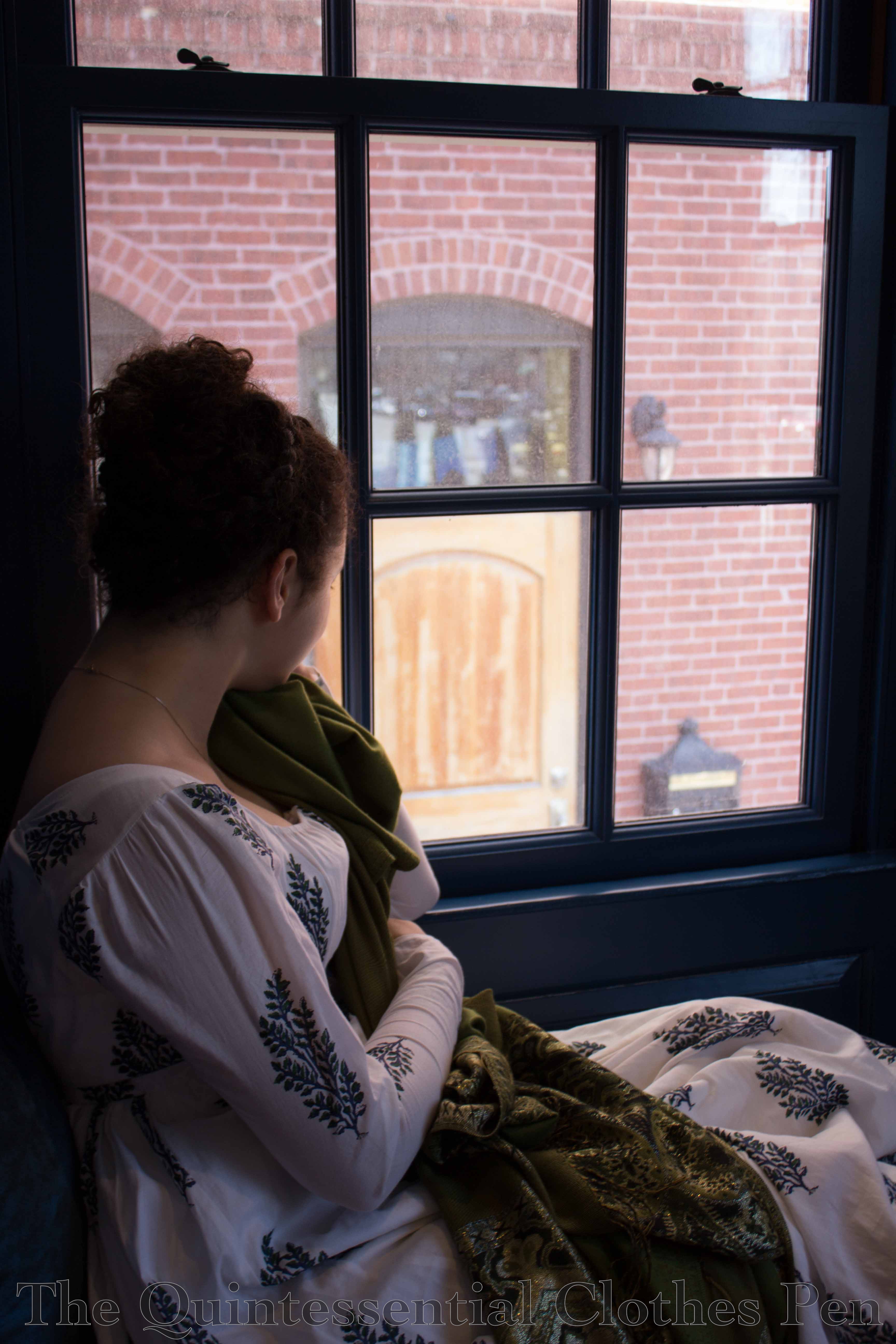
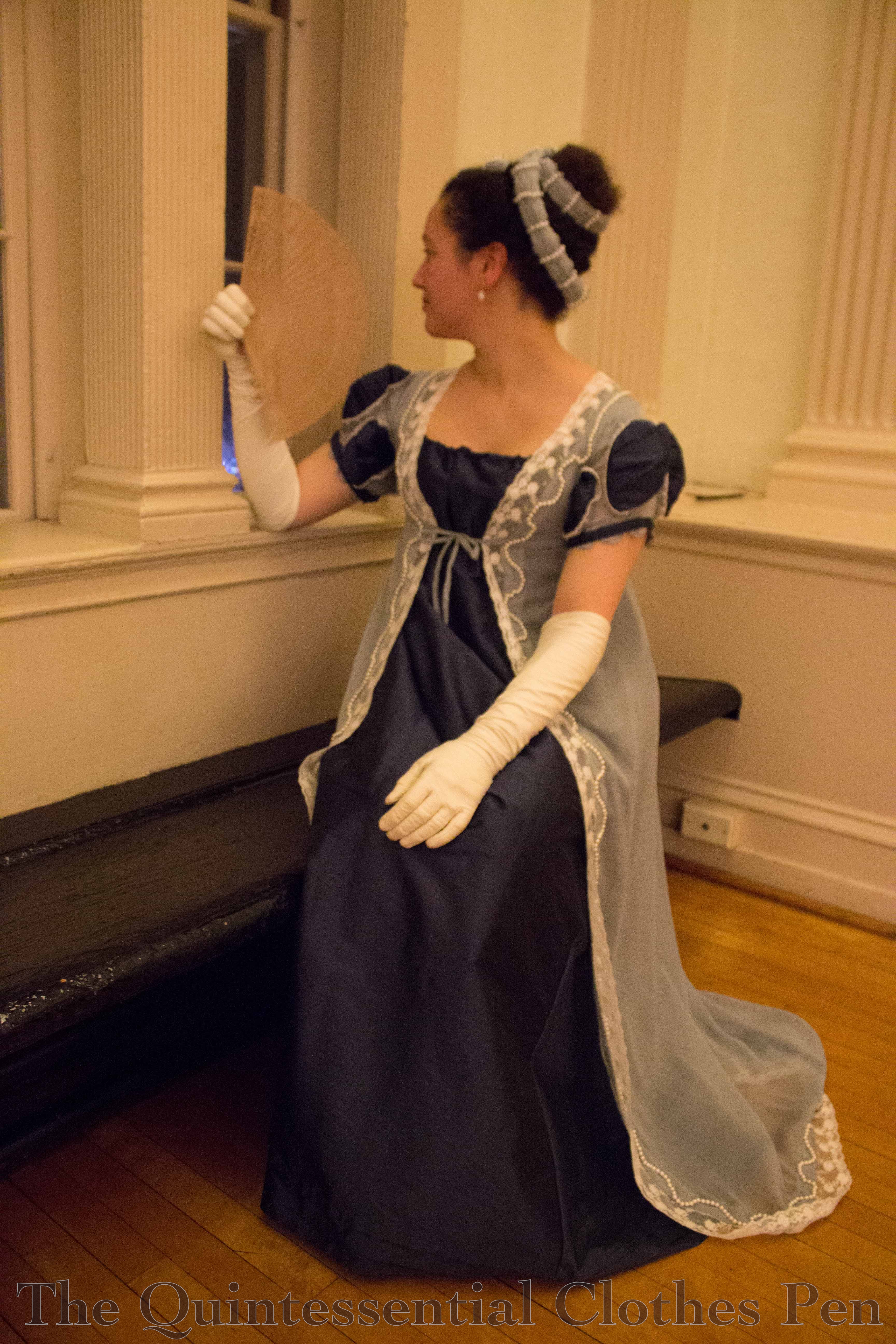
These first few were taken at our hotel. While the blue walls don’t scream Regency to me, they do coordinate nicely with my dress and make for a stunning background. The idea behind these is along Lizzy Bennet lines–lounging in a windowsill while comfortably contemplating life. This gown has the most beautiful drape to the skirt! It’s soft and full without being too fluffy.

img_2579-1

img_2583-1

img_2591-1

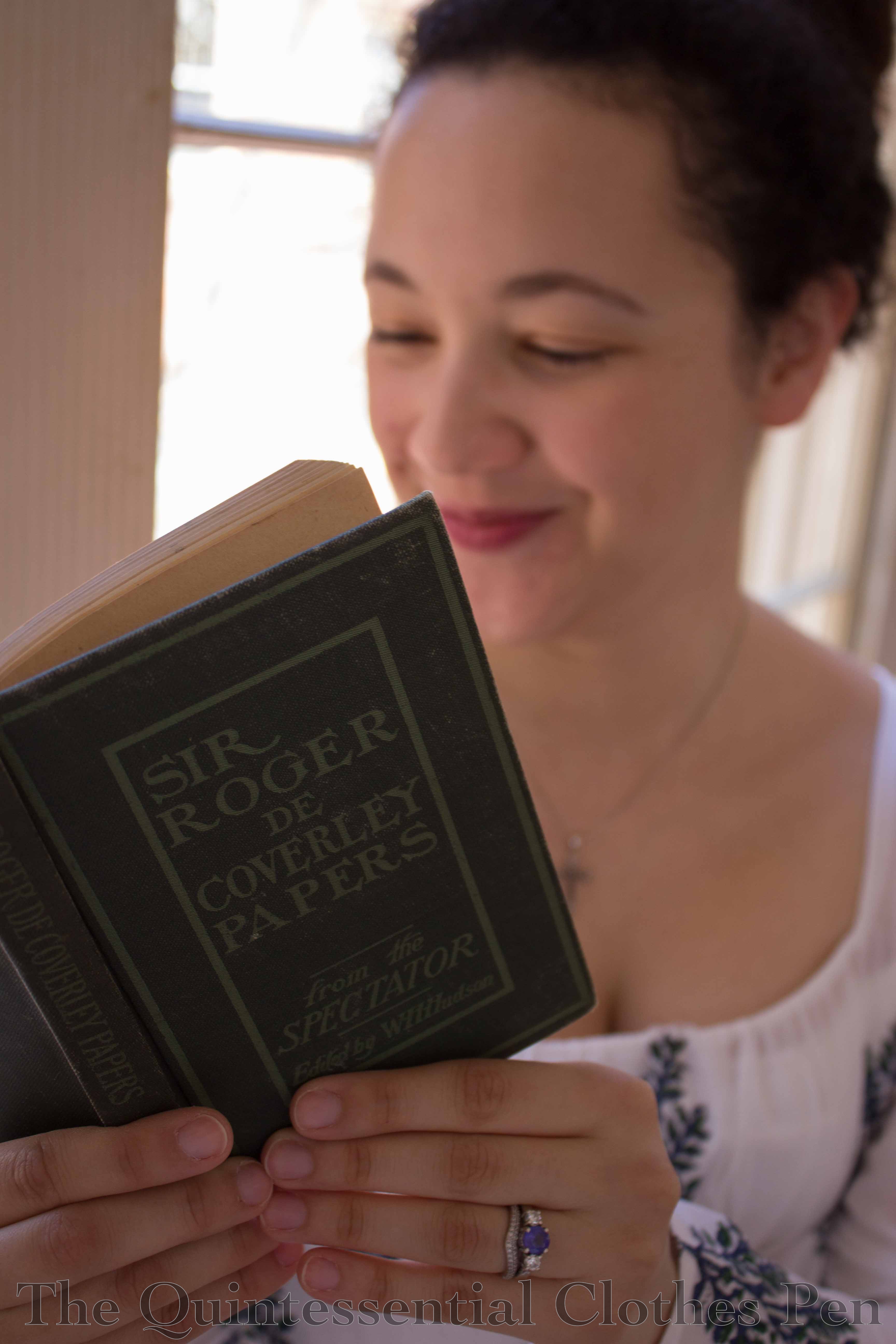
The next batch was taken at tea. One of my friends had brought the book and it is perfect for us, since we know a dance called Sir Roger de Coverley that was danced during this period. I had to pose with it!

img_2627-1

img_2630-1

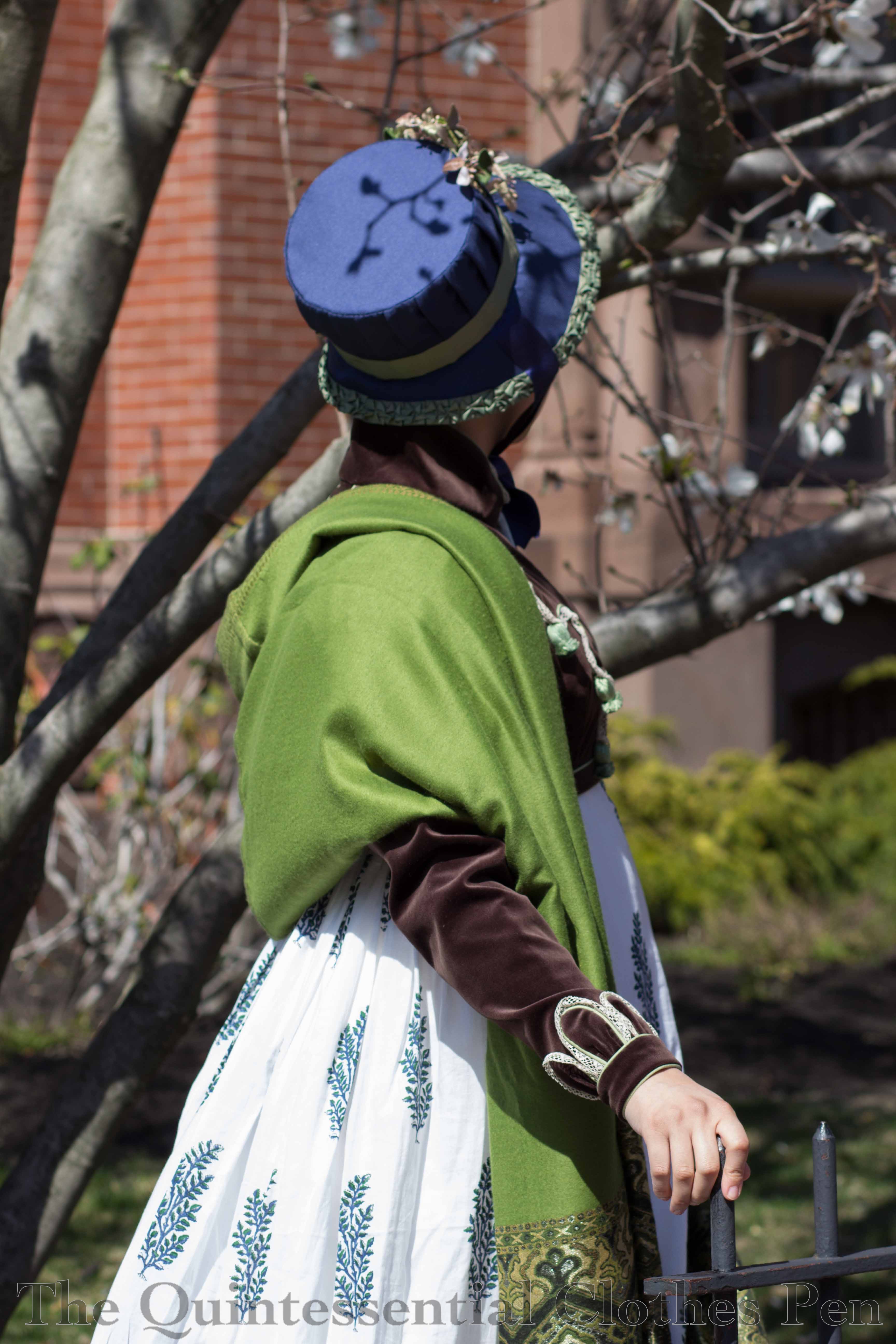
Then we went on our promenade, where we got some excellent photos of the gown with accessories: shawl, spencer, and bonnet. I like how the tree mimics the flowers on my bonnet.

img_2652-1

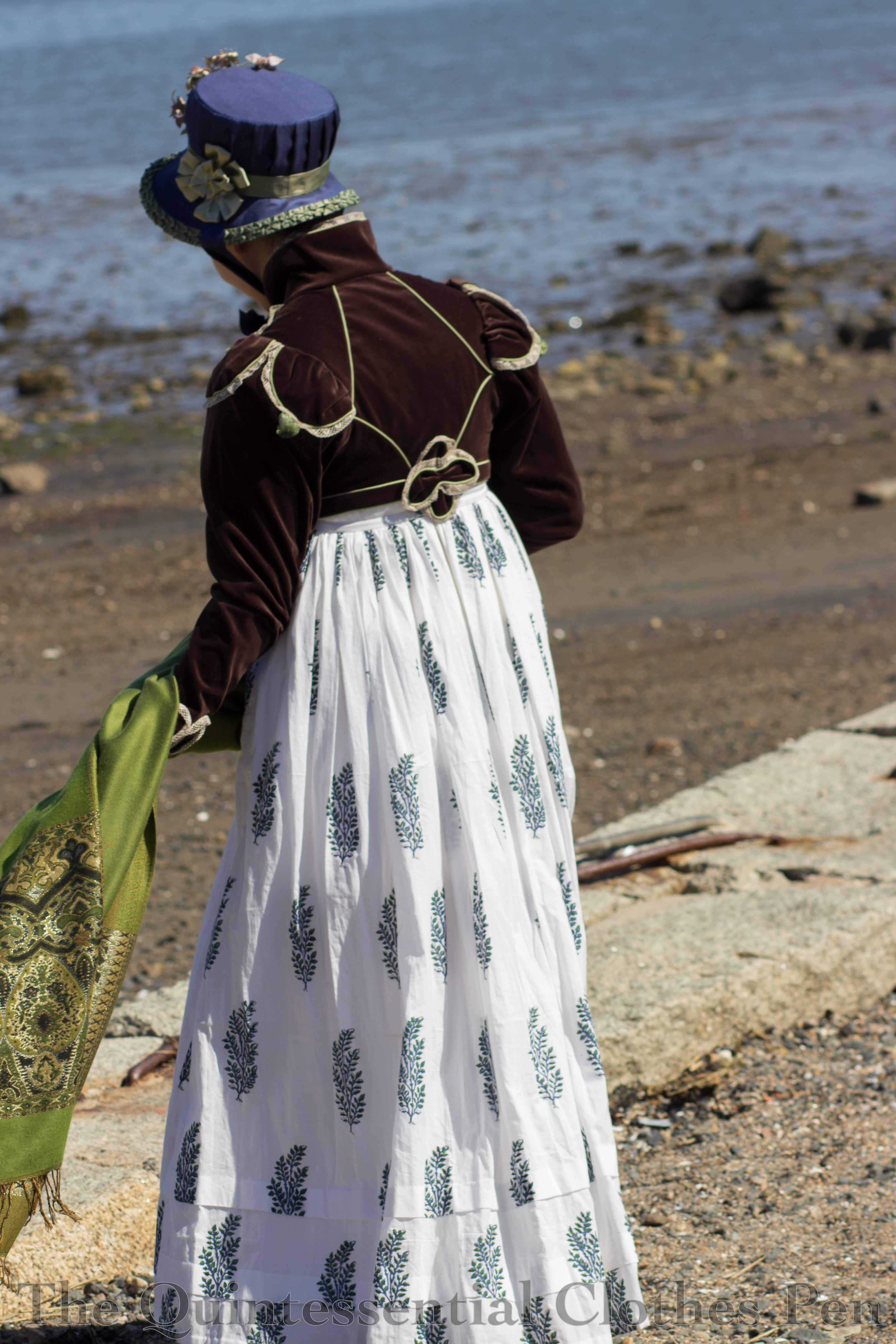
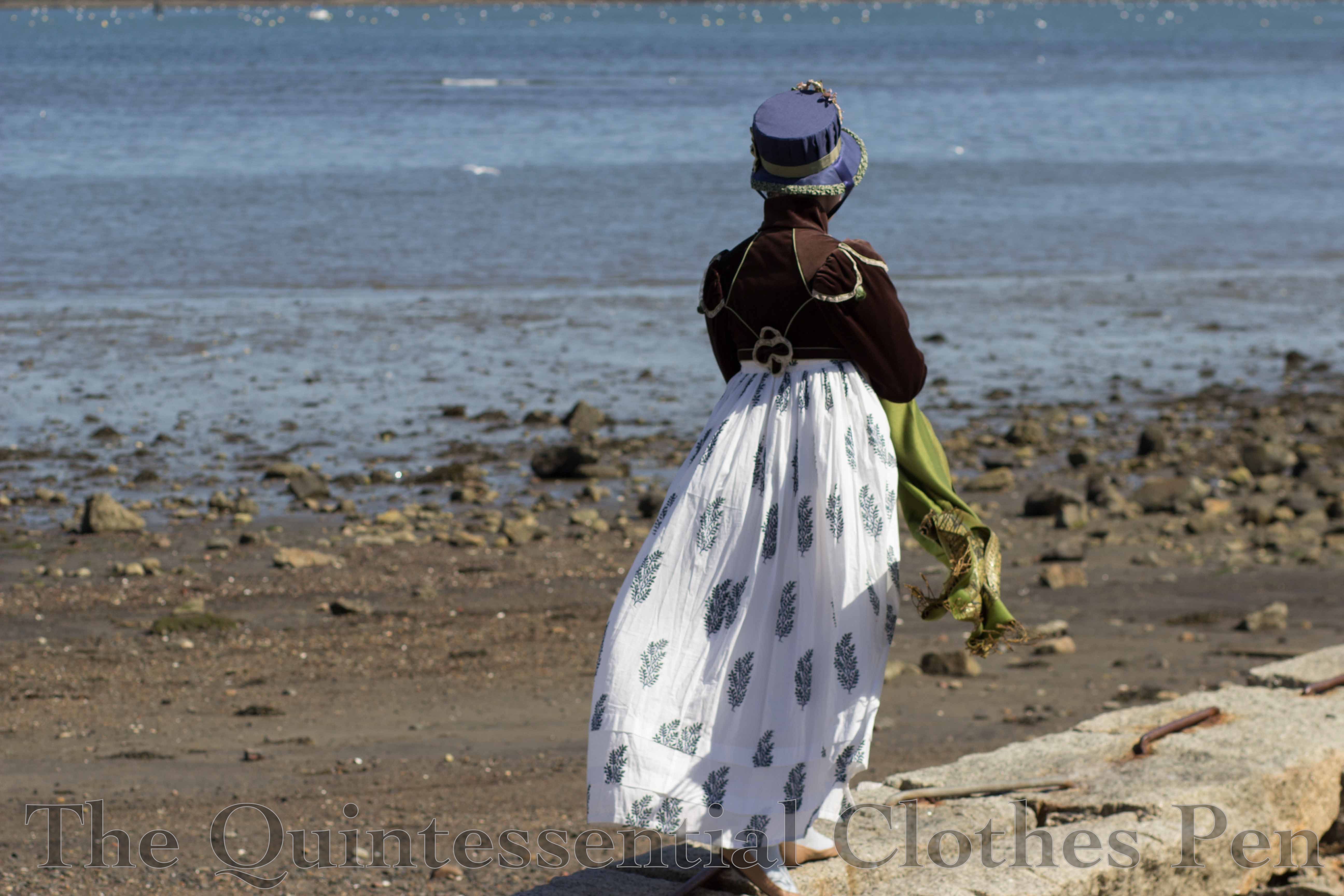
Mixing up my Jane Austen stories, these pictures by the water remind me so much of Persuasion and the unfortunate visit to Lyme. I just love everything about this outfit! The fabrics, the details in the trimmings… it all coordinates so well without being perfectly matching!

img_2703-1

img_2712-1

img_2706-1

Regency Dance Weekend 2016

Way back in April, I was excited to be part of the Commonwealth Vintage Dancers’ annual Regency Dance Weekend again. As usual, there were lots of dance classes, an informal ball, an afternoon tea and promenade, and a formal ball. It’s always a joy to do Regency dancing in Salem in historical halls built during this period.

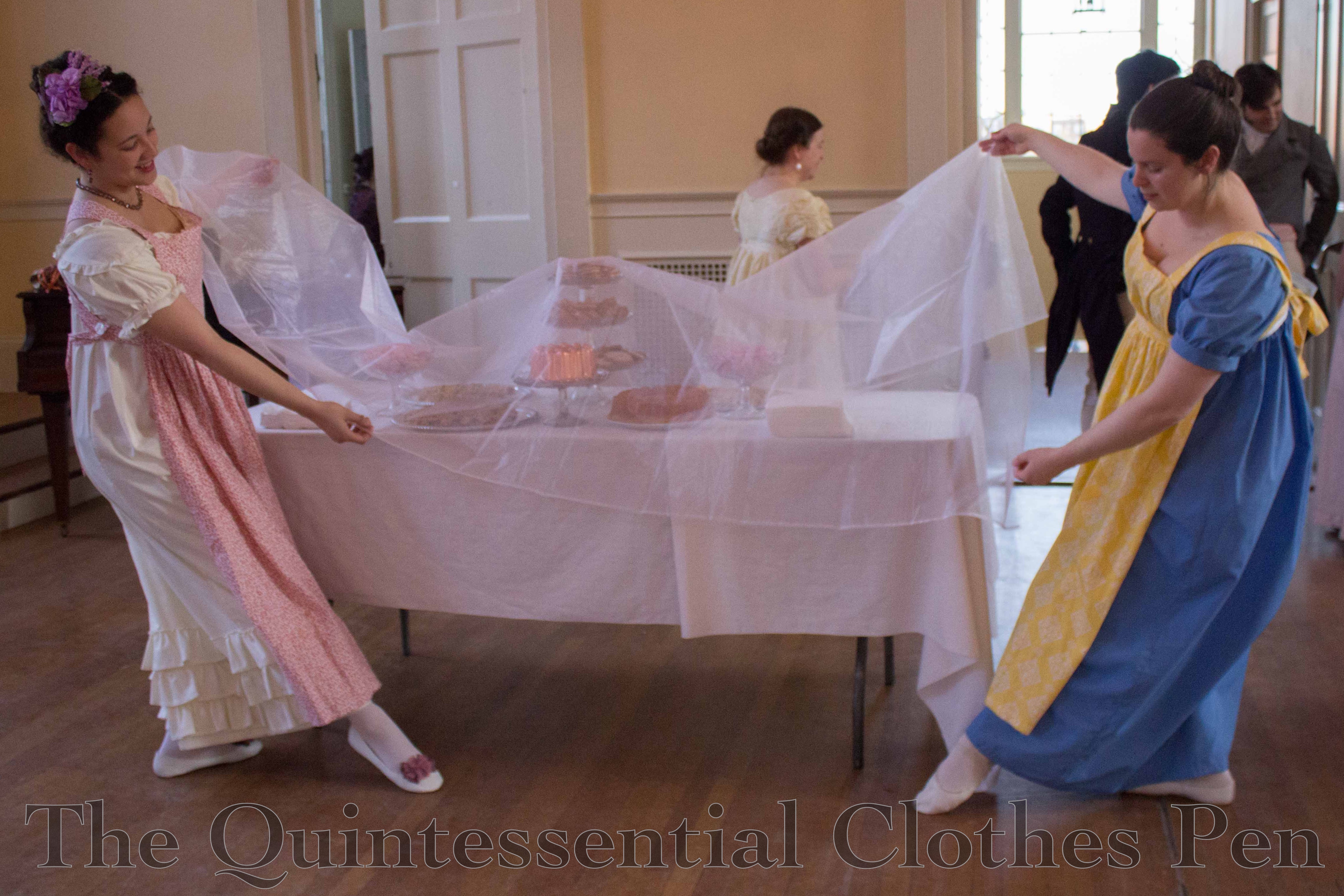
I thought I would share an overview of the weekend to start off my six-months-late sharing of the event. I did actually post about one thing from the Regency Weekend a few months ago. My new shoe poms! Here I am showing them off while artfully covering our refreshment table at the beginning of Saturday evening.

img_2461-1

I’m wearing my Refreshing Apron and 1819 Ruffle Gown with flowers I made for it back in 2014. I’ve inspired a friend to make an apron as well, so we had to showcase them together!

img_2455-1

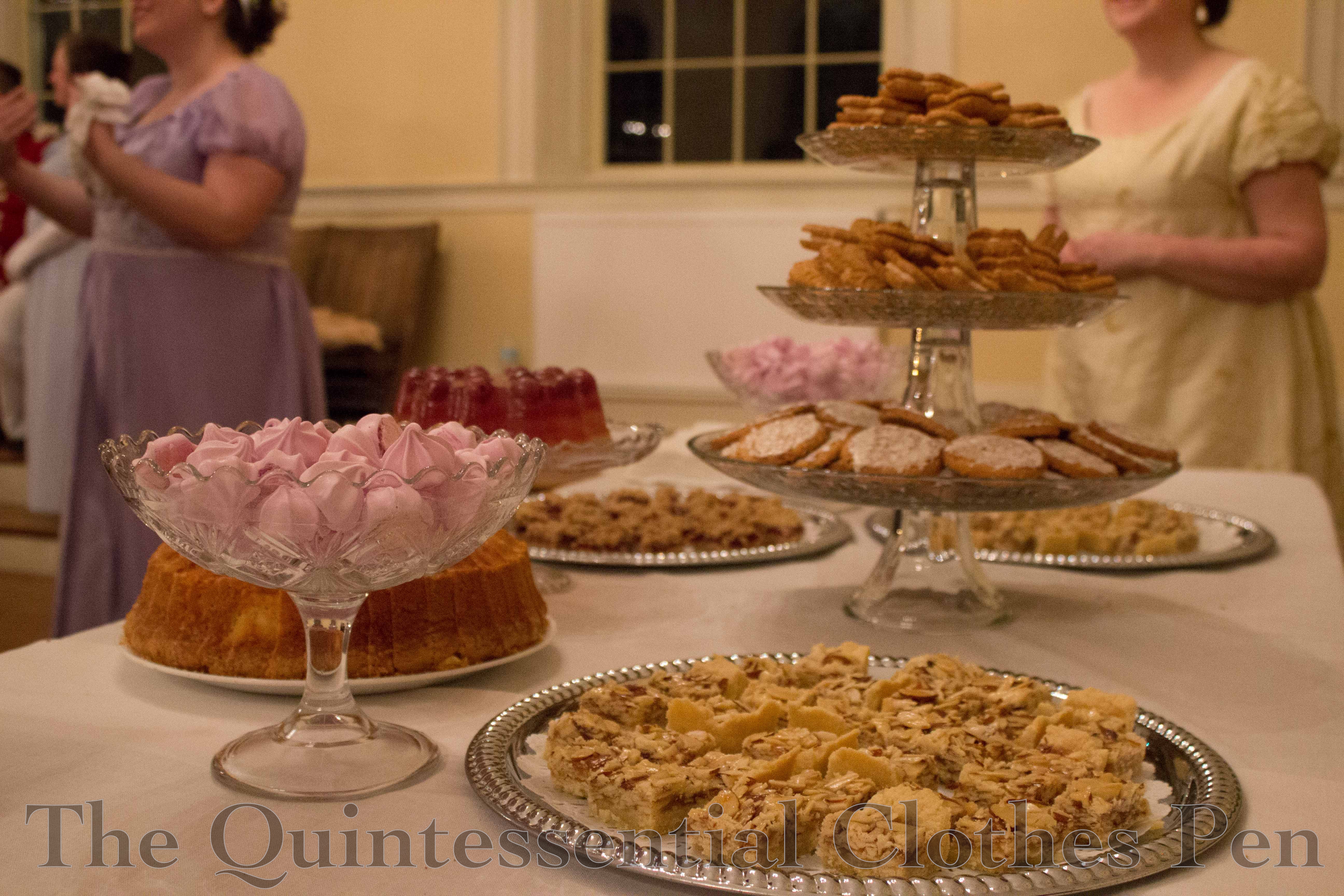
Unveiled, here is the refreshment table from the informal ball. Yummy! There was even a homemade jelly (visible in the back).

img_2553-1

On Sunday, we took the opportunity to take a group picture in our lovely hotel. The building is quite full of history, though the hotel is new in that building. We enjoyed our stay very much. It was great to have a common living room to relax in as a group. Plus, who can complain with having historical paintings on the walls?

img_2564-1

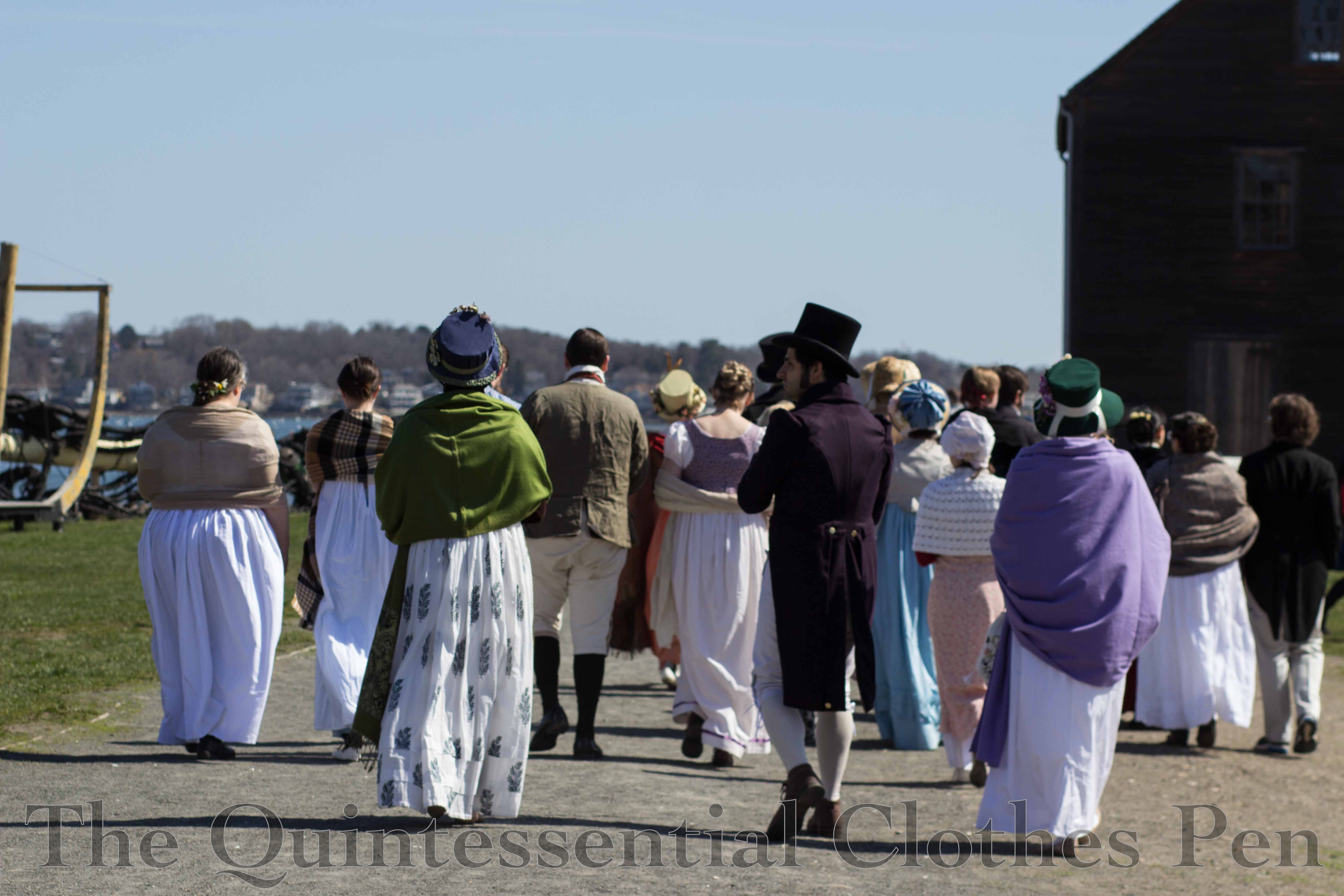
After group pictures, we headed to Salem Old Town Hall, where we were meeting for tea and as a starting point for a promenade to the water. It was a bit chilly for April this year, making shawls rather welcome to stay warm.

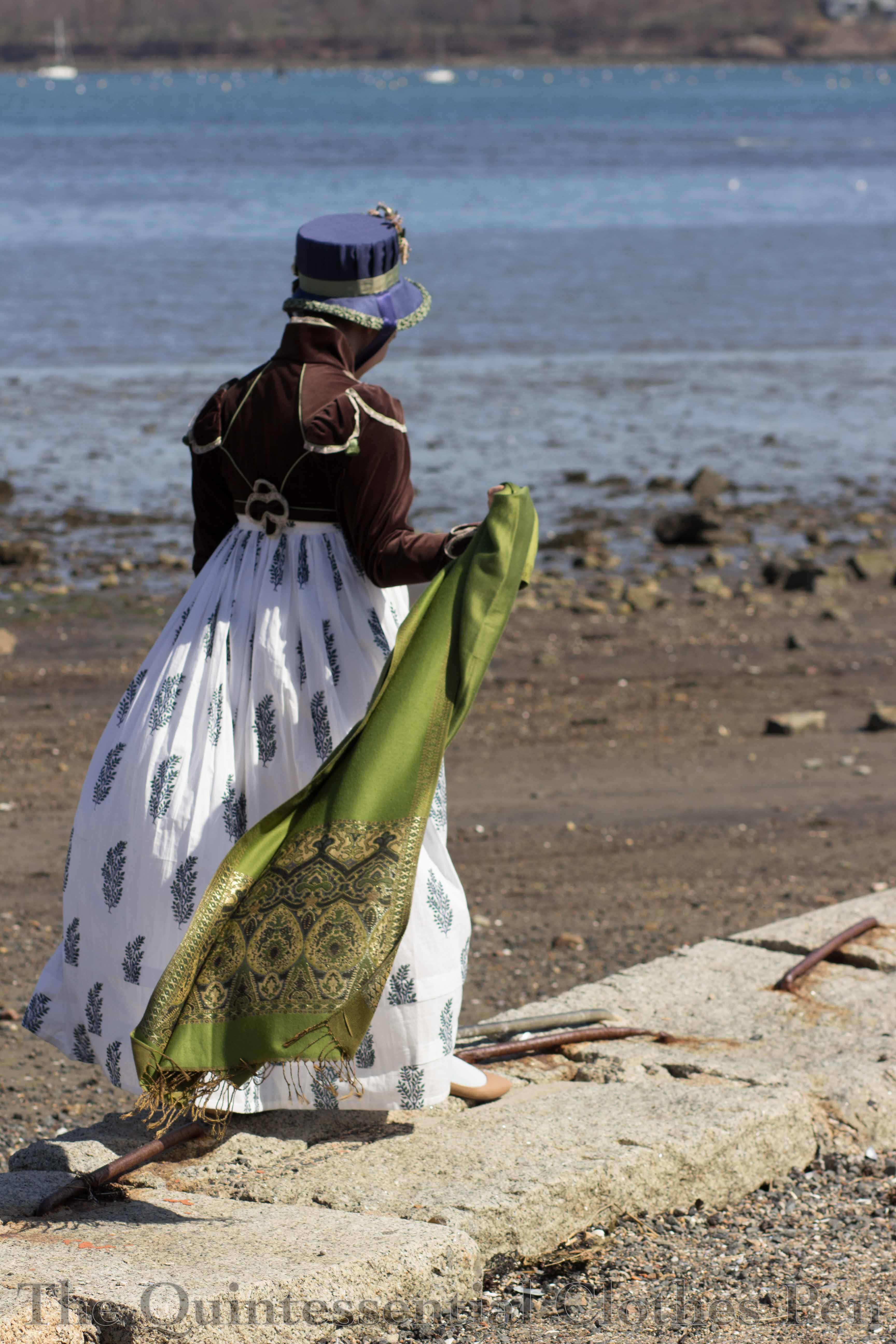
I wore one of my all time favorite dresses, my 1815 Tree Gown, with my 1819 brown spencer, green shawl, and 1815 Tree Bonnet.

img_2669-1

img_2728-1

Sunday evening was the grand ball, held in Hamilton Hall. I wore my 1811 Elusive Blue Gown with the turban fillet.

img_2820-1

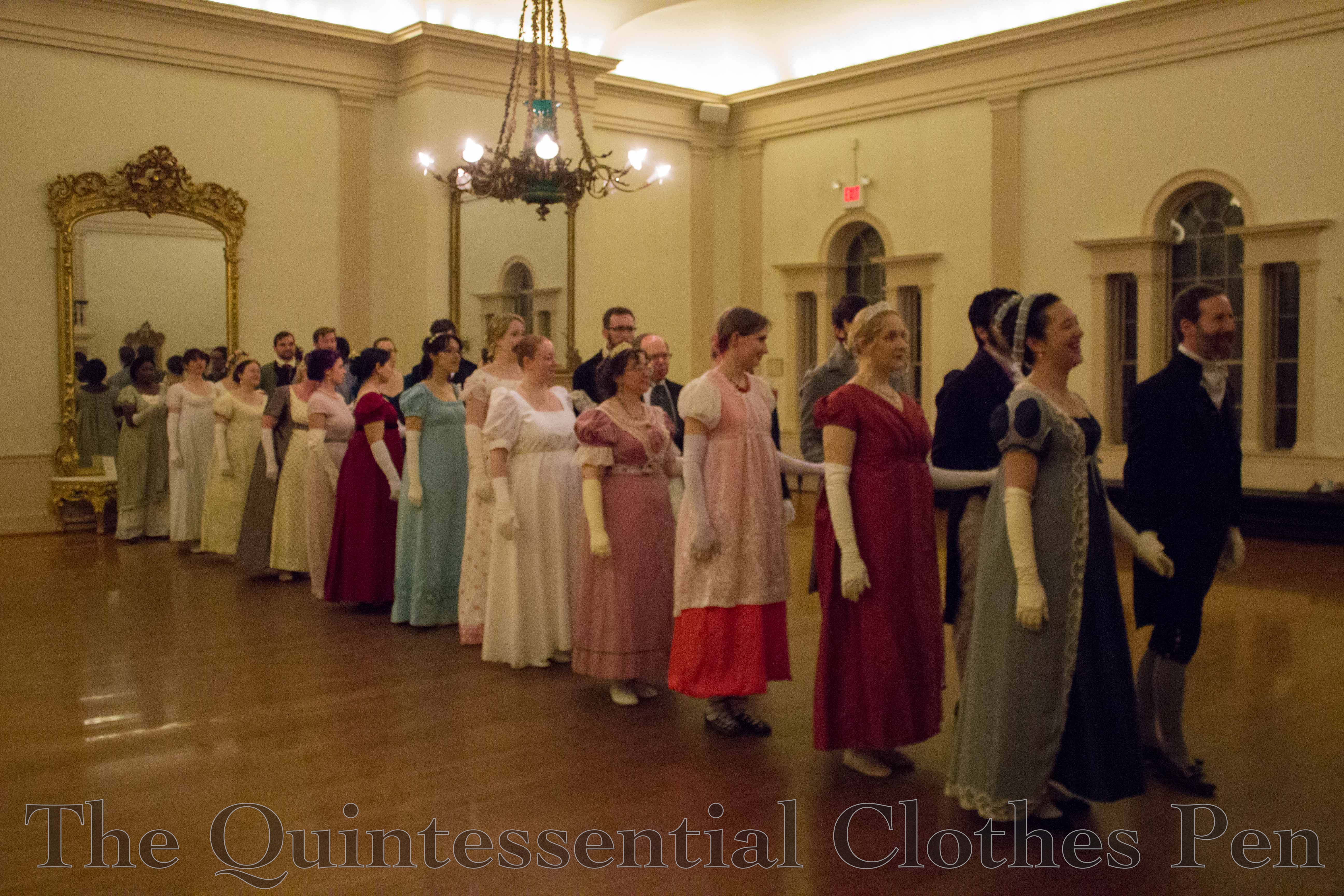
Hamilton Hall is lovely with a sprung floor intended for dancing and large mirrors around the walls. Here are the dancers all lined up and ready to go!

img_2813-1

Another neat feature of Hamilton Hall is that the dance floor is actually on the second floor, meaning that every guest is able to ascend and descend the stairway to get to the ballroom–perfect for pictures!

img_2824-1

All in all it was a lovely weekend. I’m really looking forward to next one in April 2017! It’s really special to have a weekend to get in such depth for one period. Here are my accounts of past years: 2013 and 2014. In particular, 2014 had blog posts which really express the special quality of this event.

Gibson Girl Vignette

In September, my friends and I had a last picnic of the season to take advantage of the summer weather before it faded into fall. Along with other picnics we’ve had in the past, we again met up in the Boston Public Garden with our picnic blankets, food, drink, and croquet set.

img_1882

We’d decided on a turn of the 20th century theme for our clothing and I took the opportunity to dig a 1903 outfit out of the closet that I don’t think I’ve worn since 2012, at Dress U and Newport Vintage Dance Week. It’s an orchid lawn skirt (and a bolero I didn’t wear this time) and a white silk and cotton lace blouse.

img_1879

This wearing, my hat had been re-trimmed in a more pleasing fashion than when I wore it in 2012 (in fact, all the lovely millinery flowers are only pinned on so it’s easy to change, not that I’ve bothered since I put the flowers on about two years ago) and I had practiced my Gibson Girl hair in January and now know how to achieve the look with minimal effort.

img_1889

I was very pleased with the result! Next time I plan to wear a hat with a Gibson Girl style I’ll put the opening of my hair pad at the top of my head rather than the bottom, and likely leave a little space to make the front a bit more flat so my hat doesn’t tilt up. Where’s the fun if I don’t learn something new every time I wear historical clothing?

A Hint Of Coming Projects

It’s pretty busy here at the moment. I’ve been spending most of my energy doing productive life things, which hasn’t left a lot of energy for writing blog posts. In the meantime, I’ve been plotting what my next projects will be. The big ones on the to-do list right now are a new 1860s evening gown for later in October and a first ever 1830s evening gown for December. I thought I’d share a little taste of those two projects. Sparkly bits that will be incorporated into each gown!

img_1927

Regency Face Curls

Remember this post from last December about my green Regency shawl and the photoshoot for my Vernet project?

IMG_2080
From the wearing of my green Regency shawl.

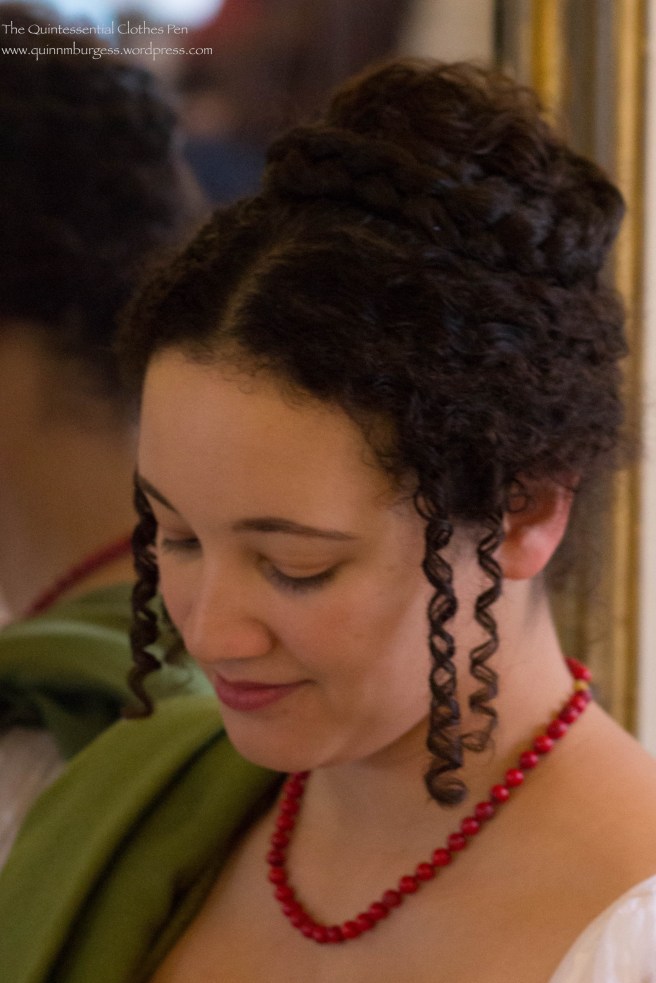
For both of those Regency period hairstyles I took the time to create narrow curls to frame my face and I’ve been meaning to share how to achieve these perfect curls ever since, but am only just getting to it. However, I can’t take credit for the idea myself. I was inspired by Sanna and Noora during the Vernet project. I believe we had a conversation about it in the Vernet seamstress group but I can’t find the content at this point, so you’ll just have to take my word for it. (They both used straw curls for their hairstyles in this post of Sanna’s and this post by Noora, if you’d like to see how this technique can turn out on other hair types.)

IMG_1917
From my Vernet project photo shoot.

The secret to getting really lovely corkscrew curls? Drinking straws used as rollers. This works for shorter length hair to create the oft-seen small curls around the face, but it also works just as well for longer hair. Have you heard of using straws for curls before?

The look is achieved by rolling wet hair around a drinking straw (with or without product–I’ve tried it both ways and have achieved good results) and letting the hair dry. Sanna and Noora reported that after rolling hair around the straws they knotted the ends of the straws, pinned the rolls to keep them in place, and left them in overnight. My method was slightly different. I cut my straws in half, rolled my hair around the shorter straws, pinned them in place, used a hair dryer on them until they were dry, and then took them down.

You could also use this technique to create curls for other time periods. The ‘hedgehog’ styles of the later 18th century are one possibility. What types of hairstyles have you created  (or do you now want to try!?!) using this method?

Henrietta Maria At Sunset

Where I grew up in the Pacific Northwest, we would often have stunning summer sunsets that would bathe our western facing house with vibrant red-orange light. We get far fewer of these dazzling endings to summer evenings here in New England, especially with such depth as those Northwest sunsets. Honestly, until we had parked at the chosen location for this photo shoot, which happened to have a western view, I hadn’t realized how orange the sunset on this particular day was.

IMG_7484 (1)

The day had been a busy one and I had to hurry to look presentable and throw on the dress to catch these photos before the light faded. I wasn’t sure there was enough light left to get good photos, but I actually really love the unusual orange sunset light.

IMG_7482 (1)

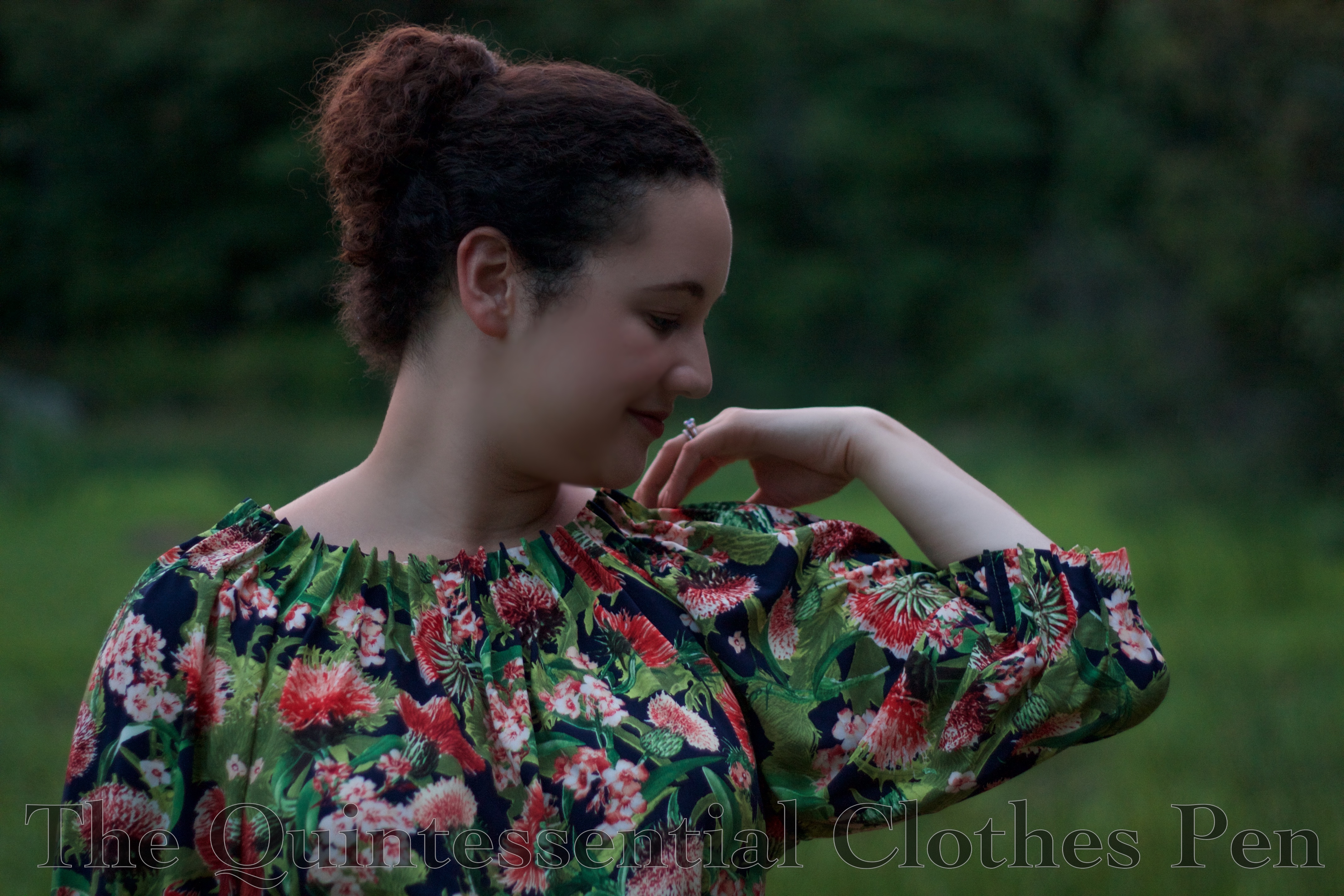
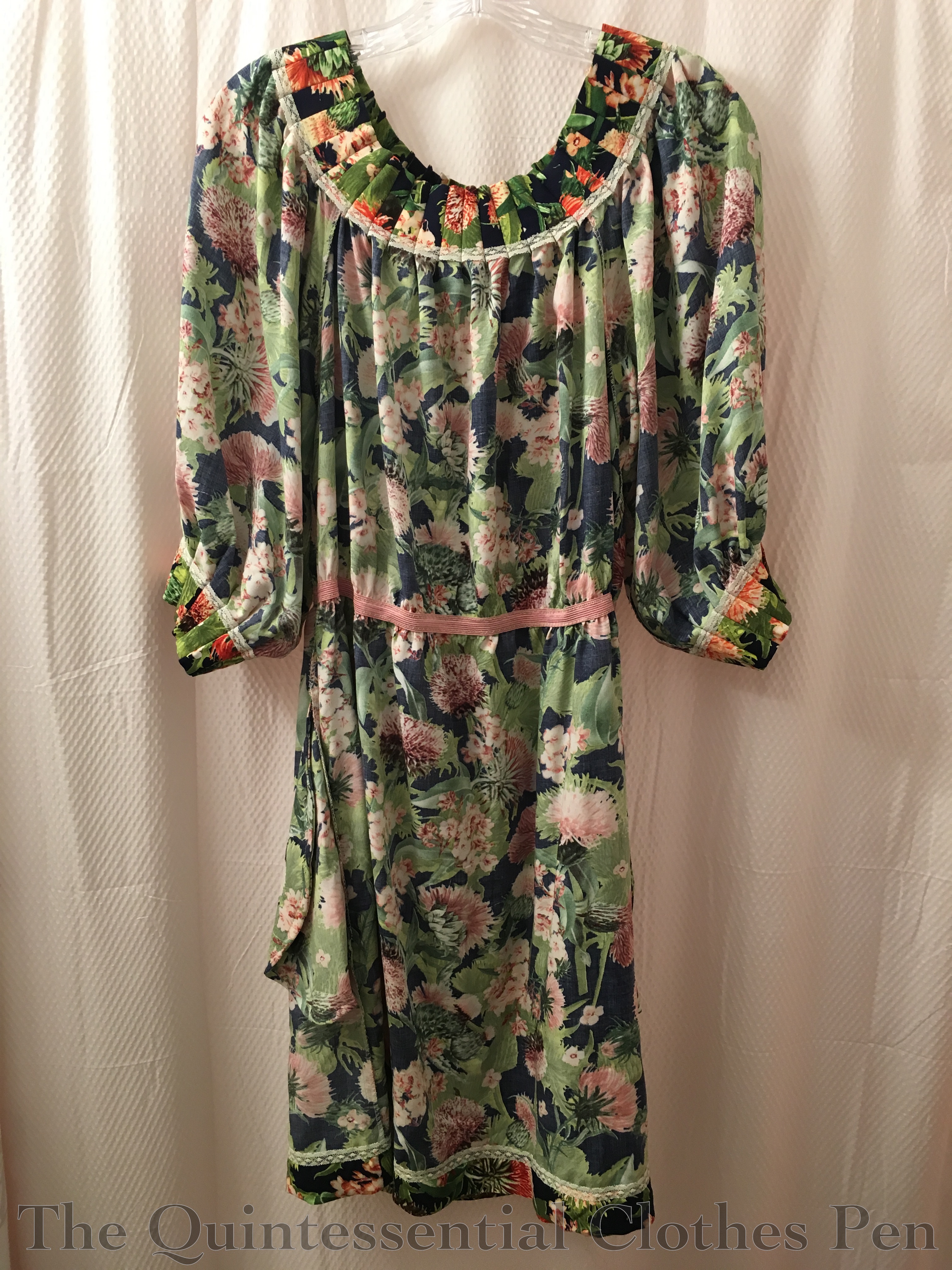
I purchased the rayon print fabric I used to make this dress last winter from Blackbird Fabrics. I have an ongoing effort to try to add pattern to my modern wardrobe, which is mostly solid color garments. I didn’t know what I was going to do with the fabric, but then in the spring Leimomi (the Dreamstress) asked if I would be willing to do a favor for her relating to her soon-to-be released first ever Scroop Pattern, the Henrietta Maria. Squee! Of course! And my thank you from her was the pattern itself! Perfect!

IMG_7496 (1)

So this is a Henrietta Maria. The pattern is great, with clear directions and helpful tips. Leimomi has also posted some extra tutorials for the dress on her blog. I took advantage of the suggestion of adding elastic to control the waistline because without it the dress was looking like a bit of a muumuu, what with the busy floral print and the straight shape.

IMG_7474 (1)

The construction is straight forward, with the only time consuming part being the 44 tucks that make the dress particularly unique. They’re not hard, and their placement is clearly marked on the pattern, but they are time consuming. I think they took me about 3 hours to sew all by themselves. They could probably take less time, but I was very careful to match each guide line and sew them with precision. And the end result is worth it.

img_7499-1

IMG_7512 (1)

The inside of the dress looks like this. I used the lace edging method that Leimomi also blogged about. It provides such a nice, tidy finish without any visibility on the exterior. And all the tucks keep the lace in place perfectly.

IMG_1688 (1)

IMG_1686 (1)

Like the tucked edges, the hem edge is also edged with lace that is machine sewn onto the raw edge. The hem is sewn with a cross stitch that is pretty much invisible on the exterior.

IMG_1687 (1)

Here are a few more pictures from the sunset photo shoot. I’m not sure why there was a worn statue of a frog in the midst of the trees.

IMG_7489 (1)

IMG_7515 (1)

You can see more lovely versions of this dress on Leimomi’s blog here. Click back through previous posts with the tag to see more. There’s also a shirt version. Check them out!

Bubble Dots At The Aquarium

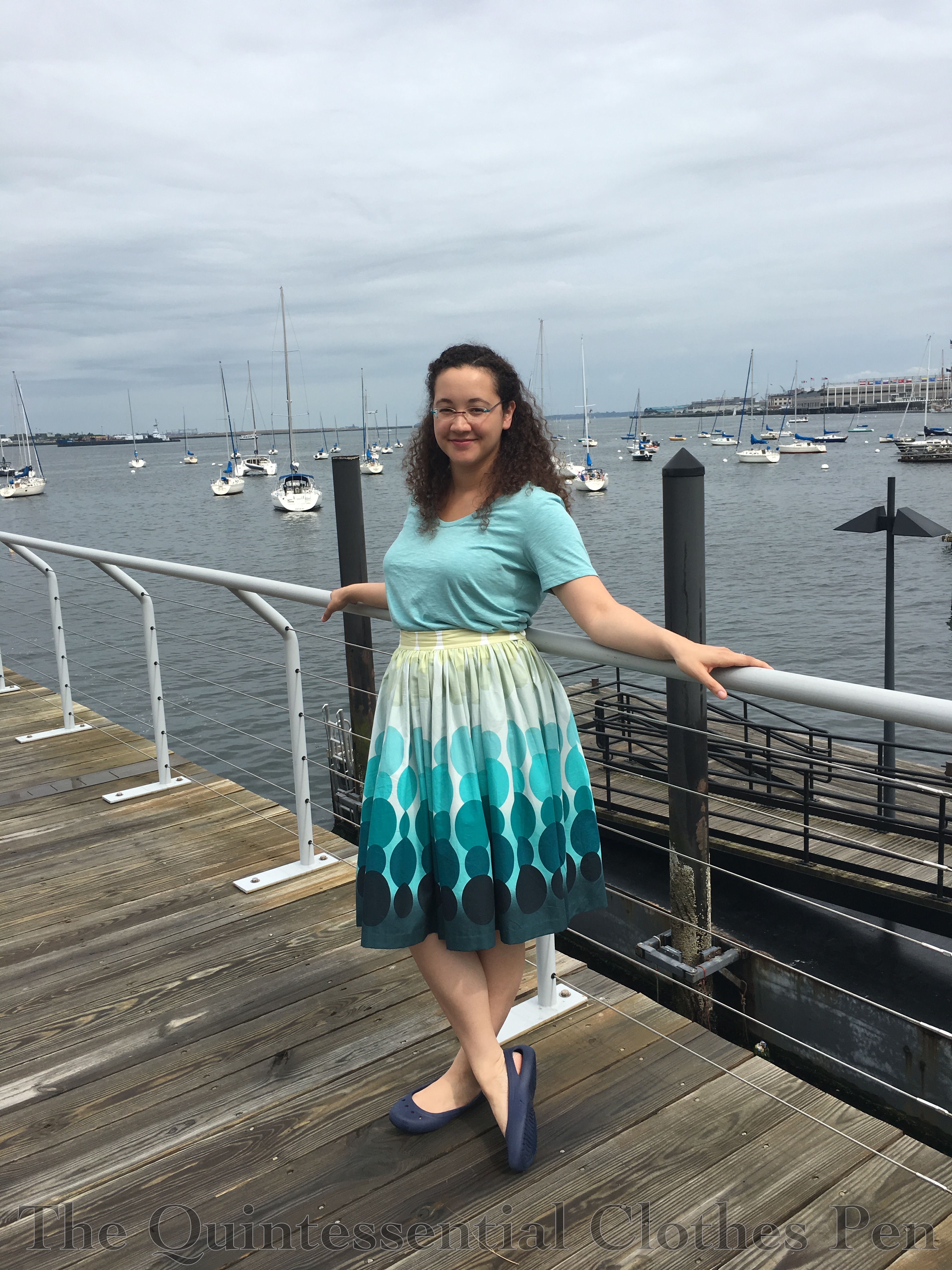
This summer I found some time to make some everyday modern clothes. Here’s one of those garments, a simple gathered skirt made interesting due to the ombre printed fabric, which reminds me of rising bubbles.

IMG_1672 (1)

I’d seen this fabric at the store, didn’t buy it, then saw it again about a month later and decided (or was convinced by friends…) to purchase it. I finished off the bolt with somewhere around 3 yards, which was perfect for a full hem.

IMG_1661

It looks pretty snazzy with a petticoat under it, so I’m hoping to have some excuse to wear it someday as 1950s instead of modern. In the meantime, I’ve worn it with a variety of white and oatmeal colored tanks and tees, both of which are nice continuations of the ombre effect of the skirt pattern.

The skirt is a mix of hand and machine sewing. The only seam is serged. The hem is hand sewn to be invisible. The zipper is hand picked because I didn’t feel like dealing with a machine zipper foot. The buttonhole is hand sewn because I didn’t feel like dealing with a buttonhole foot. And the inside of the waistband is sewn down by hand to keep things tidy.

IMG_1645 (1)
Hand picked zipper. Cute curved tab on the waistband to echo the dots with a lone vintage button from the stash.
IMG_1644 (1)
Look at that pattern matching!
IMG_1646 (1)
Tidy seam and hem.

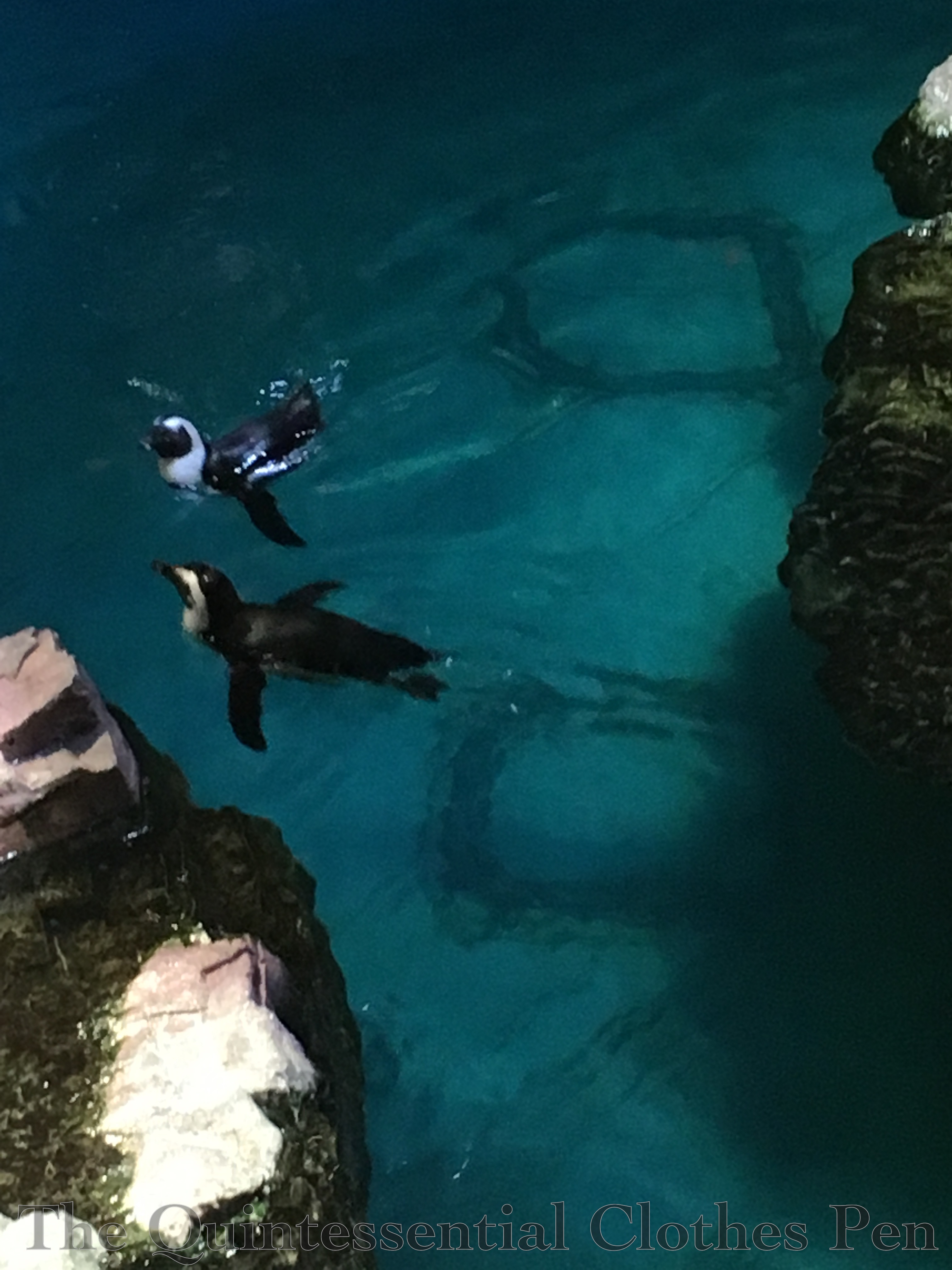
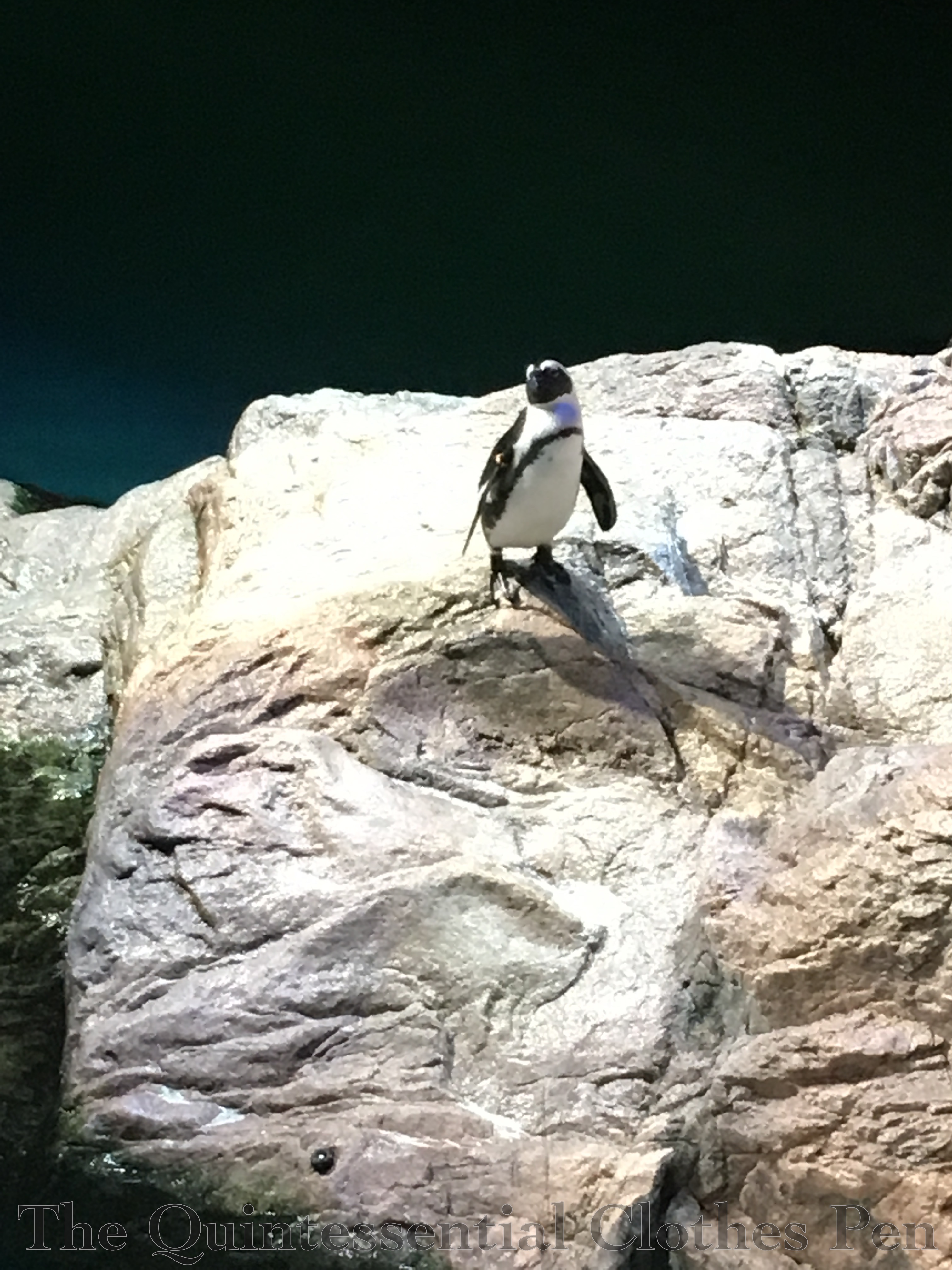
For pictures, I wore this to the aquarium. It seemed fitting, with the bubble dots! I greatly enjoyed the larger animals–penguins of three types, seals, and sea turtles. I went with Mr. Q, who remembers going to see Myrtle the sea turtle when he was young and on school field trips. Sea turtles have long life spans, so Myrtle is still there, floating around. The aquarium has this to say about her:

Myrtle, our green sea turtle, lives in the Giant Ocean Tank. She has lived at the Aquarium since June 1970. She is approximately 80 years old, weighs more than 500 pounds, and eats lettuce, cabbage, squids, and brussels sprouts.

Yikes!

IMG_1653
Hi Myrtle!

There was another large turtle in the giant ocean tank as well, named Ari.

IMG_1652 (1)

And penguins! They are so cute and funny!

IMG_1656 (1)

IMG_1657 (1)

IMG_1655 (1)

All the water in the tanks came out looking like the same colors in my skirt in these pictures. Perfect!

Vernet Project: Silly Shoes

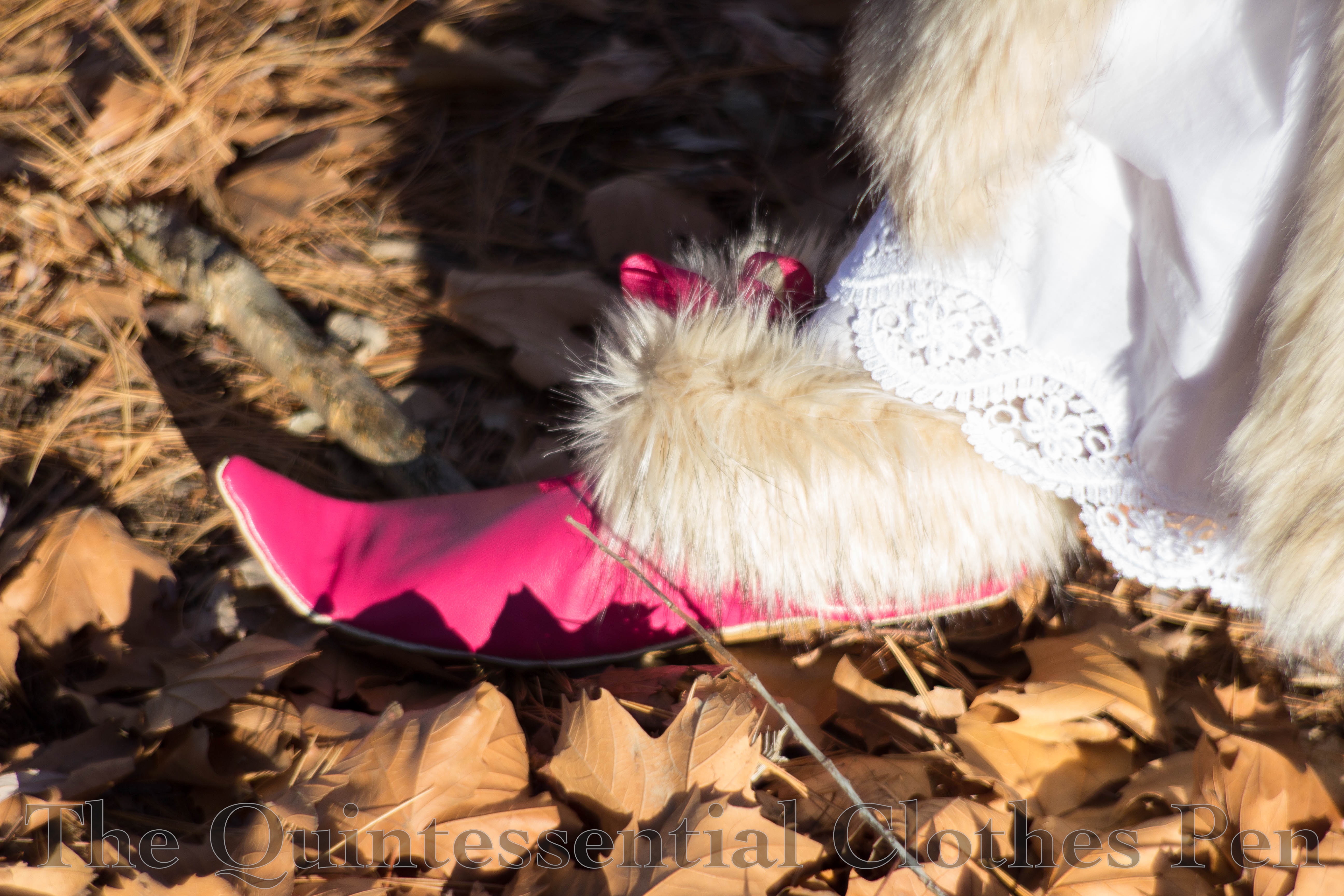
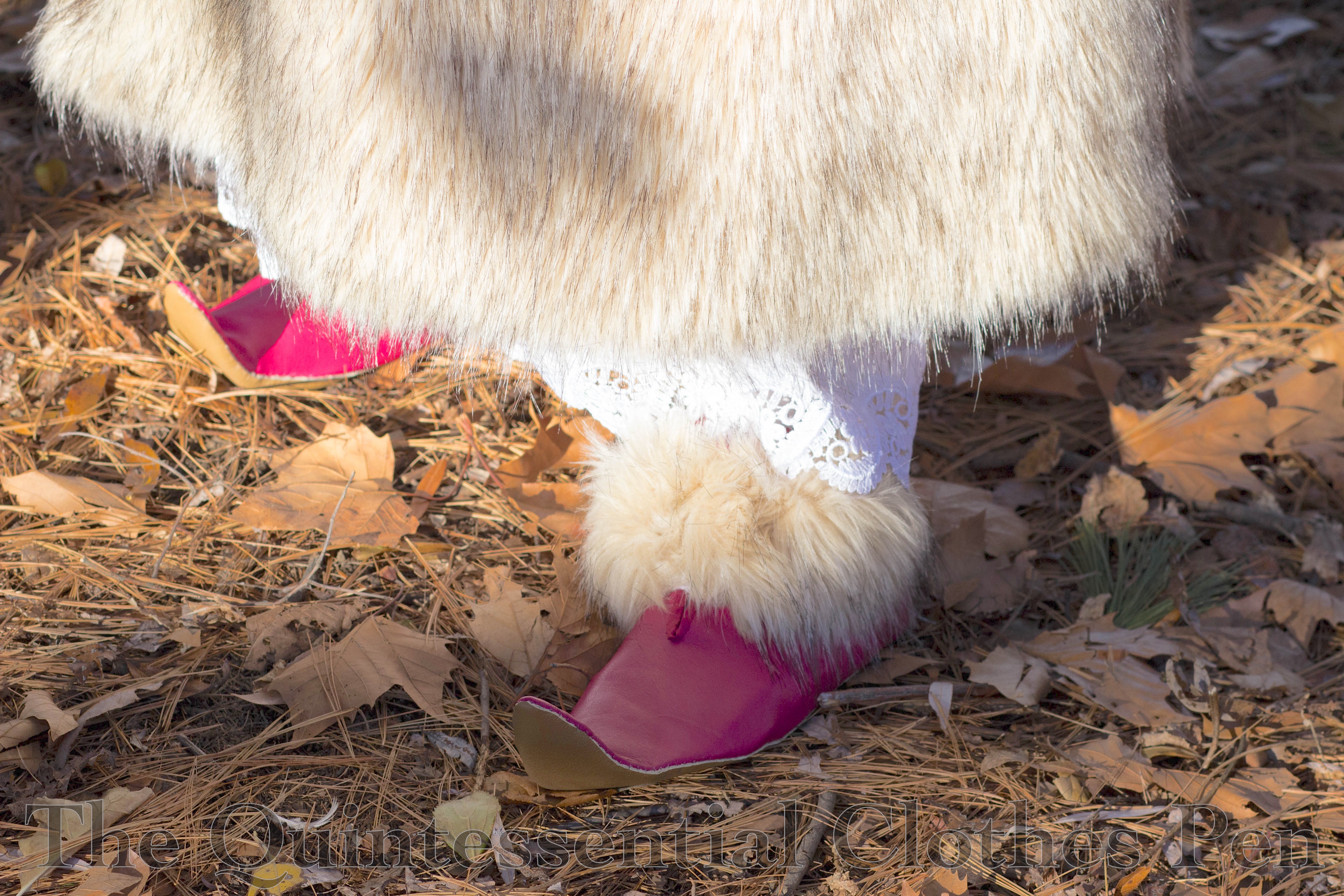
One of the five pieces of my Vernet Project was creating the silly up-turned-toe elf shoes in the fashion plate. Clearly, these are not shoes that could be purchased, as they are so specific in style, so I set out to make my own!

IMG_1920 (1)

In the beginning, I was thankful to have another Vernet project maker’s experience making her boots before mine to work from. Jenni posted a two part tutorial showing how she made her boots as well as sharing information behind-the-scenes with project participants earlier in the process (Part 1 and Part 2). She closely referenced Every Lady Her Own Shoemaker, published in 1855 (a little late relative to the date of the project, but still useful for construction advice), for construction methods and carefully documented her process. In fact, she did a much better job at documenting the actual sewing than I did… I also read Anna’s information about making mid-19th century shoes multiple times to help get my mind acquainted with the project (again, a little later than the period of the project, but still helpful). She also has lots of great construction pictures.

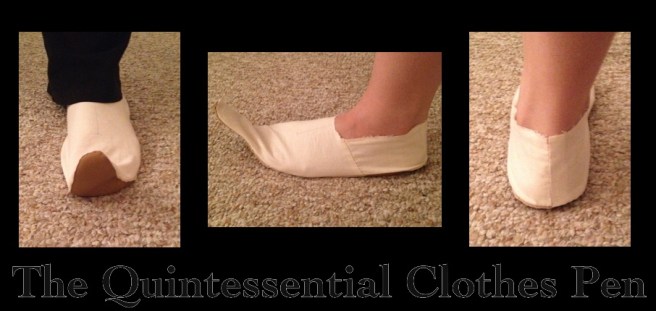
I started by creating a pattern for my shoe using patterns in Every Lady Her Own Shoemaker. Given that my shoe has the unusual turned-up-toe, I necessarily needed to make adjustments to the general slipper pattern. Here is my shoe at the mockup stage. The upper pieces fit pretty well! I adjusted the width of the sole as well as the shape of the turned-up section before moving on to cut out the final pieces.
Mockups.001

Here are all of the final pieces cut out and ready to assemble. The soles have three layers: heavier tan leather for the outer sole, cardboard for the inner sole structure, and white linen to cover the cardboard insole. The uppers have two layers: lightweight raspberry leather for the exterior and white linen for the interior. Later in the process I also added a faux fur cuff.

IMG_0239 (1)

To help the shoes keep their turned-up-toe shape I soaked the leather soles in water, taped them to a lysol wipe container, and let them dry. You can see the results below. Not perfectly curved up, but still helpful. I also tried boiling leather soles to thicken them before shaping, but found that the leather shrank unevenly which created soles that wouldn’t work for this project. I did save them, though, and hopefully will get to use them for a future shoe making endeavor. I repeated the soaking and shaping for the cardboard insoles before gluing the linen to them. There’s a picture of the insoles at this stage in this past post.

Soles in progress.001

After shaping the soles it was time to construct the uppers. I did the interior and exterior separately, then basted them together around the top opening and around the bottoms. Then I sewed the bottom edges of the uppers to the soles, using the slanting stitch through the side of the sole that Jenni shows in Part 2 of her tutorial. She used all sorts of nifty leather tools as well as a wooden last during construction. I purchased the nifty leather tools but found that they didn’t work for me and a simple non-leather needle worked just fine. (I think my leather was too thin and soft for these to be needed). As for the last, I looked online for a wooden one, never found one in my size foot, and eventually decided to give it a go without one, especially since I had to do the turned-up toe. In the end, I don’t think it was a problem not to have a last.

IMG_2253 (1)

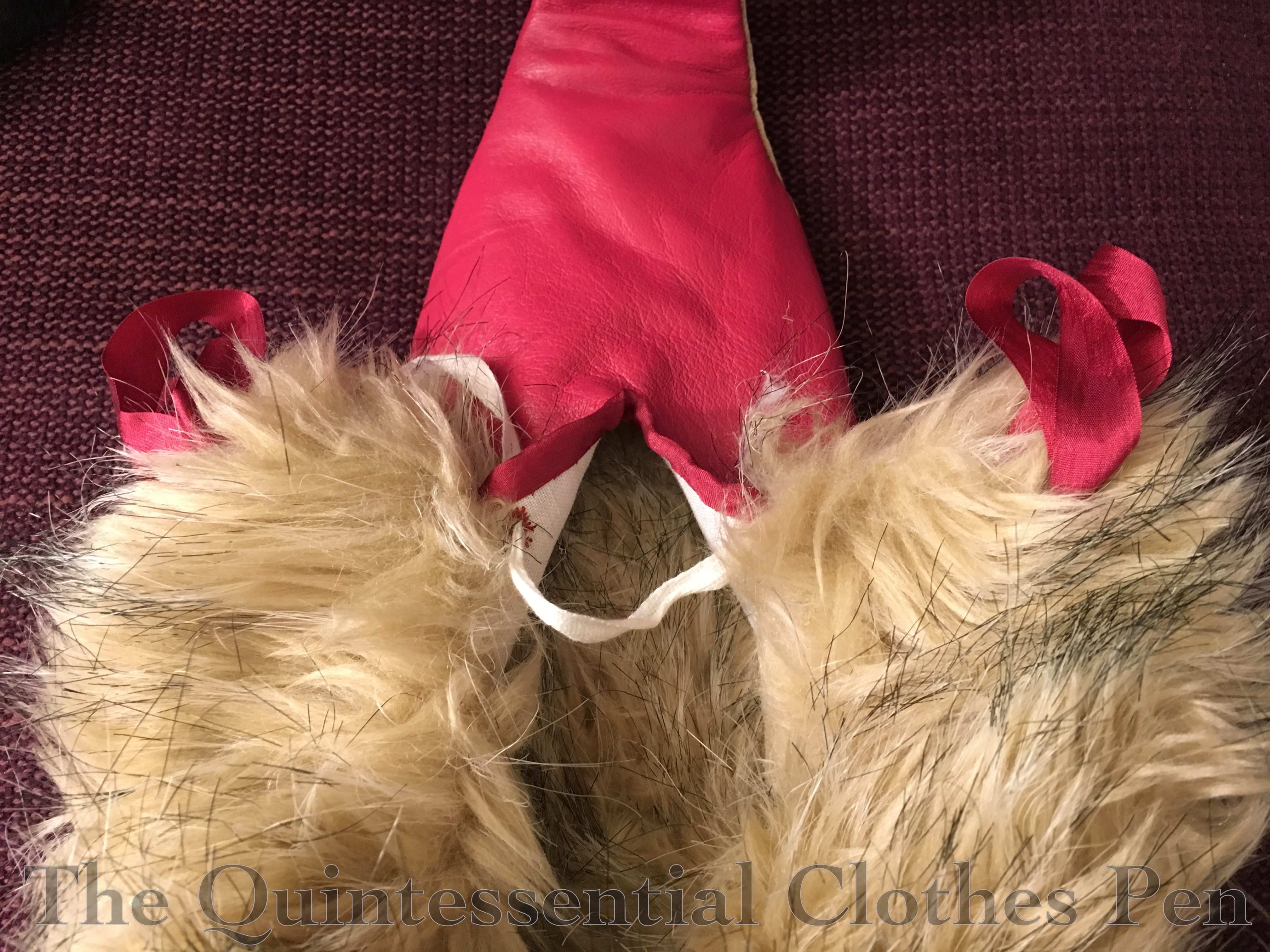
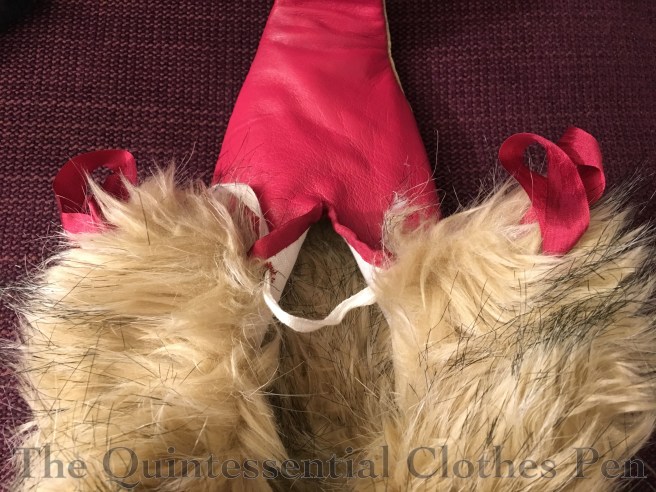
Once the soles were attached, I bound the front slit with matching silk ribbon. Then I cut a piece of faux fur for each shoe that went around just the top of the foot opening and could double over on itself. There are non-functional silk ribbon loops that are sewn to the front of the fur that encases the top edge of the shoe. The shoes actually close with a twill tape threaded through hand sewn eyelets on each side of the opening.
IMG_1684

They’re actually quite comfortable for walking around in. I have very flat feet, so don’t really need arch support to be comfortable. The only thing is that my feet did get cold during our photoshoot due to the freezing ground only separated from my feet by a few thin layers of fabric. So, for the second wearing, while caroling at Christmastime, I added a faux fur insole. Problem solved! They were toasty and even more comfortable!

IMG_1884 - Version 2

Interestingly, witzchouras are mentioned as being popular in Paris during the year 1827 by La Belle Assembleé, after a mention of other popular pelisses and mantles (well worth checking out!), and are are described as being worn with boots laced in front and with fur around the leg.

335d382370bd68a719024c208ffeff0c

Doesn’t that description sound oddly familiar? It reminds me so very much of the Vernet fashion plate and my silly shoes!

Vernet Project: A Bit More Toque de Velours

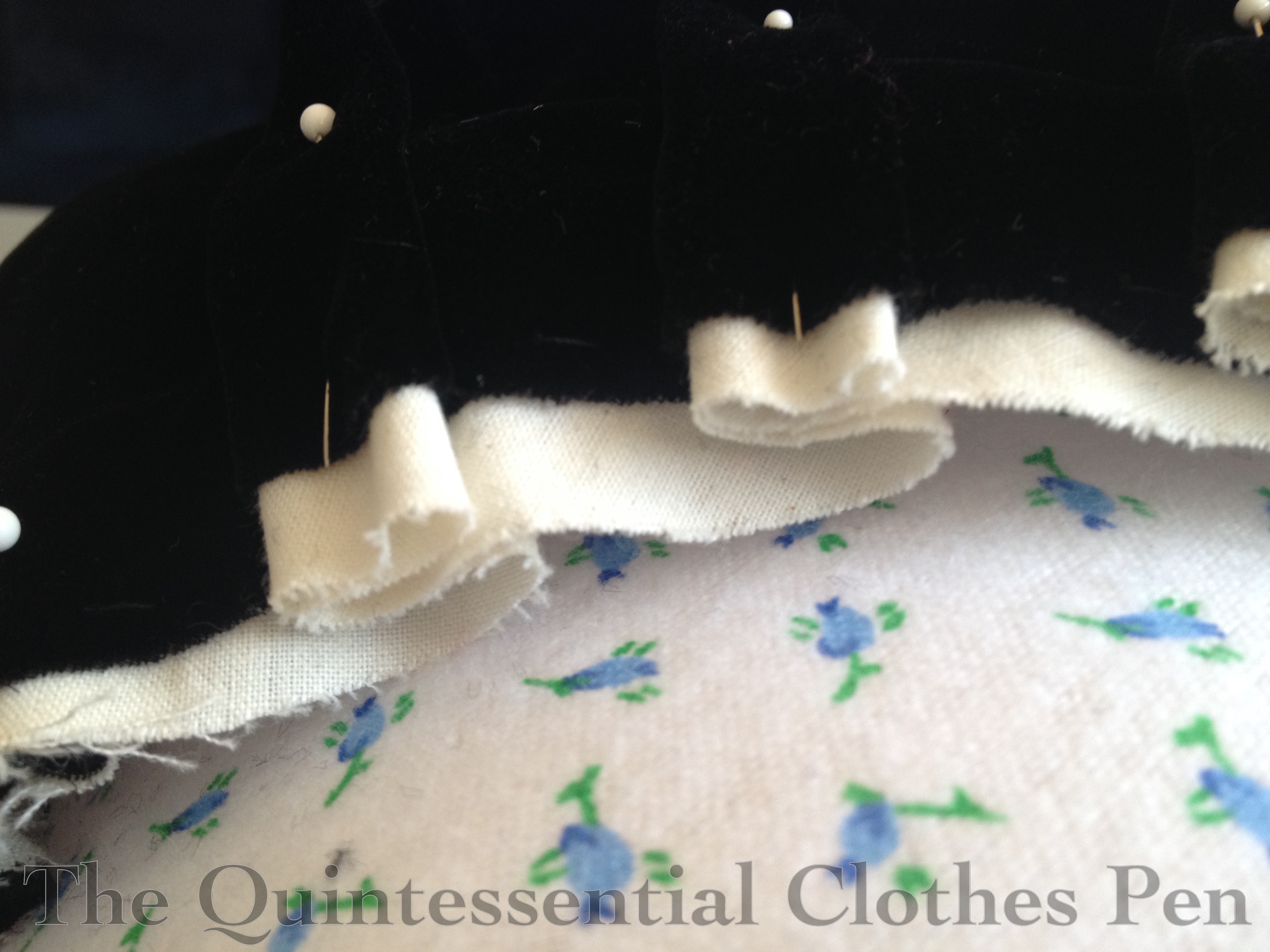
In January, when I posted about my Vernet Project hat (the Toque de Velours), I missed including a few in-progress construction pictures I later discovered floating around my photo library. Now is as good a time as any to share them.

To remind you, this is my toque de velours.

IMG_1903

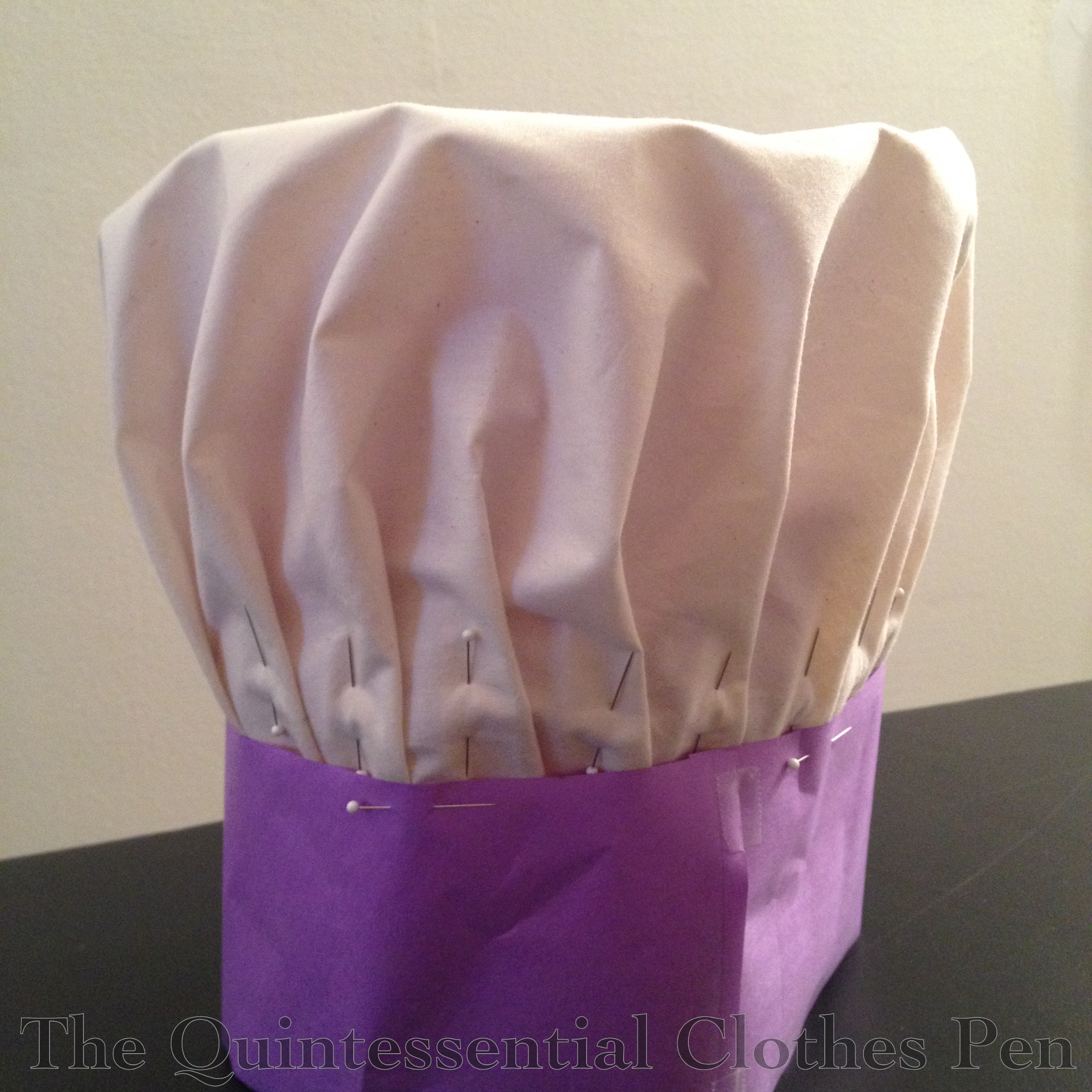
Here is the toque in the mockup stage, early in the process. I was trying to determine scale and proportions more than anything. For ease, I combined the bottom two vertical sections into one piece of paper for the mockup.

IMG_1394

Here is the actual toque in progress. You can see the floral cotton flannel mulling layer that is between the buckram base the the velvet exterior. You can also see that I used my mockup poof to flat line my velvet poof in order to help the light silk velvet hold its shape. This picture also shows the double, or stacked, pleating around the poof.

IMG_2924 (1)

This is the beginning of a renewed effort to post details about all the pieces of my Vernet Ensemble, so keep an eye out for posts about the petticoat, muff, shoes, and the witzchoura itself this fall.