Gatsby On The Isles Adventure (2021)

It was super exciting to be able to attend Gatsby On The Isles again last year! There haven’t been many multi-day historical adventures of late, so that made this one extra needed and appreciated!

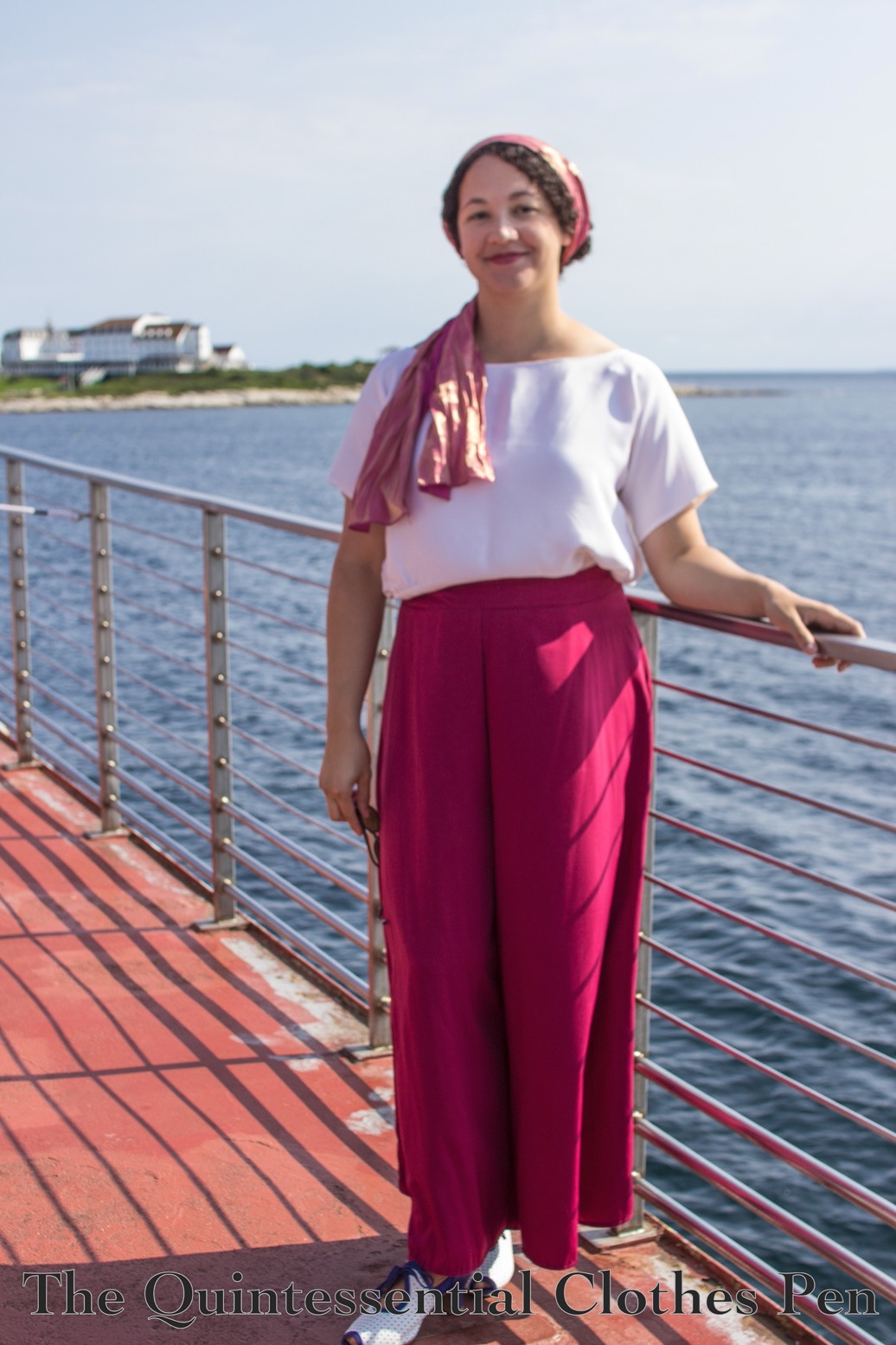
I’ve loved wearing my 1930s Beach Pajamas to this event over multiple years. They are super comfy and don’t show wrinkles (great for long car and boat rides!). I opted for them again this year but wanted to change them up to create a new outfit. After a look through my closet I decided to try wearing my 1922 silk blouse tucked into the pants for a new take on these old favorites.

I added a decorative head scarf for a bit of a jaunty flair and finished off the bottom of the outfit with my American Duchess Ginger shoes. The scarf is one I’ve had for over 20 years. I used to wear it in the belt loops of my jeans as a decorative belt, I think… I haven’t used it for anything in probably 10 years or so, but I held on to it, thinking that the dusty pink color and gold sheen would be useful for something someday… and it was! I like how it blends the bold color of the pants with the bright white of the blouse.

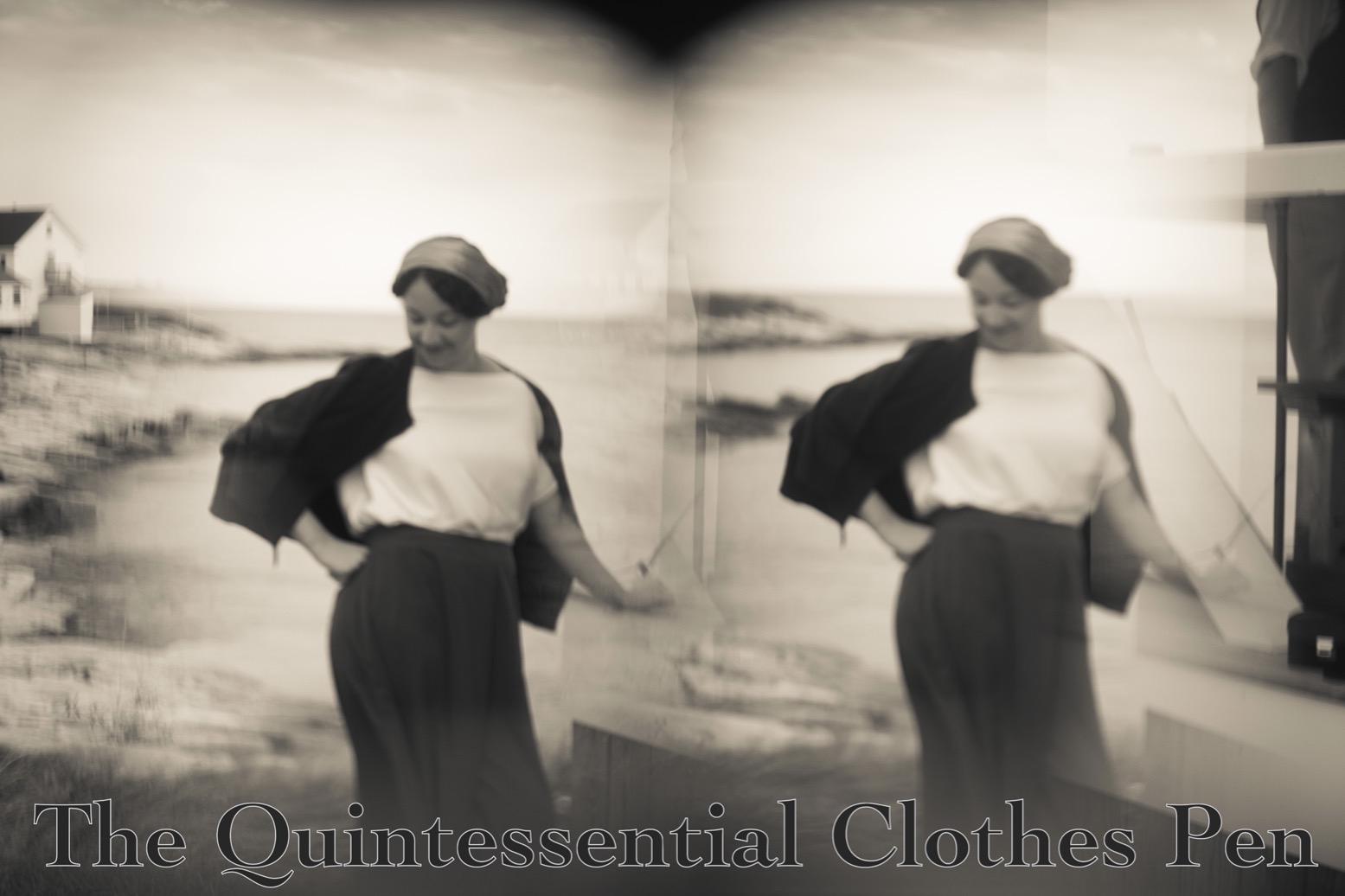
I might have been slightly distracted from drinking my tea at the clifftop gazebo by the opportunity to take photos (or be in them)… Some with a stereoscope!

Croquet the following morning was also well documented.

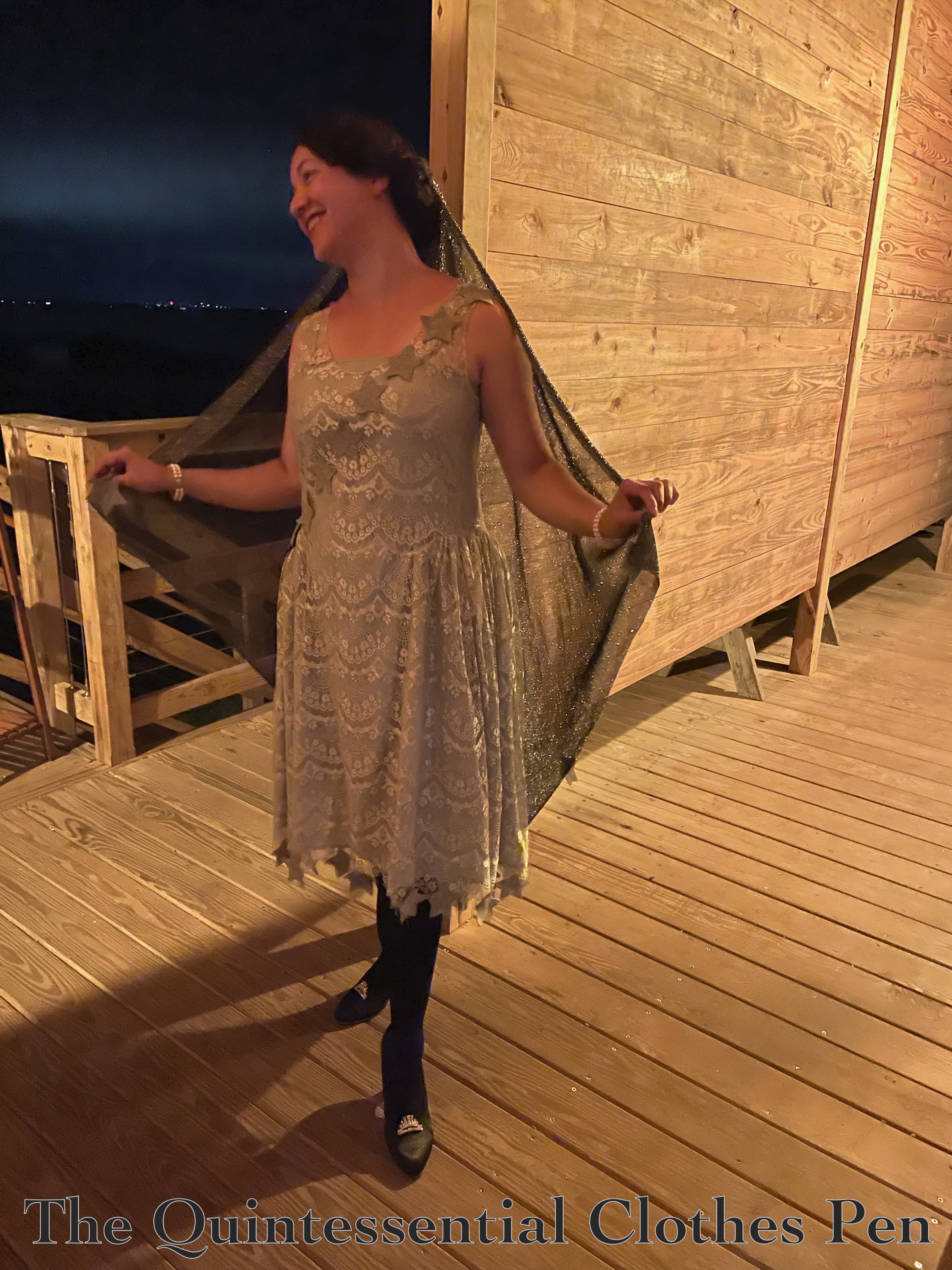
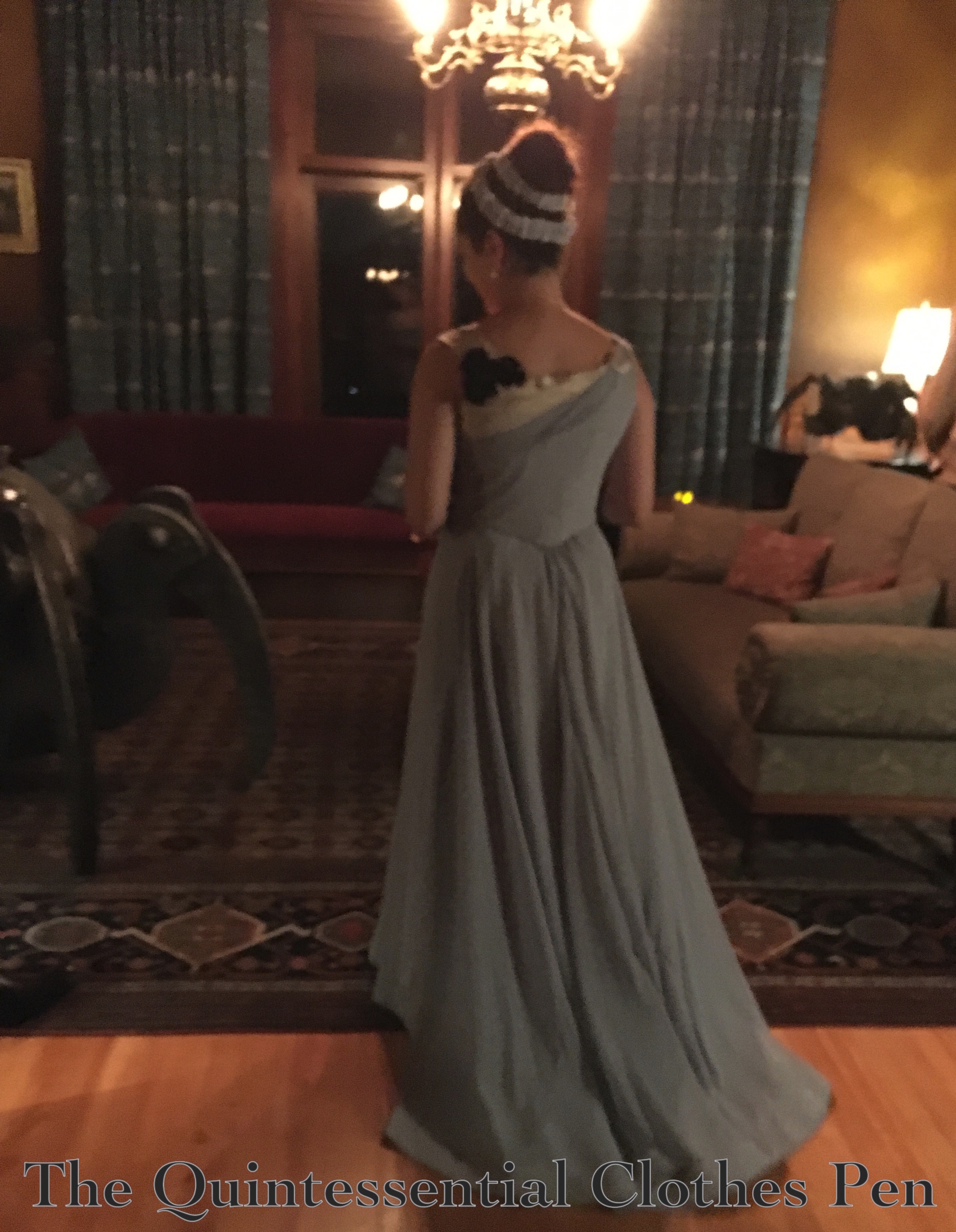
The weekend included other opportunities for fun photos, as well. The evening dance had a masquerade theme, for which I turned my 1926 Silver Robe De Style into a star-themed fancy dress outfit. There’s a whole post about the fancy dress inspiration that you can read here.

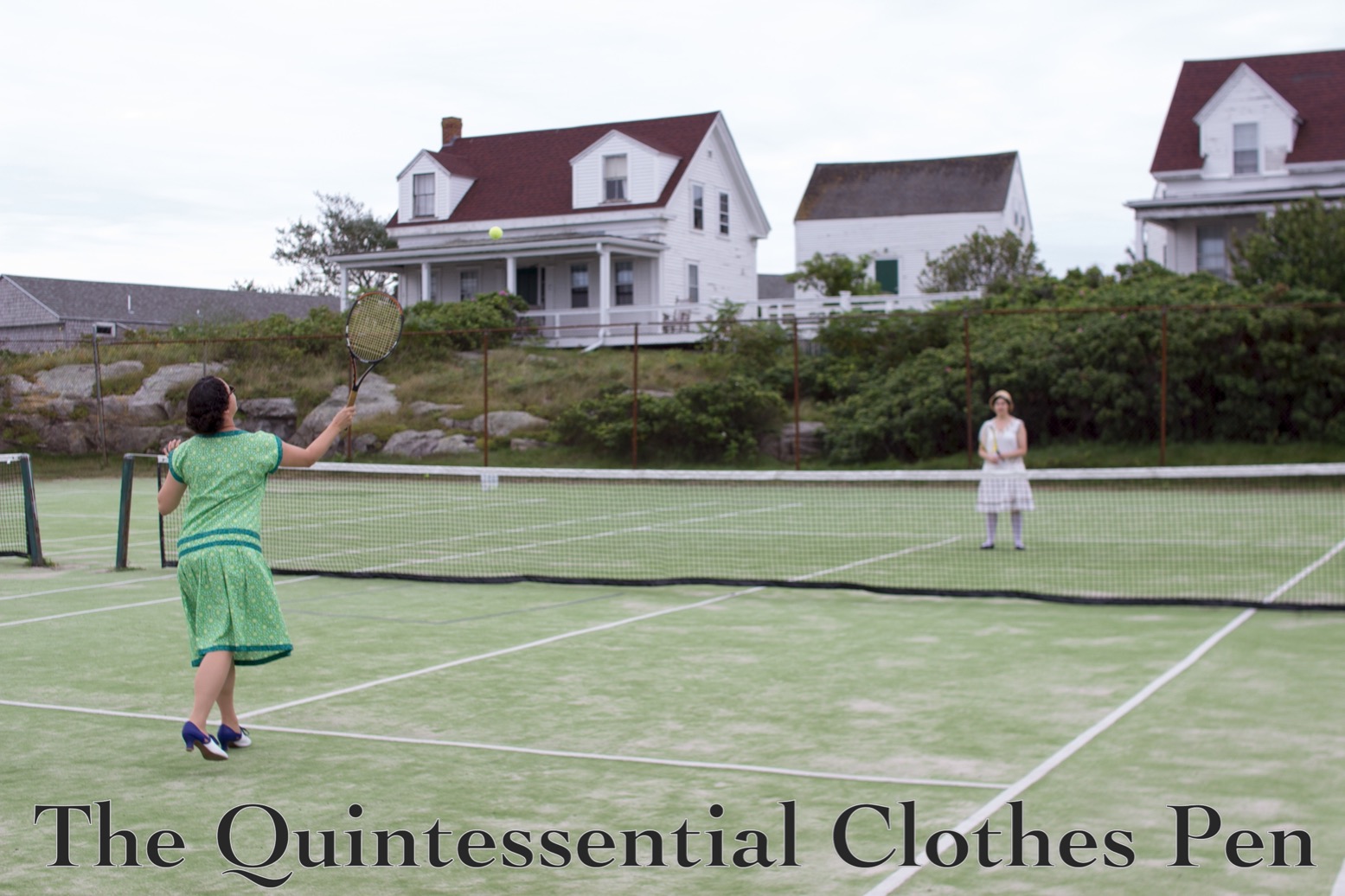
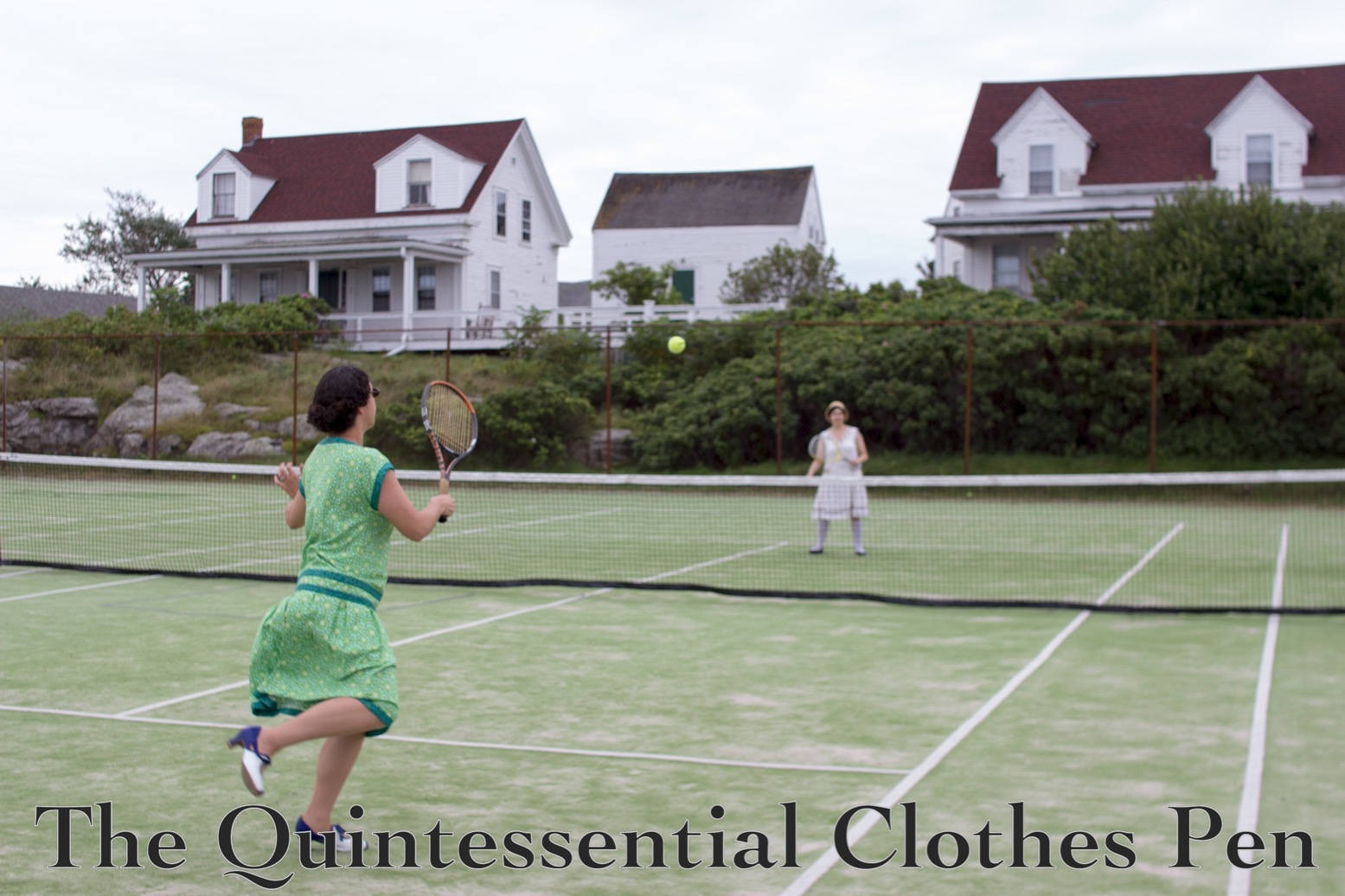
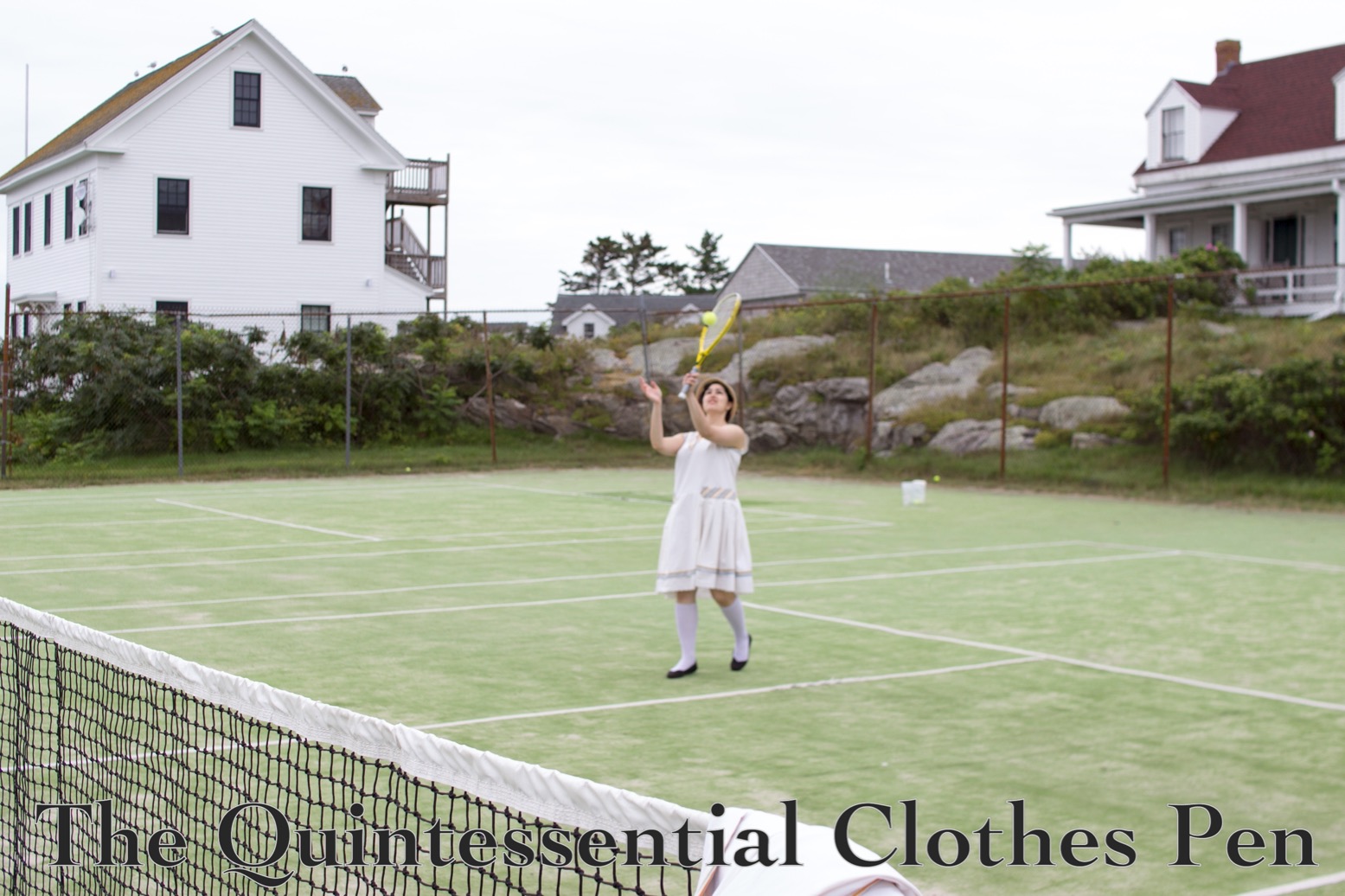
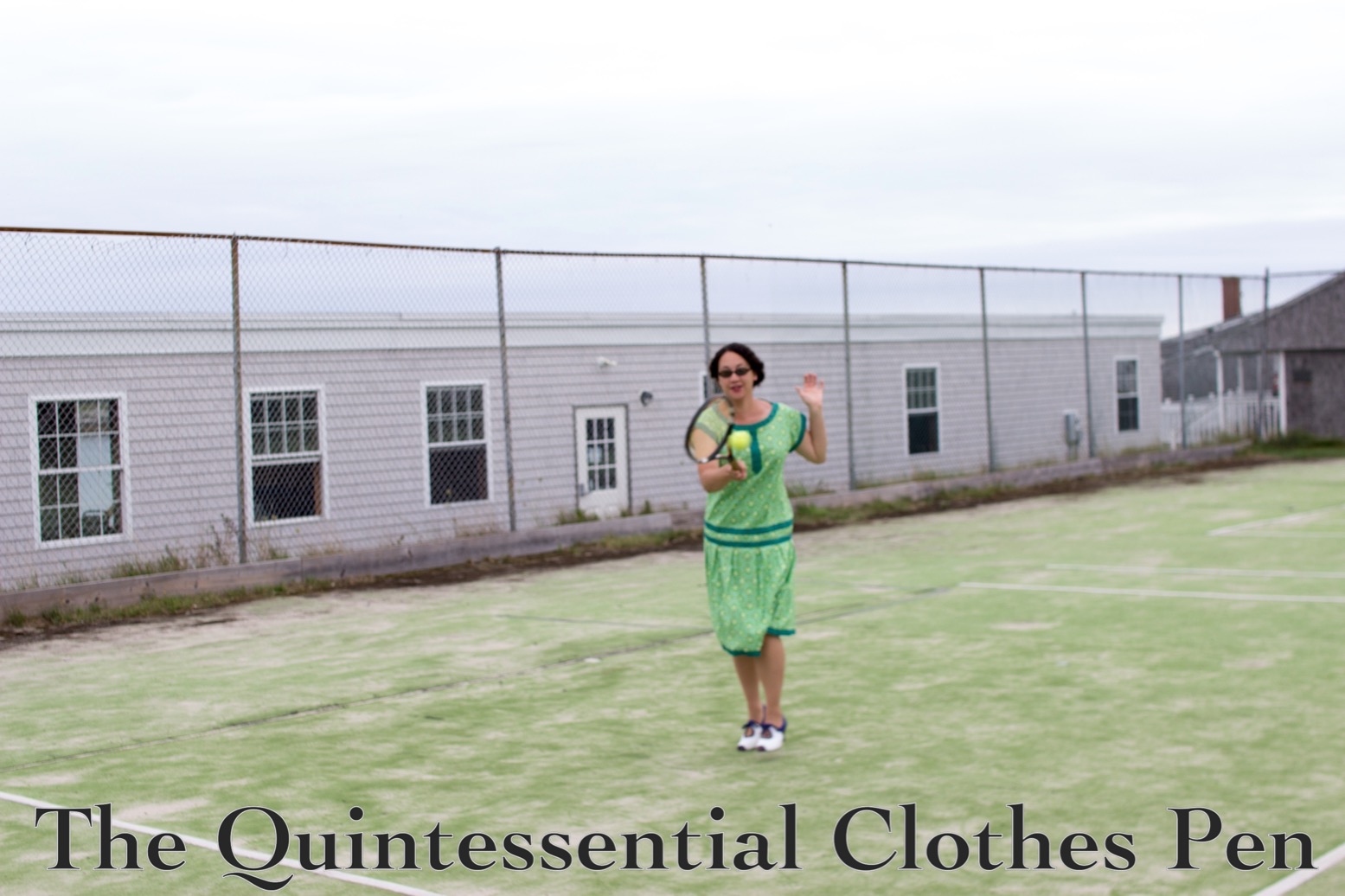
We also ‘played’ tennis! Or at least, we batted a ball around a bit.

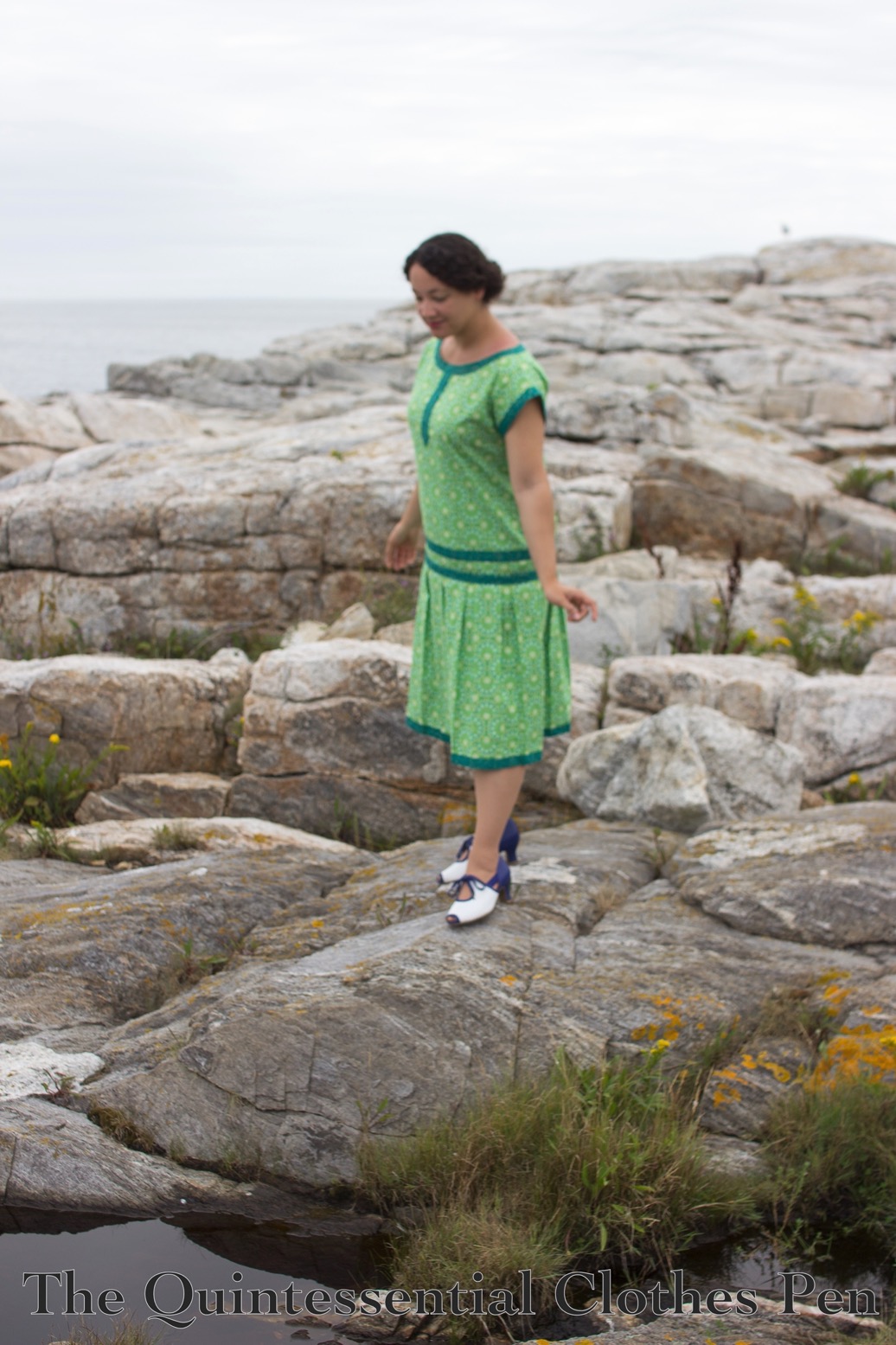
I had no trouble running around in my heels. It was quite fun, actually! I felt very sporty in my Gingers and new 1928 dress!

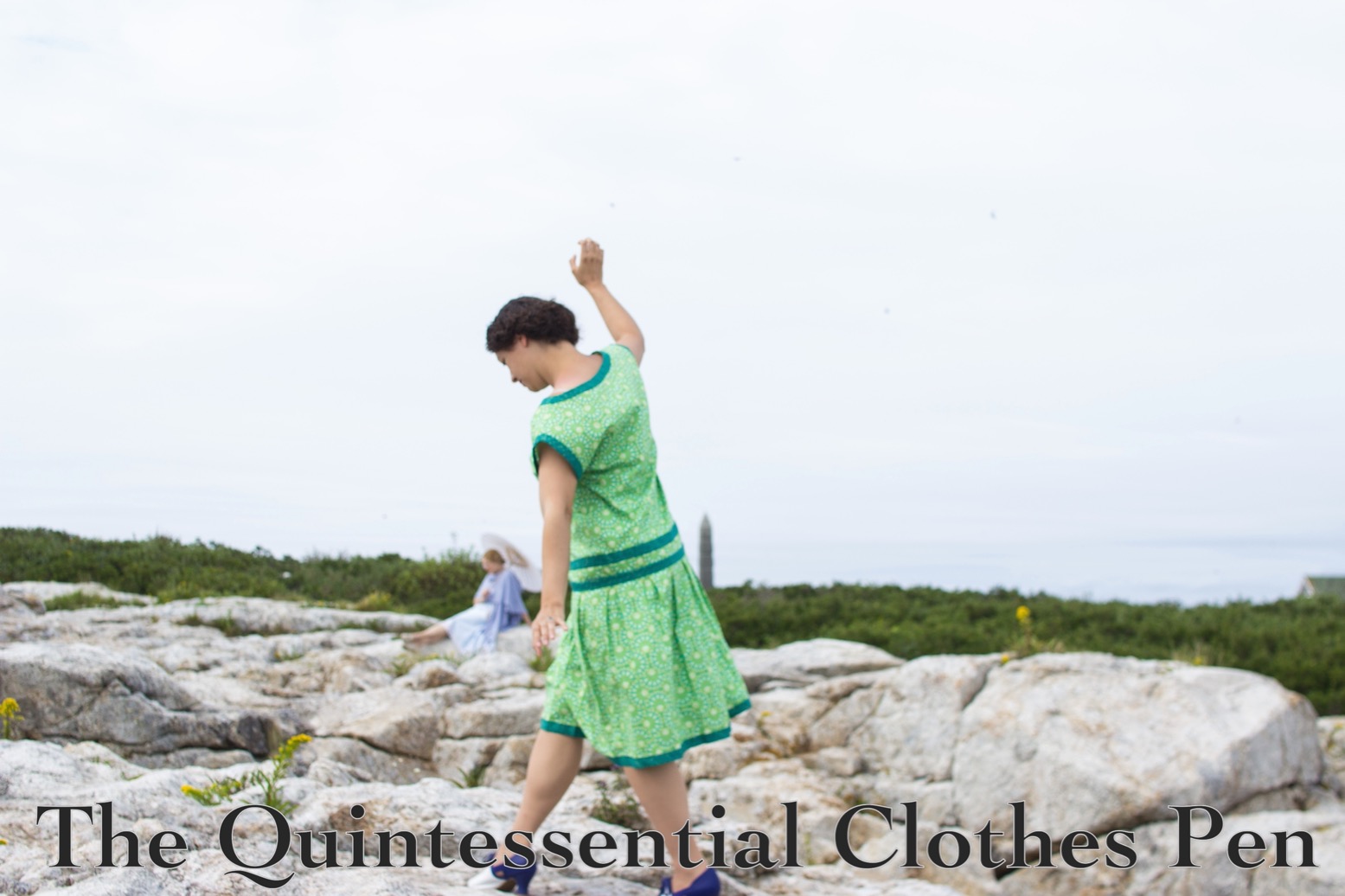
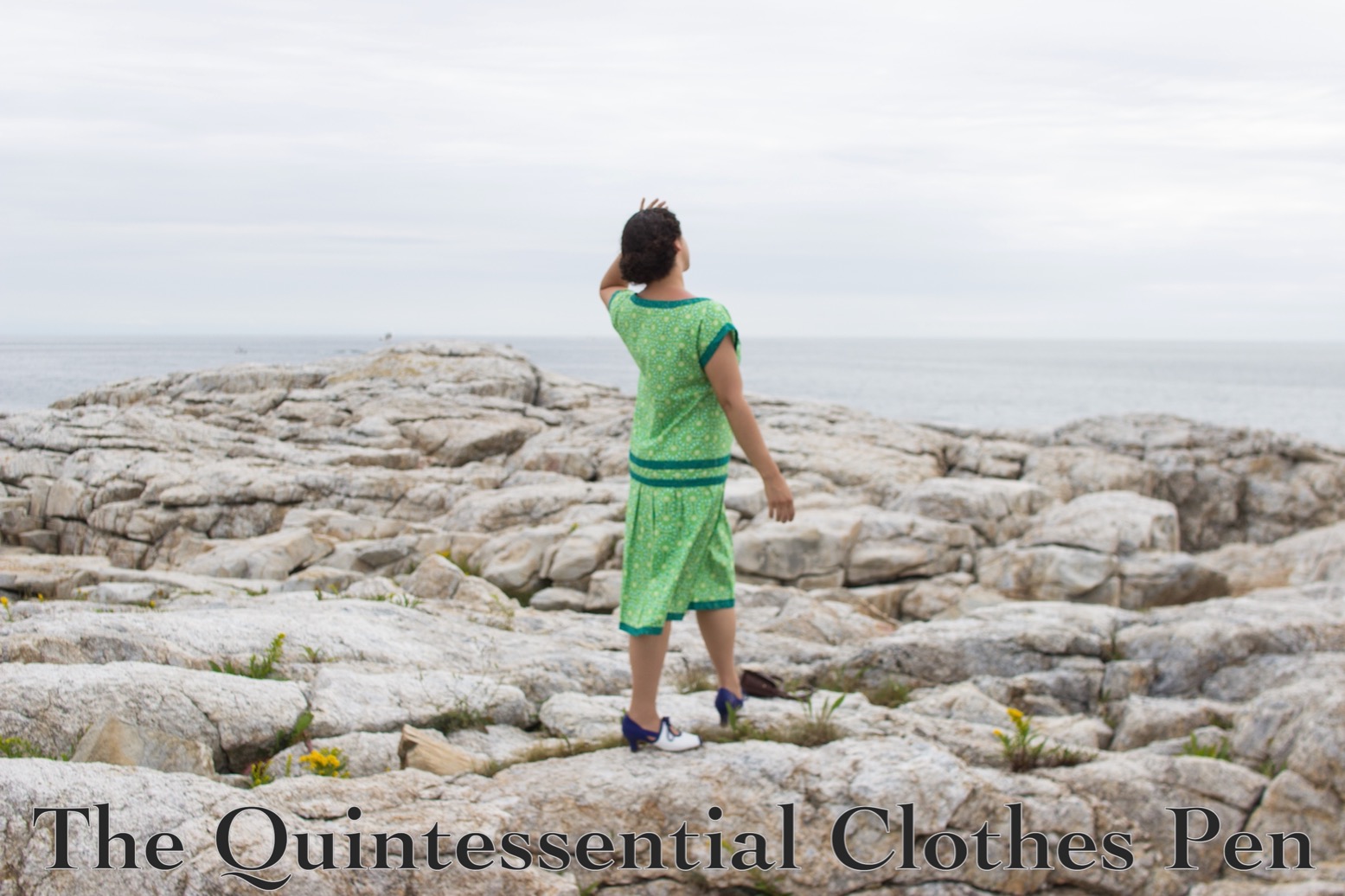
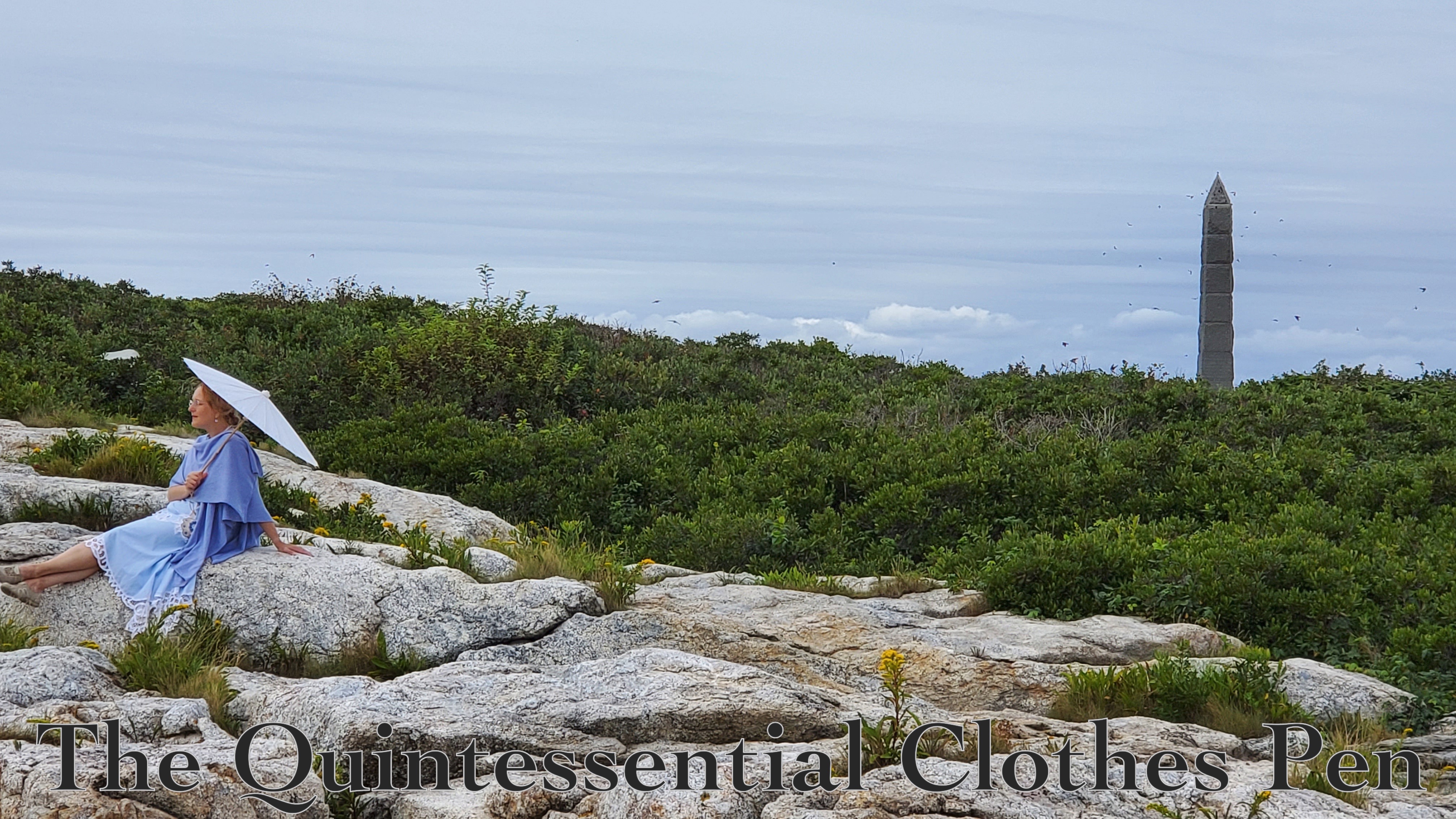
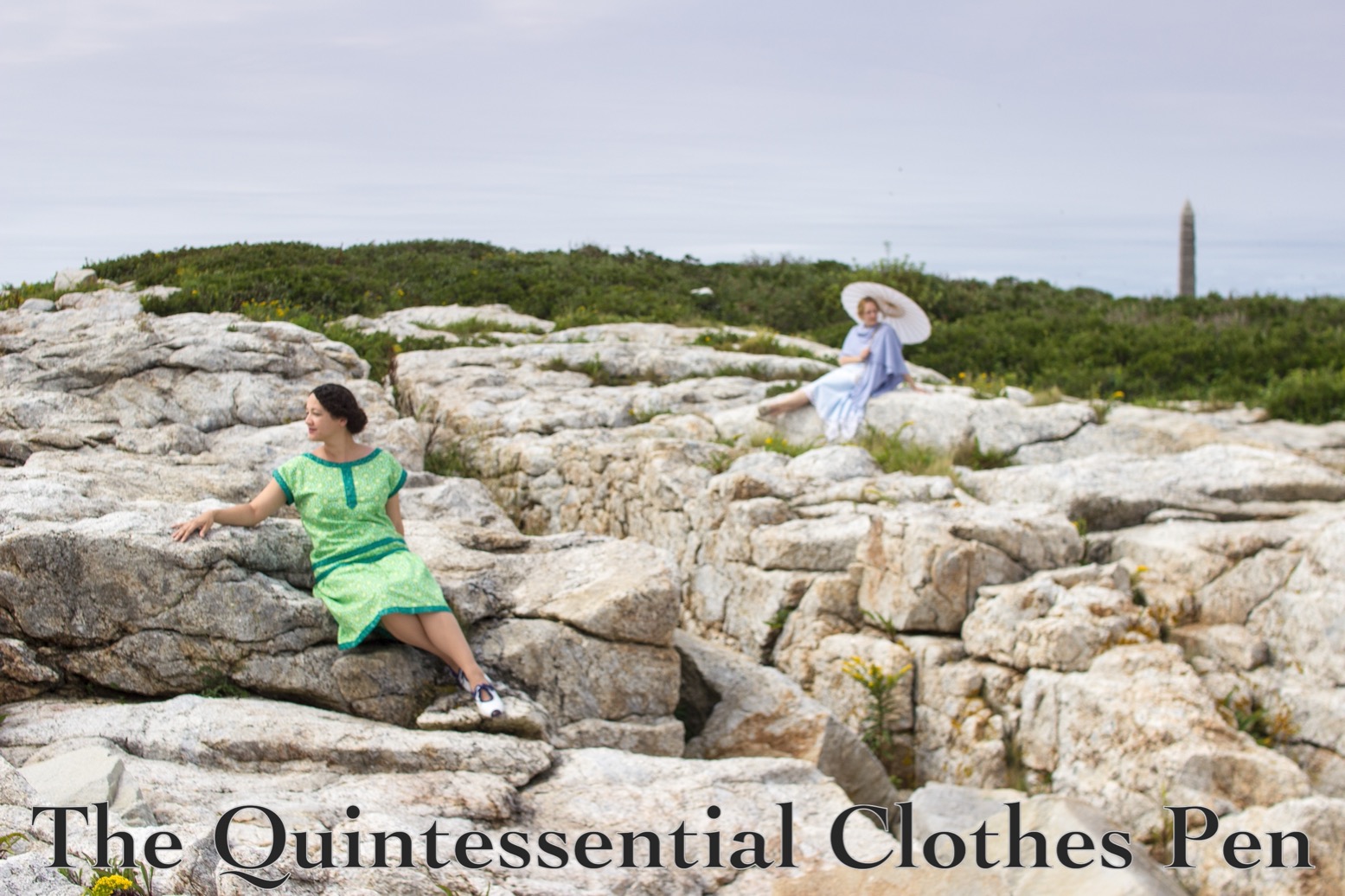
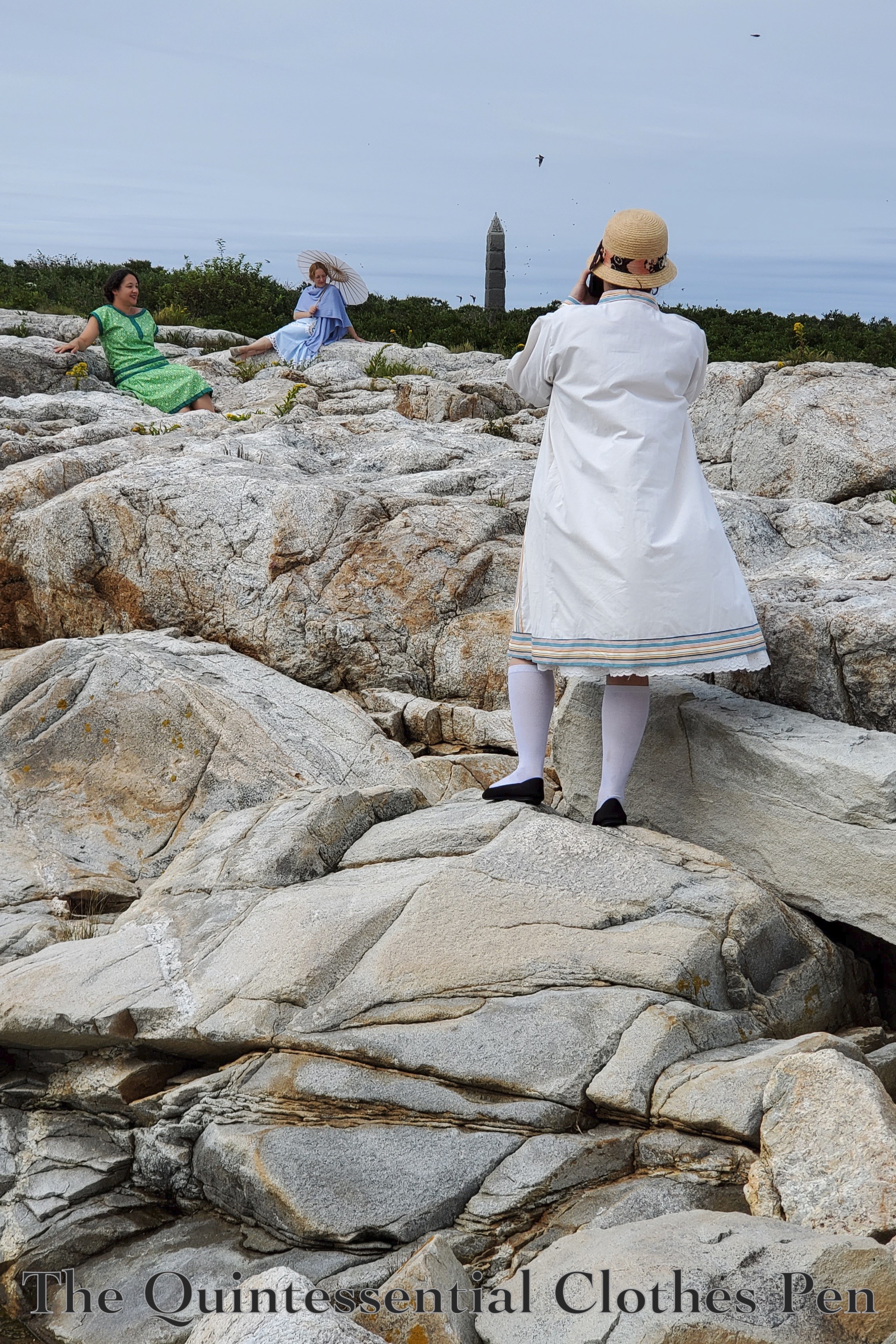
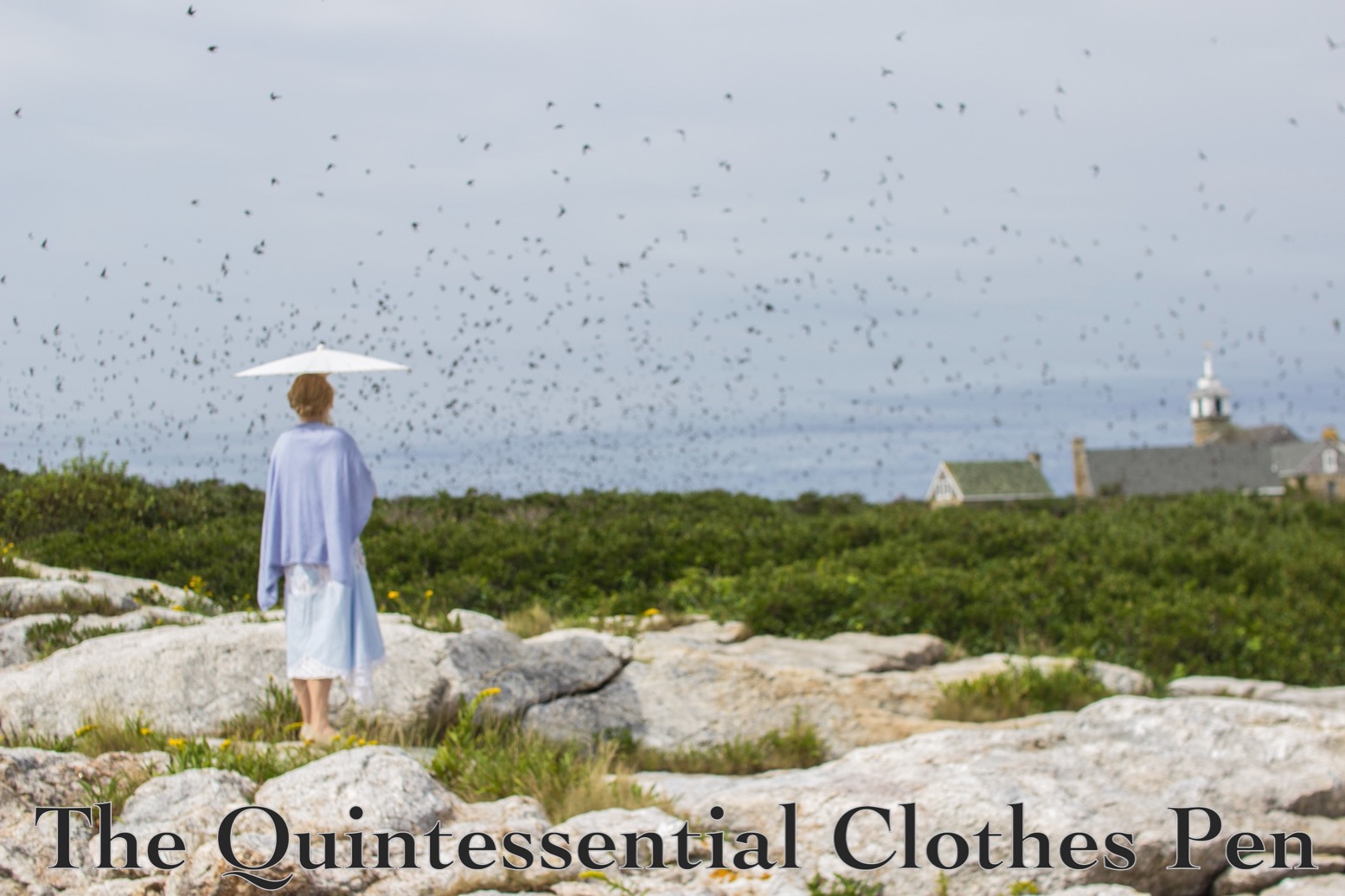
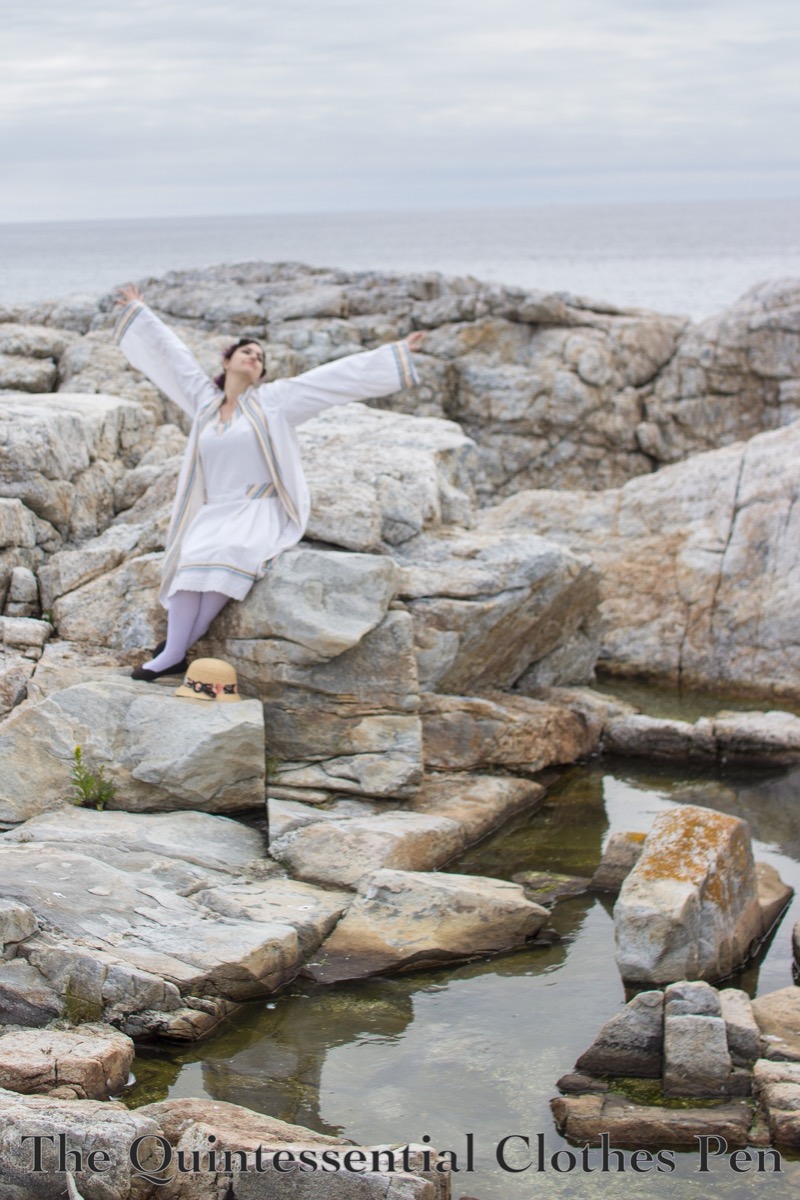
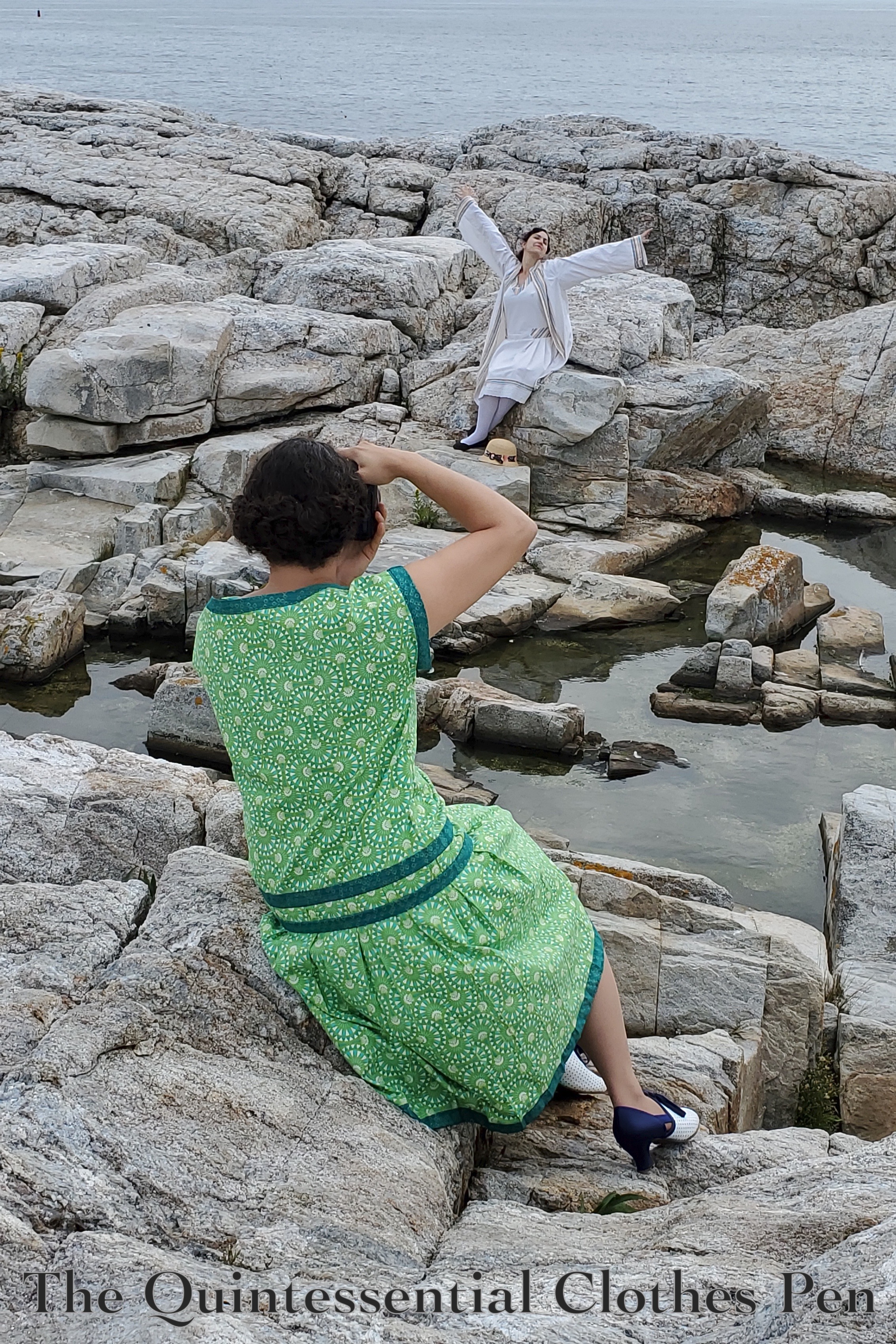
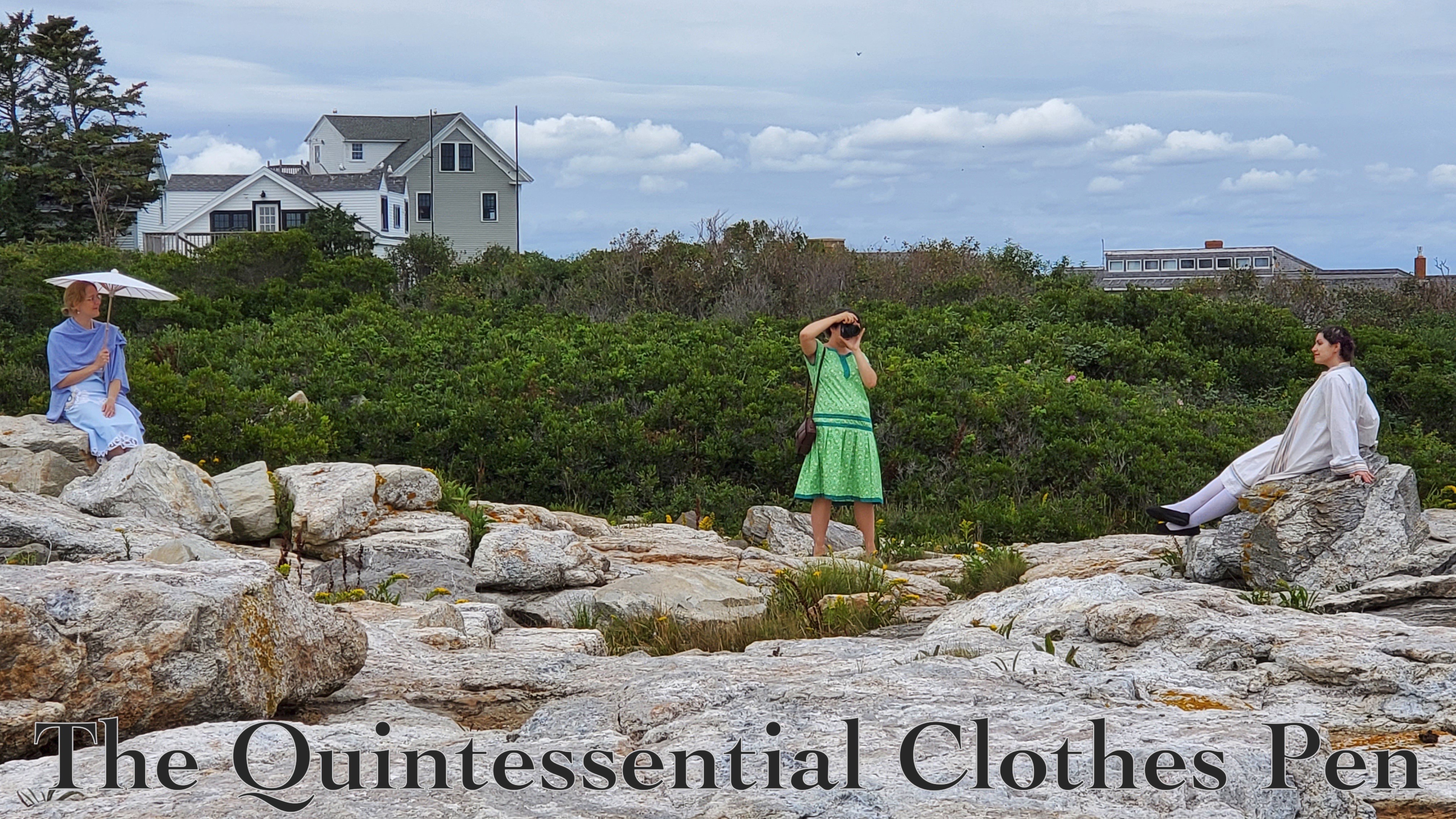
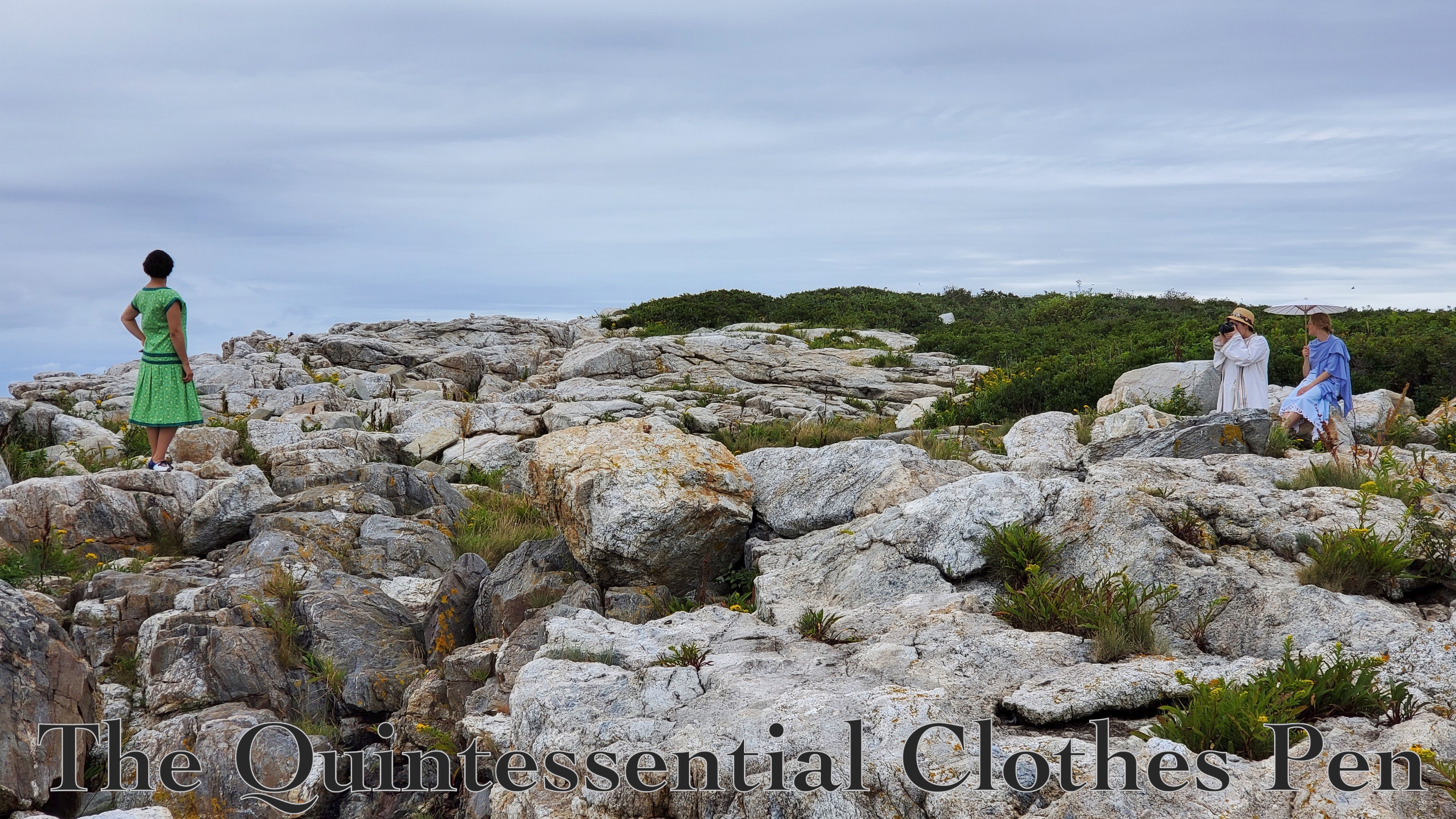
In addition to playing tennis, we also wandered around the rocky back side of the island in pursuit of stunning photo settings.

We achieved great photos, some alone and some in groups. These are just a few of them… There are are so many fun ones that I’m going to do another post just to share rocky background photos!

My shoes had no trouble on the rocks! I did tread carefully, for safety and so I didn’t bang up my shoes unnecessarily, but I enjoyed proving to myself (as I have before) that one can clamber even in fabulous historical shoes.

It was so nice to have a getaway! And see people! And wear historical clothing!

1920s Star Fancy Dress

The theme recommendation for the evening soiree at Gatsby On The Isles earlier this year was a masquerade. I took that to heart and decided to adapt an existing dress in my closet to make it fancy dress. (It turns out that the majority of people who attended didn’t adhere to the guidelines, so I was a bit out of place, but I enjoyed my fancy dress regardless!)

My requirements for this outfit were: to use a dress as a base that was already in my closet, to not cost much, to not take much time, and to have the elements of fancy dress be easily reversible.

I looked through my 20th Century Fancy Dress Pinterest board and settled on the image below as my inspiration. (Unfortunately, I can’t find a source for the image that isn’t Pinterest. If anyone has information, please share.)

I thought the idea of stars would work well with my 1926 Silver Lace Robe de Style. I briefly considered creating the stars myself and then I remembered that I didn’t want this too take too much time and I started researching purchasable stars. I wanted something nice looking but not costly, remember, and I also wanted to stay away from glitter–the shedding! Ugh! While considering various metallic and cardboard style stars I realized that: 1- those may not travel well (I didn’t want bent stars!) and 2- they probably wouldn’t be comfortable to wear. So I started researching felt stars!

I decided on these felt stars. They were a good size, I liked the color, and they weren’t supposed to be too stiff. Not being stiff would be more comfortable to wear and also easier to sew through! I’d considered making garlands of the stars but I figured they would get tangled, so instead I opted to sew the stars directly onto the lace.

I started by placing the stars in a line diagonally across the top of the dress. The goal was to capture the feeling of my inspiration but didn’t feel the need to add as many stars as the drawing has, so I stopped with the one line. I liked the stars hanging from the hem, so I did those next–one star per each dip in the pattern of the lace.

After that I didn’t have many stars left! I used a scrap of metallic knit fabric to make a veil and put a star on each corner. The veil is a square, with one corner turned under, gathered, and stitched to a hair comb.

I also used some black felt scraps to cut a few stars by hand to accent the star at the waist. I thought this might tie in the metallic knit veil and also draw attention to the grey stars on the grey dress!

I added some sparkly shoe clips, pearl bracelets, and sparkly stars for my hair (reused from my 1885 Night Sky Fancy Dress) and the outfit was complete! It pays off to reuse themes for fancy dress, I guess!

1930s Holyhead Harpies Adventure

Some of my friends decided to make 1930s quidditch uniforms for the Holyhead Harpies team (these are all Harry Potter references, in case that sentence makes no sense to you!). I didn’t have the time to join them in that particular endeavor, but I did have a 1933 dress in my closet in the team colors (green and gold) and we decided it would be fun for me to tag along on the quidditch adventure. One could call me team manager, or a fan, or… take your pick!

My role might depend on which photo you’re looking at… I brought along a wand and my time turner and made sure to run the team through their drills!

Our initial photos were fun, but the backgrounds weren’t great, so we decided to do an autumnal outdoor photo shoot, which we combined with regular photos of my dress, too. The non-Holyhead Harpy photos of the dress can be seen here in a previous post.

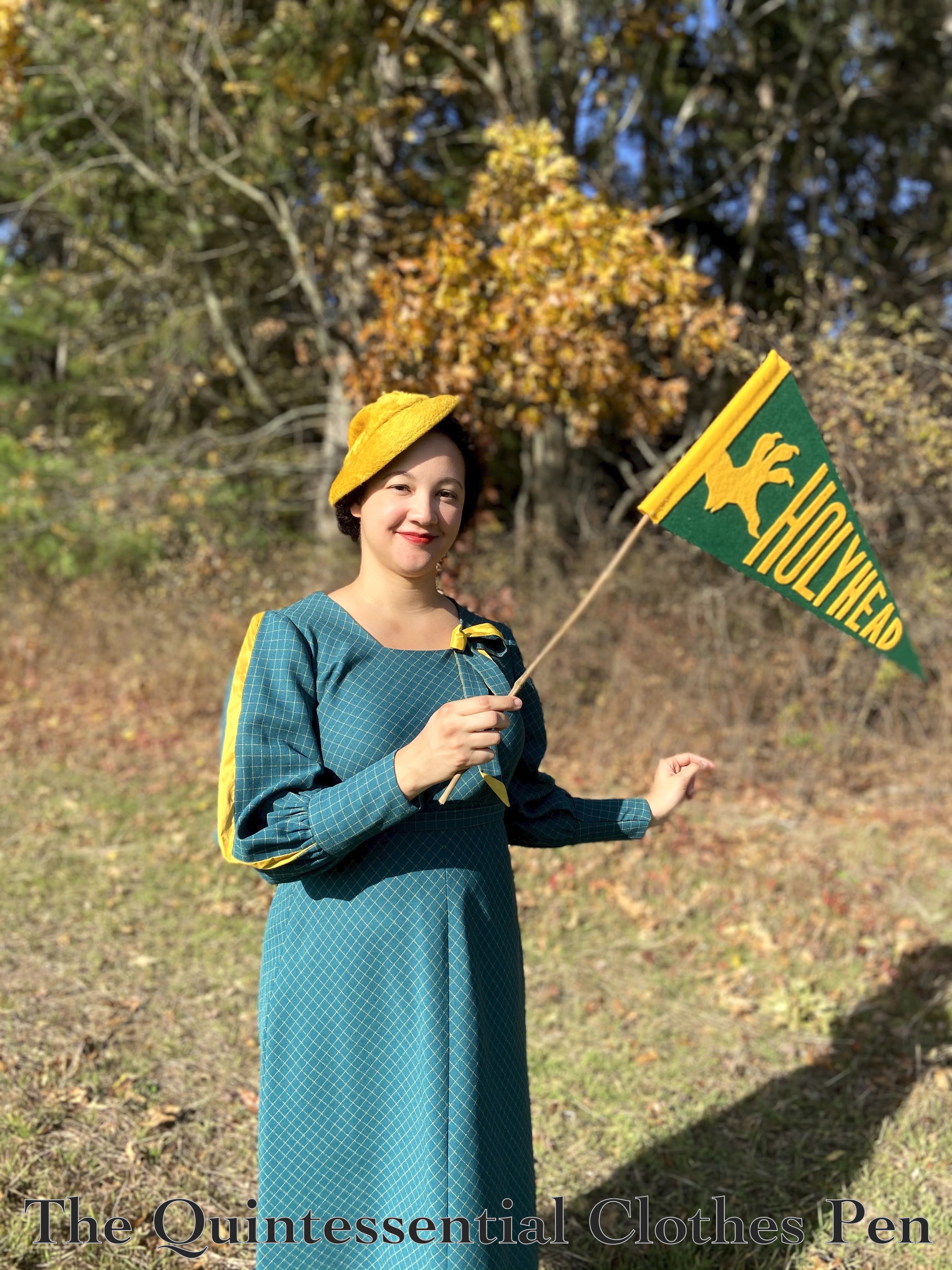
You can’t really see the detail of the pennant in the last photo (but look at that gorgeous tree!), so below is a closer photo. One of my friends had great fun making the felt pennants!

We had fun taking action shots, too!

Who says quidditch brooms aren’t real?

Quidditch champions!

Sometimes a bit of silly is good for you. Certainly it brings smiles! To read more about the idea to make 1930s quidditch uniforms, check out this post about it on Plaid Petticoats.

An Autumn Outing For The 1933 Green & Gold Dress

It’s autumn! I think this is my favorite season. Chilly air mixed with sunshine… The return of wool sweaters and skirts… Crisp apples and fresh cider… Yum!

I thought I’d set the season by sharing a few photos from an autumn photo shoot that haven’t made it onto the blog yet. They are so wonderfully autumnal that I’ve been saving them until the perfect time of year!

The story behind the photo shoot is that back in 2017 I made a bias cut 1933 dress. It is green with a small windowpane woven in gold and features gold taffeta accents as well as a gold tilt hat remade from a vintage velour cloche-shaped hat. Construction details and the original photo shoot were blogged about here.

At the time I made the dress I had no particular plans for it, but I’m pleased to say that I have put it to use a few times in the last few years. Most recently, I wore it on this gorgeous autumn day in order to get updated photos of it and to join friends as we photographed them in 1930s-style Holyhead Harpy quidditch uniforms (this is a reference to Harry Potter… more on that in a future post!).

I loved the idea of the gold accents in harmony with the changing leaves, though I think it’s possible the leaves mostly stole the show!

It was such a beautiful day! With or without leaves the trees looked striking against the brilliant blue sky.

In addition to getting photos, we had a picnic followed by a lovely walk as we took in the trees, sunshine, and fresh air. Autumn is only just starting so there’s plenty of time to get some more of that, too!

1838 Yellow Bodice Construction Details (HSM #4)

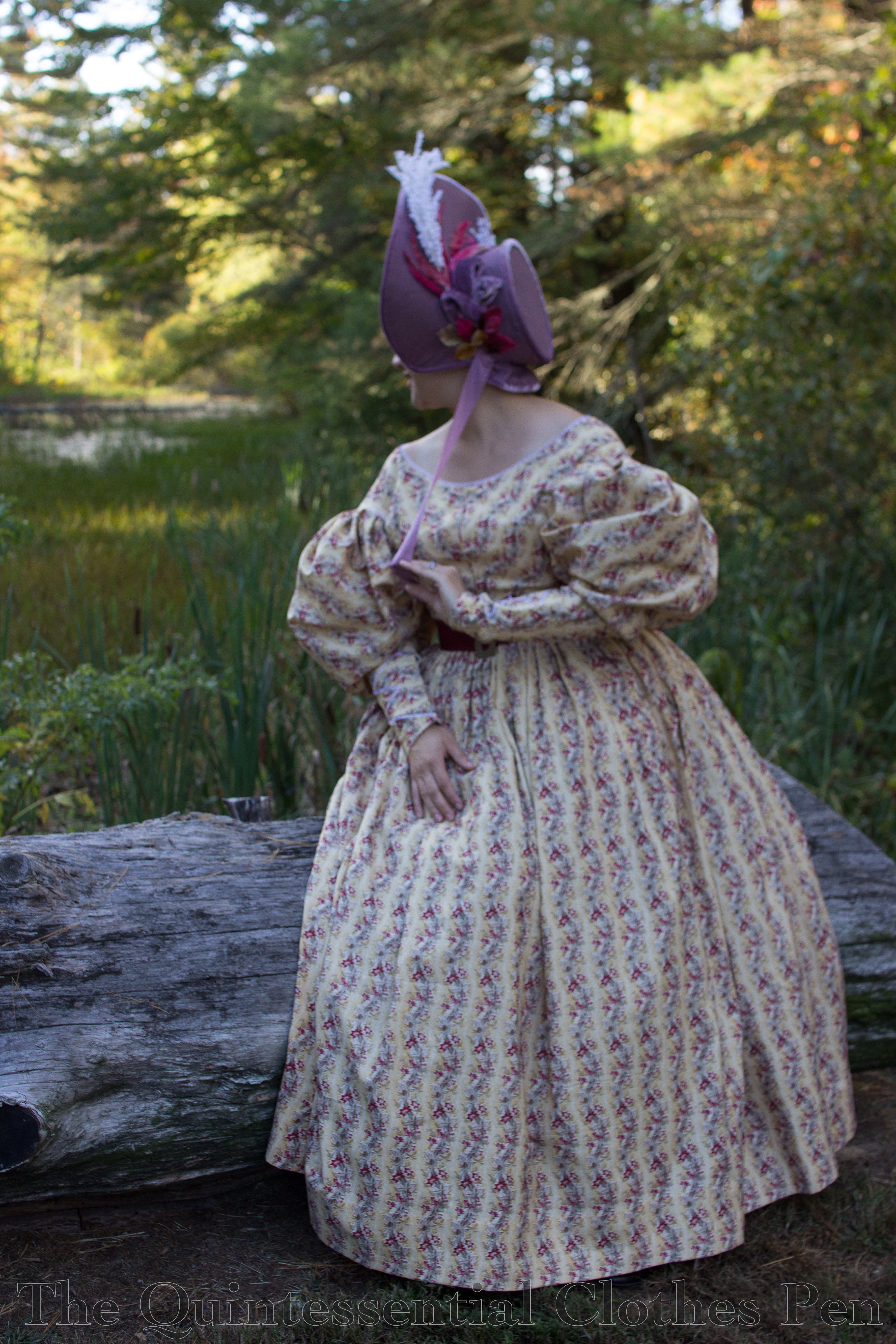
Last year, I made a yellow cotton print 1834 dress (there are tons of details about it in this past post). The yardage leftover after that project wasn’t enough for another full dress, but it was enough for another bodice, and I’d been caught up in 1830s fever!

There are so many ridiculous sleeves to explore! Accordingly, I decided to make a second 1830s bodice with different sleeves. I finished the new 1838 bodice earlier this year and over the summer I was able to wear it with my recently finished chemisette.

The 1834 dress was made in two parts, a skirt and separate bodice, so that it was easy to make a second bodice and save yardage on the skirt.

Construction Overview

First, the construction details of the new 1838 bodice, starting with the HSM facts, because this bodice fits Challenge #4:

The Costumer’s New LookGive an old costume a new look, either by creating a new accessory or piece which expands or changes the aesthetic and use of an outfit, re-fashioning something into a costume item, or re-making an old costume.

Fabric/Materials:Approximately 2.5 yds reproduction print cotton and 1 yd of muslin.

Pattern: The pattern for this bodice is based on patterns contained in Janet Arnold’s Patterns of Fashion 1 and Norah Waugh’s The Cut of Women’s Clothes, as well as sleeve information fromThe Workwoman’s Guide.

Year: 1838.

Notions: 2 ½ yds narrow cotton yarn for cording, about 10 hooks and loops, and thread..

How historically accurate is it?: 90%. The pattern, construction methods, and fabric are all quite good. Inside seams are sewn by machine.

Hours to complete: 22.

First worn: August 2021.

Total cost: Approximately $15.

Construction Details

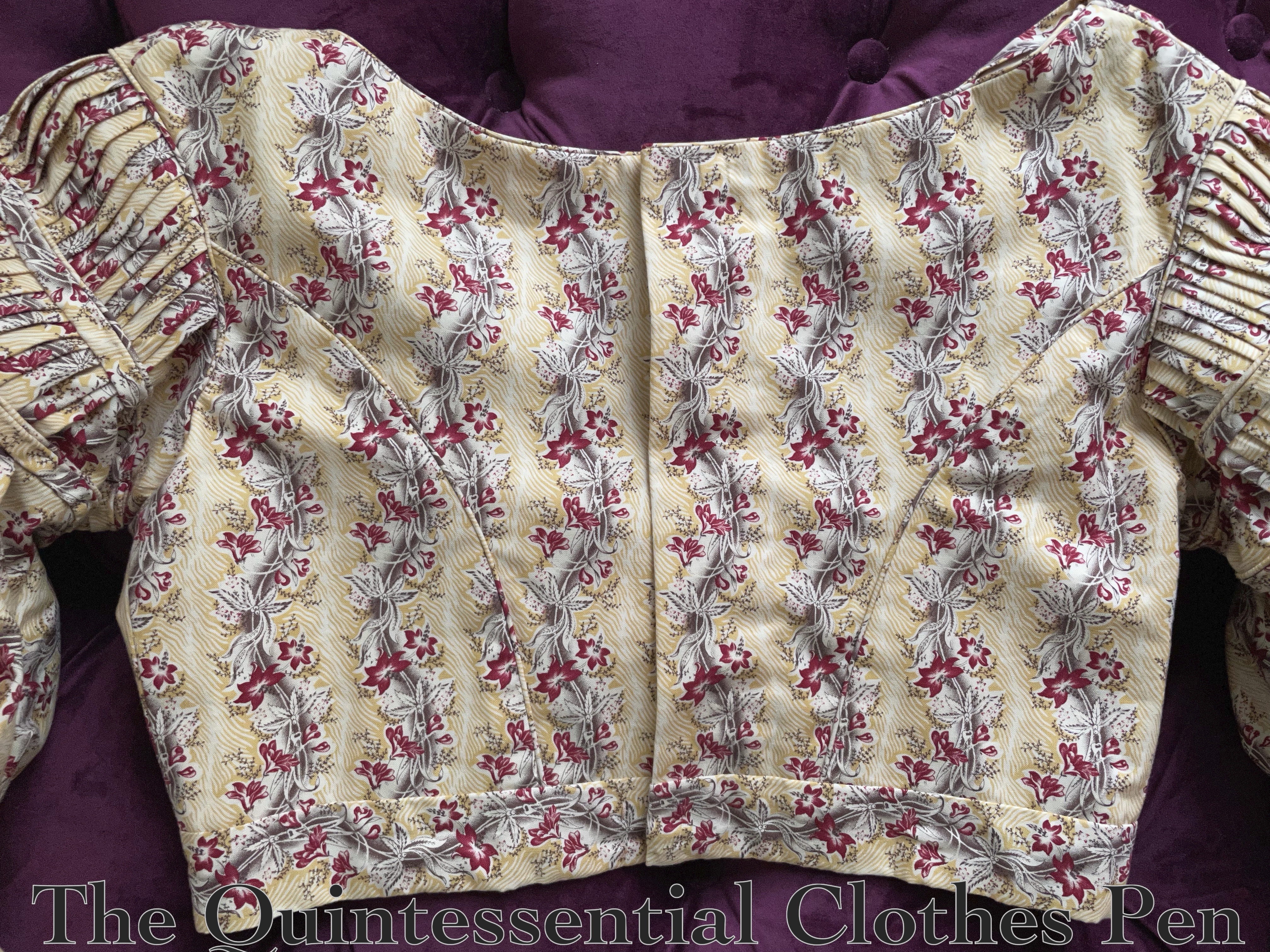
The back of this bodice is made just like the 1834 bodice, with piping in the side back seams. The armsceyes and neck are also finished with piping.
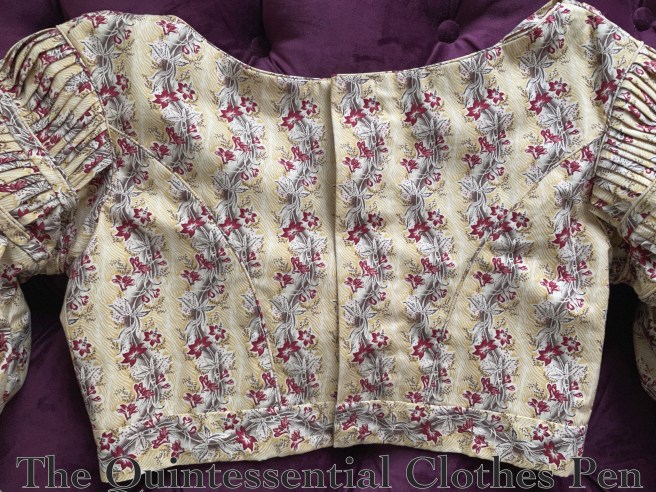
The main difference in the bodice (aside from the sleeves, which we’ll get to shortly) is the front, which has a deep V shape.

I looked at extant garments to see how this style was constructed. There are a collection of pertinent ones on my Pinterest board for this sewing project. The main inspiration for my observations was this garment, featured on All The Pretty Dresses blog (and included on my Pinterest board).

What I saw is that instead of being flatlined (as with the yellow and muslin layers of the back pieces), the lining was stitched separately from the gathered front panels. The muslin provides a fitted shape for the yellow exterior layer. There is a photo of the inside of the bodice of the extant bodice that shows this very clearly.

For my dress, the piping that finishes the back neck continues around the muslin to finish the edge. The yellow exterior pieces of the V edges (which are cut on the straight of grain) are simply pressed under twice.

Here is a closeup of the armhole of my bodice from the inside. The muslin front edge and exterior yellow layer are on the right of the photo. You can also see the ties that hold the sleeve puffs in place.
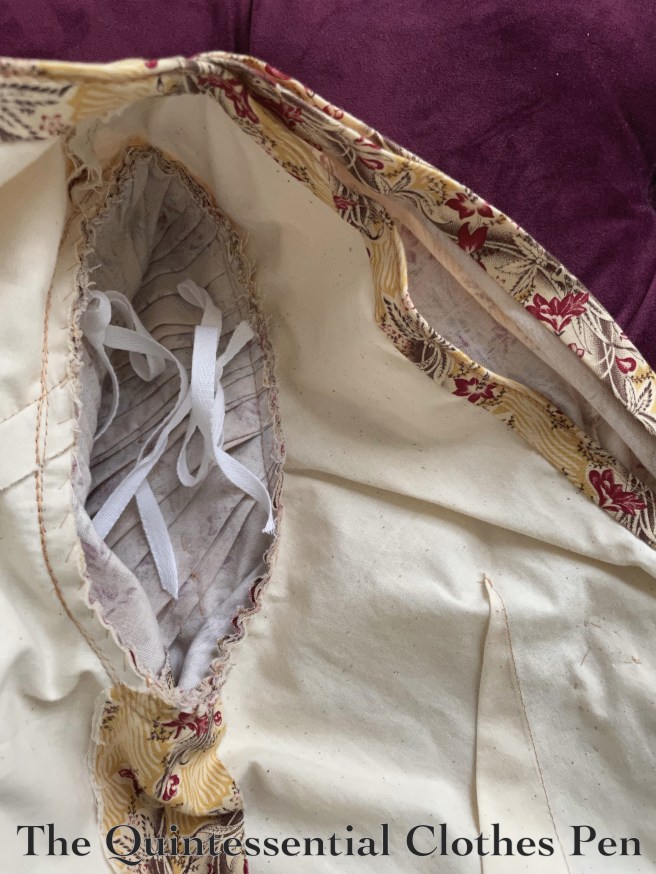
In addition to those details, the photo below also shows the hooks that are used to attach this bodice to the skirt.

Ok, but the sleeves are the star of the show here, so let’s discuss them! Being from 1838, they still use a lot of fabric (a yard each), but the fullness is pleated to force the puff down to the elbow level.

Here’s a closeup of the completed sleeve. The pleats are held in place by two bands of double piping that are hand sewn in place.
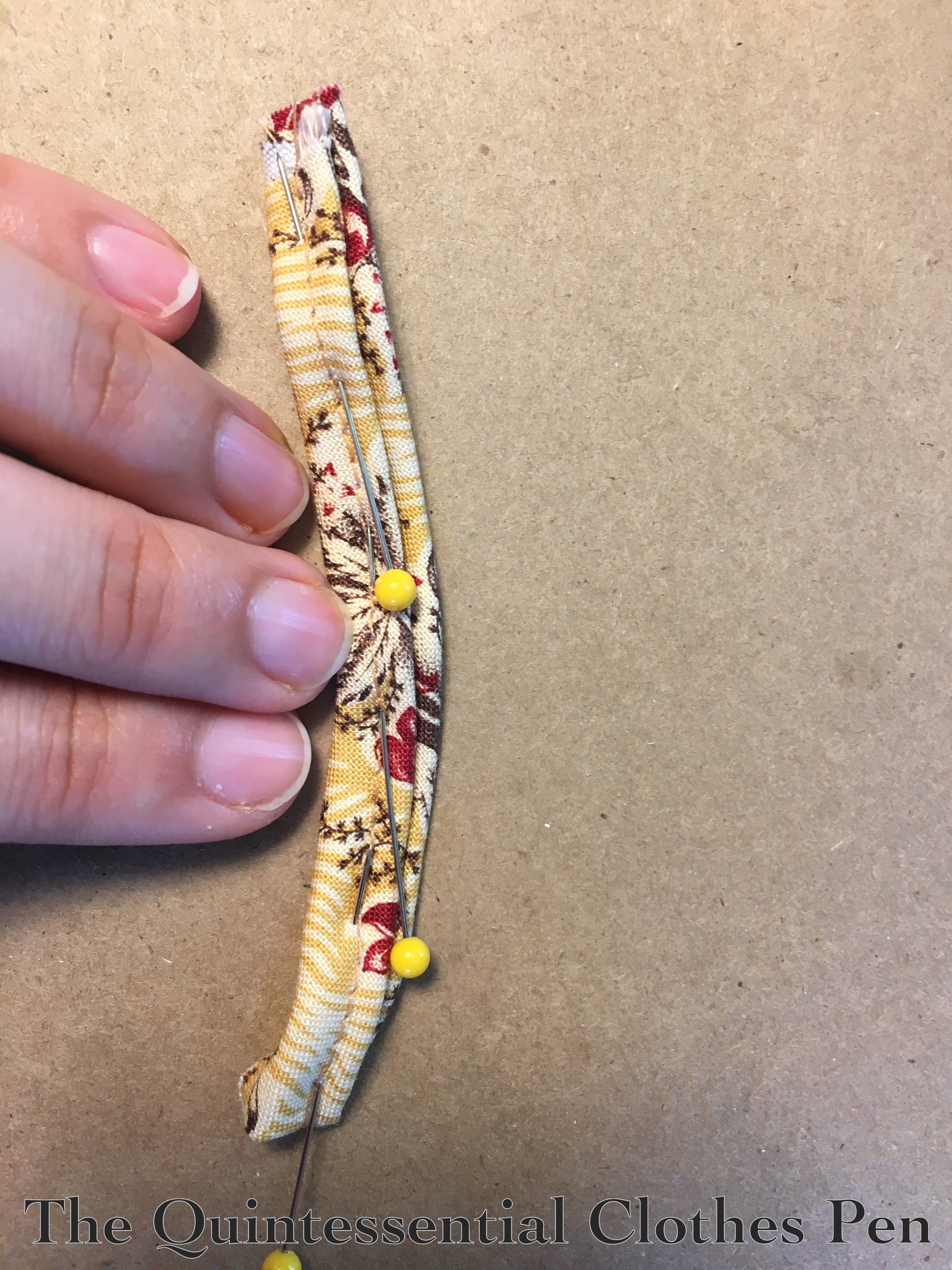
To make the double piping I machine sewed the cord into one side of my bias and hand sewed it into the other, then pressed the bias in half and attached it through all the layers. In my sample below I didn’t bother to put the machine stitching on the under side, but on the dress the machine stitching is not visible.
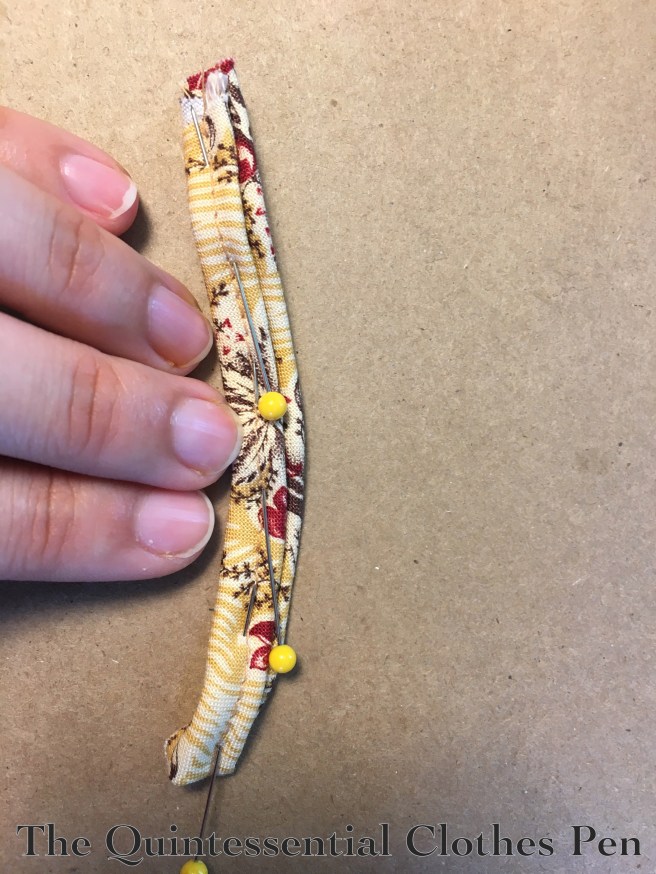
Before the piping was added, the pleats were machine basted in place. My machine basting wasn’t exactly where the piping ended up, so I removed the basting anywhere it showed.
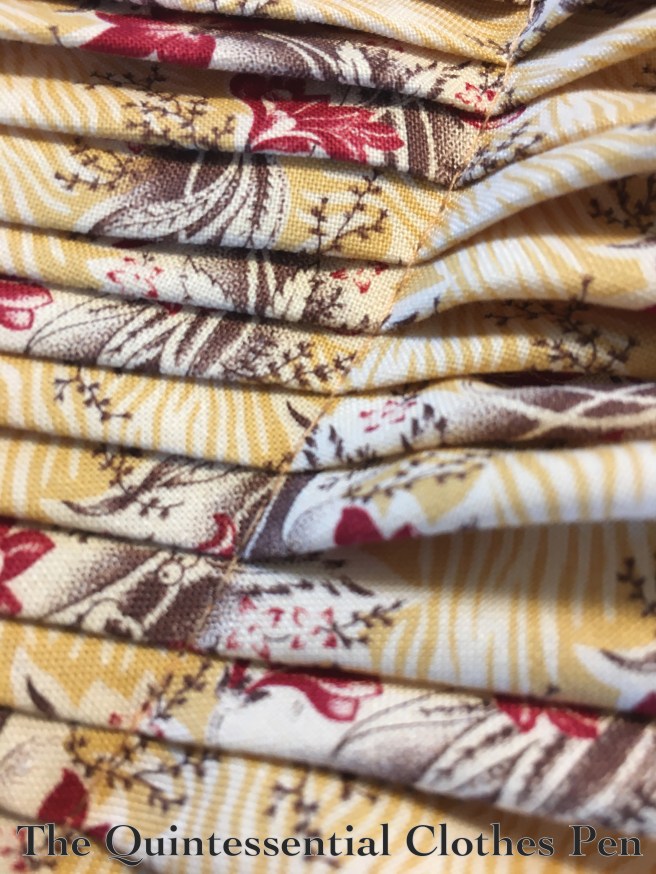
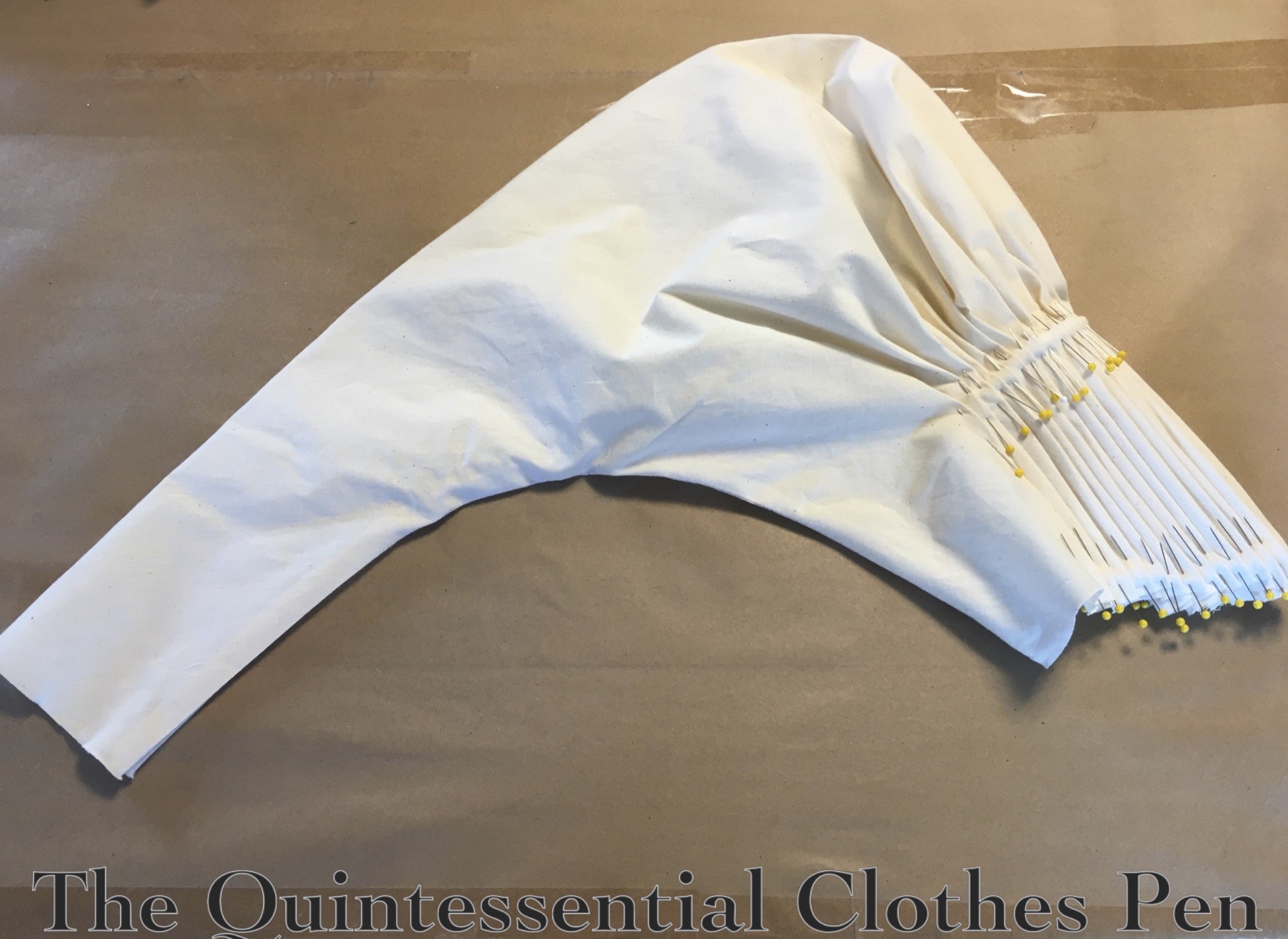
Backing up some more in the process, below is one of the sleeves with the pleats pinned in place. I did this while the sleeves were flat, before I sewed up the inseams.

There’s no pattern for the pleats… it was just a matter of knowing what dimensions I wanted to end up with for my top edge and bicep and then eyeballing it. The pleats vary in depth on the inside, even though the outside is pretty even at ¼”. Part of this is due to the fact that the pleats have to angle in order to create an armsceye that keeps a curve up in the middle. Figuring it out is a great mind puzzle!

Below is the sleve before being pleated, etc. Between being over a yard high and also being cut on the bias you can see why each sleeve takes a yard of fabric!

After pleating and sewing the inseam the sleeves had this shape (below is my mockup sleeve). I really wanted an exaggerated elbow puff, so this isn’t quite the shape I wanted to end up with. To get the shape I wanted, I took horizontal tucks about halfway down the sleeve. This keeps the forearm relatively unwrinkled while creating lots of elbow puff. The tucks are lost in the pattern of the finished dress.

Could I have altered my pattern to not have to take tucks? Sure! I’d probably change the curve of the sleeve inseam to do that. But… I’d already cut my pieces. And adapting sleeve shapes to adjust for changes in styles seemed very appropriate and in the spirit of what 1830s ladies might have done.

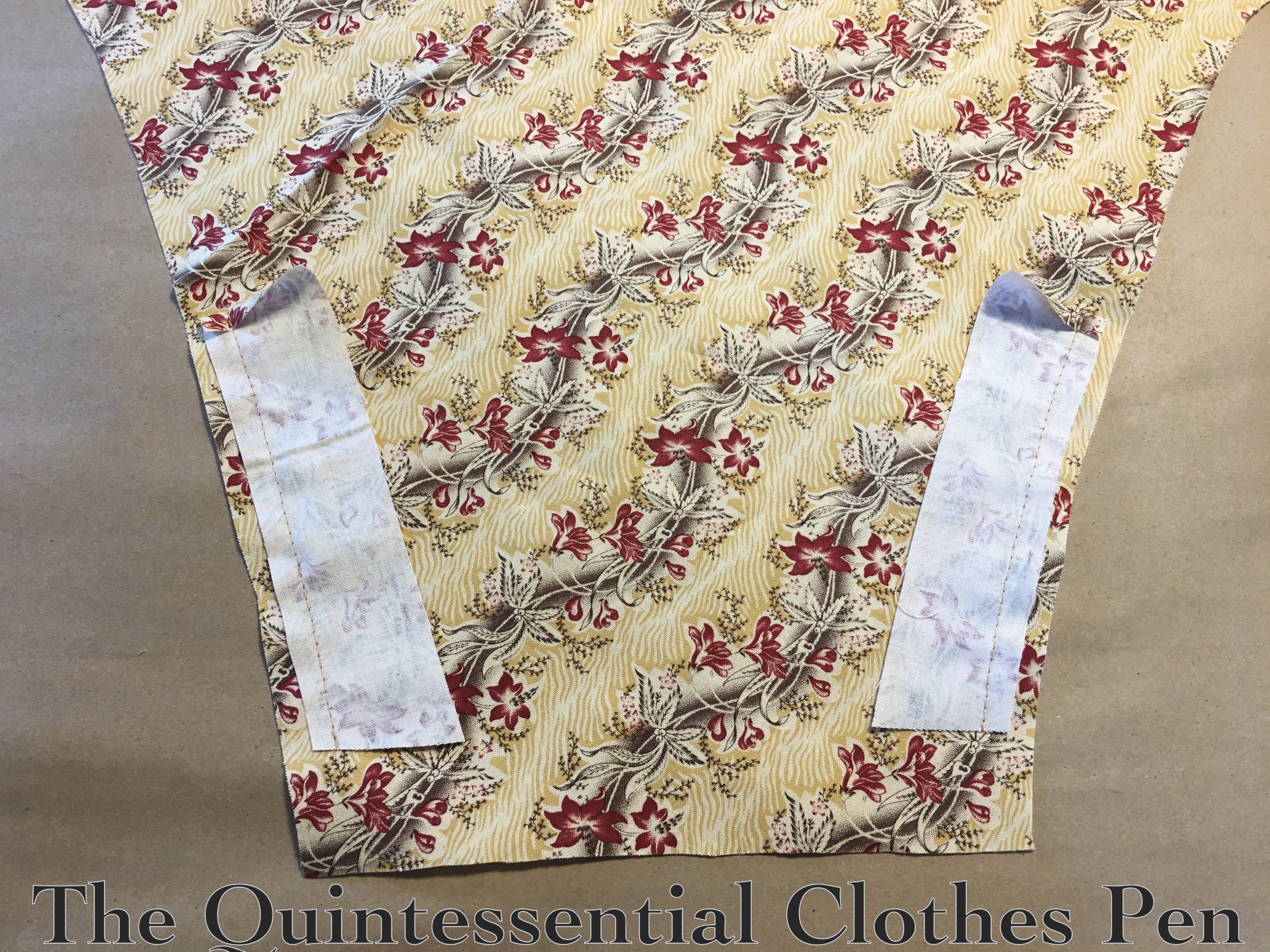
So for a bit more sleeve information… These sleeves have an opening at the cuff to allow for the tight fit of the forearm. The openings are finished with self fabric facings and then the hem is turned up.

Here’s what that looks like on the inside.

And that’s it for construction!

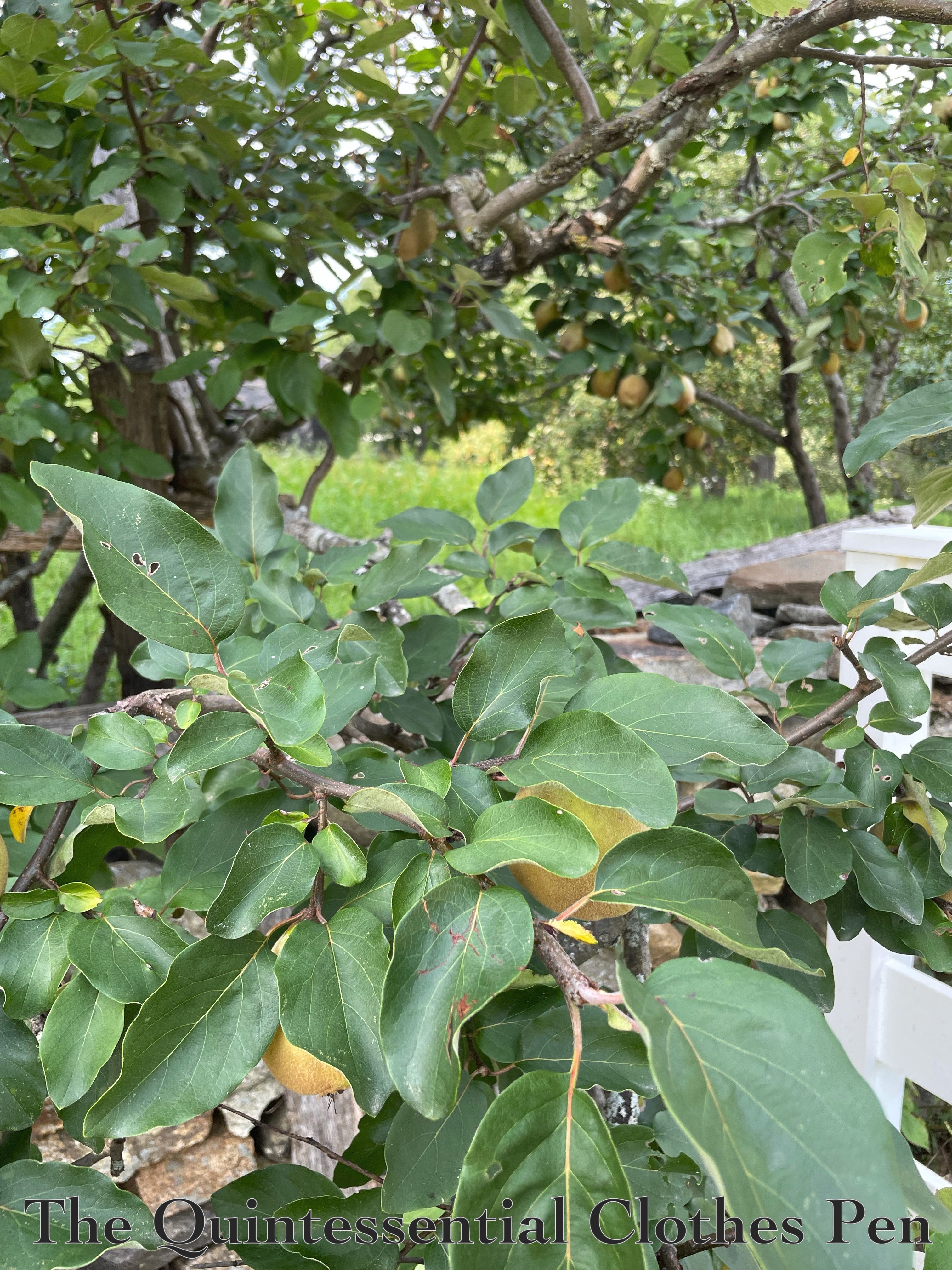
Here’s a bonus photo of the dress with a quince tree. I’ve heard of quinces but never encountered them before.
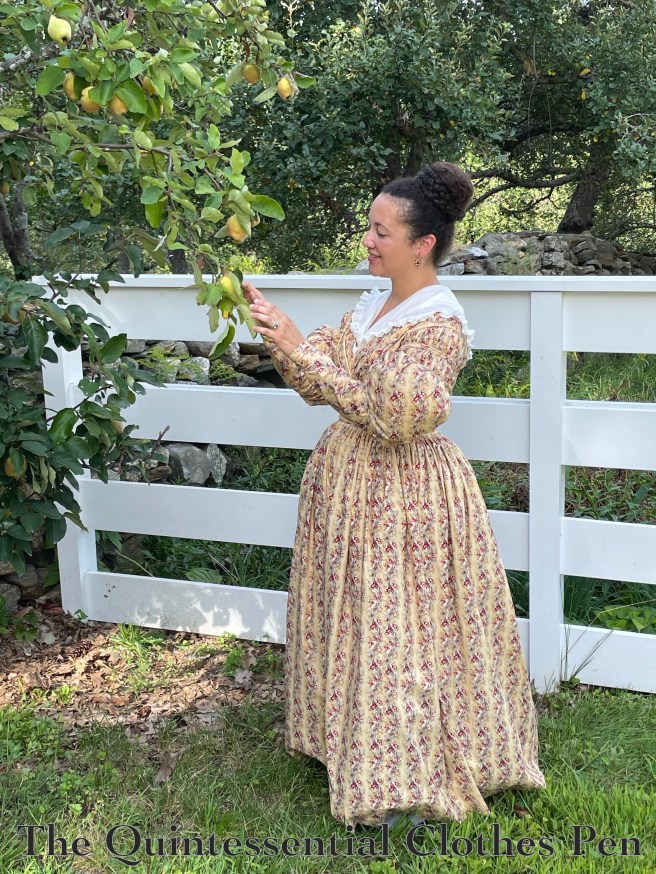
They sort of look like pears!

I’m very pleased with this cross front bodice and the sleeves that go with them. I appreciate their minute detail even though they were definitely the most time consuming part of this bodice!

An 1890s Outing To Save A Munbax

It’s been awfully quiet here on the blog for awhile. Life has been busy, but the real reason for my lack of posts is that I upgraded my computer. That’s a good thing overall, but it has created multiple issues with storing/moving/accessing my photos as well as needing a new program to edit/watermark/organize them and I’ve only recently found a solution that fits my workflow and needs.

I’ve been sitting on these photos from an event in 2018, thinking that they would be fun to share, but never actually getting to it. But now is the time!  Save The Munbax was a live, interactive game created by Green Door Labs that created a magical, wizarding world set in the 1890s. As guests, we solved puzzles, interacted with magical plants and potions in classes, and followed different trails to attempt to save the rare Northern Crested Dimmoth Munbax from extinction. You can read more about Save The Munbax here.

Since this fantastic world was set in the 1890s, I decided to give my 1899 Elusive Blue Gown a night out of the closet. With no dancing involved it was a great opportunity to wear the trained skirt!

I wanted to make my 1890s outfit a bit more magical and quirky, so I pulled a few accessories together that aren’t my usual for an 1890s dress. For one thing, I wore my subtle-Harry-Potter time-turner necklace, picked up on my trip to trip the Wizarding World Of Harry Potter at Universal Studios in 2018.

I also wore my 1811 Turban Fillet instead of my usual feathers and sparkly hair accessories. Despite not being made to match my 1899 dress, it is actually made from the same fabric since I have an 1811 evening gown made from this elusive blue fabric.


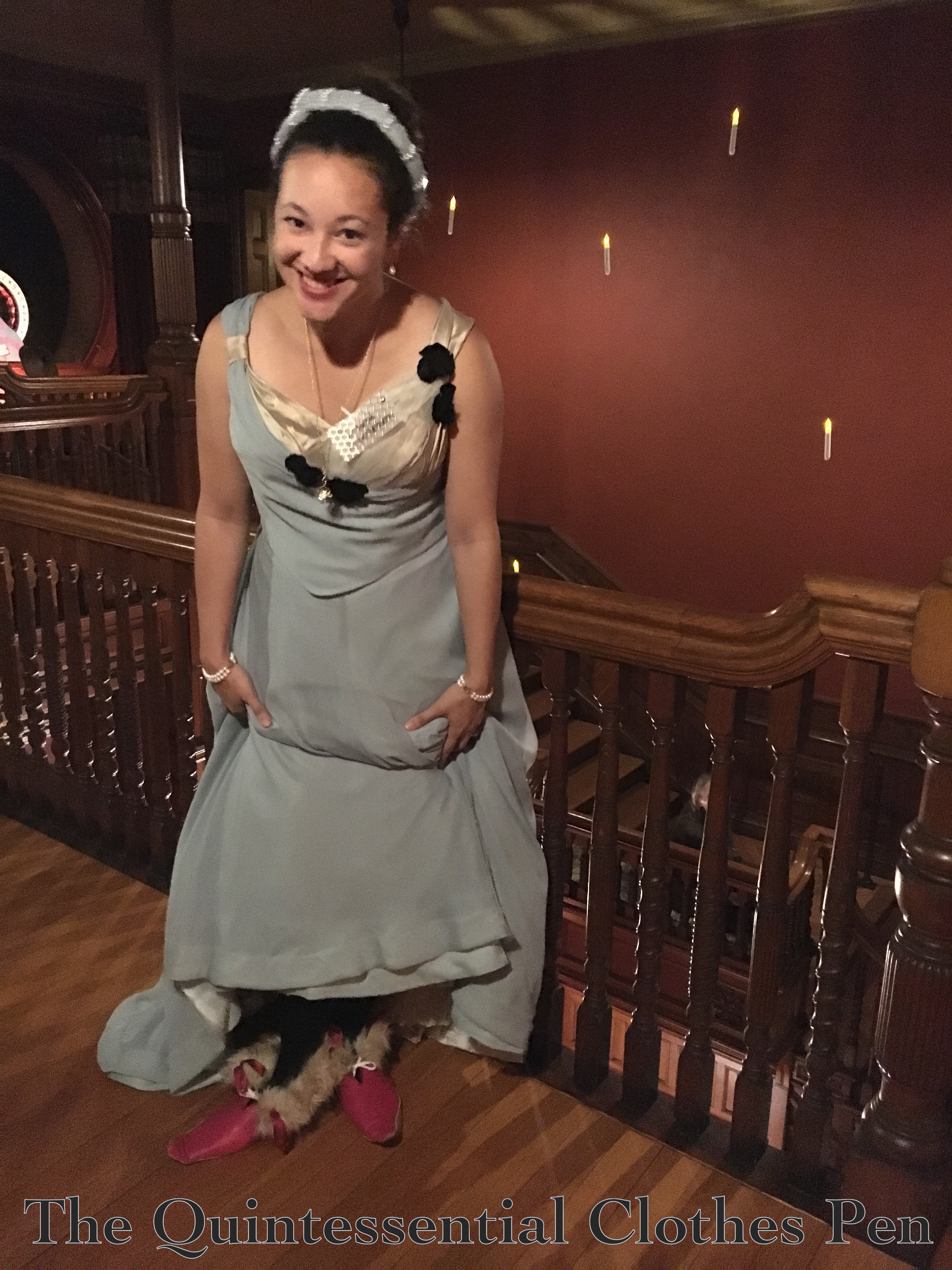
The final bit of quirk was my shoes. I thought silly shoes would be fun, so I wore my 1814 Vernet shoes. The turned up toes and fur weren’t really visible, but I enjoyed knowing that they were there.

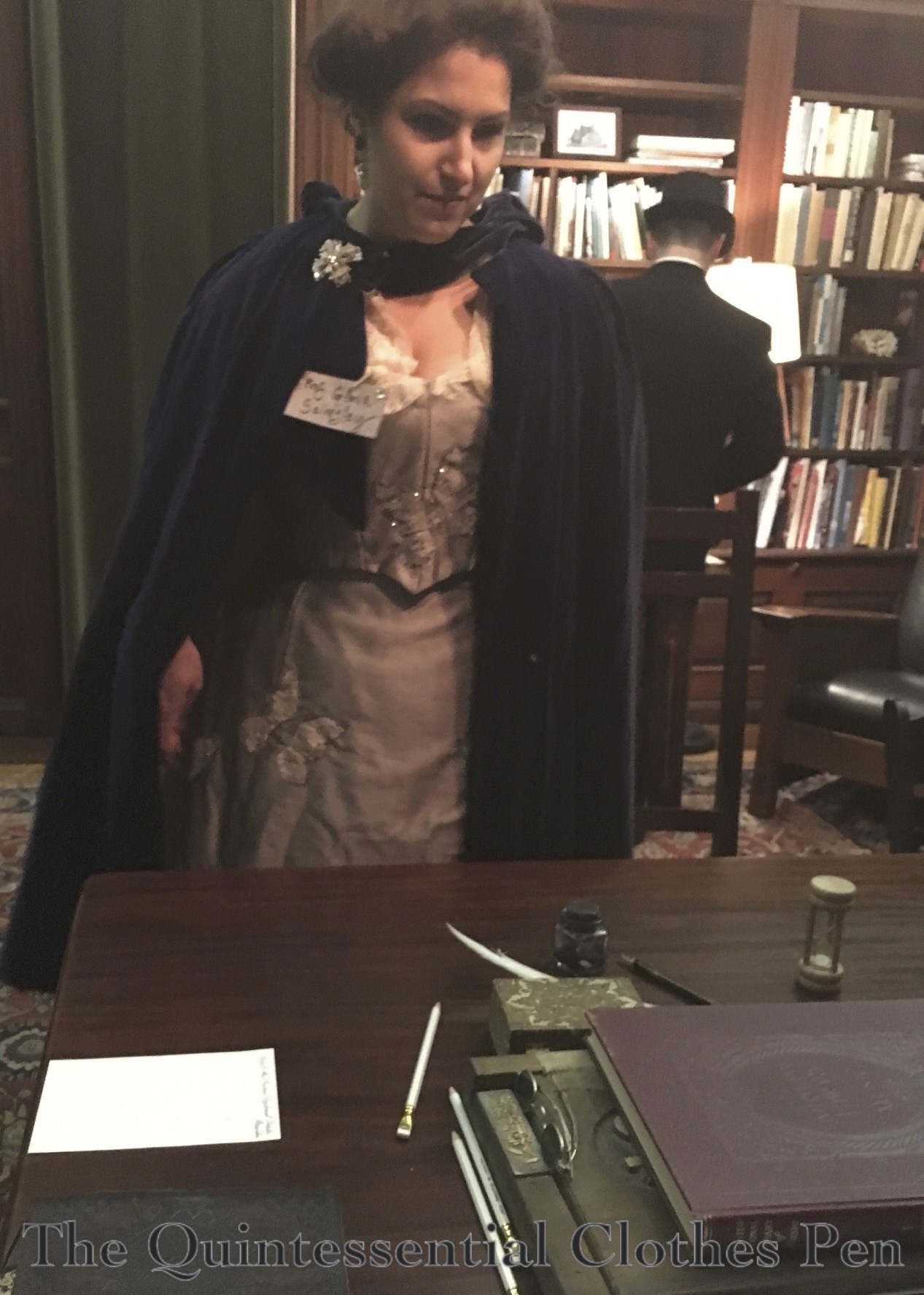
I attended this event with Plaid Petticoats, who was also dressed up in her 1890s best, including a cape!

We had fun exploring the different rooms, solving the puzzles, and exclaiming at different oddities.

We enjoyed the floating candles in the stairwell and used them as a backdrop for some our photos and also to give my pygmy puff a subtle chance to pop out of my reticule.

In the end, the guests were able to solve the mysteries necessary to save the Munbax and we were even rewarded with a glimpse of one!

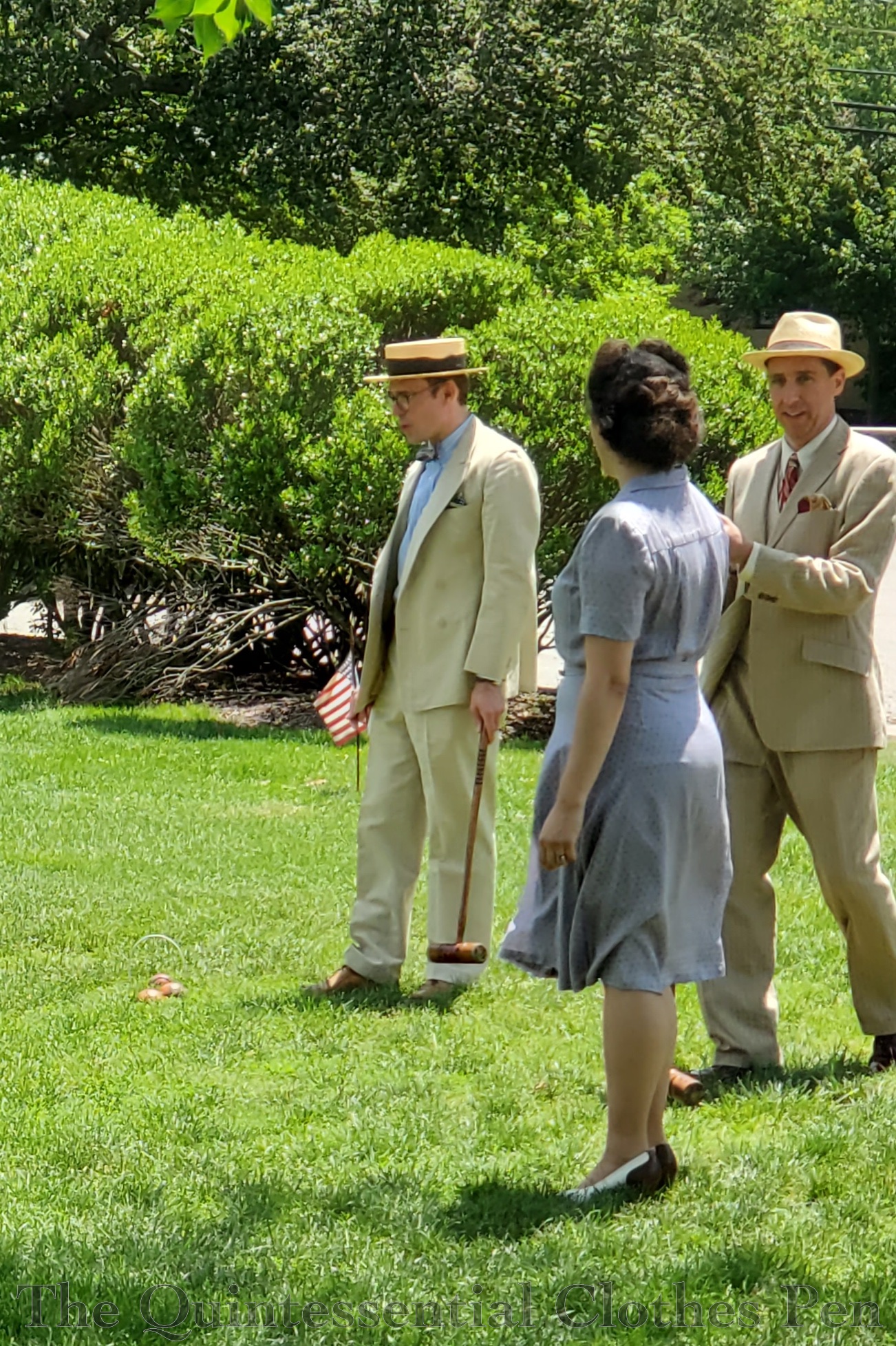
First Croquet Of The Year

An event! With vintage clothes, and people, and sun, and croquet! The weather was perfectly reasonable–warm without being absurdly toasty–and the ground was dry–perfect for laying out blankets to picnic in style.

I decided to wear my rayon 1943 Mauve Print Dress. I made it in 2017, but have only worn it once, I think. I thought this would be a great opportunity, plus it allowed me the chance to wear my American Duchess Peggy spectators and do my hair in victory rolls. I’m pretty much a fan of big hair in any era, so the victory rolls sounded more appealing than close-to-the-head 1920s styles (1920s being an oft visited decade for summer events since the clothes are easy to wear even when it’s very hot).

(As a side note, I feel like this photo with Plaid Petticoats makes me look like a giant! I don’t think we’re actually that far apart in height (maybe we are?), but the combination of natural waist dress vs dropped waist dress, plus heels vs flats, plus big hair vs hat really makes us look drastically different in height!)

I was very pleased with my victory rolls. I’ve practiced them a few times over the last year or so and have tried a few different products as well. I’ve found that I can make them work (even with my curly hair, yay!) with some Lotta Body on dry hair that hasn’t been washed that day. The biggest challenge is actually that my hair is getting quite long, so the rolls start even farther away from my head than when I wore this dress the last time with victory rolls. My arms almost aren’t long enough anymore!

The long hair also makes figuring out the back a little tricky. I was pleased with what I came up with, though I don’t remember exactly how I did it. It’s something with each side separated, twisted, and then dented in the middle so it’s not one big puff. I guess I have to do it again so I can figure that out!

The picnic included a croquet tournament. I was doing unexpectedly well in the first game, but faltered towards the end and didn’t make the cut to the next round due to the fierce competition (said only somewhat jokingly!).

Croquet involves serious thinking and set up!

This was a lovely outing, perfect for easing back into events. It was wonderful to go digging in my historical clothes closet to get out all of the garments, accessories, and picnic things I would need! I’ve really missed that!

1830s Woods Walk

My 1830s apple picking adventure last fall was followed by a ramble through the woods for exercise and to get more photos. I shared a bunch of the photos in the construction posts for my 1834 dress (here and here), but even after that there were still a bunch of lovely photos I wanted to share. At that point, I decided to take a break and post about other topics since I’d posted a few blog posts in a row about 1830s things and so the photos from the woods have been patiently waiting to have their moment to shine. Today is the day! I bring you an 1830s armchair ramble through the woods!

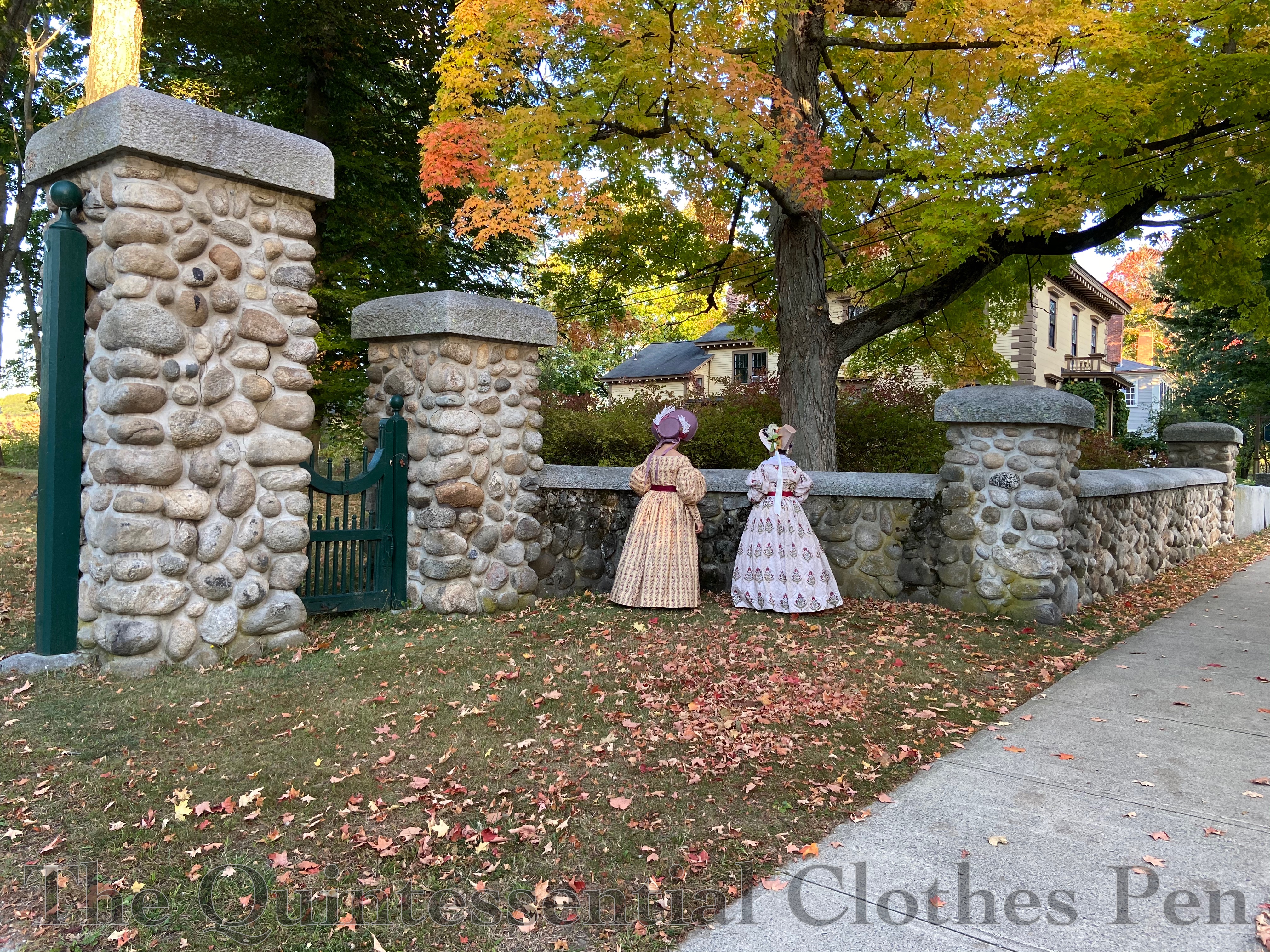
On our way to the wooded area, we stopped to take advantage of this stone wall and gate.

The main gate to the wooded area is similar, though with bricks instead of stones and with animal sculptures to delight visitors. My usual photographer friend (who blogs at Plaid Petticoats) enjoyed taking a few photos with her Petzval camera lens, which creates the swirled background in the next two photos (you can read more about the Petzval lens in this Plaid Petticoats blog post).

Just past the main entrance to the wooded area is a little bridge spanning a lovely bit of water. It looks like a pond, but I think it might actually be connected to the nearby river.

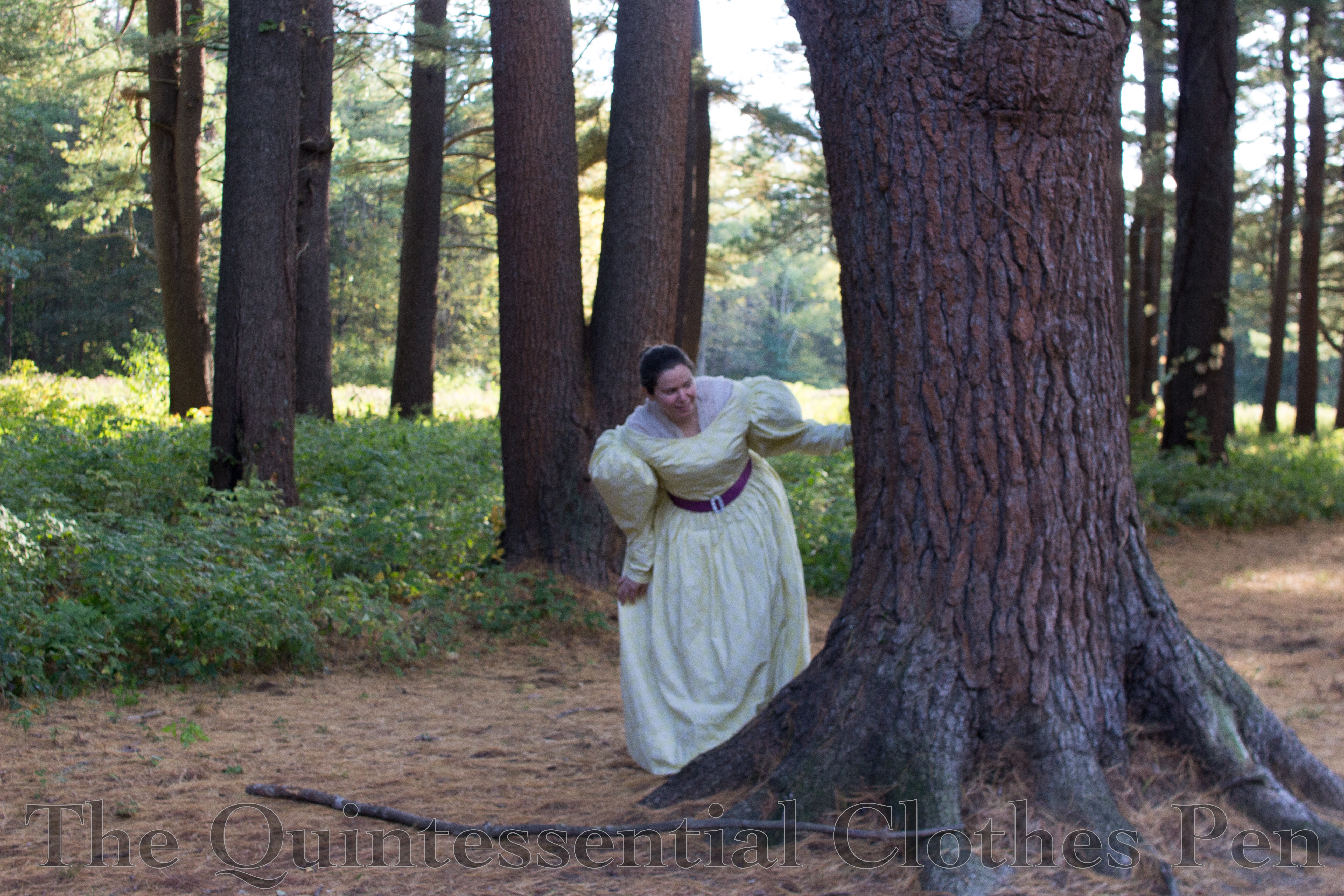
Around the bend is one of my favorite vistas, a grand line of pine trees bordered on one side by a small meadow. It’s a magnificent and playful place to stop for photos.

Continuing towards the river is a path along one side of the meadow. Thankfully, the grass on the path is maintained and easy to walk through.

This group photo uses the Petzval lens to make a glorious twinkling arch of greenery out of the dwindling afternoon sunlight.

Along the way to the river are small bits of interest. Enterprising greenery in unique shapes and more watchful animal statues.

Near the river we stopped for more photos. The drooping trees made dramatic backgrounds for us.

I love the next photo. It captures the reflection of the golden leaves in a way that almost looks like a painting, in juxtaposition with the oak leaves and branches on the far side.

Thanks for joining me on this autumnal walk through the woods. I find outings like this are wonderful moments for reflection and appreciating the natural beauty of the seasons.


Over The Creek And Through The Woods, In A Bustle!

Long before winter had arrived, I had a vision for getting atmospheric winter woodland photos of my recently posted about 1884 Wool Plaid Dress and 1885 Wool Mantle. (The links are to previous posts about these garments that have tons of inspiration, patterning, construction, and finishing details–check them out if you want to see more details up close or learn about how these garments were made.) I was joined in my plans by a friend (who blogs at Plaid Petticoats) who also had a winter-y bustle dress that, like my ensemble, needed to be appropriately documented and photographed. In this post, I’d like to take you with us on our photographic ramble to show you some of the beautiful winter sights that didn’t make it into the detailed construction posts.

We began our adventure with photos at a local ruined estate called Bancroft’s Castle. We’ve walked up the long, steep hill to this location multiple times in modern clothes, but wanted to prove it was possible in corsets, bustles, and snow, as well as having the wonderful setting for some of our photos.

Bancroft’s Castle was built in the early 20th century but destroyed by fire within a few decades. Now, the only parts left standing are the stone walls and fireplaces. The site is open to the public and often quite crowded, but in the freezing temperatures we had it pretty much to ourselves. I love this photo, which captures the ruined walls, open levels, and stark trees. Even the iron fence seems to suit the mood!

There are lots of other photos with Bancroft’s Castle as the background in my details posts about my dress and mantle, if you want to see more.

After taking advantage of the different sections of the castle, we moved on to a path along the nearby river .The path meanders across fields, up and down hills, along the river, through the woods… and more!

It was a beautiful, sunny, very cold day. There was relatively new snow that covered everything. Being just a few inches, it was not deep enough to be a hassle to walk through in a long skirt.

The open field trekking felt very much in the spirit of adventuring women of the late nineteenth century, though it was made slightly easier by the fact that we could follow existing tracks rather than having to blaze our own trail.

After crossing the fields, we arrived in the woods along the river. The bare trees made wonderful views for musing as they stood in the snow.

The river is large enough to not freeze over entirely, though the shallow edges were covered with ice. I appreciated the bands of interest provided in this view. Snow, bare shrubs, ice, wonderfully reflective water, grey trees, green pines, and very blue sky.

In particular, I was struck by these trees with their curved trunks artfully reflected in the river. The bursting silhouette of the trees is fun all on its own but even more pleasant to look at when joined by the reflection. It feels exuberant, despite the bare branches.

The wooded area was soon interrupted by a stand of pine trees. I could easily envision them being foreboding, in an Anne of Green Gables way, but they were also bathed in golden sunlight which brought a certain magic that was cheery and bright.

It was a great place to stop and take photos. I love the next one for the depth, but if you look carefully you can also see that both bustle ensembles made it into the shot, which amuses me.

A bit of post-production on the part of my Plaid Petticoats friend produced this Harry Potter patronus image. Her dress is Slytherin inspired!

After the stand of pine trees was a small creek that fed into the main river. We looked into going around it, but of course finding the end wasn’t really feasible and the other side had a river. So… It was over the creek time!

Other trekkers had laid logs and branches across the creek to create a makeshift bridge. With the help of the ‘bridge’ we made it across with no problems!

After that it was easy going along the river and then back through the woods and fields. Both of our dresses were none the worse for wear, though part of my hem facing had been pulled loose on a branch and then collected quite a bit of snow inside. Getting all the snow out was a bit challenging, but it was easy to resew the hem once the more difficult task was completed.

I had a great time tromping about in my dress–proving that climbing hills and scrambling down ravines and across creeks is completely do-able in a bustle!

1885 Mantle (HSM #5) & Accessories

Last post was a detailed look at the 1884 Plaid Wool Bustle Dress that I completed last year. This post is going to look at the details of the accessories I made and wore to stay warm while taking photos of the 1884 dress: a mantle, a new muff cover, and a quick mention of the hat.

First, the mantle, which qualifies for the Historical Sew Monthly 2021 Challenge #5:

Purple: Make an item in any shade of purple.

Easier to see the color in the next photo! Purple!

Just the facts:

Fabric/Materials: 1 ½ yards purple wool, 2 ¾ yards drab polyester lining, and about 1 yard of faux fur.

Pattern: Adapted from a pattern on page 33 of The National Garment Cutter Book Of Diagrams.

Year: 1888.

Notions: 4 ¼ yards brown braid trim and 4 coat size hook and loops.

How historically accurate is it?: 85%. The pattern and silhouette are good, but the polyester lining and faux fur are not accurate. I’ve also never examined an extant 1880s mantle up close, so the construction methods are guesses that made sense to me.

Hours to complete: 18.5 hours.

First worn: In January, for a ramble and photos!

Total cost: Approximately $40.

Mantle: Beginnings

This accessory adventure started with a passionate desire to make a specifically 1880s shaped mantle to go with my new dress. I don’t remember the details exactly, but it’s possible that I fell in love with the red mantle on the right in the fashion plate below even before I fell in love with the shape of the bustle dress that I’m wearing underneath my mantle.

The shape! The fur! The matching muff! So cute! It seemed like it would go very well with my dress.

Mantle: Patterning

I started the mantle soon after finishing the 1884 dress last year, beginning with the pattern. The pattern is from The National Garment Cutter Book Of Diagrams published in 1888 (the entire book is digitized and available here).

The pattern I started with is on page 33: Ladies’ Wrap. It has the same general shape as my inspiration plate, including the very specific-to-the-1880s outerwear sleeve set into the side back seam. Figuring those out was an eagerly anticipated part of the challenge.

The brief instructions are to use the scale corresponding to the bust measure to enlarge the pattern. I didn’t feel like finding the right scale in the book, so instead I guessed at a scale that generated proportions that made sense for my size. I think it was somewhere in the realm of ⅛” to 1″.

After the pattern was enlarged, life became busy and I put this project on hold. Fast forward to the first days of 2021 and I decided to knock this project off the to-do list so it would be ready at the first sign of snow for photos!

I made a mockup from my pattern, adjusted a few things including the length of the front piece (it was much longer than my inspiration!), then altered the mockup to check the changes. At that point, I was satisfied and ready to move on to real fabric!

Mantle: Sleeve Puzzling

Along the way in this process I had to figure out the sleeves. Below is what the sleeve pattern piece looks like when cut out. It’s not your usual sleeve shape. The top looks mostly reasonable, but what’s with a dart on the bottom edge? And the point at the bottom? Odd! Folding this in half (as you would normally do for a sleeve) would produce a strange sleeve, indeed.

I pondered this… looked up extant garments (there are a number of mantles with sleeves like this on my general 1880s outerwear Pinterest board) and did some searching for other people who had made this type of garment before.

The thing that suddenly made the sleeve click for me was a series of posts from Caroline (who blogs at The Modern Mantua Maker) showing the construction of an 1880s dolman that she made. This post, in particular, contains a photo showing the sleeve before it was set into the body of the garment. Ah ha! I realized that the bottom of my sleeve folds up and the dart goes against the body. That creates the right shape!

This post from Caroline shows her finished dolman. It was also very helpful as I tried to wrap my brain around these unusual sleeves. And, Caroline has another dolman she made as well, which I also looked at as I was figuring out my pattern.

Mantle: Materials

I had the fashion plate to reference for the overall design of the mantle, but I needed a bit more detail to confirm my material choices. Many 1880s mantles are made from fancier fabrics: silks, velvets, brocades… I only had a heavy purple wool in my stash in a quantity I thought would be just the right amount for the mantle and I didn’t want to buy something new (especially something likely to be expensive, as many of those fancier fabrics would be).

After some searching, I found this c. 1880 opera cloak at the Metropolitan Museum of Art that seems to be made of a plain wool. I decided to use some of the details from it, like the braid trim, to upgrade my mantle from plain to more interesting.

I had the braid trim in my stash already, purchased a few years ago from Deb’s Lace and Trims because I liked the look of it and thought it would be useful someday (I love Deb’s Lace and Trims–you absolutely can’t beat the prices and the products are lovely–I’ve been using them for historical projects for the last ten years!). It was great to find a use for this braid.  With just five yards on hand I had to reduce the amount used relative to the Met inspiration mantle, but I think the end result is in keeping with the simple style of the dress. The braid highlights the shape of the mantle but doesn’t distract or seem too gaudy for the plain wool base.

After creating my first mockup I did have a very justified fear that my purple wool would not be enough for the mantle. Thankfully, after altering the pattern to suit my taste and size I was just able to eke out all of the pieces. Whew!

I love the quilted lining of the Met opera cloak and I considered quilting silk myself to do it. My stash didn’t have any appropriately colored silk, though, so that idea was out if I was to stay on the stash busting course. I thought of buying pre-quilted silk (completely abandoning my stash busting idea), but the colors I could find were bland and the dark brown I eventually decided on after months of indecision was sold out.

In the end, I decided I just wanted the project to be finished, so I would go the low-cost route of purchasing a polyester lining from the $3 per yard store. It helped me use other stash materials, so it seemed a reasonable trade off.

Mantle: Construction

Here’s that polyester lining. It’s unintentionally the same greyish-brown drab color as the cotton lining of the 1884 bustle dress. The mantle is fully lined, as you can see.

In order to make the lining of my mantle tidy, the sleeves were fully lined before being set into the side back seams. Here is one sleeve assembled and ready to be set in.

The assembled/lined sleeves were set into the exterior wool side back seams while the lining side back seams were sewn plain. After attaching the sleeves around the armsceyes in the exterior wool, the lining was turned under and whip stitched to finish the edges.

All of the braid trim is machine sewn on using a zipper foot. I was able to sew it in place on the wool before setting in the lining, so none of the attaching sew lines are visible.

The lining was machine sewn around the edges with the neck left open to turn right sides out. After that was completed, I machine sewed the collar lining (interfaced with cotton) to the neck edge by machine. Then I sewed the exterior fur collar on the neck edge by hand (shown in the next photo).

After that I flipped the lining up, turned all of the seam allowances in, and whip stitched the lining to the fur edge. It seemed easier to do it this way rather than machine sewing the fur.

The faux fur trim around the bottom edge is pieced where there are seams in the wool. This allows the fur to have the exact same shape as the wool underneath. These edges have no seam allowance. The edges are just butted together and then (roughly) whip stitched, as in the photo below. From the right side of the fur the seams are completely invisible.

The top and bottom edges of the fur trim have seam allowances that are turned in and hand sewn along both edges. The outer (bottom) edges are sewn right sides together with the bottom of the purple wool. Then, the inner (top) edges are turned under and stitched. Here is that process in progress.

The mantle closes with 4 coat weight hook and loops spaced down the front edges. They kept popping open while being worn, so when I got home I pinched them with a pair of pliers to make the hooks grab onto the loops better. I haven’t been out wearing this again since then, but I’m confident this solves the problem, as I’ve used this trick in the past.

New Muff (Cover)

Next, I want to share a bit about the muff I have in these photos.

Despite having a number of muffs, none of them are the right size and material to match my new mantle. I have a dark muff that matches the hat I wound up wearing and I have a muff made from the same fur I used to trim the mantle, but the dark muff didn’t match my mantle and the one that does match is an intentionally oversized early 19th century muff. Neither would do!

But I didn’t want to make an entirely new muff. Instead, I decided to make a new cover for a muff I’ve had since 2012 (you can see it in this post from 2019, when I used it with an early 19th century outfit). The muff is from a workshop I took with LadyDetalle. (She has an Etsy shop that often stocks muffs like this as well as many other beautiful and historically inclined goodies.)

The base is essentially a pillow (stuffed with real down–quite luxurious!) that can be rolled into a tube and have a cover put on. The idea is that the muff cover can be changed out so that you can have all sorts of beautiful muffs and only need to store the one base. The muff is sized for the 18th century, but I thought it just might work for my 1880s look, too.

Accordingly, I measured my existing muff cover and cut a rectangle of faux fur that size. I butted my edge to make a tube and whip stitched it, in the same way as I whip stitched the mantle trim. Next, I machine sewed twill tape on the tube ends. (I had no worries about the fur getting caught in the machine sewing because that whole edge turns into the muff in the end anyway, so none of that will show.)

Once whip stitched in place the twill tape covers the raw edge of the fur and also provides a casing for the ribbons at each end. I used tobacco brown polyester ribbon that was gifted to me. By way of justification for the polyester ribbon, I’d already used polyester for the mantle lining and this seemed like a good use for this particular ribbon.

Below is the muff cover after those steps were completed.

And here is a closeup of the twill tape with machine stitching on one side and whip stitching on the other. The ends of the twill tape are just turned under and butted together, leaving an opening for the ribbon ends to come through.

And ta da! A muff that is the right size and perfectly matched to the mantle! The additional muff cover takes up hardly any storage space and now I have more versatility in my wardrobe.

Hat Baubles

While making my mantle and debating how to stay warm, I figured I would need something to keep my head warm. I’d already made the dress and the mantle and I didn’t feel like creating something all new for my head, as well. And I loved this image from the McCord Museum of 1880s ladies curling in the cold with their hats.

I thought I could repurpose my 1917 faux fur hat to suit the purpose, as it has a generally similar tall, straight shape. That hat is nice and warm, being lined in flannel and interlined with layers of batting to insulate the head.

The look of it was a little bland with this outfit, though, and not really coordinated with everything else.  I liked the idea of bringing in some of the mantle fur to make the hat look like it belonged. After fussing with various ideas I decided on fur poms, or baubles.

The baubles are sort of like large-scale cloth stuffed buttons. They are a circle that is gathered, the edges turned into provide stuffing, and the backs sewn together to close up the opening. (This tutorial shows how to make these types of buttons, though I started with a circle of fabric rather than a square.)

I like that the finished baubles pull in the look of the tan fur, that they are silly and amusing, and that they are easily removable. In fact, they are attached with safety pins on the inside of the hat! You can’t get much more easily removable than that!

I’m very pleased with my stash-busting-and-using-things-I-have-on-hand winter bustle ensemble. It’s warm. It was a great patterning challenge. It’s really fun to wear (it feels super elegant!). And it (mostly) reduced my fabric stash.

Thanks for sticking with me through this second detailed (and rather long) post! Next post will be further photos of the bustle dress in action on a woodland adventure.