A Gown Worthy Of A Duchess

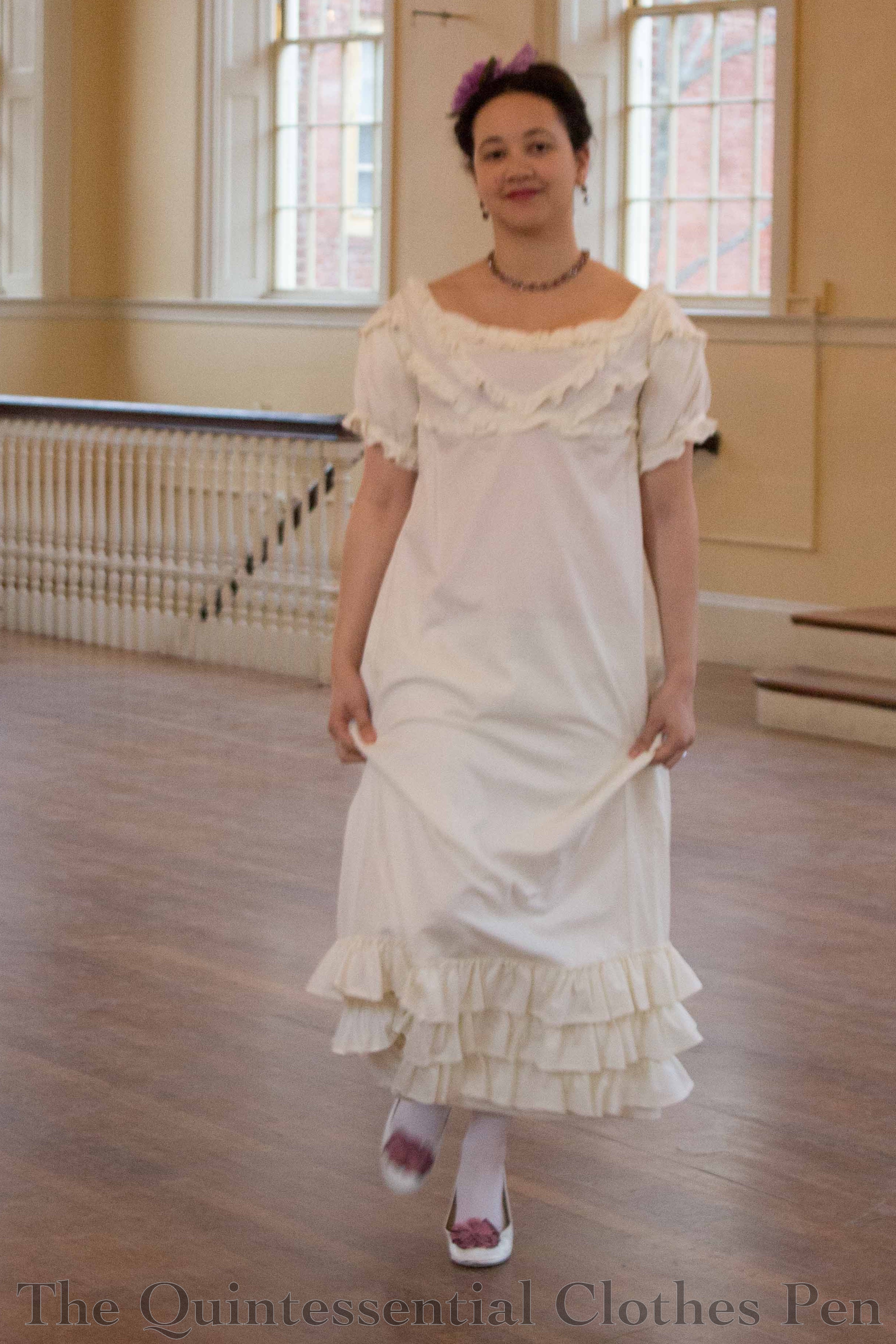
On the same January shopping trip that I unexpectedly found the blush sparkle fabric I made a 1920s dress out of I also unexpectedly found an excellent fabric for a new Regency evening dress. I hadn’t made one in awhile, but I had a Regency weekend coming up and I was wanting something new for the fancier ball (and of course nothing in my stash was inspiring me). In my wanderings around the store, I discovered an organza curtain sheer that brought to mind this particular fashion plate that has been on my ‘to-sew’ list for years.

1819 – Ackermann’s Repository Series 2 Vol 7 – March Issue

I’d been on the look-out for a sheer with black stripes but hadn’t found anything suitable. Once I found the curtain fabric, I debated whether to use it for a dress in this style or to hold out for the black stripe. As you’ll see, I decided to call this inspiration fulfilled by the gold striped fabric that I found. It’s polyester, but that means it was a good price. Occasionally, a polyester can be just the thing.

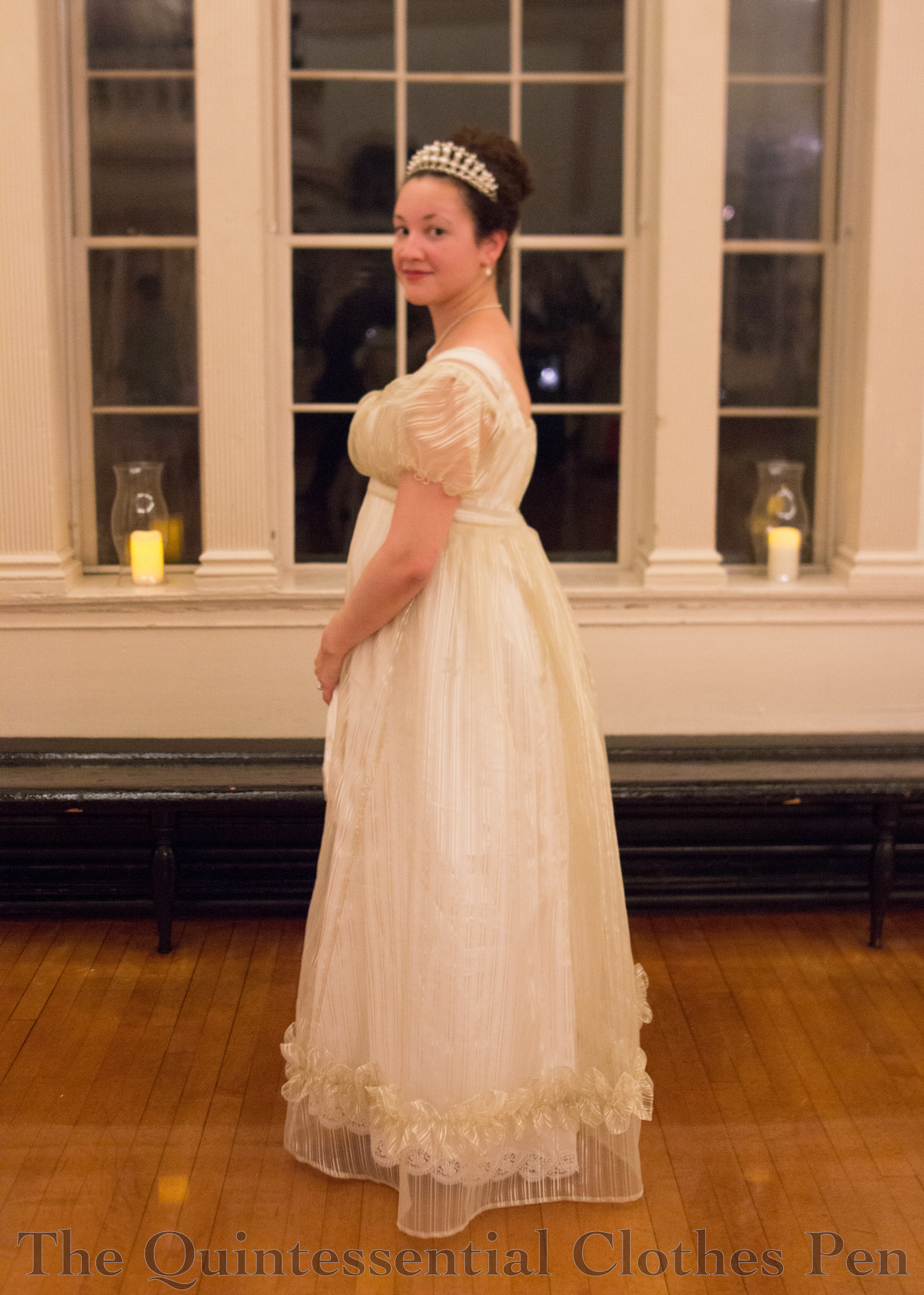
In addition to the Ackerman’s fashion plate, I also borrowed design ideas from two other striped evening gowns: this earlier Costume Parisien fashion plate from 1809 and this image of the Duchess d’Angoulême c. 1815. My dress is a conglomeration of these and the 1819 fashion plate. I borrowed the sheer overdress idea from 1819, the single row of scalloped trim from 1809, and the bias cut sleeves from 1815. I date my dress to 1817, as the fluffy nature of the organza pushes the silhouette towards 1820, but the single row of trim pulls it back from 1819 just a bit.

I have a full compliment of nicely finished underthings that are perfect for making the sheer dress opaque. It was never my intention to be a scandalous Regency lady with minimal underthings! In fact, to make the ensemble sufficiently opaque, I wore my chemise plus two petticoats under the sheer dress. Without the second petticoat it was clear where my chemise ended (at my knees, in case you’re curious), but I didn’t want to have the illusion of scandal with this, I really wanted opacity all the way down.

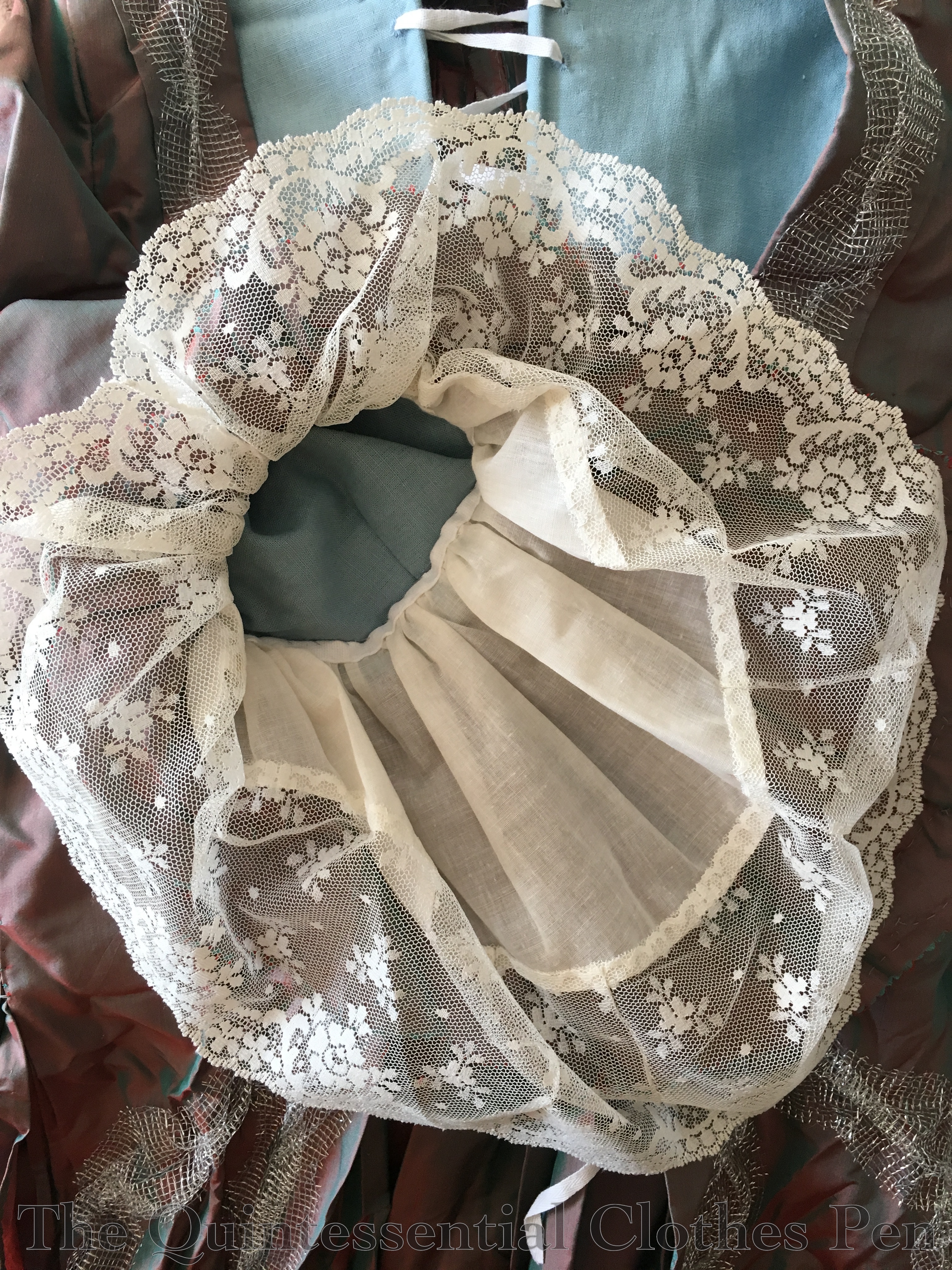
Like the new pelisse, the sheer dress provided another perfect opportunity to make further use of my Vernet petticoat, which has a lovely eyelet border at the hem. Here’s another view that shows off the lace on the petticoat.

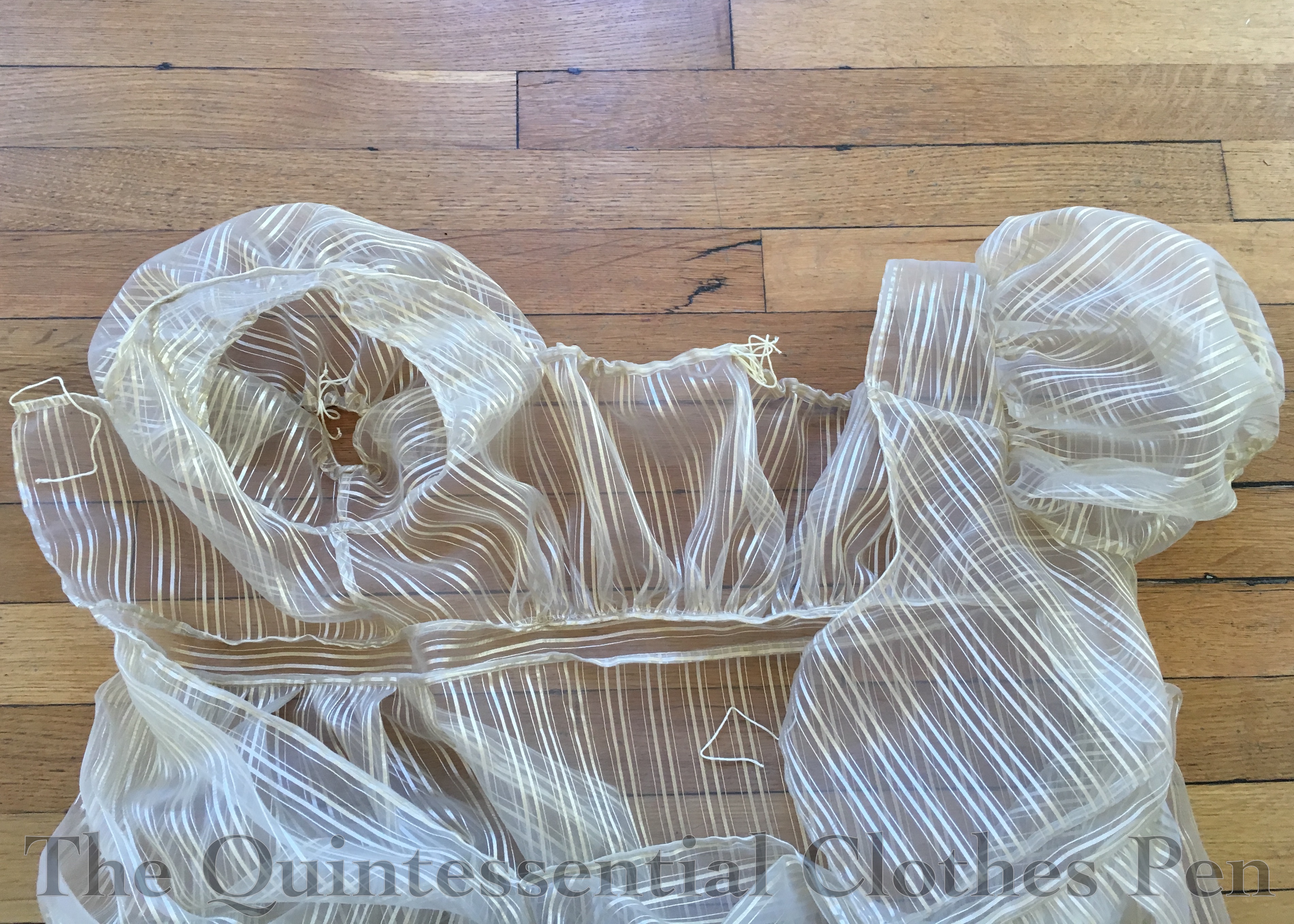
It’s usual for me to meticulously finish the insides of my garments, but in the case of a sheer dress, that desire became a necessity. Accordingly, all of the inside seams are nicely finished with a mix of French, flat felled, and folding seam allowances to hide raw edges and whipping them together. I kept the finished seam allowances small, so that they wouldn’t detract from the stripes.

The bottoms of the sleeves and the front and back necklines are all adjustable with tiny drawstrings made from champagne colored embroidery floss. The goal was to have ties that would blend and not be noticeable through the sheer fabric.

The pattern for this dress was adapted from other Regency dresses I have made. I think I most closely referenced the patterns for my tree gown and square neck gown, but adjusted the fullness to give this dress a little more oomph.

This dress is machine sewn and hand finished. All of the French seaming was done on machine, as was the assembly of the bodice, waistband, and skirt to make a dress, but all of the other stitching (casings, hems, trim, finishing seam allowances in non-French ways, etc.) was done by hand.

The dress has a scalloped trim band around the bottom, set up high enough to show off the lace on the Vernet petticoat. It’s hand hemmed and it seems like miles… though I think it was only about 9 yards. Hemming, gathering, and attaching this was one of the last tasks and it was going right up until about 2am on the morning of the ball. By the time it was being sewn on there was no measuring or sectioning, just eyeballing, so it’s a little wavier than I would normally allow, but one has to make accommodations (sometimes). I was envisioning the scallops would be spaced out more and therefore be more defined, but as I was furiously sewing the trim on I was not about to cut it up and resew it, so all 9 yards made it onto the dress. It’s fine. I’m happy. I do not plan to re-do the fullness of the trim or the placement!

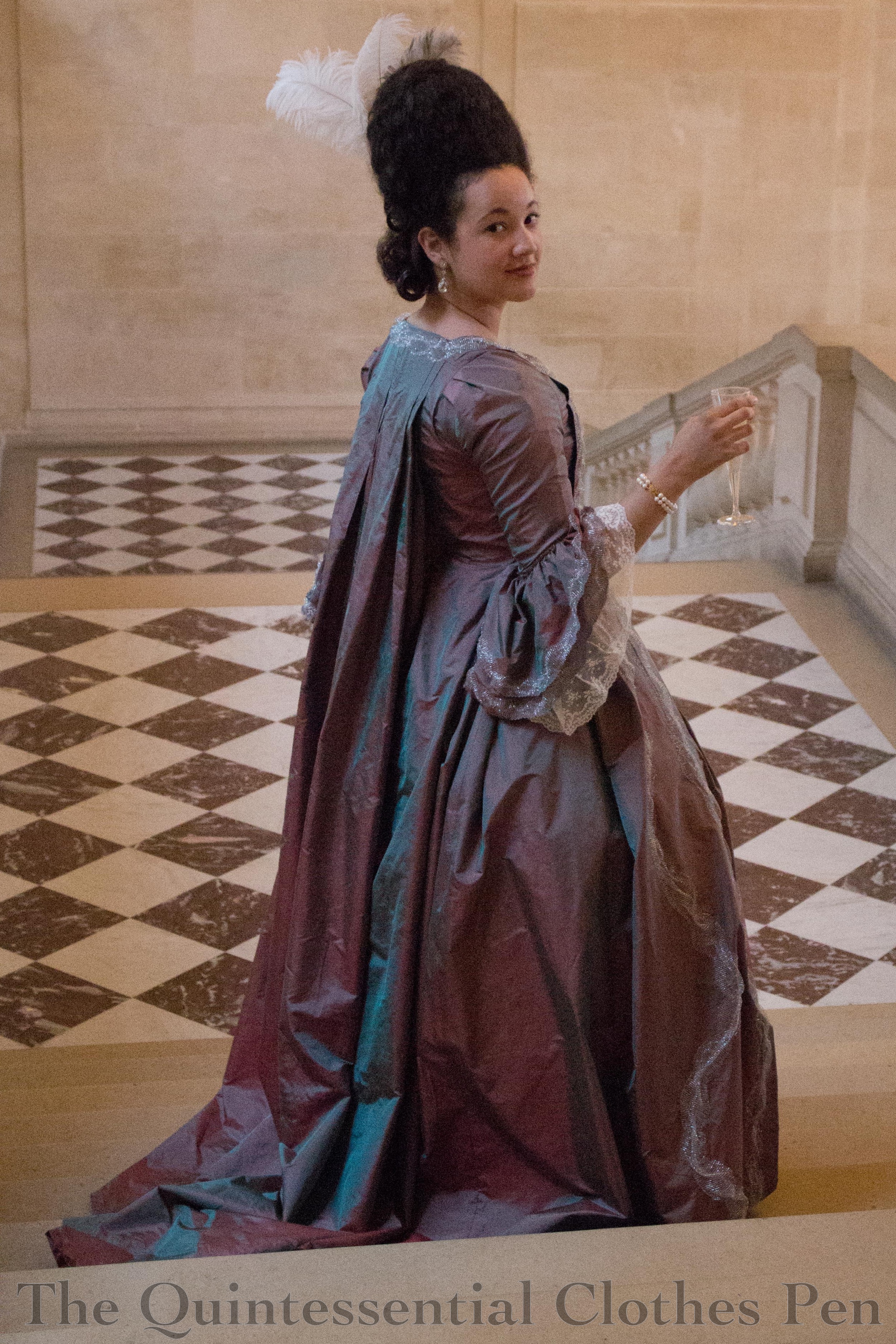
I decided that such a dress needed grand hair and hair ornamentation, and so I justified my desire to wear a tiara by scouring my Pinterest boards for documentation. The Duchess d’Angouleme sports a pretty grand tiara in 1818. And here she is in 1817 wearing what I think is the same tiara.This is Victoria, Duchess of Kent, sporting a fabulous tiara and giant hair poof/bun. Empress Josephine and Caroline Murat (Queen of Naples) have some pretty fabulous tiaras, too. To match the tiara, I accessorized with a pearl necklace and pearl earrings. Worthy of a duchess? I think so!

SaveSave

SaveSave

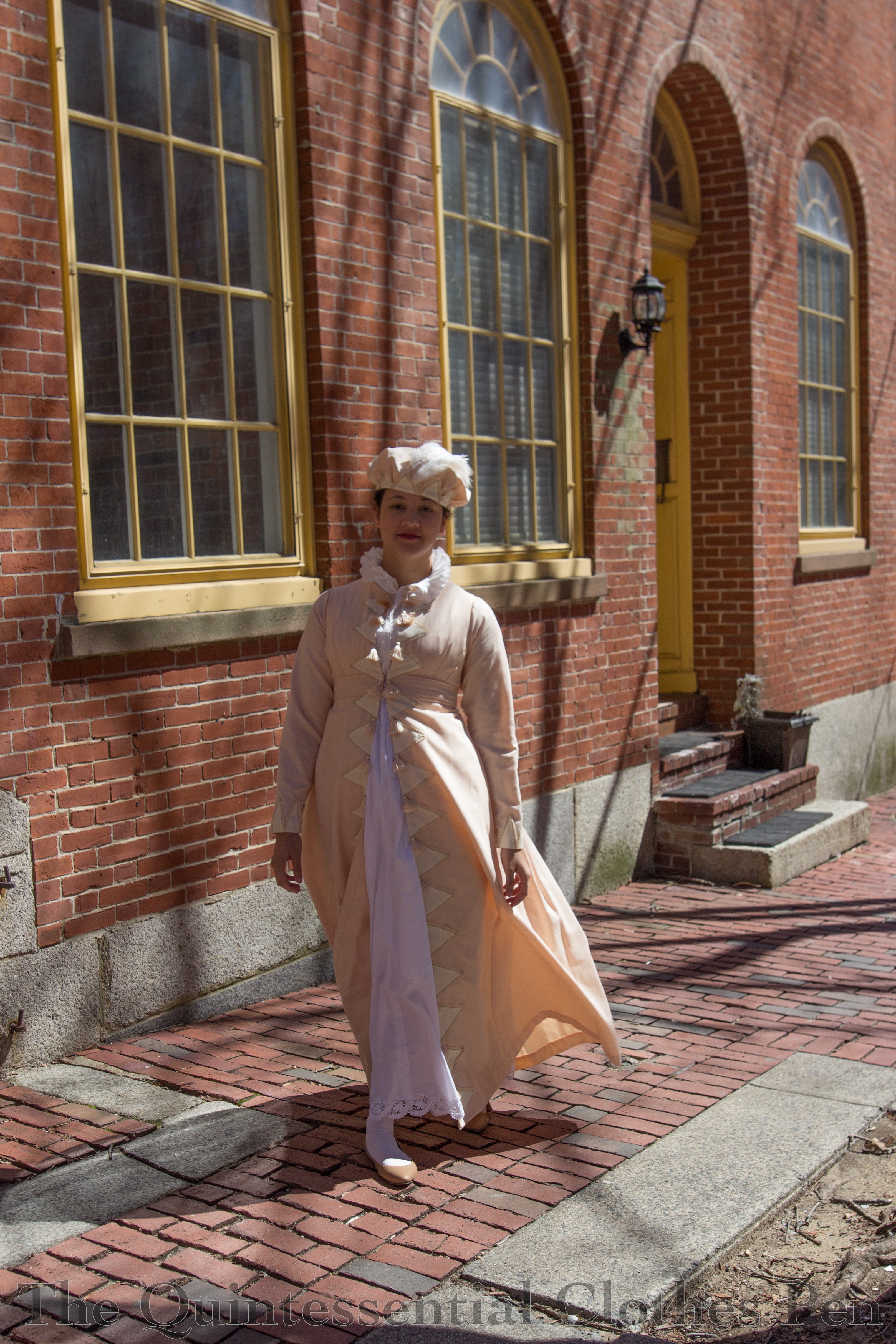
1814 Orange Boven Pelisse

At least three years ago I was inspired by a fashion plate, as one often is, and started working on a Regency pelisse following the design in the image. I got really far along, finishing the construction and even part of the trimming, but then stalled and let the ensemble languish for years before determining to pick it up and finish it off this year or else! I’m excited to have finally reached a ‘done’ point in this project so I can remove it from the UFO list!
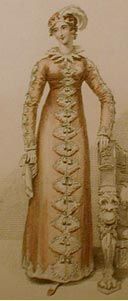
The pelisse (and hat) are directly inspired by the following fashion plate, which can be seen here with slightly different coloring and here in black and white. In the first of those two links, the garment is labeled as a dinner dress, but I thought the design would make excellent pelisse trimming and so I adapted it.

You’ll notice, perhaps, that the finished pelisse does not have as much trim on it as the inspiration image. Early in this project, before it languished, I cut out all of the appliqués for the neck, sleeves, and hem as well as the front edges. I pressed under a 1/4″ on each side of each piece, too. And then, as I was finishing all that triangle trim on the front earlier this year, two things happened:

#1- I lost steam and really just needed to be done with this project.

#2- I decided I liked the simplicity of the pelisse without the extra trim. It’s so easy to draw lots of details, but then in a real garment the details don’t always translate. For example, the triangles around the neck just looked bad and awkward (plus, I wonder if that is a chemisette collar and not trim on the dress itself?) and the sleeves just looked too crowded. I was also afraid that putting all that work into triangles around the hem would just get dirty and not be a good use of many more yards of the vintage lace I used to edge the triangles.

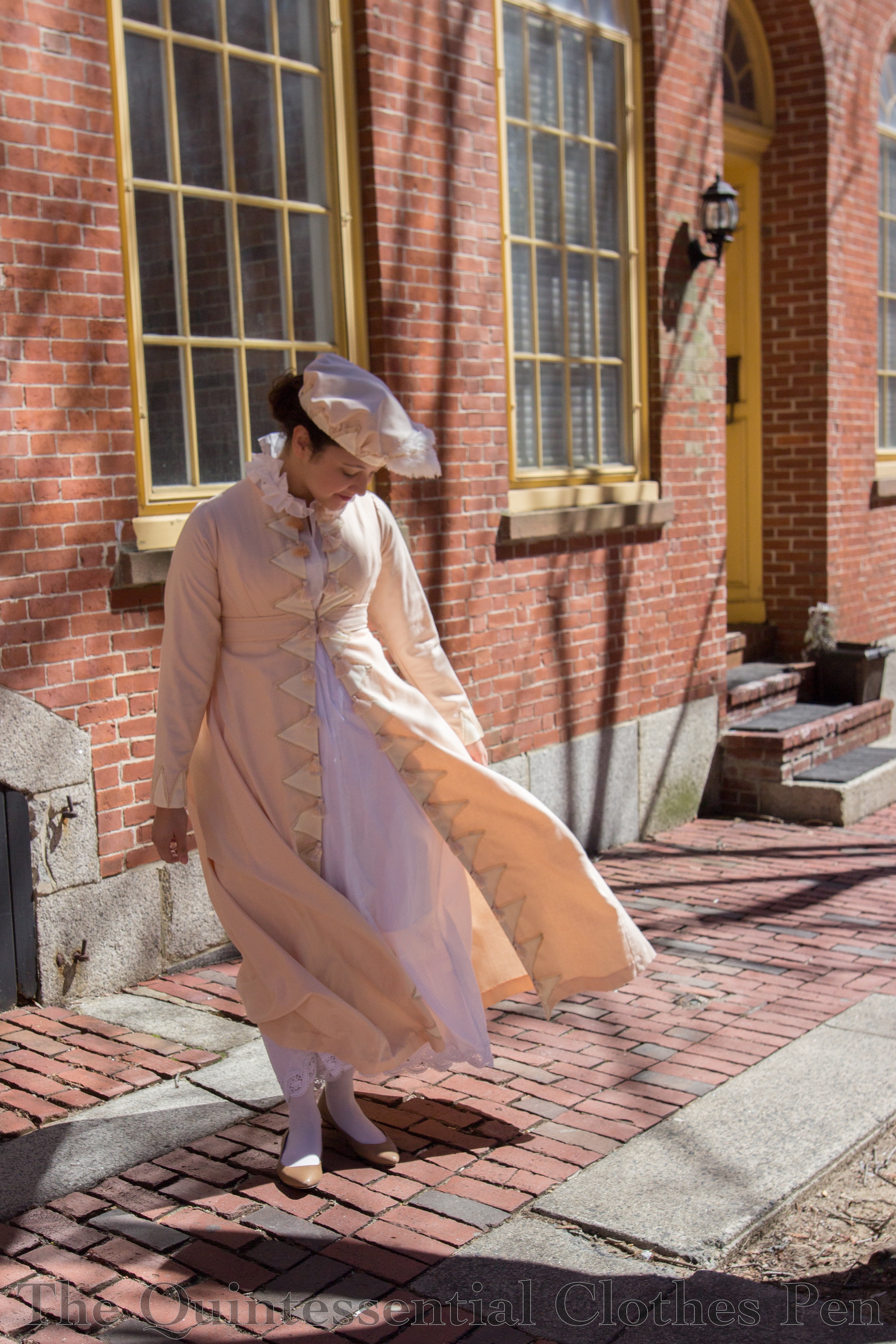
In fact, despite the somewhat-simplified trim, there are actually a lot of details in the construction of the pelisse. Each back seam is piped and the belt has double piping above and below it. The neck is bound with piping, which is sewn with small, invisible stitches around the neck to hold the seam allowance to the inside. Also, the skirt is knife pleated into the back, allowing for a nice silhouette from all sides.

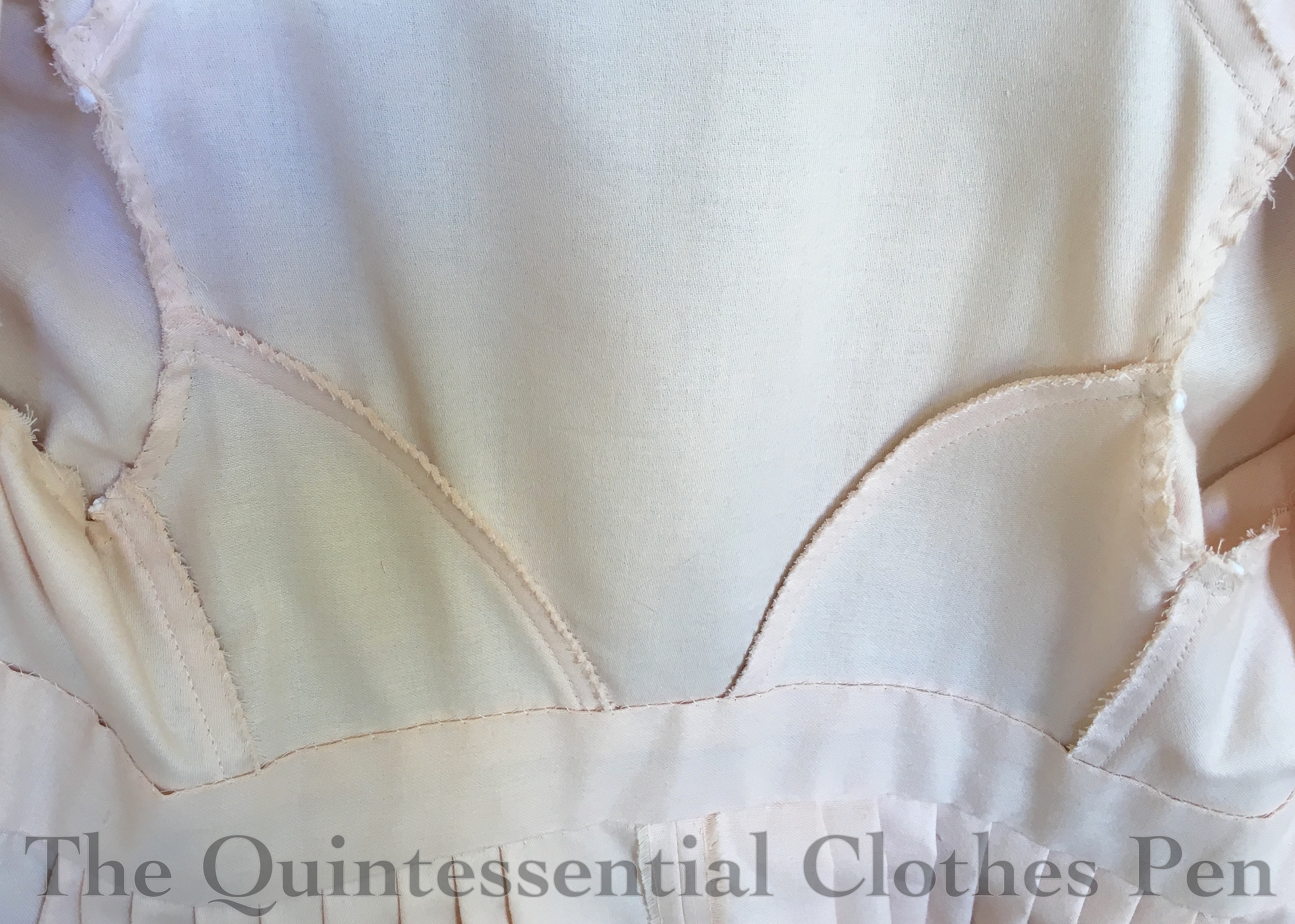
The pelisse is made entirely from peach colored cotton. It is unlined, except on the belt, where it is lined in order to hide the raw edges. The other seam allowances are whip stitched to keep them tidy. Here is an inside view of the bodice section. I do like my insides to be tidy!

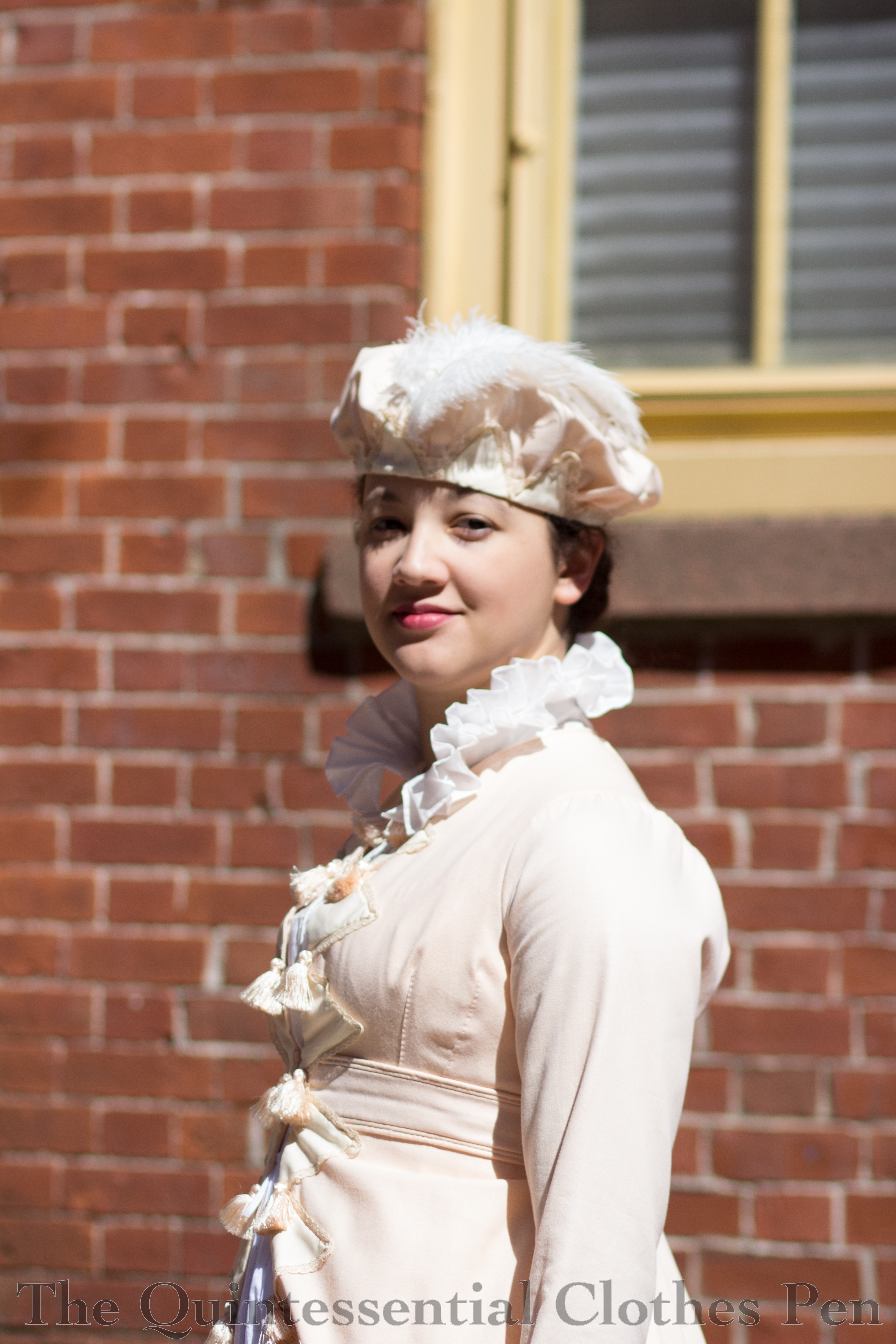
The trim fabric is a cream colored poly/cotton blend. Each triangle is edged in very light tan vintage lace. Then, to top it all off, there are peach tassels on each triangle down the front as well. The peach tassels were removed from a length of upholstery trim that happened to be a perfect color match!

The pelisse is machine sewn on the interior seams and hand finished, including the hem, neckline, seam allowances, and all that trim. The darts are also sewn by hand with a small running stitch, a detail I picked up from looking at extant pelisses, though of course it’s been so many years now that I can’t find a specific example. I like how the top stitched darts at a little extra interest.

The pattern for this pelisse is of my own design. I’m pretty sure it was based on my 1819 spencer, but adapted slightly for a different fit. It’s hard to remember since it’s been so many years since I made the pattern! The skirt is a large rectangle–two panels of fabric seamed at center back.

I’m wearing the pelisse with the following garments: a chemise and my short stays, my Vernet petticoat , my recently finished chemisette, and the hat that matches the whole ensemble. I’m excited to have found a use for the Vernet petticoat that shows off the trim at the hem! I did take out the tucks that made it the right length for my Witzchoura so that it would be the right length for the pelisse, but that’s what tucks are for, right? On picture day there was a nice breeze blowing everything around and showing off all the layers nicely.

I was lucky to take these photos in and around some of the Regency period buildings in Salem, MA. You can’t beat buildings from the right period for a suitable backdrop for a garment like this!

Now I have my first pelisse. More outings will hopefully arise in the future so I can wear it again. I’m so glad I’ve decided it’s finished and that it was a comfortable garment to wear, though I maintain that the hat is a bit silly.


Orange Boven Hat, 1814 (HSM#4)

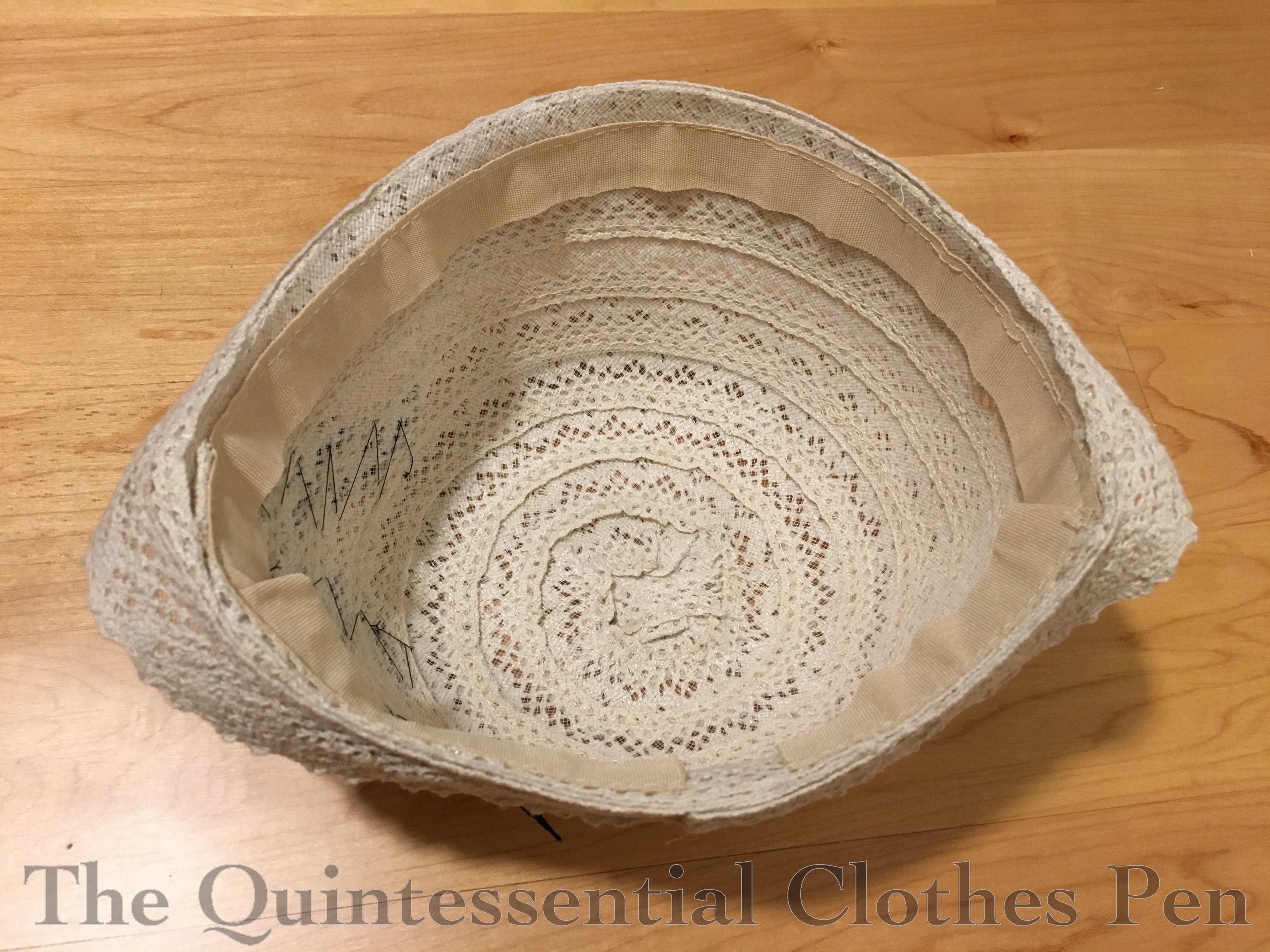
I am pleased to report that I made a garment which qualifies for the HSM challenge #4: Circles, Squares, and Rectangles! I wasn’t sure I had anything on the sewing list that would do, but then I remembered years ago when I started this hat and it was only two pieces, a circle for the crown and a rectangle for the binding. Perfect! (I’m not counting the triangular trim. That’s just the trimming!)

As you might guess from the photo, this hat is part of a matching ensemble: a pelisse and hat from 1814. I’ve got lots of details planned regarding the inspiration for this ensemble as well as more pictures of the finished outfit, but for now this teaser will have to suffice. It gives context to the rather silly hat.

Just the facts:

Fabric: Pale peach cotton and cream (likely) poly/cotton blend.

Pattern: My own based on my head measurements.

Year: 1814.

Notions: Thread, two ostrich feathers, and about 1 yard of vintage lace.

How historically accurate is it?: I’m going to go with 95% on this one. It’s entirely recognizable in its own time and made in a way that is straightforward and consistent with historic garments. The materials are not 100% accurate.

Hours to complete: If I’m only counting the hat, about 3 or 4, since it is entirely hand sewn.

First worn: April 9 for a Regency tea.

Total cost: About $8 for the hat without the pelisse.

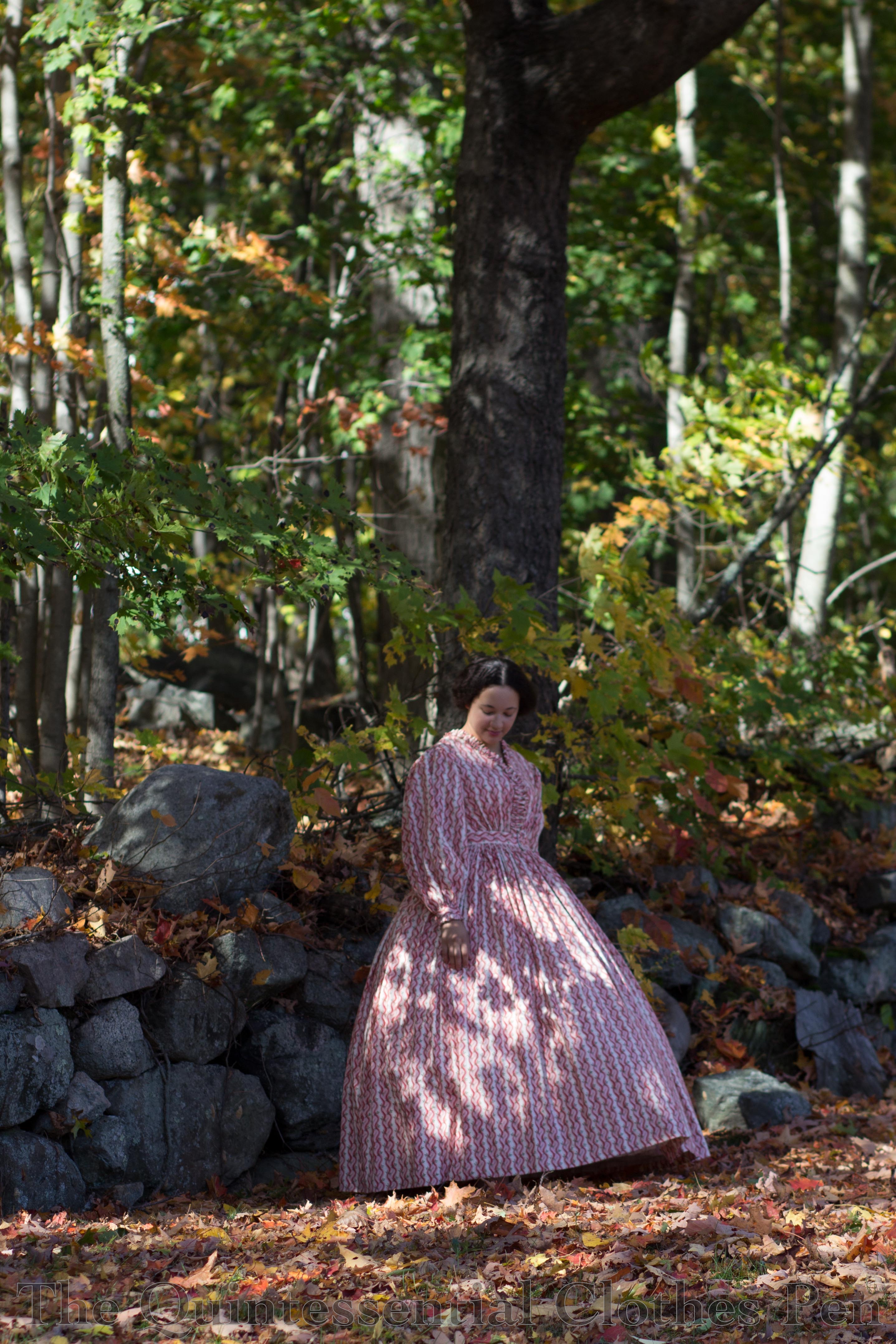
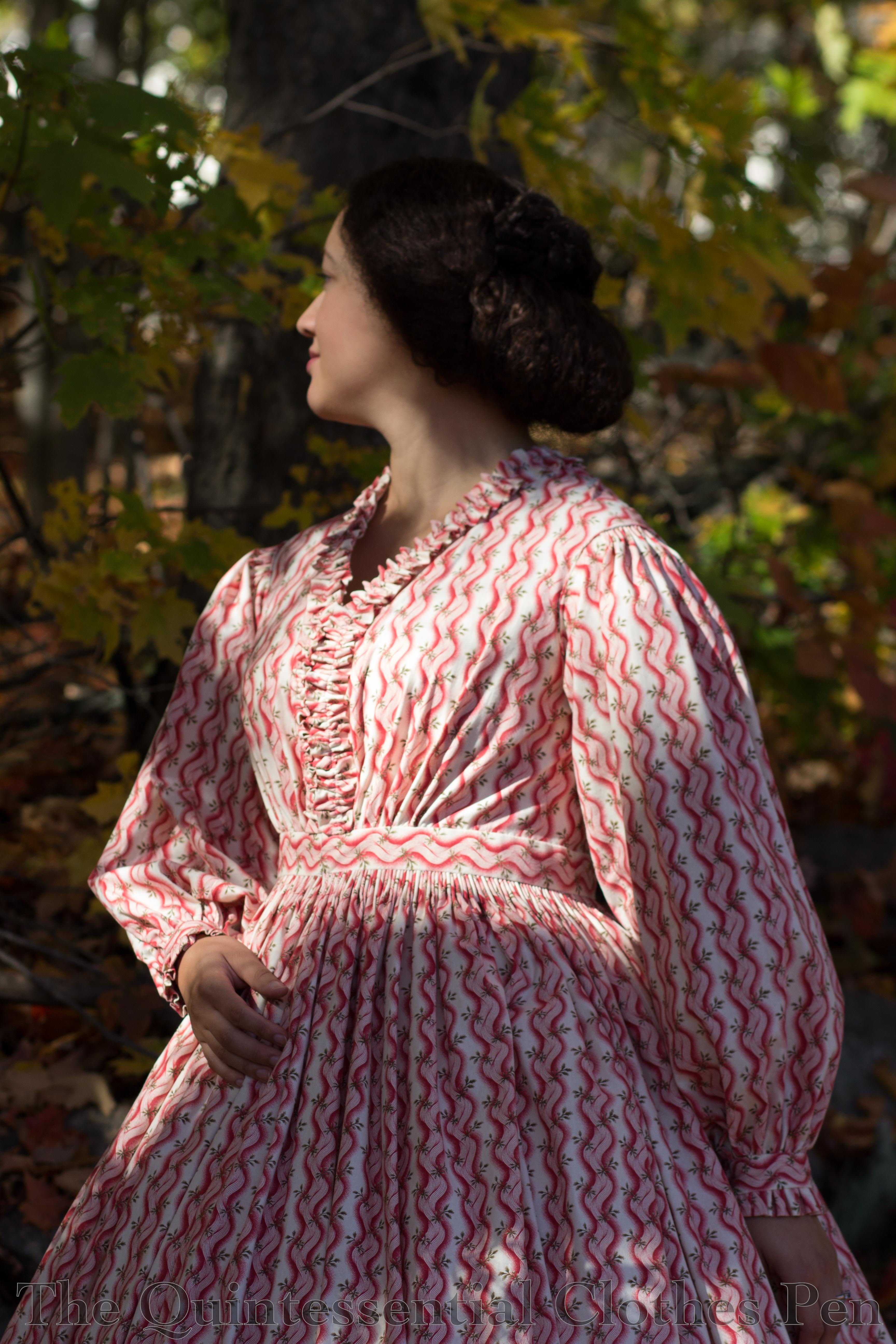
Sophie, 1861 Cotton Print (HSM #8)

Last week, I introduced Eleanor, a newly made plaid gown from 1862. Today’s introduction is to Eleanor’s friend, Sophie. Sophie actually came first, back during the summer when I was intending to participate in the same dance performance for which I’ve worn Georgina in the past (here are a selection of past posts about Georgina: the construction which is similar in some ways to Sophie, Georgina in action, and Georgina with a new collar).

This year, the performance was rescheduled due to rain and I couldn’t attend the new date, meaning that the new dress, Sophie, languished until October, when I was able to wear it during part of a recent mid-19th century dance weekend. The nice thing about the delay is that the pictures all have stunning fall leaves, which would not have been in the case in the summer.

img_3450-1

Also, had I worn this dress on the first intended date, it would not have been entirely completed. Having extra time allowed me to officially finish all the trim and closures which made this dress the perfect entry for the Historical Sew Monthly challenge #8 “Pattern – make something in pattern, the bolder and wilder the better.” I didn’t have any pictures of the dress on a body at that point, so I submitted a rather sad picture of the dress on a hanger at that time. It’s exciting to have real pictures now!

Just the facts:

Fabric: 7.5 yards cotton print.

Pattern: Adapted from Past Patterns #701, 1850-1867 Gathered and Fitted Bodices.

Year: 1860-1863 based on my extant inspiration, but I’m calling it 1861.

Notions: Thread, hooks and bars, muslin scraps, and narrow yarn for cording.

How historically accurate is it?: I’m going to go with 95% on this one. This is as accurate as I can be given the research I have done and the materials I used, though the use of a facing on the front edges is guesswork. Regardless, this would be entirely recognizable in its time.

Hours to complete: Unknown. A fair bit.

First worn: October 23 for an afternoon tea and dance games.

Total cost: $23.

img_3451-1

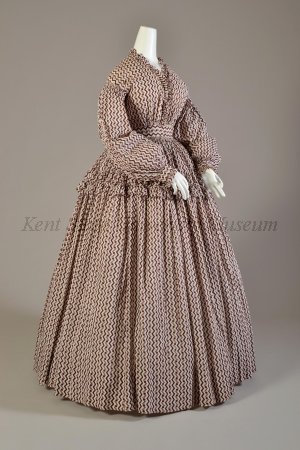
Sophie was directly inspired by this extant dress at the Kent State University Museum. I was considering what to wear for the performance, thinking that I’d worn Georgina enough to want something new, that I’d had an 1860s cotton print fabric in my stash for a few years, and then I remembered this dress. I decided to leave off the ruffle on the skirt (and also didn’t have enough fabric), but was so pleased that my cotton print is so perfectly suited for playing with the pattern in the same way as the extant dress!

19861270001

Dresses from this period with v necks are not common, but they do exist. This Pinterest board has lots of examples. My Pinterest board has a few other dresses that helped move me along as well.

As I mentioned in my post about Eleanor, finding and making use of subtle differences between dresses from similar years brings me joy. For example, Sophie has a v neck, no boning, cartridge pleated sleeves, gathered trim, and is actually sewn together as a dress, rather than hooking together at the waistband as with all my other dresses from this period.

img_3461-1

img_3464-1

img_3467-1

In other ways, Sophie is similar to Georgina, being partially machine and partially hand sewn, having a cartridge pleated skirt, cuffs with little ruffles at the ends, and pockets.

img_3462-1

Personally, I love having pockets in day dresses. It brings me peace of mind to know that modern things like my keys are close by and not sitting around somewhere. Plus, chapstick, fan, gloves, etc. are also excellent choices for stashing in pockets. These pockets, which you can see the top of in the picture below, are sewn in the same way as Georgina’s pockets, shown here. I love this collection of references to pockets from the 1840s, 50s, and 60s that Anna Worden Bauersmith put together. I’ve been waiting for just the right moment to share it for what seems like ages.

img_1871

Here are two more interior shots of the dress. The first shows the muslin facings. I don’t have documentation for this method being used to finish a lightweight summer cotton dress, but it makes sense that this method might have been used to finish the edges nicely while keeping the main body of the dress breathable and light. The second picture shows in the inside of the top of the sleeve, particularly to show the cartridge pleats.

img_1874

img_1872

In addition to the dress, I also made a new cage crinoline. I’ve been wanting a slightly smaller, less bell shaped one, particularly to wear with cotton dresses. I love my old cage crinoline (seen here) for evening dresses, but it is just a bit too much for a more practical daytime look. The new crinoline shape just looks ‘right’ with the cotton dress. The difference is subtle, but pleasing. Unfortunately, it did not perform well in its first wearing. The vertical tapes were sliding all over the place and causing the hoops to drop and be tripped on. Not good! It needs revision before being finished and shared, so for now you’ll just have to believe that I’m wearing it with this dress.

Now that you’ve heard all about the dress itself, here are some pretty pictures of it in action. These first ones are in the spirit of the development of rural cemeteries in the mid-19th century, which you can read more about in this blog post at Plaid Petticoats.

img_3492-1

img_3480-1

The next few are a celebration of the autumn season. The gorgeous leaves were beckoning us to have some laughs. Incidentally, I tend to jump in the air with my arms up whenever I’m having an amazing time in this period. Take this memory, for example. I’m doing pretty much the exact same thing!

img_3522-1

img_3525-1

img_3526-1

img_3543-1

We have so many things to be grateful for. I am always thankful for the many blessings in my life, particularly at this time of year. I hope that your life is also overflowing with blessings and reasons to give thanks, in autumn and always.

img_1956-1

Vernet Project: Silly Shoes

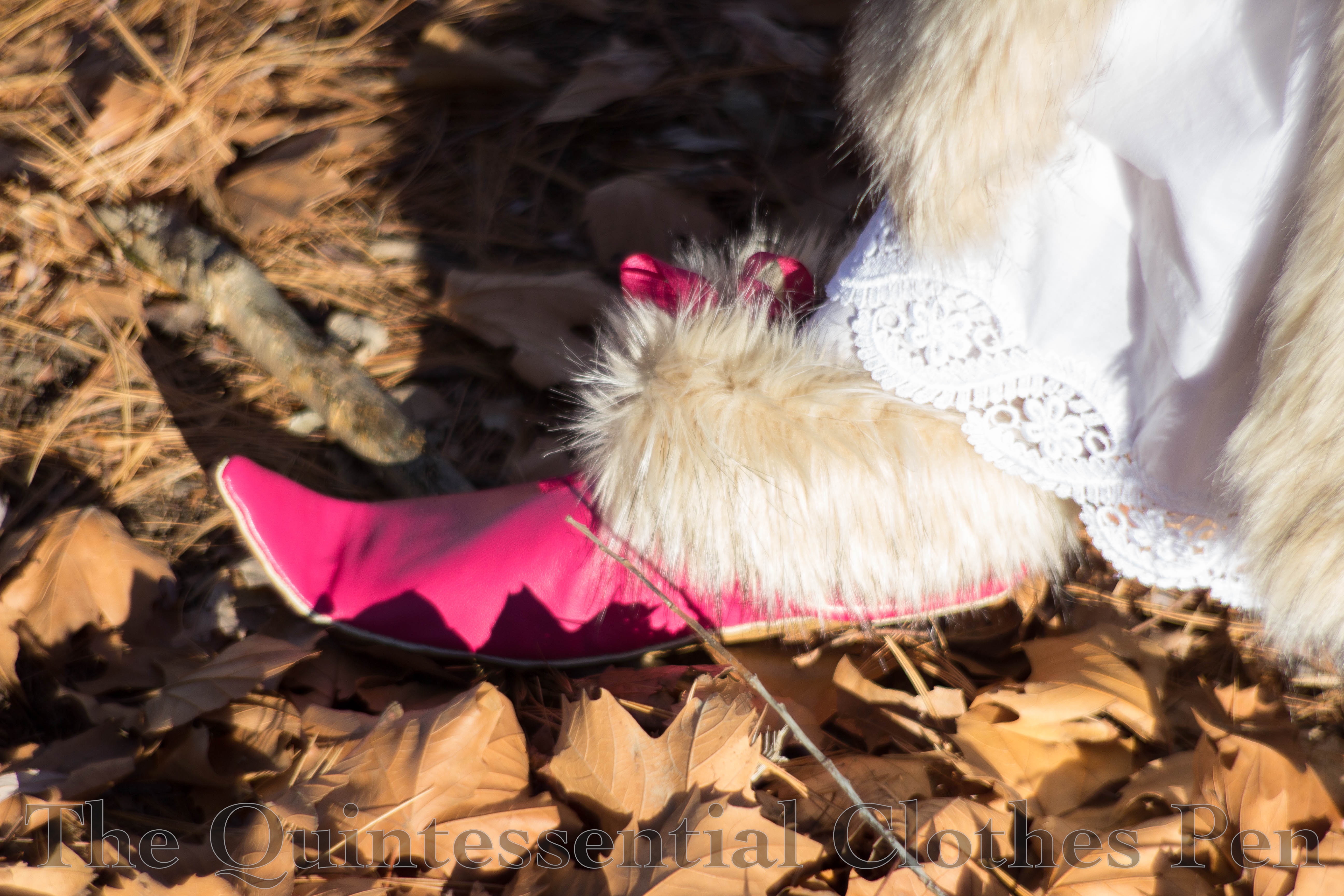
One of the five pieces of my Vernet Project was creating the silly up-turned-toe elf shoes in the fashion plate. Clearly, these are not shoes that could be purchased, as they are so specific in style, so I set out to make my own!

IMG_1920 (1)

In the beginning, I was thankful to have another Vernet project maker’s experience making her boots before mine to work from. Jenni posted a two part tutorial showing how she made her boots as well as sharing information behind-the-scenes with project participants earlier in the process (Part 1 and Part 2). She closely referenced Every Lady Her Own Shoemaker, published in 1855 (a little late relative to the date of the project, but still useful for construction advice), for construction methods and carefully documented her process. In fact, she did a much better job at documenting the actual sewing than I did… I also read Anna’s information about making mid-19th century shoes multiple times to help get my mind acquainted with the project (again, a little later than the period of the project, but still helpful). She also has lots of great construction pictures.

I started by creating a pattern for my shoe using patterns in Every Lady Her Own Shoemaker. Given that my shoe has the unusual turned-up-toe, I necessarily needed to make adjustments to the general slipper pattern. Here is my shoe at the mockup stage. The upper pieces fit pretty well! I adjusted the width of the sole as well as the shape of the turned-up section before moving on to cut out the final pieces.

Mockups.001

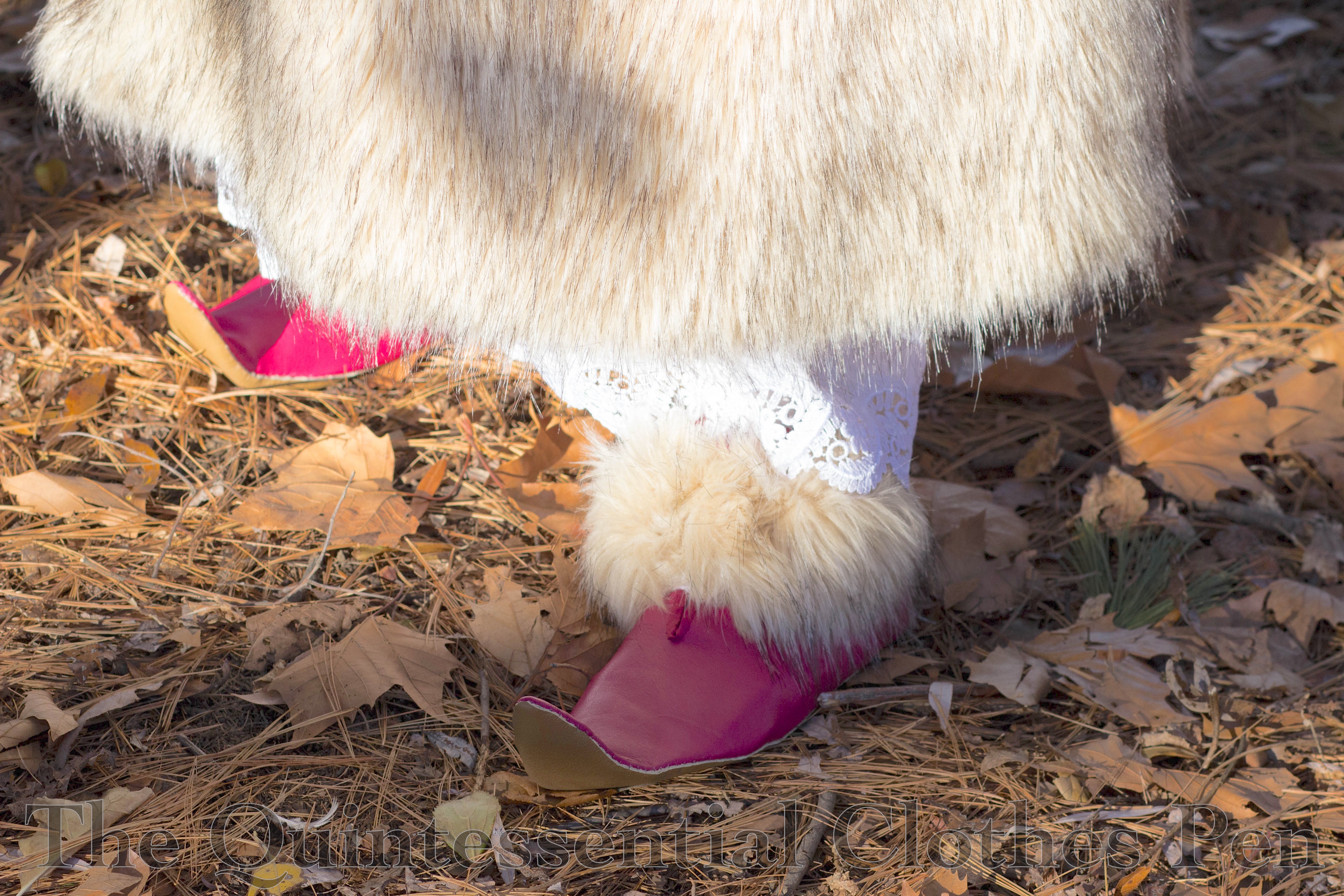
Here are all of the final pieces cut out and ready to assemble. The soles have three layers: heavier tan leather for the outer sole, cardboard for the inner sole structure, and white linen to cover the cardboard insole. The uppers have two layers: lightweight raspberry leather for the exterior and white linen for the interior. Later in the process I also added a faux fur cuff.

IMG_0239 (1)

To help the shoes keep their turned-up-toe shape I soaked the leather soles in water, taped them to a lysol wipe container, and let them dry. You can see the results below. Not perfectly curved up, but still helpful. I also tried boiling leather soles to thicken them before shaping, but found that the leather shrank unevenly which created soles that wouldn’t work for this project. I did save them, though, and hopefully will get to use them for a future shoe making endeavor. I repeated the soaking and shaping for the cardboard insoles before gluing the linen to them. There’s a picture of the insoles at this stage in this past post.

Soles in progress.001

After shaping the soles it was time to construct the uppers. I did the interior and exterior separately, then basted them together around the top opening and around the bottoms. Then I sewed the bottom edges of the uppers to the soles, using the slanting stitch through the side of the sole that Jenni shows in Part 2 of her tutorial. She used all sorts of nifty leather tools as well as a wooden last during construction. I purchased the nifty leather tools but found that they didn’t work for me and a simple non-leather needle worked just fine. (I think my leather was too thin and soft for these to be needed). As for the last, I looked online for a wooden one, never found one in my size foot, and eventually decided to give it a go without one, especially since I had to do the turned-up toe. In the end, I don’t think it was a problem not to have a last.

IMG_2253 (1)

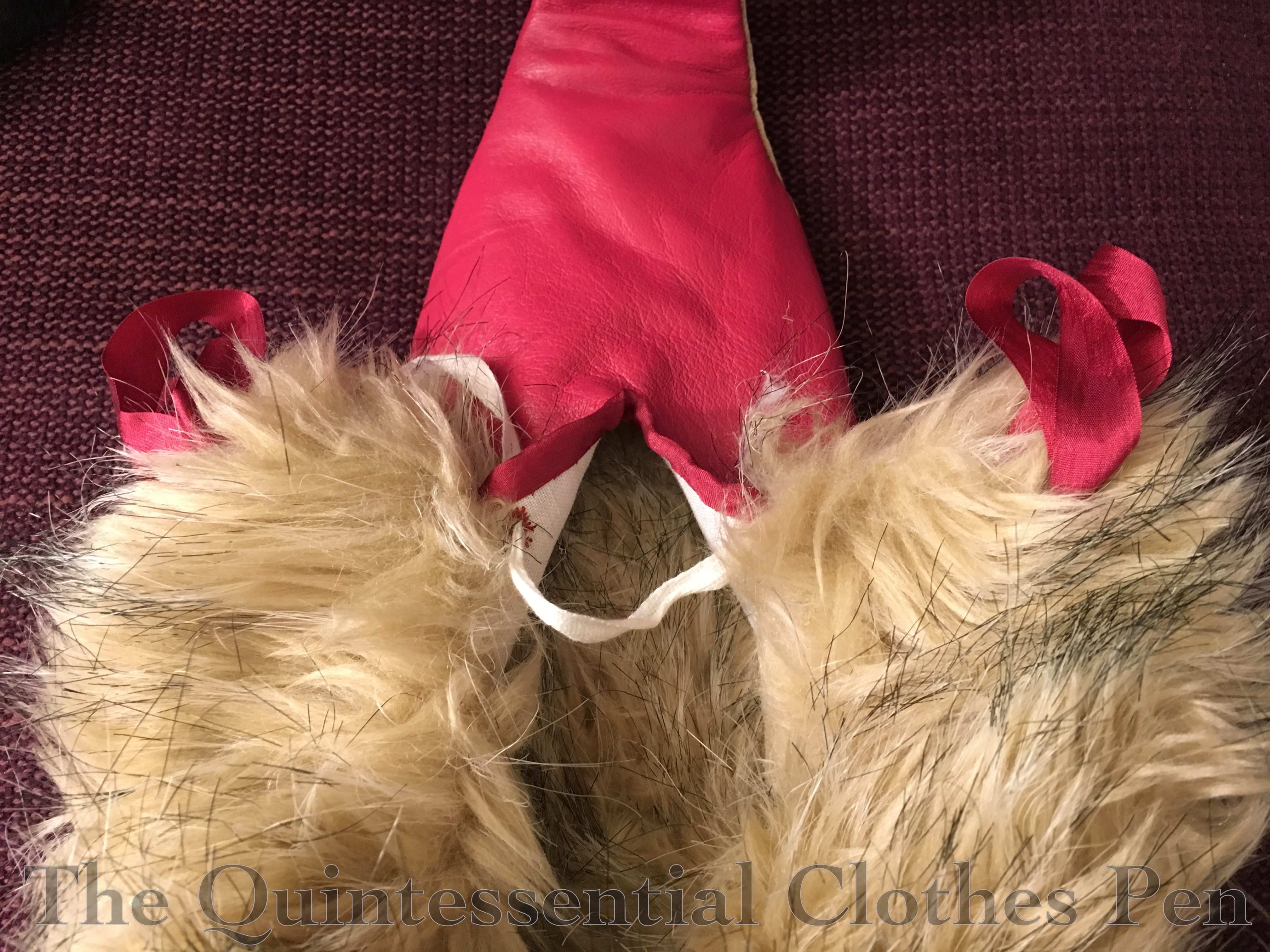
Once the soles were attached, I bound the front slit with matching silk ribbon. Then I cut a piece of faux fur for each shoe that went around just the top of the foot opening and could double over on itself. There are non-functional silk ribbon loops that are sewn to the front of the fur that encases the top edge of the shoe. The shoes actually close with a twill tape threaded through hand sewn eyelets on each side of the opening.

IMG_1684

They’re actually quite comfortable for walking around in. I have very flat feet, so don’t really need arch support to be comfortable. The only thing is that my feet did get cold during our photoshoot due to the freezing ground only separated from my feet by a few thin layers of fabric. So, for the second wearing, while caroling at Christmastime, I added a faux fur insole. Problem solved! They were toasty and even more comfortable!

IMG_1884 - Version 2

Interestingly, witzchouras are mentioned as being popular in Paris during the year 1827 by La Belle Assembleé, after a mention of other popular pelisses and mantles (well worth checking out!), and are are described as being worn with boots laced in front and with fur around the leg.

335d382370bd68a719024c208ffeff0c

Doesn’t that description sound oddly familiar? It reminds me so very much of the Vernet fashion plate and my silly shoes!

Making Waves In 1925

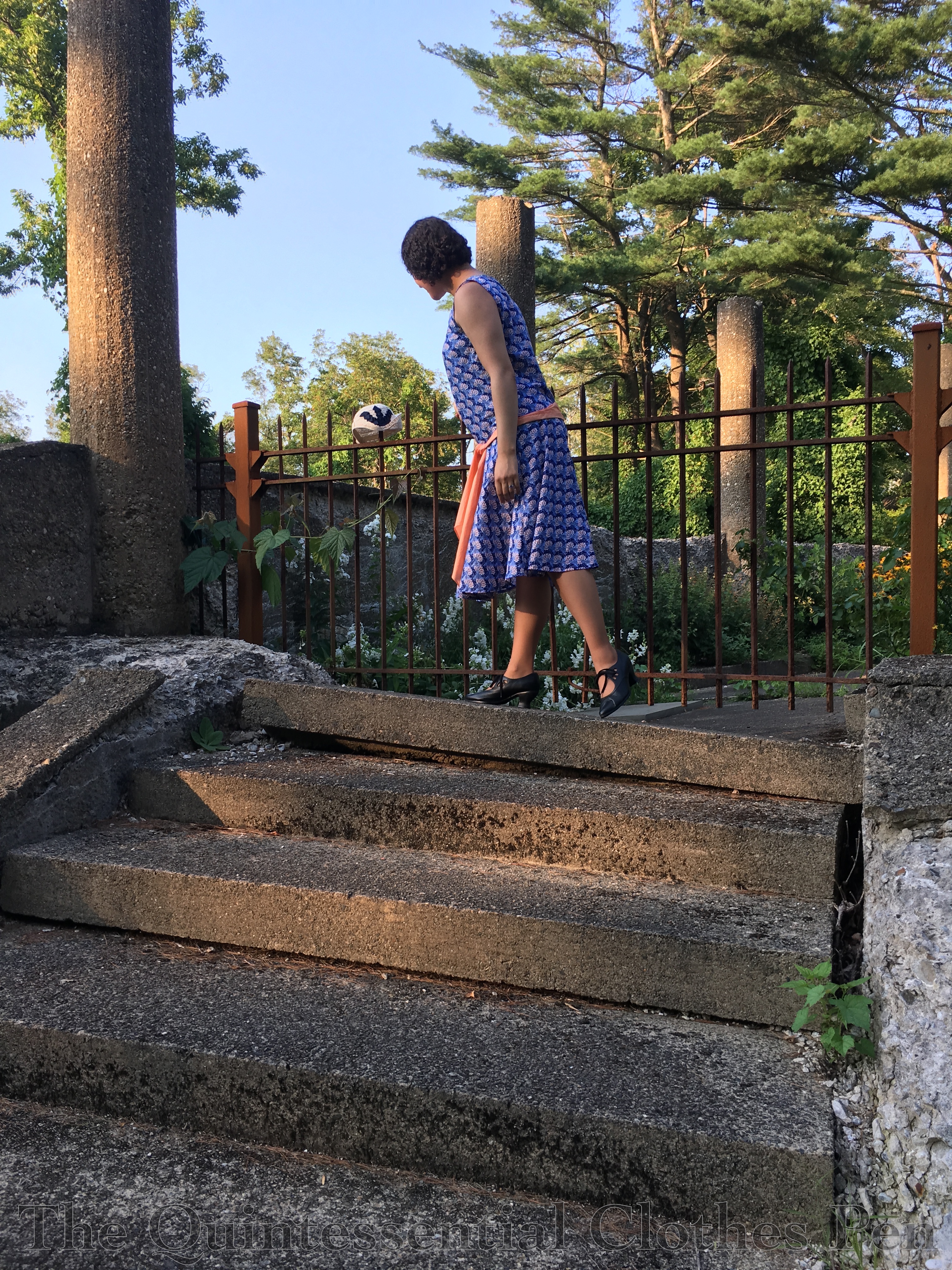
On my to-do list for this summer was a 1920s bathing suit. At first I thought I might knit one, but I wanted a smaller project than that, and also, a friend who hand knit a swimsuit last year reported a fair bit of sagging happening when she wore hers in the water. So I decided to try a different approach and make my suit from wool jersey fabric, a historically accurate option in terms of weave and fiber for a 1920s suit, as far as I can tell from my research.

IMG_2965-2 (1)

After spending lots of time looking at inspirational images on Pinterest and compiling this board of the most inspirational images, I decided on the year 1925, when suits were getting shorter and often sported built in shorts. My main inspiration was this extant suit from 1925 at Abiti Antichi. It’s where my decorative inspiration came from and also justified the visible seam where the shorts attach to the dress. I also referenced this 1920s extant suit at All The Pretty Dresses, which shows interior finishing (serging!) and has narrower straps.

IMG_2929-2 (1)

I knew there was no chance of finding wool jersey at a local fabric store, so I searched around the internet for sources. I believe I found only three–a company in New Zealand, New Zealand Merino and Fabrics, that makes gorgeous colors and sells through their own website and through Etsy; Denver Fabrics, which had wool double knit fabric; and Nature’s Fabrics, which I had never ordered from before, but which had lovely colors. I decided on bottle green from Nature’s Fabrics and vowed to get the whole project out of just one yard.

IMG_2957 (1)

For a pattern, I used a tank top from Old Navy as a starting point since I liked the straps, adding length (and width since my wool jersey was less stretchy than the tank). I cut the dress pieces first, then used the extra bits to cut the shorts.

IMG_1527 (1)

I wanted to use the pattern from my dotty tap pants for the shorts, but I didn’t have it handy, so I pulled out a finished pair of the shorts and used that instead. Unfortunately, I was a few inches shy of being able to cut all four shorts pieces out of my leftover fabric. My solution was to cut the two fronts out and then piece the back pieces with a seam about 4″ below the waist, hoping that it wouldn’t be noticeable in the finished suit. There’s a slight line, but it’s not something I’m worried about, especially since I basically used up all the fabric I had–no adding to the stash on this project!

IMG_2931 (1)

The white trim came from the stash. It’s a lightweight knit terrycloth I bought at JoAnn’s when I first started sewing. I made a robe, but didn’t love it. I did, however, keep it and am happy to have repurposed the fabric.

This would have been a really speedy project if it wasn’t for the trim. I used a serger with four threads to sew/finish the seams all at once, making the construction super speedy (I think I cut and assembled the whole thing in an evening). However, the white lines took a long time to carefully machine sew on and then I still had to bind the arm and neck holes, turning the project into a multi-evening size. The time spent was worth it though, because I love the finished product!

IMG_2937 (1)

I love the images of the bathing suit contests here from the 1920s, in particular this one from 1926. All the bathing beauties are wearing their nice pumps with their bathing suits!

1926-bathing-suit-contest-mem-pd

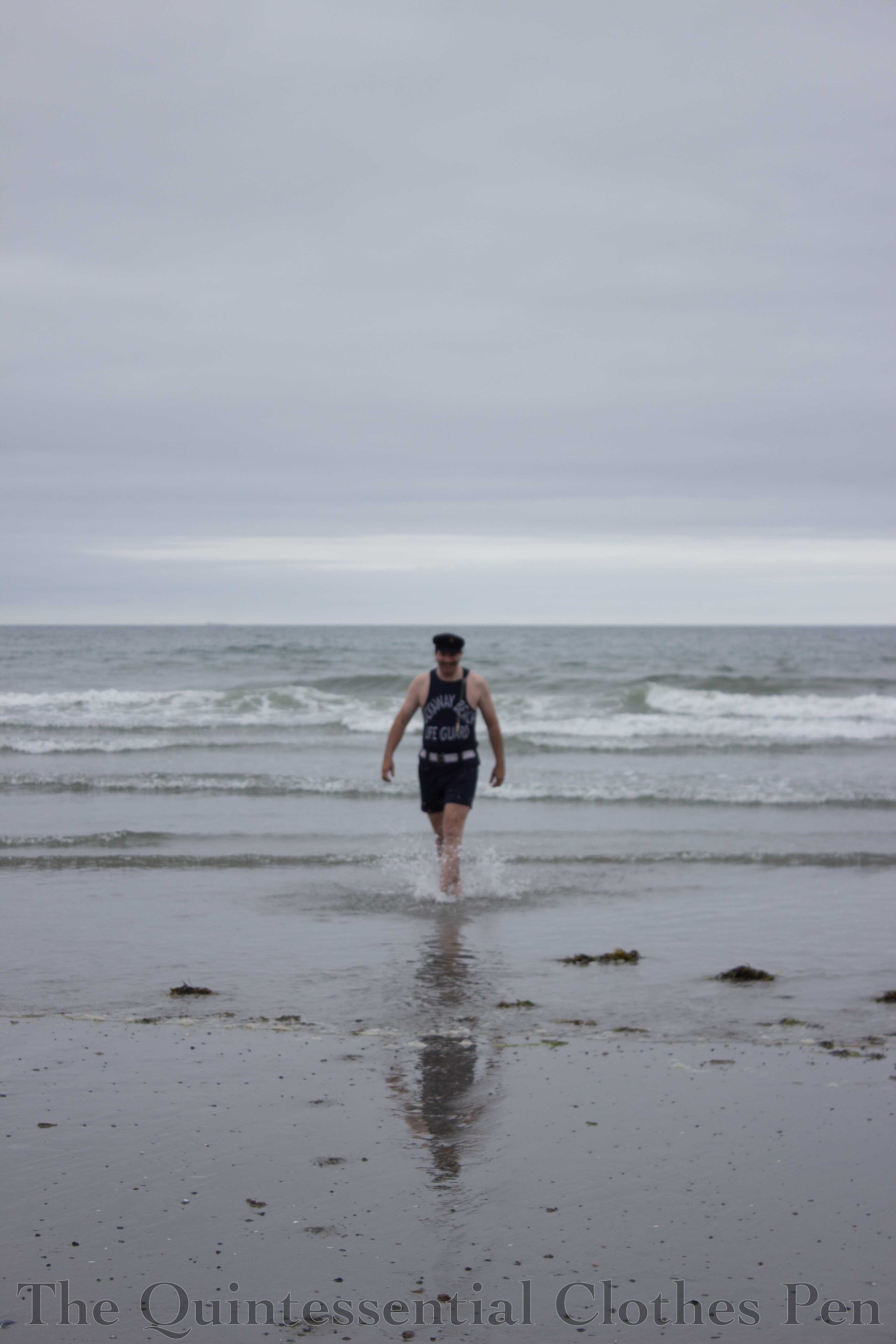
I didn’t have time to get a sash together, but the bathing beauty look is what I was aiming for in this picture, wearing my American Duchess Seaburys with my swimsuit.

IMG_2831 (1)

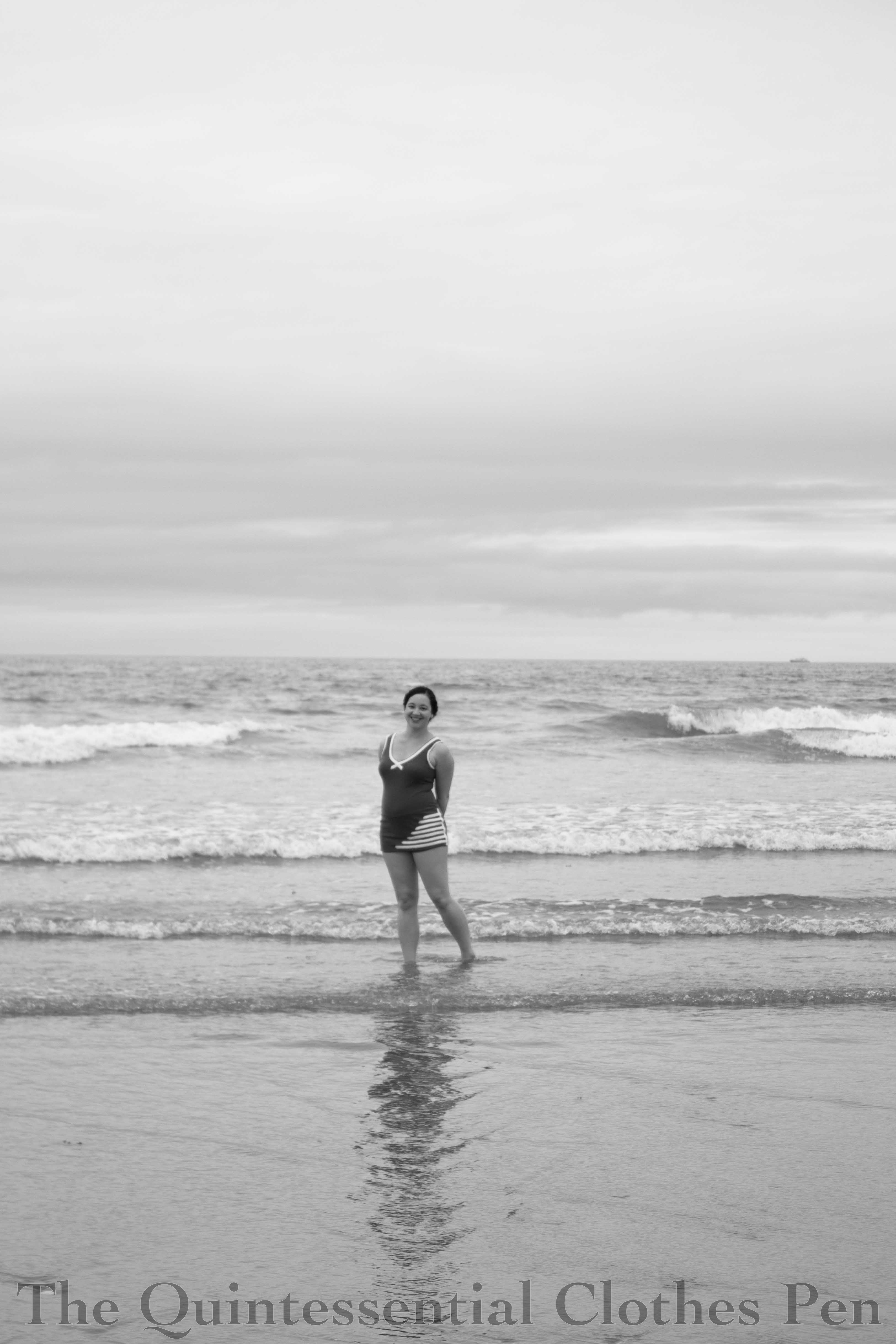
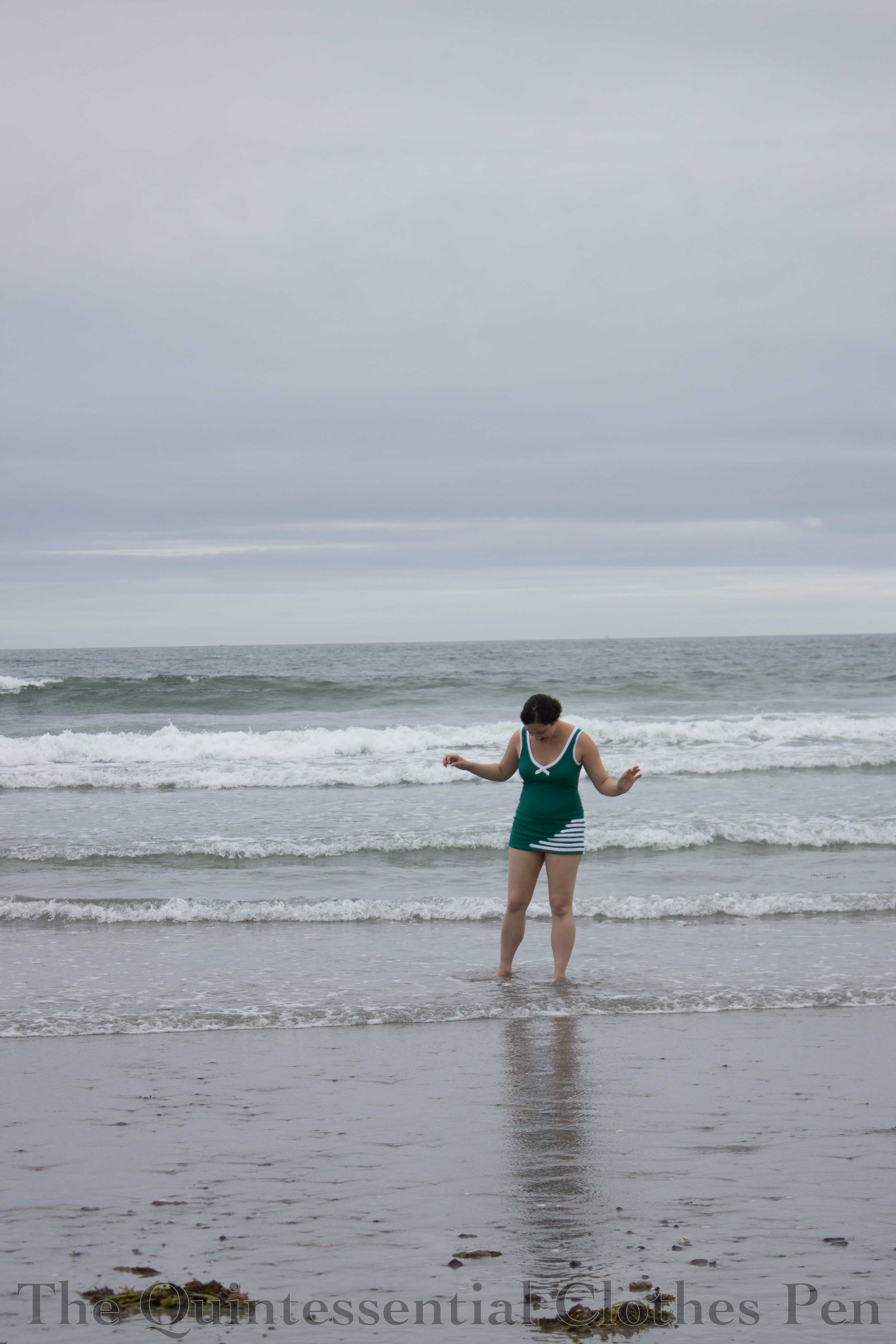
My main goal was to have the suit for an event at the end of August, but it was done in time for a vintage beach outing in July! It was an unusually cold day and therefore the beach was pretty empty, but it meant we had the beach basically to ourselves and got some great pictures!  In August, I’m planning for the whole suit to get wet, so we’ll see how that goes! In the meantime, here are a few more fun pictures from the July beach day.

IMG_2872 (1)

IMG_2991-2 (1)

Regency Shoe Poms!

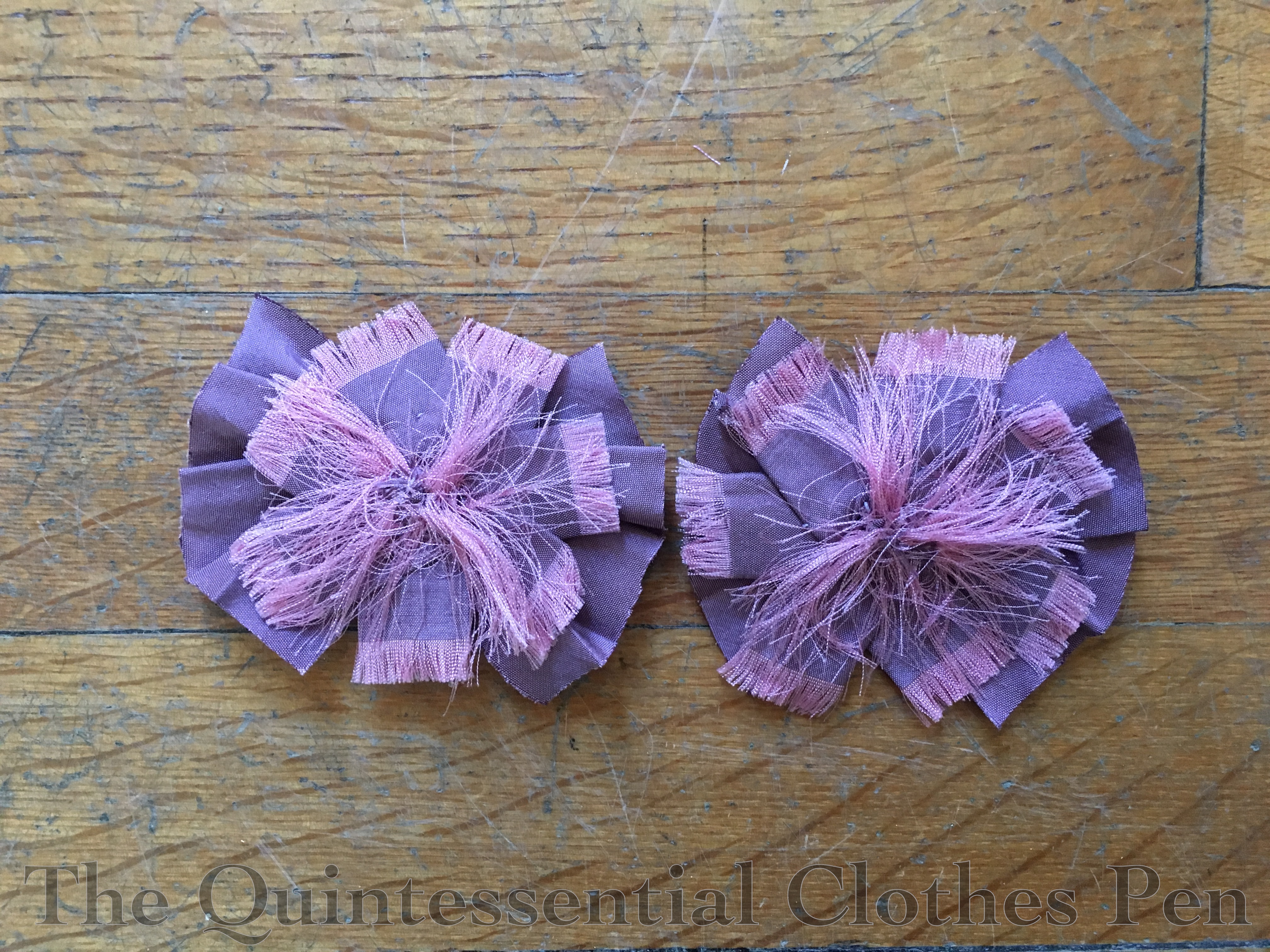
I was very excited when Gina posted a tutorial for making shoe pom poms in September 2014. I decided then and there, while reading the post, that I needed some of my own. It only took me about 18 months to get around to it… but I am happy to report that in April 2016, I finally used Gina’s tutorial to finish making my very own!

IMG_2477 (1)

What prompted me to really go ahead with making the poms is that I wanted to have something to spruce up an older outfit I wore to the 4th Annual CVD Regency Dance Weekend, but didn’t have the time to create a new dress, as the Versailles sacque and 1885 Fancy Dress were all consuming. I suppose what I should really say is that what prompted me to finish the poms is the opportunity to wear them. I think I actually started them in late 2015.

Let me start by saying that Gina’s tutorial is clear and easy to follow. I highly recommend it!

My issues were all self inflicted… I carefully followed Gina’s instructions, got partway through the process and realized that the scale was much bigger than I remembered and that I didn’t like it at all on top of my foot. Oh no! (But in going back to link to Gina’s tutorial for this post I have realized that of course her poms are not the scale I wanted, because her poms are bigger than I ever intended! Oops! Totally my fault!)

The only solution I could see at the time was to cut off the ends of each pieces and re-fray the silk ends! UGH! It was not a fun process to fray the ends and I could not face the idea of doing it again. So I refused to work on the poms for months because I was so frustrated. Then, in March or April, I had the brainstorm to make the pieces shorter by cutting out the middle so I wouldn’t need to re-fray the ends. Duh! From there it was smooth sailing to finish up the poms.

IMG_0769 (1)
Partially finished pom on top (using Gina’s original dimensions). My completed pom on the bottom (smaller in scale). The pin is for scale.

I used a purple silk shantung from my stash for this project so it would match my other purple accessories. The back of the poms have American Duchess shoe clips attached so that I can easily clip the poms to any shoes.

IMG_0770 (1)

I was inspired by extant shoes with poms on the toes, such as these. You can also take a look through my Pinterest board to spot more pom-like shoe decorations.

IMG_2491 (1)
Poms in action! I really like the look of the neutral dress with the purple accessories.

Project Journal: Versailles Sacque: Construction Details

It’s time for some in depth detail about the construction of the robe a la francaise I wore to Versailles in May. My original plan was to use pink silk in my fabric stash to create a robe de cour inspired by Maria Federovna, but I realized when I went to cut out the pieces that I did not have enough fabric.

The change in plan resulted in new fabric and a new plan. I stuck with the decade of the 1770s, but decided to make a robe a la francaise, or sacque, instead of a robe de cour as it seemed like a garment I might be more likely to wear again in the future. Accordingly, I found and ordered new fabric: 11 yards of a very lightweight changeable silk ‘lutestring’ from Burnley and Trowbridge. Luckily, the new fabric still worked with the metallic silver net I’d purchased for trim. It’s the same metallic silver net that is on my 1885 Night Sky Fancy Dress, just cut into strips.

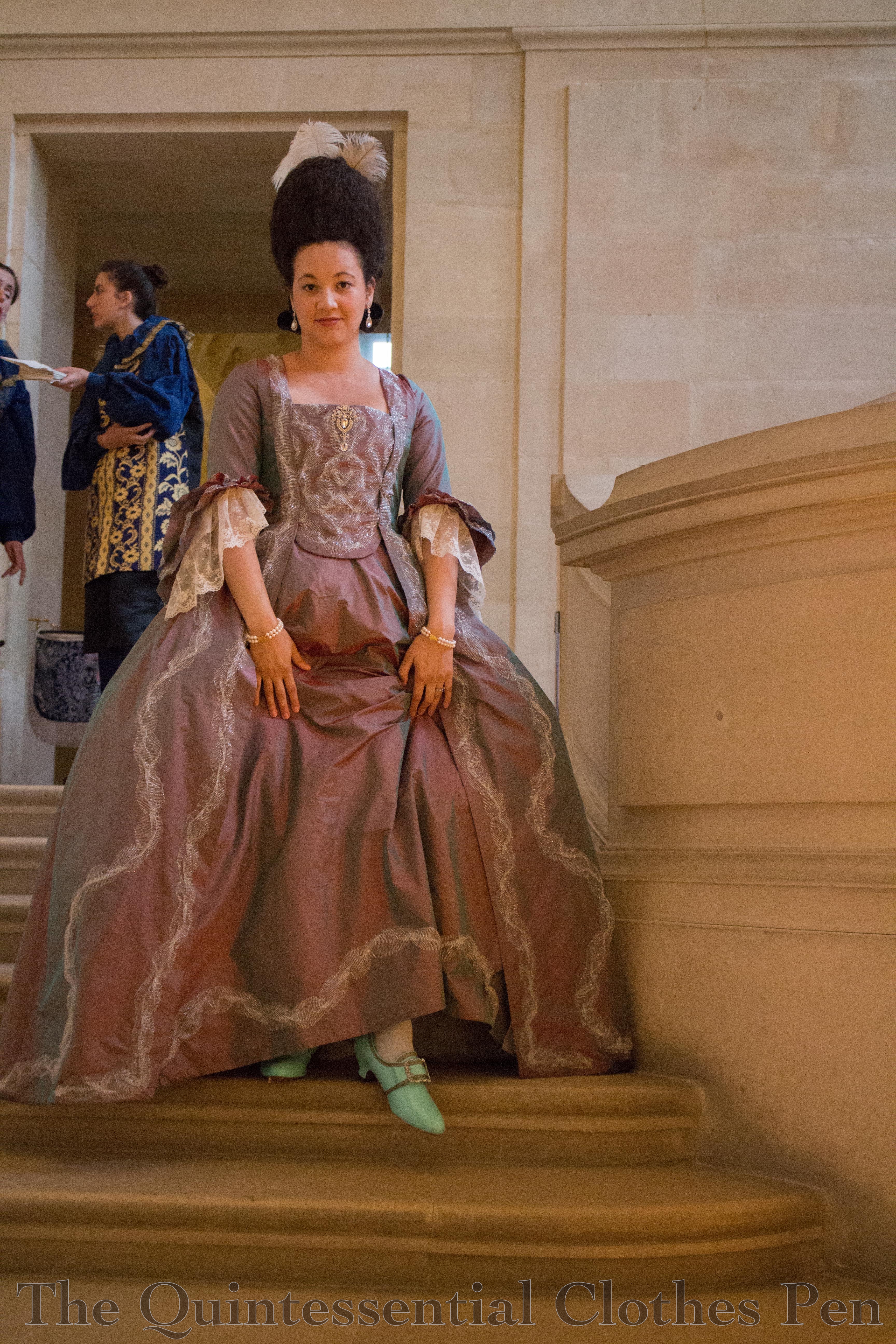
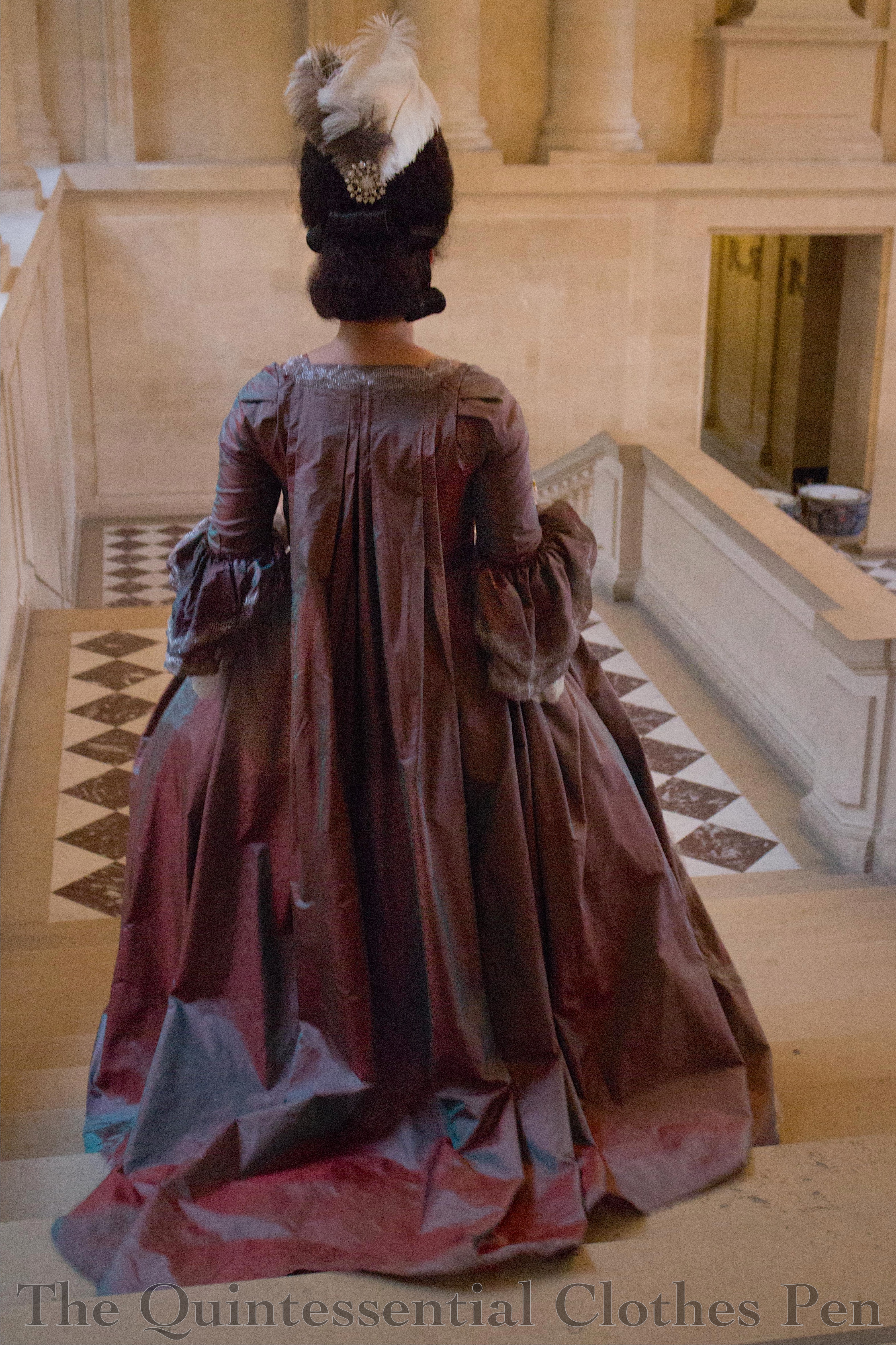
The pattern is from JP Ryan: it’s the Pet en Lair pattern, lengthened to create a gown as they suggest. Underneath I’m wearing a shift, stays, pocketsMr. Panniers, a generic 18th century petticoat, and the petticoat that matches the gown. I also have American Duchess clocked stockings and embellished American Duchess Kensingtons. All my jewelry is from eBay. You can read more about how I created my hairstyle and the hair ornament in this past post.

IMG_0258

Regarding the pattern, I found some of the directions to be confusing. For example, making the petticoat seemed way overcomplicated.   You can read more details about how I made my petticoat here. Also, I found the directions for pleating the front robings/facing and the back pleats quite confusing. There, I was saved by this post written by AJ who also used the JP Ryan pattern, got confused, and posted about the confusing bits. Very helpful! Aside from the confusing directions, the gown pieces went together perfectly with no trouble. I did have to alter the front strap area to make the front sit flat against my body. Two friends who used this same pattern did not have to make that adjustment, so I chalk it up to differing body shapes but do not think it negatively affects the pattern.

IMG_0687 (1)The lining of the gown is made from a one yard piece of cotton/linen blend from my stash. Also from my stash and used inside the gown were a scrap of medium blue linen and a scrap of medium blue cotton twill used to interface the stomacher. These were all the bits left of those three stash fabrics–yay! I was also amused that all of the random non-silk fabrics in this gown and petticoat wound up being blue. I used my lining as my mockup, meaning that I had to take a dart in the front strap area, but was able to adjust the pattern to eliminate the dart before cutting out the silk.

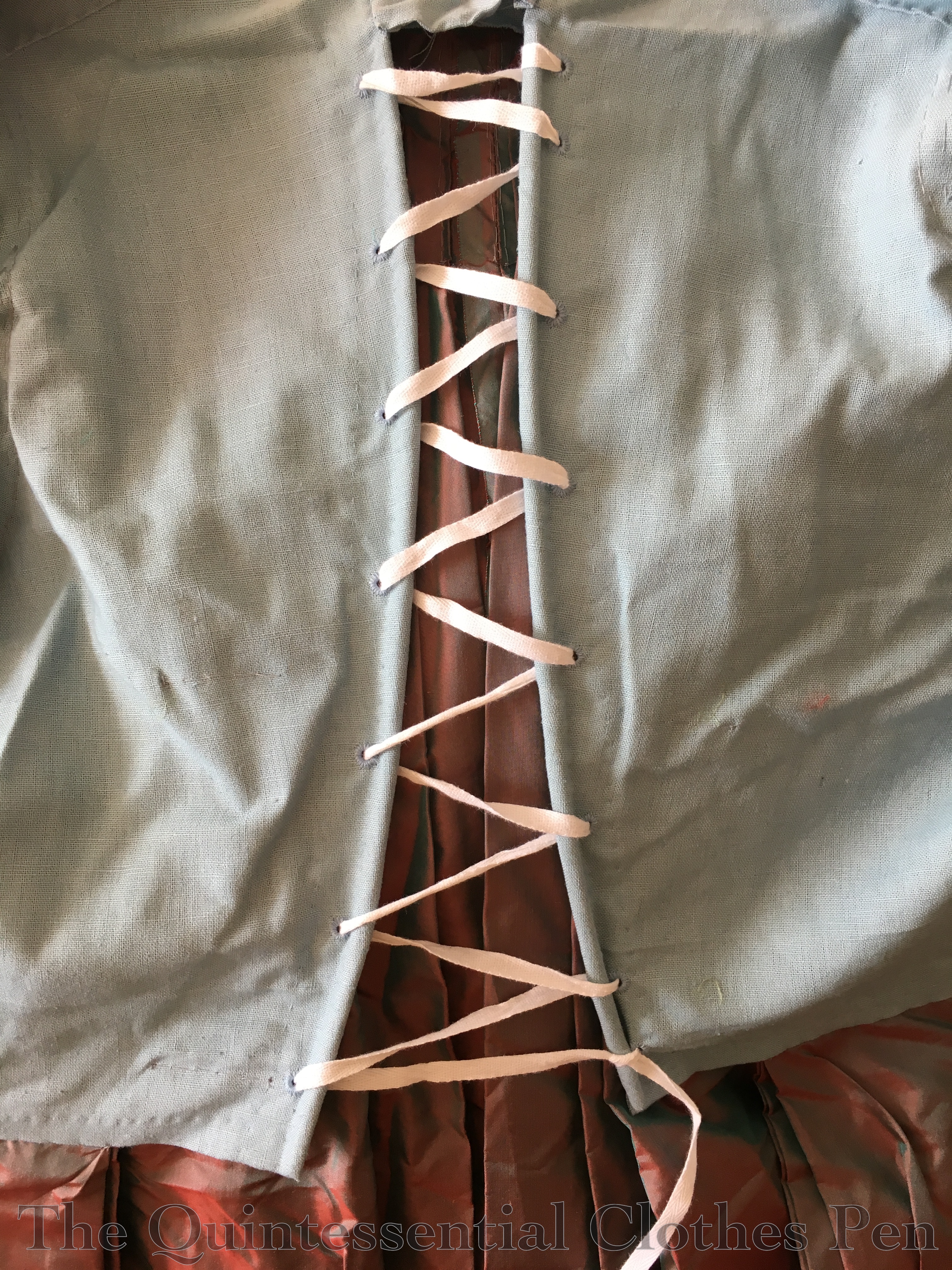
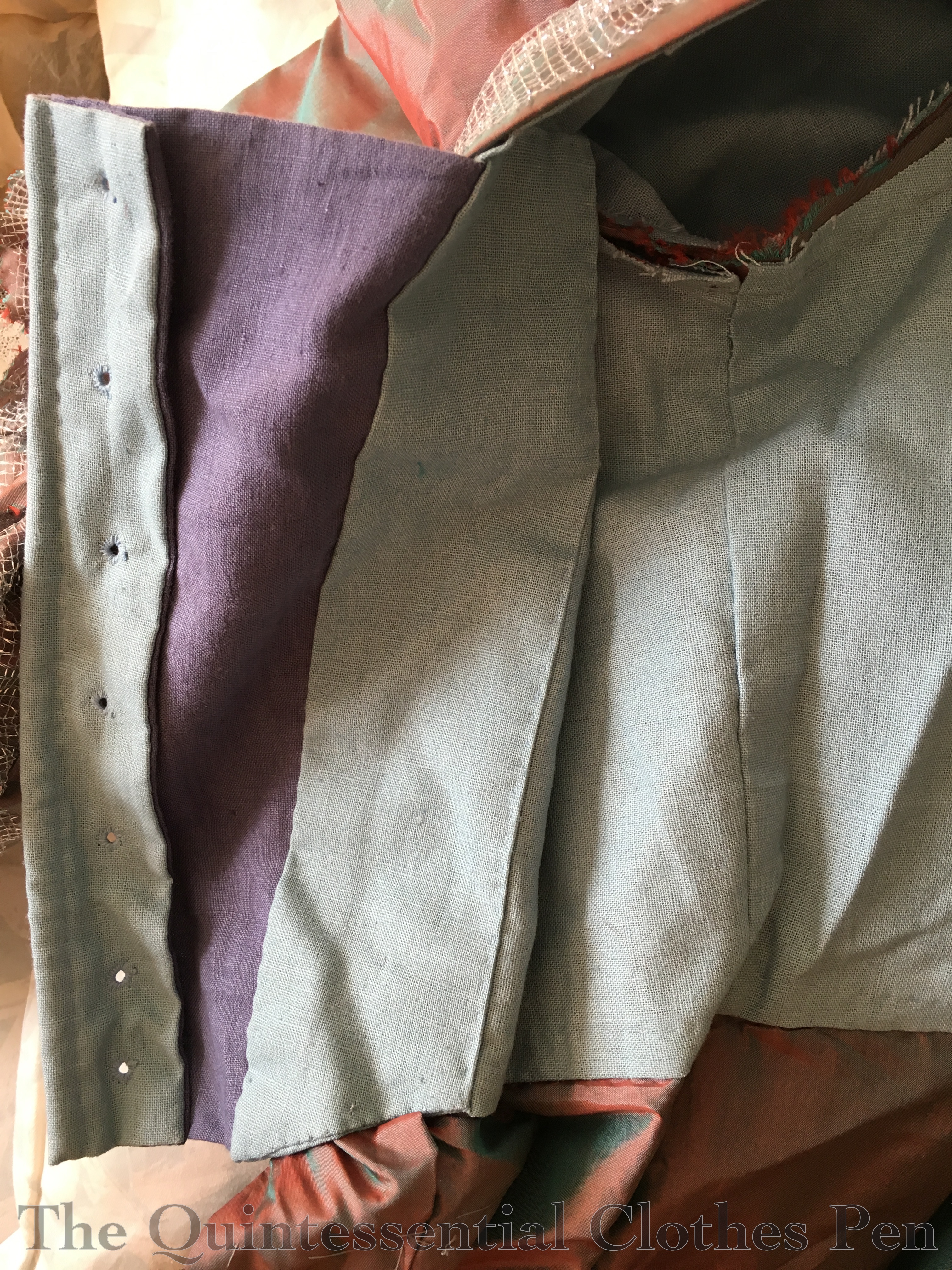
The back of the lining is adjustable using a tie threaded through eyelets. The edges are boned with reed. The pattern suggests ties, but you also see lacing in extant garments and this seemed easier to adjust and that it would use less length for the tie(s). There are examples of both ties and lacing on my Pinterest board for this project. The tie is a 1/4″ cotton twill tape. It’s not accurate, but did the job.

IMG_1476 (1)

Underneath the decorative stomacher, the gown closes with lacing panels attached to the lining. Again, mine laces closed using twill tape.

IMG_1477 (1)

This is the inside of the front lacing panels. You can see the medium blue linen backing. I think I had run out of the cotton/linen blend at that point. As is usual with 18th century garments, the armhole is left unfinished.

IMG_1478 (1)

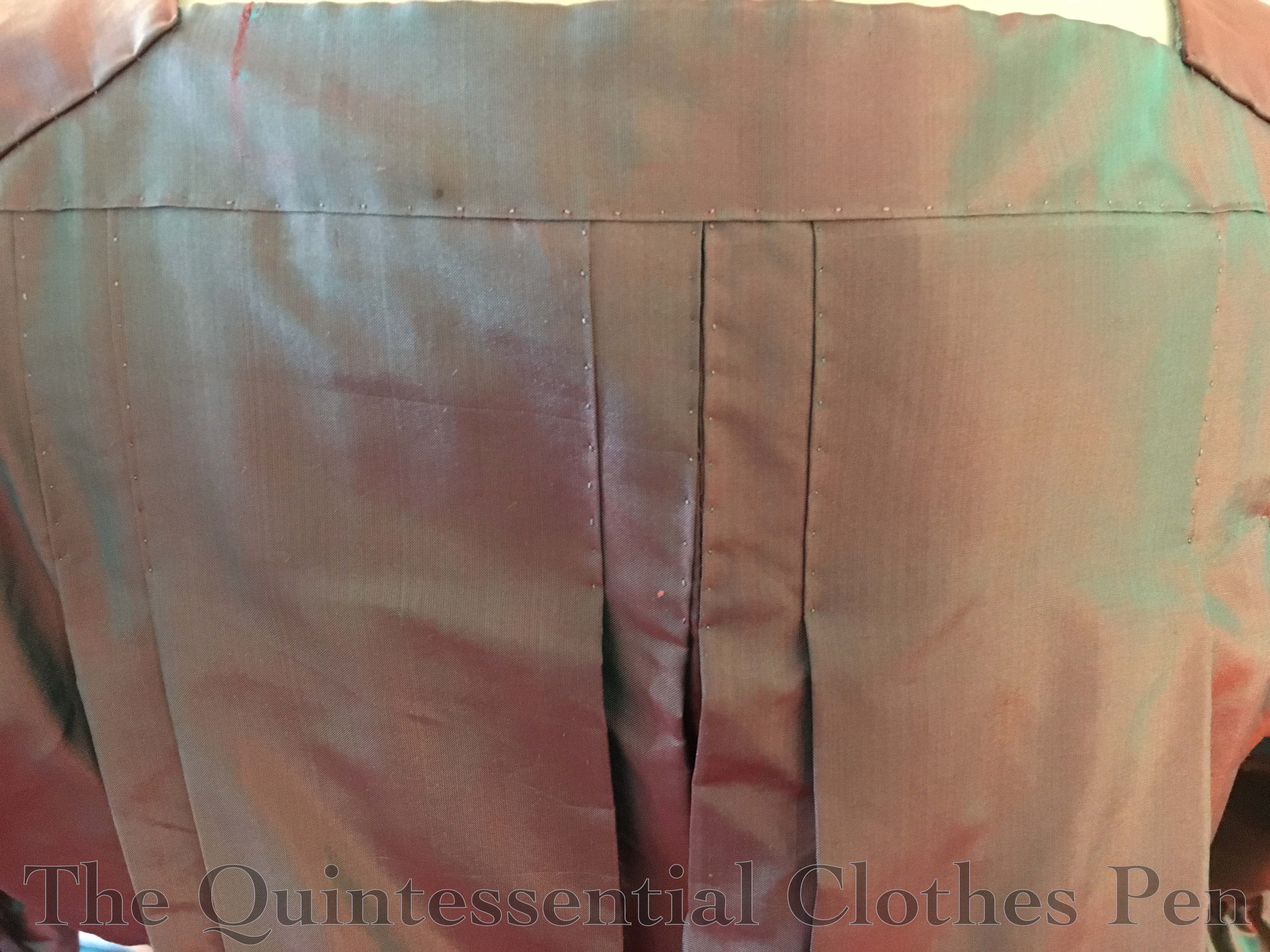
Here’s a close up of the back pleats. These are stitched all the way through to the lining. The directions for the pleats were slightly confusing, but made sense once I started fiddling with my fabric. It was important that I had transferred all the markings from the pattern to make the pleating easier to understand. The pattern uses another four pleats pleats, underneath these, that you can’t see to add volume to the back.

IMG_0922 (1)

IMG_0286 (1)

Due to the unexpected nature of the purchase of the silk fabric for this gown, I decided to do that fabric justice by hand sewing the entire garment. So in addition to the exterior stitching like that anchoring the pleats on the back, all of the interior seams are also hand sewn. I rather enjoy hand sewing and it makes a lot more sense given the way 18th century garments were constructed.

Here is the gown mostly sewn in its essential elements, but lacking trim. The sleeve flounces were individually gathered and sewn to the arm openings. They are pinked with scalloped shears on the top and bottom edges.

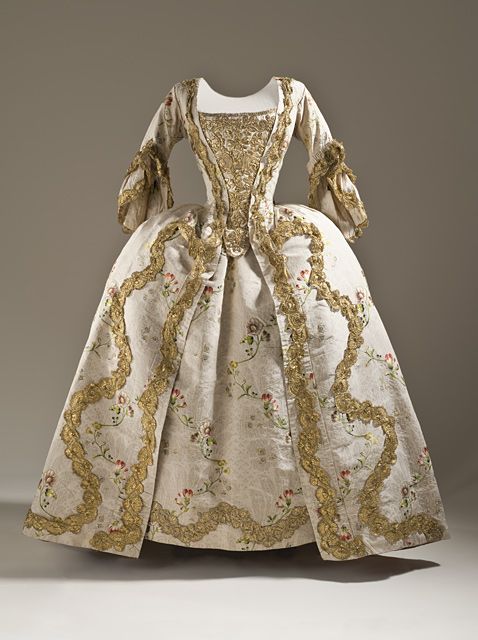
The following image is the gown that I followed in terms of trim placement. It took many more hours than I thought it would to pin the trim on. Those big waves are more complicated than they look, plus I had the challenge of creating the smaller scallops as I went along as well. All of the trim had to be sewn along both sides and tacked at each scrunch after it had been pinned.

IMG_0919 (1)

8423a2253758be21b68f0141235eadb1
Robe a la Francaise. 1765. LACMA.

You can see that I pressed my robings down all the way to the hem, though once the trim was applied on top it was really not very noticeable. I like the finished result, but I think it’s worth pointing out that this pattern is designed to have a wide stomacher. I was envisioning it coming out a little narrower at the waist. But I think adjusting the back opening enough to make a noticeable difference would only create awkward wrinkles under the arms.

The finished stomacher was covered in scalloped trim and finished off with a sparkly brooch. I went to France with an untrimmed stomacher and no clear idea about how I wanted to trim it except that I wanted it to be an all over metallic feast for the eyes. Luckily, early in the trip I was able to go see the 300 Centuries of Fashion exhibit at Les Arts Decoratifs. In addition to being amazing (I got to stand within 6 feet of Dior’s Bar Suit and see many garments I’ve only ever seen on Pinterest!), I also took a picture of a stomacher that was inspirational in terms of the overall wavy patterns and filler shapes. That picture is below.

IMG_0419 (1)

IMG_1153 (1)

Trimming the stomacher took place in the evenings in the few days before the special event. Here is the stomacher in progress. I took it specifically to show the amazing green color that the fabric can appear from some angles. I was hoping to get a picture of the finished gown looking this color, but had to be content with seeing shades of green in some of the pictures as we didn’t capture any where the whole gown was this color.

IMG_1339 (1)

Another part of the dress that was finished in France were my engageants. The pattern includes flounces of two lengths to be made of silk and then one longer flounce for an under flounce or engageant. I sacrificed some lace I’ve been intending for another project, threw some darts in at the longest section to get the scalloped edge to be the right shape, and filled in the length with a bit of mystery ivory sheer. The resulting flounce was gathered and sewn to a cotton tape that was basted into the arm opening.

IMG_1481 (1)

It sure sounds like a lot of work, recounting these bits of the process. It was! And it paid off. I’m very pleased with the gown. And very pleased that this picture captures some of the stunning green in the fabric!

IMG_0287 (1)

Project Journal: Versailles Sacque: Finished Shoes!

After the many coats of paint I shared about already, there was one final coat that I convinced myself had to be the last because I needed to move on and finish decorating my Kensingtons. After that I went ahead and put on a matte acrylic finisher as suggested by Lauren at American Duchess. I then made the holes for my buckles using this tutorial also from American Duchess. The shoe buckle tutorial was invaluable and made the process incredibly easy!

IMG_0849
Finished?

I told myself the shoes were done, but I still wasn’t entirely happy with them. I think perhaps I was not satisfied because I had painted my shoes a color I’ve only really seen in cloth shoes rather than leather. But I moved on… and then this shoe-remake popped up on Pinterest and I was captured by the idea of adding metallic lace trim to my shoes to finish them off.

And so I went on the hunt on eBay, settling on this. It was a reasonable price and arrived quite speedily. As in the inspiration re-make, I used hot glue to attach the lace to the shoes. It was easy to work with and is generally reversible if I decide to change the shoes sometime in the future (though that’s pretty unlikely…) I think the trim suits my dress fabric nicely and it was narrow enough to follow the curves of the shoe without too much hassle, even on the latchets (which were the trickiest parts).

I also considered creating a design for the toe box area of the shoe, but decided against the idea once I realized how tricky it would be to get something I like. The lace doesn’t do tight curves easily and all the ends would need to be finished if I used non continuous pieces of trim, so all the ideas I came up with were going to be time intensive or poorly executed. I decided on simplicity.

IMG_0858
Ta da!

Now when I look at my shoes I have a smile on my face. They finally feel done and like they make sense! Yay–cross that off the list!

  • Panniers
  • Petticoat
  • Robe a la francaise (with a subset of trimming)
  • Hair
  • Shoes
Product links in this post contain an affiliate code, which provides a small benefit to my shoe fund. This does not affect my impressions and reviews of this product.

SaveSave

Wicked, Monstrous, Silly, And A Good Time

10012673_1109871912380610_4283278151979500963_o
Some friends and I, taken by the official photographer of the night.

In the words of journalist Heywood Broun, “The Jazz Age was wicked and monstrous and silly. Unfortunately, I had a good time.” I don’t know about wicked or monstrous, but I certainly had a silly and good time recently at the Greater Boston Vintage Society’s White Lightning Ball.

IMG_2309
Silly faces!

I wore my 1924 robe de style from last summer, updated with new dramatic trimmings that suit the dress much better than the last iteration. It’s such a fun, unusual, and distinctive style to wear. I fielded quite a few questions about the style and happily encouraged people who knew things about it such as that it looked like Lanvin. For my hair, I didn’t have time to attempt waves, so I aimed for a romantic style that was less time consuming, inspired by these: no waves worn with a robe de style, a romantic bun (on the right), and long hair pinned up. Also, this set of drawings shows a large hair comb worn with a robe de style which reminded me that I haven’t worn mine in a long time.

IMG_2331 (1)

My accessories include: my vintage celluloid hair comb; silver drop earrings with peachy faux stones, which don’t often match things, so it was nice to wear them since they don’t get worn often; and a recent purchase from American Duchess, black Seaburys! (Never fear, there’s a whole post coming about the Seaburys, but for now we’re focusing on the event and the clothes.)

IMG_2362 (1)

This event is held at the Larz Anderson Auto Museum in what was the Anderson family’s carriage house in the early 20th century. It is a large building with multiple levels used for stabling horses as well as storing carriages and cars. The upper floor of the carriage house housed an exhibit of motorcycles during the event, if you’re wondering about the background. Downstairs was the collection of Anderson family cars from the 1900s and 1910s. They were very fun to look at and so tempting to sit in… I know it wouldn’t be good for the cars… And there were security cameras… so I had to content myself with looking at them and dreaming of reproductions that we could ride in.

IMG_2352 (1)

My other silly accessory was a candy cigarette. It does rather add to the 20s look, but of course I don’t smoke, so there was rather a lot of me flipping it around in my hand trying to figure out how to hold it and not look ridiculous. I didn’t ever try eating it, so I can’t report how it tasted, but I was pleased that it lasted almost until the end of the night when I dropped it for the second time and it broke in half. Until then it was going strong and gave me something to do with my hands in pictures, which is always a good thing.

IMG_2372-2 (1)

Mostly I stood around and talked to friends, hatched dreamy plans for how to sit in the cars, and took pictures, but we did go out on the dance floor a few times for some Charleston. Too bad nobody got pictures of that!

IMG_2375 (1)

This was the third year of the event, I believe, but only the first year I had been free to attend. It was fun, and nice to attend an event that I wasn’t helping to run.

SaveSave