

I started a blue cotton print dress six years ago that had been on hold for a long time to due frustrations in getting the sleeves to look the way I wanted. I’ll share more about the story of the dress as a whole in my next post, but for now I want to focus on the story of the sleeves.
My goal was to create something with the silhouette of the Morning Dress below, which was published by Joseph Robins in The Ladies’ Pocket Magazine in October 1836 (National Portrait Gallery NPG D47686).
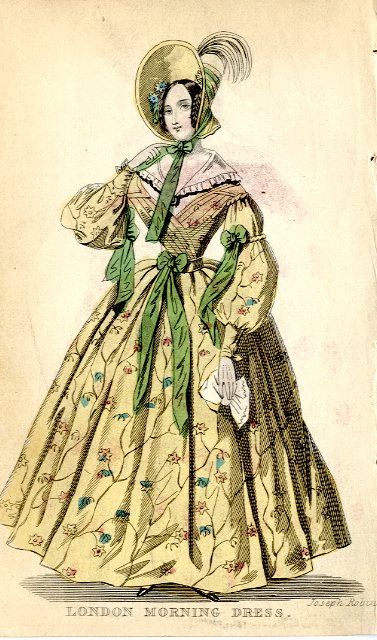
I started with a sleeve pattern from The Workwoman’s Guide (published in 1838 and available in full online here). This had worked for other 1830s sleeves I’d been making around the same time, but I was SO unhappy with what I came up with for this sleeve. It just was not the correct pattern to achieve the look of the fashion plate at all!
Below is a photo of part of that first sleeve iteration. There was a puff at the top, as well. But the top puff was too tall, the sleeve had the wrong shape, not enough fullness at the wrist, the cuffs were too small (they barely closed), and they were without a substantial enough point to mimic the fashion plate.
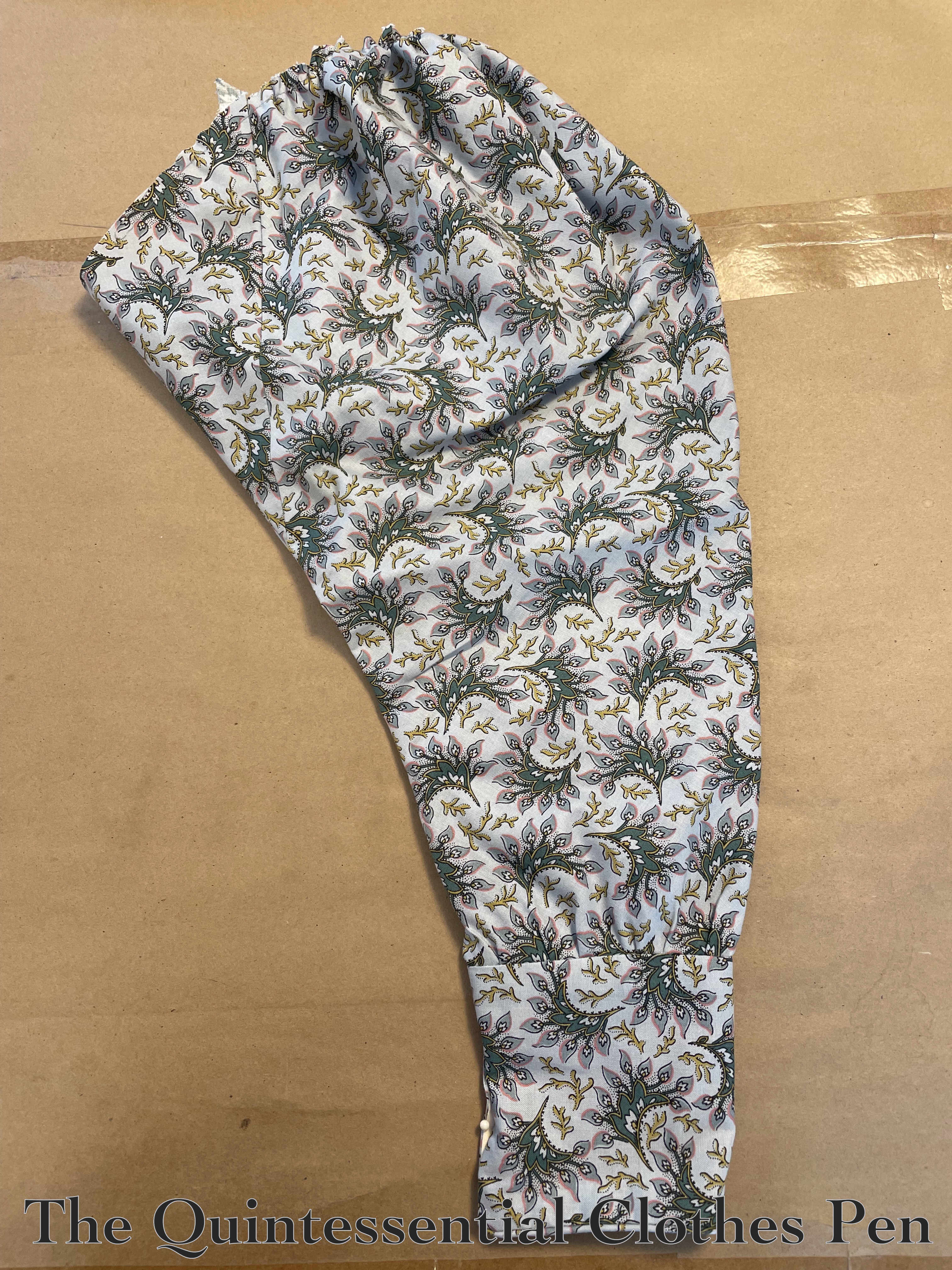
So many issues! I was so upset and annoyed that the whole project went into the “in trouble” pile to languish. I didn’t put the rest of the dress away, because I wanted to put it away as a finished project, so in the interim I just had a half finished dress hanging in plain sight for literally years…
This year, I was finally inspired to try again. I decided I just had to start over from scratch and make a pattern that was based on my knowledge of how to achieve a silhouette rather than what was in The Workwoman’s Guide. After creating a pattern that looked good in a mockup, I took apart the old sleeve to see what I would have to work with as well as looking at the remainder of the fabric that had been leftover after cutting out the dress. It wasn’t much, nor were any pieces big enough for the new pattern I’d created. Eek! Would I have to do lots of piecing?
But I had a saving grace, which is that I’d saved the leftovers from my friend’s matching fabric dress with the hope of making a pelerine for myself someday. I decided sleeves were more important than a pelerine and asked if I could use the fabric for that purpose. Luckily, I was well supported with a strongly worded “Yes, make sleeves!”
Fabric sorted out, I proceed to cut and assemble the new sleeves. I mostly used the extra yardage for the new pieces, but by maxing out the seam allowance, the new cuffs were able to be cut from the old ones. They already had piping along the bottom edge and I added it to the tops at this point, as well.
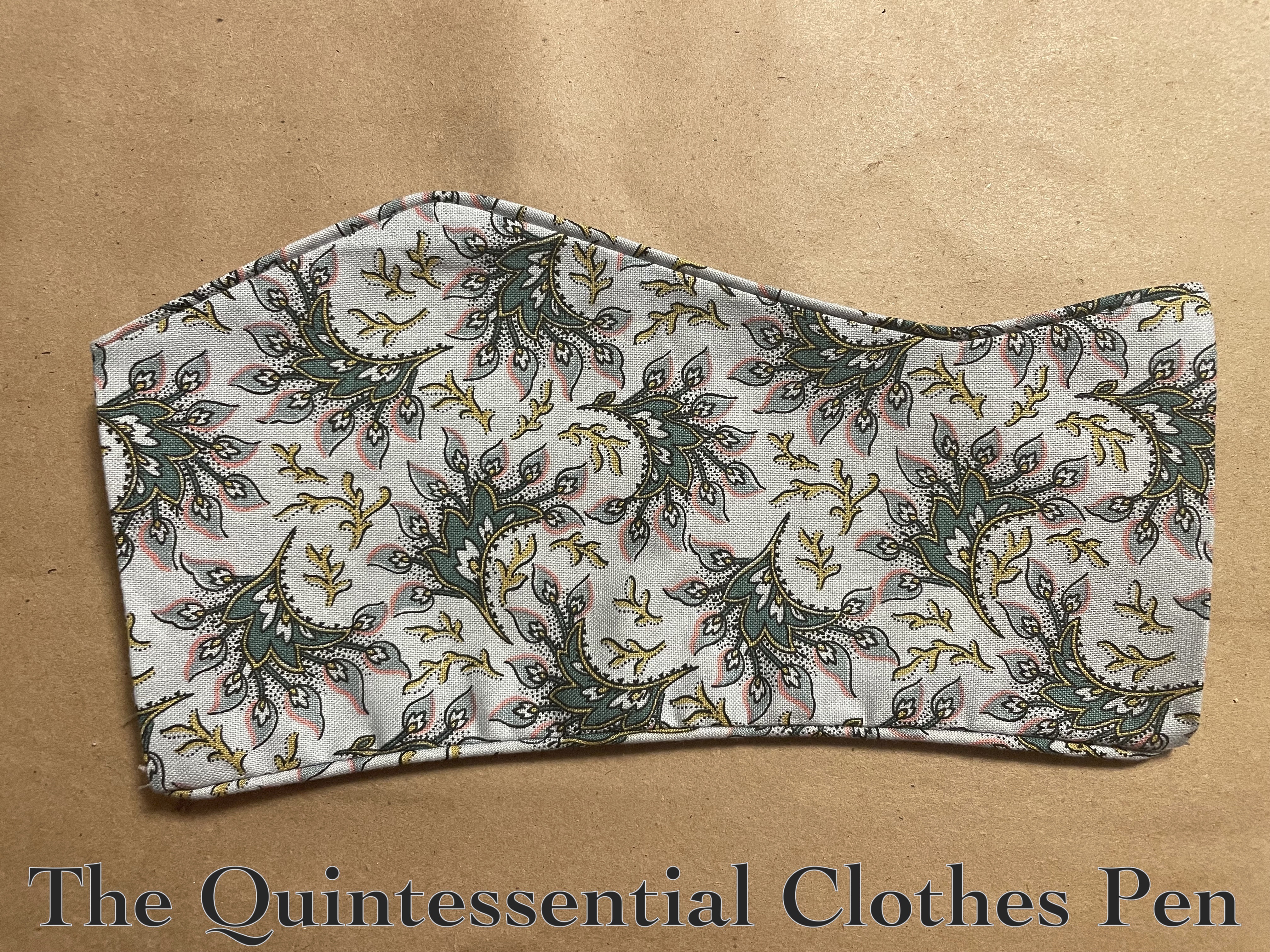
Then the bottoms of the new sleeves were gathered and pinned. I decided to topstitch these by hand in order to keep the nice points and the gathers evenly distributed. I’d realized when I made a mockup sleeve that these details would be way too fiddly to do well on a machine!
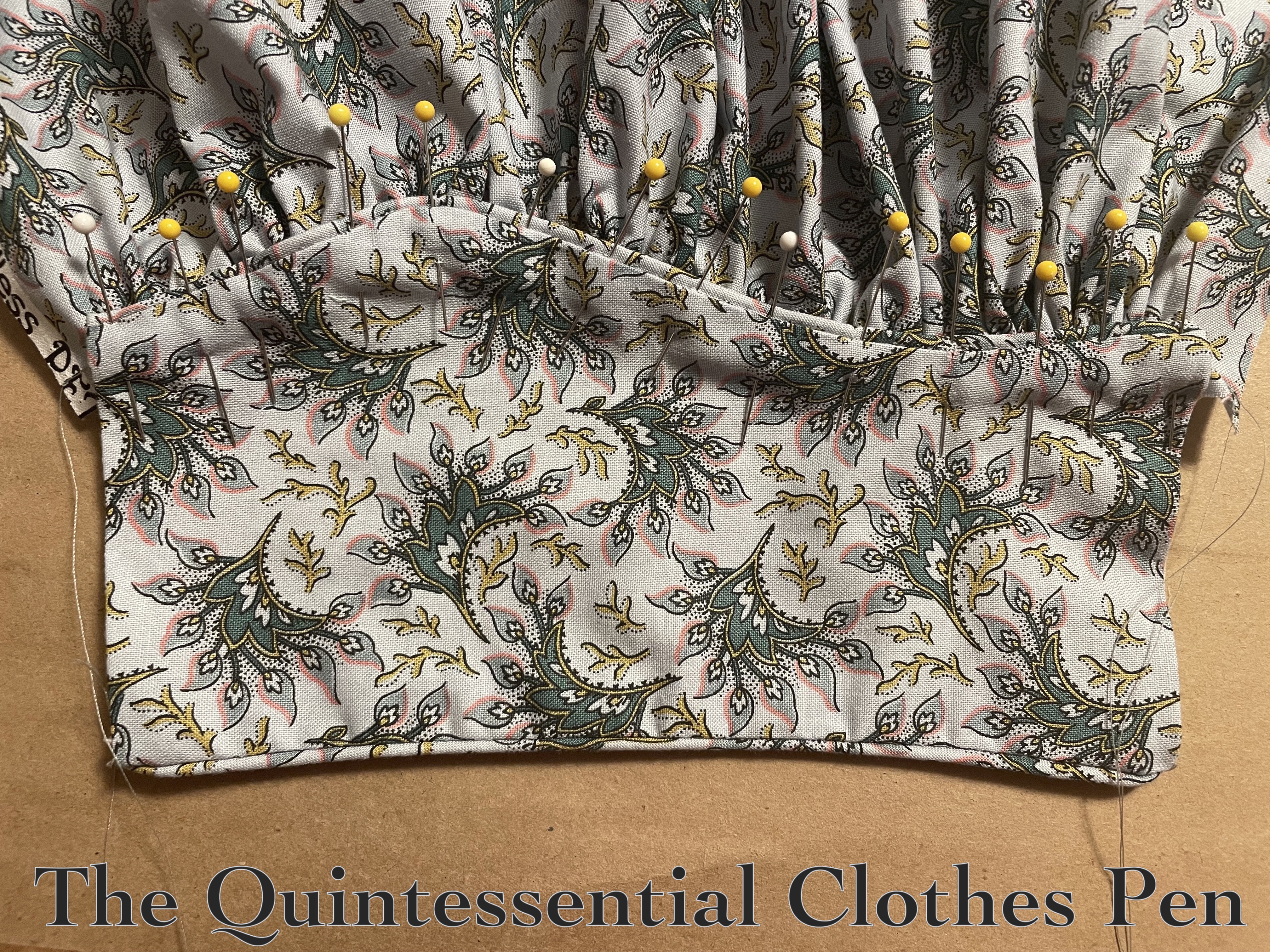
Below is an assembled new sleeve. It looks a bit silly laid flat on a table, but it actually does make sense on an arm!
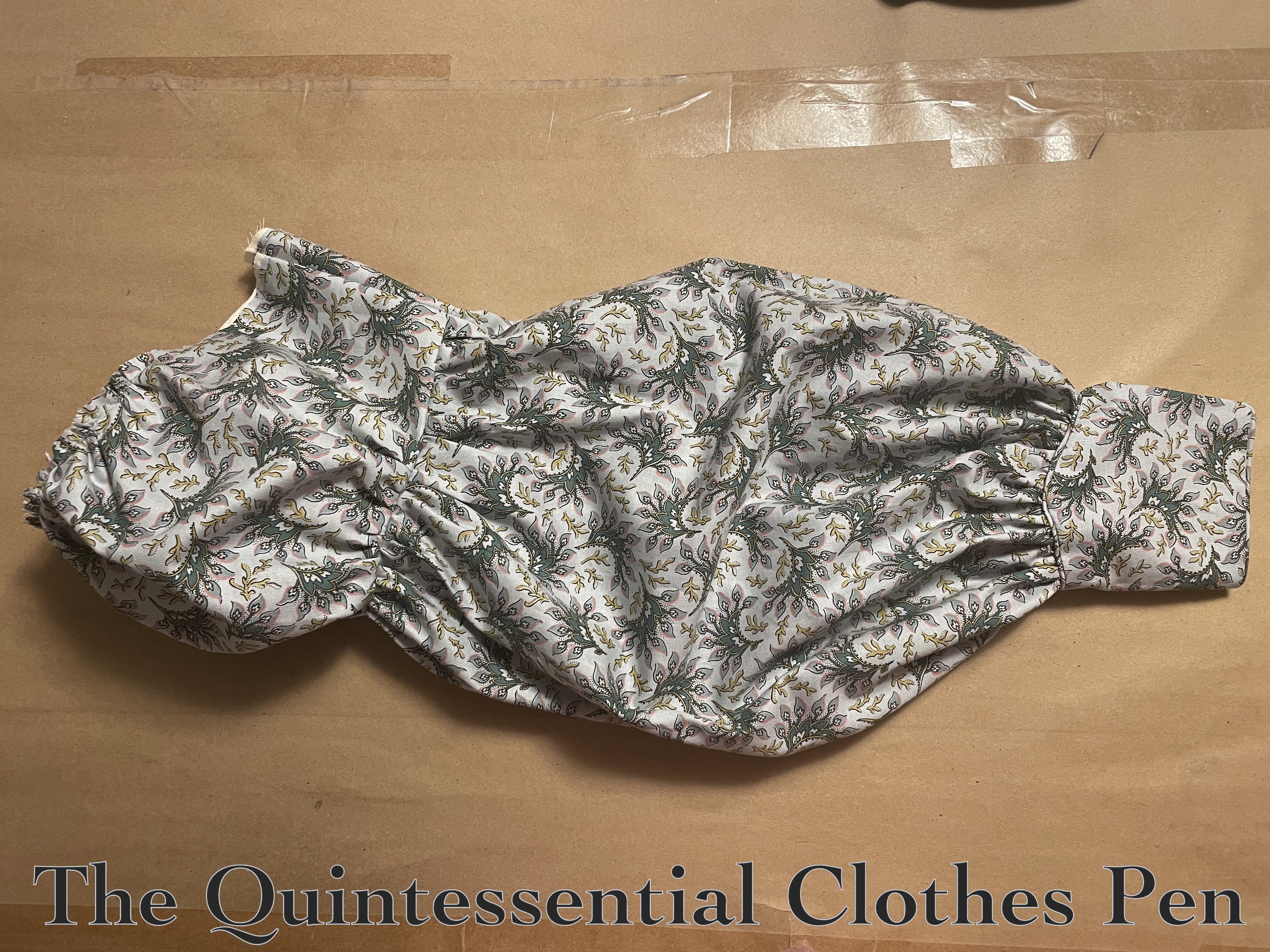
I had just a few steps left. First, attaching the sleeves to the bodice. Second, adding decorative elements below the top puff. Third, putting closures on the cuffs.
Looking at the fashion plate, it’s unclear exactly what the trim below the top puff of the sleeve is. My eyes perceive it as being the same color as the dress and some form of twist. I thought about this for awhile and decided to go with bulky piping. Instead of the tiny stuff used for bodices, cuffs, etc. I used leftover 5/16″ cotton upholstery cord from decorating projects.
I pieced together some rectangular scraps of the blue cotton, pressed one long edge under, and then wrapped it around the cord and whip stitched it in place. A bit tedious, but sometimes a good repetitive project with no thinking is just the thing. Below is a photo of the finished covered cord, as well as the uncovered cord across the top of the image, to show what is inside.
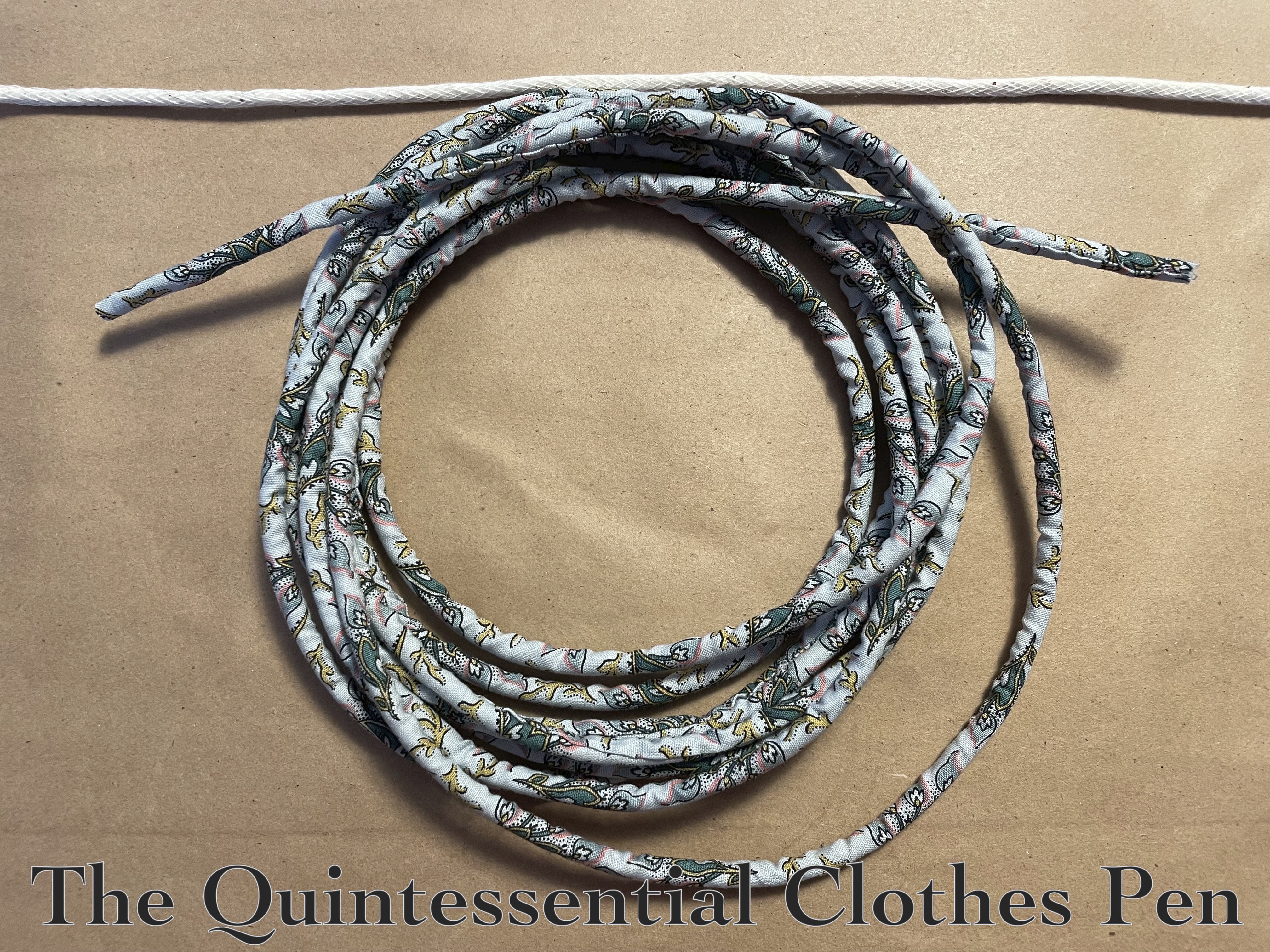
After finishing the cord, I started from both ends to make a twist that would wrap around the sleeve. I just eyeballed it while pinning the cord in place and then hand stitched it to the dress from the underside, creating a floating twist effect.
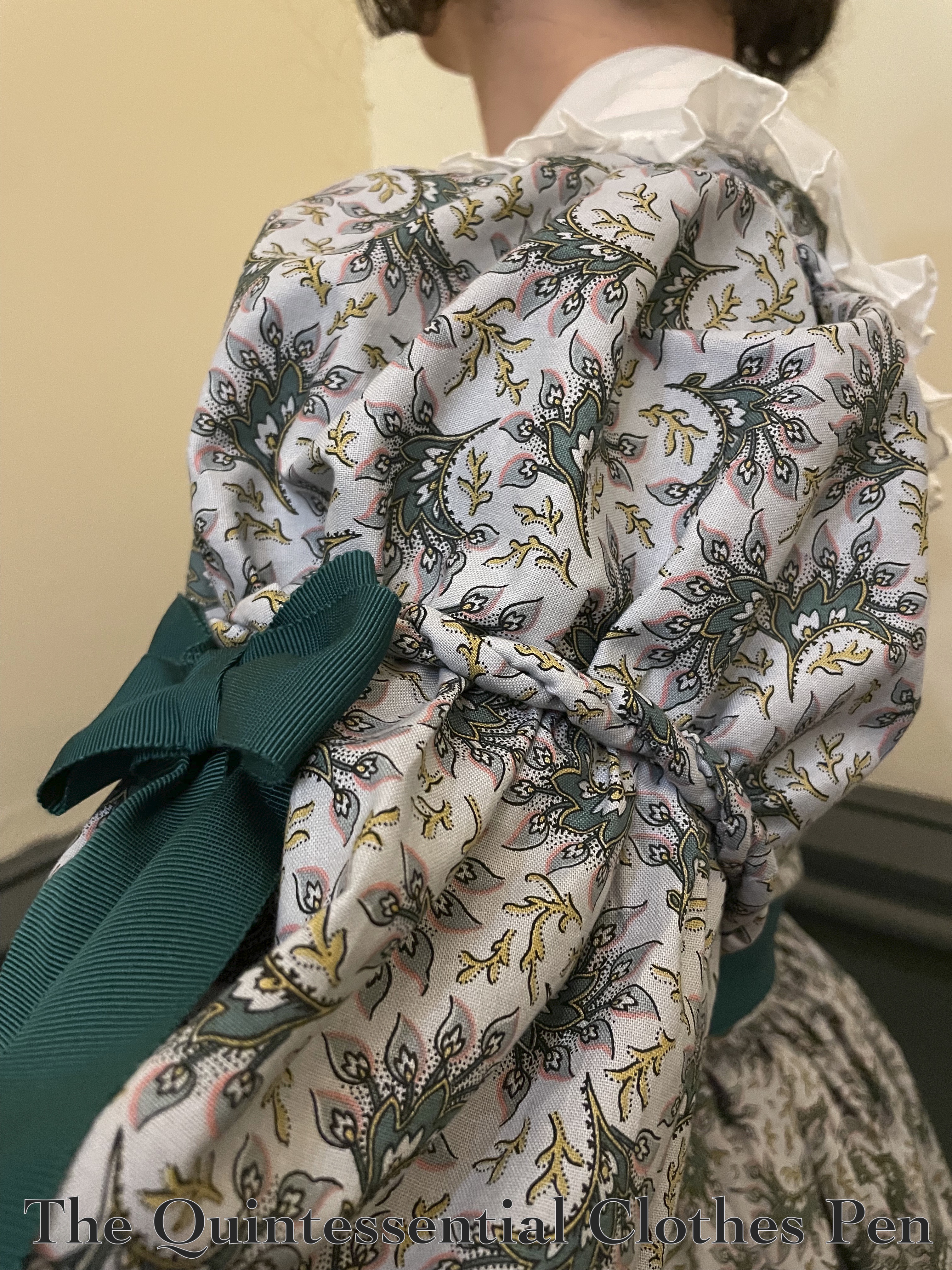
Being matching fabric to the dress, it is a detail that blends from a distance, but up close adds a subtle level of detail to the dress.
You’ll also notice that I added green grosgrain ribbon bows to the sleeves, as well! This is something that was directly inspired by the fashion plate. I’d bought this ribbon in 2021 when the first of my 1830s cotton print dress adventures began and it had been sitting and patiently waiting for me to finally get around to finishing this dress ever since!
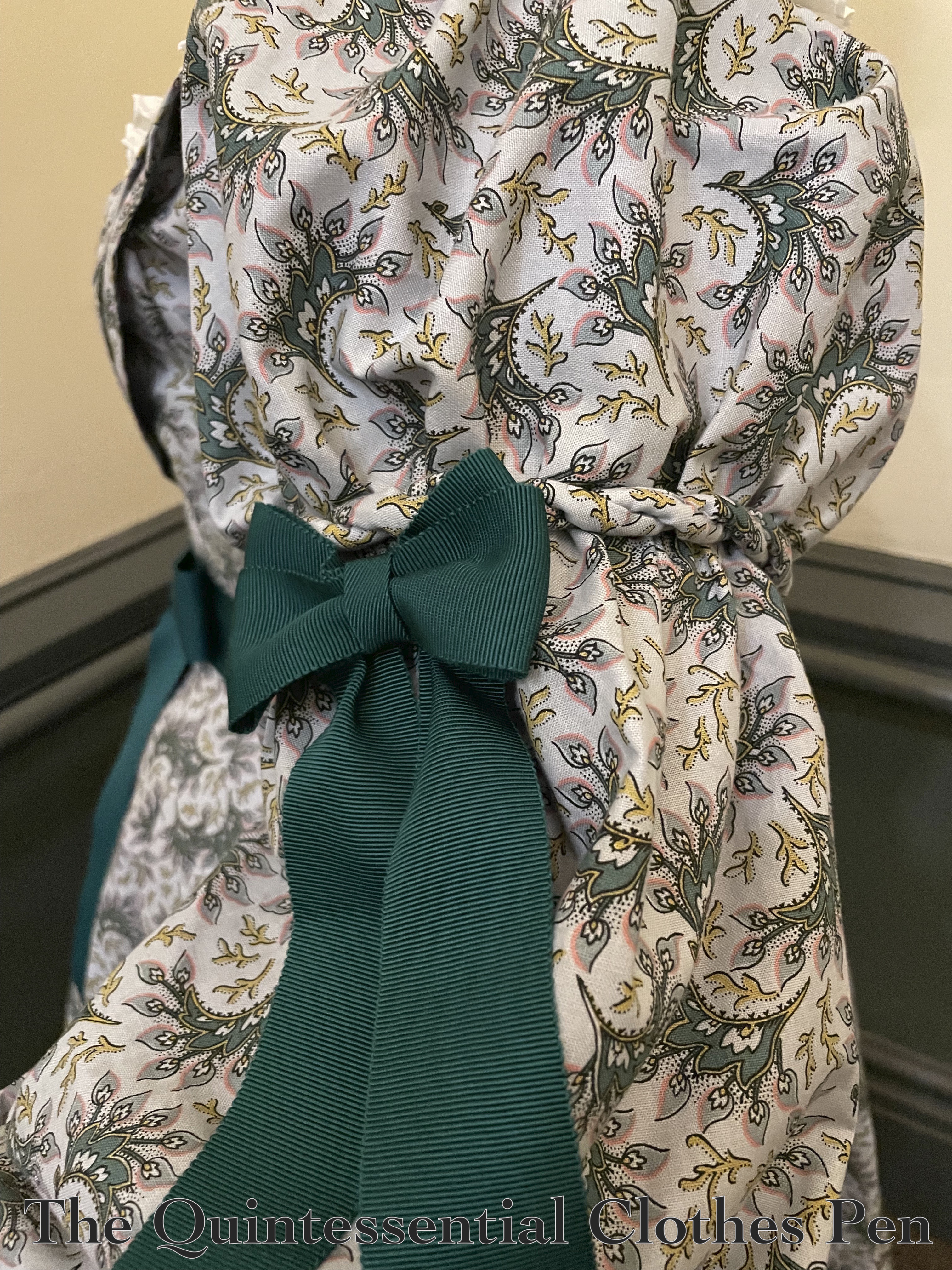
One bow puff didn’t quite look like what I wanted for the sleeves, though I liked the single width of ribbon for the hanging ties. So I added another puff to the horizontal section of the bow to make it appear a little more robust. Scraps of ribbon were used to make the bow centers, as I used up every single inch of ribbon I’d purchased!
After so many years of low level annoyance at this unfinished dress, it is extra exciting to finally have it finished, actually feel pleased with the results, and have been able to wear it! I’ll share more photos of the entire dress in its finished state next time.


Oh, my. Lovely. Project. Results. And your narrative. 💖🎶💖Sent from my Galaxy
Thank you on all counts!
Can’t wait to see the full post with the finished project!
Thanks for sharing your excitement!
Dear Quinn,
Sometimes a project simply must sit and simmer in the back of your mind until it has had time to noodle out what really is a complicated structure. Boy howdy, did you solve it! The sleeve is sculpture and the twisted cording the right additional touch. The dress is going to be simply lovely. I sure hope you are signing your creations, not just with labels, but marked right into the fabric like 19th century laundry marks.
Very best and so looking forward to seeing the final work,
Natalie
Dear Natalie,
What a wise thought. Yes, sometimes the simmering process is just the thing! Thank you for the insight and your detailed observations. I love the idea of laundry marking these garments. 🙂
Those new sleeves are positively amazing!! They seem to be well worth sacrificing a possible pelerine. Looking forward to seeing the entire dress! Your dedication to attaining your vision is inspiring.
Thanks, Kelly! I appreciate your thoughts very much, especially as I know that you have a similar dedication to achieving your own creative visions as well!