At the very end of summer I found myself at the local discount fabric store (not looking for fabric for myself–how often have you heard that?). As often happens when I’m looking for fabric, I found some that just absolutely needed to come home with me.
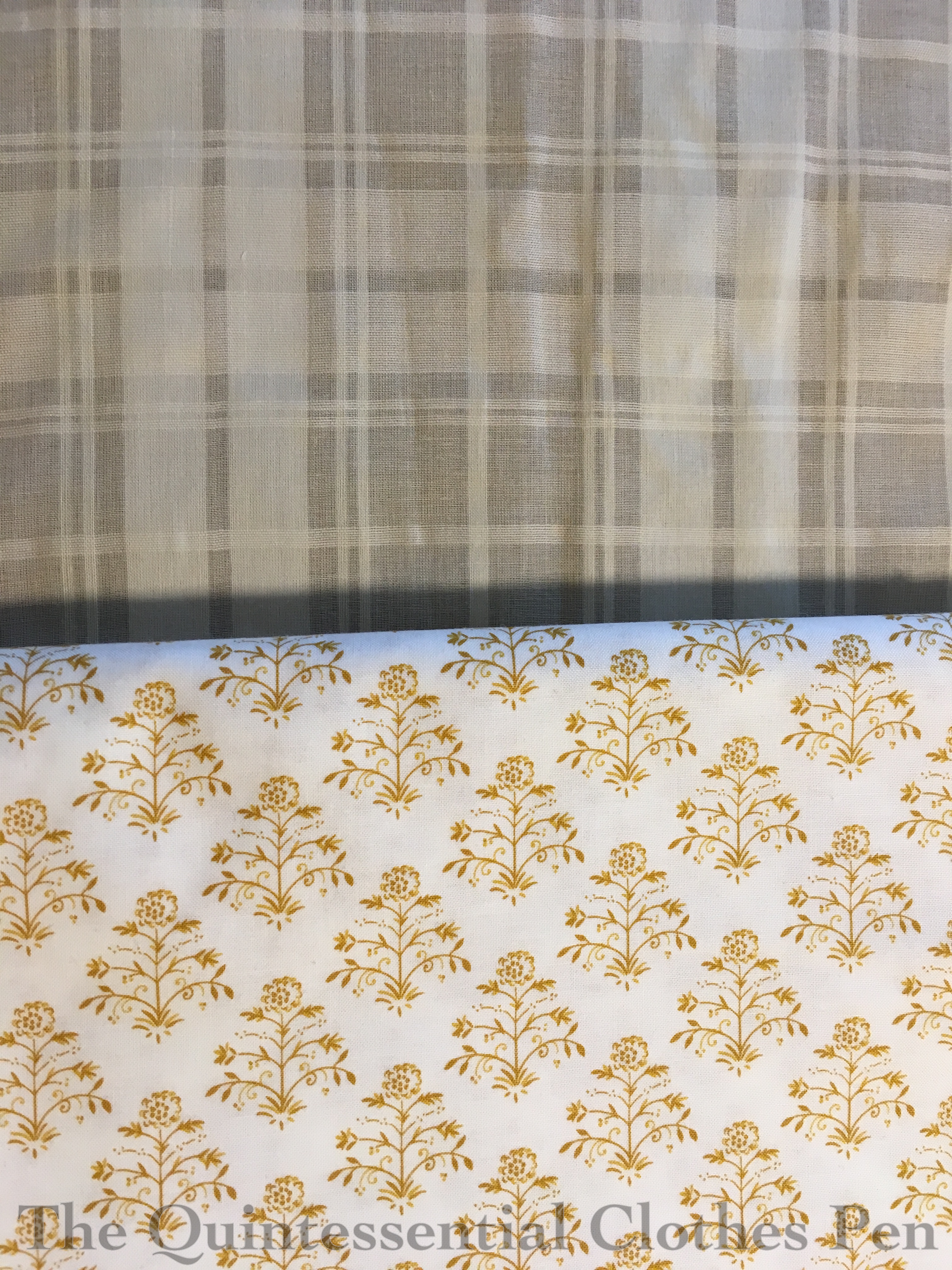
The top fabric is a lovely woven cotton plaid. It’s quite creamy, as the next photo shows. I’m considering making it into something mid-19th century someday and bought enough yardage to accommodate that idea.
The lower fabric is a cotton print that looks perfect for a Regency dress! I’ve been wanting a yellow on white cotton for at least a year, but hadn’t found just the right one in a price I wanted. The only downsides about this one are that it’s not block printed and that the weight is a quilting cotton rather than a lawn or voile. But I liked the colors, motif, and price enough to buy it. I finished off the bolt on this one! Whew! I’m glad there was enough for my Regency dress idea.
Neither of these ideas has any particular timeline (so don’t expect to see these fabrics again soon), but it was fun to share these with you before stashing them away!
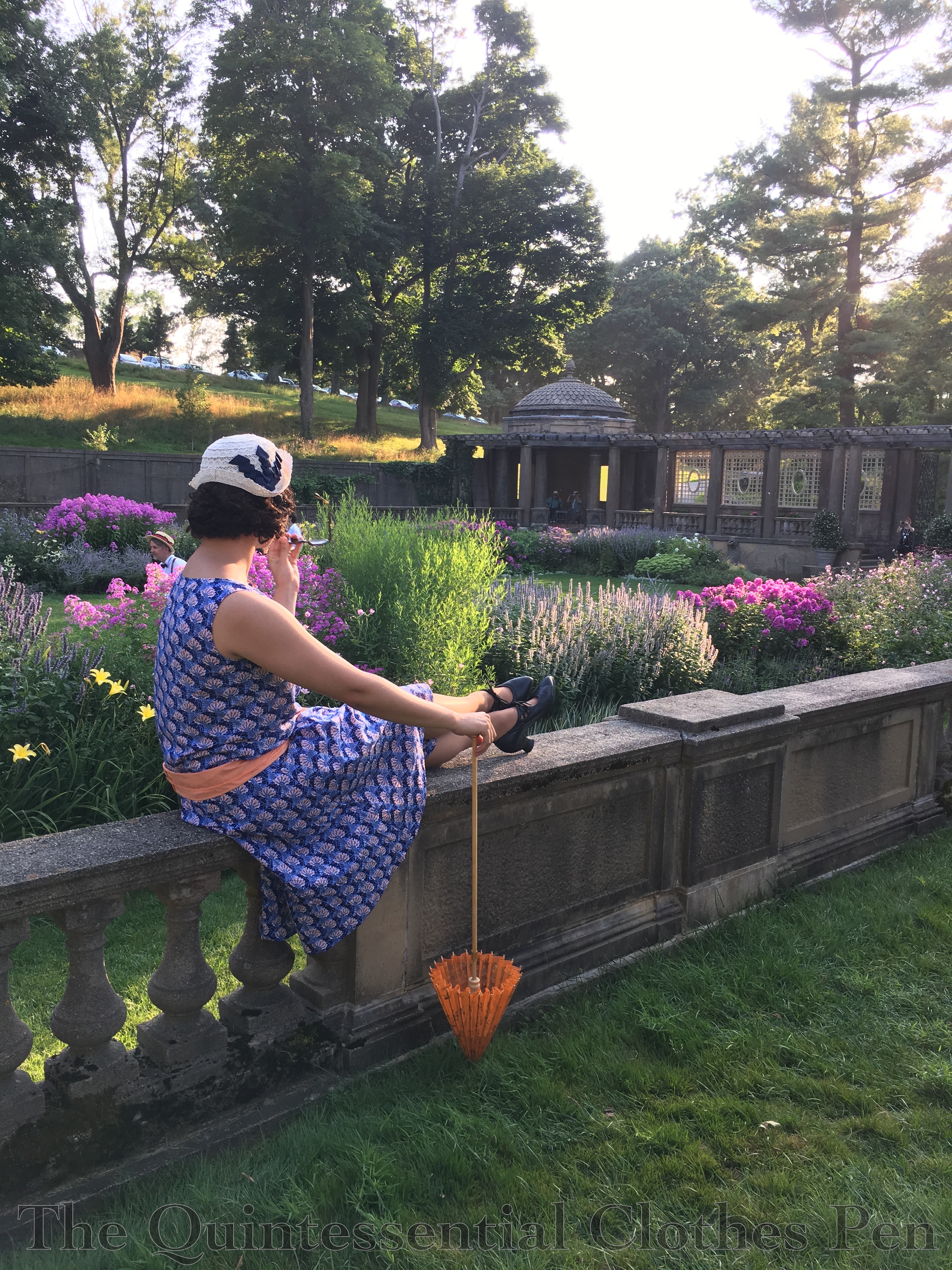
I knew I wanted a cloche to go with my 1925 Blue Coral Dress from early on in the process of making it. It was going to be hot when I wore the dress, so I knew I wanted something that would both look and feel lightweight. Turns out any hat was warmer than a bare head (well, one with hair on it!), but that being said, I think this was on the right track with a lightweight hat.
I considered making the cloche from fabric, but couldn’t decide on a style with seams that I liked. However, as I was browsing my Pinterest board, my eyes kept settling on straw, horsehair, and lace hats. It seemed like that was the way to go.
I didn’t have any particular materials on hand or in mind for that type of hat but I had come across a modern cotton lace cloche on Amazon for $14 that seemed like a good starting point. It’s no longer available, but I’m sure a careful search could find something similar. To the right is what it looked like before I started changing it up.
Generally, modern cloches have such a deep crown that they don’t leave any space for hair arranged on the back of the head. I have long hair, so that just doesn’t work for me. Cloches from the 1920s frequently have a cutout in the back to allow for your neck… or hair! They also have more interesting brims than modern cloches often do. Perfect. That’s what I wanted. An interesting brim and a cutout for my hair.
With my design plan in place, I started disassembling the modern cloche. First, I removed the braided band and flower. Then, I started unwrapping the lace on the brim, taking out the stitching that held one circumference to the next. I stopped at the bottom of the crown. I removed the inner hat band for most of the way around the hat, so I could stitch the new brim shape and the back cutout without stitching through the hat band.
Next, I played with the lace I had unwrapped for the brim to decide on a new shape. Once I made some decisions I had to make a few shorter pieces out of the lace, but most of it I tried to keep intact. In the back, I decided where I wanted my cut out to be… and cut it! Then I bound the edge using the lace and topstitched it down to encase the edges.
It was a bit tricky to find an acceptable shape for the new brim. The first few tries were so similar in shape to the crown of the hat that they hardly showed when I put it on my head. I ended up with a brim that flares out a bit so it stands away from the crown of the hat, especially in the front. I had to be careful to cover the ends of the plastic horsehair braid that backs the cotton lace, as it is very poky when cut. I covered the ends either by turning them under or having the inner hat band cover them.
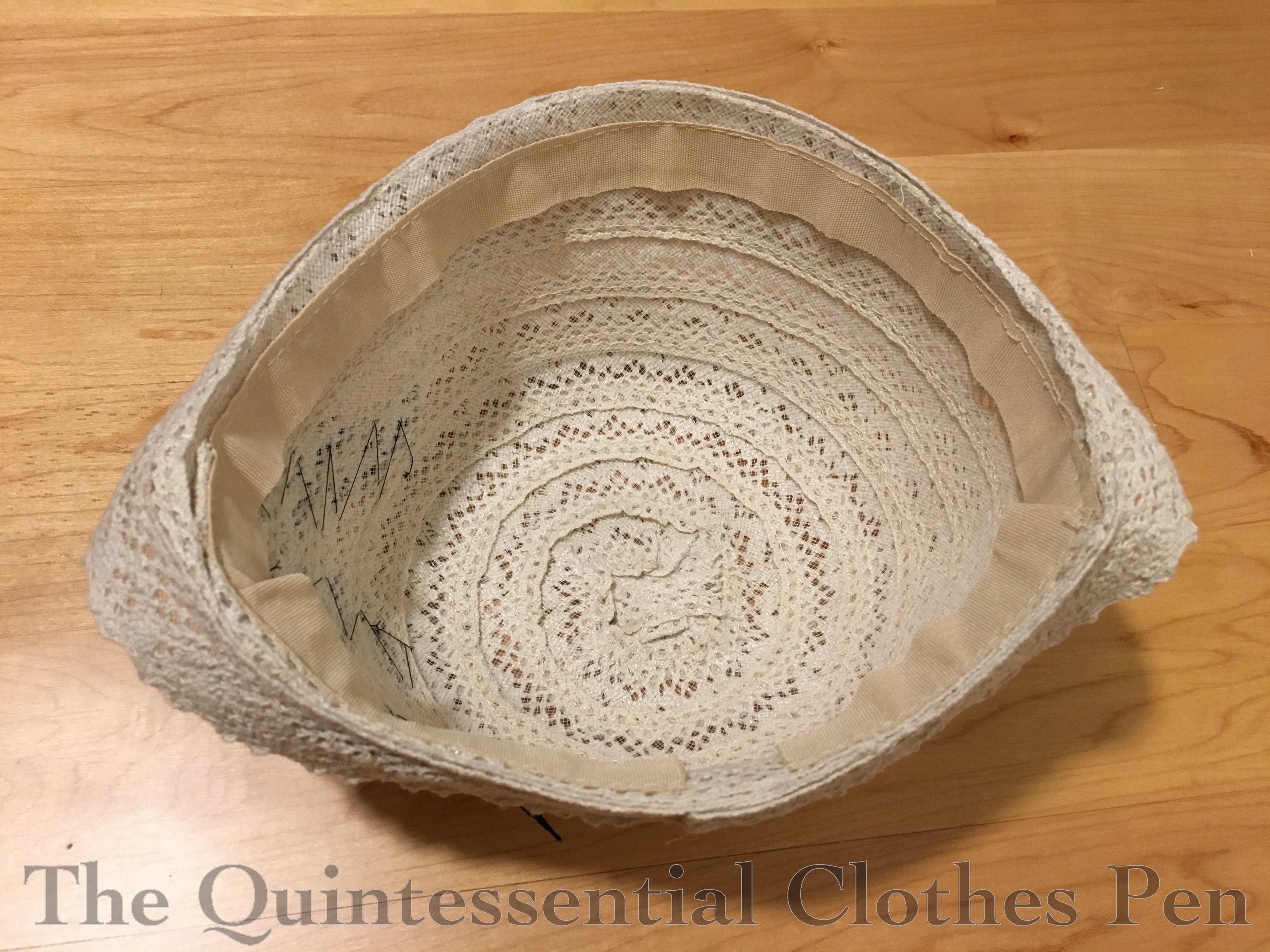
After sorting out the brim and back cutout it was time to reattach the inner hat band. Then I sewed on my trim. Here’s what the hat looked like on the inside after all that.
I’ve loved Leimomi’s cloche decoration in this post since she posted about it in 2014. Having that in mind, I thought of what bits of trim I already had in my stash and what might work for this hat. I decided on a random yard of navy grosgrain ribbon, which I cut into thirds, pleated, and attached in imitation of this hat.
When I styled my hair, I tried to have hair come down to my jawline more than I usually do. I think cloches look less silly if there is some hair showing around them. My hair didn’t really look like a bob, but at least there was some hair showing in the front. In the back, it was pinned into a low twist-y mass of curls.
The great thing about the materials of this hat is that they are intended to be flexible for packing and traveling. Not only is it easy to store this hat but it’s also easy to remove it at a picnic and leave it on the blanket or put it in a bag without worrying that it will be damaged. It can get crushed and bounce back into shape!
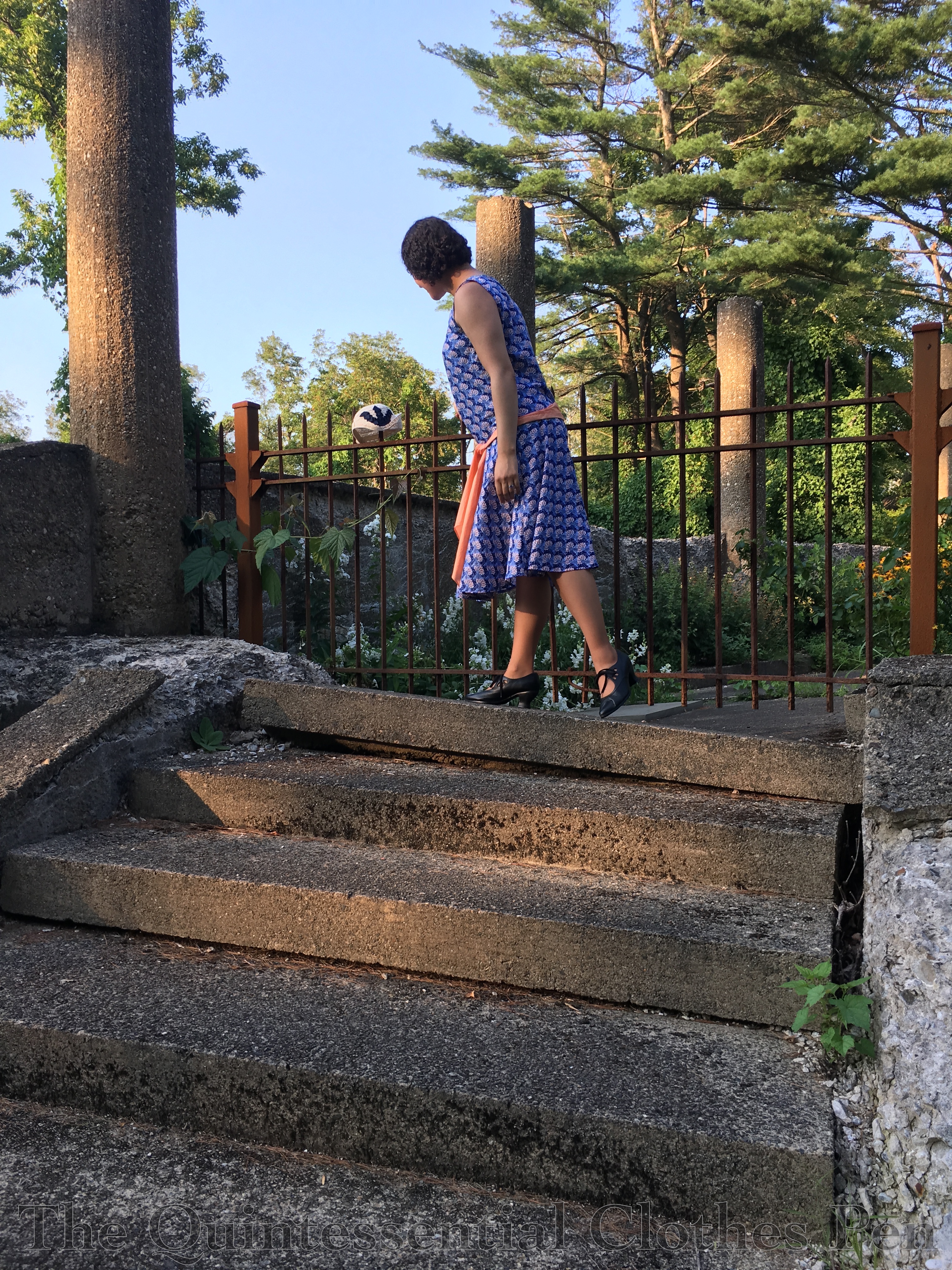
In the end, I continue to think my head looks like an egg when I wear a cloche. I like styles that don’t hug my head better! That’s my own feeling–other people don’t think it’s nearly as egg-like as I do! But as egg-heads go, this was better than some attempts, so I think we’ll call it a success! It certainly looks cute on the fence!
The summer has been very busy and I don’t feel like I’ve completed very many sewing projects for myself. Really the only reason I’ve completed anything is because I’ve been live streaming my sewing, which forces me to make things from the list of the-things-I-want-to-make-that-I-never-make-time-for. Do you have a list like that? Mine is lengthy!
One of the first of these things-I-don’t-usually-make-time-for projects was a dress made out of one of the fabrics I bought earlier this year. I really wanted to have it for events this month as they are generally quite hot and the fabric I found is nice and lightweight while still being opaque. I found this fabric at a local discount store for the awesome price of $2.99/yard and then later saw it at a regular price store for somewhere closer to $10/yard, which really made me feel like I got a deal!
The pattern for this dress is a Quinnpen special (ie. made by me). I took my inspiration directly from this extant dress at All The Pretty Dresses. Due to that, it qualifies for the HSM Challenge #8 Extant Originals (copy an extant historical garment as closely as possible)!
To start, just the facts:
Fabric: 2.5 yards cotton lawn.
Pattern: My own.
Year: 1925.
Notions: Small bits of contrasting fabric for bias binding, thread.
How historically accurate is it?: I’d say this one is about as close as I can get to 100%!
Hours to complete: Approximately 8 hours.
First worn: August 5, 2018.
Total cost: $10.50 (including the fabrics I used for decorative sash options).
For the bodice of this new dress, I started with my 1927 Blush Sparkle dress (that dress started life as a tube before I added a head hole, armholes, and side seams/darts to about the hip level). For the skirt, I made a circular pattern that had the zig zag top edges that are featured in the extant dress. It was a bit of trial and error process to get the zig zags just right, but I made it in the end! You can see the topstitched zig zag detail on the extant inspiration if you look at the pictures carefully.
The zig zag top edge of the skirt is pressed under and topstitched onto the bodice. On both my dress and the extant dress that detail gets lost in the pattern, but it allows the skirt to have a lovely drape and fullness while the top can stay that straight 1920s shape that is so iconic. Here’s a closeup of my topstitching. Not bad on the pattern matching!
I finished my dress armholes and neck hole using bias, as I believe the original did based on looking at the photos. My only changes here were to use a contrasting color so I could actually see where the openings are (before I put on the orange binding the blue on blue pattern just made a big indistinguishable pile!) and to turn the bias binding to the inside of the openings (given that I was using a contrasting color). Aside from that the only other detail I omitted was a center back seam on the bodice since I had enough fabric not to need it when I was cutting out the pieces.
The photo above shows the dress with two different sash options that I made for it: pink and orange. I bought the orange when I bought the blue, but when I got home I thought it might be too bold and decided I might like the pink better. But I really couldn’t decide, so in the end, I made both!
When I wore the dress, I was still undecided… so I took pictures with all three options: no sash, pink sash, and orange sash. See each look below!
The idea behind a sash was this inspiration: Wilton Williams, The Bystander, August 12th 1925, though after wearing it my preference is no sash! I think that the bold, large scale patterns in the fabrics of the inspiration dresses lend themselves better to a sash than this blue dress. The bonus part of not having a sash is that the dress is easy to wear, there’s no fussing with keeping a sash in place, and the dress really does have a nice 1920s shape to it even though the detail of the zig zag is lost from more than a foot or two away. What do you think? Does one style of sash (or no sash) speak most to you?
It’s fun to have a new dress to wear, discuss, and document! There are more dresses in the live stream queue, so if you want to stay in touch with what I’m making I would love to have you join me for one of my virtual sewing circles. You can join me on Wednesdays and Fridays from 9-10:30pm EST!
(Well, not old in the usual way on this blog, which is a dress that is often 100+ years old. In this case, the ‘old’ dress is about 8 years old. I couldn’t pass up the colors in the flowers, though the cut and fabric was more ‘junior’ than adult woman, especially with the built in underskirt of tulle which I promptly cut out as soon as I reached home. However, worn with a waist length or otherwise cropped cardigan, the original dress saw me through a number of summers.)
And then my shape changed and the the dress became a bit too small and a bit too tight. This is the standard my-clothes-shrunk-in-the-closet problem. Boo! But I still loved the colors, so when I happened to see a similar fabric at the fabric store I snapped it right up with the goal of making a new, older (as in, not ‘junior’ style) version of the original dress, so I could retire the original from my wardrobe and send it on to a new home. (In fact, when Mr. Q saw me working on the new dress he confused it with the old one because the colors are so similar!)
I decided to use New Look #6143 as a starting point for a pattern for the new version of the dress. It’s got a basic bodice that would be good for other things if I liked it made up and a variation on a basic skirt, which never hurts to have either. I believe the only thing I changed from the original pattern design was the neckline in the front. Of course, it took me probably two years to actually get around to finishing the darn thing. I started it, realized it was too big, got frustrated by the amount of alterations needed, and let it languish (for years…).
This year, however, I was determined. Turns out I had just cut a size larger than I needed. (P.S. I hate figuring out commercial pattern sizing. There is so much ease that the size the pattern envelope claims I should be is often too big, as in this case. Do you ever have that struggle? When I took apart my bodice pieces and traced out the lines for a smaller size, the bodice fit perfectly. Nice, but it would have been so much better if it fit perfectly the first time!) I had already pleated the skirt and added side seam pockets when I started the dress years ago-I wasn’t going to change that–so instead I angled the side seams from the pockets up to the waist to take in the excess amount. Not the most perfect solution, but in a full skirt you can’t see the fudge.
I love how tidy the insides of Carolyn’s modern dresses are (like this and this) and I wanted similar tidiness for this dress. The bodice of my dress is fully lined in lightweight cotton and the skirt edges are all overlocked to keep them from fraying.
Oh, and as I mentioned, I added pockets! Most dresses are better with pockets! (I would say all, but some lightweight dresses just pull in awkward ways with things in the pockets, so really, why bother adding them?)
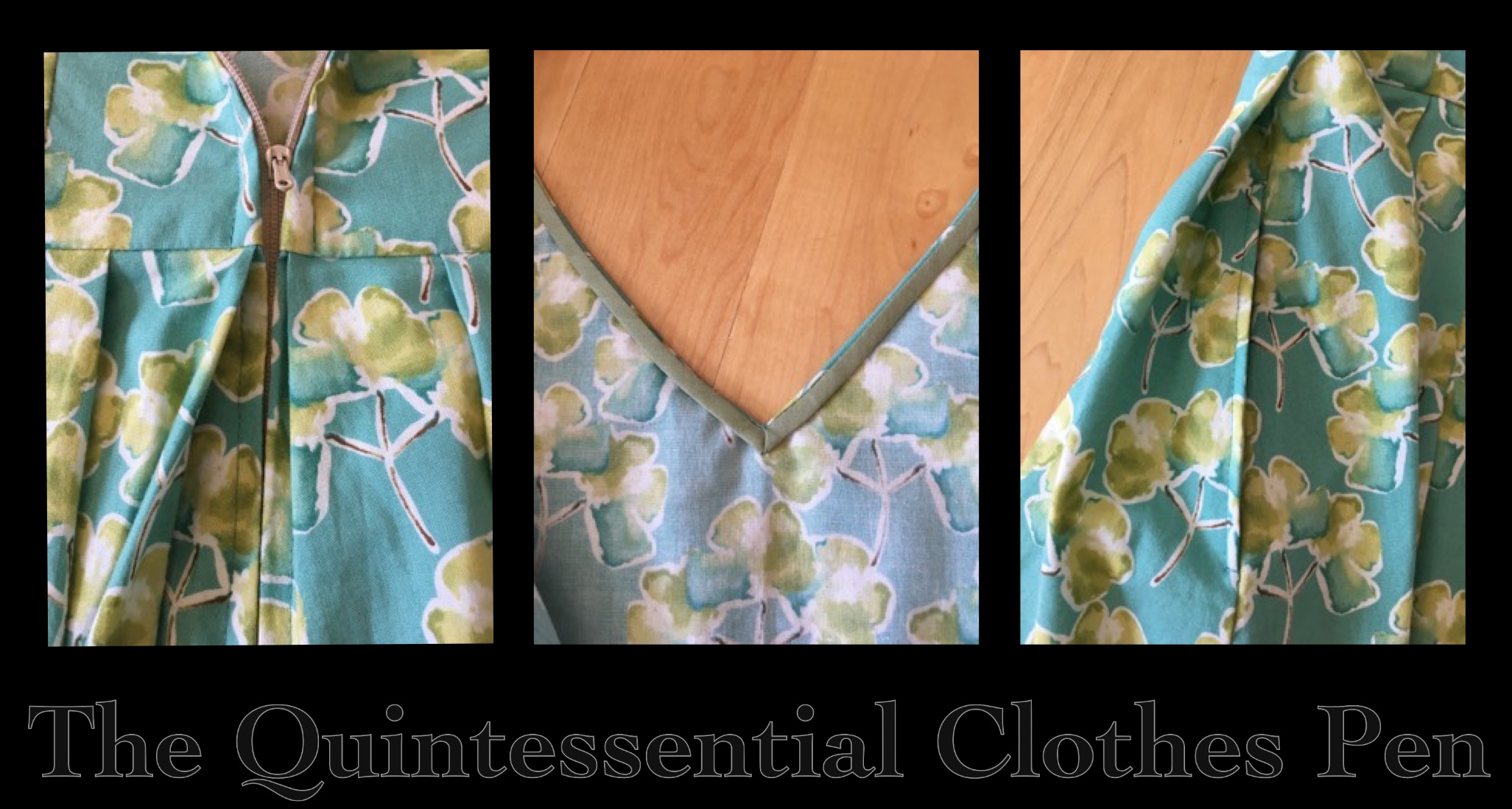
The dress closes in the back with a (pink!) invisible zipper that is carefully sandwiched between the floral exterior and the bodice lining. The pink zipper matches perfectly and amuses me greatly. It’s a fun color!
At the bottom of the bodice lining the seam allowance is turned up and whip stitched to the waistband seam allowance to create a tidy finish. Tidy finishes like this make my heart pitter-patter with glee!
I’m very pleased with the new version of this dress and so pleased that it is off of the UFO pile! My only slight complaint is that I wanted an everyday dress, but the fabric is a little satin-finish-y rather than matte, even though it’s cotton, which takes it more in a ‘dinner’ or ‘event’ direction rather than ‘wear to work’. Oh well! It’s cute, it fits, and the colors are perfectly me.
I’m looking forward to trying this pattern out in other variations! I have plans to make another version of this dress soon–probably during August!
For most of this year, I’ve had a dress in mind that I want to build for an event in August. I’ve been on the hunt for just the right striped fabric for it for a few months, but really hadn’t found anything that was just right. I was shopping for another fabric and saw that Farmhouse Fabrics had a large section of stripes… I had to come back and look through them!
‘Danger!’ Should have been posted somewhere, because I wound up purchasing three different striped cotton fabrics instead of just the one I’d been looking for!
I have solid plans for all three fabrics, which somewhat justifies their purchase. The green seersucker I plan to make a modern dress out of, most likely with a circle skirt. The cotton candy stripe, as I call it, I’m planning to also use for a modern dress based on New Look #6143. The yellow stripe is intended for McCall’s #7153, a 1933 Archive Collection pattern.
I also came across (yes, I promise, I wasn’t intentionally looking for these either!) two interesting patterned fabrics this spring.
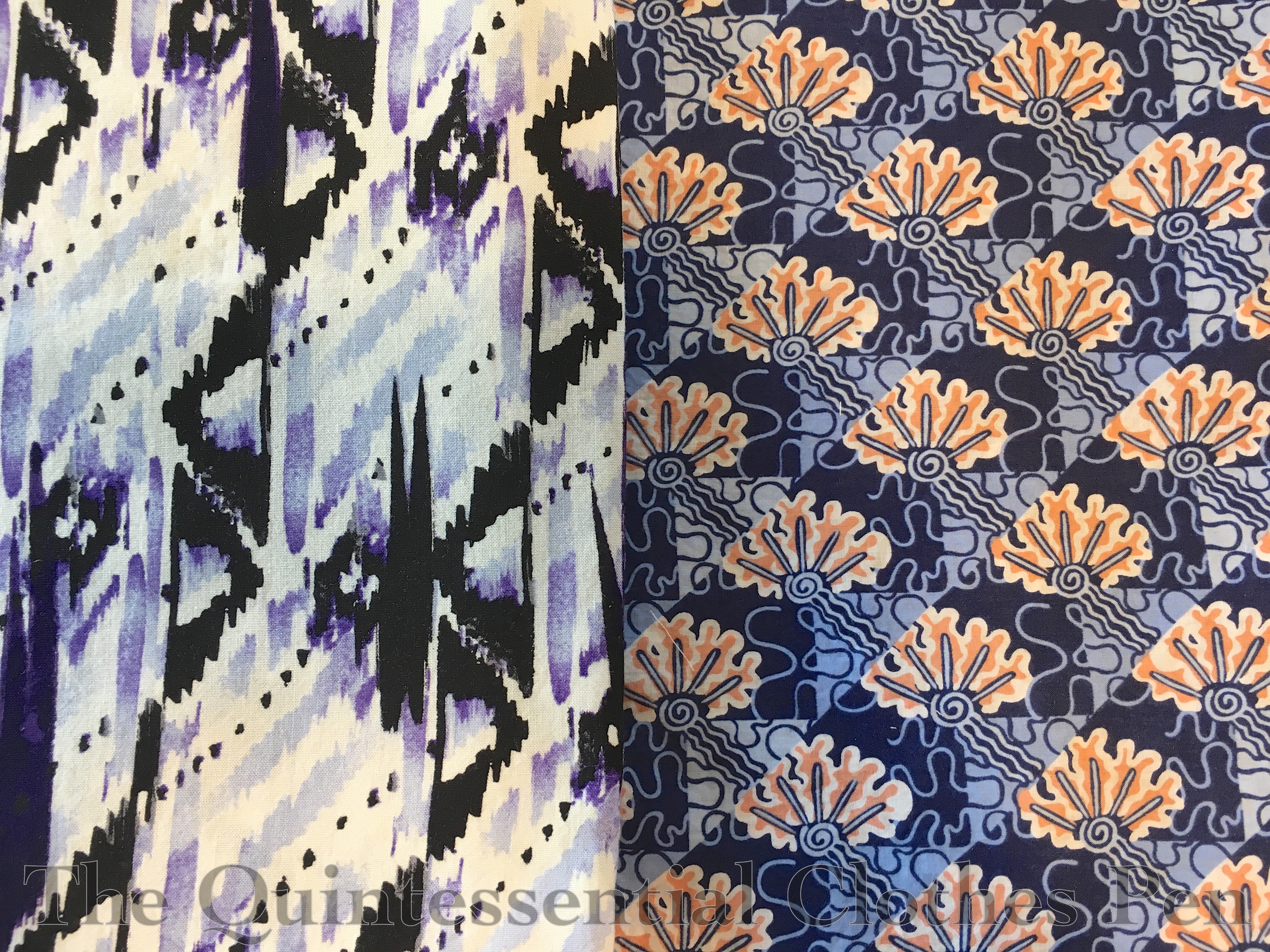
The one on the left is a rayon from Joann’s (and in looking for the link I see they’ve got a whole bunch of lovely looking new rayon prints–more danger!). It’s great that they’ve got a wider variety of fiber contents lately. I think it will make an interesting Henrietta Maria. Leimomi posted one awhile ago that I loved and this fabric reminds me of it a little.
The fabric on the right was super discounted at a local store (though I’ve seen at regular price at another store, so I definitely got a deal). It’s a lovely cotton lawn that I think will make an interesting 1920s day dress. I’ve got lots of evening gowns but my daywear options are somewhat limited. It will be fun to have new 1920s daywear! In fact, I’ve already started making a dress with the cotton lawn! I’ve been posting progress pictures of it on my Instagram account. Check it out!
Oh, I also came across remnants of seafoam green silk taffeta for a bargain price that I also bought, though I don’t have a picture or a specific project in mind for that. It’s hard to pass up silk taffeta even when there is no project in mind, because if you go on a hunt for a specific color you can’t usually find it at a bargain price.
I’m looking forward to putting these new fabric projects high enough on the to-do list to actually accomplish them!
In Part I of The Simple, The Complicated, & The Continent, I shared casual pictures from the mid-19th century dance week I attended last August. Now it’s time for the (mostly) more elegant pictures of the formal balls from the week. You’ll see why I say mostly elegant… there are some silly pictures, too!
On the Wednesday of the dance week we had an informal ball at the school. In terms of dancing, it went generally well. We’d had two days of dance classes and we weren’t completed exhausted yet. Everyone looked lovely so it was fun, as always, to admire other people’s ensembles. We were informed that the social custom of Denmark is to only post photos of other people if you have their permission, so I don’t have too many photos I can share of the informal ball, in particular. It’s a reasonable custom, I think, just quite different from what we’re used to in America. It really is the Wild West of willy-nilly picture posting here! Maybe the Wild West village on the grounds of the school made more sense than I thought…
So here I am dressed for the informal ball. My hair was frizzy and big by the evening of the day so I decided to run with it! Big round hair is perfect for the 1858 anyway. I wore Georgina, with her evening bodice. Actually, all of the Americans wore our mid-19th century cotton ballgowns (many of which you can see in this past post), which quite impressed many of the other attendees. We were told that fabrics like these are difficult to find in and around Denmark.
After another two days of classes, the week ended with a formal dinner and ball. We were bussed to the town where these events were to be held (and it was quite an adventure, getting all the large dresses onto the tour buses and into the seats!) and then did a small walking tour of the town before dinner. A new friend snapped this photo of me traipsing across the street after getting some photos taken. I chose my matching crocs to wear around the town before going into dinner and the ball, but I didn’t think anyone would see them!
OLYMPUS DIGITAL CAMERA
Dinner was lovely and then it was time for the ball. It was quite exciting to be attending a formal ball on ‘the continent!’ It sounds so fashionable in a 19th century way!
The ballroom contained actual candles! These are forbidden in many of the halls I normally get to dance in, so that was a nice novelty. They were especially lovely as the light faded outside.
Our hosts provided us with dance cards, which had a convenient hook for hanging the dance card off of a belt or waistband. In my case, the belt on my dress was perfect!
The ballroom was rather small for the number of people we squashed into it, but I suppose that is probably rather accurate for some events in the 19th century. It did mean that the room became quite hot, so I spent a fair bit of time enjoying the lovely garden outside.
As you can see, I wore Eleanor, my plaid silk ball gown. It was a good choice for traveling and it was fun to be elegantly simple in my clothing choice.
Capturing the photographer in a photo! Isn’t it lovely how well their dresses coordinate with the colors in the garden?
Why was I lifting my skirt so scandalously? I think to see how high I could easily lift my leg in my dress. Or perhaps to check my balance? Doesn’t really matter, does it? Silly photos are fun!
I did get permission to share this photo of me with two new friends. Our colors coordinated so well and that uniform was absolutely stunning! And it had fur on the cuffs. Such soft fur! I bet it was boiling hot, but it was also quite dashing!
Unfortunately, by this point in the week we were all brain-dead, so the room in general didn’t do a great job of executing all the dancing we had been working on without many mistakes. That felt like rather a let down, sadly, as it would have been nice to dance at a ball on ‘the continent’ with perfect execution. I guess this gives me another reason to go back and try again some day!
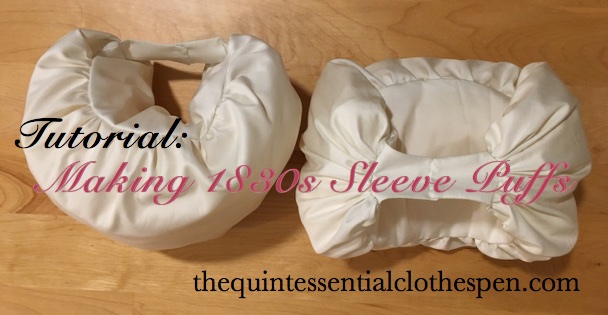
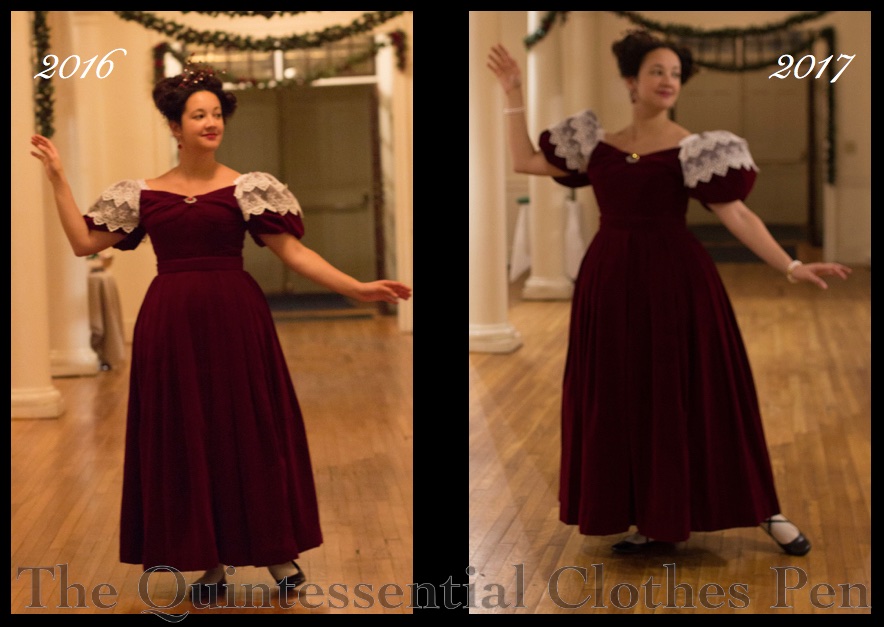
Why make sleeve puffs, you ask? In order to keep the large sleeves of 1830s dresses from deflating, of course! Here’s an example of my 1832 dress without puffs (on the left) and with puffs (on the right). They make such a difference!
I chose to use a sewing machine for much of the assembly of my puffs, but you could easily hand sew all of these steps instead.
To make these sleeve puffs you will need the following materials:
Fabric: ¾ yard of 44″ wide or ⅜ yard of 60″ wide (cotton, linen, and silk are the most historical options, but you can use whatever is comfortable on your skin, just make sure it’s not too loosely woven or too heavy in weight)
Stuffing: I used scraps of stiff net and organza, but you could also use batting, tulle, down, etc.
Thread
To begin, you’ll need to cut out your pieces:
Two rectangles: 25″ wide x 13″tall
Two shaped bases: 18.5″ wide x 7.5″ tall at the center and curved down to 2.5″ tall at the sides
Four end caps (two for each end of your shaped base): use the shaped base as a pattern and cut the end caps so they are 2.5″ wide
Next, you’ll assemble your puffs:
Step 1: Lay your end caps on each end of the shaped base. Sew around the three exterior sides, leaving the side towards the center unstitched.
Step 2: Trim your seam allowances, corners, and clip through seam allowance close to the end of your stitch line on the shaped base.
Step 3: Turn each end cap so the right sides face out–the clip through the seam allowance allows the end caps to sit nice and flat on the shaped base.
Step 4: Run gathering stitches along each individual side of the four sides of each rectangle (not one long gathering line that turns the corners).
Step 5: Pull up your gathering stitches on the long sides and pin to the curved edges of the shaped base. You want to pin the rectangle to the side of the shaped based that does not have the end caps on it.
Step 6: Sew the gathered rectangle to the shaped base and turn it right side out.
Step 7: Now pull up the gathering threads on one short side of each rectangle. Turn the raw edge under and pin the gathers in place. Hand sew these gathers through all the layers, making sure to take small stitches and catch the gathers in many places. Leave the other side open for now.
Step 8: Stuff those puffs!
Step 9: Now pull up the gathering threads on the remaining short side of each rectangle. Turn the raw edge under and pin the gathers in place. Hand sew these gathers through all the layers as well, making sure to take small stitches and catch the gathers in many places. (This is the same as step 7.)
Step 10: Overlap the end caps about ¼” and sew them together.
Ta da! Now you have some sleeve puffs of your very own!
If you’re worried about keeping your puffs in place, ties can be added to the puffs which would be secured to additional ties in the armholes of dresses. Take another look at the those two pairs of extant puffs and you’ll see ties.
I also suggest looking at the puffs other people have made. It never hurts to see more methods of construction. I referenced Fresh Frippery and Stepping Into History when creating my puffs. Have you come across other 1830s puff making resources? If so, please share!
Life has been so busy for last month and a half or so that posting about my sewing and adventures had no choice but to be put on hold. However, things have calmed down now and I have plenty of blog content that just needs time and inspiration to be crafted into posts. To that end, I present a new dress!
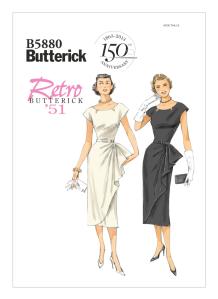
This dress was years in the making. It’s story started four years ago when I was on a mission to add prints to my wardrobe and found this cotton print. It’s a nice weight for a dress: mid-weight and opaque. It’s a bit hard to remember, but I’m pretty sure I started work on it pretty quickly. My plan was to use the bodice from Butterick 5880 with a vintage-inspired skirt of my own creation.
The skirt shape I started with was slightly A-line and gathered into the waist. I’d cut it nice and long, I think in case I wanted a deep hem or tucks. It was decidedly calf length. I knew I didn’t want the notches in the neckline of the bodice and I was thinking of a boat neck shape, so the original bodice was also very high on my collarbones.
When I tried it on… it was so dowdy! I was horrified! It was also a little large. (No pictures, I was too horrified!) All together, I couldn’t even begin to see how I would make it wearable. I stuck it in my UFO pile and let it sit there for years. Every summer I would tell myself I would make it better, but it took four years to feel mentally ready to tackle it.
This year, I started by removing the offensive skirt then fitting the bodice, which turned out to just be taking in the side seams a bit. I took apart the skirt pieces and took stock of what I had to work with. I hadn’t used all of the 3.5 yards I’d purchased, so I had a yard or so uncut to work with as well as the pieces I’d taken apart. In the end, all I did was to shorten the skirt pieces to a flattering length and pleat them to the bodice instead of gathering them. Originally, the skirt was just two panels, but that didn’t have enough oomph for me, so I set out to cut as many more as I could. Unfortunately, due to the fact that I’d cut the original skirt pieces so long, I could only cut one more skirt panel from my extra fabric. Boo!
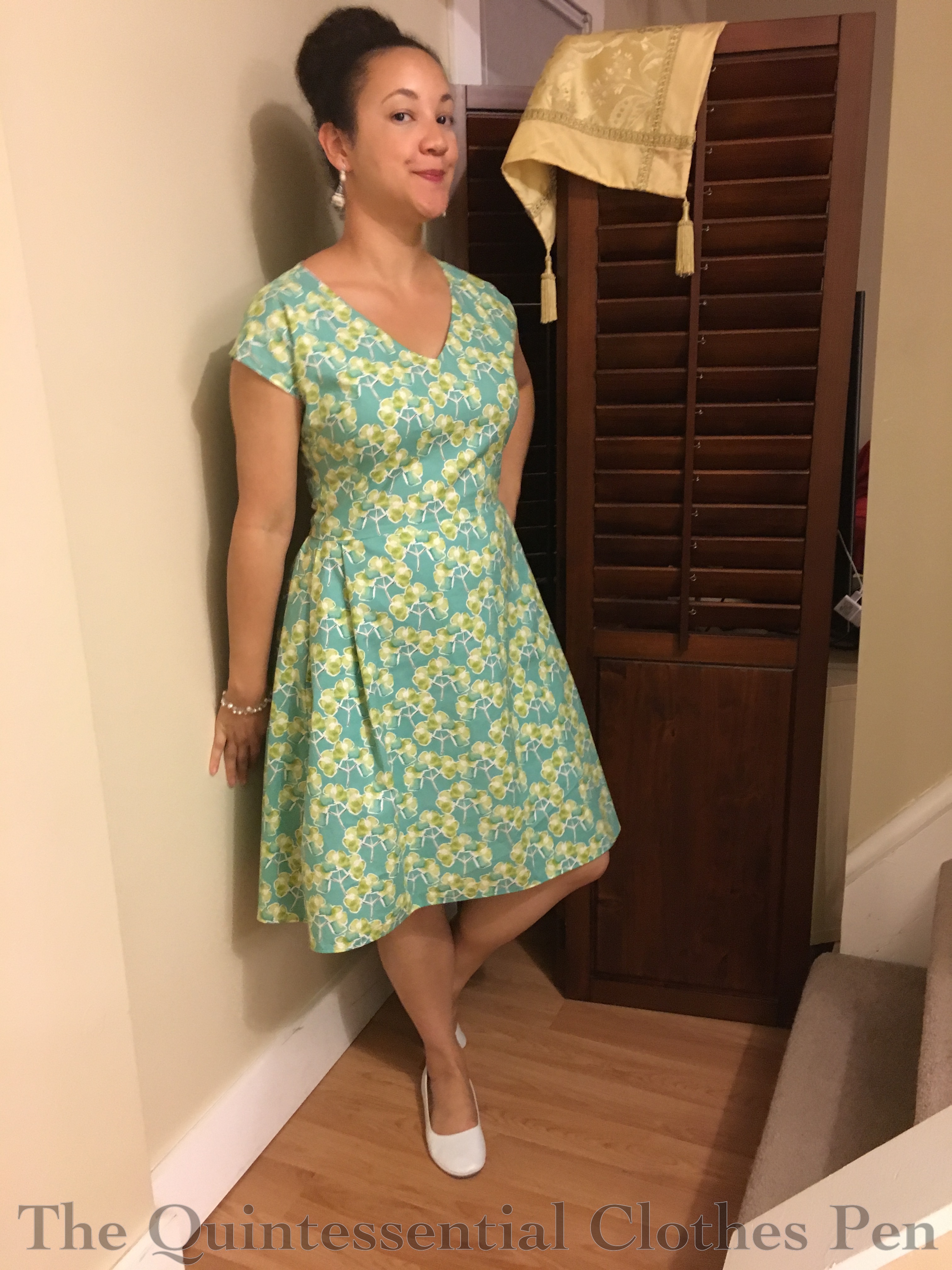
I was thinking of pleats all around the waist, but I couldn’t find a way to make it symmetrical and pleasing to me with only three panels. It put seams in odd places and just wasn’t working. In the end, I decided to make the front mostly flat and keep the pleated oomph in the back. It looks smooth and A-line shaped from the front…
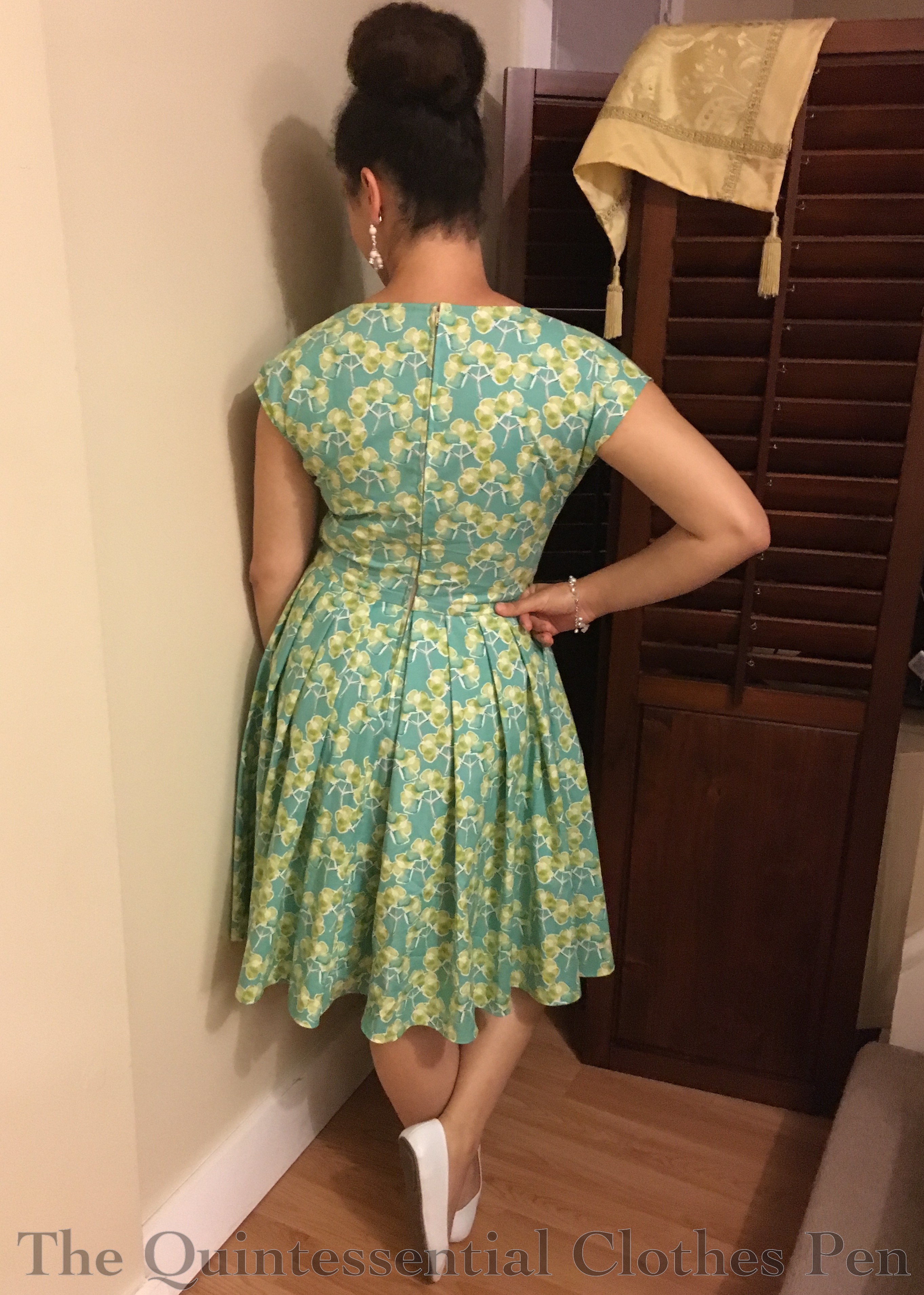
But the back has lots of pleats! I love the fullness! Too bad it couldn’t be that way in front, too. Oh well. Next time!
I also changed the neckline. I abandoned the idea of a boat neck (save that for another dress, I think) and changed the neckline to be a wide V shape, a style which I really like. Opening up the neckline helped balance the overall look.
The dress is almost entirely machine sewn. Since it’s a casual cotton dress, I machine sewed the hem and the arm openings with a narrow hem and put a centered zipper up the back (and I’m pleased with myself that the pleats extend all the way to center back despite the zipper and it’s all nicely stitched!). The neckline is finished with bias tape that is invisibly stitched by hand after being turned. All of the interior seams are serged. Also, the dress has the bonus of pockets! Keeping the seams at the sides allowed me to easily put in side seam pockets, which I topstitched in keeping with the other visible machine sewing.
And at long last, a happy clover dress that brings a smile to my face instead of frown! It was glorious to get it off the UFO pile and even better to wear it!
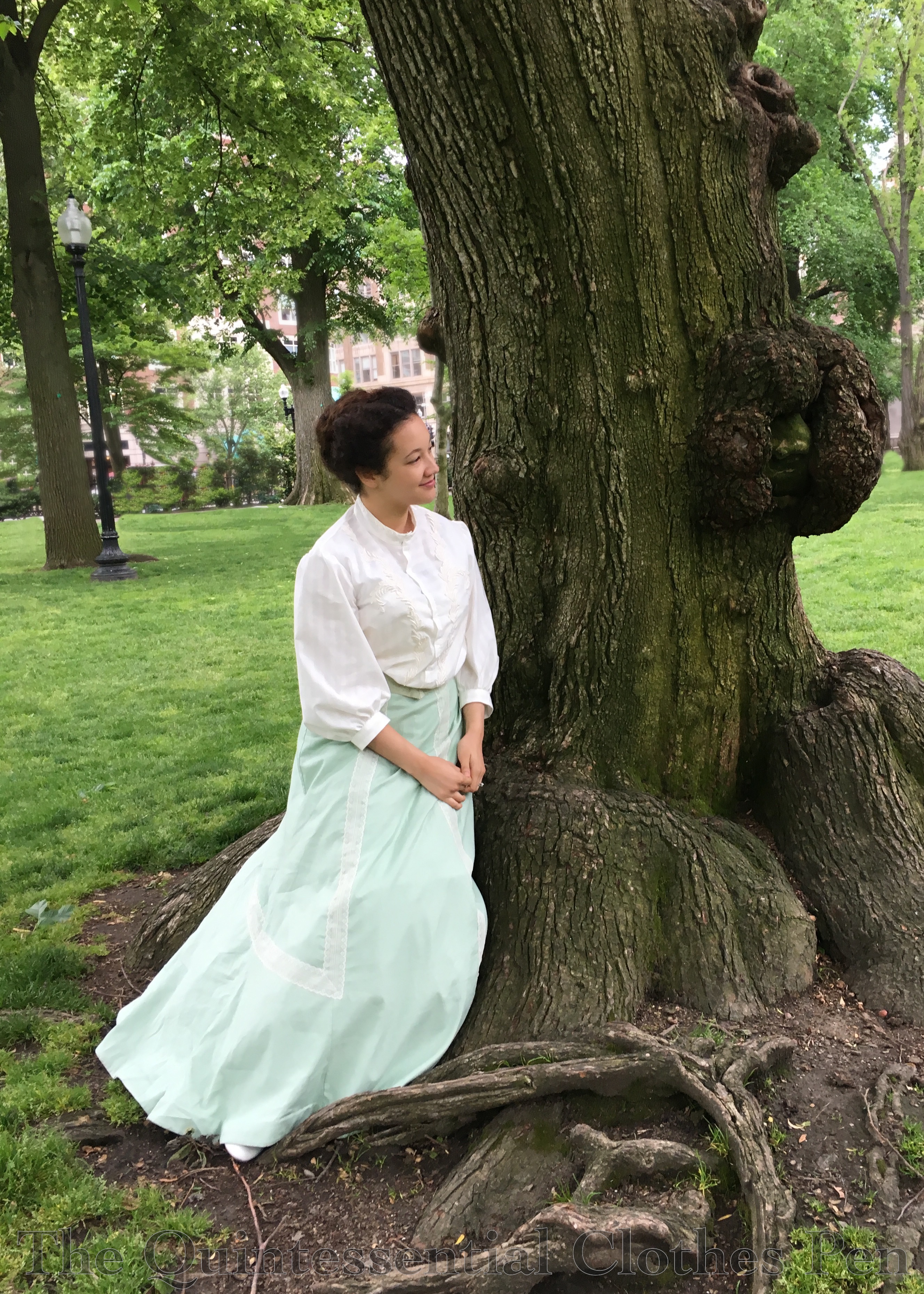
In 2012, I made and wore a c.1900 green skirt and straw hat at Newport Vintage Dance Week. I had plans to make a blouse as well with it but ran out of time and wore a 1913 blouse I already had instead. I wasn’t terribly pleased with the whole look, so I didn’t ever focus on it in a blog post, though I did include it in my overview of the dance week.
At Newport Vintage Dance Week in 2012.
Since then I’ve worn the skirt a few times, but haven’t been able to for the last few years because (and this shouldn’t be surprising given the subject of my last post) the waist was too small!
Thankfully, I had two things going for me that made changing the waist size quite simple. First, I had extra fabric. Second, when I’d originally made the skirt the waist circumference was a few inches too big for the waistband, so I took a tuck on each side of center back. Now all I had to do was let out the tucks and extend the waistband with my extra fabric!
Updated ensemble in 2017.
It took me years to finally get around to doing it, but I’m glad I did, because I really like this skirt and it’s fun to remember the lovely wading adventure we had back in 2012 while I was wearing it! What gave me the final push to do the change was the opportunity for an early summer picnic, for which I had clothes but really wanted to have something new. Who hasn’t experienced that desire?
More About The New/Updated Ensemble
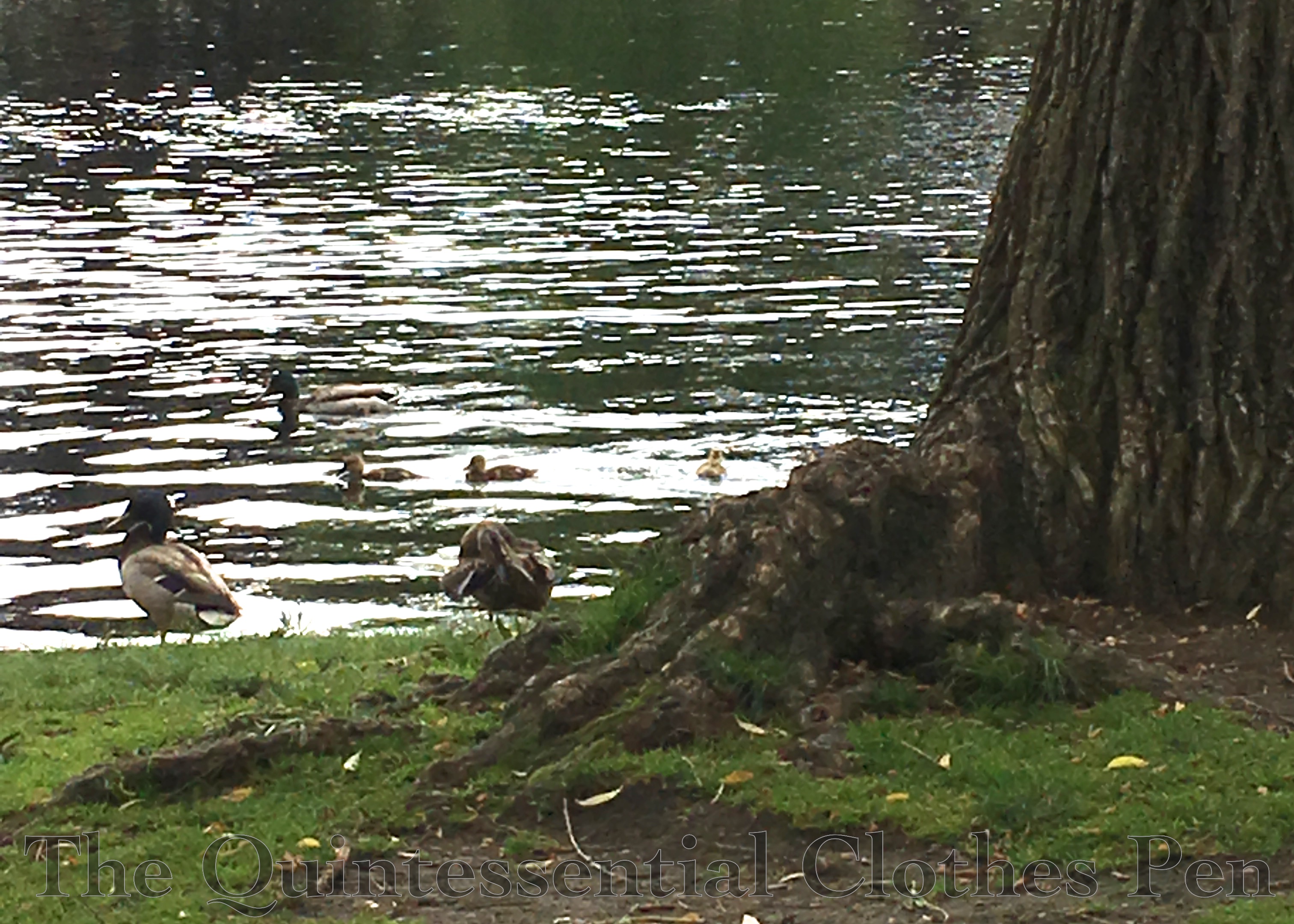
Ducks (and baby ducks) at the picnic!
The picnic provided some lovely backgrounds to take documentation pictures of all the new and updated pieces that form my Anne-inspired ensemble! I ironed out all the wrinkles in the skirt ahead of time… and then sat on picnic blanket before taking pictures, so the back pictures have a rather wrinkly bum.
The Blouse Inspiration
In addition to wanting to update the skirt, I’ve also had that blouse to go with it on my to-do list for years. Instead of going back to the blouse plan from 2012, I started over with new inspiration. (Never fear, the unfinished blouse from 2012 is still in a box waiting for me to go back to it… someday.)
The new inspiration came directly from the scene in Anne of Green Gables when she’s walking down the lane with Gilbert and his horse (just before she gets mad and whacks him with her basket!). I’ve always love her silhouette and decided a blouse with a similar shape would suit the green skirt nicely.
Anne and Gilbert! (And the horse.)
I researched blouses from this period and decided on the year 1904 for my blouse. I was particularly inspired by this ivory c. 1905 blouse, this black c. 1905 blouse, and this blouse that The Met dates to 1899-1902. The idea to play with the direction of the stripes and to have curling lace trim (mimicking embroidery) was taken directly from this page from The Ladies’ Home Journal for April 1904 that Lauren of Wearing History kindly shared on her blog. Other views of some of these blouses as well as other inspiration are gathered on my Pinterest board for this project, here.
The Blouse Construction
My blouse is made of an ivory cotton that is woven with narrow stripes. In the center front panel the stripes are horizontal, while on the rest of the blouse they are vertical. The blouse is trimmed with lace appliqués in the same pattern as the Ladies’ Home Journal blouse from 1904. Unfortunately, all of the subtle ivory on ivory details are hard to photograph.
The blouse is mostly machine sewn and uses French seams except at the armholes, which are left raw. It is finished by hand and closes up the front with concealed hooks and thread bars. There is a twill tape channel for a drawstring at the waist to help control the fullness and the pigeon front.
The silhouette was looking a little deflated for a 1904 pigeon breast look, so I tacked ruffles down the front seams to help fill out the blouse. It’s subtle-but-useful method and was easy since I already had the circular ruffles in my stash.
The Hat Inspiration
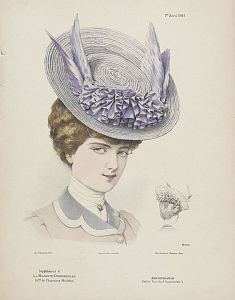
The most direct inspiration for my hat was this image from 1903. While I decided against feathers, the general trim placement as well as the poofs under the back of the brim are present in my hat.
There are more inspirational hats here, on my Pinterest board for this project.
The Hat Construction
The hat in the 2012 version of this ensemble was an admirable idea in theory, but not execution. (I was displeased enough that it was remade into my 1885 Flower Pot Hat in 2015.) However, I had another of the same straw base that I decided to remake for the new Anne ensemble.
In 2012, I had used the second straw base to make a Regency bonnet, another project I wasn’t entirely happy with (this is not the right type of straw to get a good bonnet shape). All that needed to be done was removing the trimmings from the hat and taking out the stitching holding the wire around the edge… and I had a straw hat blank ready to be remade into a new hat!
For a hat block, I used a shallow glass bowl covered in tin foil and plastic wrap. I wet the straw base in the bathtub, then used a paintbrush to cover the straw with a layer of my sizing (a bit of elmer’s glue dissolved in water–no formula, I just winged it). I set the hat out in the hot sun to let it dry, holding the edges down with spice jars to keep it from blowing away. (Can you tell I just wandered into my kitchen to see what I had that would work to help me with this hat?)
Reshaped straw hat base next to my improvised hat block.
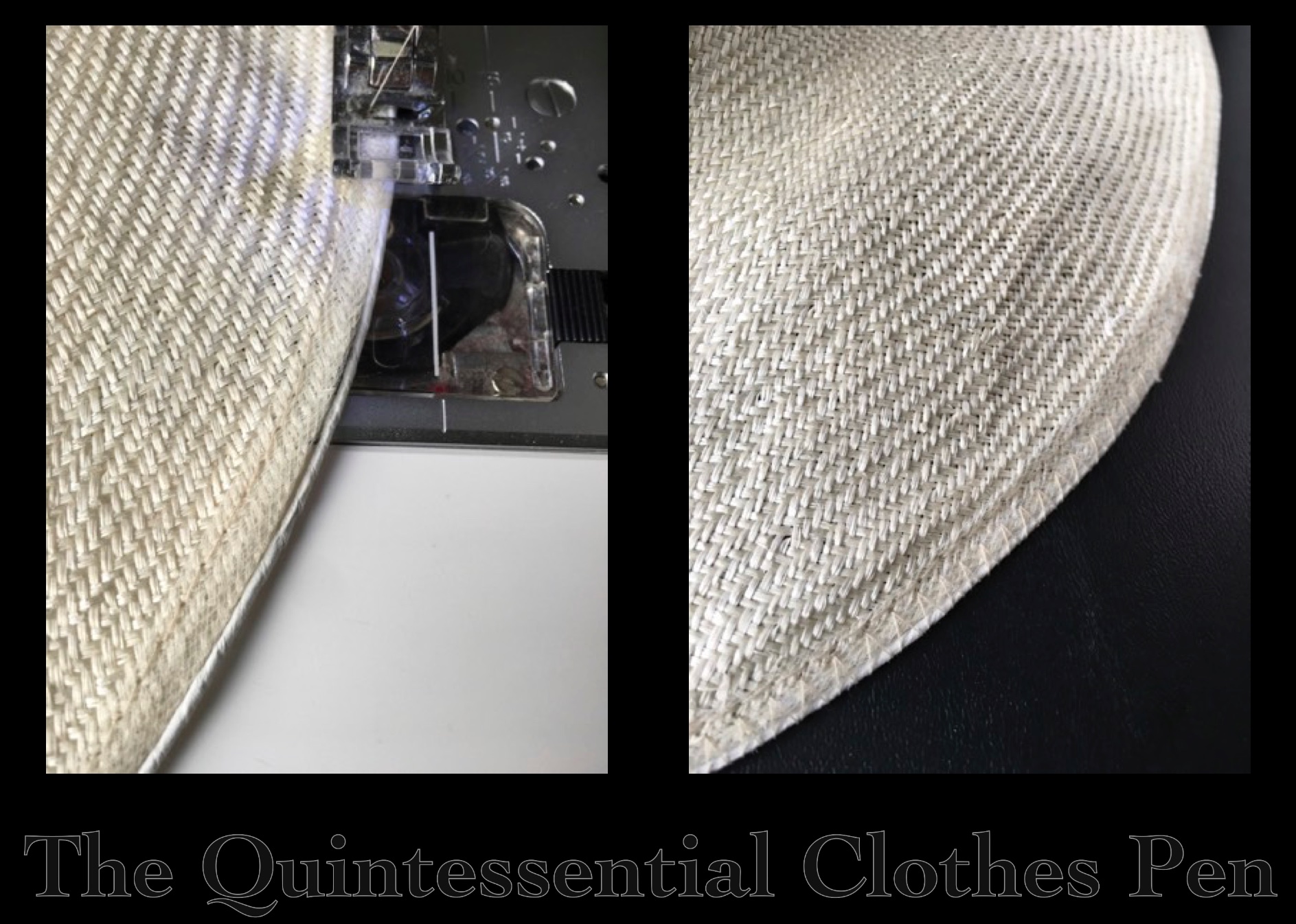
I tidied up the edges of the hat with scissors, bound the edge of the straw with narrow strips of tulle to keep the straw from fraying, and then reshaped my wire and resewed it around the edge of the hat. I covered these edge treatments with a binding of ivory silk satin, trimmed the hat, and I was done!
The tulle was sewn with a straight stitch. The wire was then stitched with a zig zag.
Sundries
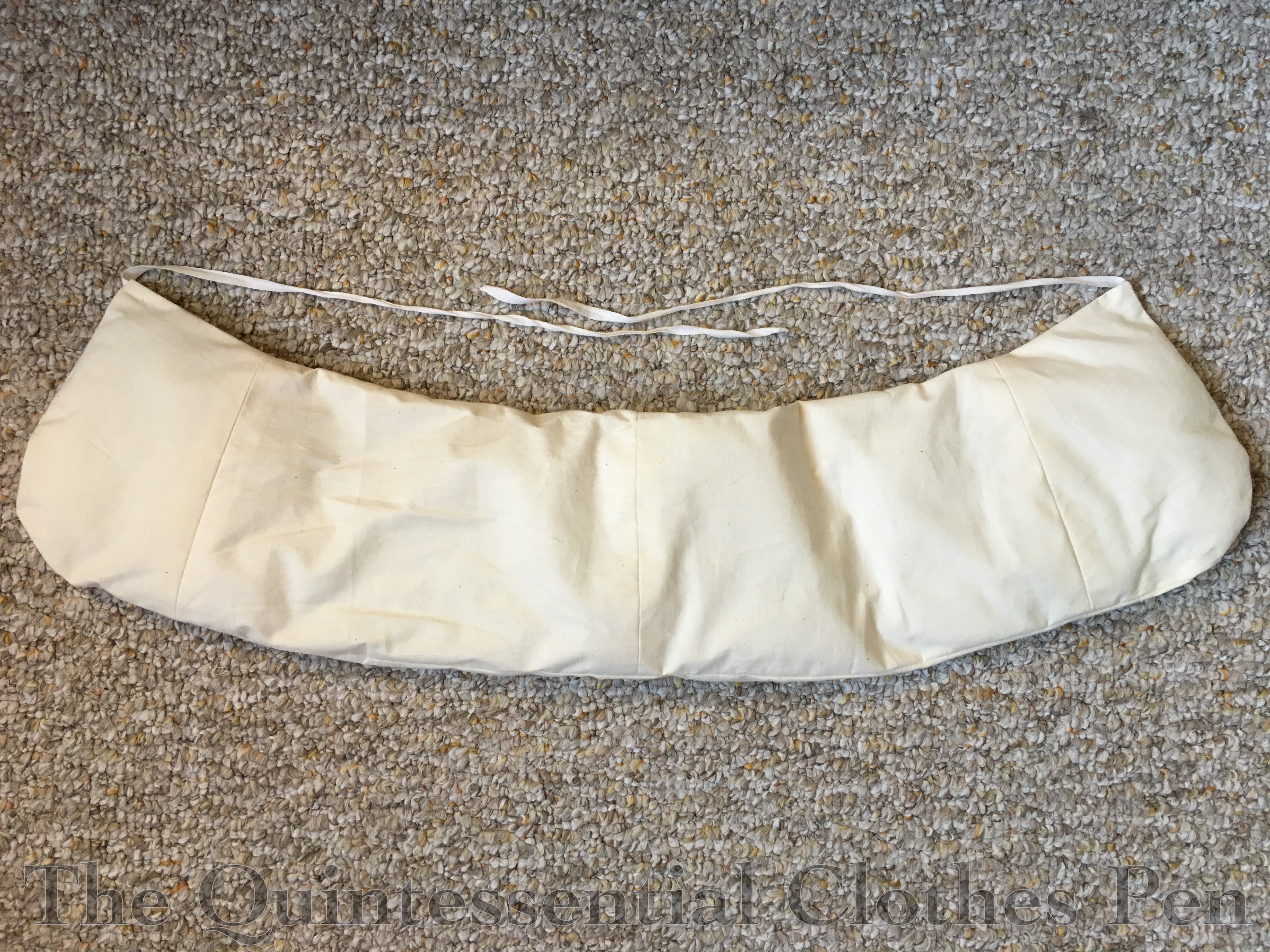
In order to achieve my desired pigeon breast silhouette of 1904, I needed some omph in the back in addition to the ruffles inside the blouse in the front. I tried wearing a small bum pad (about 10″ wide), but then my hips looked sunken by comparison. I determined I needed a new bum pad that would fill in both my hips and backside to help create the illusion I was aiming for.
I also made a new belt to go with this ensemble. I wanted something a little more V shaped in front and a little less dramatic in terms of color. I actually reused the lining from the previous iteration of my new hat to make a new belt. The two shades of green don’t quite match, but they also don’t offend, so I’m pleased.
Instead of a traditional Gibson Girl hair style, I tried a style more like this, with a center part and poofs on each side. It was a bit squashed by my hat, but I was quite pleased with it overall. Unfortunately, I didn’t get any perfect shots of just my hair style. I’ll have to try it again someday and get hair pictures.
At least three years ago I was inspired by a fashion plate, as one often is, and started working on a Regency pelisse following the design in the image. I got really far along, finishing the construction and even part of the trimming, but then stalled and let the ensemble languish for years before determining to pick it up and finish it off this year or else! I’m excited to have finally reached a ‘done’ point in this project so I can remove it from the UFO list!
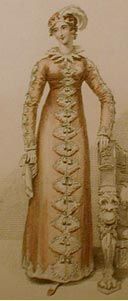
The pelisse (and hat) are directly inspired by the following fashion plate, which can be seen here with slightly different coloring and here in black and white. In the first of those two links, the garment is labeled as a dinner dress, but I thought the design would make excellent pelisse trimming and so I adapted it.
You’ll notice, perhaps, that the finished pelisse does not have as much trim on it as the inspiration image. Early in this project, before it languished, I cut out all of the appliqués for the neck, sleeves, and hem as well as the front edges. I pressed under a 1/4″ on each side of each piece, too. And then, as I was finishing all that triangle trim on the front earlier this year, two things happened:
#1- I lost steam and really just needed to be done with this project.
#2- I decided I liked the simplicity of the pelisse without the extra trim. It’s so easy to draw lots of details, but then in a real garment the details don’t always translate. For example, the triangles around the neck just looked bad and awkward (plus, I wonder if that is a chemisette collar and not trim on the dress itself?) and the sleeves just looked too crowded. I was also afraid that putting all that work into triangles around the hem would just get dirty and not be a good use of many more yards of the vintage lace I used to edge the triangles.
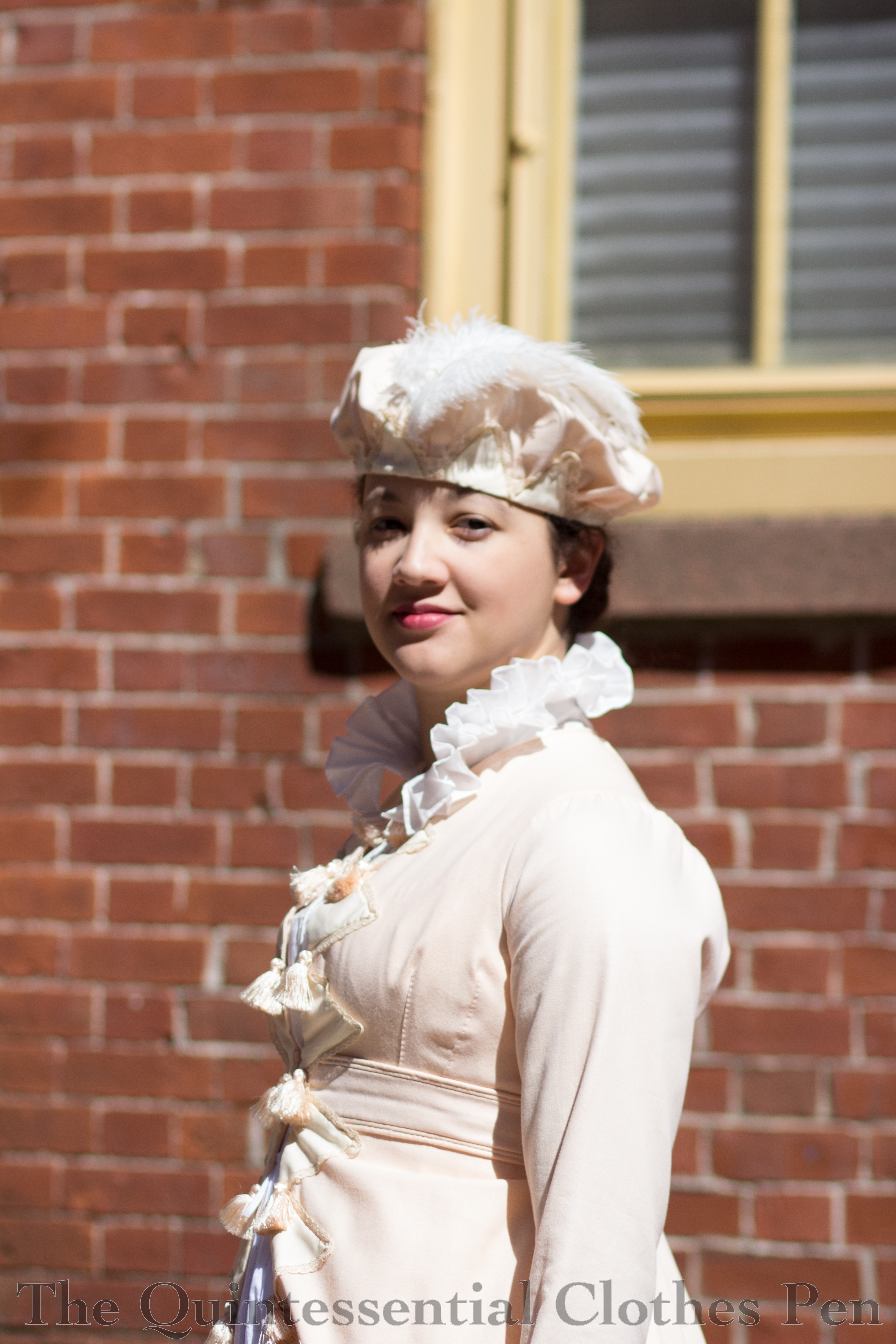
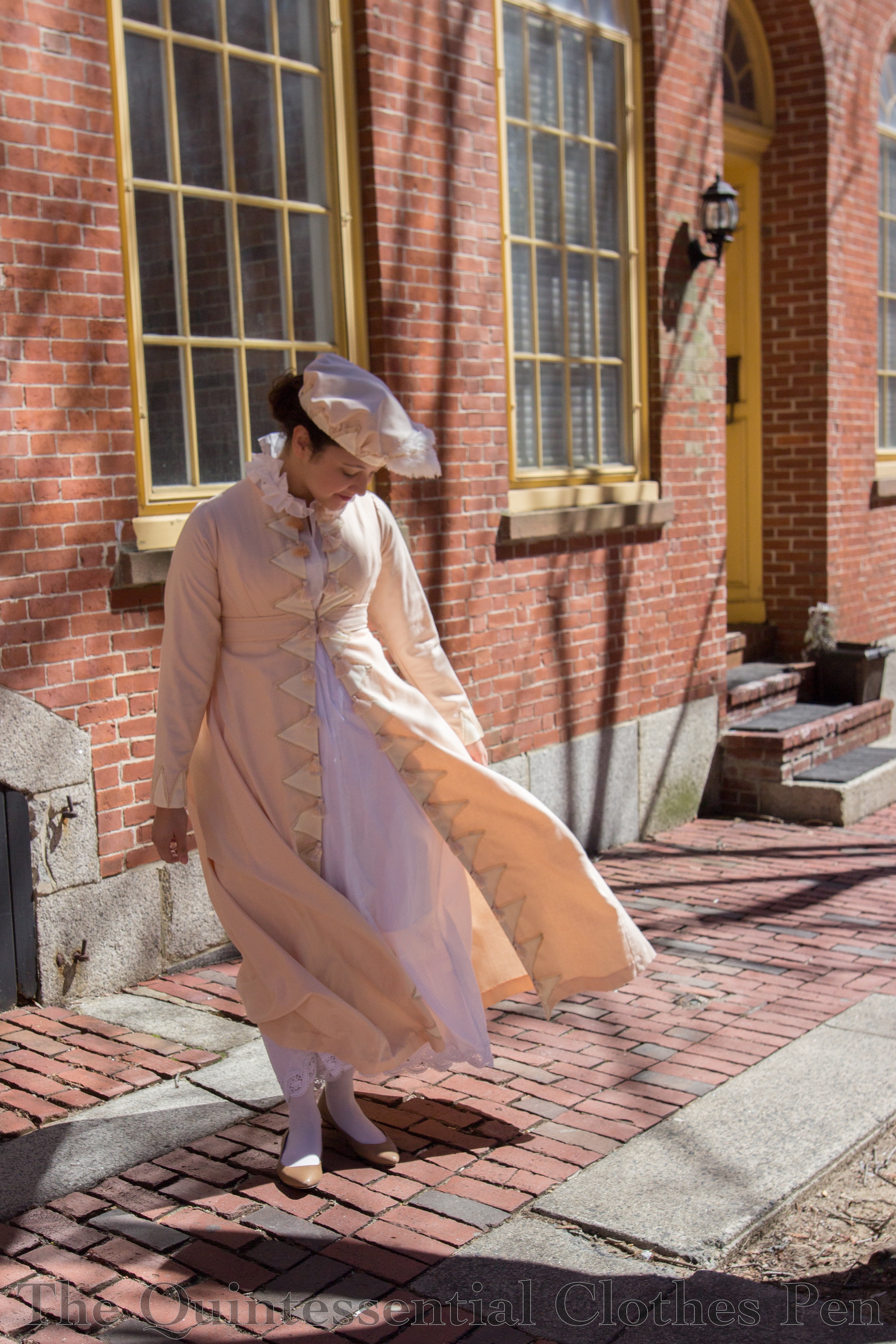
In fact, despite the somewhat-simplified trim, there are actually a lot of details in the construction of the pelisse. Each back seam is piped and the belt has double piping above and below it. The neck is bound with piping, which is sewn with small, invisible stitches around the neck to hold the seam allowance to the inside. Also, the skirt is knife pleated into the back, allowing for a nice silhouette from all sides.
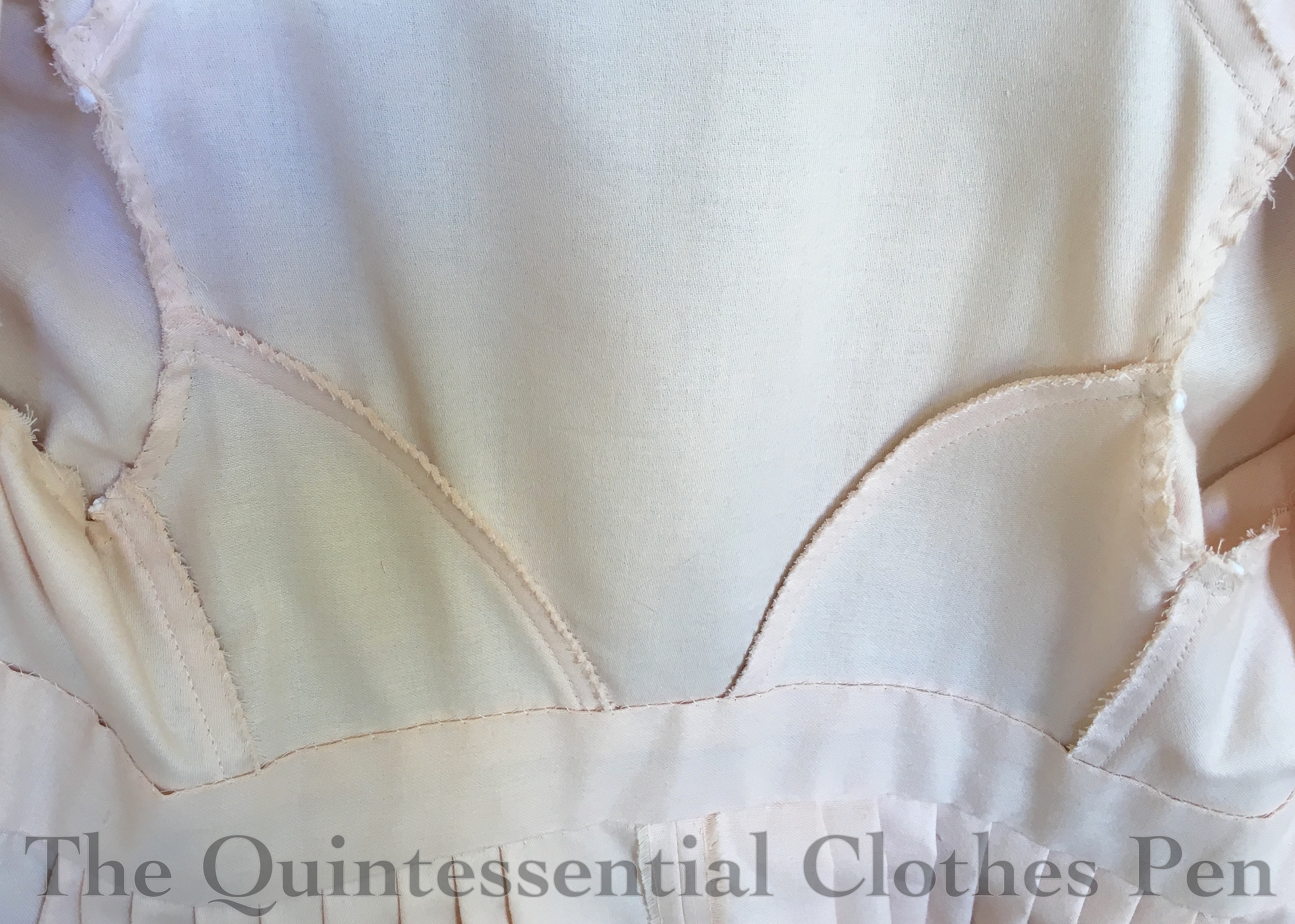
The pelisse is made entirely from peach colored cotton. It is unlined, except on the belt, where it is lined in order to hide the raw edges. The other seam allowances are whip stitched to keep them tidy. Here is an inside view of the bodice section. I do like my insides to be tidy!
The trim fabric is a cream colored poly/cotton blend. Each triangle is edged in very light tan vintage lace. Then, to top it all off, there are peach tassels on each triangle down the front as well. The peach tassels were removed from a length of upholstery trim that happened to be a perfect color match!
The pelisse is machine sewn on the interior seams and hand finished, including the hem, neckline, seam allowances, and all that trim. The darts are also sewn by hand with a small running stitch, a detail I picked up from looking at extant pelisses, though of course it’s been so many years now that I can’t find a specific example. I like how the top stitched darts at a little extra interest.
The pattern for this pelisse is of my own design. I’m pretty sure it was based on my 1819 spencer, but adapted slightly for a different fit. It’s hard to remember since it’s been so many years since I made the pattern! The skirt is a large rectangle–two panels of fabric seamed at center back.
I’m wearing the pelisse with the following garments: a chemise and my short stays, my Vernet petticoat , my recently finished chemisette, and the hat that matches the whole ensemble. I’m excited to have found a use for the Vernet petticoat that shows off the trim at the hem! I did take out the tucks that made it the right length for my Witzchoura so that it would be the right length for the pelisse, but that’s what tucks are for, right? On picture day there was a nice breeze blowing everything around and showing off all the layers nicely.
I was lucky to take these photos in and around some of the Regency period buildings in Salem, MA. You can’t beat buildings from the right period for a suitable backdrop for a garment like this!
Now I have my first pelisse. More outings will hopefully arise in the future so I can wear it again. I’m so glad I’ve decided it’s finished and that it was a comfortable garment to wear, though I maintain that the hat is a bit silly.























 The Quintessential Clothes Pen
