Another Annabelle Adventure (Returning Heroes Ball 2012)

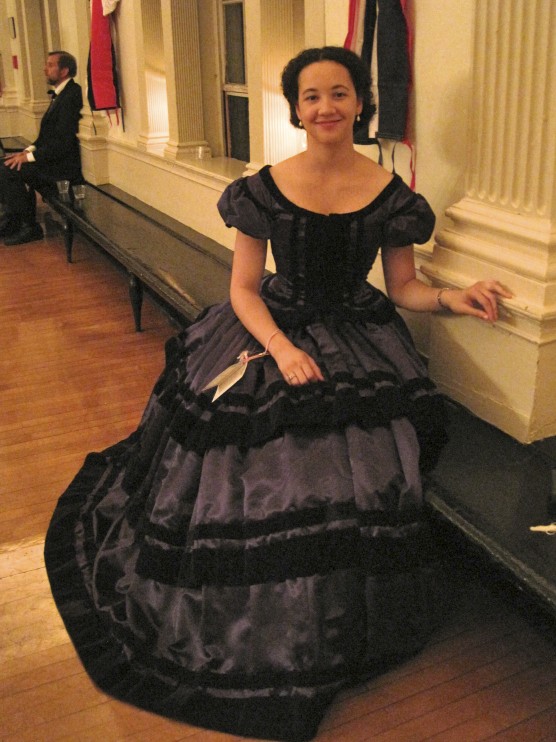
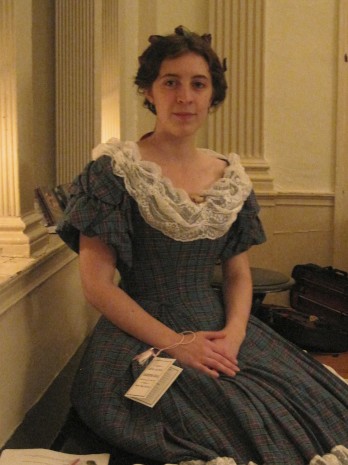
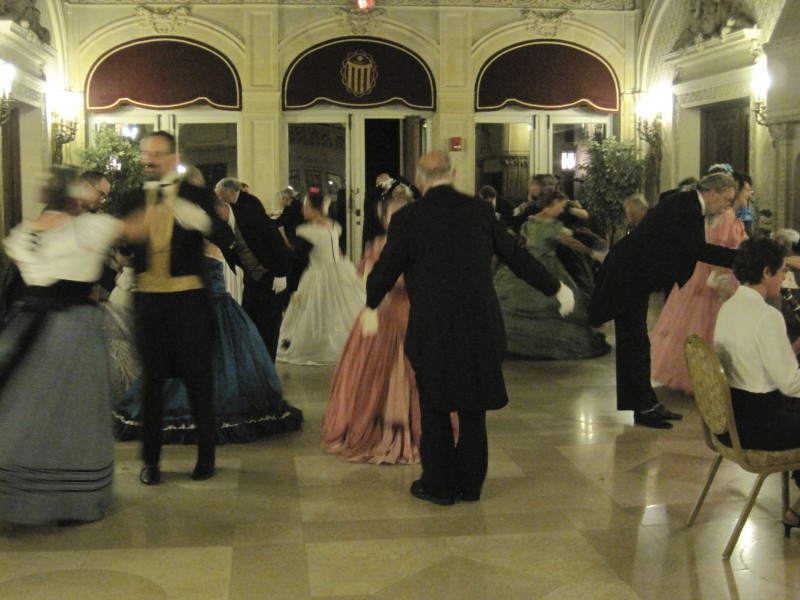
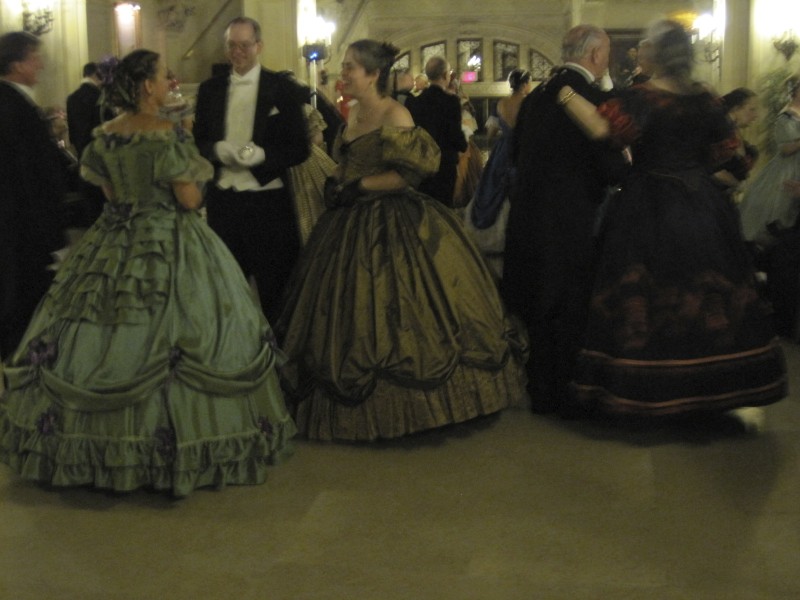
Alliterative, agreed? Ok, I’m done… Honestly, the words just came–I didn’t spend long on them! Last weekend I attended the Returning Heroes Ball hosted by the Commonwealth Vintage Dancers in Holliston, MA. As usual, it was full of fun and laughs. There were fabulous dresses all around (because of course one of the joys of a ball is to observe dresses–old and new) and wonderful refreshments as well. I don’t have pictures of other people, but I have pictures of me!… You can see a variety of people in the photos on Antonia’s blog, Experiments in Elegance

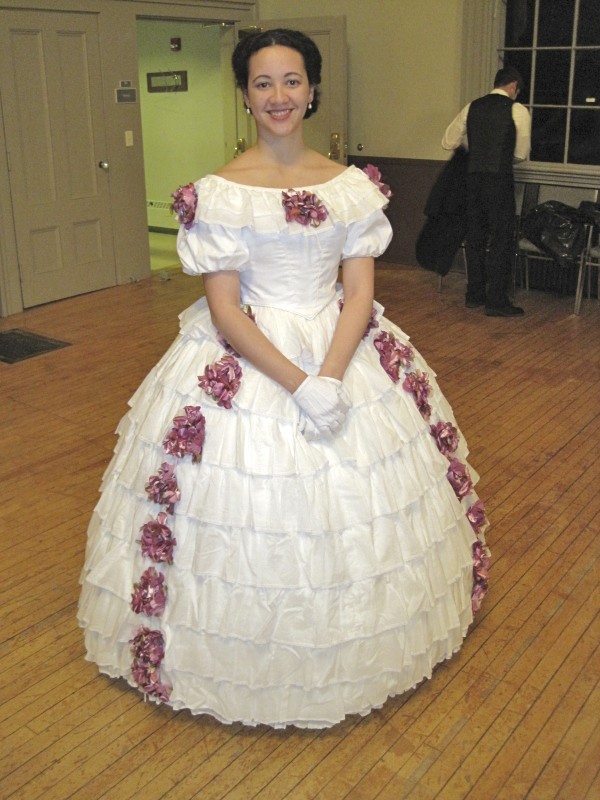
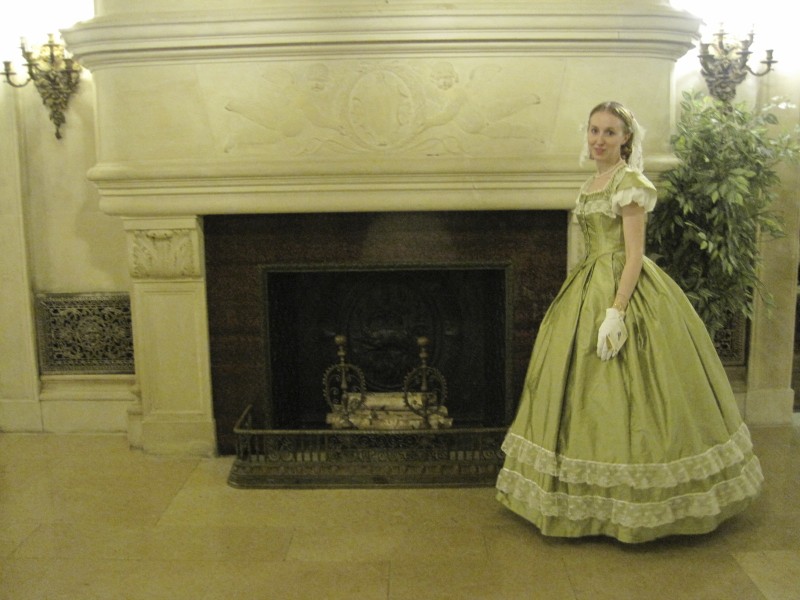
Me, in Annabelle. I really, really love hoop skirted dresses! And flounces! Whee!!!

I recently gained a new accessory: a deep purple burnout silk velvet scarf, big enough to use as a shawl. The shawl was decommissioned from a friend’s modern wardrobe because it is rather intense for a modern look; however, it works wonderfully as a 19th century piece, I think! I’ve been waiting for about three months to try it out with this outfit… I think it is fabulous and nicely complements the purple in the flowers.  Do you think it works for an 1860s look?
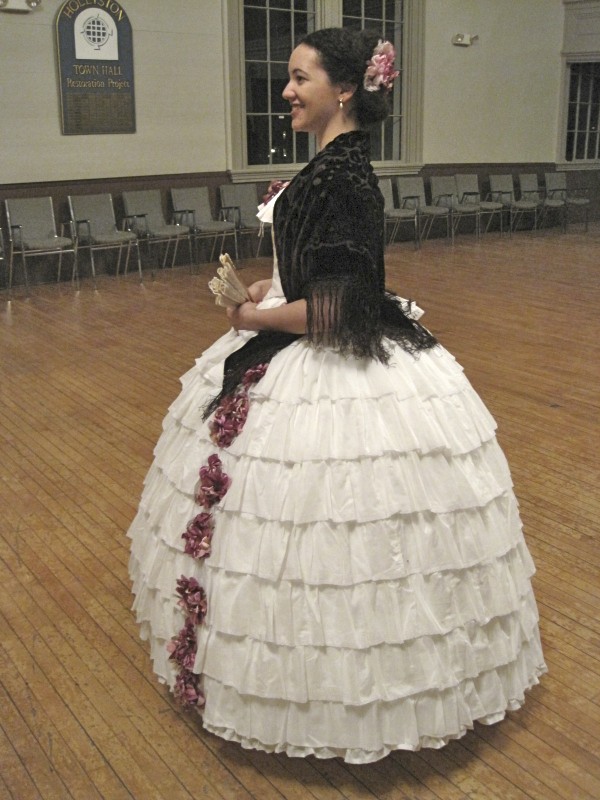
Ooo... Purple silk velvet shawl. So cosy! (and stylish to boot!)
Thanks for taking the photos, gentlemen (you know who you are)!

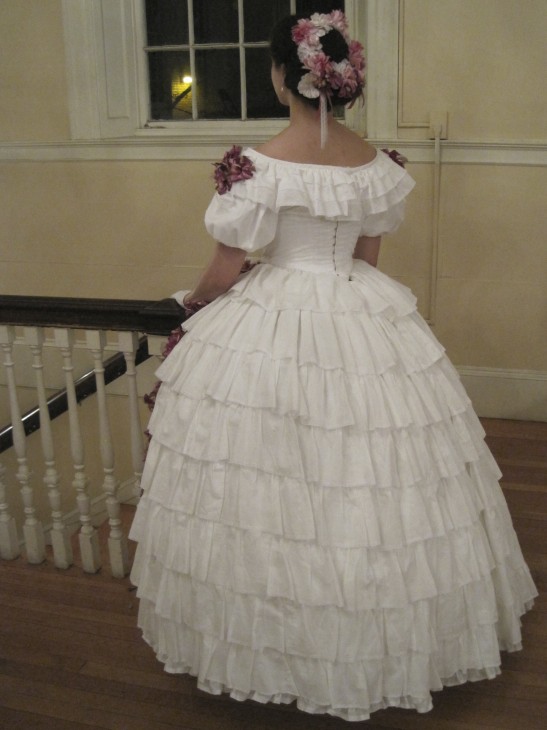
I’ve been trying out more complicated, poof-filled hair styles in preparation for early 20th century styling and I put some extra effort into this hair-do to try out more poof-ing. From the front my hair has it’s normal 1860s style with a center part where each from section is slightly poofed and rolled back to join the low rolled chignon at the nape of my neck (above, left and right)… but from the back this most recent style has extra poof-age!

See the extra poof at the top of my head?
Poof close-up

 In terms of the hair-styling itself, I think I like the extra poof as it gives more dimension and adds a regal feel to the overall look. Do you like the added poof?

I also decided to rework the hair wreath I’d made for the German Cotillion back in October (left). I’m not sure I like it as a giant mass of flowers, I might rework it again into a crescent shape like the flower piece that matches Belle, my other 1860s ball gown (above right). In terms of the flowers, giant mass or crescent shape?
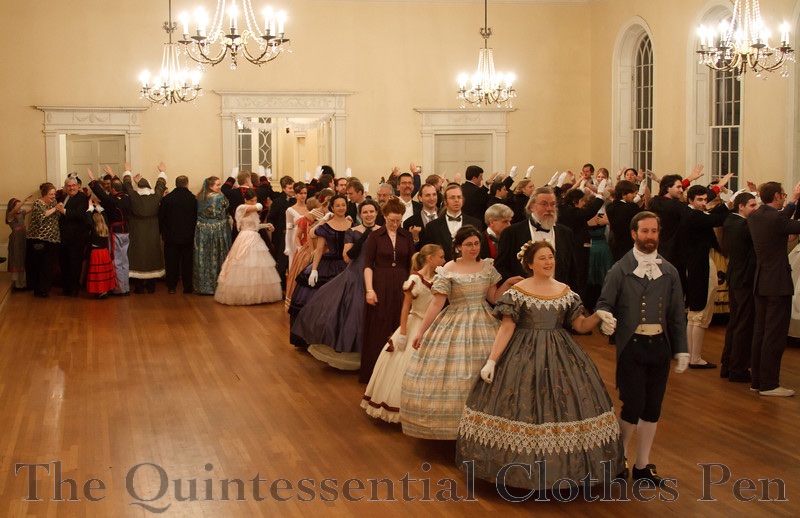
Fezziwig’s Ball 2011

Well, I promised you pictures of my new hair crescent in place… and I did wear it with Belle, my dark blue ball gown, to Fezziwig’s Ball recently… but I was so caught up in the fun of the evening I forgot to stop and have someone take a still picture of the crescent! (I’m sure I will wear it again, though, so hopefully I’ll remember at that time.) This post about last year’s Fezziwig’s Ball gives you background on the theme and title of the ball.

Ready to whirl away on a dancing adventure? Look on!

As a final note, let me just say that the evening was wonderful. My favorite moment: the Grand March proceeding up and down stairs, twice! The room was so full that the leaders ran out of options and marched down the stairs!

SaveSave

Annabelle, adorned with flowers

Over the summer I built Annabelle, a white flounced 1860 ball gown, in order to have an alternative to my dark blue 1860 ball gown. My intention was to adorn Annabelle with flowers, as in my inspiration fashion plate from Godey’s Lady’s Book (Annabelle is based off of the gown on the far right); however, I did not have time over the summer to add the flowers.

September 1860 "Dressed for a party" (Fitting title, don't you think?)

I decided to wear a be-flowered Annabelle to the Commonwealth Vintage Dancer’s German Cotillion last week. My original plan was to hand make the flowers from hand painted pink silk organza. I started on that endeavor, but the process was time consuming and so I have only made perhaps 100 flowers (first: cut 5 rounded point shapes, second: fray check the edge all around, third: gather the center of each flower). Each flower is about 1 1/2″ across. When I went to sew the flowers on the dress I realized two things that made me change my mind about using them: the flowers were too small for the scale of the dress and I would need so many more hundreds to make the look work. In the end I used purple millinery flowers, from the fantastic stash I mentioned in the post about my 1860 hair crescent, to adorn the dress. I actually really enjoy the purple flowers and the scale is far better for the overall look as well.

Annabelle with flowers!

I used matching flowers plus a few others in the pink family to create a wreath for my hair to match the dress.

Annabelle back
Matching hair wreath

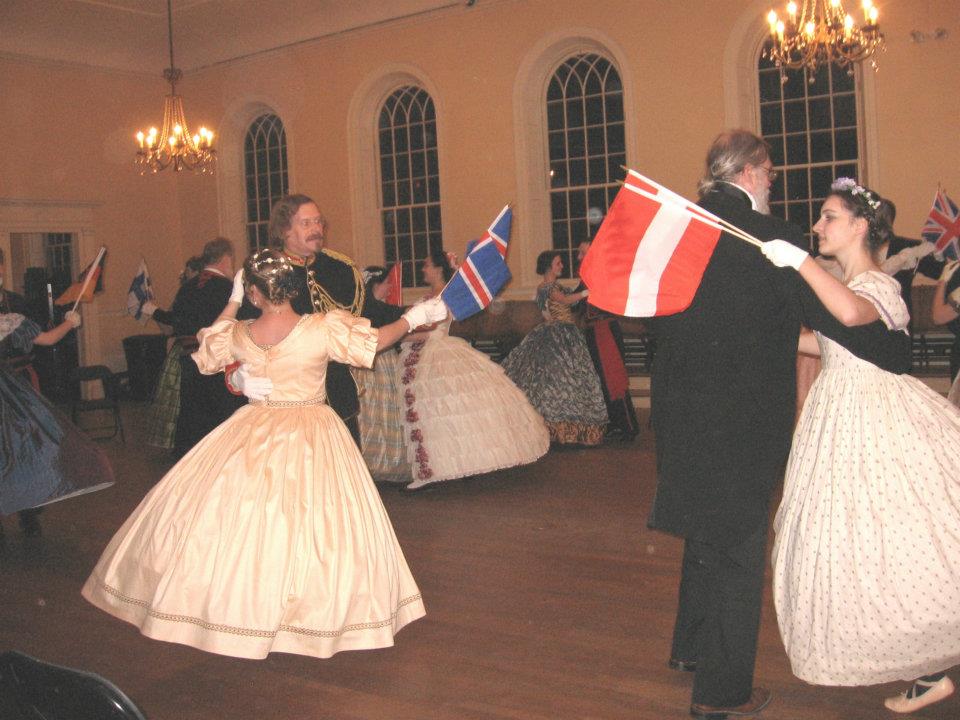
If you would like to see what Annabelle looked like without the flowers, you can visit the following posts and see pictures: Of Flounces and Dance Cards: Part I and Ochre Court 1860s Ball 2011. And, to finish off this post, here are a few pictures of Annabelle in action at the German!

Playing dance games at the German Cotillion

Salem Light Infantry Levee and Ball 2011

The Salem Light Infantry Levee and Ball was an event hosted by The Commonwealth Vintage Dancers and Salem Light Infantry in October 2011.

In 1861 the members of the Salem Light Infantry
held a ball on their return from service in the Civil War.
For a brief moment,
before joining other units and returning to battle,
they celebrated friends and fellowship.

This event was held in Hamilton Hall in Salem, Massachusetts, in the hall where the original event was held 150 years ago.

You can click here to see the event announcement. If you are interested in learning more about the Salem Zouaves you can view their website by clicking here. You can also read one of my older blog posts to learn about Civil War Zouaves in general: A waltzing Zouave?.

First, let me share with you a video of the Salem Zouaves performing a military drill during the course of the evening.

Second, let me share with you some photos of the evening. It was quite lovely!

Waltzing back in time on a fine October evening
Dancers at the ball
Taking a rest from dancing
I met another young lady who also took a break from dancing
Salem Light Infantry Zouaves
Watching the Zouaves

Ochre Court 1860s Ball 2011 (Newport Vintage Dance Week)

Quinn, taking a short break from dancing at Ochre Court

Well, I am exceptionally delayed in posting about this event (it was in August), but I was inspired today to remember how fabulous this was and to reminisce… So here we are! I was able to wear Annabelle, my latest 1860s dress to this event. You can read more about this dress by clicking on this link. I have to say, I did receive one comment that I looked “like Scarlett O’Hara.” Whee! That is really a dream come true for me… you know she does wear a white flounced gown in the movie… I intentionally did not make a gown just like hers (for one thing, mine does not have red trim).

The mid-18th century ball at Ochre Court was just one event hosted by the Commonwealth Vintage Dancers during Newport Vintage Dance Week 2011 in Newport, Rhode Island. And yes, that is the Newport of fabulous historic mansions! (Newport Vintage Dance week was included in the New York Times’ Evening Hours by Bill Cunningham on August 21, 2011. Click on this link to see Mr. Cunningham’s wonderful pictures of various Newport Vintage Dance Week events!)

Aside from repeating (many, many, many times) how absolutely fabulous this event was, I don’t have a whole lot of commentary. Thus, my commentary will be confined to captions, so that way I can include a lot of pictures! Yay! I hope that you are able to look at these and be transported to this historic mansion full of hoop-skirted ladies, distinguished gentlemen, and elegant music.

This photo comes courtesy of my friend, Carly. This is the main ballroom at Ochre Court.
Front stairs at Ochre Court.
Ascending the red carpeted stairs to the upper levels.
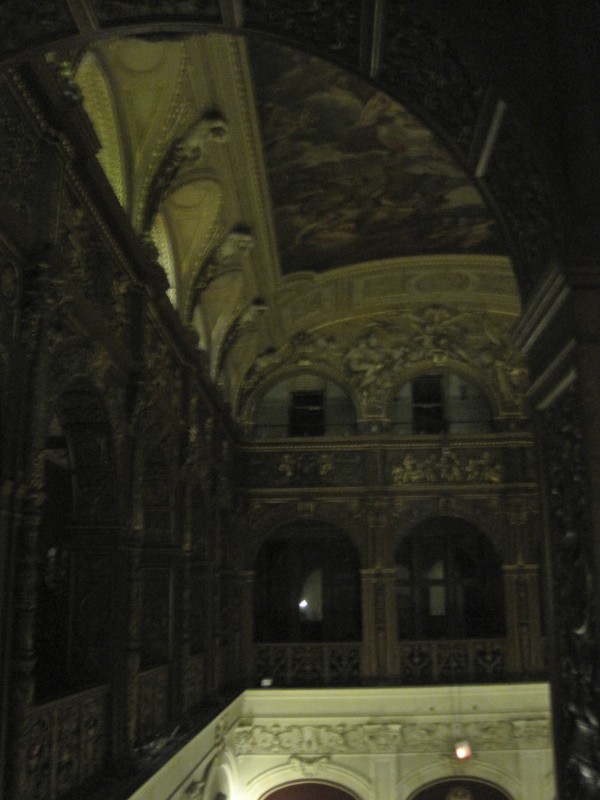
Ochre Court main ballroom upper levels and ceiling... Beautiful!!!
Looking down on the main ballroom at Ochre Court.
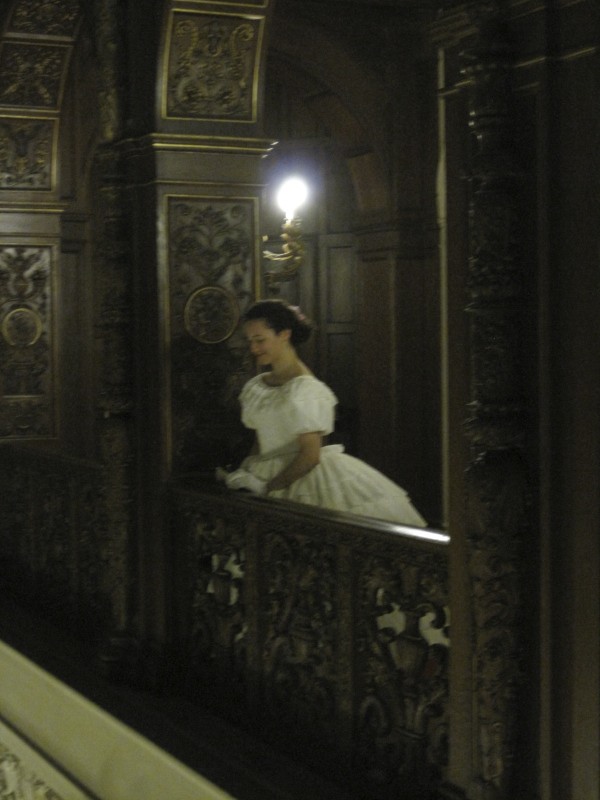
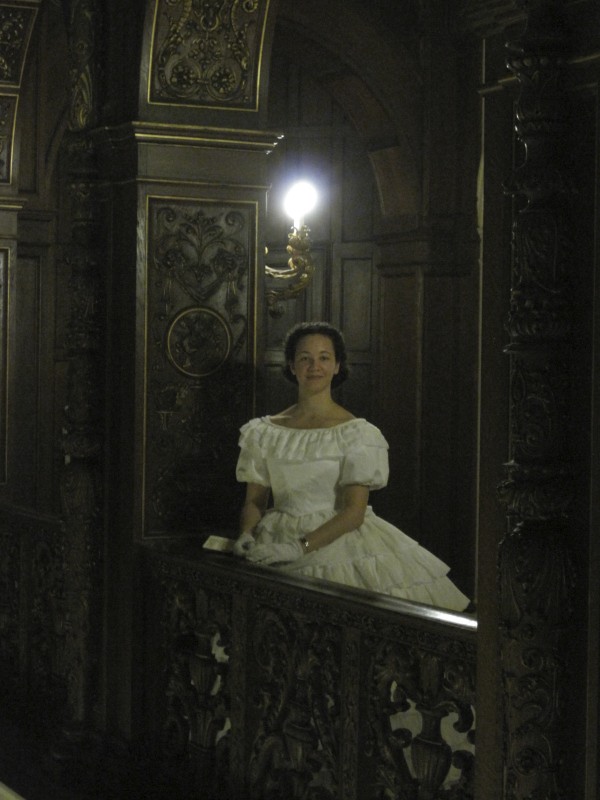
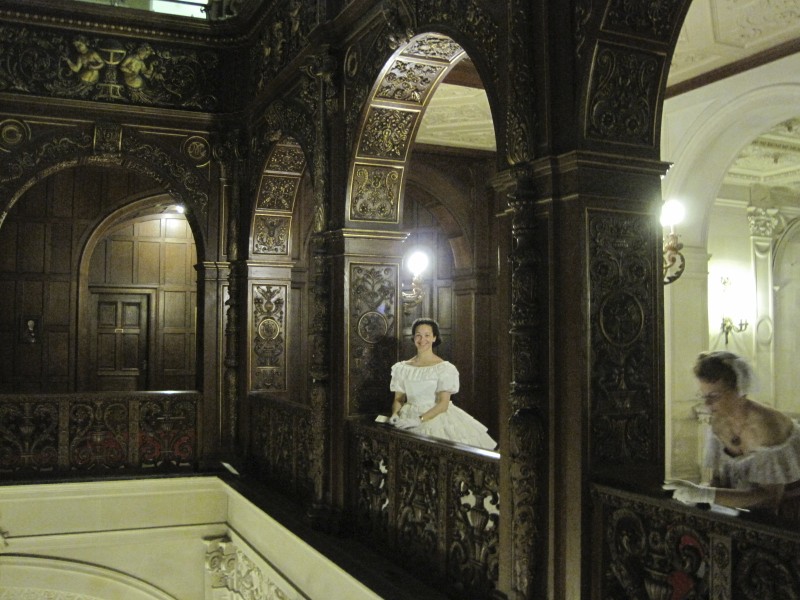
Oh look! There I am, watching the dancers below!
Look! There's someone taking pictures! (Look at the fabulous detail around me!)
Ah, now you can really appreciate the intricate detail!
Time to descend the stairs and dance!
And here are Terri and Carly, also descending the stairs!
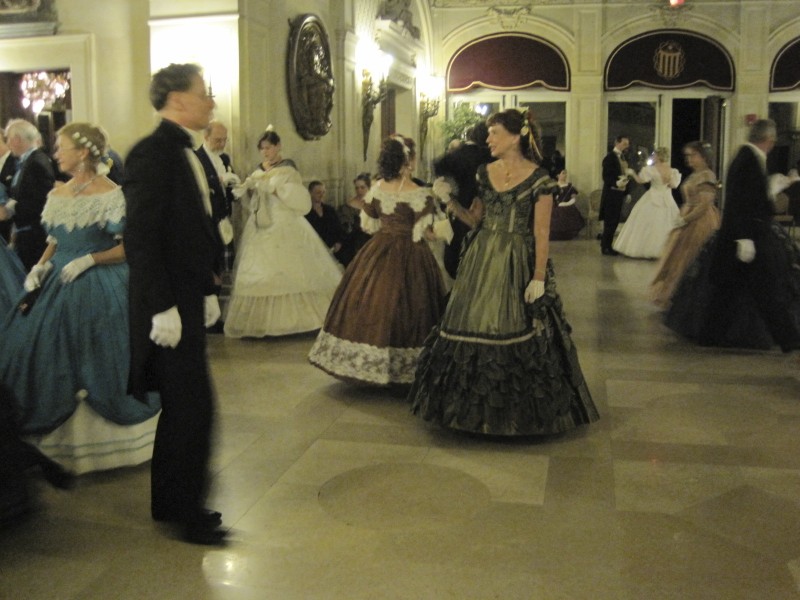
Dancers at Ochre Court.
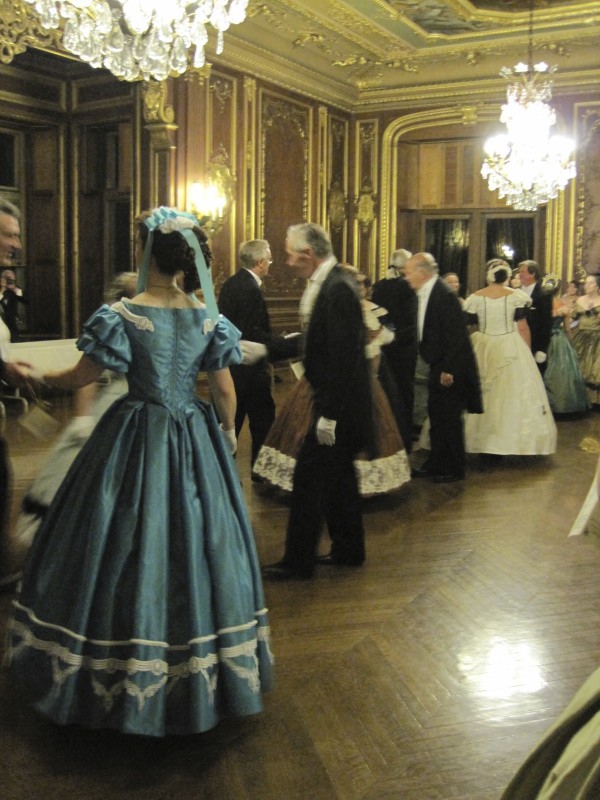
More dancers at Ochre Court.
Dancers in the dining room at Ochre Court.
Strike a pose by one of the enormous fireplaces!
Carly in front of the fireplace.
Taking a breather in the library at Ochre Court.
Would you care to dance? Ochre Court main ballroom.
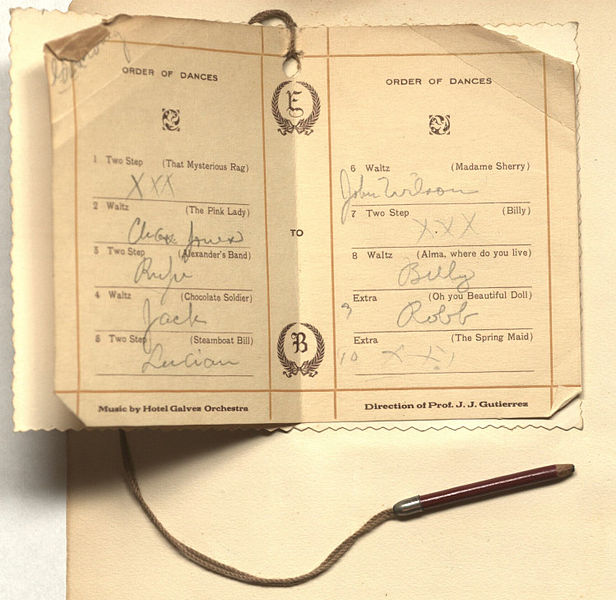
One more scene at Ochre Court.
Saying good bye to Ochre Court at the end of a fairytale night.

Of flounces and dance cards: Part II (Nahant Victorian Day 1860s Ball 2011)

Part II: …and dance cards

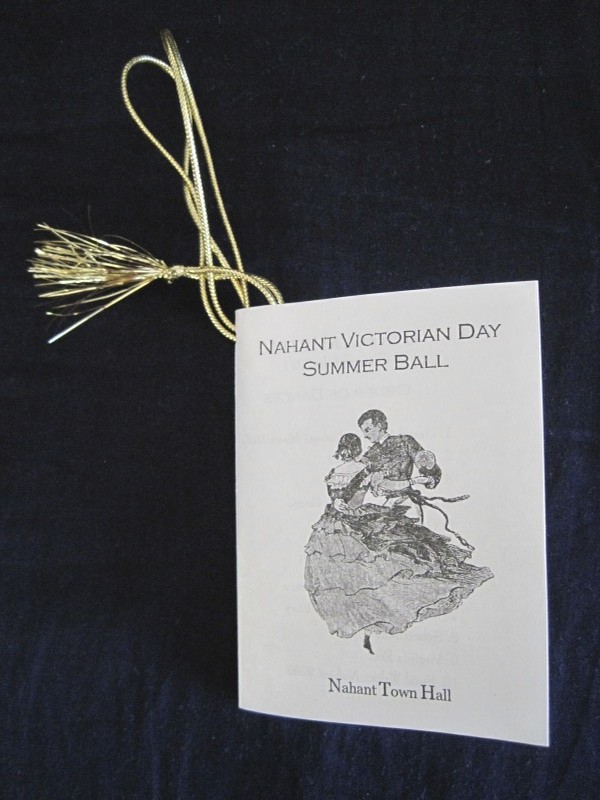
Dance Card from the Nahant Victorian Day Ball 2011

Last post, I shared with you my latest 1860s gown: Annabelle. This gown just recently had its debut at the Nahant Victorian Day Ball hosted by Vintage Victorian.

This ball included the use of dance cards, a practice I am aware of but have never participated in. It turns out that they are much more complicated than one thinks they might be! Why are the so complicated?

Well, it all sounds quite glorious and sophisticated. The Oxford English Dictionary defines a “dance-card” as “a card bearing the names of (a woman’s) prospective dance partners at a dance.” In stories and books, a dance card is a memento one can keep so that after the ball is over she can muse about beaus and flirtations. Practically, a dance card might help a person remember who his or her next partner is, what kind of dance the next dance is, or allow a gentleman to ask for a dance later in the evening.

But wait! There are complications and confusions! Does everyone have a dance card, men and women? Does a person take off his or her gloves before writing in a dance card? (I attempted this both ways: it is quite challenging to write your name while wearing gloves…) Does one exchange dance cards with a prospective partner or ask the name of the person and write it herself? (It seems more effective to swap dance cards with your intended partner to allow for ease of spelling, etc. and, in a more romantic sense, so that you have that person’s handwriting in your dance card.) How does one attach the card to her wrist so that it doesn’t get lost? How does one attach the card to her wrist without the pencil sticking out (so that her white dress isn’t marked!)? Really, a lot of questions popped up that would not have made themselves apparent without practical application. Also, at least at this ball, not having a prearranged partner did not necessarily mean that you were not able to dance. I was able to dance most of the dances of the night, despite my somewhat empty dance card.

Interior of my Dance Card from the Nahant VIctorian Day Ball 2011

Below you can see a few historic dance card images and below that some images of the ball! If anyone has any research on the use or history of dance cards, please share. I’d love to learn more about the etiquette of dance card use!

1884 Dance Card
1912 Dance Card
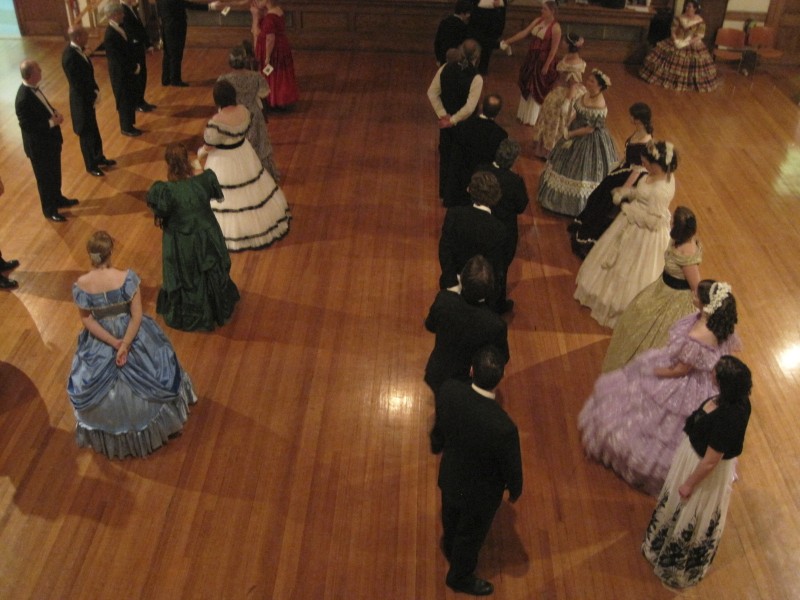
I believe this dance is the Contradance: Hull's Victory. (Nahant Victorian Day Ball 2011)
A different view of the same dance as above.
The Grand March. (Nahant Victorian Day Ball 2011)
More Grand March.

Here’s a video of the Grand March in action!

Of flounces and dance cards: Part I

PART I: Of flounces…

Flounced 1860s dresses seem to be pure confections: cupcakes iced with lace and frothy ruffles. That is the vision in my mind while I was looking for inspiration for my latest crinoline dress.

Fashion Plate from Godey's Lady's Book September 1859 "Dressed for a Party." (The dress on the right is the inspiration for my latest gown)

I already made one 1860s dress for myself. Named Belle, it is a dark blue satin and velvet gown with a three tiered skirt. It’s very heavy and a dark color: neither of those two features seemed fitting for a summer ball in temperatures around 80 degrees! And so I decided to create an all new gown… in my head this one is named “Annabelle.” (I hope you are also amused by the name!)

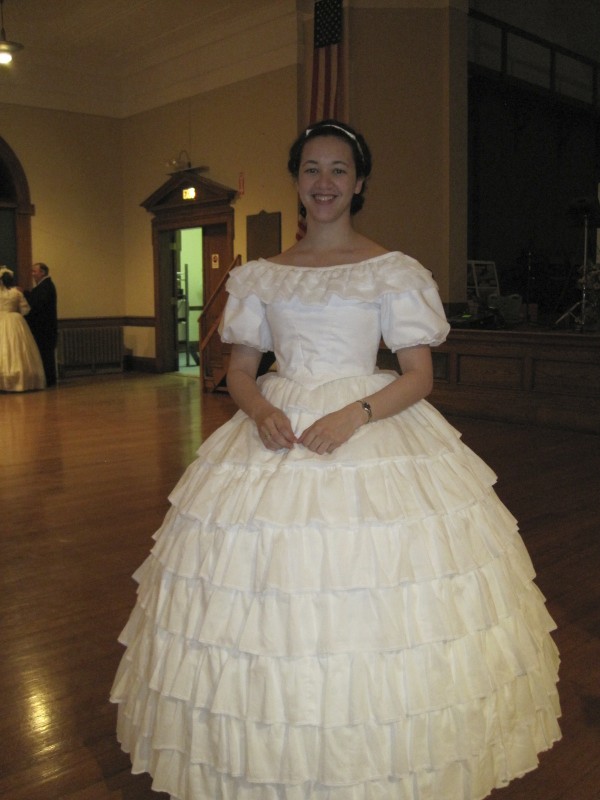
"Annabelle" my new 1860s ball gown

As you can see, there is one crucial element missing… the pink flowers! My goal is to make the flowers by hand from silk organza and to be perfectly honest, I ran out of time. I just decided to wear the dress as-is and finish the flowers later. I also ran out of time to bone the front, as you can see by the wrinkles along my tummy. No worries though, as I’m sure I’ll be able to wear this gown again.

"May I have this dance?" Side view of Annabelle.

In order to be to light and breathable, Annabelle is constructed entirely of cotton. The skirt has a medium weight cotton foundation to which cotton voile flounces are attached. The bodice is three layers of cotton for the sake of being opaque: two of medium weight cotton and one layer of voile. The layers are flatlined together and treated as one piece. The flounces on the skirt and bodice are cotton voile edged in narrow white lace.

This gown was flat patterned using research from books by Janet Arnold, Norah Waugh, and Kristina Harris.  View this post about patterning from my Project Journal: Women’s Tailoring to see which titles I used and get a smidgeon of bibliographic information. The skirt pattern is fairly simple: a big tube cartridge pleated at the waist. The bodice has narrow v-shape seams front and back with puffed sleeves and a flounced bertha. It is worn over a chemise, corset, double thickness bum pad, hoops, and petticoat.

While this dress is eventually intended to be a reconstruction of the dress in the 1859 fashion plate above, I was also inspired by these other, similar fashion plates for further information. Enjoy!

Fashion Plate from Godey's Lady's Book October 1859 "The Soiree"
Fashion Plate from Godey's Lady's Book August 1859 "Godey's Fashions for August"

A waltzing Zouave?

In my last post (Returning Heroes 1860s Ball 2011) I mentioned that one of my favorite moments of the night was dancing a waltz with a Zouave. First of all, what is a Zouave? Secondly, why would I be dancing a waltz with one at at 1860s ball???

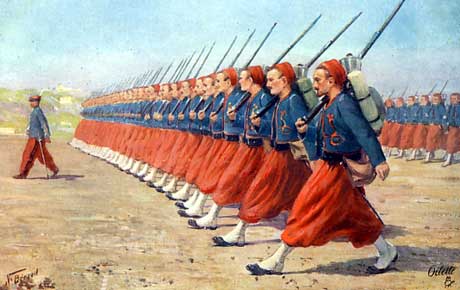
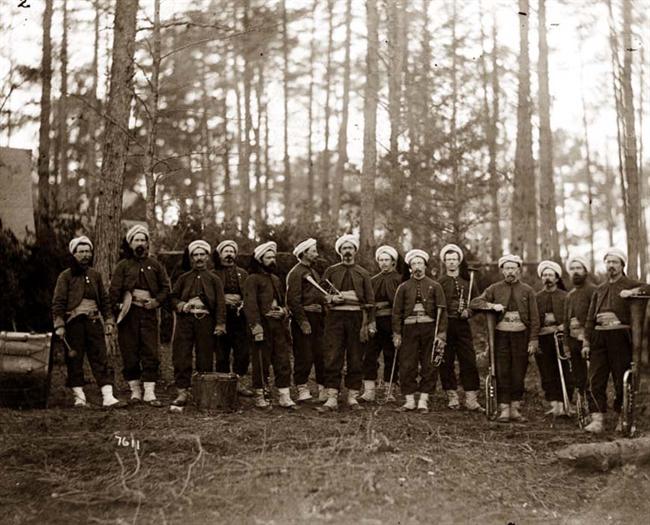
In the 1830s, the French military fighting in North Africa incorporated a tribe of fierce fighters into their ranks. These original soliders were renowned for their skills. In fact, in 1852 the French created three units of Zouaves to be entirely of Frenchmen. These French Zouaves achieved legendary status for themselves during the Crimean War (1854-1855). More detailed information about their involvement can be found in this history of Zouaves (this site also has some great pictures of Zouave regiments). The French Zouaves were quite inspirational to American forces during the American Civil War: both the Confederate and Union armies formed Zouave regiments who wore imitations of the French uniforms.

114th Pennsylvania Infantry (1861-1865)
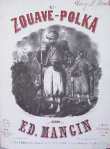
Zouave Music Sheet 1850-1865

Now we know what a Zouave is. Why would I be dancing with one? Well, the idea of the Returning Heroes Ball is that “Gentlemen in uniforms of both sides of that great conflict are welcome.” So it is perfectly reasonable for a Zouave be dancing alongside the formally clothed men at the ball. Fun!

Returning Heroes 1860s Ball 2011

I was reminiscing recently and realized that I neglected to post about the Returning Heroes Ball hosted by the Commonwealth Vintage Dancers in March 2011! I had such a fantastic evening that I decided that late is better than never!

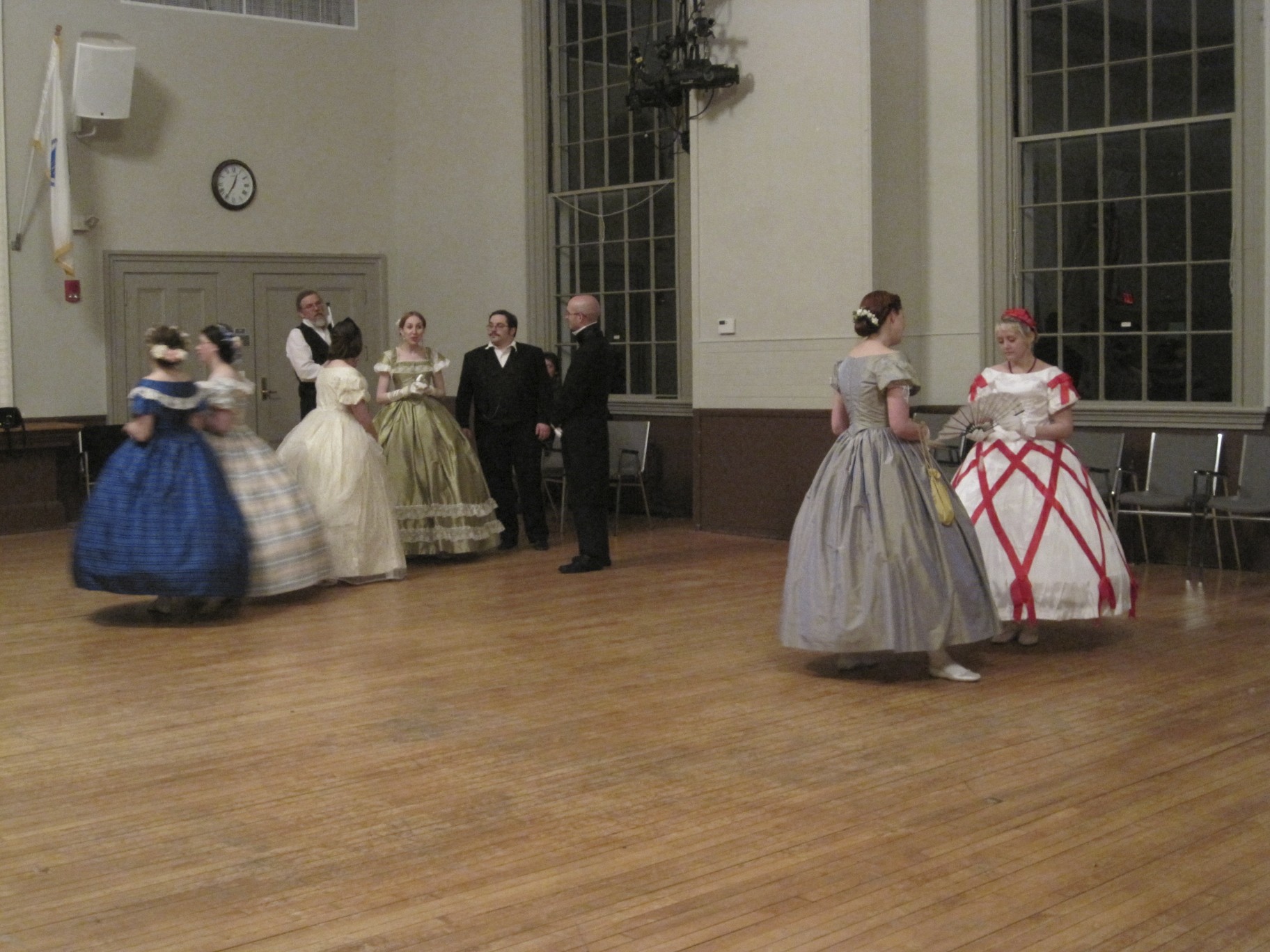
I have been dreaming of being in a room full of people all wearing crinolines and period menswear for years: the 1860s are my most favorite period! The night started out with all the ladies helping each other get dressed: lacing corsets, donning hoops and petticoats, fluffing skirts,  and securing bodices. Of course, it does take some time to get dressed, so while we were dressing the band was warming up and the men were standing around looking important and discussing… well, who knows what?

We were supposed to be using dance cards, but I was disappointed in that part of my dream as we wound up not using the dance cards that had been prepared. But that didn’t dampen my spirits for more than a minute or two, because the band started playing and we began to dance!

I have two favorite moments from the night: 1- dancing the Grand March in which every lady was wearing hoops (there was a lot of friction as well all spiraled around each other), the best part of which was joining in lines and progressing down the hall to “Dixie” and 2- dancing a waltz with a Zouave (see picture left).

Here’s a few more pictures (I should have taken more, but I was busy dancing!). I’ll just end with this video from the Returning Heroes Ball in 2007. It starts with a Grand March and starting at about 60 seconds “Dixie” is playing! Enjoy!

The 14 hour Regency dress (Sense and Sensibility Regency Ball 2011)

I’d decided months ago to attend  the Dancing with the Dashwoods (Jane Austen period) Ball recently hosted by the Commonwealth Vintage Dancers; however, I was in a sticky spot about what to wear! I did not have a dress appropriate to the period of this ball and I really needed to focus on my tailoring project… what to do?!?

Well, I decided to spend just one day making a cotton Regency dress. I quickly adapted a pattern from Norah Waugh’s The Cut of Women’s Clothes: 1600-1930 to my size and decided to forgo the mockup step. Cutting out the fabric is my least favorite part of making garments, so I tried to make that part go as quickly as possible.

In an effort to simplify things, I included two petticoat layers in the dress itself and decided not to worry about finishing my seams on the inside. The bodice also has two extra layers inside of it to keep it opaque. Each piece (of three layers) was treated as one piece when I went to sew it.

All in all, the basic seams went quickly. What slowed me down and took about a third of my time on the dress were the finishing steps of completing the neck trim and putting closures on the back. The trim took a fair amount of time to pin, stitch, and thread through the ribbon loops, and the hook and thread loop closures took time because it was getting late at that point…

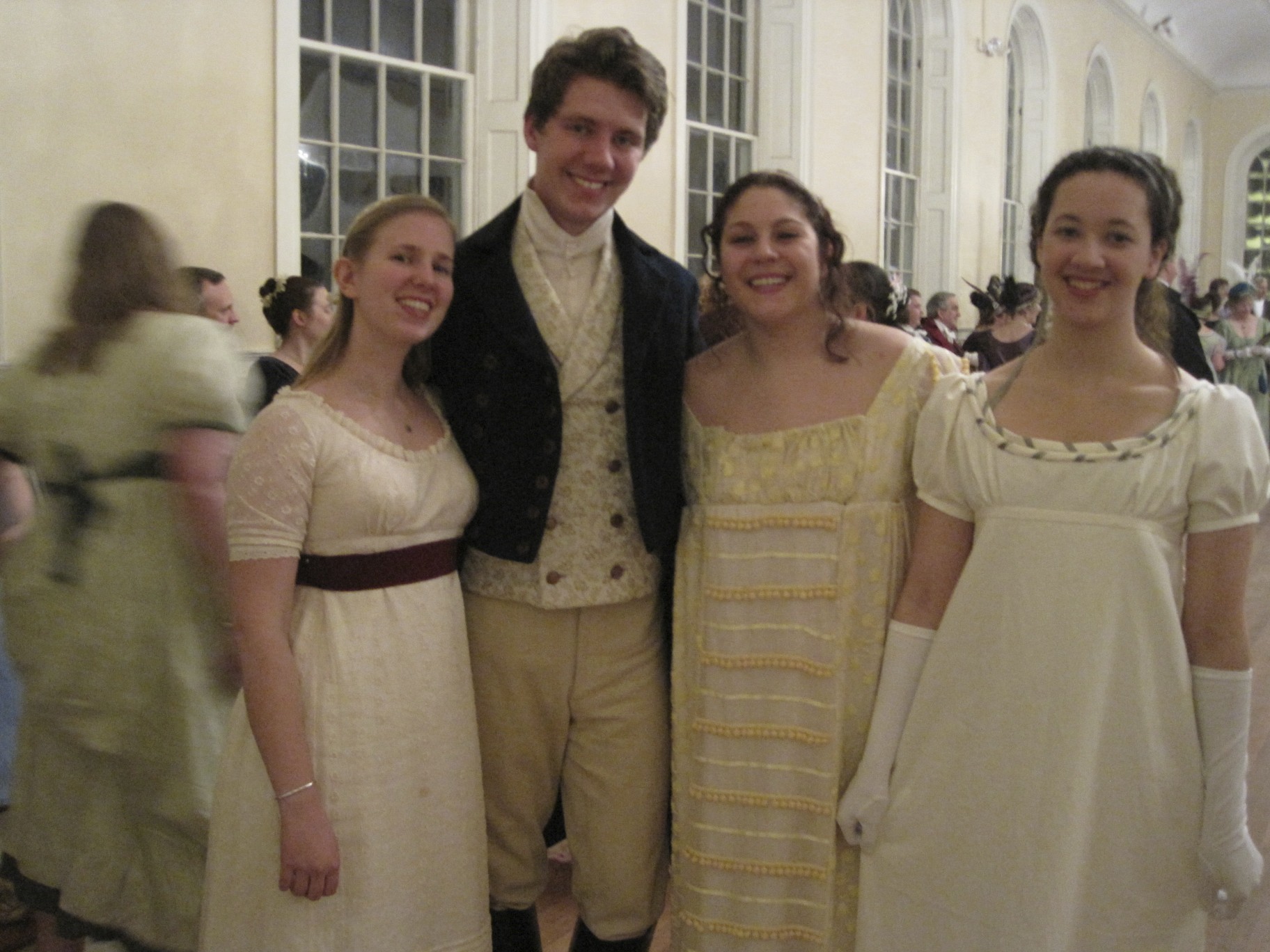
Fast-forward to the ball! I had the good fortune to be able to bring along friends as well! It was crowded but super fun to dance in period costume and a period hall! Enjoy the photos!