1815 Tree Bonnet (HSF #7)

You know how sometimes the best laid plans are waylaid by life? I had every intention of finishing this bonnet before the HSF deadline of yesterday, but along the way got side tracked by life and made conscious choices to do other things with my time instead of bonnet-ing. Oh well, it happens to the best of us!

IMG_4407
1815 bonnet (the more interesting side).

I made this bonnet to coordinate with my new Regency Tree Gown (which is why I’m calling it the Tree Bonnet). Lucky for me, it also fulfills the HSF Challenge #7: Accessorize and will coordinate with other items already in my closet (such as my 1819 brown spencer). I’ll be wearing the new gown, the spencer, and the bonnet this weekend for the Regency Dance Intensive, along with a lot of other Regency things, so be prepared for lots of pictures next week!

The facts:

Fabric: Silk twill, changeable silk taffeta for trim, and china silk for lining.

Pattern: Created by me.

Year: 1815.

Notions: Four approximately 8″ pieces of sage green polyester ribbon, a spray of wired millinery flowers, about 1 1/2 yds of navy silk ribbon for ties, about 3/4 yd of navy grosgrain ribbon for inner band, buckram for the base, millinery wire, cotton flannel for mulling, tacky glue, and thread.

How historically accurate?: 95% I’d say. There are a few polyester things, but the overall shape, impression, and majority of materials are accurate.

Hours to complete: 28? Hand finishing and trimming takes a long time, especially on hats, because the angles are weird, so it’s a slow process.

First worn: Not yet, but will be worn this weekend!

Total cost: $6ish for the silk twill bit, the green silk and china silk are remnants from other projects, the polyester bits are old and from the stash, the millinery flowers were from the stash, the buckram was maybe $4, the wire was probably $2… so about $12? I didn’t buy anything special for this bonnet, it’s all from the stash! Yay! Go me!

IMG_4408
Close-up of the pleated silk trim and rosette-like decoration. You can also see the pleats on the side band of the bonnet.
IMG_4409
The millinery flowers on the front of the bonnet.
IMG_4410
The more plain side.
IMG_4405
Inside of the brim, looking into the lining and hat band.

This week marks the end of the MpRSW (though I still have one more post to go about that), with the final goal aimed at yesterday, #5: Anything Left! I’d already completed some packing for this goal, and procurement of kite making supplies (yes, there will be a future mention of kites!), but this bonnet also qualifies!

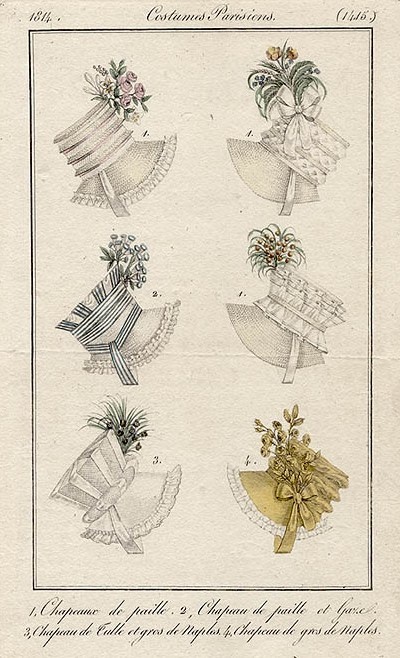
Now let me share some of my inspiration for this bonnet. There are more bonnet images on my 1810s Pinterest page as well.

9b8f7b45f7afff8db618554b973b5eab
From 1815. 
Volare digital capture
La Belle Assemblee, Parisian Promenade Hats, July 1816.
cf83f2dc91eb3bf303ba9087826b8419
Costume Parisien from 1814.
5aaaeddcc5533ec69fe92be1e72f8c83
Costume Parisien from 1815.

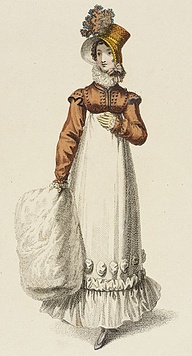
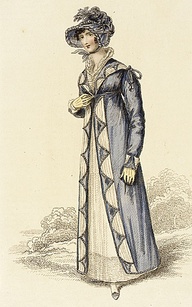
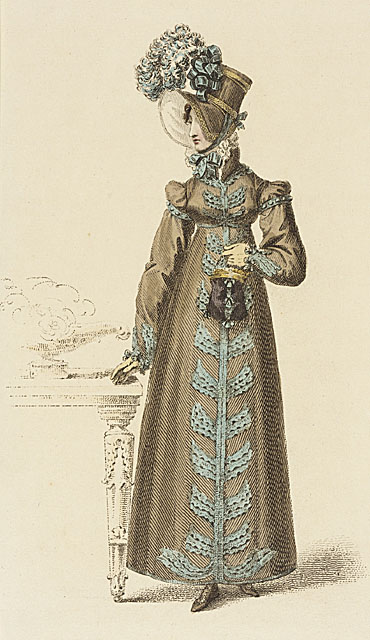
In trying to determine length of ties for the bonnet, I looked to some fashion plates that included people in them. Here are some of the best examples I found.

Volare digital capture
1813 afternoon promenade dress.
Volare Digital Capture
Ackermann’s Repository, Walking Dress, April 1817.
Volare Digital Capture
Ackermann’s Repository, Walking Dress, November 1817.
Volare Digital Capture
Walking dress 1815
61acb0c35e149289d55017462f06b675
EKDuncan – My Fanciful Muse: Regency Era Fashions – Ackermann’s Repository 1819
Volare Digital Capture
Ackermann’s Repository, Walking Dress, February 1818.
800b11831fa576966952e099671eae3e
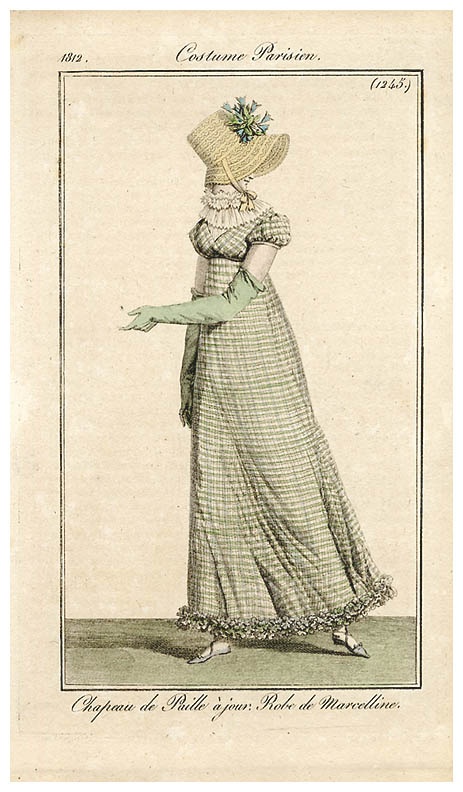
Robe de Marcelline, 1812 Costume Parisien

Well, there we are. I just finished sewing that pleated brim trim tonight, and I am glad to be done! It’s slow and slightly painful on the fingers. But pretty, so totally worth it!
January Stash Additions

This story starts as so many sewing related stories do: I went in “just to look.” In fact, we all went in “just to look.”

I’m sure you can guess what happened…

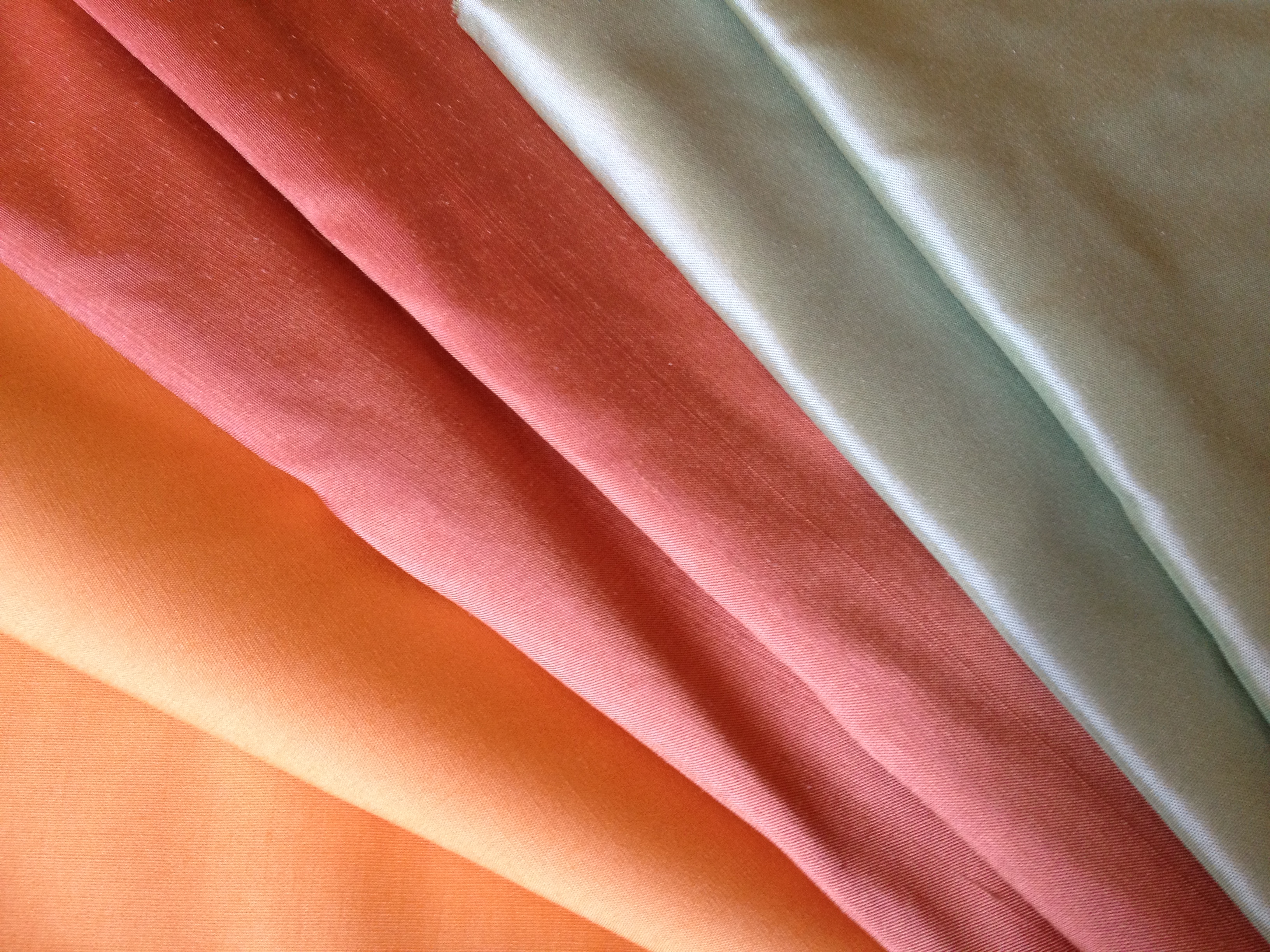
All three of us each came out with 2 or 3 lovely fabrics! We just couldn’t resist the bargain priced silks! My stash additions: 4 yards of apricot cotton, 6 yards of pink silk, and 2 yards of icy green silk. All truly stunning colors on their own, but together they just make me super happy!

IMG_0255

What will I use them for, you ask? What a practical question! Well, the cotton for an 18th century under petticoat (a garment that will probably never be seen, so I picked a fun color that is vaguely plausible for that period), the icy green silk for 18th century accessories (hat, muff cover, and maybe mitts, with some leftover to do something else with as well…), and the pink for… something. Perhaps an 18th century something, maybe a sacque? Perhaps a 19th century something, maybe a bustled gown? I got enough to make something and have enough for self fabric trim, I think (it was all that was left on the bolt…). I’ll have to wait to be specifically inspired, but in the meantime I am generally inspired by the color. It’s a great grown-up shade of pink! Whee!

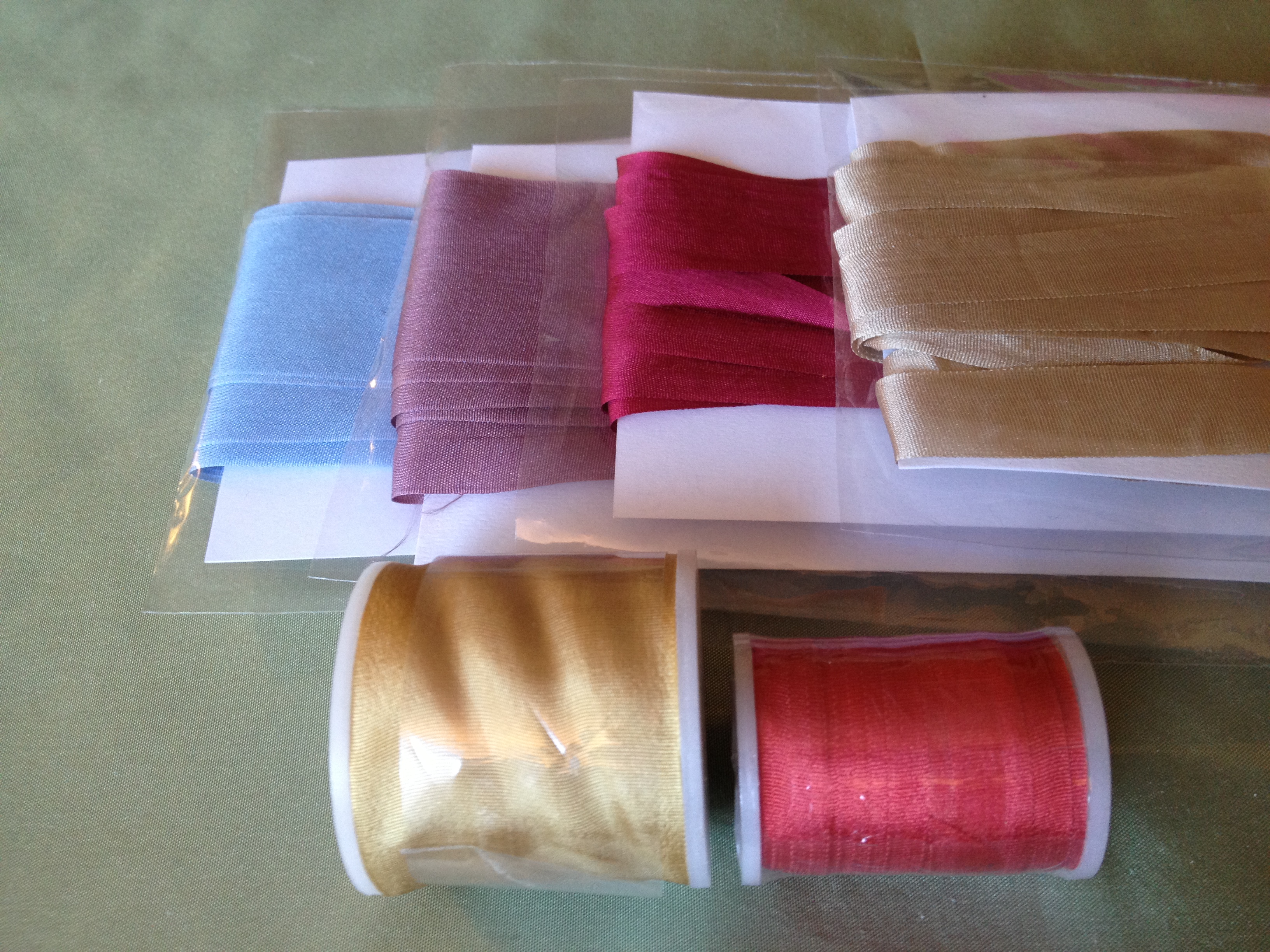
I also bought some silk ribbon that is a stash addition. The champagne ribbon on the top is the ribbon I plan to use to decorate my Kensingtons. Of course, while looking for that I got totally distracted and overwhelmed by other beautiful ribbons as well… not surprising, really, considering how lovely they are!

IMG_0256

 I justified their purchase by proposing a use for each of them. Blue: to trim my soon to be made Waverly Mineral Felicite 1780s jacket. Purple (they called it silver/grape, which is a cute name): to trim future Regency bonnets and an 18th century cap. Dark pinkish/red: I couldn’t resist the color! One day I plan to make the Costume Close-up laced front jacket, and I think this would be lovely for that, perhaps with some plain purple wool that is in my stash. Champagne: to trim my Kensingtons. Gold spool: to trim an 18th century hat, perhaps with my icy green silk? We’ll see about that. Persimmon spool (it’s not quite so bright in person): I couldn’t resist the color! I love it! I do plan to use it to bind some 18th century pockets in the near future (it will make me super happy to know that color is on my pockets, even if no one else sees them!). I have 10 yards of it… so I’m sure it will get used for other things as well!

Project Journal: 1815-1820 Regency Ensemble Part VIII: Re-Trimming the Bonnet

As with the 1819 ivory gown, the bonnet that is part of my late Regency look has also been remade from its original style. Why re-make it, you might ask?

Though the bonnet was based off of an 1819 illustration in Cunnington’s English Women’s Clothing the Nineteenth Century, it was built for use in the theatre, so the materials used to trim it are nowhere near accurate for off stage use. However, the shape and placement of the trim was accuratly reproduced from the inspiration image and that fact made the re-trimming possible, because the base of the bonnet could remain unchanged!

Before: The bonnet before re-trimming

The original trim was entirely polyester, which stands out when placed with other, more accurate garments and in natural light (rather than stage lighting). The color scheme was pink and peach fabric manipulated in various ways: the flowers were pinked and gathered lengths of polyester fabric, the ribbons were bias cut polyester fabric, the inside of the brim was lined with pink polyester shantung, and the brim was edged with white polyester lace. Aside from the polyester problem, the pink color scheme would not match my darling new spencer, which is brown and green. It’s not that the colors would clash, it’s just that they would look like they were not intended for each other… and I really wanted a coherent, matching look to my ensemble.

And After: The re-trimmed bonnet with matching spencer

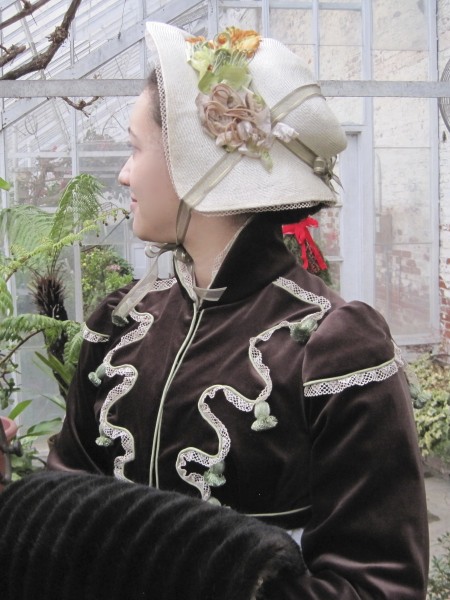
I removed all of the fabric flowers, the bias ribbon trim, the lace edging and the lining. The lining was replaced with green silk shantung to match the new bonnet trimmings and the spencer while the lace edging was changed to light brown vintage cotton lace that matches the lace used on the spencer. The flowers were replaced with millinery flowers in green and light brown from my stash. I decided to use the spark of orangey-brown near the top so that the bonnet wasn’t too matchy-matchy. The ribbon was changed out for a matching green ribbon that has narrow bands of gold along the edges (I confess it is still polyester… but I like the look of it and I didn’t have enough of my matching green silk satin ribbon to use it, nor did I like the shine of the satin with the green of the flowers). And voila! A bonnet that now is the right shape and has the right trimmings to match my Regency ensemble!

You can see the green bonnet lining here

Project Journal: Victorian Women’s Tailoring Part X: 1913 Gallery

Here we finally are, at 1913! Let’s look at some truly lovely pictures!

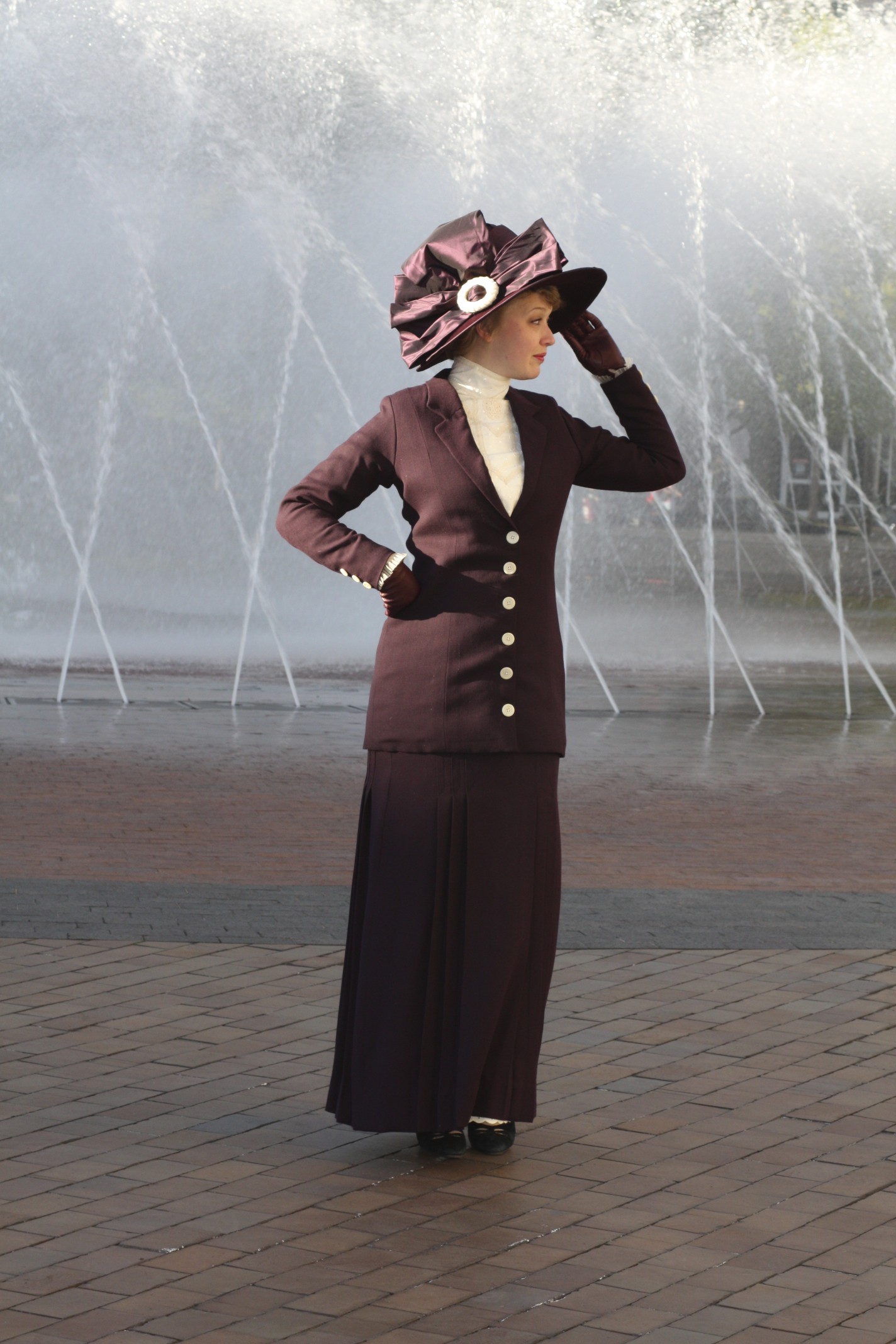
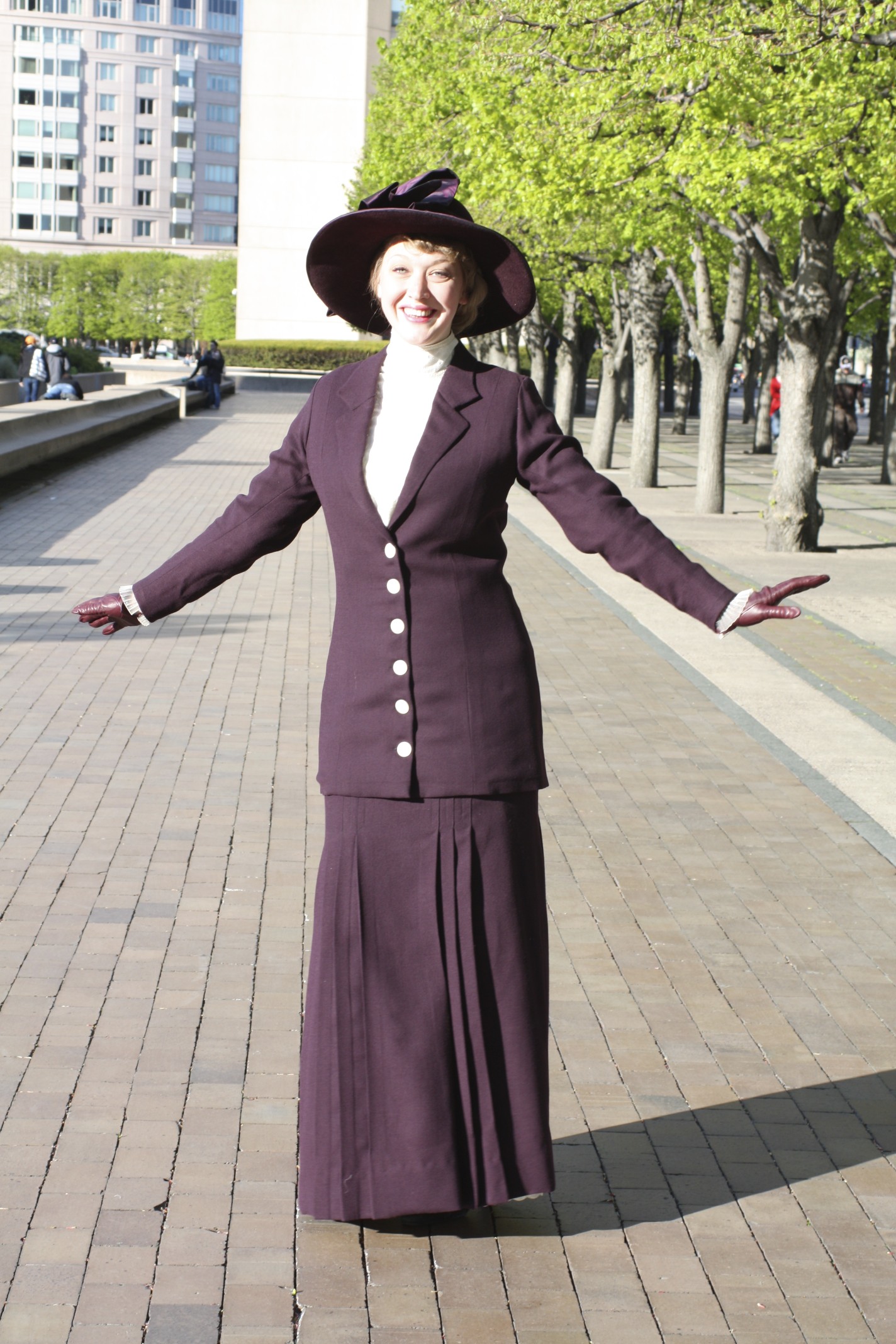
1913: Wool Suit. Wool Hat with matching Taffeta trim.
1913 Suit and Hat
1913 Suit and Hat
1913 Suit and Hat
1913 Suit and Hat
1913 Jacket and Hat
1913 Skirt, Blouse and Hat
1913 Blouse and Hat
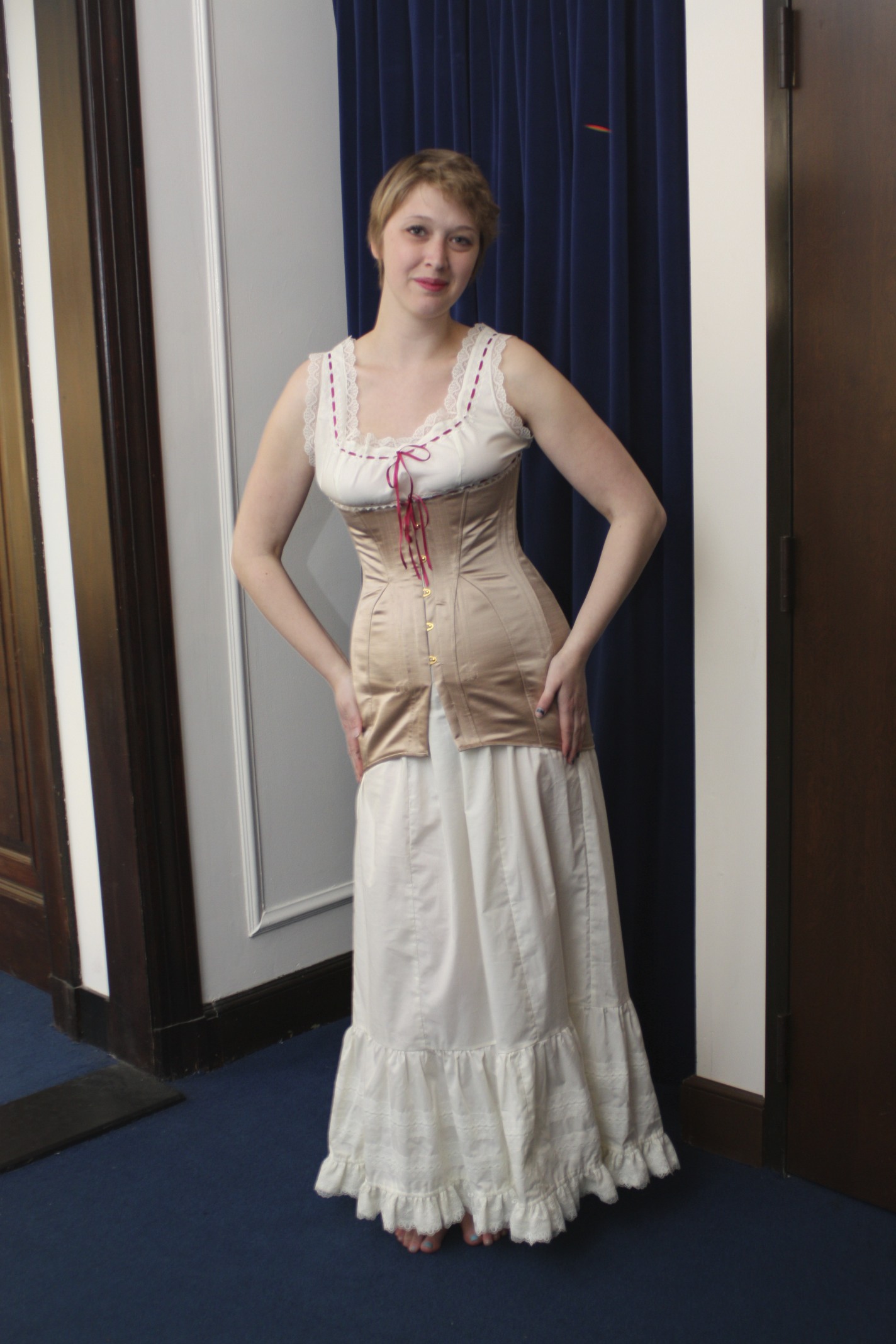
1913 Undergarments: Corset Cover and Petticoat
1913 Undergarments: Chemise and Corset
1913 Corset

Project Journal: Victorian Women’s Tailoring Part IX: 1903 Gallery

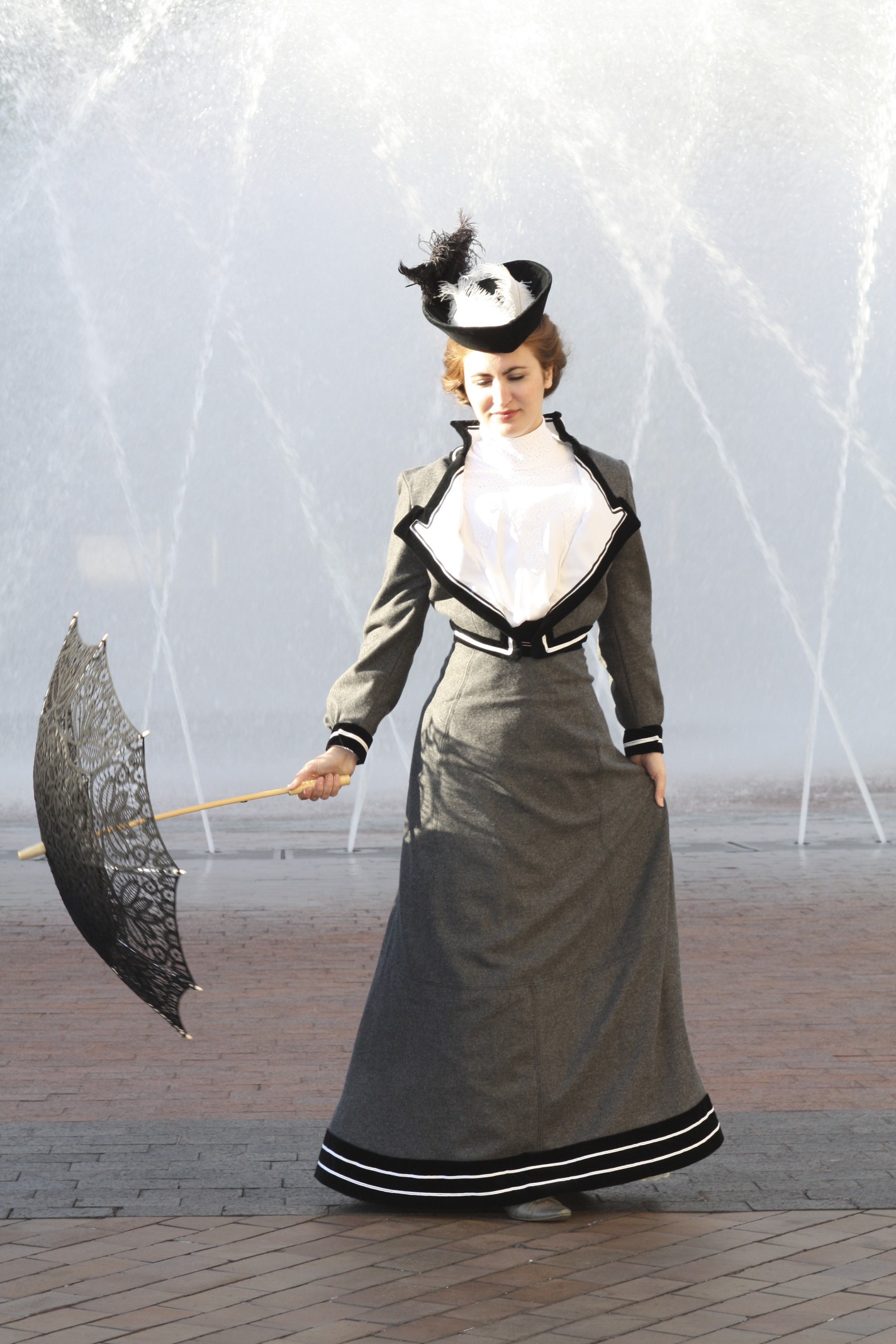
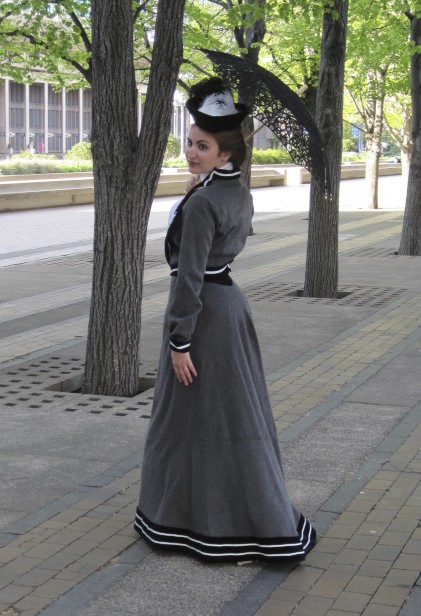
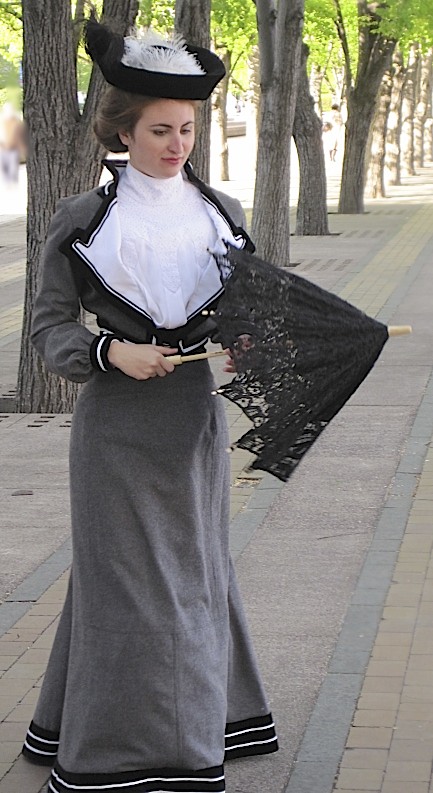
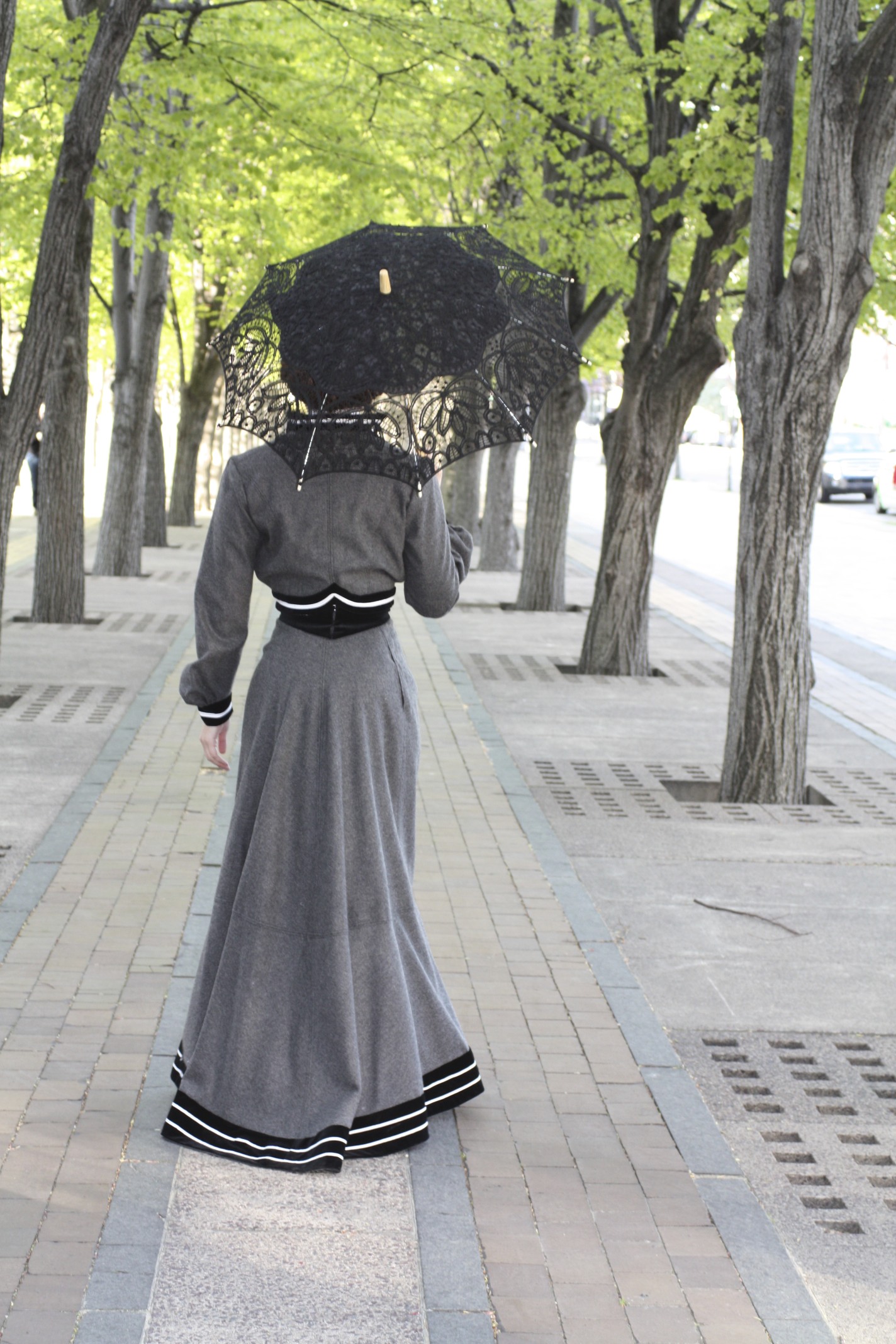
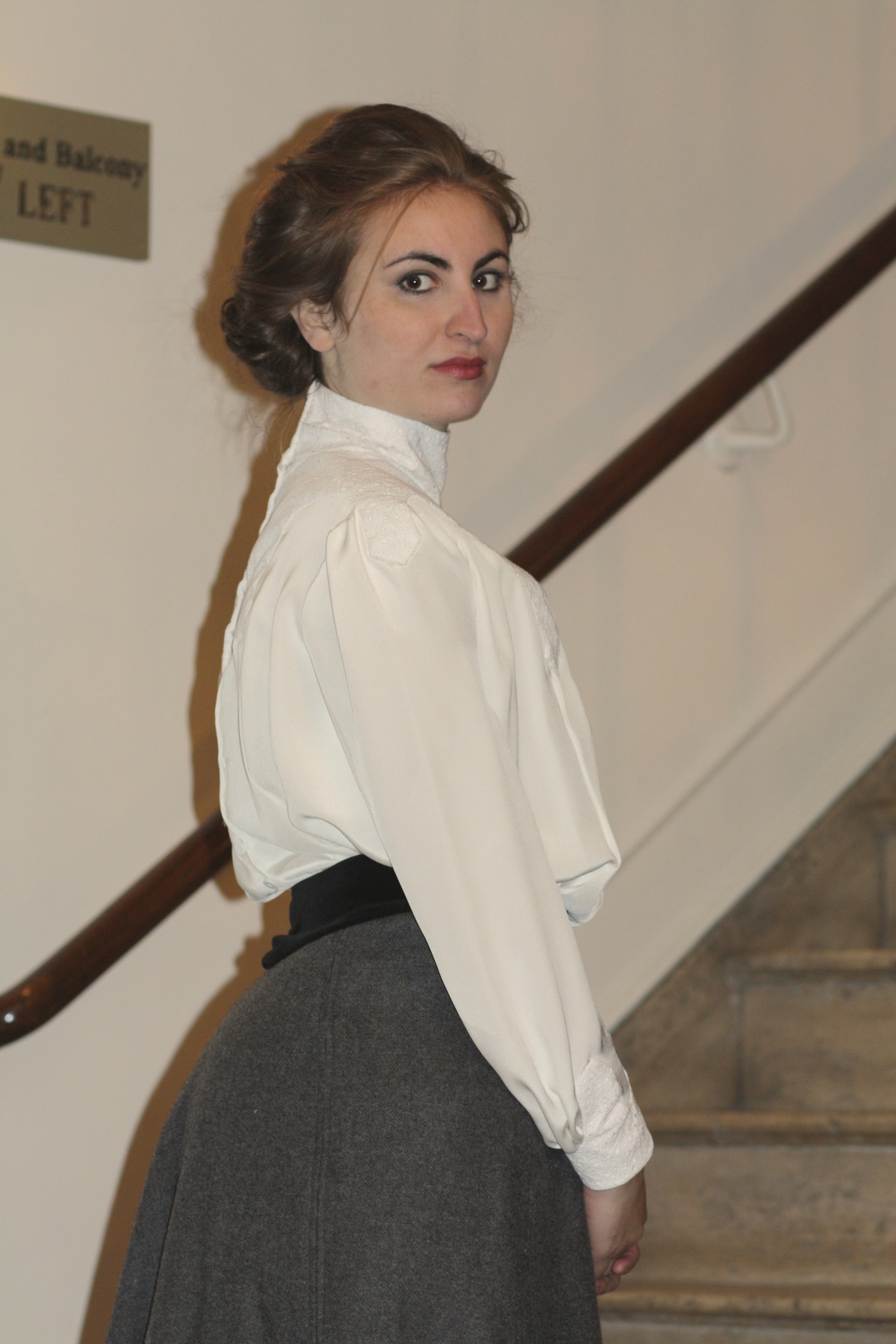
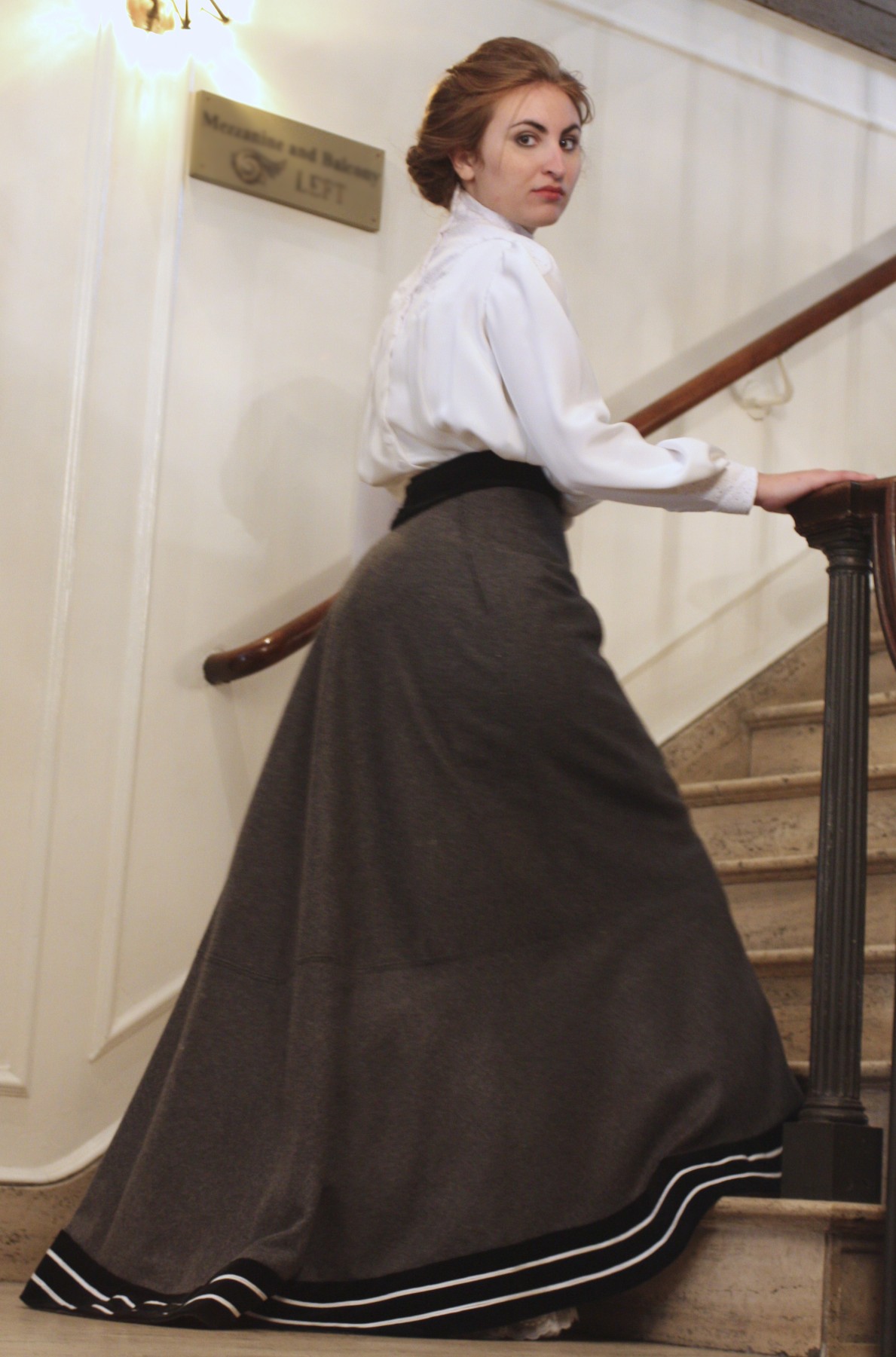
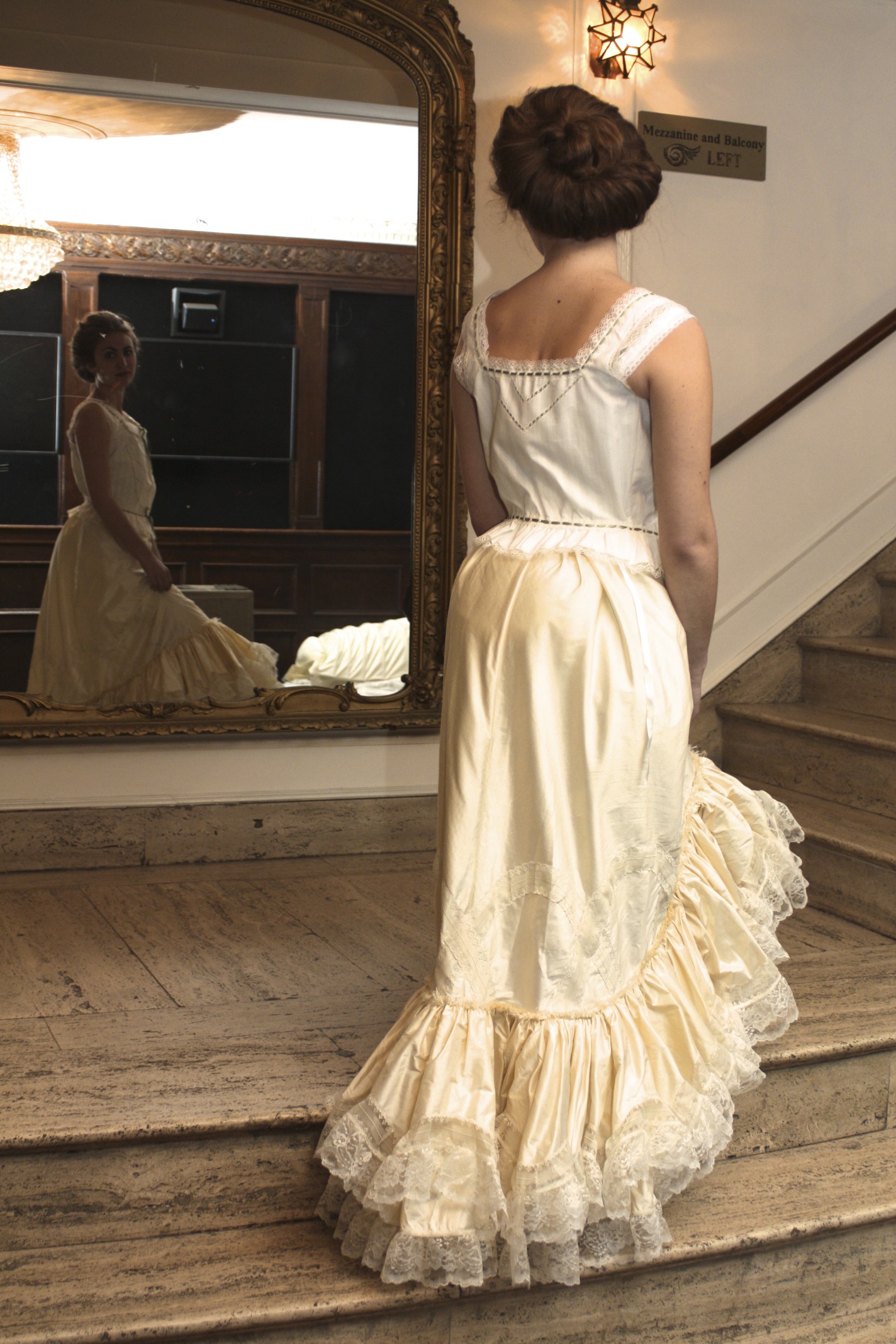
Well, we just got to see my 1883 tailoring project. Now let’s enjoy taking a mental stroll with my 1903 tailored look! Again, there are lots of pictures to see!

1903: Wool jacket and skirt trimmed with cotton velvet. Velvet covered buckram Hat.
1903 Skirt and Jacket
1903 Blouse
1903 Skirt and Blouse
1903 Undergarments: Corset Cover and Petticoat
1903 Undergarments
1903 Corset Cover
1903 Undergarments: Combination and Corset
1903 Corset

Project Journal: Victorian Women’s Tailoring Part VIII: 1883 Gallery

Oh my goodness my 1883 tailored bustle dress and undergarments are finally finished!!! YAY! Let’s glory in the beautiful pictures and the fabulous clothes… Since I can’t decide which pictures I like best, you get to see more than a few.

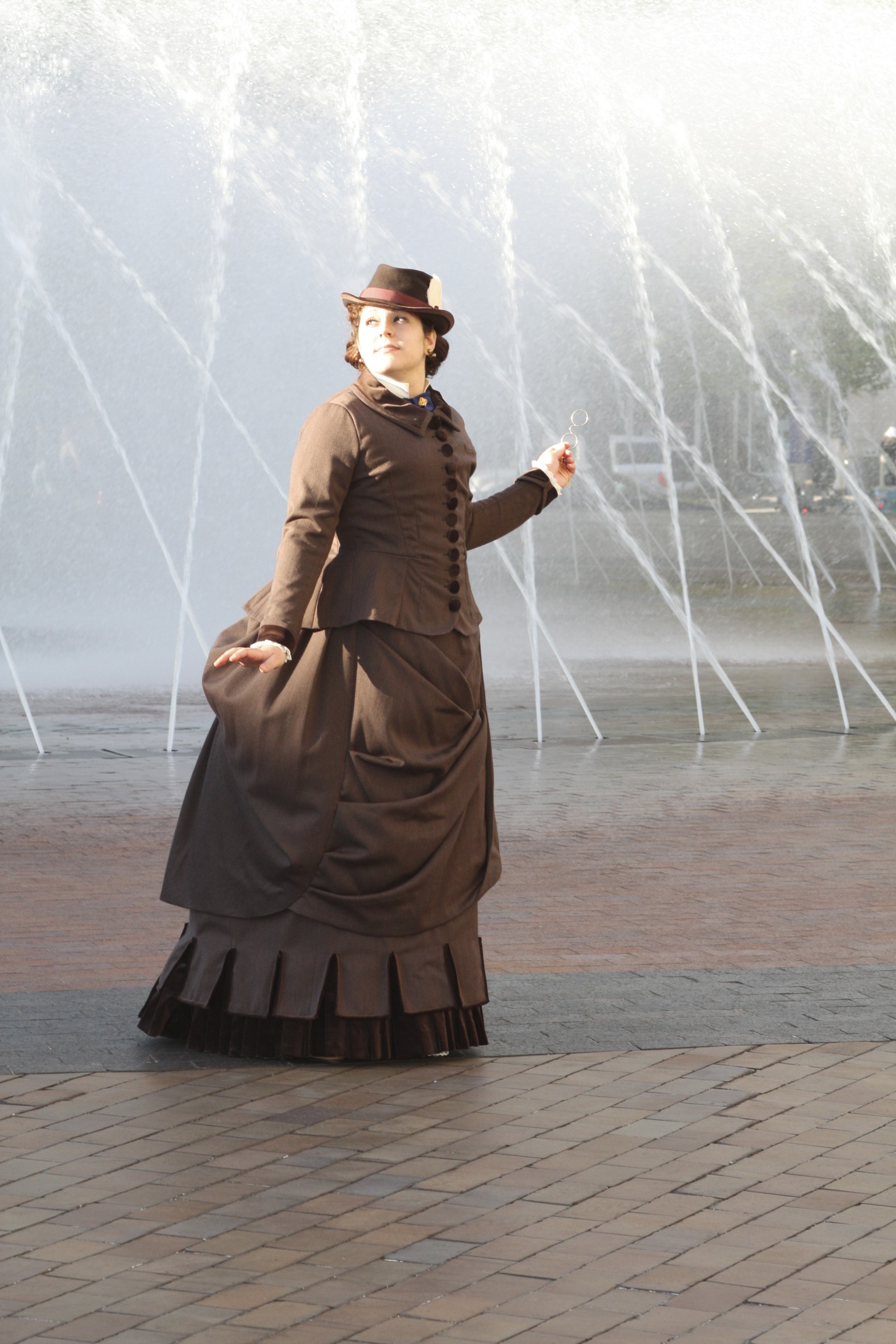
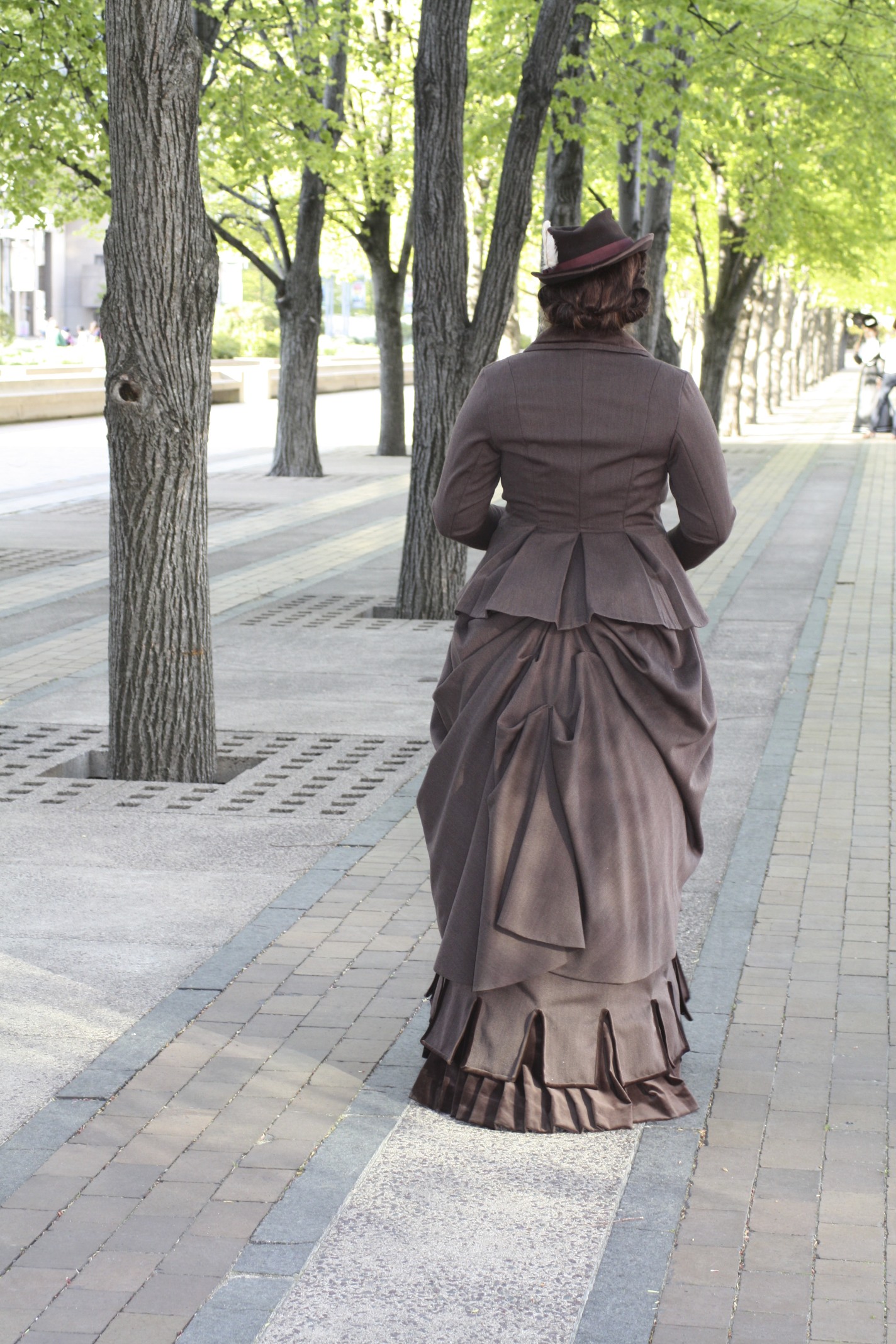
1883: Wool skirt and jacket with velvet trim. Wool hat trimmed with velvet and feathers.
1883 Bustled Skirt
1883 Bustled Skirt
1883 Skirt and Jacket
1883 Jacket and Hat
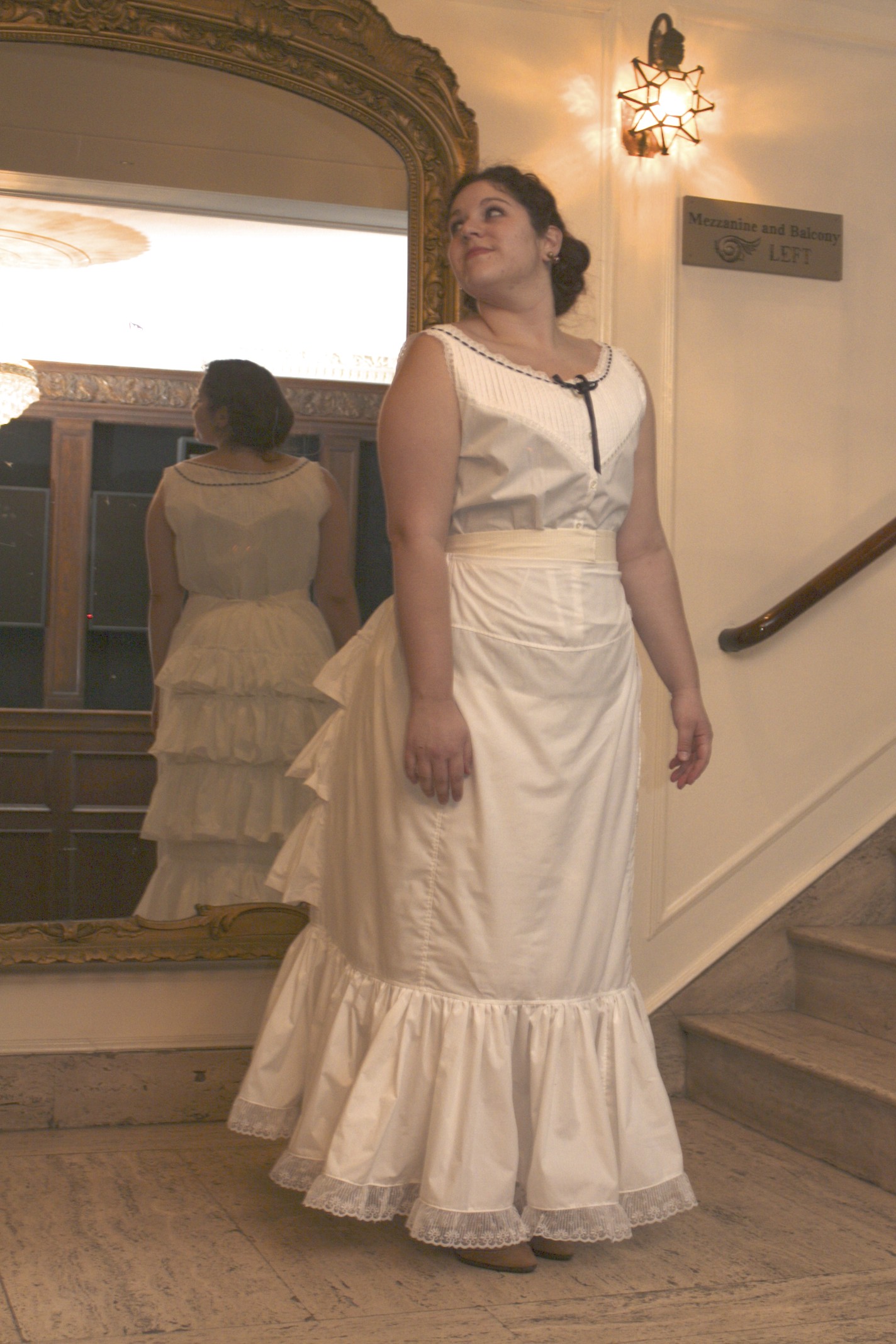
1883 Undergarments: Petticoat and Corset Cover.
1883 Undergarments: Bustle!
1883 Undergarments: Chemise and Corset

Project Journal: Victorian Women’s Tailoring Part VII: Fitting 1913 Garments

Finally, here are some pictures of my fitting for my 1913 tailored look!

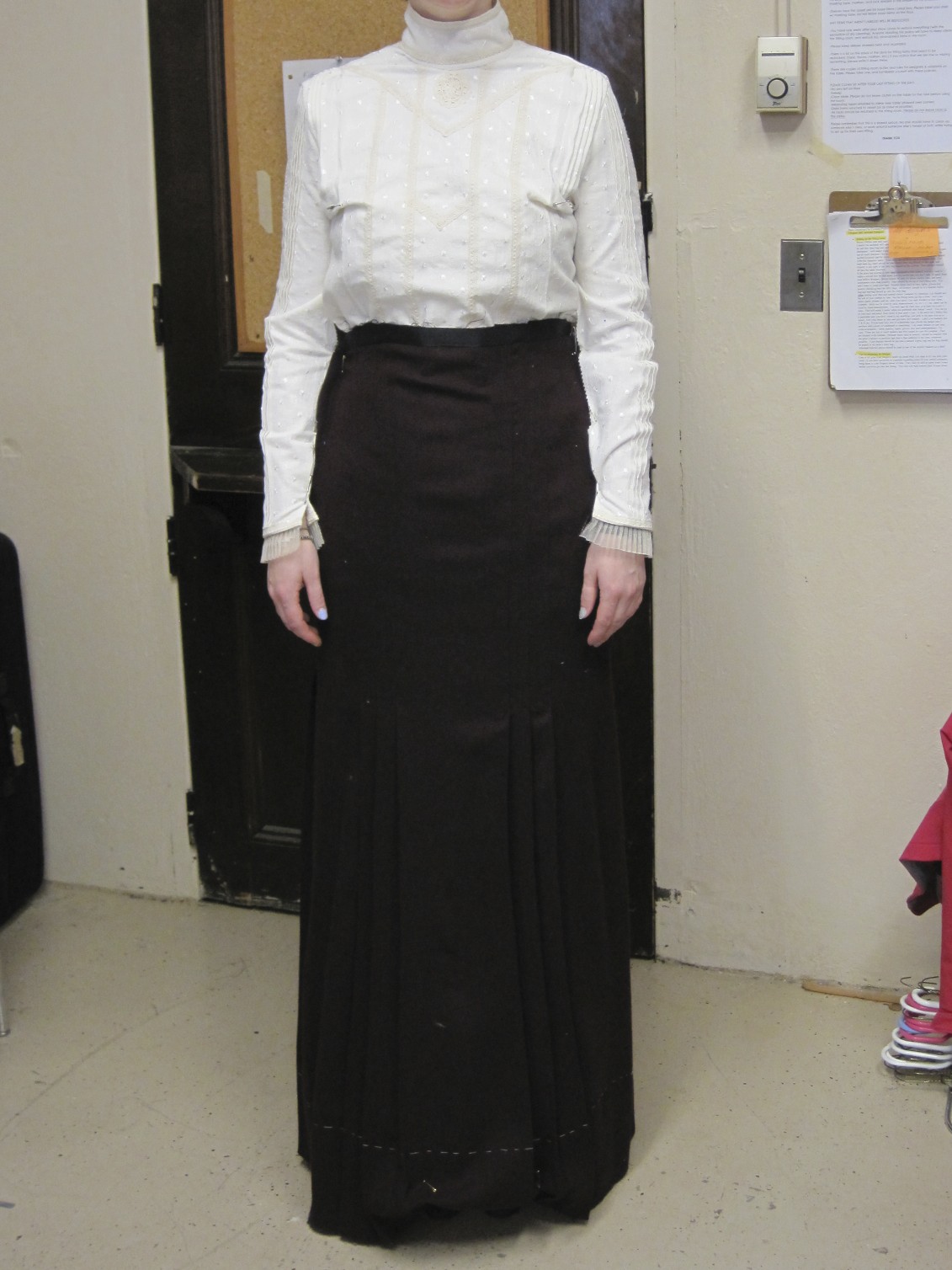
We’ll start here, where you can see the mostly dressed view. This look is a tailored suit from 1913. In the picture you can see the pleated skirt. I actually wound up making the finished length longer than I originally thought I would.

The skirt is worn with an Edwardian blouse featuring cluny lace, pin tucks, pleats, and pleated cuffs.

To the right you can see the look with the unfinished jacket and hat. The jacket still has a mock-up collar and at this point there is no facing, so the interior canvas is visible on the lapels of the jacket.

This period is a strange mix of Victorian holdover clothing (like the blouse) and 20th century clothing (the tailored suit).

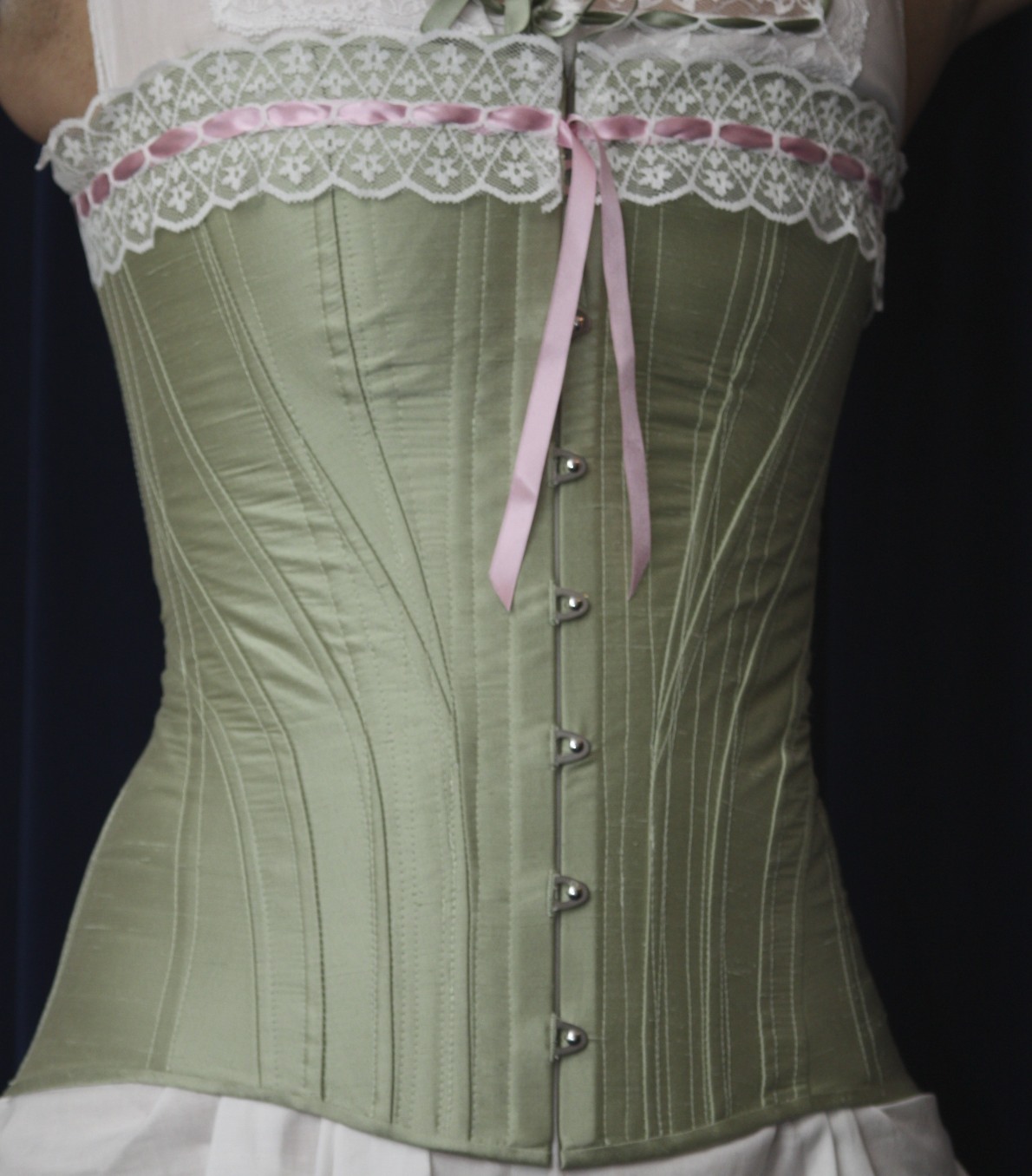
Under the skirt are undergarments that have slimmed down since 1883 and 1903 while still remaining numerous and Victorian in principle. On the left you can see the full length chemise which still features lace, pin tucks, and silk ribbon. The silhouette has narrowed considerably from the Victorian shapes of the 19th century, but the whole look is Victorian, not modern. The corset is much longer at this time, but the bones stop about four inches above the bottom edge so that movement is not impaired. This corset is constructed of a silk/linen blend that is flat lined with coutil. The seams are flat felled on the inside. It is edged in the same fabric cut on the bias. The top edge is also edged with lace and silk ribbon. To the right you can see the corset cover for this look: simple and straight forward, with just a small edge of lace. There is also a matching fabric petticoat for this look. The petticoat (or underskirt) is edged with a pin tucked ruffle and finished at the bottom with matching embroidery. It closes at the waist with a hook and eye. The chemise, petticoat, and corset cover are all constructed of the same ivory cotton.

Project Journal: Victorian Women’s Tailoring Part VI: Fitting 1903 Garments

Well, if you remember from a few posts ago, I completed my mockup undergarments and exterior garments for this 1903 look in muslin (the same fabric I used for the 1883 and 1913 mockups). But now I’ve completed first fittings for my garments in their actual fabrics!

Let’s start at the outside and work our way in. The exterior “suit” is two pieces: a jacket and walking skirt. Both layers are constructed of fairly heavy wool, so tightly woven it is almost like melton. Melton is a felted wool frequently used for outerwear and constantly used historically for it’s water resistance and ability not to fray–thus allowing tailors to leave their cut edges raw and not finish them with time intensive seam finishes. The walking skirt is intended for use out of doors: specifically for talking walks (hence the name) and promenading about in the public eye.

Under the jacket is a silk crepe blouse with a lace yoke, collar, and cuffs. If you look closely you can see the three points of the lace yoke on the blouse. The blouse is pulled off-center in this picture because of the alterations I needed to make-only one side has the alterations pinned.

Under the skirt there is a cream colored lace edged silk shantung petticoat. The petticoat has two circular, gathered ruffles at the bottom. The top ruffle has a wavy hem edged in lace and the bottom ruffle is edged in matching lace. There are also arches of lace above the ruffles.

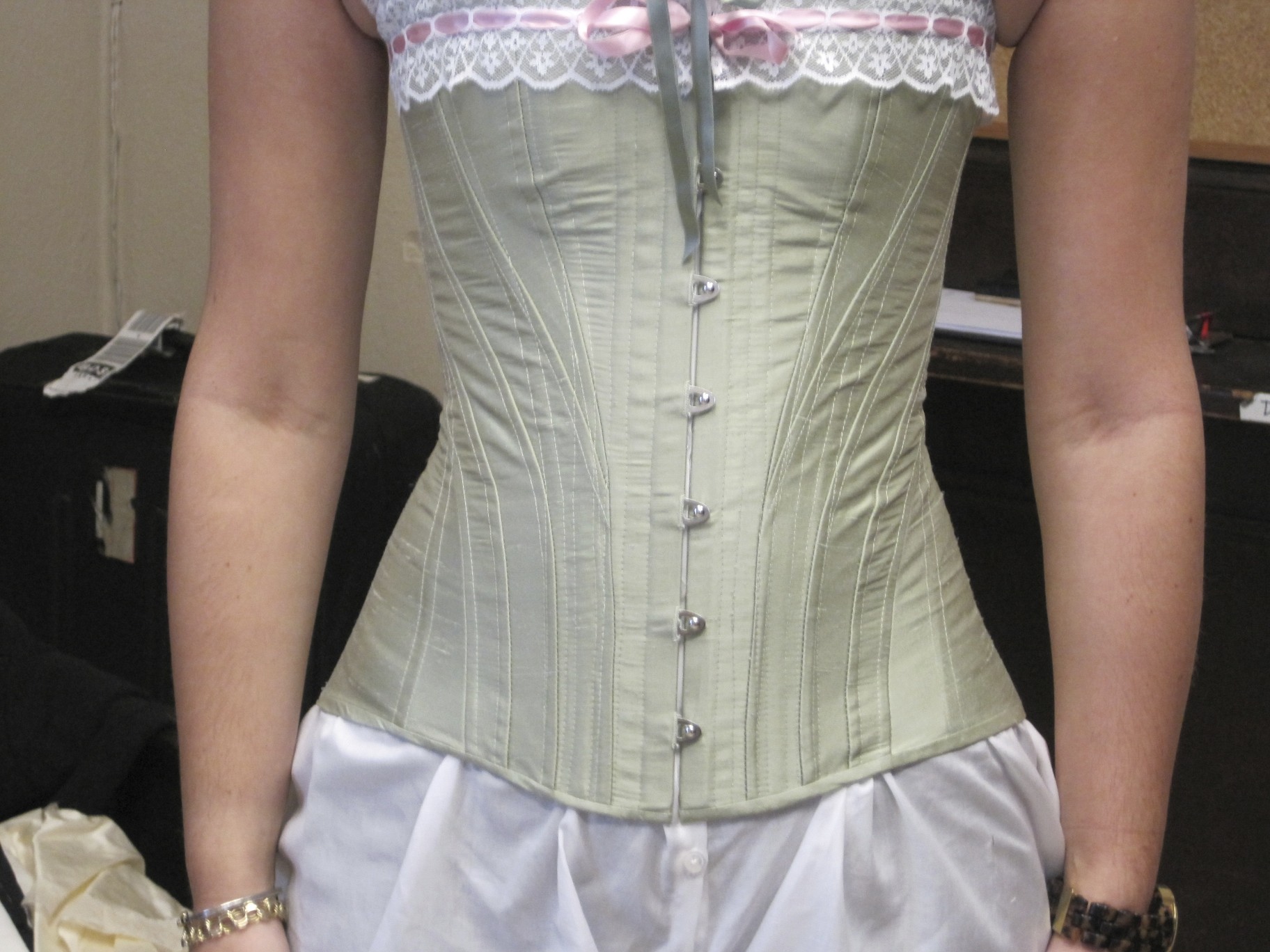
There is also a cream colored corset cover that is not pictured in these photos. This s-shape corset is made of green silk shantung flat lined with coutil. The seams are flat felled on the inside. The edges are bound in bias cut shantung and the top is also edged with white lace threaded with pink silk ribbon. Under the corset is a cotton combination that buttons up the front. A combination is an undergarment that is functions as a chemise but has bifurcated leg openings, like drawers. This pair is edged in white lace at the leg openings and neck edge. The neck opening is threaded with a green silk ribbon to coordinate with the corset.

Project Journal: Victorian Women’s Tailoring Part IV: Fitting 1883 Undergarments

I’ve put together my actual fabrics! First to fit is my 1883 undergarments. These garments are essentially finished and ready to be worn.

The first layer is a cotton chemise with intersecting zigzag pattern lace insertion at the hem and simple lace edging around the neck opening and armholes. The tie is navy silk ribbon.

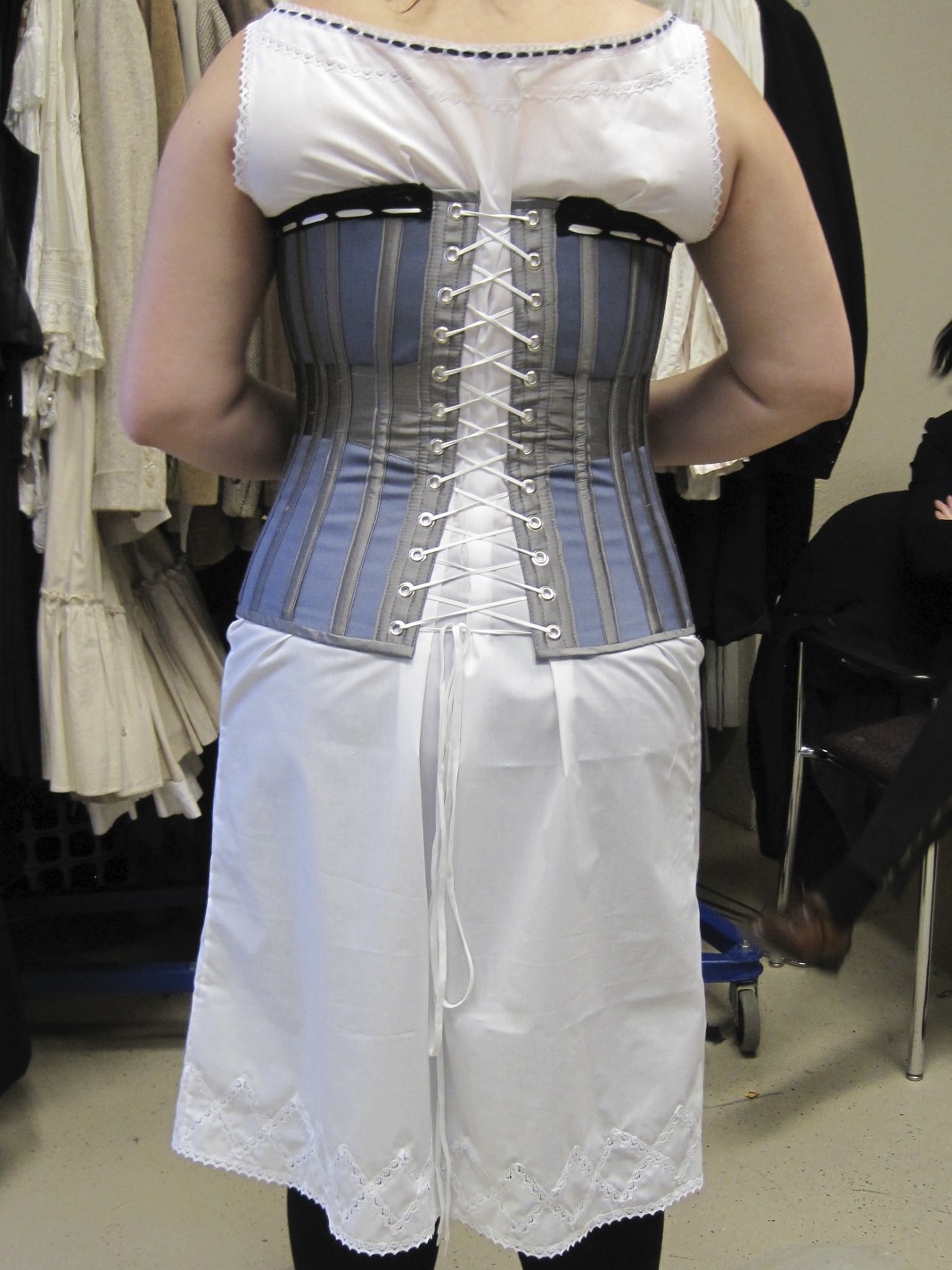
The corset is blue cotton twill flatlined with coutil for stability and grey silk shantung boning channels. The top is edged with black lace and off white silk ribbon. The bust also features cording across the front panels as well as flossing at the top of the boning channels.

It’s hard to see the corset detail in the first picture, so here’s a close-up. You can actually see the cording in this picture. The waistband is decorative as well as helping to cinch in the waist. The top and bottom of the corset are bound in bias silk shantung.

Here’s a small back view as well. It looks like I could have laced the bottom half a little tighter!

The next layer is the cotton corset cover with pin tuck decoration and navy silk ribbon threaded through lace around the neck. The front closes with pearl buttons down the front. You can see the corset cover detail in the two pictures below

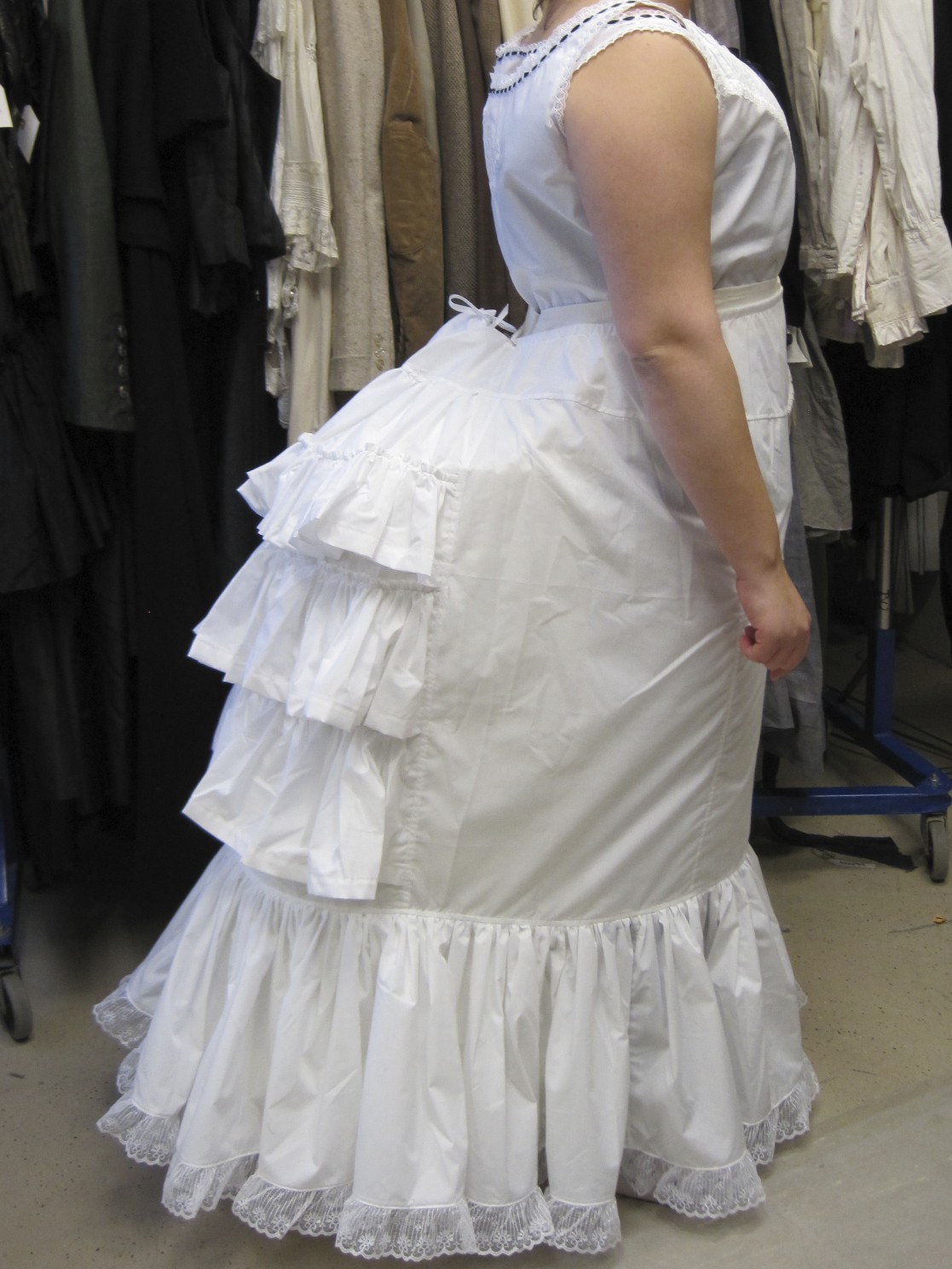
After the corset cover is the bustle itself! It is constructed of off-white striped cotton with hoop steel bones inserted into the horizontal channels. The bottom is finished off with a nice box pleat.

Back bustle view on the left!

On the right you can see the pin tuck detail on the corset cover.

After the bustle comes the petticoat! It is constructed of cotton with lace edging. Here’s a front and side view. You can also see the pin tuck detail on the corset cover in the front view bustle picture.

The 14 hour Regency dress (Sense and Sensibility Regency Ball 2011)

I’d decided months ago to attend  the Dancing with the Dashwoods (Jane Austen period) Ball recently hosted by the Commonwealth Vintage Dancers; however, I was in a sticky spot about what to wear! I did not have a dress appropriate to the period of this ball and I really needed to focus on my tailoring project… what to do?!?

Well, I decided to spend just one day making a cotton Regency dress. I quickly adapted a pattern from Norah Waugh’s The Cut of Women’s Clothes: 1600-1930 to my size and decided to forgo the mockup step. Cutting out the fabric is my least favorite part of making garments, so I tried to make that part go as quickly as possible.

In an effort to simplify things, I included two petticoat layers in the dress itself and decided not to worry about finishing my seams on the inside. The bodice also has two extra layers inside of it to keep it opaque. Each piece (of three layers) was treated as one piece when I went to sew it.

All in all, the basic seams went quickly. What slowed me down and took about a third of my time on the dress were the finishing steps of completing the neck trim and putting closures on the back. The trim took a fair amount of time to pin, stitch, and thread through the ribbon loops, and the hook and thread loop closures took time because it was getting late at that point…

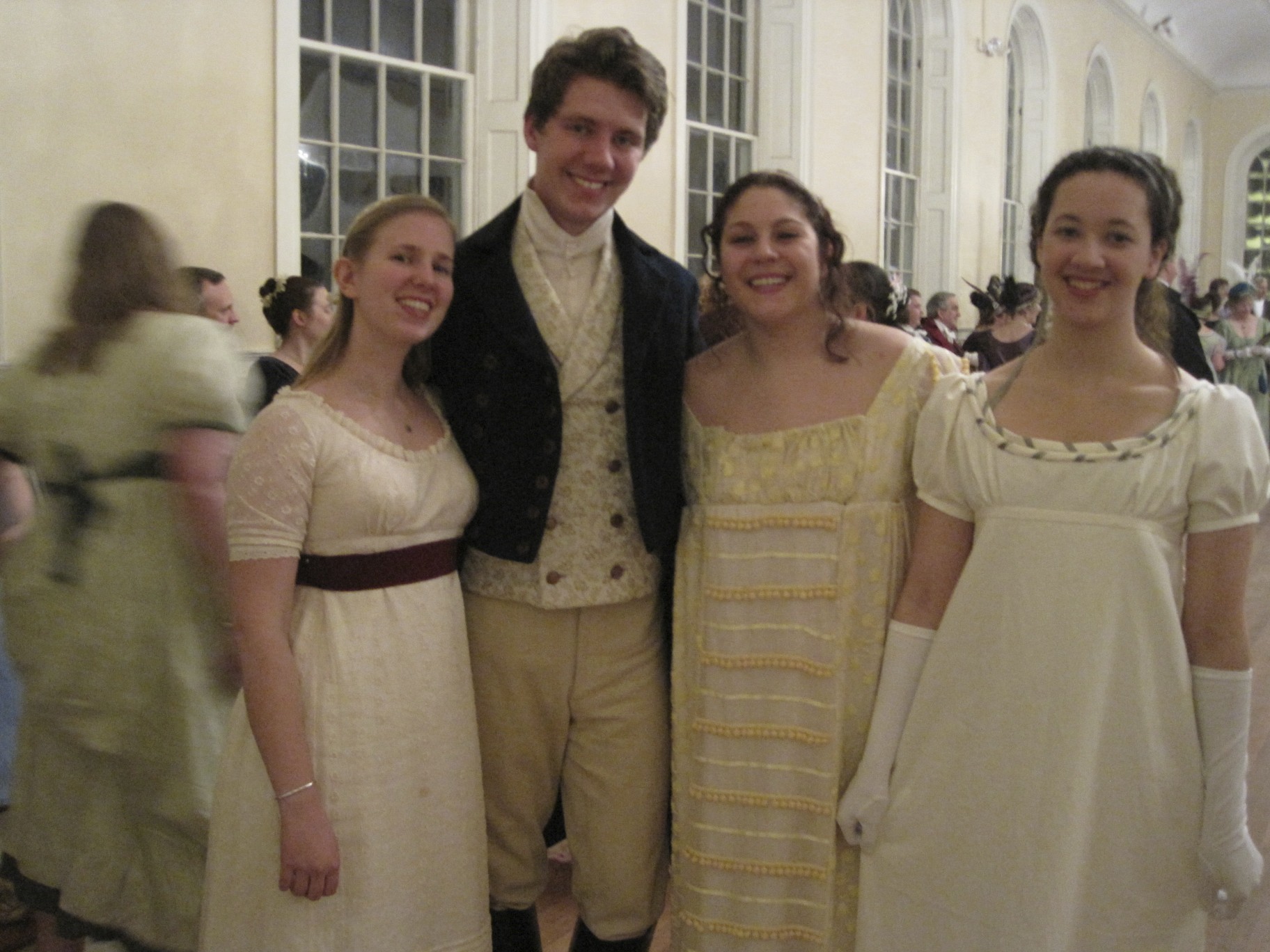
Fast-forward to the ball! I had the good fortune to be able to bring along friends as well! It was crowded but super fun to dance in period costume and a period hall! Enjoy the photos!