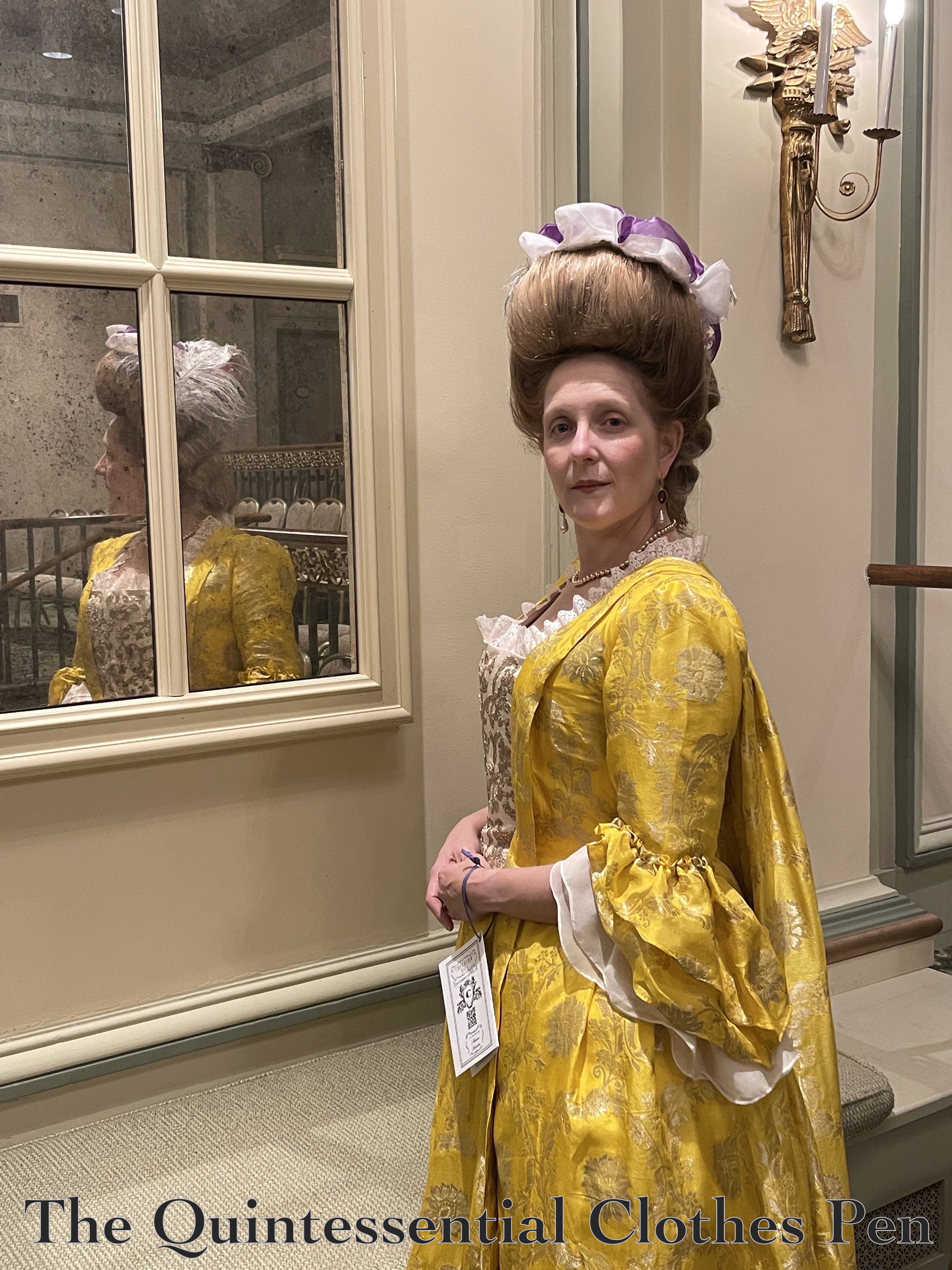
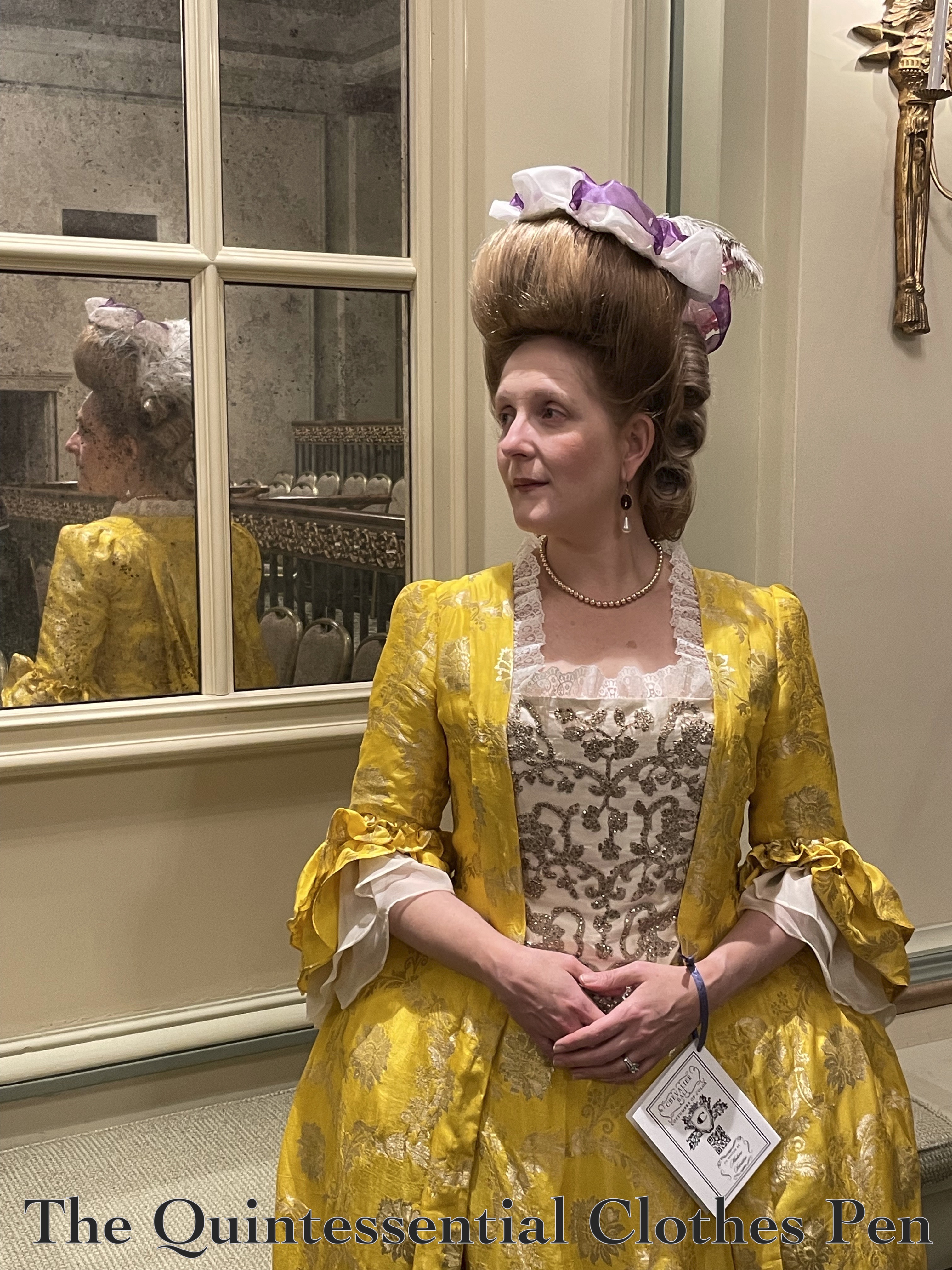
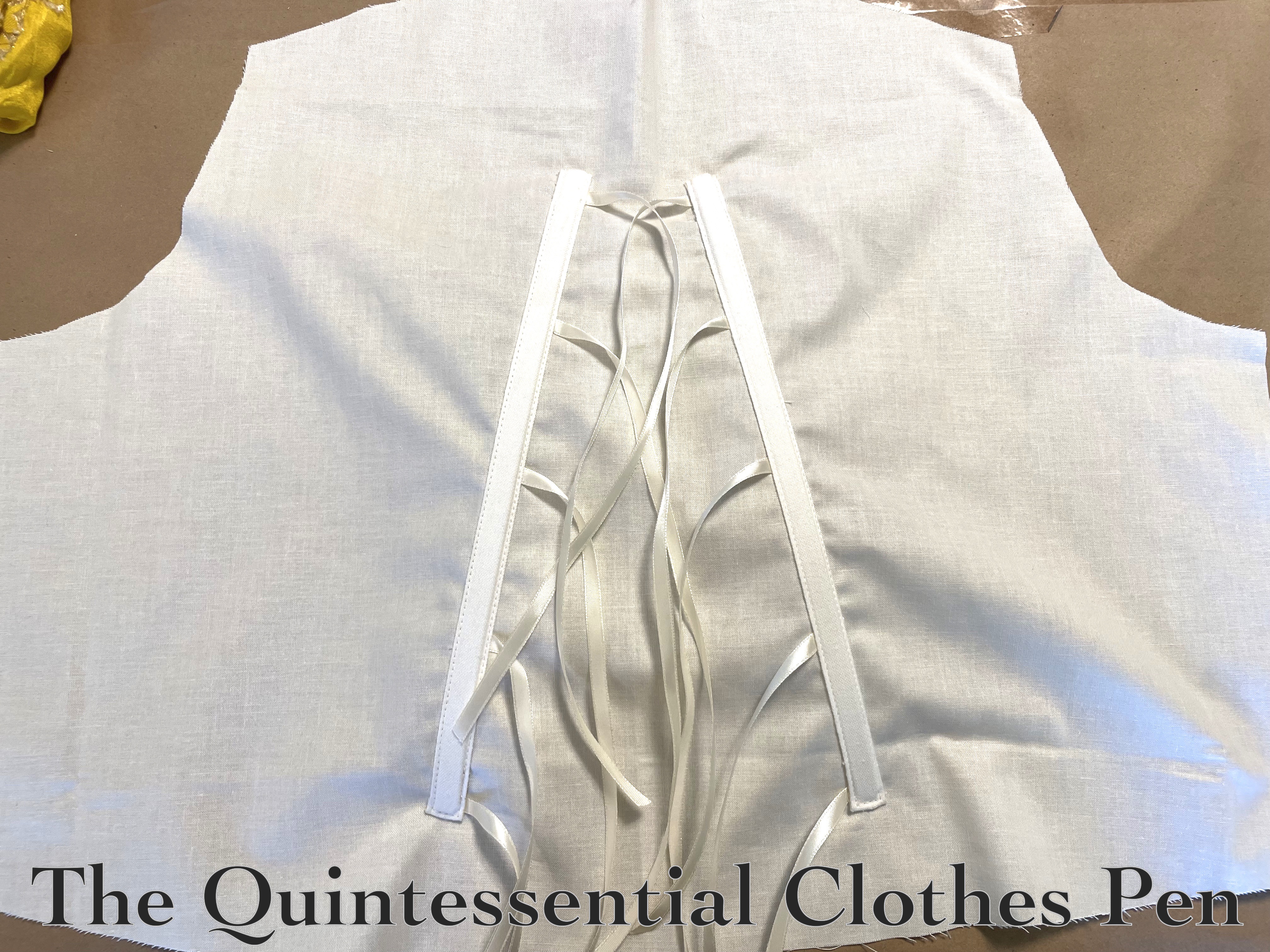
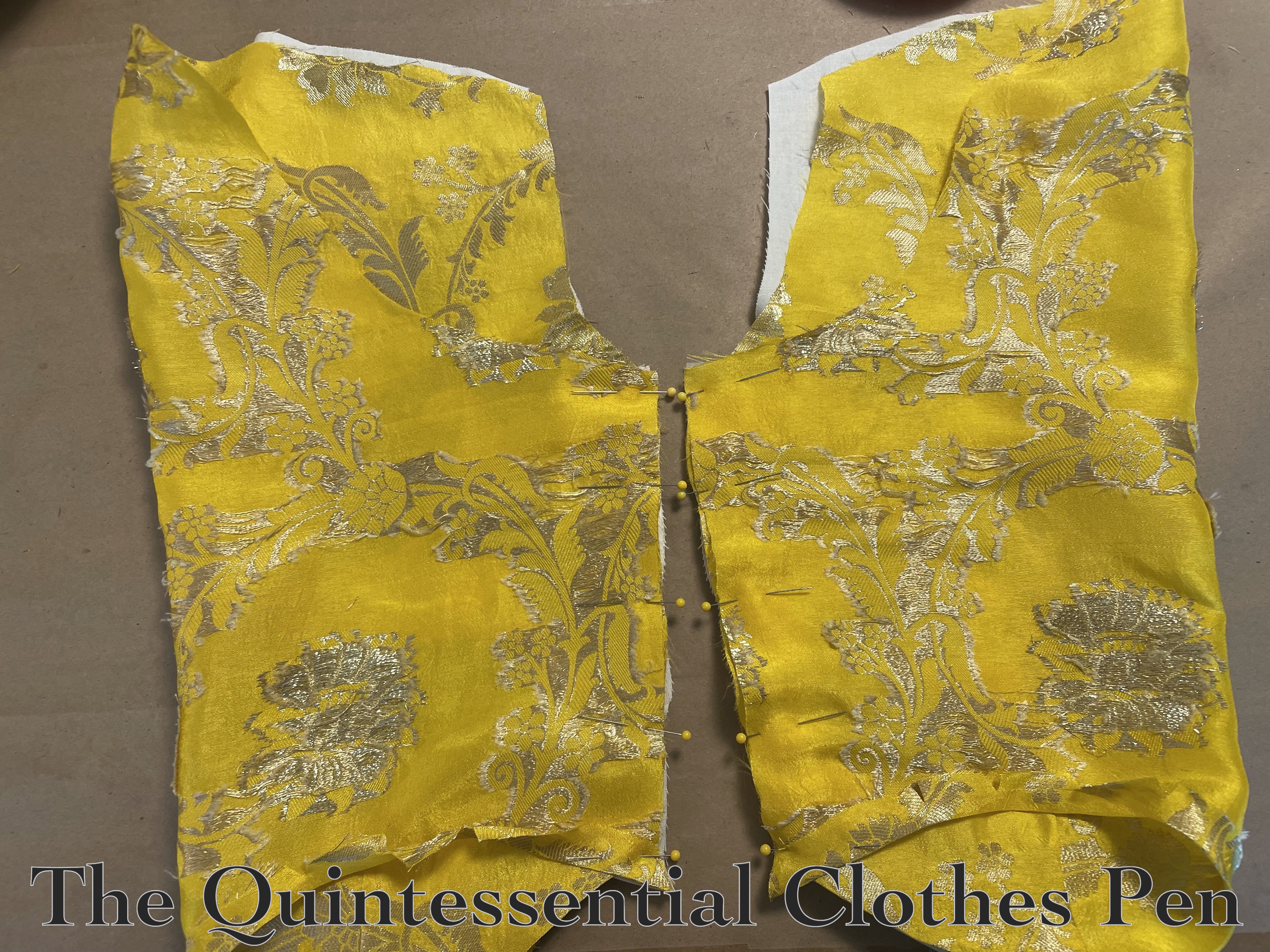
Summary of 2024: Looking Forward To 2025

As is tradition here on the blog, I present my 2024 round up and thoughts about looking ahead to another new year! (You can see all of my past posts related to reflecting and looking forward here.)

 Projects I completed in 2024

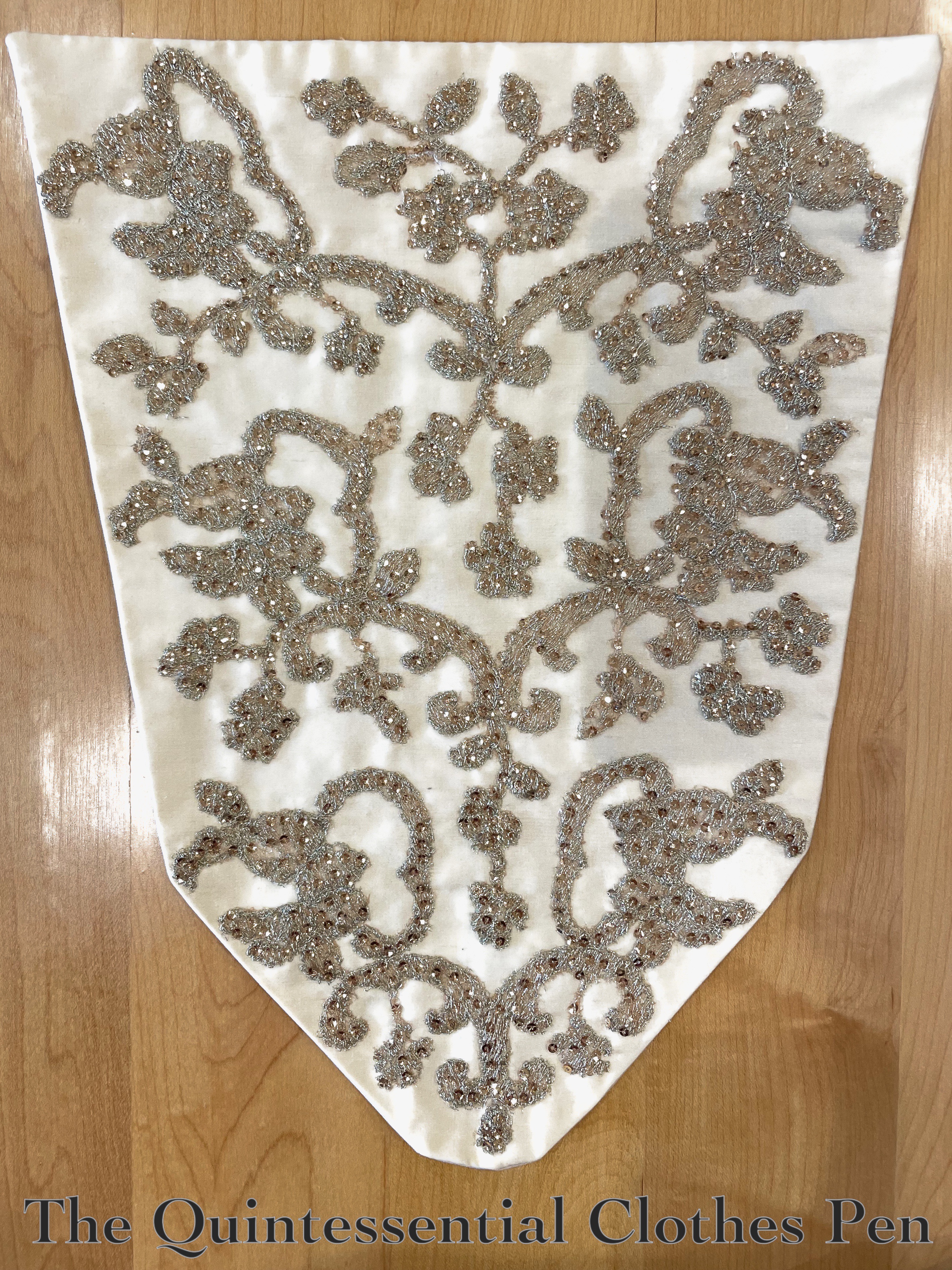
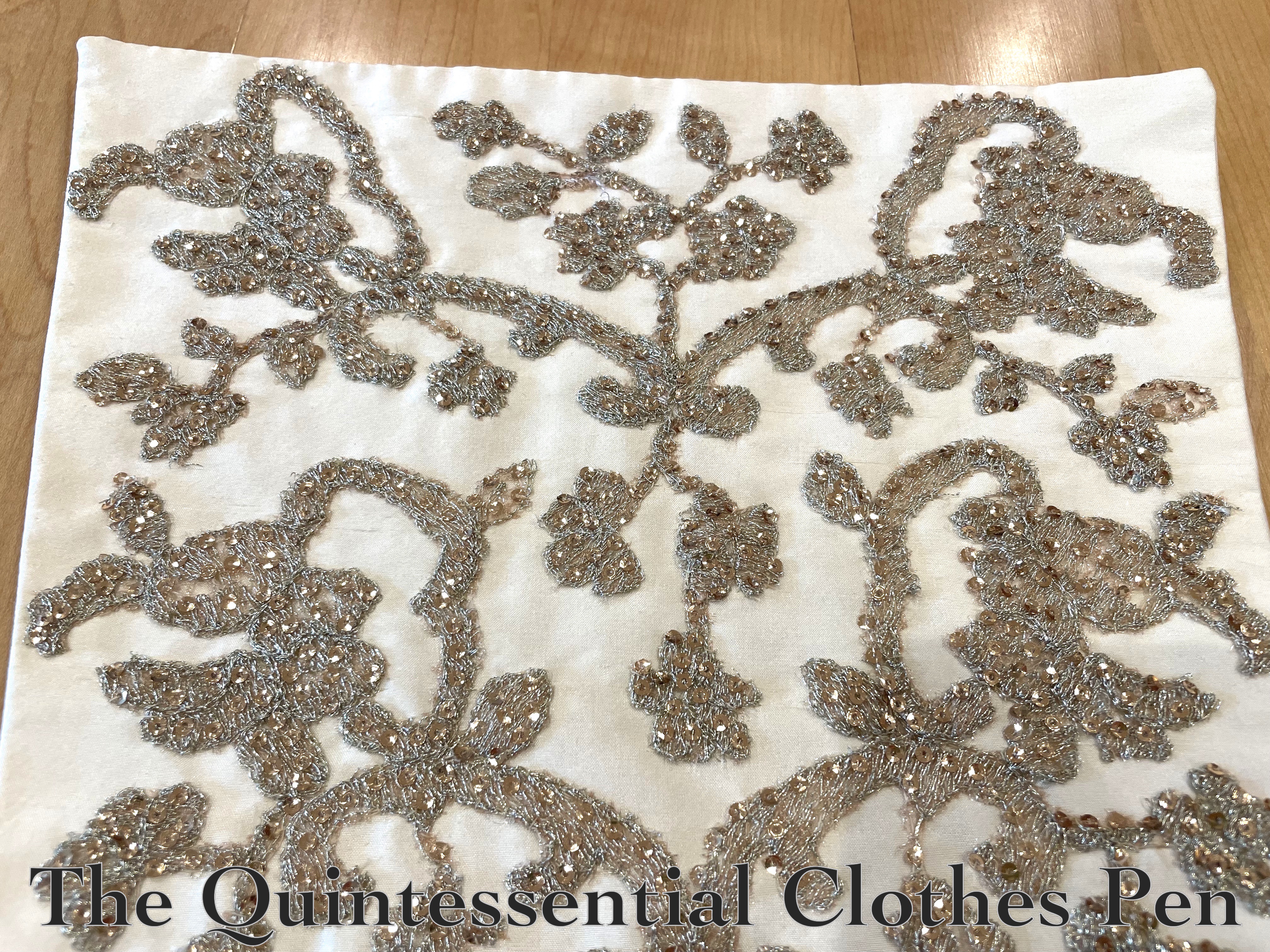
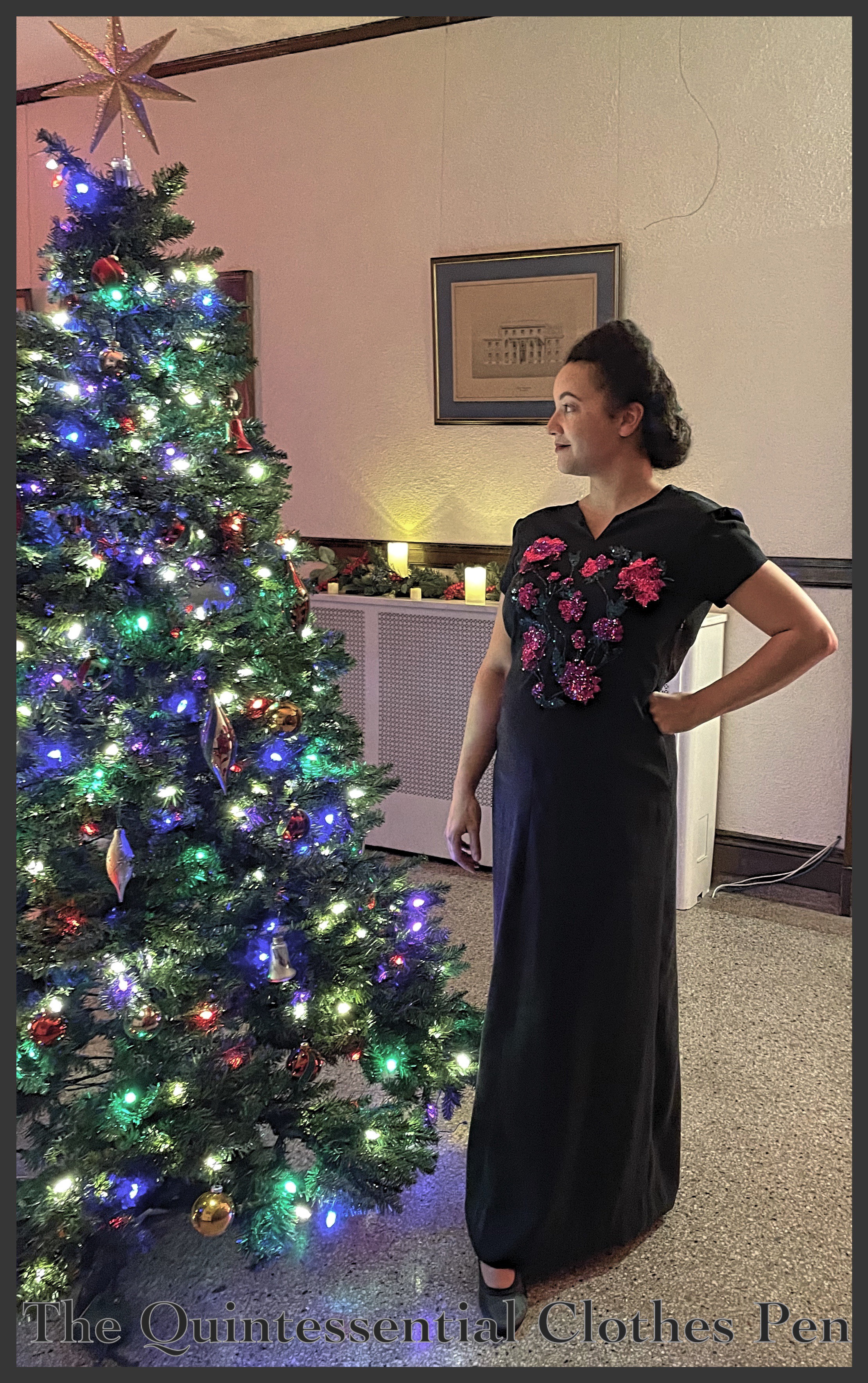
April: 1940 Schiaparelli Inspired Dress

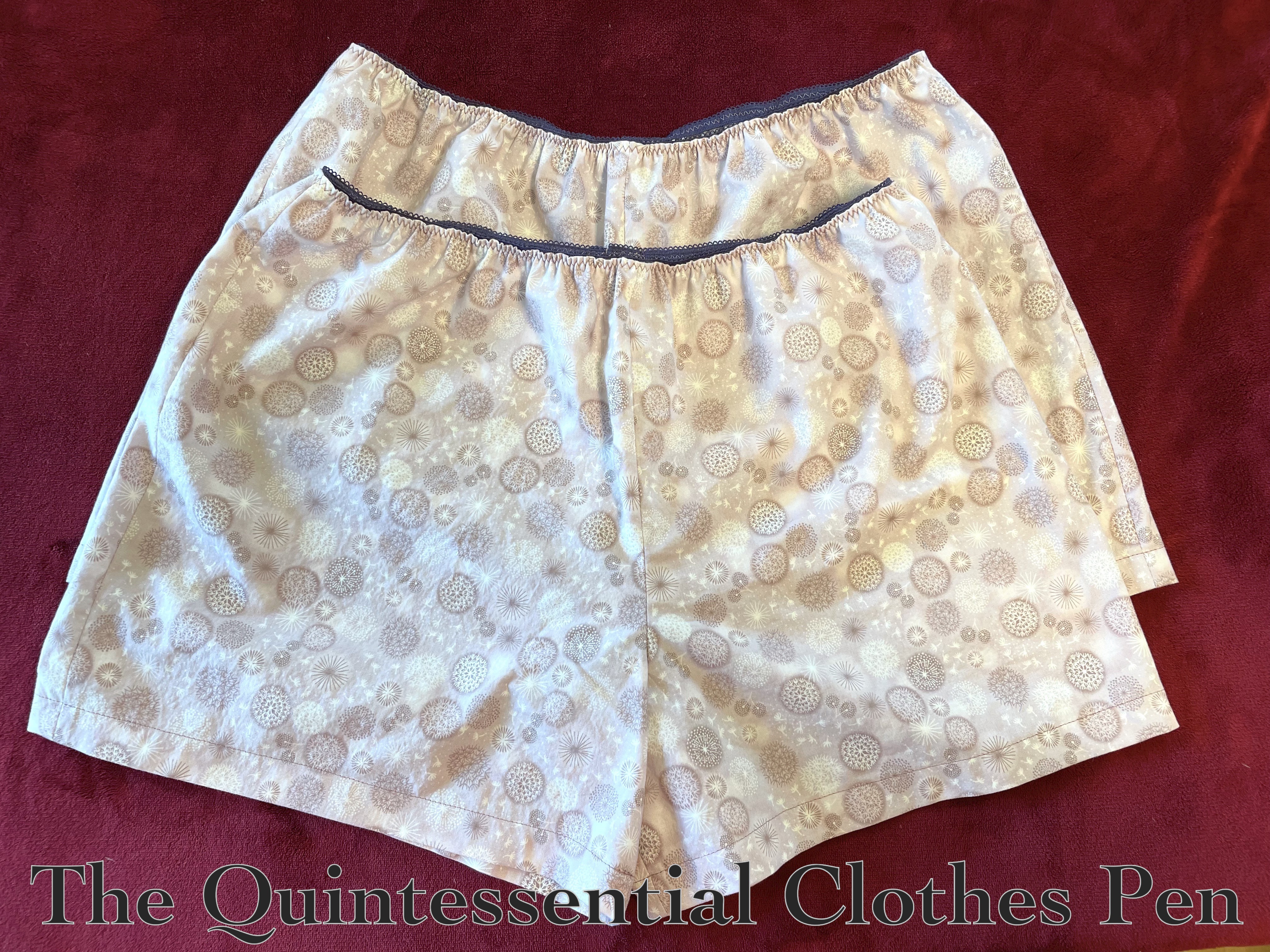
May: Another Round of Dotty Tap Pants

May: Replaced the zipper in the Happy Clover Dress

June: 1860s Drawers: Waist Re-Size (HSM #11)

June: Regency Petticoat Re-Size (HSM #5)

August: 1815 Tree Gown Re-Size

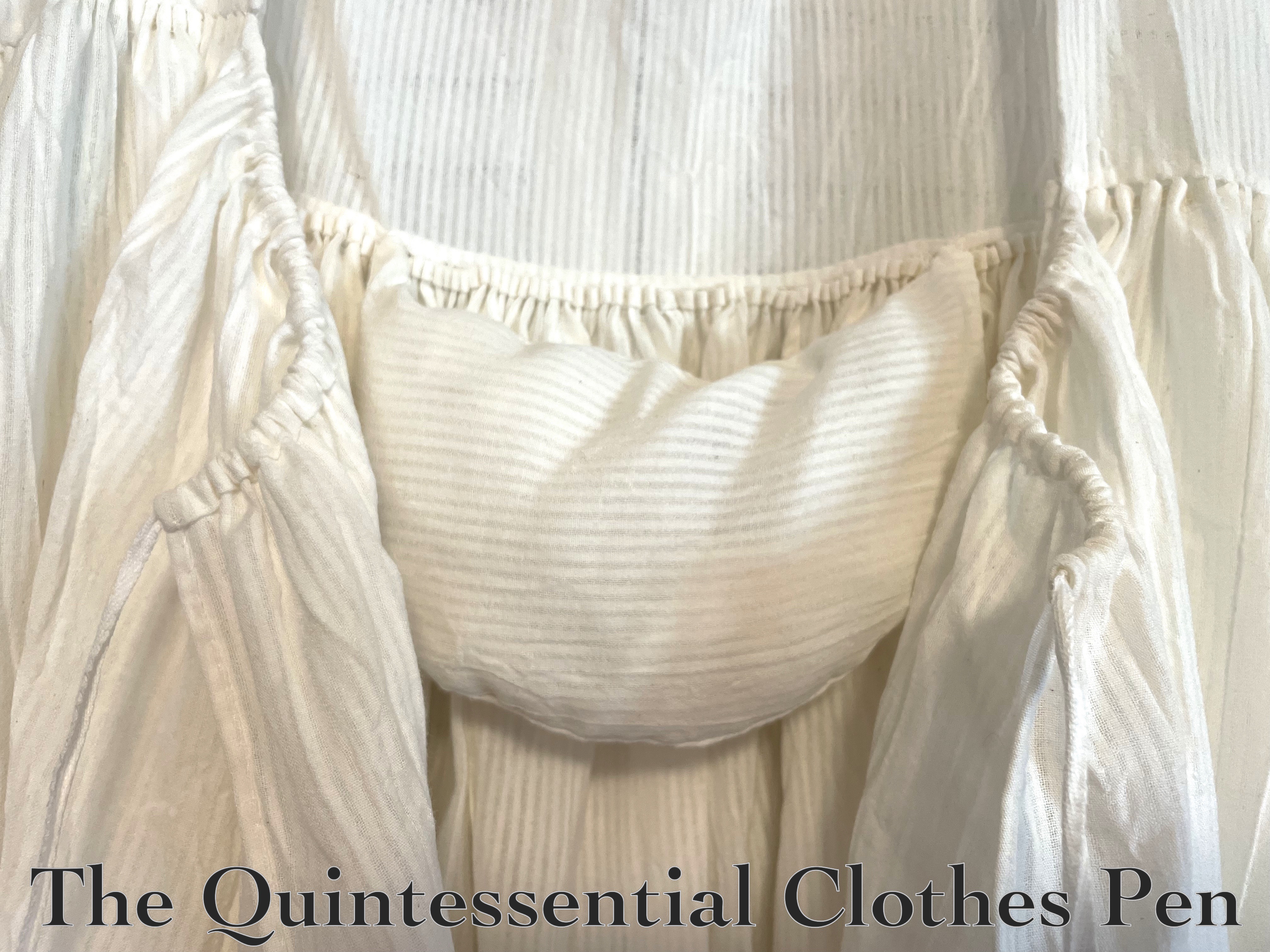
October: 1790s Petticoat and Bum Pad (HSM #8)

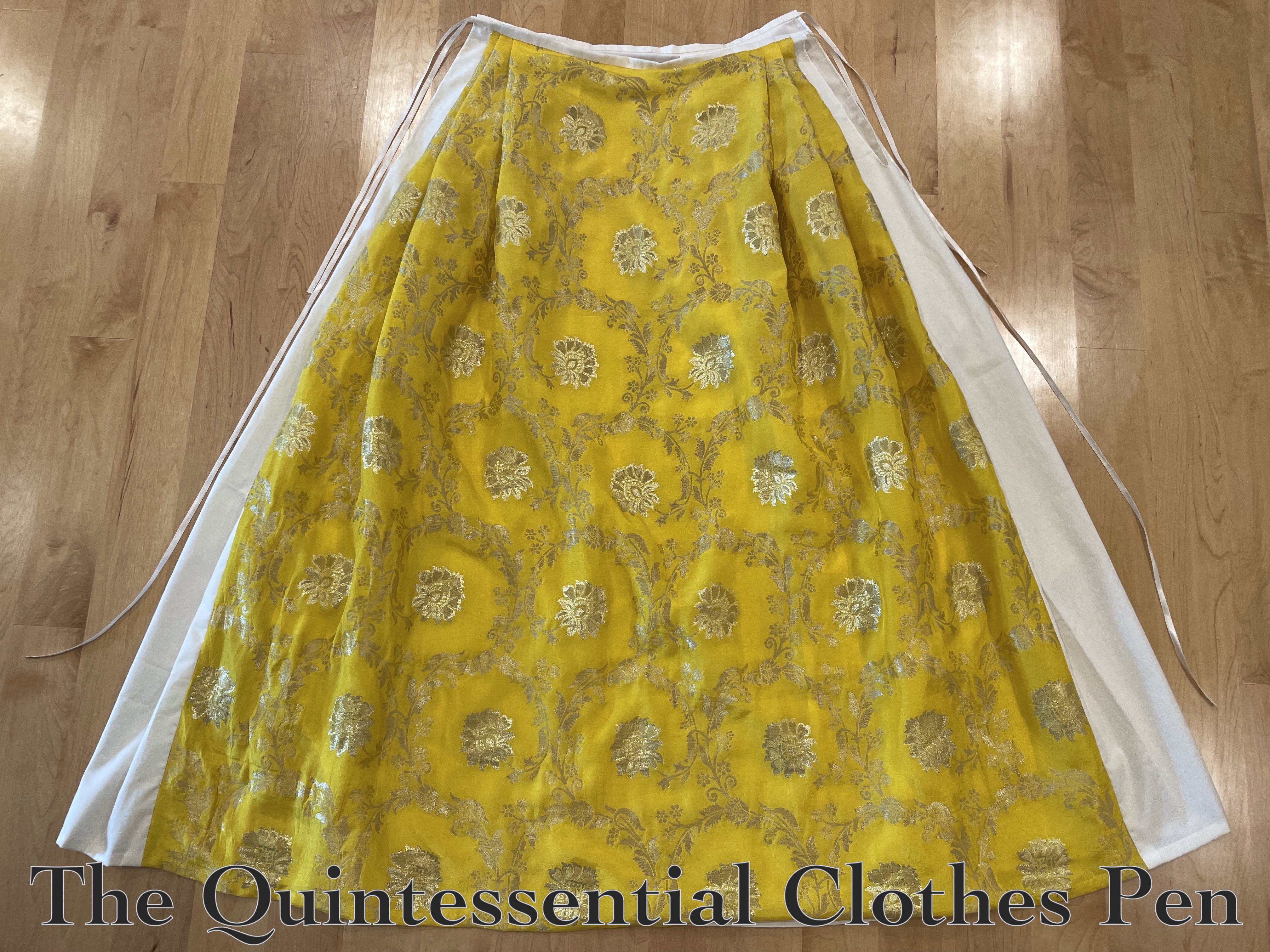
November: Yellow Sacque Petticoat (HSM #12)

November: Engageants For The New Yellow Sacque (HSM #6)

December: A White 1780s Petticoat (HSF #7)

General Blog News

I participated in my 12th year of the Historical Sew Monthly! Wow! Really! I’ve been at this a long time, I guess! It doesn’t feel that long! This year I completed 7 of the 12 challenges. That’s actually pretty good for me. It means I’ve had time to sew again!

Event Recap

I attended 3 balls, 4 other events (tea, picnic, croquet, outings, etc.), 2 dance and historical pastimes performances, and participated in 1 weekend event (that included dancing, games, and educational lectures). That’s a definite increase from last year! I’m so pleased to have these opportunities again.

To Do Lists

Last year’s definitely-to-do list was pretty substantial, including multiple repairs, UFOs, and multi-part new garments. I’m super pleased with myself that I completed all of the list except for one thing!  The unfinished item will be at the top of my list for 2025.

In addition to those ‘definitely’ things, I also completed a few items on my lengthy ‘maybe’ list (updating my 1885 Night Sky Fancy Dress — not posted about yet — and making new dotty tap pants). I think some of my ‘maybes’ will just move up to ‘definitely’ for this year. And then I’ll also see what else inspires me as the year goes on!

So, my definitely-to-do for 2025 list includes:

  • Updating the trimming on my 1893 Bronze and Pink Ballgown to better go with the size updates I made in 2022 and posted about in 2023
  • Finishing the 1836 Blue Print Cotton Day Dress #2
  • 18th century neckerkerchief
  • Scroop Patterns Frances rump (1775-1795)
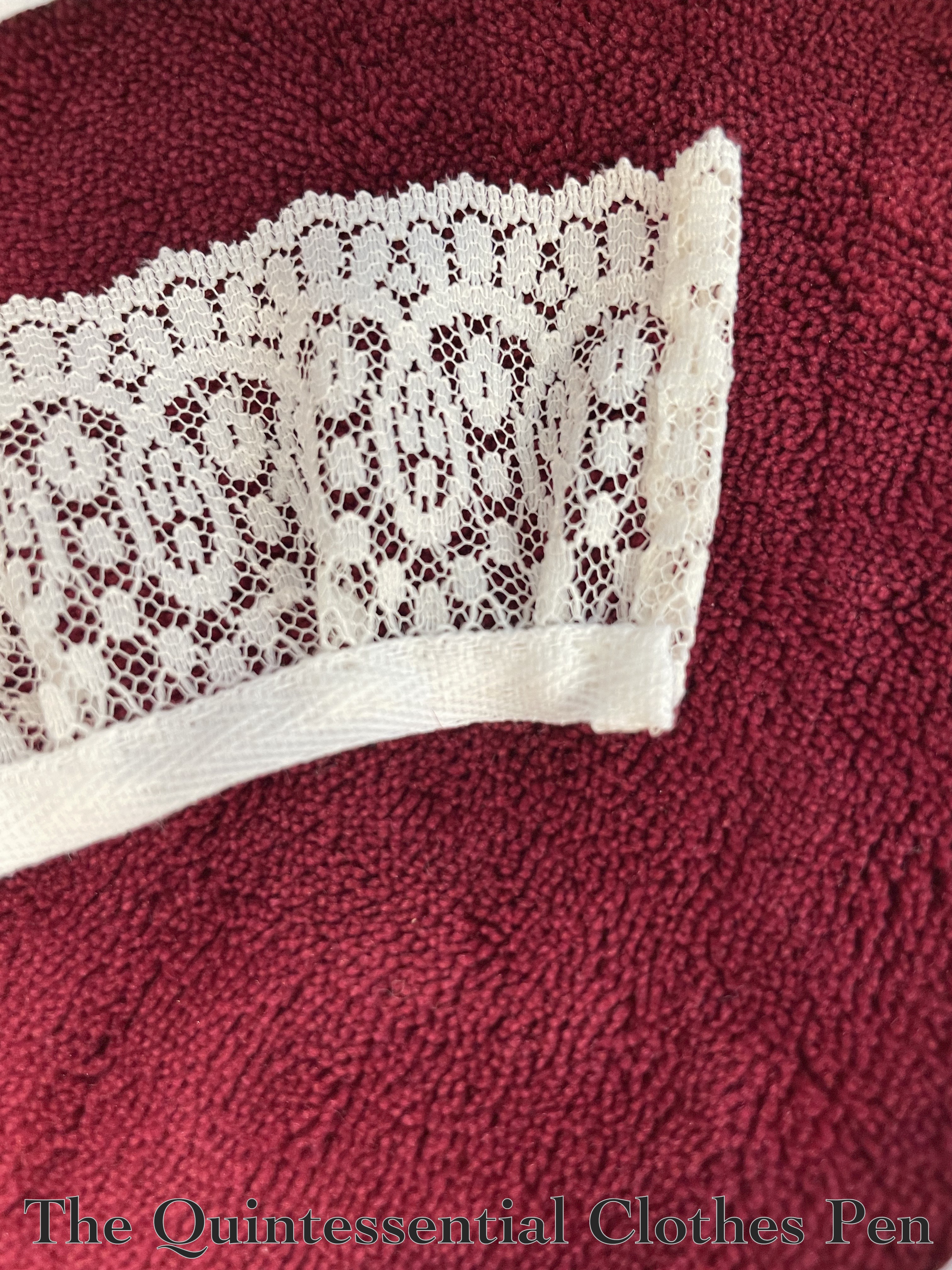
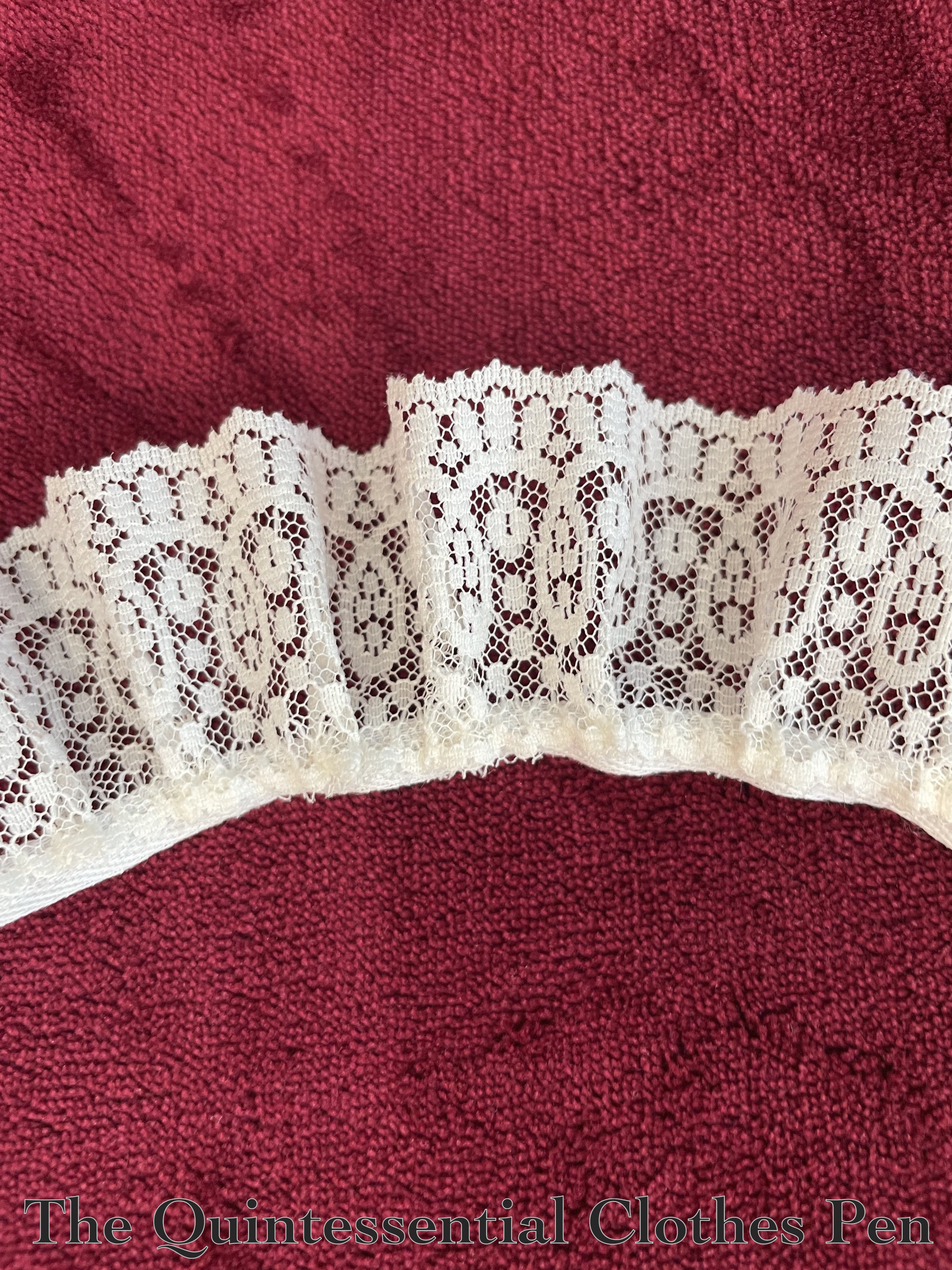
  • Various sleeve and neck ruffles to go with all of these 18th century gowns

And my maybe-to-do list includes:

I am so pleased to have a little more time to sew and the project planning to lay things out so that I can sew whether I have the brain space to dedicate to new projects or to just mindlessly hem things. Having a range ready to go has worked very well for me!

I am so very grateful to my supportive friends, family, and blog readers — in terms of sewing projects and adventures as well as general support and encouragement. It is my fervent hope that you also have many things to be grateful for in this new year! Maybe you’ll even have silly friends who make moose ears (well, yes, I know it’s really moose antlers…) with you!

1863 Fancy Dress: Genevieve As The Queen Of Hearts

Back in September, The Footwork and Frolick Society hosted a Wonderland-themed 19th century fancy dress ball. The idea was inspired by the whimsy of Lewis Carroll’s Alice In Wonderland (published in 1865) and Through The Looking Glass (published in 1871).

There were so many fabulous interpretations of Alice In Wonderland! You can get a sense of the fun in the gallery from the event on the Footwork & Frolick website, here.

I chose to re-use an idea I’d executed in 2018 when I turned a 1980s dress into a 1950s dress and style it as The Queen of Hearts. You can read about the dress re-make and original fancy dress styling here, in a past blog post. For this new wearing in 2024 I chose to use The Queen of Hearts theme and accessories again, but with one of my 1860s dresses to suit the mid-19th century goal of the Wonderland Ball!

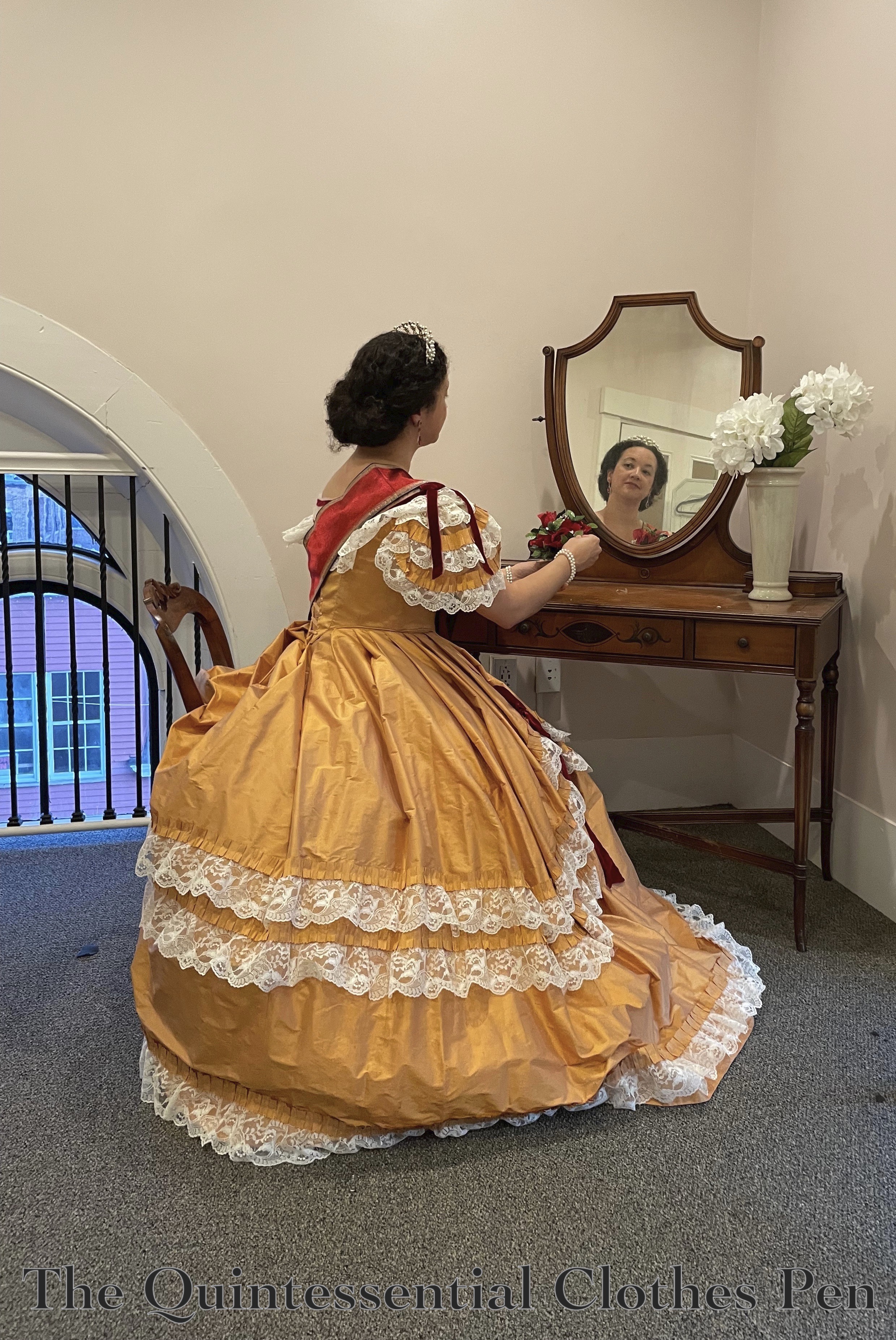
Genevieve, the name of my apricot ballgown from 1863, seemed to be the most fitting choice for a Queen of Hearts theme. (You can read all about the making of this dress in this Project Journal series of posts.) The two main elements of my fancy dress ensemble were a tiara and a royal order sash. I figured that could easily work again.

We captured a series of photos of The Queen of Hearts elegantly (and somewhat aloofly!) preparing for the ball!

The ball itself took place in the lovely Andover town hall. It has all sort of beautiful details. Look at the ceiling!

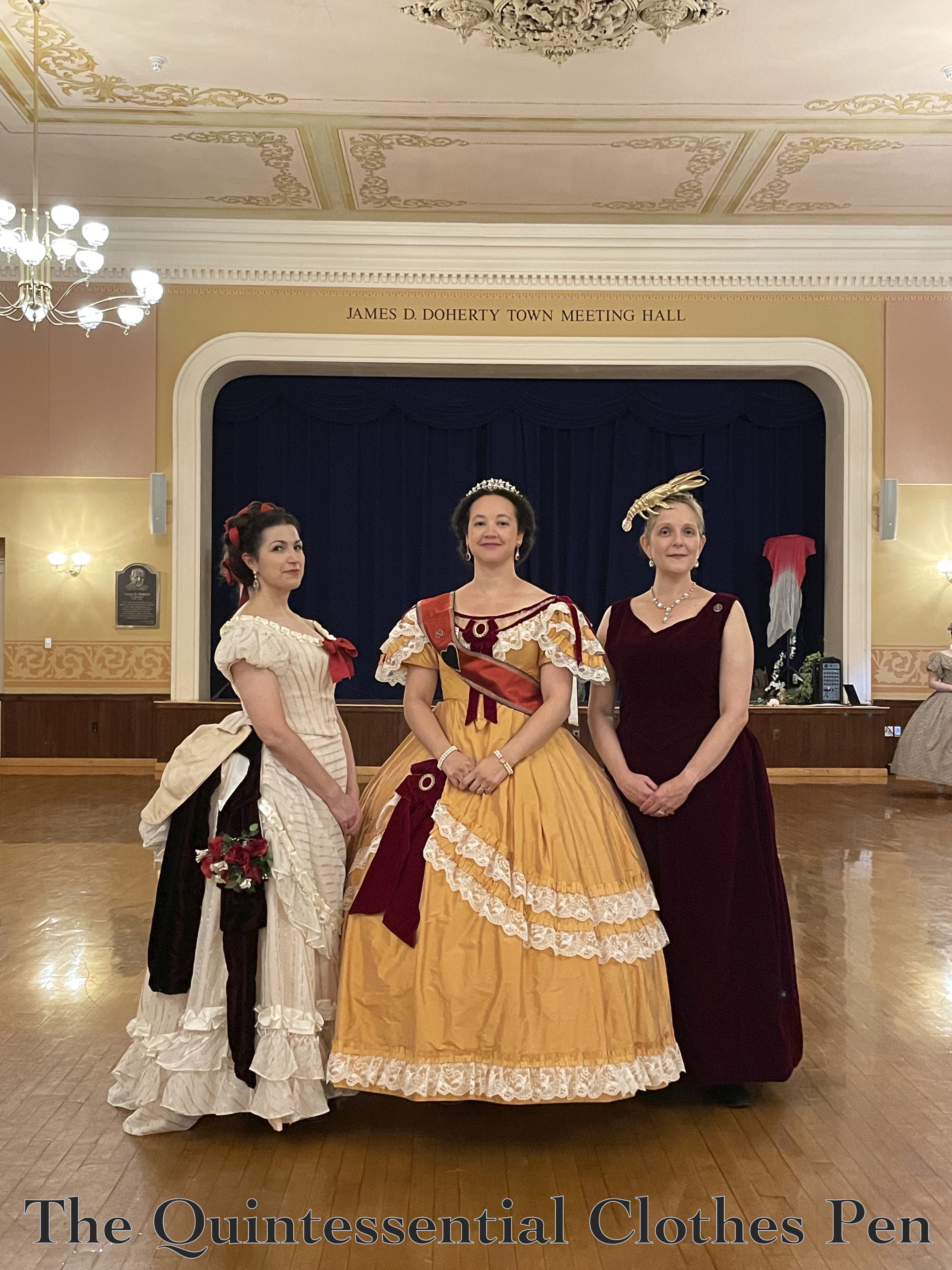
And the company was lively! I met charming new acquaintances and reconnected with creative friends. Below are a few of them… and we are joined by a golden lobster! (The lobster wanted to participate in the Lobster Quadrille, but had to step up the bling-factor to be ball appropriate!)

A White 1780s Petticoat (HSF #7)

The plan for the yellow sacque ensemble I’ve been working on was to provide an under petticoat that would help the yellow silk petticoat (that I posted about in November 2024) hang nicely and be opaque. I thought I’d completed this goal in December 2023, when I re-used fabric from an old Regency style dress to make a base petticoat (you can read the details about that here).

As I started working on the yellow petticoat, though, I realized that the silk was very thin, and that the blue under petticoat (made from the dress) was distorting the yellow color, making it look washed out and less vibrant. Ugh! What to do??

I determined that a light, neutral color under petticoat was needed and looked through my stash to see what I has in enough quantity for a new petticoat. The goal was to make this from the stash!

I found that I still had yardage of the mystery $1 per yard fabric I’d purchased two ten yard rolls of about ten or twelve years ago. I’ve used it for many projects, including all sorts of historical underwear and other projects (my recent 1790s petticoat and bum pad, a recently updated 1810s petticoat, lining a sheer 1895 blouse, lining a 1953 dress… and probably more things that aren’t coming to mind right now!). It’s very versatile!

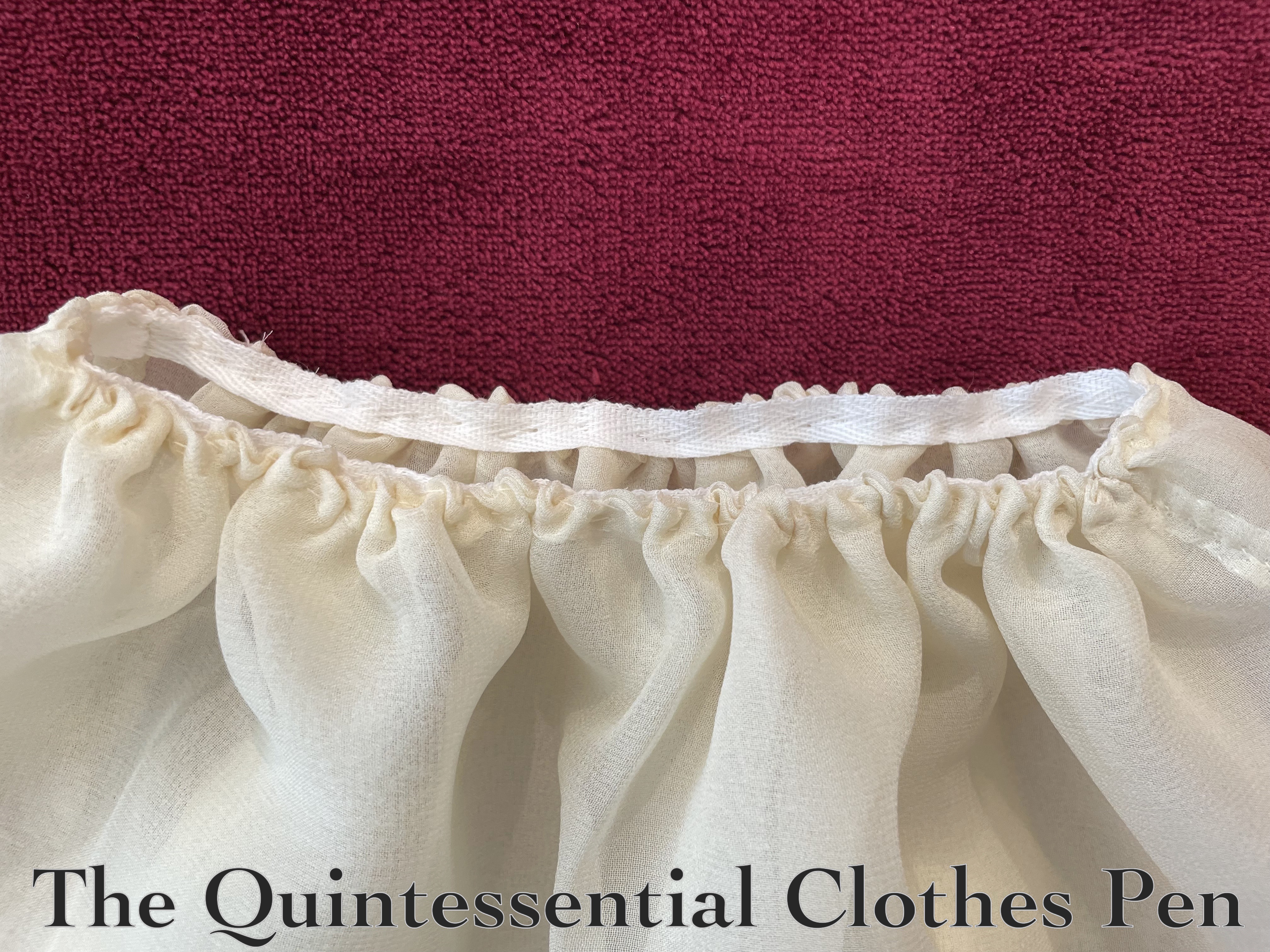
Above is a front view of the new petticoat. I made this in exactly the same way as the blue petticoat, referencing the same tutorials, etc. Essentially this is a tube that is pleated at the waist, with ties to hold it on the body.

The front has an outward box pleat at center front, while the center back (pictured above) has an inverted box pleat. The pleats are finished off by on the grain strips that form the ½” waistbands. Ivory satin ribbon ties are set into these waistbands.

Given that I had to make a whole new petticoat, it was my goal to make one that I could reuse for other purposes. Namely, I have 1780s ensembles in my sights and I wanted this petticoat to be able to be used for those. So it was important to me to level the petticoat in a way that would make sense for that purpose, but I also needed to make sure the petticoat to be long enough in the front to fully back the yellow silk for the sacque project.

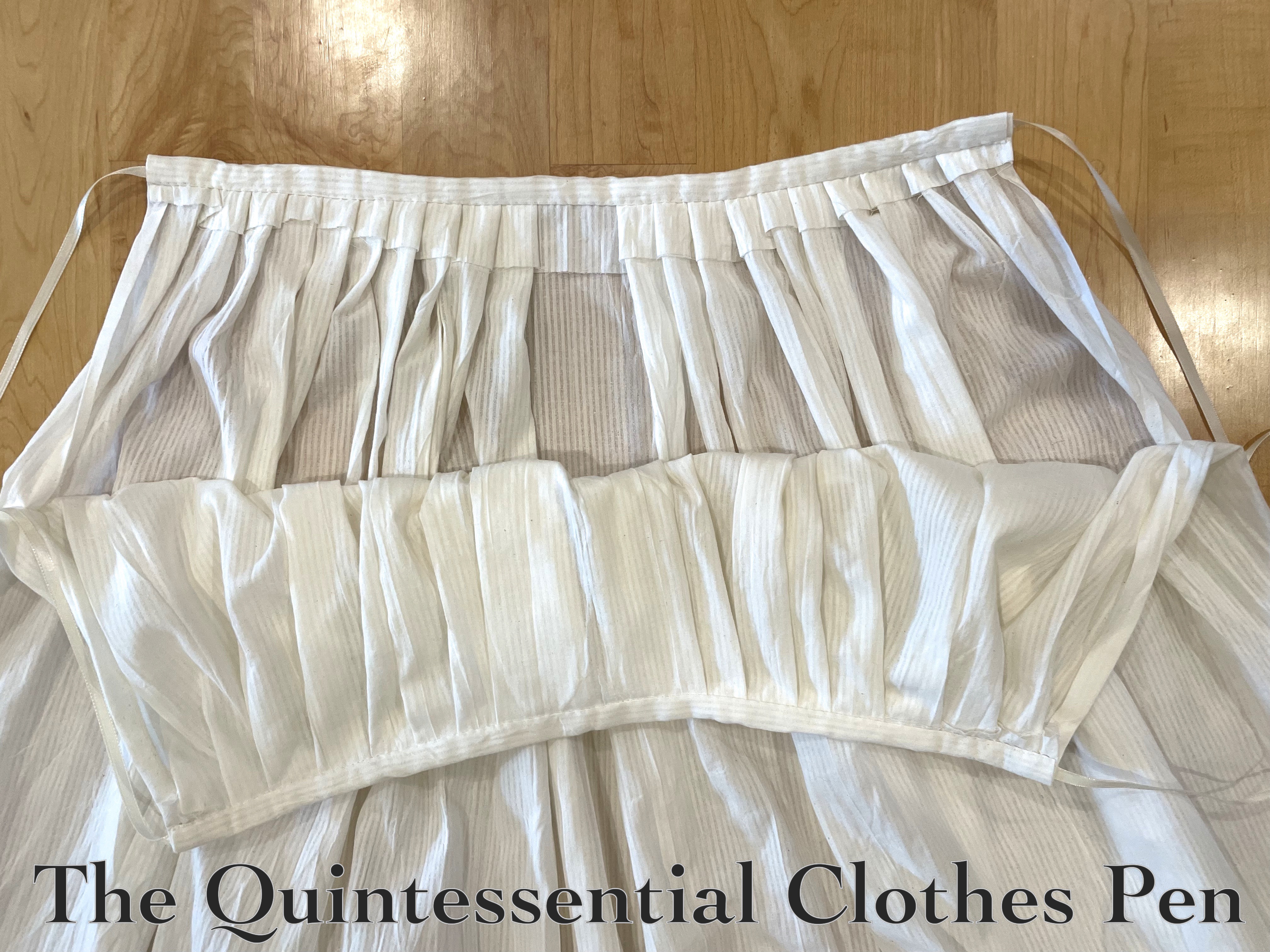
I’m pleased that with some careful figuring I was able to accomplish both goals! This petticoat doesn’t sit evenly over the pink panniers for the yellow sacque, but it does sit evenly over a not-quite-finished Scroop Patterns Frances Rump for a 1780s style! In order to know this would work, it meant I also had to make the Frances Rump and get it far enough along to be put on so I could figure out the leveling. More on the Frances Rump later! For now, a photo (below) of the insides of the white petticoat.

In the photo, the back is flipped down, showing that the skirt is leveled in a way that is pretty straight across. You can just see a little extra fabric length poking out of the waistband on the right side. The front of the petticoat is facing the top of the image. You can see how it needed to be a little bit shorter (therefore more fabric turned down to the inside) to accommodate the lack of bum pad on the front of the body.

The petticoat is finished with a whipstitched 1″ hem. It’s just the right length for me (and luckily also for the person who wore it in October), but might need to be whacked up with a basting stitch if I loan it to a friend with shorter legs. That’s easy, though!

And that’s it!

This garment qualifies for the HSM Challenge # 7, Always In Style:

Make a garment or accessory that is appropriate for more than one historical period…or even a historical piece that can be worn with modern clothing! (Note that the piece should still be ‘historical’, not just ‘historically-inspired’.)

Just the facts:

Fabric/Materials: Approximately 3-4 yards white striped cotton.

Pattern: None, but I referenced both of these tutorials on constructing 18th century petticoats. Katherine’s tutorial is for a petticoat with an uneven length (to go over panniers, or a bum roll, for example). Rebecca’s tutorial is for a petticoat with an even length (the same length all the way around, to be worn without extra supports). Both tutorials have construction information, Rebecca’s includes a bit more detail in terms of which stitches and methods to use.

Year: Loosely 1700-1790, but leveled to be appropriate for c. 1785.

Notions: 3ish yards of ¼″ ivory polyester ribbon and thread.

How historically accurate is it?: 70%. Accuracy gets knocked down because: 1- all unseen seams are machine sewn, 2- I used polyester ribbon for ties, 3- I haven’t seen research that shows cotton being used at this time for a single plain petticoat of this sort.

Hours to complete: 5? I didn’t really keep track.

First worn: October 5, 2024.

Total cost: The fabric was $1 per yard. The ribbon was gifted to me. So approximately $4.

Engageants For The New Yellow Sacque (HSM #6)

I’m trying to get in all of my Historical Sew Monthly 2024 posts before the new year! So in that spirit, here is another one!

Above is a closeup of the fluff that makes up the arm openings of the new yellow sacque I mentioned in my last post (where I shared details about the petticoat for the new sacque) as well as my Versailles dress from 2016. Part of the fluff is the sleeve ruffles on the dresses and part of the fluff is the engageants — lace for the Versailles dress and a double layer of ivory silk for the new yellow sacque!

Engageants are sleeve ruffles. The Oxford English Dictionary traces the word back to the 16th century with its origins in French.

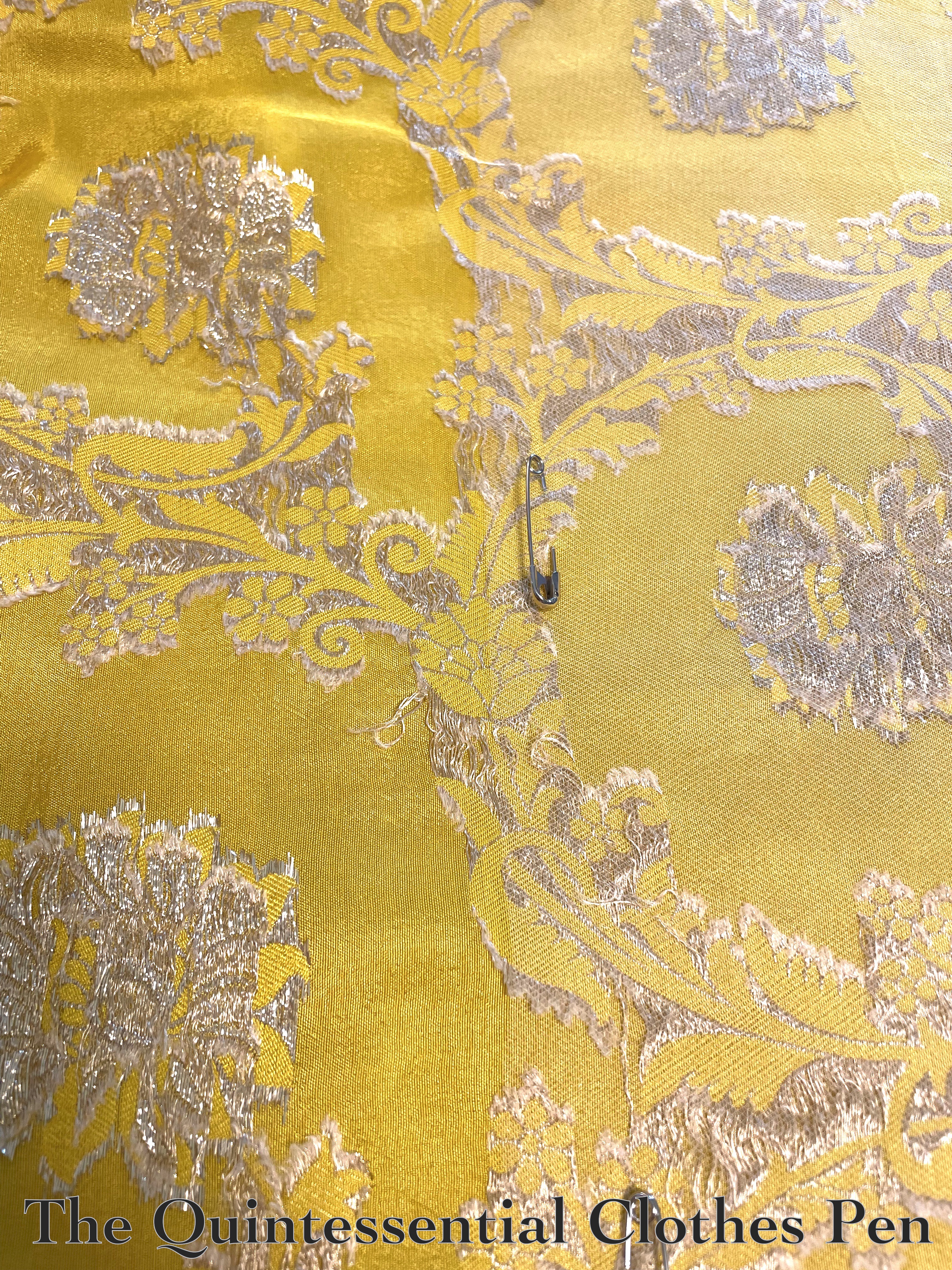
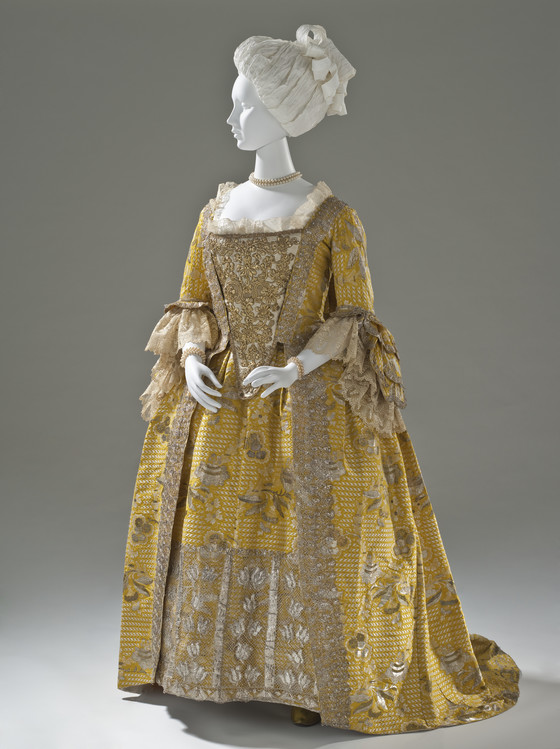
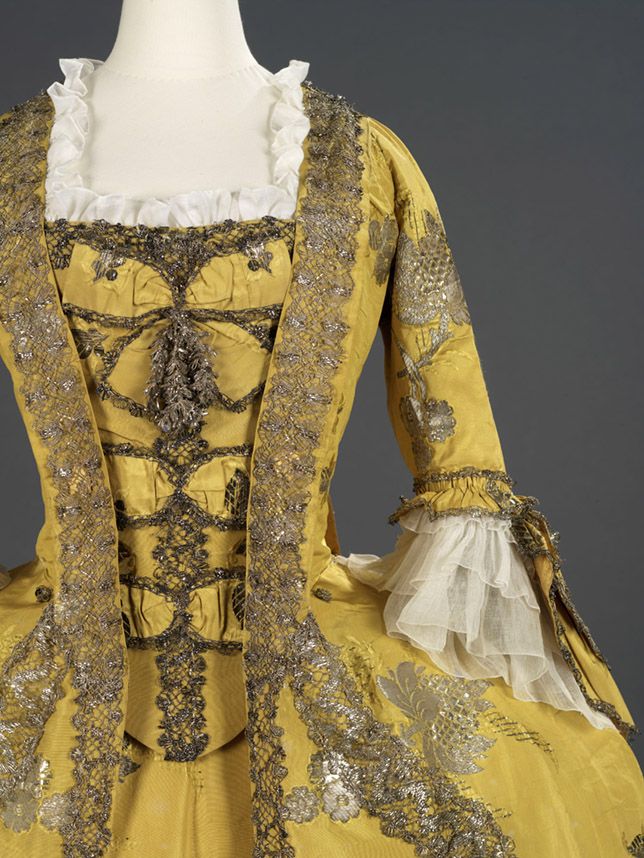
These new engageants are made of two layers of silk gauze, inspired by the ones displayed with the lovely yellow dress below by the Royal Ontario Museum.

Robe à la française Spitalfields (London), England. Silk extended tabby (gros de Tours) with liseré self-patterning and brocading in silver lamella and filé Georgian Rococo. 1750s. Gift of the Fashion Group Inc. of Toronto in memory of Gwen Cowley. ROM2009_10909_22.

I specifically wanted the semi-sheer quality as a change from the lace engageants that accompany my Versailles sacque (which you can read about in this past post detailing construction information about that dress).

I looked through my stash and realized that the best fabric I had for this project was salvaged from an old ballroom dancing dress I’d made. Here is a blast from the past for you! The elusive Mr. Q is even hiding there, behind my head… But back to the dress. It was made pre-blog, so no photos of it have made it here before.

I was so proud of it! But after a fair bit of wearing this dress, I moved on to creating new ballroom dresses and sacrificed this one for parts. The rhinestoned lace was re-used in a dress that did make it onto the blog in 2013 (documented in this past post), but the float — that dangling piece hanging from my wrist that floats in the breeze while dancing — was simply put into my fabric stash, which is where I found it when looking for engageant material!

The float was an odd triangular piece, so I had to do some piecing (adding center seams, for example) to make my engageant pieces fit. But that’s fine! In all the fluff you can’t see the seams.

And in fact, the pattern I used, from 1769, was intended to create zero fabric waste, which intentionally added seams, as well. The scalloped pieces are stacked together with the scallops facing each other to efficiently use a single rectangle of fabric.

Completed engageants are below. The seams are not obvious!

Every individual silk piece for these was narrow hemmed on all the edges and then the seams were butted, whipped, laid flat, and pressed. Below is a close up of a seam and a scalloped bottom edge.

Once all of that was done, the two layers were laid on top of each other and whip gathered along the top edge. This was then sewn to a ¼” cotton tape. This allows for the engageants to be removed to be cleaned or used with another dress someday.

And that’s it! These qualify for the Historical Sew Monthly Challenge #6 Up Your Sleeve:

Level up your sleeve game by making a garment where the focus is on the sleeves.

Just the facts:

Fabric/Materials: Approximately ½ yard of ivory silk gauze.

Pattern: From page 14 in Patterns of Fashion 6 (written by Janet Arnold, Sébastien Passot, Claire Thornton, & Jenny Tiramani).

Year: 1769.

Notions: Approximately ⅔ yard of ¼” white cotton twill tape and thread.

How historically accurate is it?: 95%. Entirely hand sewn. The construction methods are historically sound. The fiber content and weave may not be perfect.

Hours to complete: 8 ¾.

First worn: October 5, 2024.

Total cost: I have no recollection of what I paid for the silk gauze many years ago. Plus, at this point this fabric is being re-used, so might be called free regardless. The twill tape was bought in bulk and cost less than $1 per yard. So let’s say approximately $5.

Yellow Sacque Petticoat (HSM #12)

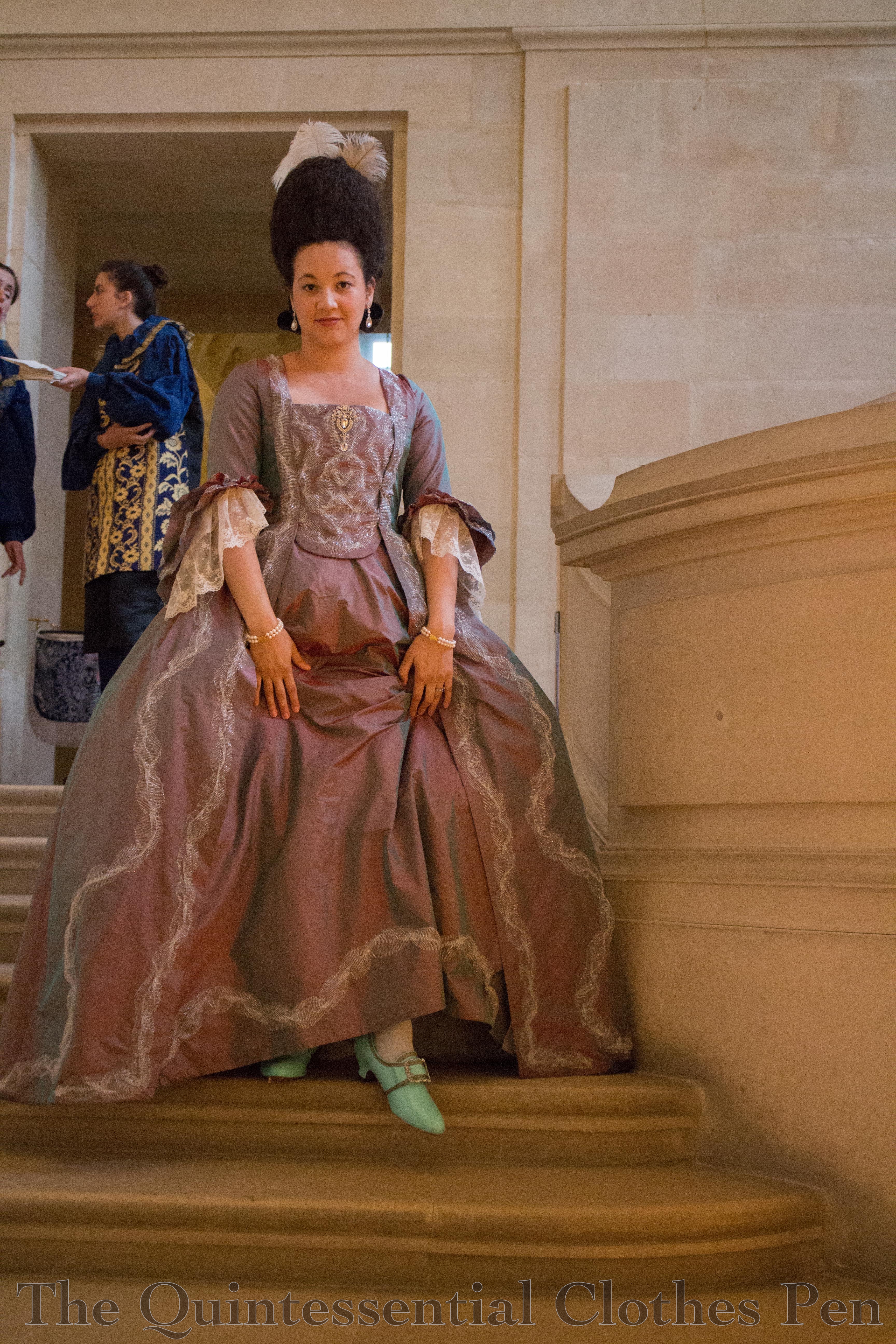
Over the last year or so I’ve been working on another new ensemble: a second 1770s sacque dress (also called a Robe à la Française or sack-back gown) to be friends with my original Versailles dress (which you can read all about in this past series of posts). My goal was to have a new dress that I could loan to two different friends so that they could join me in 18th century splendor. Luckily, the two friends I have in mind are not too different in circumferences!

The new ensemble has many individual garments — under petticoat, over petticoat, the sacque itself, a tucker, and sleeves flounces (or engageantes) — so there will be a number of posts coming up that share details about these various pieces. This post is going to focus on the over petticoat that I made for this ensemble.

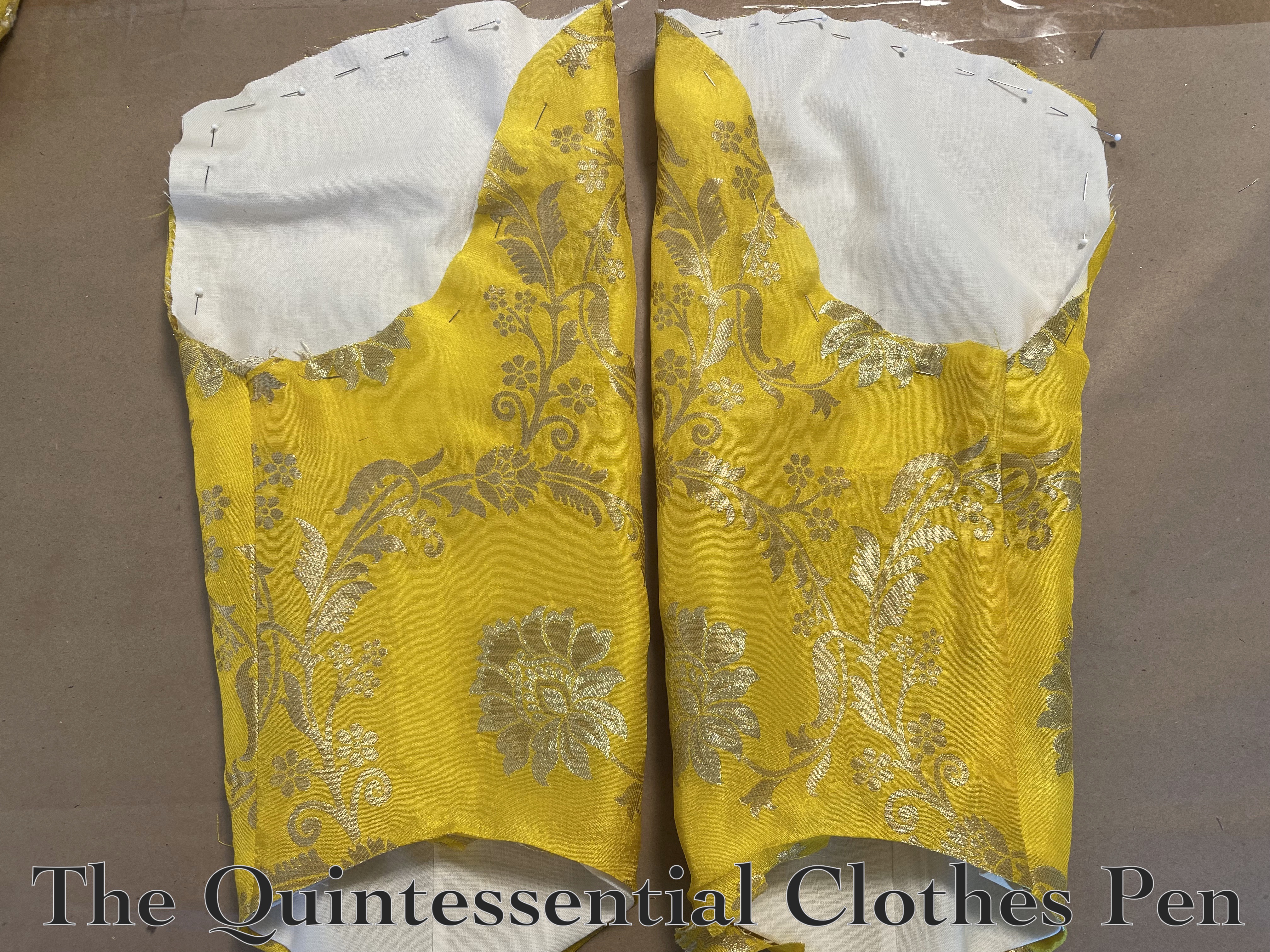
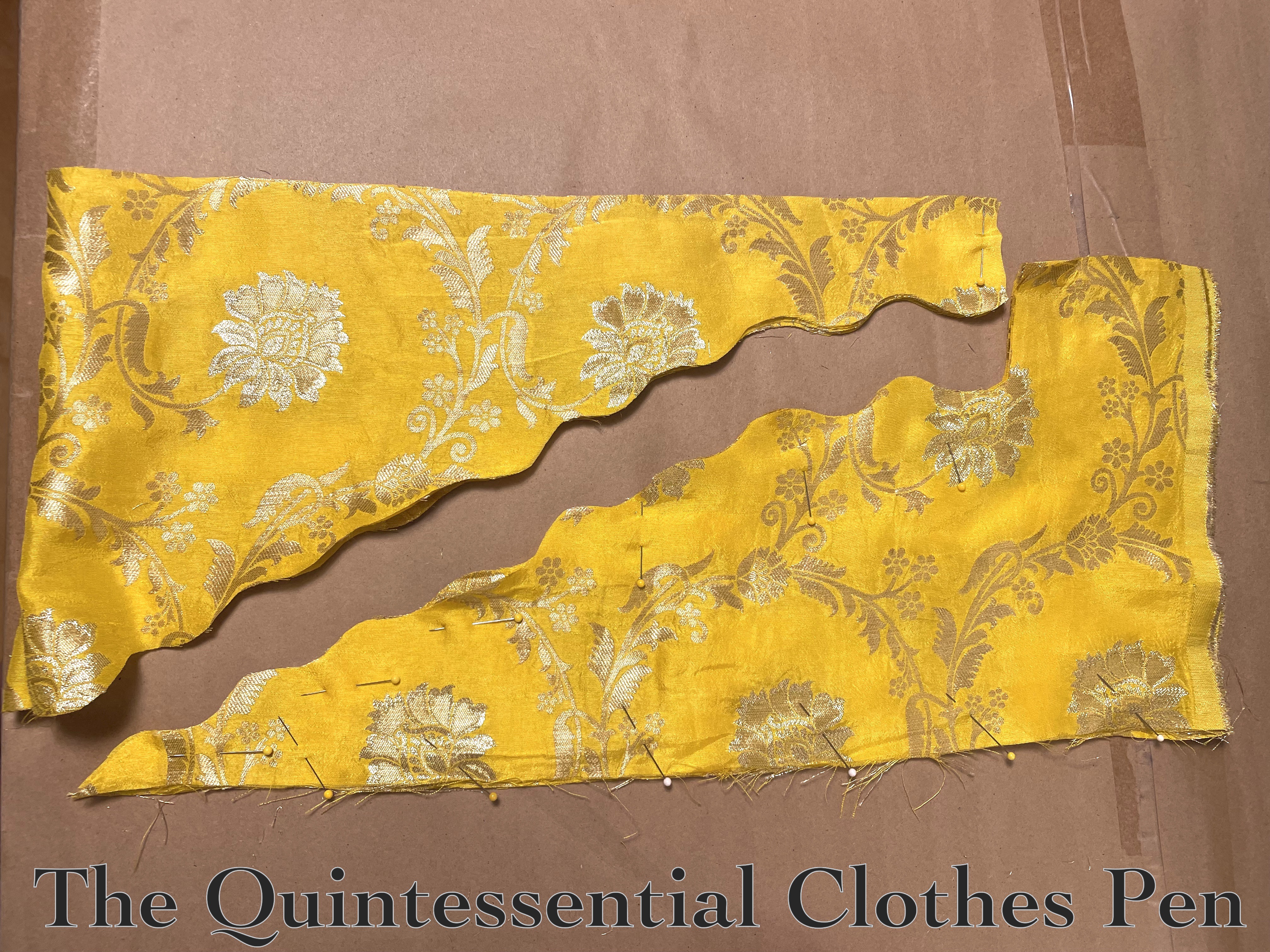
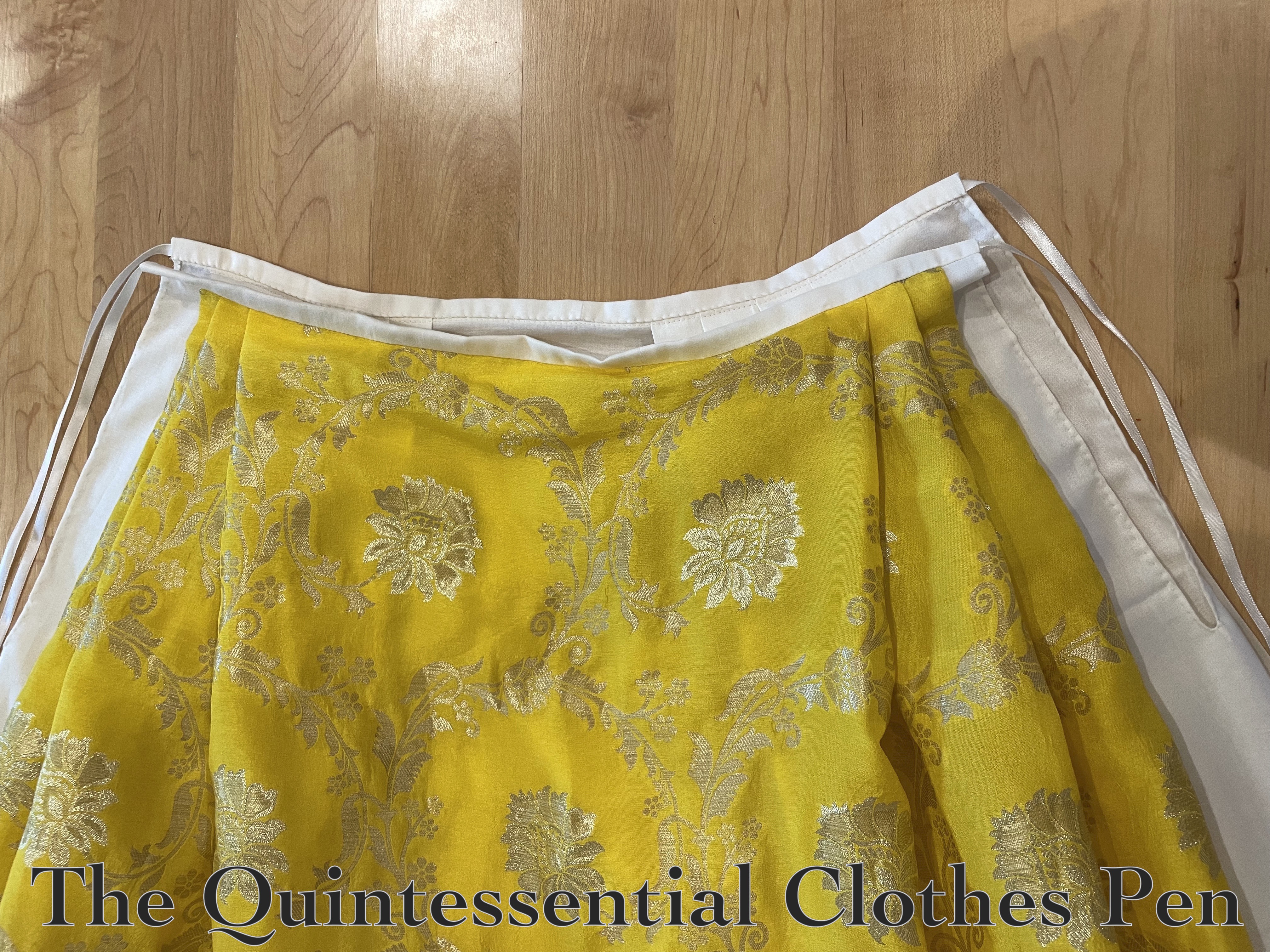
The petticoat front is made up of the yellow jacquard fabric that the dress itself is made out of, while the sides and back are made of a cream colored cotton. No need to use expensive fabric where it is unlikely to be seen! This was a common 18th century practice. Above is an image of the front of the petticoat. Below is an image of the back of the petticoat.

There are three fabric panels — two of the cotton and one of the silk. These are seamed together and then divided in half, such that some of the cotton falls on the ‘front’ of the petticoat (since it makes up ⅔ of the circumference of the skirt). There are slits cut into the sides at the halfway points. These are narrowly hemmed by hand.

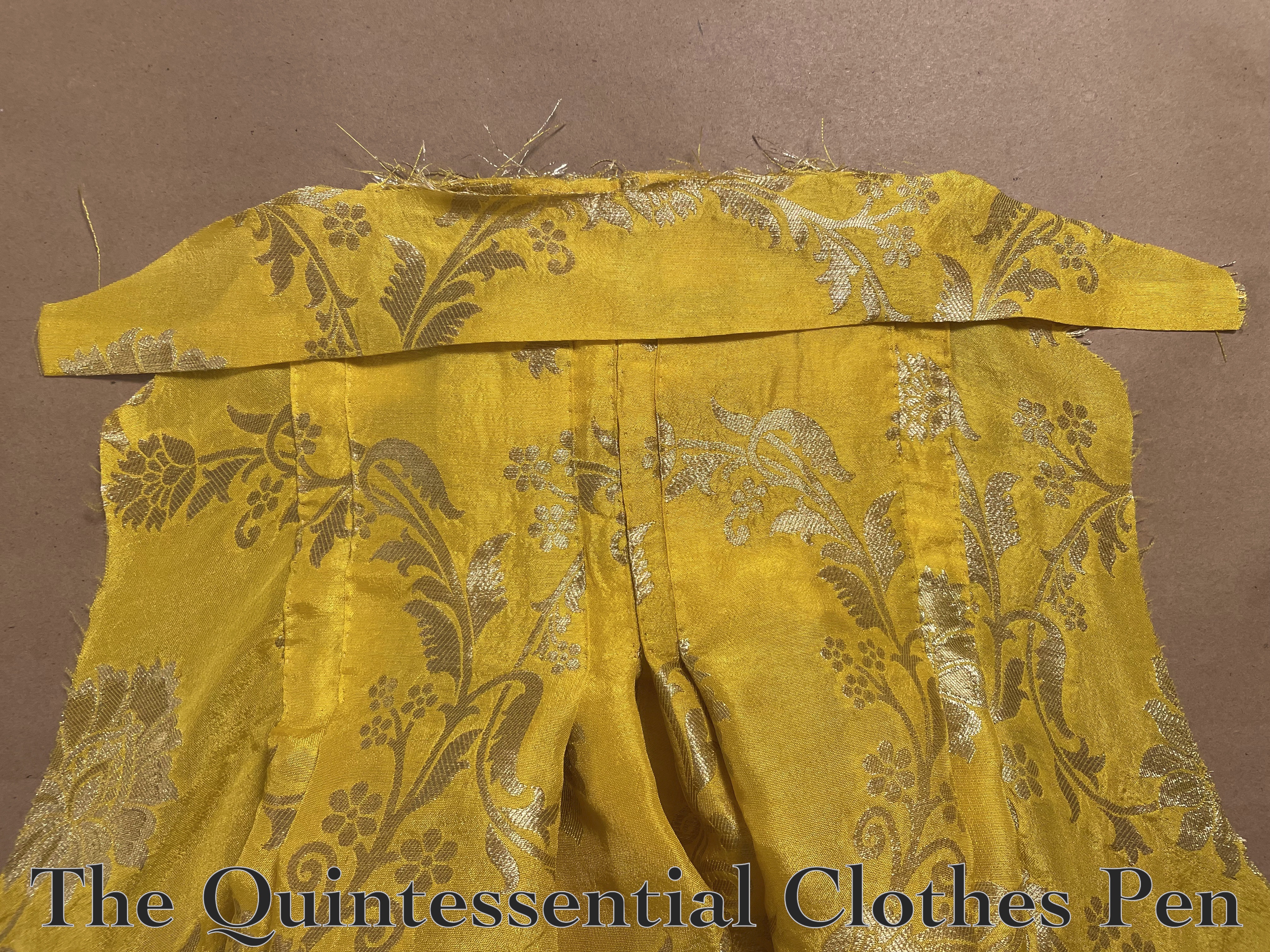
Below is a closeup of the top the petticoat, which shows the pocket slit on the right side.

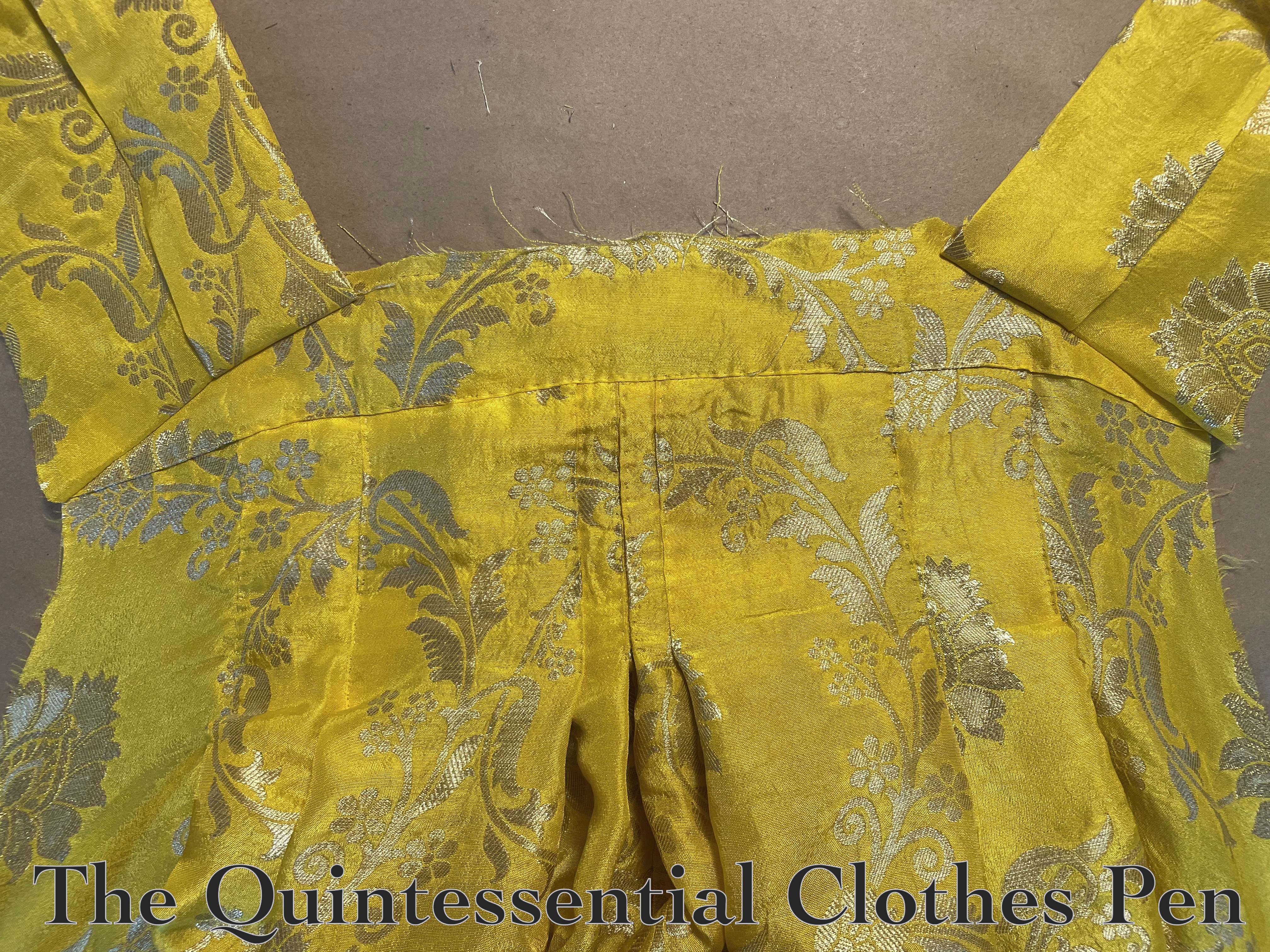
The front and back are pleated in the same way, though with differing quantity and depth of pleats. They have an outward box pleat at the center and additional deep knife pleats towards the sides. The pleats are held in place by front and back waistbands that are finished at ½”. Below, you can see the inside of the front and inside of the back, showing the knife pleats and waistbands.

And here is one more interior closeup of the waistband. You can see that it was sewn on by machine and then flipped to the inside and whip stitched in place. You can also see the ribbon tie on the right as well as a little bit of the pocket opening.

Set inside of the waistbands are long ties (in this case, made of ivory polyester ribbon because it was on hand). The back ties are long enough to tie around the front of the body. Then the front ties warp around the back and are long enough to tie in front. (You can see how this works in this past post about the petticoat I wear under my Versailles sacque.)

The bottom of the skirt has a ½” hand sewn whip stitched hem, which you can see in the image below. It is leveled to sit over 1770s panniers (which you can read about in this past post).

And that’s basically it! This petticoat qualifies for the Historical Sew Monthly Challenge #12 That’s A Wrap:

Make an accessory or garment that is worn by wrapping it around the body.

Just the facts:

Fabric/Materials: Approximately 1.25 yards of yellow jacquard silk and 2 yards of cream cotton.

Pattern: I referenced my first petticoat, which referenced Katherine’s 18th Century Petticoat Tutorial and The Standard 18th Century Petticoat Tutorial at A Fashionable Frolick. The nice thing about Katherine’s tutorial is that it’s adjusted for a petticoat to go over pocket hoops, while the great thing about the tutorial at A Fashionable Frolick is that it has tons of detailed construction information like which stitches to use. Both tutorials are clear and very helpful.

Year: c. 1775.

Notions: Approximately 3 yards of ¼” ivory polyester ribbon and thread.

How historically accurate is it?: 90%. All of the visible bits are hand sewn. The construction methods are accurate, though cotton is not the most likely fiber content as it was expensive in the 18th century.

Hours to complete: I didn’t keep track (a nice change from some of my projects). My guess is about 5 hours for machine sewing non-visible areas and hand finishing.

First worn: October 5, 2024.

Total cost: Approximately $30 (the cotton was $4/yard, the silk was $17/yard, and the ribbon was free).

1794 Windowpane Ruffle Dress (HSM #10)

At this point, I’ve posted about most of the garments and accessories needed for the 1790s ensemble I’ve been slowly creating (you can read past posts here: stays, cap, sash, as well as petticoat and bum pad). The final piece (and perhaps one of the most essential pieces) is the dress!

I started this in 2023, along with most of the accessories, and finally finished in May 2024. My goal for this post is to document the inspiration and construction details of the dress (photos of the dress being worn will come later!).

Basic Information

To start, the information for the Historical Sew Monthly 2024 Challenge #10 UFO Spotter:

We all have an UnFinished Object or two (or ten!) Now’s the time to complete one of your unfinished historical costuming projects.

This dress was definitely a UFO! It’s been hanging in my sewing room for many months in a state of partial completion.

Just the facts:

Fabric/Materials: 3 ½ yards of 120″ wide ivory windowpane woven curtain sheer (probably polyester) and 1 yard of 58″ wide lightweight white linen for the lining.

Pattern: Adapted from the 1790s Round Gown pattern in The American Duchess Guide To 18th Century Dressmaking by Lauren Stowell and Abby Cox. I changed the front bodice to suit my goals and style as well as adding ruffles to the sleeves and hem.

Year: c. 1794.

Notions: 2 ½ yards of ¼” white cotton twill tape, 4 hooks and loops, and thread.

How historically accurate is it?: 95%. The pattern and construction methods are well researched and documented. The only points off, I’d say, are for the fiber content of the main dress fabric.

Hours to complete: 13.5 for the main dress construction + 11.5 for the ruffles = 26 hours of hand sewing.

First worn: Not yet!

Total cost: I paid approximately $10/yard for the main fabric and $6/yard for the linen. So, with the addition of the notions I would say this dress cost about $50 for materials.

A Few Observations

As with the 1790s petticoat I made (linked above in the introduction to this post) this dress is entirely hand sewn.

I had to go back through my records to figure out what I spent on the fabric for the dress. It’s been in my stash for years, so while I remember what store I purchased it from I had no memory of how much I paid. It turns out that I bought both the windowpane exterior fabric and the linen lining in 2012! At the time, I had no particular plan in mind for them, so they sat and waited… for over ten years! I’m excited to have finally put them to good use!

Inspiration

I’ve been interested in trying various garments and accessories in the American Duchess book since I first purchased it, and this 1790s idea felt like a good opportunity, especially since I could work from the undergarments out with the patterns and instructions all in one place.

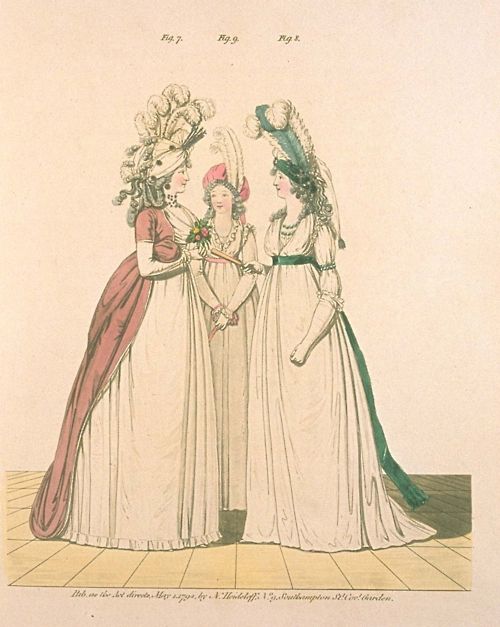
The basic elements of the 1790s dress in the book worked for me, but I decided I wanted a different front bodice look, more like the gown on the right in the image below (rather than like the one on the left, which is more like what the sample in the book is shaped like). The painting below, La duquesa de Osuna como Dama de la Orden de Damas Nobles de la Reina María Luisa, by Augustín Esteve is dated between 1796 and 1797 (it is available on Wikimedia Commons). That’s a few years later than my date of 1794, but the gathered front and round neck shape is seen earlier, even in the 1780s in Chemise a la Reine styles (you can read more about this style, popularized by Marie Antoinette, here on the Fashion Institute of Technology: Fashion History Timeline page). There is another example of the front shape I was intrigued by in the Cora Ginsburg auction catalog from Spring 2023 on page 12.

In addition to the bodice shape, I was particularly inspired by the fashion plate below for the ruffles at the hem and wrists. Other fashion plates from this year show the same detail. The plate below, and more from 1794, can be seen on the Dames a la Mode website here.
I gathered my favorite inspiration, including those shown above, together on a Pinterest board, which you can see here if you are interested.

Construction

I mostly followed the directions in the American Duchess book, though I did have to adapt a few order of operations things in the bodice to accommodate my change in front style, as well as to accommodate adding the ruffles to the sleeve openings.

I started by assembling the bodice lining. Below is my bodice lining, ready for the exterior pieces to be added.

I didn’t take any further in-process photos, but I did document the completed garment. First, an image of what the front looks like when the front closure is done up. The exterior of the dress adjusts at the high waistline and the neckline with drawstrings.

Then, below, is the dress with the front exterior opened up. Historically speaking, the lining would likely have been pinned in place, but I decided hooks would be simpler for me (and still adjustable with a little bit of sewing) and so my lining closes with 4 hooks and loops. The front skirt slit opening is lost in the gathers once the exterior of the dress is closed.
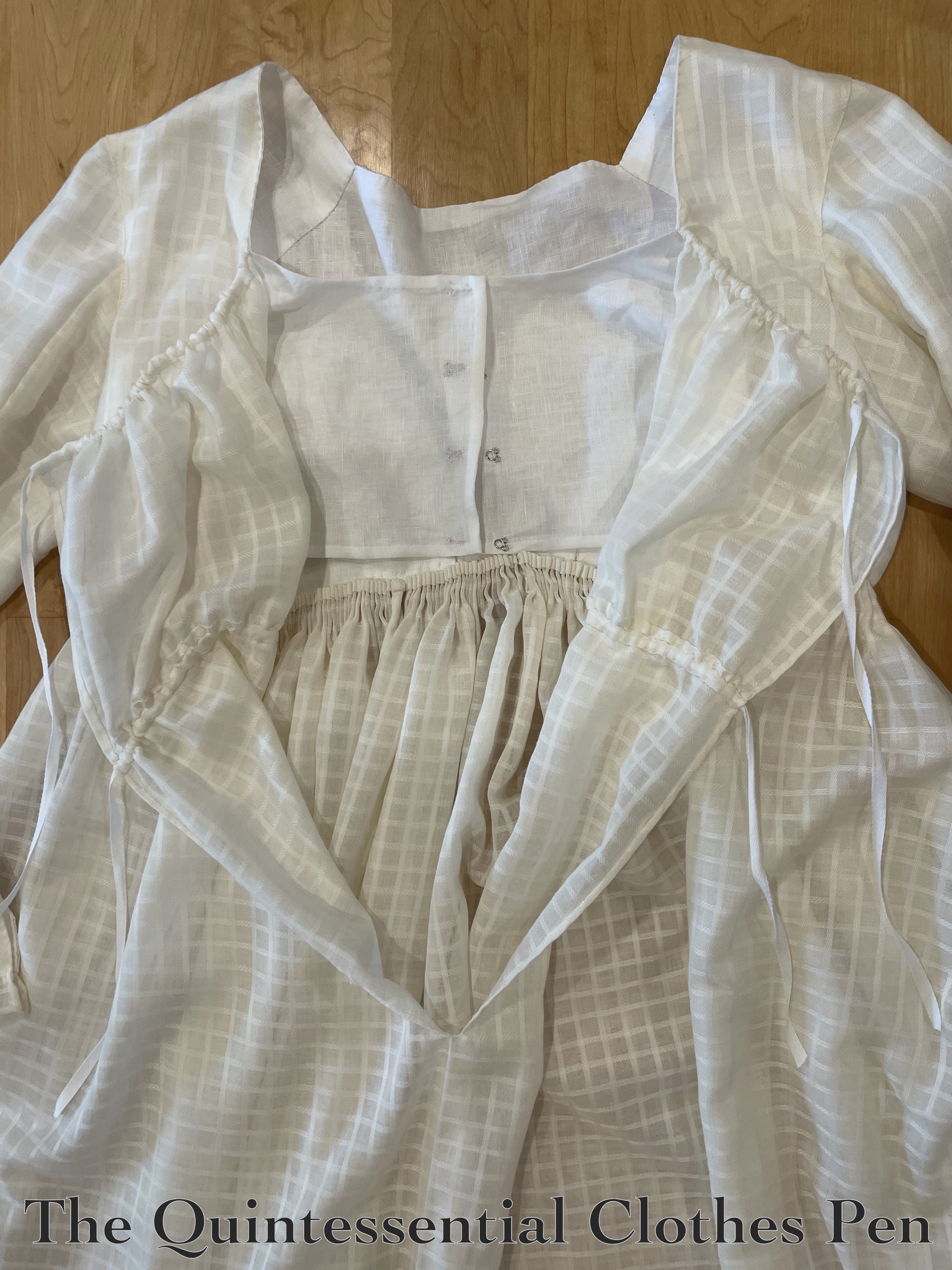
The next photo shows the back of the bodice, which curves up a little at center back in a very 1790s way, as well as the very full skirt that is attached across the back using cartridge pleats, creating a lovely series of folds.

And here is a view of the entire back of the dress.
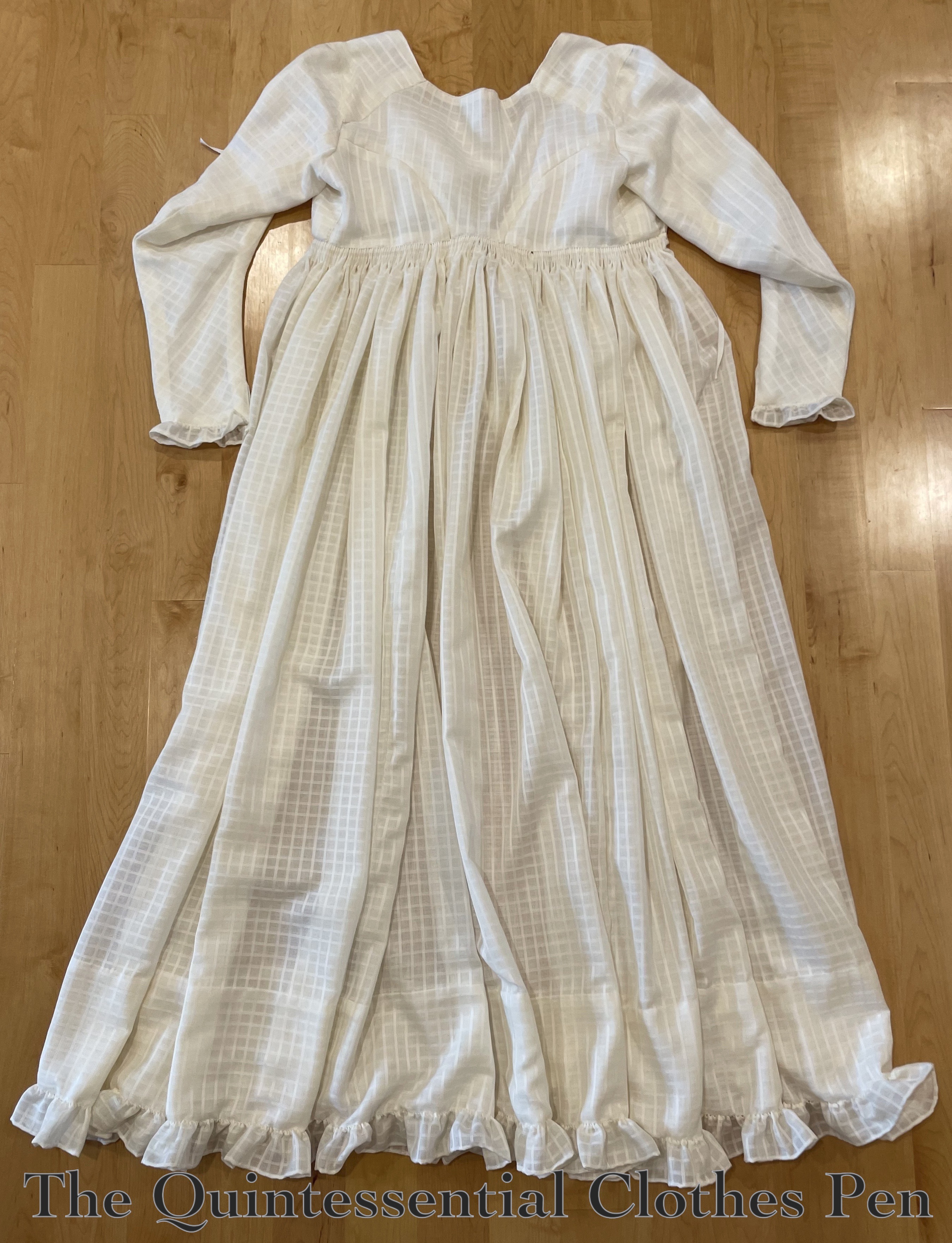
The final touch was to hem and then add all of the ruffles! I brought the basic rectangle shapes with me on trips and quietly introverted while hemming miles of edges. Eventually, they were all hemmed and connected. Then… I went back along one long edge on each ruffle section and ran whip gathers. Then, finally, I butted the edges to the sleeve hems and bottom edge of the skirt and whipped the ruffles into place.

Below is a closeup of the hem ruffle, where the narrow hem of the ruffle and the butted edges are both clearly visible.
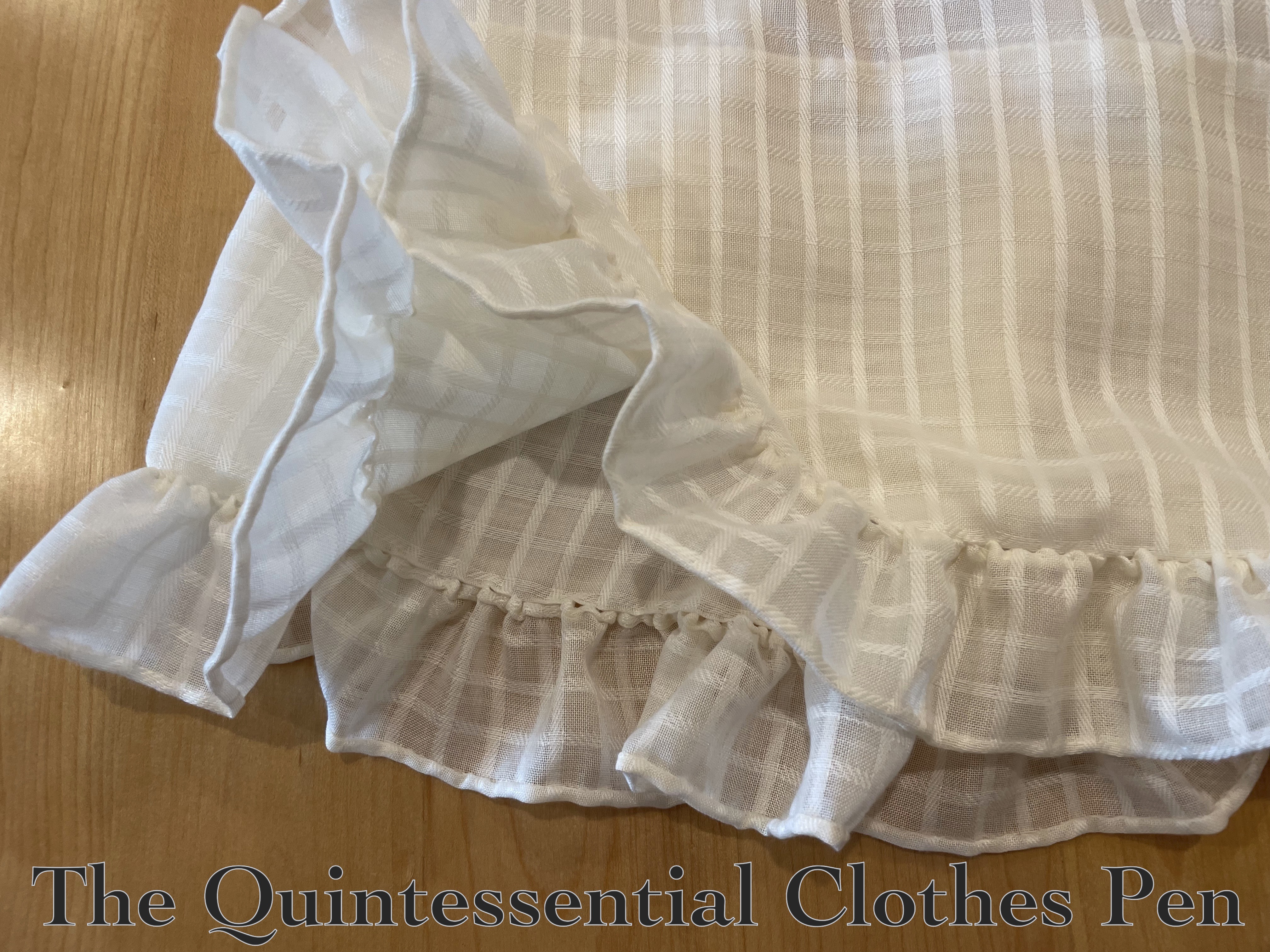
And here is a closeup of the sleeve opening, which again shows the narrow hems on the ruffle and butted edges of the ruffle and sleeve.

I did have one strange decision to make regarding the depth of them hem on the dress itself. It might not have struck you as odd that the hem is so deep (about 6″), but it does look slightly strange to me when I look at photos of the dress laid out, or when I see it without the petticoat underneath.

The reason for the unusually (for this period) deep hem is that my petticoat somehow ended up being a bit short, even with a narrow hem. I didn’t want to have the nice, smooth white expanse of this skirt broken by a section at the hem that wasn’t backed by a petticoat before the dense white of the ruffle. And I had lots of length in my dress exterior to play with.

I considered tucks to take up the length and provide opacity, but it looked ridiculous in this fabric and for this particular decade. Instead, I settled on this wide hem which is set at a height that makes the ruffle just brush the tops of my feet. The top edge of the deep hem just blends in when the petticoat is under the dress. Here is a view of the hem. Each of the squares is about ½”.

And that’s it! The dress is finally done! I’m super pleased that this UFO garment and the accessories to complete an ensemble are finished and that I have a whole new decade of clothing ready to wear.

Now, I’ve moved on to other sewing projects and trying to figure out how to use (mostly) my real hair to create a 1790s look so that I can get photos of the whole 1790s ensemble. More on that once I figure it out and get photos. In the meantime, thanks for reading this far and sticking with me through all of these minute details!

1790s Petticoat & Bum Pad (HSM #8)

This post is part of my ongoing and slow work on a 1790s ensemble.

Last year, I was working on a petticoat and bum pad to create a foundation for a dress. The petticoat was pretty much done by the end of the year. The bum pad needed just a final fitting for me to decide if I liked the plumpness before sewing it closed.

After a fitting when the dress was very close to done I determined that I did like the plump pad (stuffed with scraps of the white striped cotton the petticoat and bum pad are made of).

With the bum pad being good to go, I was finally able to finish up the petticoat!

This is my entry for the Historical Sew Monthly 2024 Challenge #8 Stripes and Dots:

Make something using striped or dotted material. The stripes or dots can be printed on the material, knitted/woven in to the material, or created with surface embellishment (ex: embroidery). Textural stripes or dots (i.e: those that are the same colour as the base fabric) are permitted!

This petticoat is made from fabric with a narrow woven in stripe.

Just the facts:

Fabric/Materials: Approximately 3 yards of white striped cotton.

Pattern: From The American Duchess Guide To 18th Century Dressmaking by Lauren Stowell and Abby Cox.

Year: c. 1795.

Notions: Approximately 1 yard of 1/4″ white cotton twill tape, 4 hooks and loops, and thread.

How historically accurate is it?: 100%. Entirely hand sewn, made from plausible fabric, using a pattern that is backed up by lots of research… I’d say this one is pretty accurate!

Hours to complete: About 2 ¼ hours.

First worn: Not yet worn.

Total cost: Approximately $4. The fabric was just $1 per yard when I purchased it years ago and the twill tape and hooks/loops were bought in super bulk and probably cost no more than $1 for all of the bits that I used.

More details:

The petticoat closes with a drawstring, as can be seen below. I love this, as it will make it easily adjustable (a common theme in my recent sewing projects!)

The front opening is finished on both sides with a narrow hem. It’s long enough that I didn’t feel the need to reinforce the bottom, as I don’t think I’m likely to rip it getting in and out.

The next photo shows that I left extra seam allowance at the sides and shoulder seams… again on the theme of garments being alter-able!

And finally, a hem! I needed to max out the length to accommodate the sheer dress that will be worn over this, so the hem is only about ¼”.

And that’s it! I’m excited to have another foundation piece for a new-to-me decade of clothing and I’m pleased that it is entirely hand sewn.

Excerpts From “How To Play Croquet” (1865)

While doing research to make sure friends and I had our rules correct for mid-19th century croquet over the summer, I came across this resource (with a fantastic lengthy name, as is common for these sorts of books in the 19th century): How To Play Croquet. A New Pocket Manual of Complete Instructions for American Players. Illustrated with Engravings and Diagrams Together with All the Rules of the Game: Hints on Parlor-Croquêt, and A Glossary of Technical Terms.

I found great enjoyment reading through the book (it’s not a long read) and think it will be fun to share some of the amusing passages here.

To start, a few excerpts from the introduction:

This next excerpt is from the section describing the game itself. I enjoy the word choice and the conclusion of the players shouting “Victory” and waving their mallets in the air!

And lastly, a few of the benefits of playing croquet, from the conclusion of the book.

I appreciate the final admonition about not cheating, but I have to say that when a game of croquet with friends gets too long and people stop paying attention… a bit of ‘move it along’ assistance to the game can be quite helpful!

Croquet At Roseland Cottage

The outing for which I planned to wear my updated 1815 Tree Gown was an afternoon of croquet and house tours at Roseland Cottage: a joint event hosted by The Footwork & Frolick Society and Historic New England (the organization that runs Roseland Cottage).

Roseland Cottage is a lovely pink house in Woodstock, CT that was built in 1846 by the Bowen family (you can read more about thr history of the house here on the Historic New England website). I’ve been to the house before and posted about it on the blog — in a different post about playing croquet! That outing, which you can read about in this past post, was in 1860s clothes.

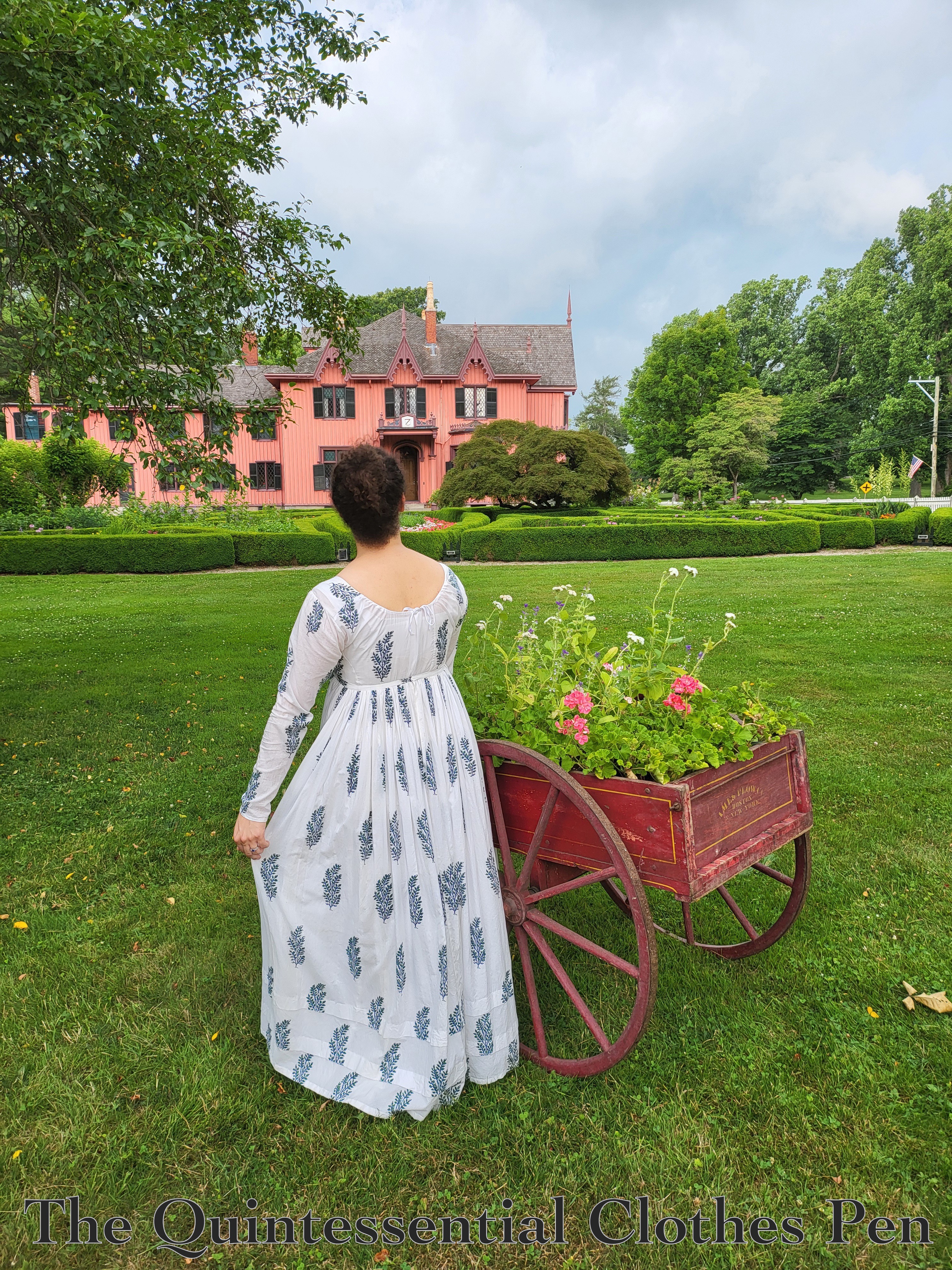
A rather moody looking Roseland Cottage on the day of this year’s outing is pictured below. It was overcast, which was nice because it wasn’t super hot, but we did have a fantastic rain and thunder storm roll through halfway through the event. Lightening struck the lawn outside of the house! Luckily, we knew it was coming and were able to transition indoors to play tabletop croquet and have tea. No one was rained on!

And I was pleased, because Roseland is lovely, the company was delightful, and my updated Tree Gown was freshly revived and very comfortable!

It felt important to show off the updated back of my gown for documentation here on the blog!

Roseland has a beautiful and well maintained garden, and in addition to that, I also appreciated the cute cart (detail photo below) full of additional flowers that was situated on the lawn. It made for a wonderful photo accessory, as you can see in the photo above!

As I mentioned in my post about altering the gown (linked at the top of this post), I’m so pleased to be able to give this dress extended life!

When The Dress No Longer Fits (1815 Tree Gown)

I’ve loved my 1815 Tree Gown ever since I made it in 2013 (here is the link to the original post about making the dress) and have worn it many times, most recently last summer for a Regency picnic which I posted about here. It was clear at that point that this dress needed to be updated to fit my current shape!

Making a plan

I finally had the brain space to deal with it this summer (and the added encouragement of wanting to be able to wear it in June). So, accordingly, I dug out the small bit of fabric I had leftover from originally making the dress.

Then, I took stock of what was needed. In a fitting, I realized that not only were the sleeves now a bit too tight, but the shoulders were also not quite wide enough for my now-broader shoulder width, which was also contributing to the dress wanting to fall off of my shoulders. Ugh!

There was no easy way to deal with that second problem except to make the back wider… So, I took a deep breath and decided to replace the back panels.

Making it happen: taking the dress apart

I had seam ripped the arm seams last year after realizing they needed to be let out, so the sleeves were already in that taken-apart state.

As I was taking apart the back, I remembered that I had taken a tuck in the finished dress to make the armsceye a little smaller. Alas, letting this out was not nearly enough to prevent me from needing to replace the back panels.

Making it happen: forming a new plan

Fast forward through a bit of seam ripping (French seams make for a lovely finish, but also mean double the seam ripping!), and I had a bunch of loose panels flopping around. I used the original back pieces and my desired new measurements to cut mockup pieces of what I thought the back should become. I safety pinned those in and tried the dress on to make sure I was on the right track.

Here is the old back piece laid over the mockup. It’s not a huge difference, but that 1″ or so on most edges made a huge difference in terms of fit.

I also made a pattern piece for the arm gusset I needed based on the measurements I wanted the new sleeve size to be. In the end, I decided to extend the gusset all the way down to the cuff opening, as I figured a little extra room for my hand to get through was a reasonable idea (it was a tight squeeze otherwise!).

Then, I used my minimal scraps to cut out the new pieces. I’m super pleased that even with small scraps I was able to match up the block printed areas!

For the back pieces, the image below shows what I had to work with. Not much! I could fit both pieces if I didn’t maintain symmetry in the block print, but… I did such a nice job matching it up when the dress was made! I just couldn’t bring myself not to make the re-do match, too! But I couldn’t get two pieces with matched patterns out of what was left.
It was too much to think about late at night and I knew I only had one chance at cutting to get it right…

So I took a break and came back to it another day. And I had a brainstorm! The way to make my goal happen was to piece one of the pieces somewhere. I could have placed an extra seam in a shoulder area, but that seemed more obvious than my second option given the sheer fabric of the dress. The second option that I decided on is a vertical seam in the white space near the center back opening. There was just enough fabric to make it happen!

Making it happen: putting the dress back together

With my new back pieces cut, it was just a matter of putting them back into all of the seams (including the armsceyes, shoulders, side back, and waist). I was able to reset the sleeves without any of the original gathers, which allowed for the extra circumference my new back pattern had created. Then, I created a new drawstring channel along the neckline and re-applied my closures… and the update was complete!

Here is the new back view of this dress, with the pieced seam on right (but with symmetrical block printing!).

I used a French seam to attach the pieced bit, so that it would match all of the other seams in the dress and stay nice and tidy with no fraying edges.

I also made the right side of the drawstring come out before the center back edge, so that the overlap with the hook can still function properly while the drawstring pulls up the excess width across my shoulders that I included. (There was extra in the original version, too… but I maxed that out years ago!)

Here’s another view of the lovely, tidy interior of the dress with the updated back.

And finally, here is a photo of the finished sleeves with the added gussets. Where the block printing is located the seams blend so well you can’t even see them! It makes my heart pitter-patter with glee!

The final step after putting in the gussets was to re-hem the cuff openings.

And then… this dress was updated! Now it’s a story of ‘when the dress fits again!’