1797 Watermelon Sleeveless Bodice, Part II: Patterning & Construction

This story begins in my previous post (which you can read here) in which I share the backstory and inspiration for this garment. I’ll be carrying on from where I left off. But first, a quick side story!

Mr. Q saw the title of this post and asked “What is a watermelon sleeve?” An excellent question, I think! I explained that watermelon is my description fpr the colors of the garment I’m discussing. But… I do rather wonder what a “watermelon” sleeve might look like…! After all, there are many historical sleeves with fun names (bishop, bell, pagoda, beret, gigot, and mameluke all come to mind quickly, though I can’t think of any that are named after fruit. If you can, let me know!).

Leaving that tangent behind… back to the story!

Patterning

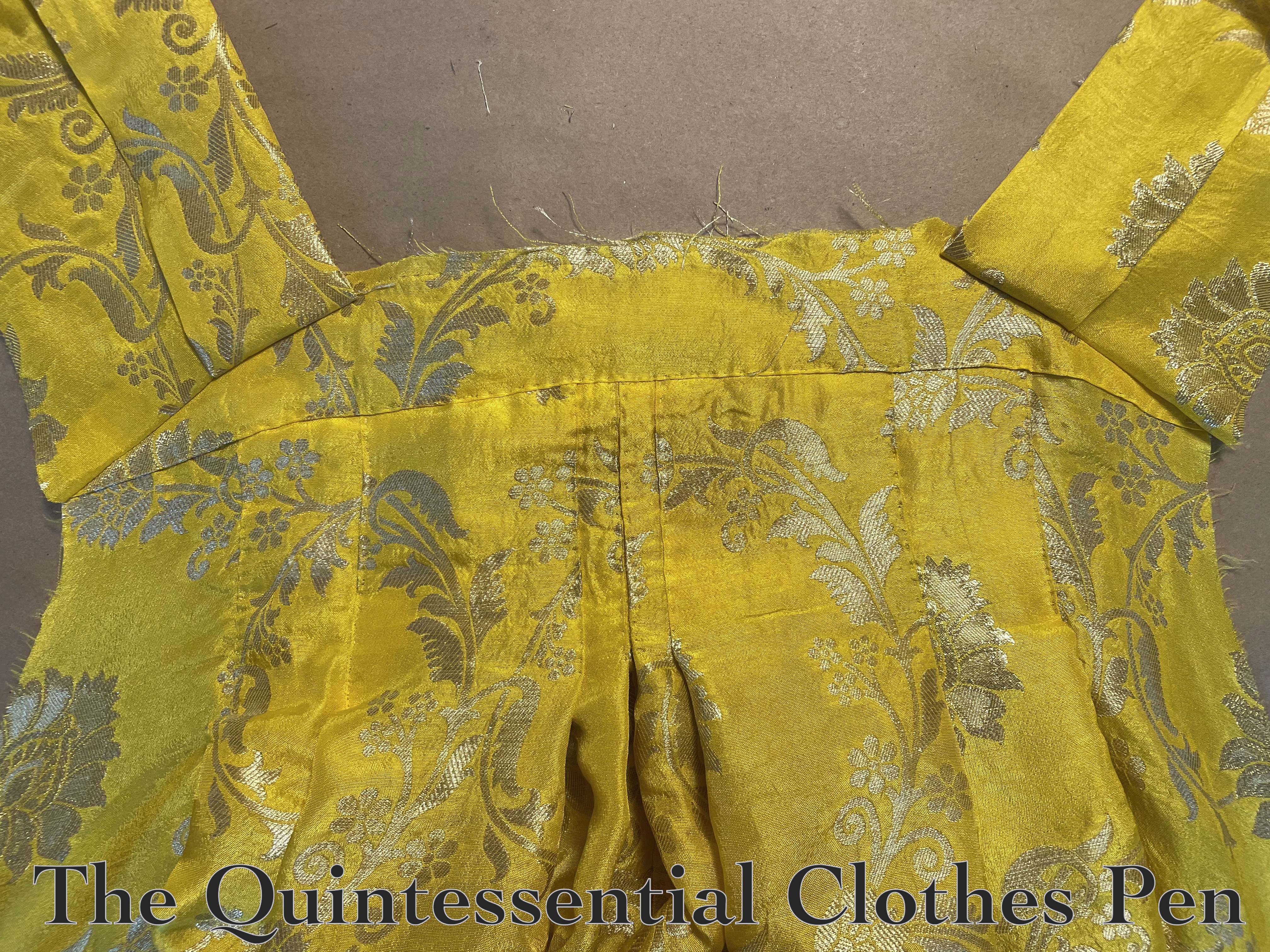
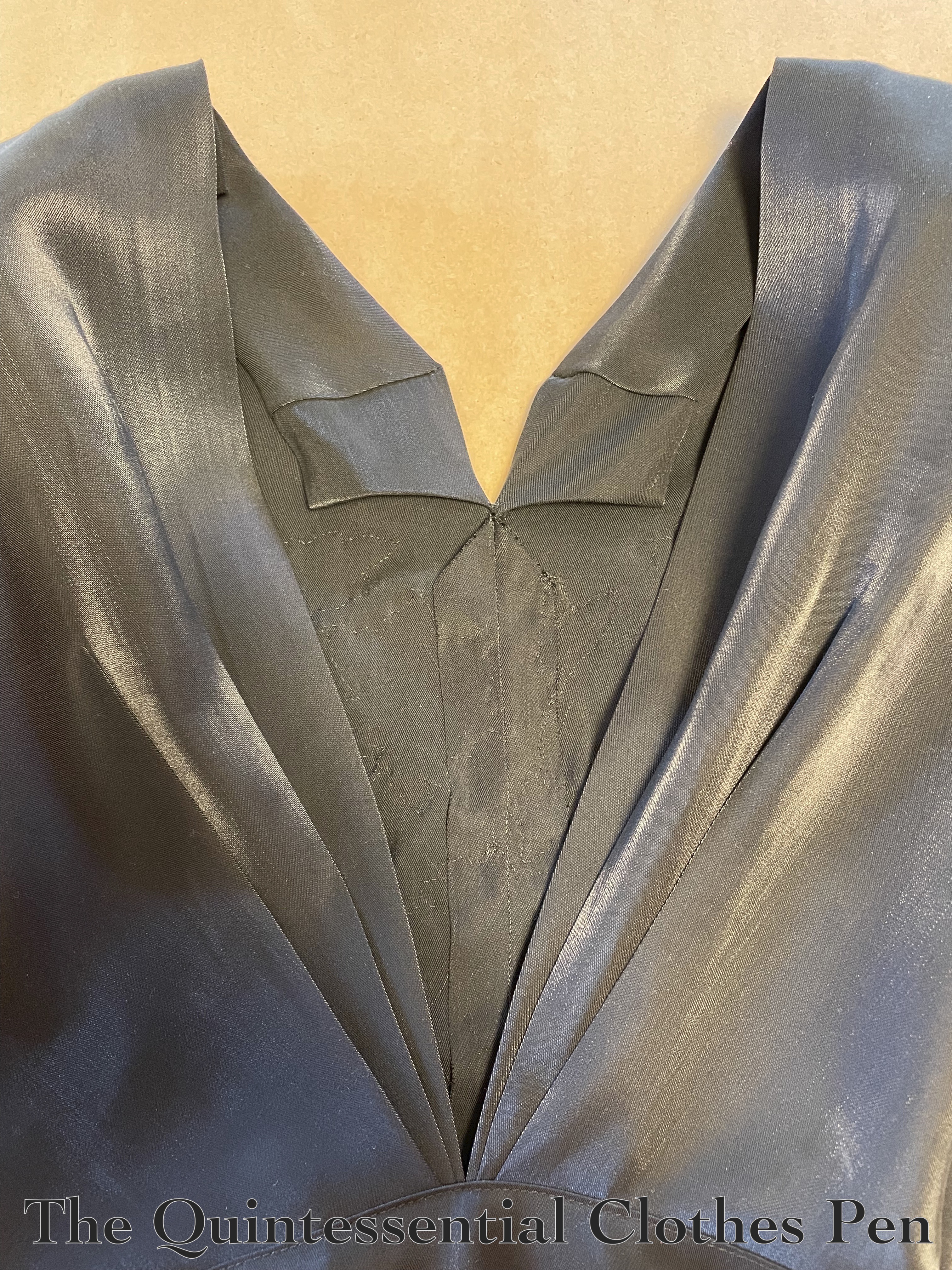
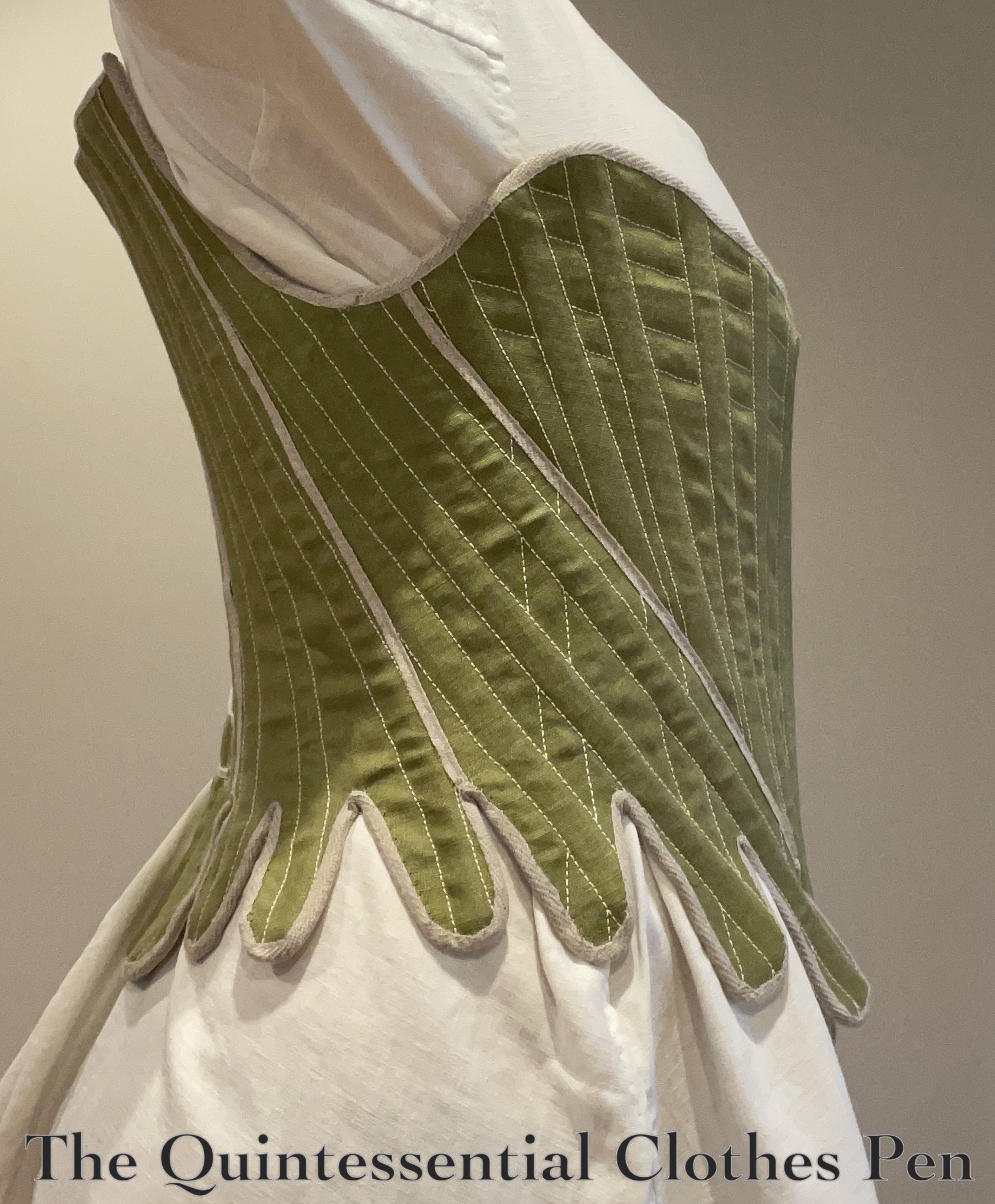
The pattern started with the lining pattern for the dress that I knew fit and would be worn under the sleeveless bodice as well as the bodice of “A Robe c. 1795 – 1803” on pages 44 and 45 of the original printing of Janet Arnold’s Patterns of Fashion 2. I liked the idea of the pleats on the exterior to provide interest on my otherwise solid fabric. It didn’t occur to me until very late in the process of making this garment that most of the pleats would be covered by the neck trim. Oops! Oh well! Below, a photo of the front of the bodice. The pleats are the topstitched lines running downwards from the shoulders.
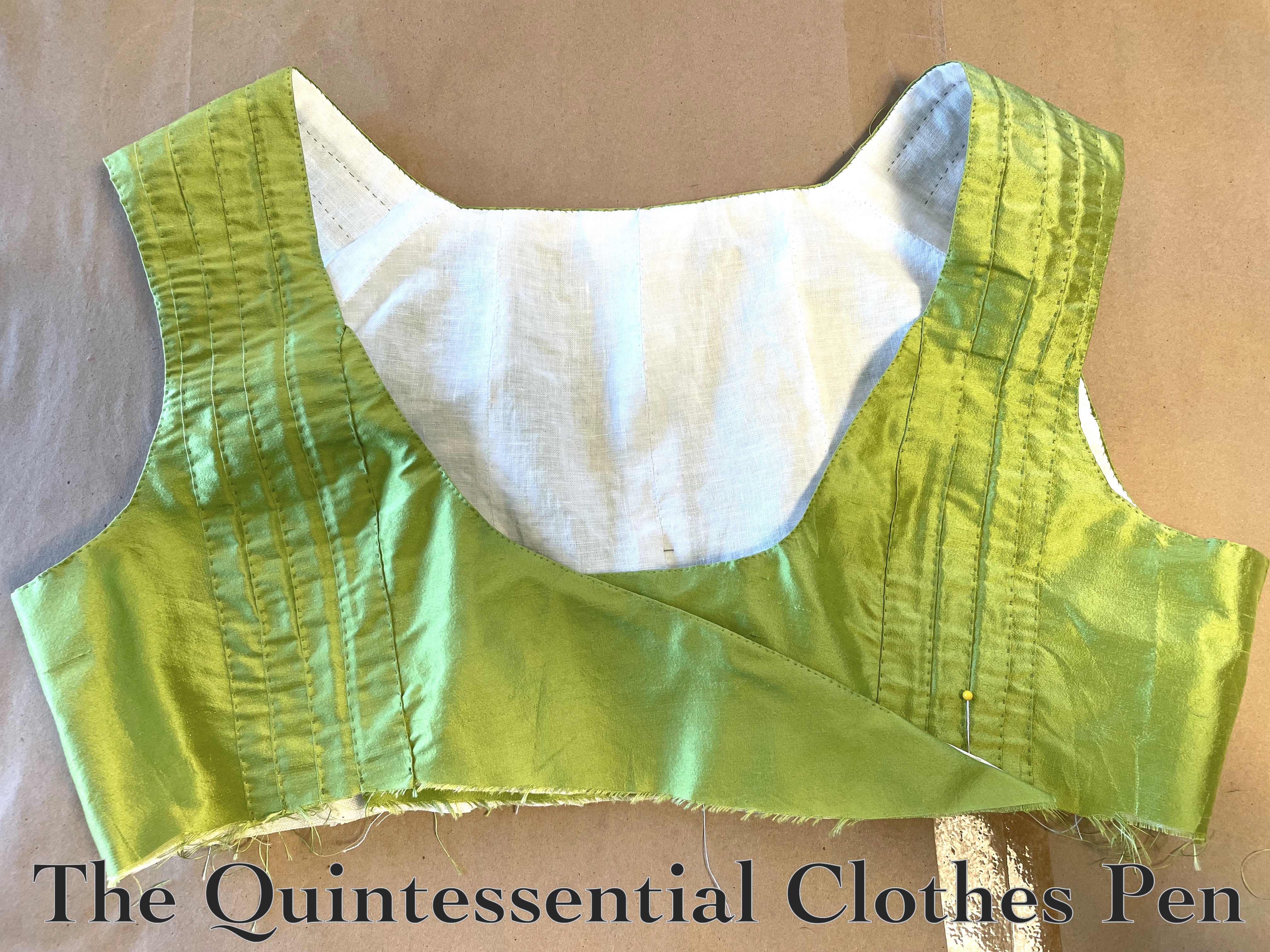
I ended up with separate patterns for the exterior and lining front pieces, but the side back and back pieces were cut from the same pattern. I’ll explain how I made them.

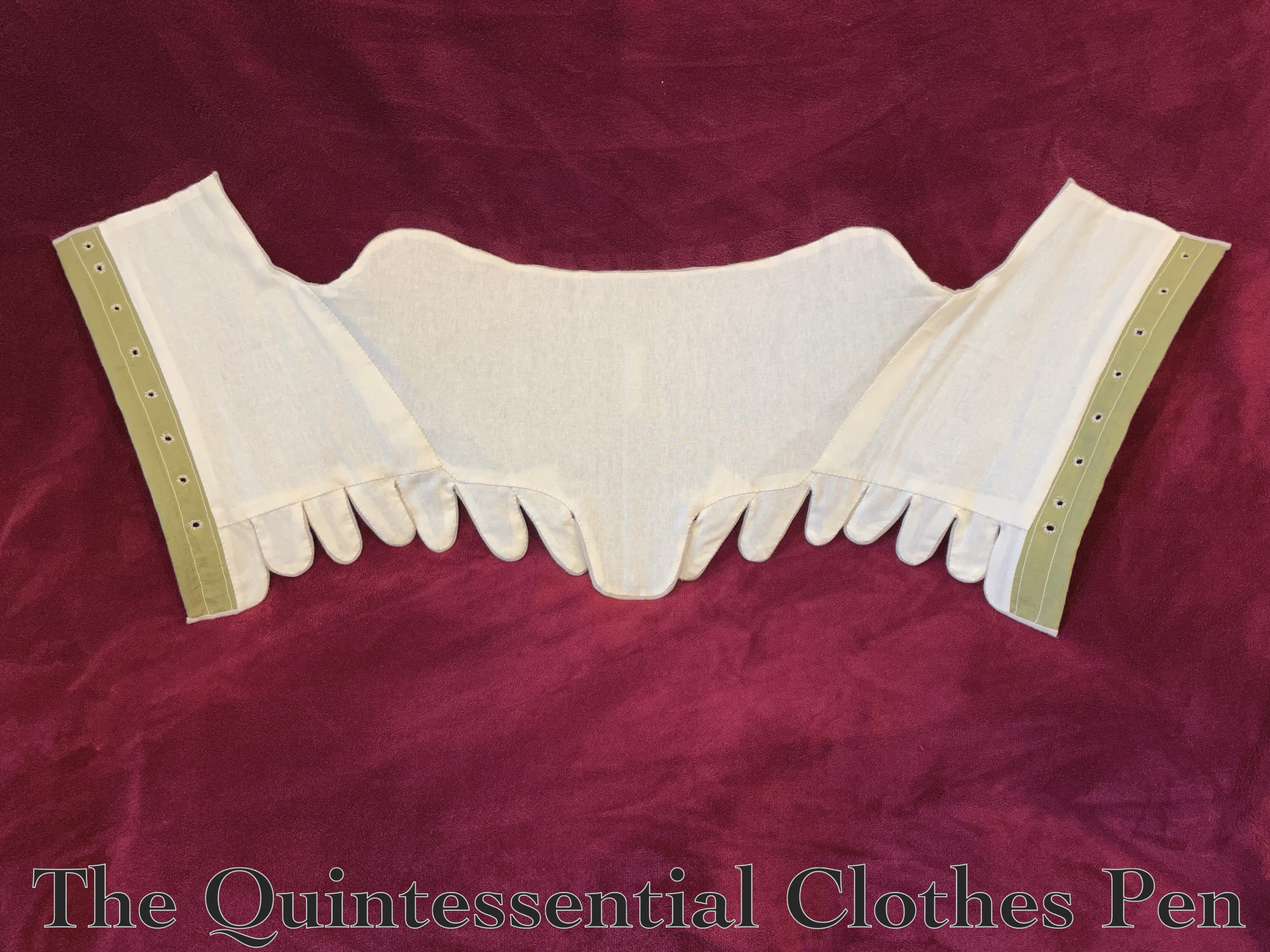
For the front lining piece, I started with the dress lining, as pictured below. By starting with this, I knew that the sleeveless bodice would easily fit over the dress and have similar seam lines.
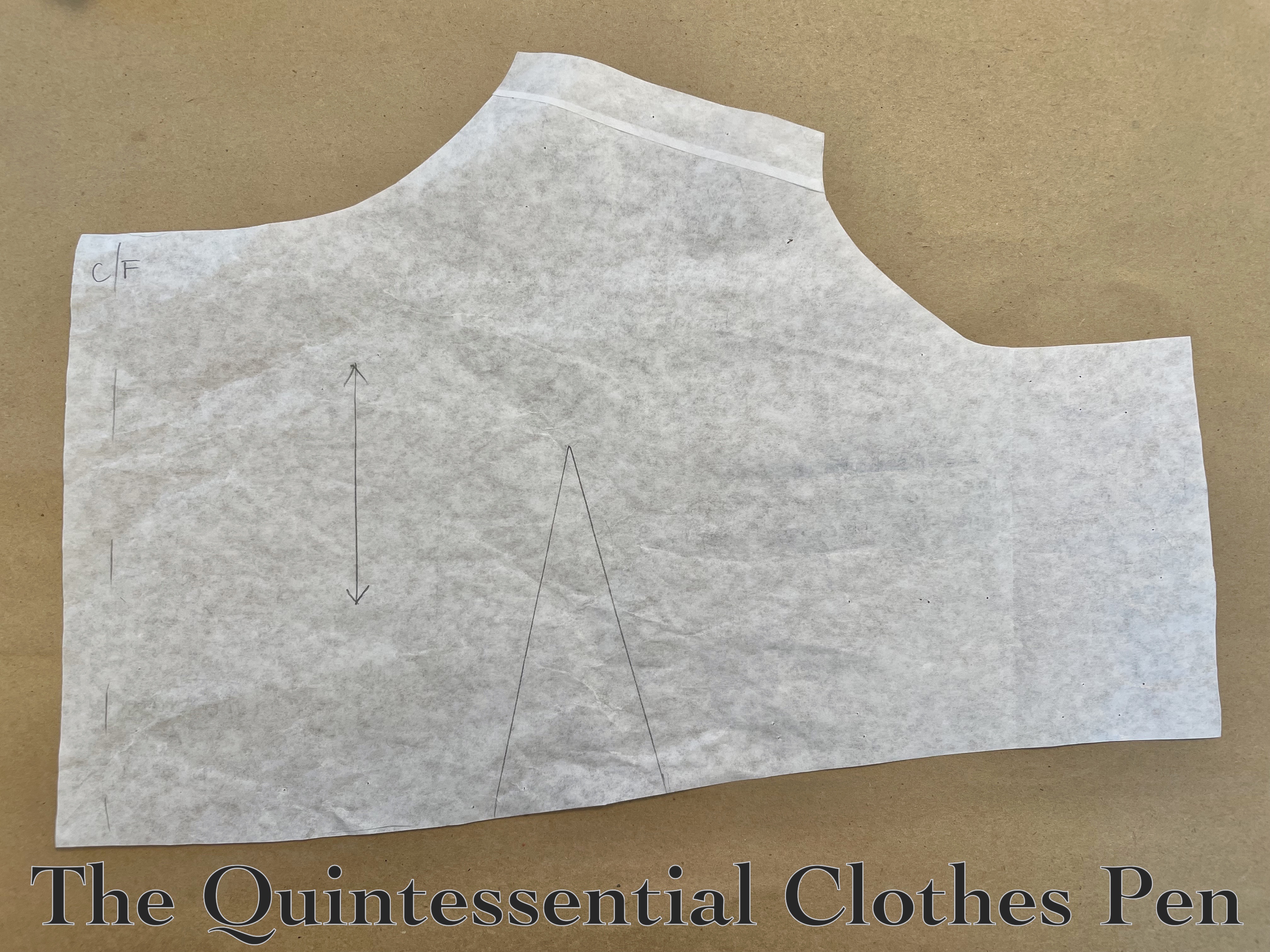
I adjusted this pattern to have a little bit of wearing ease by adding ¼” to the bottom edge, ¼” to the neck edge, ½” across the center back piece, and ¼” across the side back pieces.

To that, I superimposed the PoF robe because it had a very low front bodice (clearly intended to be worn with a dress underneath) and it had a front pattern piece that curved downward towards the front, with a separate side front piece. Ah ha! I could create a dart going towards the waist in the area between these two pieces and have a one piece lining while also easily having a two piece exterior to make the pleats easier! This would reduce bulk in the finished garment and allow for the necklines of the exterior and lining to be exactly the same.

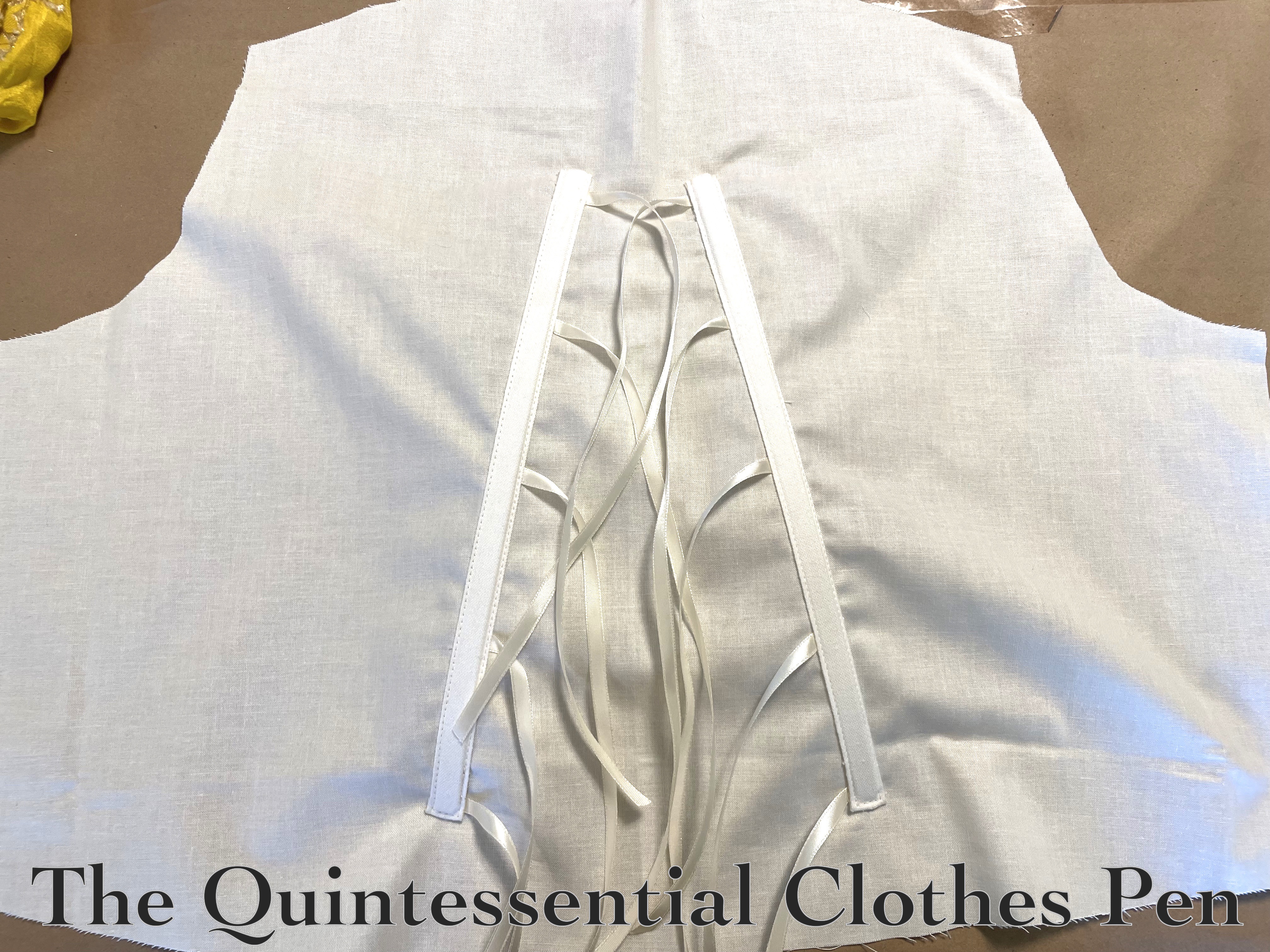
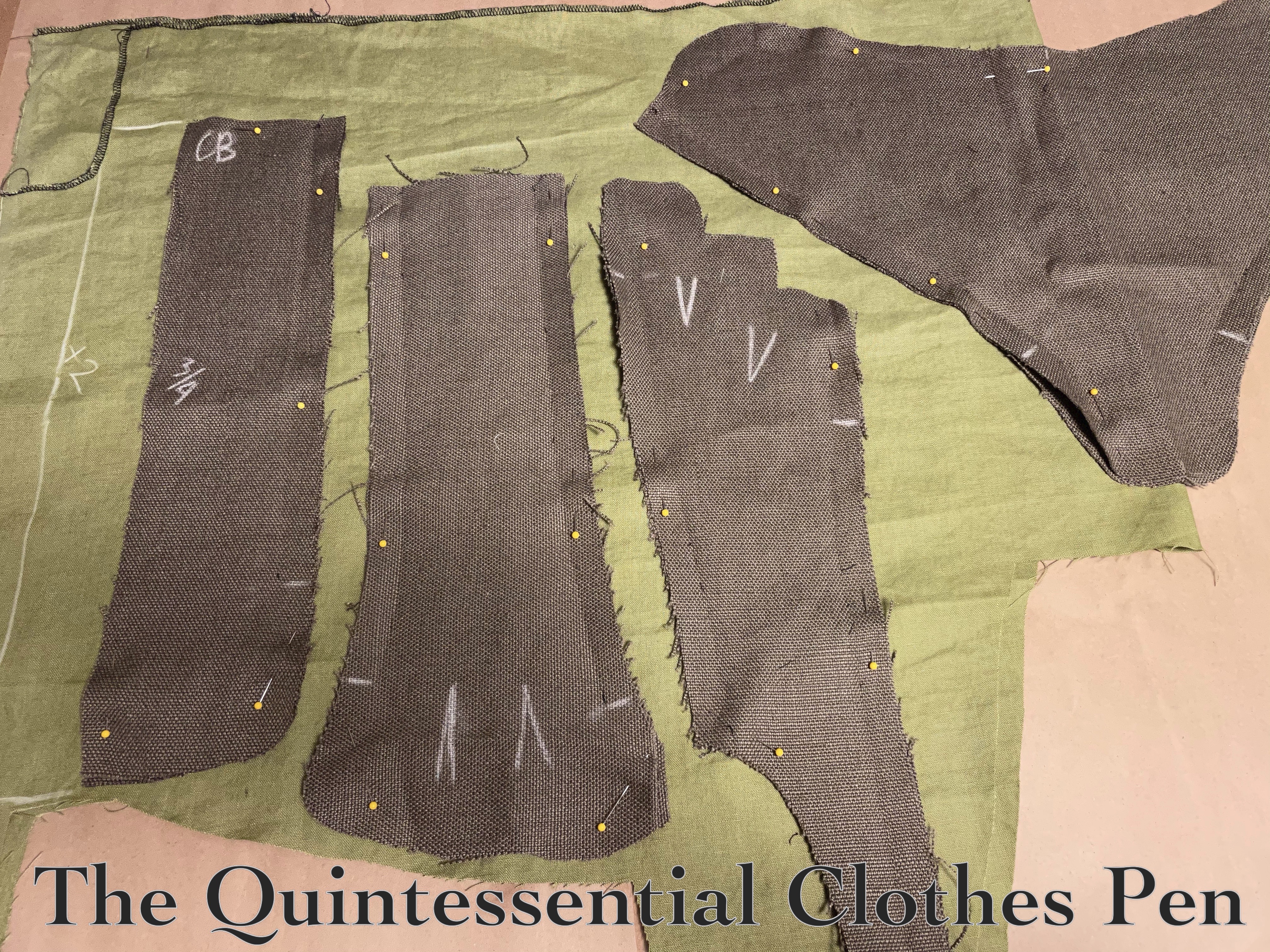
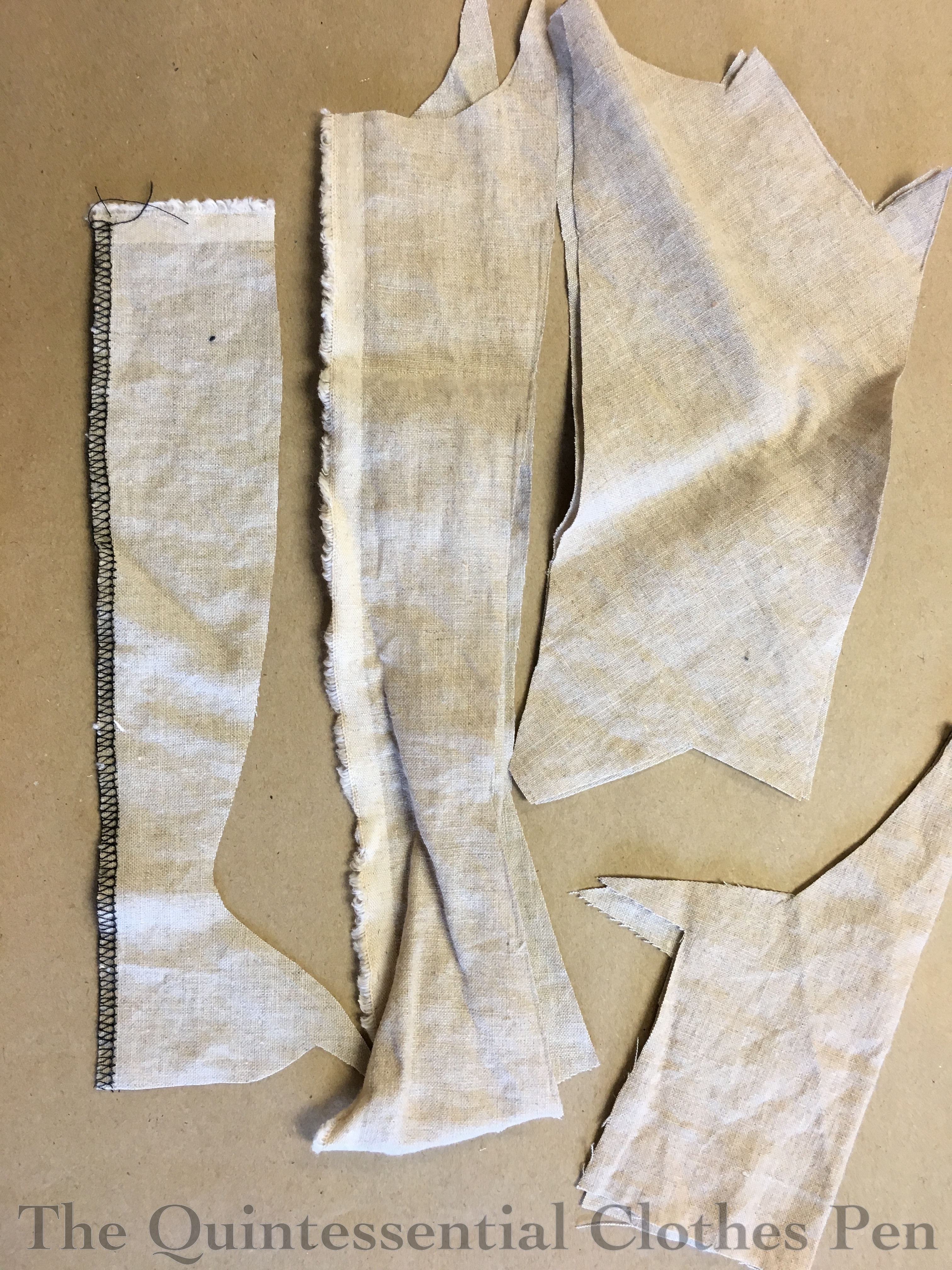
The photo below shows the front pieces I ended up with. On the left is the lower part of the front lining (the shoulder area is extended with a separate shoulder piece in the lining) and the center front part of the lining. For the lining, these were cut as one piece (with the dart marked).
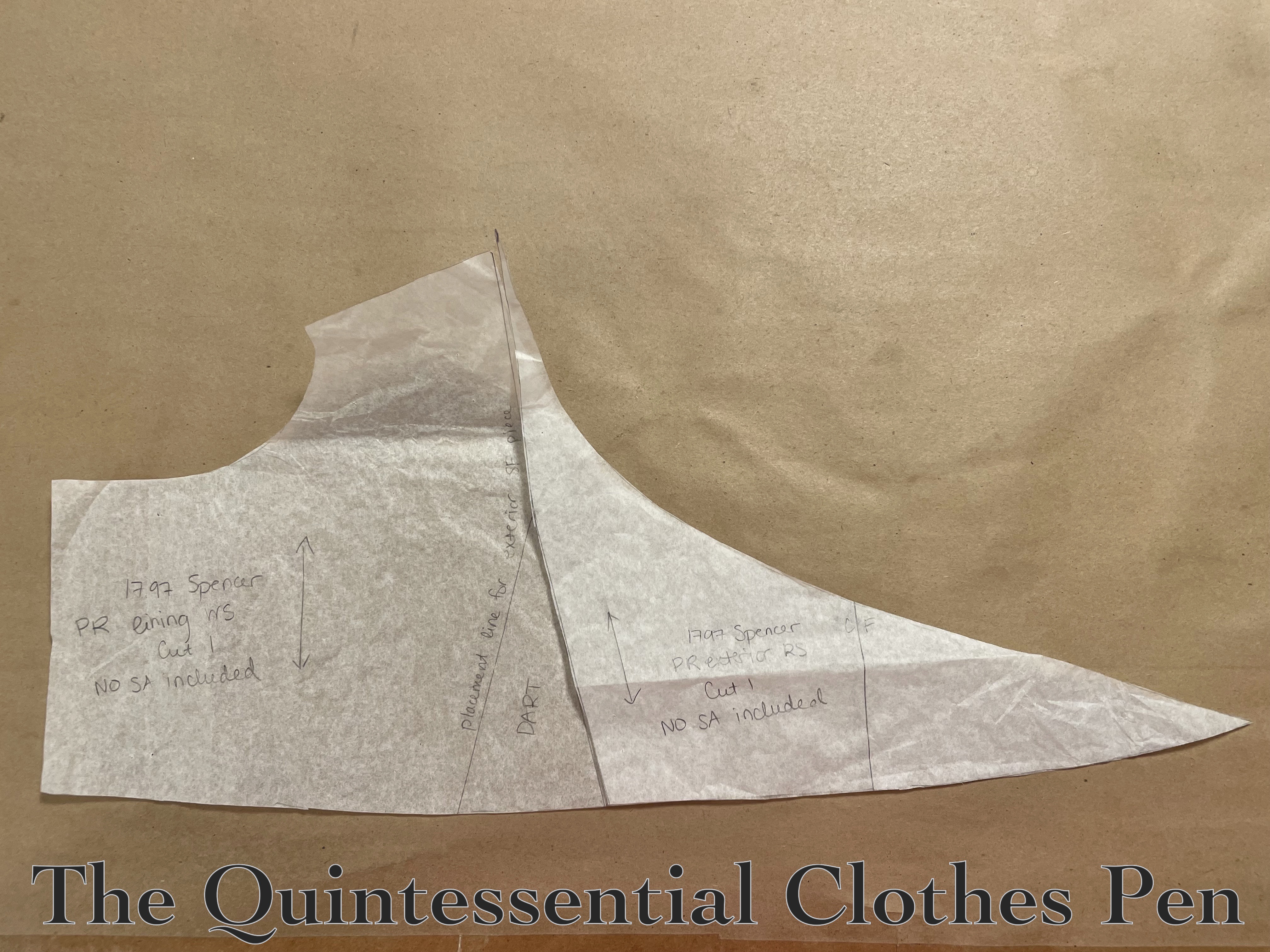
If you look carefully, you might notice that the grainline on the center front piece is off relative to the side piece. Why is that, you might wonder?

Well, for the front exterior I started with the lining piece but changed the single dart to be the pleats I’ve previously mentioned. I didn’t see bust darts in my inspiration fashion plate or observations of 1790s overdresses, but in 18th century dresses pleats are used used in varying depths to adjust a flat piece of fabric to fit the curves of a body, so I used that method.

First, I traced the lining pattern onto a new piece of paper, including the dart. Then, as you can see in the photo below, I cut along the dart edge closer to Center Front, then up a line that continued to the neck edge I wanted. (I also cut down to the bust point from two other points along the neckline, but later realized I didn’t need those cuts.)

Next, as you can see in the photo below, I rotated the center front piece down towards the dart, making that area a little narrower and creating space (essentially another dart) going up towards the shoulder. Then I drew my new grainline on the front piece for the exterior, heading up towards the shoulder. This is why it looks off relative to center front. When worn, those ‘darts’ are closed when the exterior is fitted over the lining and center front is pulled into its proper place on the body.

These exterior darts — hidden in the seam line — are what creates that downward curve to the pattern pieces that I observed in PoF.

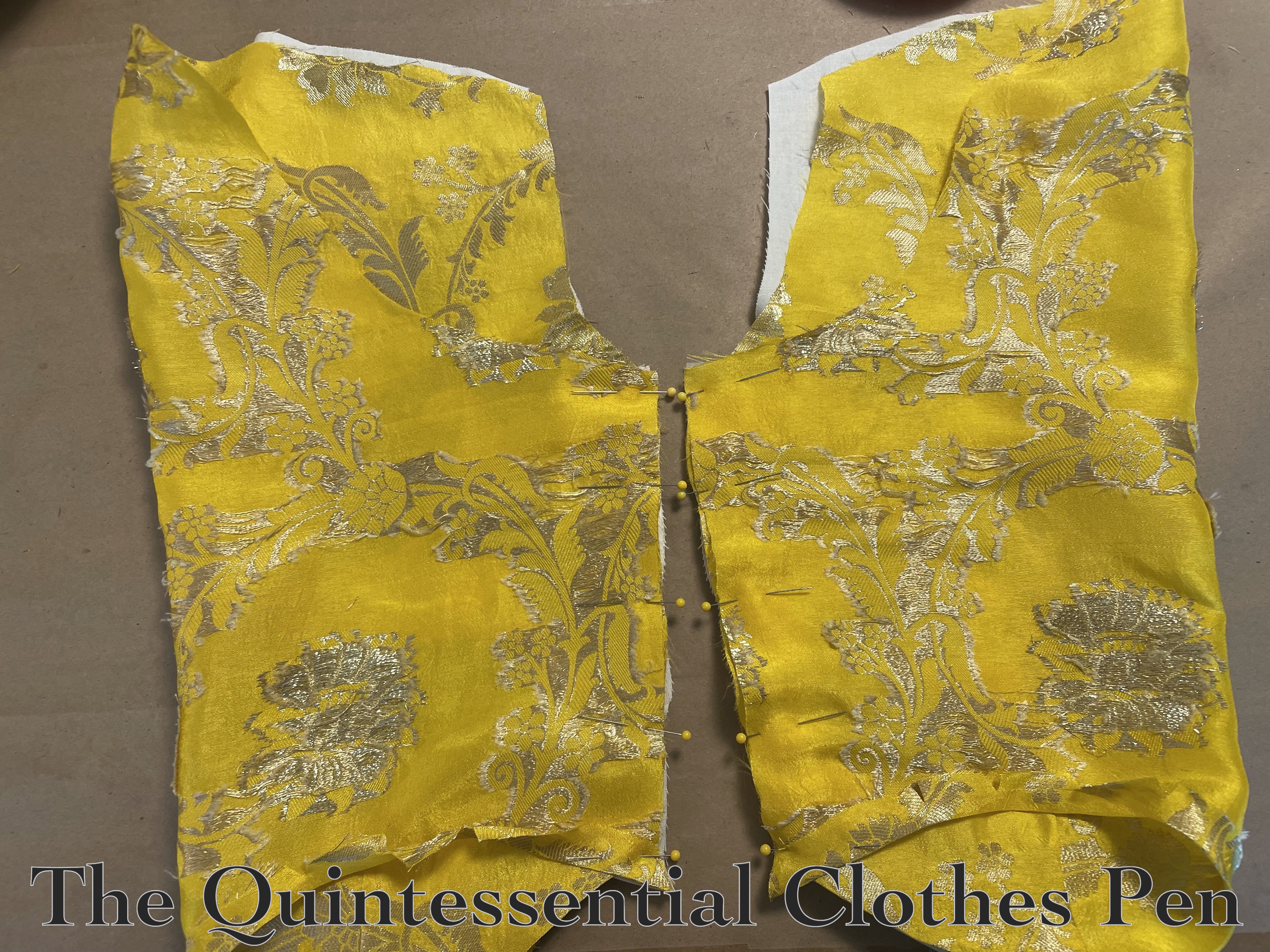
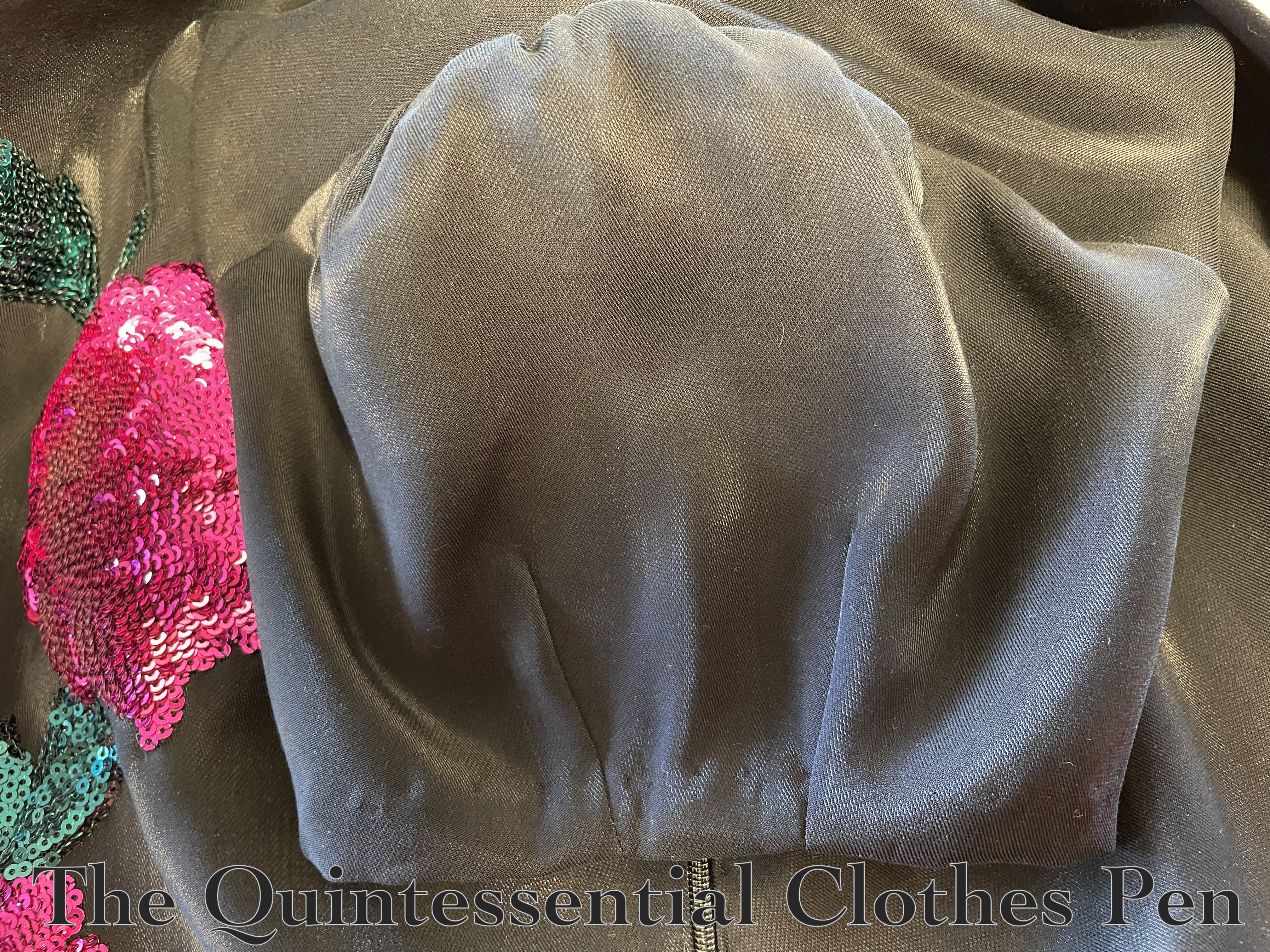
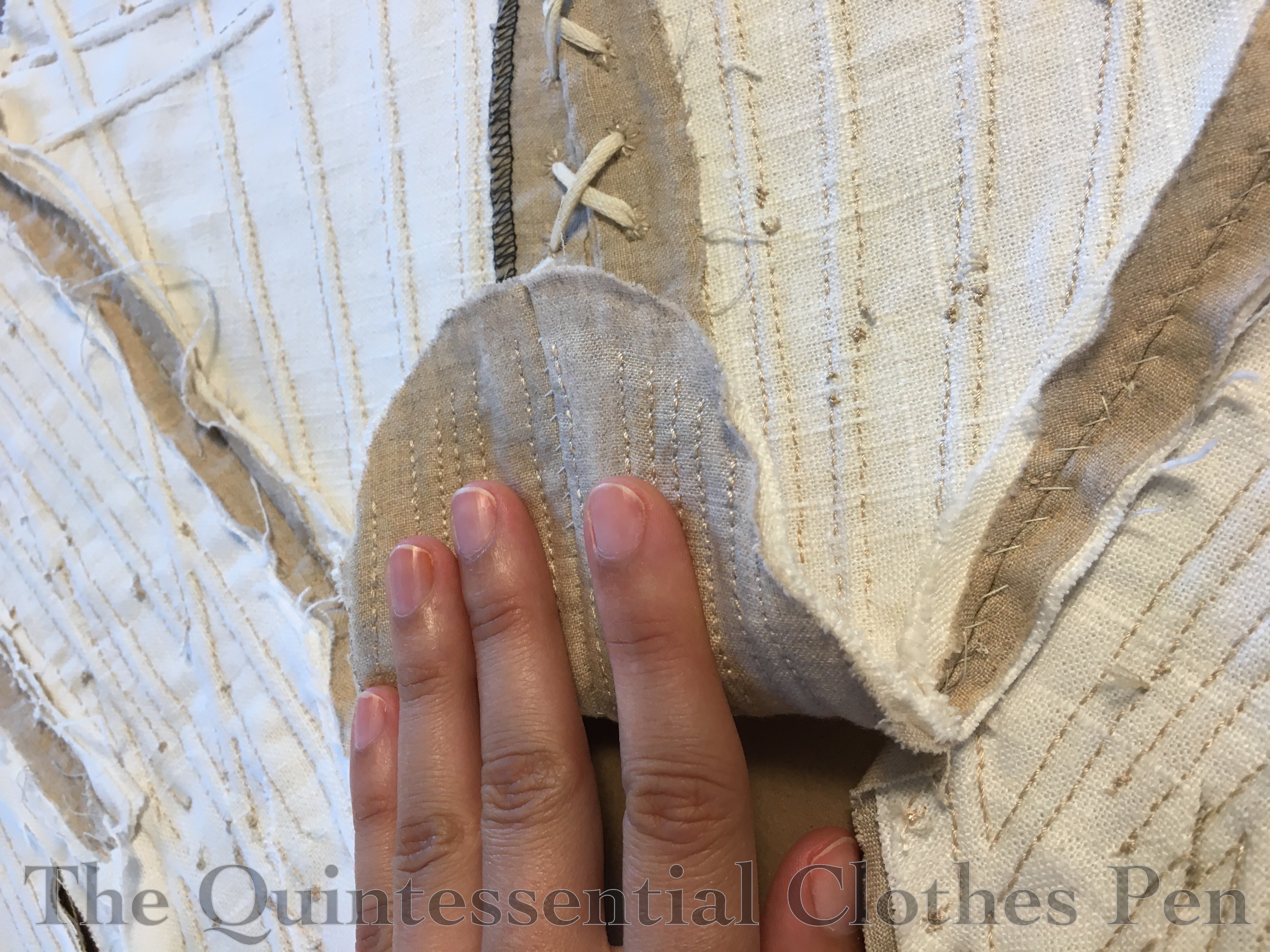
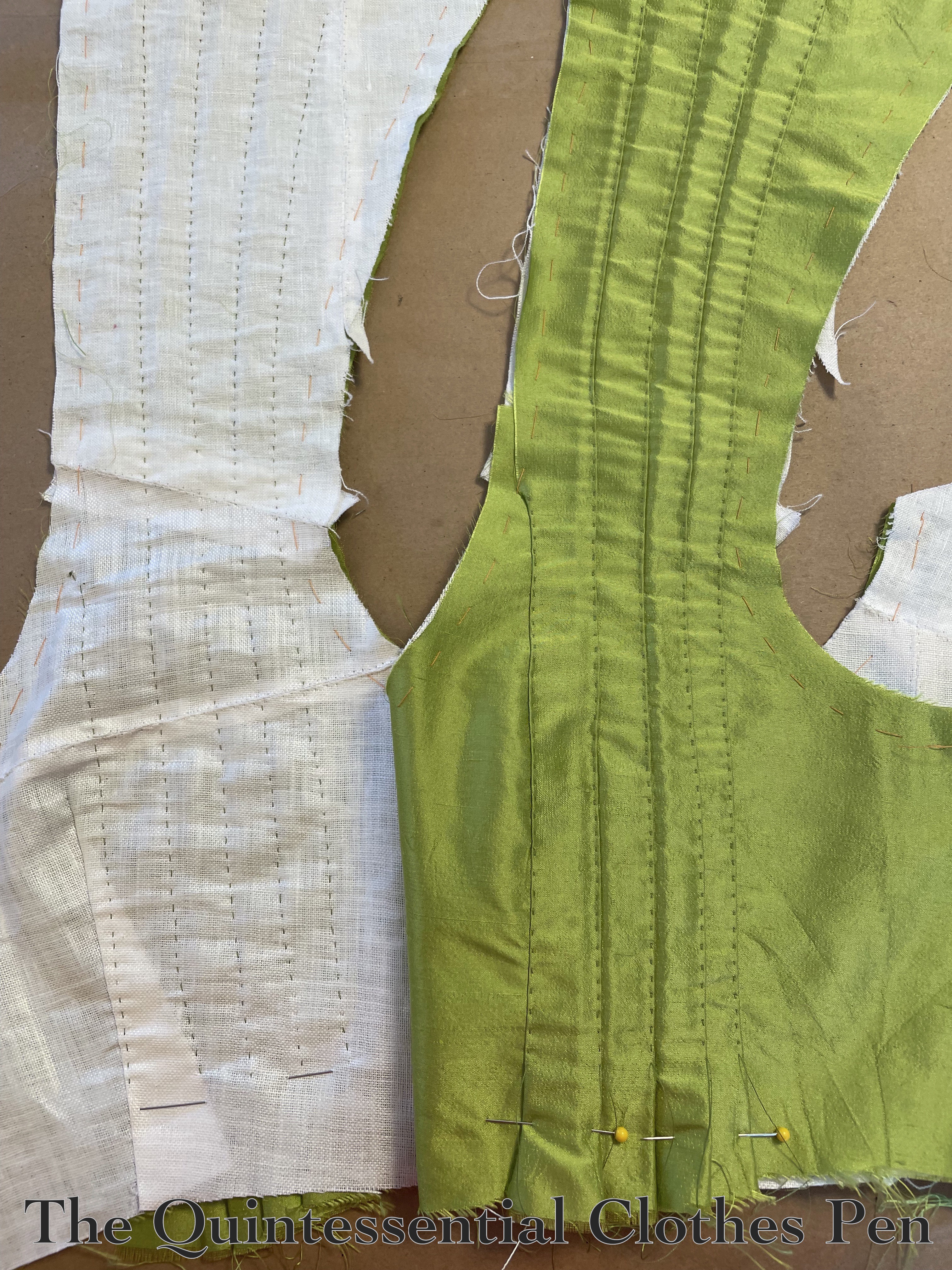
The two ‘darts’ are taken up in the pleated side front piece of the exterior, which is fitted over the center front piece and the darted bodice lining. In the photo below, the dart in the lining is visible on the left and the silk is pleated to fit and visible on the right.
After creating the paper pattern, I made a mockup and did a fitting to see how well my adjustments worked. They were pretty good, but I did have a few notes — I extended the bottom edge by a little more across the front, set the overlap shape I wanted (based on the fashion plate), set my armhole seam allowance, decided on the height of the peplum, and adjusted the front neckline to sit nicely over the dress.

I made these adjustments to my paper pattern and then moved on to cutting out my pieces in real fabric:

  • A proper left front lining
  • A proper right front lining
  • Proper left side front and center front exteriors
  • Proper right side front and center front exteriors
  • Straps in lining fabric
  • Side back pieces for lining and exterior
  • Center back pieces for lining and exterior

The Backstory: Construction

With a pattern established, I went down the rabbit hole of figuring out construction methods.

I had been reading Patterns of Fashion 6: The Content, Cut, Construction & Content of European Women’s Dress c. 1695-1795 and my mind was full of details and excitement about 18th century construction methods, so I happily went down a path of sewing in an 18th century manner! But… at some point in the middle of things I realized that I would need to combine some early 19th century construction methods into what I was doing, too, since my sleeveless bodice idea does span two different eras of construction styles.

For example, from an 18th century perspective turning seam allowances of the lining and exterior towards each other and whipping the pieces together made perfect sense. From a 19th century perspective, however, finishing the armholes with this method seemed odd (usually in the 18th century the seam allowance would have been left raw on the inside when the sleeve was attached, but I wasn’t adding sleeves!) and inserting a peplum into the bottom edge seemed odd, too (often a ruffle was applied on top of an edge, rather than being sandwiched between the exterior and lining, but that wasn’t the look I wanted). After many brain somersaults, I wound up mashing these two methods of construction together to create a transitional garment (which does actually make sense, since this was a transitional period for construction methods!).

Actually Making The Spencer

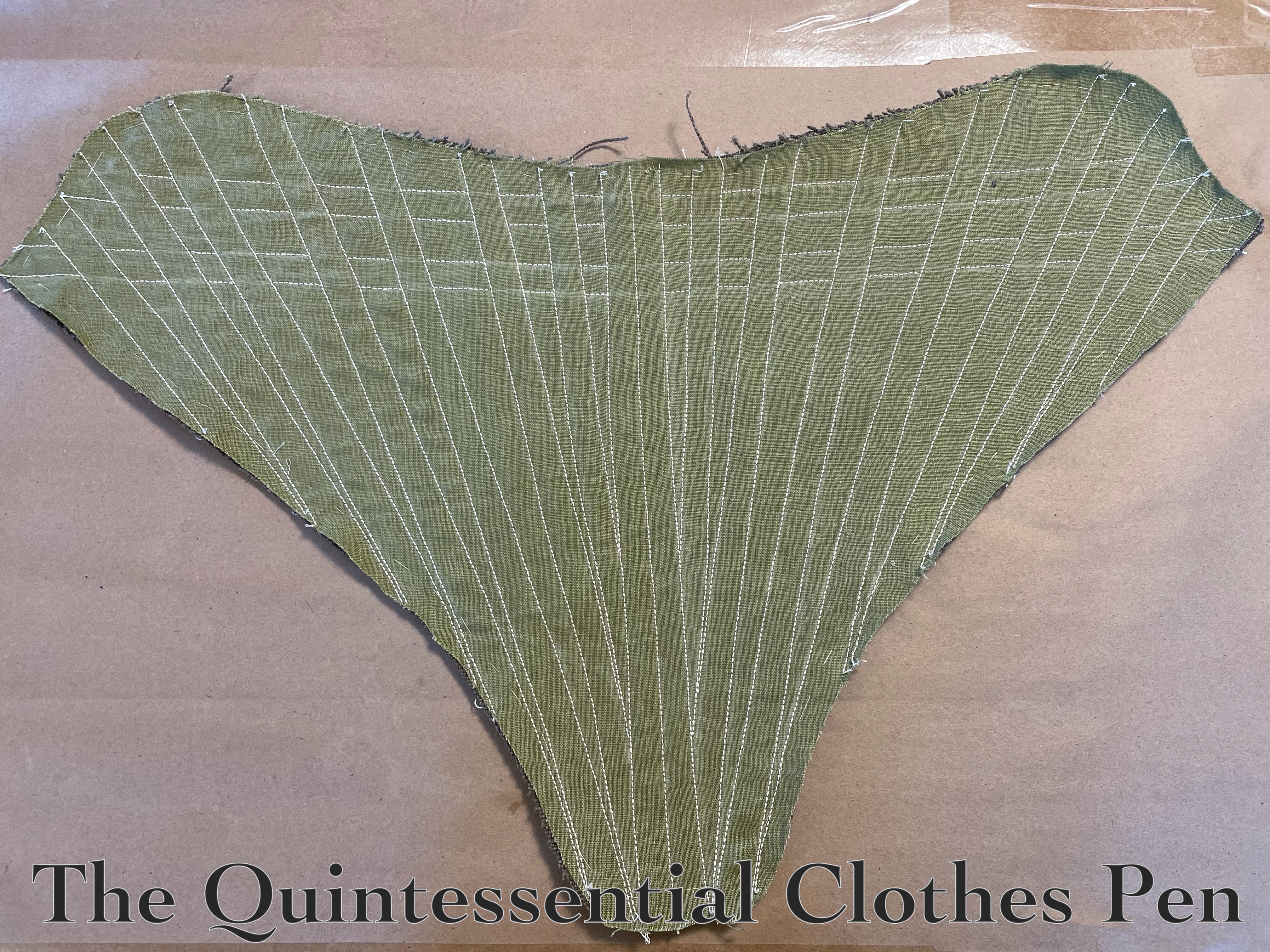
I thought it would be fun to use up linen scraps for the lining, rather than cutting into yardage from my stash. The lining pieces weren’t that big, right? Well, it turns out they were bigger than I thought. I ended up using 3 or 4 different types of white linen and adding in a fair number of piecing seams to get the shapes I needed for these lining pieces (you can see some extra seams in the lining in the previous photos). It definitely added time, but I had time while making this garment, so it was fine.

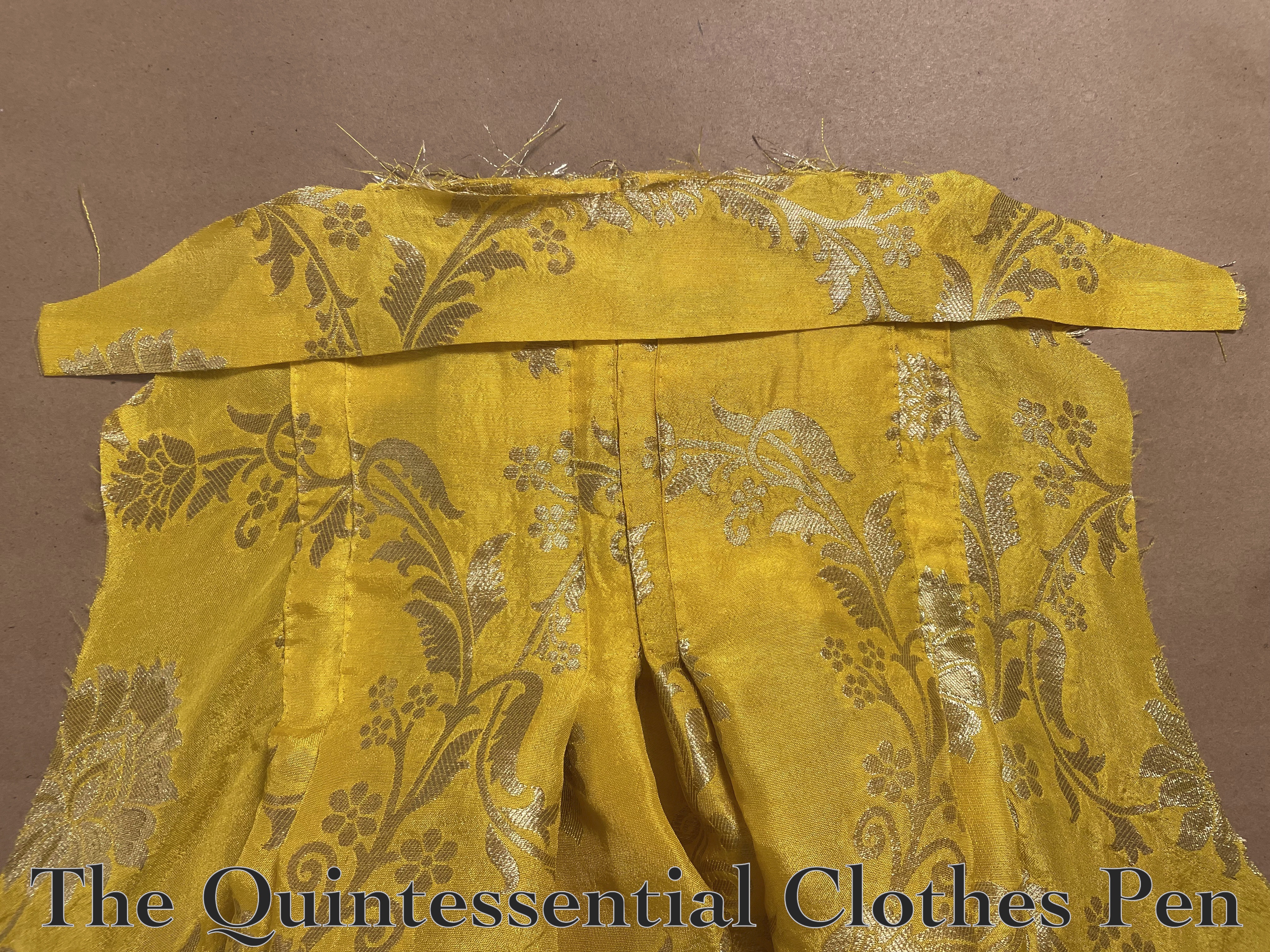
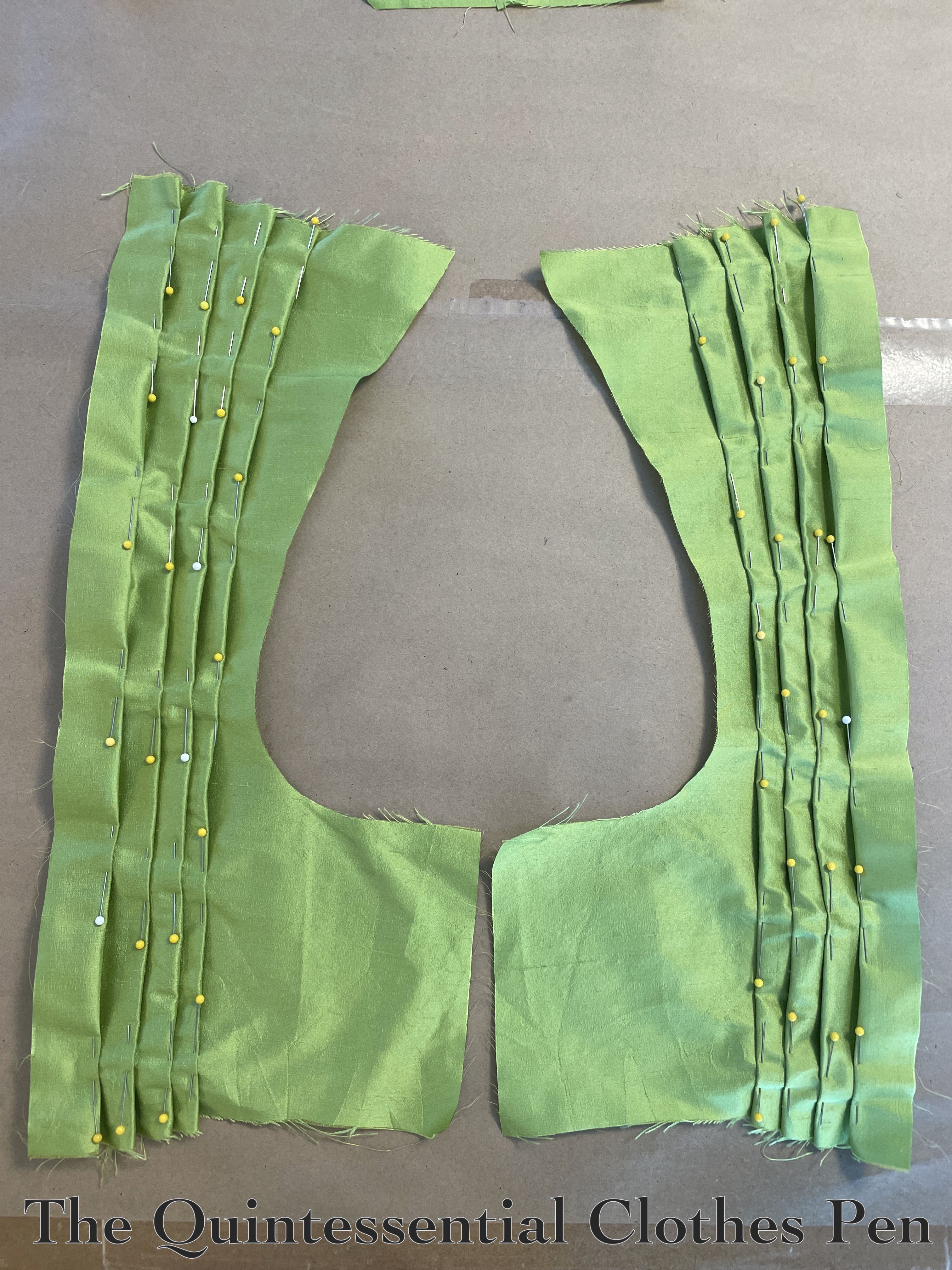
Once the lining pieces were ready to go I could cut the silk layers. The side front of the silk exterior had the shoulder straps included and was extra wide in order to create those all-important pleats. Below is a photo of what the pleats looked like before they were topstitched flat. They are not quite all the same depth and slowly spread out as they move towards the shoulder seam in the back (at the top of the photo).
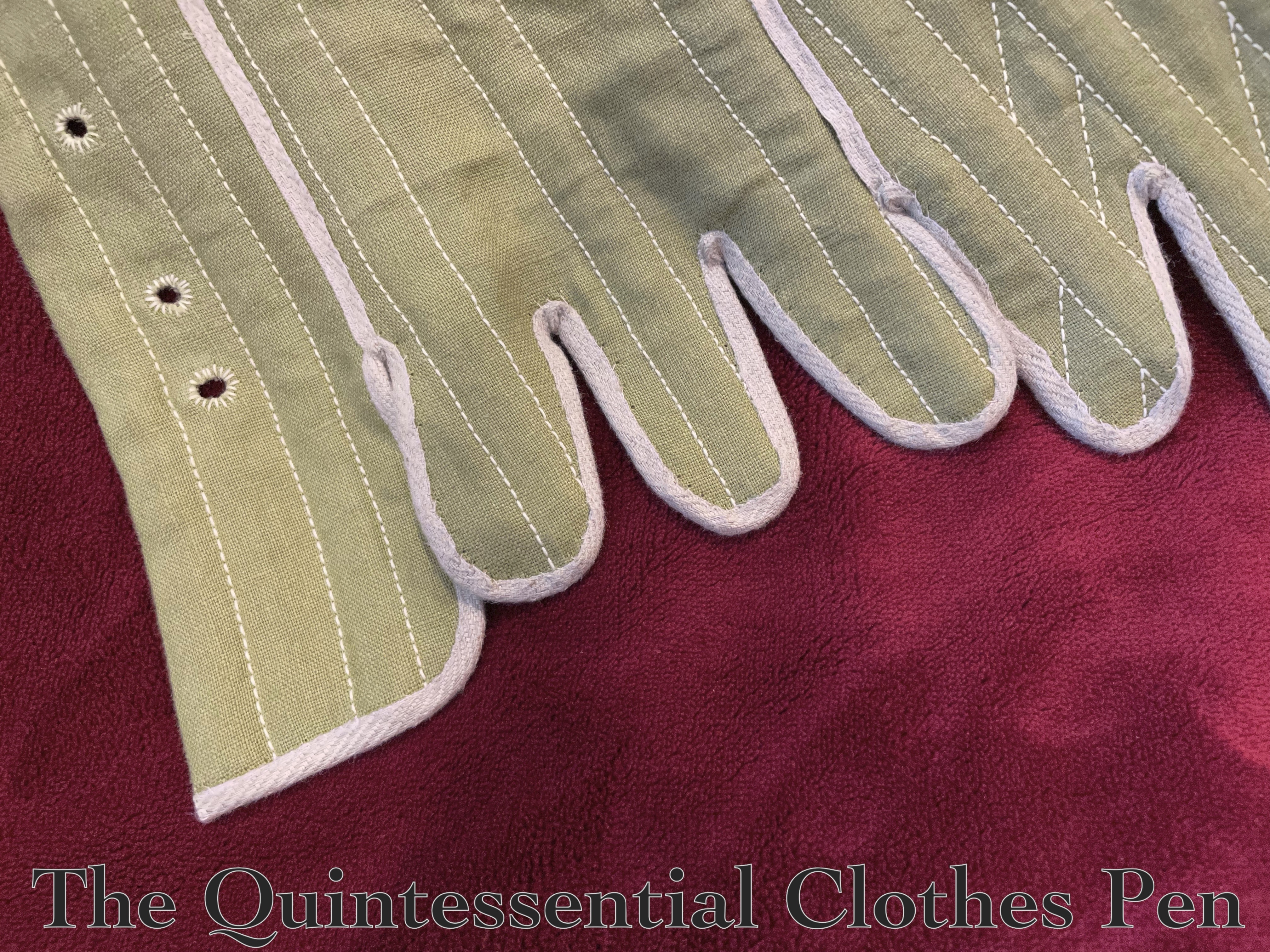
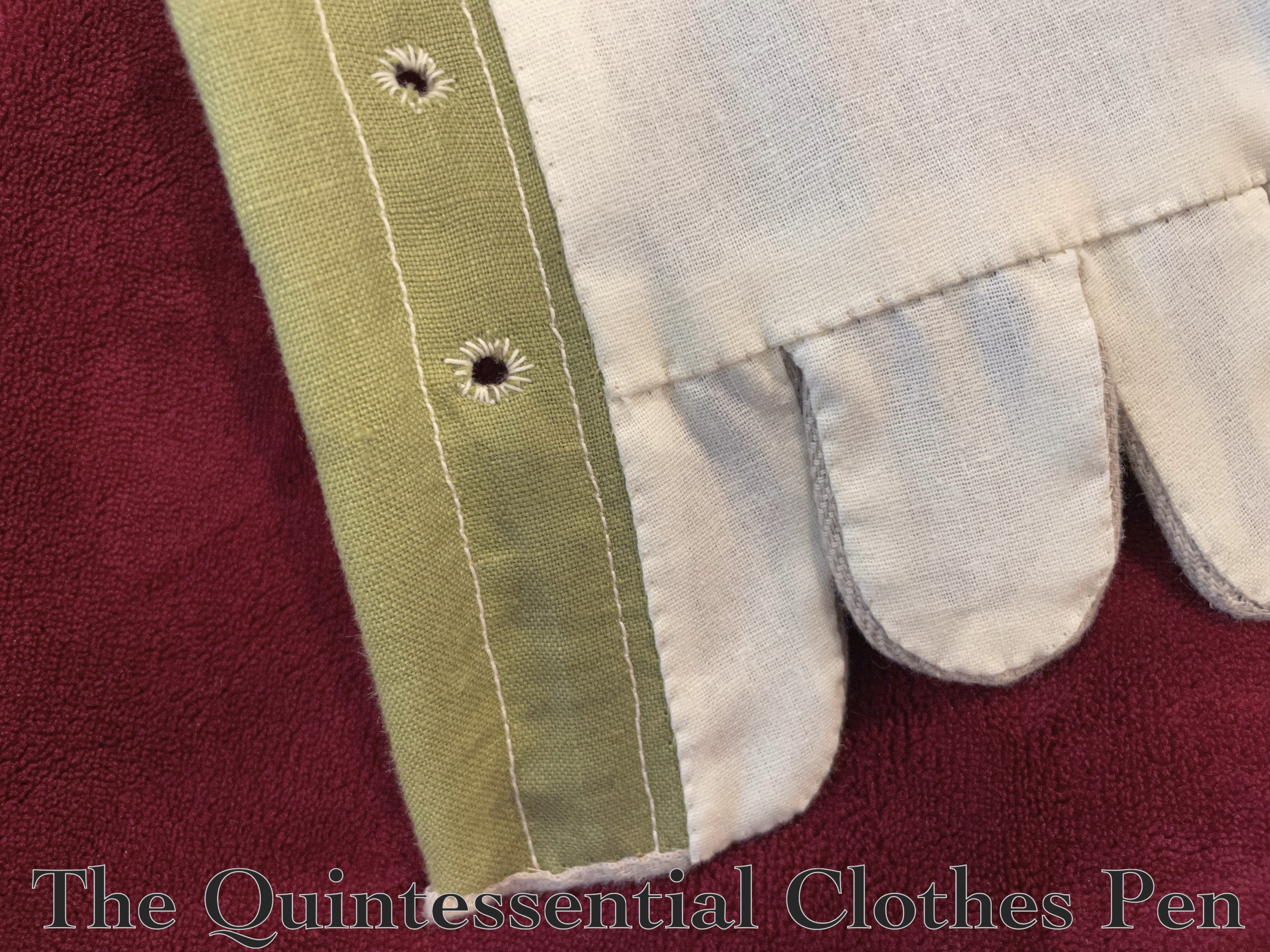
Here is a summary of the 18th century elements I used in the construction of this garment: much piecing of the lining fabrics, whipping the lining pieces together along the seams, whipping the lining into the exterior around the edges, topstitched pleats in the front exterior for shaping over the bust, a shoulder seam that is topstitched onto the back piece, many edges bound in narrow strips of silk, and the neckline trim being tucked to shape around the neckline curve.

Here is a summary of the 19th century elements I used in the construction of this garment: gathering the peplum and sewing it to the bodice with right sides together then whipping the lining seam allowance on top and turning in the seam allowance of the armholes and whipping the lining into place.

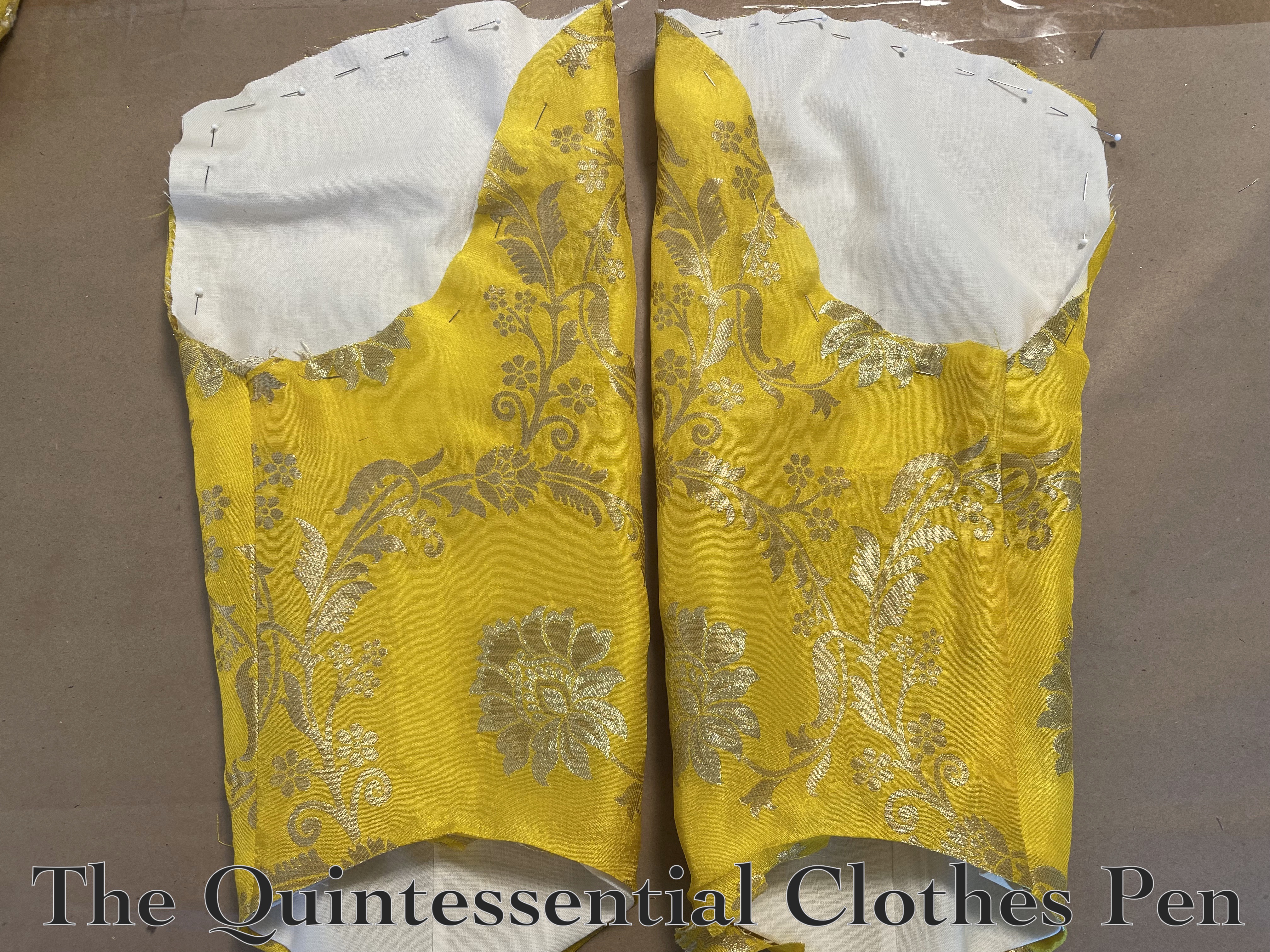
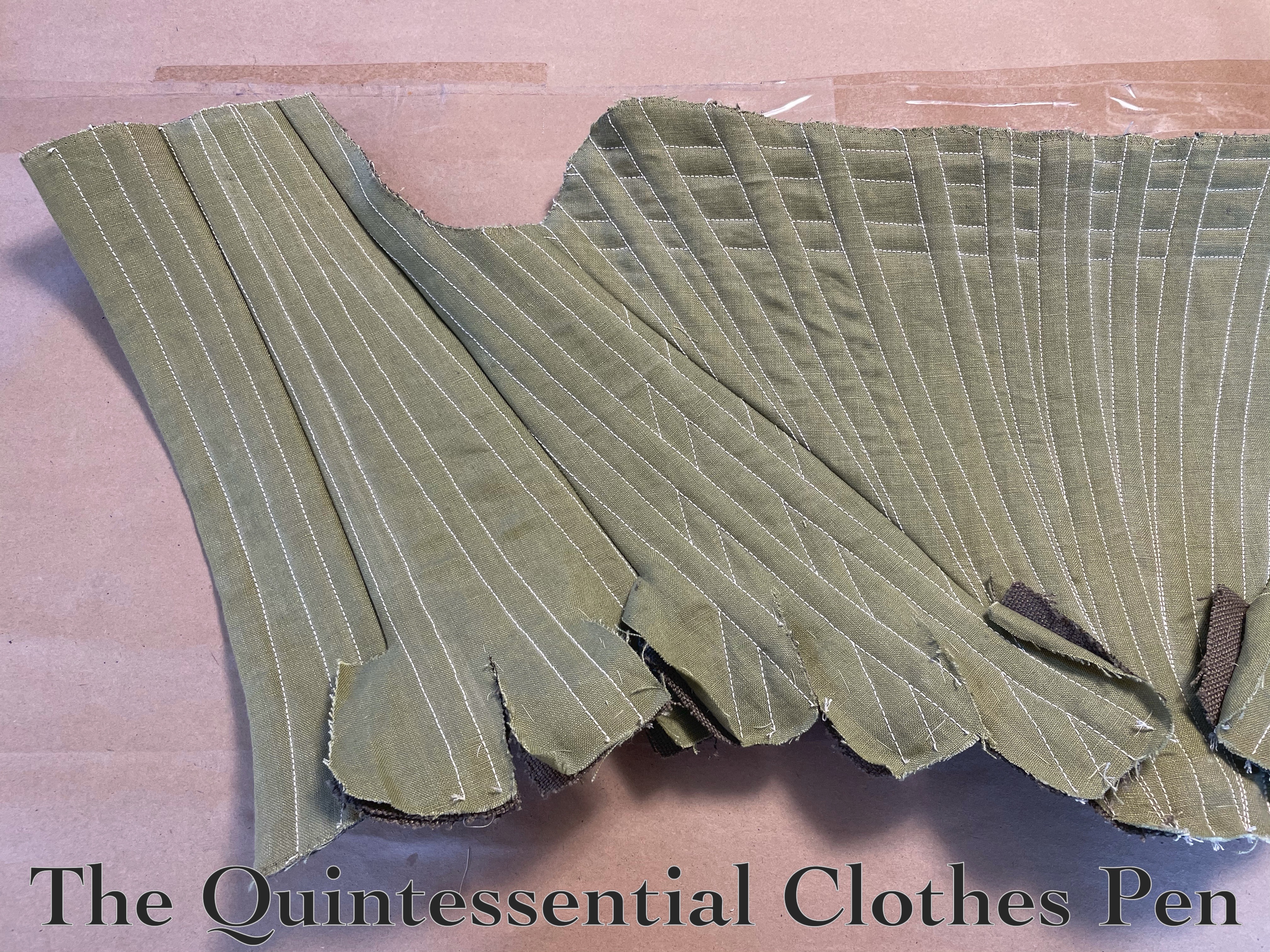
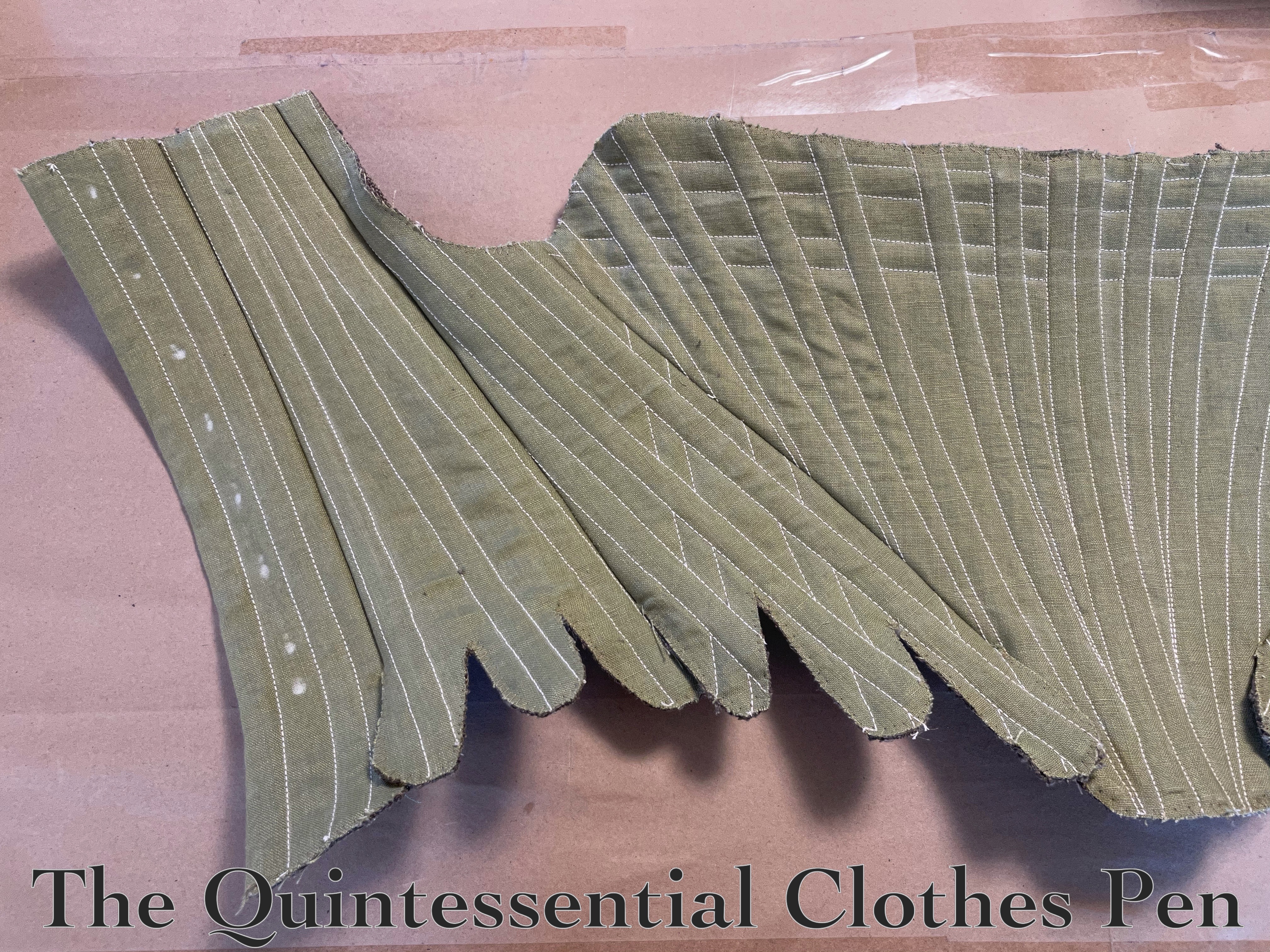
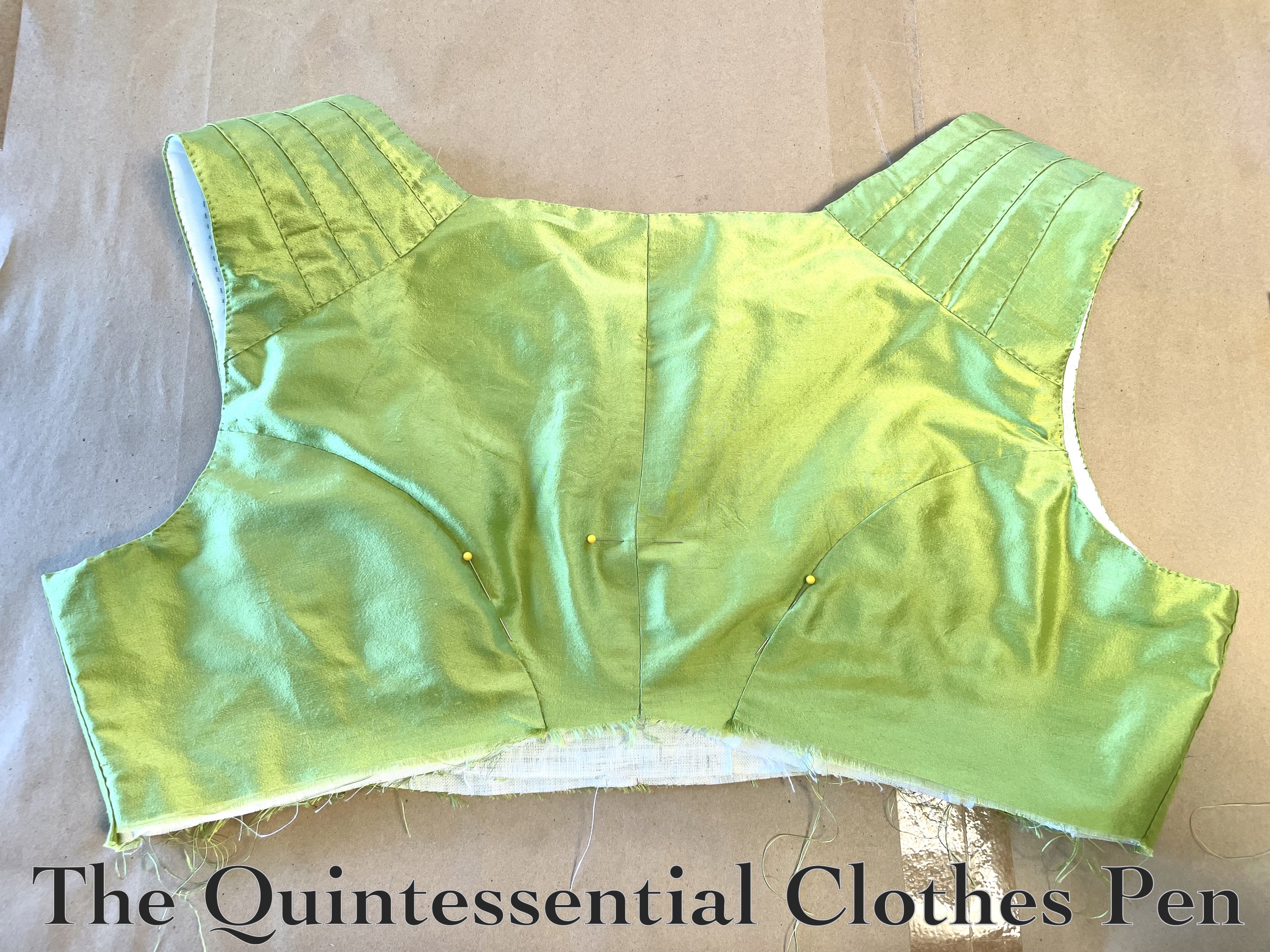
In the photo below, most of those methods have been employed to get the bodice to this state, which is basically finished aside from the peplum, neck trim, and closures.
The neck trim is a pieced strip of the green silk bound in running stitched ¼” wide strips of pink silk (hence the watermelon name!). The assembled band was running stitched along the outer edge and then eased into place around the neck edge. Below is the easing in progress. It took many pins!
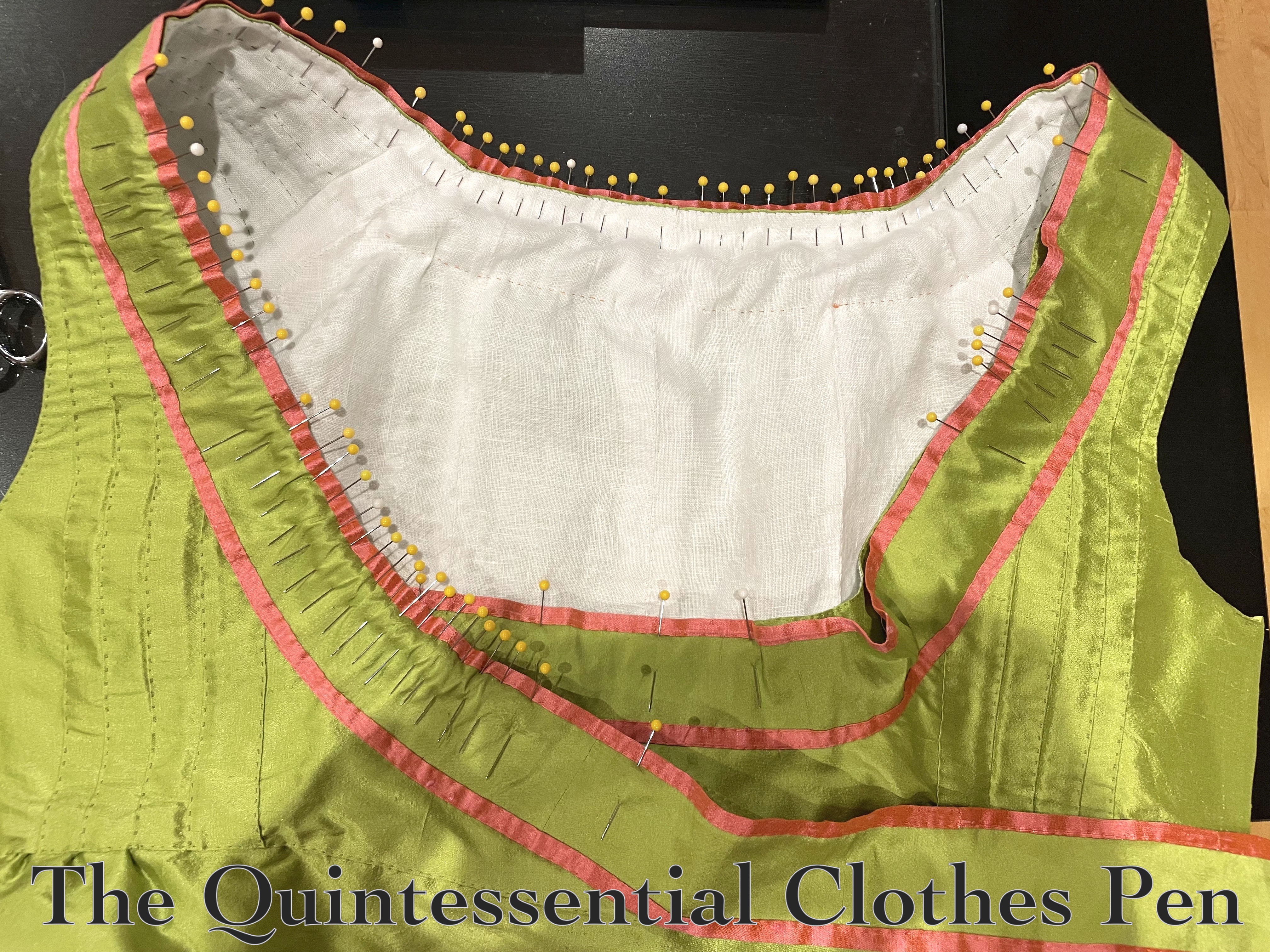
And here is a closeup. You can see some of the whip stitched piecing seams in the lining and the minute easing of the neckline edge of the trim.

And that was it…! Entirely hand sewn, with many small details, lots of justifying and research, and, in the end, a relatively small garment! Next time, photos of the finished garment being worn!
Re-Imagined 1885 Fancy Dress (HSM #9)

The Backstory

In 2016, I made a dress for a Fancy Dress Ball inspired by a dress worn by Alice Gwynn Vanderbilt in 1883. Alice’s now-famous dress, made by The House Of Worth, celebrated Electric Light as its theme. The dress uses beading and metallic elements (as well as an electric torch, for the original wearing!) to visually reflect light as well as communicate the electric light theme via decorative motifs. I posted an image of the inspiration gown and a link to more information about it in my original post about my dress in 2016, which you can view here.

I was inspired by the trimmings on the gown, but needed to create a dress with little expenditure (much different than the budget for a Worth dress!). To achieve this, the goal when I made my dress in 2016 was to use as many materials as I could that I already owned. The main dress fabrics were already in the stash from old projects and the silver net was leftover from trimming the Versailles sacque I posted about wearing recently.

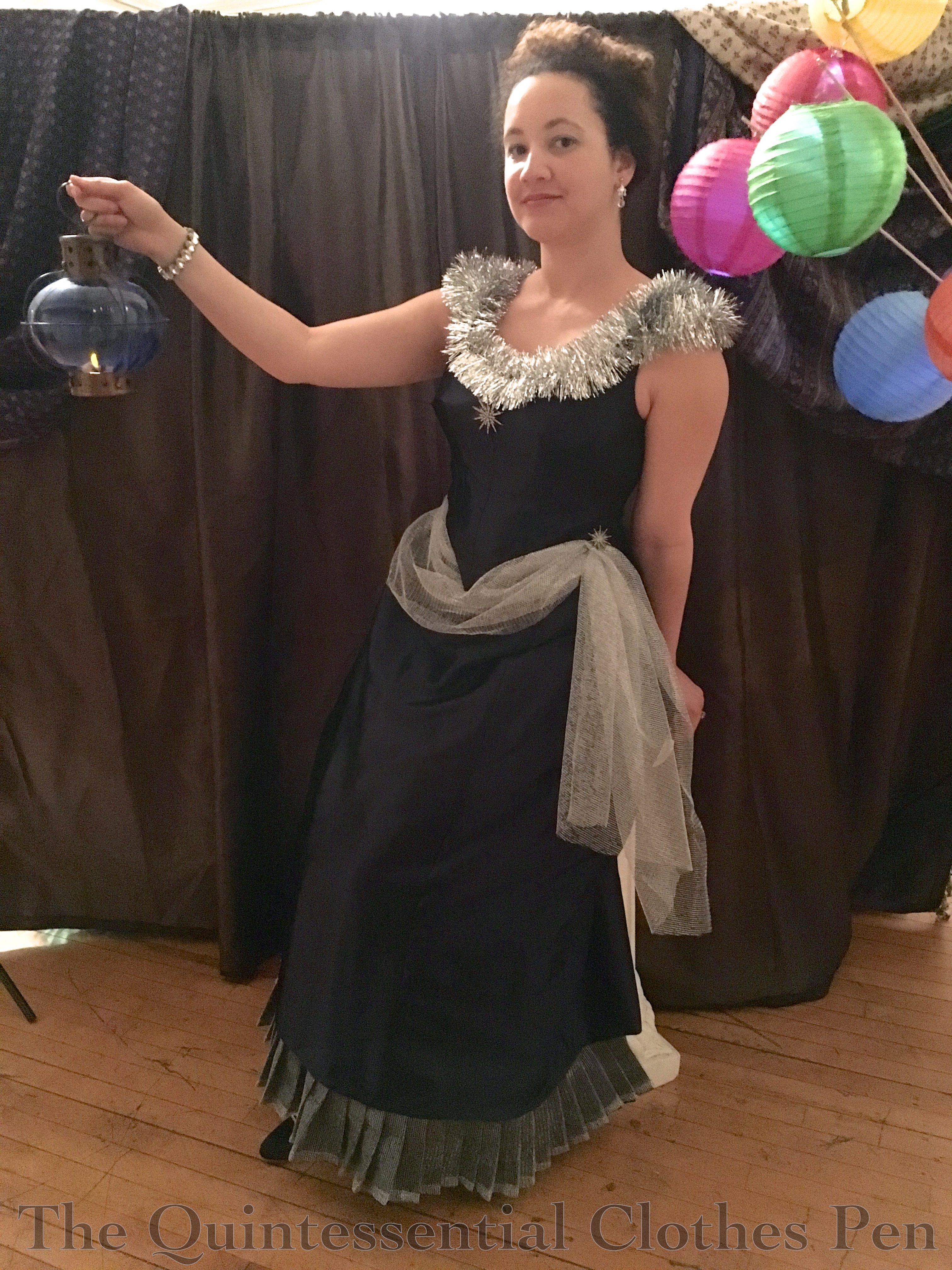
Below, a photo of the dress in 2016, with a lantern standing in for “electric light.”

There were a few small changes I wanted to make after the first wearing of the dress, but I didn’t have a need to wear it again for years. Fancy Dress events are not all that common even within the already limited realm of historically clothed events! And with the original trimmings I didn’t like the dress for regular wear. Plus, for a number of years after making the dress the events I was attending did not encompass the 1880s.

More recently, however, I have had more opportunities to wear clothing from this period, as The Footwork and Frolick Society has hosted a few events with themes that can include the 1880s. Therefore, I decided to re-trim the Fancy Dress dress into a more regular, less Fancy Dress, ballgown style for the Yuletide Ball in 2024.

Inspiration

This time, my inspiration was a mashup of ideas from a variety of images.

From the fashion plate below, published in the Revue de la Mode in February 1886, I pulled information from the gown on the right, with the pleated fabric along the v-shaped neckline and asymmetrical decorations (which I guess are feathers) on the shoulder and skirt.

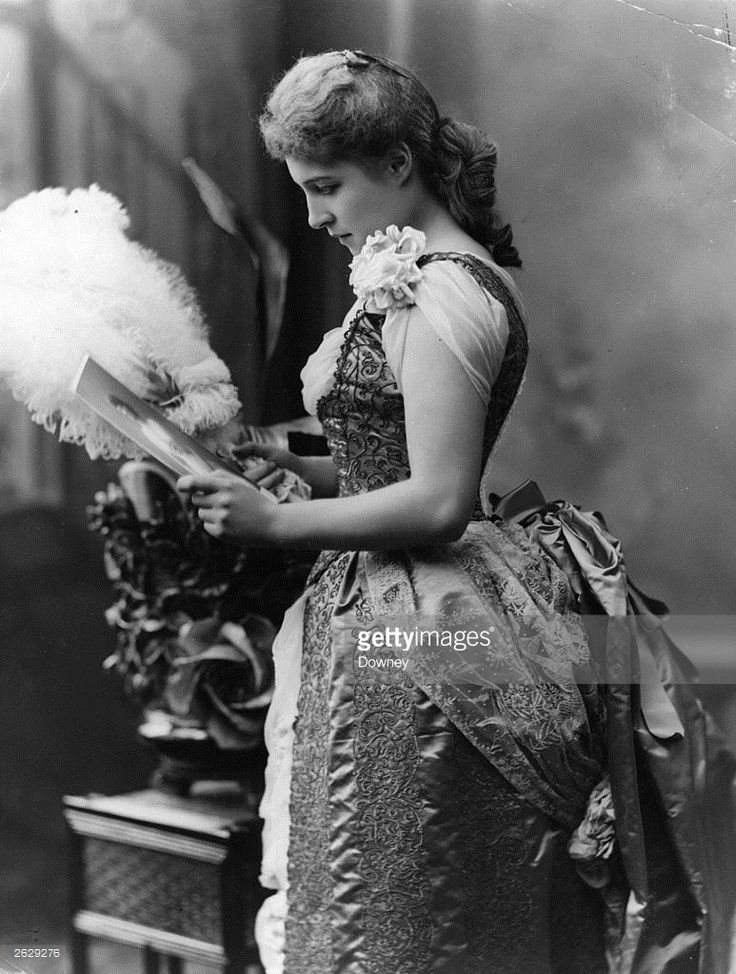
From the photo below of British actress Lillie Langtry (Original Publication: People Disc – HU0206. Photo by Downey/Getty Images), I pulled inspiration for the “sleeve” idea I wanted to incorporate. The pattern of the fabric used for the bodice in this photo was also reminiscent of one of the fabrics I used to update my dress.

And finally, I was also inspired by the beaded swags (and chiffon “sleeves”) on the c. 1887 dress in the collection of the Kent State University Museum in the photo below.

Dress Update Overview

For the re-make of the dress, I wanted to maintain my goal of using materials already on hand. I still had small scraps of the navy blue satin in my stash as well as the silver net. I also went through my fabric stash binder to see what other fabrics and trimmings might work and found that the best bets were a piece of polyester velvet flocked with silver swirls that I’d purchased at Joann Fabrics probably twenty years ago when I had just started sewing and loads of silver ribbon that I had been gifted to me. The blue and silver colors fit the colors of the existing dress perfectly and I thought there was a sort of New Year’s aspect to the color scheme, as well. (I also purchased the Joann fabric in burgundy and green (both with gold swirls) and had made Christmas decorations out those, but I don’t think I ever used the piece of blue, so this was a great opportunity!)

With my materials decided, I moved on to the sewing part of the project, starting with unpicking the original trim from the dress. I had made it knowing I might someday want to change the trimmings, so they were not sewn into seams and were pretty easy to remove. That left me with an almost entirely navy blue dress, relieved only by the silver pleats at the bottom of the skirt.

Then I went back and considered my original list of changes, which included:

  • Boning the center back edges so they would lie flat when laced closed
  • Adding a matching piece of satin behind the lacing holes to hide any white fabric of undergarments
  • Making sure that my chemise wouldn’t poke out of the armholes

Quoting myself, from 2016… “these are minor changes and I’m not sure when I’ll have the opportunity to wear this again so it might be awhile before they happen.” I’ll say! It only took 9 years!

Historical Sew Monthly

My goal of using stash-only materials for this dress re-do makes it fit into the Historical Sew Monthly 2025 Challenge #9 Blue:

Make an item that features blue, in any shade from azure to zaffre.

Just the facts:

Fabric/Materials: Approximately ¾ yard silver net, just over 1 yard of navy velvet with silver motifs, and scraps of navy polyester satin.

Pattern: My own.

Year: c. 1885.

Notions: Approximately 23.5 yards of ¼” silver ribbon.

How historically accurate is it?: 90%. Polyester and modern synthetic ribbon do not have accurate fiber content. And my patterning is conjecture. But the overall idea is pretty good.

Hours to complete: I didn’t keep track.

First worn: December 7, 2024.

Total cost: Free, since everything came from the stash and was either gifted to me or purchased ages ago!

Dress Update: Back Closure

Following the original list of changes, I added a placket behind the lacing holes and added plastic bones along the very back edges, to help hide undergarments (the white color really does pop against the navy blue of the dress!) and keep the back laying flat when laced closed.

Dress Update: Sleeves

When re-examining the dress in 2024 with fresh eyes, one of my biggest desires for change was to better fill in the armholes of the dress and provide a decorative element. Yes, evening dresses in the 1880s were often sleeveless, but when really looking closely at them again, I found that while not having sleeves, they do almost always have something that obscures the armhole and even the upper arm. I am more likely to call these styles swags or drapes of fabric, as they aren’t really proper sleeves, but they are certainly set into the armhole in some way. I wanted something like that for the re-do of this dress.

I haven’t had a need to pattern something like this for this period before, so I looked through my historical pattern books for places to start. Interestingly, I didn’t find much. There was one sleeve that seemed like a possible starting place, but when I mocked it up it didn’t really do what I was hoping for at all!

So that left me with the decision to create a pattern from scratch. Thinking about what didn’t work in the mockup and my inspiration image, I proceeded to drape a mockup that achieved what I was hoping for. I didn’t have my dress form handy, so it required a fair bit of going back and forth between pinning and trying on the bodice to get the right shape. But I did! It’s a strange shape, for any sort of sleeve pattern. But that makes sense, since the sleeve drape is a not-really-sleeve!

Dress Update: Apron, Sleeve Swags, and Ribbon Flowers

I pondered creating some sort of beaded fringe for the armhole (and maybe even the waist, as can be seen in the third inspiration photo, above), but decided against it for time and material reasons. I really did want to stick to the stash!

Even if the beaded fringe wasn’t going to happen, I liked the idea of something to set off the wonderfully pointed bodice so that it would show up and not blend into the skirt. So in the end I decided to use some of the velvet from the stash to make an apron layer for the skirt, as was very common on dresses from the 1880s.

I started with making the pleated neck swag, so I wouldn’t run out of fabric, and then used all of the leftover fabric to make the apron. Due to this fabric restriction, I patterned the apron based on what was possible with my fabric, using a general understanding of the how these skirt elements were patterned in this period. The front of the apron is a curved piece that is pleated into the back on each side. The back piece is a bit scant, but has a few pleats along the top to give volume and descends to a point at the center back, since that was the shape of the fabric that was available! I used up pretty much all of the blue velvet!

For the sleeves, I made flower shaped sprays from lengths of ribbon that were tied into loose knots close to each end and then folded into quarters to make one loop and two ends. These individual elements were then combined and sewn together to make the flower-like formations, with larger scale ones on the skirt and smaller ones on the bodice.

The sleeve dangles were made from the same ribbon, knotted in the same way, that was folded to make a longer and shorter side and then tucked under the sprays on the shoulders.

Below, you can see the individual spray elements and a length of ribbon ready to be added as a sleeve dangle.

Finished Updates

Here is the updated dress! The blue velvet pleated v-shaped neck swag completely ignores the neck shape of the bodice underneath, which is more of a square shape. The same fabric is used again to create an apron, stitched to the outside of the waistband of the skirt to reduce bulk.

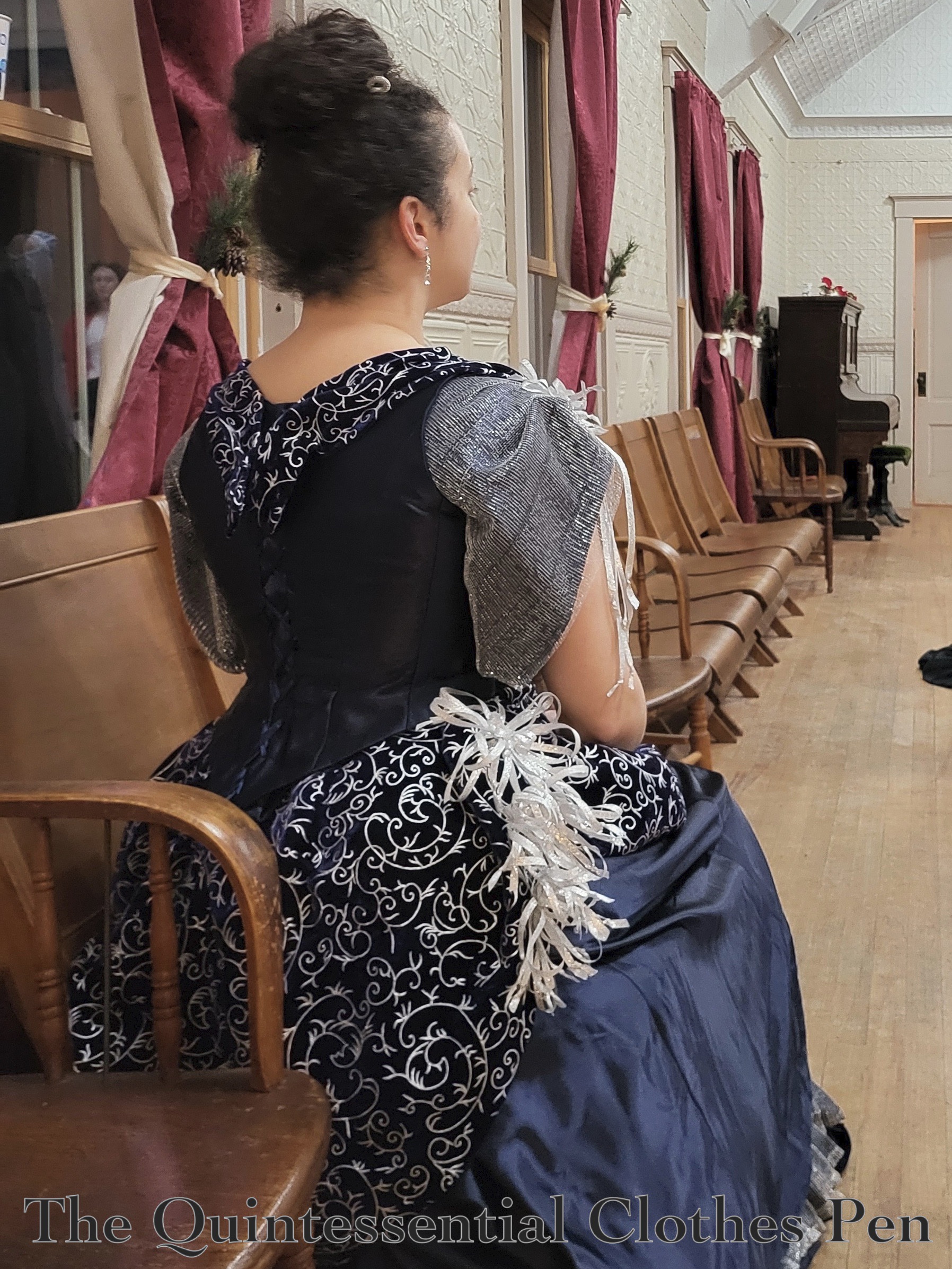
The silver net is used over the blue satin scraps to create “sleeves” that are pleated into the armhole and decorated with sprays and dangles of silver ribbon.

The “sleeves” wound up looking a little odd where the meet the back of the bodice, but that’s more due to my original patterning of a very inset armhole in the back than it is the sleeve pattern. It’s a lesson/change for the next bustle period evening gown I make, whenever that is!

I didn’t know what to do with the back of the velvet swag, because I wanted it to be easily adjustable depending on how tightly the back was laced. I ended up with this pointed arrangement that accomplished the goal of flexibility.

The armholes, left side front of the bodice, and right side front of the skirt are decorated with the sprays of looped silver ribbon. I used x4 — 4 yard spools of ribbon and half each of x3 more spools that were 5 yards each.

I calculated how many sprays and dangles I wanted for each section, but in the end I was running out of ribbon and started to just combine and move things around until they looked reasonable. Sadly, that means I don’t have a good record of how much ribbon went into each element or how long each piece of ribbon ended up being. I think that the smaller sprays were made of piece of ribbon that were 10″, the larger sprays on the skirt were made of pieces of ribbon that were 16″, and the arm dangles were 11″ before being folded.

Wearing

I wanted to find a simple but still 1880s hair style for this wearing, so I was pleased when I came across a photo of women in 1880s evening dresses with their hair drawn back and pulled up into simple large chignons on the backs of their heads. I wore that style with the addition of a few silver hair pins to tie everything together.

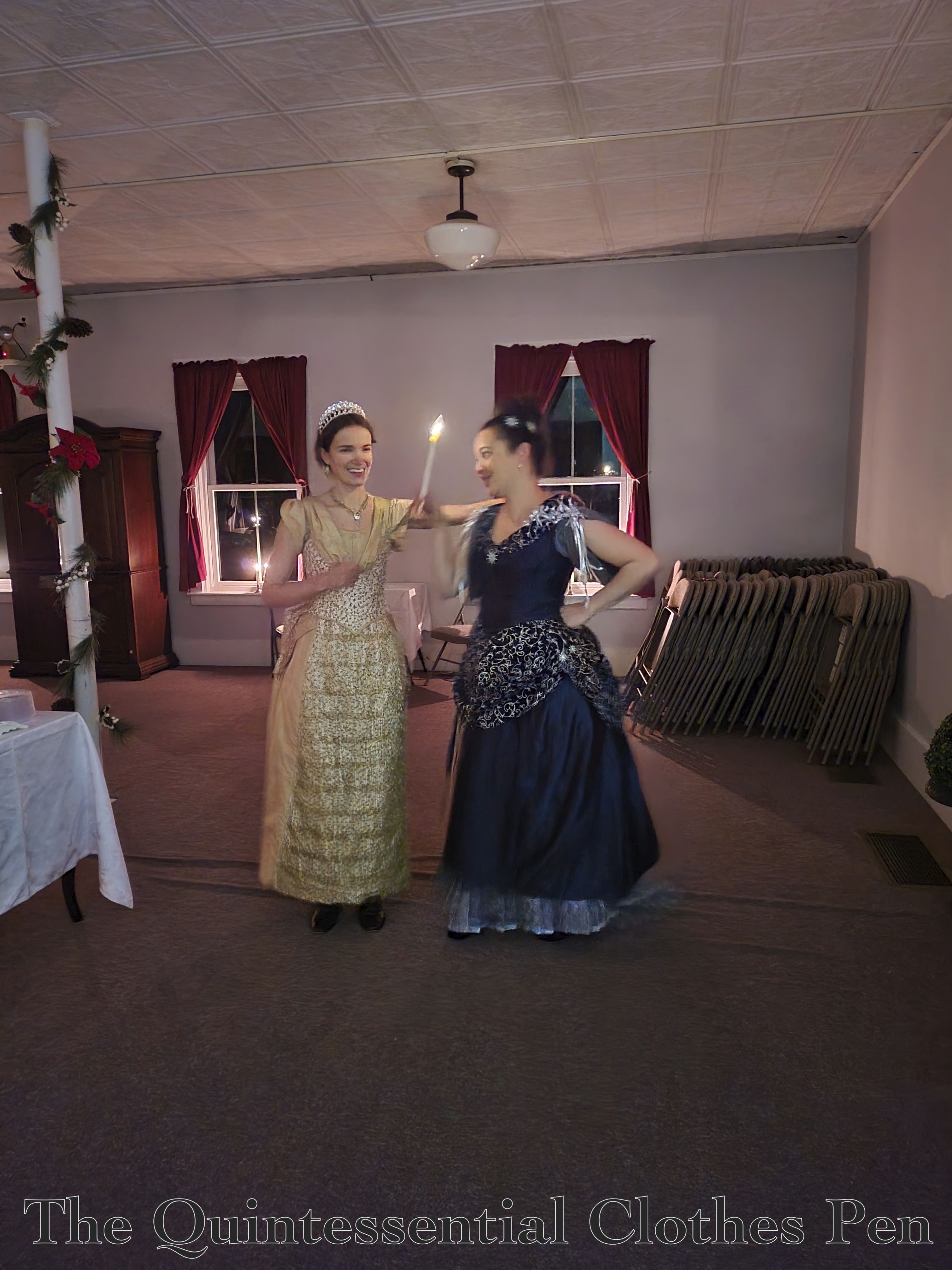
I also reused some of the star brooches from the first iteration of this dress, adding one at the center from of the bodice, two on the left side of the skirt, and some on the left side of my hair. They stand out well in the photo below, in which the two of us are bobbling about, making the ribbons on my dress and beaded trim on the dress on the left shimmer, sparkle, and sway.

Other Photos From The Event

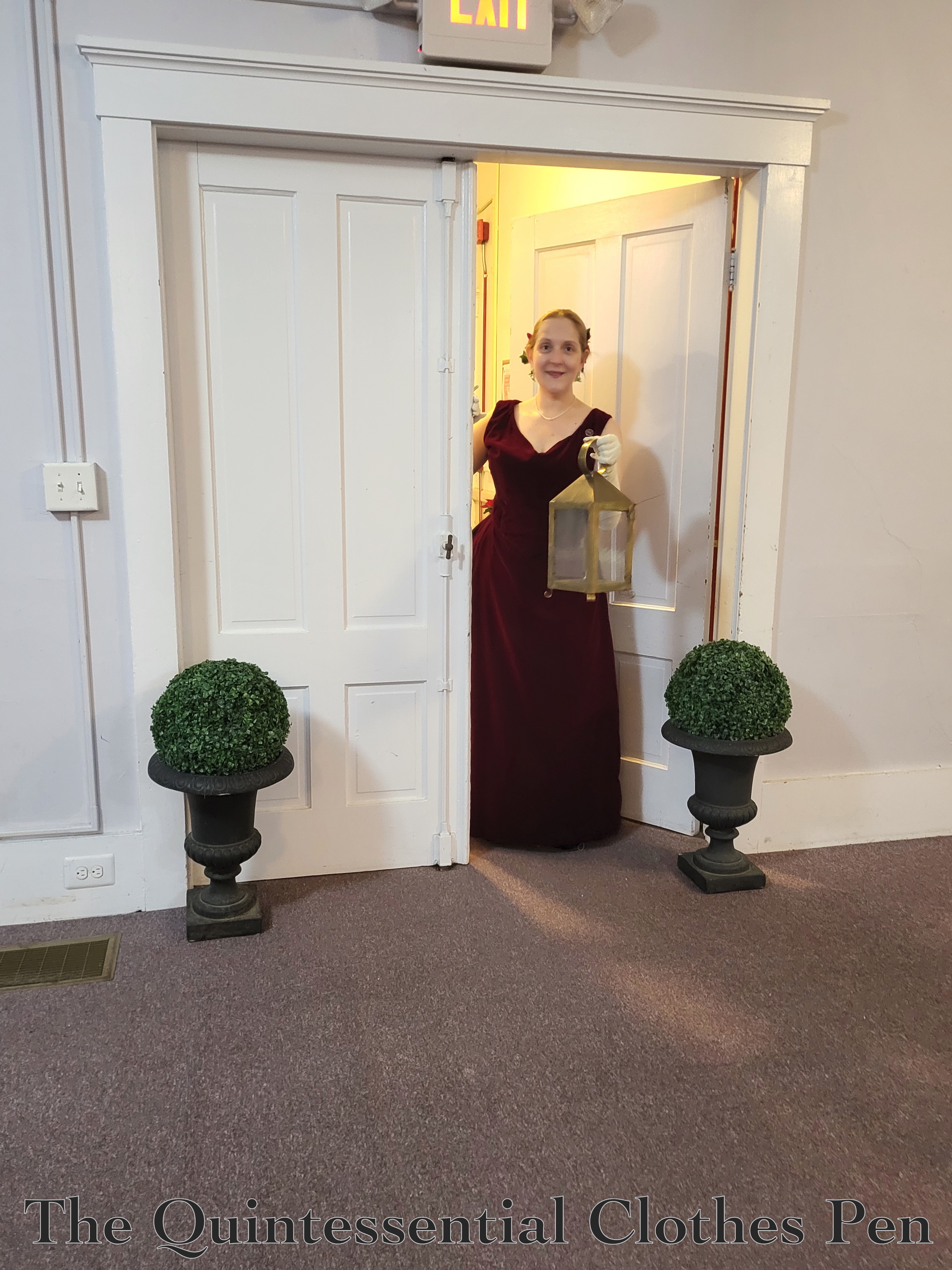
This was a ball for bustles! There were multiple people wearing dresses with this feature, including the dress above, as well as the burgundy velvet dress below.

Finally, a cheerful holiday view into the ballroom. I wasn’t feeling my best at this event and therefore didn’t dance, but everyone else had a grand time! I look forward to the next event in which I can participate in dancing with the bustle! It’s really quite fun to experience the movement of dancing with all of your dress behind you!

The New Yellow Sacque: Construction Details

Photos of the finished yellow sacque are on their way, but before I get to posting those I’d like to discuss the construction details of the dress. I’ve already posted about the accessories and other parts of the ensemble. You can view those blog posts at the links below.

c. 1770 Pink Panniers
18th Century Blue Foundation Petticoat
A White 1780s Petticoat
Yellow Sacque Petticoat
Engageants For The New Yellow Sacque
A Stomacher for the Yellow Sacque

Overall Goal

Whereas my goal for the Versailles Sacque was to hand sew everything and use historically accurate materials and methods, my overall goal for this new sacque was to machine sew as much as possible and use materials from the stash. This pair of goals influenced my choices for patterning and constructing the new dress. (If you’d like more information about the Versailles Sacque, you can read all of the posts about this project here.)

Patterning

The sacque itself is made from the JP Ryan Pet-en-l’air pattern. This is the same pattern I used for my Versailles Sacque. For the new Yellow Sacque, I used a larger size than I previously did. I also tweaked some of the dimensions to fit the measurements of the two friends I knew I wanted to be able to wear the new dress. This included things like increasing the back shoulder width and the bicep circumference.

I started with a mockup, which allowed me to check and see if the changes I made to the paper pattern worked on a real body. And they did! I only had minimal changes to make — some of which was taking out a little bit of the ease I’d added in. Oh well! That happens.

Early Construction, With The Dress In Pieces

After cutting out all of the pieces, there were some steps that were easier to do before attaching things together. For example, I added boning and ties at the back of the lining in order to add adjustability underneath the back pleats of the dress. Ties or lacing like this was common for sacque style dresses in the 18th century.

I was pleased to reuse bones and bone casing from an old deconstructed corset as well as ivory ribbon that was gifted to me. Using things from the stash!

I also assembled the sleeves, with their linings, before attaching them to the dress. Below are the sleeves with the sleeve inseams pinned and ready to sew. By folding the lining and exterior right sides together and stacking them, there is a neat trick by which you can sew once to get both lining and exterior inseams sewn with one go (and all of the raw edges hidden between the layers.

Here are the sleeves turned right sides out. The bottom edges are already pressed under in preparation for being hand sewn later in the process. The top edges are pinned and ready for basting, so that they can be set into the arm opening as one layer.

Back Pleats

Eventually the process moved on to the back pleats — the signature feature of a sacque! I carefully followed the pleating instructions and hand stitched the various stacked box pleats in place. Then I went to put the back neck piece on… Oops!

They widths didn’t match! This was not a pattern problem. This was my problem! When I adjusted the pieces (the backs and the back neck piece) for a body shape with wider shoulders I didn’t remember to adjust the spacing of the pleats across the back accordingly.

So, I carefully removed the stitching holding the pleats and re-organized them to make the back wider. I didn’t want to change the center due to the depths of the pleats, but I was able to move the side pleats over towards the arm holes. I don’t think the change is noticeable. And extant garments show a variety of pleating patterns and widths, so I feel perfectly justified from that perspective.

Sleeve Ruffles

Before I started this dress, I’d been looking through my new copy of Patterns of Fashion 6, from The School of Historical Dress (information and purchasing information about the book is available here, on The School of Historical Dress website). In the book (on pages 15 and 16, to be precise), there are diagrams of sacque patterns laid out in the most economical way possible. This includes various pieced seams for some parts of the garment as well as a way of cutting the sleeve ruffles that nestles them together to save fabric. I was intrigued! And I decided that for this yellow sacque I wanted to try out this method.

Essentially, a rectangle is cut on a diagonal with each diagonal portion making up a flounce. With the rectangle folded along a short side, this results in one triangle that can be cut on the fold while the other one ends up with a seam in the middle. Additionally, one of the flounces ends up being upside down in terms of the pattern on the fabric. I think this is a fun, historical quirk (as compared to what we would likely find on a modern garment) and I also don’t think it’s noticeable once the flounce with the upside down pattern and seam is placed underneath the other flounce.

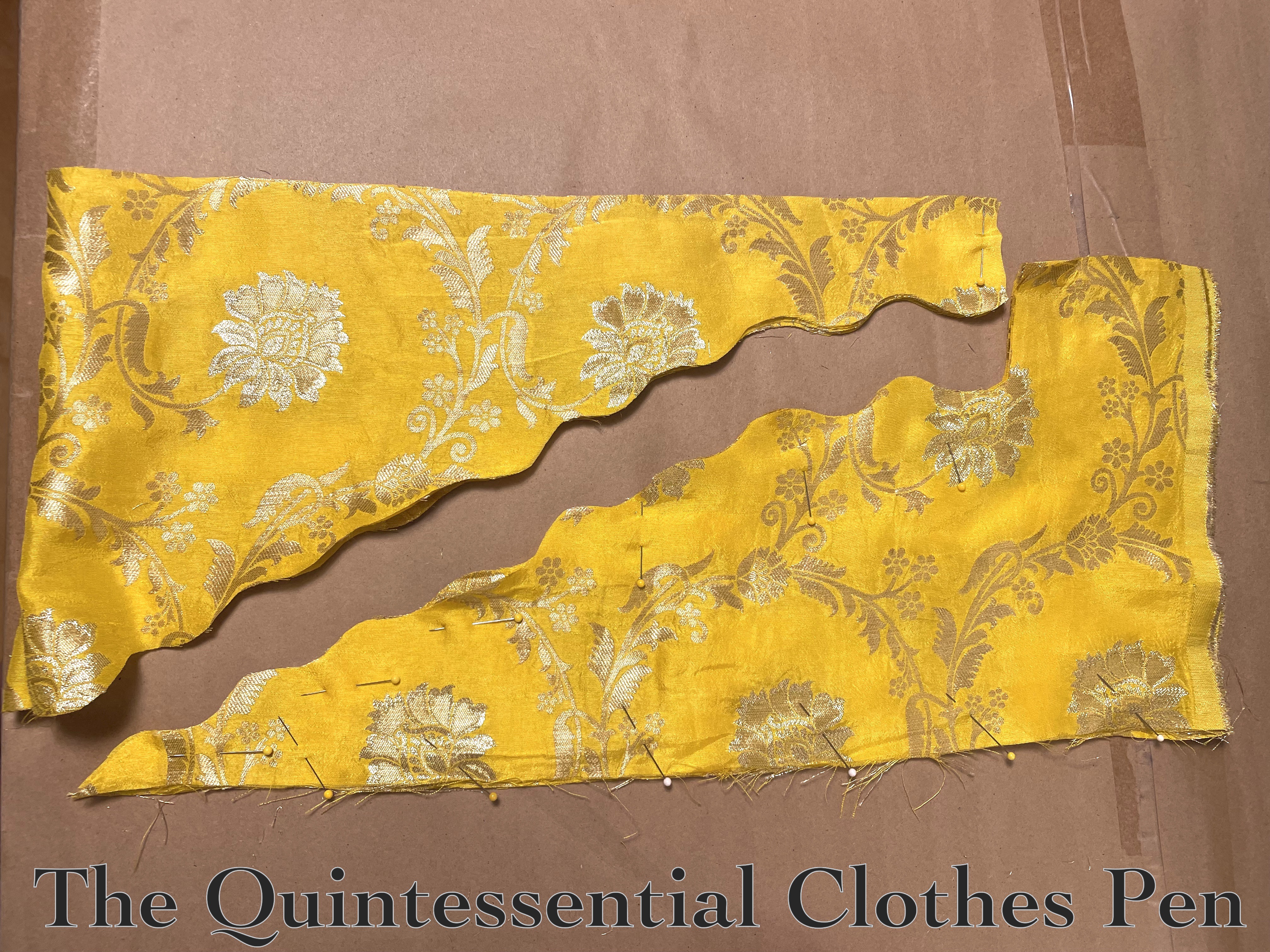
So, I cut my flounces accordingly, with a wavy edge! Below is the result, with the two pieces separated slightly to show the geometry.

After the first diagonal separation, I also updated the scallops a little further to make each layer of flounces slightly different in shape than the other. The extra bits I cut off to do this are pictured below.

Hemming

Other steps were completed and eventually the dress looked like a dress! It was time to think about hemming it!

I wanted a narrow hem of about ½”. That’s easy to do, but I was worried about the metallic threads on the wrong side of the yellow fabric snagging on the train while being worn. I’ve seen this happen and know it can create pulls in the fabric that I wanted to avoid. But I didn’t want to put on a linen facing (as might have been used in the 18th century on what seem to be rare occasions), because I didn’t want an obvious line of stitching along the top or the weight and drape of that part of the lightweight silk dress to be different than the rest of the garment.

One trick I know of to help with this is to put a facing of tulle over the underside of the train. This makes a smooth surface to drag on the floor while not adding weight or making an obvious line along the top at whatever point the facing stops.

I looked in my stash and found a one yard piece of ivory tulle that would be just the right size for this purpose. A single layer of the ivory blends very well with the yellow silk!

The tulle facing tapers away to nothing around the side seams of the dress and extends up about 6″ above floor level at the center back.

Below is a photo showing part of the hem of the dress with the ivory tulle pinned in place. I pieced the tulle where needed, which was not in the same places as the seams of the yellow silk.

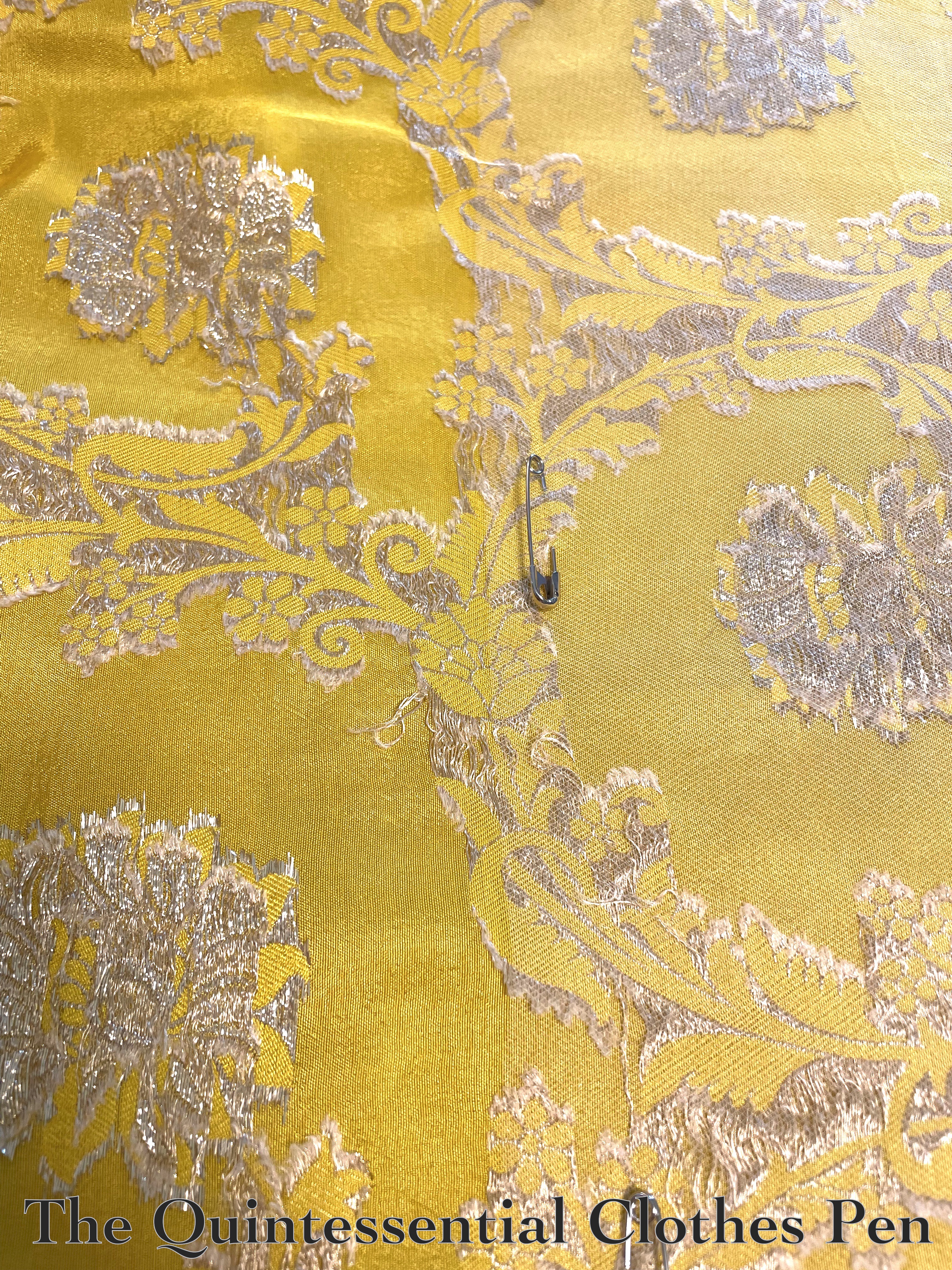
And here is a closeup of the wrong side of the fabric, where the metallic threads are clearly visible on the left and the tulle is just noticeable on the right. One it was all pinned in place I used a sort of running prick stitch to catch the tulle to the yellow silk. This resulted in very small stitches on the yellow silk (or where possible, I caught the metallic threads so that the stitches wouldn’t be visible at all). The stitches are not at all noticeable when the dress is being worn.

Materials & Time Spent

This dress (accounting for all of the individual parts of the ensemble) used:

  • 10.75 yards of the yellow figured silk
  • 3.25 yards of cream cotton (1.25 yards for for the sacque lining and 2 yards for the petticoat)
  • Scraps of ivory silk
  • Scraps of natural canvas
  • 1 yard ivory tulle
  • Embroidered/sequin bits from approximately ½ yard of gold lace

As well as small notions such as ivory ribbon, bones and bone casings, and thread.

I didn’t keep track of how much time I spent on this project, which was a relief in some ways. It was nice to just make it and not count. My photos show that I started patterning and mocking up the pattern in fall of 2023. I know I cut the pieces out in the winter of 2024 while my notes were still fresh. And then I was busy and didn’t start sewing until summer of 2024. I finished the dress on September 28, 2024. So it took me about a year of not-at-all consistent work — a Saturday here, a day or two of vacation there, and some hand sewing in the evenings. For this project, I’m not going to try and estimate the hours, but just bask in the knowledge of not keeping time.

And that’s it! This dress is made of pretty wonderful fabric that steals the show without additional trimmings, so I didn’t add any aside from accessories (such as the stomacher). Photos of the finished garment will be coming soon!

1940 Schiaparelli Inspired Dress: Inspiration and Construction

I finally open my rereleased new copy of Patterns of Fashion 2 (Pof2) last summer and had great fun looking through all of the previously included garments (from the original edition) as well as the newly included ones. I remember seeing one dress (picture below), in particular, and thinking that it would be fun to recreate it, but that the beading seemed like it would be quite a challenge!

1940 Evening Dress designed by Elsa Schiaparelli. The Victoria and Albert Museum. T.48-1965

A few months later,  I was at Joann Fabrics and saw a fabulous magenta and green sequined net poking out of a shelf. I pulled it out and immediately thought that the colors were very me. But did I have a use for it? Not really… Except… What if I used that fabric to recreate the beaded idea on that dress from PofF2??? Schiaparelli’s designs often made use of magenta pink as a Surrealist inspired color, so it didn’t seem too far fetched for me to include that color in my version of the dress.

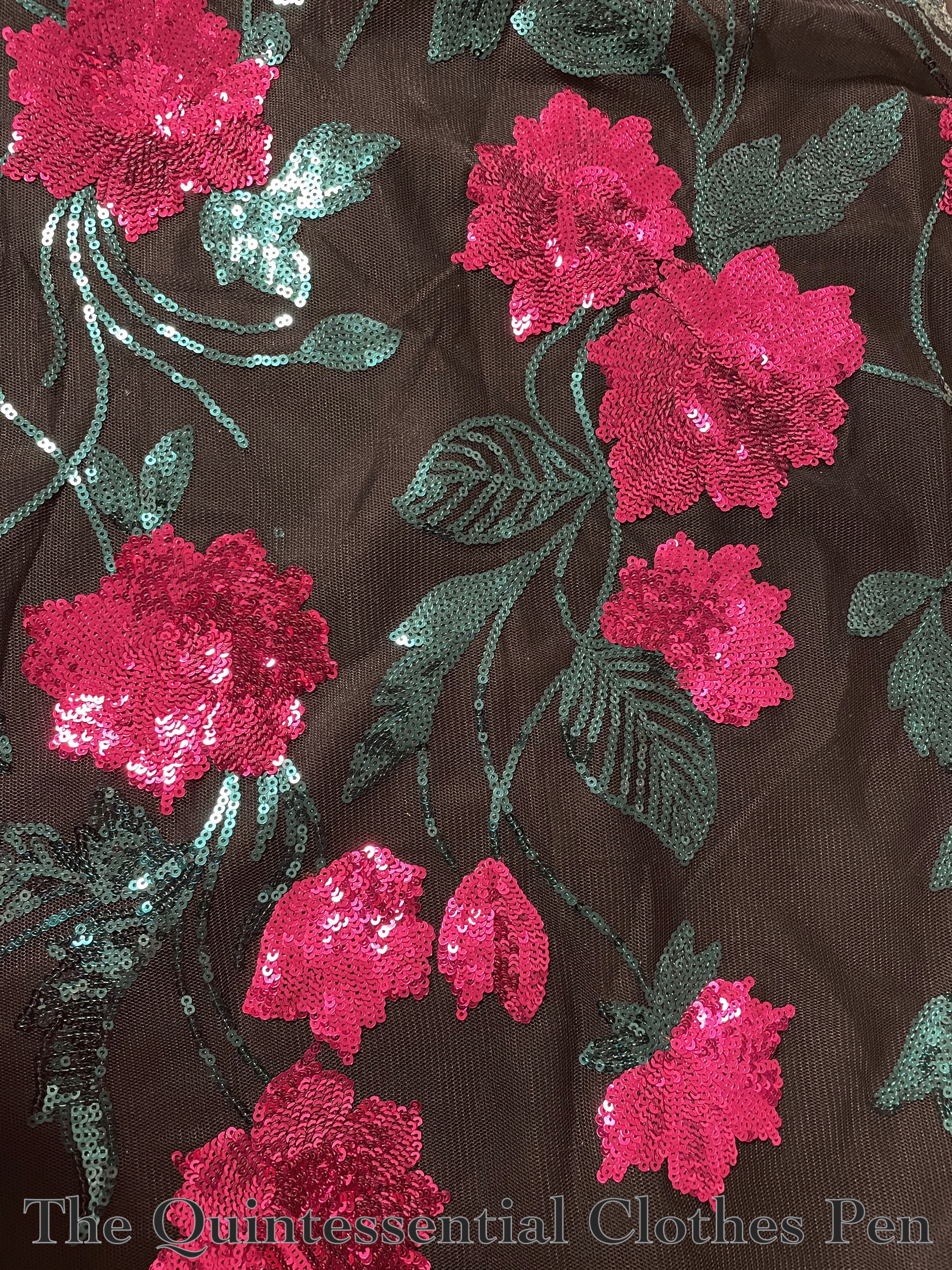
So, I bought some. ¼ of a yard, to be exact. Not too much, but enough to be able to pick and choose different parts of the flowers to create a pattern similar to my inspiration. Below is a photo of the inspiration fabric: magenta and green sequins on black net.

Not too long after that, I decided that instead of wearing my updated 1933 Dramatic Evening Dress to a December event, I would instead make a new one–the 1940 Schiaparelli dress!

The first step after my decision was to find black fabric. The original is silk crepe, but I wanted to keep the cost down a bit more than what silk would allow for. I ordered a few swatches of rayon crepe and also went to stores to look at other options. I’d almost decided on one when I came across another random fabric at Joann that stood out to me. I debated for awhile, but decided the Black Shimmer Twill was more interesting than plain black crepe (the shimmer twill is visible in the above photo underneath the sequined net).

The next step was to size up the pattern in PofF2 and adjust it to be not tiny. I am definitely not the measurements of the original! I did those things and made a mockup:

  • The dress skirt worked, but I wasn’t happy with what the sleeves were doing.
  • The neckline needed some work to fit comfortably.
  • I changed the grainline of the back piece. On the original, the back bodices are cut on the bias, but I decided that they would lay better if I cut them on the straight of grain.

Then, another mockup. I made a few more changes and finally it was time for the real fabric!

Cutting out the pieces was pretty easy. There actually aren’t too many of them, especially because the facings are cleverly cut on with the front and back bodice pieces. The pieces are: back skirt, back bodice, front bodice/skirts, and sleeves.

Below is a photo of the finished garment showing the clever front facings and the shimmery quality of the black base fabric I chose. (The photo also shows the fun back element of this dress: three v-shaped pleats that meet at the center.)

I sewed up all of the seams I could (so that was the center front seam, the sleeves, and the back waist seams) while still keeping the front flat, so that I could replicate, or at least imitate, the floral V-shaped beading on the original.

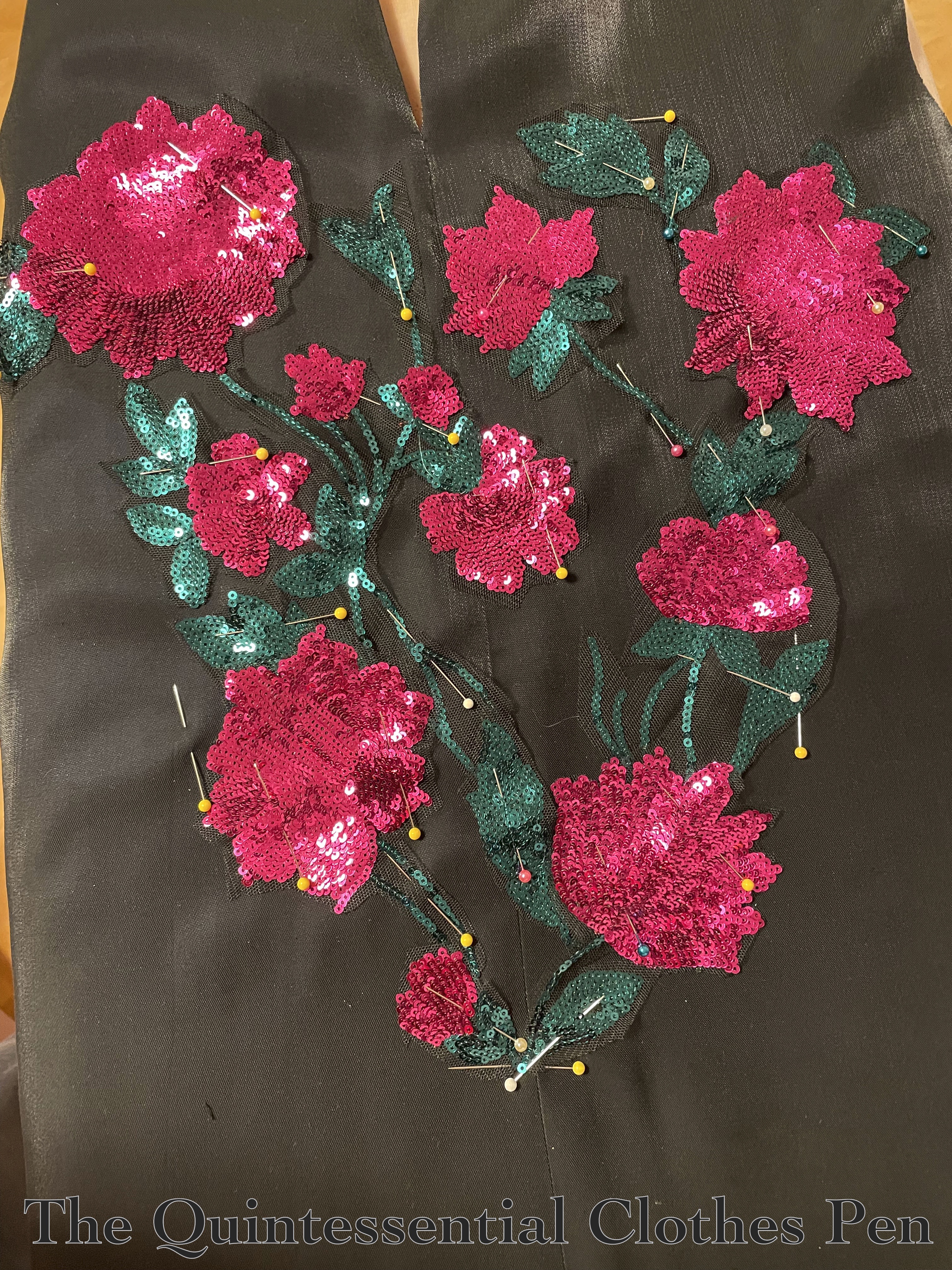
The next big step was using the sequined fabric to create a design similar in shape to the beading on the original. I cut out individual flowers and vines, arranging them on my assembled front pieces and pinning them in place until I was happy with the layout. Below, a photo of my cut out flowers, leaves, and vines while I was deciding on the layout.

Every piece had some net left around the edge so that I could flip them under and appliqué stitch them on. Below is an in-progress photo showing the top right flowers sewn on and some pieces pinned out of the way while I sewed bits that overlapped.

I get great joy out of taking tiny stitches, so I found it fun to catch every sequin as I went around all of the edges of all of the flowers! Here is a view of what all of those stitches look like on the inside of the dress! I didn’t think ahead to put anything to help stabilize the fabric on the inside… I wonder if it would have been less comfortable to wear if I had. Thankfully, the shimmer twill holds its own pretty well and doesn’t show puckers on the outside!

Eventually, all of my sequined bits were sewn in place. And then it was time to finish assembling the dress! The machine sewn seam allowances are all left raw on the inside.

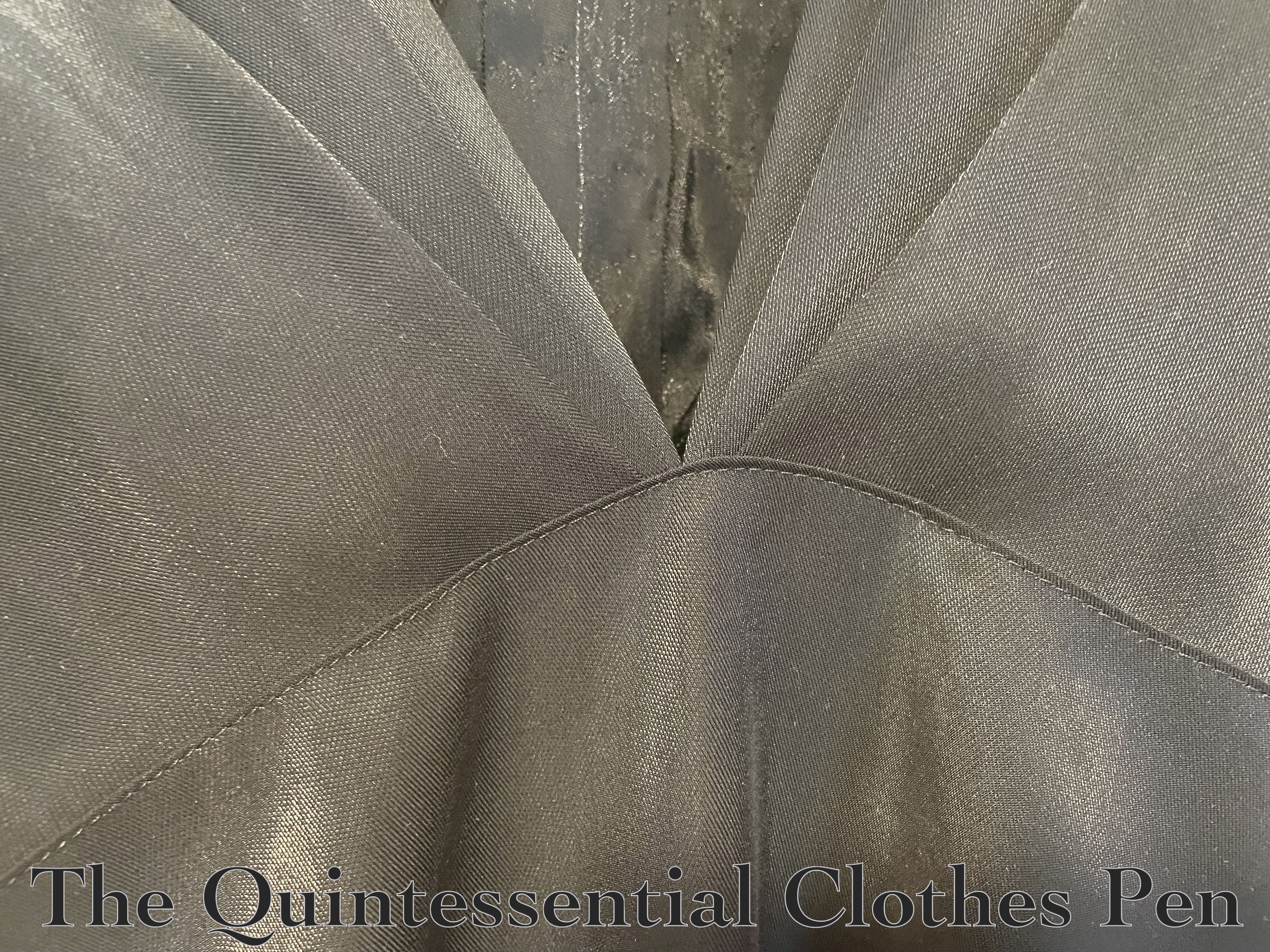
And the top back pieces and back skirt have a fun period way of attaching to each other, which is with a top stitched seam (shown in the photo below). This is pretty common on bias cut dresses I have seen. I understand that this helps to stabilize the seam and is easier to match and line up than it would be to put right sides together in the usual method.

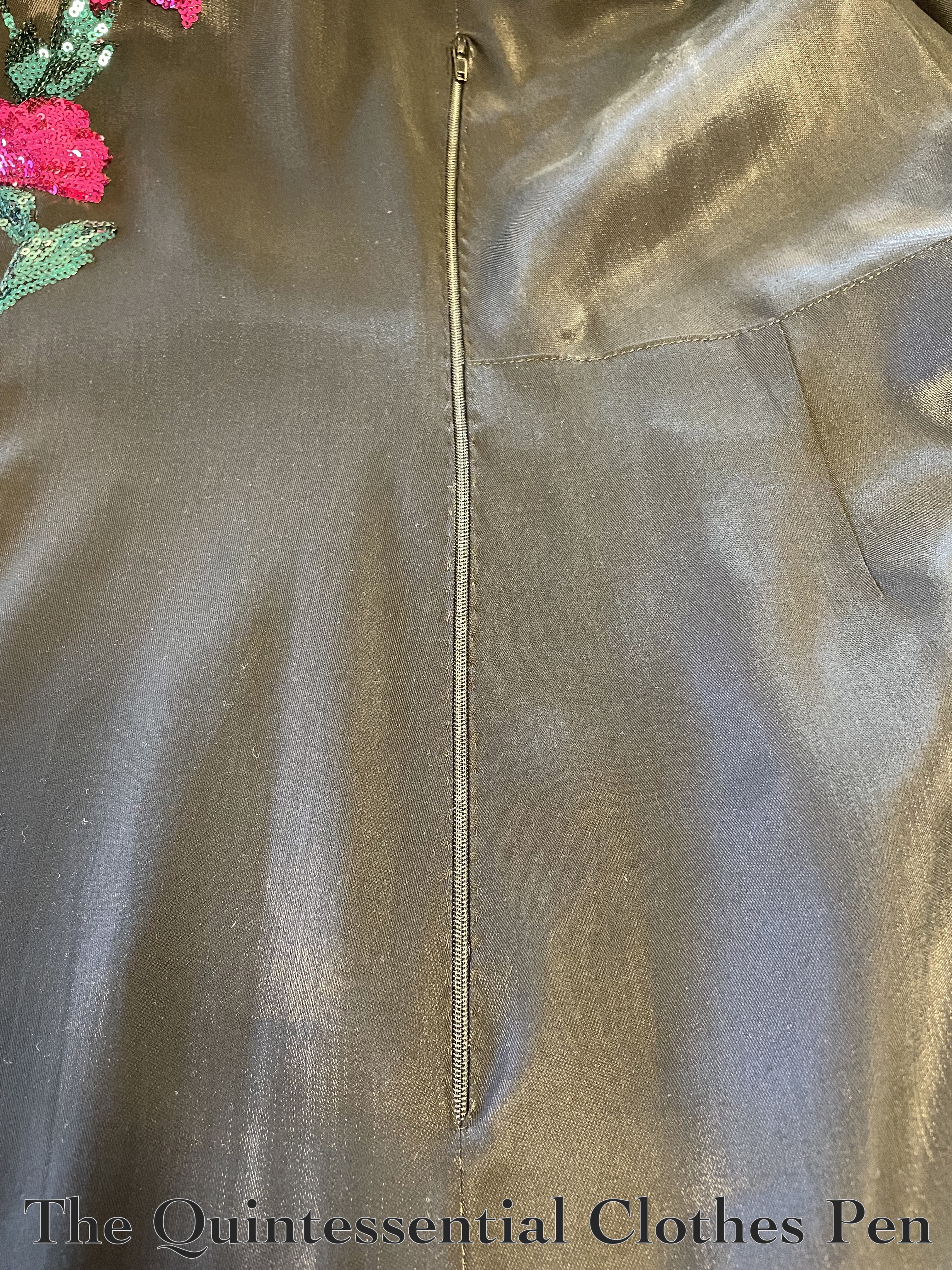
For closures, there is an exposed zipper (gifted to me) on the proper left side of the dress. This method and style was taken directly from the original dress information in PofF2. Below is a photo of the zipper, which is hand stitched into place.

The sleeves and skirt hem are stitched by hand, also following information in PofF2. Here’s a closeup of the sleeve. It is shaped with gathers at the top and two darts at the bottom. The hem is slip stitched into place by hand.

The only other thing that this dress needed was shoulder pads. I don’t think the original has them, as the shoulders look very sloped to me, but they were needed to make the dress sit properly on my body (and they add a very 1940s square shouldered look!).

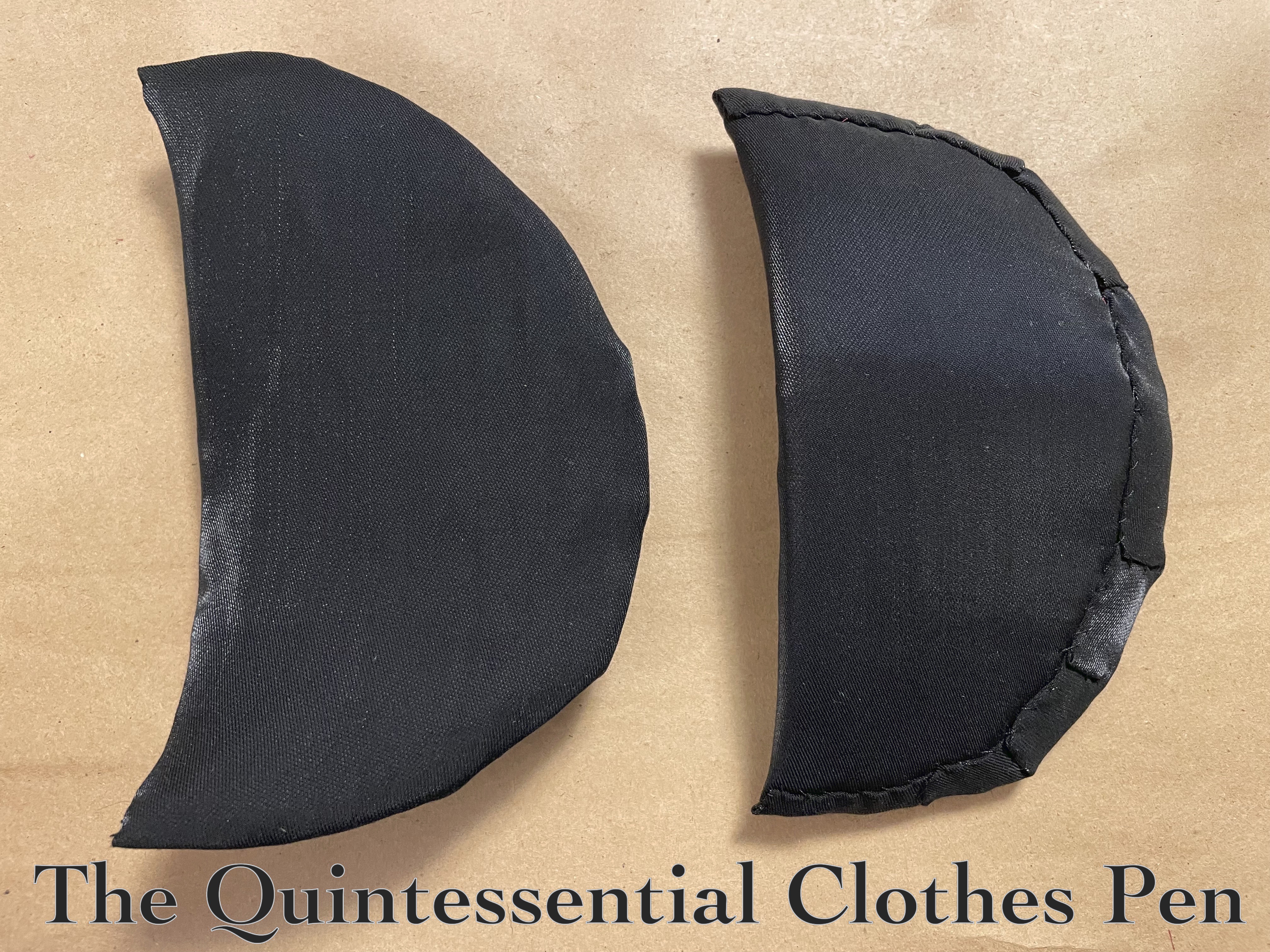
Conveniently, I had a pair of shoulder pads in my stash that worked well. They were, however, light colored and I thought it would be nice if they matched my dress better, so I covered them with scraps of the dress fabric before tacking them in.

Below is a photo of my covered shoulder pads followed by a photo of the shoulder pads sewn in place on the gown, with bra strap keeps added as well.

And that’s it for now! This post is long enough, so pictures of the full ensemble will be in another post!

18th Century Blue Foundation Petticoat (HSM #8)

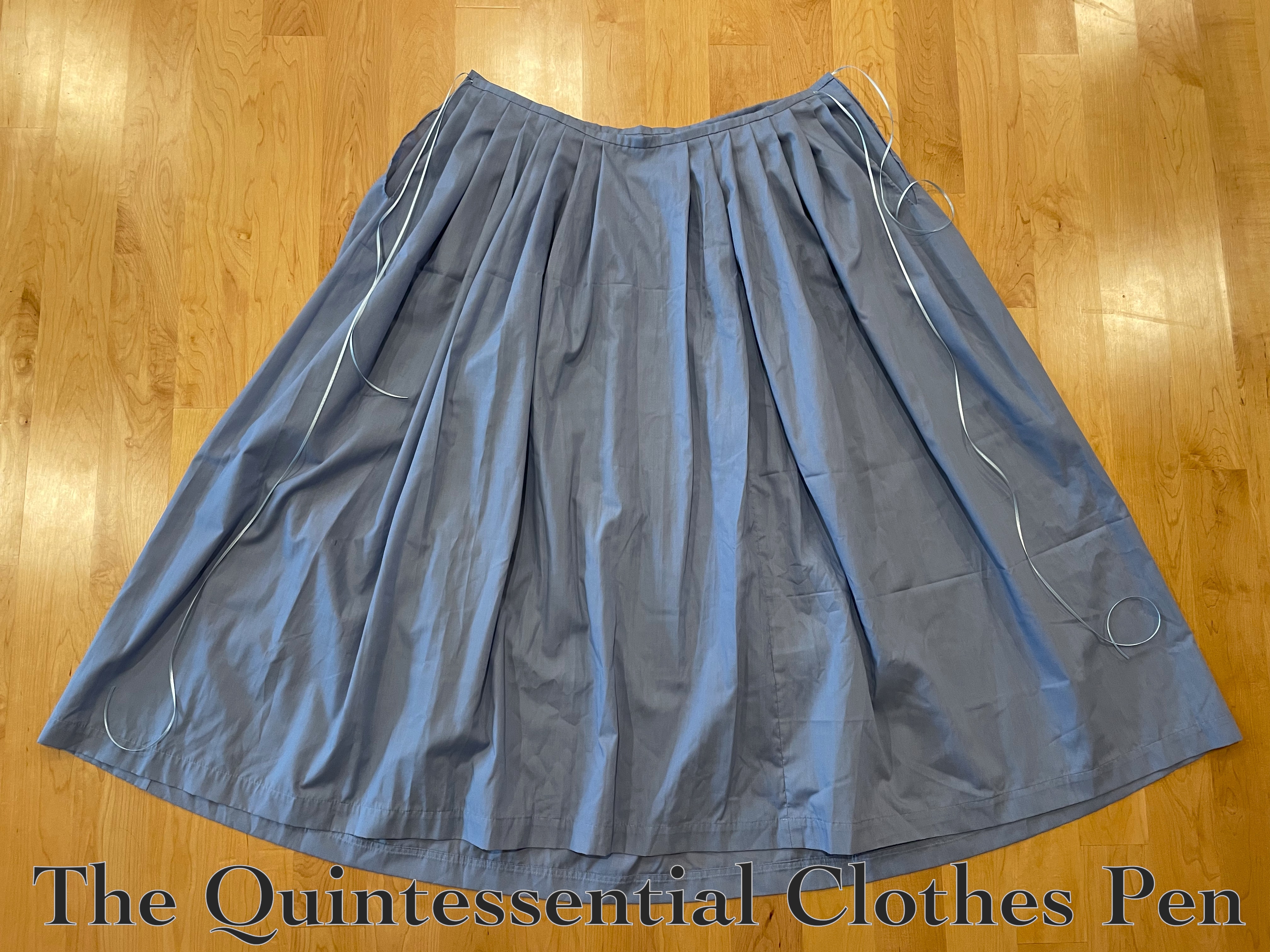
In addition to the c. 1770 Pink Panniers that I recently posted about, the blue foundation petticoat pictured below (front view) is also intended to be easily loaned to friends.

I’m super pleased with this for a few reasons:

1 – I was able to easily replicate the construction steps that I used for my Apricot Petticoat in 2013, ten years ago!

2 – I was able to re-make the petticoat from an old project: the 1812 Blue Under Dress I also made in 2013. I was never very happy with this color under my 1812 Striped White Gown (it was blah) and within even a few years of being made it no longer fit the width of my back, anyway.

3 – This remake qualifies for the HSM Challenge # 8, All Tied Up:

Make something that closes with ties, or something that uses knots/bows as a decorative feature.

Just the facts:

Fabric/Materials: Approximately 3-4 yards blue cotton/polyester blend fabric (salvaged from an old dress).

Pattern: None, but I referenced both of these tutorials on constructing 18th century petticoats. Katherine’s tutorial is for a petticoat with an uneven length (to go over panniers, or a bum roll, for example). Rebecca’s tutorial is for a petticoat with an even length (the same length all the way around, to be worn without extra supports). Both tutorials have construction information, Rebecca’s includes a bit more detail in terms of which stitches and methods to use.

Year: Loosely 1700-1790.

Notions: 3ish yards of 1/8″ blue polyester ribbon and thread.

How historically accurate is it?: 70%. Accuracy gets knocked down because: 1- all unseen seams are machine sewn, 2- I used polyester ribbon for ties, 3- I haven’t seen research that shows cotton being used at this time for a single plain petticoat of this sort.

Hours to complete: 5? I didn’t really keep track.

First worn: Has not been worn yet.

Total cost: Free! Materials were either in the stash/gifted to me or re-used from other projects.

Here are more photos of the petticoat, starting with a back view.

And, close-up evidence of weird things, such as the twice-stitched machine hem, which could be useful if I ever want to lengthen this petticoat. These hems are leftovers from the salvaged dress–no hemming required for this petticoat. Perfect!

I followed the instructions as indicated in Just The Facts earlier in this post. This leads to tidily finished waistbands, as you can see here (along with a randomly located vertical seam).

(Another weird thing about this petticoat is where the seams landed on this, now that it is a petticoat and not the skirt of a dress, and that each seam is finished in a different method!)

And here’s a the same view, but with the front folded down to show how the petticoat is made shorter at center from than it is anywhere else.

Below, a final closeup of the extra length at the front folded down and left raw. The top fold is encased in the waistband, which is machine sewn and whip stitched down on the inside.

I was super pleased to just barely fit this petticoat length out of the skirt length of the old dress. The hem circumference was just about perfect, too! And, I was able to cut the waistband strips from the front bodice pieces of the original dress!

All in all, a quick and satisfying project! I’m much more pleased with this as a petticoat than I ever was with it as a dress.

c. 1785 Stays Of Success Part VII: Conclusions, Reflections, & Resources

Did you notice the change in the name of these stays??? I’ve decided to call them the Stays of Success instead of the Stays of Fail!

This is partly to give them a more uplifting name that brings joy instead of disappointment, but also because I finally took photos of them… and then proceeded to wear them around the house for a number of hours because they were actually quite comfortable! Success!

Conclusions and Musings

I want to start by exploring why I originally named this pair of stays the ‘Stays of Fail’. That is because, until very recently, I felt that this attempt at stays was a failure in terms of comfort. The comfort is what I based the original name of them on.

By the time the construction was almost done, I felt slightly better and that they were a (very struggle-y) learning opportunity. After adapting them, I was thinking that ‘Stays of Fail’ maybe should turn into ‘Stays of Learning’ (although isn’t that every project?!?) or maybe just c. 1785 Hand Sewn Natural Linen Stays (but that’s not very exciting!).

Stays of Success is more entertaining!

Reflections On The Process

Would I use the book Stays and Corsets: Historical Patterns Translated for the Modern Body by Mandy Barrington again?

My experience, as I moved forward with the construction process, was that I regularly lamented the focus of the book on modern theatrical methods, as I was aiming to produce historical stays. When I wanted to go back and get detailed information about the materials, construction methods, measurements of bindings, etc. I found that information just wasn’t included. It was especially frustrating when information was just missing–such as the locations of the front eyelets–even on a pattern taken from the original.

At one point, I thought I could get around the problem of lack of historical detail in the book by looking for the online record of the Chertsey stays that the pattern was based on. Clever, I thought! However, I can only find two images of them and it seems that aside from that they aren’t available to view online in full. (The back lacing can be seen here and a front view can be seen by Google image searching ‘Chertsey museum stays’, but clicking through to the museum website doesn’t lead to the image.)

This lack of information is why I heavily relied on Patterns of Fashion 5 (PoF5)–because all of the detailed information I wanted (and more!) is there. (I did have to extrapolate and make decisions based on the information in PoF5 since it is all for similar stays but not for the exact pair that I’ve patterned.)

So, while using this book was a valuable experiment, I don’t think I would be inclined to use it to create another historical support garment for myself. However, I can see the benefit of drafting a pattern with similar proportions for someone who is vastly different than the original pattern size, for theatrical purposes in particular. For that purpose, I wouldn’t be interested in replicating the historical details and so the omissions I mentioned would not be a detriment to the garment I would be intending to produce.

In the end, I’ve learned a lot about what this book can, and can’t, do and that is helpful even if I’ve been a bit frustrated along the way due to my goals being different than what the book is aimed at.

Further Experiments

Unfortunately, one of the fitting problems I encountered might be due to an alteration I made in the mockup to take in the waist (I’m taking ownership of my actions!). This inside photo of the mockup shows the center front and side area alterations I made.

After finishing the stays, I was curious to see how the mockup would fit if I compared it to the finished stays. It turns out that I basically had to add in the width I’d taken out in the mockup when I added my back gusset. Sigh!

In theory, my alterations should have made the mockup slightly smaller than the finished stays with the added gusset, but the odd thing is that the mockup dimensions (with the alterations) are pretty similar to the finished stays (with the back gusset added in). So perhaps the real fabric stay pieces shrunk or wound up being smaller than I thought? Who knows?!? I’m done puzzling on this one!

In The Meantime…

While wrestling with these stays, I decided that I didn’t want my lack of stays to hold me back from making dresses any further and so I decided to start a whole new pair of stays instead off dealing with this pair (at least for a short time).

I held off sharing about them for quite awhile because I wanted to finish the saga of these stays… but eventually I gave up, and at the end of 2022 had great fun sharing the success and construction of my c. 1785 Green Linen Stays.

Resources

This is not comprehensive by any standards, but I thought it might be helpful to collect some links that I’ve found useful for anyone who wants to know more, see other people’s stays, or people who are making stays themselves. (These sites were especially useful for seeing the process when I didn’t have PoF5 on my cutting table!)

You can read previous posts in this series here:

c. 1785 Stays (Of Fail), Part VI: Finishing Construction Details
c. 1785 Stays (Of Fail), Part V: Middle Construction Details
c. 1785 Stays (Of Fail), Part IV: Early Construction Details
c. 1785 Stays (Of Fail), Part III: The Pattern
c. 1785 Stays (Of Fail), Part II: Fitting Update
c. 1785 Stays (Of Fail), Part I: Beginnings

c. 1785 Green Linen Stays (Construction Details)

I made another pair of stays!

This pair is a reaction to many of the things that went wrong or that I didn’t like about The Stays of Fail (which I’ve posted a whole series about: the background, construction, and patterning, though the lessons learned post is still forthcoming) as well as a chance to try out ideas from Patterns of Fashion 5 and all of the information I’ve learned about stay-making over the last 10 years or so.

The Background Story

I made a pair of stays about 10 years ago, so I figured I had some experience… Such hubris! We can always learn more things.

The old pair is well documented in old blog posts, but I would like to point out that since I made those stays I’ve learned so much–about what fabrics to use, what the construction process should be, etc. I’ve also changed size in the last 10 years, so my old stays (which always had a gap, intentionally), now hardly reach around my sides. It’s no longer a gap, it’s a chasm!

I don’t wear 18th century clothing that often, so making these work has been fine… The last time I wore them was to Versailles in 2016. They’re still pretty comfortable, they just need a very long lace to bridge the chasm!

However, in the last few years I’ve developed grand plans to make 1780s and 1790s clothing and I wanted a better fitting support structure to go underneath. I thought I’d use the knowledge I’ve gained, along with the invaluable information in Patterns of Fashion 5 (only published recently in 2019), to make a new pair of stays. (If you want to know more about the book, I rave about its amazingness in more detail in this blog post.)

Contemplating My First Pair Of Stays

With the knowledge I’ve gained over the last 10 years, I suppose I would call the old stays ‘smooth covered’ stays that are fully boned with cane. I wanted to machine sew the channels but picked a lovely patterned silk for the exterior that I didn’t want machine channels on top of, so that’s where the smooth covered idea came from.

At the time I made the stays, I didn’t know what the purpose of the narrow tapes covering the seams was (now I know: it’s to cover what shows of the whip stitches used to attach the pieces together when the stays are hand sewn, as they would have been), so I inserted piping to approximate the look. It’s definitely not historical, but my best guess at the time. And, some of my piping isn’t long enough to extend into the binding… Below, a view of this old pair of stays (more photos in this past blog post).

Speaking of which, the binding is bias twill, which isn’t terrible, but is much more of a 19th century practice than an 18th century one (18th century stays seem to be most often bound in tapes or leather).

The one thing I did do well was create hand sewn eyelets for lacing, though they are set up for x lacing as opposed to spiral lacing (the latter being more common in the 18th century for the functional closure of stays).

Patterning The New Green Stays

For the new stays, I wanted to try the drafting method detailed in Patterns of Fashion 5 on page 155 as opposed to sizing up a gridded pattern and adjusting it to fit. The instructions are easy to follow, although determining exactly what height the measurements should be taken at takes practice, previous knowledge, and/or trial and error.

My measurements are: bust 40, waist 33. When I used those measurements, the pieces were a little large, so I adapted the pattern to use these measurements: bust 36, waist 30.

The other measurements I used to create the pattern were:
width of CB to armhole: 6″
width of CF to armhole: 9″ (maybe this was too big)
underarm to waist: 6″
CF top to waist: 6.5″
CF waist to bottom of peak: 5″
CB top to waist: 9.5″
CB waist to bottom of peak: 4″
CB top to top of side hip: 15.5″

I felt the patterning was quite successful! I was able to use my measurements and easily adapt the pattern to fit my back in a way that did not cause discomfort (as was the problem with the Stays of Fail early on in the process).

Constructing The New Green Stays

These stays have an exterior made from leftover avocado green linen from the stash. Additionally, there are two layers of heavyweight, coarse army green linen that make up the structure of the stays. This is also from the stash–it was gifted to me and is too heavy for most garments I make. The weight is great for supporting stays, though!

Here are my inner lining pieces set up on my limited green linen scrap.

Constructing The New Green Stays

The new stays are half boned. I chose to machine sew the channels with buttonhole weight thread (I wasn’t about to spend a million hours hand sewing channels again after just doing that for The Stays of Fail).

I like the look of the heavier thread, as opposed to regular weight sewing thread. The channels are boned with full width zip ties (none of that cutting them in half nonsense like I did for The Stays of Fail, either).

As an experiment, I chose a boning pattern with both vertical/diagonal bones as well as bones that run horizontally across the chest. That means that my boning channels crossed.

I carefully started and stopped my stitches to line up at the corners of the crossing channels and left my tails loose, to be pulled to the inside and knotted by hand later in the process. I did the same with my thread ends at the raw edges, so that my channels would be beautifully even with no backstitching (it helps with the illusion that the channels are hand stitched and not machine sewn).

In places where the boning channels crossed, I added an additional piece of coarse linen on the inside of the stays. This allowed me to have separate boning channels for the different directions, which was helpful in keeping the crossing points from becoming too bulky.

After the boning channels were in, I put in the bones that would no longer be accessible after the seams were sewn. Then, I machine sewed my pieces together. (This project was about making successfully patterned stays more-so than completely hand stitched ones!)

Following that step, the remaining bones were pushed into the channels. I also hand stitched the eyelets around this time (I made them pretty big for ease of lacing–the ones I’d made on The Stays of Fail are pretty tiny!). Below, my eyelets are marked and my edges are tidied.

Next, I basted around the edges of the stays to keep the bones in place, covered my exterior seams with woven linen tape, trimmed my edges, whip stitched my edges, and bound the edges of the stays in ¾” linen tape.

The stays looked like this on the inside at this point.

And like this on the outside.

I also added extra laters of reinforcement over the belly, as seen in extant stays. These are graduated in size and made of the same coarse linen.

Some stays also have wooden busks to further stiffen the center front. Given that these already have modern methods, I chose to use an extra heavy, ½” wide steel bone for my busk. It is inserted under the extra layers of linen and stitched in place, as you can see below.

The final step was to line the stays. I used a natural colored cotton/linen blend from my stash. The tabs are each lined with a small bit of fabric (you can see that in the above photo). Then fabric was laid out on the inside of the main body of the stays, traced, and cut for both sides. The lining pieces are all whip stitched in place.

Here is a closeup of the back edge and tabs, with eyelets, binding, and full lining.

Below, a closeup of the top edge of the stays as I pinned the lining in preparation for trimming it to the correct size.

The seams on the inside do not correspond to the exterior seams.

Finished Stays

These new stays fit pretty well and are generally comfortable.

The front width wound up being a bit wide for me across the top, but otherwise they are good.

Final Thoughts

I like the horizontal boning across the front. The only downside to that is that the stays don’t fold in half for storage!

I had such a fun time deciding what pattern-making decisions to make. (What grainline to use on each piece? What boning pattern to use? Straps or no straps?) I couldn’t include all of the ideas in a single pair of stays, and so I have plans to make another pair, in a dark yellow from my stash. The someday-yellow pair will allow me to tweak the fit of the front as well as play with alternate patterning ideas. The pattern and materials are still out… it’s just a matter of finding the time and inspiration!

P.S. Stay-making Resources

This is not comprehensive, by any standards, but I thought it might be helpful to collect some links that I’ve found useful for anyone who wants to know more or see other people’s stays. (These blog posts were especially useful for seeing the process when I didn’t have PoF5 on my cutting table! That gives you a sense of the fact that this blog post started at least 3 years ago!)

Blogs showing the creation of similar stays:

  • The Sewing Goatherd: 1780s Stays Using Scroop’s Augusta Pattern (and stiffening her own innards, too!)
  • Rococo Atelier: 18th century speedy stay making tutorial using a sewing machine, this is part 1, this is part 2, this is part 3 (great photos and tips, this pair of stays also uses the PoF5 drafting method and machine sewing)
  • The Fashionable Past: 1780s Stays Tutorial (not quite the same shape as my stays, but the process is basically the same and this has lots of great photos of each step)
  • Rockin’ The Rococo: 18th century stays (the shape is earlier than mine, but the process is basically the same and this has lots of great photos of each step)
  • The Mantua Maker At Midnight: Making Stays 1730-1780s (this is earlier than mine, but the process is basically the same and this has lots of great photos of each step)
  • Atelier Nostalgia: Late 18th Century Stays (these are more similar to my Stays of Fail in some details–the tape straps and center front opening, for example–, but the general construction information is applicable to lots of stay projects)
Videos about stays:
Blogs with information about stays:

Pattern suggestions:

c. 1785 Stays (Of Fail), Part III: The Pattern

The Beginnings, The Longer Version

Let me back up from the current state of the Stays Of Fail to all the wonderful documentation I did about making them, at least to this point. When I started these stays back in 2018, I intended them to be a sort of in-between-projects-project for when I wanted a bit of hand sewing to do. Given that, the project moved at a pace only slightly faster than a glacier!

Somewhere very early in the planning stages of these stays I decided to try out a new book for patterning them: Stays and Corsets: Historical Patterns Translated for the Modern Body by Mandy Barrington. This book presents the idea that you can use any person’s measurements to draft a basic block of the body and then use the basic block to draft any of the historical stays in the book. It’s a neat idea, in theory, and I wanted to try it out.

The Pattern

I didn’t keep track of how long the patterning/drafting process took me. But it was a long time…

There was lots of math, which always happens with drafting a body block and is to be expected, but on top of that there was also the drafting of the specific pair of stays I’d decided on: the 1785-1788 Half Boned Stays (patterned from a pair of stays held at the Chertsey Museum). I was doing my pattern drafting while being often interrupted, so that slowed me down, but despite that the process was longer than I was expecting (and I’m not new to making body blocks or patterns).

This is the original pair of stays at the Chertsey Museum. (Accession number M.2008.53)

(The nice thing is that if I were to use this book to pattern another set of stays or corset I would be halfway there, having already now created a custom body block, but I suspect it would be faster for me to start with a pattern from another book source, because I think my brain wraps around the idea of resizing a pattern without the body block drafting pretty easily.)

I eventually had my body block and was able to draft my pattern using the instructions. The instructions were quite detailed, so that was great. I finally had a pattern that I was able to cut out and make a mockup out of! I was able to get into the fun part: sewing!

Testing The Pattern With A Mockup

I had expected that, after spending a lot of time spent patterning the stays to fit my measurements, I would have stays that basically fit. And I did. But they fit my measurements with the center backs touching and no compression, just sort of lightly surrounding my body without providing support.

The drafting did it’s job of making stays to my measurements, but I was dubious about whether they would do their supporting job when fully boned and finished. So I decided to adjust the mockup a bit–taking some in at the waist, in particular.  (While this is a small adjustment to make, it reminded me that at the point at which I had to alter the mockup I might as well have started with a pattern that took less time to create.)

But perhaps, that alteration was my downfall. As you’ll see in later posts, I later had to add fabric back into the waist size.

That’s all for now. Next post, I’ll detail the early construction process, including stiffening my own linen!

You can read previous posts in this series here:
c. 1785 Stays (Of Fail), Part II: Fitting Update
c. 1785 Stays (Of Fail), Part I: Beginnings

c. 1785 Stays (Of Fail), Part II: Fitting Update

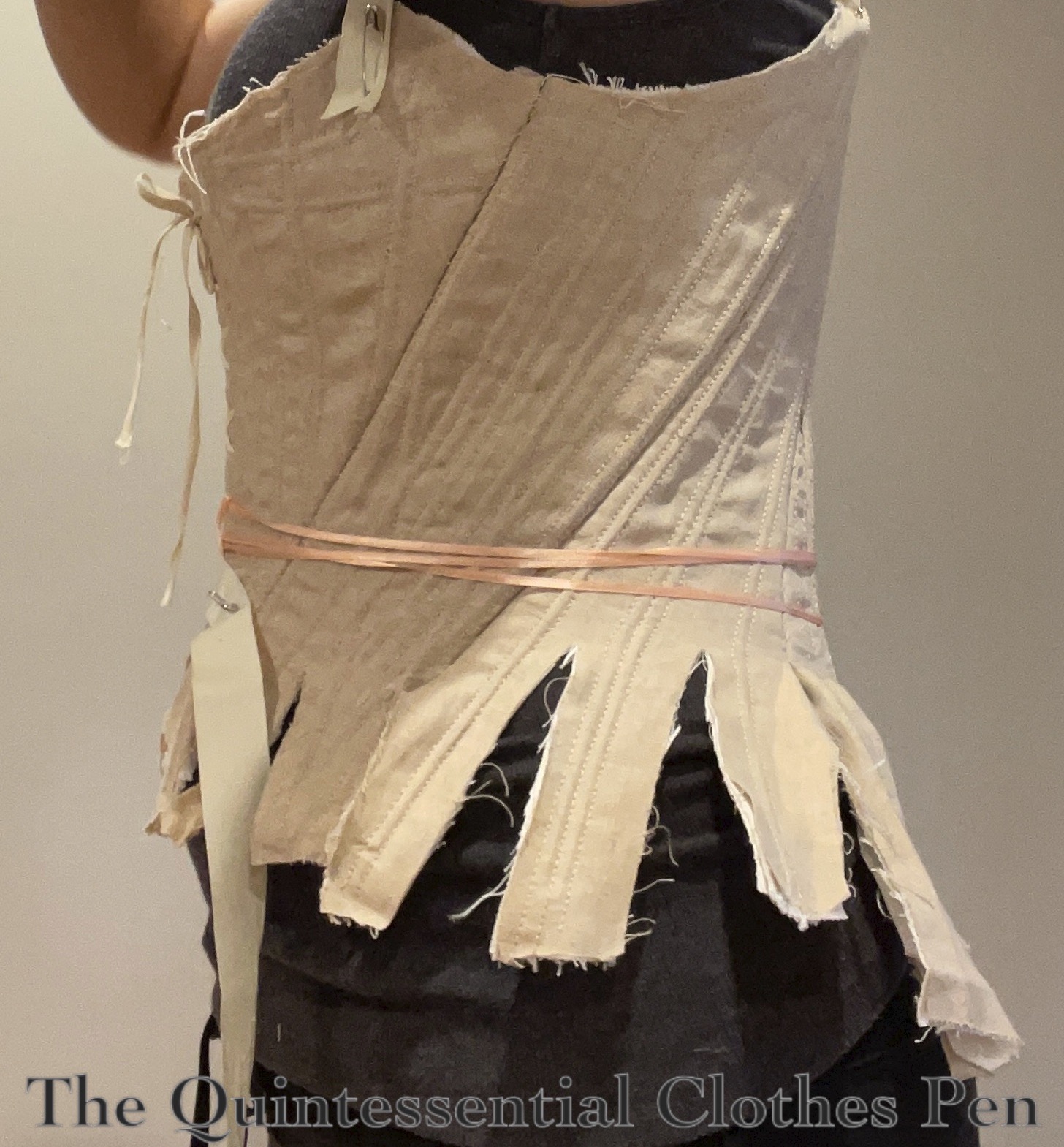
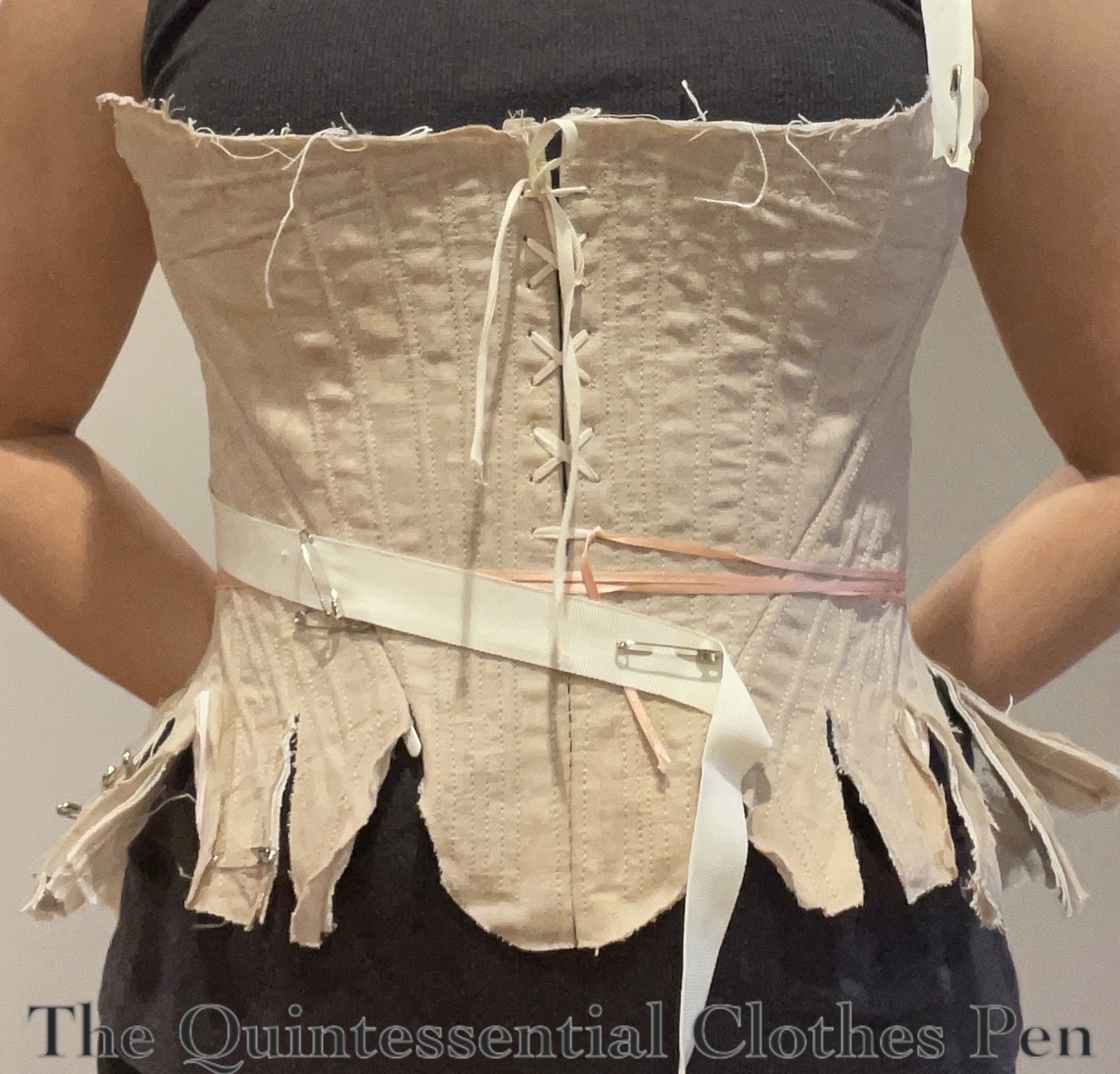
In March 2022, I had another fitting on the pair of stays I started posting about recently. I tried a few different things and some seemed to work. It gave me hope!

I decided to add tape straps to these stays, partly to help counteract the back pulling away from my shoulder blades and slouching in towards center. This method of straps comes this pair of stays at the McCord Museum (accession number M969X.26), which is dated 1785-1790.

The idea has intrigued me for awhile and specifically appeals for this project because I didn’t like the fit and feel of the attached fabric straps and had already cannibalized them to make gussets, anyway.

Adding the tape helped the stays feel better, but the gussets were still a problem. I decided to move the gussets up higher by about 3″. I didn’t have quite enough fabric length to do that but I decided to piece on additional sections at the bottom. Piecing is completely period and seemed like a better idea than not having stays that I could wear!

Additionally, I maxed out the seam allowance on both sides of the gussets and the abutting pieces. I’m hoping those things will help narrow the back gap. I’ll also add a new boning channel in the gusset.

In terms of fit, the side view actually isn’t bad with the added strap!

The tape shoulder straps wrap across the back and then will hook in the front. For the fitting the test strap is just safety pinned. Other pins are marking where the strap hits as well as the finished length of the tabs.

After this fitting, the to do list includes:

  • resetting/piecing the gussets and adding boning channels and boning to them
  • whipping the edges of the stays in preparation for binding them
  • binding the edges of the stays
  • adding the tape straps for a final fitting

I’ve been very busy, so those things are moving along quite slowly. I did update the gussets and start whipping the edges, so there is some progress.

That’s all for now. Next post, I’m going to go back to the early construction details of these stays.

c. 1785 Stays (Of Fail), Part I: Beginnings

The Beginnings, The Abbreviated Version

The very late 18th century (1780s and 1790s) is a mostly new period for me. I have a chemise… but no other underclothes that fit, no dresses, and quite likely no accessories… I’m starting mostly from scratch! And as one does (or at least as I do) when faced with a new period, I decided to make completely hand sewn stays as the foundation. That was in 2018!

I thought I had a grand plan. I was so excited about my stays! I tried a new way of patterning, tried a new method of stiffening my fabric, sewed oodles of boning channels by hand, shoved bones into all the channels that were just a little too tight, put in my eyelets by hand… And I documented all of it to share it here.

Catching Up To The Current State Of Things

Then in mid-2021, I did a fitting… and realized that I was really unhappy with the stays. Really unhappy. Mostly due to the fit.

The stays pushed my tummy downwards so it rounded out underneath the front point and tabs, but, even worse, the back pushed down on my lower back and was super uncomfortable! AHHHHH! After all that time spent hand sewing! And it’s not like I jumped right in to hand sewing stays without mockups and thinking that the pattern fit. No, I’d done those steps and hadn’t noticed anything wrong! GRRRR.

My immediate reaction was to put the project away. I just couldn’t bear it. After I calmed down (weeks later, mind you!), I tried to see what I could do to fix the issues. I decided to add a gusset into the back, since the pressure seemed partly to come from the bottom of the lacing gap being quite wide. I had only very small scraps left, so the only way to do this was to cannibalize my straps (which is fine, because I wasn’t super keen on them restricting my shoulders, anyway).

Here’s a photo of the back of the stays with the triangular gusset already added (and some other things that I’ll talk about later). The gap at the bottom was even wider before I added the gussets!

Fast forward a bit more and I had another fitting. The gusset helped a little, but I still had pressure on my lower back. And… the front problem, I realized, was due to a combination of the front being too short for my frame and this idea I had to use ⅛” bones, to mimic the size of originals…

I’ve had success with plastic zip ties as bones, so I thought I could use narrow ones to create the width I was looking for (I used these, purchased on Amazon). Unfortunately, they were very tight in the channels. It took a lot out of my wrists to cut and push in all the bones. The width of the zip ties looks great, but they’re too flimsy. Look how much I can bend back the front tab!

After much deliberation that included going back to look at the original that the pattern I used is based off of, and the reproduction made from it that is in the book I used, I realized that the original stays are just really short in the front. AHHHHH! (More about the book I used will be coming in a future post.)

I didn’t process this earlier, in any of my fittings, or my mockup, or my patterning, or my looking at the book! And I’m incredibly low on fabric! Below are my scraps, minus the long ones in the center, which were already used to face the eyelets.

So… I was left with a half finished pair of stays that took many, many hours to even get to this point–wonderfully sewn in terms of methods, but which I couldn’t wear. I was very upset and put the stays into time-out (again!).

I’ll stop the story of the stays here and continue on with my updates from the most recent fitting next time.