The Happy Clover Dress Gets A New Zipper

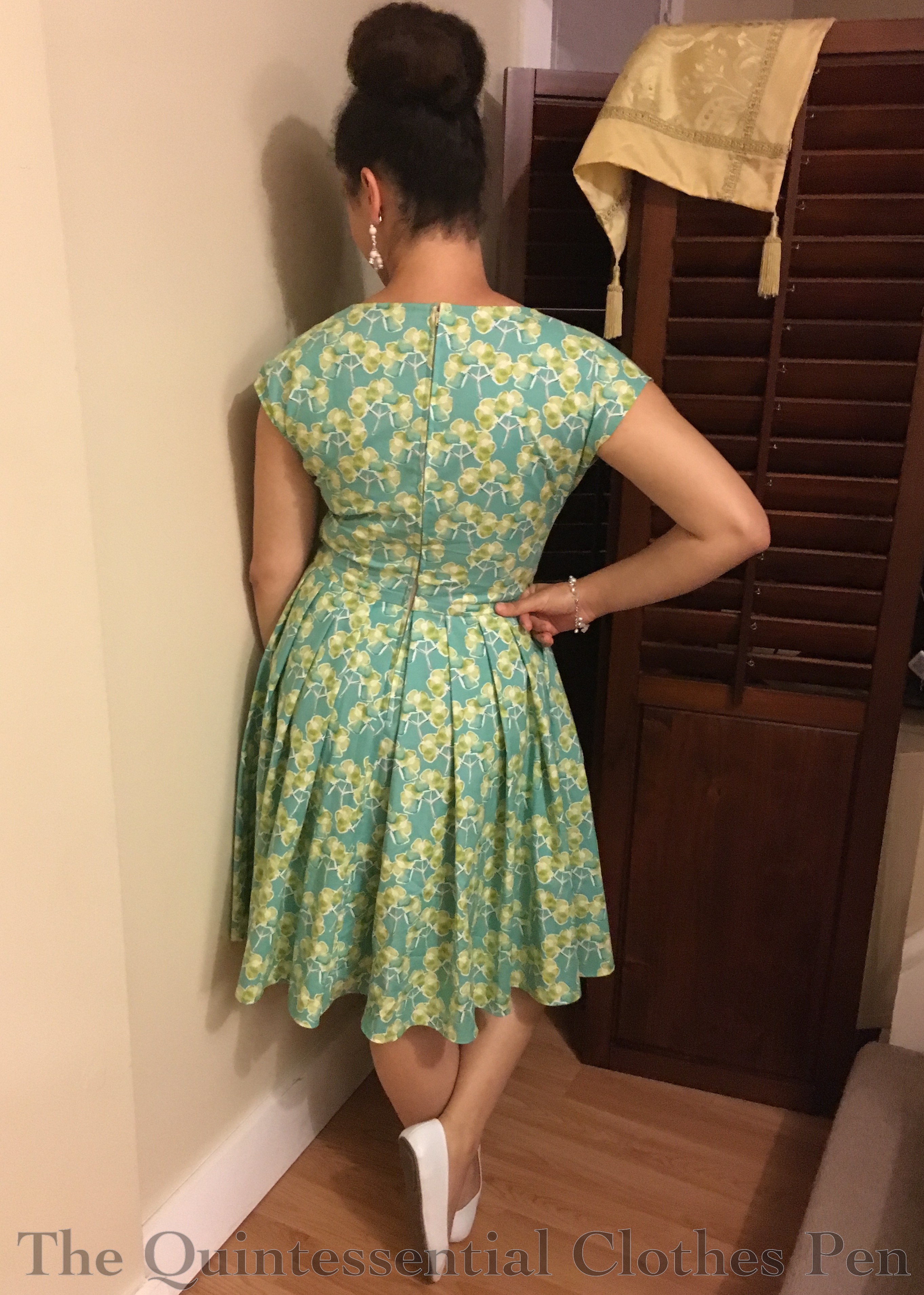
As I was getting dressed in my Happy Clover Dress one day last summer, I was pulling up the zipper… and it broke! I don’t remember exactly how it broke, now that I stop and think about it months later… I think that the pull came off of the teeth, or the pulling part came off of the part that grips the teeth… I don’t remember precisely, but needless to say, it was broken.

Below: the Happy Clover dress with its original zipper.

The original zipper was repurposed from a 1980s dress I took apart to make a 1920s beaded dress back in 2013 (a post about making that 1920s dress, including photos of the 1980s dress before I took it apart, can be seen here).

With the broken zipper, the dress wasn’t wearable! So on the day that is broke, I changed my outfit and put the Happy Clover Dress in the to-be-mended pile. Not long after that I bought a new YKK zipper in matching shade of teal. And then… the dress and zipper sat there for about 9 months…

Fast forward to May of this year and I was really tired of looking at my large mending-and-alterations-to-do pile (is that sounding familiar yet?)! I want to get back to sewing some of my larger projects and am craving both the physical space and mental release of completing the mends and alterations in order to do that.

So… that led me to finally put the new zipper into the dress!

Yes, the zipper is in! Just as before, it is centered and topstitched. This is due mostly to the fact that the zipper nestles under pleats in the back skirt, which means that it has to be sewn in two sections–the bodice section and the skirt section–to keep the pleats form being sewn down with the zipper.

You can see that in the photo above and you can also barely make out my extra backstitching where those two sections of stitching meet in the photo below.

Here’s a closer photo of the fun teal color of the new zipper!

And that’s it! Just in time for warm weather, the Happy Clover Dress is back in action! Yay!

Another Round Of Dotty Tap Pants

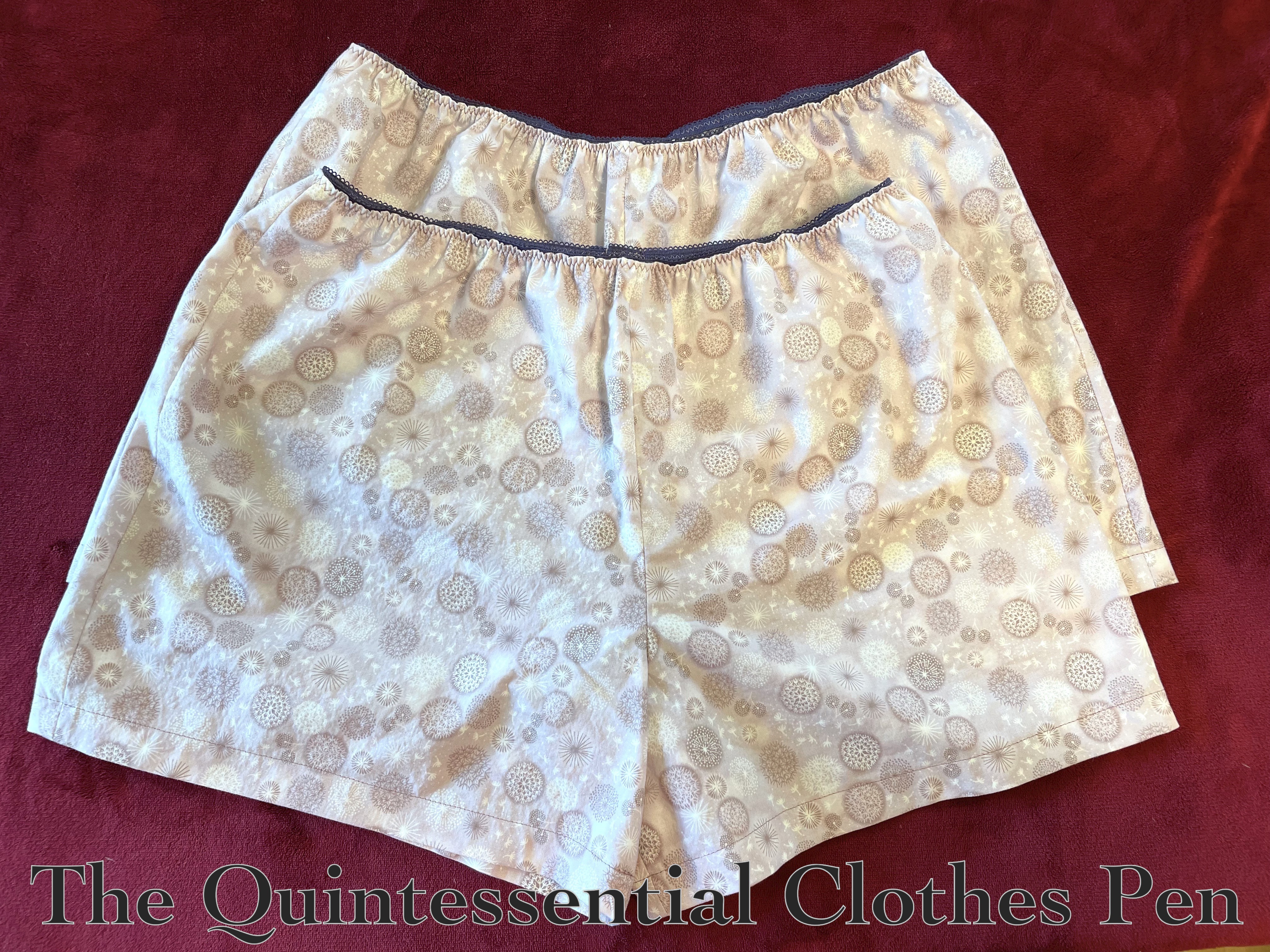
The last batch of cotton print shorts I made to wear during hot summer weather was completed in 2020 (I wrote about them in this past post). I get lots of use out of these garments and some old ones are starting to wear out, so it seemed it was time to create some more!

All of the shorts I’ve made along these lines have had circular or dot motifs and when I went fabric searching for this batch I kept that theme in mind. It’s also important for the shorts to be light-ish in color, so that I can wear them under dresses of any color! Those two goals are both met with the light purple allium (or dandelion, if you like) print fabric I used.

For comparison, here are purple allium flowers! I love the round shape the little blossoms create. It brings me joy. (Striking and unique allium exist in a variety of sizes and colors, including some that grow to be about 3 feet high with 6 inch diameter flower clusters!)

As with the previous batch of shorts, the fabric for these was purchased and washed months ago, in September. Then, the fabric sat on my pile of small-things-to-do near my sewing machine. I recently found the oomph needed to tackle the pile-of-small-things and completed the new shorts, along with a host of other small mends and alterations!

These are entirely machine sewn with the the seam allowances finished with an overlock machine. The waist is zig zagged to a bit of loop edged elastic. And really, that’s all there is to them! Two pairs!

I’m super pleased to have them off my to-do pile and ready to wear for the summer. I’m also super pleased to have completed a task that was on my official maybe-to-do list for this year!

An Elegant Outing For My 1950 Baroness Dress

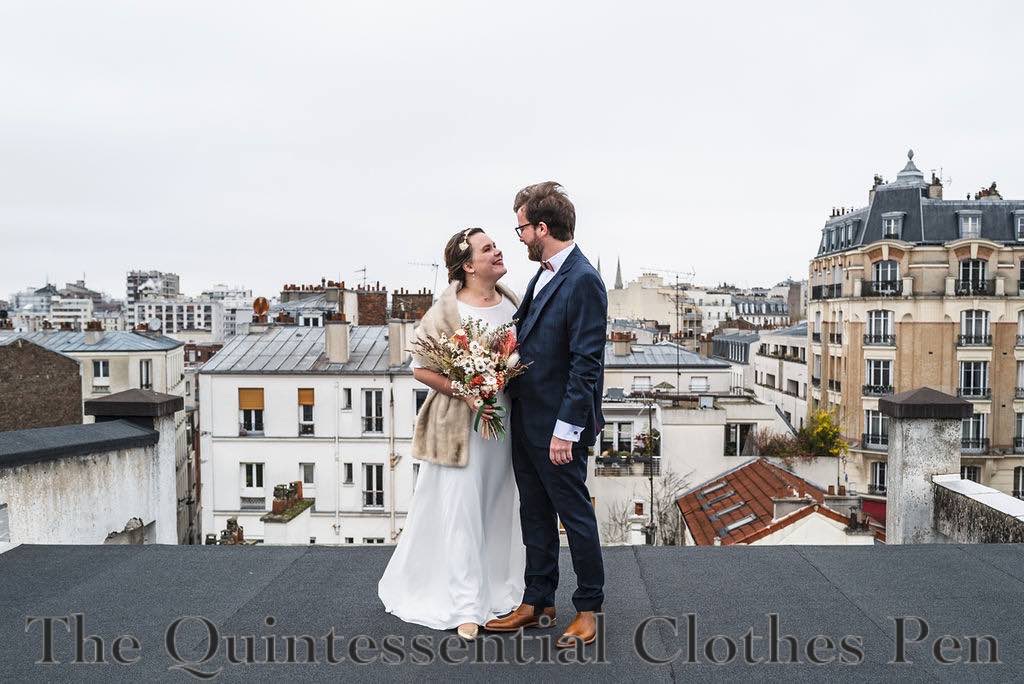
An elegant outing… to my cherished, oldest (as in, we’ve been friends since we were 5 years old) friend’s vintage-themed wedding in 2022. I’m slow at posting about it!

This is the sort of friend for whom I would have dropped everything for to be present at her wedding. And, I was!

She chose a lovely space built in the 1920s, with a view overlooking Paris, and requested that it would be great if I wore one of my historical dresses. I decided not to stick exactly with the 1920s theme and chose my 1950s Baroness Dress (first posted about in 2014… that seems like ages ago!) instead.

Honestly, the fabulous red Baroness dress gets worn quite a bit, for all sorts of vintage and modern semi-formal events. I love the dramatic color and unusual details that would be difficult to find in a store-bought dress. (And, while I knew it wasn’t a 1920s dress, no one else did! It had sufficient vintage charm, regardless.)

For this wedding, and other occasions where I’ve worn this dress, I chose to wear my silver American Duchess Seabury shoes. For jewelry, I figured the red dress was statement making enough and decided on small dangle crystal earrings.

Both my friend and her husband love silliness and fun, which led to decisions for their photos (see below) as well as for their wedding. They mixed French and American guests and traditions in a charming way, creating a lovely wedding and reception full of personal touches. I was so grateful to be able to celebrate with them in person!

This friend was my maid of honor in 2015, and she and her now-husband were inspired by my unique wedding choices as they planned their celebration. I appreciated being able to return the favor of being supported at my wedding by supporting them at theirs!

It’s funny to me that on both occasions I’m wearing a halter dress style and my friend is wearing an illusion bodice dress style. I guess we both have styles we feel are flattering to us!

Ravenclaw Quidditch Sweater

This project is an old one that I’ve been meaning to get up on the blog for ages!

I finished this project a ‘few’ years ago, in approximately 2016. It has taken me that long to finally get photos and write about it!

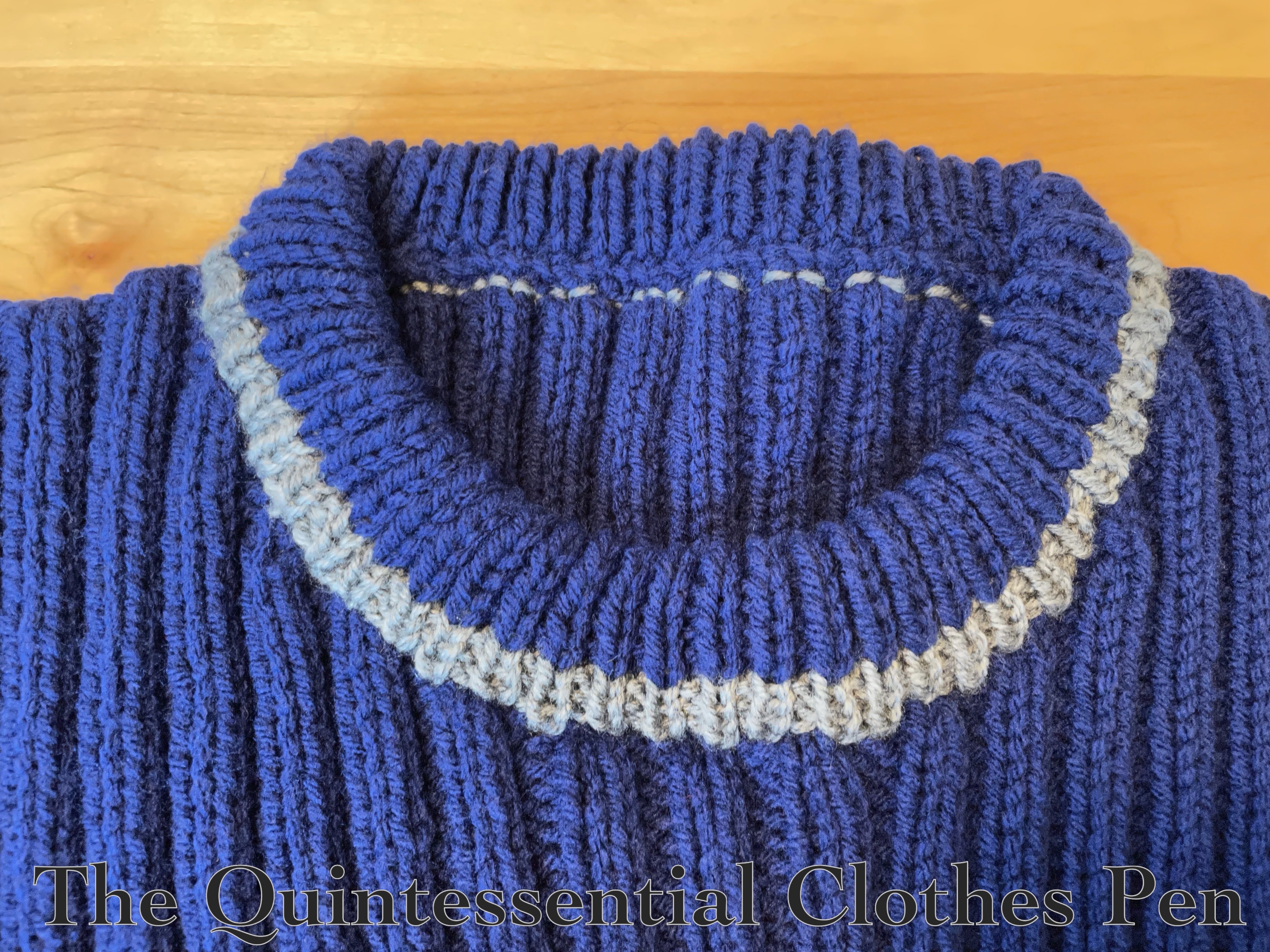
I was inspired by the book Charmed Knits: Projects For Fans Of Harry Potter by Alison Hansel. I used the Quidditch Sweater pattern and chose Ravenclaw colors for my version. (I know, I know, Ravenclaw is only blue and silver in the movies, not the books. But these were the colors of yarn I had on hand, so therefore they are the colors that were used.)

The completed sweater is a bit bulky and very warm, as I used acrylic craft yarn because I had them on hand. The shoulders, especially, remind me a bit of football padding! But for the occasional wear in the middle of winter the shape isn’t too bad.

I had fun making the overall ribbed pattern, as well as the ribbed collar and cuffs. I’m very pleased with how nicely the colors transition.

Same with the collar!

I’m also pleased with how successfully the ribbing changes at the cuffs.

I spent 55 1/4 hours knitting this project over the course of about three months. The front and back each took about 14 hours and each sleeve about 13 hours.

Plum Pants Photo Shoot

When I made my vintage-inspired Plum Pants With Pointed Pockets in 2020, I didn’t have a great opportunity to get photos of them right away. I made do with photos taken in my yard, with my phone balanced on my lawn mower in lieu of a tripod!

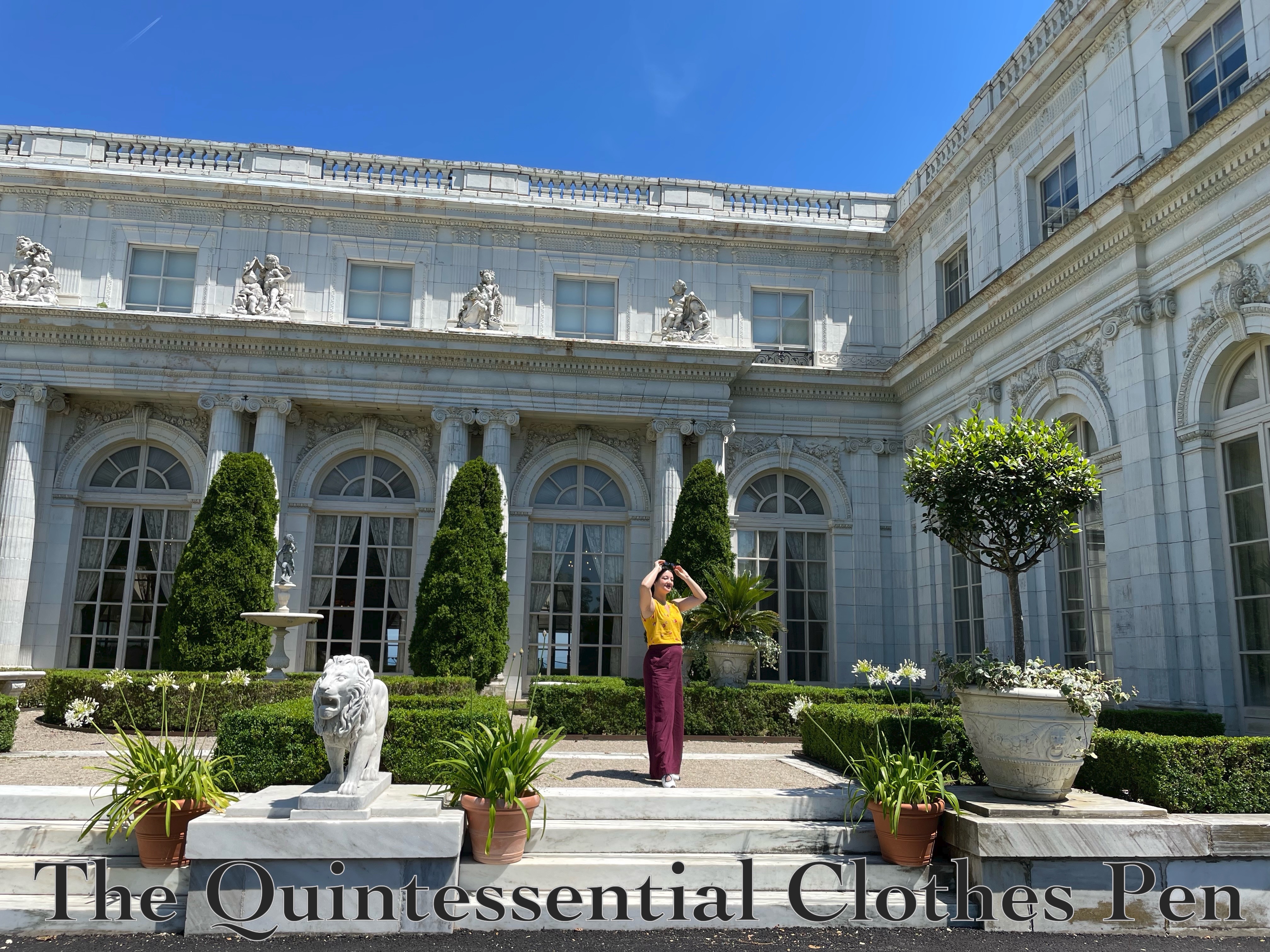
Since then, I’ve worn them relatively often in warm months for ‘real’ life and historical events. I thought I would intentionally wear them for the GBVS Newport Weekend in 2022 because of their comfortable nature but also in order to get pictures of them in fabulous places that have far more glamour than my backyard!

The opportunity presented itself on the grounds of Rosecliff. The grand windows and patio with the lion statue were too much not to pass up!

Accordingly, there is a whole serious of photos showing off the wide legs of pants in the bright summer sunlight.

I can’t decide which pose is my favorite! I do like the ones where the points of the pockets are in the sun rather than the shade, such that you can see them. But some of the photos with the points in the shade have such great attitude!

The side of Rosecliff is beautiful as well, in terms of architectural details and gardens. It was also a lovely place to get photos.

And a closer view with the sun highlighting the pocket points.

Thanks for enjoying this summer-y photo shoot with me!

Homemade Slippers

Months ago, I had a conversation with Kelly, author of the blog Seam Racer, about making one’s own slippers. Based on that, I was inspired to try making a pair for myself.

It can get awfully cold in the winter and I felt that an insulated bit of polar fleece for my feet would be toasty and pleasant.

There were a few things I knew I wanted to incorporate into my homemade slippers.

1- I like bootie shaped slippers in the winter because they insulate even more of the foot than a regular shoe shape.
2- Polar fleece has the possibility of being quite slippery on wood floors, so I wanted to use a different material on the bottom to have better grip.
3- My feet like extra squish under them on the wood floors, so a plush insole would be helpful.

I used scraps from old projects to achieve all of these goals, including polar fleece, leather, and quilted velvet.

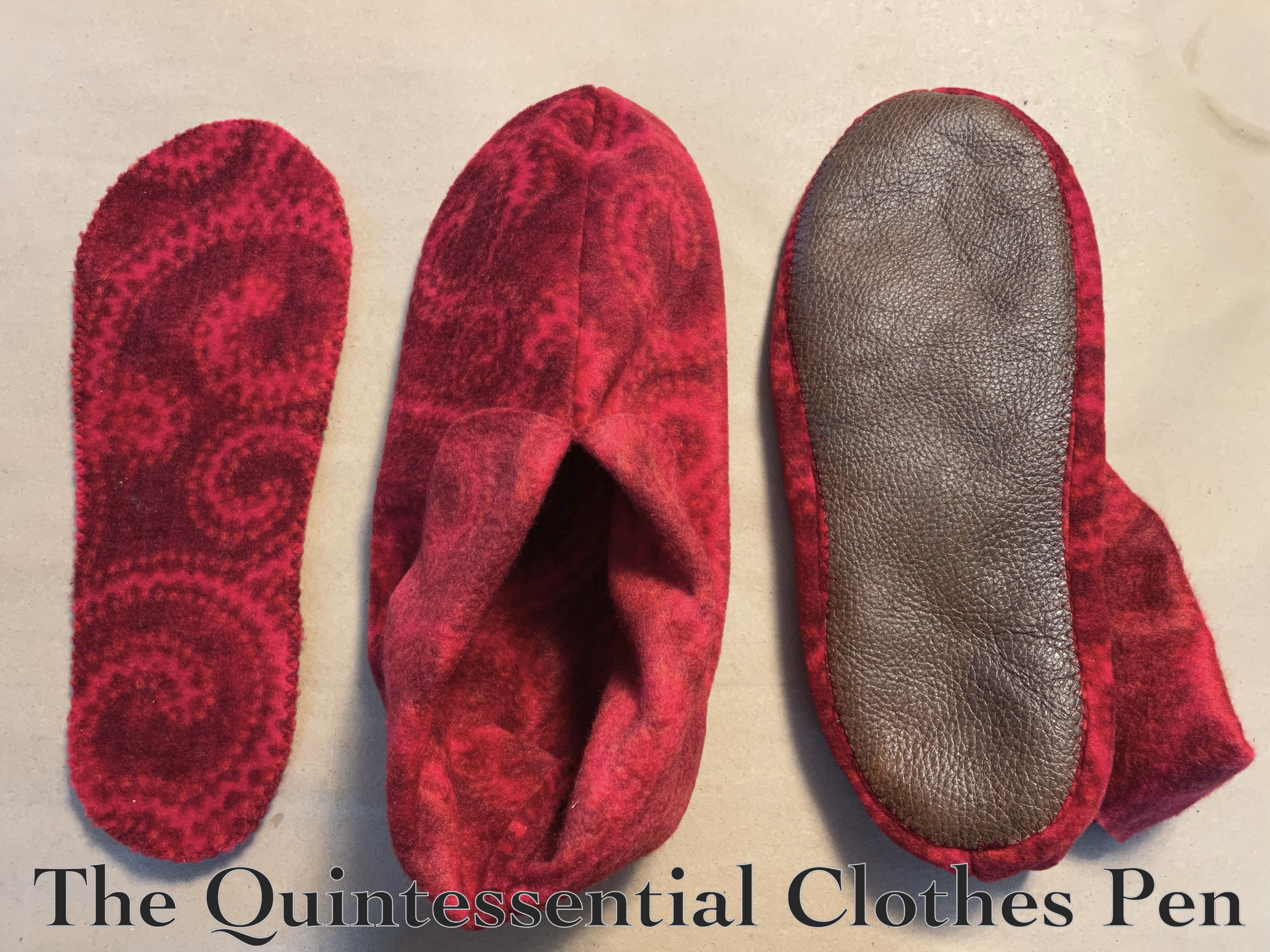
To start, I draped a basic pattern. There are two pieces for each foot that are the shape on the left, and then there are soles shaped like the center piece.

I sewed the back and front seams of the uppers up to where the cuff would fold down (already done in the photo above). The top part of the cuff was sewn with the seam allowance the other way, so that it would hide when the cuff was turned down (that’s what’s pinned in the photo above).

I also zigzagged my leather sole to the fleece insole. The sole was then machine sewn around the edge to the assembled upper section (also in the photo above).

Then the whole thing was turned inside out… producing boots (as in the photo below)! I also made an additional double layer fleece insole to add squish. I thought the texture of the polar fleece would be sticky enough to keep them in place, but they just scrunched up under my feet while I walked, which was neither helpful or comfortable. And, even when they stayed in place they weren’t quite squishy enough for my taste.

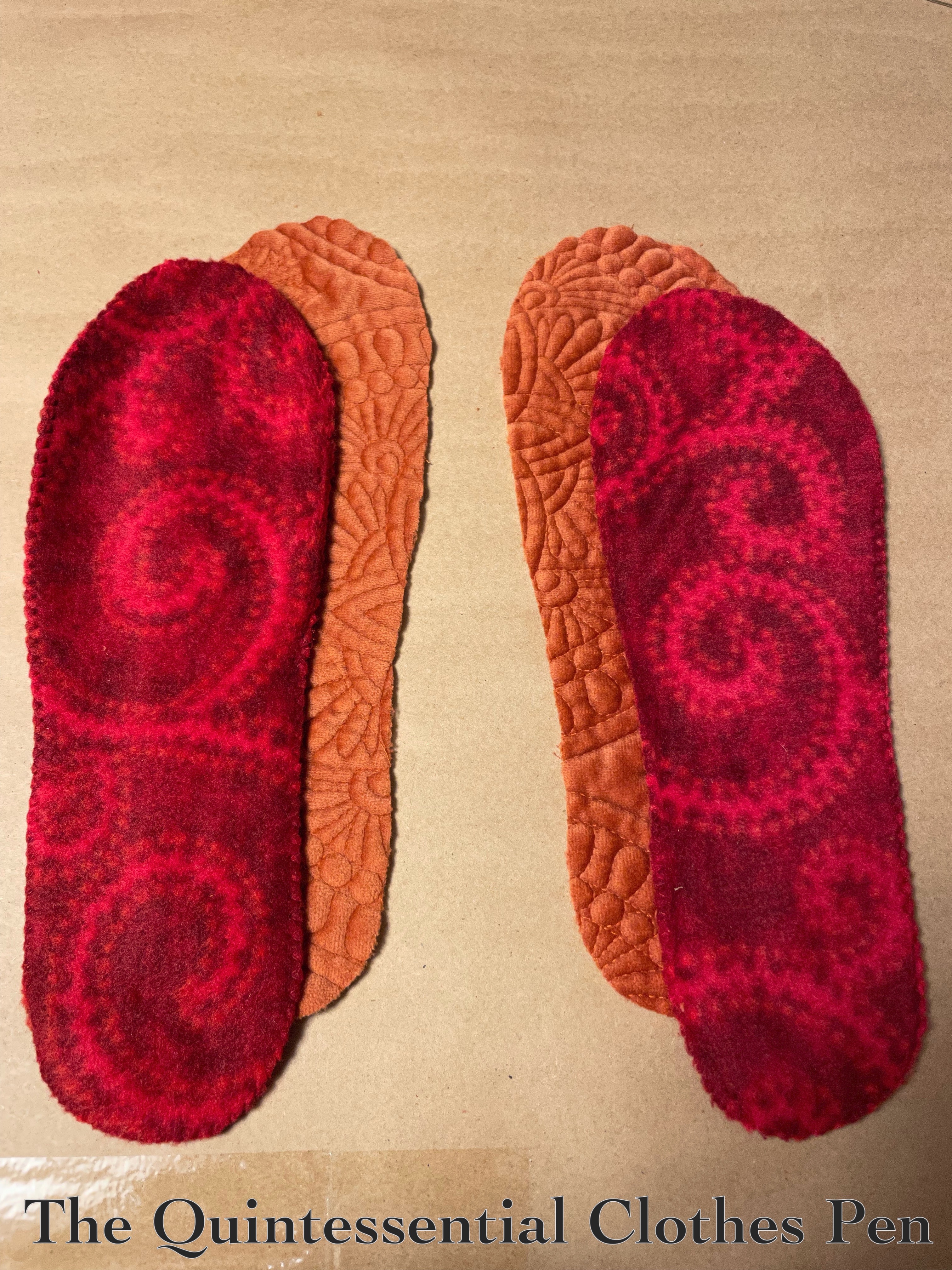
To fix this, I first decided to add a quilted layer to the insoles. I used scraps of quilted velvet leftover from a decor project. I only had about ⅛ of a yard leftover, so this was a great use for the scraps.

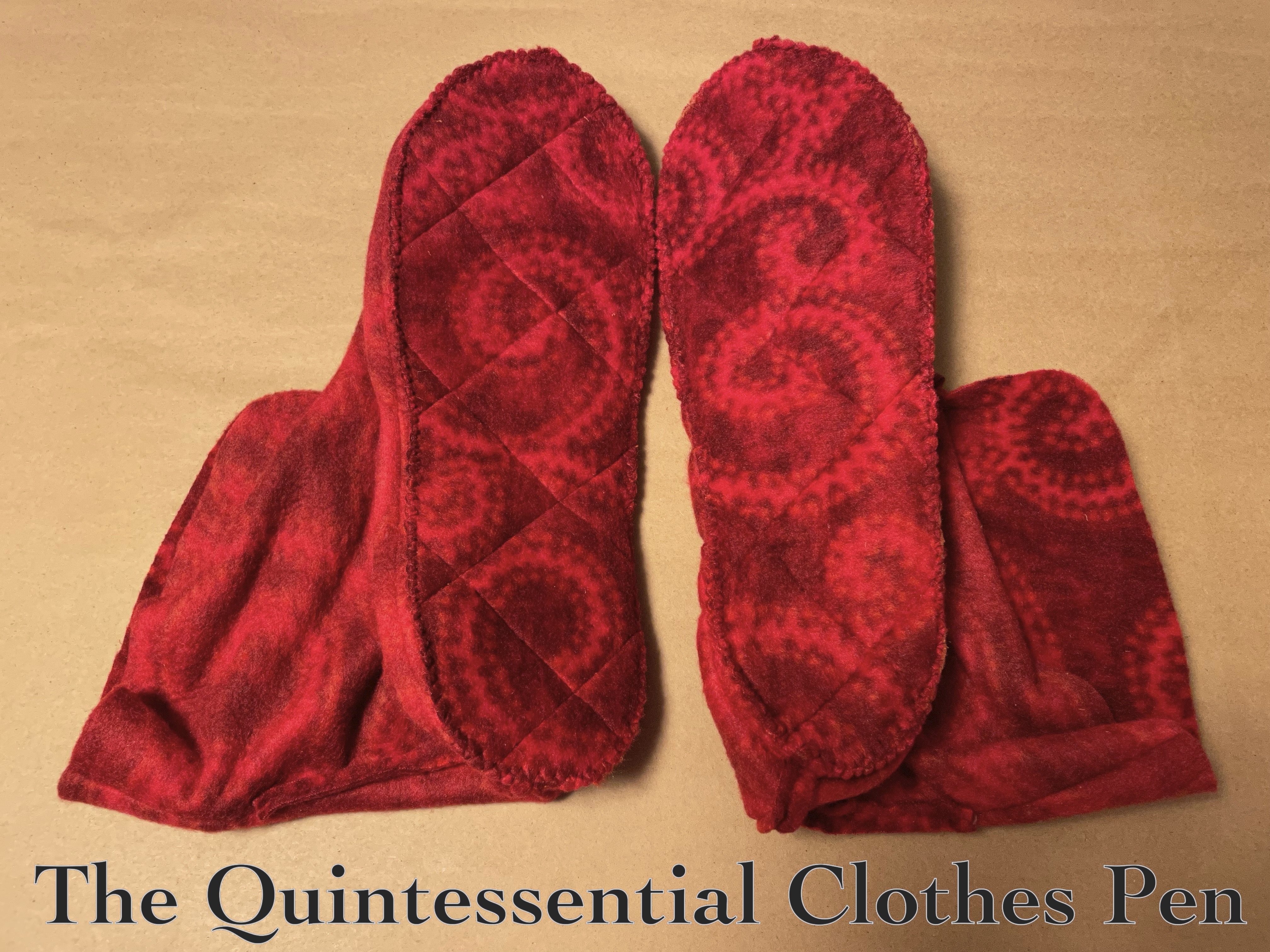
I machine quilted the quilted velvet to my fleece insoles. Then, I zigzagged the new-and-improved insoles to the seam allowance of the boots to keep them in place. Below is an inside view.

And now I have finished fleece slipper booties, with squish!

New Grey Sweatpants

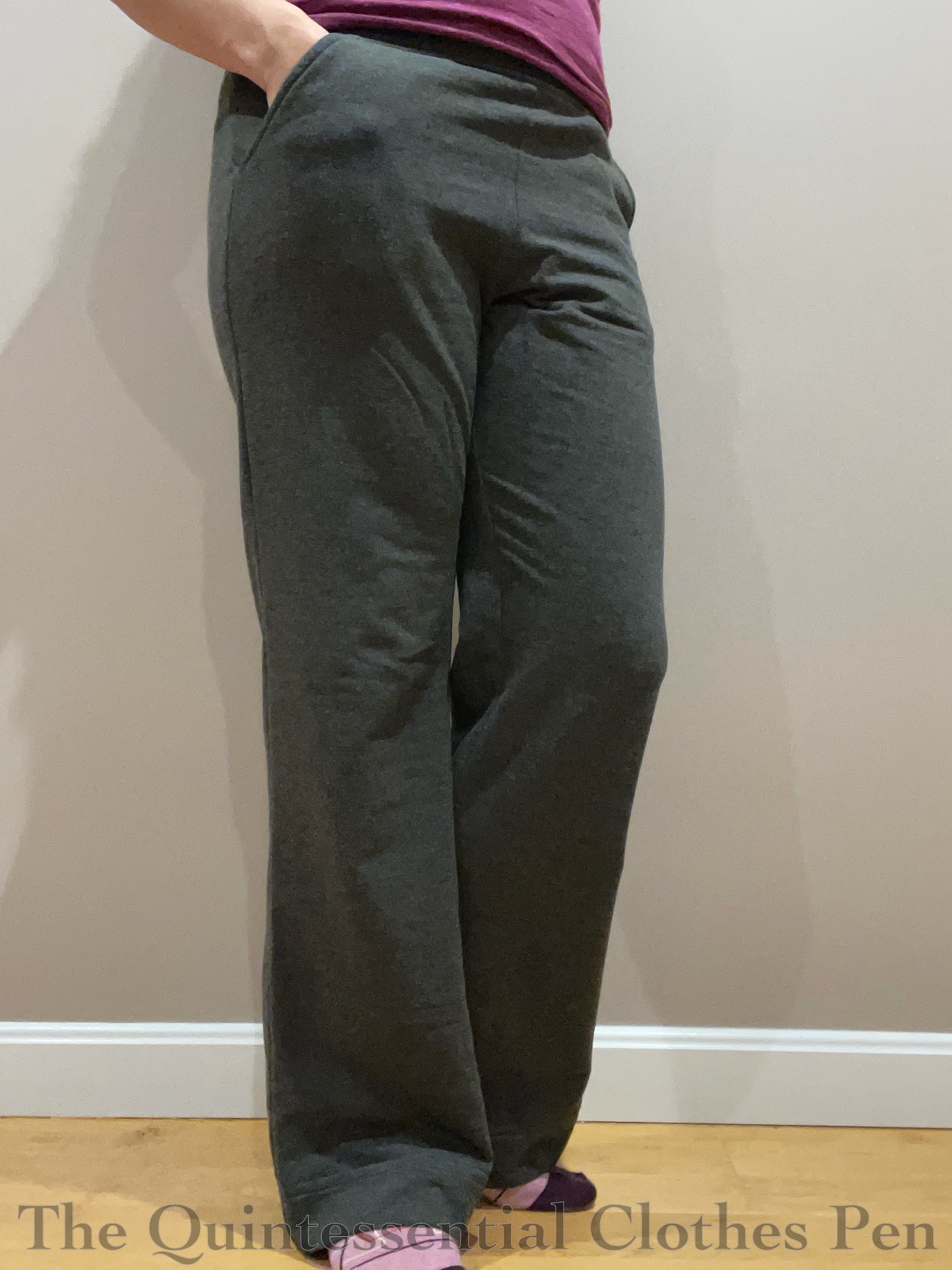
I made a pair of sweatpants! It isn’t the most fancy project, but I’m quite pleased with them because they are a re-creation of a very loved pair that I’ve had for about 20 years.

After looking for replacement pants with a similar cut for years (and coming up with nothing), I decided to take advantage of Blackbird Fabrics restocking their Bamboo/Cotton Stretch Fleece and try making my own! I’d already taken a pattern from the old pair, so there wasn’t much to do except cut out and sew the wonderfully soft fabric I’d purchased.

I didn’t track how long taking the pattern took, but I did track the construction: these new pants took just 2.5 hours–a short project by my usual historical dress standards! I used 1 ¼ yards of the Bamboo/Cotton Stretch Fleece and ½ yard of Bamboo/Cotton 2 x 2 Ribbing in matching grey, also from Blackbird Fabrics.

I reproduced all of the details from the original, including the pockets, wide hems, and wide elastic encased in the waistband.

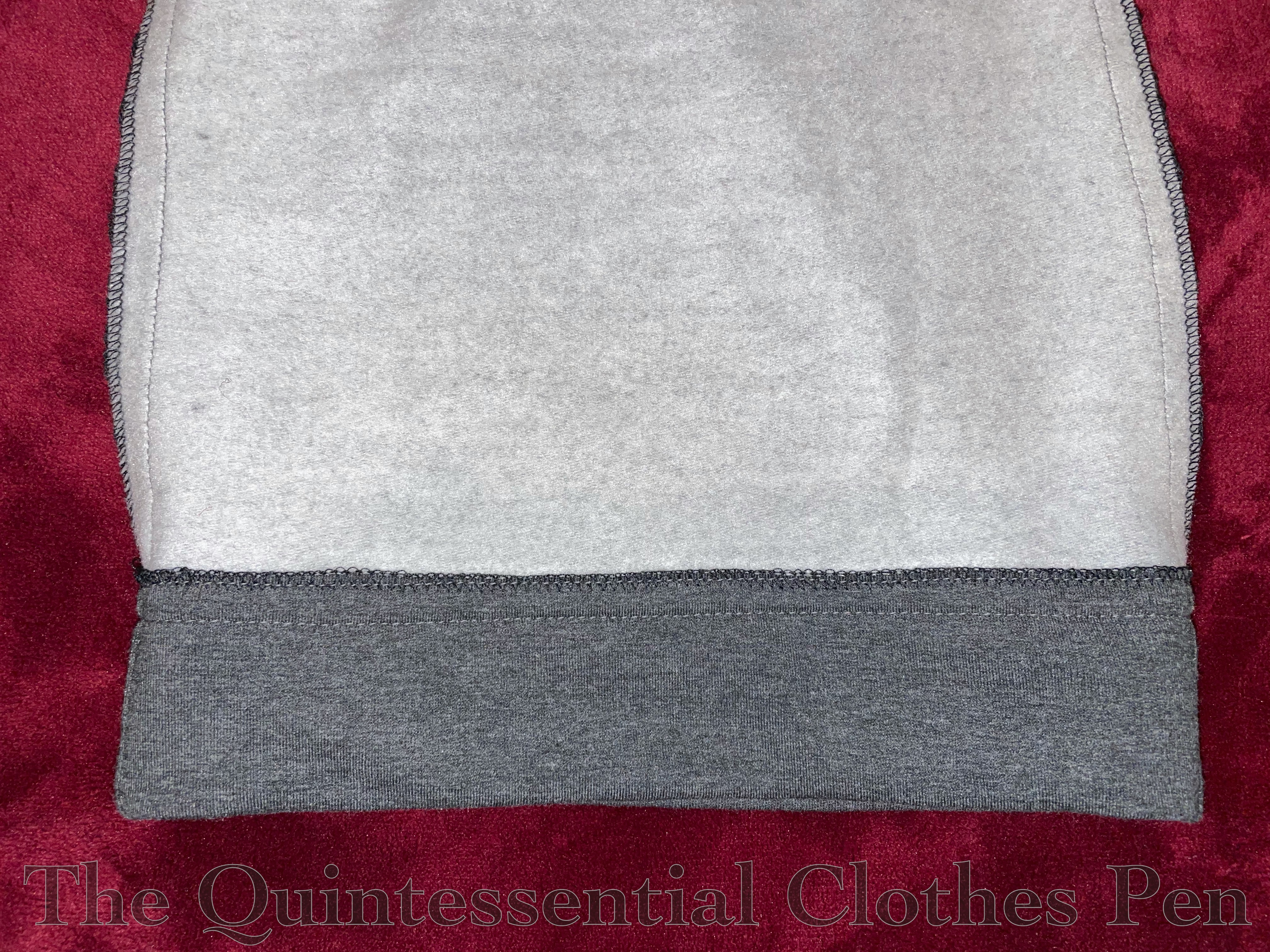
First, a look at the wide hem from the exterior and interior. I stitched twice, to replicate the look of a twin needle stitched hem.

Next, a look at the wide waistband and the western style pocket. You can also see some of the topstitching that I replicated from the original pants.

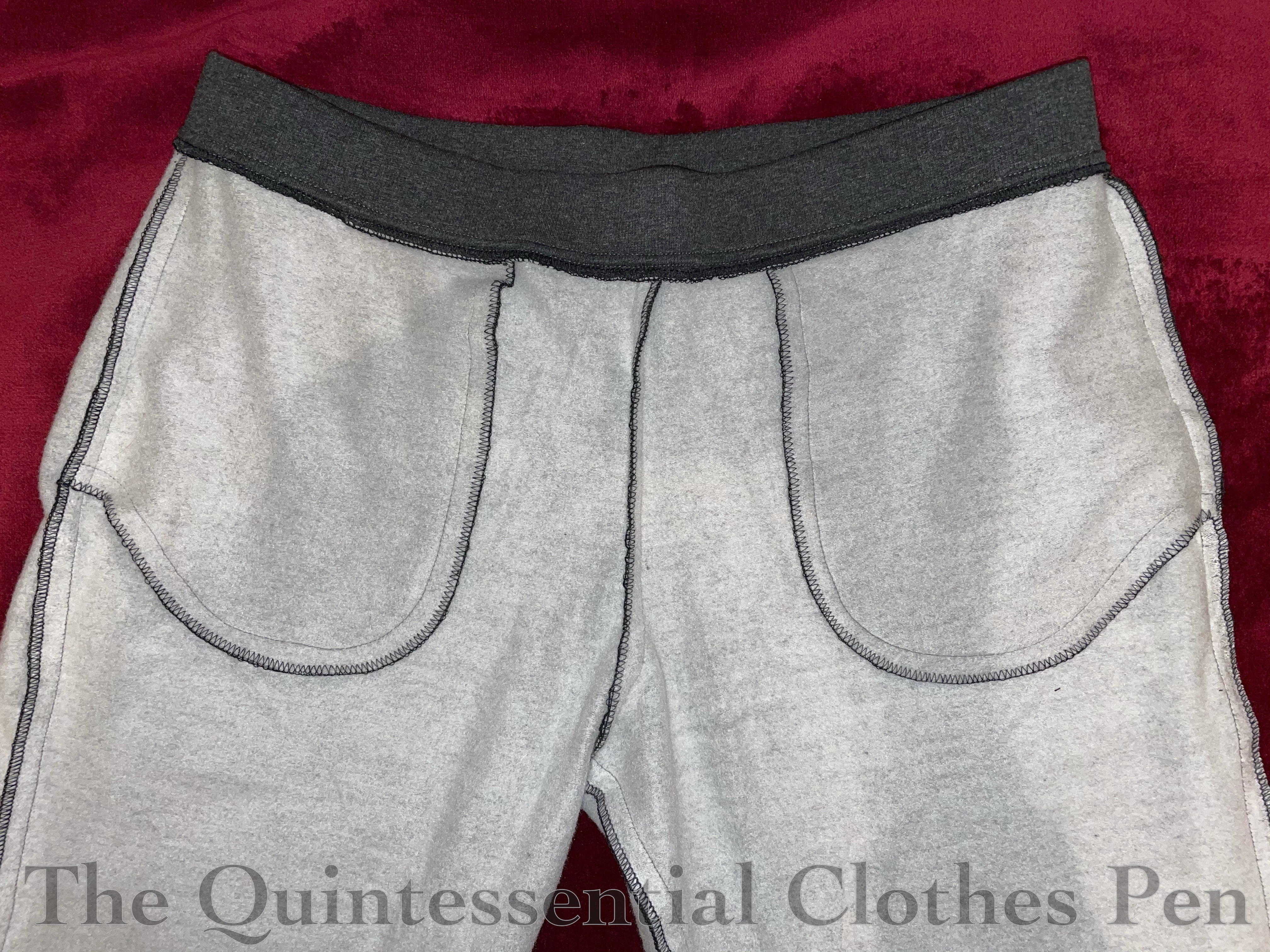
Here is the inside of the pants, showing the yummy new fleece interior (so soft!) and the nicely serged edges.

The only thing I left out was a drawstring, because I didn’t have an easy way to make small metal eyelets in my new pants and I didn’t have a matching drawstring, either. This means the waist can’t be cinched in quite like the old pair needed to be (earlier in their life when I was skinnier and later in their life when they were super stretched out and old), but they stay up pretty well. The next pair might get a smaller elastic…

And yes, there will be another pair! After these were so successful I decided to buy fabrics for a second pair (again from Blackbird Fabrics), this time in dusty pink.

Vintage Inspired Black Wool ¾ Circle Skirt

I’ve found it so easy to make wool circle skirts to fill out my wardrobe with warm, vintage inspired styles. I started with the brown wool ¾ circle skirt I posted about in 2017. Last year, I posted about the burgundy wool ½ circle skirt I made. In between those, in the first months of 2019, I decided to add a black ¾ circle skirt. It’s a great basic!

It really is basic: a ¾ circle skirt with side seams and a center back seam.

I used 1 ¾ yards of 60″ wide wool, a scrap of interfacing, thread, a zipper, and a few yards of hug snug for the hem. The total materials cost was about $33.

The side seams allowed for the easy addition of pockets! Here are my pockets ready to be set in. They’re made from the black wool and have serged seam allowances to keep everything tidy.

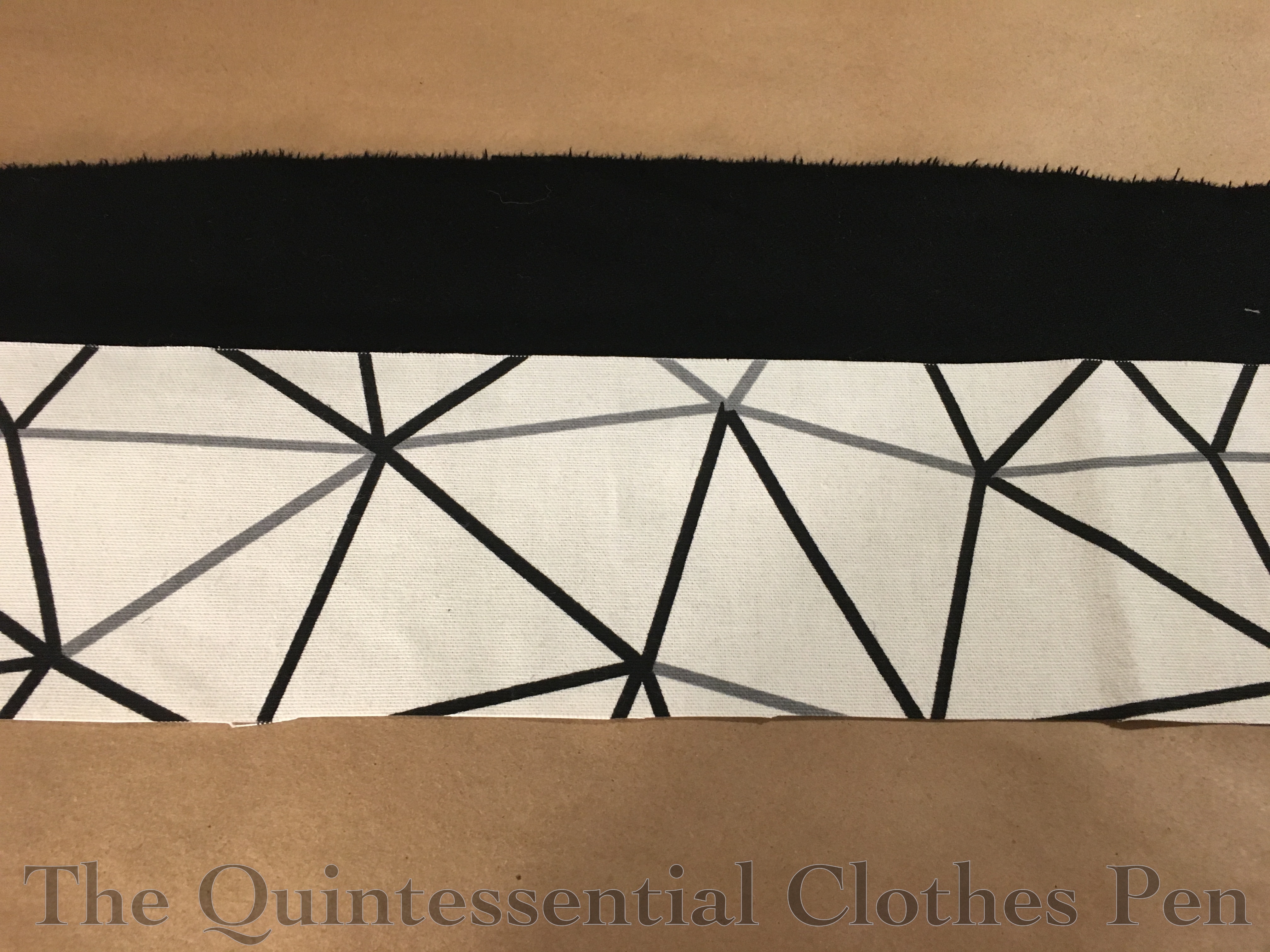
The main circle part of the skirt is set into a basic rectangle waistband. The waistband is interfaced with a strip of upholstery canvas to keep it from crumpling while being worn. Because my wool fabric is opaque I used this random geometric scrap for the interfacing.

The waistband closes at the back with a button and buttonhole above a lapped zipper. The geometric interfacing was showing when I cut my buttonhole open (top photo, below), which just wouldn’t do! To fix it, I used a black sharpie to darken the white threads that were showing (bottom photo, below). It worked like a charm!

Here’s a back view of the skirt. You can see the zipper lap and also just barely see a pocket opening on the right side.

This skirt is mostly machine sewn with the edges finished with a serger. The waistband is finished by hand. The hem is faced with black hug snug sewn by machine and then hemmed by hand for an invisible finish.

I’ve been wearing this for well over a year, but hadn’t yet found a moment to take photos. This day was perfect, as I was also documenting the completion of my sweater (a post on that will be forthcoming!). Plus, we had the most magical snowy winter woods to take these photos. It felt like Narnia!

How To Make A Gaiter Mask Out Of A T Shirt

I haven’t posted about mask making on the blog. It’s felt as though doing so would sort of confirm the situation of wearing them. Ignorance is bliss, right? Or something?

Last weekend, I was going skiing and finally decided that the masks I’d been using weren’t going to cut it for that activity. Instead, I made new gaiter style ones!

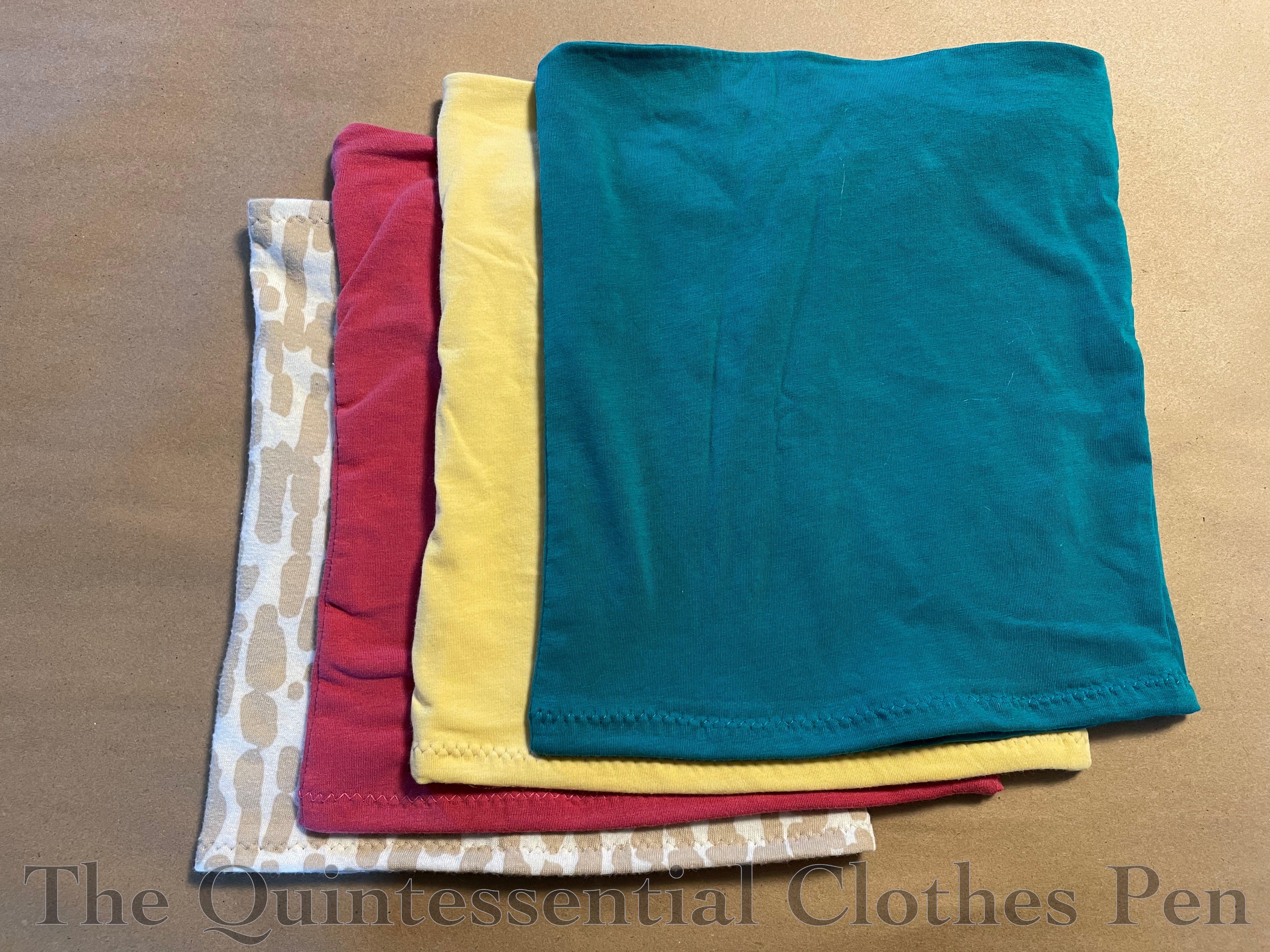
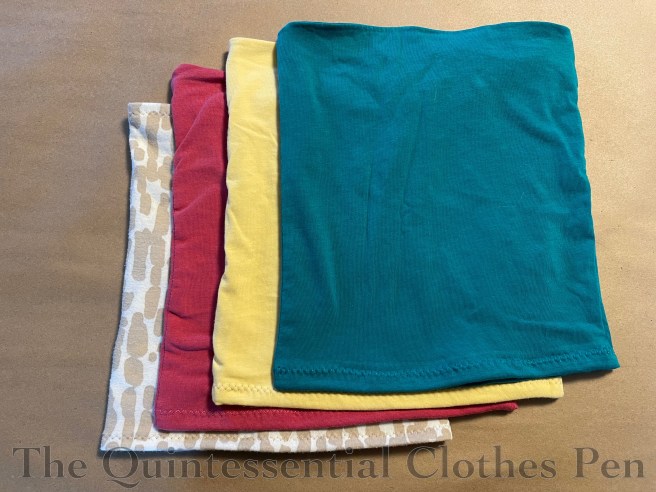
I made my new gaiter masks from old t shirts in the spirit of recycling, extending the use of clothing I already own, and using what I had on hand. I was excited, took photos of my process, and wanted to share them, hence the inspiration for finally sharing about mask making.

Gaiter masks made from old t shirts!
The (Rather Lengthy) Background

I’ve made it through the last 9 months using self-made masks with ties. Here’s a colorful assortment of my masks, made from cotton scraps of old projects, random fat quarters I had in my stash, and old sheets for most of the ties. Recycling again!

I have very few subtle masks… I made enough to wear them every day and still be able to launder them no more than every few weeks. This is only a sampling!

I have a single mask that has elastic (made specifically to match my 1834 yellow dress, because tying a mask on with 1830s hair and a bonnet just did not seem feasible!). My preference for masks with ties come from the fact that I wear glasses most of the time and don’t like the feeling of more things behind my ears. Also, it’s nice that the lower ties can double as a neck cord when needed, such as when I’m driving between errands.

But for skiing, a tie mask with a helmet was just not going to work for me. I don’t even think the ties are long enough to go over a helmet. And ties under the helmet? It would be a pain to adjust, so I wasn’t inclined to do that, either. I’ve seen people wearing the gaiter style masks for months, especially for physical activities, but I don’t like the idea of breathing through polyester and I’ve been stubborn about wearing the masks I had already made.

In my mulling over the idea of a gaiter style mask, I realized I could make my own, to whatever specifications I want! However, I didn’t have fabric yardage easily accessible that was stretchy. But then I had the thought that my donation pile had a number of t shirts that no longer fit… and that recycling them into gaiters would be a wonderful way to keep their life going!

So, without further ado… a tutorial!

The Tutorial

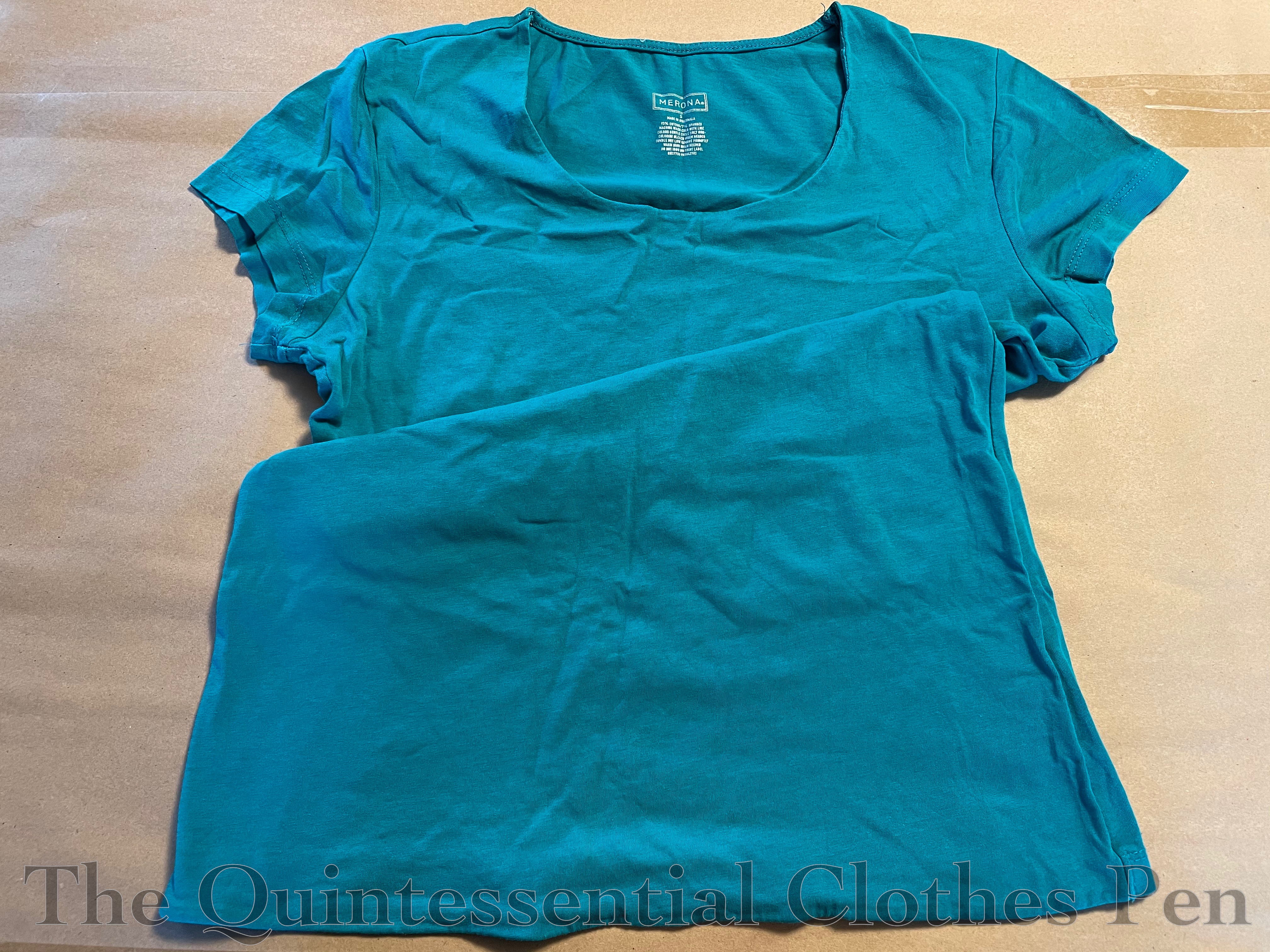
I started by laying one of the old t shirts out on my table. I smoothed out the layers, but didn’t worry too much about it being perfect. It’s a knit that’s been folded for quite awhile, so there were some wrinkles to contend with, as you can see.

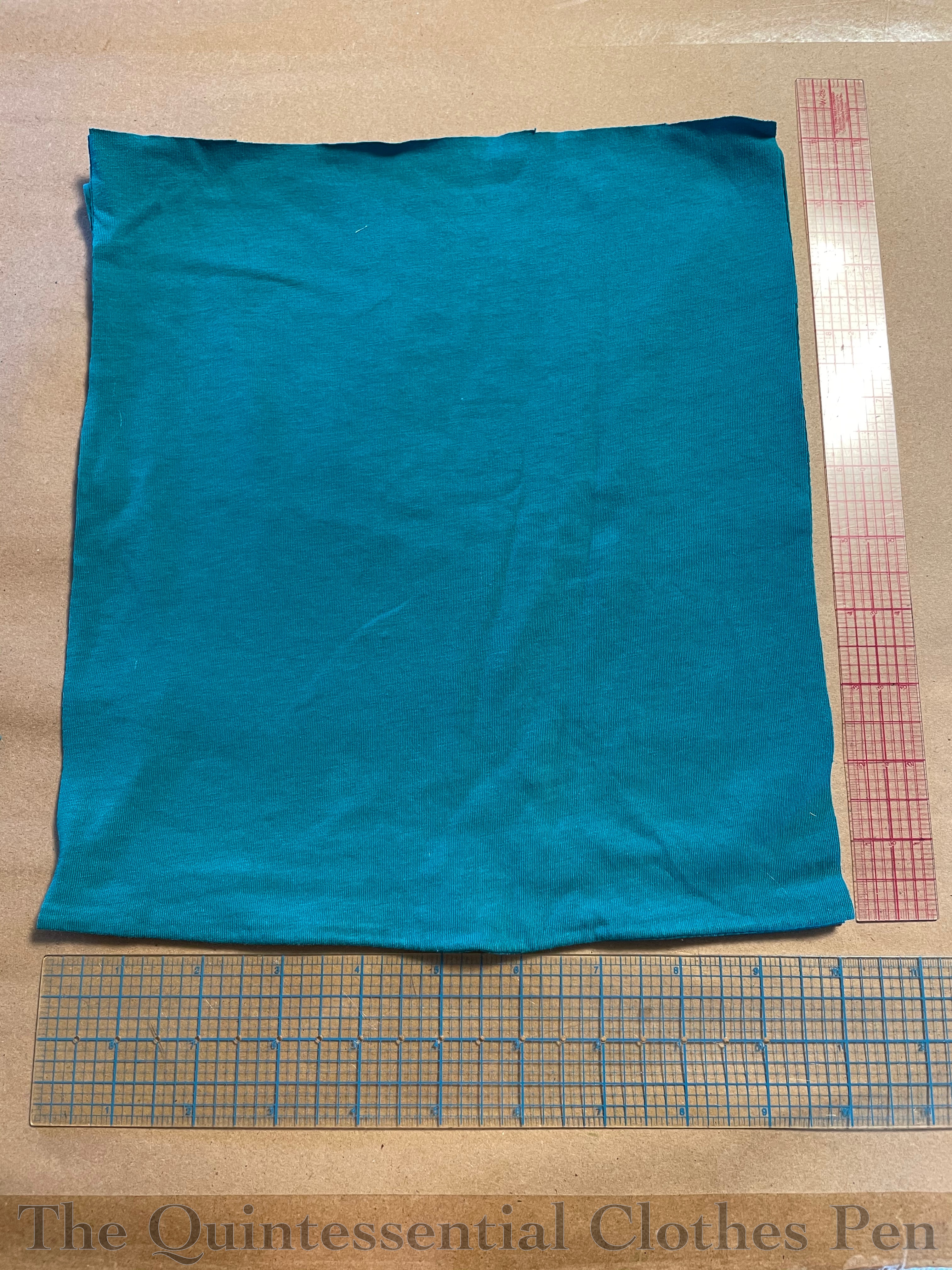
I measured a rectangle 10″ wide by 11″ tall and cut through both layers of the shirt at the same time, leaving me with what you see below, as well as an oddly shaped scrap I’ll keep that and see what other creative uses for it I can come up with! (If you have a small-ish or large-ish head, or a t shirt that is really stretchy or really not-stretchy, you might need to adjust the measurements.)

Finishing the gaiter mask is much faster and easier if the bottom edges of the rectangles use the finished bottom edges of the t shirt as the ‘cut edge’. That means not cutting anything off that side!

Pin the vertical edges right sides together and stitch them with a straight stitch on the machine using ¼” seam allowances. (You can use a straight stitch because you’re not trying to preserve vertical stretch.)

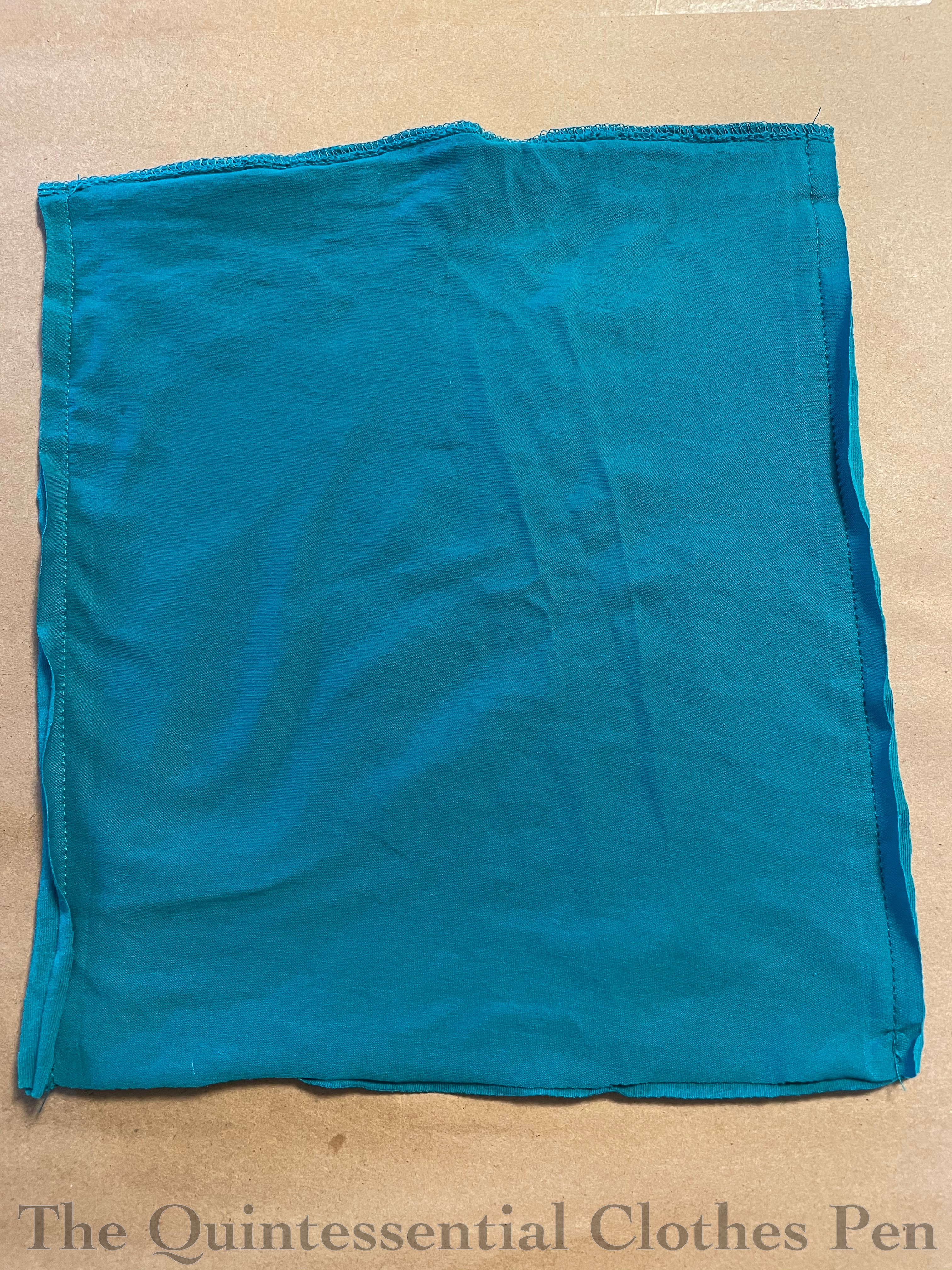
Here’s what my gaiter looked like after sewing the sides. The fabric should make a tube!
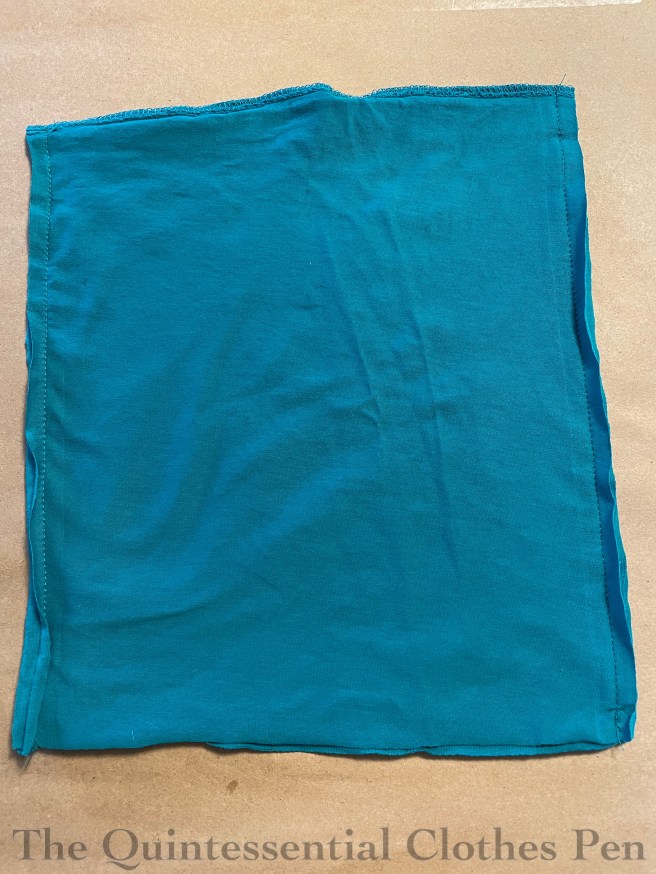
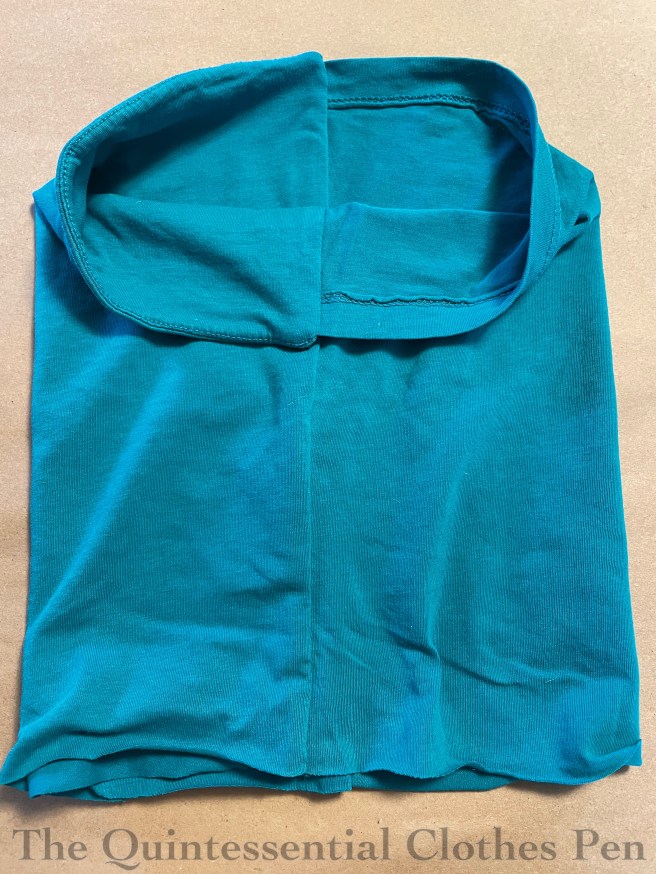
Once turned right side out it should look something like the photo below. If you’ve used the finished t shirt edge for one side then you’re close to being done!

In my case, the t shirt I used was two layers of fabric in the front, which is why the left and right sides of the top edge in the photo below aren’t finished in the same way–they weren’t on the original t shirt either. The two layers allowed me to seam the vertical seams in a way that encased the raw edges between the double layer side of the mask. Nice!
But most t shirts are not two layers in the front, so how to finish those raw edges of the seam allowance? They won’t fray, because the fabric is knit, but if you don’t want them flapping around you can flat fell them using a zig zag stitch.

The tan and white gaiter mask below is halfway through having the seam allowances flat felled. I’ve pushed all the layers of seam allowance to one side and am using the machine to zig zag over the cut edges. It’s a little tricky to make sure that only the part you’re intending to sew gets under the presser foot of the machine, but going slowly and checking where all the layers are makes it completely do-able. (I had enough of the tan and white fabric to make this whole mask double layer, but not all t shirts have enough fabric to make that possible.)

Here is what that looks like when finished. (This gaiter also has a hem already, which is the next step!)

Finishing the top and/or bottom edges of the tube is the last step!

In the tan and white example above, the edges are already finished because I used two layers of fabric and turned them right side out before stitching the sides. To keep the layers in place I zig zag stitched near the top and bottom edges through both layers as a final step. (I used a zig zag so that the stitches would allow the fabric to stretch without breaking the thread.)

Back to the teal example we’ve been looking at, I simply folded up the raw edge of the fabric and top stitched over the edge with a zig zag (in the same way as for the seam allowance finish on the tan and white example). I used ½” seam allowance for the top and bottom edges. It looks like this when complete!

And that’s it! Each gaiter took me about 30 minutes to make.

Final Assessment

I wore the teal gaiter while skiing! I don’t plan to wear these every day, but for that purpose the gaiter style was great!

I did find that it tended to slip down as it absorbed the moisture of my breath, in combination with the head movement required to check behind me, etc. while skiing. Due to this, I had to pull it up somewhat regularly. I eventually tucked it into my helmet a little better and that made it stay in place. Another solution would be to take tucks in the sides to make the top circumference smaller. Or, perhaps, for next time (or for you!), make each rectangle ½” smaller across (so only 9.5″ instead of 10″) to make the gaiter a little more fitted.

The two layers of fabric on the front of my gaiter felt thick enough for virus protection while still easy to breath through. All that condensation made for a pretty damp mask after a few hours though… It was fine while I was out in the cold, but after taking it off in the car on the way home I had no desire to put it on again without a wash (though that’s true with any mask, regardless of the style)!

Whether this inspires you to make a gaiter mask or not, I hope my t shirt recycling inspires you to also consider recycling textiles (or other materials) in some way… perhaps in a way you hadn’t considered before!

Picking Peaches In Plum Pants

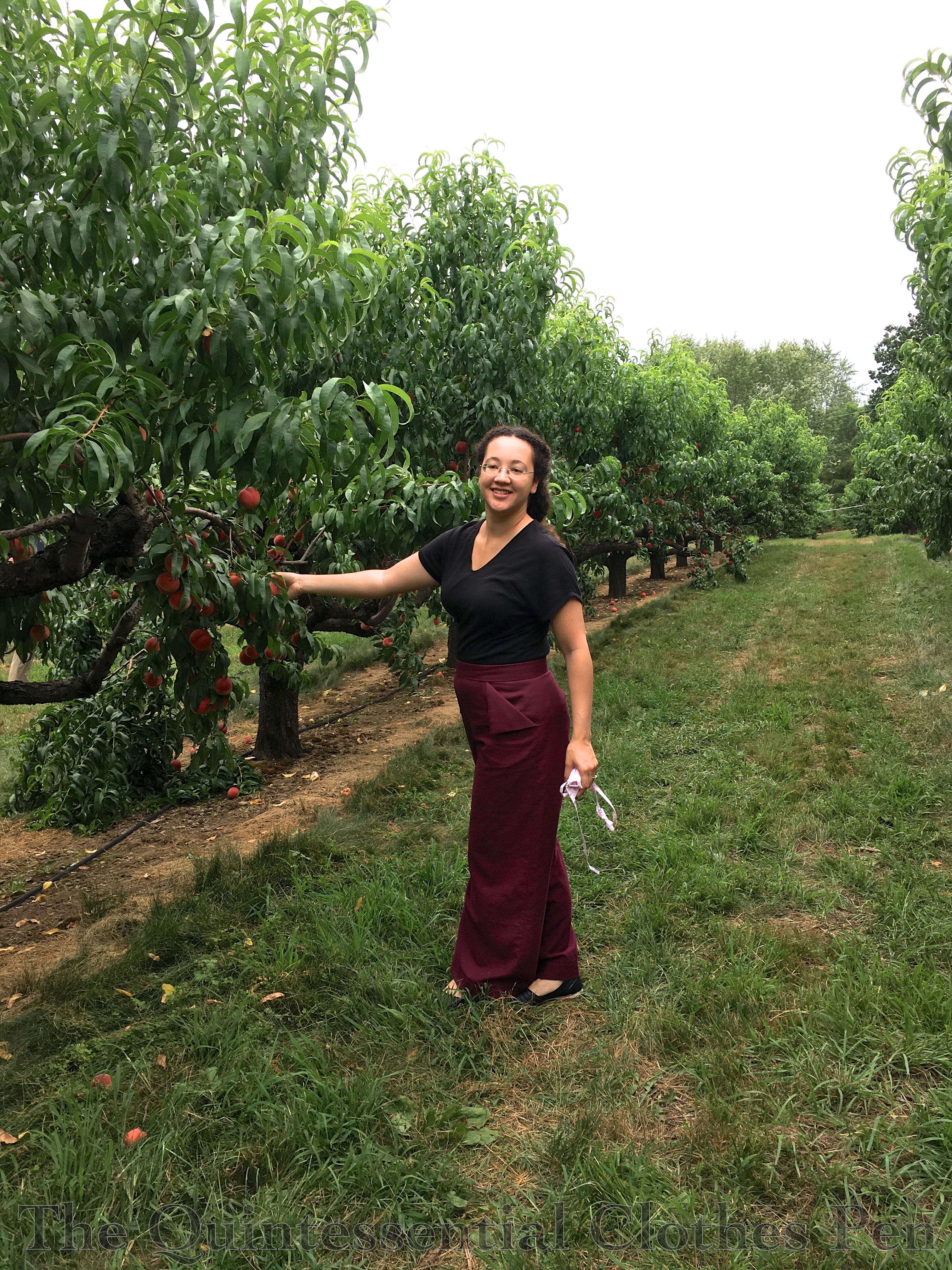
The first outing of my Plum Pants With Pointed Pockets was to pick peaches! This was a great socially distanced and outdoor activity that I highly enjoyed (apparently the orchards around here are seeing record turnout for pick-your-own this year due to people looking for outdoor activities).

The orchard was lovely, full of charming vistas, and it was easy to walk to the far ends of the orchard where there were few people.

Here I am, casually picking peaches in my plum pants! Lest you fear that masks were not worn on this outing, here is the photographic evidence that I did have a mask with me. I intentionally sought out areas with no other people around so that I could remove my mask for a few photos.

In addition to the fun of hunting for the best peaches on the trees, I had a peck of peaches to bring home with me at the end of the day!

These were the most delicious, sweet peaches!

I ate them plain, I blended them down to make peach puree for cocktails, I baked a peach-thyme galette, I added them to smoothies… There was a lot of peach in my life for a few weeks!

Yum! I’ll definitely be picking fresh peaches again in the future!

And I’m pleased that my Plum Pants have been worn a few times since the peach outing as well!