1863 Fancy Dress: Genevieve As The Queen Of Hearts

Back in September, The Footwork and Frolick Society hosted a Wonderland-themed 19th century fancy dress ball. The idea was inspired by the whimsy of Lewis Carroll’s Alice In Wonderland (published in 1865) and Through The Looking Glass (published in 1871).

There were so many fabulous interpretations of Alice In Wonderland! You can get a sense of the fun in the gallery from the event on the Footwork & Frolick website, here.

I chose to re-use an idea I’d executed in 2018 when I turned a 1980s dress into a 1950s dress and style it as The Queen of Hearts. You can read about the dress re-make and original fancy dress styling here, in a past blog post. For this new wearing in 2024 I chose to use The Queen of Hearts theme and accessories again, but with one of my 1860s dresses to suit the mid-19th century goal of the Wonderland Ball!

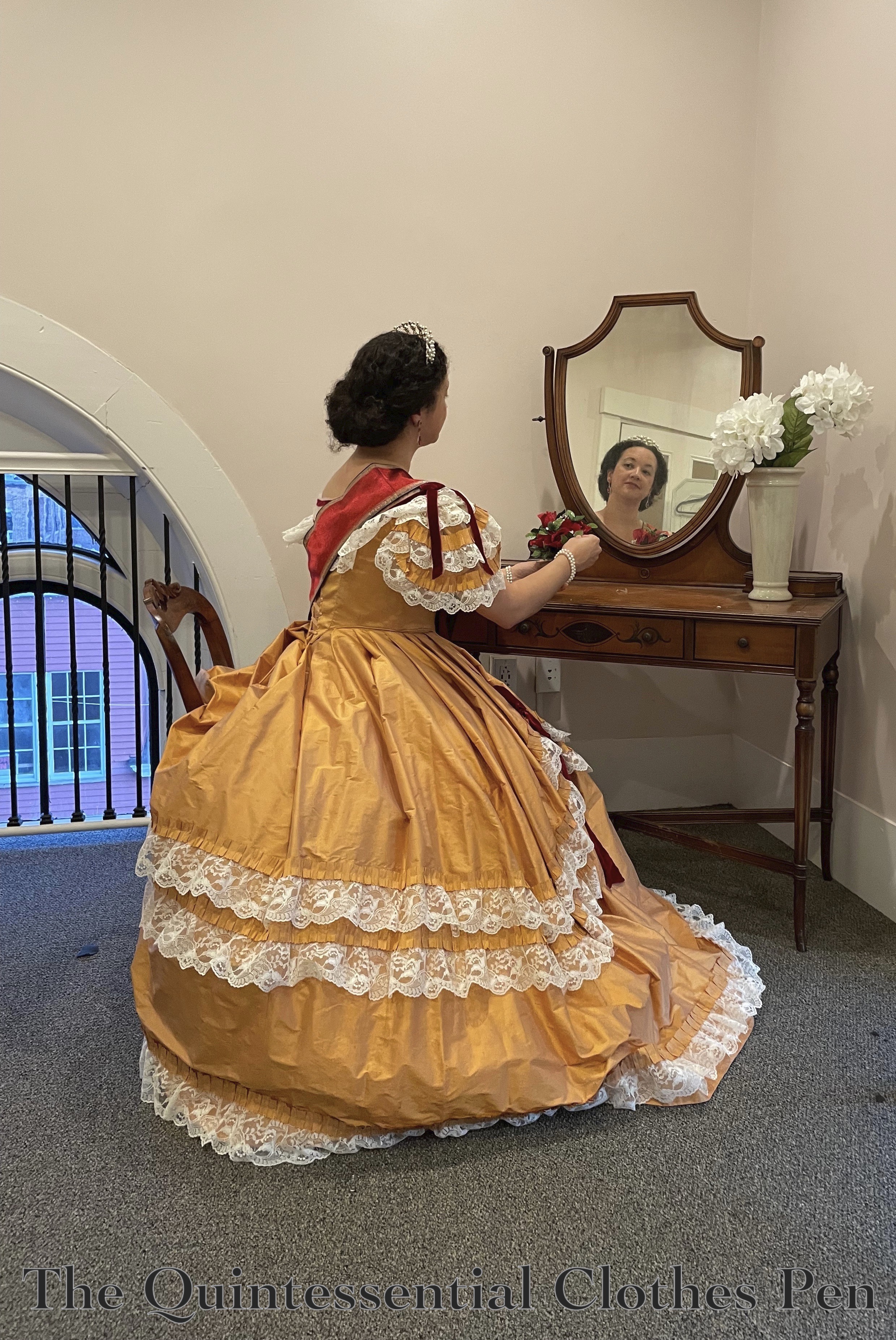
Genevieve, the name of my apricot ballgown from 1863, seemed to be the most fitting choice for a Queen of Hearts theme. (You can read all about the making of this dress in this Project Journal series of posts.) The two main elements of my fancy dress ensemble were a tiara and a royal order sash. I figured that could easily work again.

We captured a series of photos of The Queen of Hearts elegantly (and somewhat aloofly!) preparing for the ball!

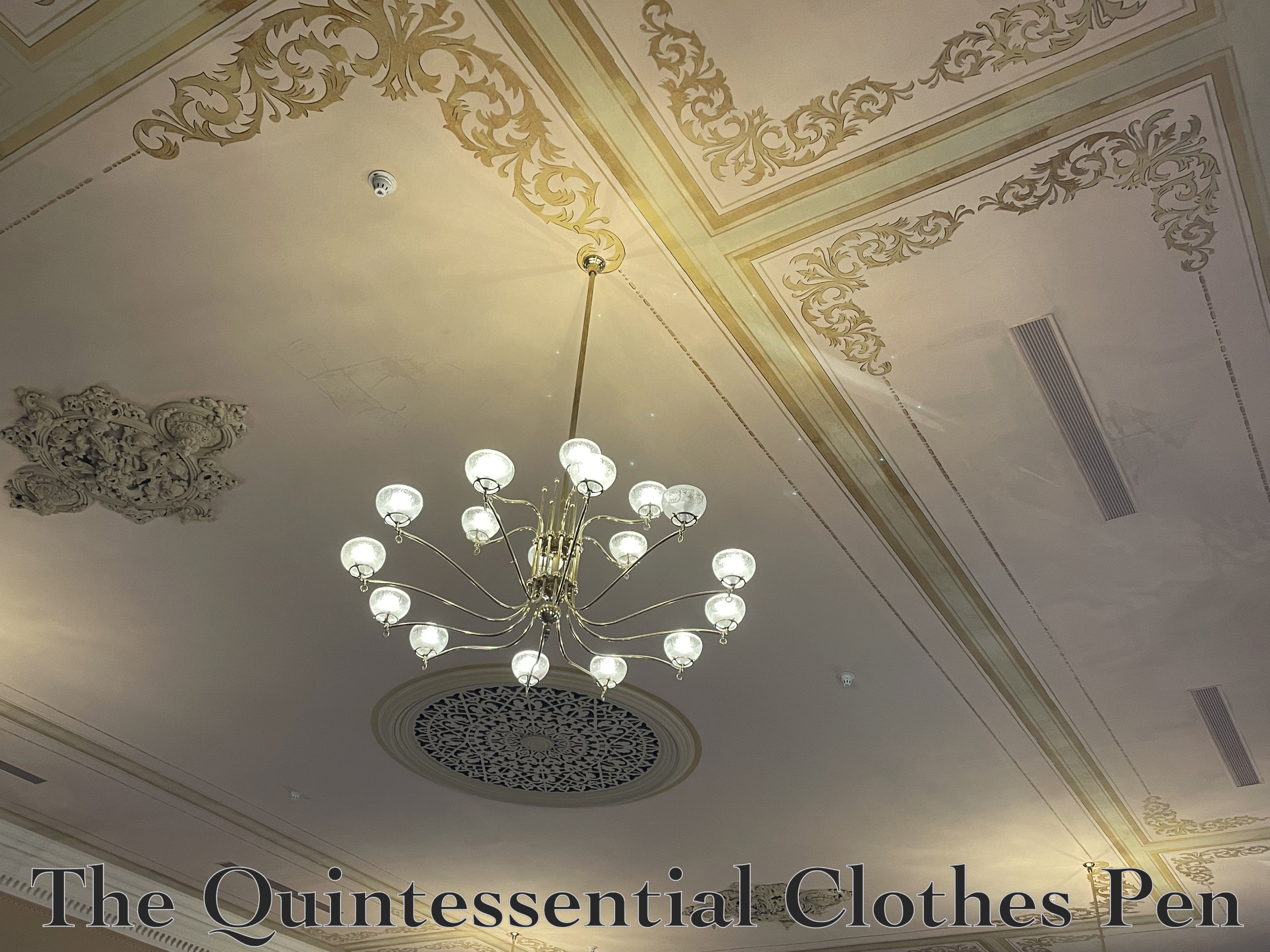
The ball itself took place in the lovely Andover town hall. It has all sort of beautiful details. Look at the ceiling!

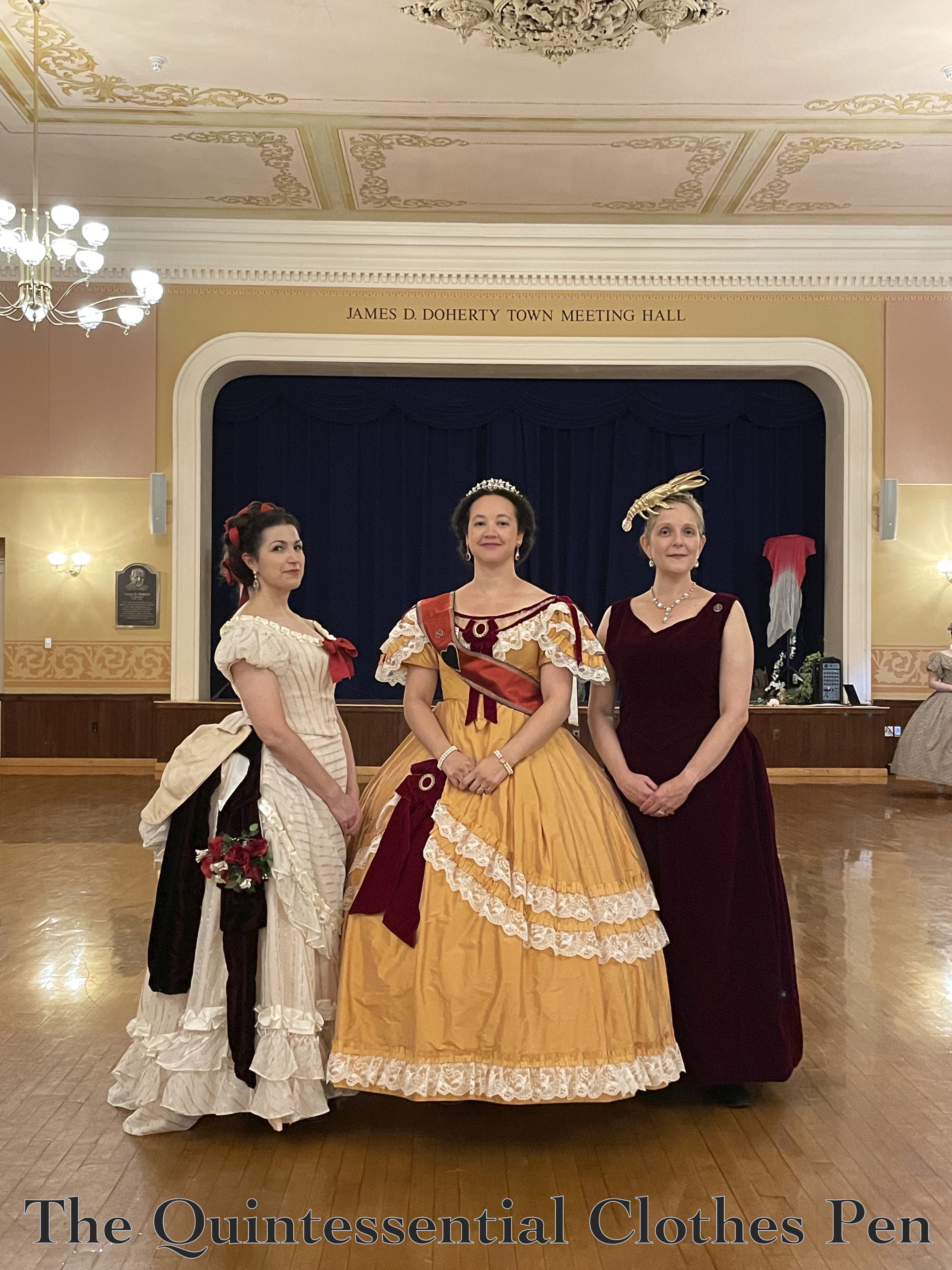
And the company was lively! I met charming new acquaintances and reconnected with creative friends. Below are a few of them… and we are joined by a golden lobster! (The lobster wanted to participate in the Lobster Quadrille, but had to step up the bling-factor to be ball appropriate!)
Excerpts From “How To Play Croquet” (1865)

While doing research to make sure friends and I had our rules correct for mid-19th century croquet over the summer, I came across this resource (with a fantastic lengthy name, as is common for these sorts of books in the 19th century): How To Play Croquet. A New Pocket Manual of Complete Instructions for American Players. Illustrated with Engravings and Diagrams Together with All the Rules of the Game: Hints on Parlor-Croquêt, and A Glossary of Technical Terms.

I found great enjoyment reading through the book (it’s not a long read) and think it will be fun to share some of the amusing passages here.

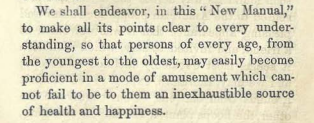
To start, a few excerpts from the introduction:

This next excerpt is from the section describing the game itself. I enjoy the word choice and the conclusion of the players shouting “Victory” and waving their mallets in the air!

And lastly, a few of the benefits of playing croquet, from the conclusion of the book.

I appreciate the final admonition about not cheating, but I have to say that when a game of croquet with friends gets too long and people stop paying attention… a bit of ‘move it along’ assistance to the game can be quite helpful!

Playing Parlor Games

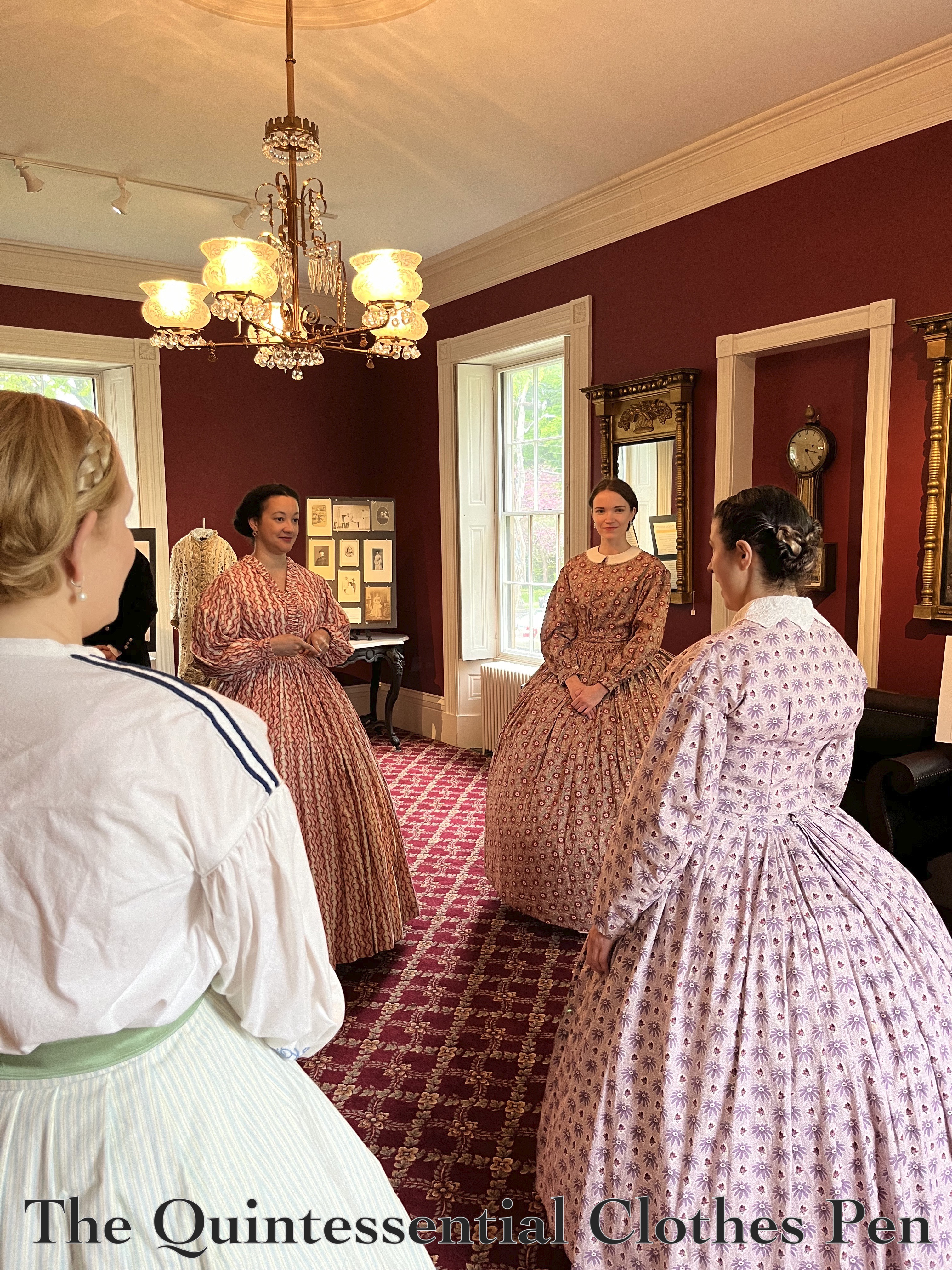
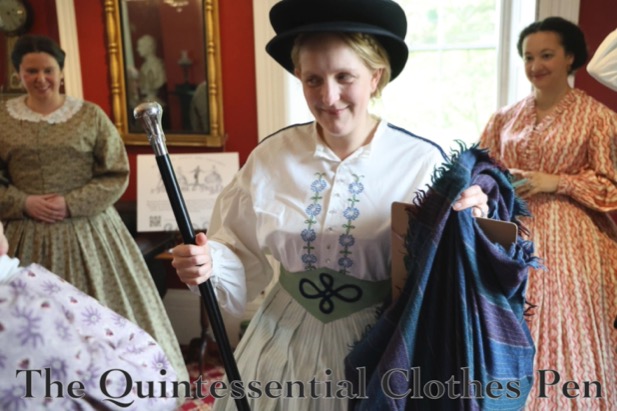
Part of the goal of the spring outing I recently posted about was to play parlor games with The Footwork & Frolick Society at the Boutwell House in Groton, MA. This was a fun public outreach event during which we invited guests at the open house to join us in parlor games from the mid-19th century.

Many parlor games from this period are somewhat sedate and word based. Others are more active, such as passing a ring around a ribbon in a circle while someone in the middle tries to guess who is hiding the ring.

There is also a game in which a person has to go around to everyone in the room and ask for something to take on an imaginary journey. It can get a bit silly as people add items to the imaginary traveling trunk.

I didn’t participate in every game, but I greatly enjoyed observing guests having fun even when I wasn’t actively participating.

A second dress of mine made it out of the closet to attend this event, too! You can read all about the construction of Georgina (a cotton print dress from 1858 pictured below) in this past post from 2013.

Even the volunteers at Boutwell House enthusiastically joined in with our games, providing a wonderful atmosphere for guests.

I had great fun, and even laughed myself into tears trying to do a quadrille figure ‘blindfolded’ (we did it with our eyes closed). There is video evidence of this amusing attempt here, on the F&F Instagram page. Yes, dancing a quadrille blindfolded is, in fact, an official published parlor amusement from the mid-19th century!

Photo credit for the last four photos: Steve Lieman

Sophie In Springtime

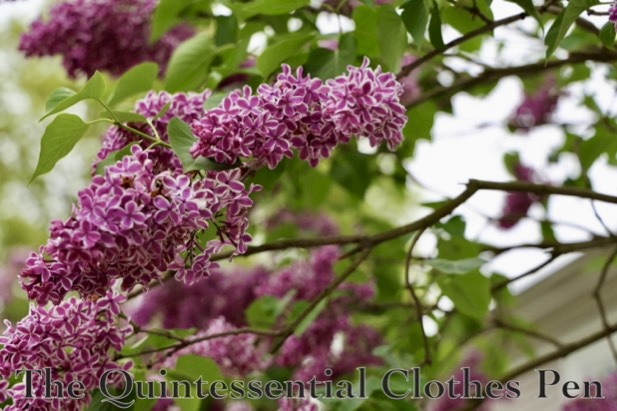
The lilacs were blooming in May, joyfully spreading their scent to all who passed by.

Photo credit for this photo: Steve Lieman

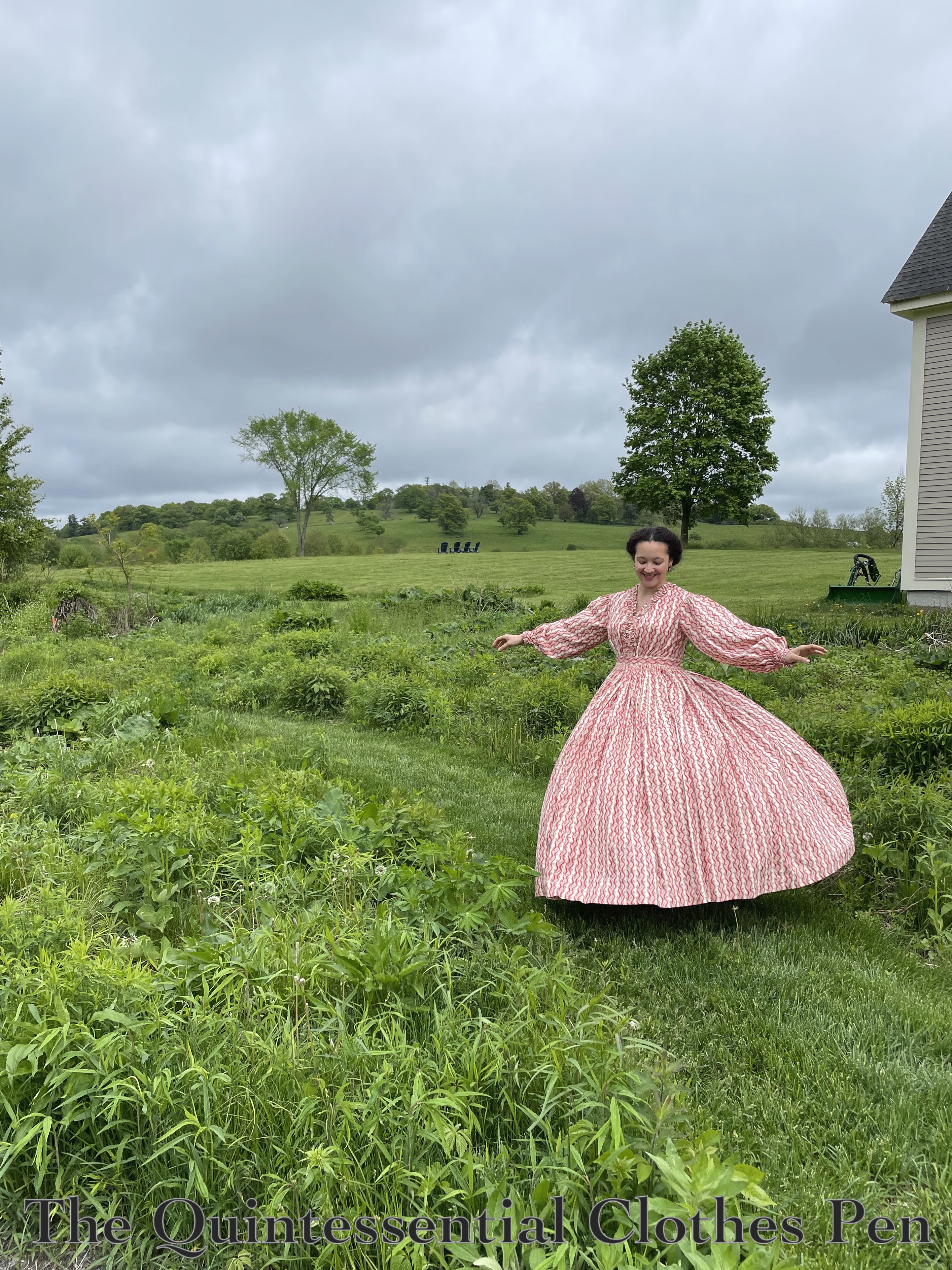
I was grateful to be able admire their beauty and celebrate spring with an outing in Sophie, my trusty 1861 twisted stripe cotton print dress. I made this dress in 2016 and posted about the construction in this past post.

The overcast sky didn’t dampen my spirits!

The diffused light was actually quite lovely and I enjoyed whirling around in the fresh air.

I hope your springtime held unexpected joy, as well!

When The 1860s Drawers No Longer Fit (HSM #11: Worn By All)

I have a series of posts called When The Dress No Longer Fits that document how I’ve updated the size of various dresses I’ve made to fit better as my size changes over time (or as the dresses shrink in the closet, which is how I usually describe it!).

In this case, I’ve adapted that post-naming-style for another garment I recently updated. In this case, I altered an old pair of 1860s drawers rather than a dress!

It brings me joy to be able to extend the life of garments I already have in my closet. For these drawers, being able to adjust the size of the waistband has allowed me to continue to use them for many years. Proof: I documented these drawers on the blog in 2013 (and I’m pretty sure I made them in 2011 or 2012) so they have being faithfully serving their duty for over 10 years!

In that time, they’ve seen lots of use. I’m pleased that they have held up very well. About 8 years ago, I let down some tucks to make the legs a little longer (so that the top of my stockings/knees wouldn’t show–because, gasp, that would be shocking!) and I also increased the waistband size about 6 years ago. Below, a photo of the drawers with those first round of alterations made.

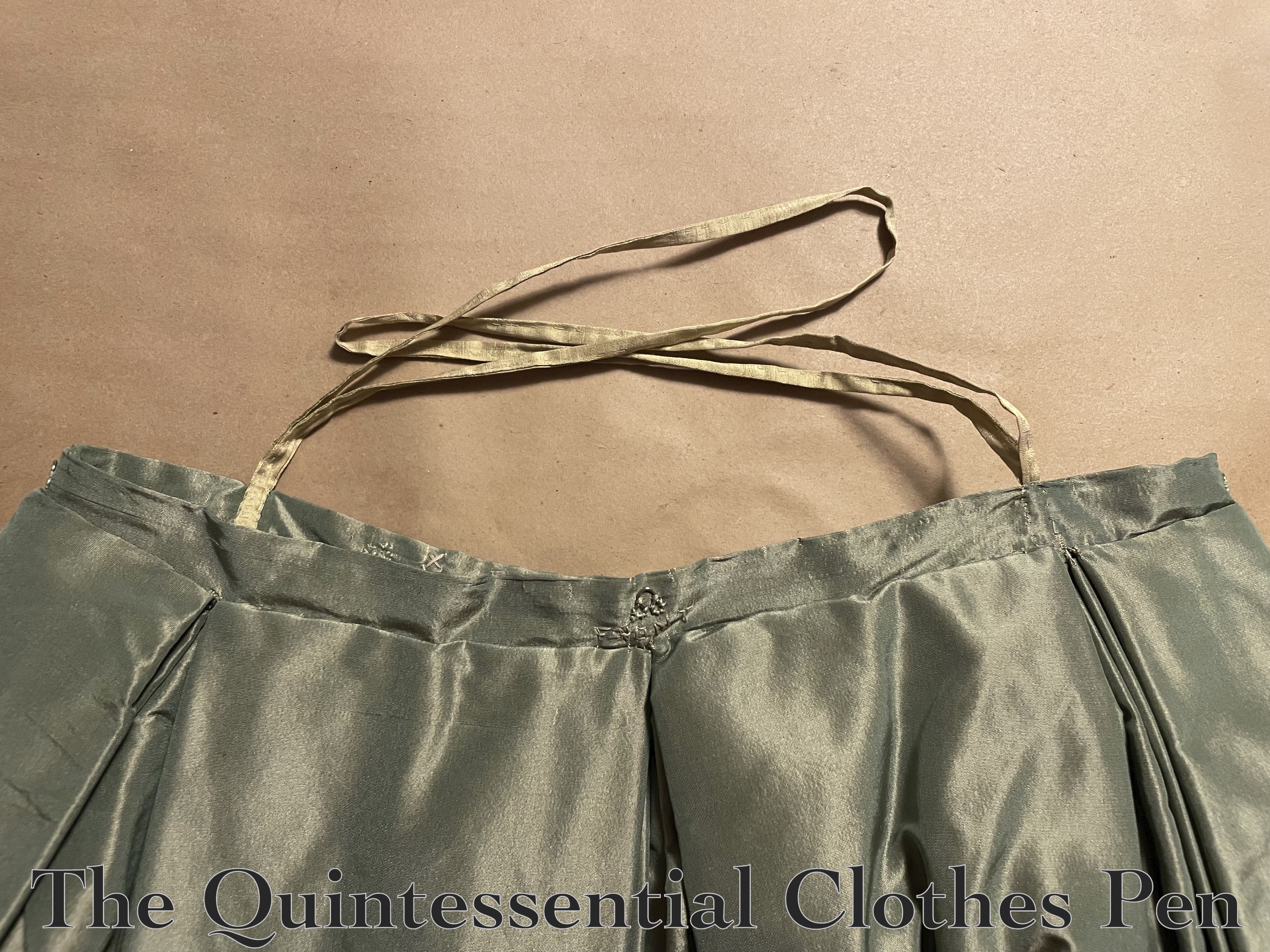
And below is a closeup of the waistband after that first round of alterations. I don’t remember why I thought a closure method of a cord looped in a figure eight around two buttons made sense. I can’t remember a source for this idea… but it has worked for many years. It’s been wonderful because it allows for adjustability (up to a point of running out of cord length to loop between the buttons securely, of course).

But recently, even with the increased waistband size, there was still a gap at the waist and the gathering of the legs into the waistband was no longer distributed in a way that helped the back edges stay closed when being worn. That’s not the end of the world in terms of modesty, as I always have a chemise on underneath, but it wasn’t my favorite look, either.

So I decided to do something about it. I added yet another extendo to the waistband. “Why remake the entire waistband?” I mused. The would need a bigger section of fabric and be more work. No one sees the waistband of my drawers except me, friends getting dressed near me, and you readers on the blog!

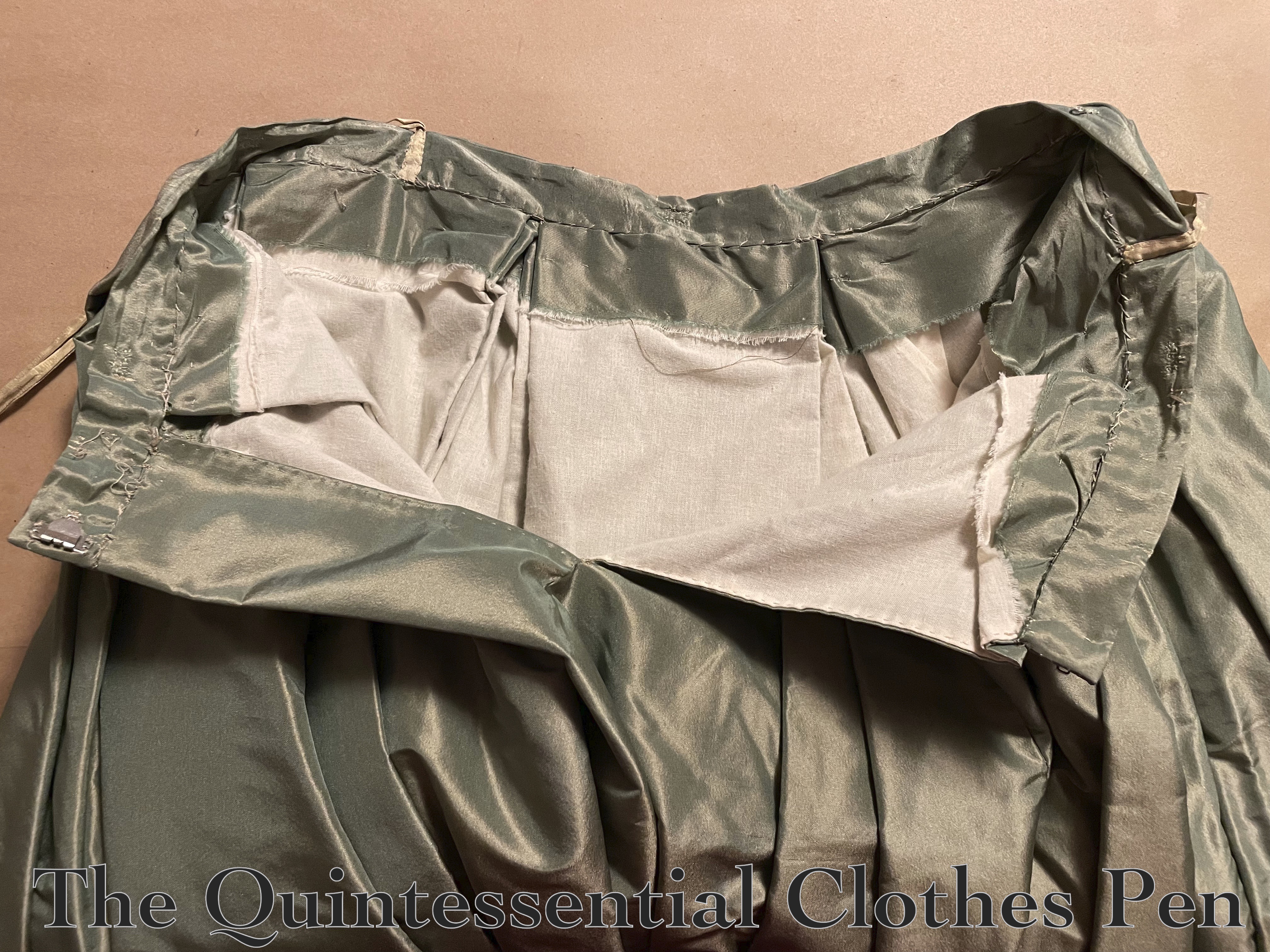
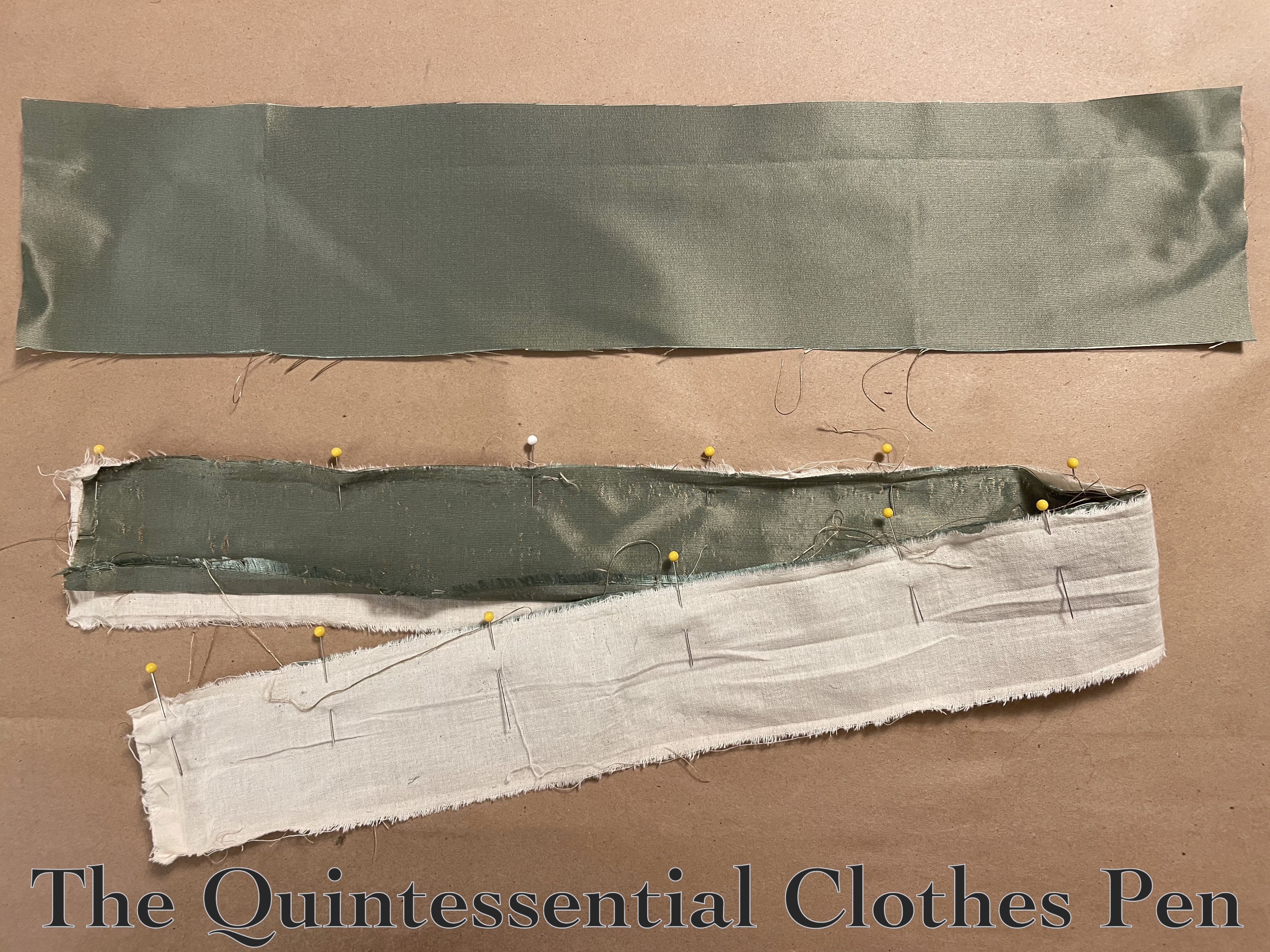
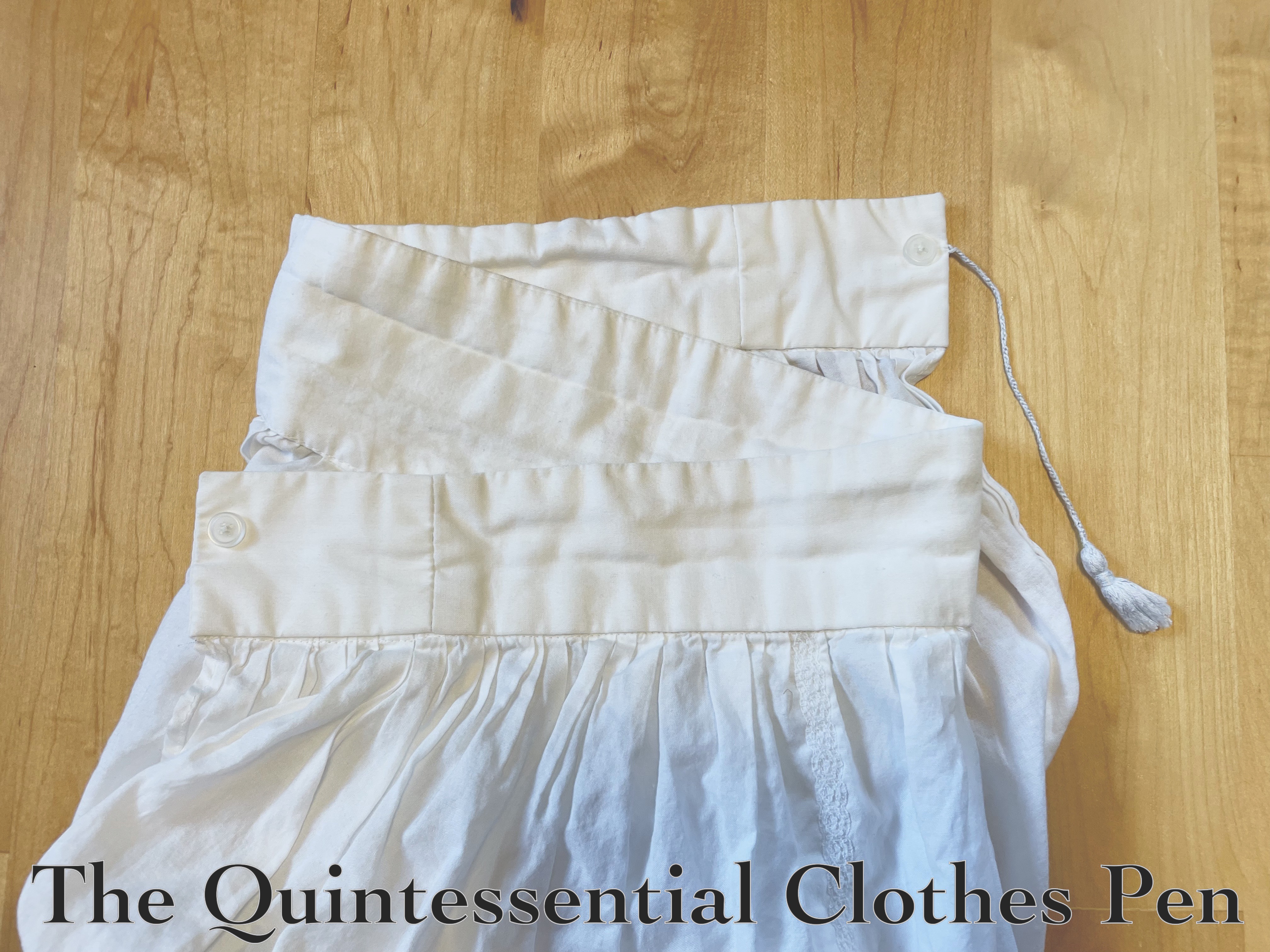
So now, here are the most recent updates to these old drawers, with a second extendo added to the waistband. Taking the waistband apart to add the new pieces reminded me that I’d stiffened the waistband lightly by adding a layer of linen in between the two layers of cotton. This is a note to self that this method has worked well, creating a waistband that doesn’t collapse and wrinkle horribly around the waist while also not being super stiff.

I also decided to change the closure method to a button and button hole. The old wrapping the cord in a figure eight method had the added challenge of being a bit tricky to do behind my own back. I decided that while a button would be less adjustable (without resewing it), the larger size button would be easier to do up than the cord wrapping.

I also made a bit of extra waistband for the day when I might need to increase the waist size even more (but I’ll pretend that day isn’t coming). And I decided to hand sew the buttonhole, because it was being fussy on my machine and I figured it would be faster to sew it by hand than fight the machine!

Here is a closeup of what the waistband looks like with the most recent extendo. For this round of alterations, I also completely removed the waistband and redistributed the gathers and side points to better match the new waistband size (these alterations are machine sewn). This makes the drawers more effectively lay in place.

I’m calling this my entry for the Historical Sew Monthly 2024 Challenge #11: Worn by All:

Make a garment that would be worn as everyday clothing by most social classes during your chosen time period and/or place.

Just the facts:

Fabric/Materials: Scraps of white cotton and linen (Is it the same white cotton and linen as the original drawers? Nope, but that’s ok with me for this project!)

Pattern: None. I just added rectangles.

Year: c. 1860.

Notions: 1 shell button and thread.

How historically accurate is it?: 98%. It’s completely reasonable to extend the life of a garment like this by altering it. The only non-accurate thing might be the machine sewing–although it is pretty subtle!

Hours to complete: 2? I didn’t really keep track.

First worn: Worn on May 19 with an 1860s ensemble.

Total cost: Free! Materials were scraps left over from other projects.

This was one of the small sewing tasks on my Maybe-To-Do list for 2024 as well as being one of the small projects that was stacking up on my alterations-and-mending pile. I’m so pleased to have checked it off!

Eleanor At The Boutwell House

My 1860s evening gowns have had far fewer outings in the last few years than they used to, which it made having a reason to wear one a few months ago particularly exciting!

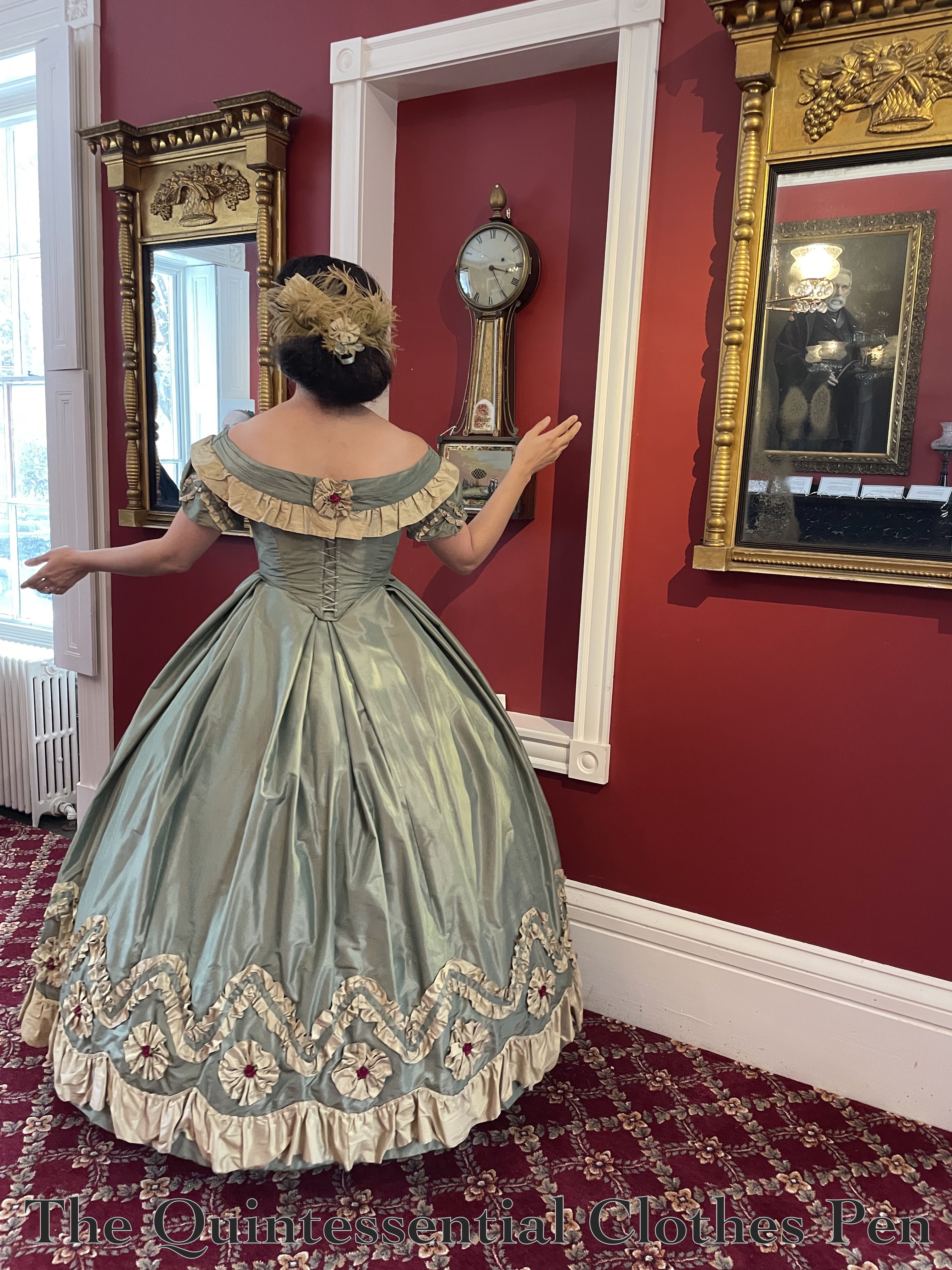
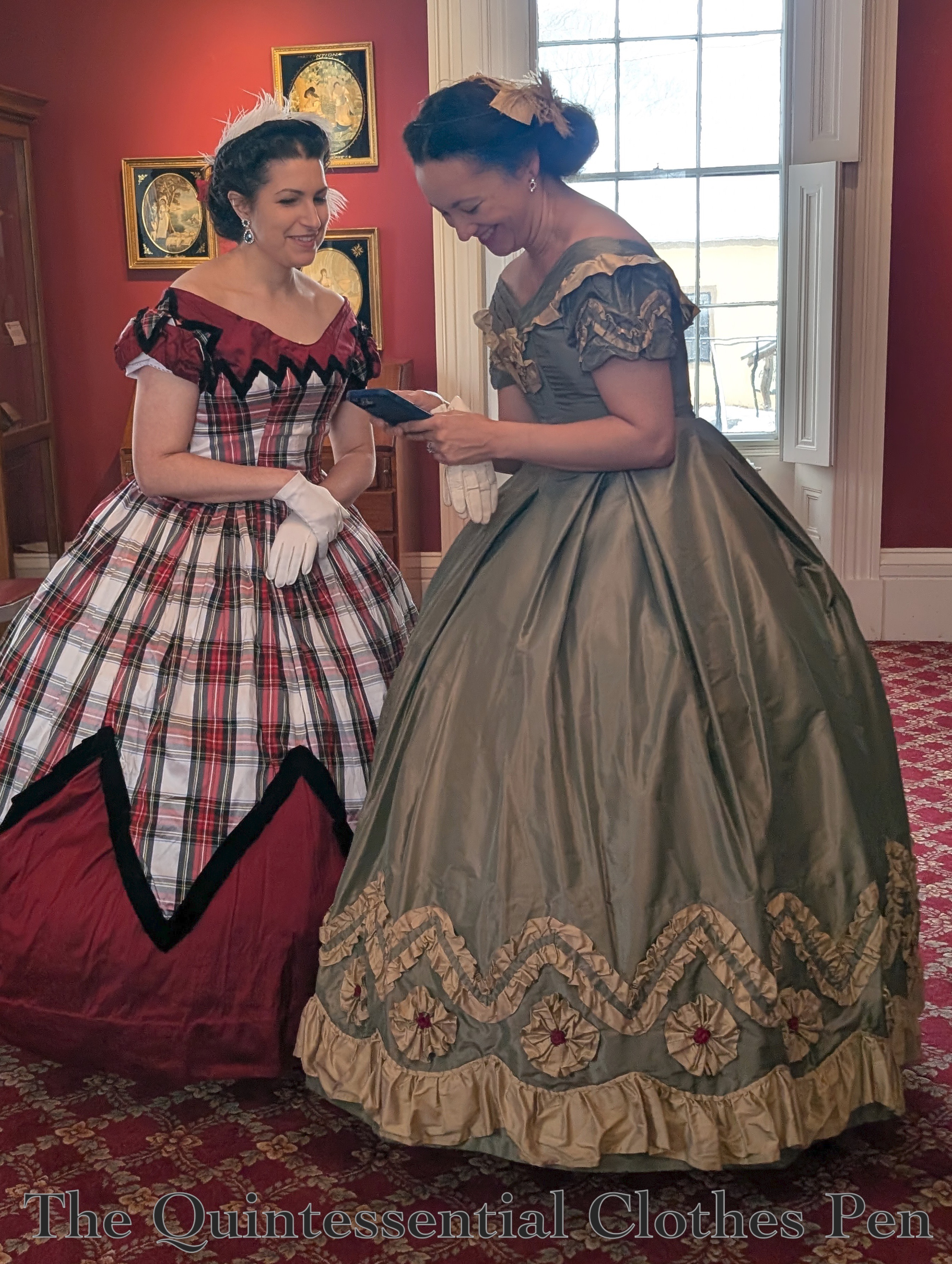
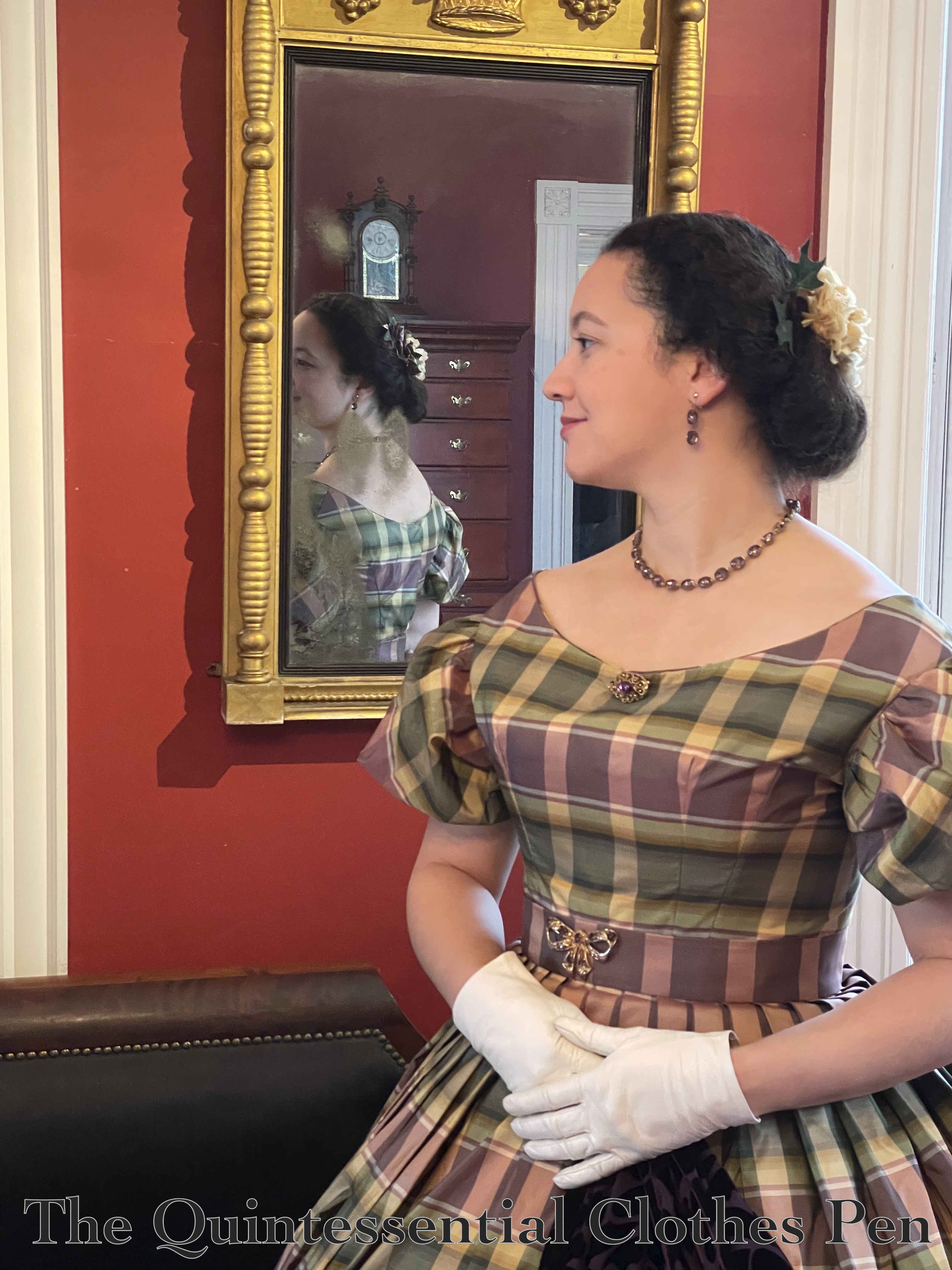
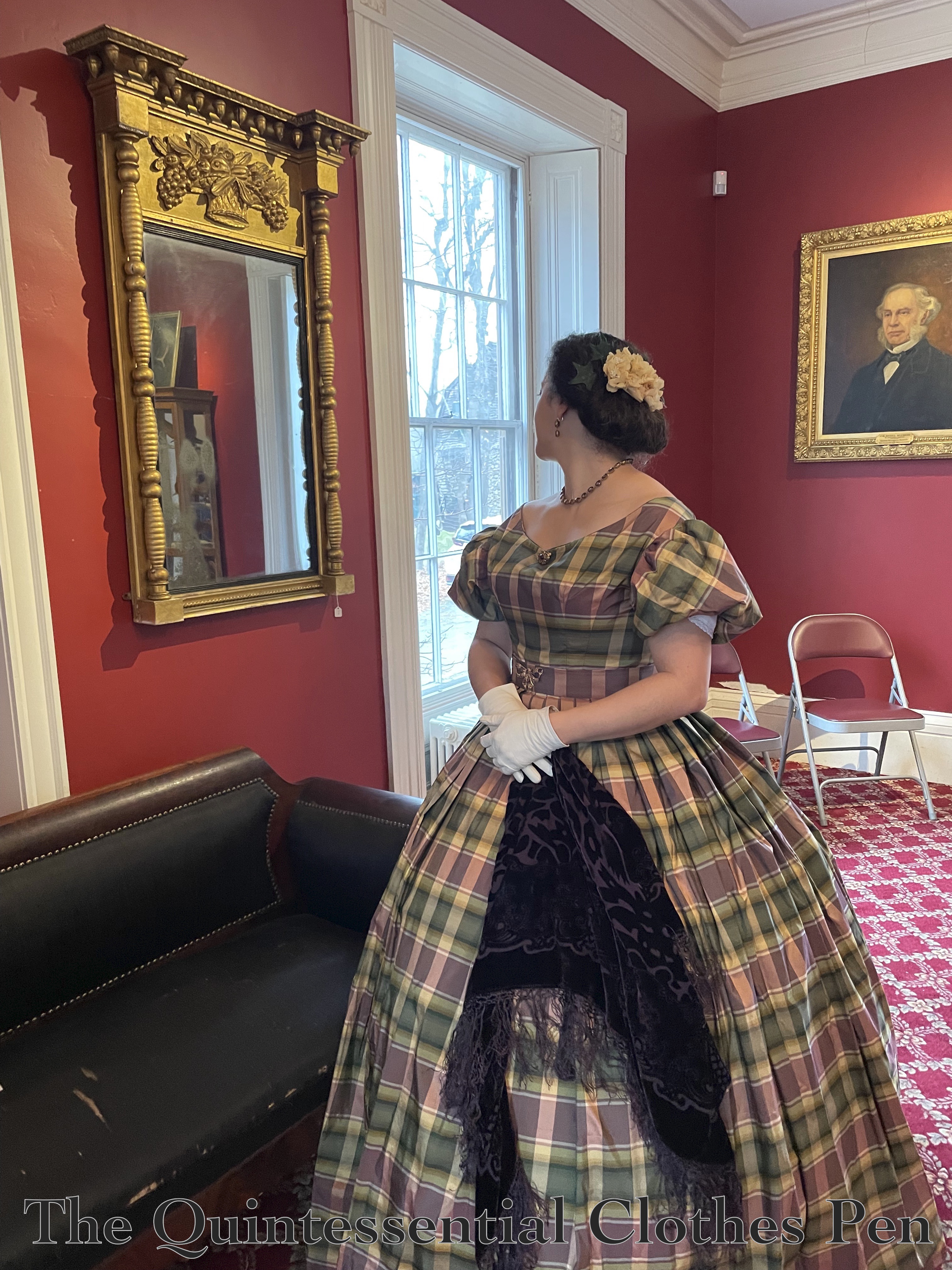
The question was which to choose??? I wore Genevieve (my 1863 apricot-colored covered in lace and pleats silk gown) sort of recently, in April 2022. Other dresses in my historical closet that might still fit (Georginia from 1859, Annabelle from 1859, and Evie from 1864) haven’t been worn recently, but for some reason, plaid was sounding like fun… So I chose to wear Eleanor (my 1862 purple and green silk plaid dress)!

I’m still very pleased with the fabric of this dress and the way I cut the pieces to create interest in an otherwise pretty basic dress. The little details like tiny piping on the bodice, matching hair flowers, and a well matched set of jewelry (earrings and necklace from In The Long Run Designs, as well as a mix of modern and vintage brooches) also bring me joy.

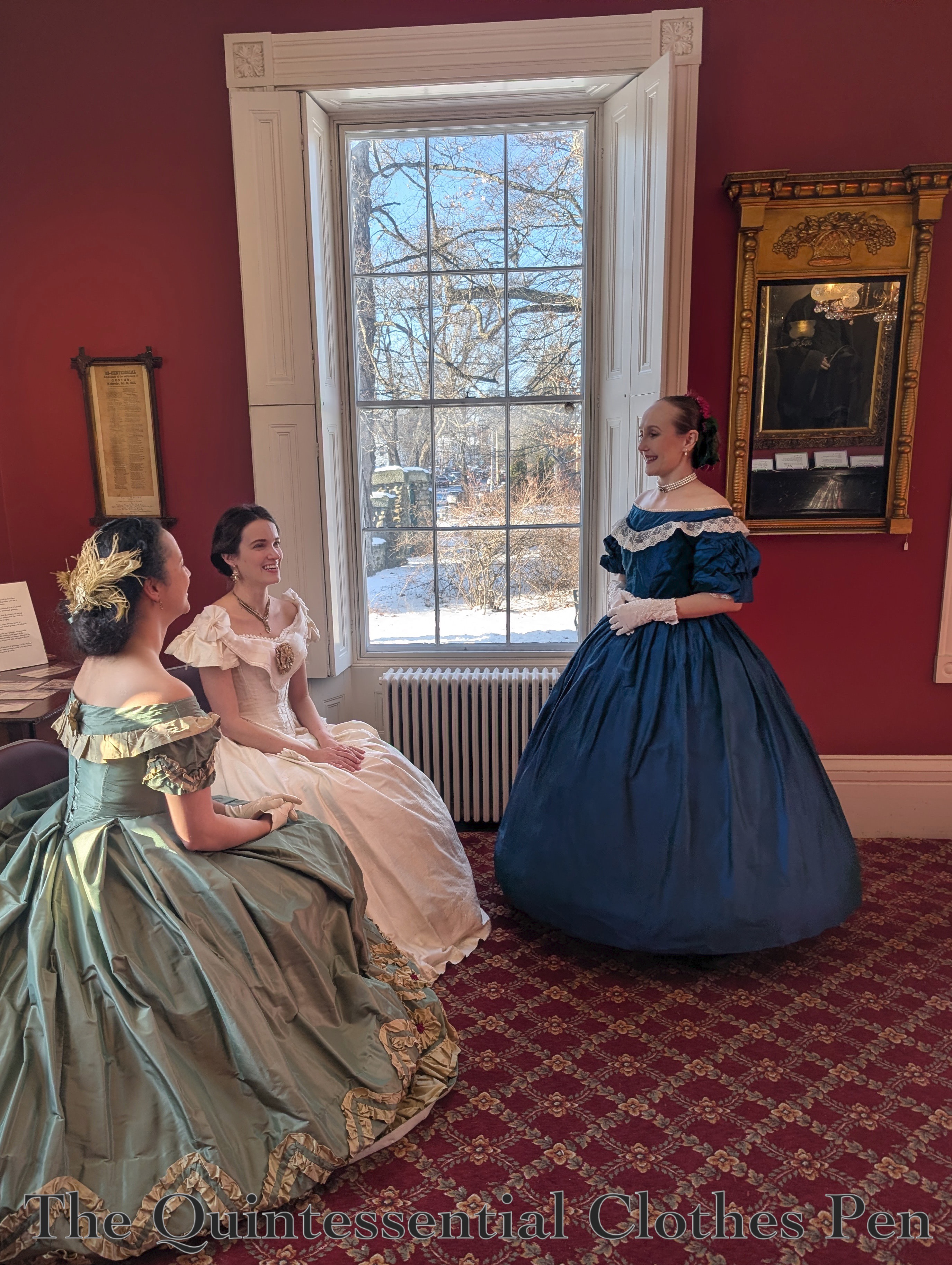
I also had a lovely setting in which to wear the dress. The Boutwell House in Groton, MA was built in 1851 and is now home to the Groton History Center. The Footwork & Frolick Society partnered with them for the town of Groton’s annual WinterFest activities, which included inhabiting the house for an afternoon to give visitors a small view into activities from the period.

I enjoyed being able to wear an 1860s dress again. I’ve always loved the magic of a cupcake shaped hoop skirt–and this was no exception!

Mid-Century Birthday Croquet At Roseland Cottage

Finally, a break from stay-related blog posts! (Slow sewing progress is being made, but not enough to post about…)

In the meantime, I have an armchair peep into a lovely birthday outing with friends on a gorgeous autumn afternoon.

The location of the outing is Roseland Cottage, in Woodstock, Connecticut.

Built in 1846 in the newly fashionable Gothic Revival style, Roseland Cottage was the summer home of Henry and Lucy Bowen and their young family. While the house is instantly recognizable for its pink exterior, Roseland Cottage has an equally colorful interior, featuring elaborate wall coverings, heavily patterned carpets, and stained glass, much of which survives unchanged from the Victorian era. The house is a National Historic Landmark.
(from the Historic New England website)

We made special arrangements with the staff to picnic and croquet on the lawn in mid-19th century clothing, followed by a house tour. Some of us had seen the house before, but the details never cease to amaze and hold our interest. If you’re ever in the area, I highly recommend a visit!

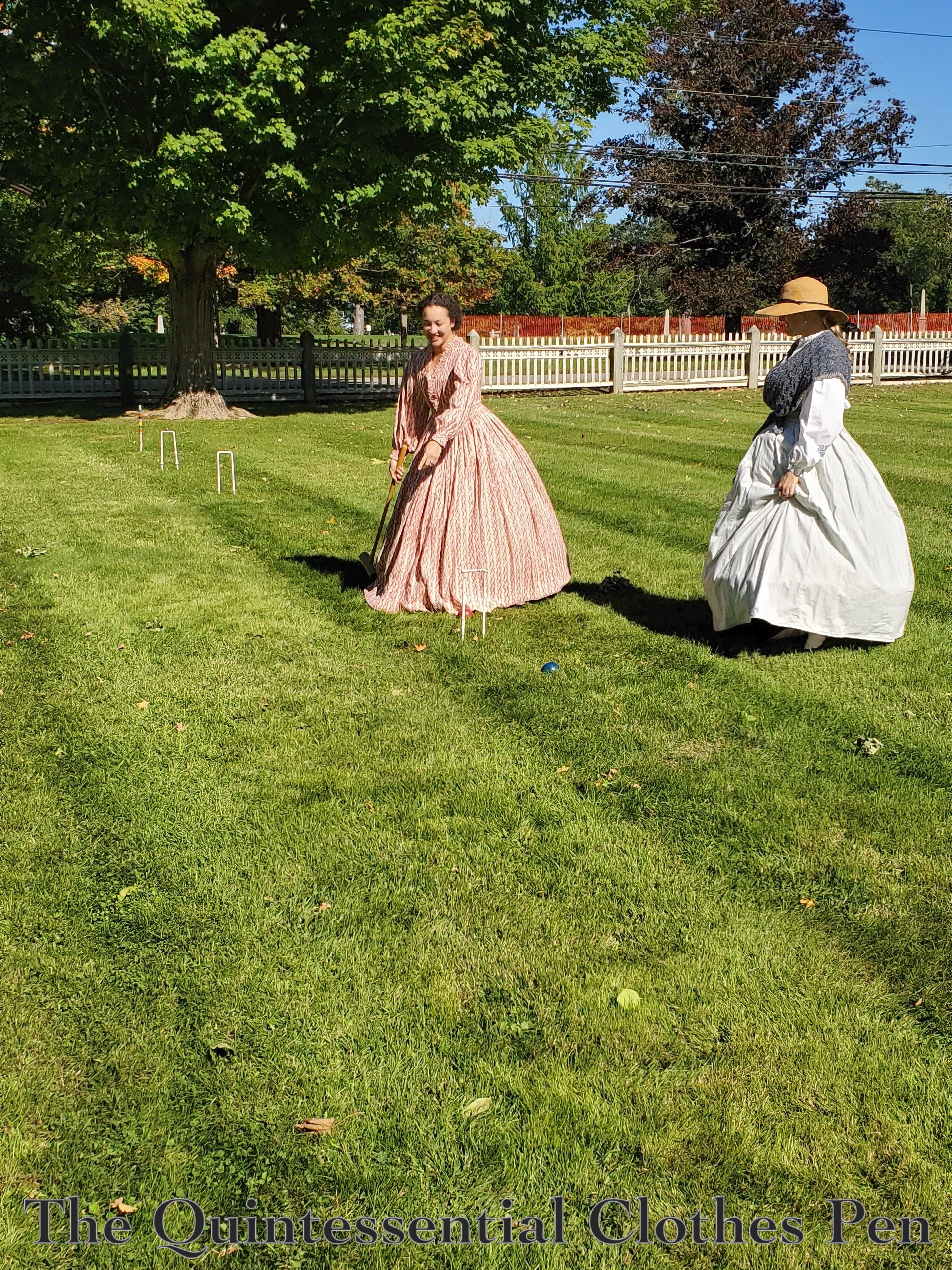
The grounds of the house are well maintained and provided an excellent area to set up croquet.

We enjoyed serious croquet as well as a few silly rounds of our own invention. The shadows made for fun photos, too!

The day was sunny and beautiful. There was a slight bit of chill to the air, but it was quite comfortable in full length sleeves and long dresses.

One zealous croquet ball whacked me in the ankle and caused a small scene. Thankfully, it wasn’t too bad after the initial pain wore off (no bruises or anything worse!)

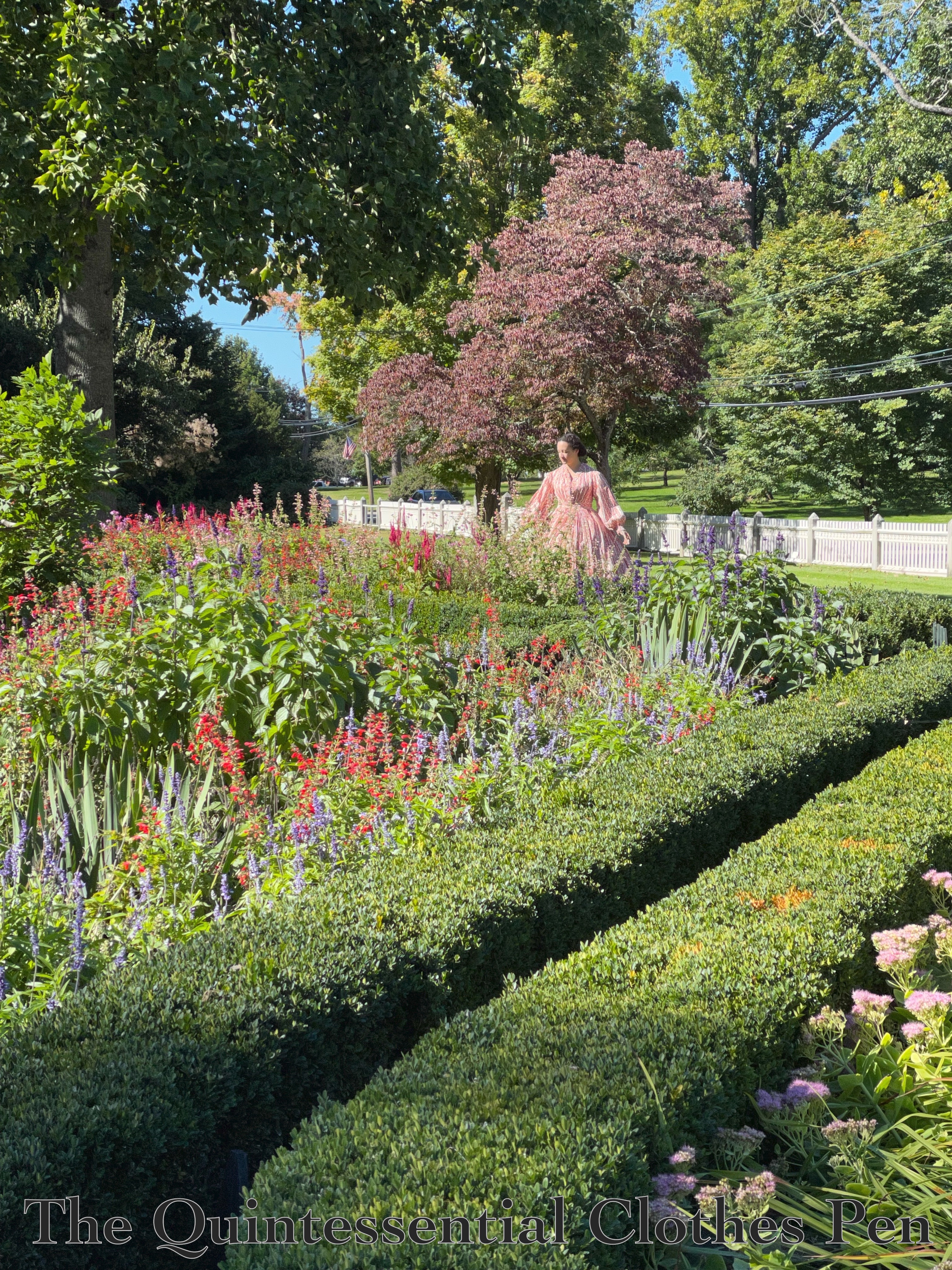
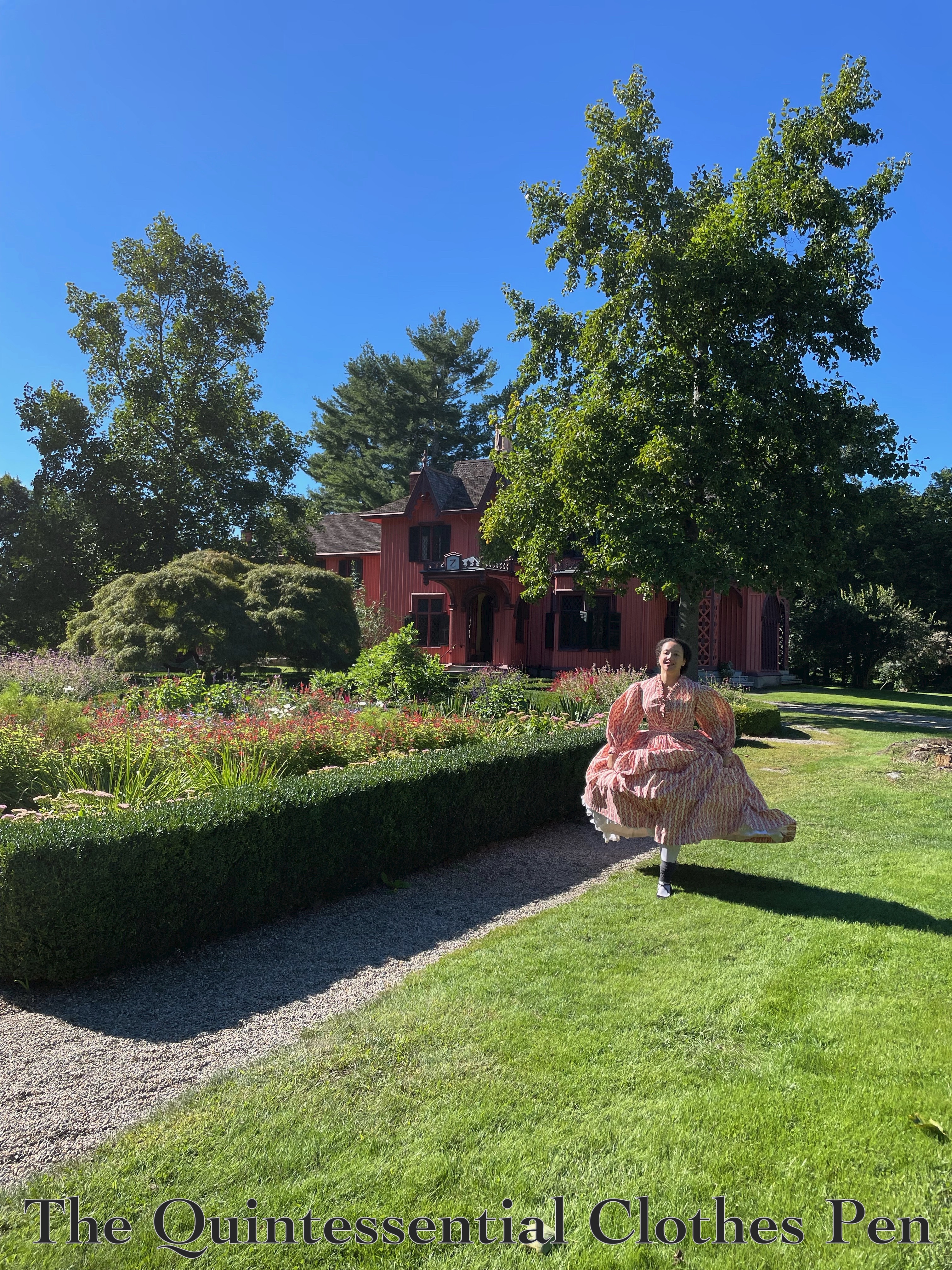
In fact, the croquet ball whack didn’t stop me from enjoying the gardens in Sophie, my 1861 reproduction cotton print dress.

The gardens are maintained with the same plan and variety of plants that would have been evident in the 19th century. They were in full color during our visit!

I greatly enjoy this photo, which was completely unintentional. I just started running around because it was fun, and then was told to go back and do it again because the photo opportunity was so exciting. So I suppose in a way it was intentional?

Croquet was followed by a house tour, during which the staff invited us to remain in historical clothes and take photos. This was my favorite! There’s a little built-in seat with a bay window in one room. It was well suited to sitting in hoops. Looking for friends arriving, perhaps?

An exciting, beautiful day! Thanks for enjoying it with me!

Genevieve At A Spring Fete

Genevieve, the name I gave to my most recently constructed mid-19th century sewing project back in 2019, was only able to be worn once before all events ceased. So when friends and I decided to gather for a private ball earlier this spring, I knew that of the multiple ball gowns from this period in my closet Genevieve was the one I most wanted to wear.

I was having such a lovely time dancing that I didn’t take any photos of that activity, and the dress had already been documented, so I didn’t take photos specifically for that purpose, either. Refreshments, however, were definitely worth taking photos of, because we decided to cut our cake with a sword.

Why? Because it is amusing! We had been at a ball a number of years ago in which no one had a knife, but someone did have a sword! We used it at that time and it’s been a running joke ever since. In this case, we did have knives… but swords are far more dramatic!

The beautiful and delicious cake was made for us by a local bakery, Dolce Amar. Friends contributed flowers and vessels to add to our springtime theme.

If you’re interested in learning more about Genevieve, my 1863 apricot silk dress, I documented the creation of the dress in nine separate blog posts over the course of 2019. All of those posts can be viewed here in the project journal for the dress.

A Practical Experiment: How To Use A Fluting Iron

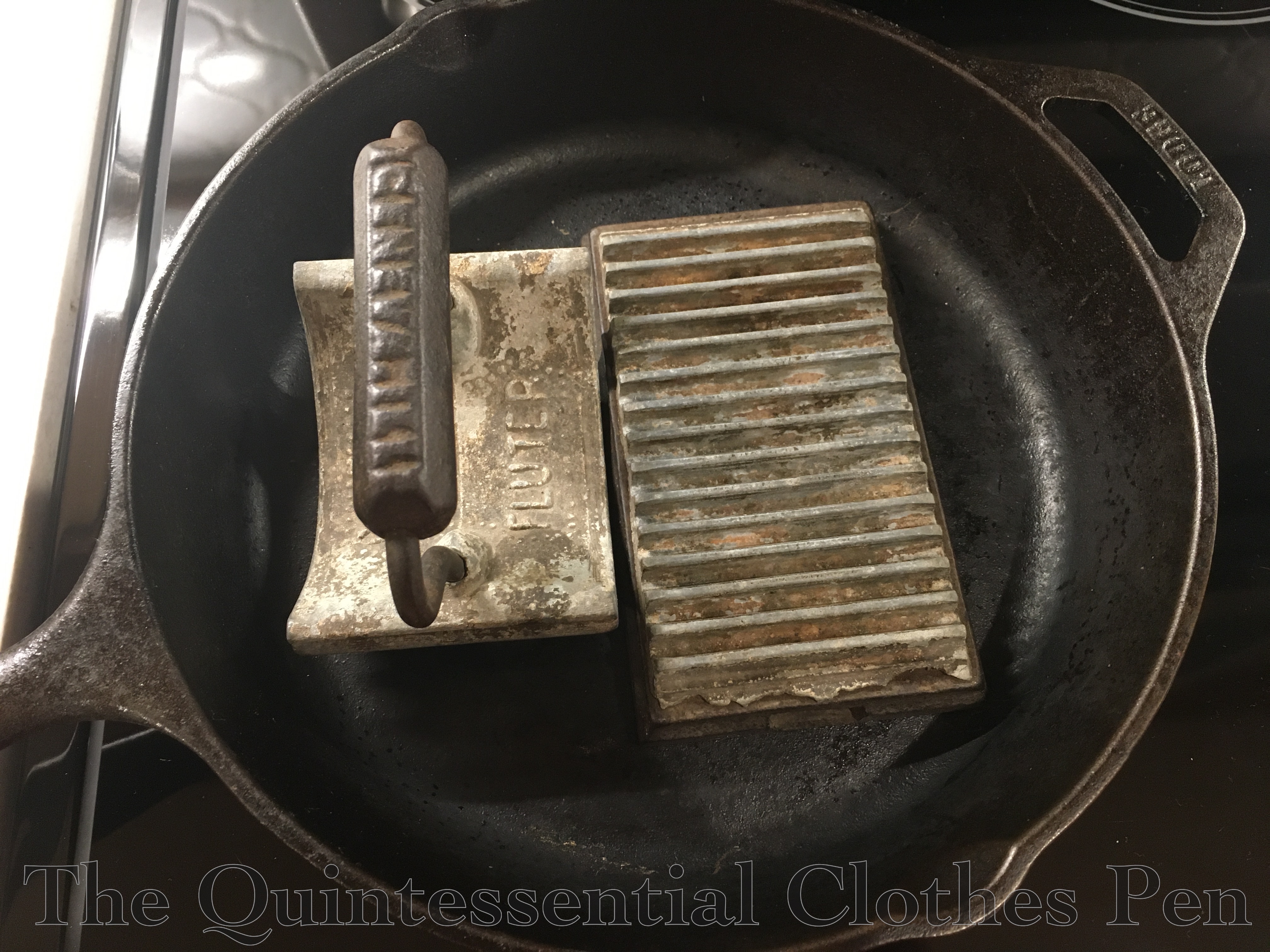
Way back in 2012, I posted with great excitement about a new to me sewing tool that Mr. Q called the Cast Iron Crinkle Cutter. These antique specialty irons are actually called fluting irons.

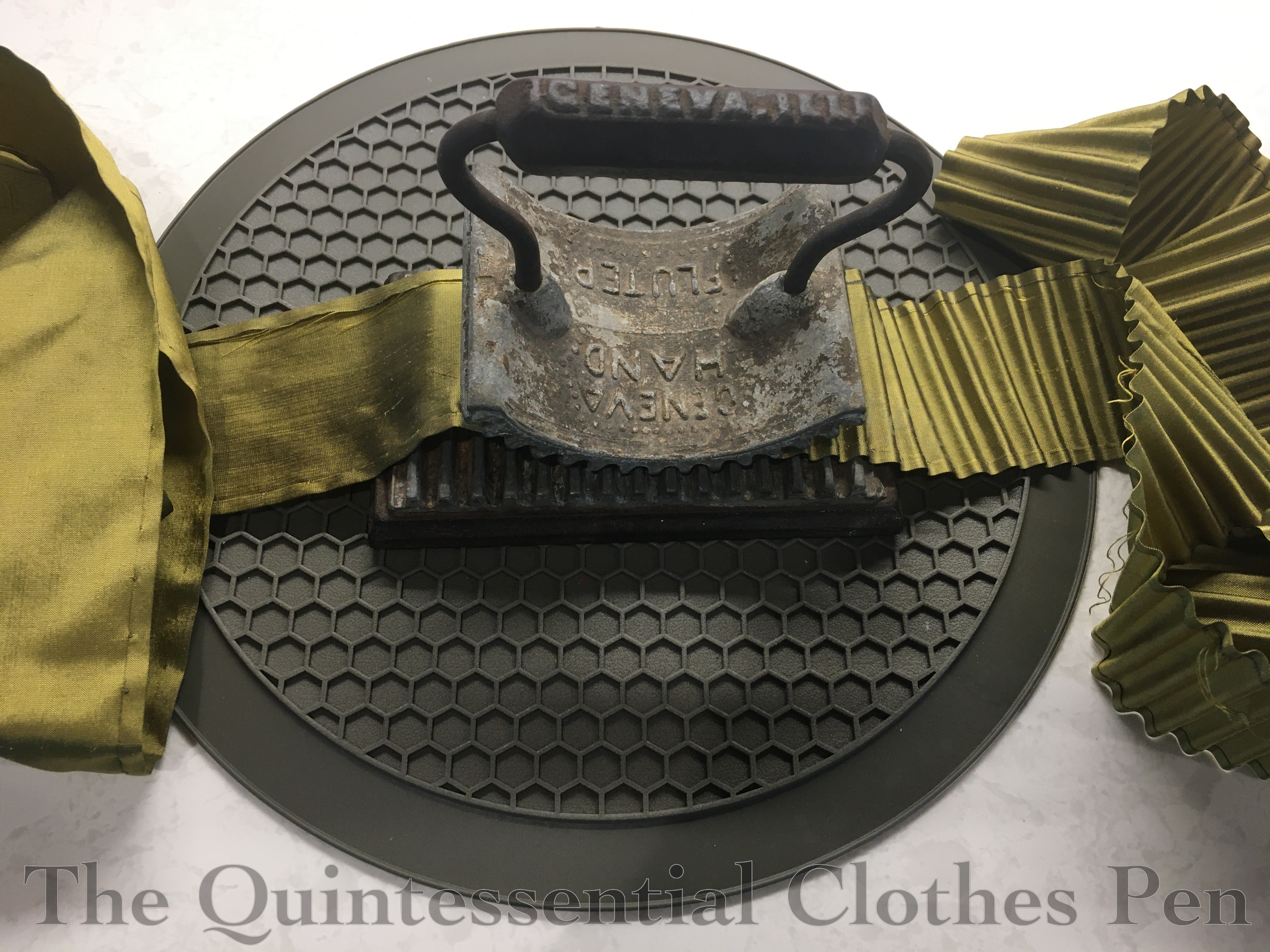
Here is mine, in action!


Despite my best intentions of actually creating trim with my fluting iron, instead it has been used as a door stop and decorative item (near my modern iron in my sewing room!) since I’ve owned it. I’m currently working on a project from 1875 that has pleated trim around the skirt and I thought that perhaps instead of knife pleating I would try a sample with my fluting iron! I figured that if I liked it (and I could get it to work) I’d use it for the trim on the dress.

Brief History

Specialty irons have been used for hundreds of years to create different types of ruffles and trims. I came across two sites that had really interesting information about the fluting iron I have as well as many other types of irons from around the world and for the last few thousand years. This one is summary of ironing throughout history. This one is more about types of historical irons. Also, this video from the Oshawa Community Museum looks specifically at some ironing tools that were used to create late Victorian ruffles, including various types of fluting irons.

Along the way to learning more about fluting irons, I also learned that flat cast iron irons are called sad irons. (I might have read that before but didn’t remember the term, so it feels like new information!) They’re called that not because they’re melancholy, but because in the past ‘sad iron’ meant the iron was solid as opposed to hollow (to be filled with heating devices, such as charcoal). The word ‘sad’ also meant heavy and a sad iron could weigh up to 15 pounds. That only further reinforces the fact that laundering in the 19th century was strenuous work (hand scrubbing, hauling buckets of water to heat, maintaining the stove or fire, harsh soaps, refreshing the rinsing water… hard work!). *This is edited from my original description of sad iron. To read all about the etymology of the terms ‘sad’, ‘sad iron’, and ‘box iron’ (the term for a hollow iron), check out this post, published after the one you are currently reading.
Practical thoughts about getting started

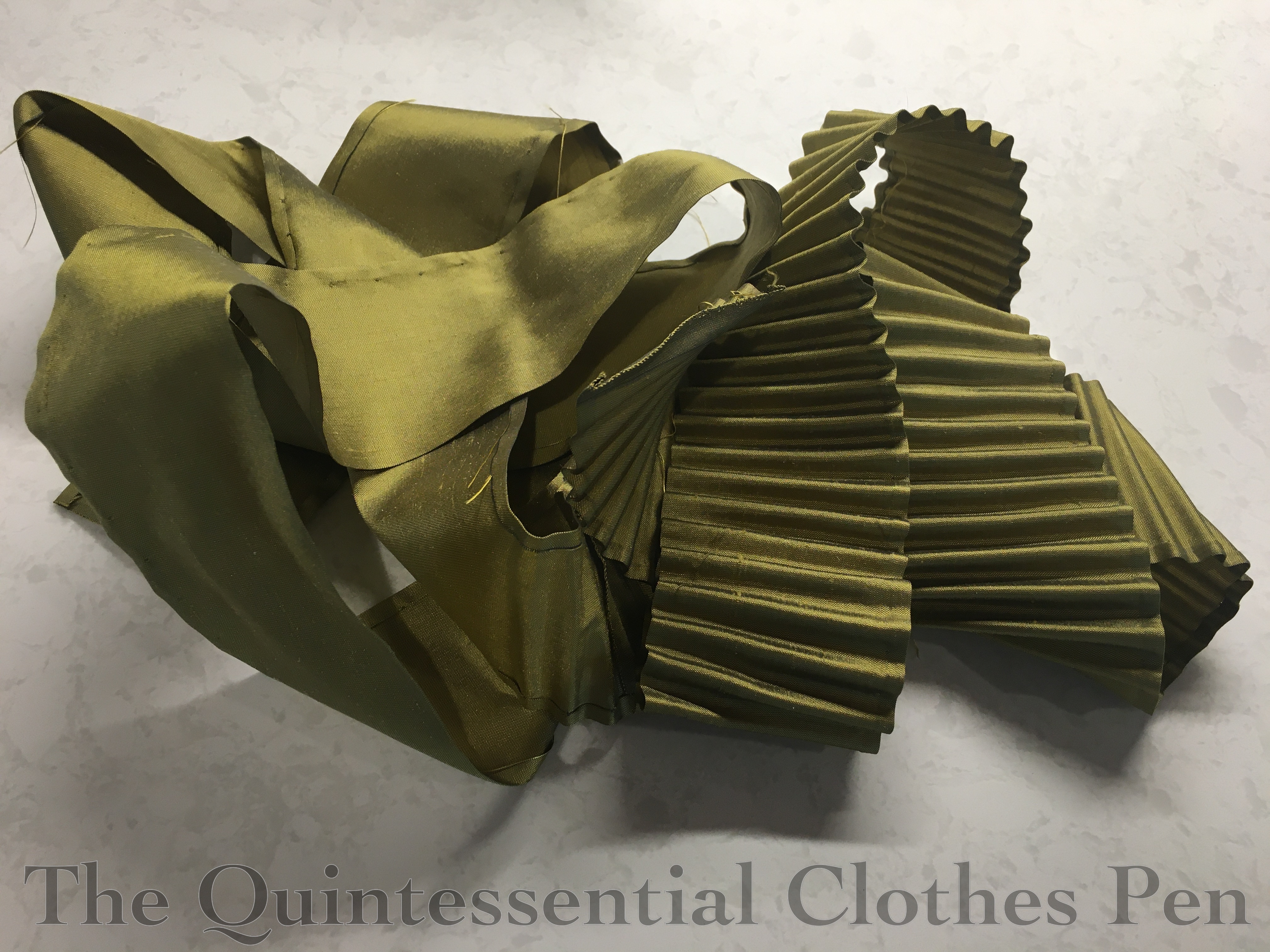
In terms of my fabric, I had the strips I wanted to flute prepared and ready to go before ironing them. I had hemmed one long side and just pressed the other edge under (that would become the top edge). With the crisp silk I’m using I probably could have gotten away with just pressing under both the hem and the top edge, but oh well. I prepared and hemmed these long before I officially decided to flute them.

In terms of the fluting iron, I followed these steps (or considered them, anyway):

Cleaning: I used dish soap and a toothbrush, to really get into all the grooves on both pieces of my fluting iron and remove the accumulated dust and grime (I don’t want those on my silk fabric!).

Drying: To prevent rust from forming, I carefully dried the iron and then also let it air dry overnight (though I realized that if I were to immediately use it the heat would cause all of the water to evaporate anyway…).

Seasoning: This is done on non-coated cast iron pans to keep them from rusting. I chose not do this with my iron at this time. I might do it later (I read that well-seasoned cast iron will not release oil onto your fabrics), but right now I just wanted to get started on my experiment.

Supplies

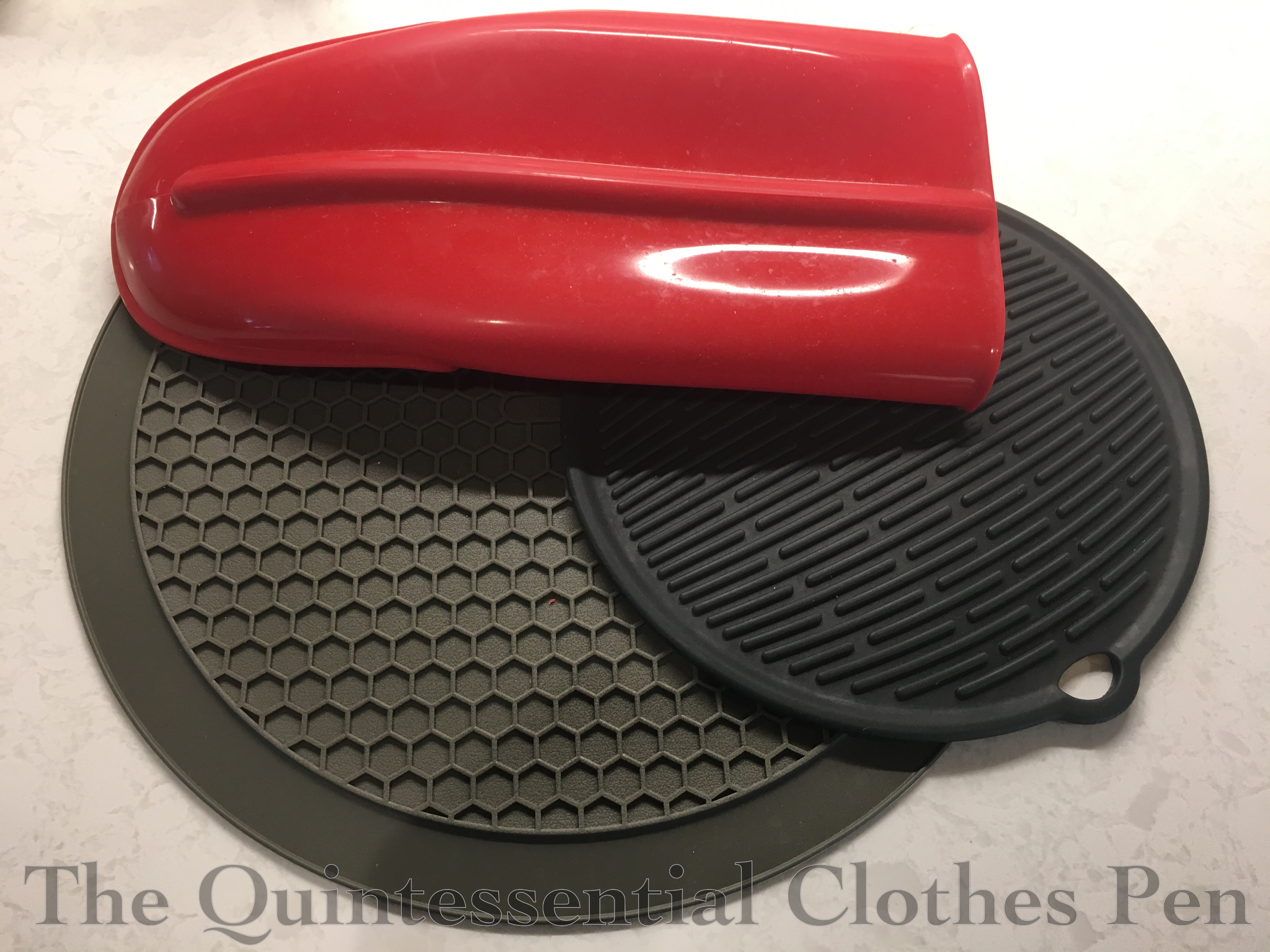
It’s worth noting that the cast iron gets much too hot to hold with bare hands or put directly on the counter to use, so in addition to the two parts of the iron, I also used a variety of other kitchen tools in this experiment.

I used the baking sheet, cookie drying rack, and cast iron frying pan you’ll see in photos at various points, as well as the silicone baking supplies pictured below: a hefty mitt, a small trivet, and a large trivet.

I also used a spatula to help get a grip on the base of the iron while lifting it out the frying pan, a small spray bottle, white vinegar from my pantry, and tap water.

Method #1 (the slow and steady way to heat the fluting iron)

Heating/Using: I used my conventional oven to heat both parts of my fluting iron on a baking sheet. I could not find specific directions for temperature or length of time, so I started conservatively with 175 F for 15 minutes. (Partly due to the basic information on Wikipedia about specific temperatures for different types of fabrics, but also check out the image of the tailor’s stove on the right side of the page: a multi-sided stove to heat sad irons simultaneously makes so much sense if you’re ironing a lot, as tailors would be!).

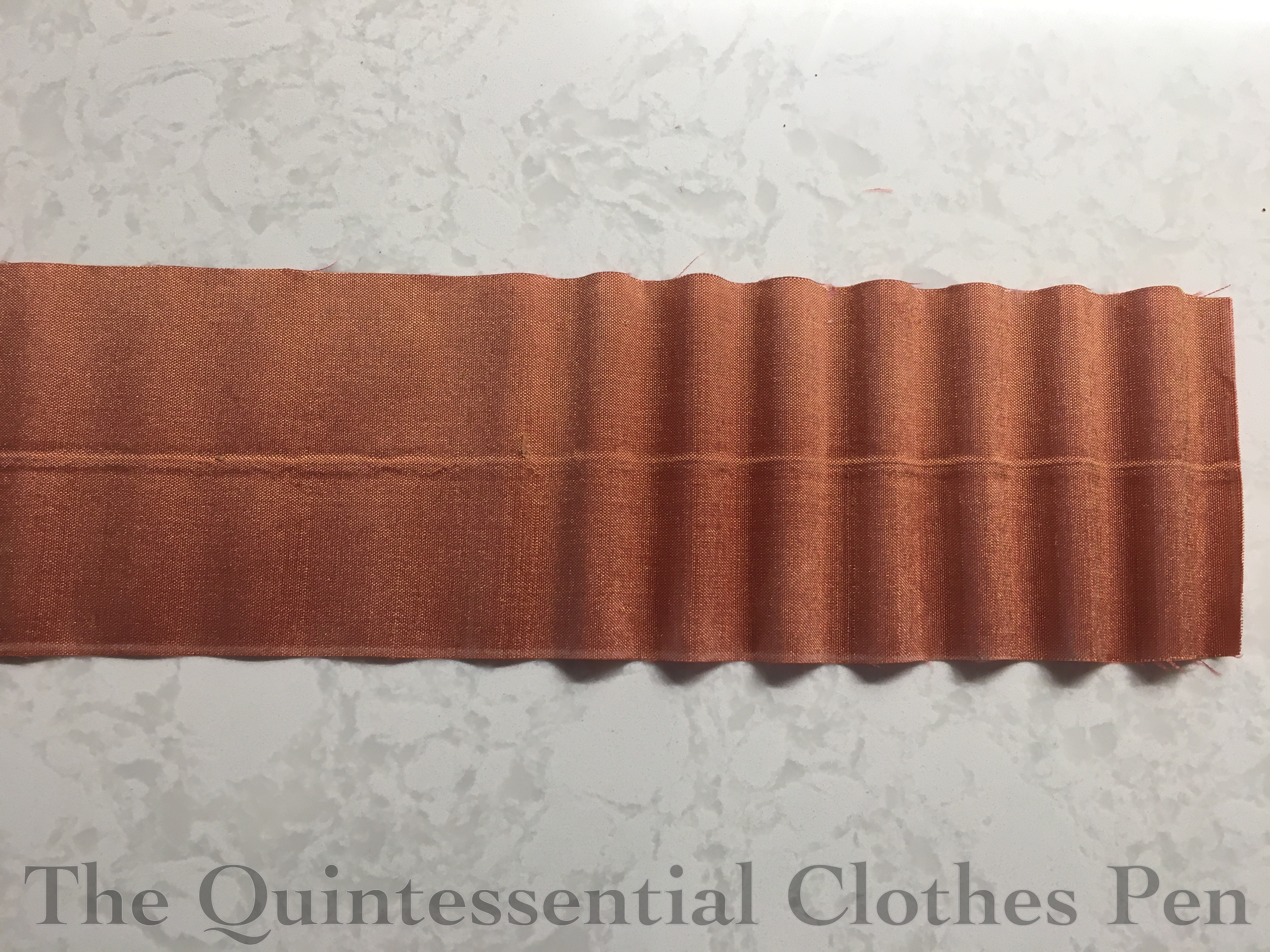
When tested on my silk this hardly made an impact. So I put the iron pieces back in the 175 F oven for another 10 minutes. This was better, but not as effective at getting tight flutes as I wanted. On the left are the barely visible results from the first 10 minutes of heating and on the right after the second 10 minutes of heating.

I increased the temperature to 225 F and put the iron pieces back in the oven for 10 more minutes. This time I also decided to use vinegar to help set the flutes. I mixed ½ white vinegar and ½ water in a spray bottle and then sprayed the section of silk I intended to iron. Here you can see the sprayed silk ready to feed into the iron on the left and the results coming out on the right.

This worked much better, but still feeling like I needed more heat to get a good sizzle and press, I increased the oven to 275 F and put the pieces in for another 10 minutes. This seemed like the right temperature! A bit of sizzle from the evaporating liquid on the silk and tight flutes as a final result.

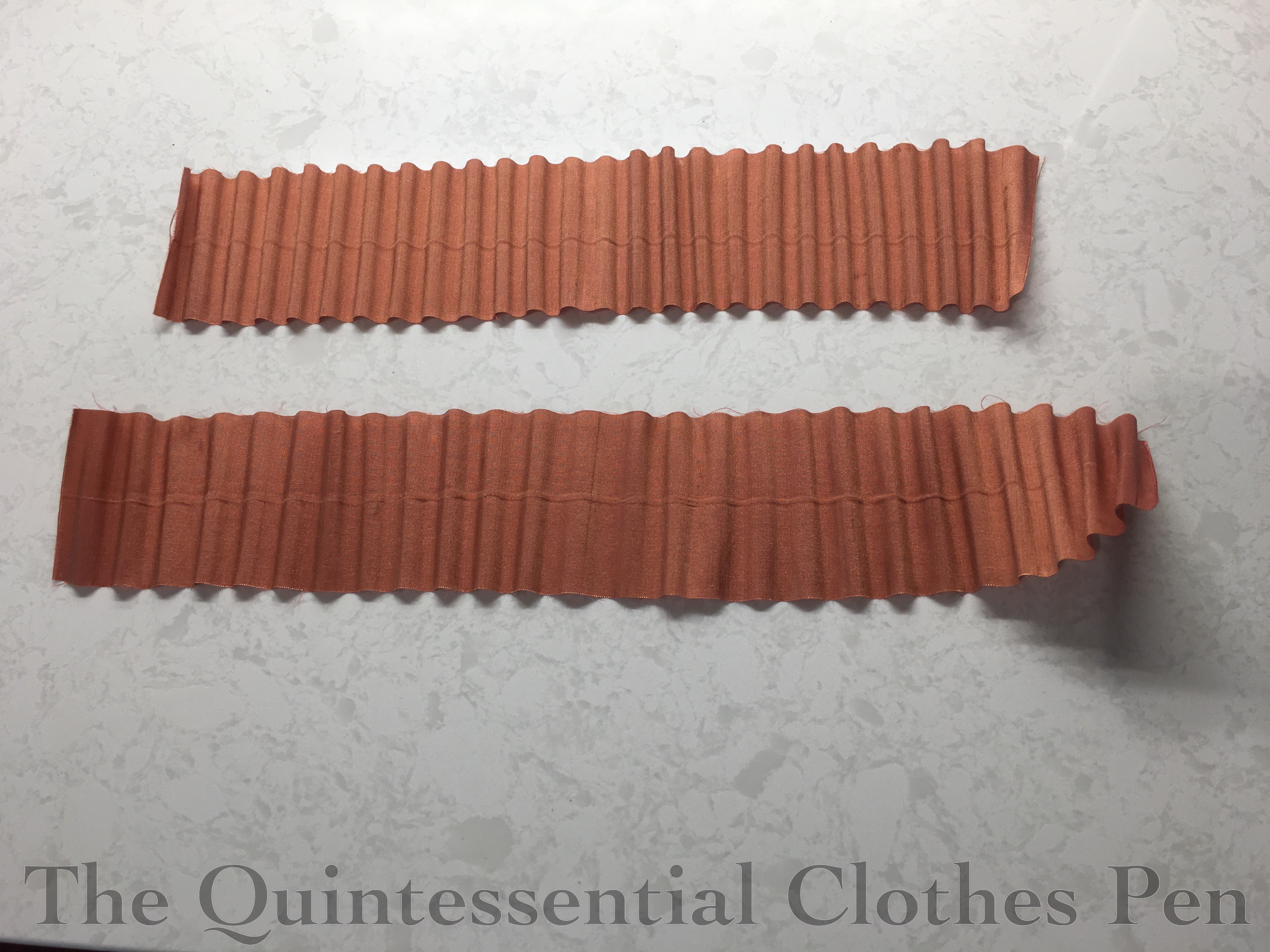
Here is a comparison of two silk samples. The one on the bottom used vinegar and lower heat: 175 F and 225F. The one on the top is the sample that used vinegar and 275 F for heating.

Reheating: I found that the iron lost heat pretty quickly. I reheated it for 10 minutes after every 5 minutes of use. It wasn’t the most efficient process (I can really understand why you would have a set with multiple irons to keep them heating while not in use), but it got the job done on a Saturday afternoon. Experimenting with temperature and fluting 106″ of fabric took about 4 hours.

Setting: In addition to using vinegar (which made huge difference in terms of getting crisp flutes!), I also found it quite important to move the iron very slowly over the base to create the flutes. A quick pass did not do the job and getting each and every flute to line up perfectly to go over it multiple times is much easier to say than to do! I rocked the iron from one side to the other, trying to hold each little section in place for at least a few seconds before moving to the next. I got through about two full rocks with the iron before needing to reheat it.

Method #2 (the much more efficient way)

Heating: After I completed the first of three 106″ sections of trim, a science-minded friend suggested that I would have much more efficient transfer of heat to the iron pieces if I were to heat them directly on my stove in a cast iron pan. This was genius!

I started with my pan on pretty low, as it’s much easier to heat cast iron up than cool it down. This particular burner on my stove gets super hot, so I kept the pan around 2 out of 10 in terms of heat. Harder to translate for other people, but I let the iron heat up for about 10 minutes, until I could feel radiant heat coming from the base when it was out of the pan and I held my hand 1″-2″ away. Another way I tested the head was with a drop of water. At this temperature it quickly evaporated when dripped onto the cast iron.

Reheating: Using the cast iron pan was much more efficient than the oven! I still reheated the iron after about 5 minutes of use, but now I only had to let it reheat for 5 minutes. And because I wasn’t lifting a pan in and out of the oven it was much easier to let the top part of the iron sit on the pan while I moved the fabric along the base piece of the iron. Because the iron was warmer than with the oven, and I’d had more practice at using it, I was able to do three or four full rocks of the iron before needing to reheat it. That meant that my second and third 106″ lengths of fabric only took about 1 hour each. So much faster than with the oven!

You can see the crisp flutes that this method acheieved.

Setting: I used the vinegar/water spray to help set all of these flutes. It should help the fabric to keep this shape permanently (short of me completely soaking the fabric). I experimented with a light spritzing, but the heat quickly evaporated the liquid so I started just making it pretty soaked. Sometimes I even sprayed a bit on the fabric right under the iron if it evaporated before I reached that section of the rocking motion.

Here’s another view of the half finished strip of fabric.

Post Experiment Thoughts

This was fun! I would definitely like to use my fluting iron for more projects–and it should be easier now that I’ve figured out how.

I will say that practice makes a huge difference in terms of being able to flute quickly, so that the iron doesn’t cool down. You don’t have too long to think once you take the iron off the heat source!

A finished pile of about 318″ of fluted trim! I’m curious about how I will sew this on. I think that a sewing machine would crush the flutes (and I don’t think I want a line of machine stitches anyway), so I will likely sew it on by hand, catching only the valleys and not the hills in the fabric. Good thing I like hand sewing!


I came across few people trying out antique fluting irons while looking for information to get started on this experiment. For the sake of anyone else who might be looking, here are a few other practical experiments to check out:

Katherine of The Fashionable Past tried out a fluting iron in 2011 and posted about it on her blog here, including a video.

@isabel.northwode tried out a fluting iron in 2018 and posted about it on Instagram here.

c. 1855 Wool Cape

Finally, I actually have photos of a garment I made back in 2011!

The story starts with my desire to be warm for caroling at the Christmas ball, so I went looking through my books and came across the image below in ‘Victorian Fashions: A Pictorial Archive’ by Carol Belanger Grafton. It looked warm and I liked the fringe, so off I went on my sewing adventure!

Since then, I’ve managed to wear my cape a number of times, often for Christmas caroling. Even though its date is c. 1855, I’ve found that the loose shape is perfect for wearing over the large sleeves of my 1830s dress as well. Here’s proof, from 2017:


That’s really the only photo I have that looks nice and shows the cape. Other photos that show the cape are washed out or blurry.

Last year I decided it was time to get pictures. I settled on a day I’d already be wearing 1850s (Annabelle is my dress and I’m also wearing a matching chenille headdress). It was important that there would be daylight (that’s the other problem with some of the photos I have, they’re taken during dark winter evenings–that’s usually when I’ve been caroling). Then I brought the cape (despite not actually needing to be outside for the event) and coerced the usual camera toting suspect into taking photos.

I made the pattern by looking at the inspiration image and drawing the shapes I thought would make it up, although I did take a bit of liberty in terms of closure and arm openings. I also referenced shapes and proportions in ‘The Cut of Women’s Clothes’ by Norah Waugh and ‘Patterns of Fashion 2’ by Janet Arnold.

I wanted simplicity for the closure, so my cape has a single heavyweight hook and loop at the neck. For the arm openings, the fronts are simply separate from the curve that wraps around to the back of the cape.

For warmth, I decided on a wool exterior (also good for shedding moisture). To add even more warmth, I also added a layer of high loft polyester batting to the entire cape. That may not be the most accurate choice (at least in terms of fiber content), but it is quite practical. I thought of quilting the lining to the batting but decided it would be too time consuming. I’m sure the batting extends to the edges and is stitched down, but honestly I don’t remember exactly how that was accomplished.

I loved the fringe in the image and wanted fringe on my cape, too. But not just any fringe. Wool fringe. That was a hunt! I eventually found it at an upholstery company called The Fringe Factory.

To keep the lining soft against my skin,  I decided to line the entire cape with natural cotton flannel  to match the fringe as well as including a stand up ruffle of the flannel at the neck.

As you can see, the cape is quite long. That’s quite a bit of wool, batting, and flannel! I achieved my goal of warmth, but this cape weighs quite a bit!

Looking back at my notes, this cape was more expensive than I remembered (though that’s not actually surprising, given the yardage I needed and my desire for 100% wool). I didn’t record the yardages, but I did record the costs. I spent $58.67 on the flannel at JoAnn, $81.00 on the wool at Dorr Mill (I love their wools! They are gorgeous!), and $96.36 on the fringe at The Fringe Factory. The total is $236.03. That’s way more than I often spend on a single historical garment! I had better keep wearing this to get the cost-per-wear down!

Despite the cost, I’ve been very pleased with my cape over the last 9 years and I’m extra pleased to finally have well lit, full length photos so this garment can make an official appearance on the blog!