Jewels! It seems that those of us historic costume wearing types who like evening events want to be wearing them, at least sometimes. It’s hard to find real jewels in a reasonable price range, obviously, and glass or paste ones can be hard to find in a reasonable price range, too. But…
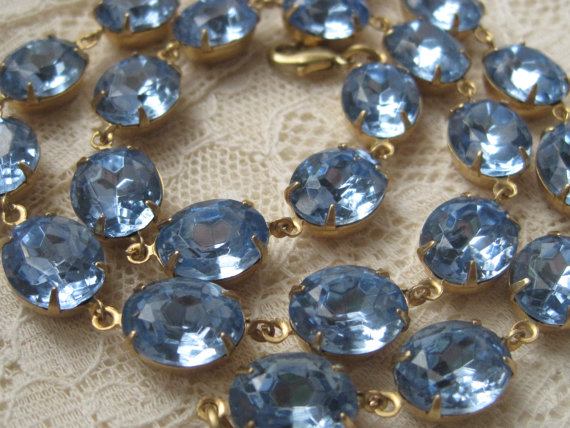
Have you seen the beautiful jewelry that Taylor is making and selling at Dames a la Mode? She has collet necklaces, various styles of earrings, and occasionally bracelets in all sorts of fabulous colors that will match any outfit you might have in your closet. Beautiful jewels in a reasonable price range!
Reproduction collet necklace at Dames a la Mode on EtsyOriginal collet necklace c. 1800 that was recently listed on ebay.
Look at how similar they are to original pieces! Here are links to my 18th century and 19th century jewelry boards on pinterest so you can see more original examples of this type of jewelry. Now you, too, can have lovely, sparkly, wonderfully beautiful jewels to wear to events.
In fact, at a recent Regency ball there were four of us wearing Taylor’s fabulous jewelry, including Taylor herself. It was my first wearing of the matching lavender collet necklace and double drop earrings that I purchased back around Thanksgiving. I received lots of compliments and really enjoyed wearing them.
Matching, but unique to each of our looks.A close up of the jewels!
During conversation, when I mentioned that I liked the dark blue sapphire-like necklace that Taylor had in her shop at one point, she made a good point, which is that lighter colors tend to sparkle more in moderate or dim lighting. Darker colors only sparkle with bright lights, which isn’t often the sort of lighting you find at a ball or dinner or other evening event set in the late 18th or early 19th centuries. Makes me glad that I decided on lavender rather than sapphire!
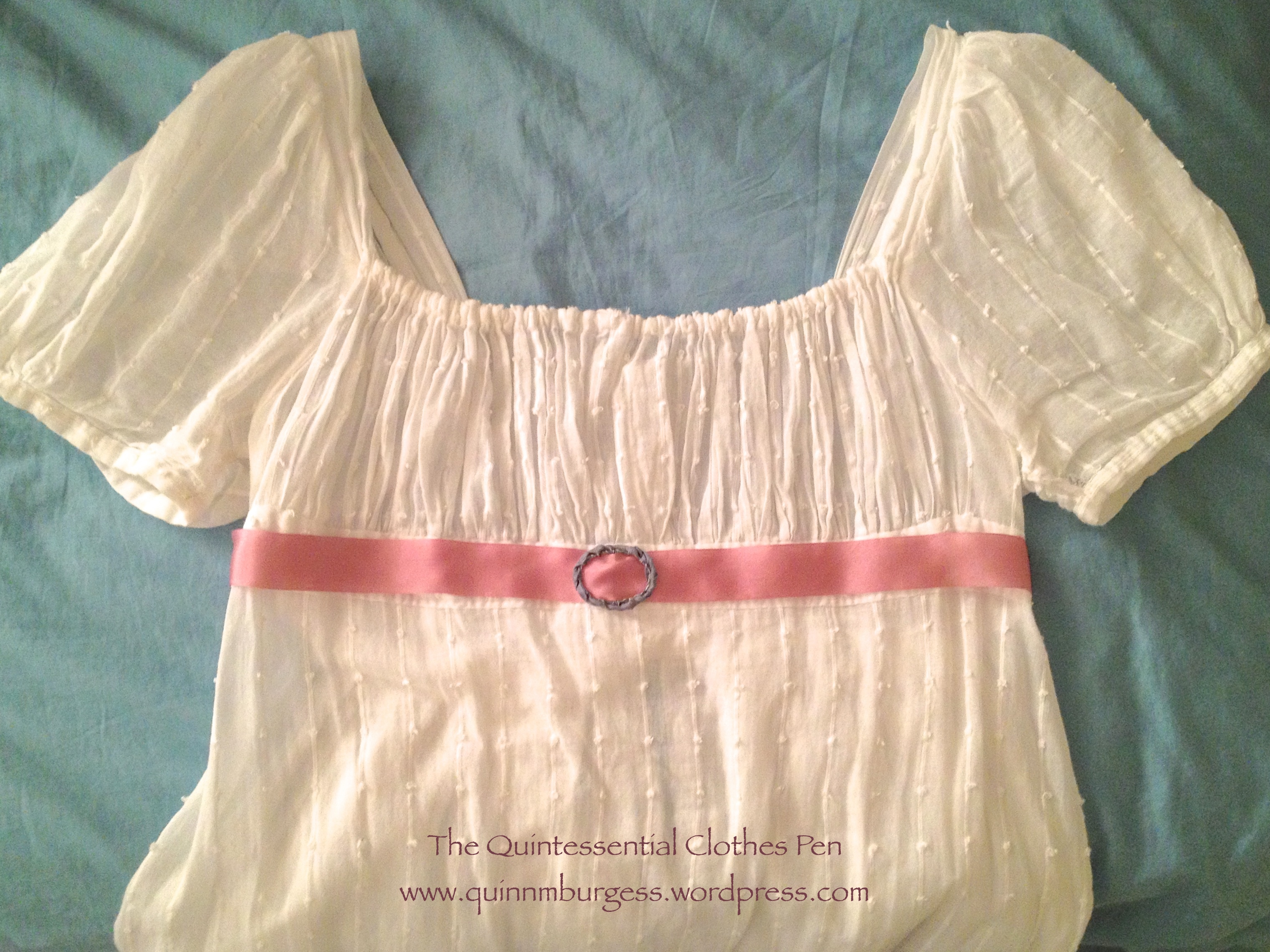
My project for the HSF Challenge #3: Pink is a silk belt style sash for my square neck 1812 gown. It’s a small project because I’m working on multiple other bigger projects (two different Regency dresses and a new 1850-1870 corset–more on those in the upcoming months) and I didn’t want to distract myself. Part of my decision to make a belt style sash came from the discussion with friends that led to my previous post on adding variety to Regency sash styles (this post explains what I mean by a belt style sash, in addition to explaining other Regency sash styles).
And now, as usual, on to the facts:
Fabric: None.
Pattern: None.
Year: c. 1810
Notions: About 1 yard pink silk ribbon, some unknown yards of 28 gauge wire, maybe 2 yards grayish blue hug snug, a hook and bar, and thread.
How historically accurate?: Silk is an accurate material, but nothing else is for this time frame. So… maybe 80% for looks and 40% for materials.
Hours to complete: More than it should have because I made the buckle from scratch. Let’s say 4.
First worn: To a vintage dance performance in January.
Total cost: Free (all stash materials)!
I didn’t have a non-sparkly buckle in the right size, so I decided to make one from wire. At first I thought that it might be cute with the scallops around it, but it didn’t look solid enough from a distance. So I experimented with weaving ribbons through and around the scallops. I tried gold silk ribbon first but it ended up looking like straw. In the end I decided on the hug snug because I liked the color.A closeup of the finished buckle. It wound up looking rather braided.The finished effect.
For the performance, I sewed the belt to the dress even though I also sewed a hook and bar to the belt. The idea is that I can wear it with another dress in the future if I want to!
In modern interpretations of Regency costume, there is a widespread use of what I am going to call the “ribbon sash.” By this I mean a length of ribbon, in a contrasting color to the dress and not used to trim any other part of the dress, tidily tied or sewn under the bust, and terminating with long hanging ends. I understand that this style provides an easy way to adorn a dress of any color or add color to a white dress, but I believe that the style is much too often used relative to the occurrences we see of them being worn in portraits, fashion plates, and built into extant gowns. I would like to encourage all of us to have variety in the ribbon sash styles we wear with Regency clothing.
When looking at portraits, fashion plates, and extant gowns, you do find the sort of ribbon sash I described in the beginning of this post, but you don’t find them in anywhere near the same proportion with which they are used today. You do see these types of sashes, but it is a small proportion of the styles worn and you see a variety of other sash styles, too. I would like to share a variety of ribbon sash styles with you and encourage you to pick one of these less used styles if you decide to wear a ribbon sash yourself or if you have the influence to encourage others in their own ribbon sash wearing. By expanding the styles of ribbon sashes worn, hopefully we can all more accurately represent clothing worn in the Regency period.
Generally speaking, there are 4 large categories of ribbon sash styles. I’ve included an example image of each style underneath the accompanying description and I’ve included links to other good examples (below the four sash style descriptions) so you can look at them for more ideas.
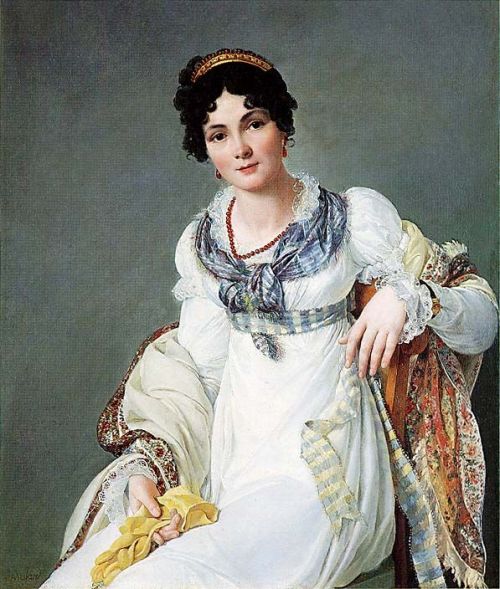
1: The Ribbon Sash (as described in the beginning of this post): a length of ribbon, in a contrasting color to the dress and not used to trim any other part of the dress, tidily sewn or tied under the bust, and terminating with long hanging ends approximately 24″-36″. It is very rare to see this style used in a fashion plate or painting with the termination of the sash in any location other than center back.
Henri François Mulard, Portrait of a lady, circa 1810
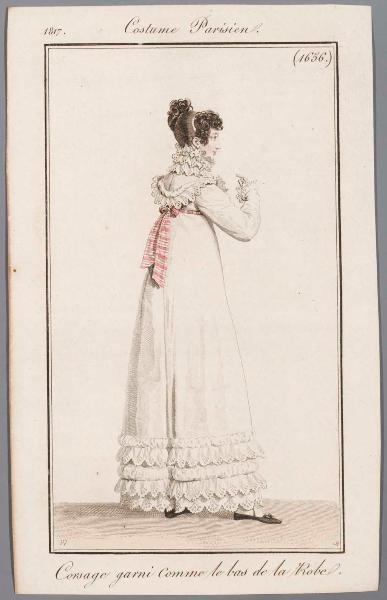
2: The Short Sash: a length of ribbon, in a contrasting color to the dress and not used to trim any other part of the dress, tidily sewn or tied under the bust, and terminating with short hanging ends approximately 6″-18″. I have seen this style with the termination of the sash in center back, center front, and occasionally off to one side of the front.
Costume Parisien, 1817
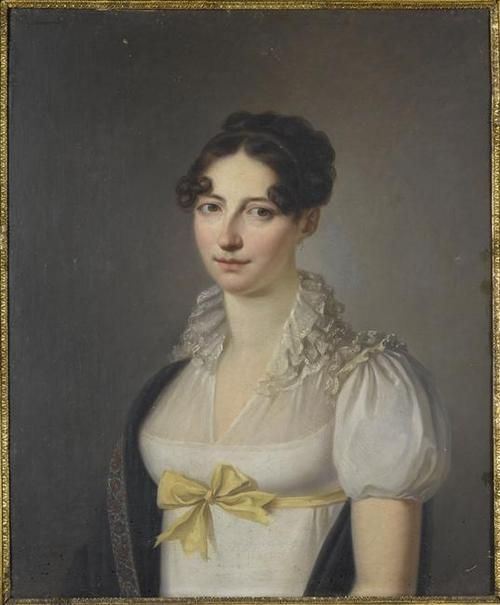
3: The Belt Sash: a length of ribbon, in a contrasting color to the dress and not used to trim any other part of the dress, tidily sewn or tied under the bust, and with very short hanging ends or without hanging ends at all. This style is sometimes plain or sometimes adorned with a buckle or bow. The buckle or bow with short ends is often at center front.
Portrait de Laure de Berny ca. 1810 by Henri-Nicolas Van Gorp
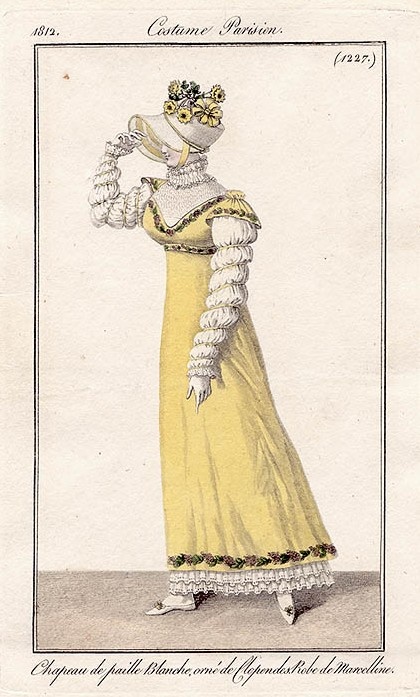
4: The Trim Sash: a much more common variant of any of the first three sash styles. Any of the first three sash styles can fall into this category if the sash matches and coordinates, in a harmonious fashion, with trim elsewhere on the dress (neckline, sleeve openings, or hem).
Costume Parisien, 1812
All of these sash styles are seen with different styles of termination. I’ve most often seen a variety of bows as well as tidy arrangement of loops. Often, the belt style seems as though the belt sash is actually sewn to the dress, but for the sake of options, I can easily see a ribbon sash made with a closure such as hook and eyes so the sash can be easily added or removed from any outfit. It’s worth noting that there are a substantial amount of images showing ladies from the front who appear to be wearing a ribbon sash of some sort. The trouble is that we often can’t see what’s going on in the back, so we can’t know with certainty what style of ribbon sash is actually being represented, though we can make educated guesses.
Here are more examples of each of the sash styles shown above:
Of course, these are only a starting point. My pinterest boards have hundreds of pins from the 1800s and 1810s that you are welcome to look at for other ideas. Keep the contrasting ribbon sashes in mind, but don’t forget that you can make sashes out of your dress fabric, too (see below). Sashes made from self fabric are quite common. Look around and see what you can find that inspires you. This Regency Portraits board has a lot of great images showing all sorts of sashes as well.
Here are some great examples of dresses with sashes made from self fabric (meaning that fabric used in the dress was also used to create a ribbon sash look):
In looking at my pinterest board covering 1800-1809, I do find that there are some very cute sashes then, too, that are relevant for a potential sash look. In this period it seems that most sashes match the trim used on the dress, though it is not an absolute rule. I’ll include a few examples of this sort below, so you can look if you’re curious.
For the record (and because I always forget!), the official “Regency” is referring to England during the years 1811-1820, following the Prince of Wales being named regent for George III in 1810. In France, the Napoleonic Empire spanned the years 1804-1814. So there is some overlap between Empire and Regency, but not a whole lot. (And just to add another date to the mix, the Federal period in America roughly spanned the years 1780-1830.) For the purposes of this post, I’m using the word Regency to specify the 1810s, but my points about variety in sash styles are relevant for the first decade of the 19th century as well.
As a final note, let me encourage you to use color in Regency dresses (color in trim as well as color in the fabric), especially in those dresses intended to represent the 1810s rather than 1800s. By the 1810s, not all dresses were in white tones, as they were much more predominantly in the first few years of the 19th century. Colors were used often, some of the colors even being rather vivid in tone (don’t get too carried away with very bright colors, though, because chemical dyes weren’t invented till the middle of the 19th century). Check out these great resources that describe and show colors used in the Regency:
Refreshing in a tiara and apron.While preparing the refreshments someone realized we didn’t have a knife to cut the pound cake. That didn’t stop us for long, though, because it’s entirely normal for the men in our group to have swords in the car. All that was required was a quick walk out to the car to get one, and just like that we were back in business!One of the pretty cards labeling the refreshments.
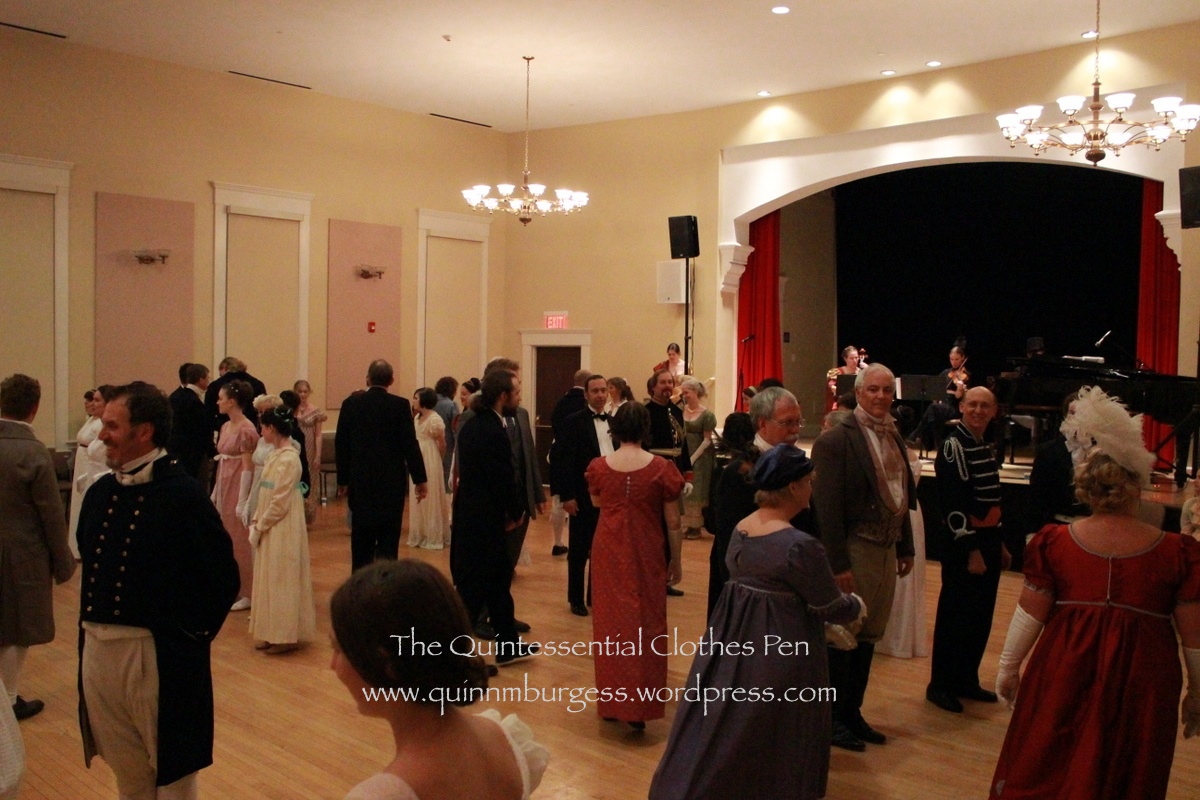
The ball was a huge success. I think there were about 70 attendees, which quite filled up the room we were in. There was live music played on a piano, cello, and violin. People seemed to really enjoy themselves.
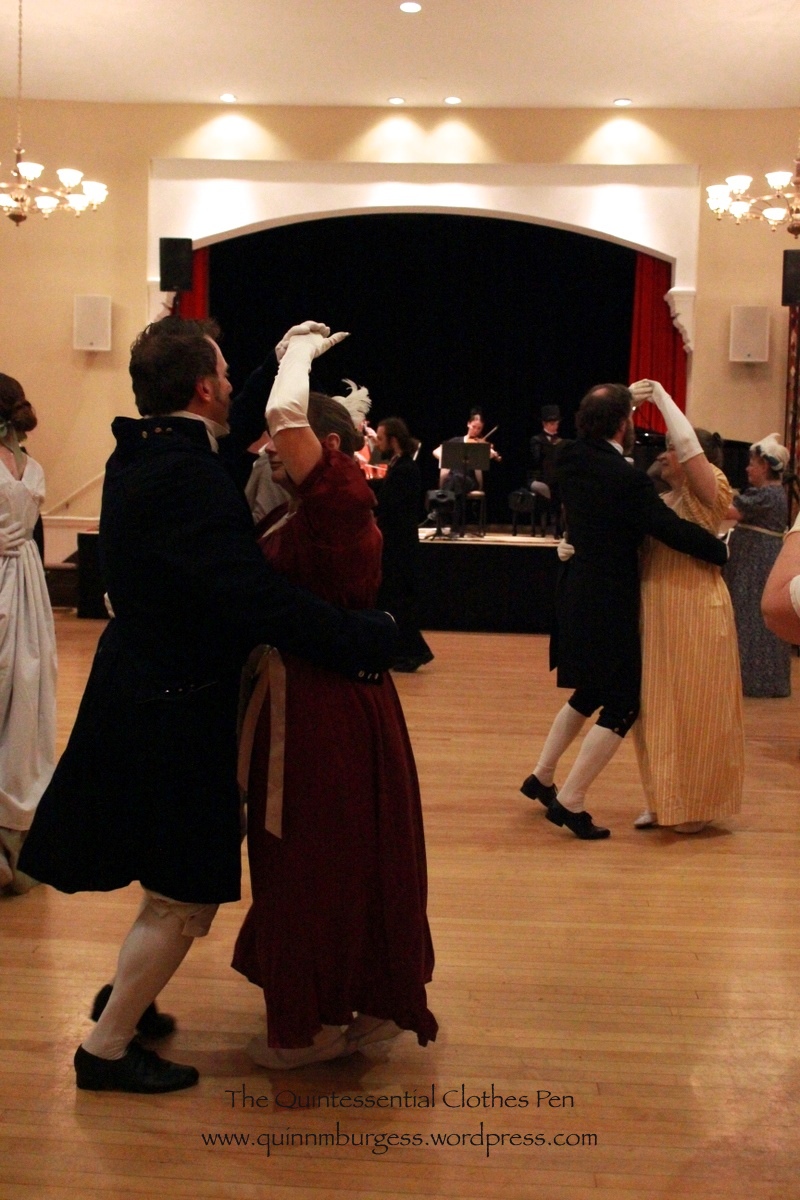
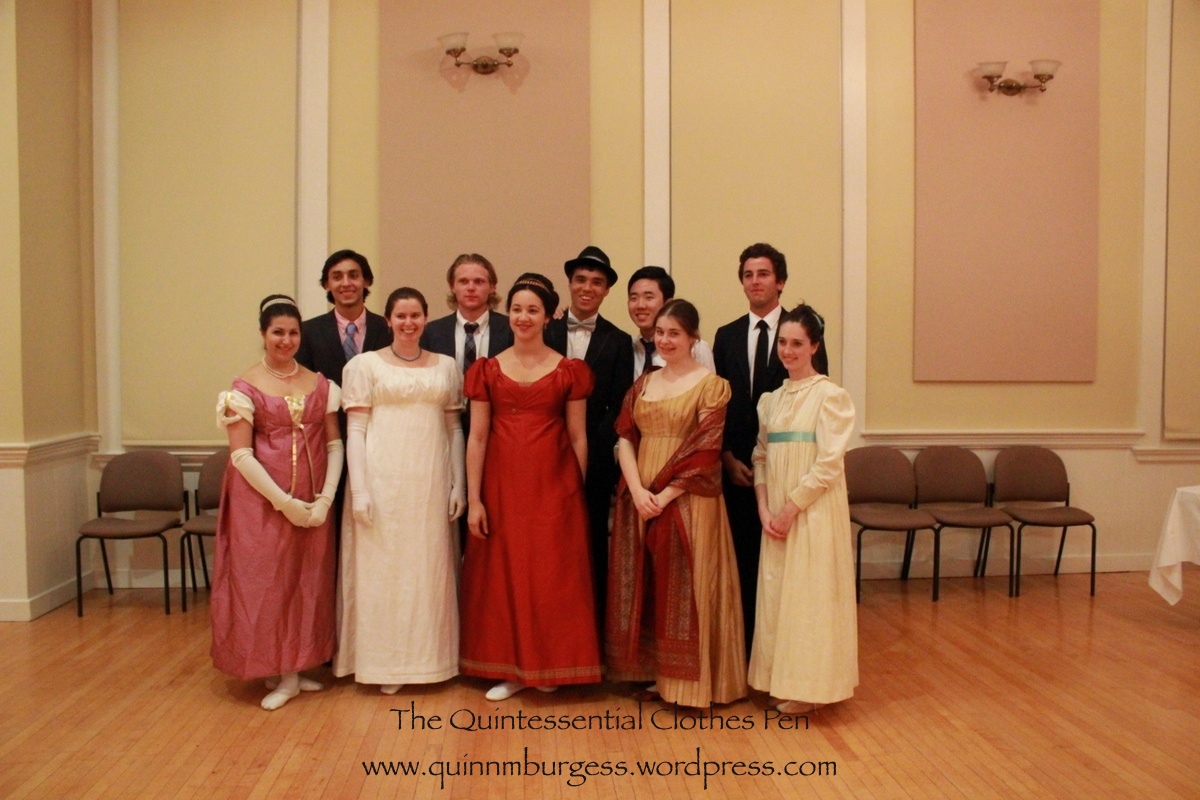
A view of the crowded room.Dancing a country dance.I was so busy dealing with refreshments I didn’t get to dance much, which was a little sad, but this was one of the dances I was able to dance.Couples dancing a Regency waltz.More waltzing.People were very well dressed and it’s always fun to look at the clothing people who are new to one’s acquaintance.One of our friends made a new dress for herself as well as a friend who was visiting and attending the ball. So kind!And there were a surprising number of new faces. This group of young men requested a picture with us, and we obliged.I’ll leave you with this further, slightly artsy, proof of my new tiara being worn.
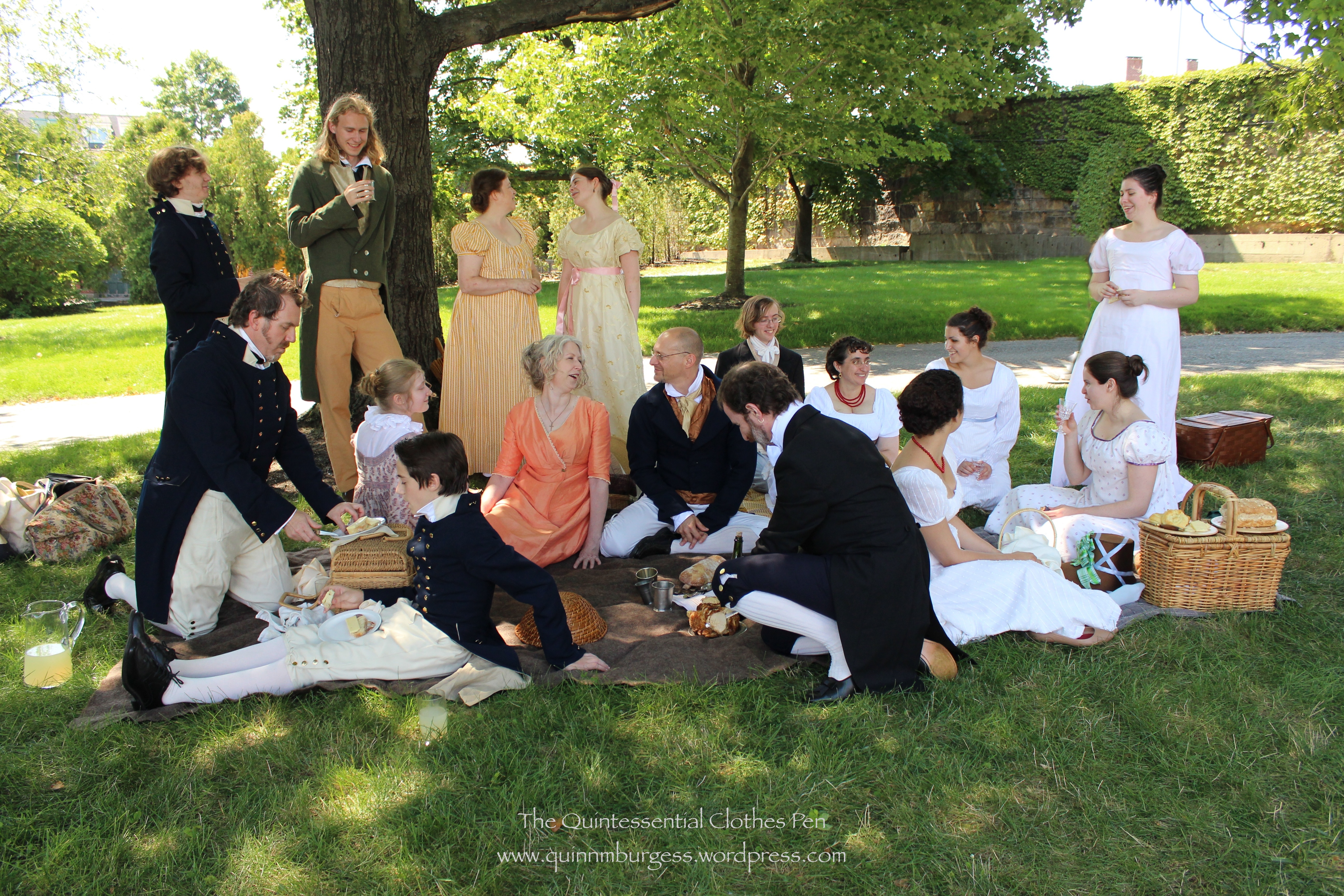
A few weekends ago I participated in a picnic and dance performance at the Commandant’s House. You might remember that we danced there last August? It was great fun last year and we were pleased to be able to participate in another event at this lovely location.
This time around we were there mostly to picnic, so that’s what the majority of my pictures are from. But we did dance a little in the house and lounged around to take a few pictures. Enjoy!
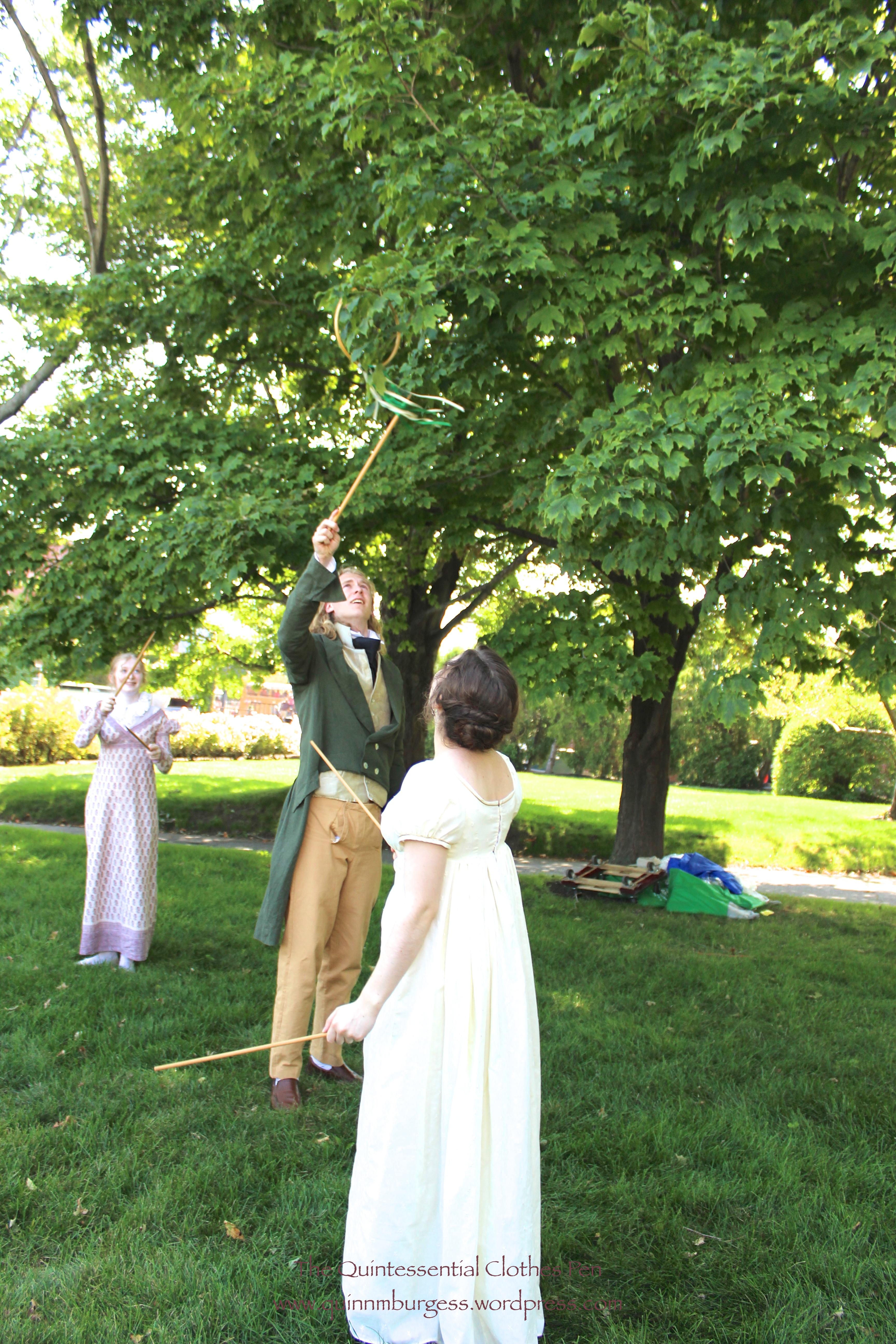
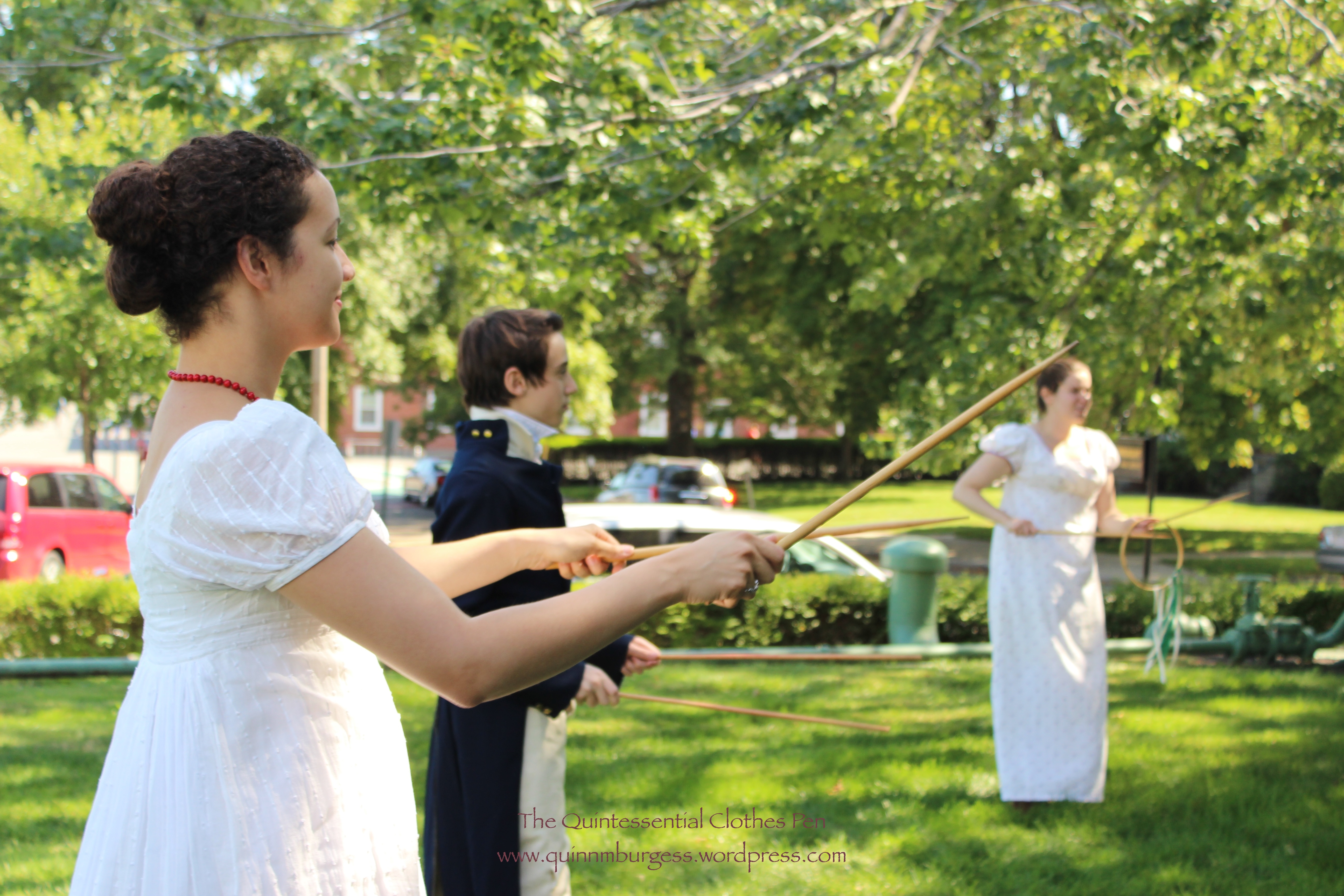
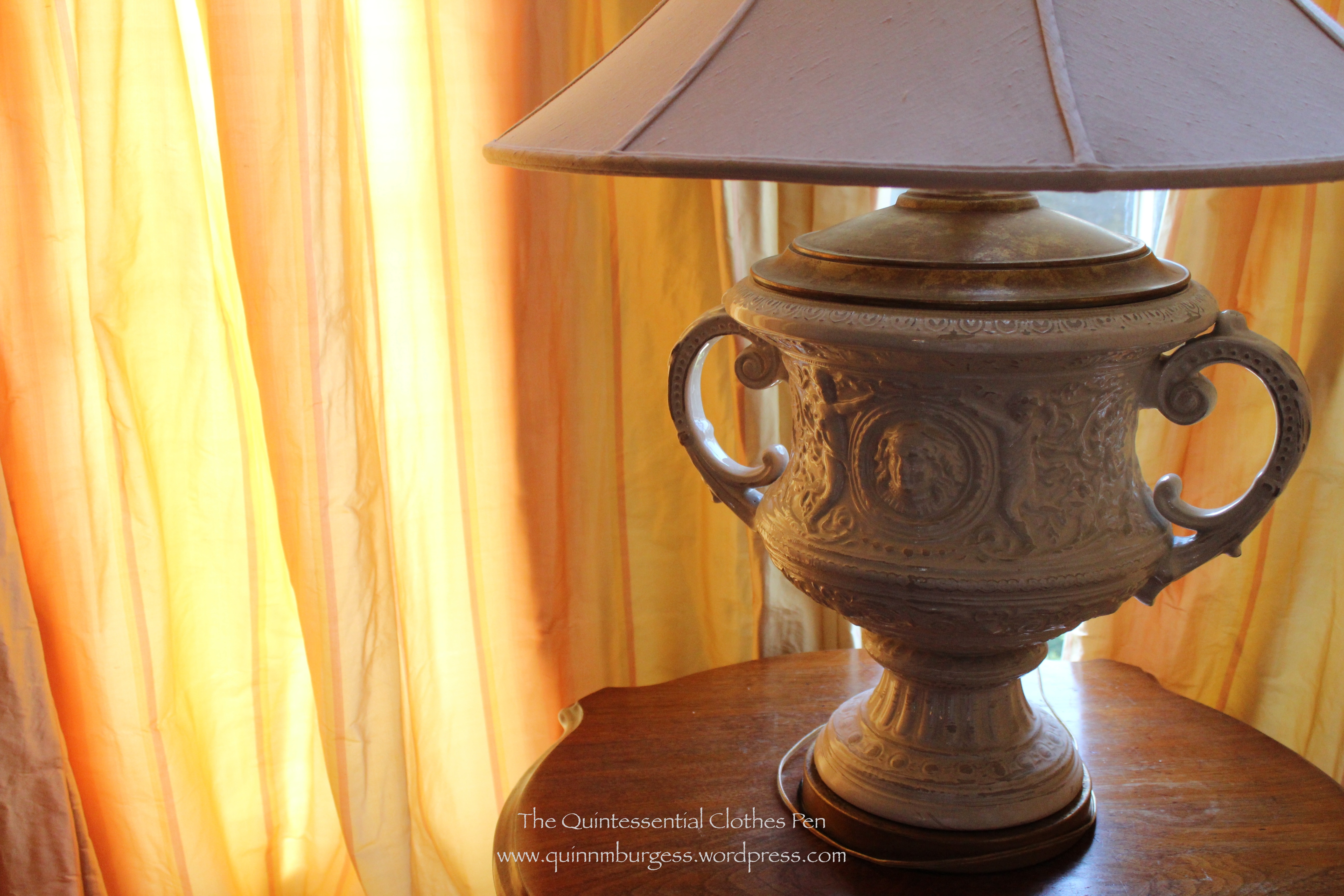
I love how picturesque we all look in this photo! It’s sort of funny how the white dresses all clumped on one side and the colored dresses on the other.After eating we played Graces.It’s much more fun with lots of people and lots of hoops!We played it in a big circle and would just call someone’s name to get their attention (hopefully) before flinging the hoops at them.There were some really good catches and really close misses.We had a great time and laughed a lot!With trees around, I’m sure you can guess what happened…I didn’t want to do a boring bun, so I opted for two rolls of hair instead.We were called from Graces to dance inside the house. I was particularly appreciative of this wallpaper this time around. It’s in the entry hallway. You can see other interior pictures of the house in this post from last year.The curtains in this room have a lovely glow when the sun shines on them.Looking for Mr. Darcy, perhaps? I just love the shadows and the glow.
Well, not me, exactly… (But please, tell me you know what movie the title of this post is referencing! I love that movie!)
Anyway, let’s start at a place that’s not at the beginning (yikes, I’m full of movie references right now!) and explain about the church, and getting there on time.
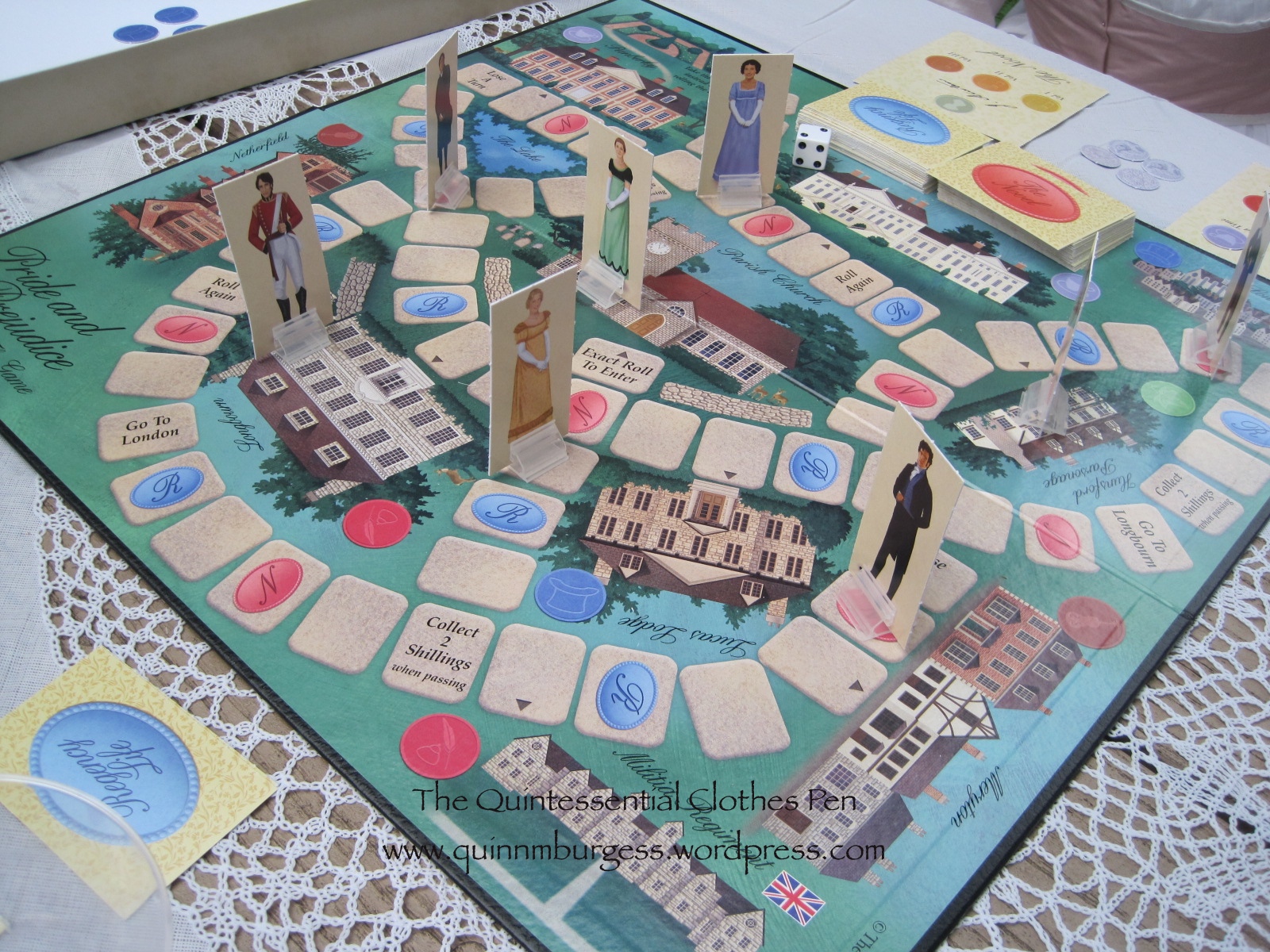
It’s hard to see, but right there in the middle of the board is the Parish Church.
This is the Pride and Prejudice board game, one of the amusements we took part in at a somewhat recent Regency picnic! There are four players who each control two characters (a male and a female). The goal is to collect various tokens either by visiting different places on the board or answering trivia questions and then, finally, to be the first person to get both of your chracters to the church. Now does the title of this post make more sense?
I was Jane and Mr. Bingley.
The game was quite fun and amusing, though I could imagine it would be a lot slower and less interesting if the players had a very low level of knowledge about Pride and Prejudice.
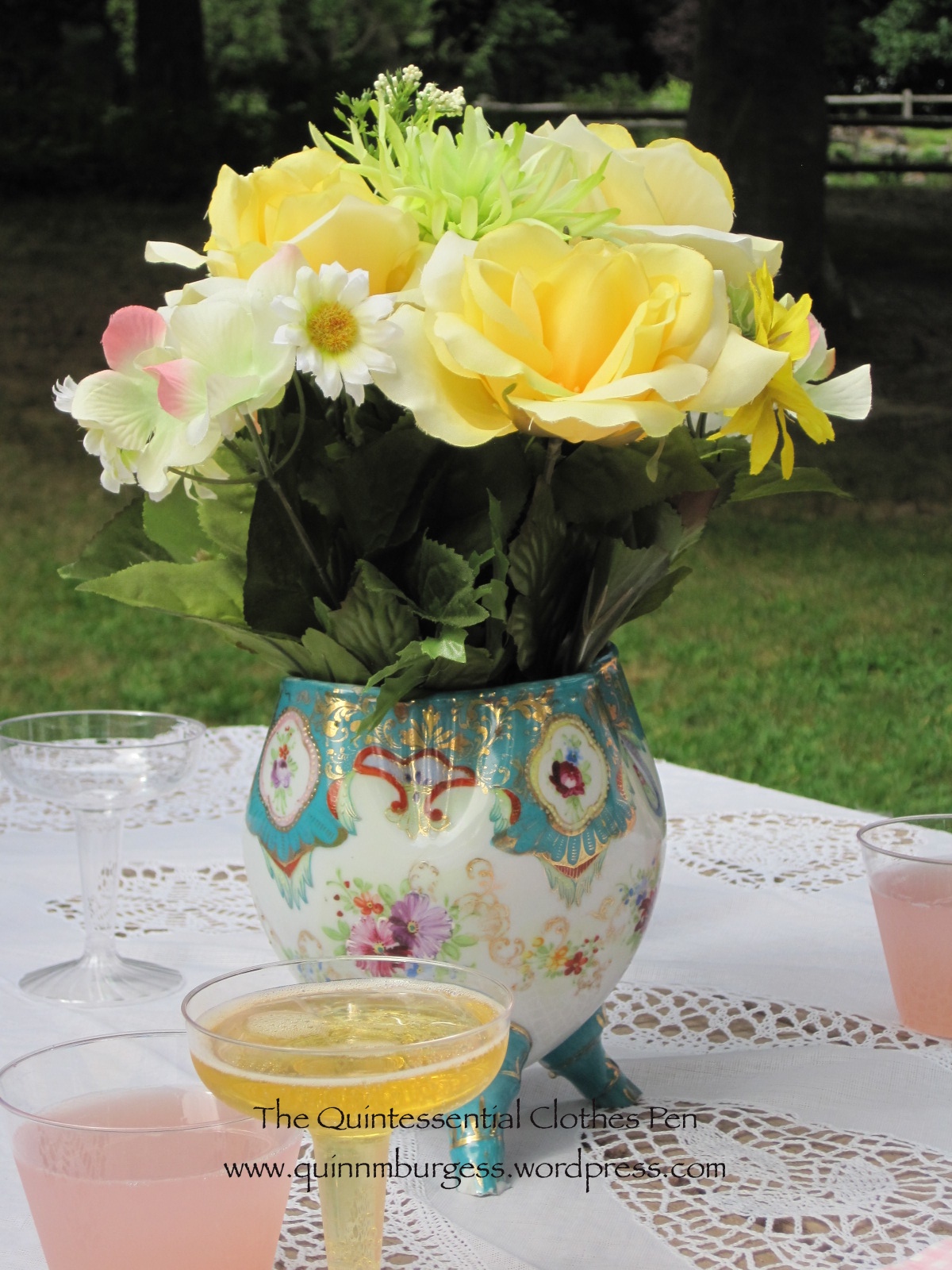
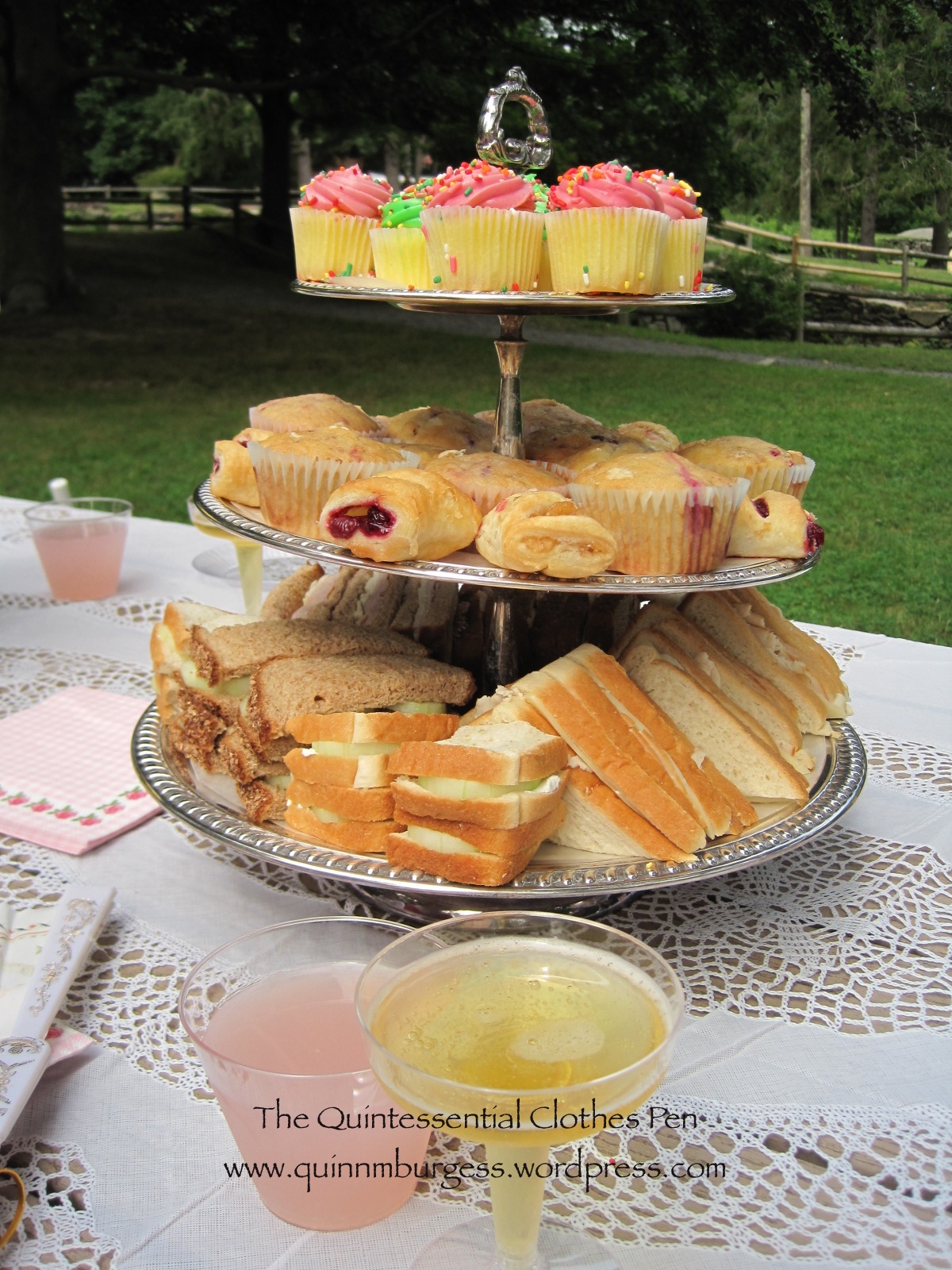
To back up to the beginning, though, the game followed food eating time at the picnic. We had a pretty elaborate picnic set-up with vases, and silver, and vinyl lace table cloth…
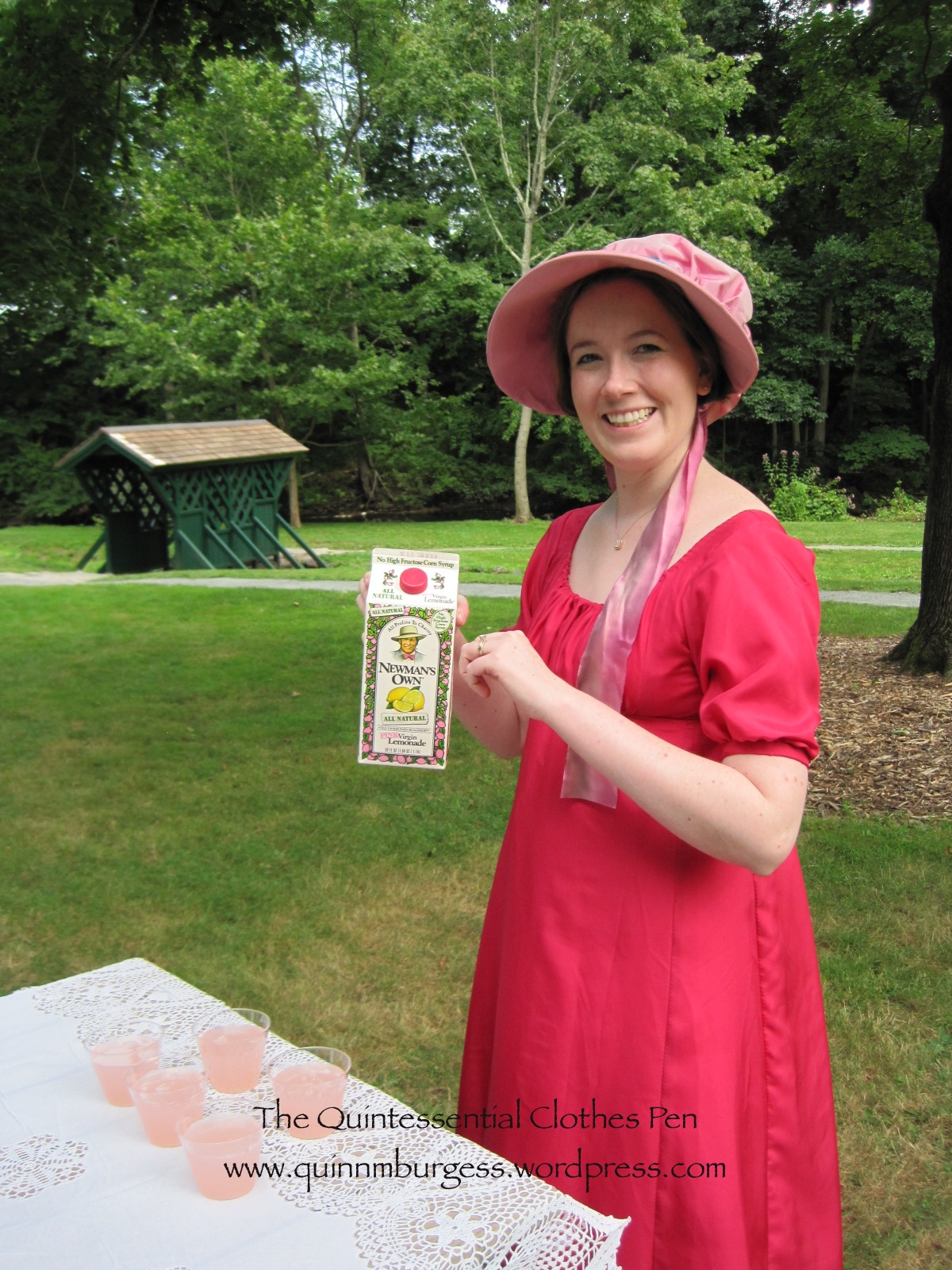
Food!Flowers, lemonade, sparkling cider…Sandwiches, muffins, cupcakes, pastries…Obviously, Newman was around in the Regency.
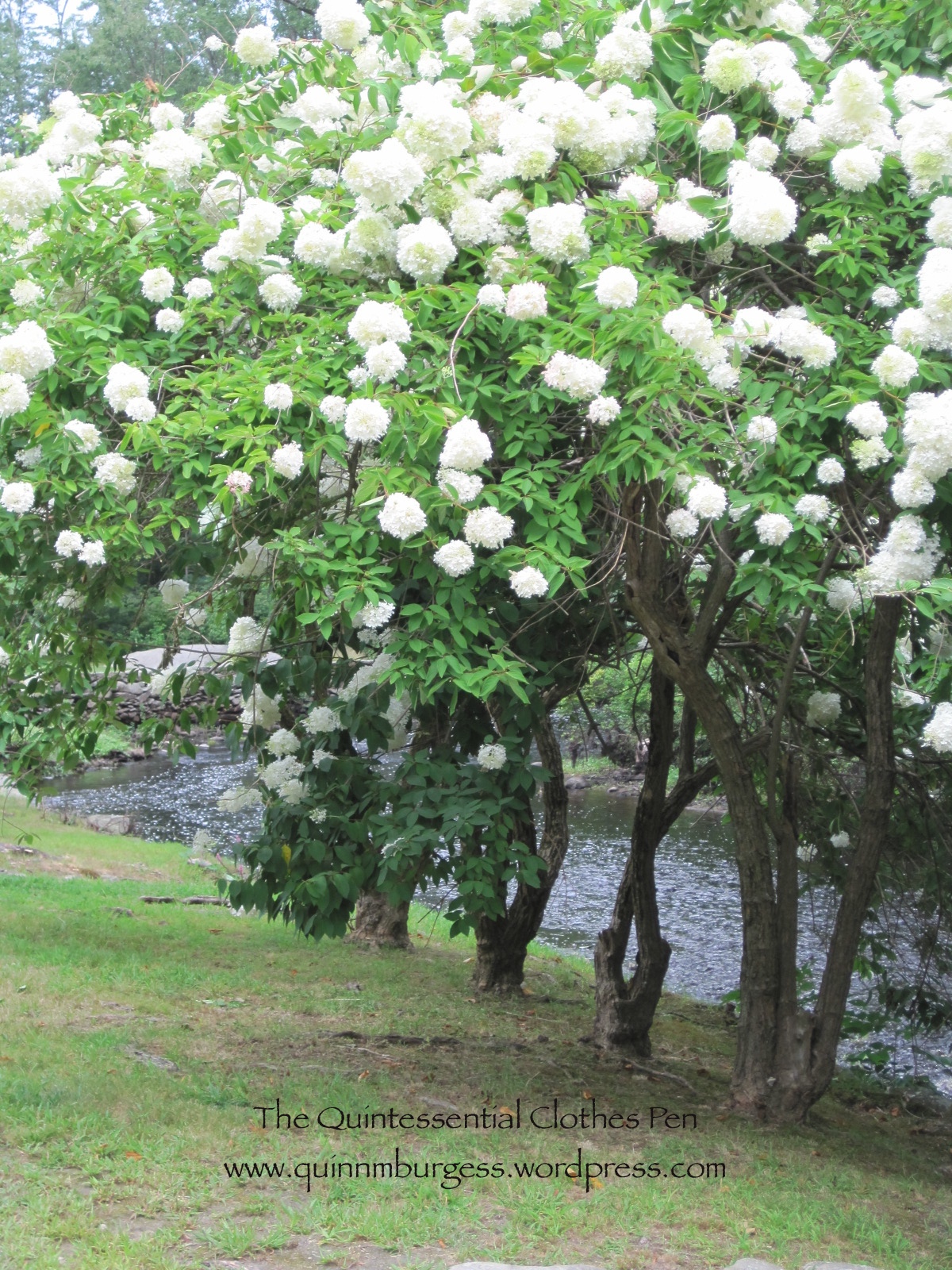
After food and board games, we took a walk around the park we were picnicking at for some photos. The park is full of lovely little dips, stone walls, creeks, waterfalls, and plants. It’s quite lovely!
So picturesque! This could totally be out of a Jane Austen scene.Group shot. I wore my 1815 Tree Gown and bonnet, accessorized with a sapphire cross necklace, my stripe-y reticule, blue American Duchess stockings, and pointy tan shoes.I didn’t bring a fan, but the other ladies did. Aren’t they all lovely?
Ok, so if you have read to the bottom of this post and you’re still wondering what movie the title is referencing, I’ll give you the answer. It’s My Fair Lady. Fabulous hats, gorgeous jewels and tiaras, cups of tea, fun and funny songs, Audrey Hepburn, and Rex Harrison. Please go watch it, if you like these things and have never seen it! (Oh, and the second movie reference is The Sound of Music. Another amazing movie you should watch many, many times!)
Fabric: None! But I started with two modern bracelets that were a gift from my mom.
Pattern: None.
Year: Loosely 1790-1820, but who knows, perhaps this will find a use in another period as well!
Notions: Gold wire and hot glue.
How historically accurate?: I give it 50%. This is absolutely on the more on the historically inspired side of things rather than the accurate historic costume side of things. The jewels are almost certainly plastic and the design is based on general Regency styles rather than any specific inspiration. Oh, they also did not have hot glue back then…
Hours to complete: 2.
First worn: Has not been worn yet, but will get worn to a Regency ball in Chelmsford, MA on October 5th!
Total cost: Free (the wire and the hot glue was in the stash)!
Here are some more shots of the construction of this tiara:
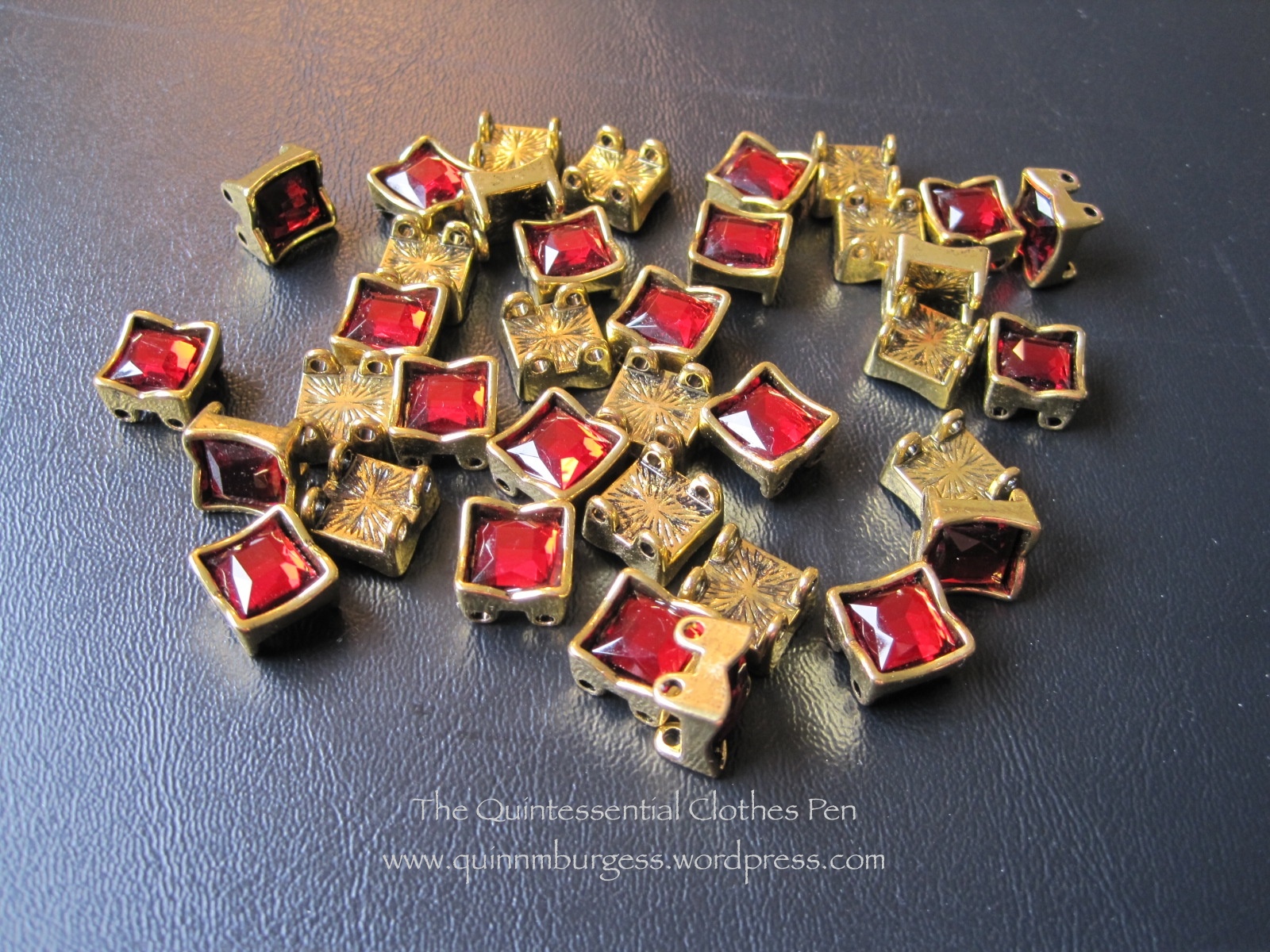
In the beginning: stretchy bracelets. Thanks mom!The loose jewels after I cut off the elastic.Another possible design. I decided against having some of the jewels turned on their corners. It would have been hard to engineer and, after all, simplicity was a popular style in the Regency!The back of the tiara, where you can see the wires holding it together. There is also a loop at the center of the bottom row of jewels so I can pin the tiara to my hair at that point to keep it from bouncing.There are wire loops at the ends of the tiara so I can pin it to my hair. The hot glue covers the ends of the wires so they don’t also catch my hair.
That’s all for now. When I wear this I’ll be sure to take more pictures!
Well, it’s June now, and that means summer to me. I’ve been slow to post about my kite making adventures because I was busy posting about other things, but it seems fitting for this post to be the first one of June–summery, somehow.
After the official end of the Regency Dance Weekend I’ve been posting about recently, my friends and I stayed in the Salem area to relax a bit and have some further Regency adventures. We had been brainstorming about what sort of activity we might engage in that was outside of our usual occupations and had settled on the idea of flying kites!
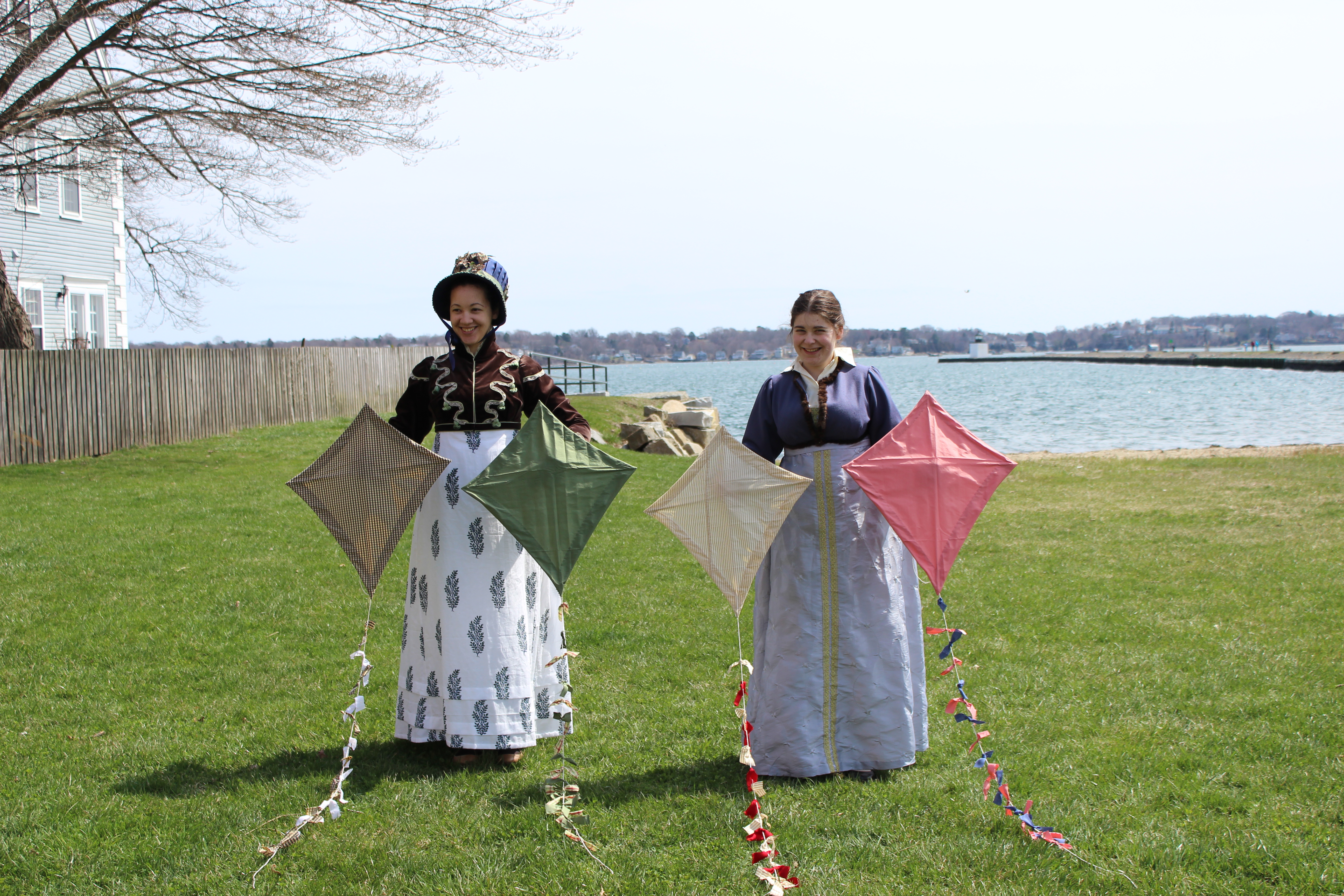
I did some research into Regency kites and spent some of my evening time during the weekend sewing these four silk kites with some help from friends.
Plaid, green, striped, and pink.
I didn’t find much to go on with the kite making. The best source I found was Jen’s post about Georgian Toys on her blog Festive Attyre. The post includes a link to this kite making how-to as well as a link to this 18th century extant kite. Unfortunately, I couldn’t find more information on the extant kite than that which is on that one page. Jen’s post is great and includes fun information about other Georgian toys as well as kites. The how-to link is a good one as well, though I did sub out modern methods for more period ones. For example: there is no tape to be found, instead there are stitches.
Making the kites was fun. I went to Home Depot to buy the dowels for the kite frames. They were cheap and luckily you can saw the lengths to be what you need while you’re in the store (good for me since I don’t own a saw!). I also bought twine there. It’s a poly-cotton blend (boo), but it’s smooth on the hands, so that’s worth it! The kite tails are bits of the main fabric and a contrasting fabric just tied around the twine. Instead of notching the ends of the dowels after they were cut (I tried, and it failed, because the dowels just wanted to splinter) I just wrapped the twine around the ends enough times that it wouldn’t move. The method definitely worked and sometimes that’s all you need.
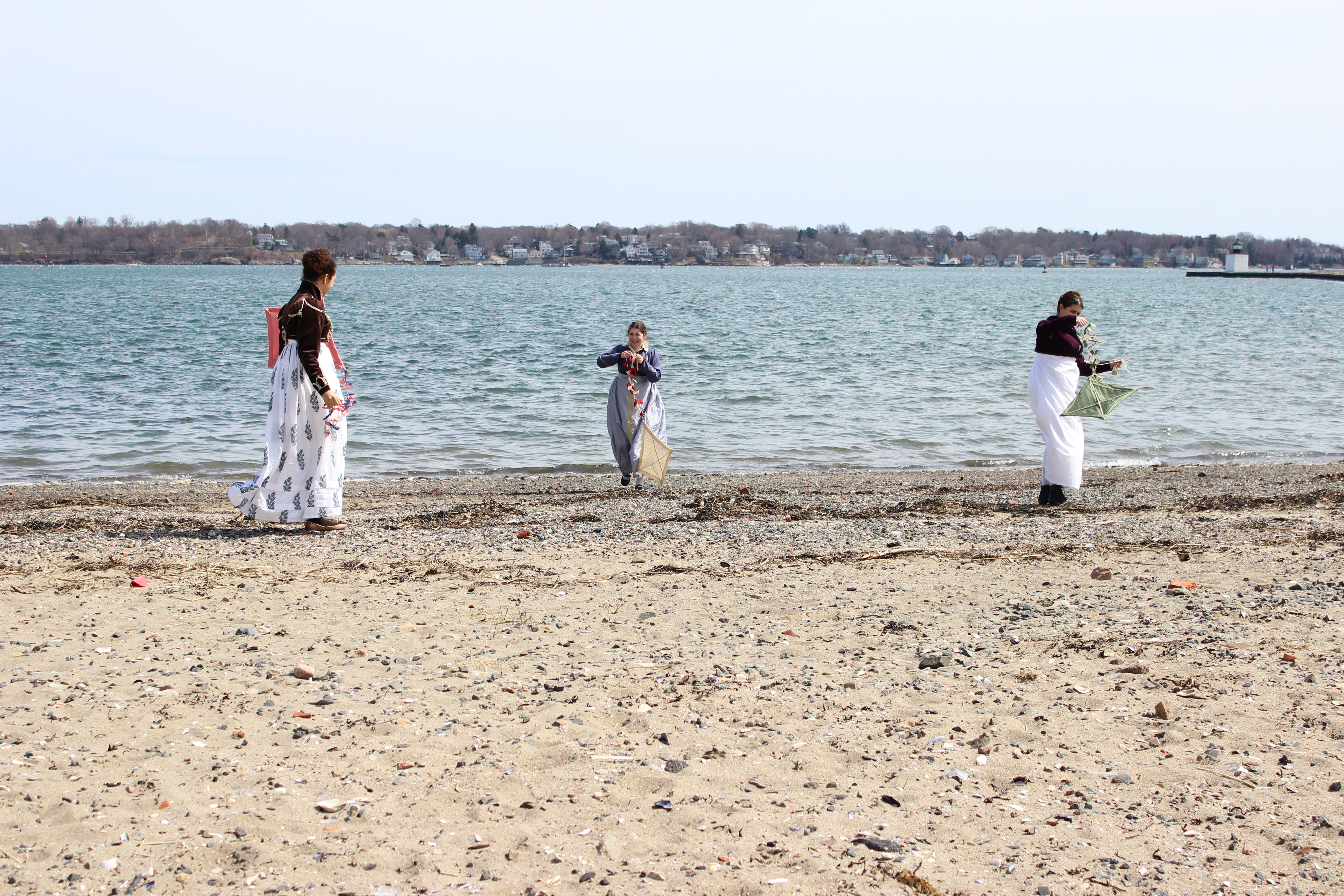
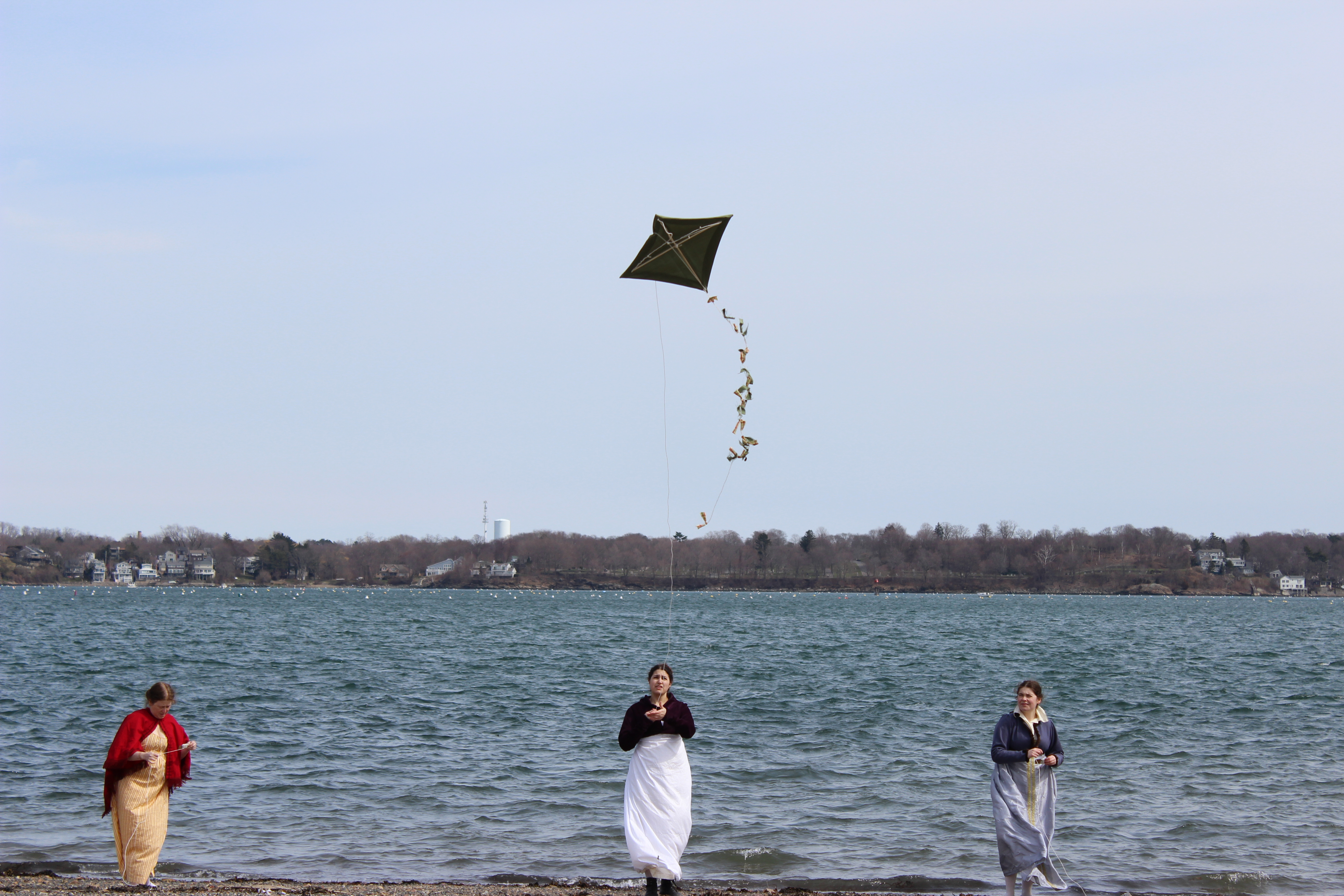
Despite the fact that it was super windy by the water, we had trouble getting the kites to stay in the air. I’ve surmised that my kite engineering skills are not super outstanding, because the kites did lots of circles near our head height and then dove into the ground… over and over and over again… It was a bit frustrating. These pictures capture the few times we got the kites up in the air. Trust me when I say they didn’t stay up very long!
Perhaps a running start?Perplexed but still trying.Clearly this kite did not want to go up.Triumph! (If only for the moment!)This kite had the best luck at staying in the air.Another successful moment.
There were some adjustments and kite injuries along the way. One of the dowels in the pink kite broke, so I have to figure out how I’m going to fix that. The other kites had things like alternate bridles made and pennies sewn into the edges to try to add weight. Some of those things seemed to work. I guess I just need to do some research about what makes kites stay up. I’m not sure the tails worked very well, either. They tangled easily and were hard to sort out again. If you know anything about kite making and have tips, I’d love to hear them!
This is definitely something I plan to work on and try again. Perhaps at a summer picnic? We’ll see. It was a fun endeavor, despite the diving kites (and I had the opportunity to wear my new Tree Gown again!). Plus, there were pretty places nearby to take pictures!
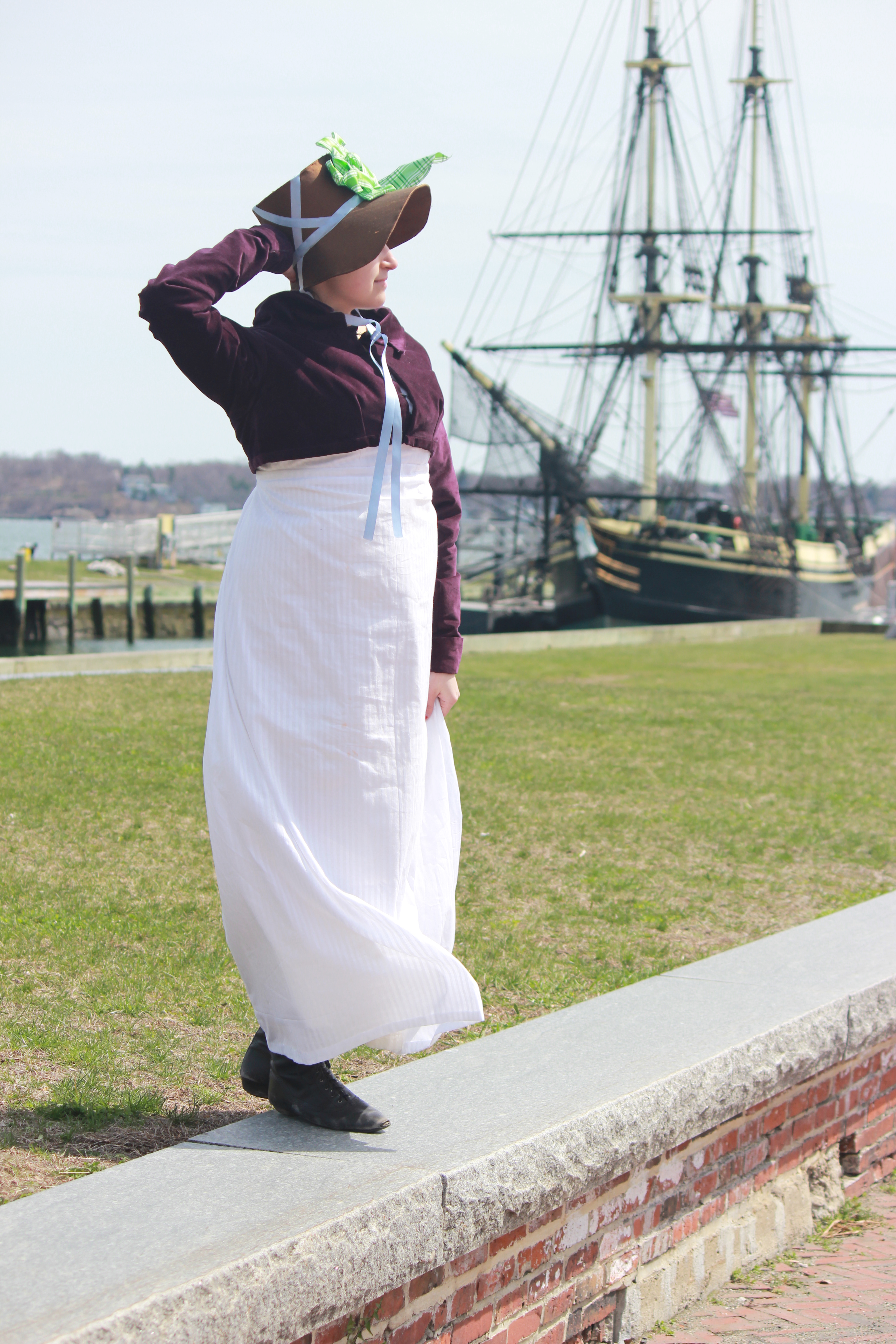
Perfect photo opportunity.It was pretty windy, so hat holding was totally necessary!
The time for dancing has arrived! You’ll remember that I recently shared pictures of the reception on the Sunday evening of the Regency Dance Weekend as well as the sharing of the train at that same reception? I’ve been promising to share ball pictures and finally, the time has come. Without further ado…
The Grand March. We had a good quantity of people this ball and because of our practice during the daytime classes all of the figures looked really good!
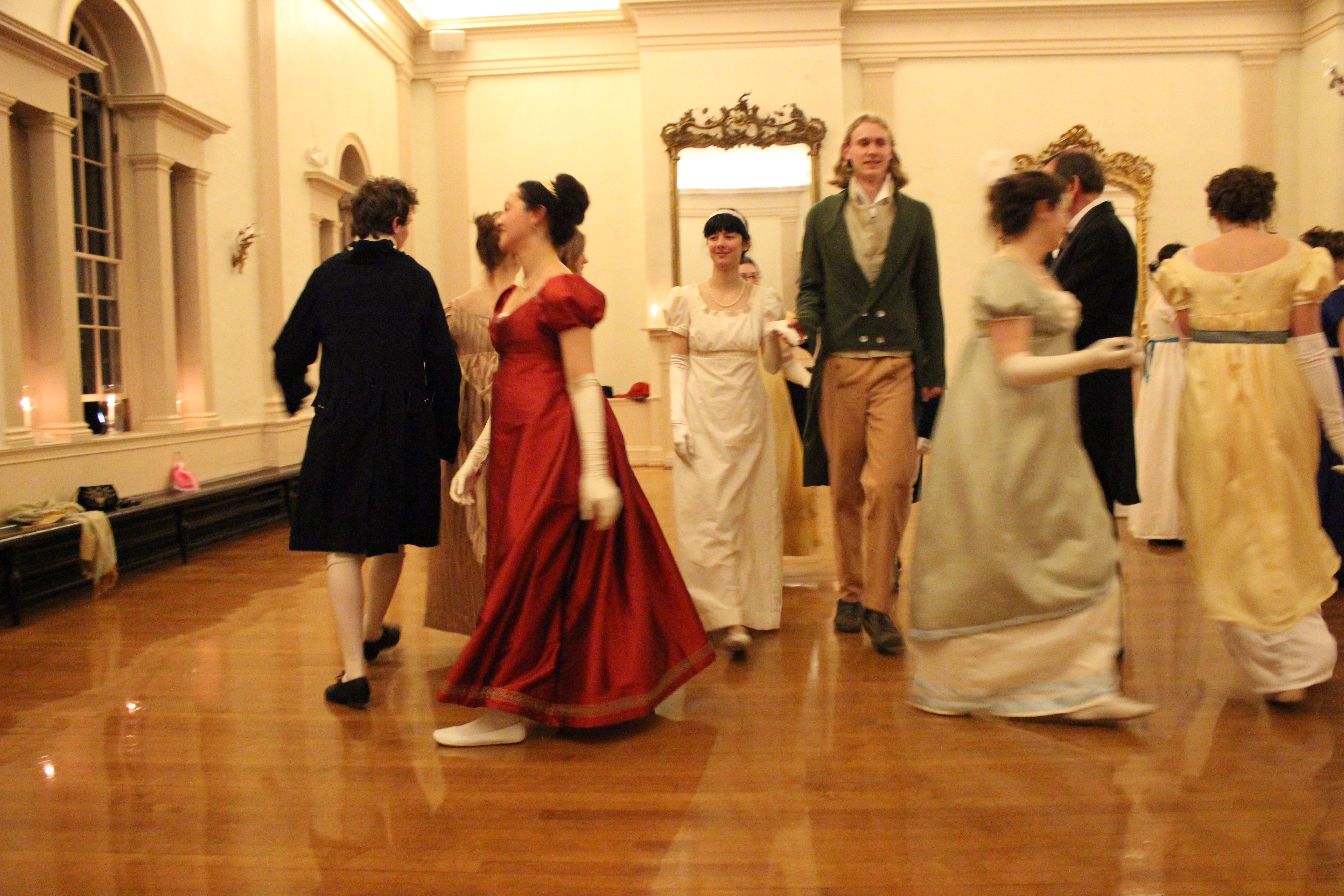
The Grand March was followed by a good number of country dances and figured waltzes. It was an amazing experience to have a room full of people who had already learned the dances and were able to dance them without instruction. We were able to complete dance after dance after dance and it wasn’t long before it was time for some refreshment.
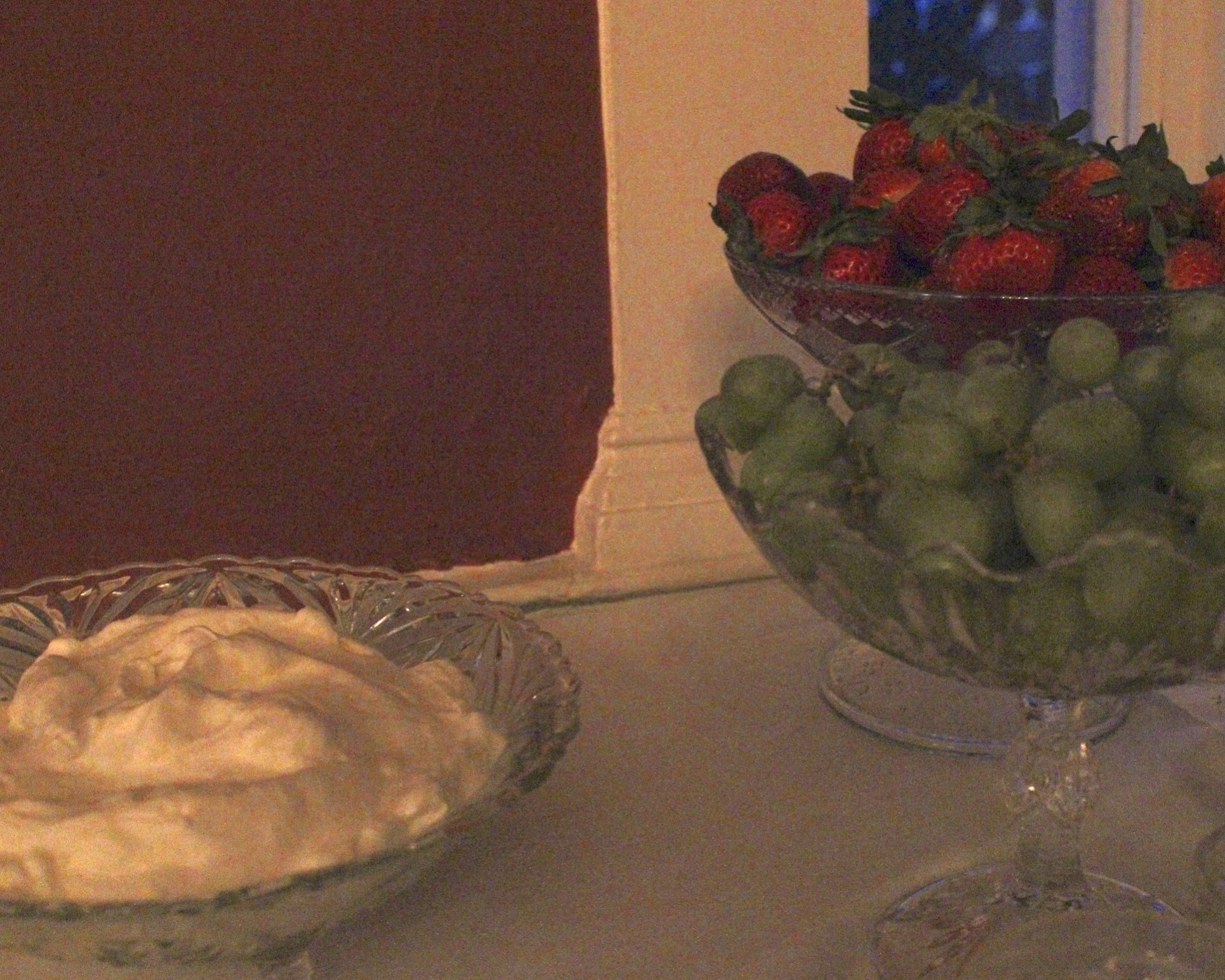
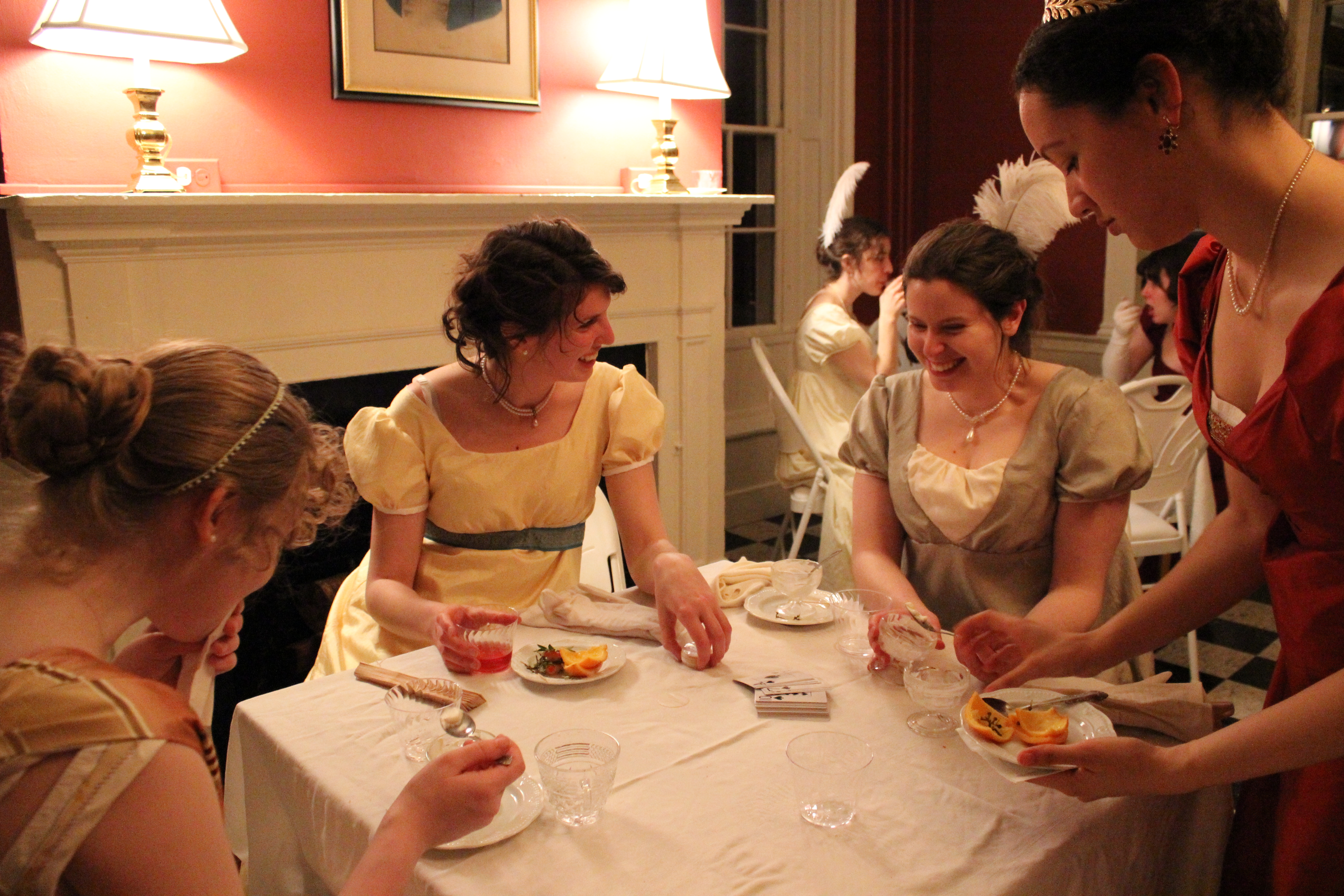
Punch had been nicely laid out in the refreshment room earlier in the evening.There were cookies, and fruit, and syllabub (sweet cream) with pound cake, just to name a few delicious treats.The refreshment room also had small tables set up to encourage chatting while eating.
Unlike some of balls during which we have refreshment breaks, at this ball a person could break for refreshments at any point in the evening. It was a nice change, and especially since we did so much dancing and less standing and listening, it was particularly useful to refresh oneself throughout the evening.
Of course, there was the opportunity to chat with friends and family throughout the evening in addition to time spent in the refreshment room.Setting up for a country dance. Or perhaps this was Sir Roger De Coverley?Yes, I believe that was Sir Roger. This was later in the evening after sillyness had set in… We were changing partners and gentlemen/lady positions just to keep things interesting.
Goodness! By the end of the evening my legs were feeling all the dancing of the weekend. The characteristic Regency upbeat rise was getting harder and harder to achieve… But what an event! What a weekend! It was so full of fun, and getting to know new people, and learning dancing… Really, an exquisite experience.
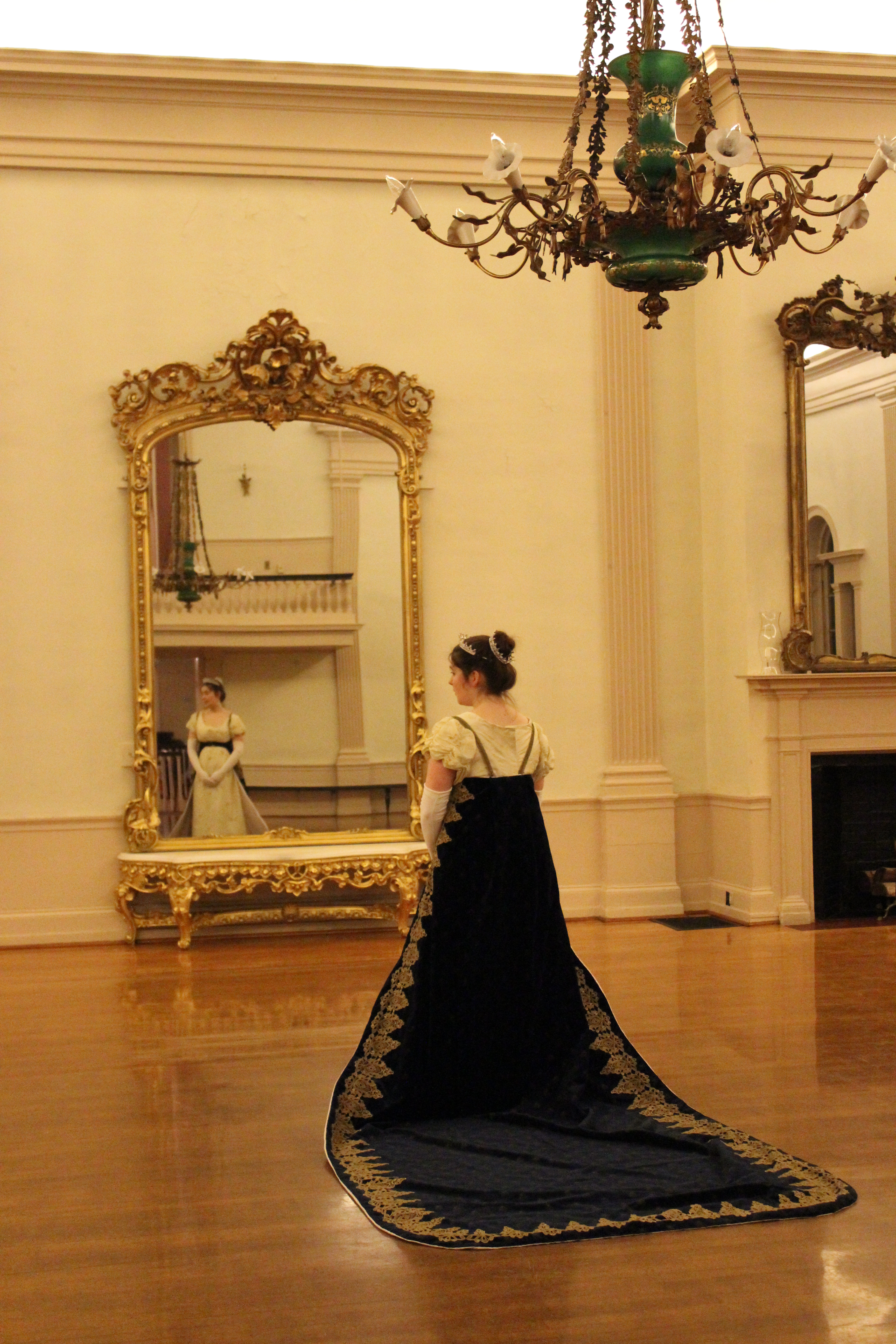
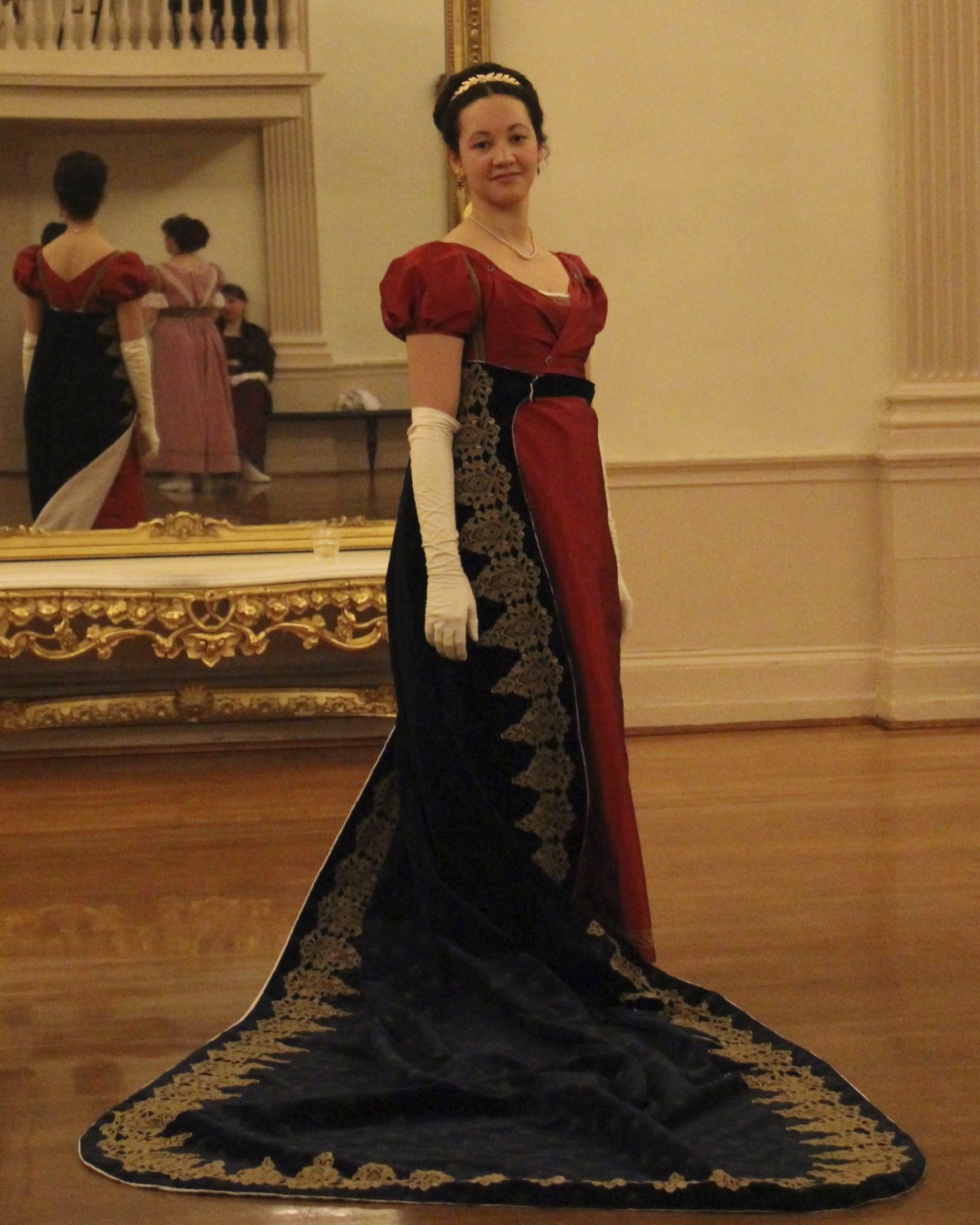
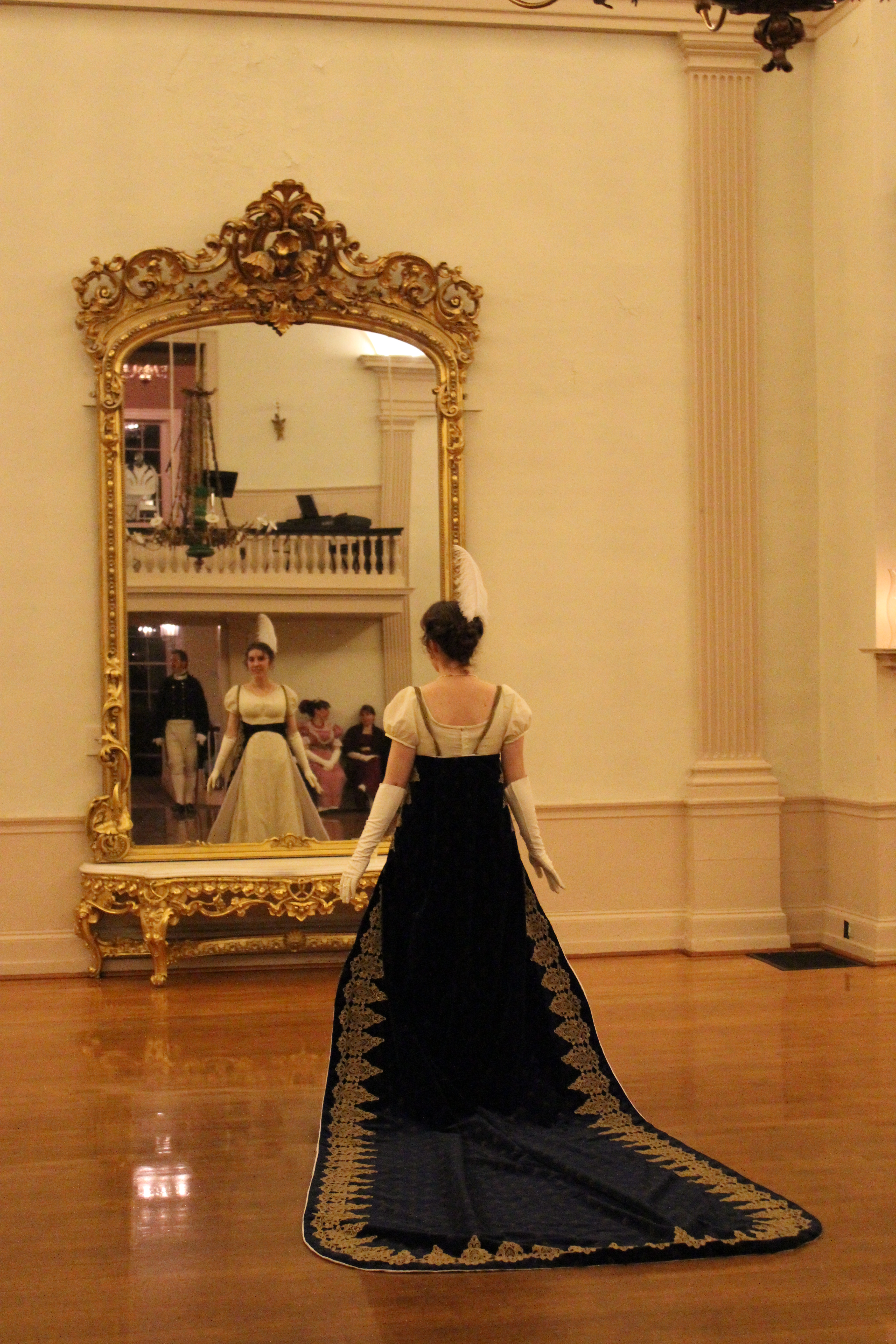
I’m eager to share pictures of the grand ball with you, but I want to insert this post before continuing to ball pictures. One of my friends had the ambition to complete a Regency court train to wear during the reception I showed pictures of last post. It’s a pretty fabulous train made of velvet printed with golden bees and trimmed with opulent gold lace.
The actual owner and maker of the train.
It’s not the sort of thing to be danced in, but that’s fine, because it attaches at the waist, so it’s easy to take off. During the course of the evening some of us tried on the train and tried out different poses in it. So nice of Antonia to share with all of us! It was quite grand and fabulous.
It’s my blog, and that means I can share as many pictures of me as I want…! Spoiled sounding? Probably… Okay, fine, I’ll return to my more humble un-royalty roots.
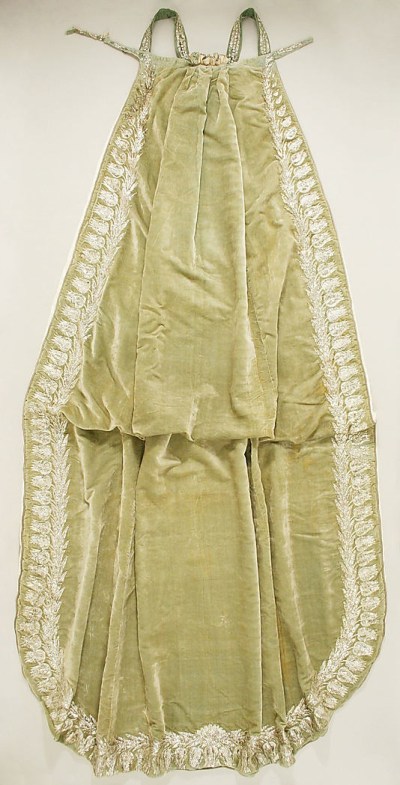
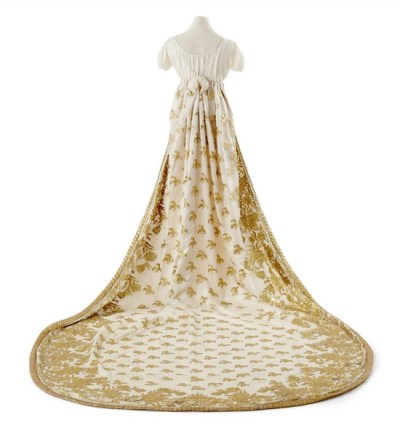
There are some absolutely stunning extant court trains out there. Here’s my pinterest page of court gowns and trains from all different periods. And here are some of my favorite Regency court trains to inspire you.
ca. 1809. The Met.1809. The Met.First Empire From the Chateau de Malmaison Costume Collection appFirst Empire From the Chateau de Malmaison Costume Collection app
There is an event at Dress U in about a month that requires court gowns or trains. I won’t be there, but I’m looking forward to seeing pictures of other people’s fabulous court trains! I hope you’ve enjoyed these silly pictures. I promise that the next post in this series about the Regency Weekend will be pictures of the ball: no more delays!

































 The Quintessential Clothes Pen