1794 Windowpane Ruffle Dress (HSM #10)

At this point, I’ve posted about most of the garments and accessories needed for the 1790s ensemble I’ve been slowly creating (you can read past posts here: stays, cap, sash, as well as petticoat and bum pad). The final piece (and perhaps one of the most essential pieces) is the dress!

I started this in 2023, along with most of the accessories, and finally finished in May 2024. My goal for this post is to document the inspiration and construction details of the dress (photos of the dress being worn will come later!).

Basic Information

To start, the information for the Historical Sew Monthly 2024 Challenge #10 UFO Spotter:

We all have an UnFinished Object or two (or ten!) Now’s the time to complete one of your unfinished historical costuming projects.

This dress was definitely a UFO! It’s been hanging in my sewing room for many months in a state of partial completion.

Just the facts:

Fabric/Materials: 3 ½ yards of 120″ wide ivory windowpane woven curtain sheer (probably polyester) and 1 yard of 58″ wide lightweight white linen for the lining.

Pattern: Adapted from the 1790s Round Gown pattern in The American Duchess Guide To 18th Century Dressmaking by Lauren Stowell and Abby Cox. I changed the front bodice to suit my goals and style as well as adding ruffles to the sleeves and hem.

Year: c. 1794.

Notions: 2 ½ yards of ¼” white cotton twill tape, 4 hooks and loops, and thread.

How historically accurate is it?: 95%. The pattern and construction methods are well researched and documented. The only points off, I’d say, are for the fiber content of the main dress fabric.

Hours to complete: 13.5 for the main dress construction + 11.5 for the ruffles = 26 hours of hand sewing.

First worn: Not yet!

Total cost: I paid approximately $10/yard for the main fabric and $6/yard for the linen. So, with the addition of the notions I would say this dress cost about $50 for materials.

A Few Observations

As with the 1790s petticoat I made (linked above in the introduction to this post) this dress is entirely hand sewn.

I had to go back through my records to figure out what I spent on the fabric for the dress. It’s been in my stash for years, so while I remember what store I purchased it from I had no memory of how much I paid. It turns out that I bought both the windowpane exterior fabric and the linen lining in 2012! At the time, I had no particular plan in mind for them, so they sat and waited… for over ten years! I’m excited to have finally put them to good use!

Inspiration

I’ve been interested in trying various garments and accessories in the American Duchess book since I first purchased it, and this 1790s idea felt like a good opportunity, especially since I could work from the undergarments out with the patterns and instructions all in one place.

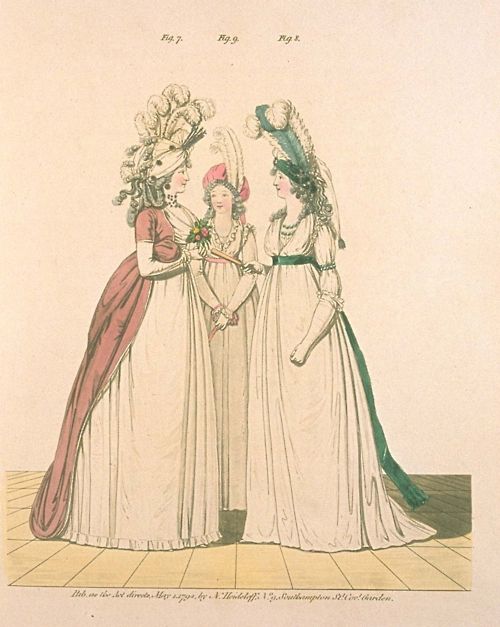
The basic elements of the 1790s dress in the book worked for me, but I decided I wanted a different front bodice look, more like the gown on the right in the image below (rather than like the one on the left, which is more like what the sample in the book is shaped like). The painting below, La duquesa de Osuna como Dama de la Orden de Damas Nobles de la Reina María Luisa, by Augustín Esteve is dated between 1796 and 1797 (it is available on Wikimedia Commons). That’s a few years later than my date of 1794, but the gathered front and round neck shape is seen earlier, even in the 1780s in Chemise a la Reine styles (you can read more about this style, popularized by Marie Antoinette, here on the Fashion Institute of Technology: Fashion History Timeline page). There is another example of the front shape I was intrigued by in the Cora Ginsburg auction catalog from Spring 2023 on page 12.
In addition to the bodice shape, I was particularly inspired by the fashion plate below for the ruffles at the hem and wrists. Other fashion plates from this year show the same detail. The plate below, and more from 1794, can be seen on the Dames a la Mode website here.

I gathered my favorite inspiration, including those shown above, together on a Pinterest board, which you can see here if you are interested.

Construction

I mostly followed the directions in the American Duchess book, though I did have to adapt a few order of operations things in the bodice to accommodate my change in front style, as well as to accommodate adding the ruffles to the sleeve openings.

I started by assembling the bodice lining. Below is my bodice lining, ready for the exterior pieces to be added.

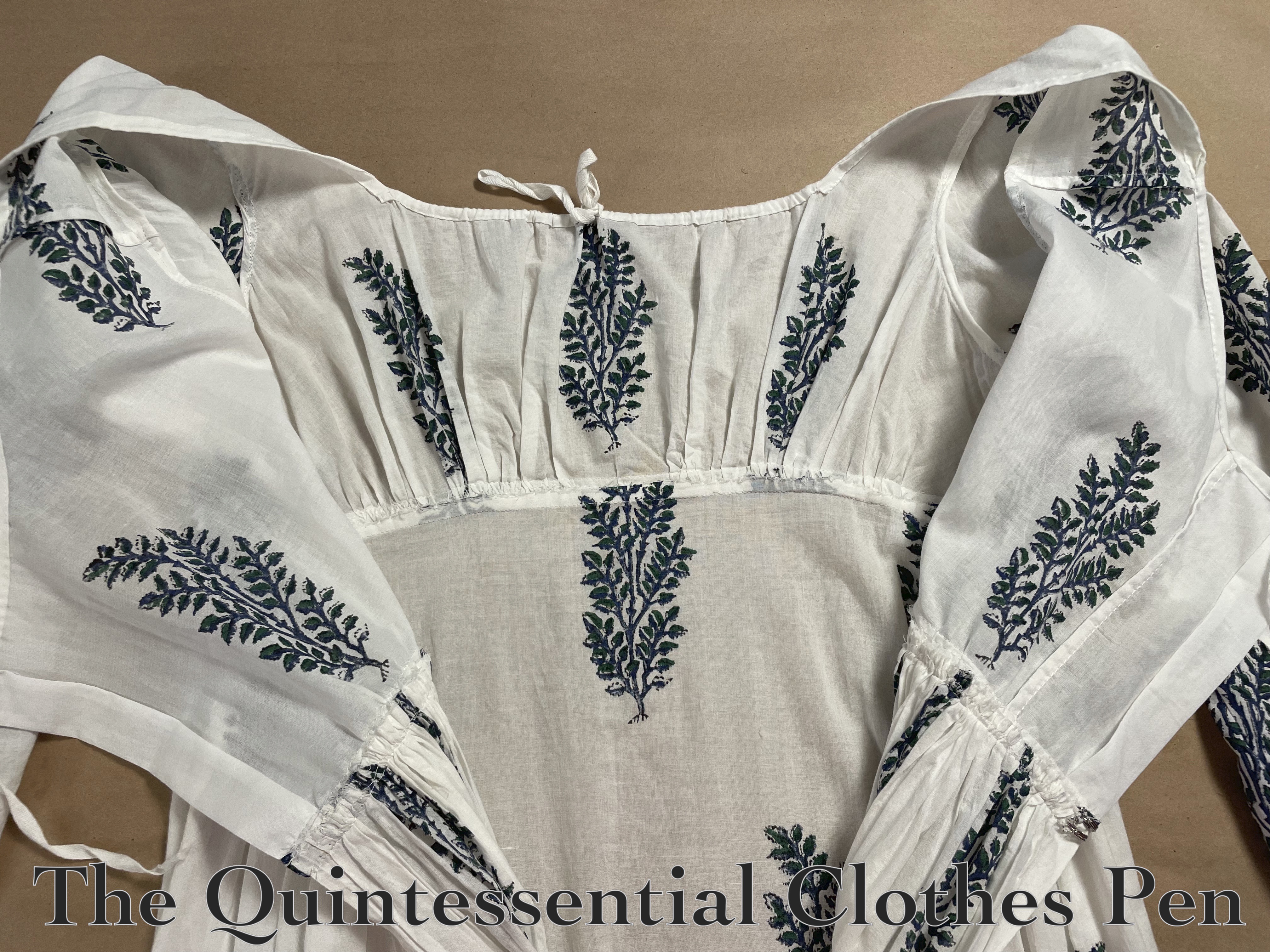
I didn’t take any further in-process photos, but I did document the completed garment. First, an image of what the front looks like when the front closure is done up. The exterior of the dress adjusts at the high waistline and the neckline with drawstrings.

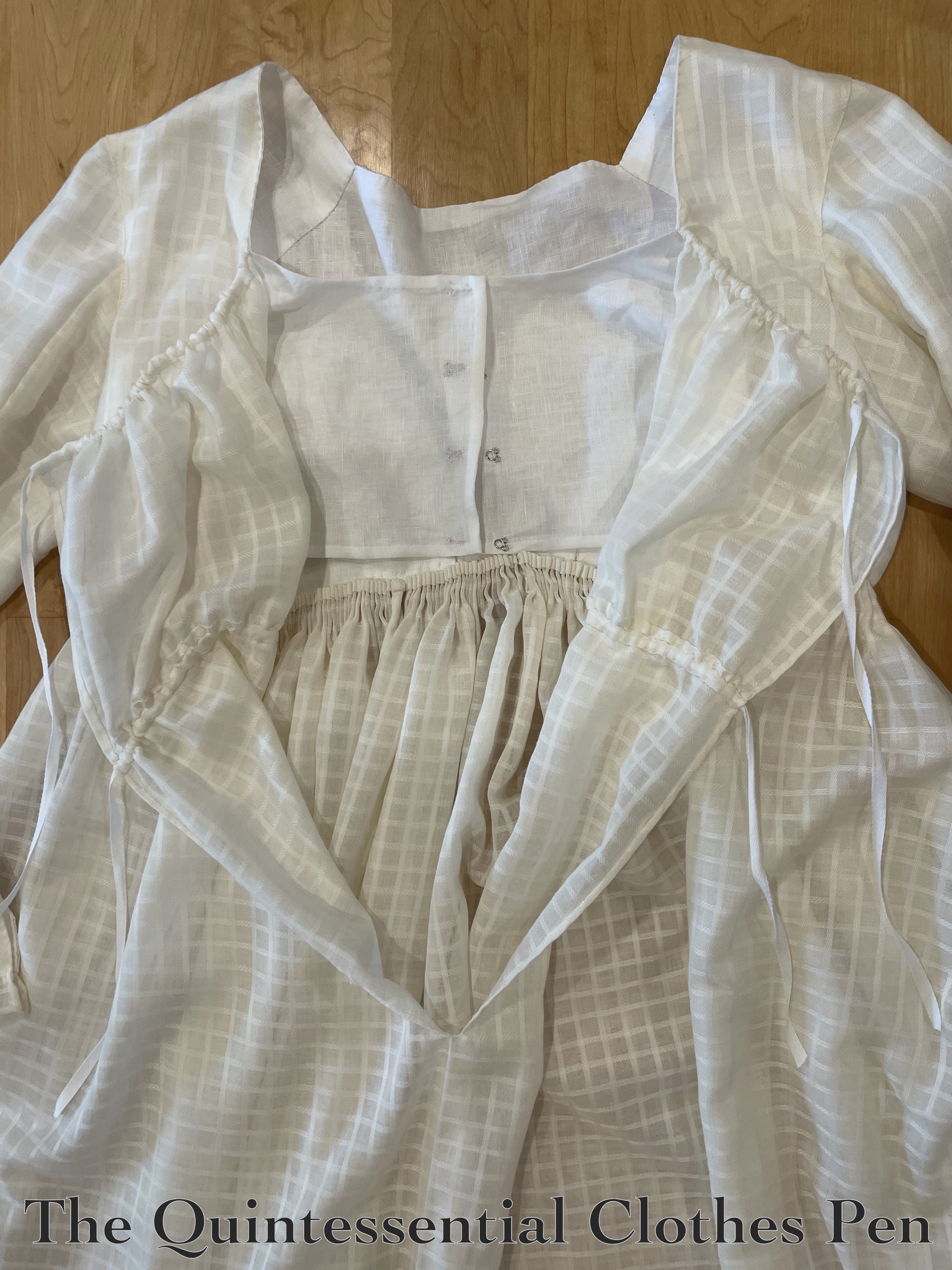
Then, below, is the dress with the front exterior opened up. Historically speaking, the lining would likely have been pinned in place, but I decided hooks would be simpler for me (and still adjustable with a little bit of sewing) and so my lining closes with 4 hooks and loops. The front skirt slit opening is lost in the gathers once the exterior of the dress is closed.

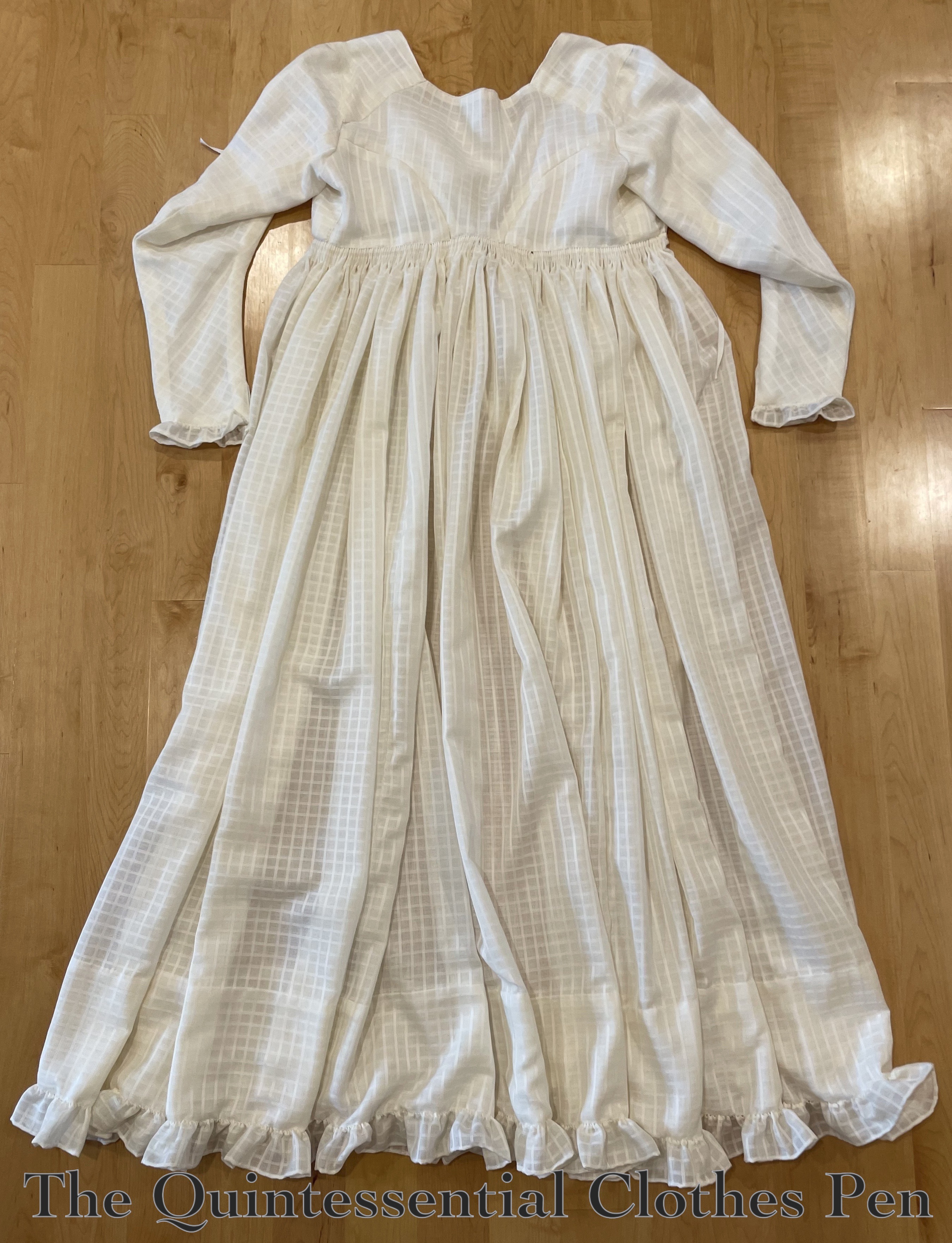
The next photo shows the back of the bodice, which curves up a little at center back in a very 1790s way, as well as the very full skirt that is attached across the back using cartridge pleats, creating a lovely series of folds.

And here is a view of the entire back of the dress.

The final touch was to hem and then add all of the ruffles! I brought the basic rectangle shapes with me on trips and quietly introverted while hemming miles of edges. Eventually, they were all hemmed and connected. Then… I went back along one long edge on each ruffle section and ran whip gathers. Then, finally, I butted the edges to the sleeve hems and bottom edge of the skirt and whipped the ruffles into place.

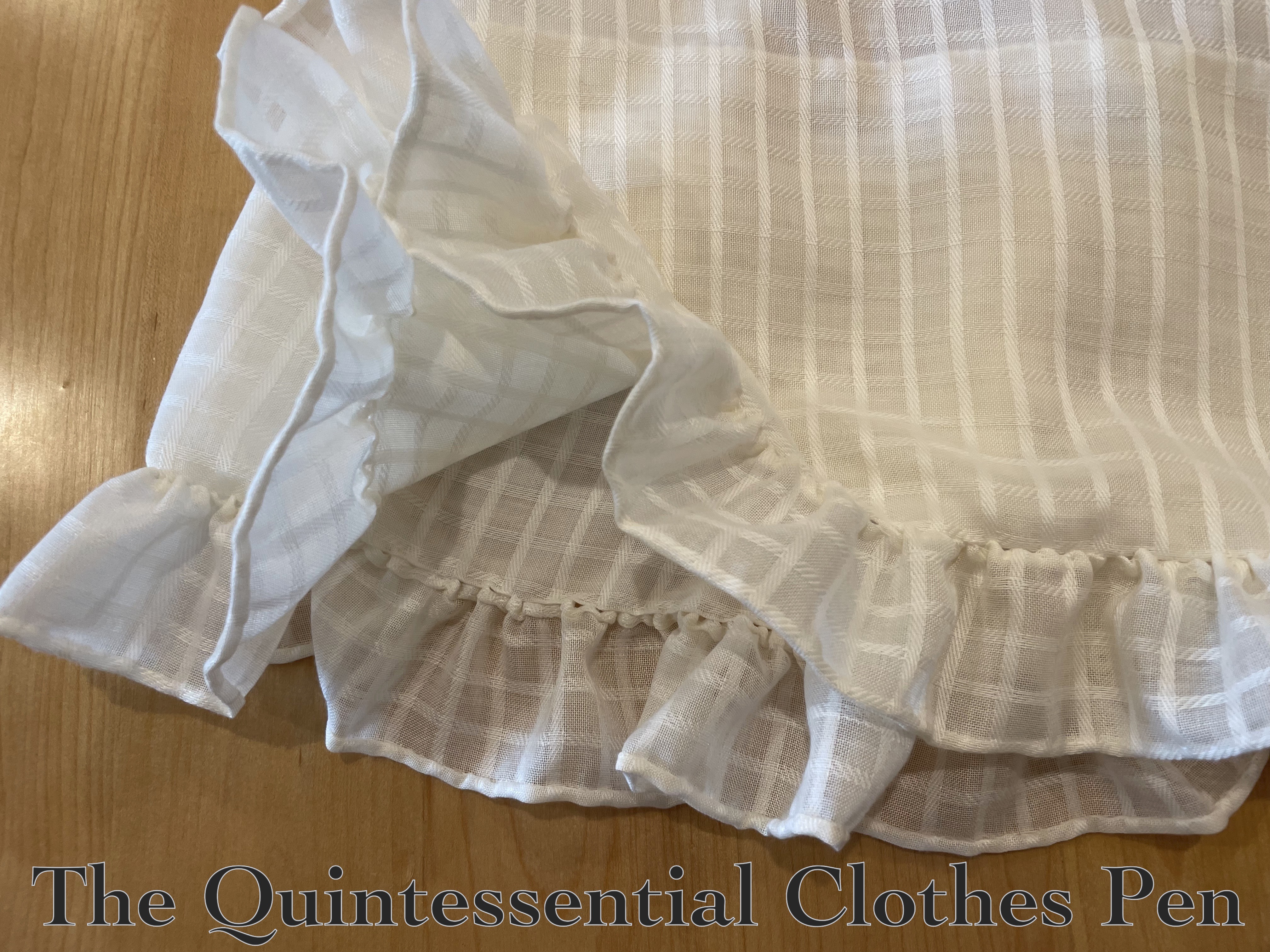
Below is a closeup of the hem ruffle, where the narrow hem of the ruffle and the butted edges are both clearly visible.

And here is a closeup of the sleeve opening, which again shows the narrow hems on the ruffle and butted edges of the ruffle and sleeve.

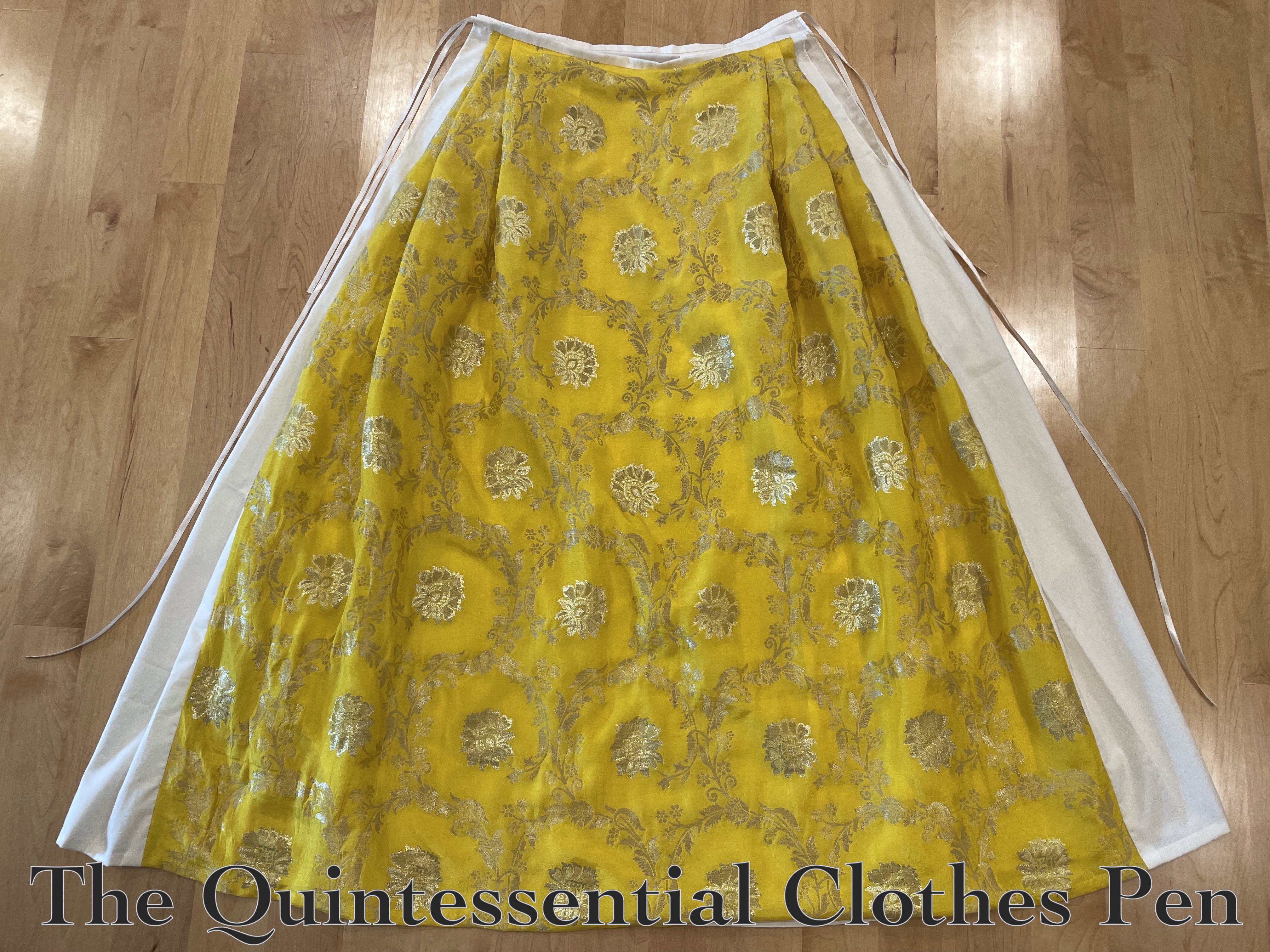
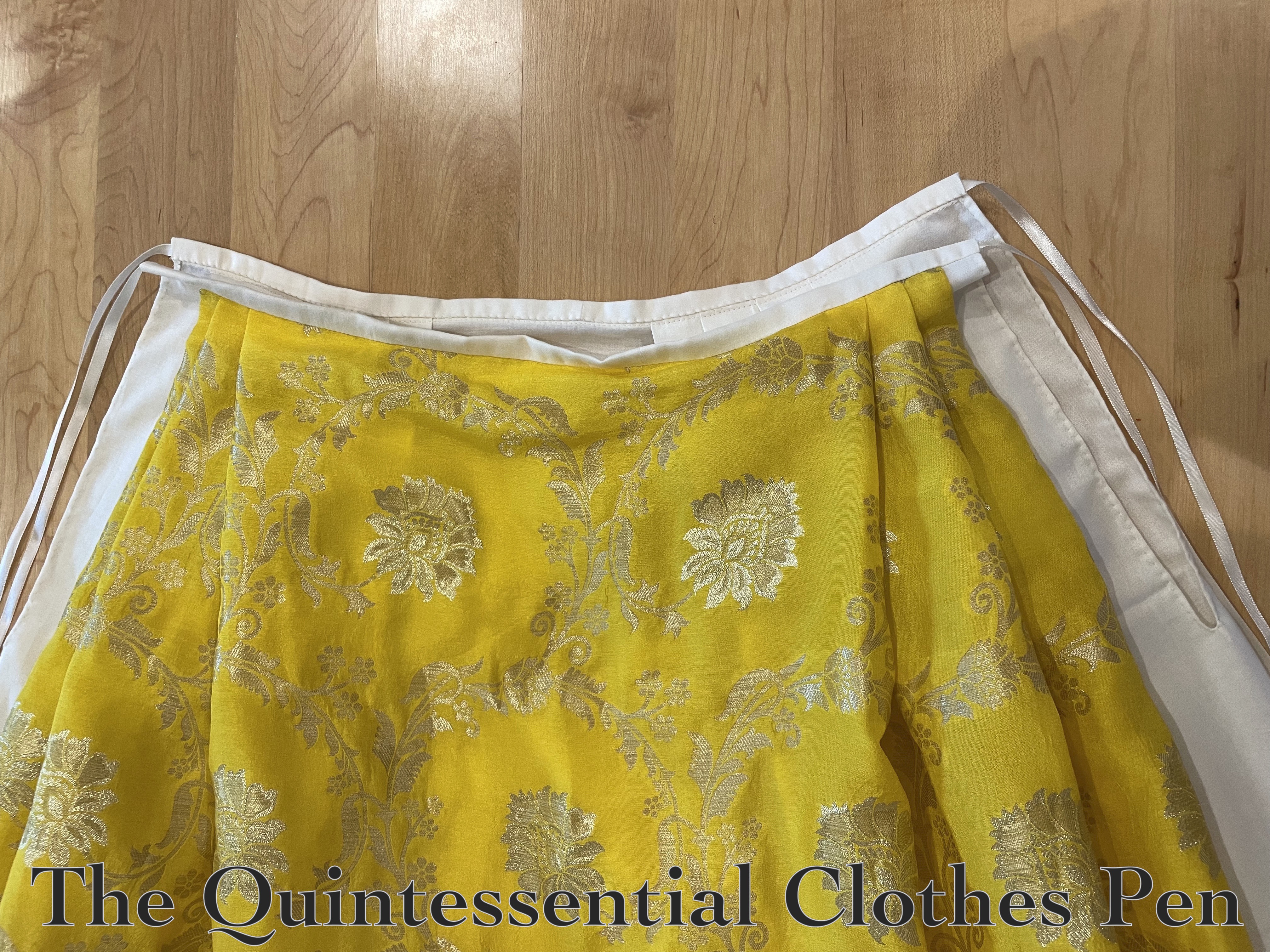
I did have one strange decision to make regarding the depth of them hem on the dress itself. It might not have struck you as odd that the hem is so deep (about 6″), but it does look slightly strange to me when I look at photos of the dress laid out, or when I see it without the petticoat underneath.

The reason for the unusually (for this period) deep hem is that my petticoat somehow ended up being a bit short, even with a narrow hem. I didn’t want to have the nice, smooth white expanse of this skirt broken by a section at the hem that wasn’t backed by a petticoat before the dense white of the ruffle. And I had lots of length in my dress exterior to play with.

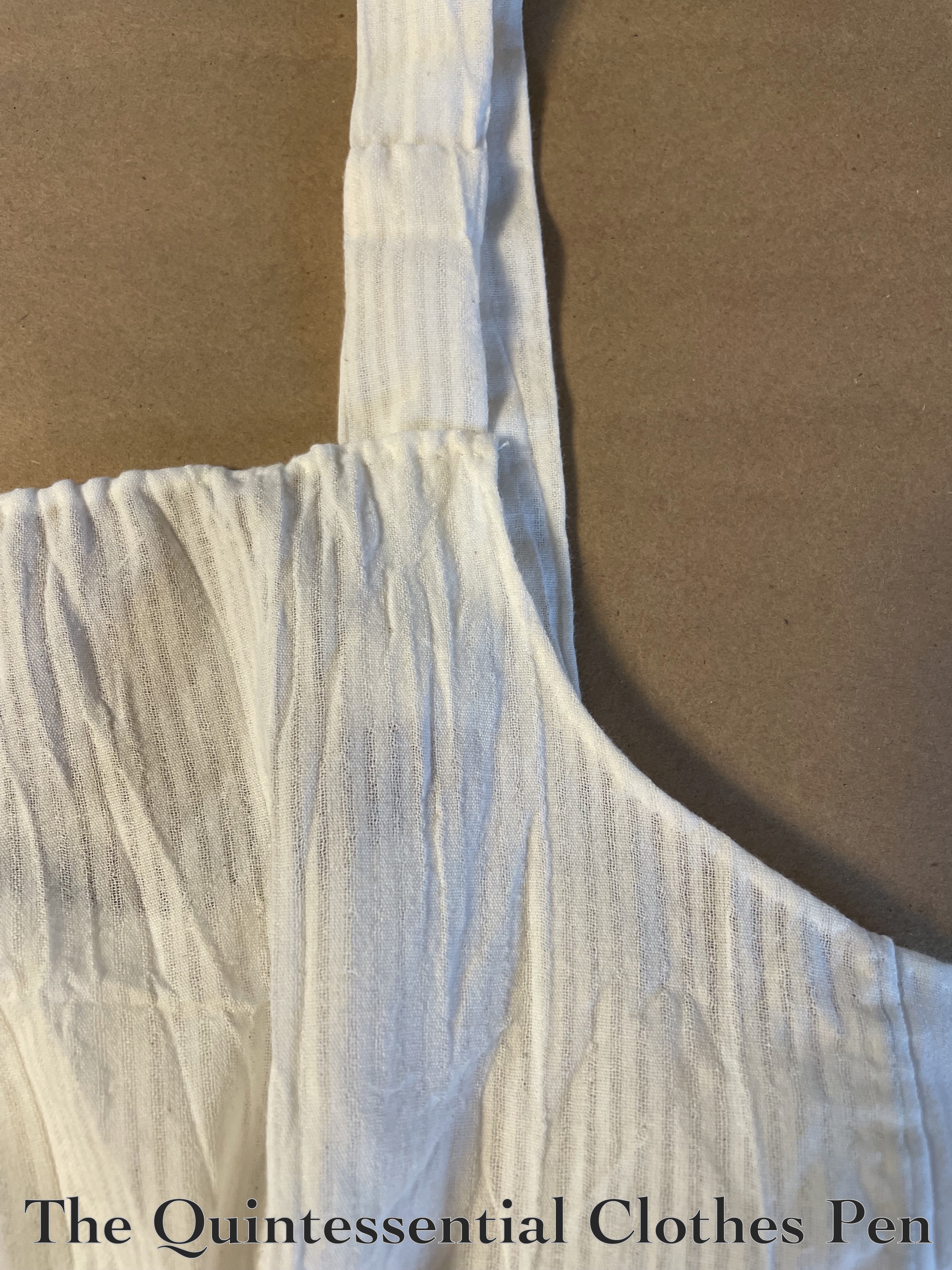
I considered tucks to take up the length and provide opacity, but it looked ridiculous in this fabric and for this particular decade. Instead, I settled on this wide hem which is set at a height that makes the ruffle just brush the tops of my feet. The top edge of the deep hem just blends in when the petticoat is under the dress. Here is a view of the hem. Each of the squares is about ½”.

And that’s it! The dress is finally done! I’m super pleased that this UFO garment and the accessories to complete an ensemble are finished and that I have a whole new decade of clothing ready to wear.

Now, I’ve moved on to other sewing projects and trying to figure out how to use (mostly) my real hair to create a 1790s look so that I can get photos of the whole 1790s ensemble. More on that once I figure it out and get photos. In the meantime, thanks for reading this far and sticking with me through all of these minute details!

1790s Petticoat & Bum Pad (HSM #8)

This post is part of my ongoing and slow work on a 1790s ensemble.

Last year, I was working on a petticoat and bum pad to create a foundation for a dress. The petticoat was pretty much done by the end of the year. The bum pad needed just a final fitting for me to decide if I liked the plumpness before sewing it closed.

After a fitting when the dress was very close to done I determined that I did like the plump pad (stuffed with scraps of the white striped cotton the petticoat and bum pad are made of).

With the bum pad being good to go, I was finally able to finish up the petticoat!

This is my entry for the Historical Sew Monthly 2024 Challenge #8 Stripes and Dots:

Make something using striped or dotted material. The stripes or dots can be printed on the material, knitted/woven in to the material, or created with surface embellishment (ex: embroidery). Textural stripes or dots (i.e: those that are the same colour as the base fabric) are permitted!

This petticoat is made from fabric with a narrow woven in stripe.

Just the facts:

Fabric/Materials: Approximately 3 yards of white striped cotton.

Pattern: From The American Duchess Guide To 18th Century Dressmaking by Lauren Stowell and Abby Cox.

Year: c. 1795.

Notions: Approximately 1 yard of 1/4″ white cotton twill tape, 4 hooks and loops, and thread.

How historically accurate is it?: 100%. Entirely hand sewn, made from plausible fabric, using a pattern that is backed up by lots of research… I’d say this one is pretty accurate!

Hours to complete: About 2 ¼ hours.

First worn: Not yet worn.

Total cost: Approximately $4. The fabric was just $1 per yard when I purchased it years ago and the twill tape and hooks/loops were bought in super bulk and probably cost no more than $1 for all of the bits that I used.

More details:

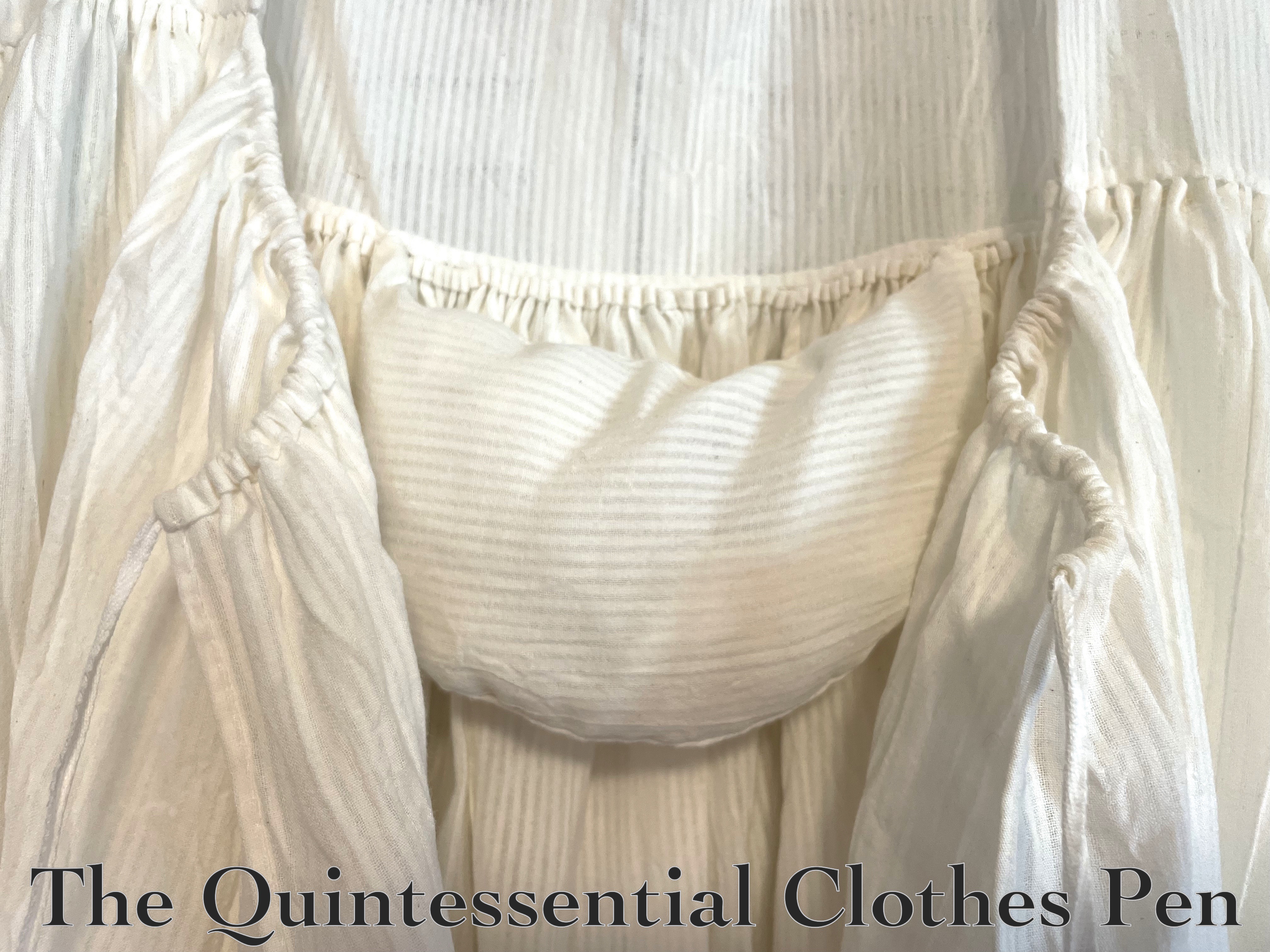
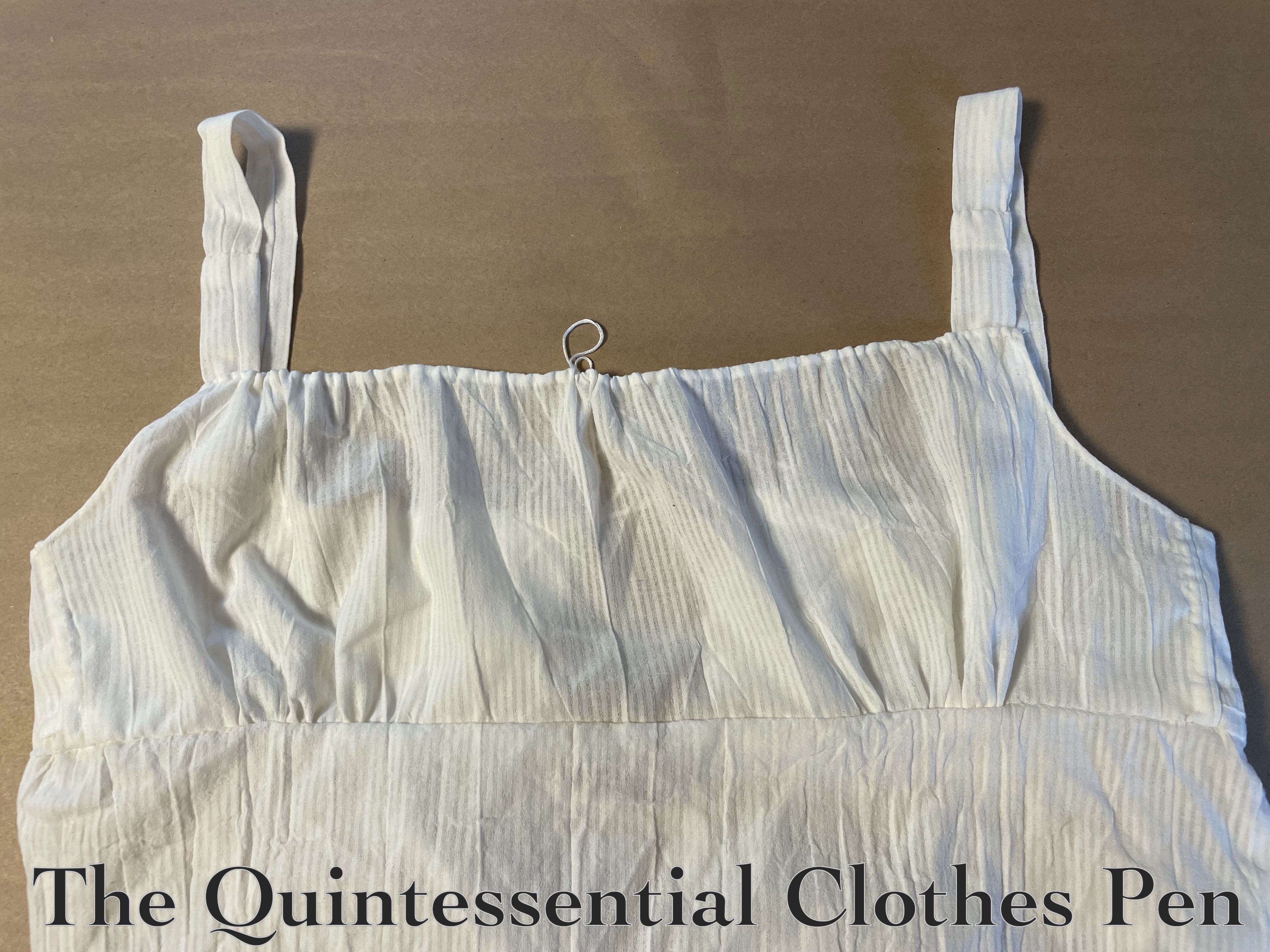
The petticoat closes with a drawstring, as can be seen below. I love this, as it will make it easily adjustable (a common theme in my recent sewing projects!)

The front opening is finished on both sides with a narrow hem. It’s long enough that I didn’t feel the need to reinforce the bottom, as I don’t think I’m likely to rip it getting in and out.

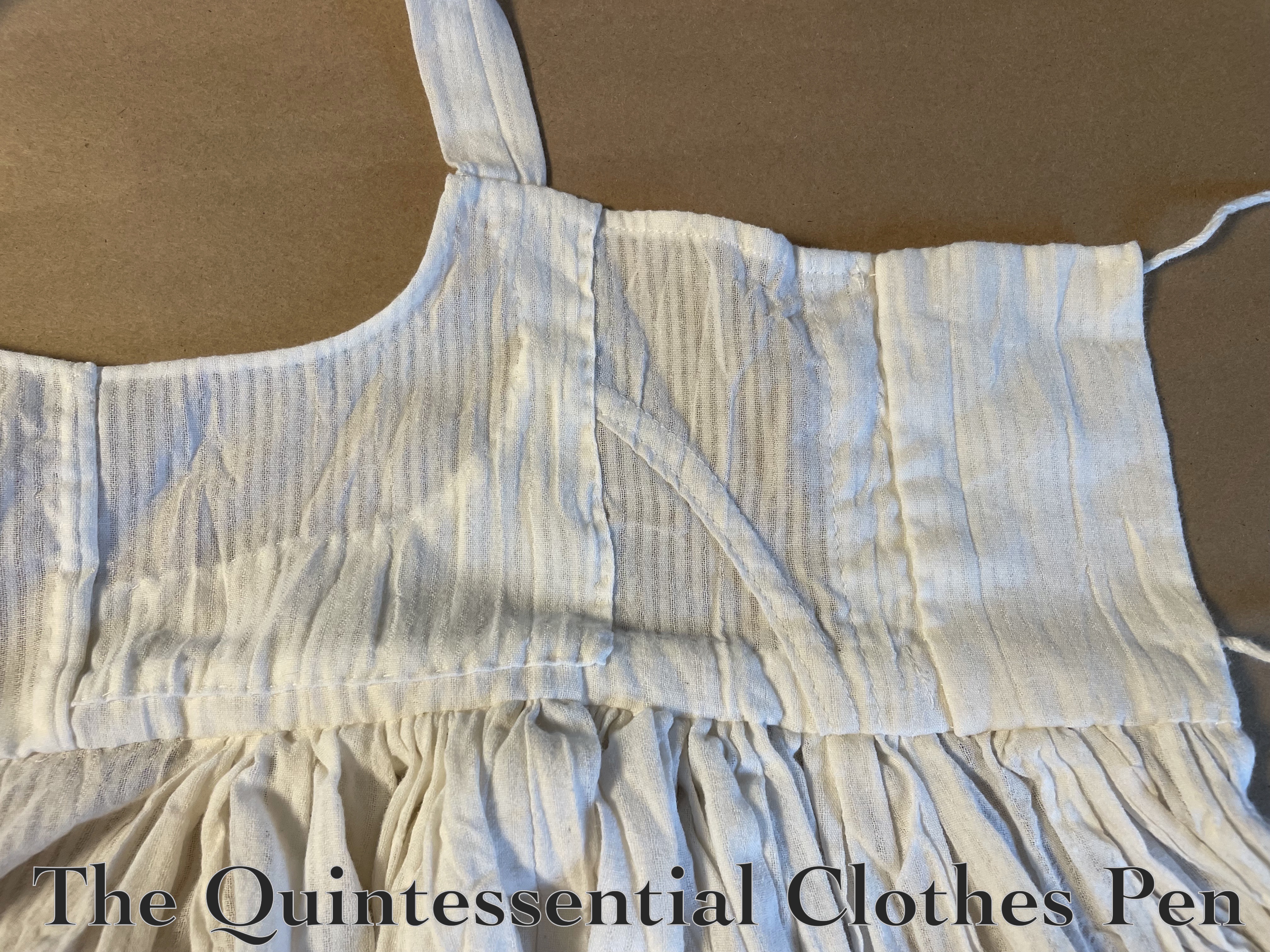
The next photo shows that I left extra seam allowance at the sides and shoulder seams… again on the theme of garments being alter-able!

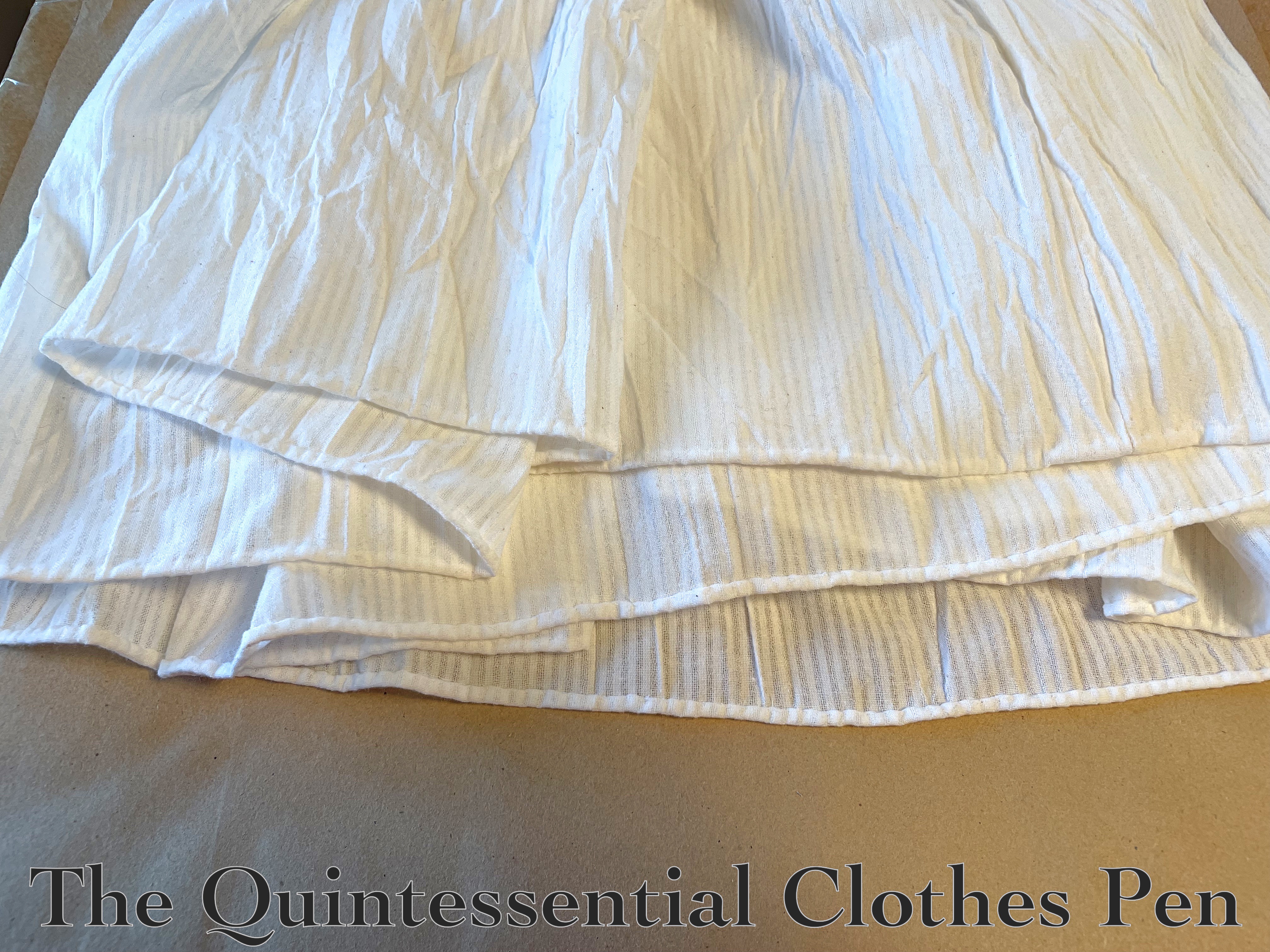
And finally, a hem! I needed to max out the length to accommodate the sheer dress that will be worn over this, so the hem is only about ¼”.

And that’s it! I’m excited to have another foundation piece for a new-to-me decade of clothing and I’m pleased that it is entirely hand sewn.

Croquet At Roseland Cottage

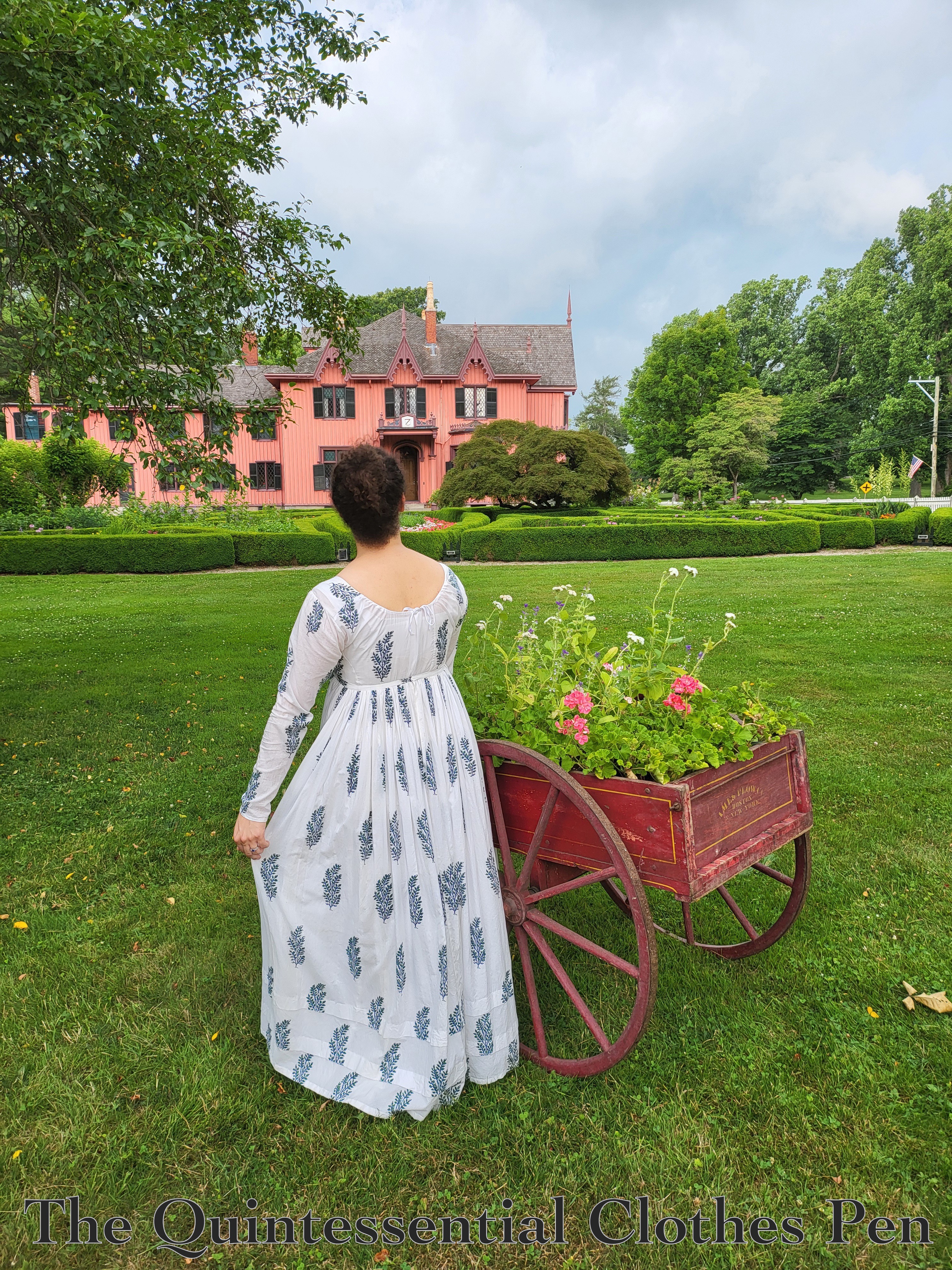
The outing for which I planned to wear my updated 1815 Tree Gown was an afternoon of croquet and house tours at Roseland Cottage: a joint event hosted by The Footwork & Frolick Society and Historic New England (the organization that runs Roseland Cottage).

Roseland Cottage is a lovely pink house in Woodstock, CT that was built in 1846 by the Bowen family (you can read more about thr history of the house here on the Historic New England website). I’ve been to the house before and posted about it on the blog — in a different post about playing croquet! That outing, which you can read about in this past post, was in 1860s clothes.

A rather moody looking Roseland Cottage on the day of this year’s outing is pictured below. It was overcast, which was nice because it wasn’t super hot, but we did have a fantastic rain and thunder storm roll through halfway through the event. Lightening struck the lawn outside of the house! Luckily, we knew it was coming and were able to transition indoors to play tabletop croquet and have tea. No one was rained on!

And I was pleased, because Roseland is lovely, the company was delightful, and my updated Tree Gown was freshly revived and very comfortable!

It felt important to show off the updated back of my gown for documentation here on the blog!

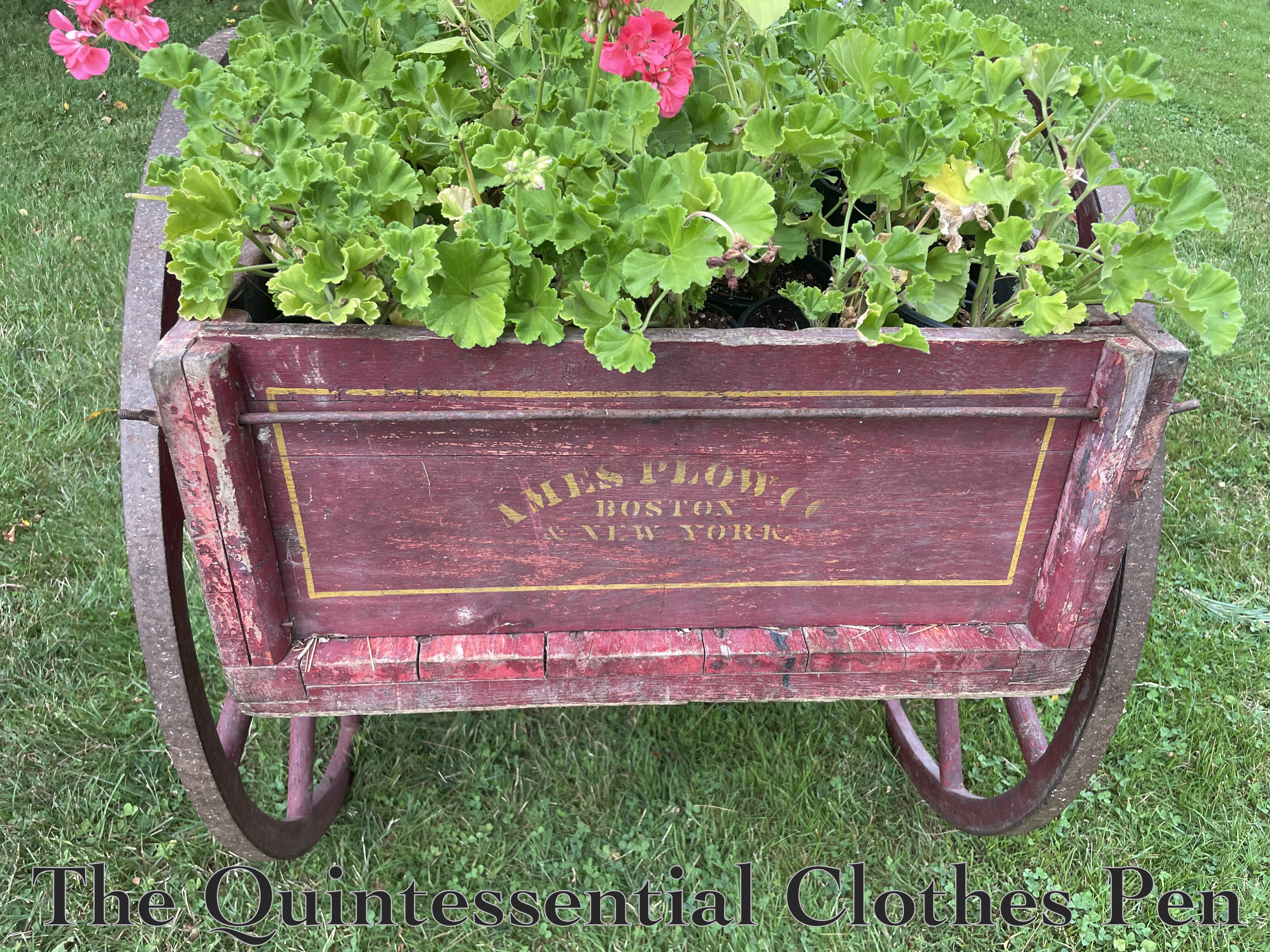
Roseland has a beautiful and well maintained garden, and in addition to that, I also appreciated the cute cart (detail photo below) full of additional flowers that was situated on the lawn. It made for a wonderful photo accessory, as you can see in the photo above!

As I mentioned in my post about altering the gown (linked at the top of this post), I’m so pleased to be able to give this dress extended life!

When The Dress No Longer Fits (1815 Tree Gown)

I’ve loved my 1815 Tree Gown ever since I made it in 2013 (here is the link to the original post about making the dress) and have worn it many times, most recently last summer for a Regency picnic which I posted about here. It was clear at that point that this dress needed to be updated to fit my current shape!

Making a plan

I finally had the brain space to deal with it this summer (and the added encouragement of wanting to be able to wear it in June). So, accordingly, I dug out the small bit of fabric I had leftover from originally making the dress.

Then, I took stock of what was needed. In a fitting, I realized that not only were the sleeves now a bit too tight, but the shoulders were also not quite wide enough for my now-broader shoulder width, which was also contributing to the dress wanting to fall off of my shoulders. Ugh!

There was no easy way to deal with that second problem except to make the back wider… So, I took a deep breath and decided to replace the back panels.

Making it happen: taking the dress apart

I had seam ripped the arm seams last year after realizing they needed to be let out, so the sleeves were already in that taken-apart state.

As I was taking apart the back, I remembered that I had taken a tuck in the finished dress to make the armsceye a little smaller. Alas, letting this out was not nearly enough to prevent me from needing to replace the back panels.

Making it happen: forming a new plan

Fast forward through a bit of seam ripping (French seams make for a lovely finish, but also mean double the seam ripping!), and I had a bunch of loose panels flopping around. I used the original back pieces and my desired new measurements to cut mockup pieces of what I thought the back should become. I safety pinned those in and tried the dress on to make sure I was on the right track.

Here is the old back piece laid over the mockup. It’s not a huge difference, but that 1″ or so on most edges made a huge difference in terms of fit.

I also made a pattern piece for the arm gusset I needed based on the measurements I wanted the new sleeve size to be. In the end, I decided to extend the gusset all the way down to the cuff opening, as I figured a little extra room for my hand to get through was a reasonable idea (it was a tight squeeze otherwise!).

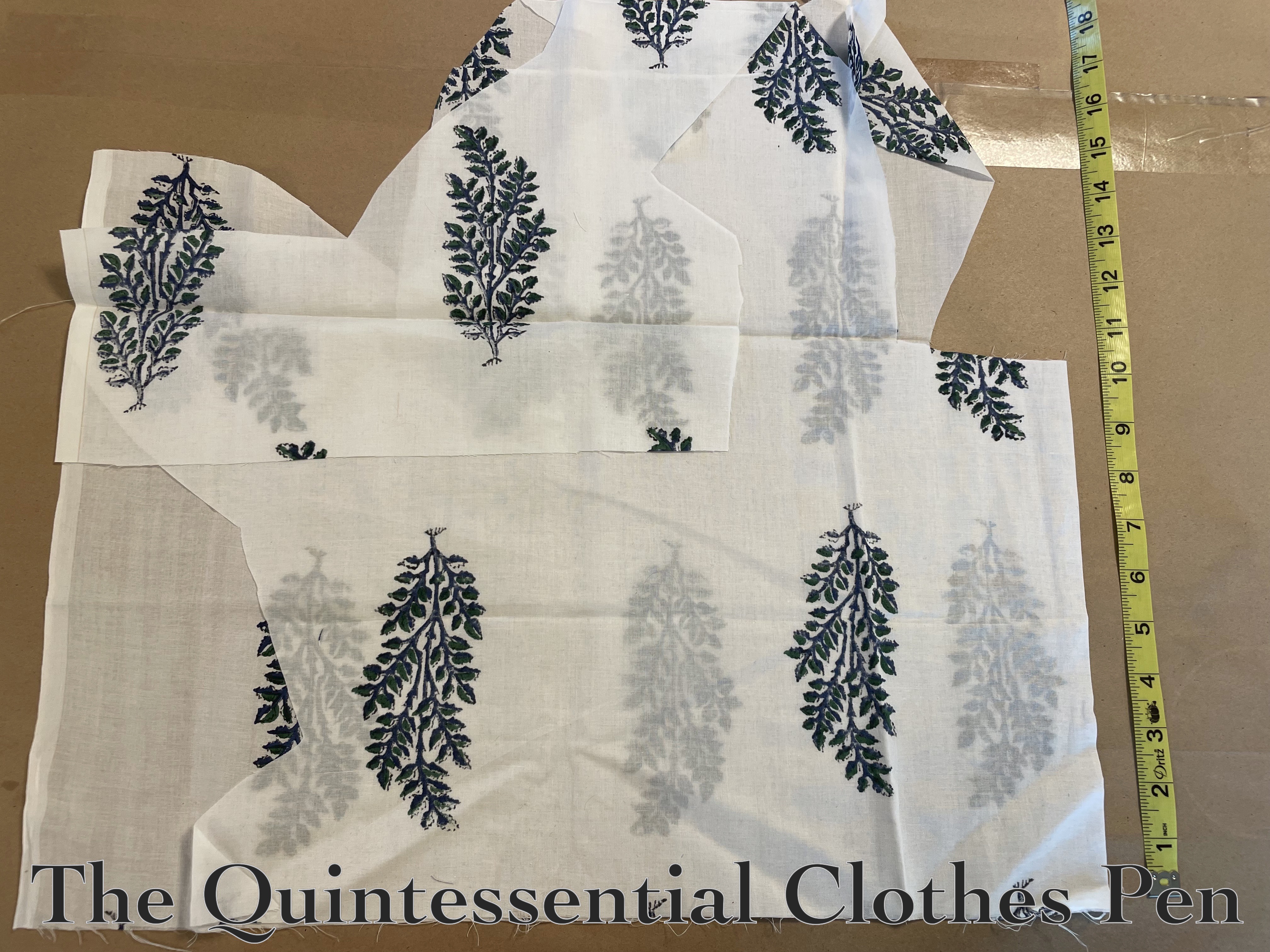
Then, I used my minimal scraps to cut out the new pieces. I’m super pleased that even with small scraps I was able to match up the block printed areas!

For the back pieces, the image below shows what I had to work with. Not much! I could fit both pieces if I didn’t maintain symmetry in the block print, but… I did such a nice job matching it up when the dress was made! I just couldn’t bring myself not to make the re-do match, too! But I couldn’t get two pieces with matched patterns out of what was left.

It was too much to think about late at night and I knew I only had one chance at cutting to get it right…

So I took a break and came back to it another day. And I had a brainstorm! The way to make my goal happen was to piece one of the pieces somewhere. I could have placed an extra seam in a shoulder area, but that seemed more obvious than my second option given the sheer fabric of the dress. The second option that I decided on is a vertical seam in the white space near the center back opening. There was just enough fabric to make it happen!

Making it happen: putting the dress back together

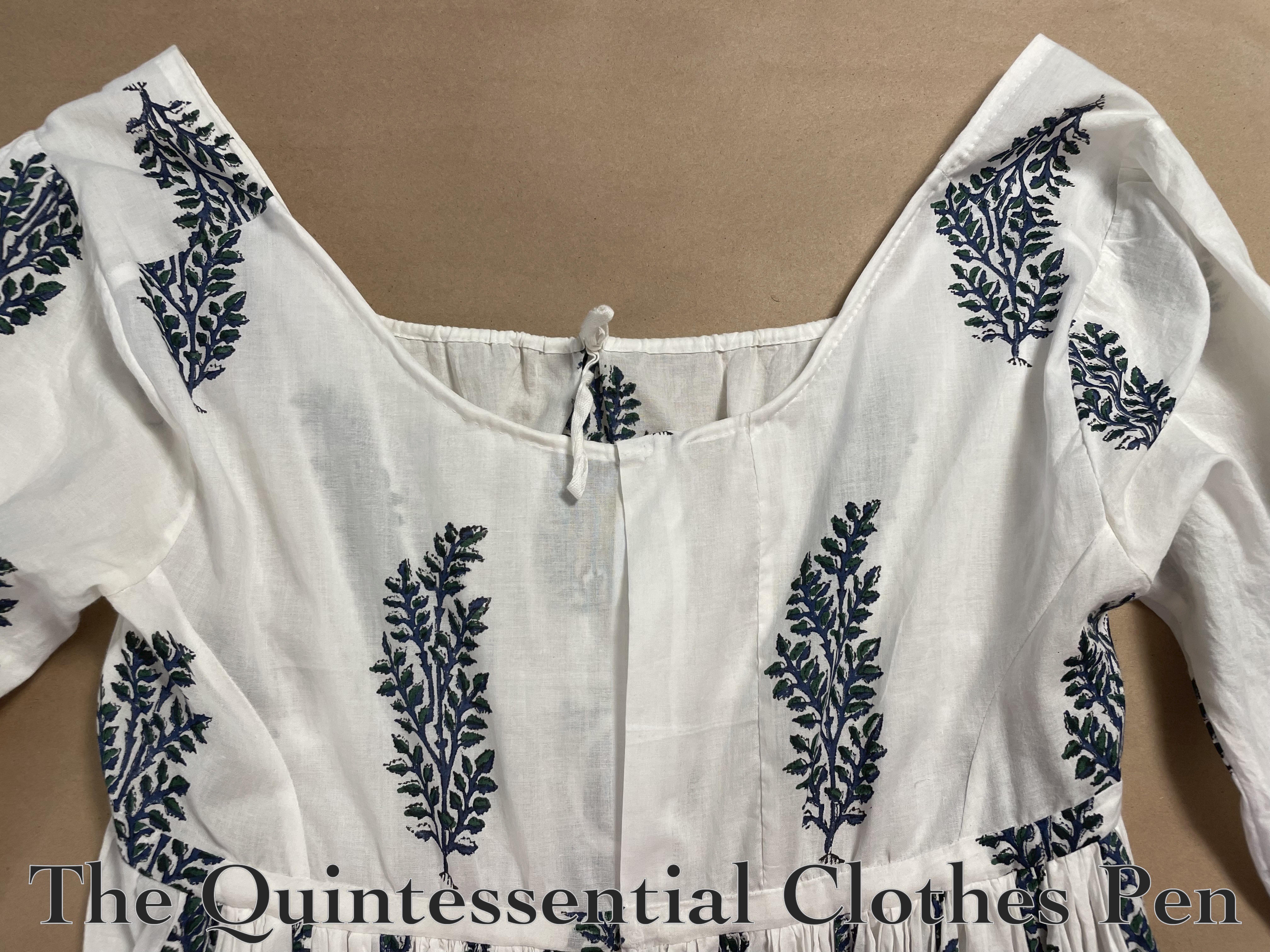
With my new back pieces cut, it was just a matter of putting them back into all of the seams (including the armsceyes, shoulders, side back, and waist). I was able to reset the sleeves without any of the original gathers, which allowed for the extra circumference my new back pattern had created. Then, I created a new drawstring channel along the neckline and re-applied my closures… and the update was complete!

Here is the new back view of this dress, with the pieced seam on right (but with symmetrical block printing!).

I used a French seam to attach the pieced bit, so that it would match all of the other seams in the dress and stay nice and tidy with no fraying edges.

I also made the right side of the drawstring come out before the center back edge, so that the overlap with the hook can still function properly while the drawstring pulls up the excess width across my shoulders that I included. (There was extra in the original version, too… but I maxed that out years ago!)

Here’s another view of the lovely, tidy interior of the dress with the updated back.

And finally, here is a photo of the finished sleeves with the added gussets. Where the block printing is located the seams blend so well you can’t even see them! It makes my heart pitter-patter with glee!

The final step after putting in the gussets was to re-hem the cuff openings.

And then… this dress was updated! Now it’s a story of ‘when the dress fits again!’

1817 Duchess Gown in Bridgerton Style

The Footwork and Frolick Society hosted a Bridgerton themed ball in May! Here are a few atmospheric shots.

For this event, I chose to wear my 1817 Duchess Gown (you can read about the inspiration and making of the dress, here). I love this dress and haven’t had a reason to wear it in years. Plus, I figured the neutral color would pair well with a few nods to the colorful style of Bridgerton costumes.

In the past, I’ve had fun pairing this gown with other colors and accessories, as well! You can read another past post where I show multiple wearings together here.

The dress is a sheer striped organza, which is fun because I can show off fancy historical underwear with it! I usually wear my 1814 Vernet petticoat so that the fancy trim around the bottom can be shown off (in addition to a second petticoat to make the ensemble fully opaque.) The second petticoat is functional more than decorative, and is the one I recently posted about that needed a size update to fit properly again!. Wearing it with this sheer dress for the ball was the push I needed to make the petticoat fit really well–I didn’t want odd lines showing under the sheer Duchess Gown!

In addition to the decorative Vernet petticoat, other accessories for this wearing included clocked silk stockings from American Duchess, white flats purchased from a consignment store about ten years ago, a gold bead necklace that ties with a ribbon that I don’t wear often (I usually gravitate towards other more sparkly jewelry), and three nods to the colorful style of Bridgerton.

My nods to color included a green organza sash (that I’ve worn with this dress before–see images in this past post from 2019), green and gold earrings (from the Downton Abbey collection a number of years ago), and flowers in my hair, including some vivid pink ones. I’ve had these flowers for about 25 years and rarely wear them. They’re pretty bright! But for the Bridgerton theme they made perfect sense!

The company at the ball was charming and the dancing was enthusiastic! My Duchess Gown even had an old friend visit in the form of my 1811 Elusive Blue Gown worn by a friend! I love that these garments are getting to be worn again!

Photo credit for this last photo: Lucas Clauser

Sophie In Springtime

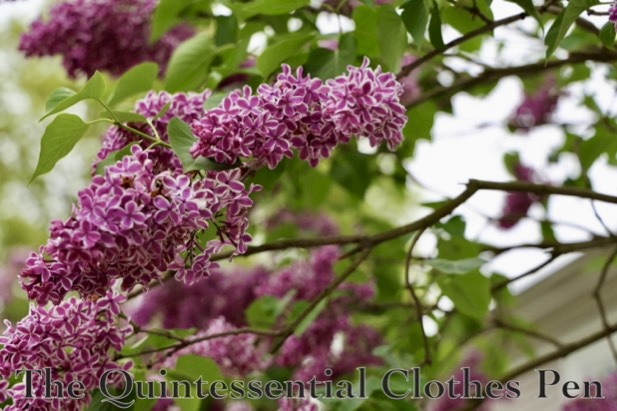
The lilacs were blooming in May, joyfully spreading their scent to all who passed by.

Photo credit for this photo: Steve Lieman

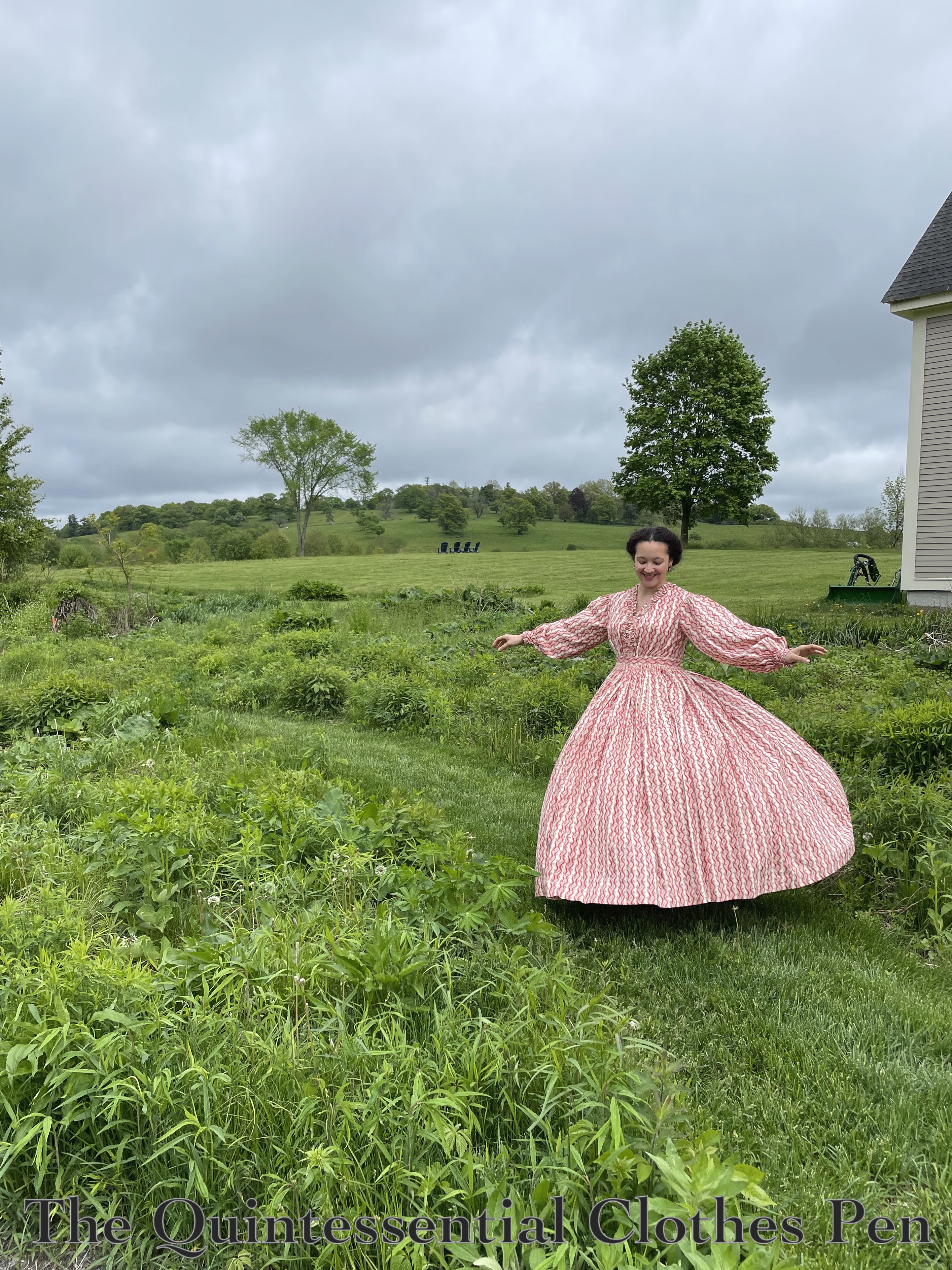
I was grateful to be able admire their beauty and celebrate spring with an outing in Sophie, my trusty 1861 twisted stripe cotton print dress. I made this dress in 2016 and posted about the construction in this past post.

The overcast sky didn’t dampen my spirits!

The diffused light was actually quite lovely and I enjoyed whirling around in the fresh air.

I hope your springtime held unexpected joy, as well!

When The (Regency) Petticoat No Longer Fits (HSM #5: New Clothes From Old)

While we’re on the subject of updating clothing that no longer fits quite right (this is continued from my last post about updating a pair of 1860s drawers, which you can read here), I have another post about updating a layer of historical underwear for fit.

A few background thoughts

In the past 15 years or so that I’ve been making historical clothing, I’ve also changed sizes and some of the clothes I made early on just no longer fit. The usual culprits are the waist, bust, and shoulder width. (It’s not necessarily all for the worst. My shoulders and arms are bigger because I’m gaining strength and being active, so that’s a healthy change!)

I’ve been able to wear more of my historical clothes recently and the more I wear the older ones, the more I realize just how much my shape has changed.  Because I have some lovely garments that I still want to be able to wear, I’ve been updating these garments to better fit my current shape.

Background on this particular garment

I made an early 19th century bodiced petticoat in 2012 (here is my post from back then sharing research about this type of garment). Since then, I’ve gained inches in the bust, ribcage circumference, and in the width of my shoulders. So despite wearing this petticoat and making do, I finally reached a point where it became important to make this fit better.

Here is the bodice portion of the petticoat before my alterations, from the front and back.

I determined that I needed a whole new front piece–one that would be wider across the bust and with more gathers to condense to the ribcage size. I also realized that it would be helpful to make the side back pieces a little more substantial, with a taller side seam to match the new front.

Update details

Thankfully, I keep lots of fabric scraps! And in this case, I actually still have yardage of the fabric I made the petticoat from. So no problems there — I was able to easily cut out a new front with updated dimensions as well as bits to add to the side pieces to extend them (I didn’t feel like replacing them entirely — this petticoat already is a bit pieced at the center back, where I had previously added fabric in order to help make it a little larger a few years ago).

After cutting new pieces came the boring part of unpicking the original front. Ugh! I don’t enjoy taking apart things that I’ve made! But I did it.

I thought I might machine sew the new pieces on, but I was more inclined to complete this project while not near my sewing machine, so I did it by hand instead. I replicated all of the same seam finishes from the original bodice front (because I like consistency, but not because they are historically accurate, in this case).

Here are the results!

And here are closeups of my very pieced method of creating larger side back pieces (you can also see the extendo I added to the back at some point about 6 years ago).

Unfortunately, when I tried on the adjusted petticoat I realized that the armsceyes were uncomfortably small. I was not going to be able to deal with that! “Get it off!” was my exact though. To fix that problem, I added strap extender bits to the front of the straps.

This worked great! And now, I have a petticoat that fits again! It covers my current bust size AND fits across the back (in fact, I made it even a little too wide across the back because I figured that might be helpful).

Here is a photo of the inside of the new front bodice piece. Both the old bodice front and the new one have a drawstring along the top edge. And you can see that I left additional strap length for theotrical future of letting-out.

I’m calling this my entry for the Historical Sew Monthly 2024 Challenge #5 New Clothes from Old:

Make something new out of a worn-out garment or accessory. Or make something using recycled materials.

I believe I’ve recycled a worn-out garment into something new and ready to use again!

Just the facts:

Fabric/Materials: Scraps of white cotton.

Pattern: My own.

Year: c. 1812.

Notions: Thread.

How historically accurate is it?: 100%. It’s completely reasonable to extend the life of a garment like this by altering it.

Hours to complete: 4? It took some time to seam rip and then I was meticulous about stitching the new pieces on. I didn’t really keep track.

First worn: On May 4.

Total cost: Free! Materials were scraps left over from the original project.

It took a bit longer than expected to hand sew all of the updates I needed to make, especially with the late-to-the-party addition of the strap update. I was pleased to finish this the day before it was needed! (More on that later!)

The Happy Clover Dress Gets A New Zipper

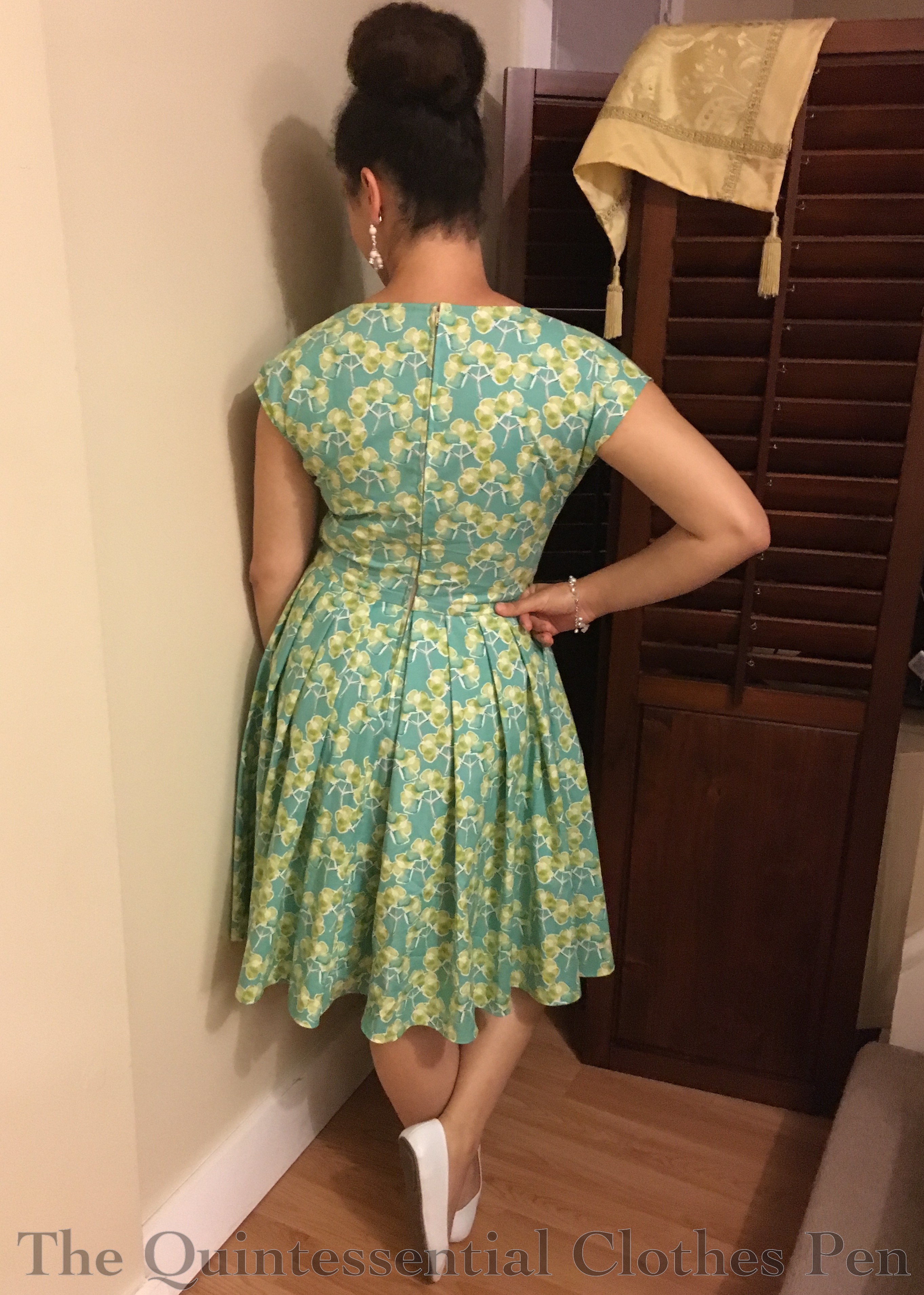
As I was getting dressed in my Happy Clover Dress one day last summer, I was pulling up the zipper… and it broke! I don’t remember exactly how it broke, now that I stop and think about it months later… I think that the pull came off of the teeth, or the pulling part came off of the part that grips the teeth… I don’t remember precisely, but needless to say, it was broken.

Below: the Happy Clover dress with its original zipper.

The original zipper was repurposed from a 1980s dress I took apart to make a 1920s beaded dress back in 2013 (a post about making that 1920s dress, including photos of the 1980s dress before I took it apart, can be seen here).

With the broken zipper, the dress wasn’t wearable! So on the day that is broke, I changed my outfit and put the Happy Clover Dress in the to-be-mended pile. Not long after that I bought a new YKK zipper in matching shade of teal. And then… the dress and zipper sat there for about 9 months…

Fast forward to May of this year and I was really tired of looking at my large mending-and-alterations-to-do pile (is that sounding familiar yet?)! I want to get back to sewing some of my larger projects and am craving both the physical space and mental release of completing the mends and alterations in order to do that.

So… that led me to finally put the new zipper into the dress!

Yes, the zipper is in! Just as before, it is centered and topstitched. This is due mostly to the fact that the zipper nestles under pleats in the back skirt, which means that it has to be sewn in two sections–the bodice section and the skirt section–to keep the pleats form being sewn down with the zipper.

You can see that in the photo above and you can also barely make out my extra backstitching where those two sections of stitching meet in the photo below.

Here’s a closer photo of the fun teal color of the new zipper!

And that’s it! Just in time for warm weather, the Happy Clover Dress is back in action! Yay!

Another Round Of Dotty Tap Pants

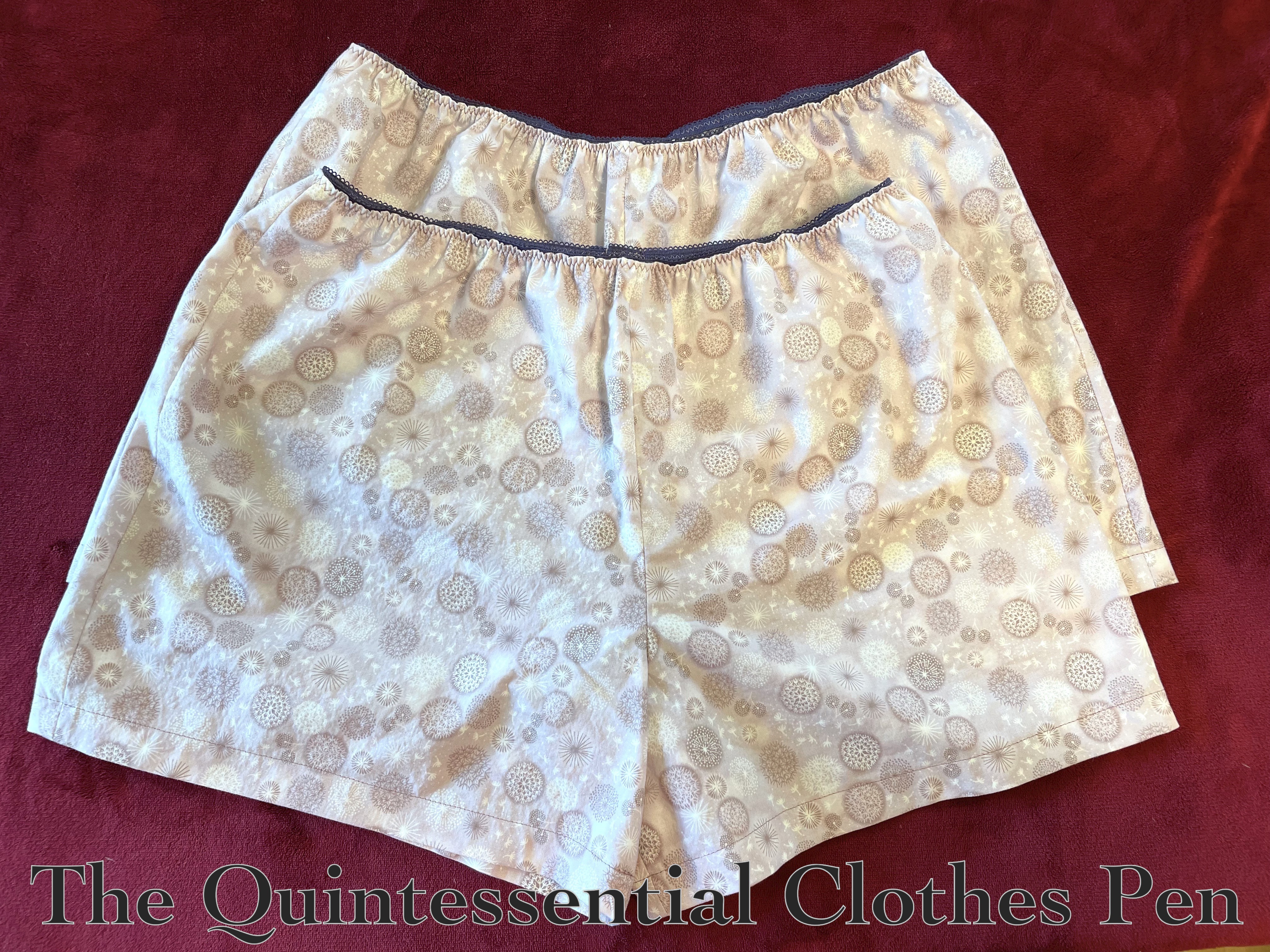
The last batch of cotton print shorts I made to wear during hot summer weather was completed in 2020 (I wrote about them in this past post). I get lots of use out of these garments and some old ones are starting to wear out, so it seemed it was time to create some more!

All of the shorts I’ve made along these lines have had circular or dot motifs and when I went fabric searching for this batch I kept that theme in mind. It’s also important for the shorts to be light-ish in color, so that I can wear them under dresses of any color! Those two goals are both met with the light purple allium (or dandelion, if you like) print fabric I used.

For comparison, here are purple allium flowers! I love the round shape the little blossoms create. It brings me joy. (Striking and unique allium exist in a variety of sizes and colors, including some that grow to be about 3 feet high with 6 inch diameter flower clusters!)

As with the previous batch of shorts, the fabric for these was purchased and washed months ago, in September. Then, the fabric sat on my pile of small-things-to-do near my sewing machine. I recently found the oomph needed to tackle the pile-of-small-things and completed the new shorts, along with a host of other small mends and alterations!

These are entirely machine sewn with the the seam allowances finished with an overlock machine. The waist is zig zagged to a bit of loop edged elastic. And really, that’s all there is to them! Two pairs!

I’m super pleased to have them off my to-do pile and ready to wear for the summer. I’m also super pleased to have completed a task that was on my official maybe-to-do list for this year!

Eleanor At The Boutwell House

My 1860s evening gowns have had far fewer outings in the last few years than they used to, which it made having a reason to wear one a few months ago particularly exciting!

The question was which to choose??? I wore Genevieve (my 1863 apricot-colored covered in lace and pleats silk gown) sort of recently, in April 2022. Other dresses in my historical closet that might still fit (Georginia from 1859, Annabelle from 1859, and Evie from 1864) haven’t been worn recently, but for some reason, plaid was sounding like fun… So I chose to wear Eleanor (my 1862 purple and green silk plaid dress)!

I’m still very pleased with the fabric of this dress and the way I cut the pieces to create interest in an otherwise pretty basic dress. The little details like tiny piping on the bodice, matching hair flowers, and a well matched set of jewelry (earrings and necklace from In The Long Run Designs, as well as a mix of modern and vintage brooches) also bring me joy.

I also had a lovely setting in which to wear the dress. The Boutwell House in Groton, MA was built in 1851 and is now home to the Groton History Center. The Footwork & Frolick Society partnered with them for the town of Groton’s annual WinterFest activities, which included inhabiting the house for an afternoon to give visitors a small view into activities from the period.

I enjoyed being able to wear an 1860s dress again. I’ve always loved the magic of a cupcake shaped hoop skirt–and this was no exception!