Summary of 2025: Looking Forward To 2026

2025 was a bit of a crazy year, but despite that I have so many things to be grateful for and recall with joy, including both sewing projects and events! So here is my 2025 recap. (You can see all of my past posts related to reflecting and looking forward here.)

 Projects I completed in 2025

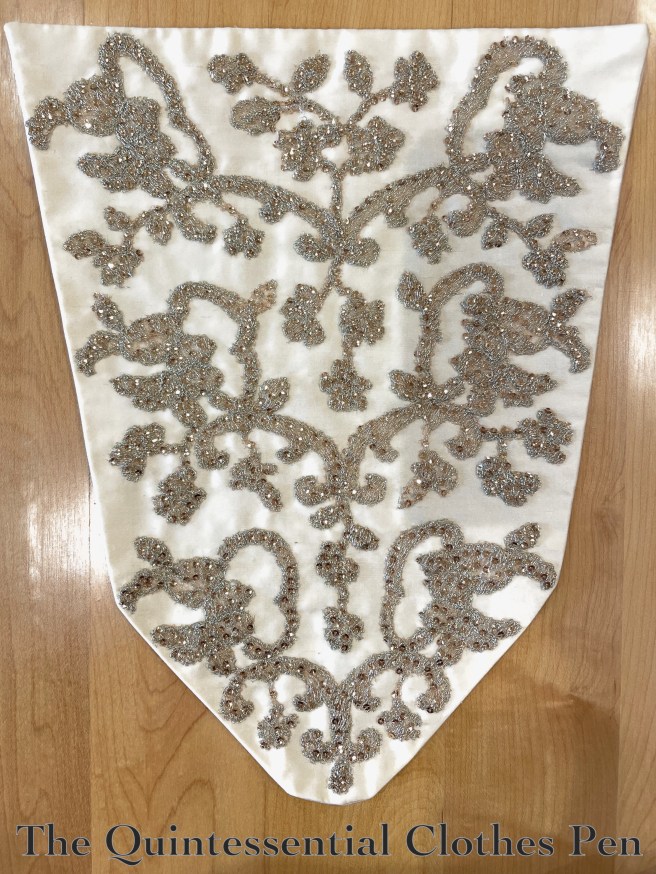
January: c. 1770 Stomacher (for the new Yellow Sacque) (HSM #12)

February: Two Tuckers (for the Versailles and new Yellow sacques) (HSM #6)

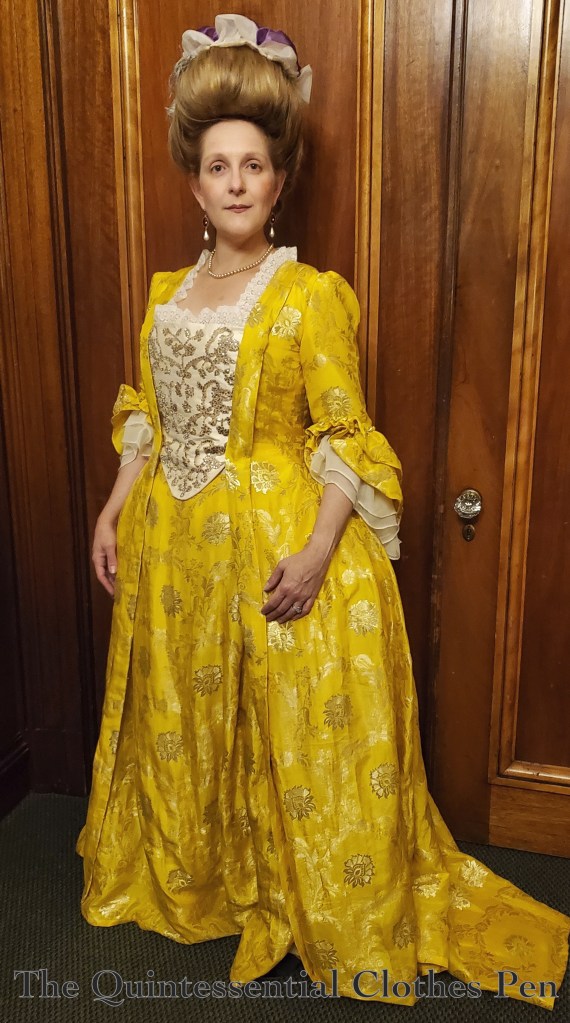
March: The New Yellow Sacque

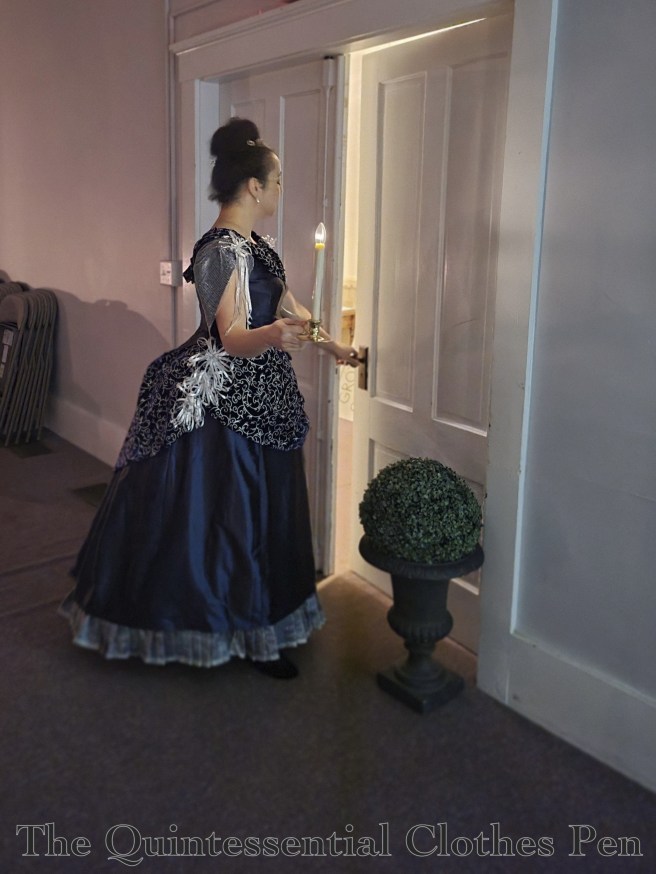
June: 1885 Fancy Dress Re-Do (HSM #9)

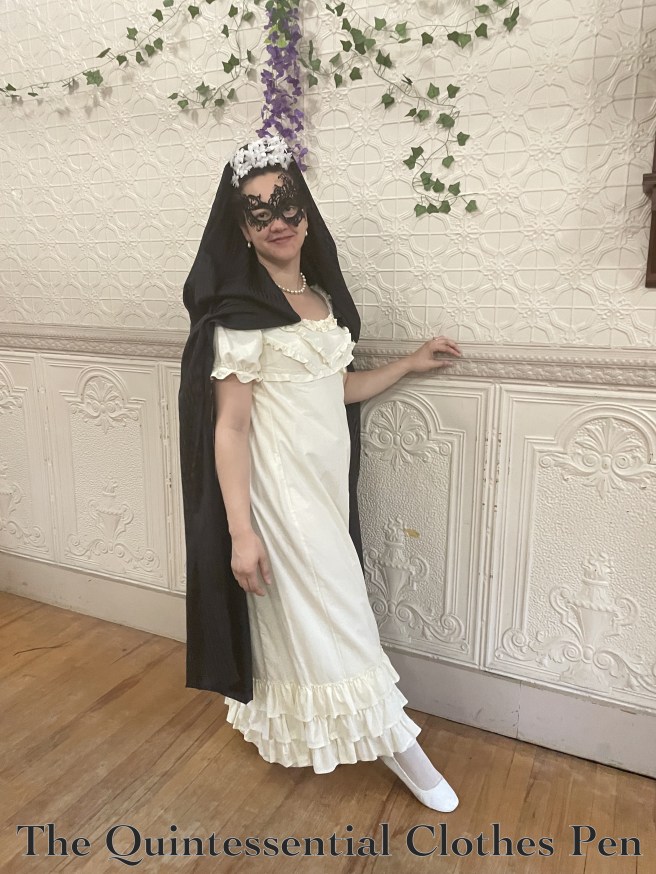
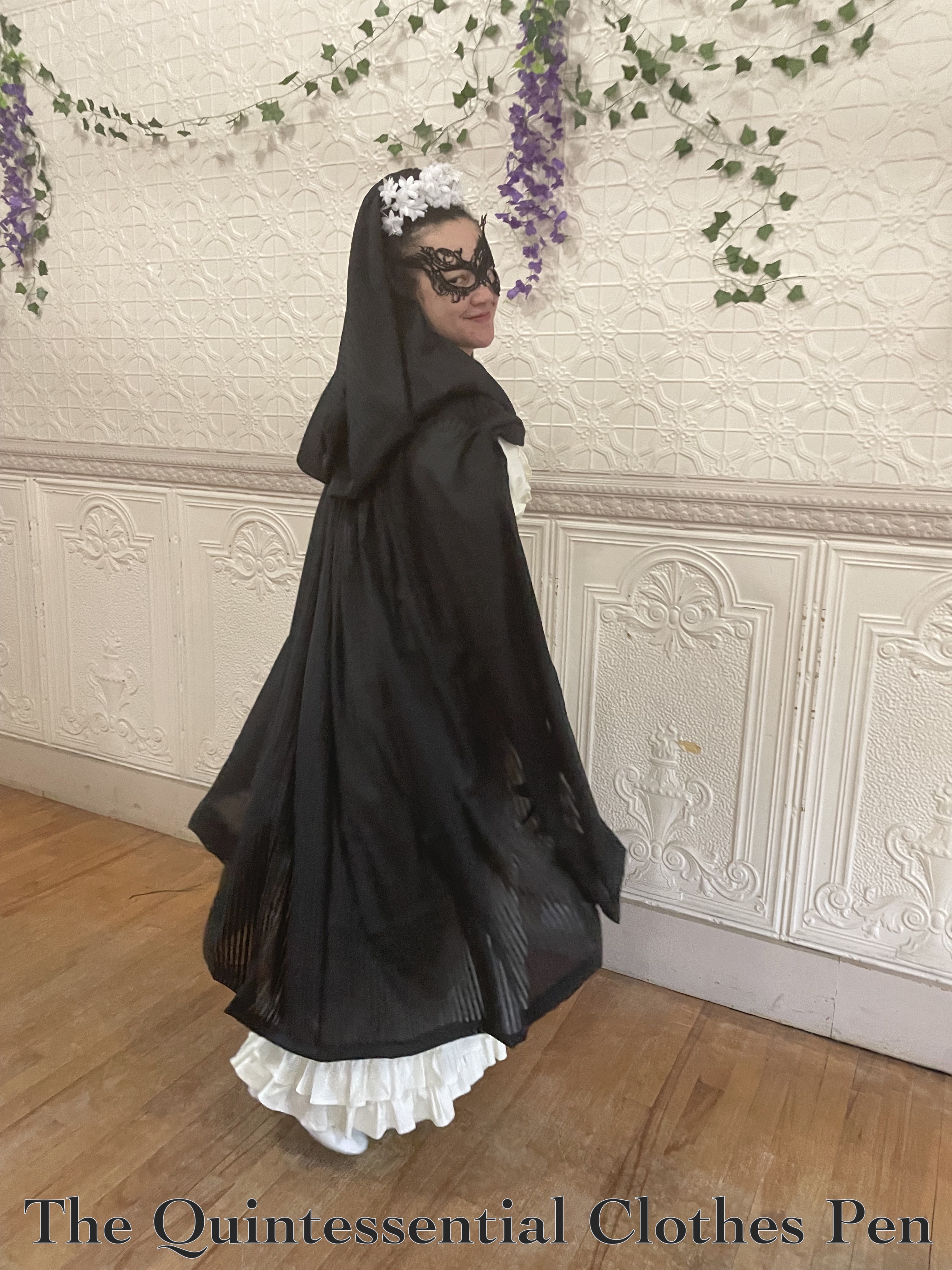
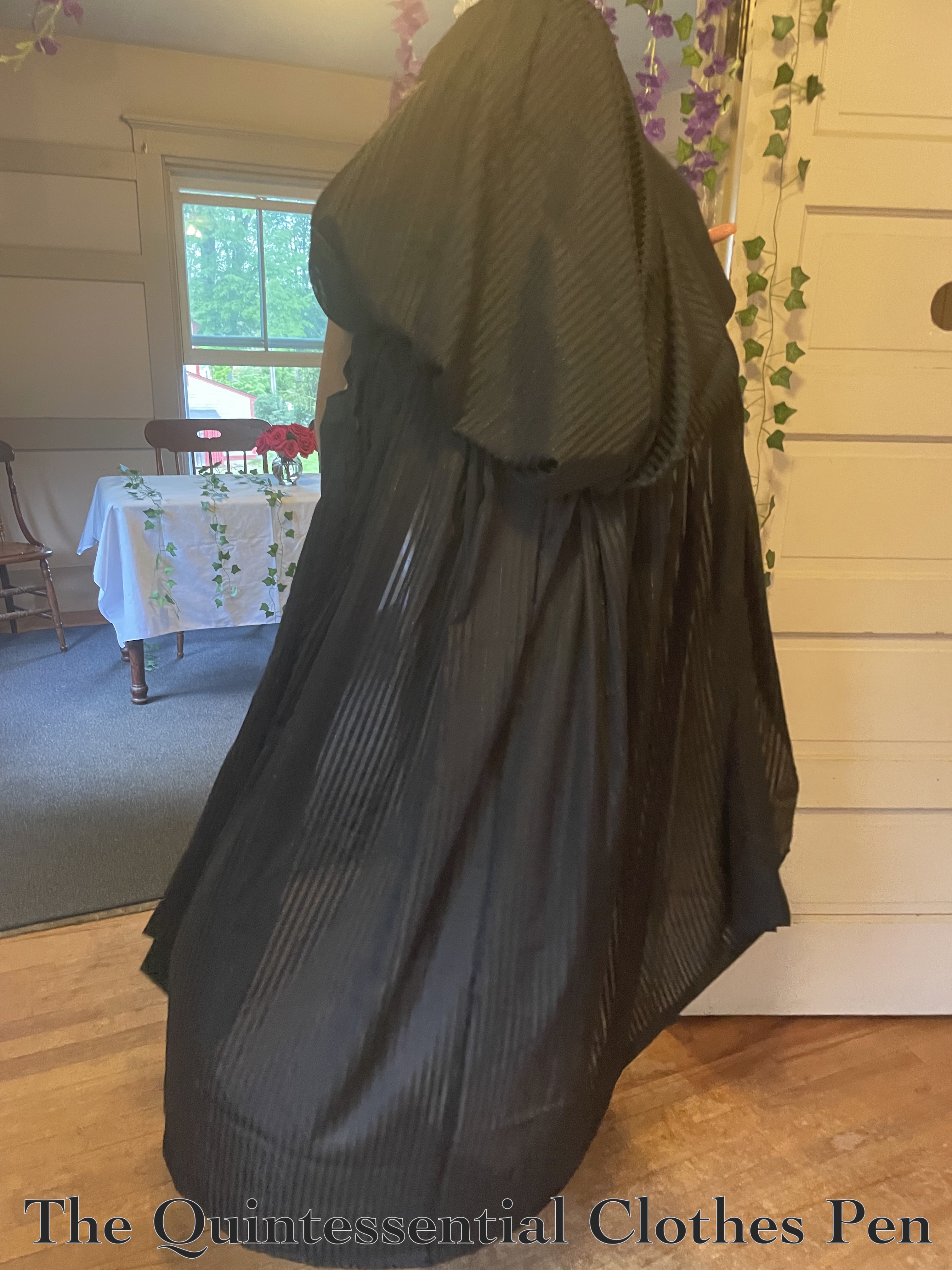
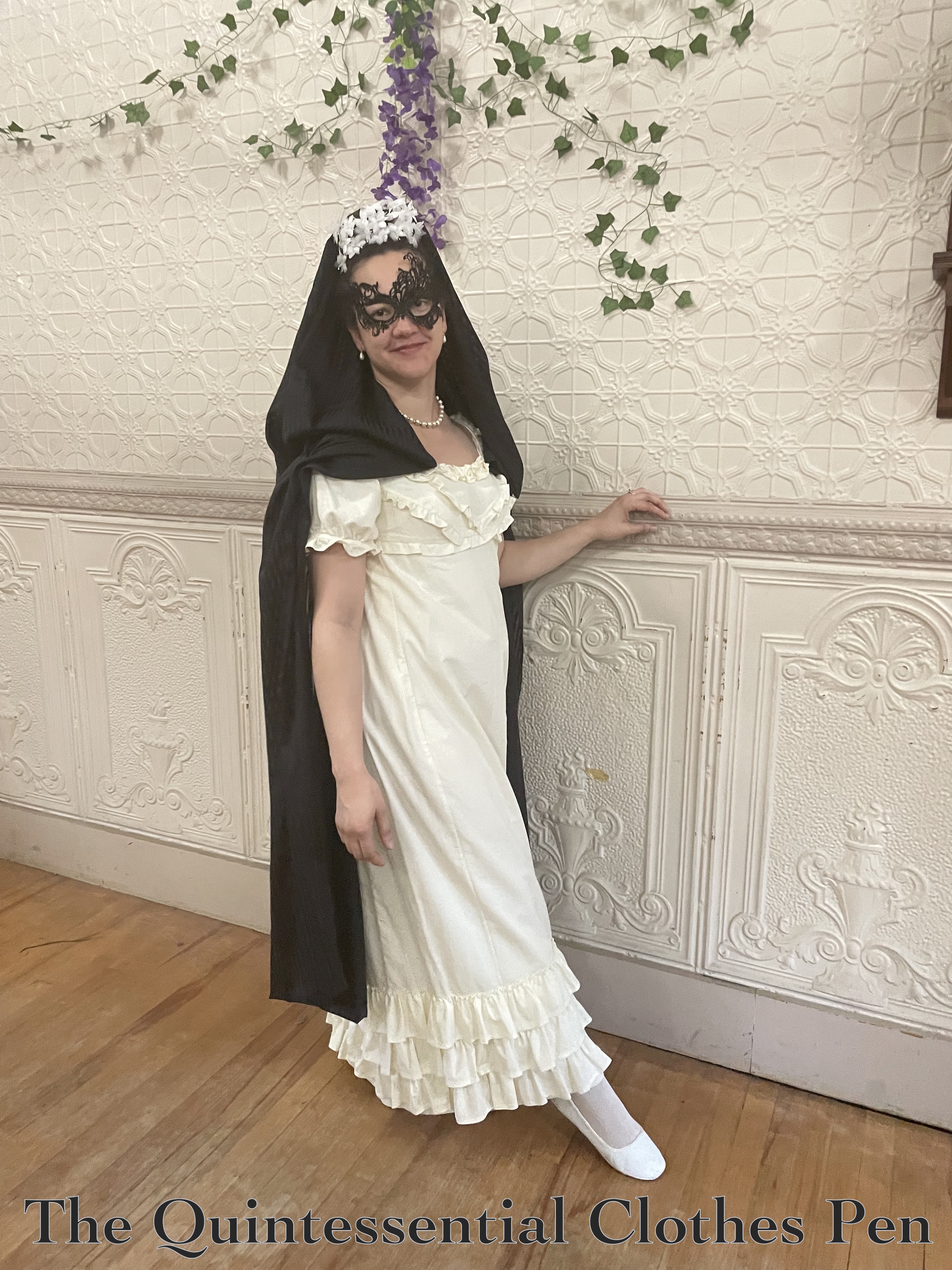
July: A Mysterious Domino

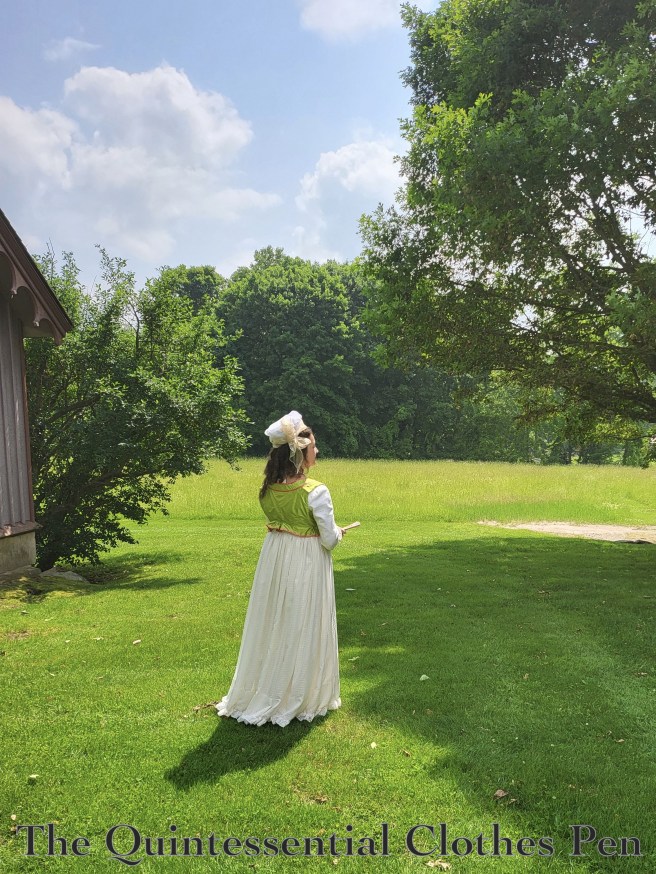
November: 1797 Watermelon Sleeveless Bodice

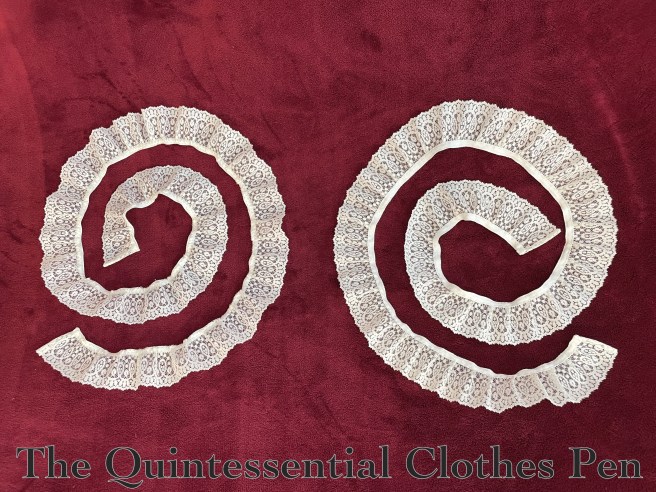
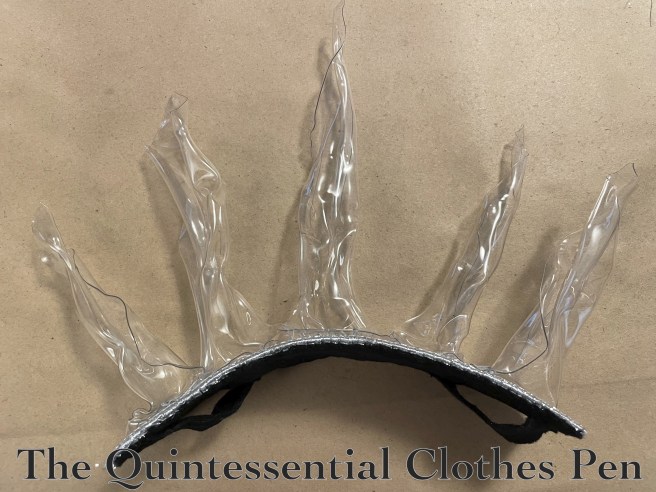
November: A Recycled Plastic Icicle Crown

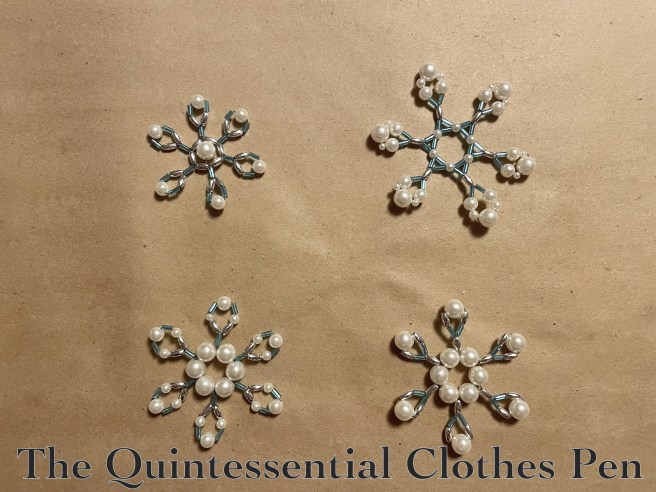
December: Beaded Snowflakes

General Blog News

I participated in my 13th year of the Historical Sew Monthly! This year I only got around to posting about 3 of the 12 challenges. That was fewer than I had hoped, but the end of the year became very busy and this fell down on my priority list. A few of the small projects I completed at the end of the year could have counted for HSM challenges, I think, but I didn’t have the wherewithal to document them in that way. Oh well!

Event Recap

I attended 3 balls, 2 other events (tea, picnic, croquet, outings, etc.), 3 dance and historical pastimes performances or educational events, and 1 weekend event (that included dancing, games, and costumed outings). Certainly not my busiest historical year, but I had a lot going on, so given all the life things this was pretty reasonable.

To Do Lists

Well… Looking at last year’s to do list, I didn’t get very far. I did work on some of the things on the list, but I didn’t complete any of them entirely.

So, my definitely-to-do for 2026 is a repeat of 2025. That includes:

  • Finishing the 1836 Blue Print Cotton Day Dress #2. This had some progress made (I attached the skirt to the bodice!), but it needs new sleeves patterned and executed.
  • Updating the trimming on my 1893 Bronze and Pink Ballgown to better go with the size updates I made in 2022 and posted about in 2023. I started this, re-seating the waistband and taking out the old hem, as well as starting to re-trim the bodice, but then I got stuck and distracted.
  • Scroop Patterns Frances rump (1775-1795). This is well on it’s way to being finished, but I am trying to get the 1893 and 1836 dresses done first.
  • 18th century neckerchief. I believe I did research on shape, decided on size, and cut this out, but haven’t hemmed it yet.
  • Various sleeve and neck ruffles to go with all of these 18th century gowns. These are cut out and started, but I lost the motivation to work on them.

And my maybe-to-do list includes:

With such a busy year in 2025 I really can’t fault myself for not completing these things. I did, after all, complete some other sewing projects. We’ll see how I do with the list in 2026. At the very least I’d love to get the 1836 dress, 1893 dress, and Frances rump completed, so that I can put them away! The dresses, in particular, have lived in plain sight for years now so that I remember to work on them.

I remain so very grateful for good friends, supportive family, and engaging blog readers. I sincerely hope you also have many things to be grateful for and that this new year brings joy and peace to you.

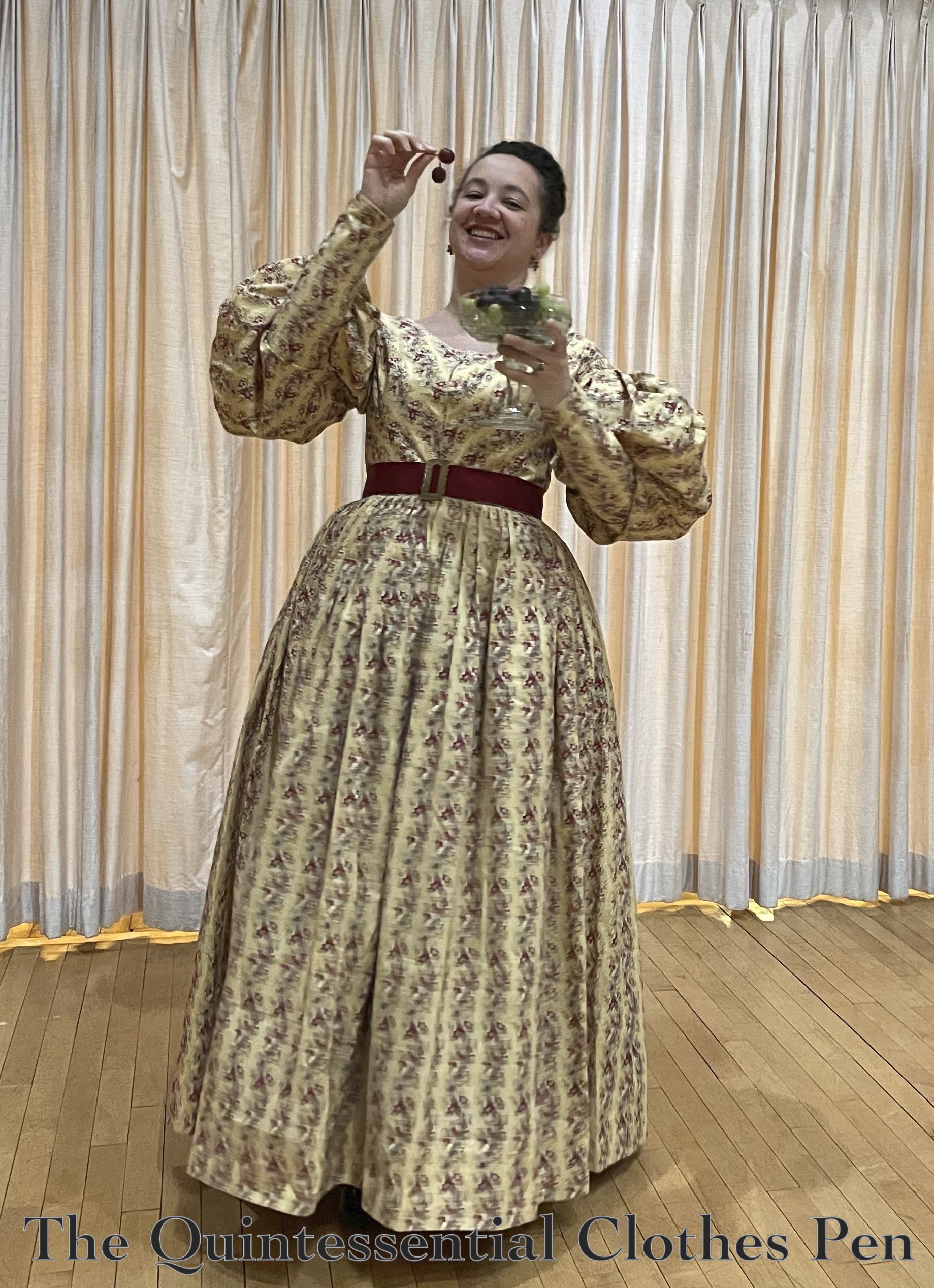
Here is a silly cheers to another year of historically clothed fun!

1899 Elusive Blue: The Snow Queen Fancy Dress Version

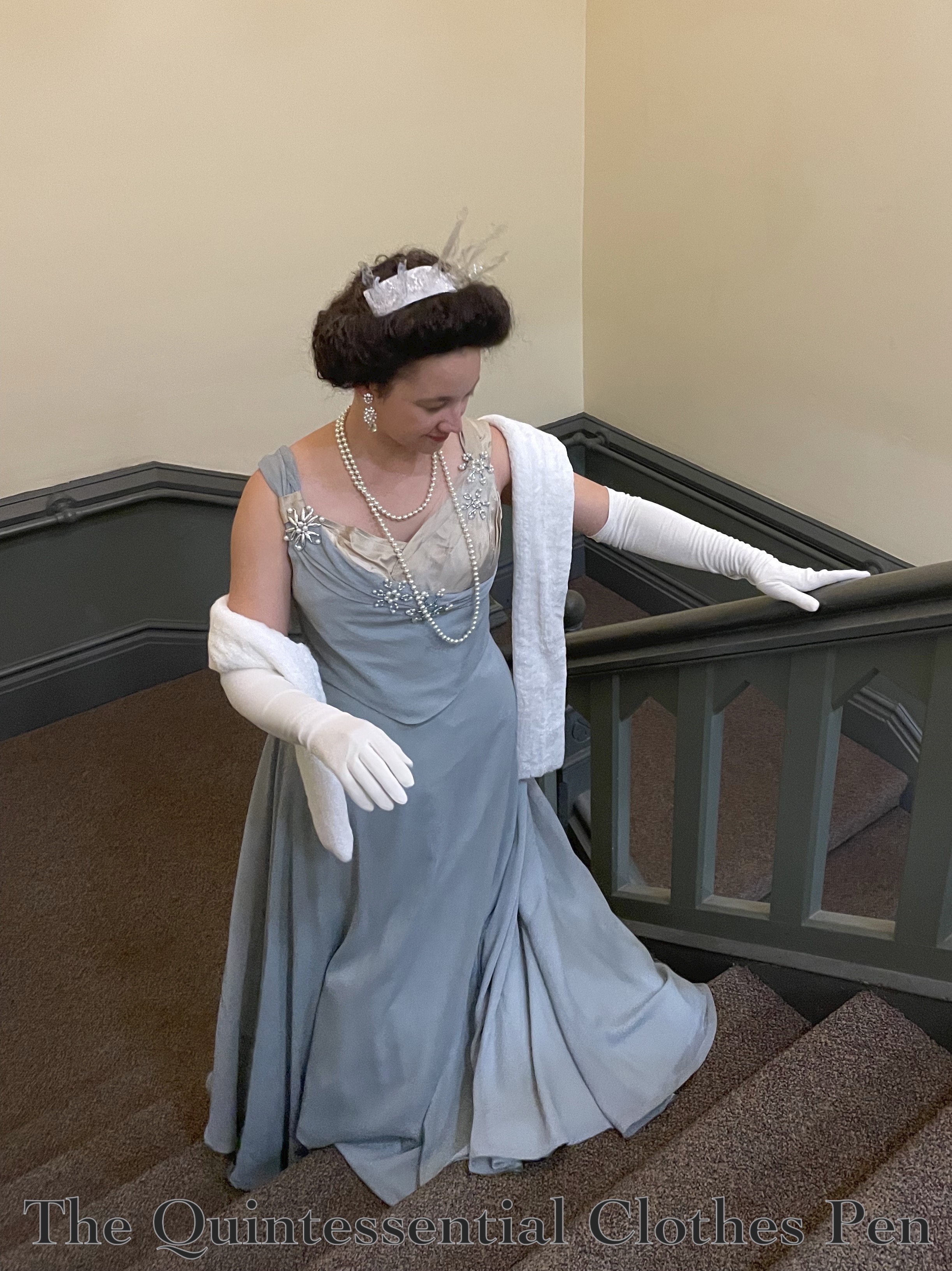
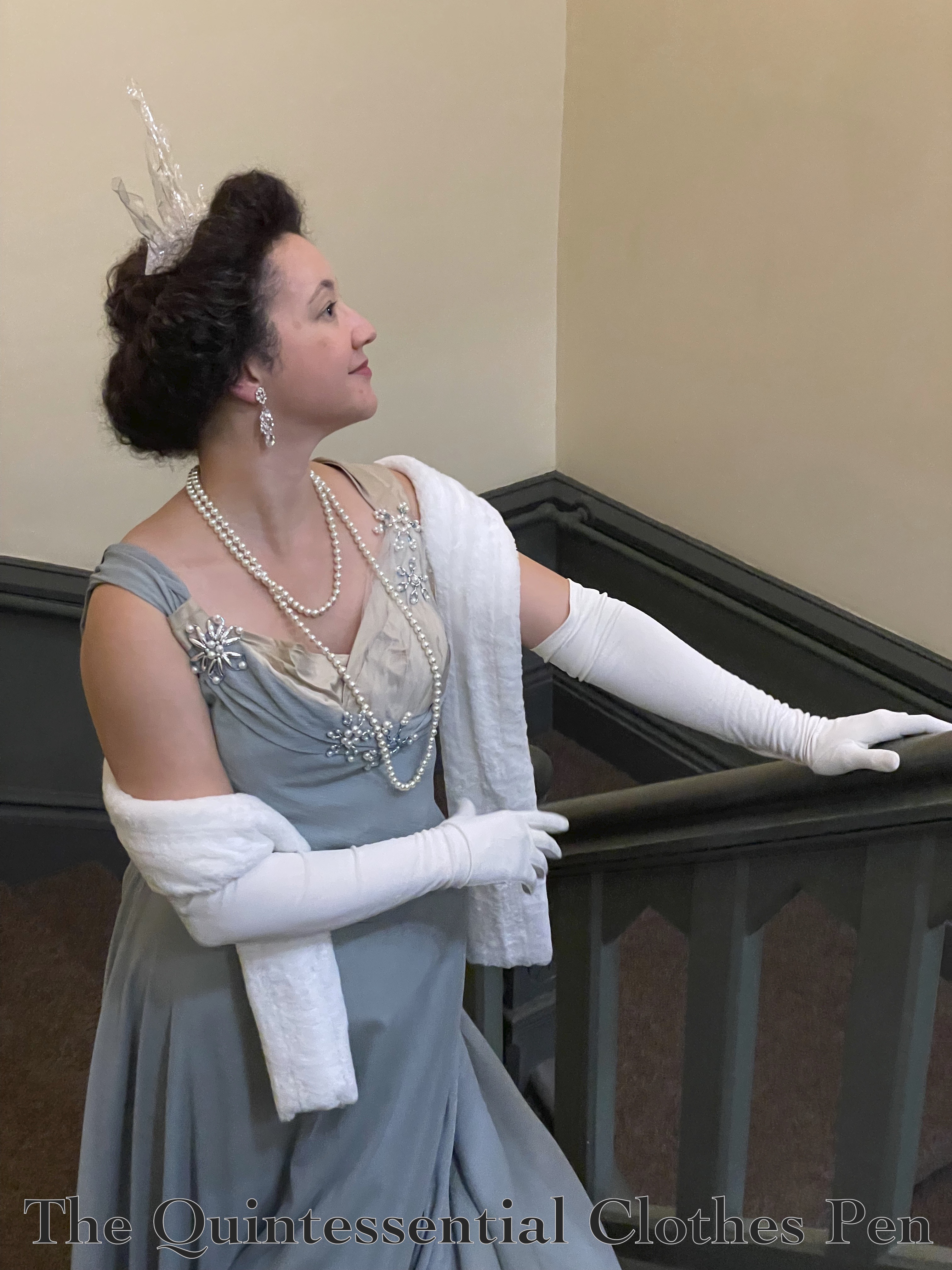
It’s time to share photos of my completed Snow Queen fancy dress outfit! This outfit, which is a re-trimming of my 1899 Elusive Blue dress, made use of new beaded snowflakes (posted about in detail here) and a recycled plastic clamshell icicle crown (posted about in detail here). Below is the finished outfit with all of the trimmings!

The trimmings included big sparkly earrings and a long strand of faux pearls worn in an 1890s style, long white gloves (an essential for an 1890s ball!), the afore-mentioned snowflakes and crown, and a bit of white fur to capture the idea of snow.

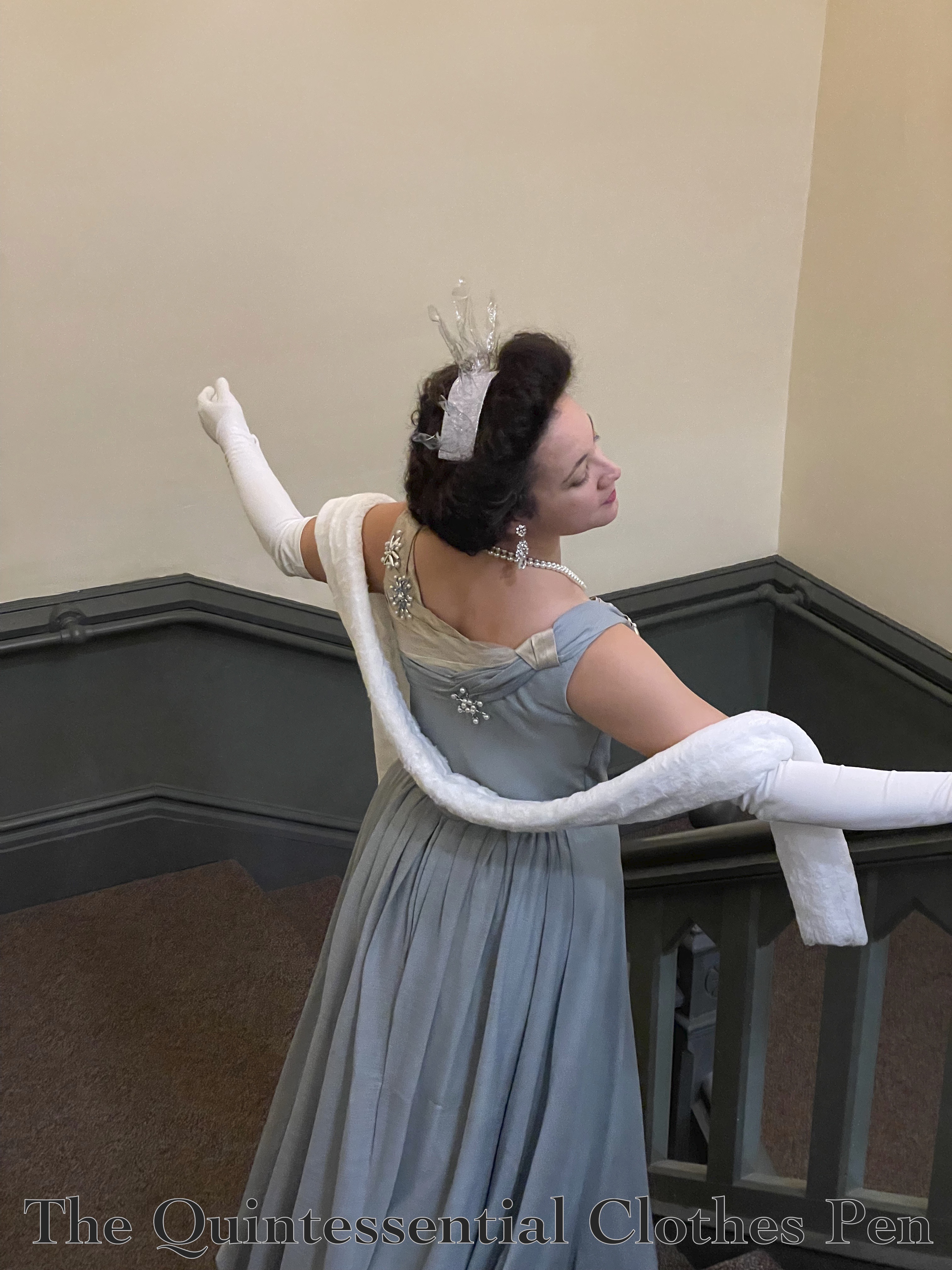
The fur tippet amuses me because it is super soft and comes in handy as a historical accessory, but also because, looking back, I made it in 2012! Here is the original blog post about it, including a definition of what a tippet is and research showing examples of tippets. How fun that it is still in my wardrobe and still coming in handy!

Here is the icicle crown in action, to give some context to the description of how it sits on my head.

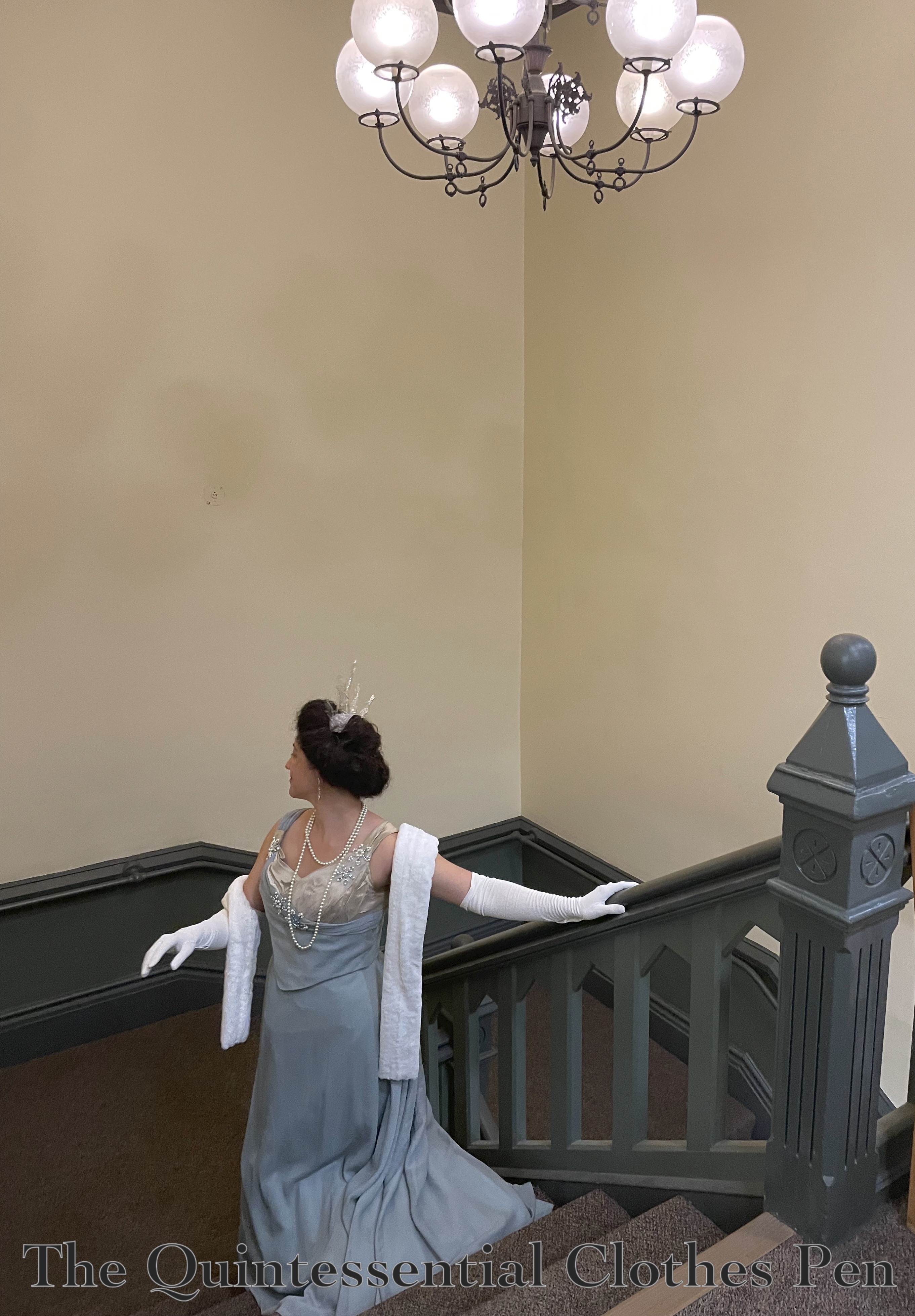
To finish off, here is one more full length view of the ensemble, zoomed out far enough to see the fun bubble-shaped light fixture!

Happy new year! Thanks for enjoying this ensemble with me!

1797 Watermelon Sleeveless Bodice, Part III: Finished Garment

I’ve spent the last two posts sharing the details of inspiration, patterning, and making a 1797 sleeveless bodice. Now it’s time for photos!

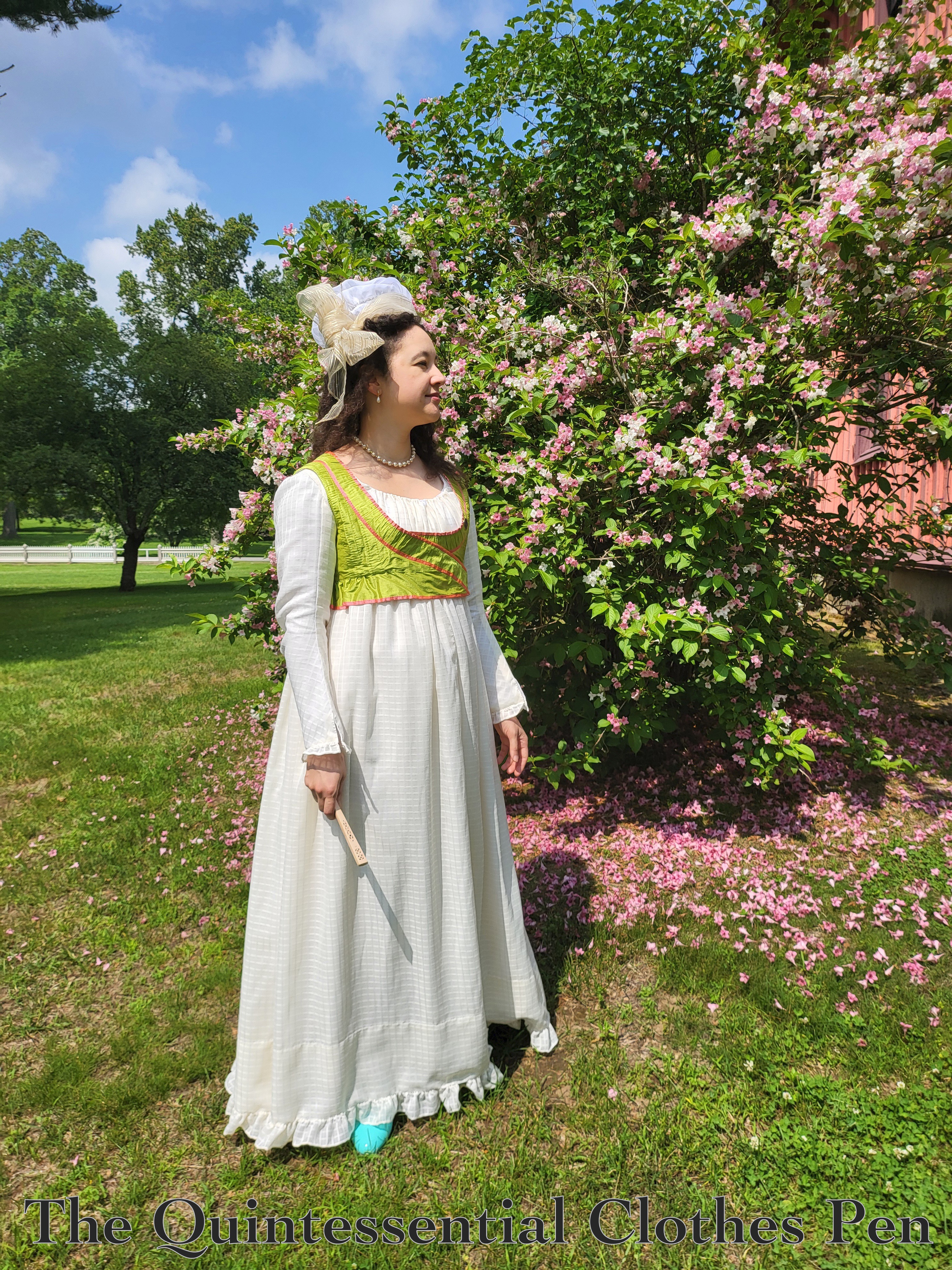
The new bodice is named for the vibrant colors I chose for it. Lime green! And pink! Ok, watermelons are a deeper shade of green, generally speaking, but the green and pink idea generally makes sense!

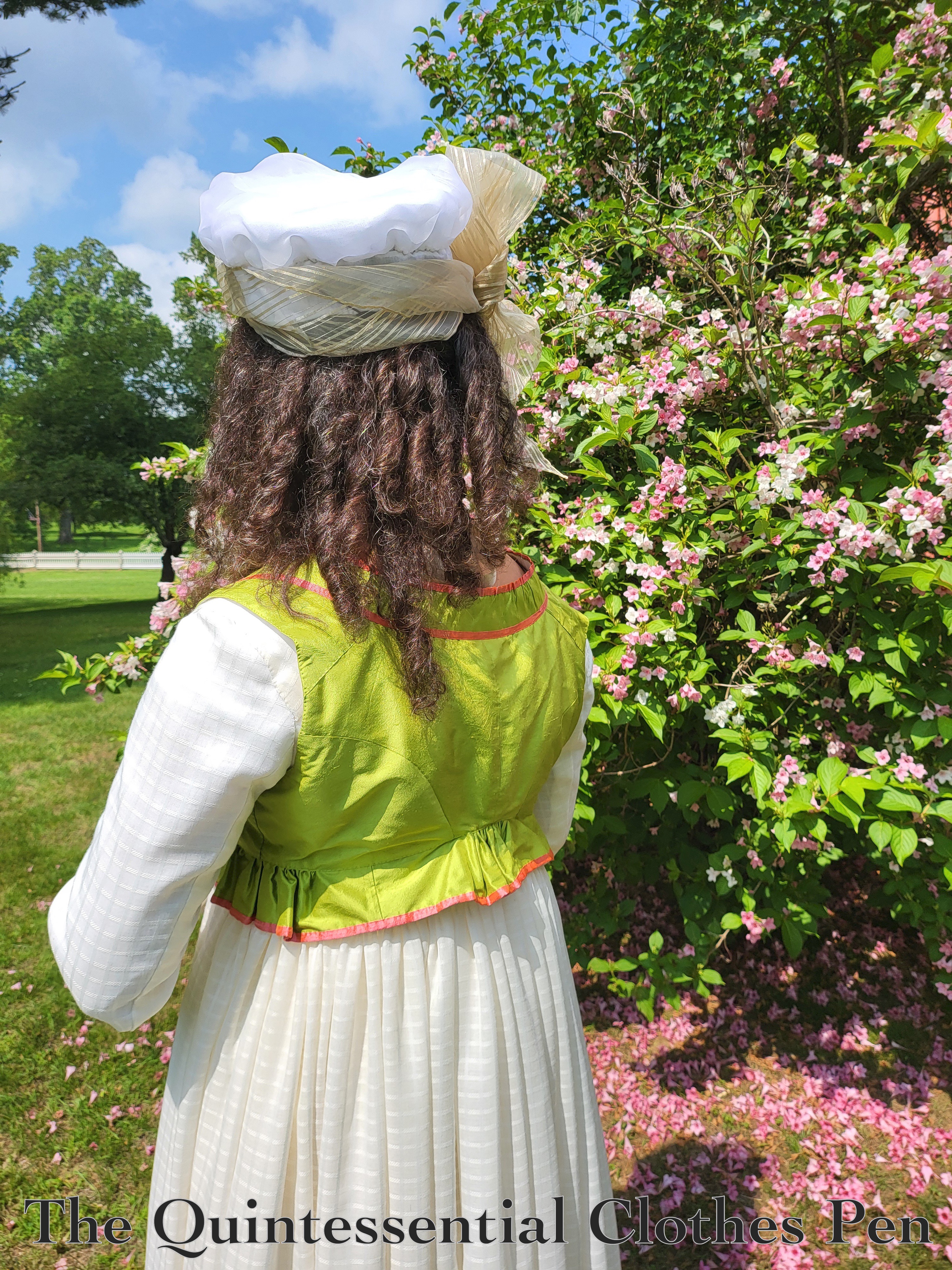
I enjoyed the minute details as I created this garment. In the photo below, the gathers of the peplum at the center back and along the sides are visible.

The back of the bodice rises up a bit, just as the dress underneath does. That is visible at a bit more of a distance.

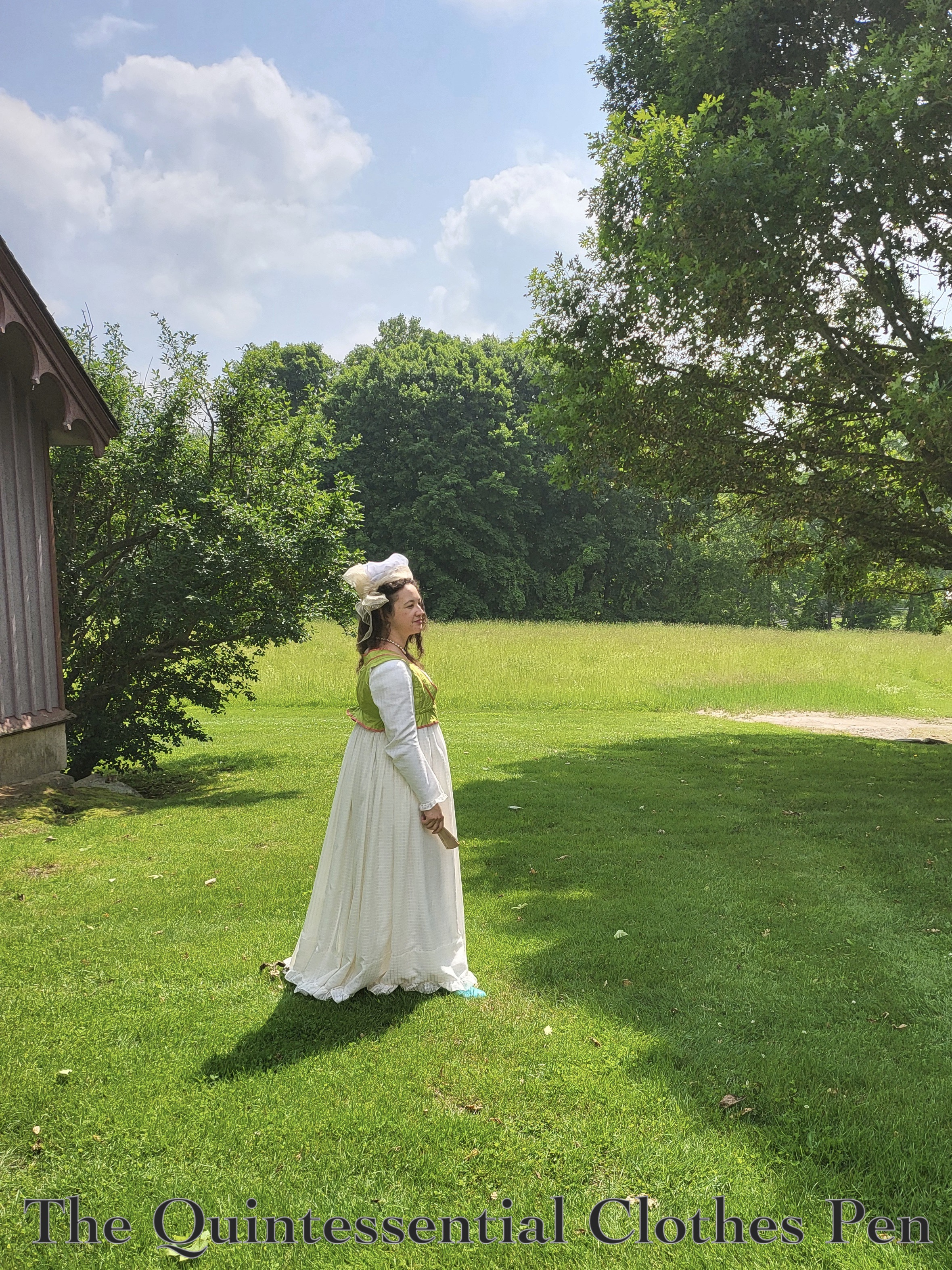
I wore the new bodice with my 1794 Windowpane Ruffled Dress and 1790s Organza Cap With Gold Stripe Trimming.

It was all very grand. Fluffy, elegant, and extremely fun to wear!

1797 Watermelon Sleeveless Bodice, Part II: Patterning & Construction

This story begins in my previous post (which you can read here) in which I share the backstory and inspiration for this garment. I’ll be carrying on from where I left off. But first, a quick side story!

Mr. Q saw the title of this post and asked “What is a watermelon sleeve?” An excellent question, I think! I explained that watermelon is my description fpr the colors of the garment I’m discussing. But… I do rather wonder what a “watermelon” sleeve might look like…! After all, there are many historical sleeves with fun names (bishop, bell, pagoda, beret, gigot, and mameluke all come to mind quickly, though I can’t think of any that are named after fruit. If you can, let me know!).

Leaving that tangent behind… back to the story!

Patterning

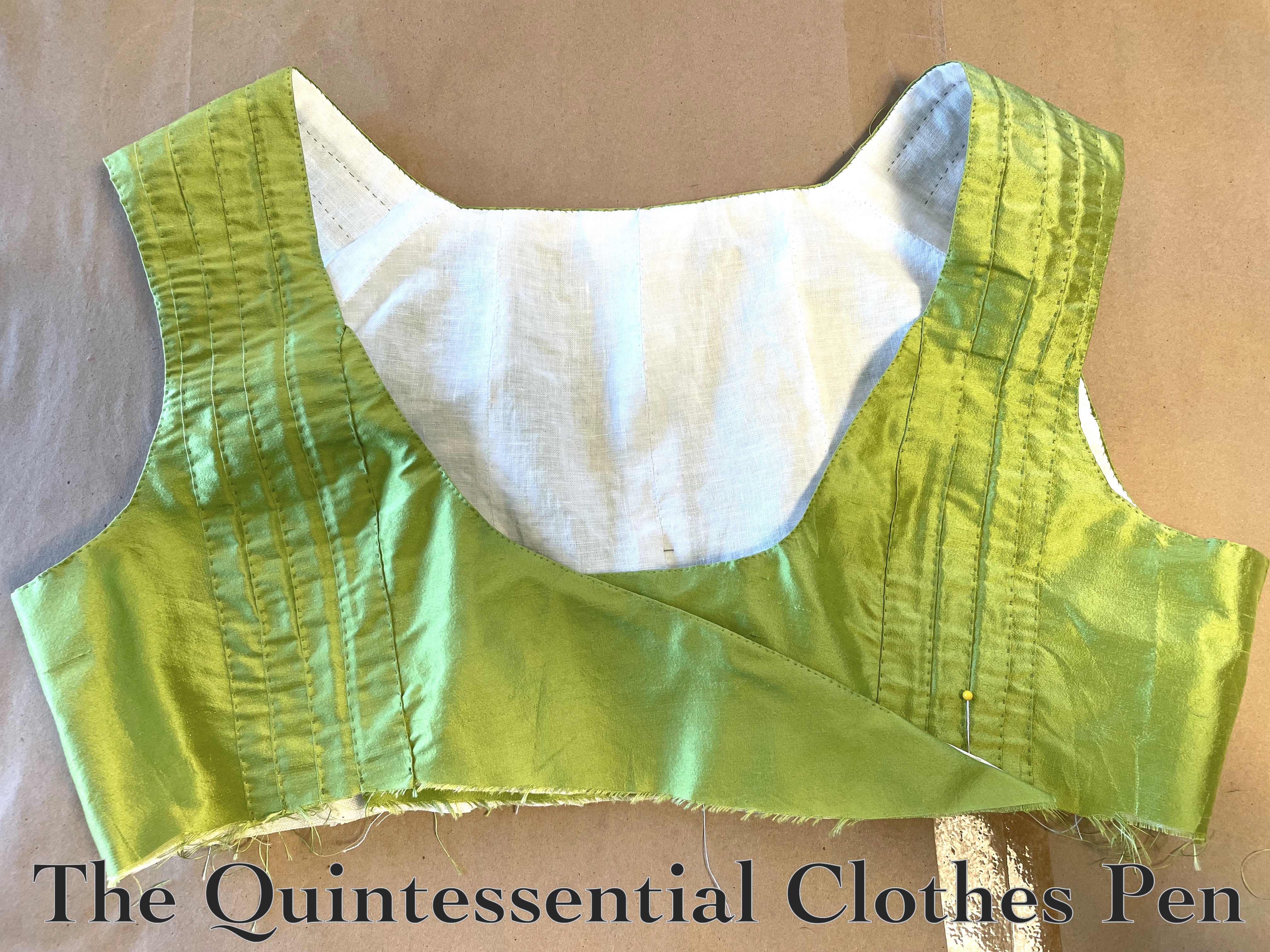
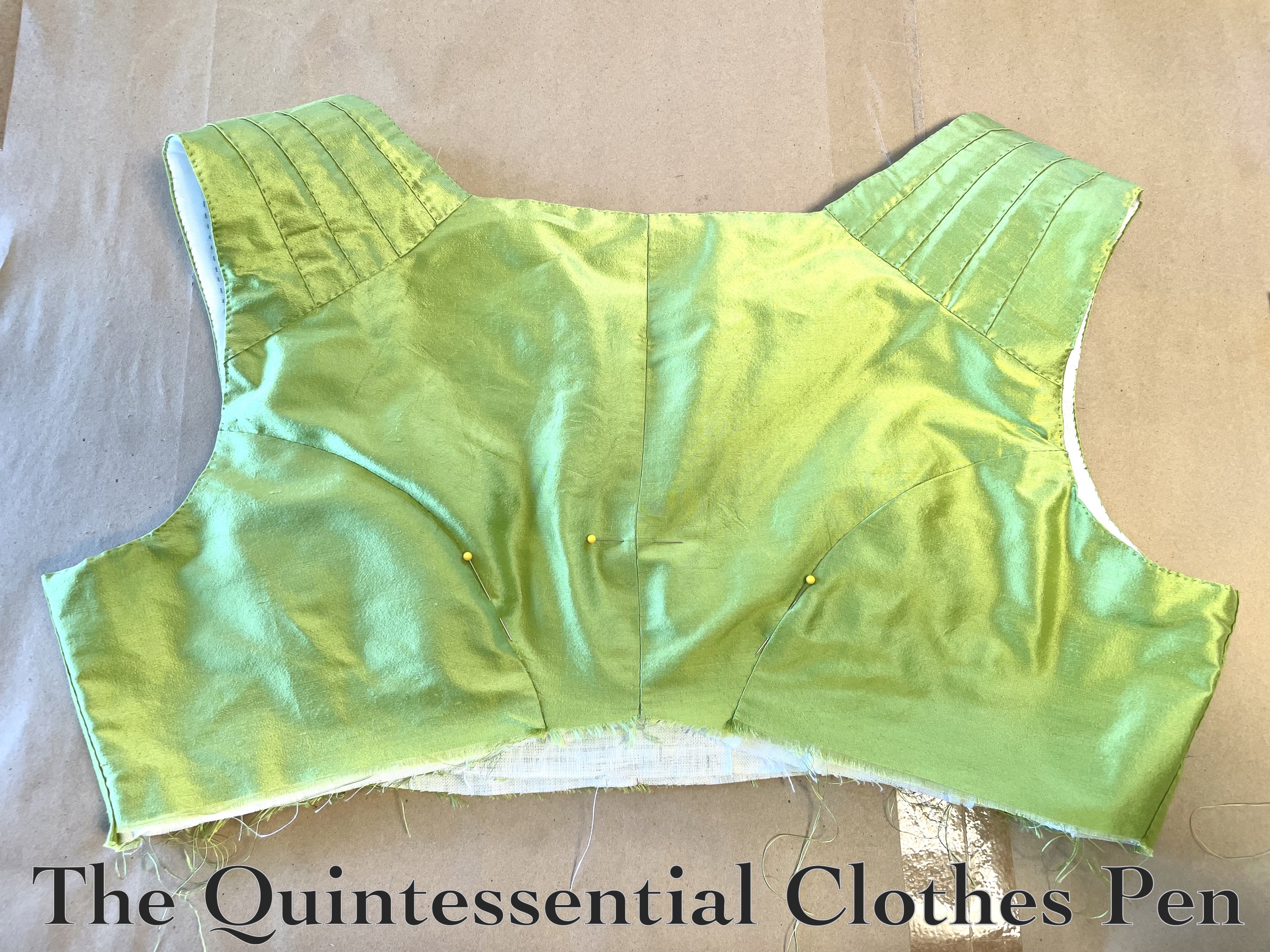
The pattern started with the lining pattern for the dress that I knew fit and would be worn under the sleeveless bodice as well as the bodice of “A Robe c. 1795 – 1803” on pages 44 and 45 of the original printing of Janet Arnold’s Patterns of Fashion 2. I liked the idea of the pleats on the exterior to provide interest on my otherwise solid fabric. It didn’t occur to me until very late in the process of making this garment that most of the pleats would be covered by the neck trim. Oops! Oh well! Below, a photo of the front of the bodice. The pleats are the topstitched lines running downwards from the shoulders.

I ended up with separate patterns for the exterior and lining front pieces, but the side back and back pieces were cut from the same pattern. I’ll explain how I made them.

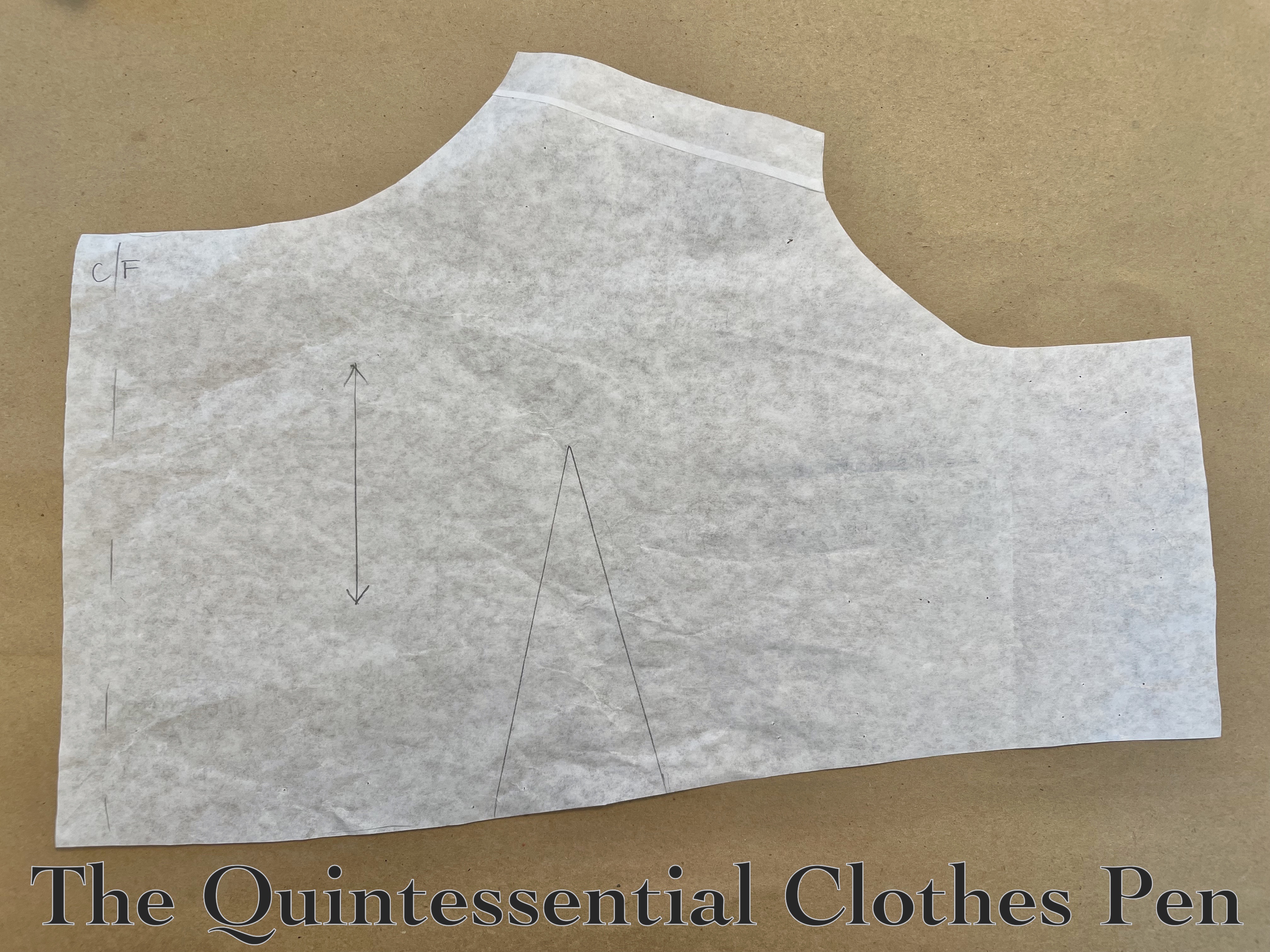
For the front lining piece, I started with the dress lining, as pictured below. By starting with this, I knew that the sleeveless bodice would easily fit over the dress and have similar seam lines.

I adjusted this pattern to have a little bit of wearing ease by adding ¼” to the bottom edge, ¼” to the neck edge, ½” across the center back piece, and ¼” across the side back pieces.

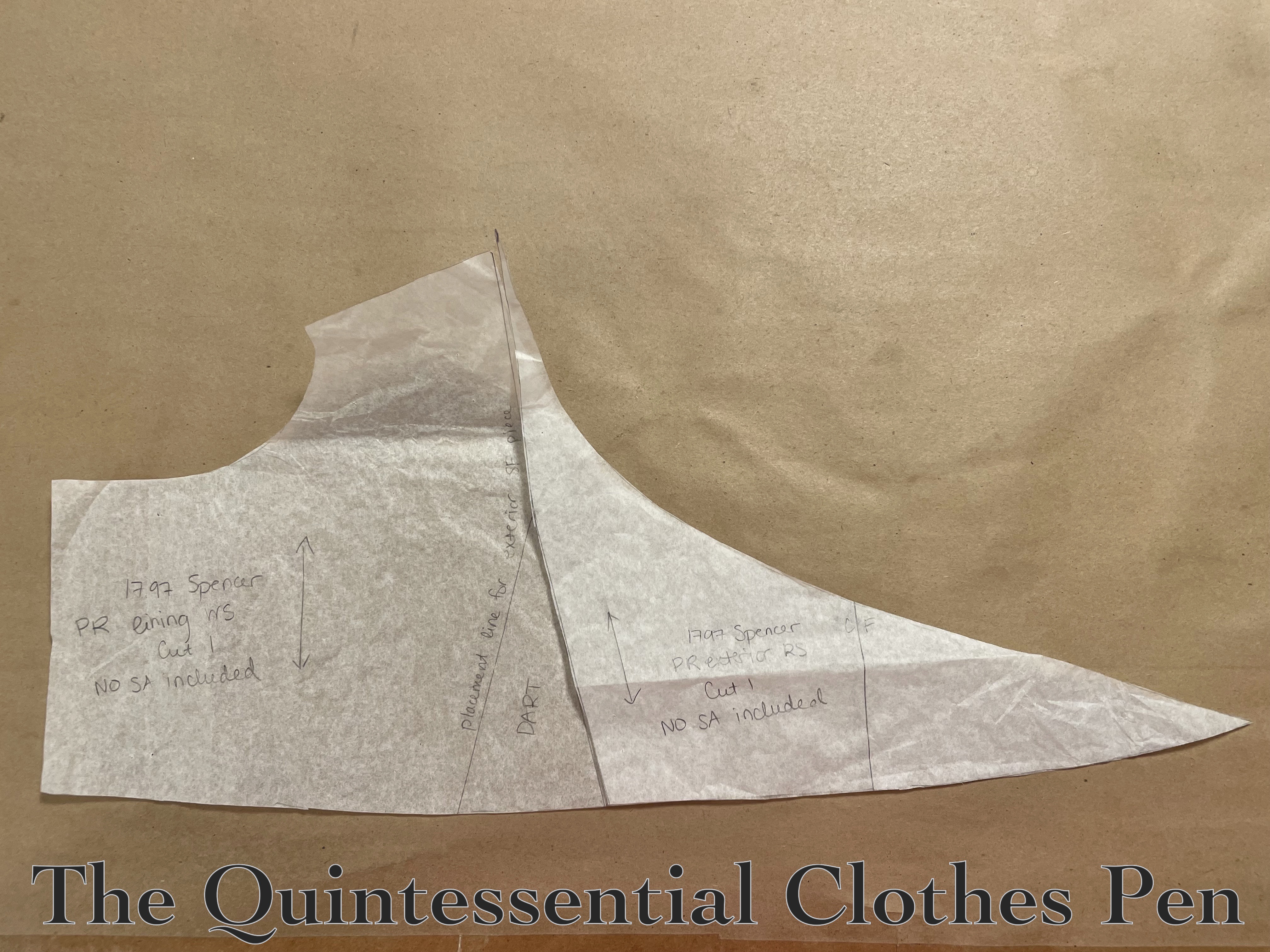
To that, I superimposed the PoF robe because it had a very low front bodice (clearly intended to be worn with a dress underneath) and it had a front pattern piece that curved downward towards the front, with a separate side front piece. Ah ha! I could create a dart going towards the waist in the area between these two pieces and have a one piece lining while also easily having a two piece exterior to make the pleats easier! This would reduce bulk in the finished garment and allow for the necklines of the exterior and lining to be exactly the same.

The photo below shows the front pieces I ended up with. On the left is the lower part of the front lining (the shoulder area is extended with a separate shoulder piece in the lining) and the center front part of the lining. For the lining, these were cut as one piece (with the dart marked).

If you look carefully, you might notice that the grainline on the center front piece is off relative to the side piece. Why is that, you might wonder?

Well, for the front exterior I started with the lining piece but changed the single dart to be the pleats I’ve previously mentioned. I didn’t see bust darts in my inspiration fashion plate or observations of 1790s overdresses, but in 18th century dresses pleats are used used in varying depths to adjust a flat piece of fabric to fit the curves of a body, so I used that method.

First, I traced the lining pattern onto a new piece of paper, including the dart. Then, as you can see in the photo below, I cut along the dart edge closer to Center Front, then up a line that continued to the neck edge I wanted. (I also cut down to the bust point from two other points along the neckline, but later realized I didn’t need those cuts.)

Next, as you can see in the photo below, I rotated the center front piece down towards the dart, making that area a little narrower and creating space (essentially another dart) going up towards the shoulder. Then I drew my new grainline on the front piece for the exterior, heading up towards the shoulder. This is why it looks off relative to center front. When worn, those ‘darts’ are closed when the exterior is fitted over the lining and center front is pulled into its proper place on the body.

These exterior darts — hidden in the seam line — are what creates that downward curve to the pattern pieces that I observed in PoF.

The two ‘darts’ are taken up in the pleated side front piece of the exterior, which is fitted over the center front piece and the darted bodice lining. In the photo below, the dart in the lining is visible on the left and the silk is pleated to fit and visible on the right.

After creating the paper pattern, I made a mockup and did a fitting to see how well my adjustments worked. They were pretty good, but I did have a few notes — I extended the bottom edge by a little more across the front, set the overlap shape I wanted (based on the fashion plate), set my armhole seam allowance, decided on the height of the peplum, and adjusted the front neckline to sit nicely over the dress.

I made these adjustments to my paper pattern and then moved on to cutting out my pieces in real fabric:

  • A proper left front lining
  • A proper right front lining
  • Proper left side front and center front exteriors
  • Proper right side front and center front exteriors
  • Straps in lining fabric
  • Side back pieces for lining and exterior
  • Center back pieces for lining and exterior

The Backstory: Construction

With a pattern established, I went down the rabbit hole of figuring out construction methods.

I had been reading Patterns of Fashion 6: The Content, Cut, Construction & Content of European Women’s Dress c. 1695-1795 and my mind was full of details and excitement about 18th century construction methods, so I happily went down a path of sewing in an 18th century manner! But… at some point in the middle of things I realized that I would need to combine some early 19th century construction methods into what I was doing, too, since my sleeveless bodice idea does span two different eras of construction styles.
For example, from an 18th century perspective turning seam allowances of the lining and exterior towards each other and whipping the pieces together made perfect sense. From a 19th century perspective, however, finishing the armholes with this method seemed odd (usually in the 18th century the seam allowance would have been left raw on the inside when the sleeve was attached, but I wasn’t adding sleeves!) and inserting a peplum into the bottom edge seemed odd, too (often a ruffle was applied on top of an edge, rather than being sandwiched between the exterior and lining, but that wasn’t the look I wanted). After many brain somersaults, I wound up mashing these two methods of construction together to create a transitional garment (which does actually make sense, since this was a transitional period for construction methods!).
Actually Making The Spencer

I thought it would be fun to use up linen scraps for the lining, rather than cutting into yardage from my stash. The lining pieces weren’t that big, right? Well, it turns out they were bigger than I thought. I ended up using 3 or 4 different types of white linen and adding in a fair number of piecing seams to get the shapes I needed for these lining pieces (you can see some extra seams in the lining in the previous photos). It definitely added time, but I had time while making this garment, so it was fine.

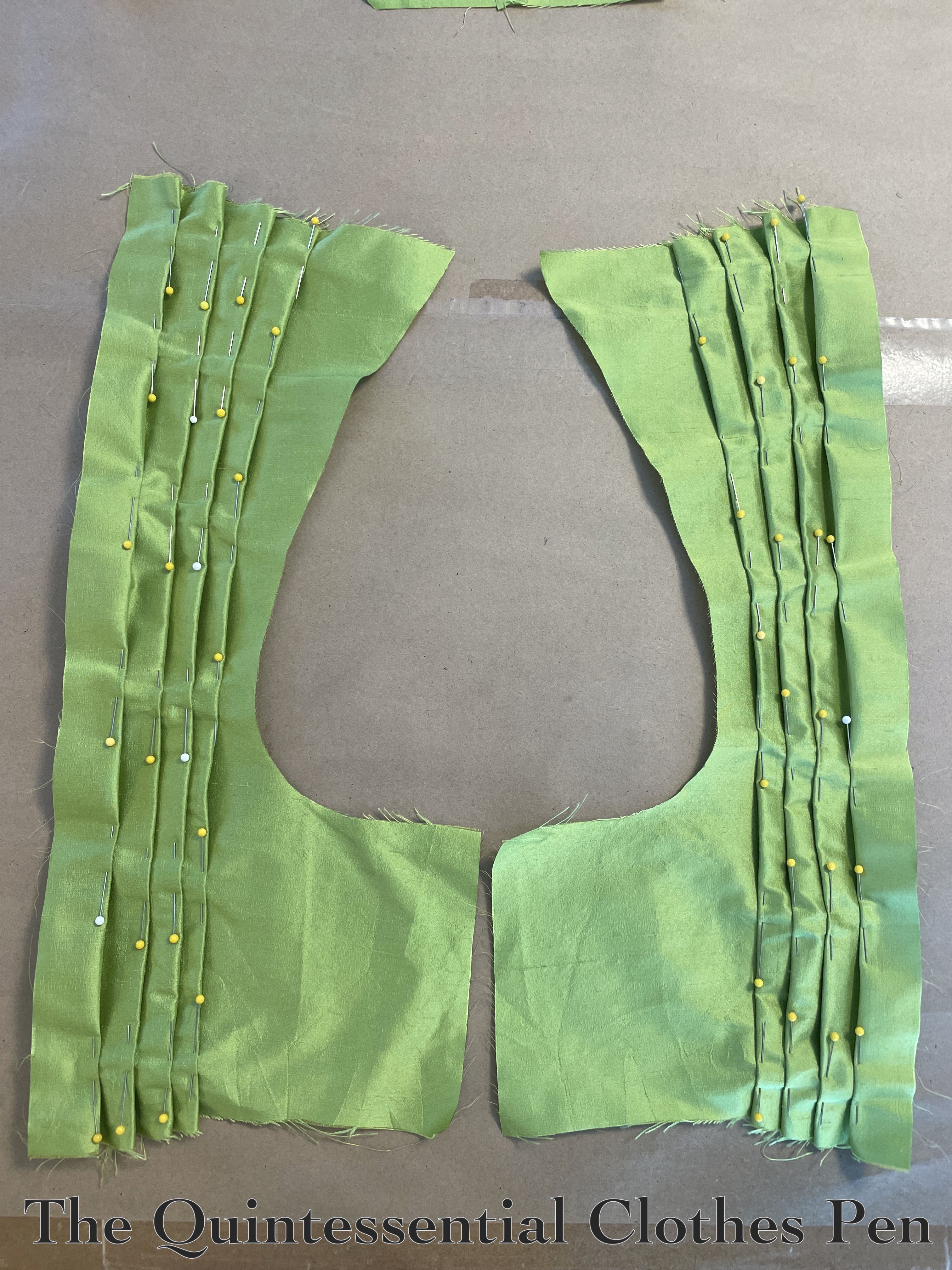
Once the lining pieces were ready to go I could cut the silk layers. The side front of the silk exterior had the shoulder straps included and was extra wide in order to create those all-important pleats. Below is a photo of what the pleats looked like before they were topstitched flat. They are not quite all the same depth and slowly spread out as they move towards the shoulder seam in the back (at the top of the photo).

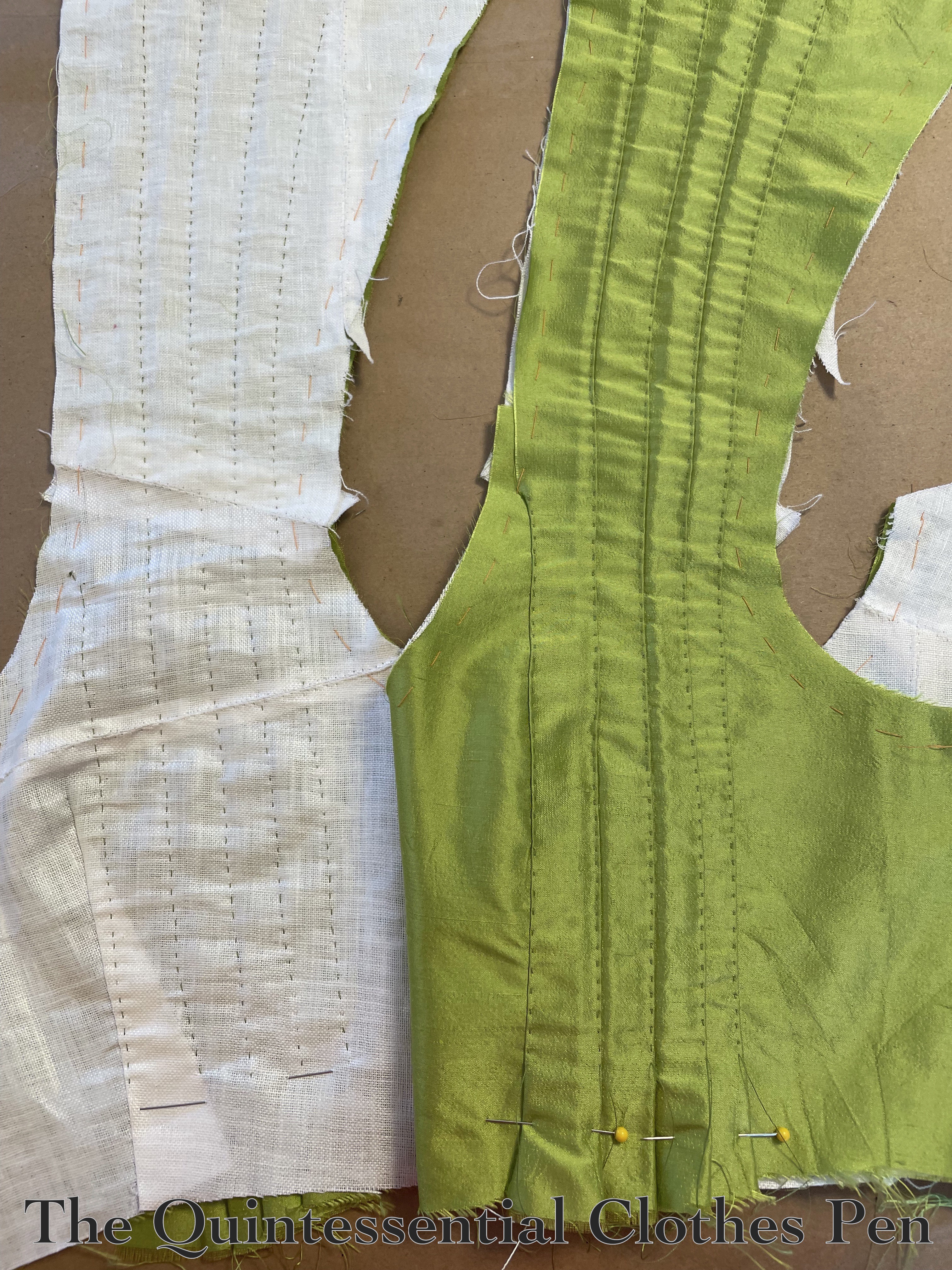
Here is a summary of the 18th century elements I used in the construction of this garment: much piecing of the lining fabrics, whipping the lining pieces together along the seams, whipping the lining into the exterior around the edges, topstitched pleats in the front exterior for shaping over the bust, a shoulder seam that is topstitched onto the back piece, many edges bound in narrow strips of silk, and the neckline trim being tucked to shape around the neckline curve.

Here is a summary of the 19th century elements I used in the construction of this garment: gathering the peplum and sewing it to the bodice with right sides together then whipping the lining seam allowance on top and turning in the seam allowance of the armholes and whipping the lining into place.

In the photo below, most of those methods have been employed to get the bodice to this state, which is basically finished aside from the peplum, neck trim, and closures.

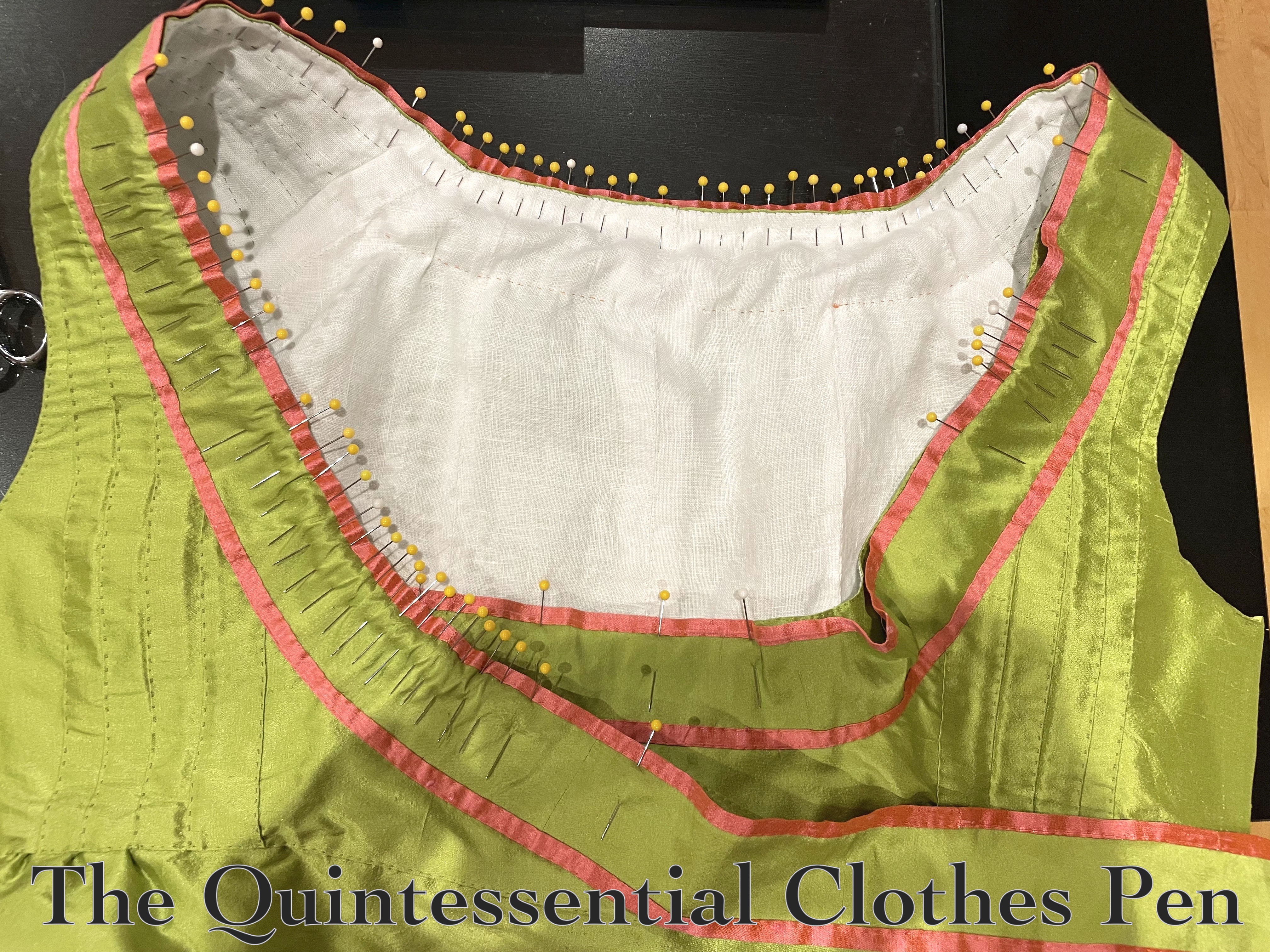
The neck trim is a pieced strip of the green silk bound in running stitched ¼” wide strips of pink silk (hence the watermelon name!). The assembled band was running stitched along the outer edge and then eased into place around the neck edge. Below is the easing in progress. It took many pins!

And here is a closeup. You can see some of the whip stitched piecing seams in the lining and the minute easing of the neckline edge of the trim.

And that was it…! Entirely hand sewn, with many small details, lots of justifying and research, and, in the end, a relatively small garment! Next time, photos of the finished garment being worn!

1797 Watermelon Sleeveless Bodice, Part I: Background & Inspiration

First:

The Backstory

As with last year, The Footwork and Frolick Society hosted a Bridgerton themed croquet afternoon this summer, which seemed like a great event to debut the 1794 dress I posted about making last fall (I did, in fact, wear the 1794 dress — you can see photos in this past post). My only hesitation about that idea was that the dress is all white, which didn’t feel quite as colorful as I might hope for given the Bridgerton theme. So I started brainstorming…

Prior to this brainstorming, I had happened across a 1 ½ yard piece of lime green silk in the discount bin at one of the local fabric stores for $6. Silk at that price felt too good to pass up, even in a very bright color and yardage too small for a dress. I figured I would find a use for it eventually!

During my brainstorming, I came back to the idea of the lime green silk… It seemed wonderfully bright and fitting for this particular intended purpose! And with a small yardage amount, it seemed perfect for a Directoire accessory.

What is Directoire? The Encyclopedia Britannica defines this style as the “Neoclassical style of dress, furniture, and ornament popular in France during the period of the Directory (1795–99).” Given that many of the inspiration images for my dress were French fashion plates from this period, or close to it, I think it is fitting to use the description of Directoire for this garment.

Choosing The Style

I first thought about making a sash (similar to the one I posted about in 2023 that hasn’t been worn yet), but decided I wanted something different to vary up my possible looks.

After looking at many fashion plates, books, and extant garments, I realized I was drawn towards spencers; however, when I really paid attention to dates it struck me that the popularity of those garments seems to be concentrated in the 1800s and 1810s when Neoclassicism had really settled in, dresses were not as fluffy as they still were in 1797, and the description of “spencer” was fully established. (I explain what a “spencer” is in this old post from 2011. There are many photos of extant examples included in that past post, as well.)

I really liked the idea of a sleeveless bodice. So I set about looking for specifically late 1790s examples of these over white dresses. It turns out that the sleeveless idea (in the specific date range of approximately 1794-1798) is unusual — though it is not uncommon to find long and short sleeved variations.

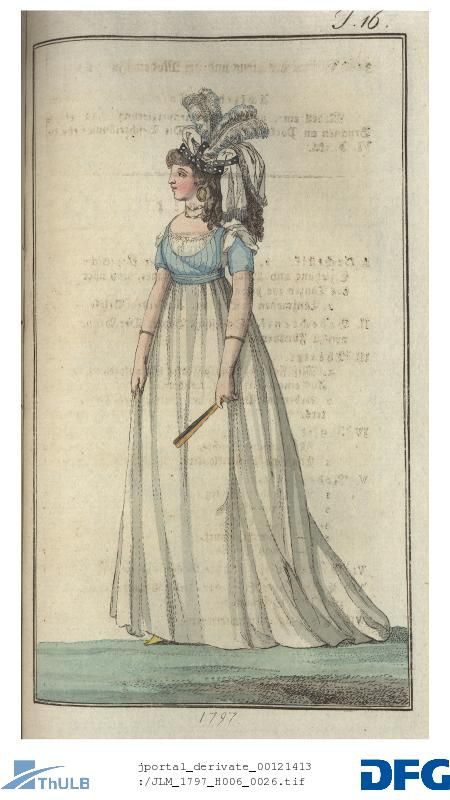
Below is an example of a short-sleeved bodice from the Journal des Luxus und der Moden (The Journal of Luxury and Fashion) in 1797. This German fashion journal was published in Weimar. You can click on the fashion plate below to go to the Rijksmuseum, where you can zoom in to see more detail!

Here is another example showing a long sleeved bodice (actually called a spencer in the description!). This was published in Costume Parisien in 1799. As you might guess from the name, this fashion journal was published in Paris.

Finalizing The Details

I decided to combine the crossover detail and vertical lines of the Luxus und der Moden style with a sleeveless variation visible on the left in this next fashion plate, which is from The Gallery of Fashion. This fashion journal was published in London by Nicolaus Heideloff. Clicking on the fashion plate will take you to the Metropolitan Museum of Art, where you can zoom in on the fashion plate and learn more about Heideloff.

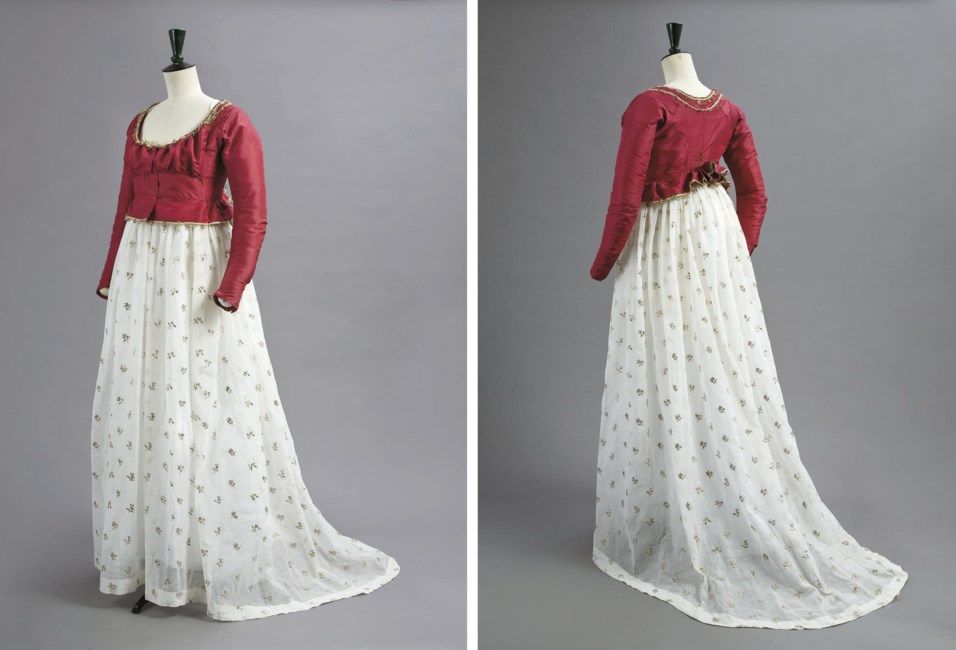
I also borrowed a peplum idea from the extant spencer below, which was sold by Christie’s in 2008. I liked the look of a peplum and appreciated how this one rises at the center back, which is a nice feature to highlight the rising back design element on the 1794 dress I planned to pair with this garment.

Many spencers have some sort of trimming around the edges. I was inclined to use something bright and silly to match the lime green silk and in the stash I found scraps of vibrant pink that went well with the green. I decided to use this as a edging, placing it in similar locations as on the Christie’s spencer.

And that means my plan was mostly in place! Next I had to think about how I would construct this garment and move on to patterning it. I’ll share about that in another post!

GBVS Newport Weekend 2025

I was pleased to be able to return to Newport this year for the Greater Boston Vintage Society’s Newport Weekend event! It was a joy to be just a block away from The Breakers, hanging out with friends both new and previously-encountered.

This year my outfits leaned towards the 1950s, which was a fun change. I wore my Fortescue Frock with a sporty-looking coordinating cardigan tied over my shoulders to fit the ‘collegiate’ theme.

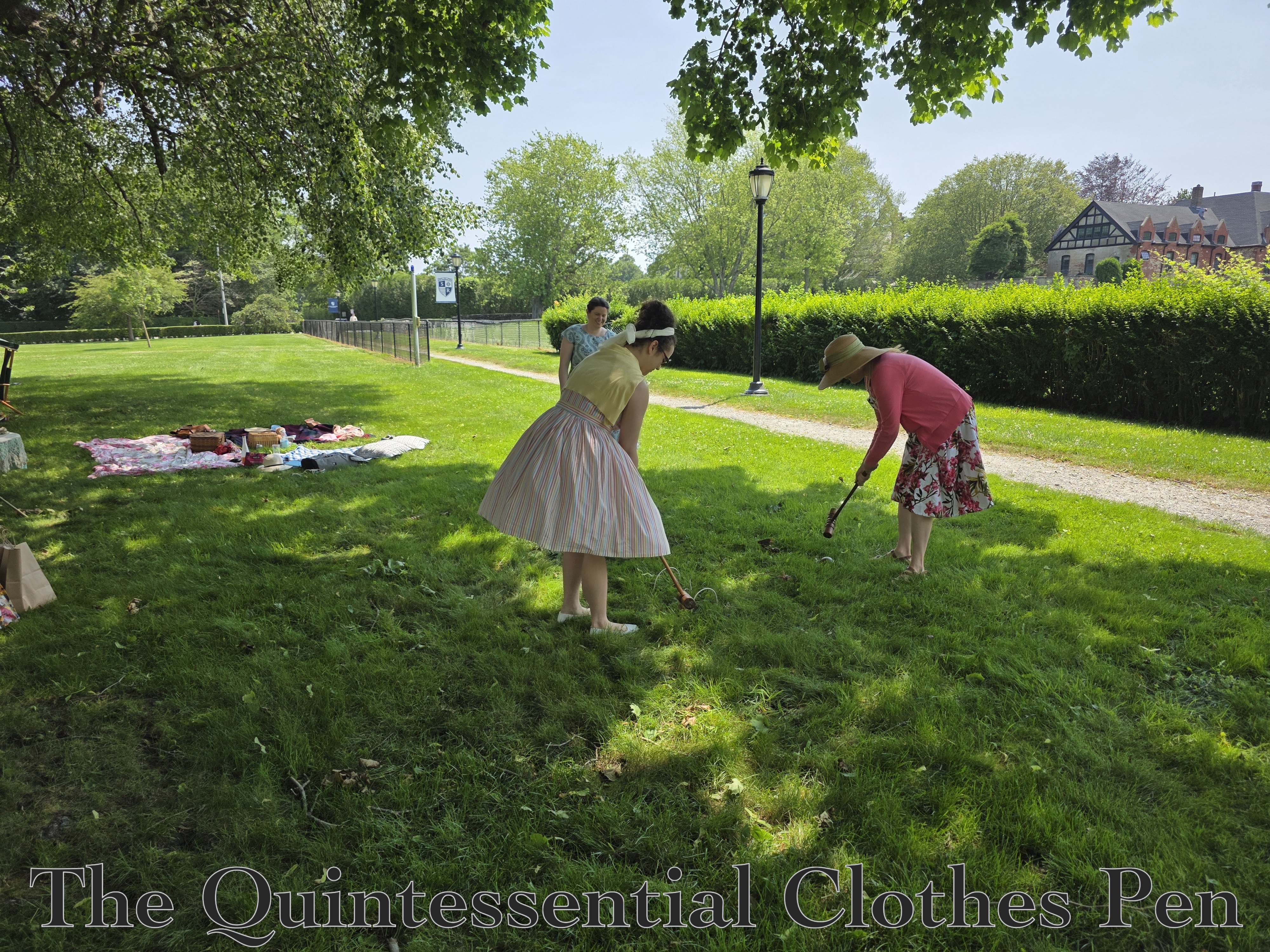
The clear blue skies made for toasty weather, but it was reasonably cool in the shade, which was perfect for croquet during the picnic!

Sunday’s outing was to Rose Island, a location that I had not been to before. It was fun to learn about the island’s history! And the breeze on the island made for a very comfortable temperature!

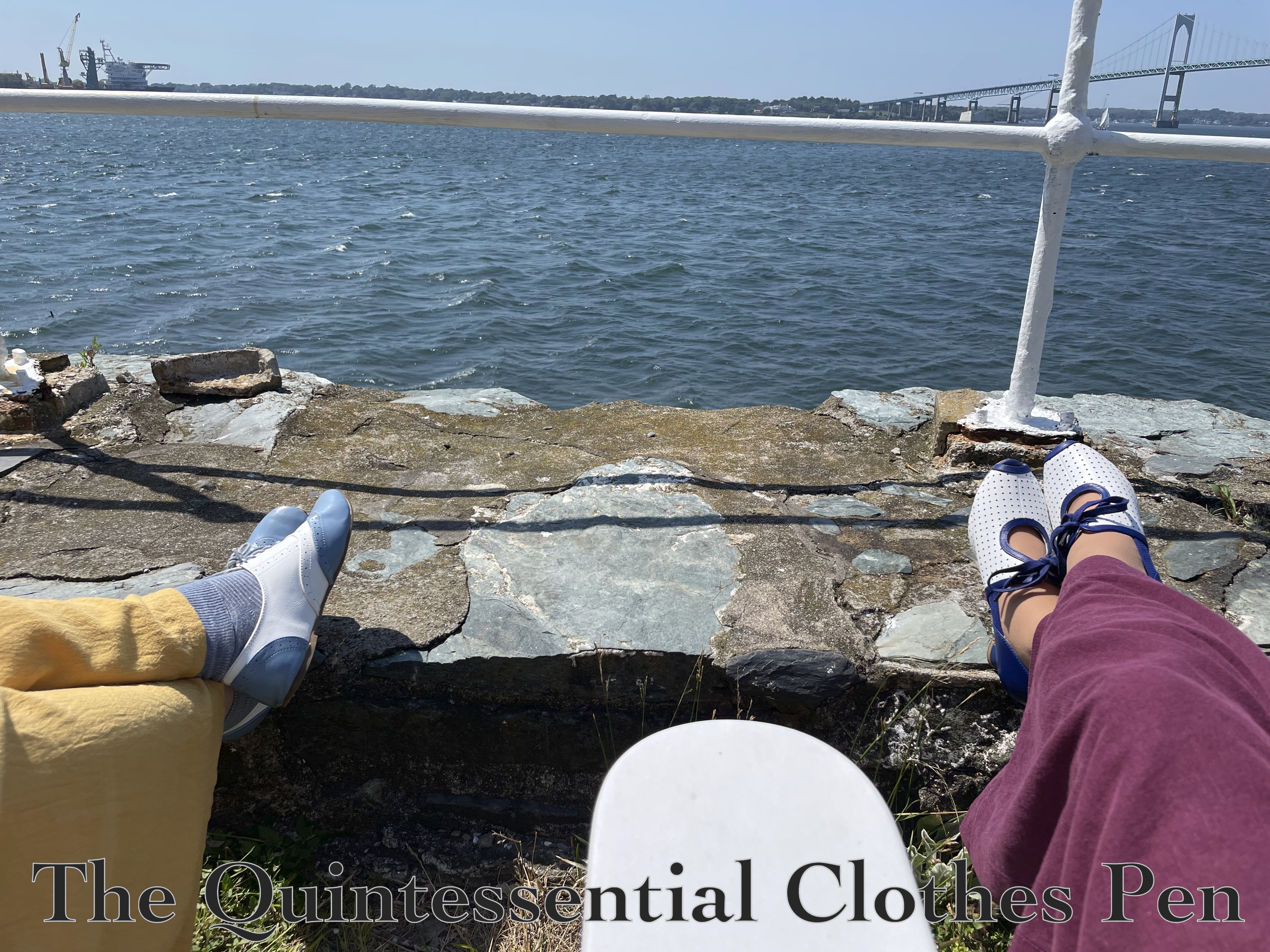
I enjoyed breaking out my Plum Pants with Pointed Pockets and 1917 Knitted Sweater of Angorina. The combination was a little bit 1920s beach pajamas and a little 1930s sporting.

How lovely, to be able to lounge in an Adirondack chair with my feet up and have a charming conversation with a friend while watching the seagulls glide on the breeze!

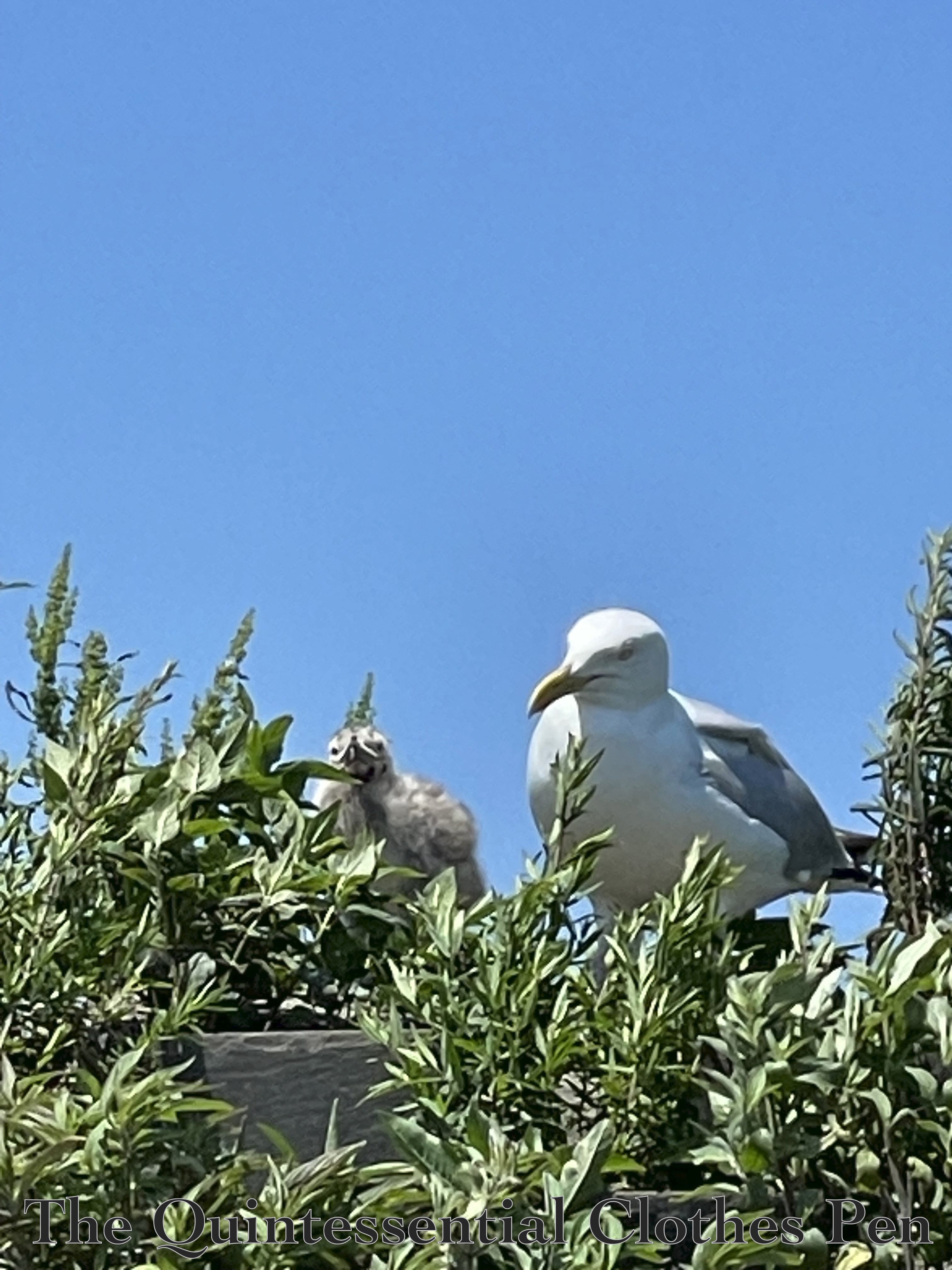
The birds on Rose Island are quite at home. In fact, most of the island is a preserve for them for most of the year. They had young ones while I was there and they were quite territorial, but I was able to zoom in to get this next photo without getting too close. The fuzzy young gull is cute!

All in all, I greatly enjoyed another lovely summer escape!

1794 Windowpane Ruffled Dress Outing

Back in October 2024, I posted about the inspiration and construction details of a freshly completed 1794 dress (you can view that past post here). At the time, I promised myself that I would figure out how to get my hair to look vaguely 1790s and find a fun opportunity to wear the dress and get photos!

Every few months after finishing the dress, I found the inspiration needed for a trial to figure out how to get my small-diameter-curly hair to look remotely like the billowing-larger-scale curls found in 1790s fashion plates. Of course, one could wear a wig… but I really enjoy using my own hair for these things! It’s a fun challenge, I think.

My first trial attempt was unsuccessful in the overall look, but I learned that curling iron curls didn’t look so far off as to be implausible. My second trial attempt taught me that the 1790s organza cap I made (finished even earlier, in 2023, and which you can read all about here, in a past post) that was intended for this outfit looked silly when perched directly on my head. It really, really needed volume so it appeared to be floating on my hair. Enter, a giant bun form. (The same bun form, in fact, that makes up the biggest part of my hair support for giant 1770s hair in this past post.)

See? The cap isn’t really on my head at all. It’s just floating on my hair. Aside from curling all of my hair, the only other part of creating this hairstyle was to artfully pin the curls up to make them elegantly descend from the cap on every side.

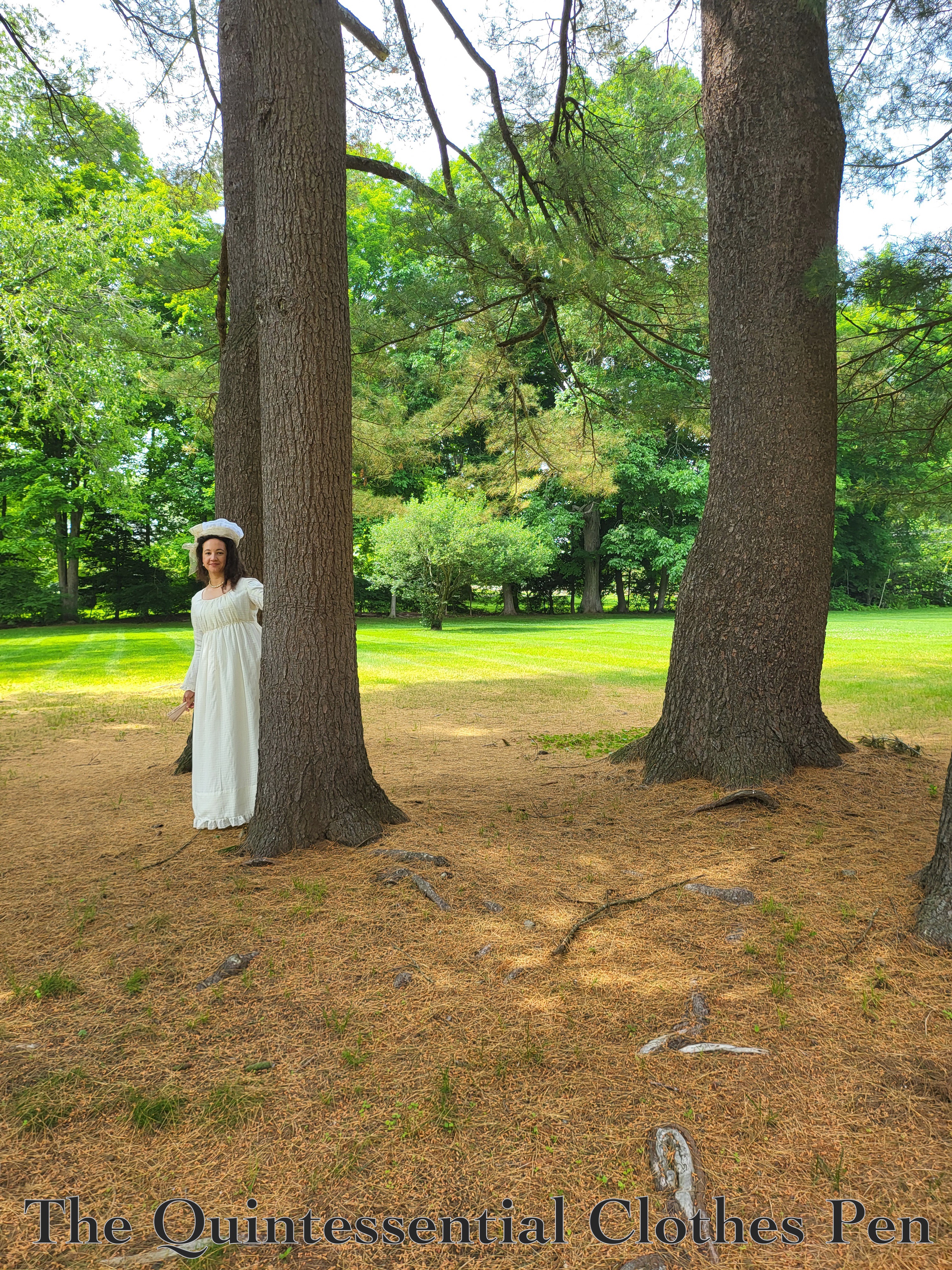
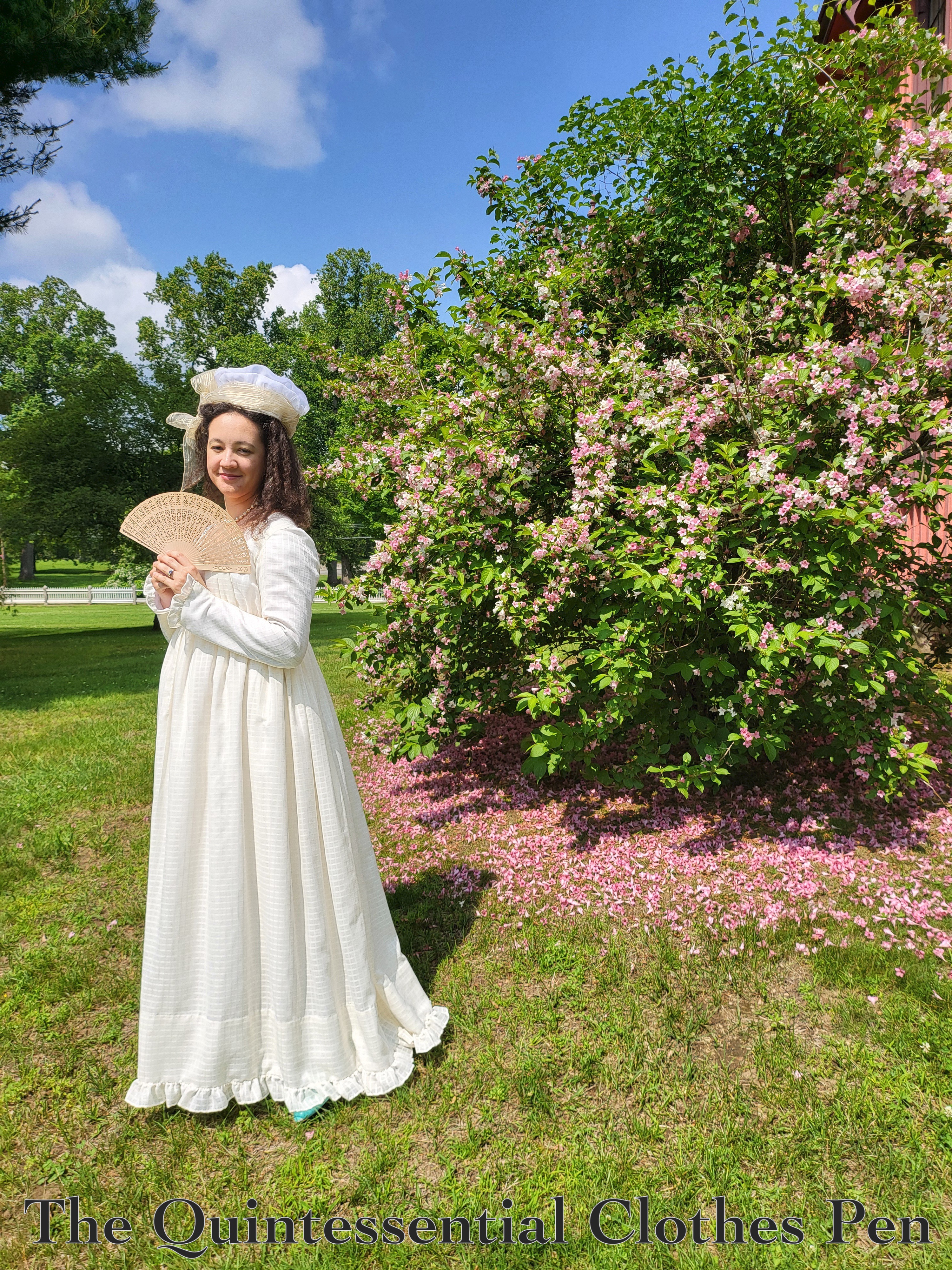
With this dress, I wore the foundations of the 1790s ensemble I’ve been putting together for the last few years. This included my entirely hand sewn c. 1785 Stays of Success and 1790s Petticoat & Bum Pad. Also finished in 2023 and 2024, this was the first real outing for the stays, which you can read all about in this past post, and for the petticoat and bum pad, which you can read all about in this past post.

The whole ensembles is super comfortable! The stays are, in fact, a success! And the layers, with their generously gathered skirts, are full of movement. The ruffles add a bit of fun. And the front closures on the petticoat and dress are definitely easy to use!

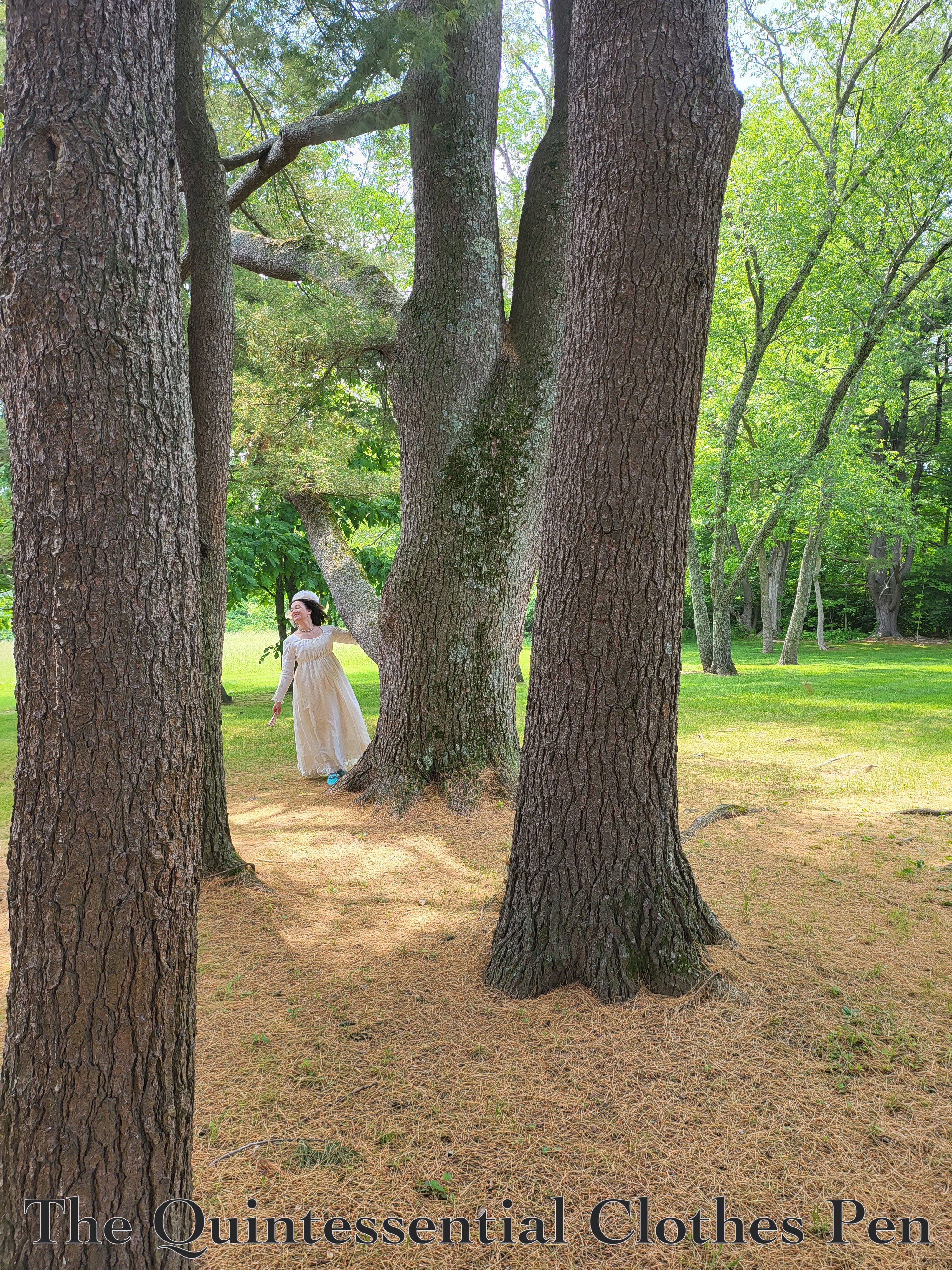
The only difficulty of wearing this dress came from the hem that just brushes the ground. Wearing it outside meant that it collected twigs, pine needs, and leaves that I was constantly removing. Not to mention the fact that the layers attracted multiple stinging bee-like creatures to get stuck between them! Ack! Luckily, kind people around me helped me separate the layers enough to let the winged creatures free, and not a single person was stung! Whew!

Perhaps this ensemble is better suited to a marble-floored walkway, but… it was breezy, and cool, and elegant to wear outside (when one ignored the bits of nature stuck in the hem ruffle!).

A Mysterious Domino, Part II: Making & Wearing

This is a continuation of my last post, which shared the background of why I created this black domino cape as well as research about what a domino is and its history.

Making My Mysterious Domino

Having decided on an idea, and probably conducted more research into its history than was strictly necessary for this purpose, I proceeded to figure out how to bring my idea to life. I had the additional goal of not wanting to spend money and therefore restricted my domino-endeavors to the stash.

I started by looking through my stash binder (I posted about my stash organization in this past post) to see what fabrics I had on hand that might be able to be made into a quick and easy domino. I came up with just one — a gifted-to-me three yard piece of a black synthetic sheer, with alternating satin and sheer narrow stripes and a bit of metallic thread woven in between each stripe. I liked the drape of the fabric, as I thought it would move nicely while dancing, and I liked that while being black, it was also interesting and had more to look at than a plain solid. Three yards was plenty of fabric to allow for a large hood and plenty of length!

I think this fabric might be fun to use for something else someday, so I was loathe to actually cut it to make a domino cape. From past experience (and my patterning books), I was aware of the general shape and construction of the hoods of 18th century capes, which I was more excited by than the shape of the main body portion of capes from this period. The hoods often have quite a bit of fabric pleated into a central spot on the back of the hood and the bases are often pleated into the neck area, as well.

I started experimenting with my fabric and safety pinned a central pleated area in the center of my three yard piece. Then, I safety pinned a center back seam in the two ends of the piece, which hung down below the ‘hood.’ The next step was to safety pin a row of large pleats around what would be the ‘neck’ area, to draw in the width of the fabric around the shoulders. And… I basically had a cape!

A bit rough and ready, but my safety pinning did create a cape with a hood!

I fiddled a bit, by turning under some of the depth of the hood (and pinning it back near the central pleats) as well as pinning up swags at the front shoulder areas. I agreed with Erté (in the quote in my previous post)– that my domino should have a distinguished cut to keep me from looking like a shapeless bundle!

At that point, I realized that most of my pinned areas really didn’t need to be sewn… I could just leave in the safety pins, making it much faster to take apart if I wanted to do that someday! In the end, the only two things I sewed were the center back seam (with basting stitches by hand) and the hem (again, with basting stitches by hand). Calling it a ‘hem’ is generous, I think! I really just turned it up once with the raw edge left visible.

Wearing My Mysterious Domino

My historically plausible, mysterious looking domino cape was ready to go. I was all prepared for The Footwork and Frolick Society’s early 19th century themed Masquerade Ball!

I chose to pin the cape to my dress rather than having it closed at my neck. It made the hood pretty long in the back, but it kept the cape from pulling backwards and feeling claustrophobic, while also opening up the front view and not covering my entire dress.

And, since I felt like black mask, dark hair, and black hood was all a bit much around my face, I put my hair up around a huge bun form to raise the hood and added white flowers in front to add some contrast and a relief for the eyes.

Paired with white, gold, and pearl accessories, I created a fun new variation on an old dress!

A Mysterious Domino, Part I: Background & Research

Earlier this year, The Footwork and Frolick Society hosted an early 19th century themed Masquerade Ball. I enjoy fancy dress themes, and so the idea of a masquerade (which takes the idea of a costume to another level by adding a mask) seemed like a lot of fun. But what was I to do to about a costume?

The dress: I had already decided that I wanted to wear an oldie-but-goodie dress to the ball — my ivory 1819 ruffle dress, finished in 2012 (and resized at some point, though I don’t seem to have a post about that on the blog).

The mask: I don’t really enjoy wearing masks (unless they are on a stick, like this, but that’s not good for a ball when you need your hands!). I find that masks irritate my face, but at some point I did buy a black lace mask for a fantasy masquerade that is very malleable and irritates me less. So I knew that I wanted to incorporate that mask into my outfit.

The costume: I wasn’t sure… my creative problem was to figure out what kind of costume would unite an ivory dress and a black mask!

I liked the idea of choosing something historically plausible and I know that themes like flowers, seasons, and historical periods were all popular for Fancy Dress costumes (and therefore, I figured, for masquerades), but I couldn’t think of a good theme that made sense with my color choices.

So I started doing some research, and came across the idea of a domino. Not a numbered playing piece from a game… but a mysterious, historical domino!

What Is A Domino?

What is that, then? A mysterious, historical domino?

A domino is traditionally a voluminous black robe-like hooded cape worn with a black half mask as a disguise during Venetian Carnival. Dominos were popular during the 18th century at masquerades and it seems that hooded capes in this century were sometimes just generally called dominos (such as this one, perhaps, at the Metropolitan Museum of Art). By the 19th century, dominos were occasionally seen at masquerades, and even less often at fancy dress events (a costume party without masks).

Examples Of Dominos

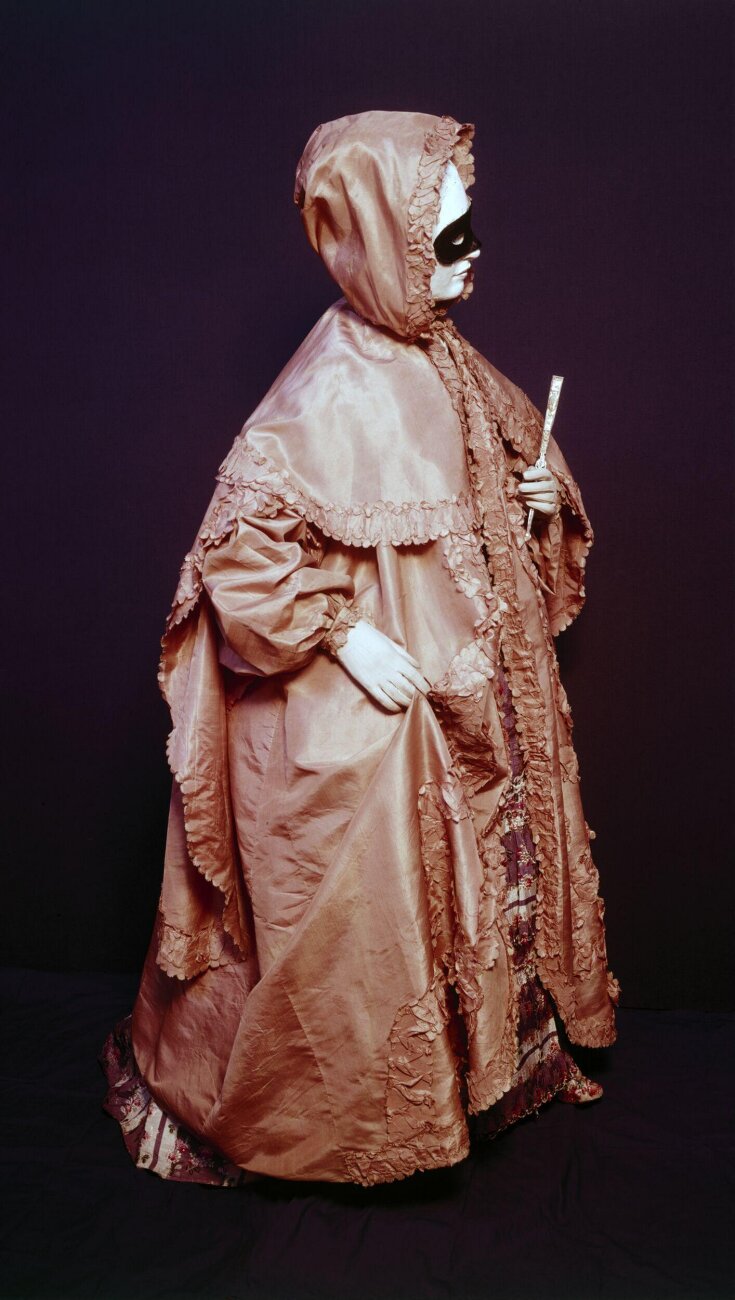
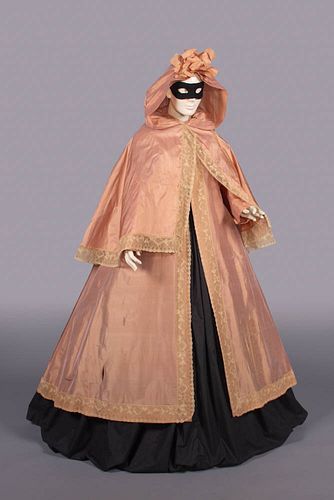
Below is an example of an 18th century domino in the collection of the Victoria and Albert museum. In this case, the idea has been reimagined in pink, rather than the usual black. The museum gives this information regarding a date: 1765 – 1770 (sewing), ca. 1775 (altered) (accession number T.195-1968).

Below is another example, from the late 18th or early 19th century, also pink. This domino still shows evidence of 18th century construction styles — particularly the large gathered hood and what appear to be rectangle shaped sleeves. The extant example below is from Augusta Auctions. They labeled it as a Two Piece Shot Silk Domino, c.1800.

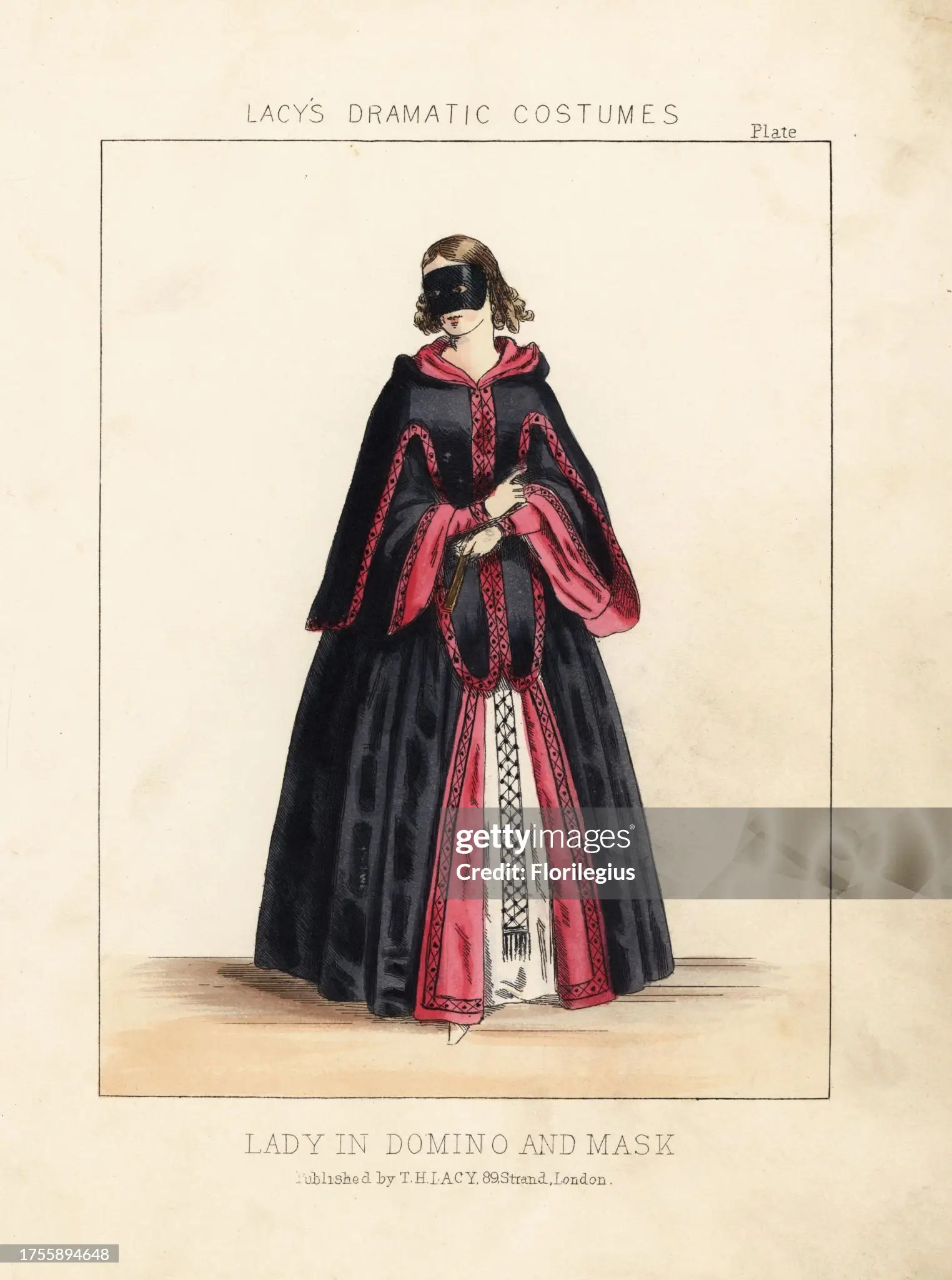
Below is an example of a mid-19th century take on a domino. This is a costume idea for a masked ball (or masquerade). This plate is from Thomas Hailes Lacy’s “Female Costumes Historical, National and Dramatic in 200 Plates,” London, 1865 (from Getty Images).

Susan de Guardiola has collected later 19th century descriptions of dominos that are available here, as well.

Though less common, dominos were still in use for masquerades even in the early 20th century. While looking for other unrelated research, I came across a mention of them from January 1920, when the accomplished fashion designer Erté wrote in a letter he was asked to write from Monte Carlo to the editor of Harper’s Bazar:

This winter will mark the first organized effort at gaiety since the dark night of war… Already we are planning to revive the masked ball in all its mad gaiety…

The domino–aha! … In Venice until the fall of the Republic, it was commonly worn in the streets. There reigned in the enchanted city at this decadent epoch a strange corruption of manners, and the mask was a necessity. At every entrance hung the black domino. Rich and poor alike donned it, in order that they might sally forth enveloped in anonymity…

“But,” argue some, “the domino gives to the fête an air of mystery.” I reply, “Then one may attain this illusion by means of a domino of distinguished cut, a domino which shall not make one’s figure look like a shapeless bundle.”

(From Designs By Erté: Fashion Drawings & Illustrations From ‘Harper’s Bazar’ Including 8 Covers In Full Color By Stella Blum)

I think this is a great place to pause. I’ll continue sharing in my next post, which will focus on how I whipped up a quick domino and what it looked like when worn!

A Windy Summer Adventure

I am super belated in posting about this event, but the one benefit of being so slow is that we’ve come full circle back to the appropriate season for these photos! I hope you enjoy recalling this lovely walk with me.

In June of 2024, I attended a 1920s themed Gala Day celebration at the Rebecca Nurse Homestead in Danvers, MA. (More about Gala Day can be read here, on the Rebecca Nurse Homestead site.) It was a beautiful day with sun and blue skies. Not hot, but pleasantly comfortable. And windy!

Hang on to your hats!

One of the parts of the event I enjoyed most was exploring the grounds, which afforded a number of lovely vistas for photos.

I wore my 1919 Ivory Dress, due to its incredibly comfortable nature and a 1920s wide brim hat that I made back in 2014.

And I had a bright pink paper parasol as an accessory! I love the pop of color against the blue and green enveloping swathe of nature.

I also enjoyed looking at the details of the cars on display. The paint choices for this one, with the grass green wheels, really caught my eye!

All that was left was to imagine was rolling away in a car like this. What fun!