Take A Break With Me

My life is still unexpectedly busy and my only sewing has been decor-related as a result. What do I mean, you ask? The story (with pictures!) is coming sometime soon in an upcoming post, but for now I’m leaving only that hint.

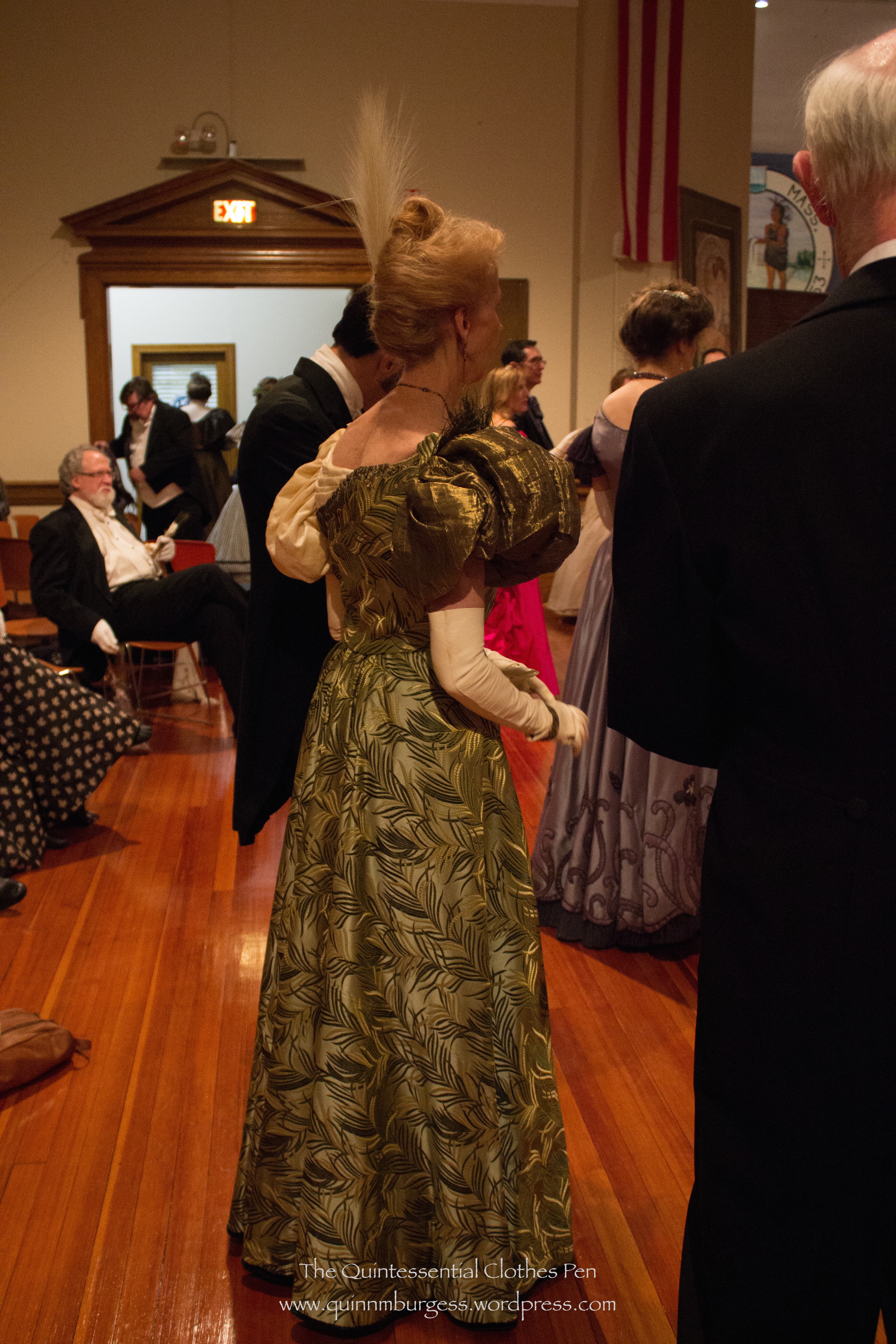
This weekend, though (unlike last weekend!), I’ll be taking a break from my decor-realted activities. And if you’re in the Boston area and you don’t yet have plans for November 8th and 9th, you might consider joining the Commonwealth Vintage Dancers at a Civil War Dance Weekend in Chelmsford, MA. I’ll be there dancing the weekend away and would be pleased to see you there.

Not able to join us for this dance weekend? There’s an annual holiday ball in December and a special 1890s weekend in January coming up! Details can be found here. And if you’re just too far away to be in person at any of these events, I hope you still enjoyed the brief video and that you’ll enjoy the pictures of these events that will be included in future posts!

19CBRE: Stick To Your Own Language

Life has been very busy of late and I haven’t any new sewing or event pictures ready to share, but I do have another installment of 19CBRE ready, so let’s go with that for now.

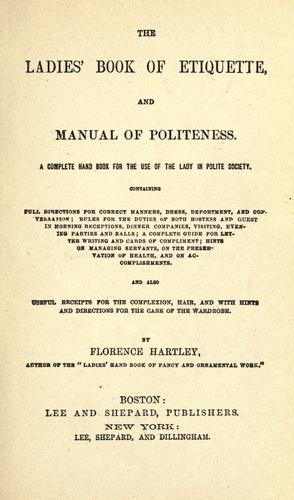
This one is following up on the last 19CBRE post about the use of those “I can’t remember the specific thing I’m mentioning” phrases. In a similar vein, this excerpt is also about what one should and shouldn’t say in conversation. It is from the same source, The Ladies’ Book of Etiquette, and Manual of Politeness (1873), page 14:

It is a mark of ill breeding to use French phrases or words, unless you are sure your companion is a French scholar, and, even then, it is best to avoid them. Above all, do not use any foreign word or phrase, unless you have the language perfectly at your command. I heard a lady once use a Spanish quotation; she had mastered that one sentence alone; but a Cuban gentleman, delighted to meet an American who could converse with him in his own tongue, immediately addressed her in Spanish. Embarrassed and ashamed, she was obliged to confess that her knowledge of the language was confined to one quotation.

A Trying Moment.
A Trying Moment by George du Maurier

Good advice to follow in the 19th century and even today in many situations. Of course, our modern sense of etiquette being less strict than it used to be, a modern person perhaps wouldn’t be quite as embarrassed as a lady from the 1870s, but still it seems like a situation that is unnecessary and easy to avoid.

Introduction To A New Thin-Gummy: 19CBRE

I’ve been inspired lately to read (and in some cases skim at the very least) 19th century etiquette manuals,  especially those books and sections that pertain to 19th century ballroom etiquette. What got me started was perusing various posts at the blog Recreating the 19th Century Ballroom. Barbara posts tantalizing snippets from these sorts of manuals and I wanted to see the context and read more, so I went back to the original sources.

Looking for one thing leads to another, as you probably know, and so it was with etiquette manuals. Once you find one you are led to others and it’s just one big rabbit hole. In my perusal of these manuals, I’ve come across amusing and interesting sections that I’d like to share. In addition, I’ve also started thinking about 19th century ballroom etiquette and how much or little a modern historic ballroom atmosphere can replicate. It’s really quite fascinating!

I’m planning a series of posts relating to this general topic, exploring some of my thoughts as well as sharing quotes from the manuals. I don’t want to commit to any sort of regular posting, but I’m thinking I’ll just intersperse these posts amongst my usual parade of dressmaking and event pictures with the abbreviation 19CBRE (19th Century Ball Room Etiquette) to note what these posts are about. (It’s not a typo, in these manuals, the word we now spell ballroom was separated into two words “ball room.”)

To start, here is a short quote from The Ladies’ Book of Etiquette, and Manual of Politeness (1873), page 14, source here:

Never use the phrases, “What-d-ye call it,” “Thin-gummy,” “What’s his name,” or any such substitutes for a proper name or place. If you cannot recall the names you wish to use, it is better not to tell the story or incident connected with them. No lady of high breeding will ever use the substitutes in conversation.

5697478-L

I am so guilty of using phrases like this in life (and at historic events…). I forget what I’m talking about within a few seconds of finishing a sentence sometimes! So when I want to continue the conversation these phrases pop right up. According to these 19th century standards, I’m of low breeding and obviously not polite… but in our modern world these phrases, while being casual, don’t mark you as being ill-bred, at least to me. I’ve spent time thinking about the fact that this very casual way of speaking is probably not appropriate for a 19th century lady, but that goes back to my currently unexplored thoughts about how far we choose to go when recreating the past at a public event such as a ball (a topic I’ll be sure to post about, someday!).

But thin-gummy is just so amusing! I really feel like I need to work that into modern conversation just because I can. In fact, I worked it into the title of this post and I hope you can imagine the grin on my face because of it!

Do you use these sorts of phrases in your modern life or at historic events? Had it ever occurred to you that in the 19th century these sorts of phrases were to be avoided?

Les Petites Dames de Mode

I was recently reminded of a really fabulous subject I’ve been thinking of sharing on the blog for years now (actually, a draft of this post with just bits of information was started four years ago!).  The subject is the amazing collection of 19th and early 20th century historically clothed dolls that form the collection Les Petites Dames de Mode.

Created by John Burbridge, these dolls are not your average dolls. The dolls and their clothes are to-scale recreations of historic clothing, even down to the trims! I got to see these in person back in 2007 or 2008 when they were on display at Ventfort Hall and let me tell you how stunning it was to see a whole room full of beautifully clothed dolls who were about ⅔ my height! This is some serious attention to detail!

Here are some examples:

cd45d113b1d9d7ef1537895a45adcf6f

241856bc9bd0e5a3ecd37d12ba0fa135

98aa61ae92cfde5af68f0747d098924c


Stunning, right?!? They’re really awesome. There’s a book about them that is widely available. Here’s a link to it on amazon. I believe these dolls are currently privately owned by Mr. Burbridge, but that he is looking for a permeant museum home for them. I hope he is successful so that they are preserved and others will also get to view and appreciate them.

Regency Dancing At The Salem Maritime Festival

First, you have to pretend it’s still summer and the air is still warm. Once you feel the warmth, come back with me to the Regency period with a performance by The Commonwealth Vintage Dancers at the Salem Maritime Festival back in August. The day was cloudy, but not too warm, and was interrupted mid-afternoon by a bit of strong rain (during which many of our dancers had wandered off and I sat under a tree and watched the rain fall).

IMG_9921
Opening the gate to our own historic house front yard performing space.
IMG_9717
I brought along the kites I’d made in 2013 and though we didn’t fly them they looked nice on our picnic blankets. The strings had become all tangled over the last 18 months and thankfully some others found the untangling task rather enjoyable.
IMG_9773
We were pleasantly surprised to be provided with two live musicians who not only played for us, but also sang.
IMG_9843
While visiting a neighboring house we took the opportunity to peer at the modern visitors just as they peer at us!
unnamed
Another participant in the day’s events snapped a few sneaky photos of us through the window of the neighboring West India Goods Store where she was set up for the day. Photo by Sew 18th Century.

I wore my 1812 square neck dress accessorized with a pink silk ribbon sash that I put together earlier this year in conjunction with a post I wrote about variety in Regency ribbon sashes. I think this is the first picture of me wearing the dress with the sash that has made it to the blog. Only took about 7 months!

Nahant Grand Ball

Back in August at the Nahant Vintage Dance Weekend, I was able to attend a soiree at Egg Rock (see that post here) as well as attend the Grand Ball of the weekend. I wore my 1893 bronze ball gown that I made back in 2012.

Unfortunately, I have to say that the crowds and the August temperature without air conditioning conspired for a very sweaty evening, which was not to my liking. However, everyone was very nicely attired and tasty refreshments were provided. In fact, sorbet was brought out at one point and was a tasty and cooling treat! (Hard to imagine being that warm as fall settles in and the air outside is crisp and chilly! I’ve been slow to get to posting about this event.)

IMG_0262
Imitation is the sincerest form of flattery, right?
IMG_0243
Dancing a waltz, I believe.
IMG_0251
This time I’m smiling!
IMG_0193
I happened to be standing in front of a fan while explanations of a dance were going on and I have to confess to laughing more at my flying shoulders than listening to the explanation…
IMG_0291 (1)
A view of the crowded ballroom.
IMG_0304
Another view of the room.
IMG_0236
Everyone looked fabulous for the event.
IMG_0206
This was my favorite new dress I hadn’t seen before. It was quite sunning, with the bi-colored sleeves and tall aigrette. And in complimenting the wearer I was able to meet someone new, which is always nice.
IMG_0223
TNG. That’s that.

The entire Nahant weekend made the New York Times via the delightful Bill Cunningham (who was in attendance taking pictures for the weekend). I can be spotted in a few of his pictures in the Evening Hours section from August 15. There was also an afternoon of events that I did not attend, but which you can see pictures of here and watch a video with Bill’s narration of here.

Vernet Project: Merveilleuses & Incroyables

Really exciting things are secretly brewing amongst an international group of historical seamstresses, tailors, and costumers. They are strange, beautiful, unusual, fun, just plain weird, and detailed… and they are coming to life in 2015!

10394822_835881046430902_3846149313268917321_n

Join us on Facebook and look forward to more tantalizing posts here and around the historical clothing and costuming blog-world as we research, sew, and prepare to unveil this amazing project in December 2015. Do you Vernet?

Come Visit Egg Rock With Me

Early in August, I was able to attend two events that were part of Vintage Victorian’s Nahant Vintage Dance Weekend. The first was a lovely late 19th/early 20th century soiree at Egg Rock, a lovely historic house with beautiful furnishings built in 1864 right on the cliffs overlooking the ocean (the second was the Grand Ball, but I’ll save that for another post). The event was quite elegant and included catered food and drinks. I’d like to take you with me to wander around the house, if you’re inclined. (I apologize for the slightly blurry pictures, the phone camera didn’t like the lighting much.)

IMG_1114
A lovely staircase in the front hall greets us, as is is typical of a mid-19 century home.
IMG_1110
Beautiful architectural details grace all aspects of the house: see the lovely gold damask wallpaper and the decorative woodwork along the stair moulding?
IMG_1106
At the top of the stairs there is another split set of stairs leading up to a cute balcony and bedrooms overlooking the ocean.
IMG_1105
Standing at the top of the balcony we can look into the fabulous tall mirror down the stairs into the hallway below.
IMG_1115
Back downstairs in the entrance hall we can appreciate another lovely mirror, beautiful fireplace, and elegant grandfather clock.
IMG_1109
Off to the opposite side of the hall from the fireplace is a small ballroom with a distinctive wood floor. Dancers whirled in small circles here all evening to the tune of live music.
IMG_1123
The ballroom’s walls were adorned with large pastoral paintings which sadly were peeling and in need of conservation. There was also this elegant sofa on one side. I love that the colors in these dresses complement each other so well and that the attitudes of each person are so distinctive and pretty.
IMG_1120
And here I am, wearing my burgundy and gold 1912 evening gown, which harmonized beautifully with the colors in the entry hall. See that wallpaper? I love it!

I was rather undecided about attending this event until the last moment, so I did a reprise of my hair style from July using the beaded gold necklace as a headband, but did it hastily and without a curling iron, so the texture was my normal wavy frizz rather than defined waves and curls. I’m glad I attended, though, because I had a lovely time and really enjoyed the house. I hope you also enjoyed this short visit to Egg Rock!

Waves, Curls, Earrings… And Dancing From The 1910s

It’s been over a month now, but back in July I attended a Ragtime ball that proved to be great fun. I wore my tried-and-true 1912 burgundy and gold evening gown (while it’s nice to have new things, it’s also nice to pull beautiful things out of the closet, too!). Despite wearing a dress I’ve worn before, I tried a new style with my hair, including a repurposed (and therefore new-feeling) accessory.

I was inspired by hairstyles like these from the early 1910s. There are more examples on my Hair: 1900-1920 Pinterest board as well, if you’re interested. What I took away from these images was the use of a headband of some sort, the rather large airy shape, and the defined waves and curls.

0c0e215c3be944fb58d21d7f619134bb
c. 1912 Lily Elsie
8e434c58c92e68411501faa48e82f690
La coiffure française illustrée. (1910)

Of course, I decided to try this out the afternoon of the event so I hadn’t thought ahead in terms of what to use for a headband. After casting around a bit I thought of a bead necklace I’d purchased a few years ago that ties with a ribbon. Why not use that as a headband? In addition to the bead-necklace-as-headband, I wore my Downton Abbey Collection earrings, which are quite lovely and matched my dress very well in color and style.

Quinn M. Burgess
It took rather a lot of time to create the front waves with my curling iron. The back loopy curls were time consuming, too, though fun until my arms started to hurt from being held up for extended periods of time.
Quinn M. Burgess (1)
I love how defined the curls came out, though, and while I do think there’s a slightly flat spot at the back of my head I generally think the silhouette is what I was aiming for.
Quinn M. Burgess (2)
Waves, curls, and earrings!

And here is the dancing in action! People were very well dressed and enthusastic at this event and really seemed to have a good time. For most dances there was hardly anyone sitting out! That’s great, especially when the crowd is a mix of ages.

Quinn M. Burgess

Quinn M. Burgess (1)

Quinn M. Burgess (2)

1922 Lawn Party Ensemble

Remember my Sort-of 1920s Long Handled Parasol and my 1920s Wide Brim Hat? I was able to wear/use both of these at the recent 1920s Crane Estate Lawn Party event. I attended the event last year as well, which you can check out to see more pictures of the venue than I’ve included in this post.

This year, I paired my new parasol and hat with a pleated skirt from ebay (it was one of those things you gamble on when you order, and while I don’t like it for modern wear I think it worked perfectly for an early 20s look!), a new silk blouse c. 1922, my 1917 Knitted Sweater of Angorina (because I’m sure people didn’t wear their clothing only during one year!), and my American Duchess Astorias. It’s wonderful to have accessories and pieces like sweaters in the closet that can fill out an outfit without having to always create an entirely new ensemble.

My goal was an early 1920s look, when the skirts were still long and the clothes weren’t quite such bags. In terms of overall clothing style, I was aiming for the yellow lady in the image below. In terms of accessories, I was aiming for some of the looks which you can see in this past post about making my parasol.

80f48de904eecb22b43fff925ffe081c
The Delineator Magazine 1923

The blouse I made from white silk crepe the afternoon before the event. It’s all one piece, with the gathered sections on the sides. I used short sleeves, as in view A, but omitted the bow, as in view C. This was partially due to fabric restrictions, as I used fabric left over from another project and I only had an odd shaped piece to work with. I’m not entirely pleased with it, because, being 20s, it is rather a bag, but it was very comfortable, which I did like. I think I would like it better if it was an off white rather than a bright white, because it would have complimented my outfit better. But my hand knitted sweater is ivory and I was really pleased to wear it over the blouse, because I liked the color and the length better. It has such nice proportions with the skirt!

sample_show.php
My inspiration for the blouse. Butterick pattern #3779 from 1922 at COPA. I used the pattern layout as a general guide for creating my blouse.
IMG_0033 (1 of 1)
My 1922 blouse. (…that is a bag!)

In no particular order, here are a variety of pictures taken around the estate of the entire ensemble. There were quite a few that I liked, for the movement of the fabrics, or the pose, or the background. The wide hat brim was great for hiding my face. Useful, since I am really good at making weird faces and not always the best at making good picture faces.

IMG_0083 (1 of 1)
Looking out over the ocean.
IMG_0119 (1 of 1)
In the sunken garden.
IMG_0133 (1 of 1)
At the gate to the secret garden.
IMG_0141 (1 of 1)
At the beginning of the wooded path.
IMG_0145 (1 of 1)
Exploring the wooded path.
IMG_0151 (1 of 1)
Appreciating the gnarly trees.
IMG_0165 (1 of 1)
Ascending the path.

Of course, sometimes I was the person behind the camera as well (it’s only fair that if I want lots of pictures of my outfits that I also reciprocate!). Here are a few other pictures just for fun. I took all of these except the last one.

IMG_0095 (1 of 1)
Capturing the ocean and the lovely parasol.
IMG_0108 (1 of 1)
The house is surrounded by a lovely terrace with stone walls.
IMG_0137 (1 of 1)
Through the gate to the secret garden was distant view of marshes.

And, lastly, a bit of humor to end the parade of pictures.

IMG_0110 (1 of 1)
One section of the lawn had a great bootlegger setup and I was particularly amused to see the (modern) police hanging out right next to it.

And there we are! All of my recent 1920s accessories have been worn/used and documented in my complex photography files. That’s it for 1920s for awhile.