HSF/M #1: 1895 Hug-able Skating Costume

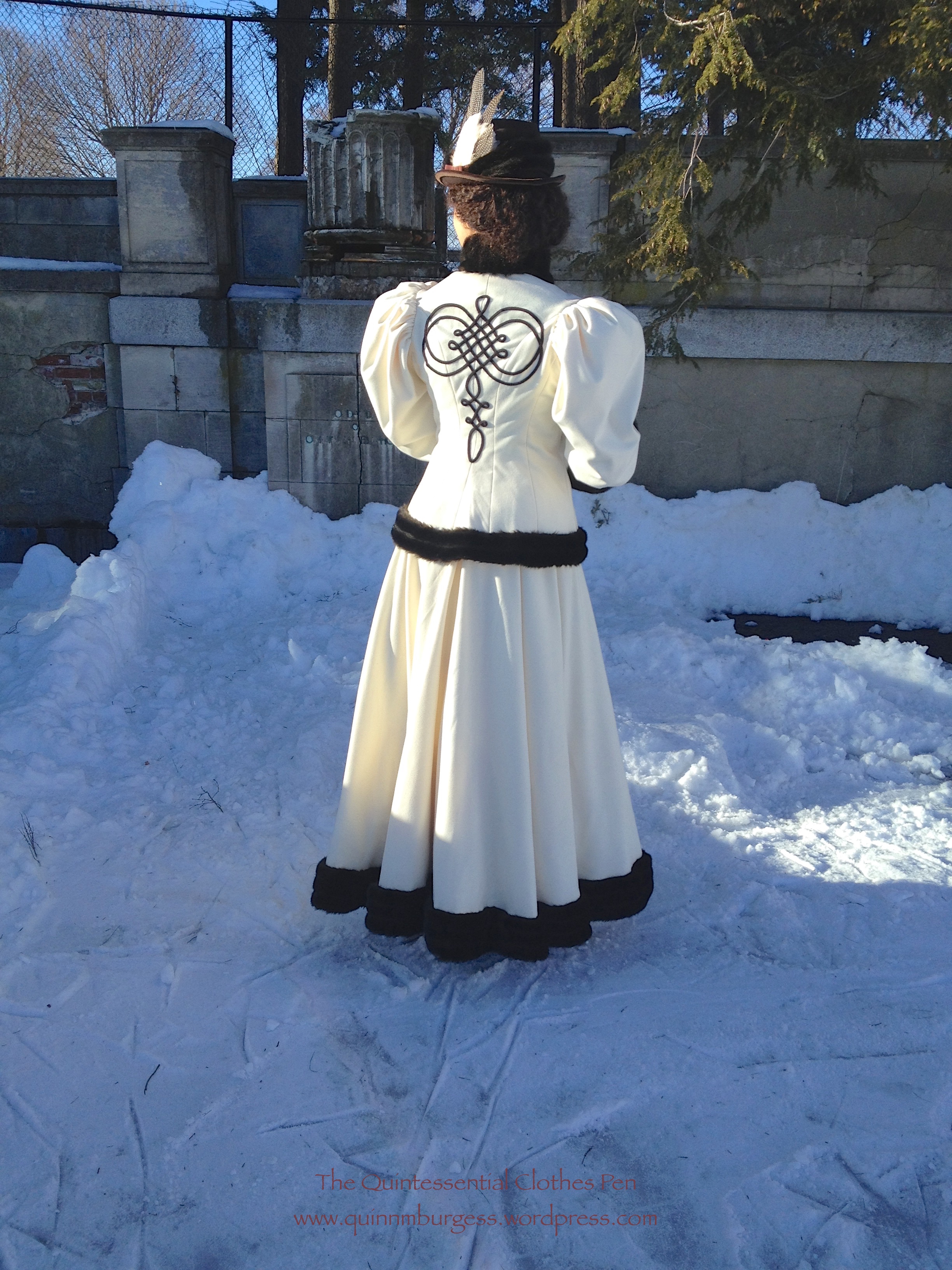
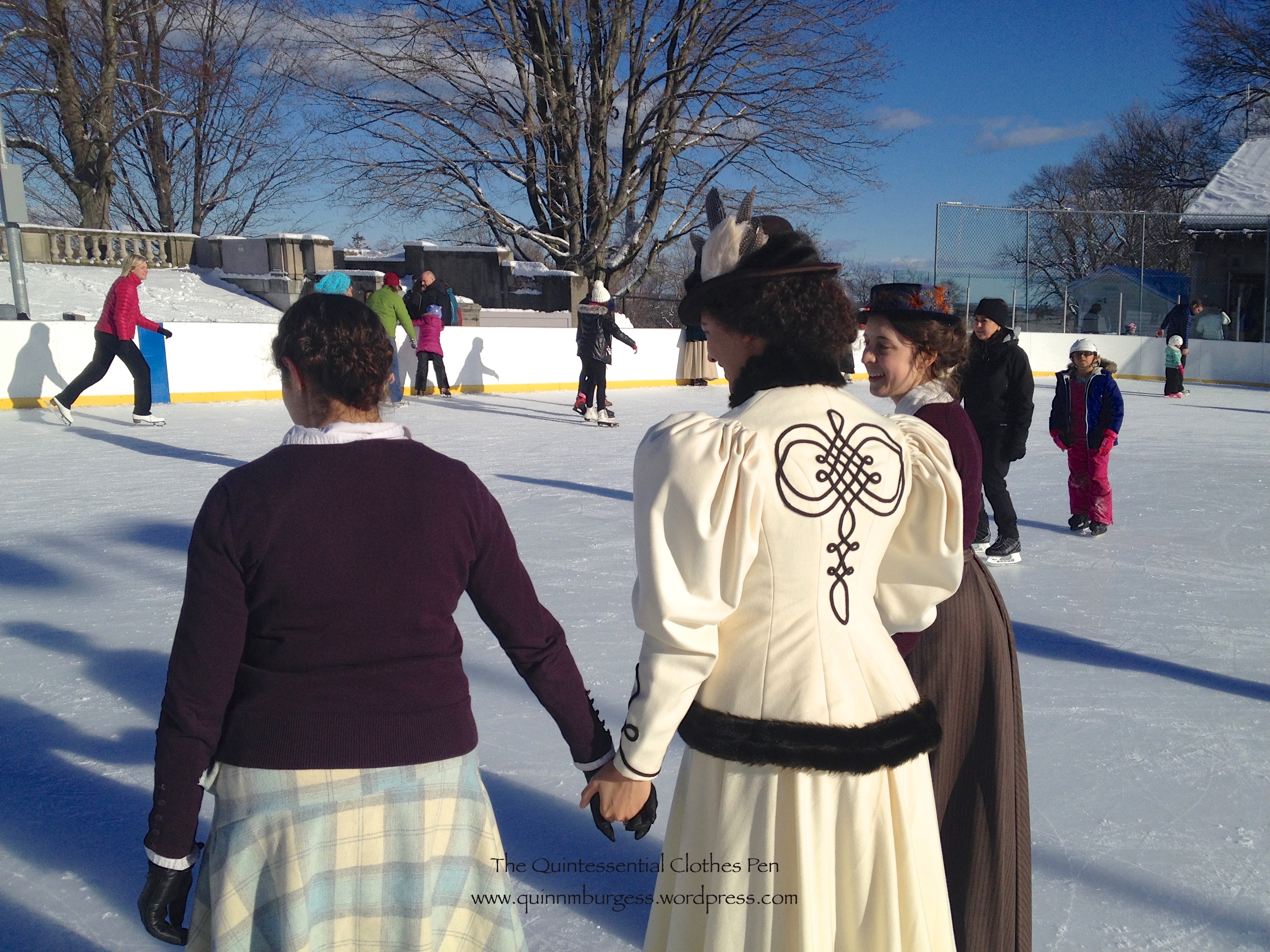
This is one of my favorite outfits of all time. I just want to hug myself, with all the fur, and I love the trim on the back! The whole thing is so cozy and so hug-able and the skirt has such a nice drape and the accessories work so well… and I actually got to go skating in it! I am just utterly chuffed (to use a British word) with the whole thing!

IMG_1952

IMG_1955

IMG_1956

I was on the fence about whether this outfit would apply to the Historical Sew Fortnightly/Monthly Challenge #1: Foundations, but then I read Leimomi’s teaser post about her foundation entry in which she reminds us about different interpretations of foundations and the intent of this challenge to create loose guidelines open to interpretation.

I was convinced (or pushed off the fence, if you prefer to think of it in that amusing way). I’m claiming my all new 1895 skating outfit for the first challenge of the new year! It does rather stretch the idea of foundations. Is the skirt a foundation because it is literally worn below the jacket, thus being a foundation as you would think of one in a building? Or is the bodice a foundation, because my direct inspiration is a lonely jacket without a skirt and therefore it is the foundation of the outfit because I wouldn’t have made the skirt without having the jacket? Either way, there is an element of a foundation in there.

Just the facts:

Fabric: 5 yds of ivory wool, about ⅓ to ½ yd of dark brown faux fur, probably about 3 yds of scrap muslin for flat lining the jacket, a bit of scrap canvas to stiffen the collar, and a bit of ivory flannel to line the inside of the collar.

Pattern: Made by me and based on my inspiration jacket as well as patterns published in Authentic Victorian Fashion Patterns (a Dover book).

Year: c. 1895.

Notions: 5 yds of brown braid, thread, a bit of high loft polyester batting to keep the sleeves puffed out, about 1 yd of ivory hug snug to finish the bottom of the jacket, hooks and bars for the skirt, and thread.

How historically accurate is it? Pretty darn good. Definitely recognizable by someone in the 1890s. The construction is accurate, aside from the use of hug snug instead of bias and faux fur instead of real fur. So, 95%.

Hours to complete: Um… As usual, I did not keep track. I definitely spent at least 15 hours the few days before the event sewing on my braid and fur trim… Plus full days of pattern making, fitting, cutting, and sewing. Maybe 30-40 hours? I care so much more about the finished project than the time it takes to get there! And I loved sewing this, so I didn’t mind that it took time!

First worn: To a skating party that was part of the Commonwealth Vintage Dancers‘ 1890s weekend in January.

Total cost: $75 for the wool, probably about $8 for the fur yardage I used for this project, $4 for the braid, and the rest from the stash = $87

My accessories were a matching fur muff that I made a few years ago and wore once for caroling (with my as-yet-undocumented 1860s winter cape) but more often with my 1917 winter ensemble and a revamp of my 1883 wool hat. I didn’t have time to make a new hat because of all the last minute fur and trim sewing, so I pinned a fur scrap around the 1883 hat and added some feathers to stand up a bit more like 1890s hats and called it good. My main inspiration (and the reason I feel it was an acceptable looking style to have the squashy fedora hat look in the 1890s) was this image.

For good measure, here’s my Pinterest board for the entire project. And here are pictures of us skating (with ice skates: all our snow and cold weather does occasionally come in handy here in Boston)!

IMG_1911

IMG_1903

IMG_1942

IMG_1949

IMG_1947

Yes, we just crashed a local outdoor ice rink on a Sunday afternoon. One of the attendees even wore vintage skates! Turns out they can be hard to skate in because they’re not very supportive… but they looked fantastic! We got lots of comments from people asking what we were doing, why we were dressed up, and that we looked good. I was asked by multiple groups of young girls why I was dressed up and one group in particular asked what the swirly thing was that I had, which I got to explain was a muff to keep my hands warm!
10906529_10203571494468255_4785896006596651774_n
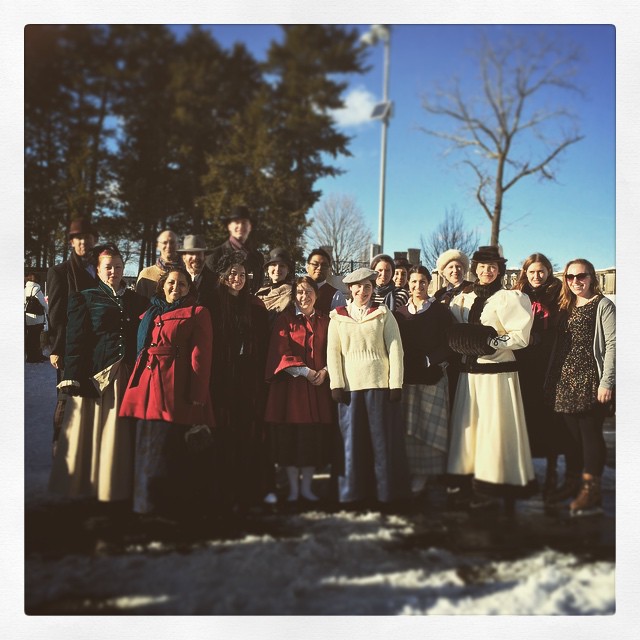
Here’s our skating group. People came in a variety of late 19th century and early 20th century winter outfits as well as modern clothes.

With my skating ensemble I wore fleece lined tights (modern, but warm so I didn’t care), knee high bamboo socks (modern again), my 1903 silk petticoat (super useful for the 1890s, also), a modern tank top (instead of combinations, because I needed to go to work later in the afternoon and change out of my outfit in the back seat of my car without being indecent…), my 1895 corset, and a long sleeve modern waffle tee (mostly to shield my skin against the wool seam allowances and also for warmth). And I was perfectly warm wearing this out for skating on a day that was sunny and right around freezing. In fact, with the muff and wool hat I actually was too warm at times.

IMG_1920
Pleased, chuffed, and smiling all afternoon! So fun! Maybe we will get to go skating again this winter!

Vernet Project: Have You Ever Head Of A Witzchoura?

I hadn’t!

164-0000-021 (1)

The text reads: “Toque de Velours. Witz-choura de Satin.” I’ve looked at enough fashion plates to guess the meaning of most of the text. After some quick reference to translation programs, I confirmed my suspicions and translated the text as: “Hat of velvet. ____ of satin.” The question is, what does “Witz-choura” mean?

First, let me tell you that I originally read the plate as “Toque de Velours. With-choura de Satin.” That z looks remarkably like an h, despite the fact that I don’t think “with” is a word in French (also, I don’t really associate the letter z with French words, so I was happy to interpret it as an h). I followed this path for awhile, though, despite the fact that it didn’t quite make sense. Assuming “With” meant what it does in English, I proceeded to try to figure out what “choura” meant. I looked at English dictionaries, including the Oxford English Dictionary, with no luck. And in French dictionaries the closest thing I found is that “choura” is conjugation of “chouraver” or “chourer,” a verb which seems to mean “to steal” or “to rob” in English. But that didn’t make any sort of sense! The only other reference to the word “choura” I found was that it has a connection to an Arabic word relating to the parliament of an Islamic state. Again, no connection. So then I thought, what’s the word for shoes in French? Maybe “choura” is an older form of that word? Turns out that “les chaussures” means shoes in French.

I was about to pursue this train of thought, when Mr. Q interrupted me. When I complained about my lack of useful results he suggested I try, amongst other ideas, a search of Google Scholar. My initial search turned up lots of science related publications with authors whose last names were Choura. But then, when I added the word “fashion” to my search, I was returned one result which was to the point and clarified the whole business (at least a little bit!). Mr. Q broke the mystery wide open!

The clarification comes from the book Empire Fashions by Dover Publishers. The relevant sentence can be found here and reads: “Around 1808, a high-waisted, fur-lined woman’s coat appeared, the witzchoura [wi choo ra].” Ohhhh, I thought, that’s not an h it’s a z!

Upon searching for it with the now-corrected spelling I finally found relevant information! All that will be in future posts, though. I thought I’d break it up to avoid having one really long post. So you can look forward to a post with descriptions of witzchouras and then also a post with images of them. At least I was on the right track!

(Click here for my original post about the 1814 Vernet Project, to which this post refers.)

19CBRE: The Height Of Ill-Breeding

4a8c317e9d77bb6eebfcfc1502a96598
The Soiree by Jean Beraud

Never anticipate the point or joke of an anecdote told in your presence. If you have heard the story before, it may be new to others, and the narrator should always be allowed to finish it in his own words. To take any sentence from the mouth of another person, before he has time to utter it, is the height of ill-breeding. Avoid it carefully.

Be careful always to speak in a distinct, clear voice; at the same time avoid talking too loudly, there is a happy medium between mumbling and screaming. Strive to attain it.

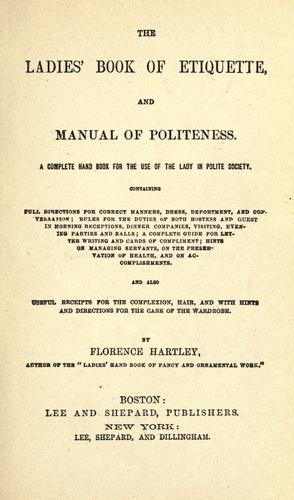
This particular quote is from page 14 of the The Ladies’ Book of Etiquette, and Manual of Politeness (1873), source here. Warning to all: avoid the “height of ill-breeding” in the new year! And, happy new year!

Fabric Stash Addition: Silk Plaid

Well, I went to the fabric store today looking for fabrics to cover some gifted pillow forms to grace our newly redecorated rooms (they’re still not quite done after two weeks of work, but hopefully soon they’ll be done and I’ll have pictures!). I found some truly horrendous fabrics like the one below… (don’t worry! I didn’t buy it. I can only imagine this being in a farmhouse kitchen and even then I wonder about all the mixed motifs…)

IMG_1469
Roosters, and damask motifs, and sunflowers, and gingham, and words…

I did find a few pillow possibilities that I liked, but they all had oatmeal/neutral backgrounds that would not look good in our space, so I didn’t purchase any of those. (I’ve got more places to check out, so I’m not concerned on that front, yet.)

And I did look through the silks, as I always do. Danger!!!! I found lovely plaid smooth silk taffeta (no slubs, hooray!) and it just wanted to come home with me to be made into an 1850s/60s evening gown. I finished off the bolt, which was just under 7 yards. Hopefully enough to make a skirt, possibly both day and evening bodices, and also maybe self trim. Someday (maybe next year?).

A very kind and enabling friend who happened to be with me helped convince me that the silk was a good idea. So in the grand tradition of all my 1850s/60s gowns which have names, when I get around to building the new plaid one I affectionally plan to name the new gown “Johanna” after her. It’s actually a bit more subdued in person. More of a “bruise palette” collection of colors than my usual jewel tones, but “bruise palette” is Johanna’s go to for color choices, so that is perfect. And it’s patterned, which is in keeping with my need to add more patterns to my wardrobe. I think I’ll play up the purple in this rather than the green, since I already have a green 1860s ball gown.

IMG_1475
Fabric! (Because obviously I don’t have enough of it in my stash or enough to accomplish in my life right now…)

Take A Break With Me

My life is still unexpectedly busy and my only sewing has been decor-related as a result. What do I mean, you ask? The story (with pictures!) is coming sometime soon in an upcoming post, but for now I’m leaving only that hint.

This weekend, though (unlike last weekend!), I’ll be taking a break from my decor-realted activities. And if you’re in the Boston area and you don’t yet have plans for November 8th and 9th, you might consider joining the Commonwealth Vintage Dancers at a Civil War Dance Weekend in Chelmsford, MA. I’ll be there dancing the weekend away and would be pleased to see you there.

Not able to join us for this dance weekend? There’s an annual holiday ball in December and a special 1890s weekend in January coming up! Details can be found here. And if you’re just too far away to be in person at any of these events, I hope you still enjoyed the brief video and that you’ll enjoy the pictures of these events that will be included in future posts!

19CBRE: Stick To Your Own Language

Life has been very busy of late and I haven’t any new sewing or event pictures ready to share, but I do have another installment of 19CBRE ready, so let’s go with that for now.

This one is following up on the last 19CBRE post about the use of those “I can’t remember the specific thing I’m mentioning” phrases. In a similar vein, this excerpt is also about what one should and shouldn’t say in conversation. It is from the same source, The Ladies’ Book of Etiquette, and Manual of Politeness (1873), page 14:

It is a mark of ill breeding to use French phrases or words, unless you are sure your companion is a French scholar, and, even then, it is best to avoid them. Above all, do not use any foreign word or phrase, unless you have the language perfectly at your command. I heard a lady once use a Spanish quotation; she had mastered that one sentence alone; but a Cuban gentleman, delighted to meet an American who could converse with him in his own tongue, immediately addressed her in Spanish. Embarrassed and ashamed, she was obliged to confess that her knowledge of the language was confined to one quotation.

A Trying Moment.
A Trying Moment by George du Maurier

Good advice to follow in the 19th century and even today in many situations. Of course, our modern sense of etiquette being less strict than it used to be, a modern person perhaps wouldn’t be quite as embarrassed as a lady from the 1870s, but still it seems like a situation that is unnecessary and easy to avoid.

Introduction To A New Thin-Gummy: 19CBRE

I’ve been inspired lately to read (and in some cases skim at the very least) 19th century etiquette manuals,  especially those books and sections that pertain to 19th century ballroom etiquette. What got me started was perusing various posts at the blog Recreating the 19th Century Ballroom. Barbara posts tantalizing snippets from these sorts of manuals and I wanted to see the context and read more, so I went back to the original sources.

Looking for one thing leads to another, as you probably know, and so it was with etiquette manuals. Once you find one you are led to others and it’s just one big rabbit hole. In my perusal of these manuals, I’ve come across amusing and interesting sections that I’d like to share. In addition, I’ve also started thinking about 19th century ballroom etiquette and how much or little a modern historic ballroom atmosphere can replicate. It’s really quite fascinating!

I’m planning a series of posts relating to this general topic, exploring some of my thoughts as well as sharing quotes from the manuals. I don’t want to commit to any sort of regular posting, but I’m thinking I’ll just intersperse these posts amongst my usual parade of dressmaking and event pictures with the abbreviation 19CBRE (19th Century Ball Room Etiquette) to note what these posts are about. (It’s not a typo, in these manuals, the word we now spell ballroom was separated into two words “ball room.”)

To start, here is a short quote from The Ladies’ Book of Etiquette, and Manual of Politeness (1873), page 14, source here:

Never use the phrases, “What-d-ye call it,” “Thin-gummy,” “What’s his name,” or any such substitutes for a proper name or place. If you cannot recall the names you wish to use, it is better not to tell the story or incident connected with them. No lady of high breeding will ever use the substitutes in conversation.

5697478-L

I am so guilty of using phrases like this in life (and at historic events…). I forget what I’m talking about within a few seconds of finishing a sentence sometimes! So when I want to continue the conversation these phrases pop right up. According to these 19th century standards, I’m of low breeding and obviously not polite… but in our modern world these phrases, while being casual, don’t mark you as being ill-bred, at least to me. I’ve spent time thinking about the fact that this very casual way of speaking is probably not appropriate for a 19th century lady, but that goes back to my currently unexplored thoughts about how far we choose to go when recreating the past at a public event such as a ball (a topic I’ll be sure to post about, someday!).

But thin-gummy is just so amusing! I really feel like I need to work that into modern conversation just because I can. In fact, I worked it into the title of this post and I hope you can imagine the grin on my face because of it!

Do you use these sorts of phrases in your modern life or at historic events? Had it ever occurred to you that in the 19th century these sorts of phrases were to be avoided?

Regency Dancing At The Salem Maritime Festival

First, you have to pretend it’s still summer and the air is still warm. Once you feel the warmth, come back with me to the Regency period with a performance by The Commonwealth Vintage Dancers at the Salem Maritime Festival back in August. The day was cloudy, but not too warm, and was interrupted mid-afternoon by a bit of strong rain (during which many of our dancers had wandered off and I sat under a tree and watched the rain fall).

IMG_9921
Opening the gate to our own historic house front yard performing space.
IMG_9717
I brought along the kites I’d made in 2013 and though we didn’t fly them they looked nice on our picnic blankets. The strings had become all tangled over the last 18 months and thankfully some others found the untangling task rather enjoyable.
IMG_9773
We were pleasantly surprised to be provided with two live musicians who not only played for us, but also sang.
IMG_9843
While visiting a neighboring house we took the opportunity to peer at the modern visitors just as they peer at us!
unnamed
Another participant in the day’s events snapped a few sneaky photos of us through the window of the neighboring West India Goods Store where she was set up for the day. Photo by Sew 18th Century.

I wore my 1812 square neck dress accessorized with a pink silk ribbon sash that I put together earlier this year in conjunction with a post I wrote about variety in Regency ribbon sashes. I think this is the first picture of me wearing the dress with the sash that has made it to the blog. Only took about 7 months!

Nahant Grand Ball

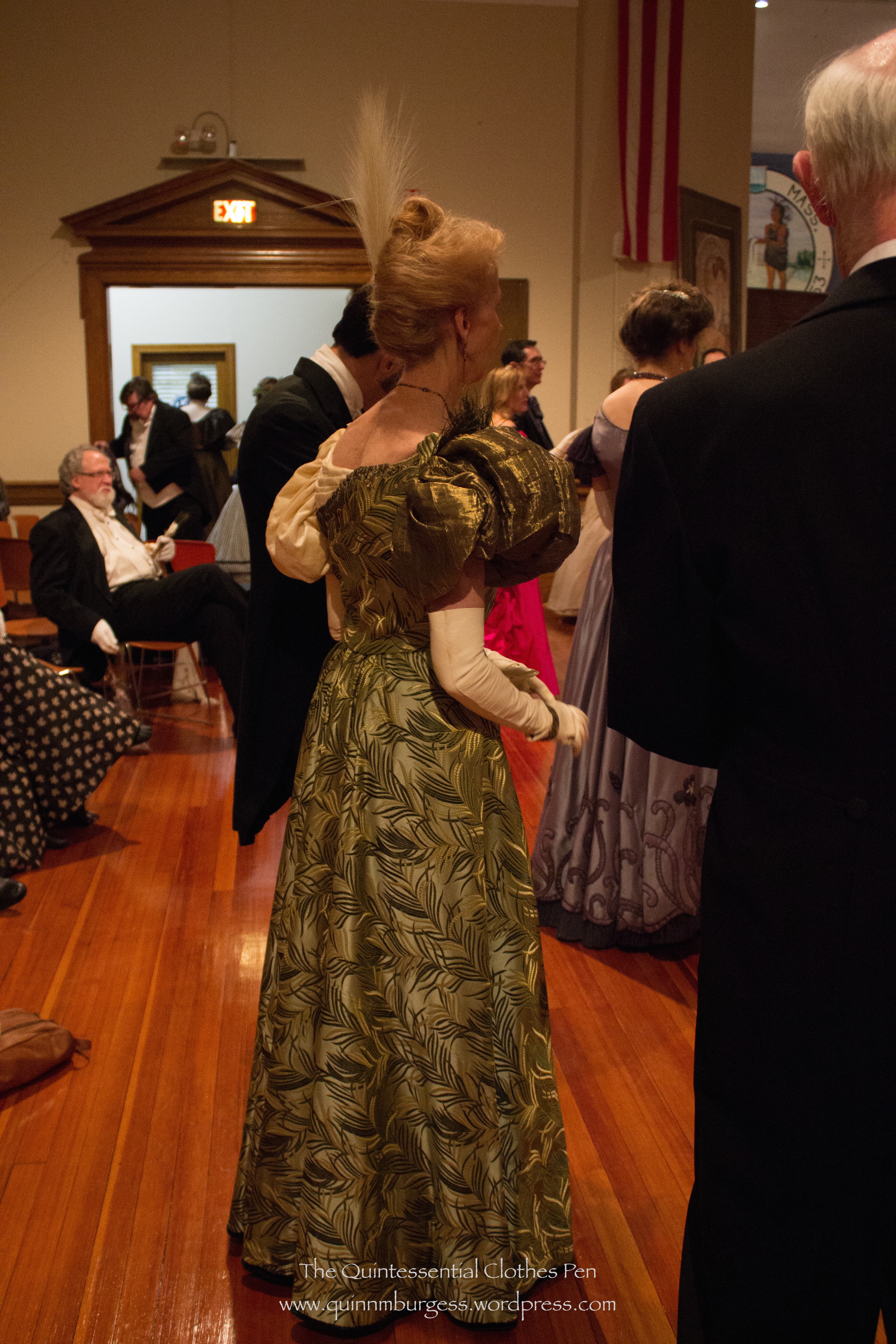
Back in August at the Nahant Vintage Dance Weekend, I was able to attend a soiree at Egg Rock (see that post here) as well as attend the Grand Ball of the weekend. I wore my 1893 bronze ball gown that I made back in 2012.

Unfortunately, I have to say that the crowds and the August temperature without air conditioning conspired for a very sweaty evening, which was not to my liking. However, everyone was very nicely attired and tasty refreshments were provided. In fact, sorbet was brought out at one point and was a tasty and cooling treat! (Hard to imagine being that warm as fall settles in and the air outside is crisp and chilly! I’ve been slow to get to posting about this event.)

IMG_0262
Imitation is the sincerest form of flattery, right?
IMG_0243
Dancing a waltz, I believe.
IMG_0251
This time I’m smiling!
IMG_0193
I happened to be standing in front of a fan while explanations of a dance were going on and I have to confess to laughing more at my flying shoulders than listening to the explanation…
IMG_0291 (1)
A view of the crowded ballroom.
IMG_0304
Another view of the room.
IMG_0236
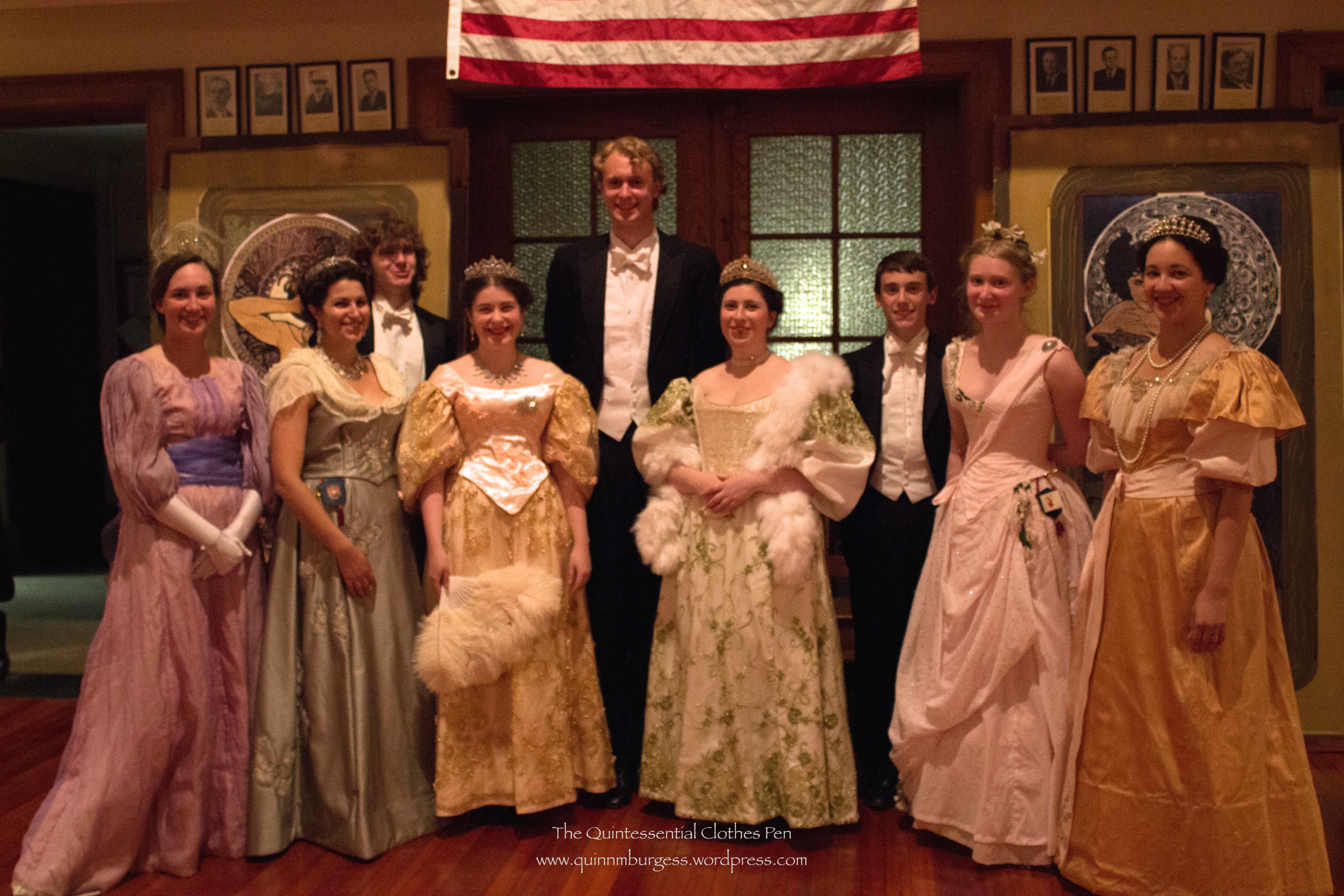
Everyone looked fabulous for the event.
IMG_0206
This was my favorite new dress I hadn’t seen before. It was quite sunning, with the bi-colored sleeves and tall aigrette. And in complimenting the wearer I was able to meet someone new, which is always nice.
IMG_0223
TNG. That’s that.

The entire Nahant weekend made the New York Times via the delightful Bill Cunningham (who was in attendance taking pictures for the weekend). I can be spotted in a few of his pictures in the Evening Hours section from August 15. There was also an afternoon of events that I did not attend, but which you can see pictures of here and watch a video with Bill’s narration of here.

Vernet Project: Merveilleuses & Incroyables

Really exciting things are secretly brewing amongst an international group of historical seamstresses, tailors, and costumers. They are strange, beautiful, unusual, fun, just plain weird, and detailed… and they are coming to life in 2015!

10394822_835881046430902_3846149313268917321_n

Join us on Facebook and look forward to more tantalizing posts here and around the historical clothing and costuming blog-world as we research, sew, and prepare to unveil this amazing project in December 2015. Do you Vernet?