Surrender!

…to the costuming peer pressure…

icon

The short explanation of the crazy is that Kendra, of Demode Couture, has started an 18th Century Court Ensemble Sew-Along. The longer explanation of the crazy is written by Kendra herself, here on her blog.

I’m talking about it on my blog because I’ve submitted to the indirect costuming peer pressure and joined in! (You should too…) I’ve got my fears about my participation (I spent about two days debating my decision to join in!): I’m unlikely to have a relevant event to wear a court gown to (unless I make one!), I’m not super confident in my ability to get 18th century “right” yet, and I don’t want to spend mounds of money on this project (which you could so easily do!).But… I want to participate! So, I’ve found some cures for my fears and committed, in a thoughtful and careful way, to the crazy.

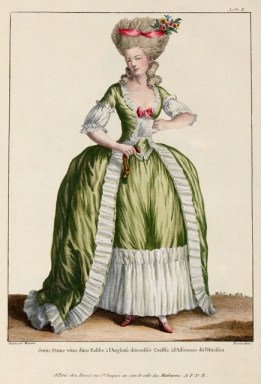
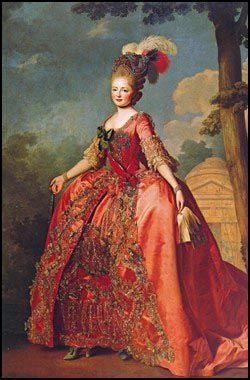
This is the gown I’ve decided on. It was a hard choice! But it’s a good choice for me, because I’ve already got pink silk in the stash that I bought back in January with the intent of making “an 18th century something” perhaps, so that takes care of the bulk of the materials (and the cost). So I’ve just got to procure the trim materials and accessories. I’ve already found the things I want, but I’m going to wait a bit to purchase them and get started on the sewing, so stay tuned for more posts about that in a few months!

e97cee6a74d1756827c28213e6397915
Grand Duchess Maria Feodorovna by Roslin, wearing the Star and Badge of the Order in 1770. (I’ve also seen this dated as 1777.)
c628b97dc89626f6577689f549884f42
Slightly different version of same painting. Included in an article about Women’s Imperial Court Costume In Imperial Russia.

I also considered these other gowns, but decided against them in the end.

2b3135733bdb0420963a1a7c04afd51a
Robe de cour from Les Arts Decoratifs

I love this robe de cour! It looks more like fancy dress than a court gown to me. I can imagine it as “Snowflake” or “Winter” or “Snow Queen.” I seriously considered this one… but I don’t have any of the appropriate materials in my stash right now, and the cost of the materials I wanted to use was more than I wanted to spend on this project. So I’ve added this to my list of “things I eventually want to sew.” I can even envision it as fancy dress in the 19th century with a different skirt shape… a bustle gown, perhaps? I just love that the triangles look like icicles, and the diagonal trim looks like snowflakes… It’s pretty ridiculous!
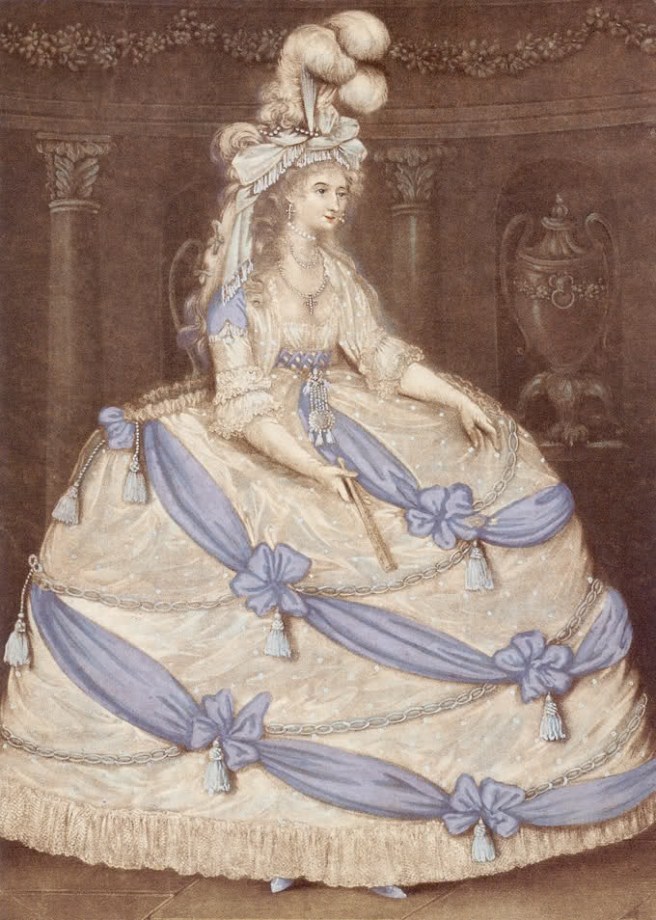
4af7326884f958d2409f5320c53b6e7b
1795 – Caroline, Princess of Wales

Then there’s this absurd looking court gown from the very end of the 18th century. I love the periwinkle color, the tassels, and what looks like chain (wouldn’t that be fun to figure out!) edging the poofs. It’s pretty silly. But again, I don’t have any appropriate fabrics in my stash…
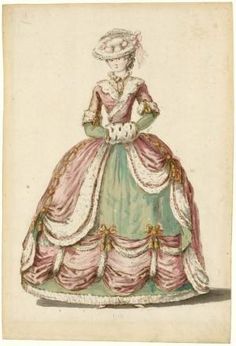
25e7c98dcf6e7807e2e4806bdbfd1107
Robe de cour from Les Arts Decoratifs

I like this last one, too, although not as much as the first two. I feel like this would be a great use of an iridescent shot silk, at least for the green part. I like the fur trim, and the gold, but I’m just not overwhelmed by awesome-ness.

The choice was made more difficult by the fact that other people have already “claimed” certain court gowns they want to make, and the idea is that no two dresses are the same. (So I might have had more options, but they’d already been claimed!) You can see what other people have picked and keep track of all the court ensembles being made on Kendra’s blog: Demode Couture. There are at least 30 people participating so far and lots of pretties have been chosen! These are my favorite gowns from among the ones that are already claimed.
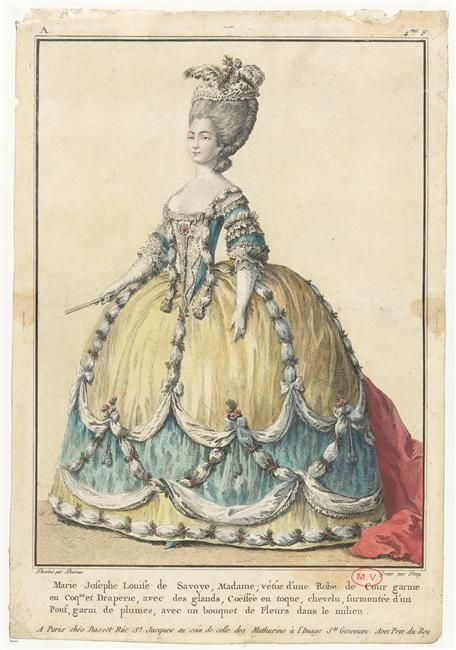
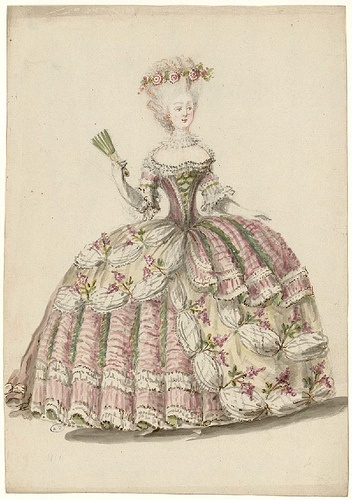
18th century court gown. It’s so cute!
ef20e9a8894c14ec10b57fac190c75fc
18th century robe de cour. How to achieve those fantastic waves? But I do love this one!
183fec6f65f70eced493dc859b7a9326
18th century robe de cour. This one has great waves as well! Lovely.

Kendra already did a post on 18th Century Court Gown Basics that’s a great introduction to this oddly specifc class of garments, and I’m sure more information will be coming over the next year from all of the participants.

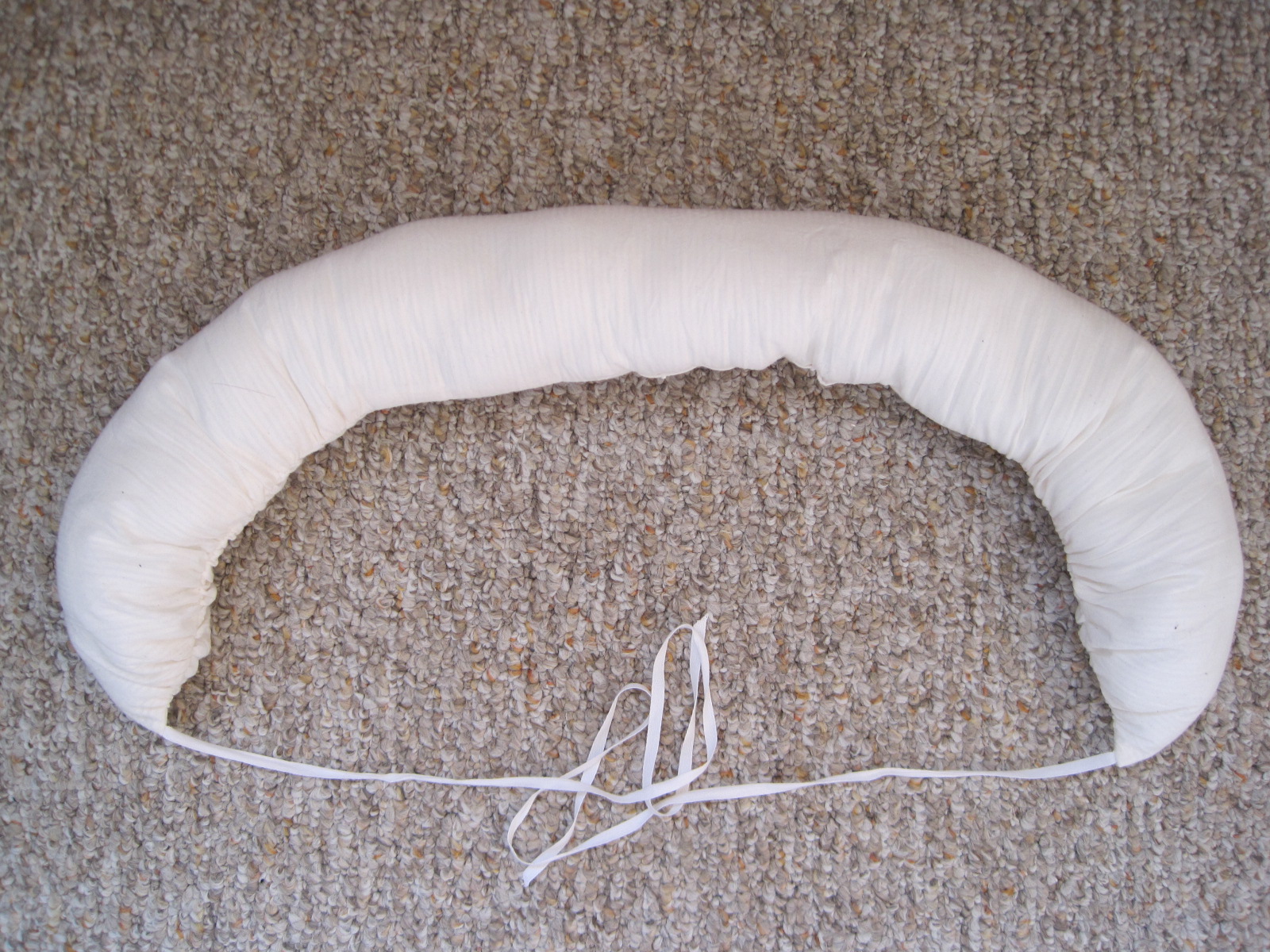
HSF #15: 18th Century Bum Roll

When I posted about my new apricot 18th century petticoat, I also mentioned that there was a sneak peak at my new bum roll in the pictures. Remember? The bum roll fulfills the HSF #15 Challenge: White. It’s a rather simple accessory, so there’s not a whole lot to say about it.

IMG_4603
Ooo… A white bum roll!

The facts:

Fabric: About 10″ white striped cotton

Pattern: None, the bum roll is just a rectangle that’s gathered at the sides and tapered a little toward the front points.
Year: Loosely 1700-1780.

Notions: Thread, poly fill, 1/4″ white cotton tape for ties.

How historically accurate?: I give it 80%. Bum pads/rolls in the 18th century were probably not made of cotton or stuffed with poly fill. But the shape achieves the desired silhouette and is in the vein of research I have seen on 18th century bum rolls.

Hours to complete: 1

First worn: Well, Squishy wore it for pictures!

Total cost: The fabric was $1 a yard, so about 30 cents.

IMG_4610
The gathers are what creates the crescent shape. It pulls in to be a tighter curve when tied around the body as well.

Belated HSF #11: 18th Century Apricot Petticoat

Life! Is often great, but does rather get in the way of sewing plans sometimes…

This HSF challenge #11 had a due date of June 3rd. I actually finished sewing on June 18th, but I’ve been busy posting about other things so this has been even further delayed. Oh well, I had the best of intentions: to complete this 18th century petticoat for the Squares, Rectangles, and Triangles Challenge.

Description:
Many historical garments, and the costumes of many people around the world, use basic geometric shapes as their basis. In this challenge make a garment made entirely of squares, rectangles and triangles (with one curve allowed), whether it is an 18th century kimono, a flounced 1850s skirt, or a medieval shift.
 
IMG_4606
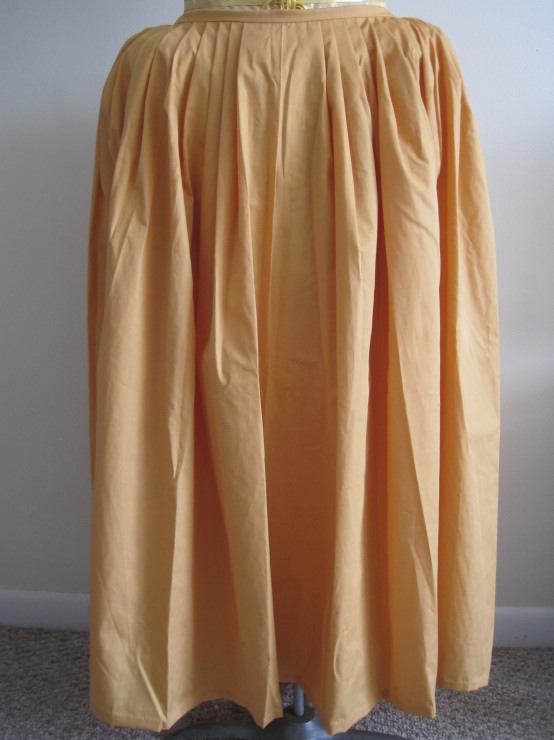
Apricot (orange) 18th century under petticoat.

Just the facts:

Fabric: Almost all of 4yds of apricot cotton I bought back in January.

Pattern: None, but I referenced both of these tutorials on constructing 18th century petticoats.  Katherine’s tutorial is for a petticoat with an uneven length (to go over panniers, or a bum roll, for example). Rebecca’s tutorial is for a petticoat with an even length (the same length all the way around, to be worn without extra supports). Both tutorials have construction information, Rebecca’s includes a bit more detail in terms of which stitches and methods to use.

Year: Loosely 1700-1790.

Notions: Thread, yellow polyester ribbon for ties.

How historically accurate?: I give it 70%. Accuracy gets knocked down because: 1- the color is a bit vibrant for the period (but it’s an under petticoat, and I wanted it to be fun!), 2- all unseen seams are machine sewn, 3- I used bright yellow polyester ribbon for ties, 4- I haven’t seen much research that shows cotton being used at this time for a single plain petticoat of this sort. On the other hand: 1- all finishing was done by hand, 2- the dimensions and method of creation are historically accurate.

Hours to complete: 6 or 7? I can’t really remember…

First worn: Well, Squishy wore it for pictures!

Total cost: $12 for the fabric. The ribbon is leftover from my childhood craft projects…

IMG_4608
Side view.
IMG_4607
Front. See the yellow ribbon?
IMG_4609
Back. I love how the pleats fan out.

I chose to bind the top with self fabric and use polyester ties in a fun color for this petticoat, since I knew it wouldn’t be seen and I might as well use some of those things from my stash! The back half of the petticoat ties in front, then the front ties wrap all the way around to the front and also tie in front. That’s why you can see all the yellow ribbon crossing in the back. This method used a solid 3 yds of ribbon, though the ends I have to tie with are generous and could probably be shorter if I wanted to save on tie length.

IMG_4604
Back tied in front before the front gets tied. There are hemmed pocket slit openings on each side.

I just love the color of this petticoat. It’s so bright and sunny and cheerful, especially with the yellow ribbons! There’s also a sneak peek in this last picture at what will likely be a future HSF item: the bum roll… more on that soon-ish.

Mock-up-ing-Along

The first step in constructing my 1760s Curtain-Along jacket was to draft up the pattern from Janet Arnold (you can read more about the pattern I chose in my Initial Curtain-Along Thoughts post). In my experience, sometimes the patterns work pretty well without a lot of tweaks, but sometimes you really do need to do some serious fitting to make them work. Given that knowledge, I decided to make a mock-up of the pattern without any adjustments to see how it would fit. The measurements weren’t too far off of my own, so I didn’t think I’d run into any really awful problems.

And here are the results! I put the mock-up together matching up all of the points that were indicated in the pattern.

IMG_4431
Initial state. It is pinned down at center front, but I haven’t made any other adjustments. Squishy is pretty close to my shape, so you can see that there are some adjustments that need to be made for the jacket to fit me.
IMG_4432
First problem: the gap at the shoulders. You can see on the left that I’ve pinned out the excess fabric, and on the right side nothing has been pinned.
IMG_4433
Second problem: the center back waist point is halfway up the back! I extended the center back seam above the waist so that the waist would sit lower and match the side fullness.
IMG_4434
I don’t think anyone has a back/hip area that would easily fit into this shape…
IMG_4435
Third problem: sleeves that are too far off of the shoulder and twisted around in a way that is odd looking and uncomfortable. I had to try this on to make those observations, but you can see the problems in the picture.
IMG_4436
The solution was to take the sleeve off, adjust the armsceye, and pin the sleeve back on without it being twisty. You can see on the left side that I’ve adjusted the sleeve, and on the right I didn’t do anything.

Oh, I also lengthened the sleeve pattern a bit, because it was a little short on me, and extended center front so it would actually close… After making the adjustments to the pattern, I took to the scissors and cut out the real fabric, mineral felicite and peach linen lining. Then it was on to the hand sewing…

Initial Curtain-Along Thoughts

curtainbadge

It’s been a fair bit of time since I first thought about joining in on the Curtain-Along hosted by Jen of Festive Attyre. I thought the idea was fun and I was inspired by the Waverly curtain series, but I wasn’t inspired enough to get involved… until I saw additional colorways being offered by fabric stores as yardage rather than curtains! It’s not that they were being offered as yardage, it’s just that I like the colors better and I like that they will be less represented in the costuming world, since most people seem to have gone for the traditional curtain color ways.

IMG_3854
Waverly Mineral Felicite: my fabric.

Anyway, I mentioned way back in October that I had bought some yardage of the Mineral Felicite colorway of the Waverly fabric. It’s taken me about 9 months to get around to using it, but I’ve finally found the time! I’m super excited about it. The colors are lovely and I’m branching out (haha, no pun intended) into an earlier period than I usually inhabit as inspiration for my Curtain-Along garment.

64035625921781582_DpGhwh4L_c
This is what really inspired me to begin with. Met jacket, 18th century.

This main inspiration jacket has the ambiguous dating of “18th century” and the details aren’t super clear cut for me to do my own clear dating. I like the simple shape, the colors, and the blue silk ribbon trim on the edges. These are all aspects of this garment that I want to bring in to my own jacket, but I also wanted to find a shape and style that appeals to me. So I did a lot of thinking about what decade of the 18th century I wanted to aim for. There was lots of looking at Pinterest. Initially I thought I wanted to aim for 1770s, but after more thinking I’ve settled on the 1760s as the decade for this jacket.

I picked the 1760s for a variety of reasons. 1- I want to be able to wear the jacket with a future quilted petticoat and quilted petticoats were most popular between 1700-1775; 2- Conveniently, there is a pattern available in Janet Arnold for a 1760s jacket; 3- I like the slightly longer skirts on the jackets of the 1760s.

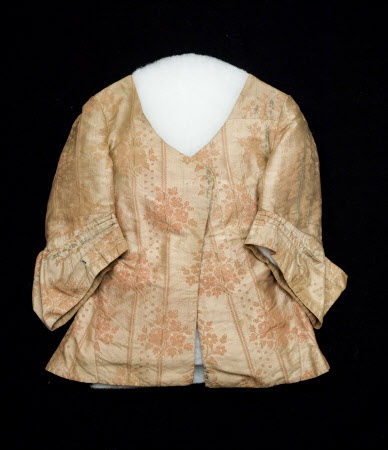
The jacket below is the one Janet Arnold took the pattern I will be using from. I will likely omit the cuffs (I’ve got a future 1740s jacket project in the works with cuffs!) and will almost certainly be adding the blue silk ribbon like my original inspiration jacket.

5b8a813387cd03709249b12e2ca9688b
Jacket. 1760-1790. National Trust Inventory Number 1348744

HSF #3: Silk Pockets

I’ve been sewing up a storm this weekend! (And yes, pun intended, since I was stuck inside all weekend because of the blizzard ‘Nemo’… and as a side note, do you think they saw the irony in naming this storm Nemo? All I think of is a cute cartoon fish, which seems at odds with the 2 1/2 feet of snow that is still being cleaned up outside as I create this post.)

Anyway… events were cancelled, including the Regency Ball I created my 1813 dress (HSF #1) for, which is rather sad. Not being able to go anywhere means I’ve had lots of time to work on other things, though. Mostly, I’ve spent the time working on my replacement of the berry ballroom dancing dress. I was hoping to move along on my new 1864 ball gown as well, but that didn’t happen because I was so inspired to keep working on the ballroom dress (and I made lots of progress, so that’s good!). I did take some time out of my furious sewing to finish up my new silk pockets, just in time for the deadline of the Historical Sew Fortnightly’s Challenge #3: Under It All.

IMG_4203
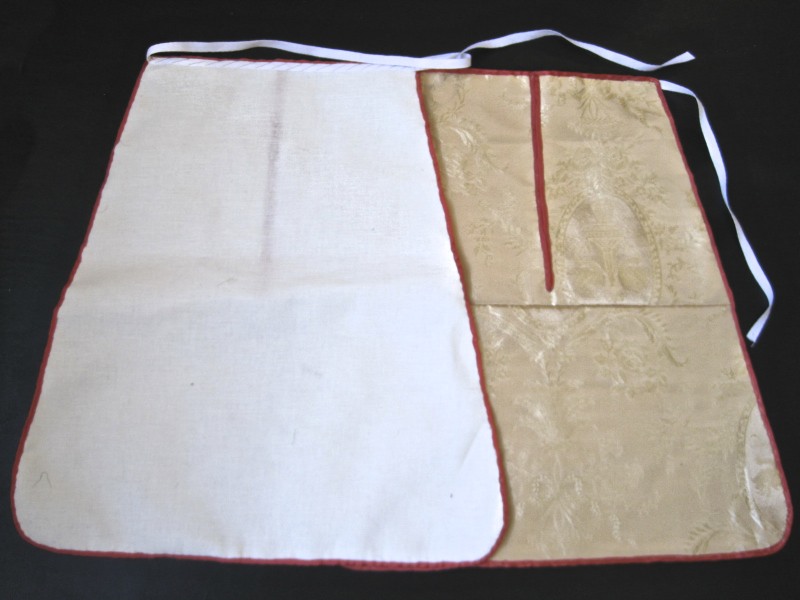
Yay! Pockets!

For the facts:

Fabric: Silk brocade scraps left over from my 1780s stays and linen scraps left over from my 1812 regency chemise.

Pattern: From Costume Close-Up.

Year: The year in Costume Close-Up is 1740-1770, but I think these can be used for years spanning almost the entirety of the 18th century.

Notions: About 2 yds of 1/4″ persimmon colored silk ribbon and about 1 yd of 1/4″ white cotton twill tape for ties.

How historically accurate?: I give them a 95% rating. Accurate fabrics, accurate piecing, accurate pattern, no machine sewing… Thread choice is not accurate, and I’m not convinced that the stitches I used to attach my edging ribbon are accurate either. (And I probably should have tea dyed my waist tie so it wouldn’t be so bright white… but I am the only person who is likely to see it, and frankly, I just wanted to attach it and be done.)

Hours to complete: Entirely hand sewn, so about 13 hours.

First worn: They haven’t been worn yet, and probably won’t be worn for awhile… but at least now they’re done, and ready to go for next time I need them!

Total cost: $7? If I count the cost of all the bits and pieces. Since they use scraps from other projects it’s hard to tell.

IMG_4201
Back view. You can see the linen backing. The silk on the front has a second layer of linen under it.
IMG_4202
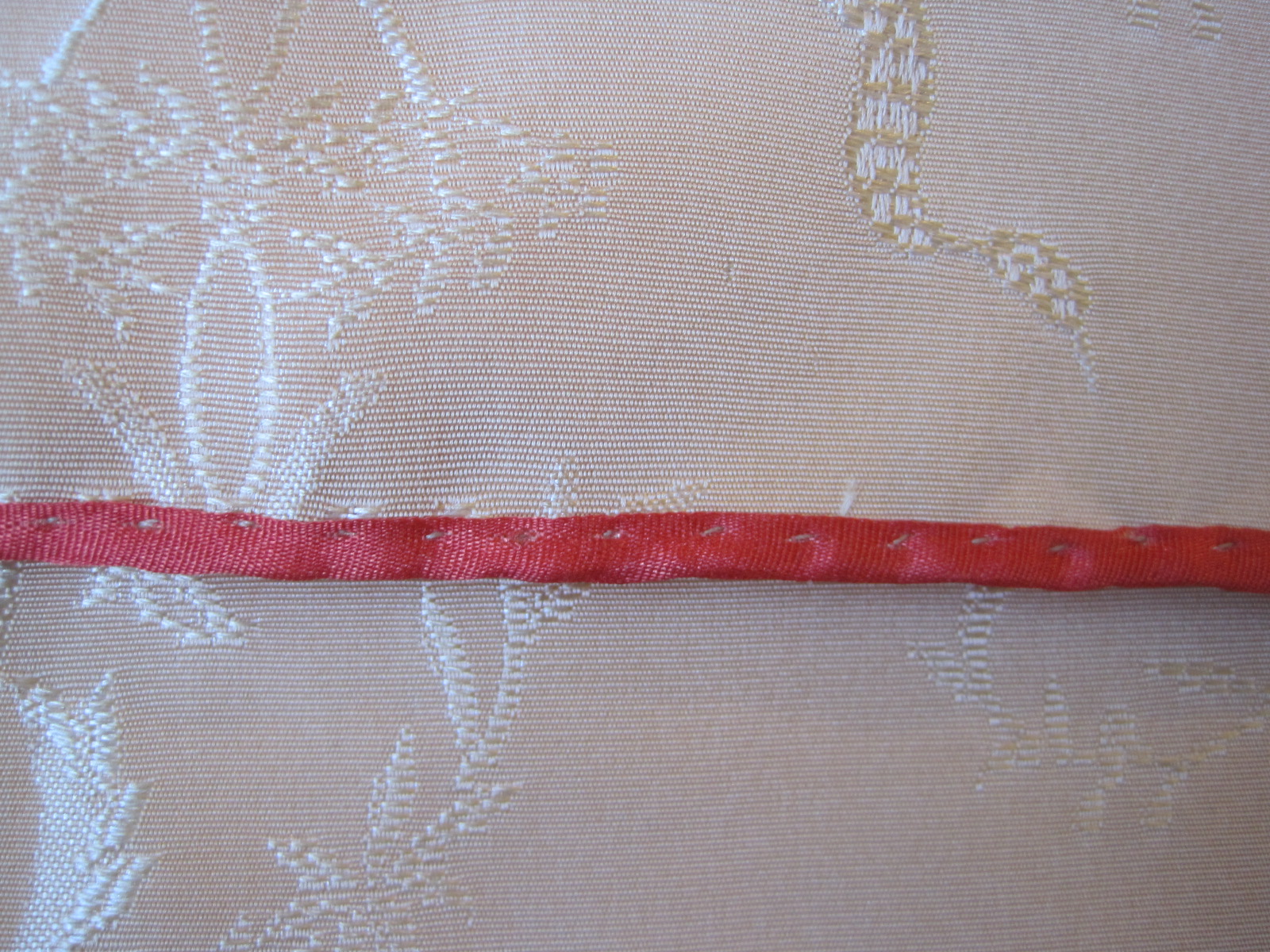
Close-up of the tiny stitches holding the ribbon down along the edges.

January Stash Additions

This story starts as so many sewing related stories do: I went in “just to look.” In fact, we all went in “just to look.”

I’m sure you can guess what happened…

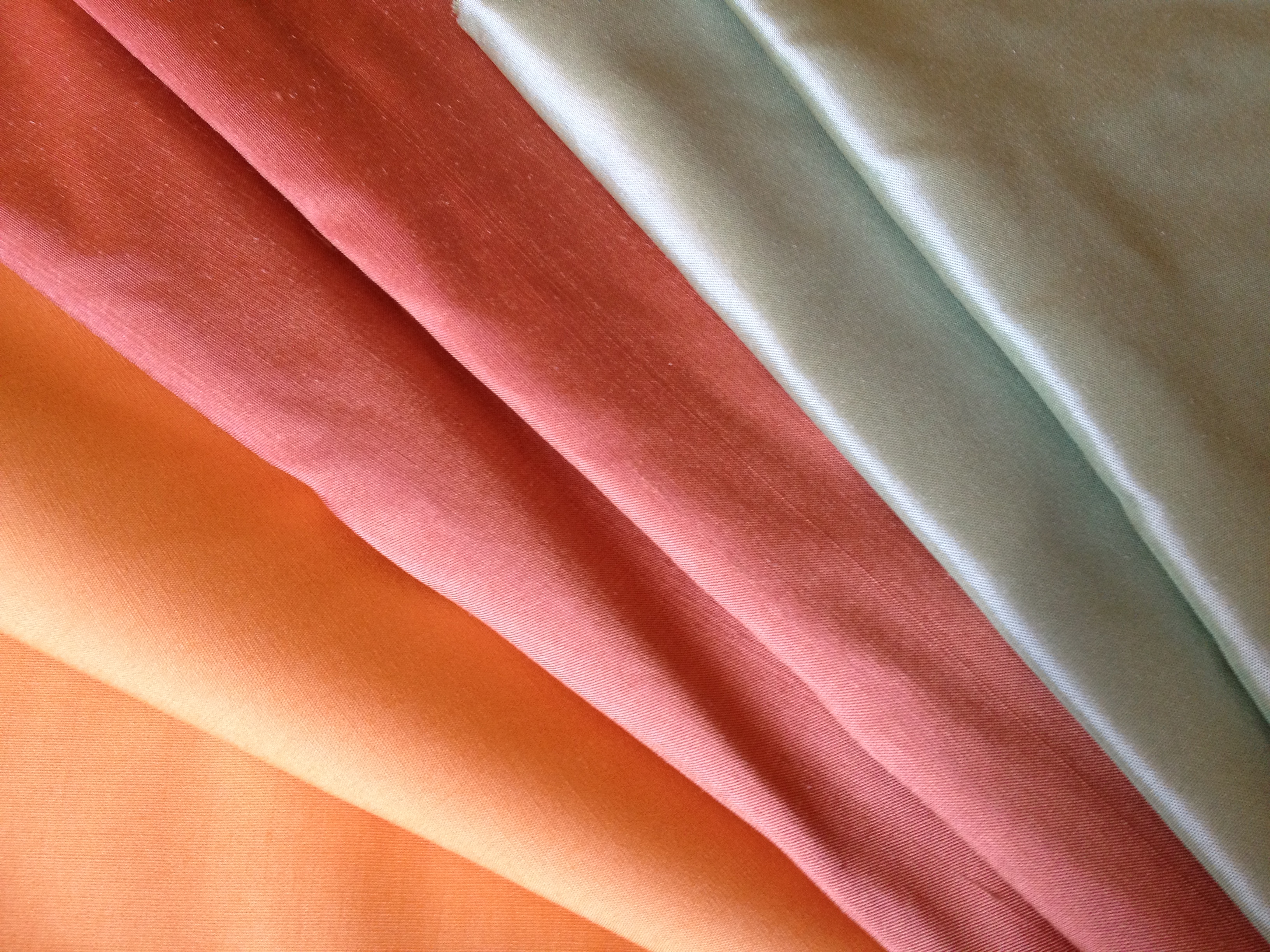
All three of us each came out with 2 or 3 lovely fabrics! We just couldn’t resist the bargain priced silks! My stash additions: 4 yards of apricot cotton, 6 yards of pink silk, and 2 yards of icy green silk. All truly stunning colors on their own, but together they just make me super happy!

IMG_0255

What will I use them for, you ask? What a practical question! Well, the cotton for an 18th century under petticoat (a garment that will probably never be seen, so I picked a fun color that is vaguely plausible for that period), the icy green silk for 18th century accessories (hat, muff cover, and maybe mitts, with some leftover to do something else with as well…), and the pink for… something. Perhaps an 18th century something, maybe a sacque? Perhaps a 19th century something, maybe a bustled gown? I got enough to make something and have enough for self fabric trim, I think (it was all that was left on the bolt…). I’ll have to wait to be specifically inspired, but in the meantime I am generally inspired by the color. It’s a great grown-up shade of pink! Whee!

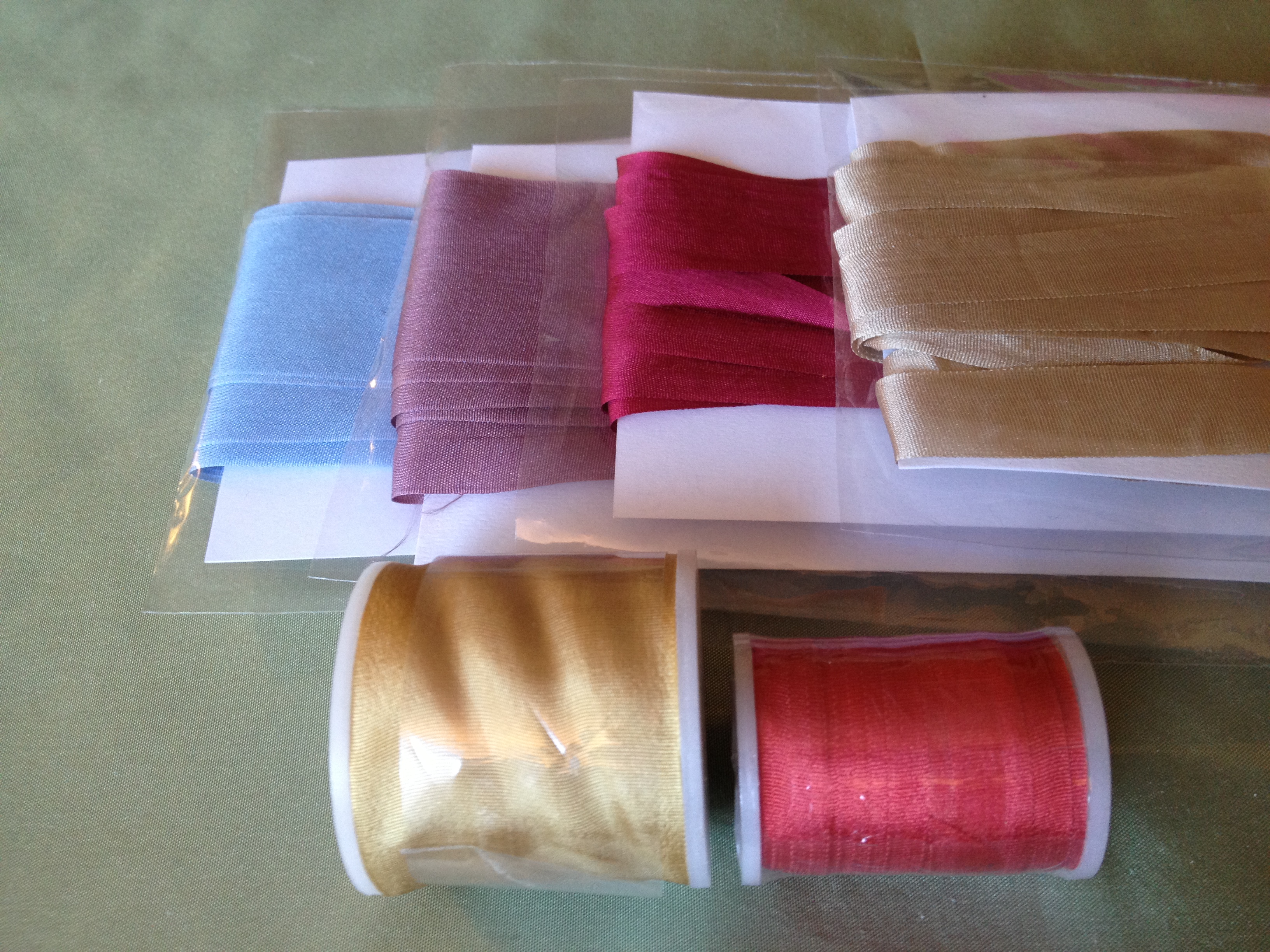
I also bought some silk ribbon that is a stash addition. The champagne ribbon on the top is the ribbon I plan to use to decorate my Kensingtons. Of course, while looking for that I got totally distracted and overwhelmed by other beautiful ribbons as well… not surprising, really, considering how lovely they are!

IMG_0256

 I justified their purchase by proposing a use for each of them. Blue: to trim my soon to be made Waverly Mineral Felicite 1780s jacket. Purple (they called it silver/grape, which is a cute name): to trim future Regency bonnets and an 18th century cap. Dark pinkish/red: I couldn’t resist the color! One day I plan to make the Costume Close-up laced front jacket, and I think this would be lovely for that, perhaps with some plain purple wool that is in my stash. Champagne: to trim my Kensingtons. Gold spool: to trim an 18th century hat, perhaps with my icy green silk? We’ll see about that. Persimmon spool (it’s not quite so bright in person): I couldn’t resist the color! I love it! I do plan to use it to bind some 18th century pockets in the near future (it will make me super happy to know that color is on my pockets, even if no one else sees them!). I have 10 yards of it… so I’m sure it will get used for other things as well!

Oh, Making Decisions is Hard!

As I mentioned in my look back at 2012 post, one of early 2013’s projects will be to paint and decorate my recently purchased American Duchess Kensingtons.

This link contains an affiliate code, which provides a small benefit to my shoe fund. This does not affect my impressions and reviews of this product.
IMG_4154
Kensingtons, yay! And the buckles came in that cute little bag. Love it!

When I first thought of buying Kensingtons, I was set on painting them yellow, either a lightish shade of yellow or medium yellow, like the images below.

19562579602677726_cFeJQDSV_c
1775-1785. Colonial Williamsburg.
19562579602677731_yrV0rrlH_c
Mid-18th Century. Bata Shoe Museum. (Those buckles are so pretty!)

But then I started looking at fashion plates… Some of them had very cute yellow shoes, but there were also some that had pink shoes that caught my eye. I love pink things… so I started thinking about painting the shoes pink.

First, fashion plates with cute pink shoes from the 1770s and 1780s.

274015958548037863_VRkBS78G_c
PINK shoes. 1778.
19562579602929854_TvBA2Lfq_c
PINK shoes. Gallerie des Modes, 1778.
19562579601416378_ktNfy7WF_c
PINK shoes. 1778-1787.
19562579602930012_OUpEbC0c_c
PINK shoes. Magasin des Modes, June 1787.
19562579602930042_g7qnuQAd_c
PINK shoes. Magasin des Modes, March 1789.

Second, fashion plates with cute yellow shoes from the 1770s and 1780s.

19562579601572668_6j0WfNjA_c
YELLOW shoes. c. 1776.
19562579601572669_vhYl8jIp_c
YELLOW shoes. c. 1776.
19562579602929883_drhS3AdH_c
YELLOW shoes. Gallerie des Modes, 1779.
19562579602930017_AZLYCCiV_c
YELLOW shoes. Magasin des Modes, April 1787.

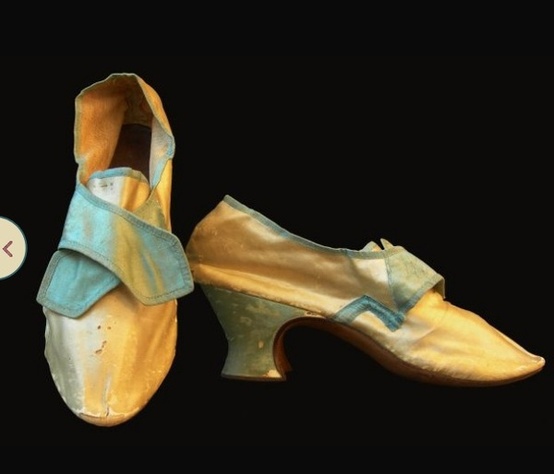
Then I went back to looking at extant shoes and thought “perhaps two-tone shoes?” Either yellow with pink accents or pink with yellow accents… perhaps like the ones below? Here’s a fashion plate showing two-tone shoes, and there are more extant examples a little farther down in the post.

Digital Capture
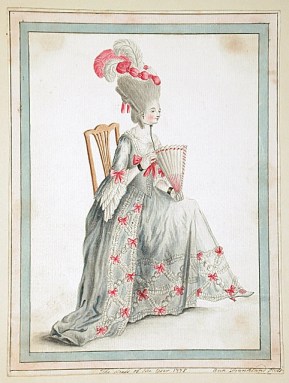
Two-tone pink shoes. The Dress of the Year 1775 by Ann Frankland Lewis.

Another thing, I’ve noticed that many of the extant shoes I see are cloth, not leather. Well, the Kensingtons are leather, so that’s what I’ve got to work with (and I like it in a way, because the shoes will be much more durable). So then I started thinking about what I need to do to capture the 18th century in leather shoes that already have the right 18th century shape. I took a close look at the details in these next photos and analyzed what I saw.

11540542764788394_bZ4HTkIV_c
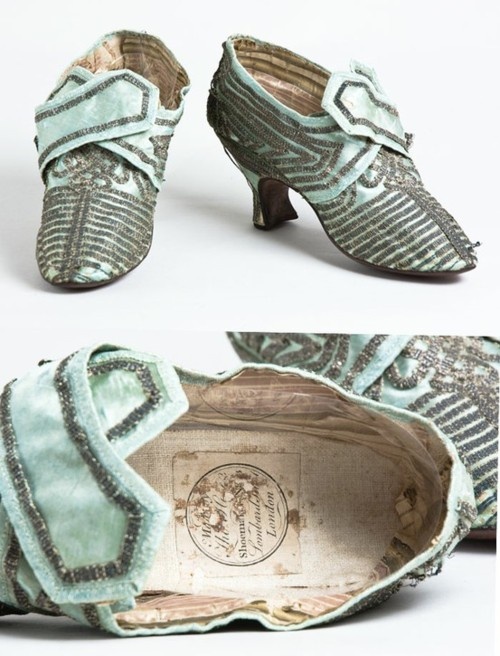
Light blue satin shoes with silver braid. c. 1770. The Charleston Museum. STUNNING!
19562579602698433_JUXVWNDE_c
Silk. 1770s. Met.
19562579602698458_UwyGiIcl_c
Silk and leather. 1770-1789. Met.
199706564696595060_J9Y7ByPi_c
Silk and leather. c. 1775-1785. Shoe Icons.
19562579602698437_ckDGMif0_c
Silk. 1780s. Met.

If that isn’t enough examples, you can see more on my pinterest board: Shoes: 1770-1789. The details that strike me are: the binding around the ankle opening and latchets (often in a contrasting color) and the 3D quality of the trim and fabric of the shoes… the decorations are not simply painted on, but sewn on. That’s hard with leather, but glue is a good alternative to stitching.

I’ve seen other styles of painted and decorated historic shoes on my costuming friends. And at American Duchess, Lauren has done multiple posts and tutorials about 18th century shoes that she has painted and decorated.

blue n white shoe nov 11 (3 of 4)
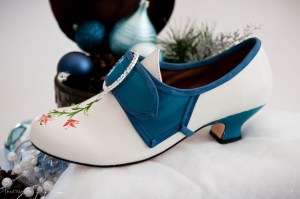
Two-tone painted and bound Devonshires, from American Duchess.
pretty pink princess shoes (11 of 13)
Two-tone painted and bound Devonshires, from American Duchess.

What materials to use for decorations? Lauren used what looks like cotton bias tape, and on later Regency shoes narrow grosgrain which comes in a wide variety of colors. But the extant shoes look like they are bound with silk, so that’s what I’m going to aim for.

“What will I wear these shoes with?” is an important question I asked myself. “Well, everything I own from the 18th century until I buy another pair of 18th century shoes,” I answered. In the works right now are a taupey-brown silk petticoat, blue wool petticoat, Waverly mineral felicite jacket, and creamy quilted petticoat (you can see most of these fabrics in this previous post). In the future, I’m inspired by a purple and yellow color combination, as well as green and pinkish/red (these colors all in the fashion plates above!).

I’ve been ruminating over this decision for months so I make a choice I’m really happy with. I had all these options to think about: pink, yellow, both… It was tough. But I finally made a decision to go simple: yellow with champagne silk binding and champagne heels (saving pink for later, or removable ribbons, or other accessories). The latchets might also get pained champagne, I’m undecided on that point. Do you have thoughts about that? (More opinions is always better in these situations, you know!) I’ve got the paint from my Astorias, so that was easy… and the silk ribbon has been ordered! More to come soon!

SaveSave

A Lot Of Wool: October Fabric Stash Additions

I really should post about my 9 Month Sewing Plan before posting about the additions I might have added to it (cough, cough). But oh well… These fabrics are exciting so I don’t want to wait!

The first fabric stash addition is 2 yards of Waverly Mineral Felicite. I was interested in the Curtain- Along created by  Jen of Festive Attyre, but I wasn’t inspired enough by the three Waverly curtain colors (Cream, Noir, and Crimson) to actually hop on the train (and I didn’t want to make something super similar to what other people are making). But then I started researching other color ways online and fell in love with the Mineral Felicite at onlinefabricstore.net. You can see my Pinterest board of various color ways here. The board also includes some other similar fabrics. I haven’t done all my research yet so I can only generally say that I’m planning to make a 1780s jacket out of this fabric. (And possibly something else, because 2 yards of this fabric is actually quite a lot!)

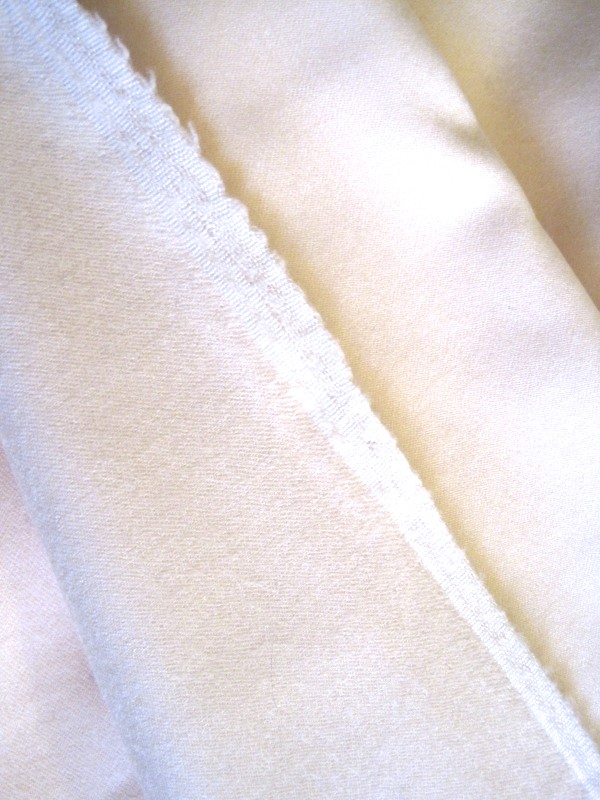
My next fabric stash addition has two parts. The first is plain weave creamy yellow silk that I bought a few months ago when buying the whole giant mound of fabric that is for my 9 Month Sewing Plan. I bought a few sections of it from the remnant table for just $6 a yard! I love prices like that! It had no definite plans, until… I was starting to near completion of my current hand sewing project and started thinking (which is almost always dangerous!) about what to hand sew next. I’ve been contemplating an 18th century quilted petticoat for about a year, but never had a real need and considered it to be overwhelming. But now the idea is sticking… and I’m planning to hand quilt a petticoat sometime in the foreseeable future! I mean, I hand piece and quilt queen size quilts, and if I can do that, I think I can tackle a petticoat. In fact, I think a queen size quilt is actually bigger… The second part of this, and the recent stash addition, is a plain weave cream colored wool to back the petticoat with (only $5 a yard!). You can see both of the fabrics in the top photo. To the right you can see the wool by itself. I’m excited… It’s going to be really amazing!

While looking at the wool wall for the petticoat backing I stumbled upon this wonderful wool plaid. There were only about 1 1/2 yards left on the bolt and it was $8 a yard, but I loved it and couldn’t let it go, even though I had no idea what I would do with it. It’s really lovely and thick, and a little fuzzy and soft, and not itchy. It’s hard to see in the picture, but it’s forest green, plum purple, dark tan, and light beige. The repeat is pretty big (I didn’t measure it, but I’d guess about 6″). After taking down this bolt, I stopped at the wool remnant table… where wool was only $3 a yard! Really nice wool! There were about ten 1-2 yard pieces of that slightly fuzzy beige wool in the picture… and I might have bought all of them! I have visions of using some of them, with the plaid, to make a bustle dress either from the 1870s or 1880s (with a train!!!). I’m still open to inspiration for this fabric, though, so who knows what else I will come up with? Does it strike you as anything in particular? I also have visions of maybe using the beige wool for an 18th century cloak, and a modern skirt, and probably other things… I have a lot of it. Whee!

I also found, at the wool remnant table, two similar but different dark blue wools. There were two pieces of each, all under 1 1/2 yards in length (and I did have to dig through a lot of blue wool, analyzing the selvedge edges of each to make sure I found matches, before I was successful). One of the two blues will be used to make a 1780s petticoat. The other… I don’t know. Maybe a cloak, instead of the beige wool? Blue cloaks were more common than brown in the 18th century, I believe. And I’m not sure that the beige is the right shade of brown, anyway. I have more research to do on that before I make a decision. One of the blues is more purple-y than that other (and I think I do like that one best!) but I’m not sure if it’s too purple-y for the 18th century. Although if they are not next to each other they just look navy and are almost impossible to tell apart, so I’m not sure it matters. On the left is another view of the same fabrics.

Well, as you can see, I was sort of struck by an 18th century inspiration… so most of these new additions relate to new 18th century projects. Yikes, I had better go sew, or my stack of to-be-used fabric might just envelop me!

Adjusting My Sort-of-New Clocked Stockings

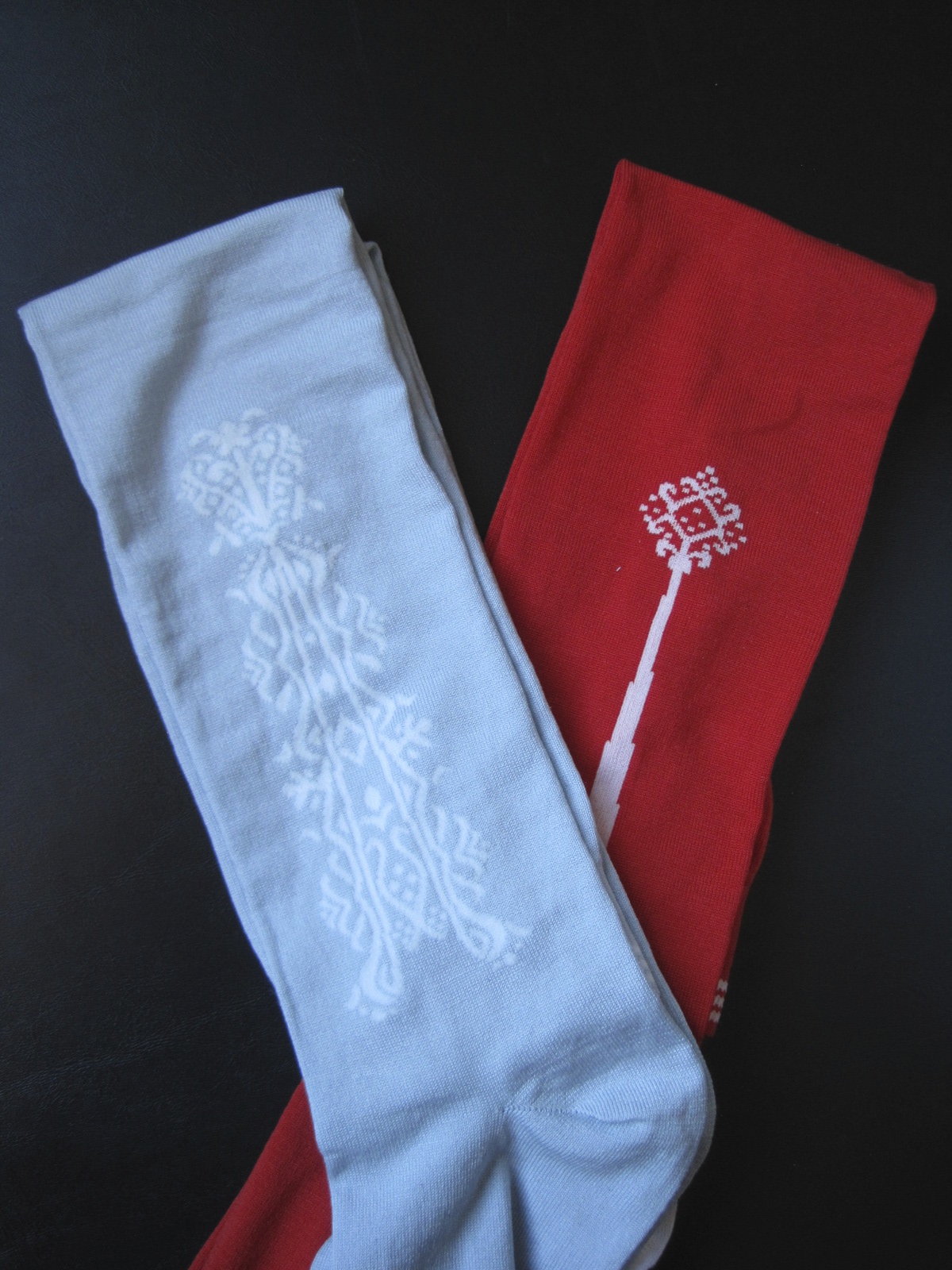
For my birthday a month or so ago I treated myself to a fun little accessory shopping spree at American Duchess and purchased two pairs of the new-ish clocked silk stockings Lauren has added to her offerings. Fun!

Blue and red stockings from American Duchess.

They arrived while the weather was still warm… so they just sat around waiting for my attention. Finally, I spent some time with them, trying them on, etc. I’m super excited to wear them! I think the red will be really fun and silly and good for picture taking at holiday events, and the blue is nice and light and appropriate for all year round without being white. I have nothing against white stockings, but I like the idea of colored and clocked ones! The elastic around the tops of the stockings is pretty tight, so they might get worn turned down under my knee. The only other thing about them is that the foot (from heel to toe) was bigger than my foot. Not for long, though! Inspired by a post from Lauren about adjusting the stockings to fit your foot, I went at it with the sewing machine. First, I changed my needle to a ball point to help sew through the knit.

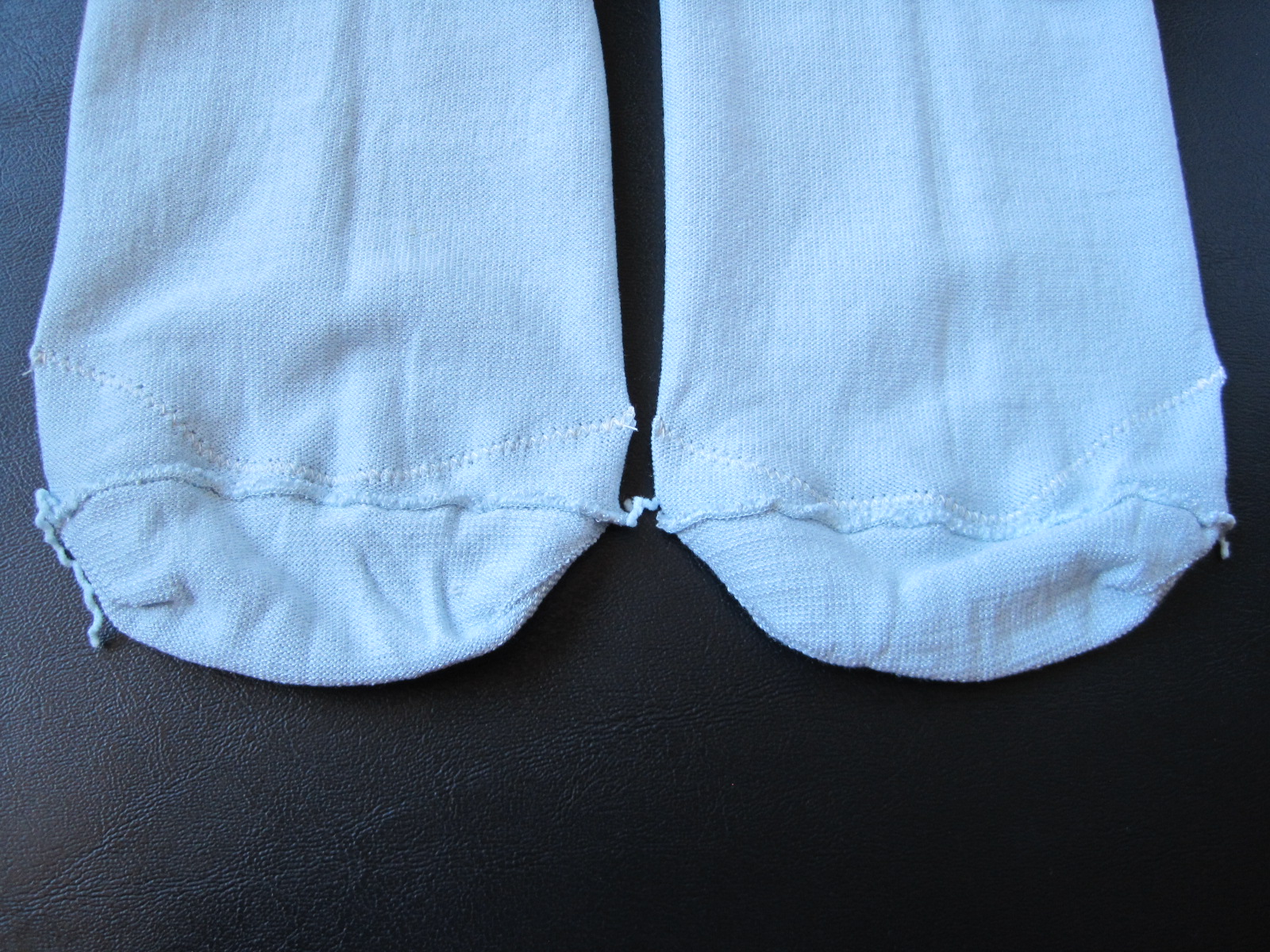
First attempt at the red pair. I made the mistake of cutting the toe off before trying to sew it. It was frustrating to sew, so I suggest you don’t try it that way. You can also see the second line of zig zag stitching because I went back to shape the toe to my foot (my toes are not squared off like the first line of stitching).
First attempt next to the second attempt. The second one was so much easier, since I hadn’t cut the toe off yet!
Here’s the blue pair. They went so much faster than the red pair! You can see that I wasn’t exact with the line I sewed. I figured that as long as the general shape is right it will be fine on my toes.
The blue pair after cutting off the unnecessary toe length.
Success! And I actually think it’s more comfortable to have the toe seam on the tips of your toes rather than the tops.
Product links in this post contain an affiliate code, which provides a small benefit to my shoe fund. This does not affect my impressions and reviews of this product.