An Excuse For Colored Shoes In The Regency

Volare Digital Capture
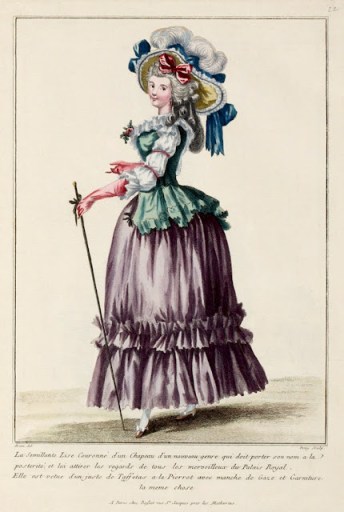
Evening Dress. 1812. UK.

Isn’t this a cute fashion plate??? My favorite thing about it is her bright red shoes! My second favorite thing is that her bright red shoes match her red bodice! So cute!

First, this makes me want to wear colored shoes to a Regency ball. Often you see black or white in fashion plates, and our dance troupe tends to wear white to perform and also to balls out of habit, so without even thinking about it I usually pull out the neutral colored shoes… BUT! Extant shoes come in all sorts of colors, although maybe not quite as bright as these red ones. You can see some of them on my pinterest page here: Shoes: 1790-1829.

Second, that red bodice reminds me of this one that Natalie Garbett made for the HSF. Is it possible that this red one, like Natalie’s, is a separate piece from the dress? That would allow for more wardrobe options, certainly. I’m going to go on the assumption that it is, and congratulate this young lady in the fashion plate for being so coordinated and versatile in her wardrobe.

19562579603292643_PZwl3ZNE_c
Separate bodice by Natalie Garbett. Lots of research information about this style on her blog: here.

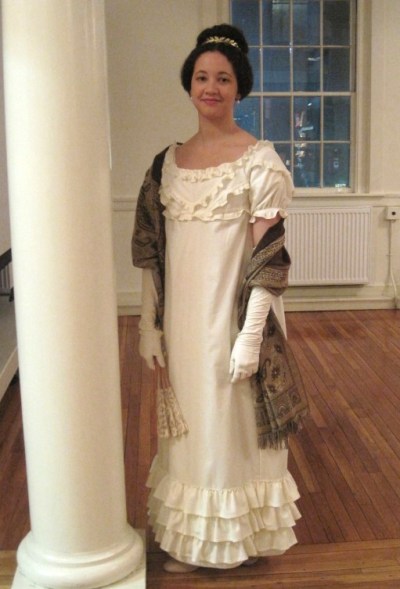
So… I’ve got a new dress to wear to an upcoming Regency ball that doesn’t really need a separate bodice to jazz it up. Do we think I can wear I can wear fun colored shoes without a separate bodice? I think probably yes, given that there are lots of extant colored shoes and I know of other images that show colored shoes. And now I have an excuse to wear colored shoes with a white dress! Fun! Maybe I need to make a separate bodice, too?

HSF #2: UFO

Is there enough alphabet soup for you in the title of this post? In case you’re not familiar with those acronyms, it means that this is a post about the Historical Sew Fortnightly Challenge #2: Un-Finished Object. In this case, the UFO is my 1820s petticoat from the very end of 2012.

You’ll remember that I wore it to Fezziwig’s Ball in December, but that I hadn’t finished the neckline? I’m pleased to say that it is now entirely complete!

IMG_4187
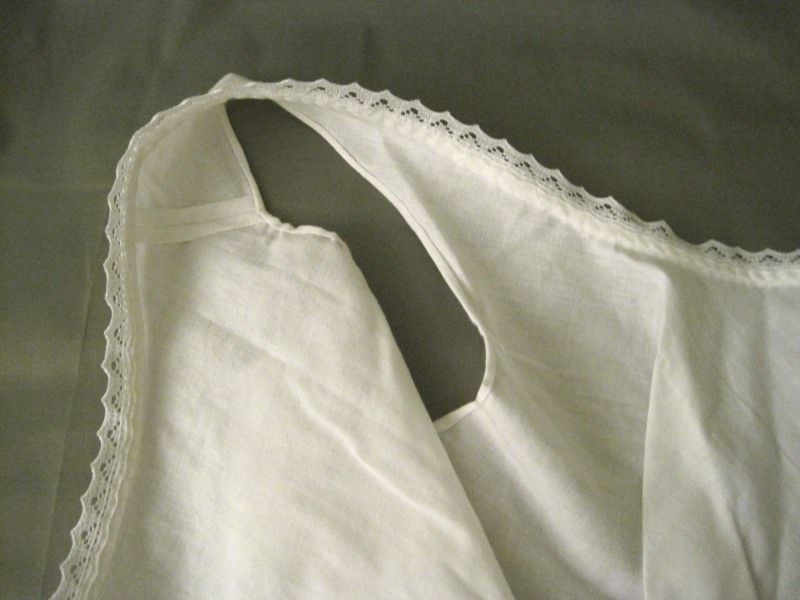
Inside view. This petticoat has three ties at center back to keep it closed.
IMG_4188
You know I like my insides to be pretty. This is a closeup of the arm hole and the neckline, which is bound with bias before having the lace sewn on.
IMG_4189
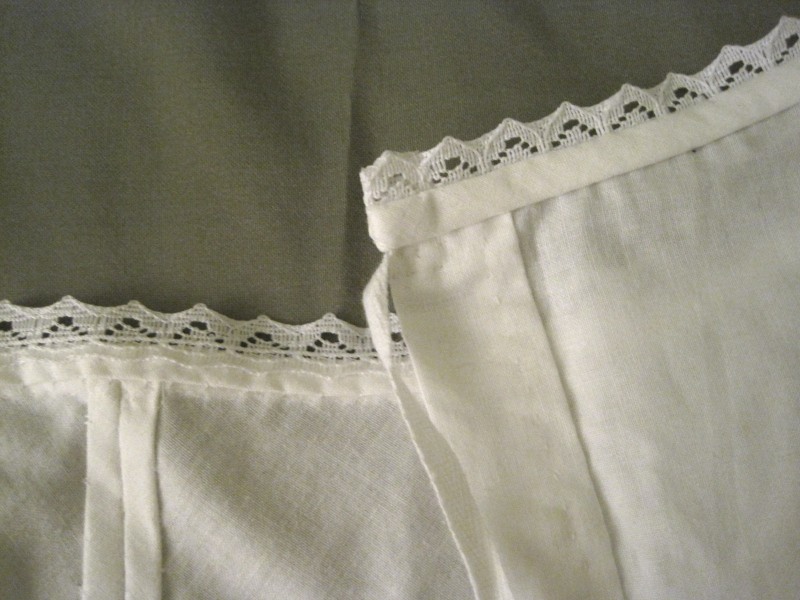
The double hem on the left is center front. Diagonally across the photo is the right side of the back.
IMG_4190
This cording was done last month, so it’s not really part of the UFO-ness, but it is still an accomplishment. 16 rows of hand sewn cording all around the hem.
IMG_4191
A close-up of the lace at the hem and my tiny stitches.

You can see some more detail shots in this past post.

And the facts?

Fabric: 3 1/2ish yds of white cotton

Pattern: Adapted from my 1822 green ball gown pattern. It’s pretty much exactly the same except that it doesn’t have sleeves. The ball gown pattern is based off of a pattern in Janet Arnold and styled as in the fashion plate you can see in this previous post.

Year: 1820s. The inspiration image is dated 1828-1835. You can see the inspiration image and my reasoning for it being more 1820s than 1830s here, in this past post.

Notions: About 1 1/2 yds of broderie anglaise trim, cut in half the long way to create double length; about 1 yd of white edging lace; and about 1 yd of 1/4″ cotton twill tape.

How historically accurate?: Very, having used modern materials. The pattern is from Janet Arnold, so you know it is good on accuracy. The entire petticoat is hand sewn and made of accurate fabric. The lace is machine made and the content is almost certainly not entirely accurate, but it is in the style of the early 19th century and the lace in the inspiration image. I’m not 100% sure that all of my seam finishes are perfectly accurate for this garment, but they are accurate for the period as a whole.

Hours to complete: I’m always bad at estimating this. Let’s say 120 hours.

First worn: To Fezziwig’s Ball in December 2012.

Total cost: Approzimately $13.

Wow! Another Blog Award!

I’m honored this month with a second blog award! Laurie from the blog Teacups Among The Fabric has nominated me for the Liebseter Blog Award. Thanks, Laurie!

blog-Award-Liebster3

Here are the rules:

1. Post 11 random facts about yourself
2. Answer the 11 questions your nominator has given you and come up with 11 questions for your nominees to answer.
3. Tag 11 fellow bloggers.
4. Notify the bloggers that you have awarded them.
5. No tagging back.
6. The 11 blogs you nominate must have less than 200 followers.

Ok, so step 1: 11 random facts… That’s sort of hard.

1: I could eat starch for days (pasta, bread, potatoes… I love these things!) 2: I’m a  vegetarian. 3: I really like pink and purple, though runner up favorite colors include black, teal, green, and red. It’s hard to choose! 4: I like to read books that are at least 1″ thick. 5: I am all about owning books in hardcover (rather than paperback). None of these ebooks for me. 6: I am a professional costumer with an MFA in costume production. 7: I’ve been “dating” Mr. Q for almost 7 years, and though we have yet to actually get engaged, it’s coming. (“Dating” is in quotes because, really, after 7 years, that word doesn’t quite cut it. “Almost-fiancee” is much more descriptive.) 8: I don’t like animals that have more than 5 legs, they’re creepy, and only more so the more legs they have! 9: I tend to build my historic clothes out of solid colors. Apparently I have an aversion to prints. I’m working on rectifying this trend, though. 10: I only wear clip earrings since I don’t have pierced ears. 11: When I was younger, one of my favorite things to do was play dress-up. (This should not surprise you at all!)

Next, here are Laurie’s questions for me:

1: What is your favorite part of costuming? *I absolutely love learning about the past through the clothes that were worn. It’s magical when function meets practicality. I am able to learn so much about why things were sewn and worn the way they were. It brings history alive!*

2: What inspires you most about costuming? *The never ending list of projects that stems from ‘ooo, that’s so pretty! I want it!’*

3: What is your favorite costuming resource? *Books! There are so many great books out there. Books of patterns, like Janet Arnold; books of fashion plates, like those from Godey’s; and books of information, like Cunnington’s various books. They’re great.*

4: What is your favorite costume that you made? *Oh, that’s so hard! It really depends on my mood! I love my 1893 ball gown and my 1912 evening gown, but I also love my 1824 ball gown, my 1819 spencer, my 1812 square neck gown, and Annabelle, my white 1860 ball gown. I’m awful at picking just one!*

5: What is your favorite era? *That one is easy. 1860s.*

6: Why is that your favorite era? *I read Gone With The Wind and there was just no turning back. You can read more about why I love the 1860s in this past post.*

7: What advice would you give to a beginning costumer? *Do what you love. Build what you are inspired to build. Take the time to look at resources such as books and extant garments. Look into how other people accomplish what you want to accomplish. Learn from experienced people around you. Don’t be afraid to make mistakes. Start at a level you are comfortable with, and don’t be overwhelmed by the creations of people who have been doing this far longer than you, you’ll get there.*

8: What is one historical garment you would like to learn that you do not yet know how to make? *There are a lot of things in the 18th century that are waiting to be tackled. Lots of new stitches and ways of doing things, and new styles. If I had to pick just one… A sacque back gown.*

9: What one word best describes your fabric stash? *Organized.*

10: How did you get involved in costuming? *I took a costume construction course as a sophomore in college. I realized that I could have a career in this field and continued to pursue opportunities. Then I went to grad school, which ate my life for three years, but brought me professional costume opportunities. Once I graduated with my MFA I had time to get involved with vintage dancing, which only spurred my passion for constructing historic clothing. As I continued to meet more people in vintage dance, I also met other historic costumers. One things leads to another, and my network keeps expanding!*

11: Do you have a favorite yearly costuming event? *I love the Commonwealth Vintage Dancer’s Returning Heroes Balls. It’s so amazing to have an entire room of people clad in 1860s clothing, dancing to live 1860s music. It’s quite magical!*

And with no further ado, here are my nominations! It’s hard to reach eleven, so I’m going to stop at six.

Dressed In Time (I’m pleased to be able to return the blog love!)

Eva’s Kleidertruhe (I love blogs in German and English! The ladies who write them are so talented.)

Experiments In Elegance (“Beautiful things for romantic personalities” indeed!)

Historically Dressed (Just lovely. Lovely clothes, lovely posts, lovely blogger!)

Plaid Petticoats (So much tartan! And other fun adventures.)

Recreating the 19th Century Ballroom (Really neat research (and images!) about 19th century ballroom things.)

My questions for you, my nominees:

1: What inspires you most about historic clothing?

2: What is your favorite period for wearing historic clothing?

3: Is that different that your favorite period for making historic clothing?

4: What is your favorite thing to do while wearing historic clothing?

5: What got you started in historic clothing?

6: Do you have a favorite event to which you wear historic clothing?

7: If you could go back to any year, what year would you pick?

8: Why would you pick that year?

9: What would you miss most about your modern life?

10: What era is at the top of your historic costuming “wish list”? (ie, what would you love to tackle, but haven’t yet?)

11: Do you think you’ll ever tire of making/wearing historic clothing?

Newport Vintage Dance Week Part XI: A Fond Farewell To 2012

This is so neat! Bill Cunningham (the sweetest man, who photographs for the New York Times) included CVD’s Newport Vintage Dance Week in his “Fond Farewell to 2012” photo spread. Even cooler, one of the pictures he took of “the young set” is top and center! Look, there I am on the left! We were doing a silly Charleston, though I’m not sure that totally helps explain our positions… but we do look like we’re having fun, anyway. I am so pleased to be included in an event on the same page as these other big name events. It’s really cool! Check it out below, or click here to see the full page.

13PARTY-popup

Once again, Bill Cunningham, I am honored to say thank you!

If you missed out, or just want to re-live the awesomeness, I posted lots of posts about Newport Vintage Dance Week a few months ago, including lovely pictures of the balls and teas as well as two other all Newport Vintage Dance Week photo spreads from Bill Cunningham that were in the New York Times. You can see all of them by clicking here.

A “Lovely Blog” Award

You know, I use the word “lovely” often, and I think it is so neat that Caroline, of the blog Dressed in Time, has described this very blog as “lovely” and nominated it for the One Lovely Blog Award! Thank you, Caroline! I am so pleased to be included on your list of nominations.

one-lovely-blog-award

You probably know how these awards go: there’s a list of things to do:

1. Thank the person who nominated you.
2. Add the ‘One Lovely Blog Award’ image to your post.
3. Share seven things about you. 
4. Pass the award on to seven nominees. 
5. Include this set of rules.  
6. Inform your nominees by posting a comment on their blogs.

Since this is all about being a lovely blog I am going to use pictures to share things about me, and since you often get to see pictures of the lovely historic places I visit and beautiful clothes I wear, I’m going to change it up and share places I’ve been in modern clothes. I can’t take full credit for the picture idea because it was inspired by the One Lovely Blog Award posts by Caroline and the blogger who nominated her: Susan Ardelie of Life Takes Lemons.

IMGP1473
Just visiting: the coast of Maine.
IMGP0250
Tromping through the English countryside, though I can’t remember exactly where…
IMG_2691
Laying on the grass right next to the Washington Memorial in Washington DC to watch the 4th of July fireworks.
OLYMPUS DIGITAL CAMERA
Flying kites where I grew up in Edmonds, Washington.
IMGP2471
Kayaking in Cape Cod, Massachusetts.
IMGP0758
Just visiting: outside New Orleans, Louisiana.
IMGP2208
At the top of Mount Tom, in Western Massachusetts.

Now it’s time to share the blog love! I nominate:

1. Edelweiss Patterns An all around lovely blog with beautiful photos and lots of posts with absolutely lovely content.

2. A Fashionable Frolick Fantastic content with lots of tutorials, beautiful clothes, and other useful and interesting info is what makes this blog lovely!

3. The Fashionable Past Stunning clothes with immense attention to detail that are photographed in cute photo shoots. Plus, lots of picture filled tutorials. Lovely!

4. A Fractured Fairytale Lovely clothes and accessories from a super sweet blogger.

5. If I Had My Own Blue Box Fascinating information about the lives of mid-19th century people and lovely clothing related tidbits.

6. Kleidung um 1800 This blog is lovely all around! It’s full of beautiful clothing and lovely pictures, and it’s a blog in English and German!

7. The Lady of Portland House Always full of beautiful events with lovely looking people and the occasional side trip into a modern reality which looks lovely and stays in keeping with the tone of the blog.

Thank you to all the people who take the pictures that are included on my blog! You know who you are, friends. I wouldn’t be able to do it without you!

HSF #1: 1813 Evening Gown

IMG_4162
1813 Evening Gown

Historical Sew Fortnightly (HSF) Challenge #1 complete! It was actually completed a few days ago, which I am super pleased about. Even better is that it is for a Regency ball in February, and it is entirely complete a full month ahead of time! All the trim, all the closures, everything! All I have to do on the day of the ball is put it on. Wow! Usually when I wear a new dress to a ball I’m furiously sewing right up until the end and often all the trim doesn’t make it on (that’s what happened with my 1820s green dress back in December, remember?).

The facts:

Fabric: 4 yds red and black shot polyester

Pattern: The bodice front was draped, the back was adapted from my 1812 square neck Ikea gown, and the skirt is the same as the 1812 square neck Ikea gown, with the pattern originally from Janet Arnold’s Patterns of Fashion

Year: 1813

Notions: 3 yds metallic gold bobbin lace, hooks, and little brooch bits

How historically accurate?: The silhouette, cut, and style are accurate, as is the interior finishing (all flat felled and bound edges… it’s quite pretty!). The fabric is obviously not accurate and neither is the lace fiber content, though the style of it is. The closure is accurate. The little brooch bits are accurate in style, though not in materials.

Hours to complete: I’m so bad at estimating this. Let’s say 48 hours.

First worn: Hasn’t been worn yet! Its first wear will be in February 2013.

Total cost: Approximately $26

Now for other details!

Well, first, here’s a closeup of the bodice, so you can actually see the details and the little brooch bits. I’m super pleased with them, because I think they really finish off the bodice and add a little extra touch. I got them from New York and Company, actually. They were part of triple drop earrings, which I took apart. I kept the bottom drop and put them on clip backs (so now I have matching earrings for the dress!) which you can see in the picture below. And the best part is that one of the sections had a missing gem, so the cost of the earrings was refunded by NY&Co and so the total cost of the earrings is $0! Awesome! (It worked out perfectly, because I only used 5 sections of the triple drop earrings, so the damaged one wasn’t a problem.) Of course, the materials used in the earrings are not at all historically accurate, but I’m ok with that, for the cost (yay!) and the fact that they do have the right look.

IMG_4170
Little brooch bits!
IMG_4169
Single drop! Clips! Perfect!

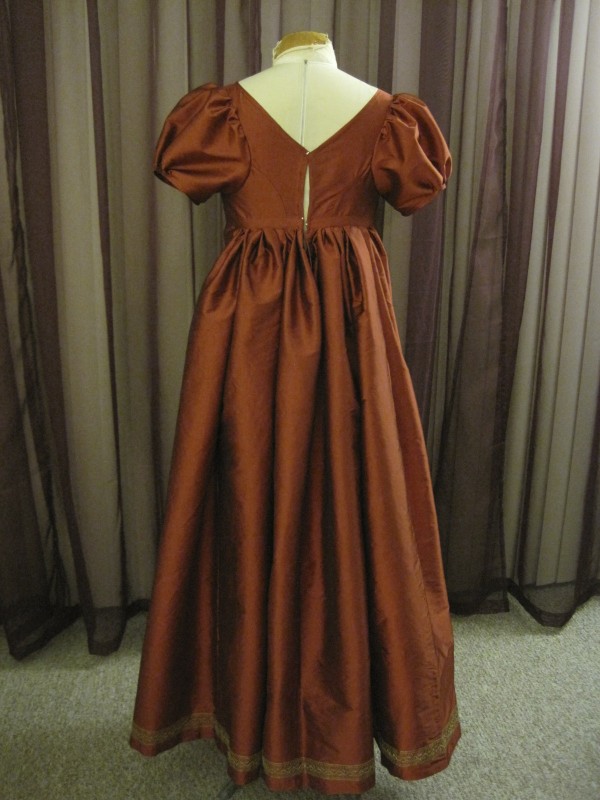
And here’s the back. As you can see, it doesn’t quite fit Squishy in the back, but it shouldn’t have trouble fitting me. I love the drape of the fabric! Now that all the raw edges are enclosed and the polyester can’t fray everywhere, I am totally happy with the fabric choice (bargain!). The photos don’t really do justice to the fabulous gold lace at the hem.

IMG_4164
Aren’t those gathers and folds lovely?!?
The dress is entirely hand finished and mostly hand sewn. Originally, I was going to make it all by machine, but then I had sewing parties and things that required hand sewing, and I just didn’t feel like lugging out the machine, so I wound up hand sewing a lot of it, which was quite satisfying. There’s one side back seam sewn my machine, I think the long skirt seams are sewn by machine (though I can’t remember, because I started this dress back in October or November), and the waistband was sewn by machine. Actually, it was so much easier to keep the width consistent using the machine than when sewing it by hand.

The only other information to share is my inspiration for the dress.

19562579602239981_TEw2UjIU_c
For her neckline and sleeves: Comtesse de Tournon by Ingres, 1812.
131378514099875826_v9iatcAj_c
Another neckline inspiration: L’Art de vivre au temps de Josephine.
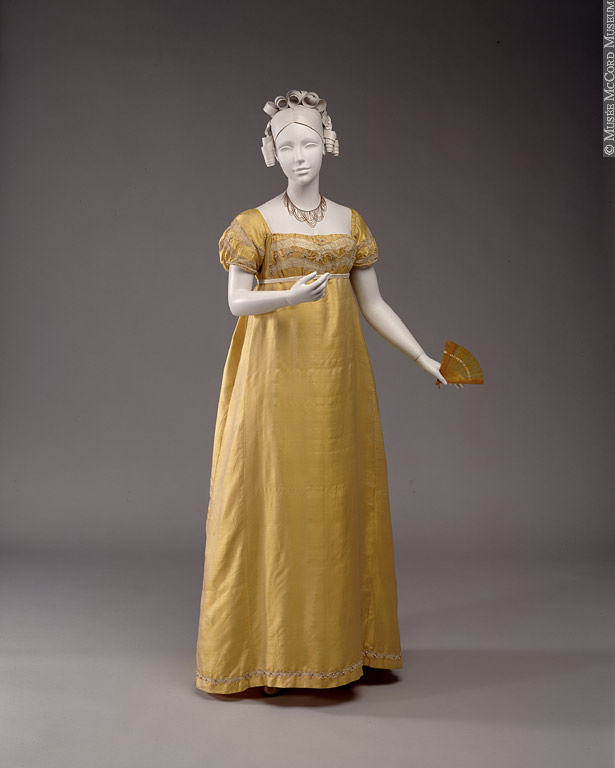
1810-gold-mccord
For the overall silhouette and the trim style: 1810.
12-501052
One more neckline inspiration and another similar dress built by Natalie Garbett. Here is her post about her 1812 gown with a v neck.

Clearly, I need a Kashmir shawl to complete the ensemble… I have a pashmina that sort of looks the part, so I’ll have to try that out at the ball. Stay tuned for more pictures of this dress in about a month!

January Stash Additions

This story starts as so many sewing related stories do: I went in “just to look.” In fact, we all went in “just to look.”

I’m sure you can guess what happened…

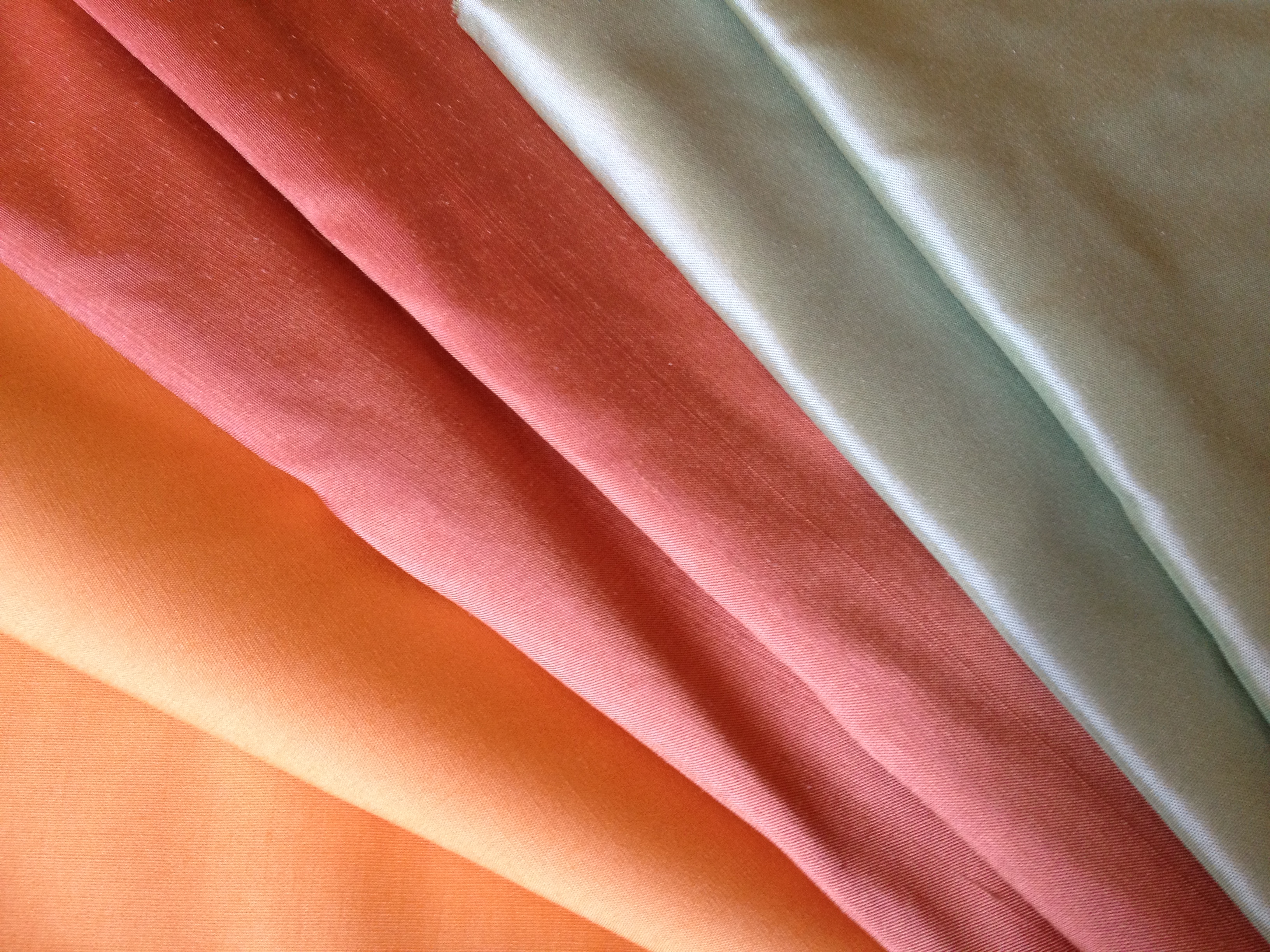
All three of us each came out with 2 or 3 lovely fabrics! We just couldn’t resist the bargain priced silks! My stash additions: 4 yards of apricot cotton, 6 yards of pink silk, and 2 yards of icy green silk. All truly stunning colors on their own, but together they just make me super happy!

IMG_0255

What will I use them for, you ask? What a practical question! Well, the cotton for an 18th century under petticoat (a garment that will probably never be seen, so I picked a fun color that is vaguely plausible for that period), the icy green silk for 18th century accessories (hat, muff cover, and maybe mitts, with some leftover to do something else with as well…), and the pink for… something. Perhaps an 18th century something, maybe a sacque? Perhaps a 19th century something, maybe a bustled gown? I got enough to make something and have enough for self fabric trim, I think (it was all that was left on the bolt…). I’ll have to wait to be specifically inspired, but in the meantime I am generally inspired by the color. It’s a great grown-up shade of pink! Whee!

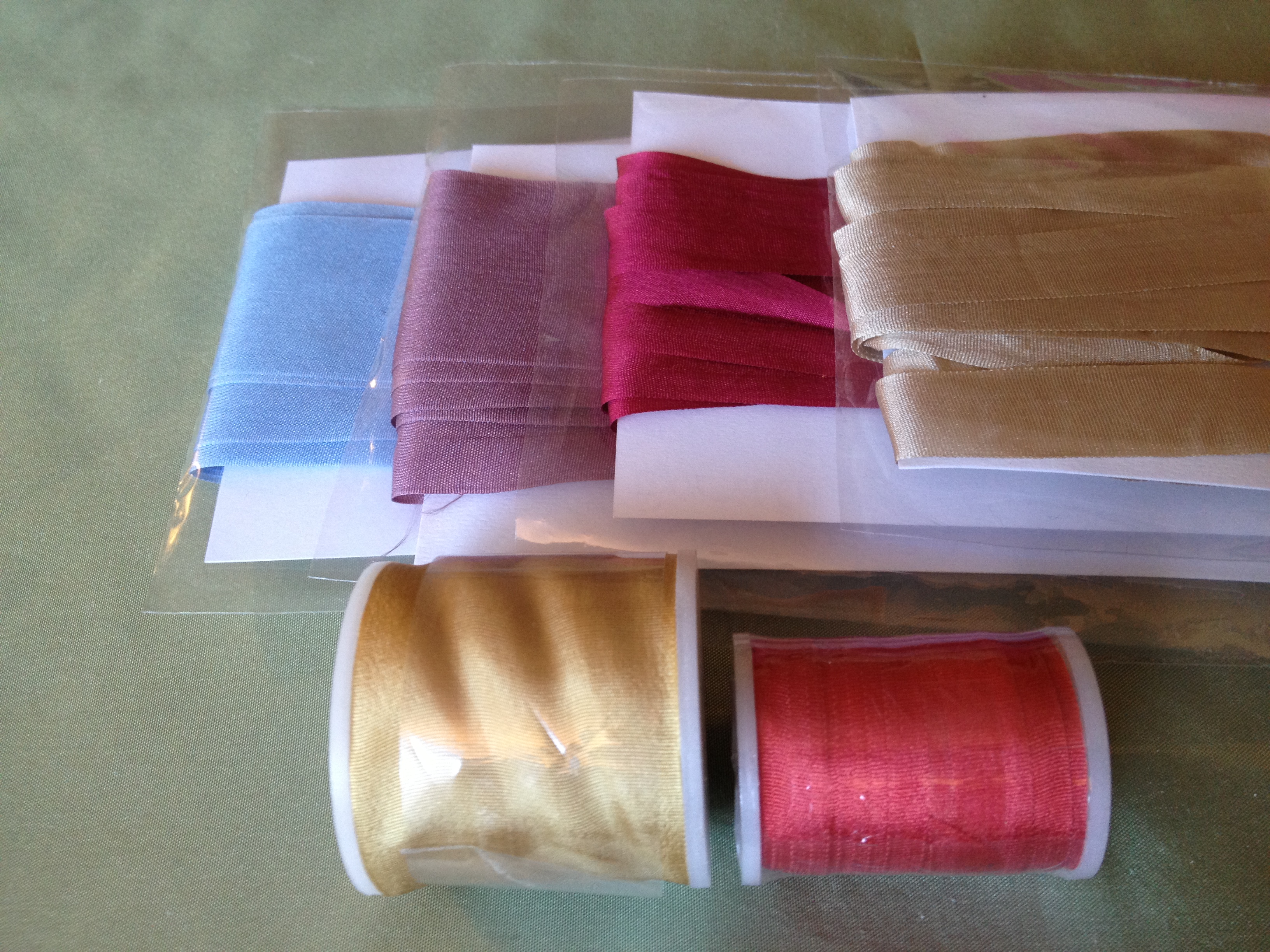
I also bought some silk ribbon that is a stash addition. The champagne ribbon on the top is the ribbon I plan to use to decorate my Kensingtons. Of course, while looking for that I got totally distracted and overwhelmed by other beautiful ribbons as well… not surprising, really, considering how lovely they are!

IMG_0256

 I justified their purchase by proposing a use for each of them. Blue: to trim my soon to be made Waverly Mineral Felicite 1780s jacket. Purple (they called it silver/grape, which is a cute name): to trim future Regency bonnets and an 18th century cap. Dark pinkish/red: I couldn’t resist the color! One day I plan to make the Costume Close-up laced front jacket, and I think this would be lovely for that, perhaps with some plain purple wool that is in my stash. Champagne: to trim my Kensingtons. Gold spool: to trim an 18th century hat, perhaps with my icy green silk? We’ll see about that. Persimmon spool (it’s not quite so bright in person): I couldn’t resist the color! I love it! I do plan to use it to bind some 18th century pockets in the near future (it will make me super happy to know that color is on my pockets, even if no one else sees them!). I have 10 yards of it… so I’m sure it will get used for other things as well!

Oh, Making Decisions is Hard!

As I mentioned in my look back at 2012 post, one of early 2013’s projects will be to paint and decorate my recently purchased American Duchess Kensingtons.

This link contains an affiliate code, which provides a small benefit to my shoe fund. This does not affect my impressions and reviews of this product.
IMG_4154
Kensingtons, yay! And the buckles came in that cute little bag. Love it!

When I first thought of buying Kensingtons, I was set on painting them yellow, either a lightish shade of yellow or medium yellow, like the images below.

19562579602677726_cFeJQDSV_c
1775-1785. Colonial Williamsburg.
19562579602677731_yrV0rrlH_c
Mid-18th Century. Bata Shoe Museum. (Those buckles are so pretty!)

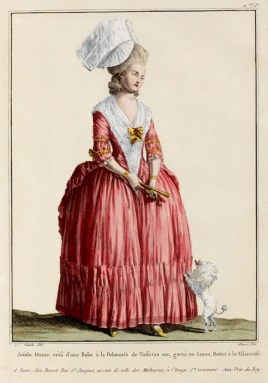
But then I started looking at fashion plates… Some of them had very cute yellow shoes, but there were also some that had pink shoes that caught my eye. I love pink things… so I started thinking about painting the shoes pink.

First, fashion plates with cute pink shoes from the 1770s and 1780s.

274015958548037863_VRkBS78G_c
PINK shoes. 1778.
19562579602929854_TvBA2Lfq_c
PINK shoes. Gallerie des Modes, 1778.
19562579601416378_ktNfy7WF_c
PINK shoes. 1778-1787.
19562579602930012_OUpEbC0c_c
PINK shoes. Magasin des Modes, June 1787.
19562579602930042_g7qnuQAd_c
PINK shoes. Magasin des Modes, March 1789.

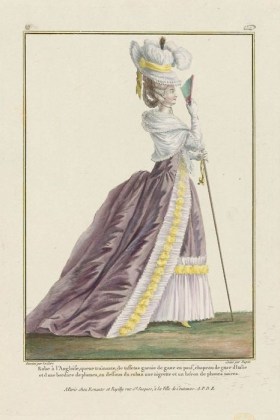
Second, fashion plates with cute yellow shoes from the 1770s and 1780s.

19562579601572668_6j0WfNjA_c
YELLOW shoes. c. 1776.
19562579601572669_vhYl8jIp_c
YELLOW shoes. c. 1776.
19562579602929883_drhS3AdH_c
YELLOW shoes. Gallerie des Modes, 1779.
19562579602930017_AZLYCCiV_c
YELLOW shoes. Magasin des Modes, April 1787.

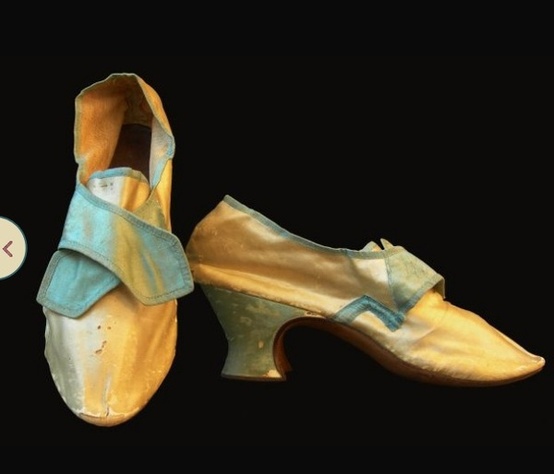
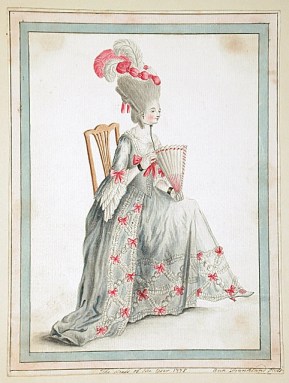
Then I went back to looking at extant shoes and thought “perhaps two-tone shoes?” Either yellow with pink accents or pink with yellow accents… perhaps like the ones below? Here’s a fashion plate showing two-tone shoes, and there are more extant examples a little farther down in the post.

Digital Capture
Two-tone pink shoes. The Dress of the Year 1775 by Ann Frankland Lewis.

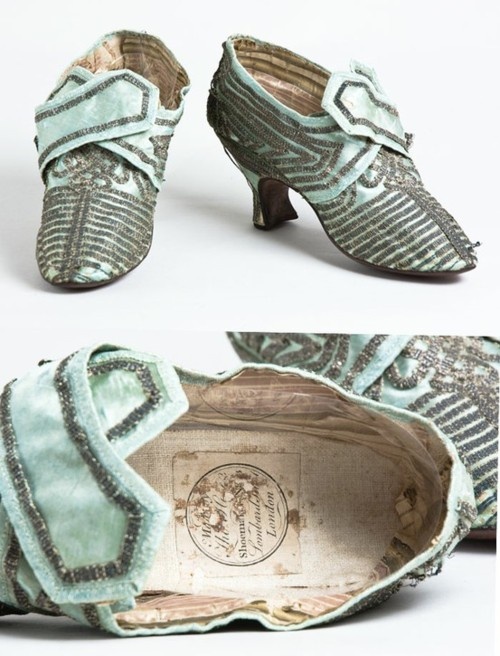
Another thing, I’ve noticed that many of the extant shoes I see are cloth, not leather. Well, the Kensingtons are leather, so that’s what I’ve got to work with (and I like it in a way, because the shoes will be much more durable). So then I started thinking about what I need to do to capture the 18th century in leather shoes that already have the right 18th century shape. I took a close look at the details in these next photos and analyzed what I saw.

11540542764788394_bZ4HTkIV_c
Light blue satin shoes with silver braid. c. 1770. The Charleston Museum. STUNNING!
19562579602698433_JUXVWNDE_c
Silk. 1770s. Met.
19562579602698458_UwyGiIcl_c
Silk and leather. 1770-1789. Met.
199706564696595060_J9Y7ByPi_c
Silk and leather. c. 1775-1785. Shoe Icons.
19562579602698437_ckDGMif0_c
Silk. 1780s. Met.

If that isn’t enough examples, you can see more on my pinterest board: Shoes: 1770-1789. The details that strike me are: the binding around the ankle opening and latchets (often in a contrasting color) and the 3D quality of the trim and fabric of the shoes… the decorations are not simply painted on, but sewn on. That’s hard with leather, but glue is a good alternative to stitching.

I’ve seen other styles of painted and decorated historic shoes on my costuming friends. And at American Duchess, Lauren has done multiple posts and tutorials about 18th century shoes that she has painted and decorated.

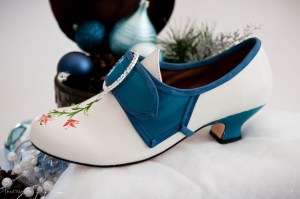
blue n white shoe nov 11 (3 of 4)
Two-tone painted and bound Devonshires, from American Duchess.
pretty pink princess shoes (11 of 13)
Two-tone painted and bound Devonshires, from American Duchess.

What materials to use for decorations? Lauren used what looks like cotton bias tape, and on later Regency shoes narrow grosgrain which comes in a wide variety of colors. But the extant shoes look like they are bound with silk, so that’s what I’m going to aim for.

“What will I wear these shoes with?” is an important question I asked myself. “Well, everything I own from the 18th century until I buy another pair of 18th century shoes,” I answered. In the works right now are a taupey-brown silk petticoat, blue wool petticoat, Waverly mineral felicite jacket, and creamy quilted petticoat (you can see most of these fabrics in this previous post). In the future, I’m inspired by a purple and yellow color combination, as well as green and pinkish/red (these colors all in the fashion plates above!).

I’ve been ruminating over this decision for months so I make a choice I’m really happy with. I had all these options to think about: pink, yellow, both… It was tough. But I finally made a decision to go simple: yellow with champagne silk binding and champagne heels (saving pink for later, or removable ribbons, or other accessories). The latchets might also get pained champagne, I’m undecided on that point. Do you have thoughts about that? (More opinions is always better in these situations, you know!) I’ve got the paint from my Astorias, so that was easy… and the silk ribbon has been ordered! More to come soon!

SaveSave

Join The Historical Sew Fortnightly!

Maybe you haven’t heard yet, but Leimomi, of The Dreamstress, is hosting the Historical Sew Fortnightly in 2013. It’s a historic clothing themed sew along, and you should join! “One year, a challenge every fortnight, and at the end of it, 26 fabulous historical garments.”

HSFsm

You don’t have to commit to participating in every challenge, only those that you have the time and interest for. You can interpret each challenge in your own way and at your own level, as long as it is historic. For the purposes of the Historic Sew Fortnightly (HSF), Leimomi is defining “historic” as anything pre-1938.

I’m going to selectively participate in the challenges I’m able to. It will be a fun way to connect to other historic costumers from around the world (literally!), gain inspiration and knowledge, and see pretty things! (And we all like pretty things!) You can read detailed information about how it works and how to participate here.

The first challenge: #0 (the bonus challenge): Starting Simple – due 31 December.  Finish a project, make a very simple garment, or something you have made before. (I’m on a no-sew vacation until the New Year, so I won’t be joining in this one. I needed a break after my furious costuming in 2012!) But there’s still time for you to join in the bonus challenge (barely!). Come, join us!

Summary of 2012: Looking Forward to 2013

Well, it’s that time of year again. Yes, the end of 2012 is here (and as I suspected, we successfully avoided world’s end…). When I look back on last year, 2011, and this year, 2012, I immediately think “WOW! I make a lot of things!”

First, let’s look at what I made in 2012:

The re-made 1819 dress, with ruffles!
In February: re-made 1819 dress
IMG_1662
In April: 1912 tea gown and mushroom hat
IMG_2976
In April: 1912 evening gown
7165821895_acaf5b6049_b
In June: ivory painted Astorias
IMG_2568
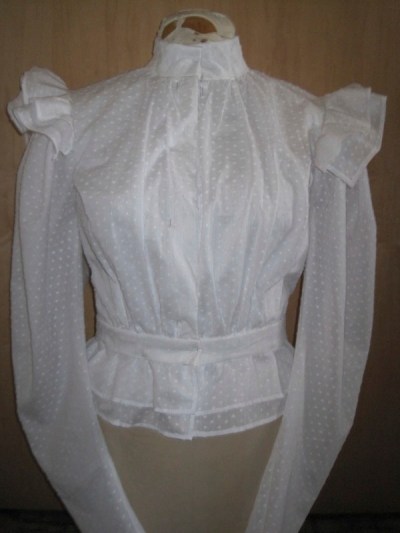
In July: 1895 blouse (and skirt)
IMG_3521
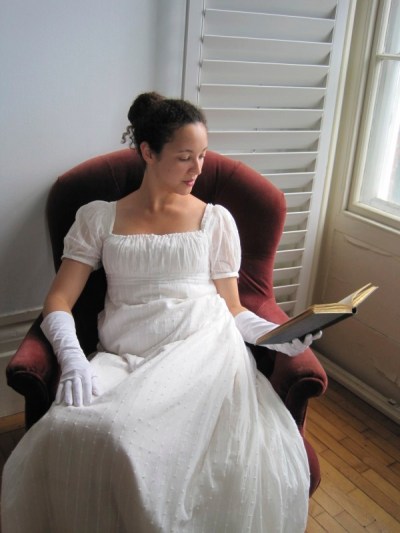
In August: 1812 square neck gown (hand sewn)
IMG_3213
In August: 1893 ball gown
IMG_2843
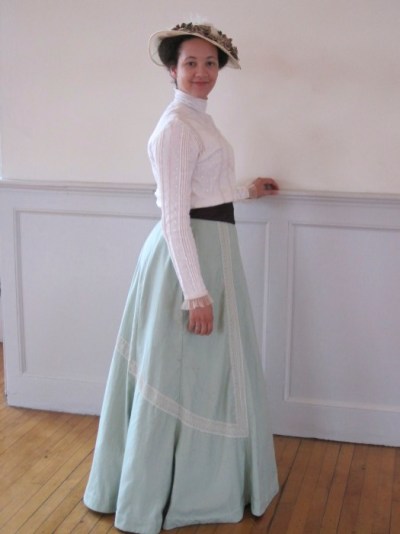
In August: 1900 skirt and hat
IMG_2871
In August: 1903 skirt, bolero, and hat
IMG_2793
In August: 1928 evening gown
IMG_3745
In September: 1812 underdress, chemise, and stays
IMG_3759
In September: re-made 1780s robe a la anglaise
IMG_4147
In December: 1820s petticoat (hand sewn)
IMG_7378
In December: 1822 walking dress, muff, and tippet
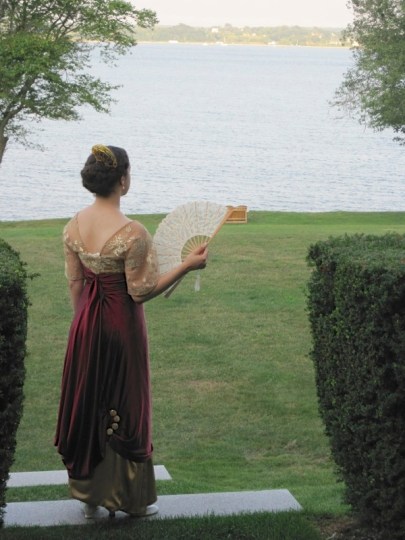
IMG_4131
In December: 1824 ball gown

And this list doesn’t even include things I was paid to do! Thus, work (full time), and side jobs (a few weeks a year), and commissions (I think I did just two this year…) are extra icing on the cake in terms of things I completed.

Onward! Plans for 2013:

The beginning of these plans were outlined in my 9 month sewing plan post

19562579601416376_G0UHlNeM_c
Probably in January: 1780s petticoat with ruffle
64035625921781582_DpGhwh4L_c
Probably in January: 18th century (I think could be worn for 1780s) jacket
347_cmag-1954-37-7-afr1-cr
Probably in January: 18th century basic pockets
kensington-18th-century-leather-shoes-white-2-340x340
Probably in January: painted Kensingtons… yellow or pink, my inner debate is coming soon!
19562579602248921_5vDVzZq9_c
In February: 1812 ball gown (this silhouette and trim feel, but with different trim and a different neckline)
315_1864_FashionPlateAA
In March: 1864 ball gown (like the one on the left)
19562579602282248_TWnkFLiO_b
In April: under dress for 1812 square neck curtain gown (not just like this, but it will be blue and hopefully have a similar feel)
428193877040576318_5BY3DeMW_c
In April: a Regency reticule (perhaps not like this one, but regardless, this one is so cute!)
19562579601895545_kCBsdcnb_c
In April: 1814 pelisse and hat
19562579601624928_JvBHEbOy_b
In April: 1815-1818 dress
Volare Digital Capture
Possibly in April: 1815-1818 bonnet to go with the new dress (these are pretty much all super cute…)

Plus, leftovers from 2012:

  • Finish the 1820s petticoat
  • Finish the 1820s bonnet
  • Finish trimming the 1822 walking dress
  • Finish trimming the 1824 ball gown
  • Make a 1800-1820 chemisette

Then there is a category of things with amorphous “to be finished” dates:

31243791134585757_Hyh6NUm0_c
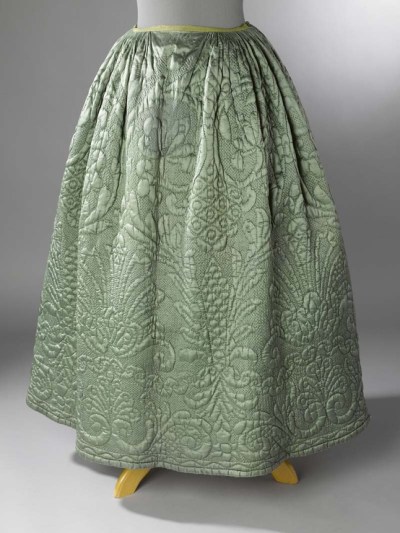
Sometime: 18th century quilted petticoat (perhaps not this exact pattern, but I am drawn to it…)
  • 18th century wool cloak
  • new ballroom competition dress

I think that in April I’ll probably be playing the “AH! Catch up on all the stuff I set out to do but didn’t actually finish!” game. Beyond that my project list is anyone’s guess. I’ve got plenty of ideas floating around (of course!), including 1790s, 1800s, 1860s day wear, 1870s, 1880s, 1900s… Right now I’ve got lots of wool things on the brain because it’s winter time, but I’m not sure that I want to work on wool things in the summer, so we’ll see what happens.

If I look at last year’s “to do” list I can say that I accomplished a hefty portion of my list. The other portion got dropped along the way: either discarded entirely or put in the unfinished pile. The dropped half include:

  • 1900 blouse (half finished before August, then put in the UFO pile)
  • 1780s embroidered pockets (dropped for now)
  • Quilting 1820s/30s corset (dropped)
  • 1860s child’s corset (dropped)

I did have a “blog first” award last year! In fact, I was actually awarded The Versatile Blogger Award by a few different people in the last few months of the year. Thanks everyone!

versatileblogger111

Overall, I have pictures from 29 different historically clothed events in the year 2012 (that’s about 2.5 events per month)! Jeepers! Granted, some of these are intense weekends or weeks, like Dress U, Newport Vintage Dance Week, and the Guerriere Weekend, where lots of events are bunched into a short period of time.. but still! The events fit into these basic categories: 9 balls, 8 vintage dance performances, 3 picnics, and 9 other events (like teas and strolls). Whee! All of these things were SO MUCH FUN! I love, love, love this part of life!

And finally, this year finishes up just over 2 years on the blog! I’ve met a lot of wonderful and inspiring people along the way. In fact, this year I have made a significant number of new friends! So thank you, lovely friends, who in person and online share in my experiences and contribute to the fun and adventures!

champagne_glasses-1
Here’s to us, and another fabulous, fun-filled year!
Product links in this post contain an affiliate code, which provides a small benefit to my shoe fund. This does not affect my impressions and reviews of this product.

SaveSave