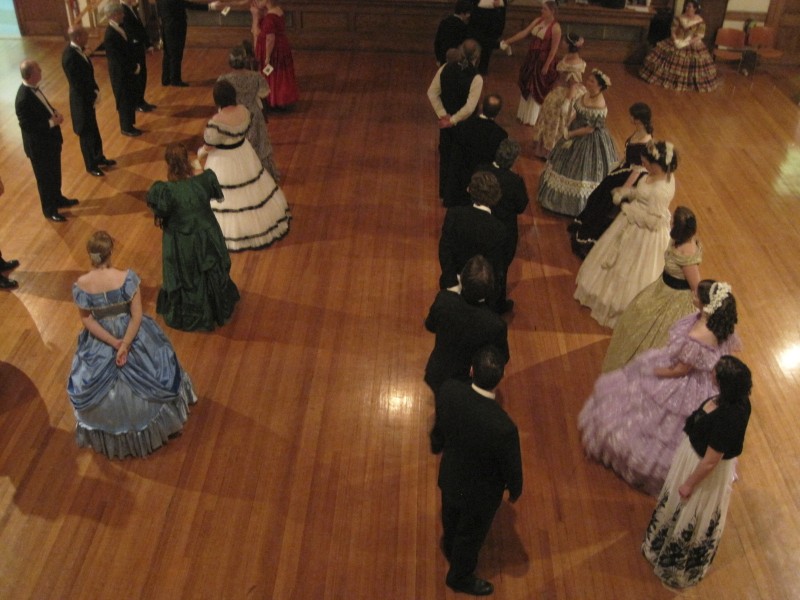
Another Annabelle Adventure (Returning Heroes Ball 2012)

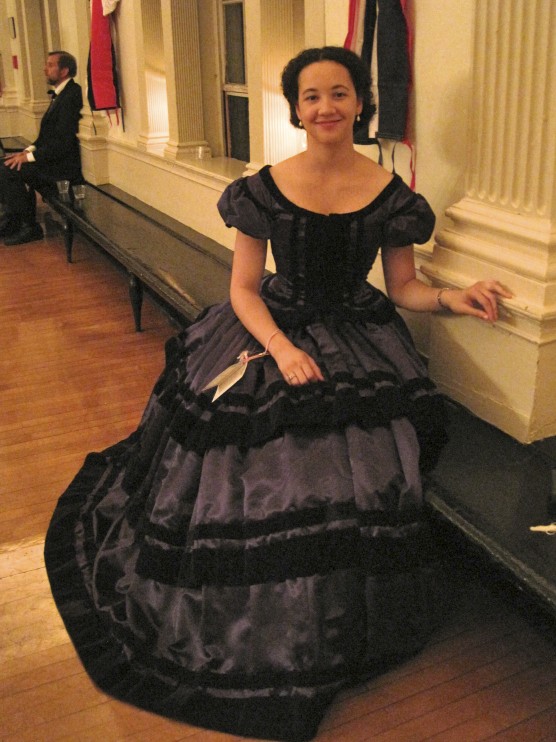
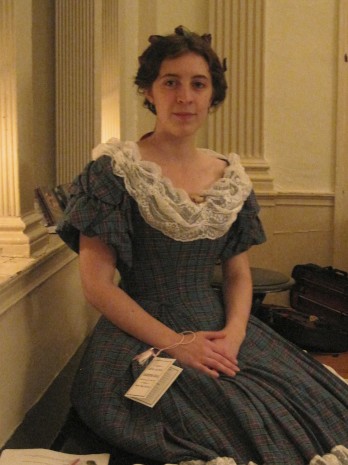
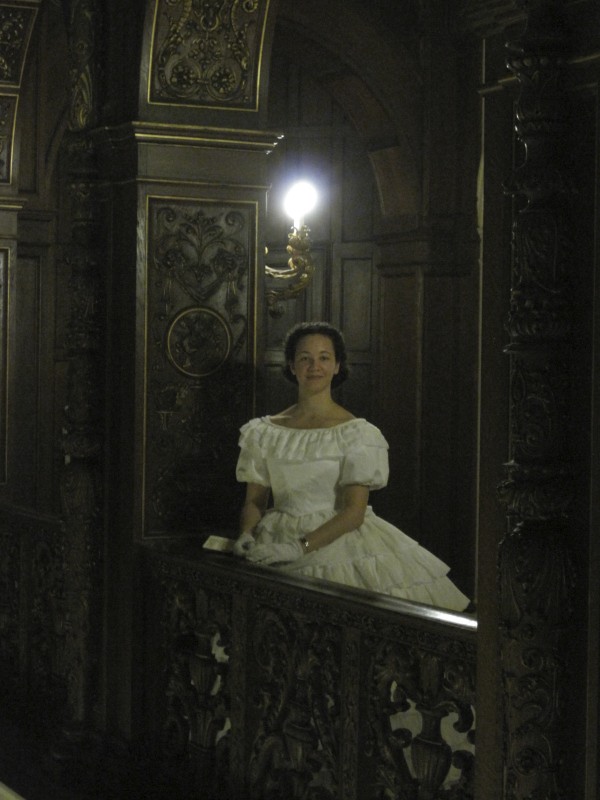
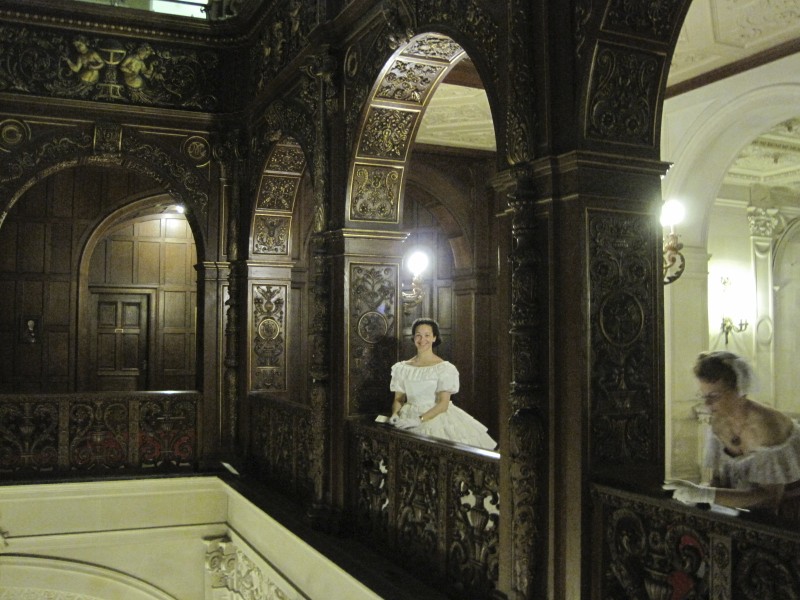
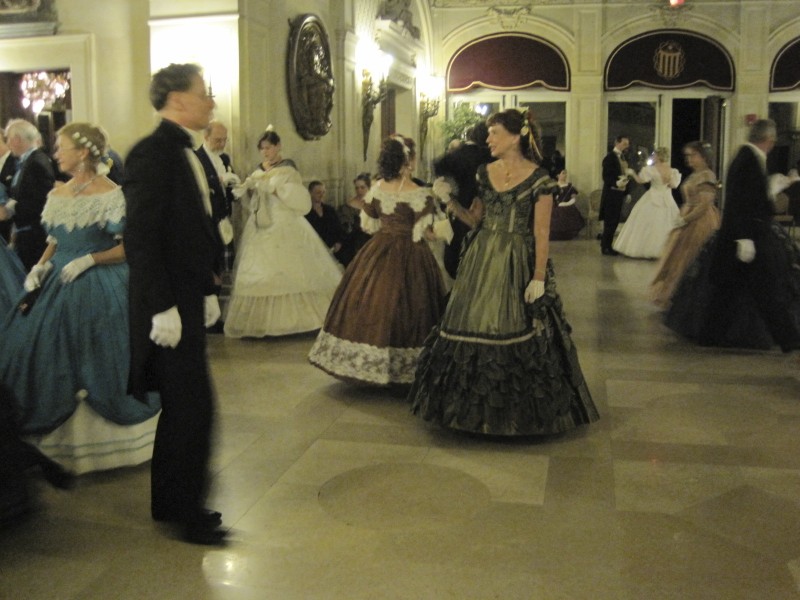
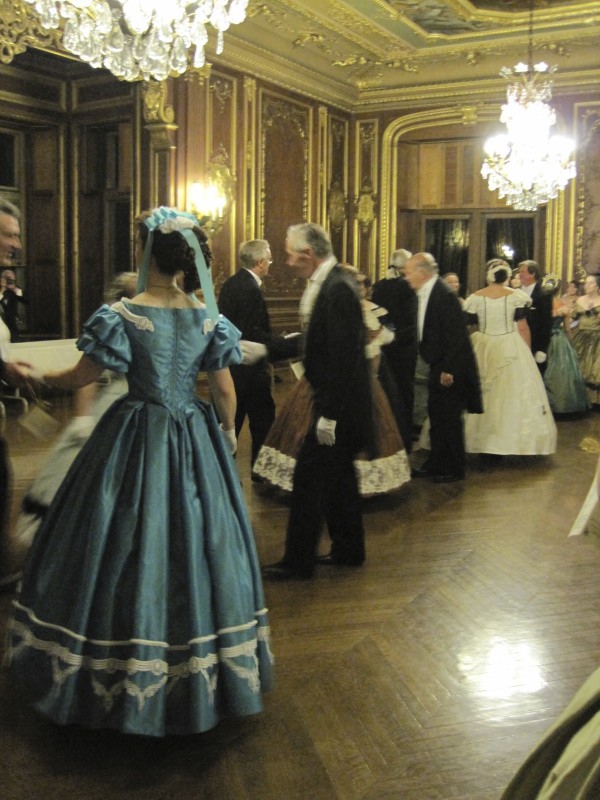
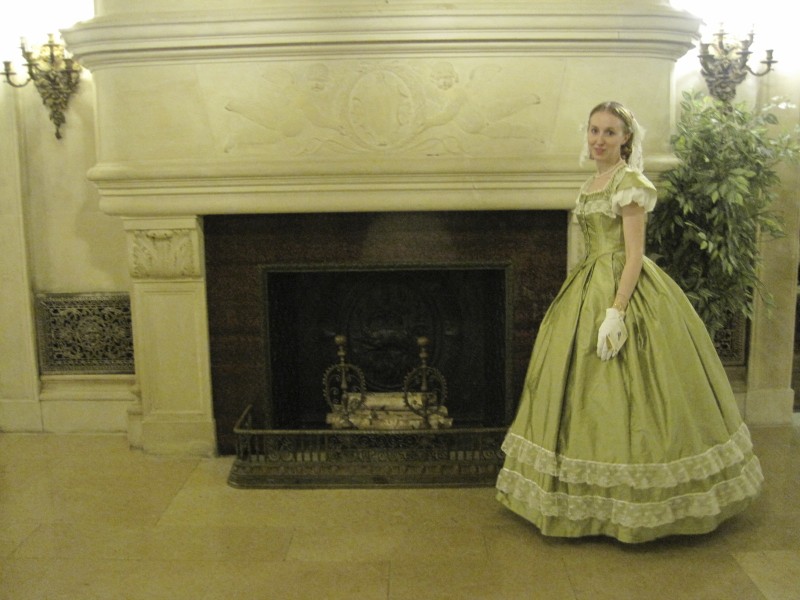
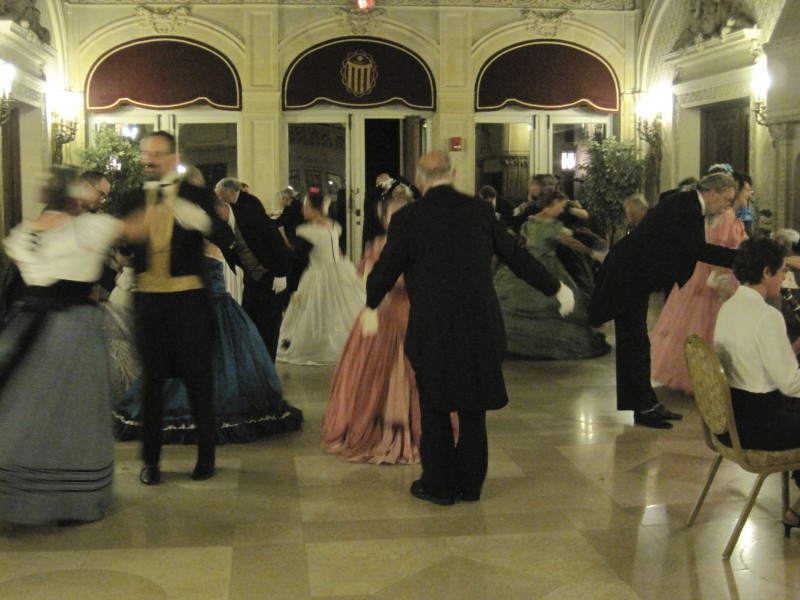
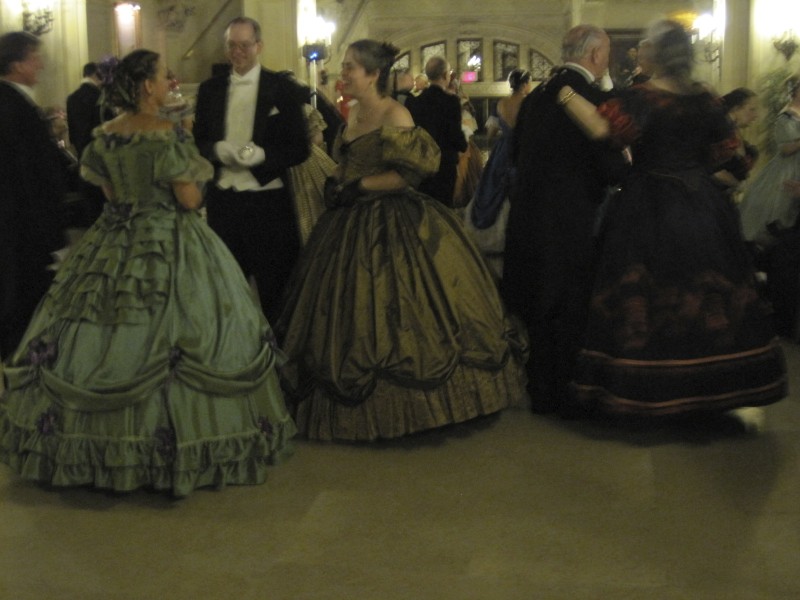
Alliterative, agreed? Ok, I’m done… Honestly, the words just came–I didn’t spend long on them! Last weekend I attended the Returning Heroes Ball hosted by the Commonwealth Vintage Dancers in Holliston, MA. As usual, it was full of fun and laughs. There were fabulous dresses all around (because of course one of the joys of a ball is to observe dresses–old and new) and wonderful refreshments as well. I don’t have pictures of other people, but I have pictures of me!… You can see a variety of people in the photos on Antonia’s blog, Experiments in Elegance

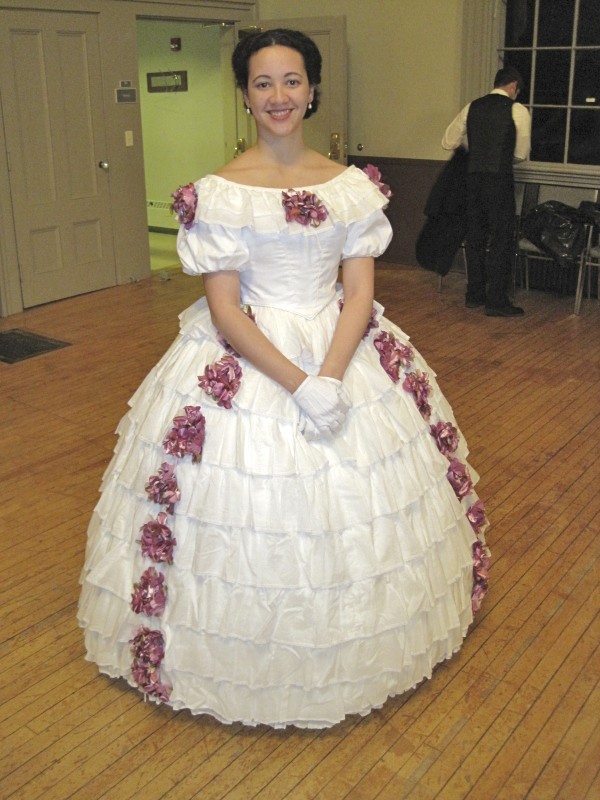
Me, in Annabelle. I really, really love hoop skirted dresses! And flounces! Whee!!!

I recently gained a new accessory: a deep purple burnout silk velvet scarf, big enough to use as a shawl. The shawl was decommissioned from a friend’s modern wardrobe because it is rather intense for a modern look; however, it works wonderfully as a 19th century piece, I think! I’ve been waiting for about three months to try it out with this outfit… I think it is fabulous and nicely complements the purple in the flowers.  Do you think it works for an 1860s look?
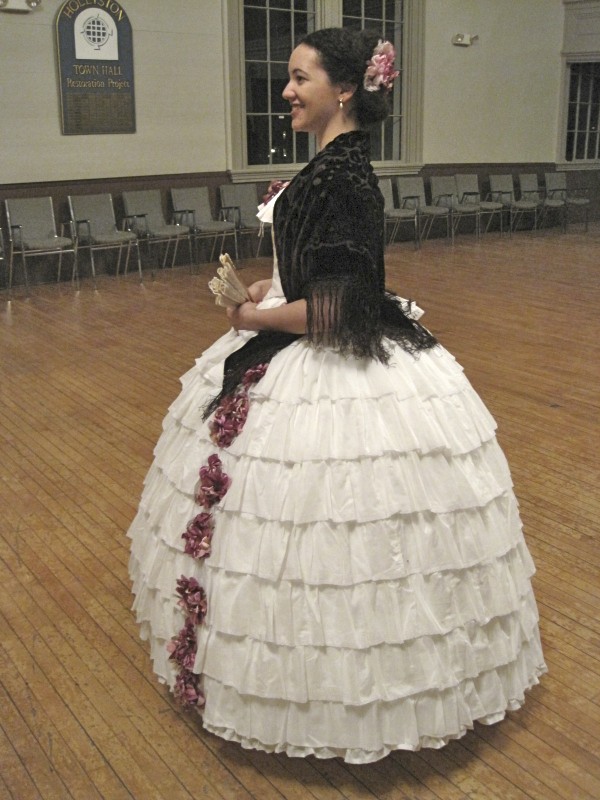
Ooo... Purple silk velvet shawl. So cosy! (and stylish to boot!)
Thanks for taking the photos, gentlemen (you know who you are)!

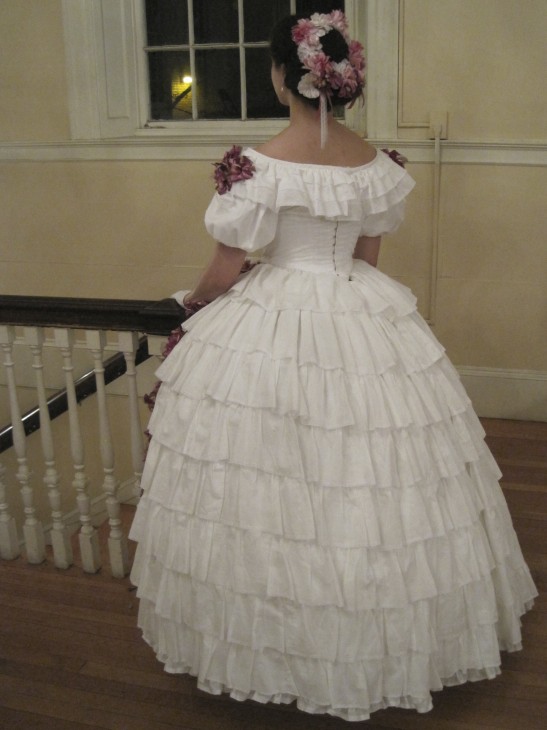
I’ve been trying out more complicated, poof-filled hair styles in preparation for early 20th century styling and I put some extra effort into this hair-do to try out more poof-ing. From the front my hair has it’s normal 1860s style with a center part where each from section is slightly poofed and rolled back to join the low rolled chignon at the nape of my neck (above, left and right)… but from the back this most recent style has extra poof-age!

See the extra poof at the top of my head?
Poof close-up

 In terms of the hair-styling itself, I think I like the extra poof as it gives more dimension and adds a regal feel to the overall look. Do you like the added poof?

I also decided to rework the hair wreath I’d made for the German Cotillion back in October (left). I’m not sure I like it as a giant mass of flowers, I might rework it again into a crescent shape like the flower piece that matches Belle, my other 1860s ball gown (above right). In terms of the flowers, giant mass or crescent shape?
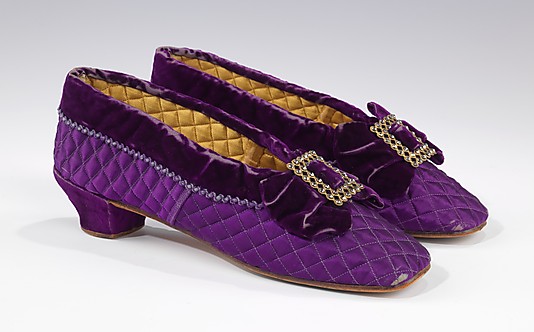
Very Purple Quilted Slippers

Recently, while looking through the Metropolitan Museum of Art’s Costume Collection for entirely unrelated items, I came across these very purple quilted slippers. I like them, but I also feel they are a little loud. Quilting? And purple? And velvet? And bows? There’s just a lot going on. They look pretty comfortable, though! How do you feel about these? And can you imagine what sort of dress would go with them? Perhaps a white cotton flounced one with purple trim

1865-1885 Silk Slippers (Metropolitan Museum of Art)

Annabelle, adorned with flowers

Over the summer I built Annabelle, a white flounced 1860 ball gown, in order to have an alternative to my dark blue 1860 ball gown. My intention was to adorn Annabelle with flowers, as in my inspiration fashion plate from Godey’s Lady’s Book (Annabelle is based off of the gown on the far right); however, I did not have time over the summer to add the flowers.

September 1860 "Dressed for a party" (Fitting title, don't you think?)

I decided to wear a be-flowered Annabelle to the Commonwealth Vintage Dancer’s German Cotillion last week. My original plan was to hand make the flowers from hand painted pink silk organza. I started on that endeavor, but the process was time consuming and so I have only made perhaps 100 flowers (first: cut 5 rounded point shapes, second: fray check the edge all around, third: gather the center of each flower). Each flower is about 1 1/2″ across. When I went to sew the flowers on the dress I realized two things that made me change my mind about using them: the flowers were too small for the scale of the dress and I would need so many more hundreds to make the look work. In the end I used purple millinery flowers, from the fantastic stash I mentioned in the post about my 1860 hair crescent, to adorn the dress. I actually really enjoy the purple flowers and the scale is far better for the overall look as well.

Annabelle with flowers!

I used matching flowers plus a few others in the pink family to create a wreath for my hair to match the dress.

Annabelle back
Matching hair wreath

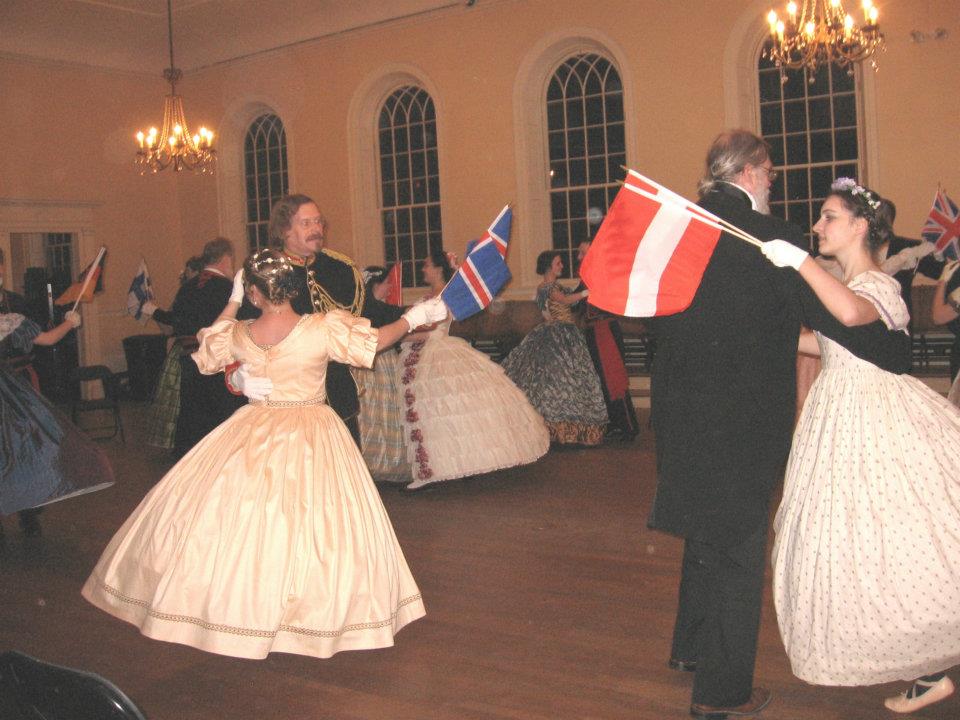
If you would like to see what Annabelle looked like without the flowers, you can visit the following posts and see pictures: Of Flounces and Dance Cards: Part I and Ochre Court 1860s Ball 2011. And, to finish off this post, here are a few pictures of Annabelle in action at the German!

Playing dance games at the German Cotillion

Salem Light Infantry Levee and Ball 2011

The Salem Light Infantry Levee and Ball was an event hosted by The Commonwealth Vintage Dancers and Salem Light Infantry in October 2011.

In 1861 the members of the Salem Light Infantry
held a ball on their return from service in the Civil War.
For a brief moment,
before joining other units and returning to battle,
they celebrated friends and fellowship.

This event was held in Hamilton Hall in Salem, Massachusetts, in the hall where the original event was held 150 years ago.

You can click here to see the event announcement. If you are interested in learning more about the Salem Zouaves you can view their website by clicking here. You can also read one of my older blog posts to learn about Civil War Zouaves in general: A waltzing Zouave?.

First, let me share with you a video of the Salem Zouaves performing a military drill during the course of the evening.

Second, let me share with you some photos of the evening. It was quite lovely!

Waltzing back in time on a fine October evening
Dancers at the ball
Taking a rest from dancing
I met another young lady who also took a break from dancing
Salem Light Infantry Zouaves
Watching the Zouaves

1812 Tailcoat Pattern

I thought I would just quickly share with you this 1812 Tailcoat Pattern. You can find it in the pattern section of Wm. Booth, Draper. The pattern actually has a wider date range on it than strictly 1812: it is listed as a tailcoat pattern 1800-1820. This is the description:

This tailcoat pattern is the first well made civilian tailcoat pattern specific to the first two decades of the 19th century. The pattern comes with three sizes: Medium, Large and XLarge. There are two options for the collar, comprehensive directions and documentation. 


And here is the information about the quantity of fabric needed, etc. (the underlined sections are other items that Wm. Booth, Draper carries):

To make this coat between 2 1/2 to 2 3/4 yards of superfine wool broadcloth or slightly more (to allow for shrinking) linen and about the same amount for a lining of oatmeal 3.7 oz. linen is required. An extra 1/4 yard will be needed for the pocket bags. Notions needed are about 1 1/4 yard linen buckram interfacing, between 6 to 8 5/8″ buttons or button molds, one or two additional buttons that are flat on both top and bottom are recommended for a double breasted coat. For the sleeves 4 to 6 1/2″ optional matching cuff buttons or button molds are needed as is Linen threadof either 50/3 or 35/2 to match the lining and outer fabric. For sewing the button holes you will need one or possibly two spools of quilter’s thread or buttonhole twist that matches the outer fabric.
 

Ochre Court 1860s Ball 2011 (Newport Vintage Dance Week)

Quinn, taking a short break from dancing at Ochre Court

Well, I am exceptionally delayed in posting about this event (it was in August), but I was inspired today to remember how fabulous this was and to reminisce… So here we are! I was able to wear Annabelle, my latest 1860s dress to this event. You can read more about this dress by clicking on this link. I have to say, I did receive one comment that I looked “like Scarlett O’Hara.” Whee! That is really a dream come true for me… you know she does wear a white flounced gown in the movie… I intentionally did not make a gown just like hers (for one thing, mine does not have red trim).

The mid-18th century ball at Ochre Court was just one event hosted by the Commonwealth Vintage Dancers during Newport Vintage Dance Week 2011 in Newport, Rhode Island. And yes, that is the Newport of fabulous historic mansions! (Newport Vintage Dance week was included in the New York Times’ Evening Hours by Bill Cunningham on August 21, 2011. Click on this link to see Mr. Cunningham’s wonderful pictures of various Newport Vintage Dance Week events!)

Aside from repeating (many, many, many times) how absolutely fabulous this event was, I don’t have a whole lot of commentary. Thus, my commentary will be confined to captions, so that way I can include a lot of pictures! Yay! I hope that you are able to look at these and be transported to this historic mansion full of hoop-skirted ladies, distinguished gentlemen, and elegant music.

This photo comes courtesy of my friend, Carly. This is the main ballroom at Ochre Court.
Front stairs at Ochre Court.
Ascending the red carpeted stairs to the upper levels.
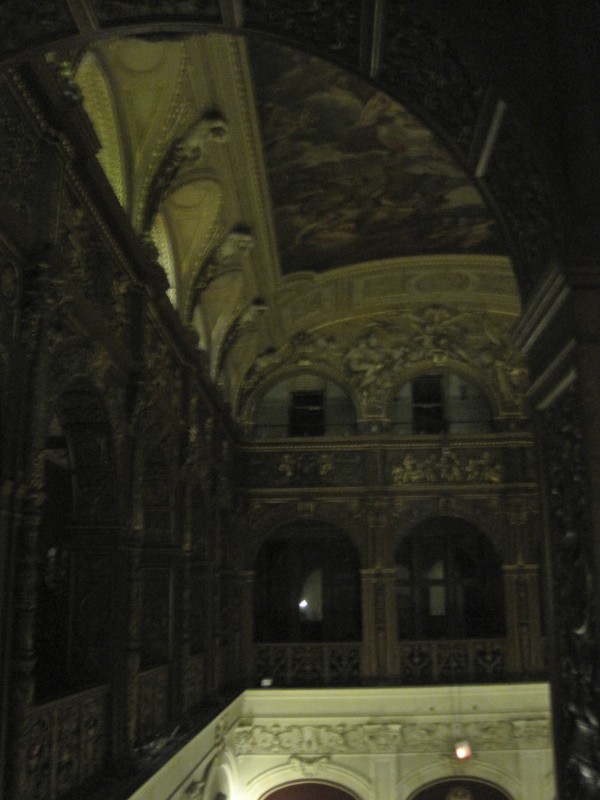
Ochre Court main ballroom upper levels and ceiling... Beautiful!!!
Looking down on the main ballroom at Ochre Court.
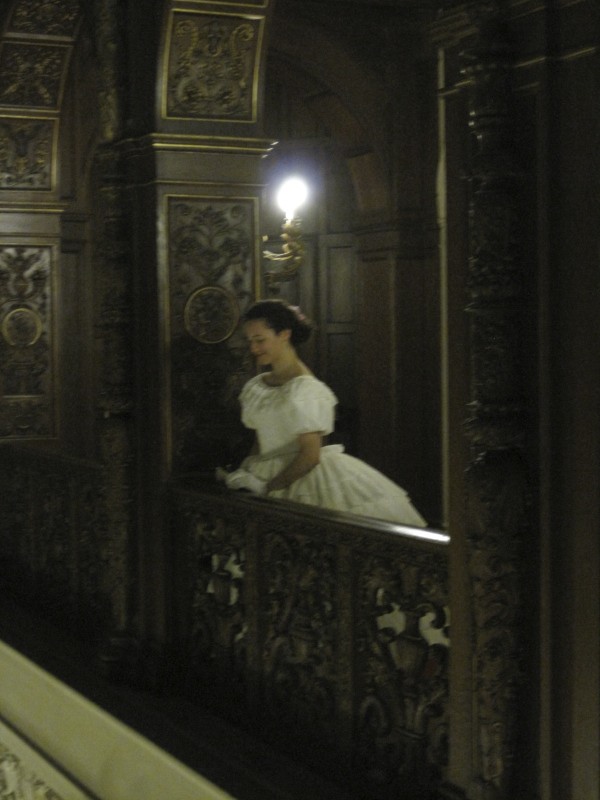
Oh look! There I am, watching the dancers below!
Look! There's someone taking pictures! (Look at the fabulous detail around me!)
Ah, now you can really appreciate the intricate detail!
Time to descend the stairs and dance!
And here are Terri and Carly, also descending the stairs!
Dancers at Ochre Court.
More dancers at Ochre Court.
Dancers in the dining room at Ochre Court.
Strike a pose by one of the enormous fireplaces!
Carly in front of the fireplace.
Taking a breather in the library at Ochre Court.
Would you care to dance? Ochre Court main ballroom.
One more scene at Ochre Court.
Saying good bye to Ochre Court at the end of a fairytale night.

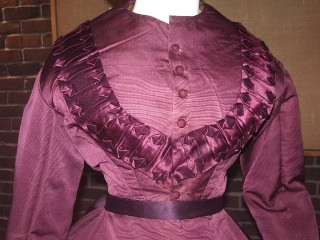
Pleated trimming on dress (c. 1870)

c. 1870 Dress at Smith College

Just recently we looked at pleated trim on 1860s gowns. While I was thinking of that post I was reminded of this gown, which has fabulous pleated trim! It is in the historic costume collection at Smith College, in Northampton, Massachusetts. It was prepared for display and further storage during a historic clothing conservation workshop I took part in a few years ago.

I love the pleated trimming on this dress! It reminds me of origami, in that simple pleats and folds combine to create such a complicated looking outcome.

c. 1870 Dress at Smith College
Pleated trimming on c. 1870 Dress at Smith College

Did you look closely? The pleats are actually just box pleats whose outward pleats have been pressed up or down respectively at the very edges to create the diamond shapes. It’s so neat! I do hope to be able to use this pleated motif on a reproduction dress at some point. I’ll have to scrounge up lots of patience to make yards of a trimming that will be so detailed… but it will be amazing and if I do it in manageable sections it actually does sound like fun!

Pleated trimming on 1860s gowns

I absolutely love the use of pleating as a trim motif in the 19th century! I also admire the immense amount of time and fabric required to edge the dresses of the 1800s in pleated trim.

Take a look at the dress below and note the rolling wave pattern of the pleated trim on the skirt as well as the pleated trim on the sleeves. You can see that the trim is made of the same fabric as the dress, which was a technique often employed in the 19th century for the trimming of gowns.

c. 1862 Afternoon Dress at the Metropolitan Museum of Art

Now, take a look at this dress from 1860-1861 (which was also include in this post). Doesn’t the trim style look familiar? Yes, it’s a more bunting-like placement of the trim, but the idea is exactly the same as the dress above!

1860-1861 Dress at the Metropolitan Museum of Art

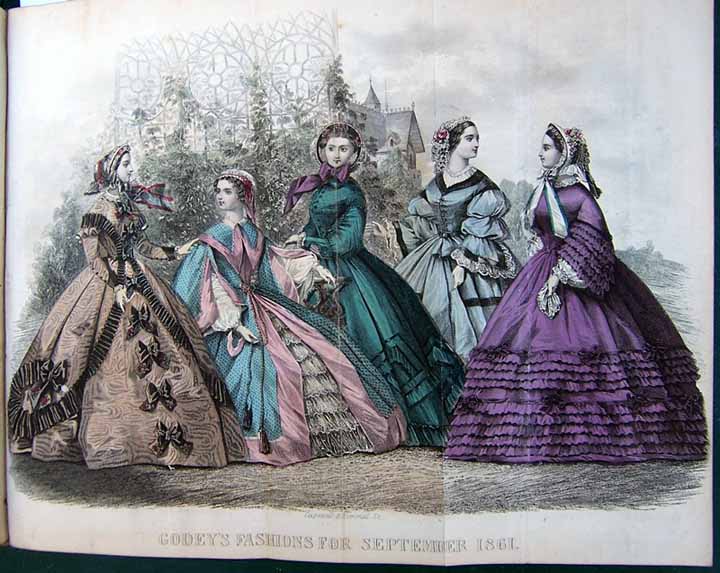
So now that we’ve looked at a few actual garments with the pleated trim, let’s look at some fashion plates. You know, I went through about 50-100 fashion plates from 1860-1865 and I was surprised by the lack of plates that included dresses with pleated trim! Considering that I have frequently seen pleated trim used on existing garments I am intrigued by their relative absence in fashion plates… I wonder if pleated trim is just challenging to execute when creating a fashion plate? Certainly I found some with bands of trim, and perhaps those could have been executed with pleated trim when constructed?

Godey’s Fashions for September 1861
Godey’s Fashions for September 1862

In both of these fashion plates the ladies on the far left are the ones I’m looking at and think that they are wearing dresses with pleated trim. The one from 1862 as especially clear detail that shows the trim being pleated. It is interesting to note that these two fashion plates correspond directly with the two existing dresses at the Metropolitan Museum of Art.

Braid trimming on 1860s gowns

I have noticed a particular style of trim used on multiple 1860s gowns that I find interesting and want to share with you.

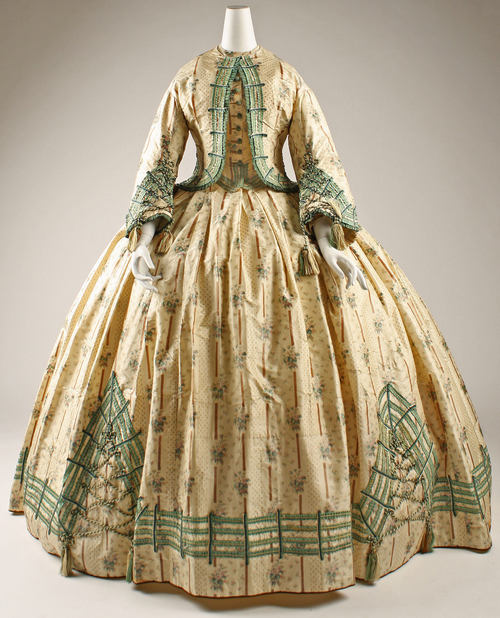
This first gown was also included in my post Bolero and Zouave jackets of the mid-19th century. The bolero style of the bodice is exceptionally well suited to the 1860s: you can read more about that by clicking on the link at the beginning of the paragraph. What I find most fascinating about the dressmaker’s choices in this dress is the fabric and trim. The pale yellow background is wonderful, but to me the foreground (with the cinnamon colored lines and bunches of flowers in between) as well as the small flowers on the background create quite a busy look all on their own. And then to add the green trim on top, with a repeating vertical line motif… but there’s even more! There are tassels and the yellow and green twisted cord zigzagging between the points in the green trim. It’s just a lot going on, and I do think the end result is lovely and congruous, but I think if I was designing a dress I wouldn’t be able to envision all of these elements coming together in such harmony.

c. 1862 dress at the Metropolitan Museum of Art

This second dress is actually a dressing gown. The trimming is not exactly like the bolero dress above, but it is strikingly similar. It is a narrow braid that is used as a border trim in horizontal repetition with points where the trim pattern lifts up into diagonal lattice patterns. The trimming is really quite stunning on it’s own, but consider the time it would take to actually trim a garment in this fashion!

c. 1860 Dressing Gown at the Metropolitan Museum of Art
c. 1860 Dressing Gown trim

Of flounces and dance cards: Part II (Nahant Victorian Day 1860s Ball 2011)

Part II: …and dance cards

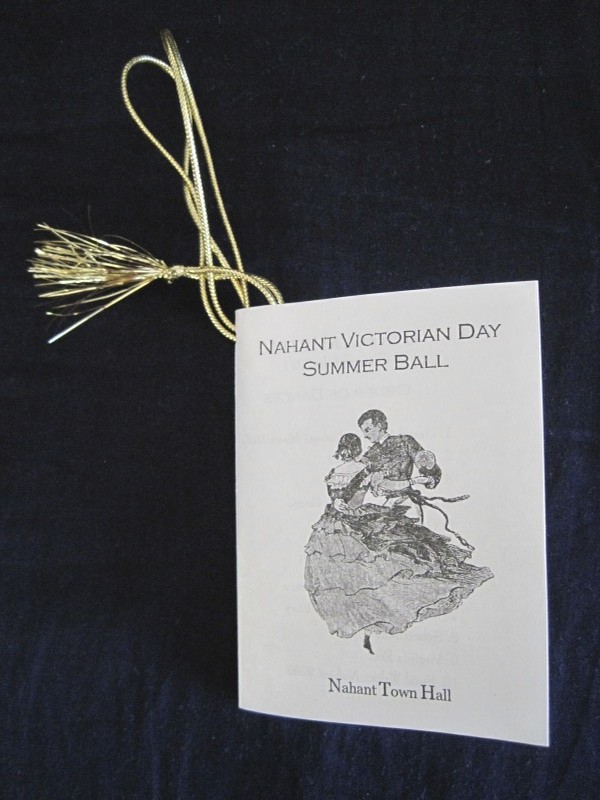
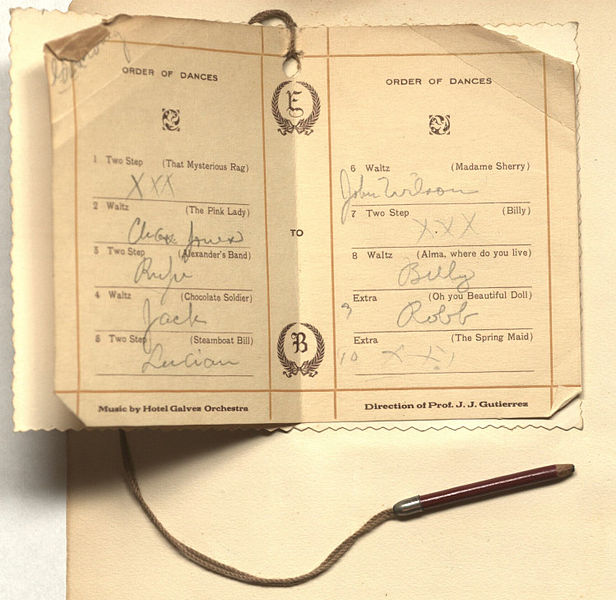
Dance Card from the Nahant Victorian Day Ball 2011

Last post, I shared with you my latest 1860s gown: Annabelle. This gown just recently had its debut at the Nahant Victorian Day Ball hosted by Vintage Victorian.

This ball included the use of dance cards, a practice I am aware of but have never participated in. It turns out that they are much more complicated than one thinks they might be! Why are the so complicated?

Well, it all sounds quite glorious and sophisticated. The Oxford English Dictionary defines a “dance-card” as “a card bearing the names of (a woman’s) prospective dance partners at a dance.” In stories and books, a dance card is a memento one can keep so that after the ball is over she can muse about beaus and flirtations. Practically, a dance card might help a person remember who his or her next partner is, what kind of dance the next dance is, or allow a gentleman to ask for a dance later in the evening.

But wait! There are complications and confusions! Does everyone have a dance card, men and women? Does a person take off his or her gloves before writing in a dance card? (I attempted this both ways: it is quite challenging to write your name while wearing gloves…) Does one exchange dance cards with a prospective partner or ask the name of the person and write it herself? (It seems more effective to swap dance cards with your intended partner to allow for ease of spelling, etc. and, in a more romantic sense, so that you have that person’s handwriting in your dance card.) How does one attach the card to her wrist so that it doesn’t get lost? How does one attach the card to her wrist without the pencil sticking out (so that her white dress isn’t marked!)? Really, a lot of questions popped up that would not have made themselves apparent without practical application. Also, at least at this ball, not having a prearranged partner did not necessarily mean that you were not able to dance. I was able to dance most of the dances of the night, despite my somewhat empty dance card.

Interior of my Dance Card from the Nahant VIctorian Day Ball 2011

Below you can see a few historic dance card images and below that some images of the ball! If anyone has any research on the use or history of dance cards, please share. I’d love to learn more about the etiquette of dance card use!

1884 Dance Card
1912 Dance Card
I believe this dance is the Contradance: Hull's Victory. (Nahant Victorian Day Ball 2011)
A different view of the same dance as above.
The Grand March. (Nahant Victorian Day Ball 2011)
More Grand March.

Here’s a video of the Grand March in action!