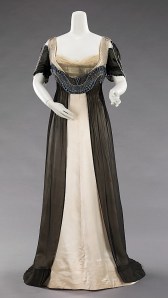
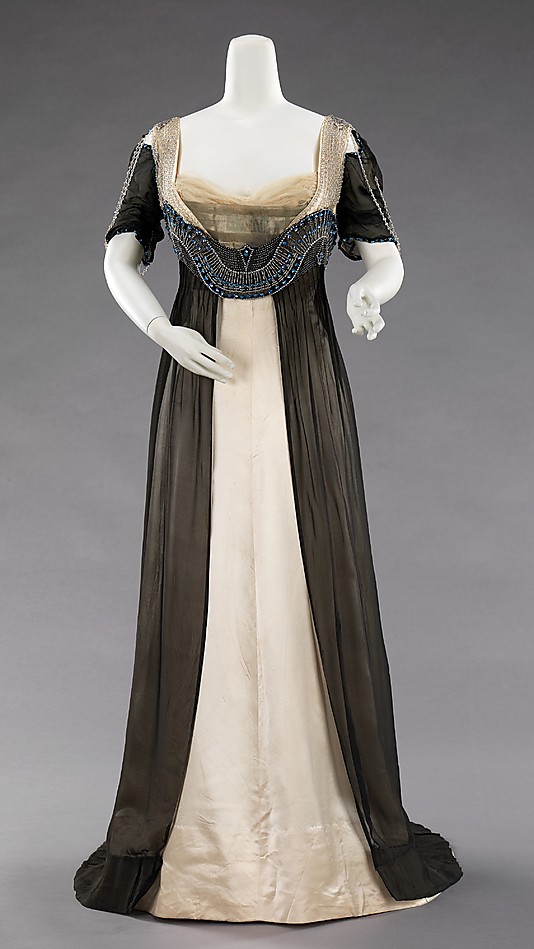
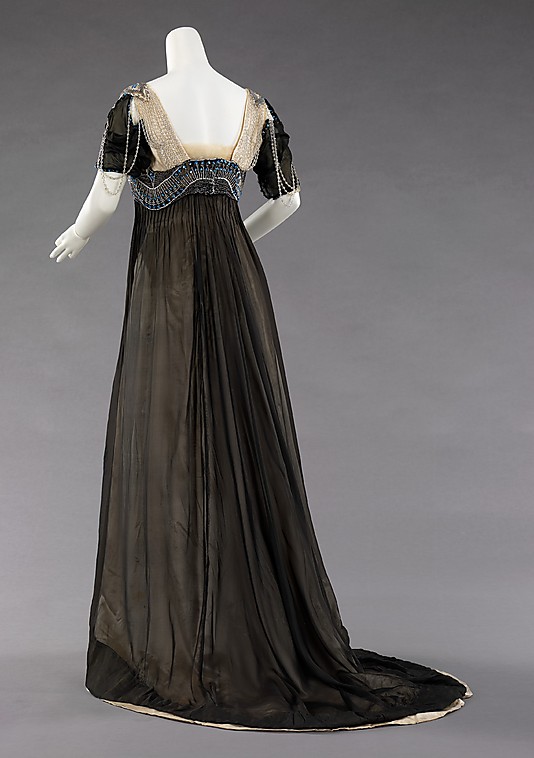
It is time to share my classification of the dresses from my recent 1910 Dress Inspiration and Classification post. It turns out that not very many of you commented with your classification of the Edwardian dresses up for review. I’m sure you had opinions and you simply chose not to share them… but maybe next time you’ll want to join in! Without further ado, here’s what I think.
1: Favorite! (I love the gold trim on this dress! It is just SO exquisite!)
1910 Ball Gown (The Met)
2: Almost favorite (I had a hard time choosing between this and the one above.)
c. 1910 Worth Evening Dress (The Met)
3: Beautiful, but not my style (I just don’t like the beading on this very much…)
The next historically clothed event in my life is Titanic-themed and I have five busy weeks in front of me to prepare for it. I’m quite excited to see everyone’s clothes from a whole new era that is so different from the usual 19th century looks. I’ll share some of my progress on my emerging 1912 wardrobe soon, but for now here is a selection of inspirational dresses for your perusal!
In what order would you classify these dresses? You are welcome to create unique descriptions to describe the order you choose! I’ll let you comment and share my classification later (I want to avoid swaying anyone my way, you see).
1=Favorite! 2=Almost favorite 3=Beautiful, but not my style
1910 Ball Gown (The Met)1910 Ball Gown (The Met)1909-1911 Worth Evening Dress (The Met)1909-1911 Worth Evening Dress (The Met)c. 1910 Worth Evening Dress (The Met)c. 1910 Worth Evening Dress (The Met)
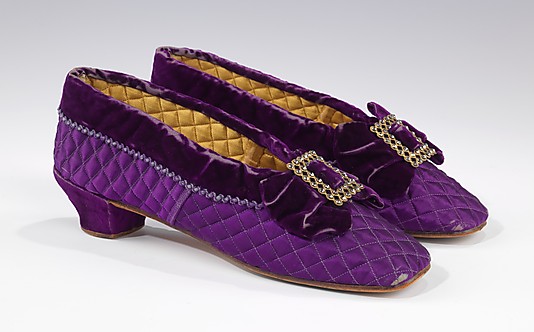
Recently, while looking through the Metropolitan Museum of Art’s Costume Collection for entirely unrelated items, I came across these very purple quilted slippers. I like them, but I also feel they are a little loud. Quilting? And purple? And velvet? And bows? There’s just a lot going on. They look pretty comfortable, though! How do you feel about these? And can you imagine what sort of dress would go with them? Perhaps a white cotton flounced one with purple trim…
1865-1885 Silk Slippers (Metropolitan Museum of Art)
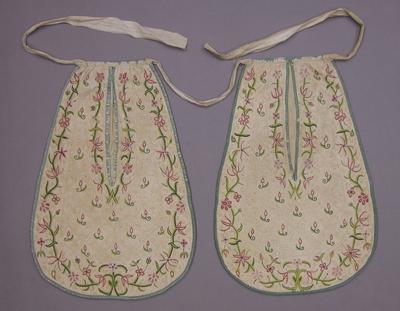
For the last month, I have been pondering the idea of making 18th century pockets. It was my idea to wear them to an 18th century ball and use them as a place to store my modern items (cell phone, credit card, cash, car keys, etc.). I was thinking of making simple linen ones, without embroidery, but once I started researching them I realized that I really wanted to go the full distance. In this case, the full distance meant hand sewn silk embroidery… The realization hit me just a few days before the ball that this plan was flawed. There was no way I was going to complete hand embroidered pockets in the time I had left. My choices: to fudge it and be stressed out while trying to complete hand embroidery with cotton thread or to wait, source my products and make a plan, and enjoy my time hand embroidering. What to do? Well, I decided to do the latter and I am glad to say that I am thankful to have used common sense and avoided stress! For now, the plan to make pockets has been added to my list of things to make in my leisure sewing time (when other, more time sensitive projects are lacking… Does that ever happen???). These charming pink, green, and blue ones are my goal.
Early 1700s pockets, linen embroidered with silk, trimmed with silk ribbon and with silk ties (V and A)
Pockets in the 18th century were often made of linen and elaborately embroidered in colorful silk or wool thread, as with the example above and the following examples. Aren’t these yellow trimmed ones adorable? It looks like the pocket slits are smiling!
Mid-1700s pockets, linen embroidered with silk, trimmed with silk and with silk and linen ties (Manchester City Galleries)
This next pair of pockets has beautiful (and intense) embroidery.
Mid-1700s pockets, linen embroidered with wool, with linen ties (Worthing Museum and Art Gallery)
This next pocket has a lovely embroidered pattern that looks much simpler to replicate than the previous examples. This is my back up plan if the other, more complicated embroidery proves to be too much.
1718-1720 pocket, linen embroidered with silk, with linen ties (V and A)
The pockets with unfinished red embroidery are an excellent example of pocket construction. You can see the manner in which the design is marked as well as the embroidery being completed prior to the pocket being cut out and assembled.
1718-1720 pockets, linen with silk embroidery, the pattern drawn in ink (V and A)
There are also some pockets constructed of silk, such as these, below. These pockets were acquired with a quilted silk petticoat and the Victoria and ALbert Museum assumes that they were intended to be worn together. They look puffy and super cute, but because they are assumed to have such a specific purpose I don’t think they are the right idea for me. Also, I wouldn’t get to embroider!
Mid-1700s pockets, silk with silk ribbon (V and A)
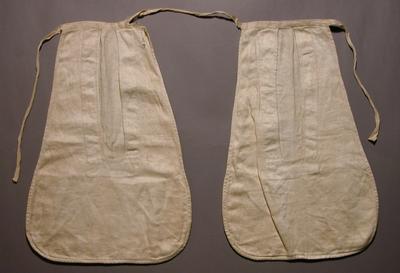
Pockets continued to be used in the 19th century, but they were often constructed of cotton rather than linen and were not as elaborately embroidered as in the pervious century. Some 19th century pockets were constructed of cottons with woven patterns, such as stripes or diamonds as well as the occasional pocket of satin weave cotton fabric. In the middle of the century embroidery was again used as decoration, though the motifs were changed from the 18th century. These next few pockets are just a few 19th century ones I like, either because they use interesting fabrics, or because they are smiling at you!
Late 1800s pockets, twill weave cotton (Oxfordshire Museum Service)I like this one especially, because it really does look like a smiley face pocket! Early 1800s pockets, ribbed cotton, with cotton tape (Cheltenham Art Gallery and Museum) Early-mid-1800s pockets, satin weave cotton (Maidstone Museum and Bentlif Art Gallery)early 1800s pockets, figured silk satin, trimmed with silk (Cheltenham Art Gallery and Museum)
Do you have a favorite pocket amongst these? Does any pair stand out to you?
All of these pockets were recently available at here, at VADS: the online resource for visual arts; however, VADS appears to no longer be operable (perhaps because of recent US government action to curtail internet copyright infringement?). Alternatively, the Victoria and Albert Museum has a pretty good selection of pockets, including some of the ones featured on VADS.
I have decided to remake my ivory 1819 cotton gown for an upcoming Regency ball. Originally, my plan was to add trim to the dress as it currently exists, but I realized there were many things about the dress I wanted to change: with my new late Regency corset the neckline tended to sit away from my body in front, the back closure was too tight for comfort, the bust line in front was so high that it was very hard to get it to sit below my bust, the sleeve openings were uncomfortably tight, the sleeves weren’t puffed enough, I wanted to separate all the petticoat layers to be individual layers rather than petticoats built into the dress, and I wanted to add ruffles to the skirt to really bring it up to the years just before the 1820s. Indeed, the things I wanted to change were so numerous that I decided to just remake the dress!
In the end, the only thing that I decided to keep the same is the skirt base fabric… Using just one additional yard of the original fabric, I plan to complete the following changes: constructing an entirely new bodice with ruffled trimming, creating entirely new puffed sleeves with a cute v-shaped detail, making stand alone petticoats out of the original built in petticoats, and adding bias ruffles to the skirt.
From Ackermann's Repository 1822
My dress is from the period just before the 1820s and I felt that I needed to go more in an 1820s direction with the new trimming and adornment. The main feature of trimming in the 1820s is wide sections of trimmings on the skirt, in combination with corresponding trim across the bodice and sleeves. Thus, there two horizontal lines of interest with a simple, unadorned mid-section (as in the fashion plate on the left, from 1822).
Before I had decided to make so many changes, my original intention was to simply add ruffles to the bottom hem, along the lines of the dress (below) from the Kyoto Costume Institute.
c. 1820 Silk Day Dress (Kyoto Costume Institute)Ribbon trim on 1819 dress before the remake
However, as I thought about it I realized that the ruffle style (above) just would not have a corresponding look to the current zig zag ribbon trim on the dress bodice (right). Those two styles did not make sense on one dress.
The logical step was to change the trim on the bodice. But remember that I had other complaints about the bodice as well… So came the decision to remake the bodice. But how to trim it to correspond with the ruffles on the skirt? I was not at all interested in the bodice trimming on the Kyoto dress for my dress, because the fabric doesn’t lend itself to that look. Well, I started researching trimming from the late 18-teens to see if I would be inspired. The image below is one of my favorites that didn’t make the cut, and there are more on my 1819 dress trimming ideas Pinterest board (thank you to Lauren, at American Duchess, for linking to her Pinterest board in a post and sparking my interest in this fabulous organization tool).
From Ackermann's Repository 1819
Many of my Pinterest images come from the same place: the blog “My Fanciful Muse” by EK Duncan. She has a series of posts that contain text and fashion plates from Ackermann’s Repository beginning in 1808 and going through 1828! Here is the link for the post on 1828: if you scroll to the bottom you will see a list of links to all of the previous years. It is absolutely fabulous! If you haven’t seen this yet you MUST visit! (Thank you for sharing, Evelyn!)
In the end, I decided on a combination of the two dresses in the image below: the ruffles on the skirt of the dress on the right (for some reason I really like the idea of ruffles on my skirt!) and the bodice of the dress on the left. The repeated use of ruffles on the skirt and bodice will produce the corresponding style I am aiming for. The sleeves will be a style from the first few pages of the first half of the 19th century Janet Arnold pattern book: a puffed sleeve with a triangular inset coming from the shoulder. I’ve wanted to use that sleeve style for months and now I finally have a way to use it that makes sense!
1820 illustration from Cunnington's English Women's Clothing in the Nineteenth Century (the illustration is based off of contemporary fashion plates)
I want to highlight this post from The Dreamstress: “Unveiling unveiled: how a fashion exhibition travels around the world.” It is a behind-the-scenes look at how pieces of historic clothing are transferred from museum to museum for exhibits. This post discusses the transportation of this one garment in particular. There are links to really neat pictures showing the process!
1933 Wedding Dress at the V & A
If you haven’t seen this post yet, you need to see it (especially the pictures!)!
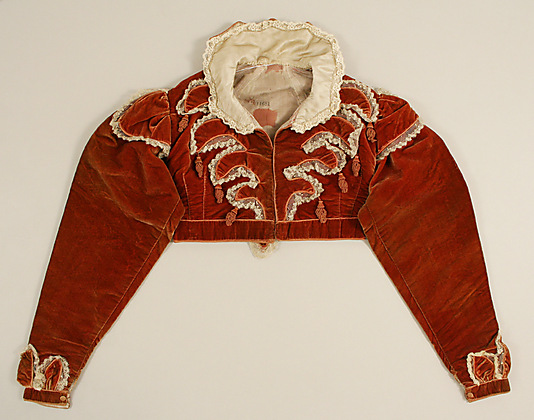
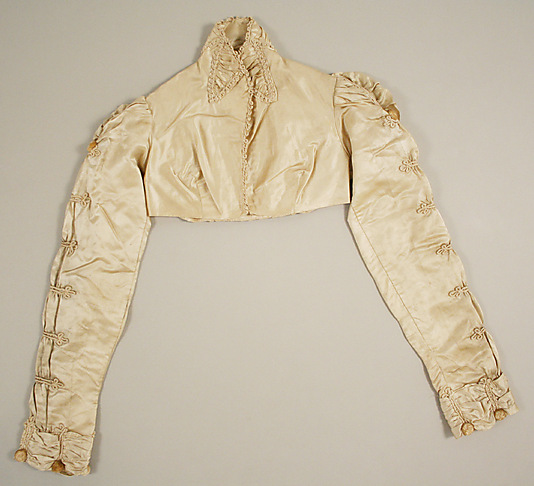
I recently shared with you my research for a Regency Spencer! I found many inspiring images, but below is the one that I chose to reproduce, with some creative license, of course. 1819 is the specific year much of my Regency ensemble is aimed at, so this Spencer fits in perfectly! Aren’t the tassels adorable?
1819-1822 Spencer at the Metropolitan Museum of Art1819-1822 Spencer Back
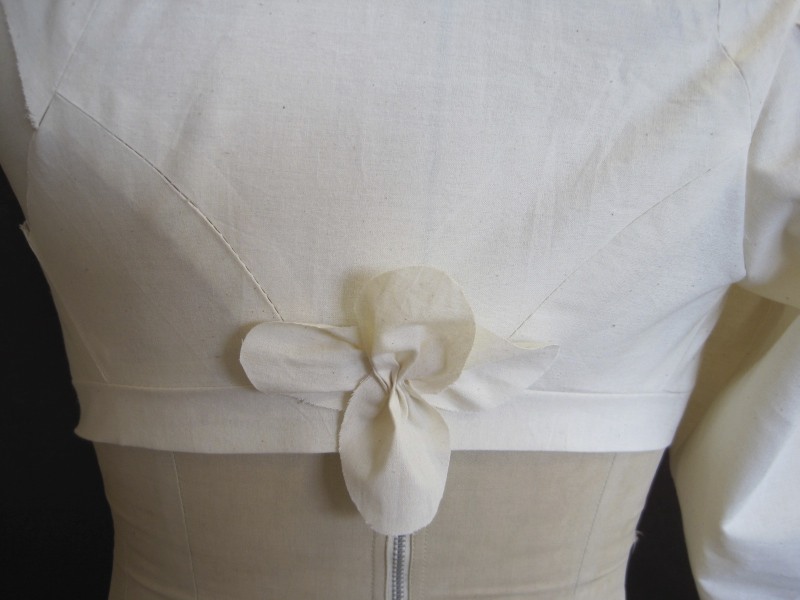
First of all, let me share pictures of the mock-up of this garment!
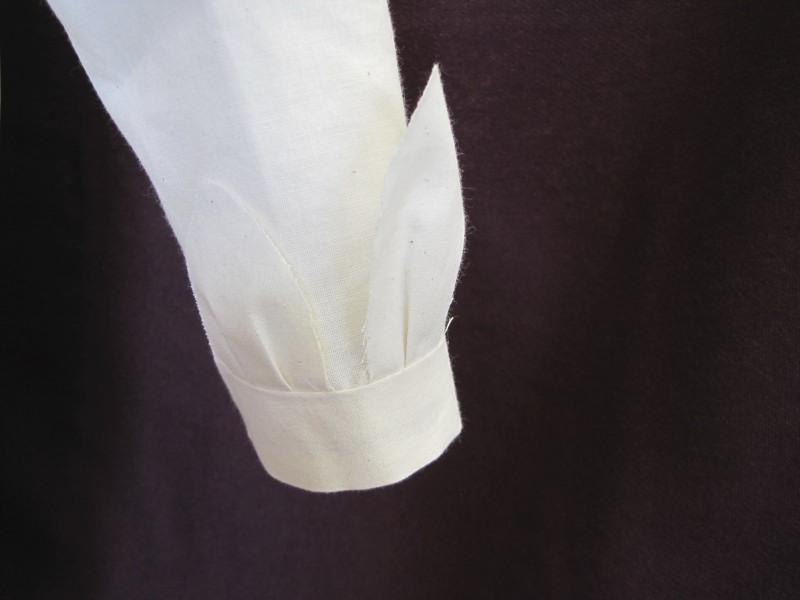
I draped the pattern and left seam allowance on the draped pieces (to eliminate the step of creating a paper pattern from my muslin) so I could move straight to the mock-up stage. In this case especially, I felt the mock-up to be essential to the fit of the spencer (especially the seams in the back) as well as to reaffirm the scale and placement of the decorative elements. Only after I had fit the Spencer and marked the necessary alterations did I rip open the seams and use the muslin to create a paper pattern.
1819 Spencer Mock-up1819 Spencer MockupBack: close upSleeve: close up
Coming soon will be pictures of the finished garment!
Let me start by explaining my reasoning about adding to my Regency wardrobe. You see, I had two events in mind for which I needed two different Regency looks: the Massachusetts Costumers annual Regency Holiday Tea and the Commonwealth Vintage Dancers 1812 Ball. What to wear???
“Well,” I thought, “I have an 1819 dress that I built last year for the Sense and Sensibility Ball… but I don’t have the right corset to wear under it. Nor do I have any way to make the ball gown into day wear… And, now that I think of it, what will I do with my hair for a day style???”
The first and most foundational step was to build a corset to provide the proper support and shape for the Regency period. You can see my research and construction of the corset in previous posts.
The next step was to turn my ball gown into day wear! Well, Spencers are a classic Regency garment that can perfectly disguise my ball gown by hiding the short sleeves and low neckline, thus turning it into day wear. Perfect! After the Spencer will come the adventure of finding a suitable hair/hat solution.
What is a Spencer? It is a short, waist length jacket from the 18th and 19th centuries first worn by men but quickly adapted into women’s wear. The garment is named after George John, the 2nd Earl of Spencer who was an English politician during the last quarter of the 18th century and the first quarter of the 19th century.
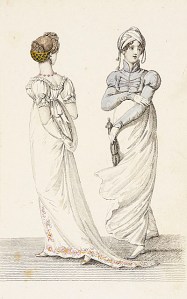
Early 19th Century Fashion Plate at LACMA (Spencer on the right)Fashion Plate, 1807 at LACMA (Spencer on the right)
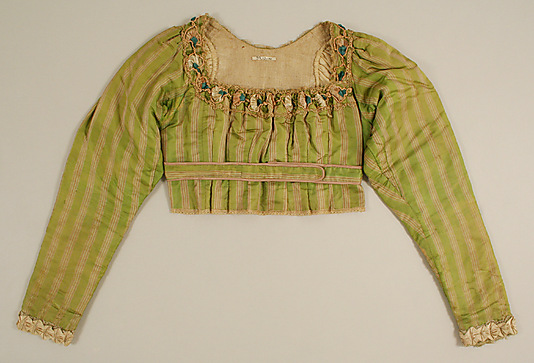
Right now I am interested in the Regency style Spencers, since that is what I will be making, so I will focus my research on that period. Here are some of the Spencers I found most inspirational for my reproduction. These garments are from the Metropolitan Museum of Art’s collection.
1819-1822 SpencerEarly 19th Century SpencerEarly 19th Century Spencerc. 1815 Spencer1814-1820 Spencerc. 1816 Spencerc. 1818 Spencer1804-1818 Spencer (That is a lot of tassels!)c. 1820 Spencer
Let’s leave the Spencer here, in the research stage, for today. More will be coming soon with mock-up pictures of my reproduction!
While looking for research images I did come across this blog post that shows a reproduction of an 1815 Spencer at the LACMA. The post (and her other posts as well) have great commentary about the research and construction of reproduction garments with lots of pictures included!
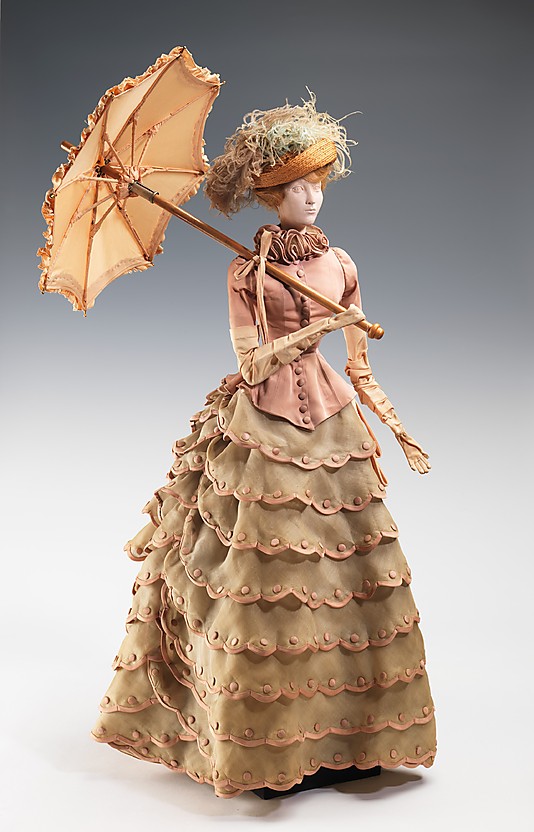
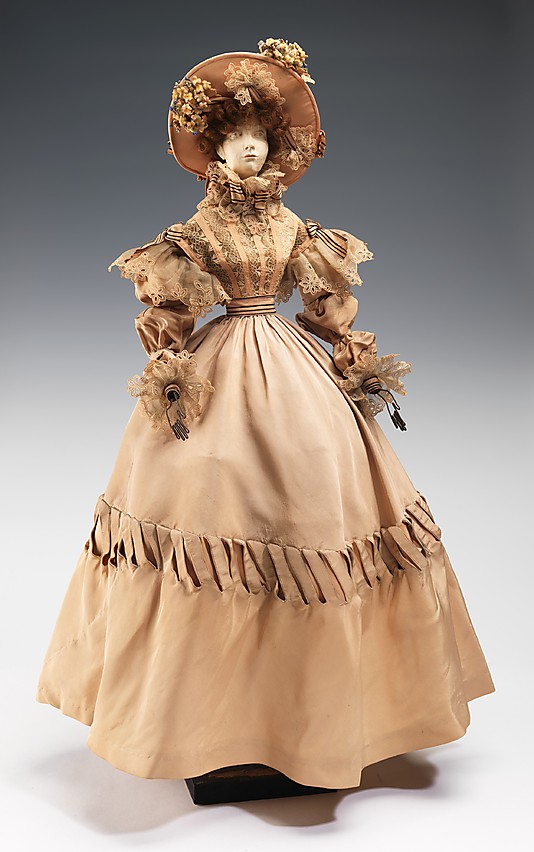
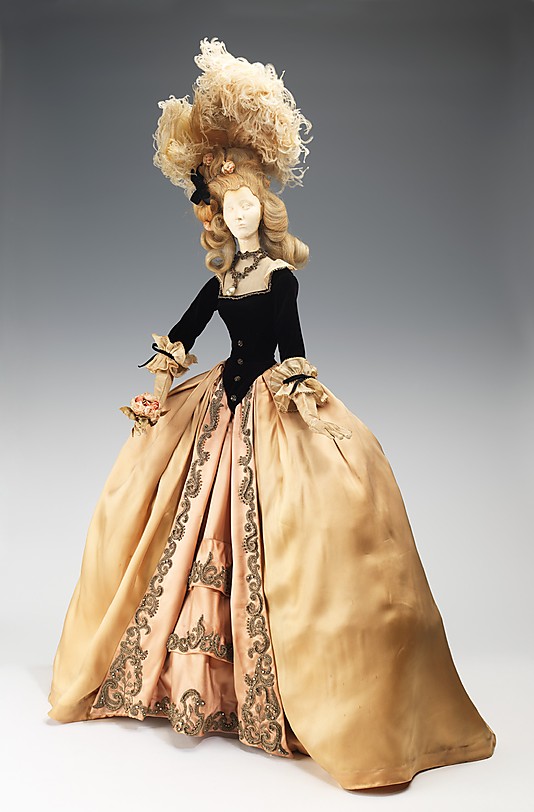
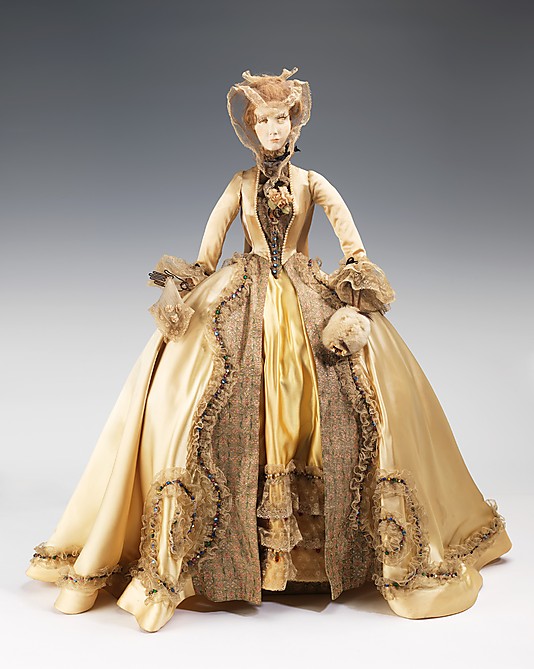
These fabulous 24″ dolls are at the Metropolitan Museum of Art. They have a compelling story, which you can read about here, on the Diary of a Mantua Maker’s blog. As noted, they are not entirely historically accurate, but they are beautiful, nonetheless. The details are exquisite! Here are some of my favorites: I encourage you to go to read and see more by clicking on the above link!
1884: Nina Ricci1867: Jacques Fath1828: Henriette Beaujeu1774: Jean Desses1733: Jean Bader
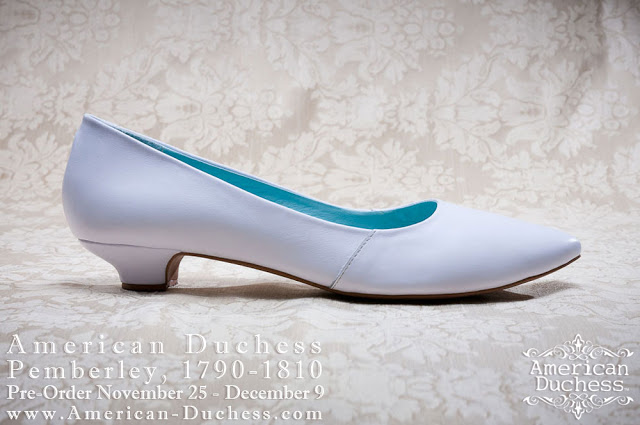
I’m sure many of you have read about the Pemberley shoes being offered by American Duchess… but in case you have not seen yet, or in case you need a reminder… American Duchess is now offering a Regency style, historically accurate shoe! The shoe is available for pre-order today (November 25 through December 9) and at least 100 orders must be placed for the shoe to be produced. Let’s make it happen!
Also, given that it is the holiday season (which is a time for wishes, you know), I would like to wish that a higher heel Pemberley shoe would one day be produced by American Duchess… I envision a shoe with a 1 1/2″ – 2″ heel that can be worn with late 19th century clothing, like the styles below…





















 The Quintessential Clothes Pen