As I mentioned in my last post, the one where I shared pictures of my new 1812 under garments, there aren’t a whole lot of extant examples of sleeveless undergarments from the Regency period, so I had to take the research images I could find and extrapolate what was necessary for my dress from that information. Here are a few extant examples of sleeveless underdresses.
Early 19th century. Petticoat. The Met.Petticoat. 1800. Cotton. National Trust.Early 19th century cotton petticoat/underdress. MFA Boston.
It is fitting that this last one was worn by someone who lived in Boston, MA (that’s where I live). Neat! And isn’t the whitework at the hem lovely? Fashion plates and extant underdresses and petticoats from the early 19th century not uncommonly have hems that had white work and lace decorations. I didn’t incorporate that into my underdress… but maybe in the future I can make another such garment and include that detail!
Natalie Garbett also wrote a blog post about a sleeveless underdress that she made, which you can read by clicking this link. It’s super cute (and has hem trim)!
I actually didn’t find any sleeveless chemises, though I did come across mentions of them. I suppose a lady could have tucked up the sleeves of a normal chemise, or worn a sheer dress with the sleeves of the chemise showing through. Here’s an example of an early 19th century chemise with sleeves. This one is pretty ruffly, but the basic shape is the same, as is the gathering tie at the neck.
This is super exciting! A significant part of my nine month sewing plan is to increase my Regency wardrobe pieces so I have more options for varying weather conditions and activities, including accessories. I’ll list my plan in another post sometime soon-ish, but let me jump forward to say that it includes a chemisette.
Well, there aren’t many extant chemisettes that I know of and it doesn’t seem like many other people are able to reference a wide variety either. Janet Arnold has patterns for some of them in Patterns of Fashion I… and I didn’t originally want to go with one of those (because, you know, it seems like everyone does and I like to be different), but after researching and realizing that Janet Arnold has the monopoly on extant chemisettes I decided to just go with it. I also do really like the chemisettes she has… I particularly like the ones with the mushroom pleated collars. And that style will work well for my wardrobe planning, because I want to make high necked walking dresses, spencers, and pelisses, and I like the idea of the mushroom pleating filling in the high necklines. Plus, the Regency was full of 16th century style references and ruff-like things.
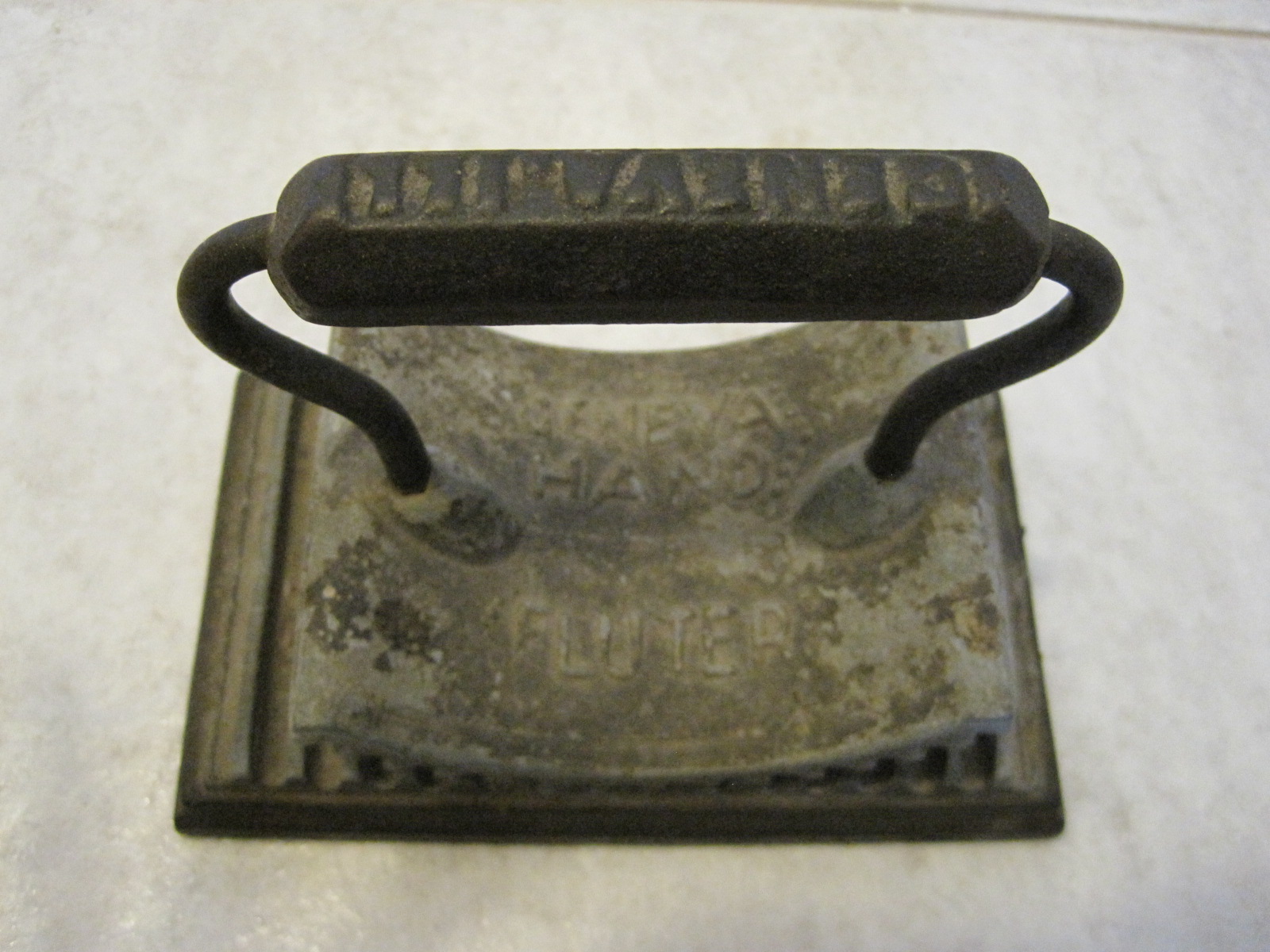
All of that to explain that I looked into ways to make mushroom pleats. I discovered that the best way is to use a fluting iron: a special type of iron that produces small pleats. I got super excited and bought one on ebay for about $20.
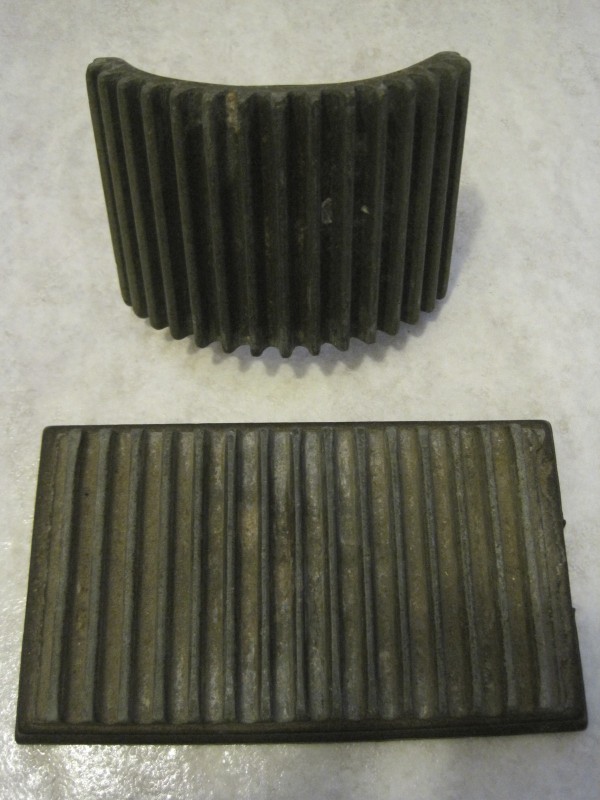
Here it is: a fluting iron!
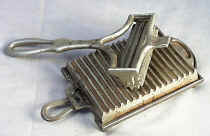
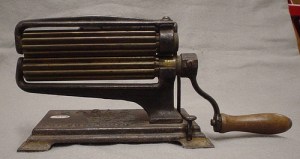
I also did research about different types and brands of fluting irons. This website was super informative about different types and their values. This one also has good pictures and information about fluting irons and their use. Essentially there are three types. I bought the rocking sort, which is an iron and a base; there is also the rolling sort, which has a rolling device (like a paint roller) and a base; and then there is the cranking sort, which has two rolls that wring the fabric through to create the pleats.
The rolling sort.The crank sort.
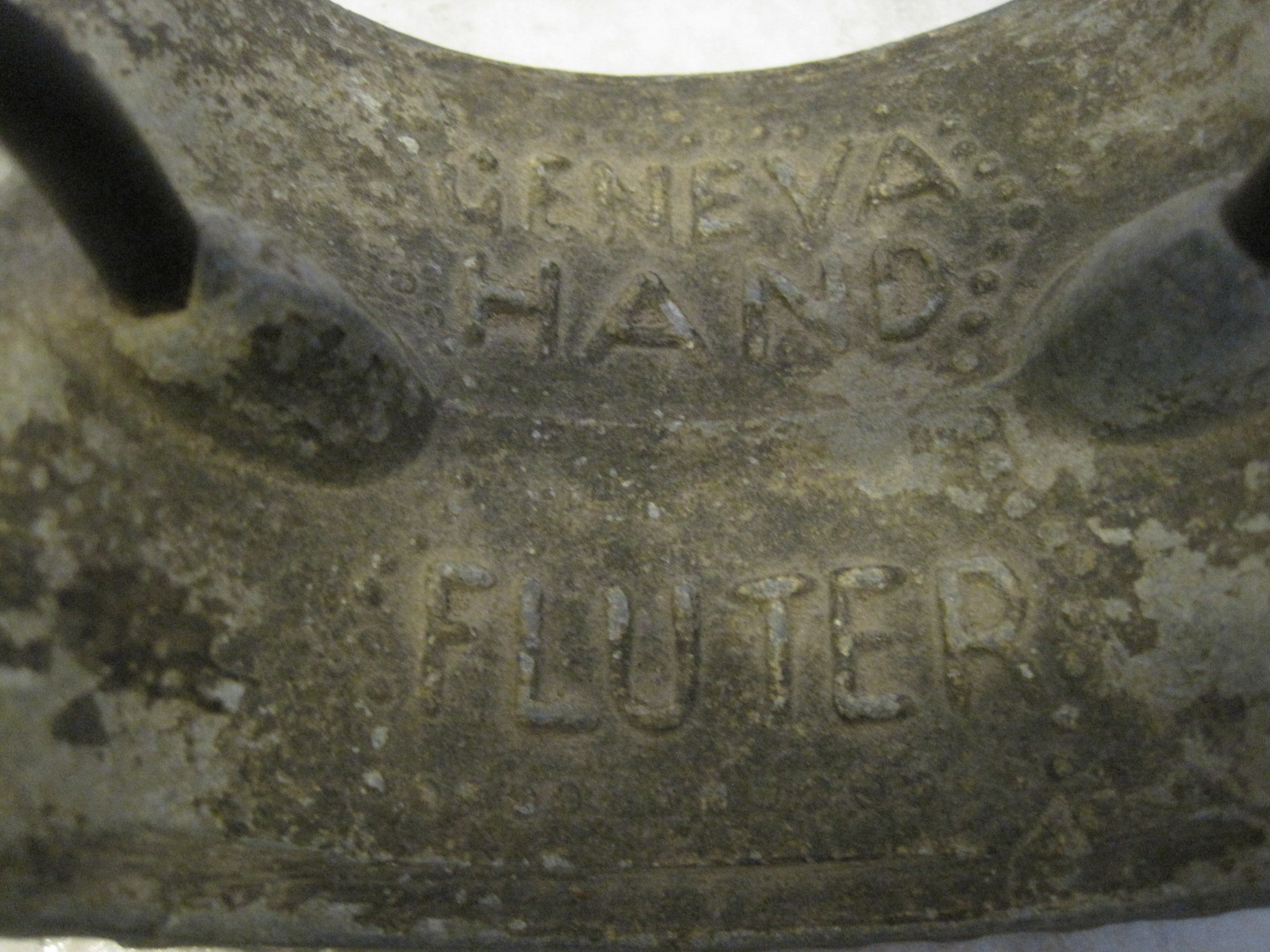
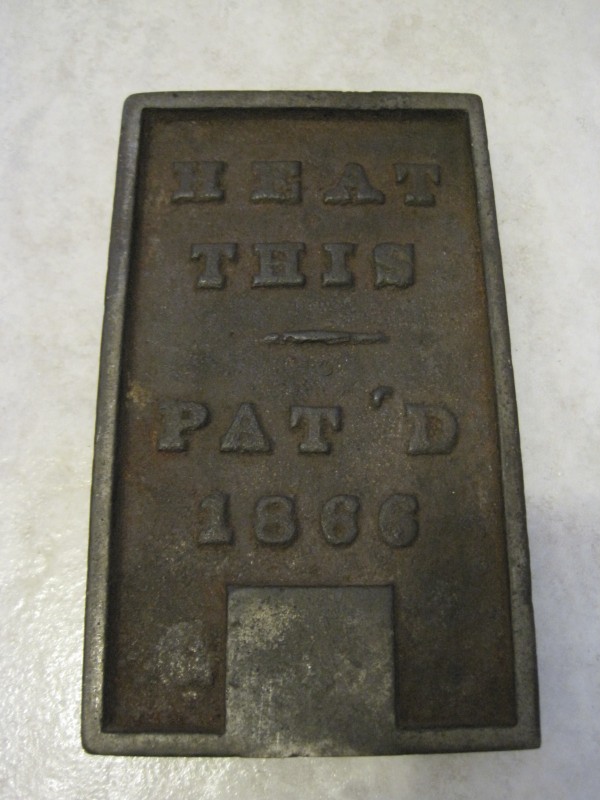
I chose to buy the rocking sort of fluting iron because of the price. There are enough of particular brand I bought (Geneva) in circulation today that they are relatively inexpensive. The type bought was patented in 1866, as you will see.
Proof of manufacture and name.The iron on its side and the base.
I also did research about how to use a fluting iron and how to get your pleats to stay in your fabric. It sounds like the best thing to do is use a homemade mixture of cornstarch and water to starch your fabric before pleating it. Once I try it I’ll report on how that works! One thing that did stump me for a day or two was how I plan to heat this thing and which part to heat. A lady in the 19th century could have heated either part on her cast iron stove, but I was thinking”I don’t have a cast iron stove… how am I going to heat this??? Do I heat the iron, or the base?” Well, one of those questions was easily solved by using my eyeballs…
Duh!
Isn’t it fabulous that the manufacturer included some sort of direction? I was thinking of putting either the base or the iron in the oven… And then it occurred to me that I do have a stove, even if it is not a cast iron stove… So my current plan is to heat the base on the stove, and then somehow figure out a way to take it off the stove, so I can use it without fear of burning my fabric by having it touch a hot burner. I’ll have to report back on that part of the adventure, too!
You can see that the iron and base are a little grimy, so I also need to consider cleaning them before I try using them. I have not yet researched methods of cleaning cast iron. I imagine you can use similar methods as to what you might use to clean a cast iron pot? If you have ideas about the cleaning, please do share!
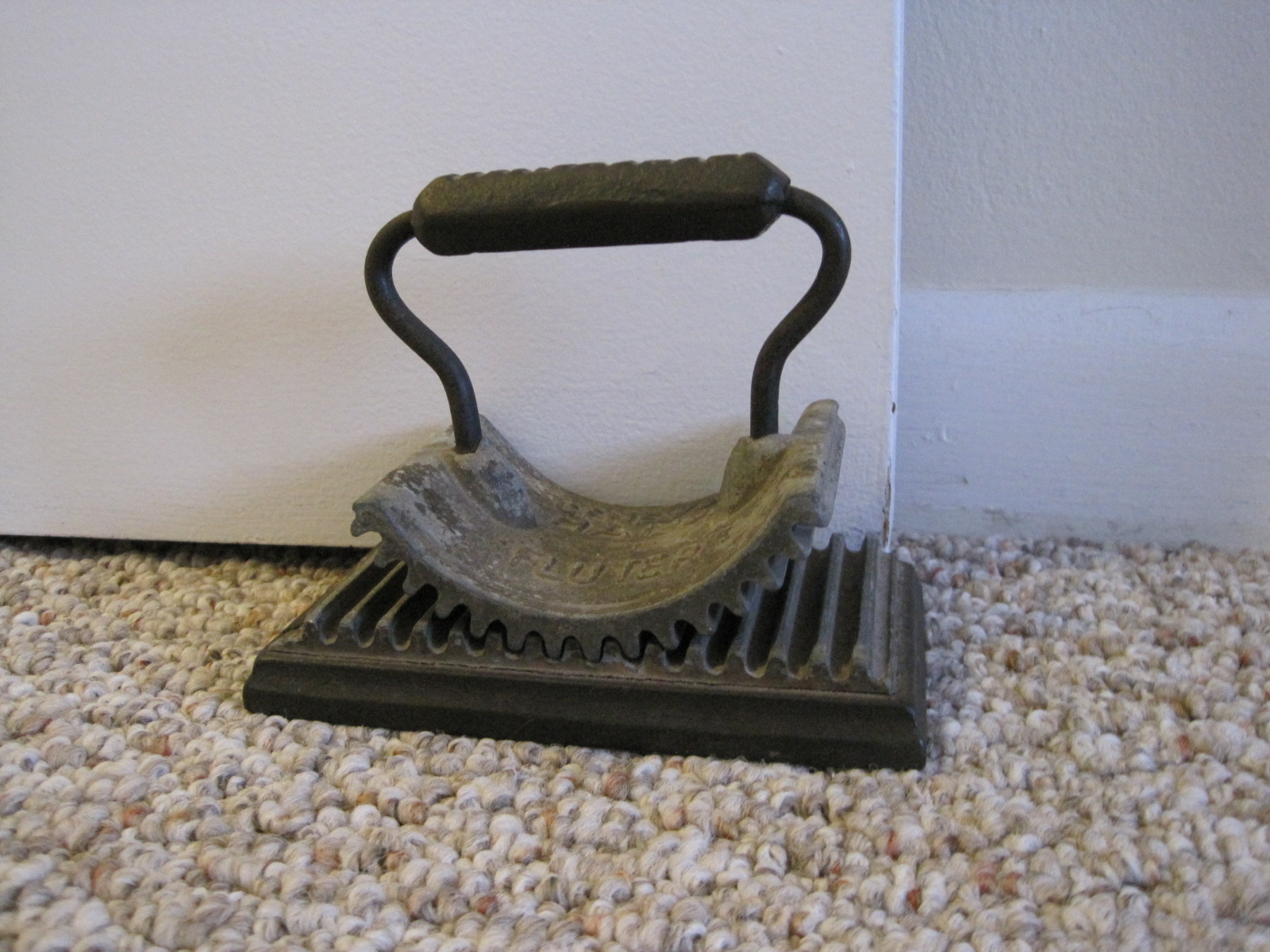
The two pieces are smaller than they appear, but because the iron and the base are cast iron, they are actually rather heavy. Until I use them (and probably after I do) they will be a door stop… they work really well for that purpose! And they add a bit of history to the room. Mr. Q has dubbed the fluting iron the “Cast Iron Crinkle Cutter” because he thinks it looks like something you might make crinkle cut fries out of… which makes me laugh. So here’s a picture of the Cast Iron Crinkle Cutter being a door stop, which also helps to show scale!
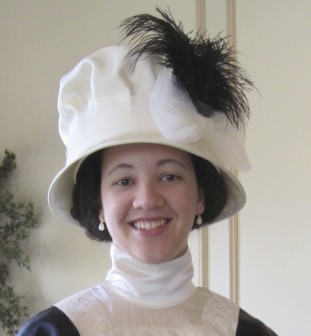
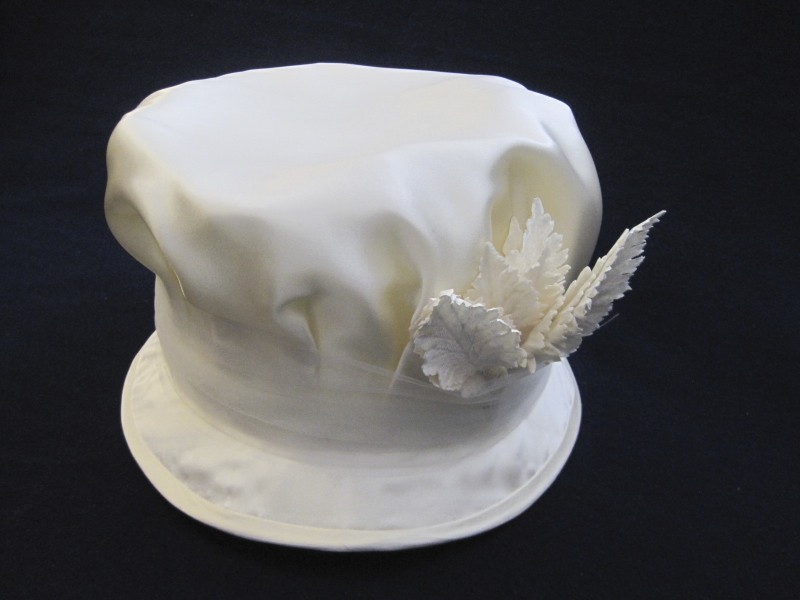
The specifics: wired buckram brim and sideband, ivory silk charmeuse flatlined with ivory cotton to cover the brim and crown, bias cut ivory silk shantung brim binding, trimmed with ivory tulle and black ostrich feathers, lined with the same ivory cotton as the flat lining. (Did you know that craft stores sell tulle in 6″ wide rolls 25′ long in all sorts of colors in the bridal section??? This is great for hats!)
All in all, I’d say the hat turned out beautifully! I didn’t take the time to smooth out every bubble in the silk charmeuse along the brim, so there are a few bubbles… but I think I’m the only person who will ever notice them. It’s rather a tall hat… But I like it! I think it achieved the mushroom-y look I mentioned in Part I of the Ivory Mushroom Hat adventure and it has space in the head size opening as I intended. It even resembles a mob-cap, as I mentioned in Part I. Yay! I think it lends some serious Edwardian grandeur to my look. Full length pictures of the tea gown are coming soon so you can decide what you think about the hat.
It turns out that hair makes a great bandeau! I added some fake hair to my coiffure for tea to help support the hat in the back and it worked wonderfully. Without the extra hair the hat slips down over my face to a point somewhere around my nose… luckily, my poofy hair plus some extra hair works wonders!
I decided to trim the hat with black feathers and an ivory tulle bow because all ivory was overwhelming… the tulle trim is lost, whereas when black feathers are added the tulle trim suddenly stands out as well. Judge for yourself, below! Here are some other trim ideas I sampled on the hat before making my decision.
All ivory with a tulle bow.All ivory with ivory millinery leaves.With black goose biots.
Oh my goodness! This is such a cool and huge collection of photographs and fashion plates! Lauren over at American Duchess has been referencing images from the Bartos Collection for awhile now, but I didn’t get a chance to check it out for myself until just recently. It is WONDERFUL!
The collection focuses on the mid-19th century through the early 20th century. There are fashion plates and mounds of period photographs and pictures of extant clothing… If you love historic clothes and hats and hair you MUST VISIT! Here’s the link, again, because you must go visit and drop your jaw with me!
I’ve been plugging away at my new Standard Ballroom Dance dress. I’ve made progress, though not quite as quickly as I had hoped, as the dress was intended to be worn in about 9 days!!! Once the dress is sewn, I still have the job of individually gluing on about 3,000 (yes, that’s three thousand!) rhinestones. So… in the effort to preserve my sanity and focus on other projects, I have decided to be a smart stress-reducer and put this dress on hold until summer so that I can have a new dress for the fall competition season.
Also, I am glad to report that my old yellow dress does not fit quite as tightly as I remembered it fitting just a few weeks ago! I wore it this past weekend and, while tight, it didn’t seem to be uncomfortably or unflatteringly so. Also, I was told that the velcro accident instigated by my partner is not visible from the dance floor, which is an encouraging thought. I do have quite a few neglected snap and hook and eye repairs to do on the dress, though… And I really should do those in the next 9 days, so that I’m not distracted on the dance floor…
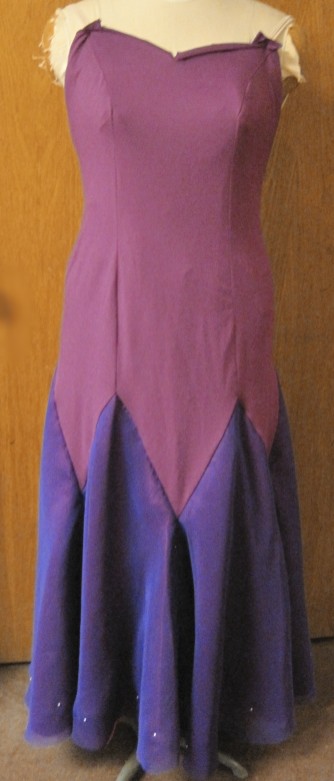
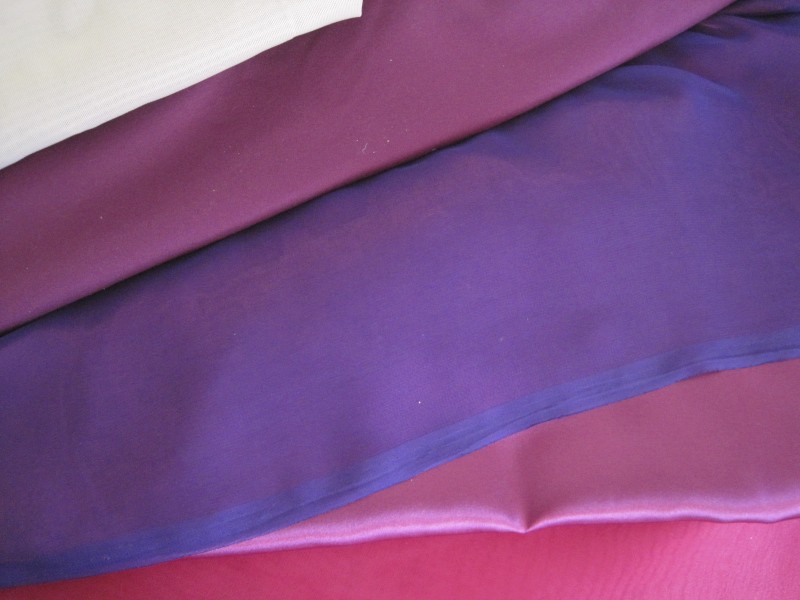
Regardless of the sewing future of this dress, I’ll share pictures of my progress now, so you can appreciate the delicious berry colors I decided on.
My progress on the dress so far.
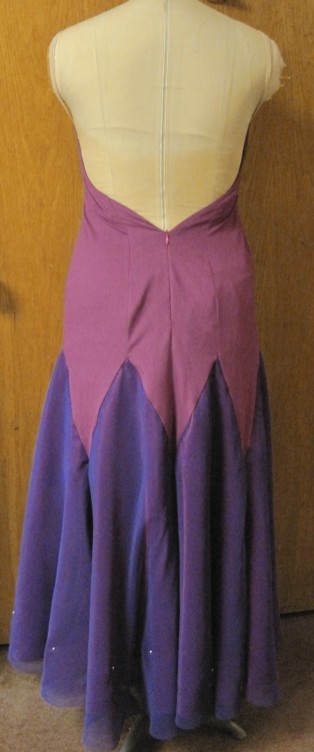
Disclaimer: this dress form does no favors for the dress. It fits me far better than the form, and it helps that I have arms to keep the straps on! Most of the weird bumps in the bodice are from the built in bodysuit that is bunched under the dress: the leg openings just don’t work on a dress form!
But anyway, progress: the bodice has been sewn and fit multiple times, the skirt godets have been sewn in, and there is a very invisible zipper sewn in center back (you can only see the zipper pull because it is pink instead of purple-ish)! Still to do before the rhinestones: serge all the skirt seams and hems (which I actually did after I took the pictures), finish the hems with plastic wire (which I did… it was disastrous looking! I hated it and it was so frustrating! so then I took it all out… I think I might try horsehair), finish the top edge of the bodice, sew the straps on… Once the rhinestones are on I still need to make floats (the usually chiffon pieces that hang off of the arms) and a neck decoration of some sort. I’m not sure what that will look like yet, but now I’ve got time to plan ahead!
The back of the dress. Those straps blend in with the dress form so well I can hardly see them!
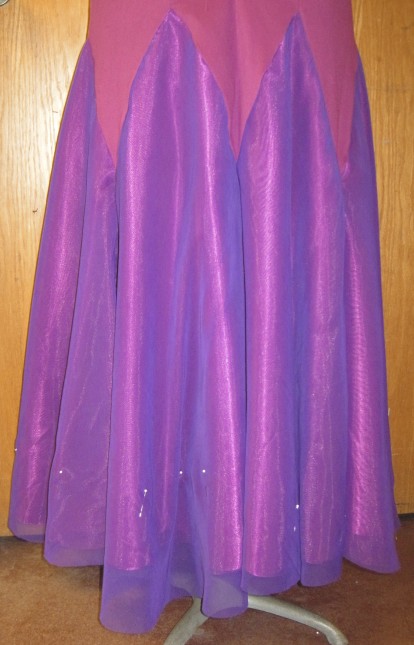
I keep mentioning hems (plural). The skirt is actually four layers: chiffon and organza treated as one, charmeuse, and then organza. So when I say finish seams, or hem layers, that’s because there are three separate layers in the skirt that need attention! Each godet is a full quarter circle, which means that each hem is a full circle and a half. The under layers actually do show through the chiffon, depending on how the light hits the dress (see the picture, below, with a flash on). You can also see the way the chiffon has stretched out more than the other layers.
The skirt photographed with the flash on: you can see the pink under layers much better here.
I’ve decided to call this dress the “berry” ballroom dress, because all the colors (except maybe the purple chiffon) remind me of berries! (And I do love berries!)
The fabrics used in this dress: nude power mesh, berry stretch knit, purple chiffon, raspberry charmeuse, and raspberry organza.
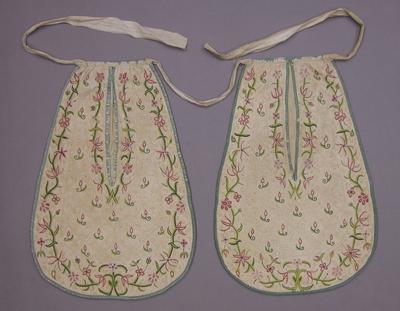
For the last month, I have been pondering the idea of making 18th century pockets. It was my idea to wear them to an 18th century ball and use them as a place to store my modern items (cell phone, credit card, cash, car keys, etc.). I was thinking of making simple linen ones, without embroidery, but once I started researching them I realized that I really wanted to go the full distance. In this case, the full distance meant hand sewn silk embroidery… The realization hit me just a few days before the ball that this plan was flawed. There was no way I was going to complete hand embroidered pockets in the time I had left. My choices: to fudge it and be stressed out while trying to complete hand embroidery with cotton thread or to wait, source my products and make a plan, and enjoy my time hand embroidering. What to do? Well, I decided to do the latter and I am glad to say that I am thankful to have used common sense and avoided stress! For now, the plan to make pockets has been added to my list of things to make in my leisure sewing time (when other, more time sensitive projects are lacking… Does that ever happen???). These charming pink, green, and blue ones are my goal.
Early 1700s pockets, linen embroidered with silk, trimmed with silk ribbon and with silk ties (V and A)
Pockets in the 18th century were often made of linen and elaborately embroidered in colorful silk or wool thread, as with the example above and the following examples. Aren’t these yellow trimmed ones adorable? It looks like the pocket slits are smiling!
Mid-1700s pockets, linen embroidered with silk, trimmed with silk and with silk and linen ties (Manchester City Galleries)
This next pair of pockets has beautiful (and intense) embroidery.
Mid-1700s pockets, linen embroidered with wool, with linen ties (Worthing Museum and Art Gallery)
This next pocket has a lovely embroidered pattern that looks much simpler to replicate than the previous examples. This is my back up plan if the other, more complicated embroidery proves to be too much.
1718-1720 pocket, linen embroidered with silk, with linen ties (V and A)
The pockets with unfinished red embroidery are an excellent example of pocket construction. You can see the manner in which the design is marked as well as the embroidery being completed prior to the pocket being cut out and assembled.
1718-1720 pockets, linen with silk embroidery, the pattern drawn in ink (V and A)
There are also some pockets constructed of silk, such as these, below. These pockets were acquired with a quilted silk petticoat and the Victoria and ALbert Museum assumes that they were intended to be worn together. They look puffy and super cute, but because they are assumed to have such a specific purpose I don’t think they are the right idea for me. Also, I wouldn’t get to embroider!
Mid-1700s pockets, silk with silk ribbon (V and A)
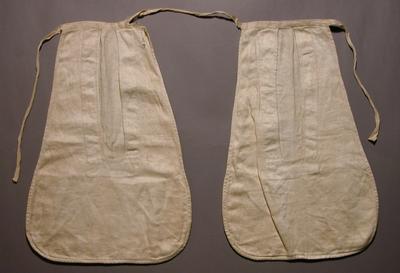
Pockets continued to be used in the 19th century, but they were often constructed of cotton rather than linen and were not as elaborately embroidered as in the pervious century. Some 19th century pockets were constructed of cottons with woven patterns, such as stripes or diamonds as well as the occasional pocket of satin weave cotton fabric. In the middle of the century embroidery was again used as decoration, though the motifs were changed from the 18th century. These next few pockets are just a few 19th century ones I like, either because they use interesting fabrics, or because they are smiling at you!
Late 1800s pockets, twill weave cotton (Oxfordshire Museum Service)I like this one especially, because it really does look like a smiley face pocket! Early 1800s pockets, ribbed cotton, with cotton tape (Cheltenham Art Gallery and Museum) Early-mid-1800s pockets, satin weave cotton (Maidstone Museum and Bentlif Art Gallery)early 1800s pockets, figured silk satin, trimmed with silk (Cheltenham Art Gallery and Museum)
Do you have a favorite pocket amongst these? Does any pair stand out to you?
All of these pockets were recently available at here, at VADS: the online resource for visual arts; however, VADS appears to no longer be operable (perhaps because of recent US government action to curtail internet copyright infringement?). Alternatively, the Victoria and Albert Museum has a pretty good selection of pockets, including some of the ones featured on VADS.
The Fashions of the Day - or Time Past and Time Present: The Year (1740) a Lady's Full Dress of Bombazeen - The Year (1808) Lady's Undress of Bum-be-seen (Print, c. 1808 at the Met)
Today’s amusing thought. I came across this while looking for trim ideas for my regency gown. The title of the print is just wonderfully eloquent and well worded. I hope you also get a laugh!
Let me start by explaining my reasoning about adding to my Regency wardrobe. You see, I had two events in mind for which I needed two different Regency looks: the Massachusetts Costumers annual Regency Holiday Tea and the Commonwealth Vintage Dancers 1812 Ball. What to wear???
“Well,” I thought, “I have an 1819 dress that I built last year for the Sense and Sensibility Ball… but I don’t have the right corset to wear under it. Nor do I have any way to make the ball gown into day wear… And, now that I think of it, what will I do with my hair for a day style???”
The first and most foundational step was to build a corset to provide the proper support and shape for the Regency period. You can see my research and construction of the corset in previous posts.
The next step was to turn my ball gown into day wear! Well, Spencers are a classic Regency garment that can perfectly disguise my ball gown by hiding the short sleeves and low neckline, thus turning it into day wear. Perfect! After the Spencer will come the adventure of finding a suitable hair/hat solution.
What is a Spencer? It is a short, waist length jacket from the 18th and 19th centuries first worn by men but quickly adapted into women’s wear. The garment is named after George John, the 2nd Earl of Spencer who was an English politician during the last quarter of the 18th century and the first quarter of the 19th century.
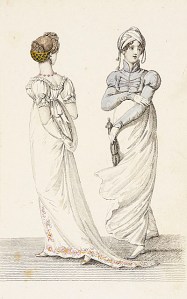
Early 19th Century Fashion Plate at LACMA (Spencer on the right)Fashion Plate, 1807 at LACMA (Spencer on the right)
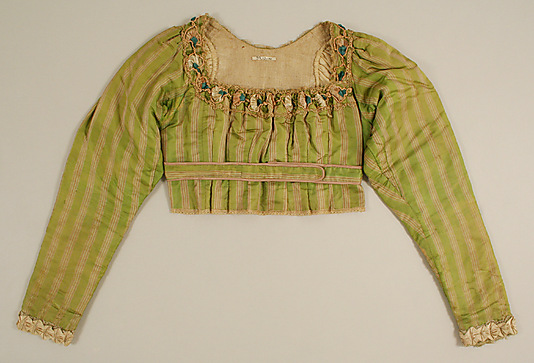
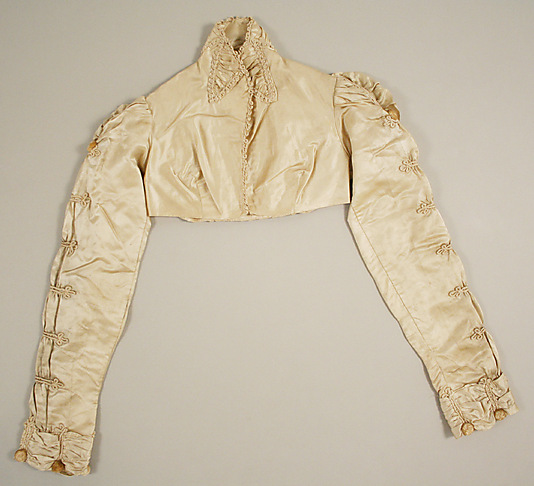
Right now I am interested in the Regency style Spencers, since that is what I will be making, so I will focus my research on that period. Here are some of the Spencers I found most inspirational for my reproduction. These garments are from the Metropolitan Museum of Art’s collection.
1819-1822 SpencerEarly 19th Century SpencerEarly 19th Century Spencerc. 1815 Spencer1814-1820 Spencerc. 1816 Spencerc. 1818 Spencer1804-1818 Spencer (That is a lot of tassels!)c. 1820 Spencer
Let’s leave the Spencer here, in the research stage, for today. More will be coming soon with mock-up pictures of my reproduction!
While looking for research images I did come across this blog post that shows a reproduction of an 1815 Spencer at the LACMA. The post (and her other posts as well) have great commentary about the research and construction of reproduction garments with lots of pictures included!
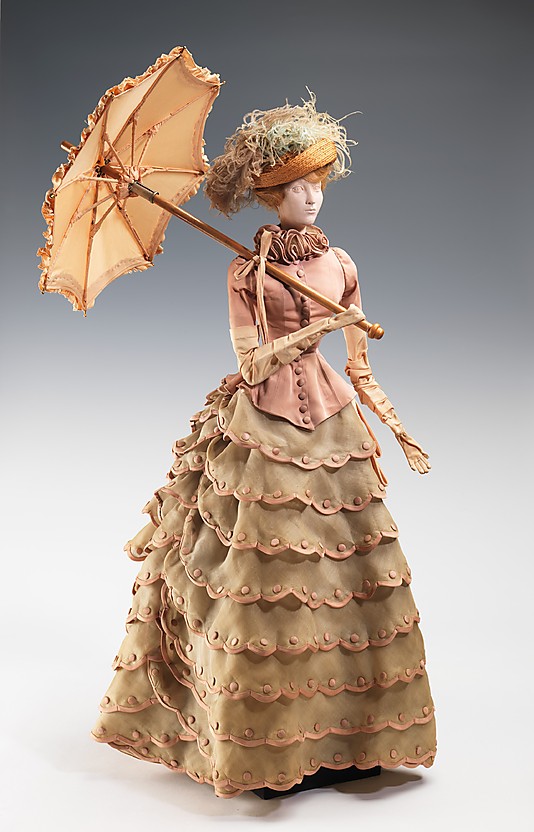
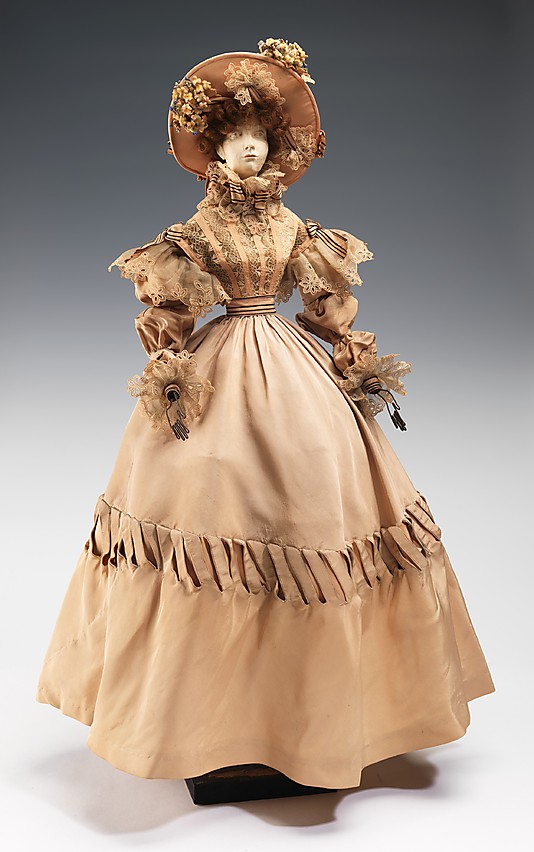
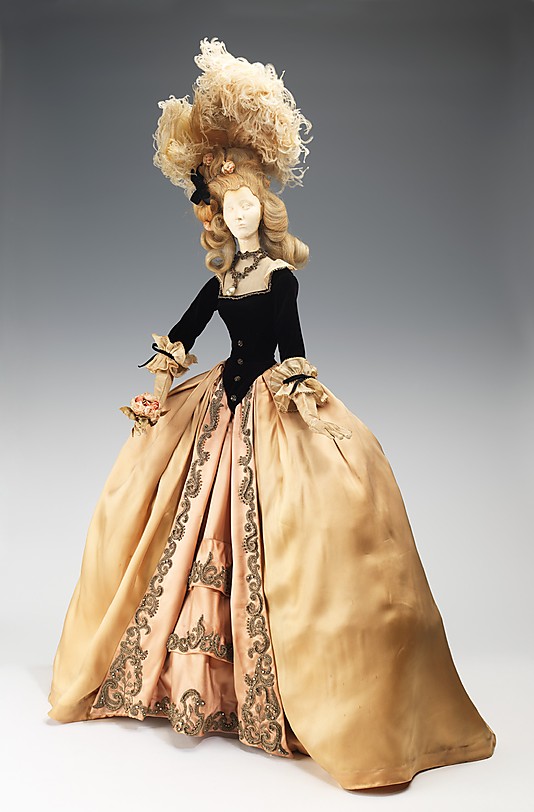
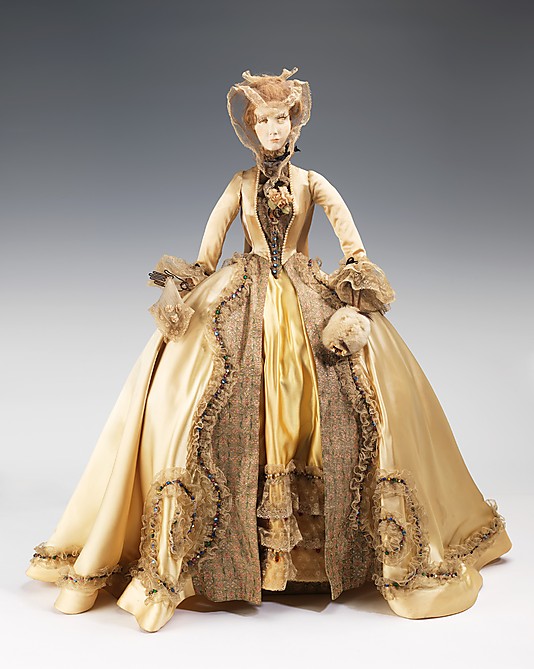
These fabulous 24″ dolls are at the Metropolitan Museum of Art. They have a compelling story, which you can read about here, on the Diary of a Mantua Maker’s blog. As noted, they are not entirely historically accurate, but they are beautiful, nonetheless. The details are exquisite! Here are some of my favorites: I encourage you to go to read and see more by clicking on the above link!
1884: Nina Ricci1867: Jacques Fath1828: Henriette Beaujeu1774: Jean Desses1733: Jean Bader
I have a whole list of projects to work on during this Thanksgiving period: I need to reinforce some trim and closures on various gowns that will be worn during the next few months, I need to build a flowered hair accessory (I hesitate to say wreath) to match my blue 1860s ball gown, Belle, and I need to construct a Regency corset! I’ll pass over the stitching of the trim and closures (because, really, I don’t think that would be an exciting post) and save the hair ornamentation post for later. That leaves us with one more topic… The Regency corset.
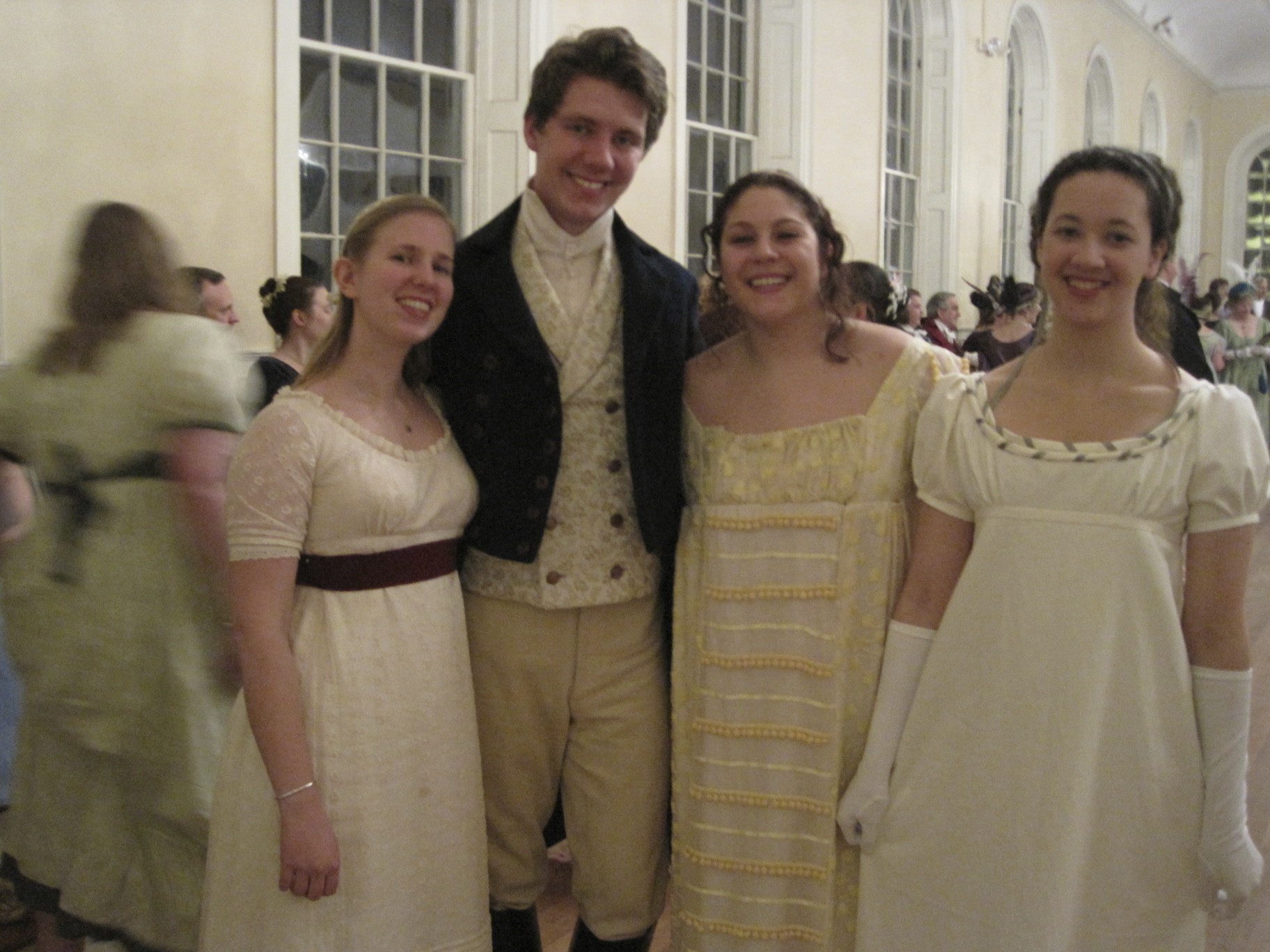
I don't have very many good pictures of this gown (I'll have to get some!) but I'm on the far right. Click on the link to the left to read more about this ball!
Here’s the background on this plan: I have a Regency dress that I built last February. At the time, I could not build the undergarments that would accompany this gown at that time. (You can read the story of the dress here.) Now I have time and so I plan to backtrack to this project and make the right undergarments! I have a chemise which will work (you can see it under my 1780s corset in the photos in this post) because chemise styles were unvaried from the late 18th century through the first quarter of the 19th century; however, I do not currently own a Regency period corset!
First of all, what is the Regency period? The term brings to mind Jane Austen books and films and general ideas of the early 19th century, but upon closer inspection Regency is actually more specific than I was thinking. I’ve got two relevant definitions for you from the Oxford English Dictionary.
Noun: Senses relating to government or rule by a regent. Usu. with capital initial. The period during which a regent governs; spec. the period in France from 1715 to 1723 when Philip, Duke of Orleans, was regent, or in Britain from 1811 to 1820 when George, Prince of Wales, was regent.
Designating a style of architecture, clothing, furniture, etc., characteristic of the British Regency of 1811–20 or, more widely, of the late 18th and early 19th centuries, featuring neoclassical elements often with Greek and Egyptian motifs.
Regency is a more specific period of time than that of the overarching Georgian period, which includes the reins of George I, George II, George III, and George IV of Great Britain. The Georgian period is from 1714-1830 and sometimes includes the years 1830-1837 as well. 1837 marks the beginning of Queen Victoria’s reign, which is where the term Victorian comes from.
Upon reflection I realized that I had forgotten the year my dress is from! Certainly it is Georgian, but is it really Regency? I had made the gown in a rush and so I had to retrace my steps and really think about what specific span of years the gown fits into to answer that question. It turns out that the gown is, in fact, from the Regency period: it is from 1816-1819! Whew!
Once that information was determined, I could move forward and research the corset shapes and patterns of that specific period (that is, 1816-1819). It turns out that patterns in Norah Waugh’s Corsets and Crinolines jump from the late 18th century to the 1820s; however, I did find images of extant corsets from the first part of the 19th century. “Oh well,” I thought, and used the images and the 1820s pattern in Corsets and Crinolines to drape a pattern.
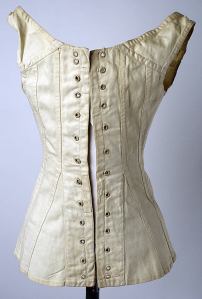
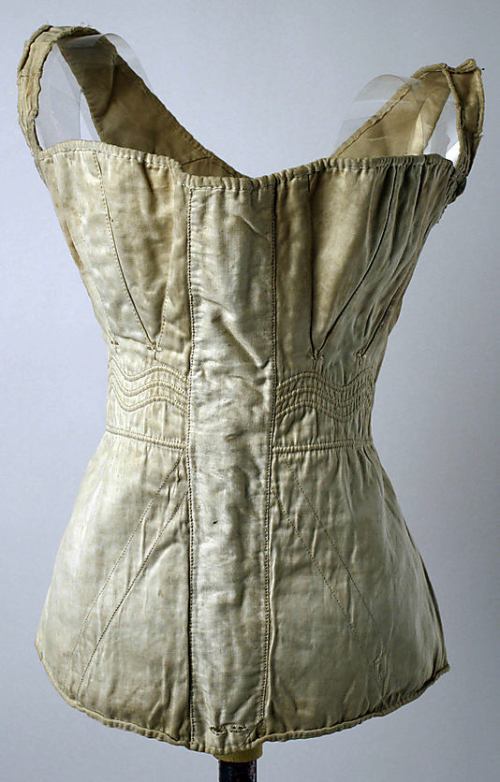
Here are some of the research images from the Metropolitan Museum of Art. I’ve included a wide span of years so you can see the development of the corset shape over time. Note the bust and hip darts as well as the beautiful quilting that begins to define the waist by the 1840s.
c. 1811 Cotton Corsetc. 1811 Cotton Corset Back1815-1825 Corset (I really like the simple lines and straight forward color combination in this garment: this is my most inspiring image. It is interesting that the lines of this corset are so simple, relative to these other examples. This corset seems to be lacking hip darts or an inward angled front panel plus side panel.)1820-1839 Cotton and SIlk Corset (the embroidery on this corset is great)1820-1839 Cotton and Silk Corset Back (I especially like the back)1830-1835 Cotton Corset1830s-1840s Corset
I am including these last ones because I think they are lovely, even thought they are not from the period I need to build. I’ll have to keep them in mind for future!
1820 Corset (this is in the Collection of the Kyoto Costume Institute)1830-1839 Cotton Corset




















 The Quintessential Clothes Pen