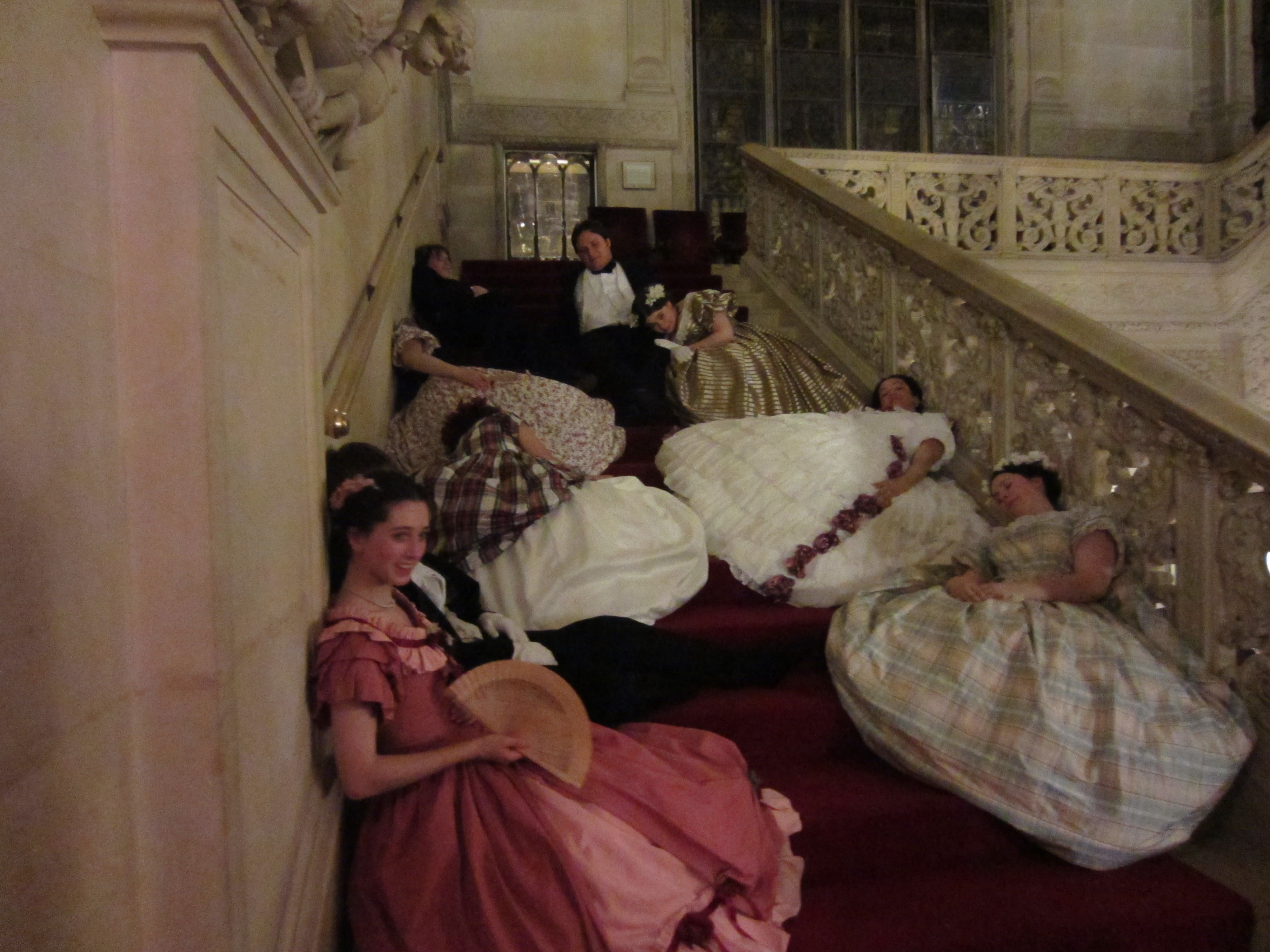
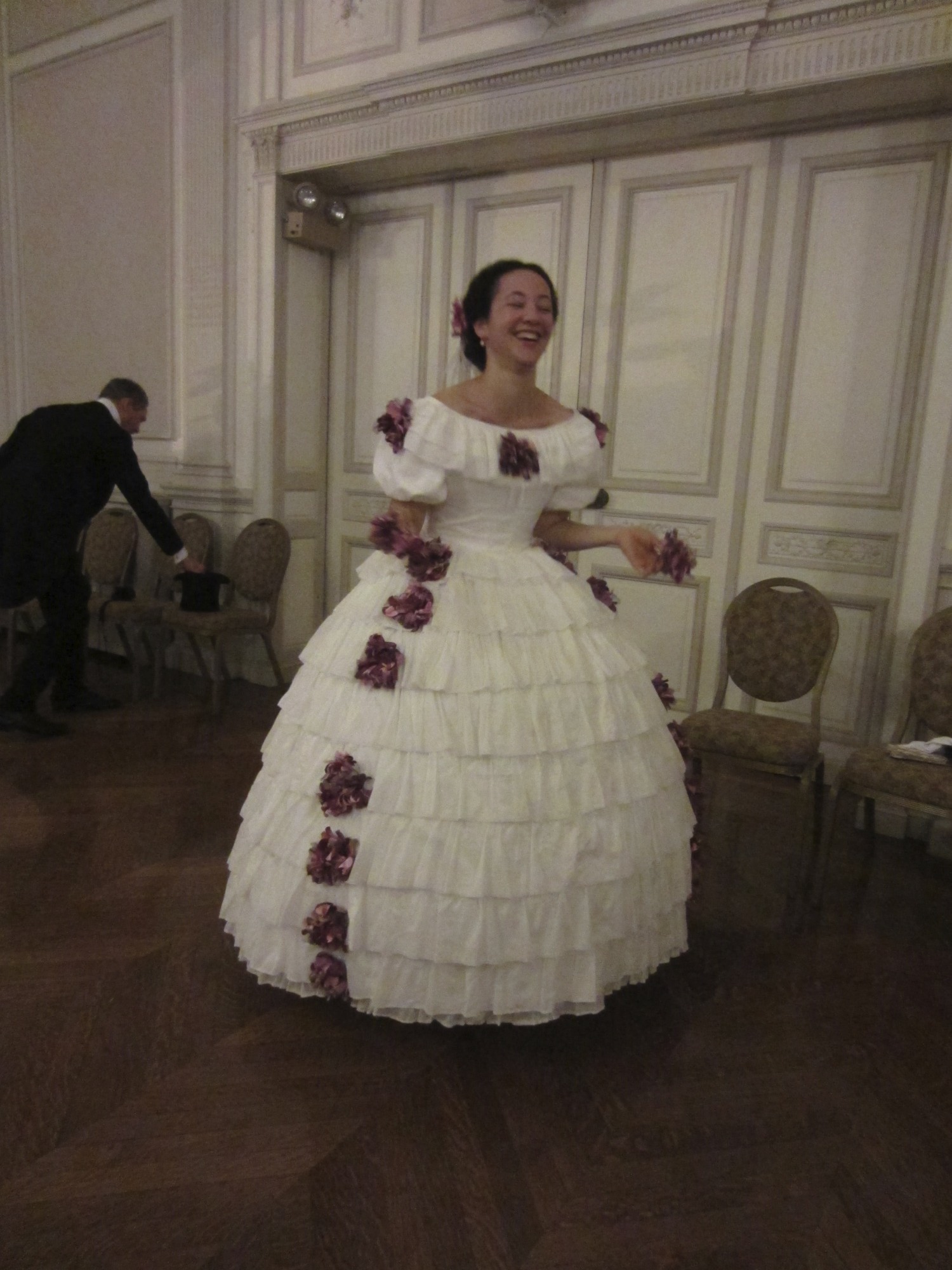
Project Journal: 1864 Ball Gown Part IV: Three Series Of Photos

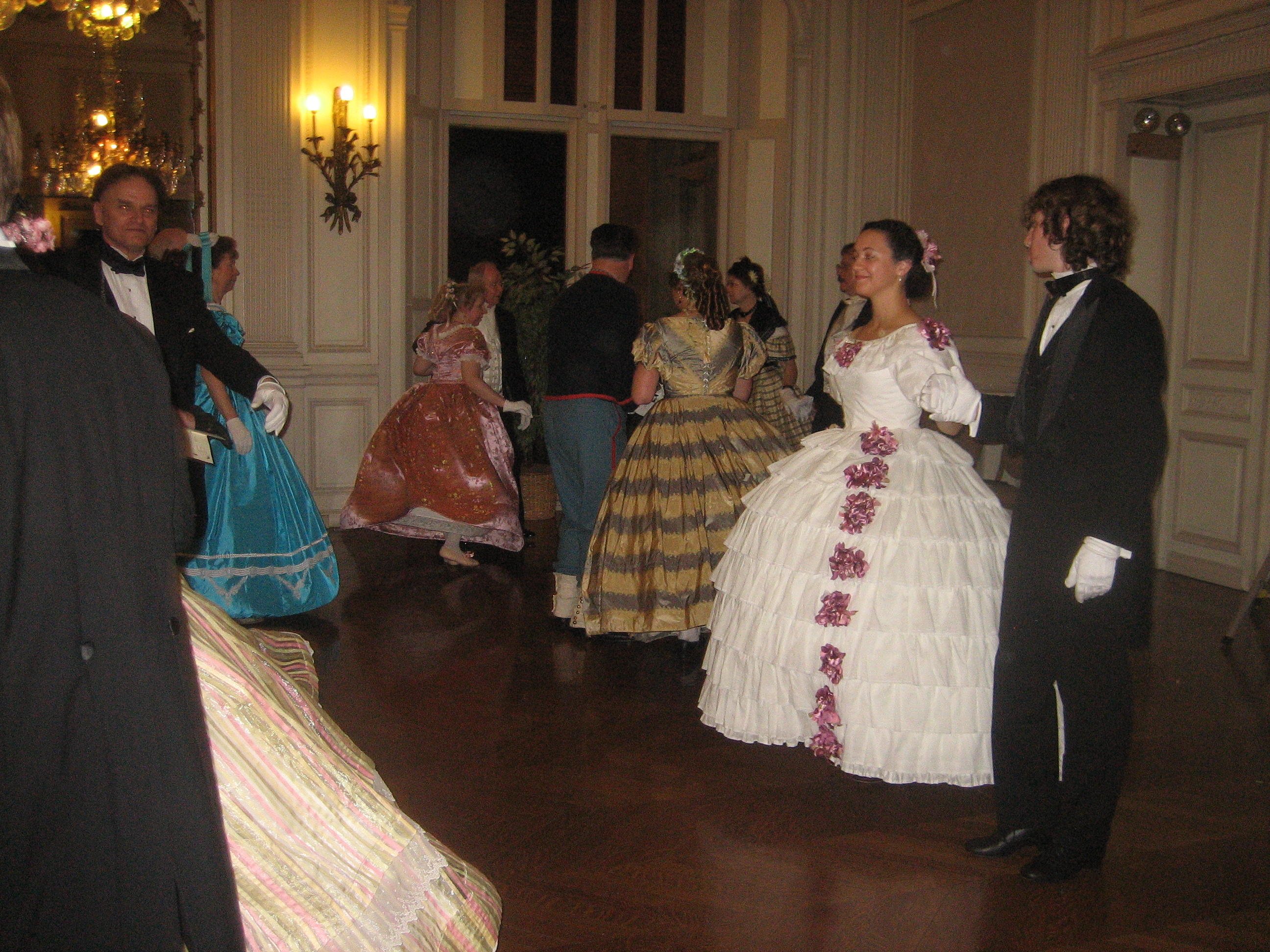
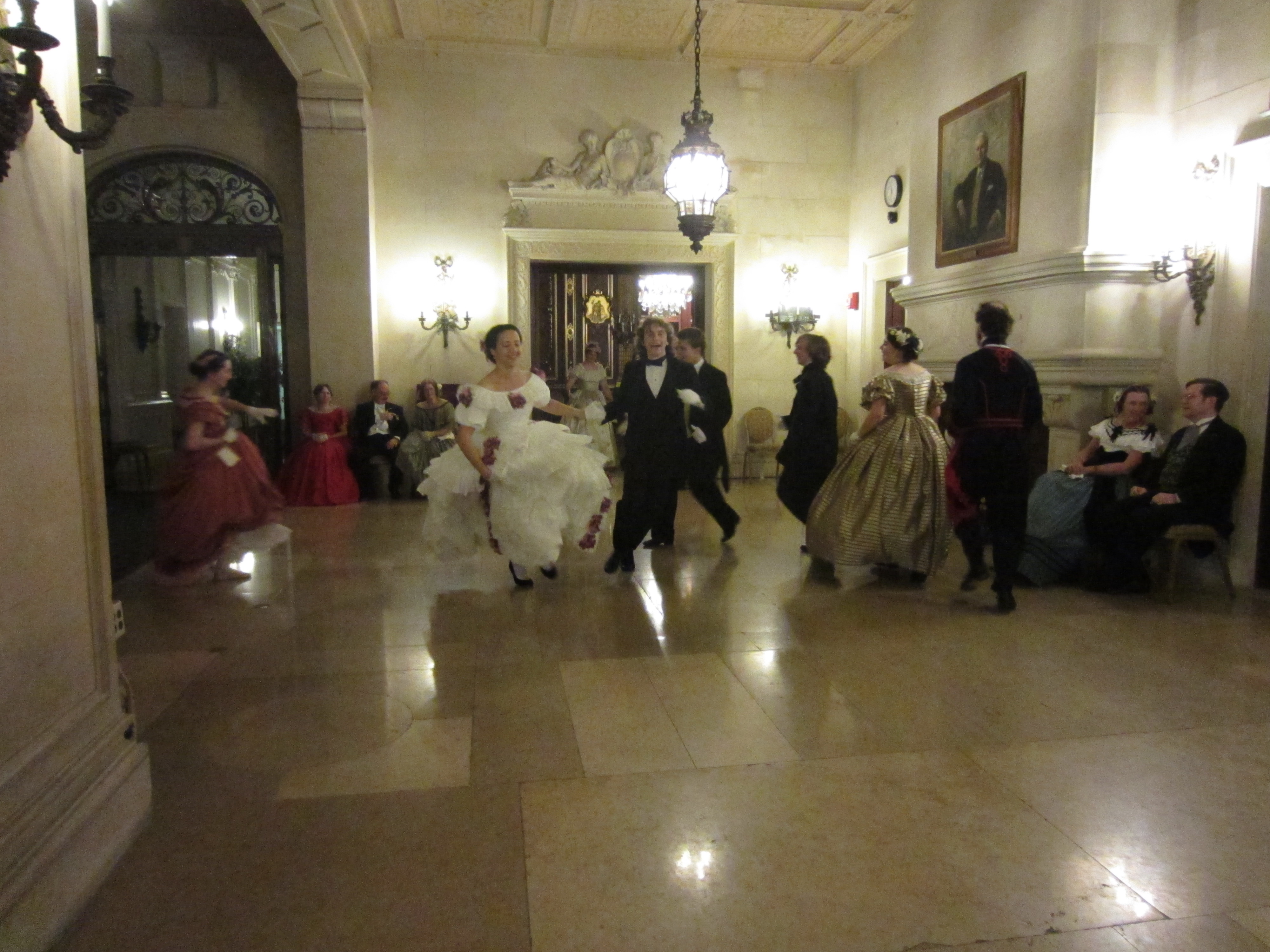
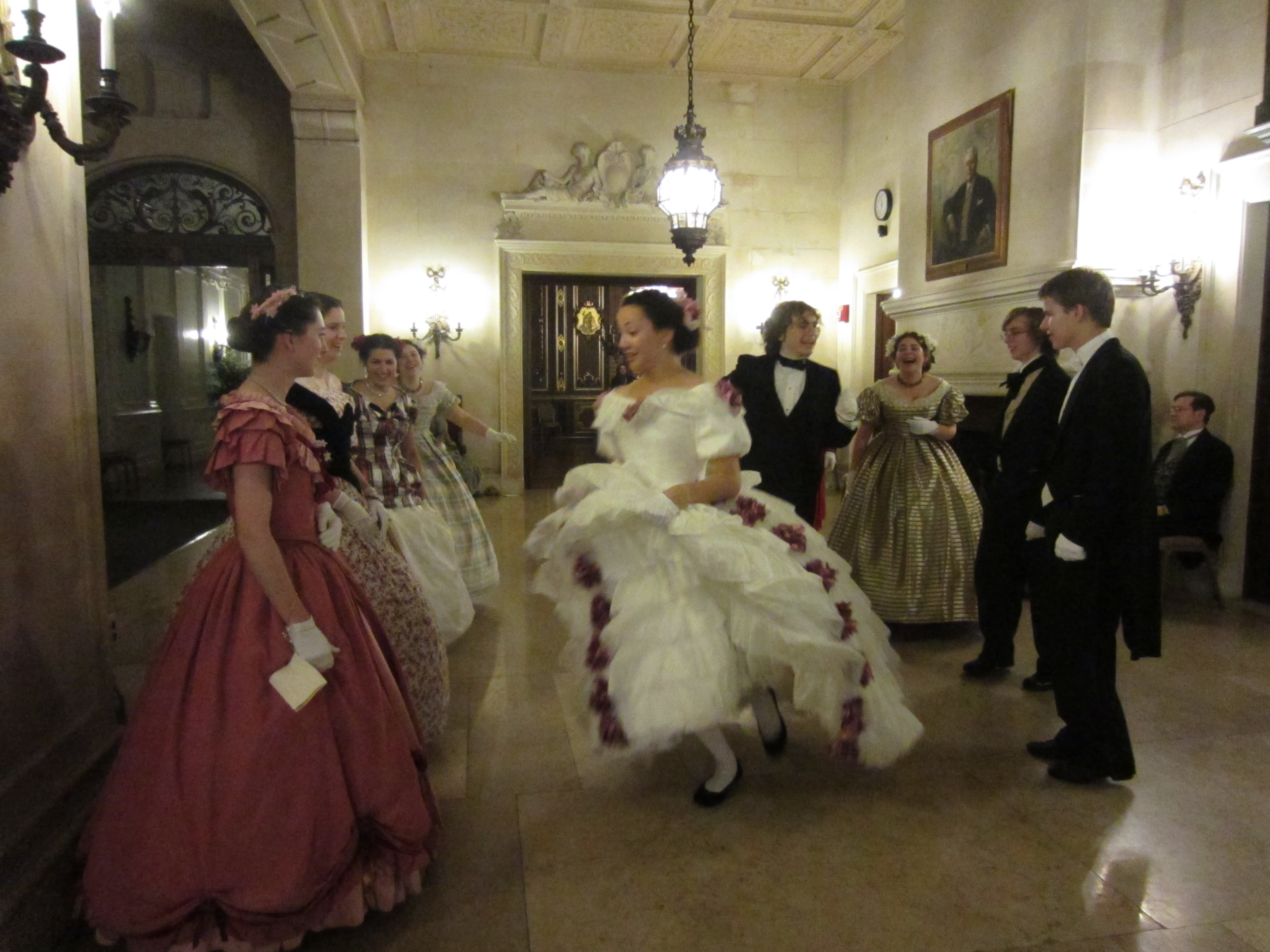
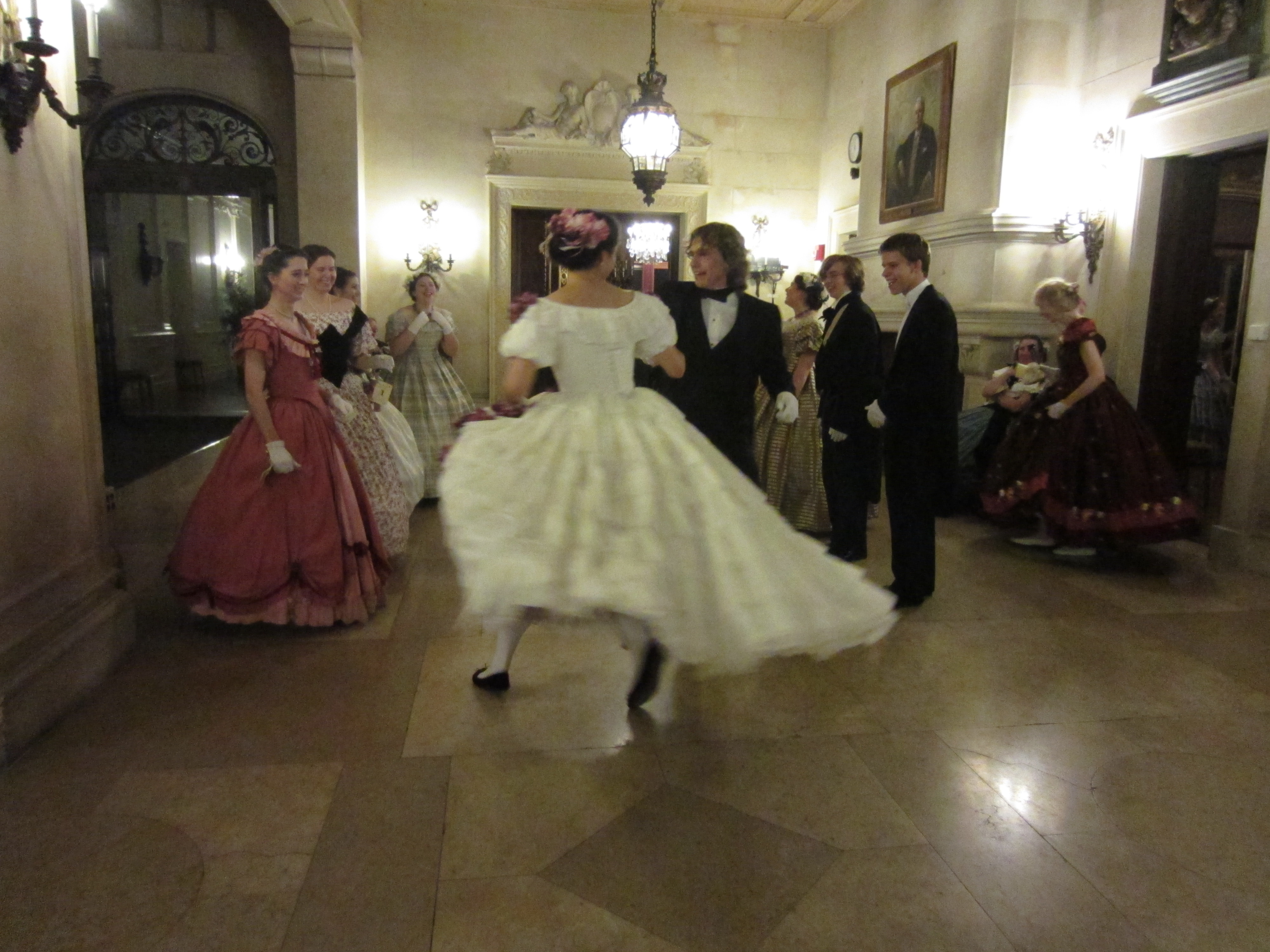
Remember in my last post I promised pictures of the finished ball gown now known as Evie? The time has come! I had a hard time narrowing down the options (because of course I wanted to share ALL of the good pictures), but I’ve tried to limit myself to only the best of the best. This post will focus on the completion of my dress, Evie, but there are two more posts coming soon that will share some of the other photo series as well as pictures of the ball itself!

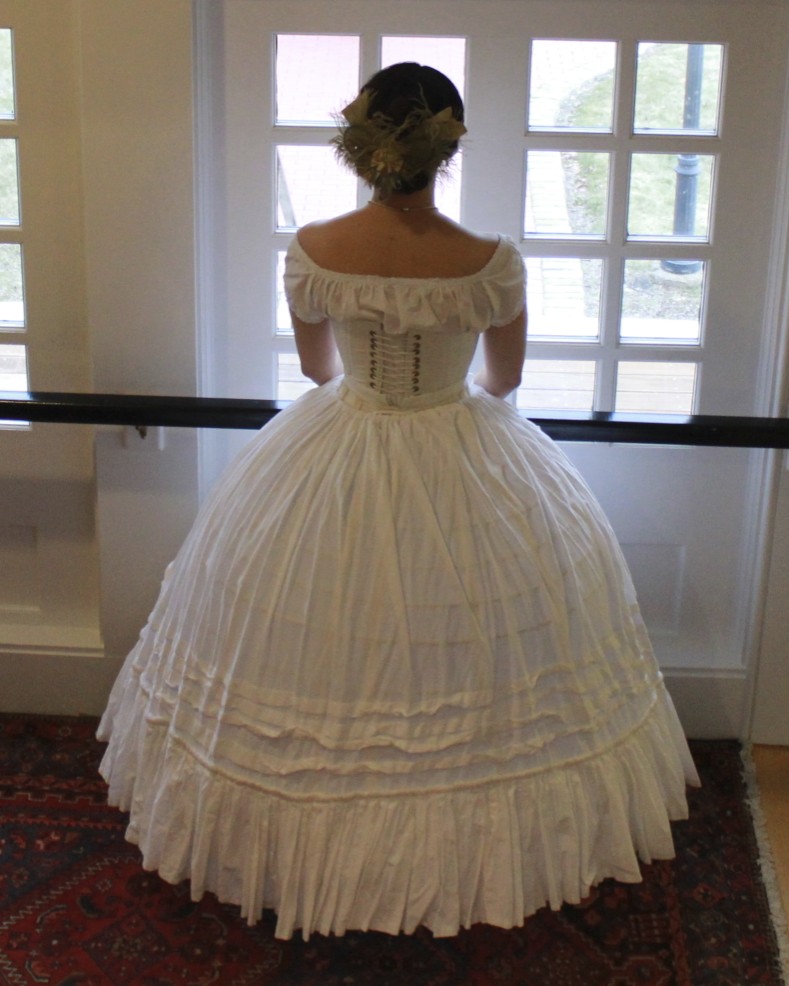
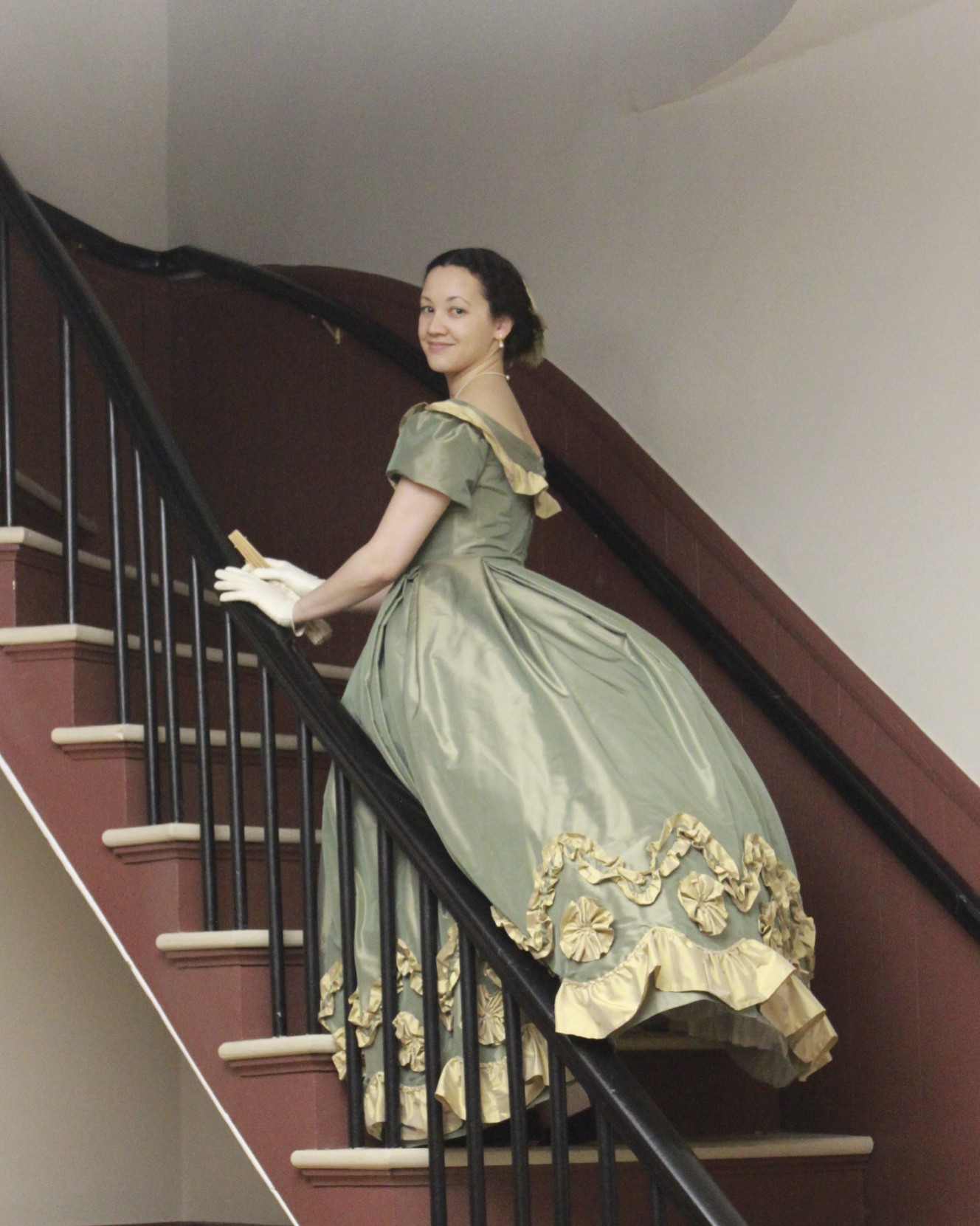
These photos are the idea of my friend with the camera. She wanted to take series of pictures of us in our modern clothes, 1860s undies, and then dressed in our 1860s ball gowns: all in the same location and the same pose. It’s a neat idea and the results are great, not only because it provided lots of pictures (yay!) some of which are of things I don’t have pictures of (like my 1860s undies), but also because you can see the time passing through the evening by looking at the light in the photos. They start in the afternoon, proceed to early evening, then finish at night. Not all the series are a complete set, but all around, it’s pretty cool. Which series do you like best?

Series 1: To The Right

IMG_9740
To The Right: first layer
IMG_9735
To The Right, second layer
IMG_0151
To The Right, third layer

Series 2: What A Change

IMG_9546
What A Change, first layer
IMG_9729
What A Change, second layer
IMG_0144
What A Change, third layer

Series 3: On The Stairs

IMG_9693
On The Stairs, first layer
IMG_9714
On The Stairs, second layer
IMG_0130
On The Stairs, third layer

I’ve never been able to get pictures of my 1860s undies before, so this is exciting! I’ve got a chemise, corset, drawers, cage crinoline, and petticoat (in addition to stockings, shoes, jewelry, hair wreath, gloves, fan, and gown). The crinoline is entirely hand sewn, except for the waistband. The measurements of the hoops are taken from an extant crinoline, and I believe the circumference of the bottom hoop is about 120″. The crinoline closes with a hook on the waistband. The other pieces are machine sewn and trimmed with lace, pin tucks, and ribbon. The chemise slips over the head and the drawers close at the back with a button and loop arrangement. (And that poor petticoat does need a press… but I threw it in the washer and dryer a while ago and since it doesn’t usually get seen I haven’t taken the time to press it.) The petticoat ties around the waist. As you can see, the crinoline stops mid-calf, so the intense petticoat ruffle really helps keep the shape for the skirt below that point, in addition to keeping my hoops from showing as horizontal lines through the skirt of the gown.

Want to be further amused? Look at the apparently changeable feathers on my hair wreath. Sometimes they’re brownish/gold and sometimes vivid green! They really do seem to change color depending on the light!

I don’t think I’ve mentioned it yet, but the basic pattern for this gown is essentially taken from Janet Arnold’s Patterns of Fashion 2. The trim however, is based on two things. Thing 1: the skirt trim is from the fashion plate I shared with you in the first post of this project journal. Thing 2 : the bodice trim is based on this gown, below. I went through a lot of phases trying to decide how to trim the bodice, since I didn’t really like the fashion plate bodice trim. In the end, I decided on this look: a graduated ruffle (just one, in my case, to match the one ruffle on the skirt) that gets longer toward center back, a triple pleated bertha that has a swoop towards center front rather than being straight, and a big trim thing right at the center (in my case, a rosette to match the skirt, rather than a bow). It’s pretty hard to see the front of my dress in these pictures I’ve shared so far, but there are some coming up in the next two posts which will show off the front of the gown better, so stay tuned for that!

5178aec3e06e5f940a6b607a4b697fcc
A costume from the movie Il Gattopardo (1962, costume design by Piero Tosi). It’s lovely, despite the fact that it is not an extant gown from the 1860s.

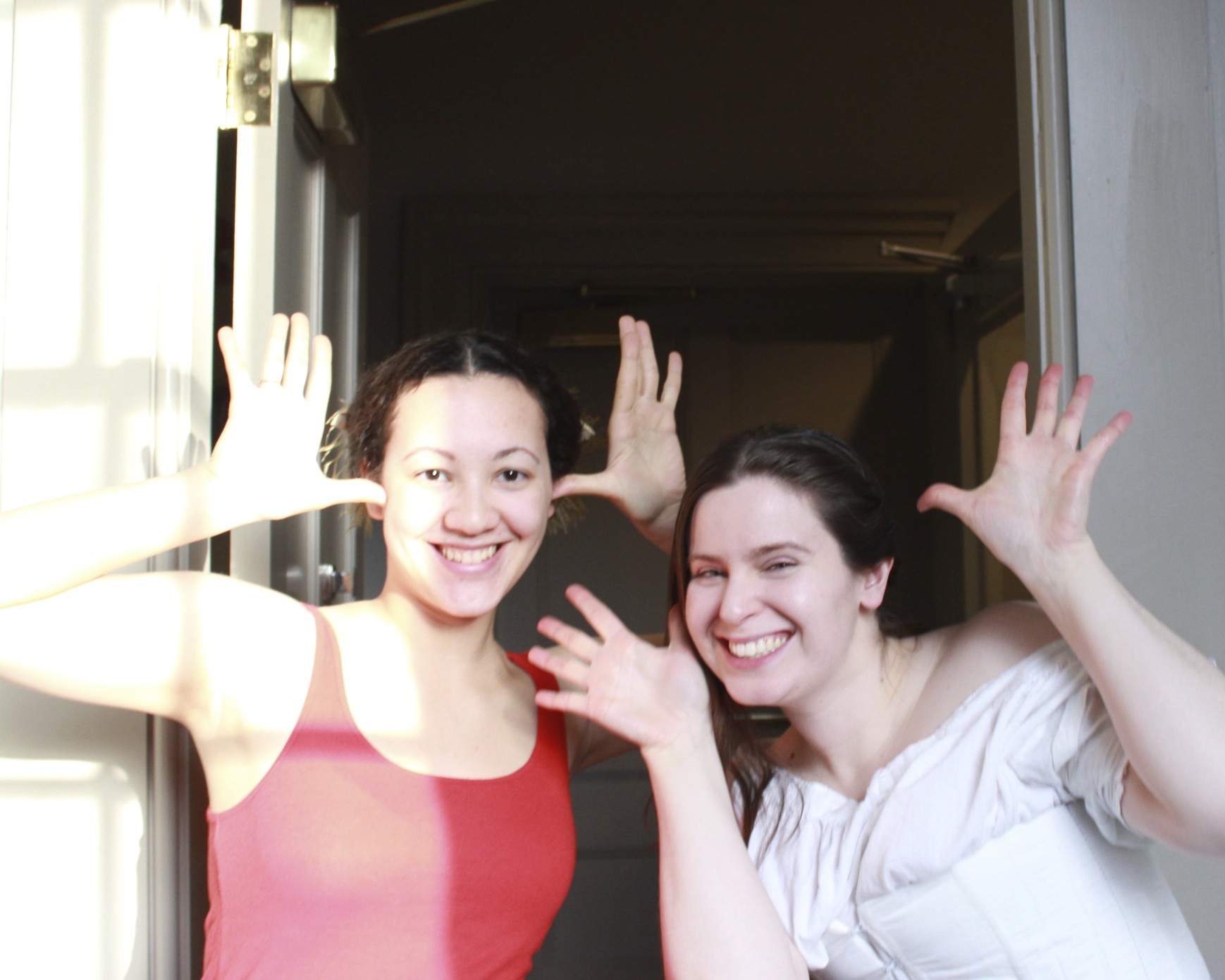
While getting dressed we might have been making silly faces for the camera while the owner walked away…
IMG_9674
Haha! Moose making companion! In case you don’t know, this is my favorite silly face to make. Don’t believe me? Look here and here!

Project Journal: 1864 Ball Gown Part III: Innards

It’s been a little while since I posted about my new 1864 ball gown. Over a month, I think, because in February I posted about the plan/inspiration and then about the progress I made on the trim. I was steadily working on it during the month of March and had it ready to go for the Returning Heroes Ball a week ago. That’s not to say there wasn’t a little bit of last minute sewing the afternoon of the ball. My last minute sewing was gloves and hair piece, though, not dress, so that’s an accomplishment! And I wasn’t alone in my afternoon sewing… friends were sewing with me! There are lots of upcoming pictures but for now I’m going to post about the insides of the skirt and bodice. It’s a sneak peak, since you have to wait for the others pictures to see the full ensemble!

IMG_4361
Completed skirt trim! I was SO ready to be done with it by the time I was sewing down the green zig zag (the last step of the skirt trim).

My other 1860s dresses have names: Belle is my dark blue gown and Annabelle is my white gown. I haven’t really been thinking of this dress by name until recently. Upon consideration, I’ve decided that she’s named Evelyn, or perhaps Evie for short. Why that name? I just like it, it’s old fashioned, and it has Y, and I have a fondness for the less commonly used letters of the alphabet. So here she is: Evie.

IMG_4362
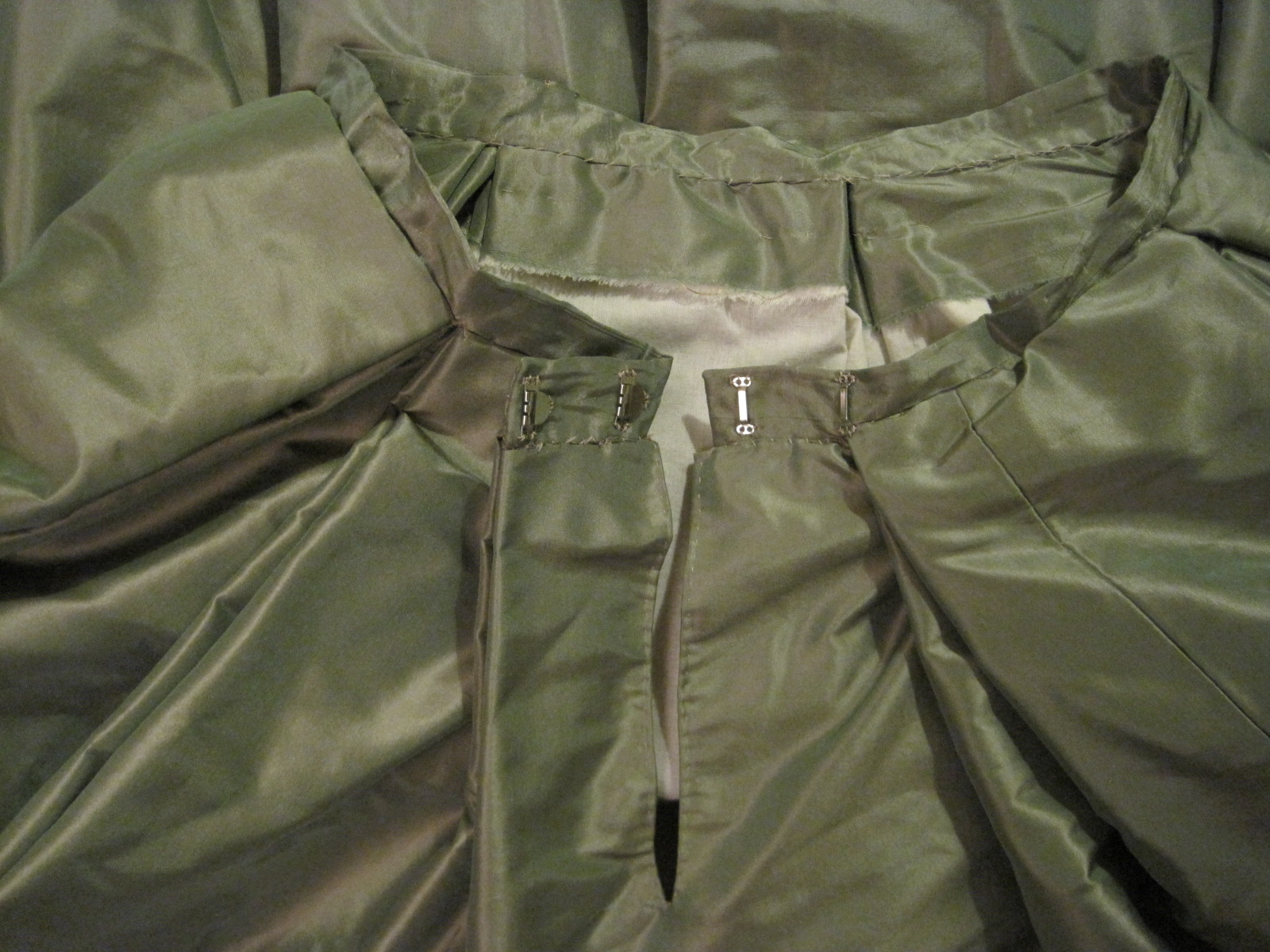
Skirt waistband of self fabric, to which the box pleated skirt is sewn. There is a cleverly hidden opening on the fold of one of the pleats.
IMG_4363
Magic! The pleats are deep enough that you can’t see the opening when the skirt is hooked closed, even with my hoops underneath.

The raw top edges of the skirt are just turned to the inside and left alone. The silk skirt is flat lined with muslin, which helps give it some body, preventing creasing, and some stability at the hem for all that trim. There are six double box pleats evenly spaced around the skirt, as you can see. I haven’t tried this evenly distributed method on an 1860s skirt before (my previous dresses have knife pleated fronts and cartridge pleated backs, which makes them much heavier in the back than the front… I suppose I could divide the skirt in half and do that method, but given how those skirts are weighted, I’m sure there’s more fabric in back than in front). All that to say that I love how evenly weighted this skirt is! It means I don’t need a giant bum pad to keep my hoops level with the floor. (Come to think of it, I suppose I could remount the skirts of my other dresses onto new waistbands and redistribute the fabric… hm… I’ll have to think about that!)

IMG_4365
Inside of the bodice at center front. The bodice is flat lined in ivory polished cotton. The edges are finished with cording (even the top edge, which you can’t see on the outside because it is hidden by the bertha, grrr, but oh well!).
IMG_4368
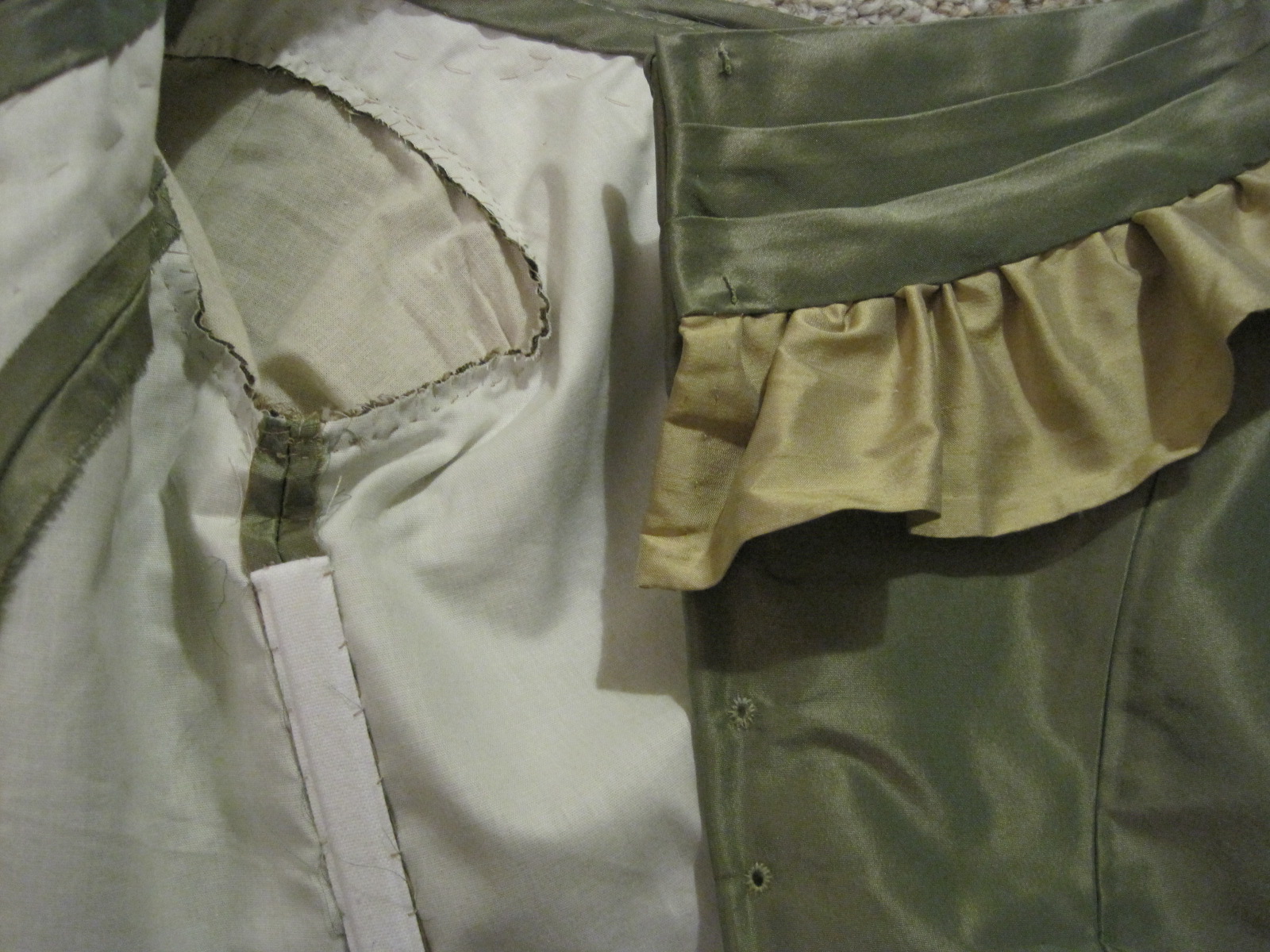
Inside of the left front and outside of the right back.

The sleeve is lined in muslin. I originally intended that it wouldn’t be seen, but then changed the sleeve design so now the muslin is visible on the inside of the bodice. It doesn’t matter, though, but I do like it when everything matches. The seam allowances of the bodice are just left unfinished (I might whip stitch over the edges some day, but that’s unlikely, since I’ll probably be sewing something else!). The armhole seam allowances are whip stitched together to keep them from fraying and to keep all those layers together. The armholes also have cording in them. The bodice closes at center back with lacing. The eyelets, like everything else, are hand sewn. The bertha also closes at center back (unusual, since a lot of them close on the shoulder, but I didn’t want my bertha pleating to be able to move or show the top of the ruffle). You can see the stitching holding the bertha in place in the first bodice picture, because those stitches go right through to the inside of the bodice.

I stopped keeping track of how many yards of hand sewing went into this dress… but now I’m curious again. So when I finished stitching the gathering stitches I was at 86 1/2 yds just for the trim. I’d estimate about another 22 yds of stitching to attach the trim and about 12 yds of stitching to construct the skirt before attaching it to the waistband. Waistband attachment was probably about 7 yds (it’s quite sturdy and all those pleats are well sewn!). That puts the skirt at a total of about 127 1/2 yds of hand sewing. Then there’s the bodice, which is maybe 12 yds of hand sewing total? That’s a harder one to estimate. That brings Evie to a total of approximately 140 yds of stitching.

I’m proud to say that every single stitch is hand sewn. Next time, though, I’m planning on machine stitching the inside seams. It’s super satisfying to have an entirely hand sewn dress, but it took about two months, and that could have been much sped up with the use of a sewing machine, which means I could have made more things! Who knows, I might change my mind, but right now even I am tired of hand sewing that dress.

Project Journal: 1864 Ball Gown Part II: Trim Progress (HSF #4)

Well, I hope this isn’t too much of a stretch (or maybe interpretation is a better word), but I’ve finished preparing all of my skirt trim and I’m going to call it my project for the HSF #4  Challenge: Embellish. I say it’s a stretch because my completion of this project is the preparation of the trim, rather than the attachment to the garment. To be fair, just the prep has been a lot of sewing, so I think it counts. Here it is, below: gold trim on the rather wrinkly skirt of green and gold shot silk taffeta. Because the gold is shot with silver, and the green is shot with gold, they are both photographing more washed out looking than they appear to me when not looking through a camera. Hopefully one day I’ll be able to get a picture where they look a little less silvery.

IMG_4284
All the skirt trim, gathered and ready to be attached!

The top pile of trim (that rather resembles a ruffly brain, don’t you think?) is for the zig zag. The two piles on either side are the 18 rosettes. The section on the bottom center is the ruffle that goes at the bottom. You can see the inspirational fashion plate here, in this previous post, to see what these different trim sections look like in their actual context.

IMG_4285
My favorites are the rosettes. Aren’t they cute?
IMG_4286
Here’s all of them laid out like an accordion, or a slinky. They look so adorable!

Anyway… here are the facts:

Fabric: almost 1.5 yds of gold shot with silver silk shantung.

Pattern: none, just a lot of math.

Year: 1864.

Notions: none, just thread.

How historically accurate?: Well, shantung is not accurate, but silk is (and this shantung is pretty smooth and not slubby, so I don’t think anyone will know it’s shantung unless I tell them). The trim layout is from a fashion plate, so super accurate. The stitching is accurate. Overall, I give it a 90%.

Hours to complete: Um… a lot. It’s all hand sewn. I started in January, so… 50 hours to get to this point? I really have no idea. I think in terms of months or weeks usually, not hours or even days.

First worn: Not yet, but will be worn in March.

Total cost: $9, because the silk was a remnant.

And while I’m keeping count, let me also note the yards of stitching currently sewn into the trim. When it was all hemmed I was at 45 yards. Now I have the addition of gathering stitches (31 1/2 yds) and ruffle binding (9 yds). That ups the total yards stitched for trim to 86 1/2 yds, and that’s before attaching it! Nice.

Project Journal: 1864 Ball Gown Part I: The Plan And The Trim

It’s time. I’ve been wearing Annabelle, my flounced not-so-new-anymore white 1860 ball gown, to all Civil War events for about a year straight, with no relief on the horizon. Not that I dislike Annabelle, I just want options, and a change. I have Belle, a dark blue 1860 ball gown, as well, but I haven’t worn her since 2011, and since most of the women in our dance troupe have blue dresses it’s not likely that I’ll get to wear her soon, and anyway, she’s too heavy for summer, and summer is coming up. So it’s time. Time for a new 1860s gown! Yay!

This gown was included back in autumn of 2012, when I made my 9 month sewing plan. It’s my goal to have it finished by mid-March, for the annual Commonwealth Vintage Dancers Returning Heroes Ball. My inspiration is this fashion plate from 1864 (pictured below).

315_1864_FashionPlateAA
From The Bartos Collection. 1864.

Specifically, I’m going to be making the dress on the left. Or one inspired by/sort of like it. As I’ve been working on it I’ve made changes to my plan, as you’ll soon see. My dress will be green silk shot with gold and with gold silk trim. I bought the silk remnants for the project months ago, so I have had to make my plan work with the yardage I have. The green isn’t an issue, but the gold had to be carefully considered to make sure I have enough for all the trimmings. After lots of math, I realized I didn’t have enough to do all the trim, so I thought about what was visually most important and decided to eliminate the vertical lines of trim, as well as the waist trim. Here is the same fashion plate, with my changes:

480_1864_FashionPlateAA - Version 3

Of course, me being me, I’ve decided to hand sew the entire gown! Yes, sometimes I like my big projects. But I’ve got time (I think). I’ve sewn the skirt and the polished cotton lining and hemmed them, though the skirt isn’t attached to a waistband yet. I’ve sewn the bodice seams, so now it needs boning, and cording, and trim, and closures in the back. And, most importantly, I’ve cut and hemmed the MANY yards of gold trim for the skirt.

IMG_4198
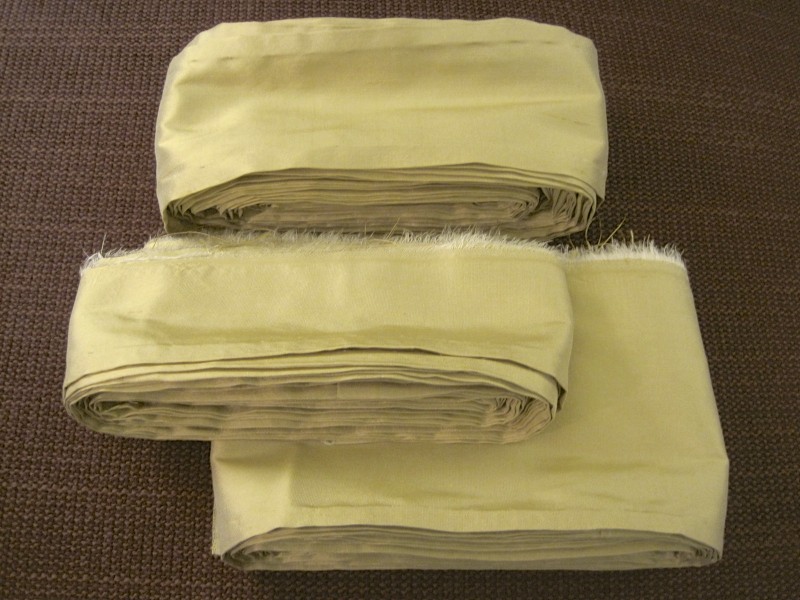
Skirt trim: on top is the zig zag, in the middle is the rosettes, and on the bottom is the ruffle. Not gathered yet, but all hemmed!

Did I mention I’m hand sewing all of this? All of these trim bits on the skirt will be gathered to a ratio of just over 1 1/2 to 1 (that was all that my yardage would accommodate). The zig zag is hemmed on both sides and will be sewn onto the skirt with a band of green silk running down the middle. The rosettes will be gathered in the middle and the raw edges hidden, which is why that bit is hemmed on only one side. The ruffle at the bottom will be bound at the top, which is why only one edge is hemmed.

Hem-age: 13 1/2 yds of zig zag, hemmed on both sides equals 27 yds of hem; 10 1/2 yds of rosette hem (there will be 18 finished rosettes on the skirt, if all goes according to plan); and 7 1/2 yds of ruffle hem. Total hem-age: 45 yds, and that’s just the skirt trim!

I love hand sewing, which makes me excited about that total, rather than bored. And I really enjoy the sense of satisfaction I have when I’ve completed the different pieces of this project, so I can only imagine how great it will be when the entire gown is complete!

Cast Iron Crinkle Cutter Part I

This is super exciting!  A significant part of my nine month sewing plan is to increase my Regency wardrobe pieces so I have more options for varying weather conditions and activities, including accessories. I’ll list my plan in another post sometime soon-ish, but let me jump forward to say that it includes a chemisette.

Well, there  aren’t many extant chemisettes that I know of and it doesn’t seem like many other people are able to reference a wide variety either. Janet Arnold has patterns for some of them in Patterns of Fashion I… and I didn’t originally want to go with one of those (because, you know, it seems like everyone does and I like to be different), but after researching and realizing that Janet Arnold has the monopoly on extant chemisettes I decided to just go with it. I also do really like the chemisettes she has… I particularly like the ones with the mushroom pleated collars. And that style will work well for my wardrobe planning, because I want to make high necked walking dresses, spencers, and pelisses, and I like the idea of the mushroom pleating filling in the high necklines. Plus, the Regency was full of 16th century style references and ruff-like things.

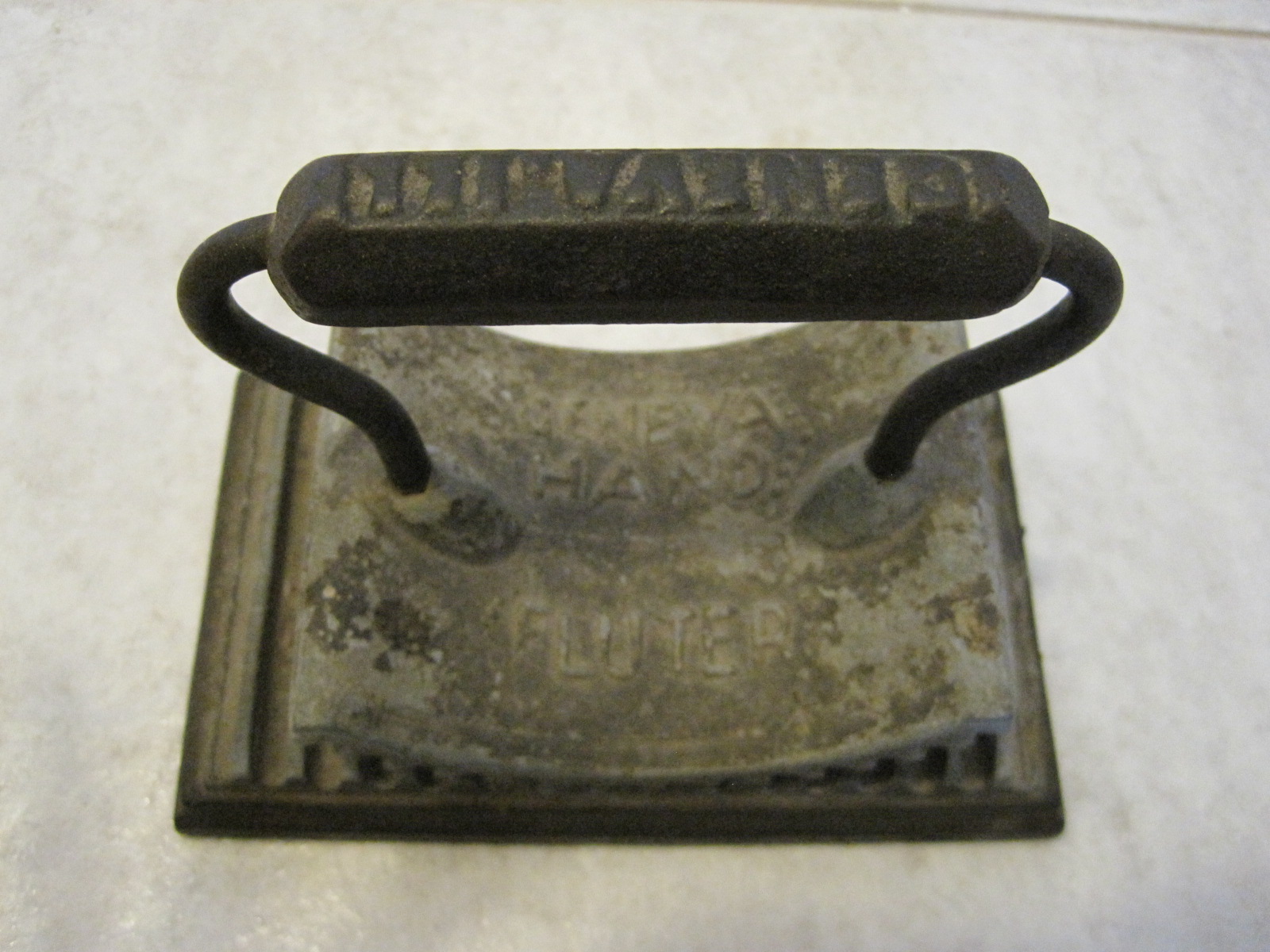
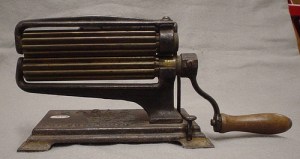
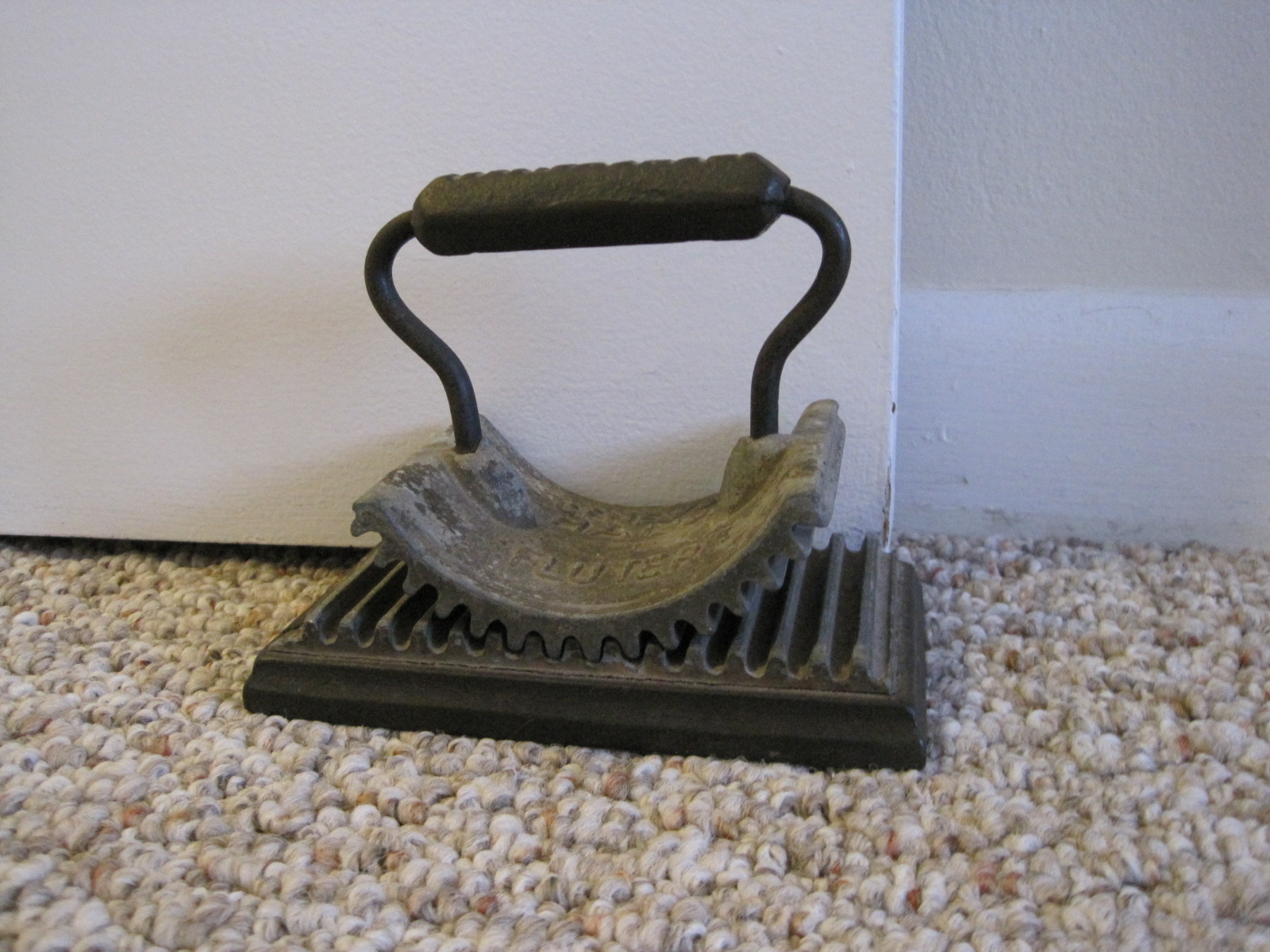
All of that to explain that I looked into ways to make mushroom pleats. I discovered that the best way is to use a fluting iron: a special type of iron that produces small pleats. I got super excited and bought one on ebay for about $20.

Here it is: a fluting iron!

I also did research about different types and brands of fluting irons. This website  was super informative about different types and their values. This one also has good pictures and information about fluting irons and their use. Essentially there are three types. I bought the rocking sort, which is an iron and a base; there is also the rolling sort, which has a rolling device (like a paint roller) and a base; and then there is the cranking sort, which has two rolls that wring the fabric through to create the pleats.

The rolling sort.
The crank sort.

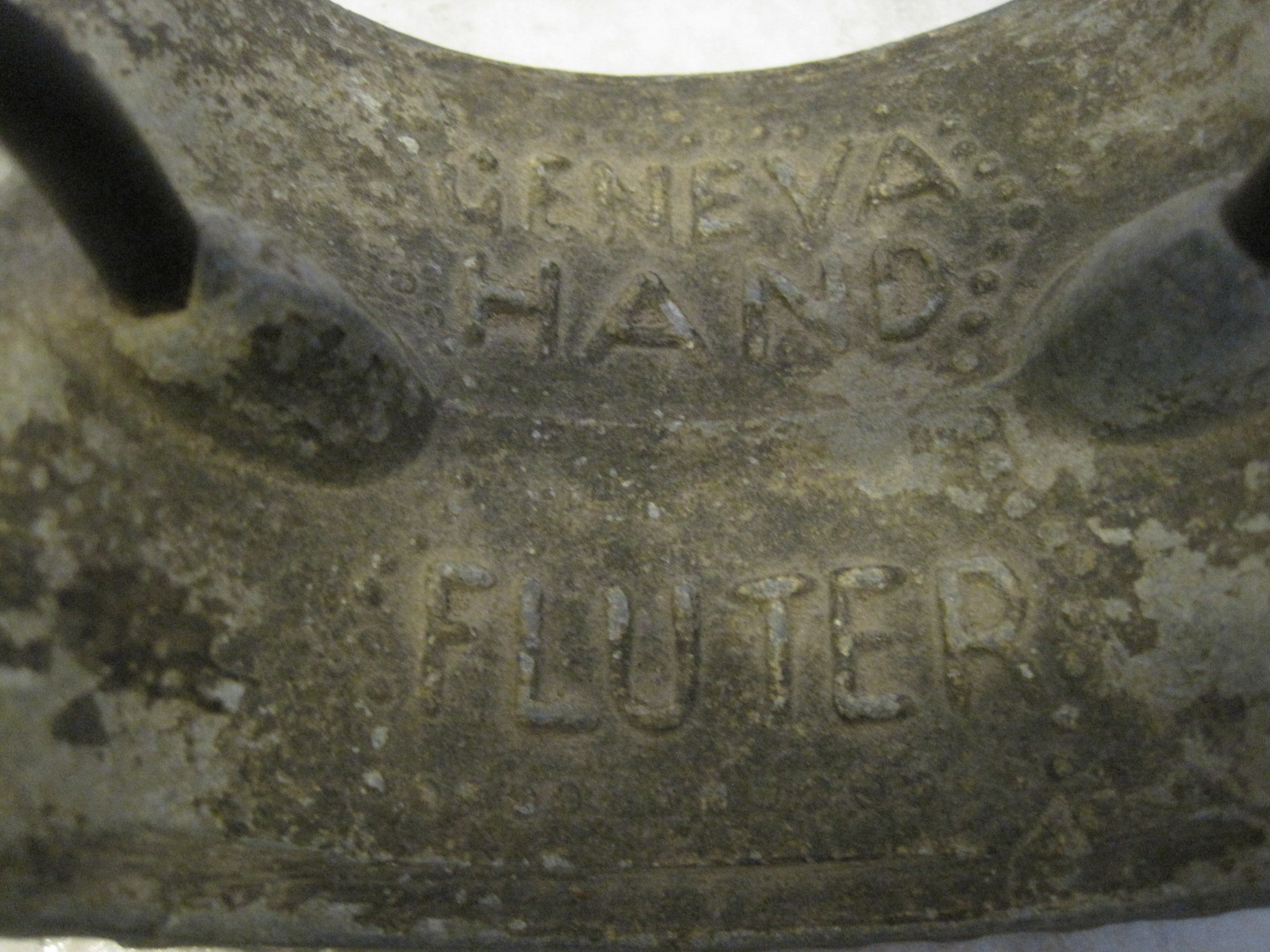
I chose to buy the rocking sort of fluting iron because of the price. There are enough of particular brand I bought (Geneva) in circulation today that they are relatively inexpensive. The type bought was patented in 1866, as you will see.

Proof of manufacture and name.
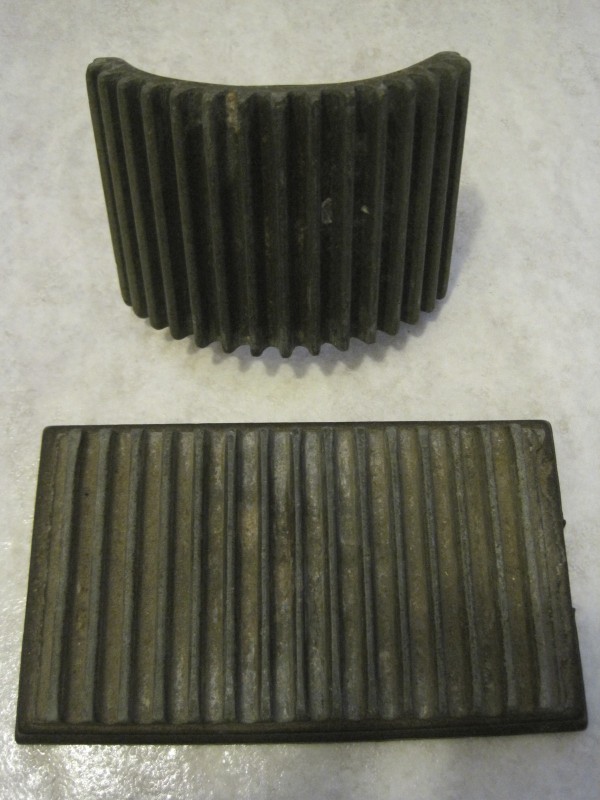
The iron on its side and the base.

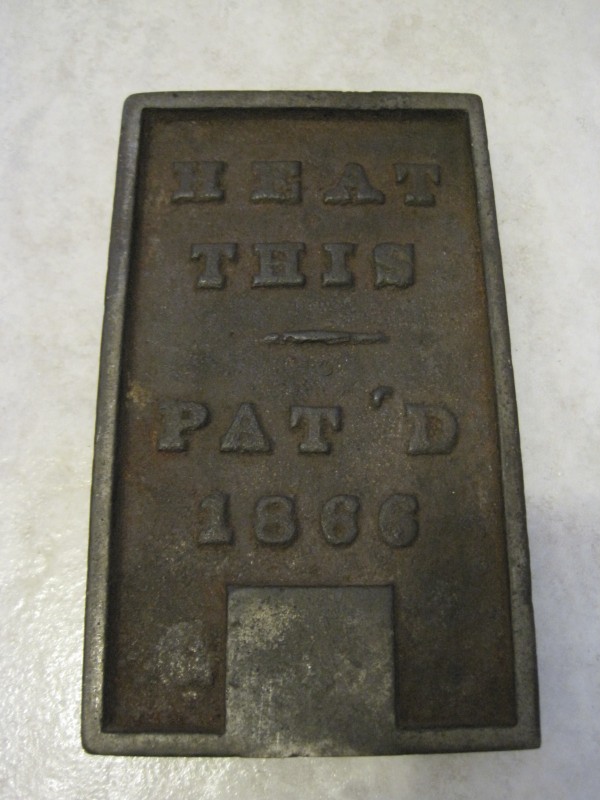
I also did research about how to use a fluting iron and how to get your pleats to stay in your fabric. It sounds like the best thing to do is use a homemade mixture of cornstarch and water to starch your fabric before pleating it. Once I try it I’ll report on how that works! One thing that did stump me for a day or two was how I plan to heat this thing and which part to heat. A lady in the 19th century could have heated either part on her cast iron stove, but I was thinking”I don’t have a cast iron stove… how am I going to heat this??? Do I heat the iron, or the base?”  Well, one of those questions was easily solved by using my eyeballs…

Duh!

Isn’t it fabulous that the manufacturer included some sort of direction? I was thinking of putting either the base or the iron in the oven… And then it occurred to me that I do have a stove, even if it is not a cast iron stove… So my current plan is to heat the base on the stove, and then somehow figure out a way to take it off the stove, so I can use it without fear of burning my fabric by having it touch a hot burner. I’ll have to report back on that part of the adventure, too!

You can see that the iron and base are a little grimy, so I also need to consider cleaning them before I try using them. I have not yet researched methods of cleaning cast iron. I imagine you can use similar methods as to what you might use to clean a cast iron pot? If you have ideas about the cleaning, please do share!

The two pieces are smaller than they appear, but because the iron and the base are cast iron, they are actually rather heavy. Until I use them (and probably after I do) they will be a door stop… they work really well for that purpose! And they add a bit of history to the room. Mr. Q has dubbed the fluting iron the “Cast Iron Crinkle Cutter” because he thinks it looks like something you might make crinkle cut fries out of… which makes me laugh. So here’s a picture of the Cast Iron Crinkle Cutter being a door stop, which also helps to show scale!

Not as big as you might think!

Silly-ness with Lulu

During yet more summer adventures, I participated in a fair number of vintage dance performances with the Commonwealth Vintage Dancers. I know I’ve shared a lot of pictures of awesome vintage dance things recently, but if you can believe it, I actually left out entire performances that I haven’t shared anything about! Anyway, this performance wasn’t particularly picture worthy (ie, I didn’t take thousands of pictures…), but I did take a few. Of those, I just want to share this one with you. And I’ll explain it, because it’s kind of unusual.

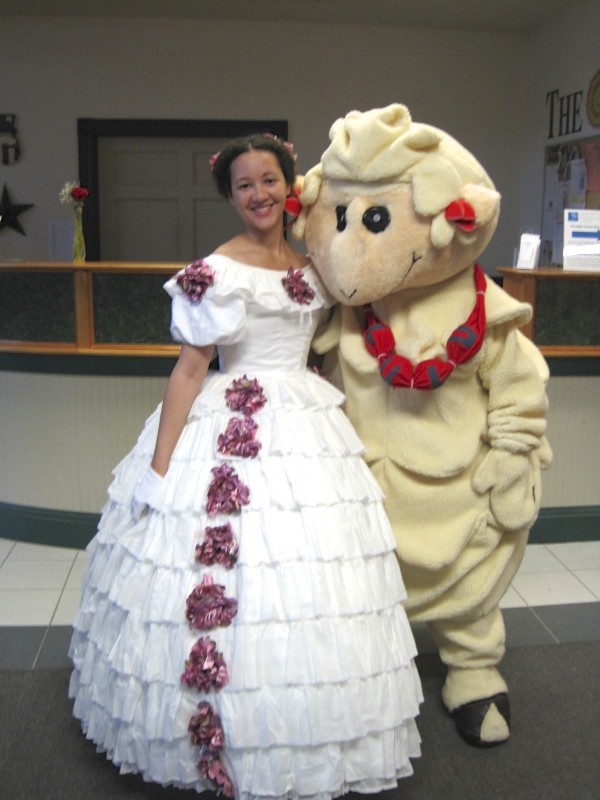
Here I am, with Lulu the lamb.

Yup, I am standing with Lulu the lamb. Why? Well, apparently Lulu is a feature of the Lowell Textile Museum in Lowell, Massachusetts.  We were there for a performance during which Lulu was also there. We even got Lulu to dance with us a little bit (I can imagine it’s pretty hard to dance in a  lamb costume…)! As you can imagine, it was essential that I get a picture with Lulu. So here we are. There’s really nothing else to be said, but please, do grin and giggle with me.

Newport Vintage Dance Week Part V: Ochre Court Continued

So ends the first ever Speed Virginia Reel.

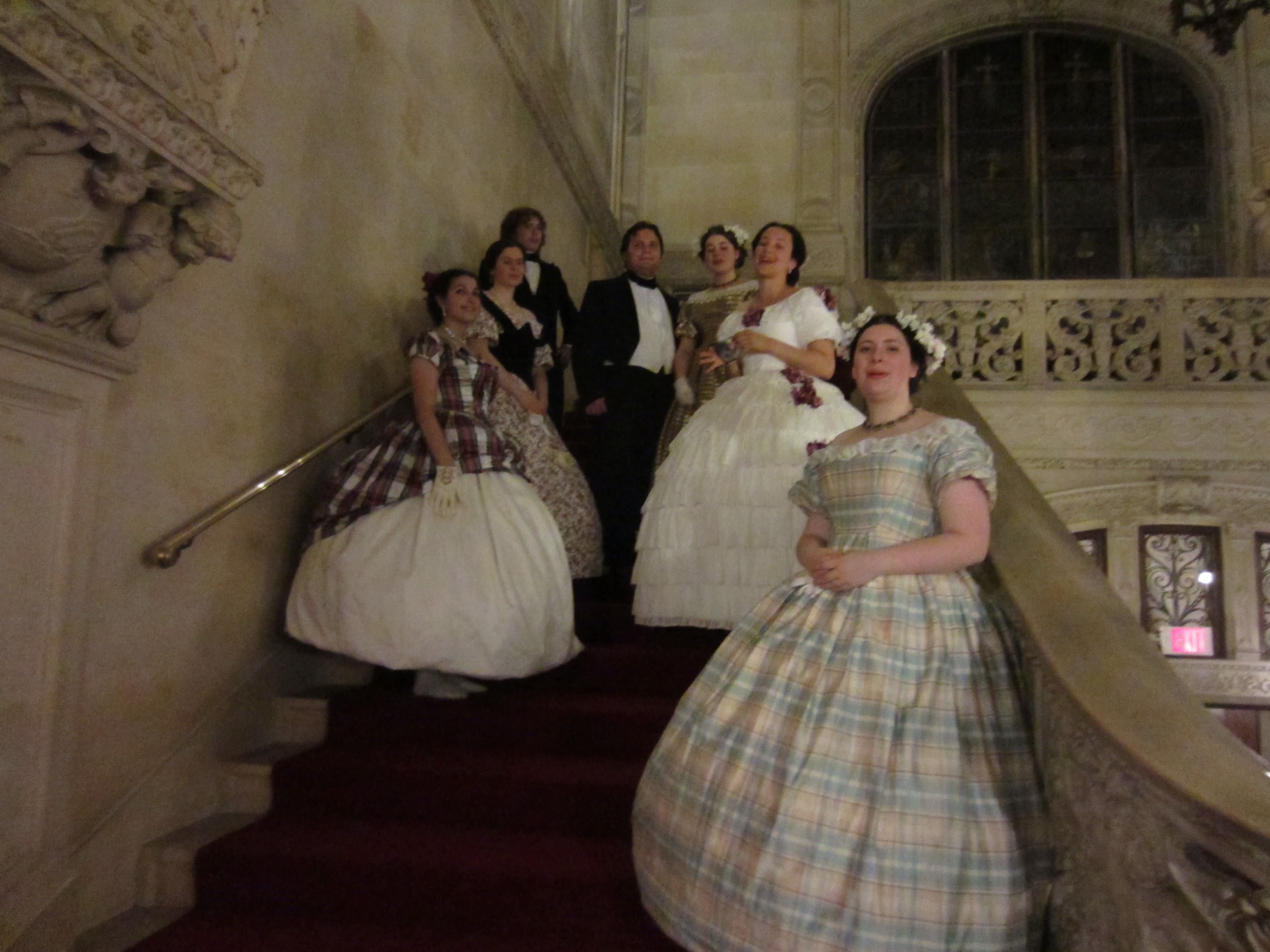
Last post, I left you just at the completion of our young set’s Speed Virginia Reel. This post is going to be a continuation of Ochre Court pictures, because there were too many I wanted to share for just one post. At the end of the ball we decided to get some young people pictures on the fabulous red carpeted stair case in the entry way, so that is where we begin Ochre Court pictures: part II.

Congregating on the stairs. If you look closely, you can see the flower clump casualty on my dress.
Such a lovely group of young people.
Of course, we’re all very tired after our exertions…
But that doesn’t stop us from taking animal pictures!
Which made us laugh pretty hard.
Bill Cunningham caught us taking photos on the stairs and was very excited. BUT… We caught Bill Cunningham taking pictures of us on the stairs!
Halfway up the stairs, pretending to jump!
A close up…
Another view. It was particularly amusing to us because we were tired and the floor below the stairs is marble, so obviously one would not actually want to jump over the railing…
Okay, now we’re trying to be serious and look like we’re having casual conversations.
And now we’re being elegant. Look! Bill Cunningham!
Descending the stairs with camera flashes going off as though I was a celebrity!
But I’m not… I’m just me, missing a flower clump… backed by young men in tails…
Momentary relaxation between photos…
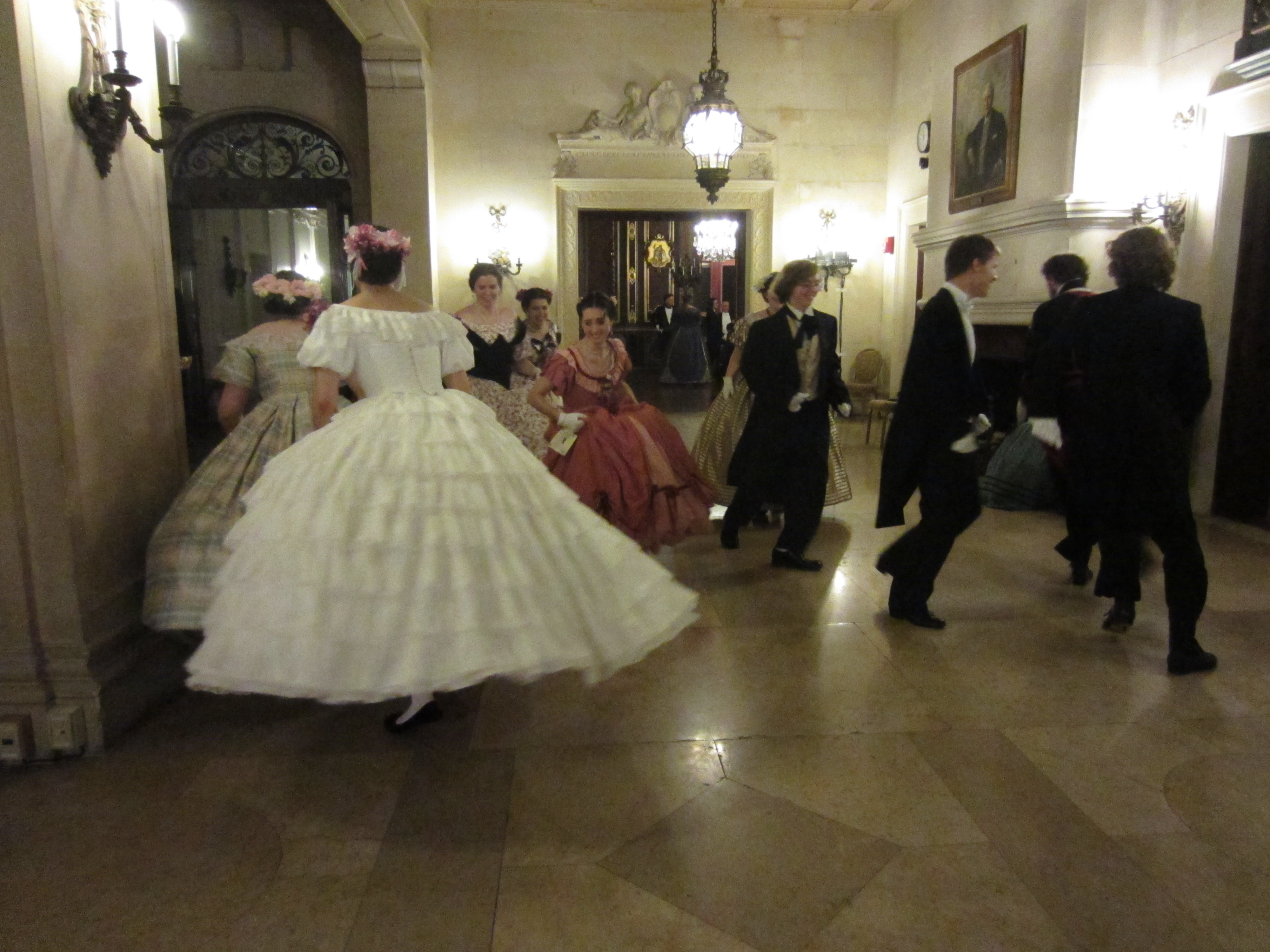
This was the skirt puddle pose which followed the traditional jellyfish dance… (aka all of us jumping up and down in a clump and moving through the rooms before suddenly plopping and letting our skirts billow around us).
While being a jellyfish I lost a second clump of flowers! I didn’t think I had sewn them on so loosely!
So sad. You know it’s a good ball when your dress suffers injuries not once, but twice!
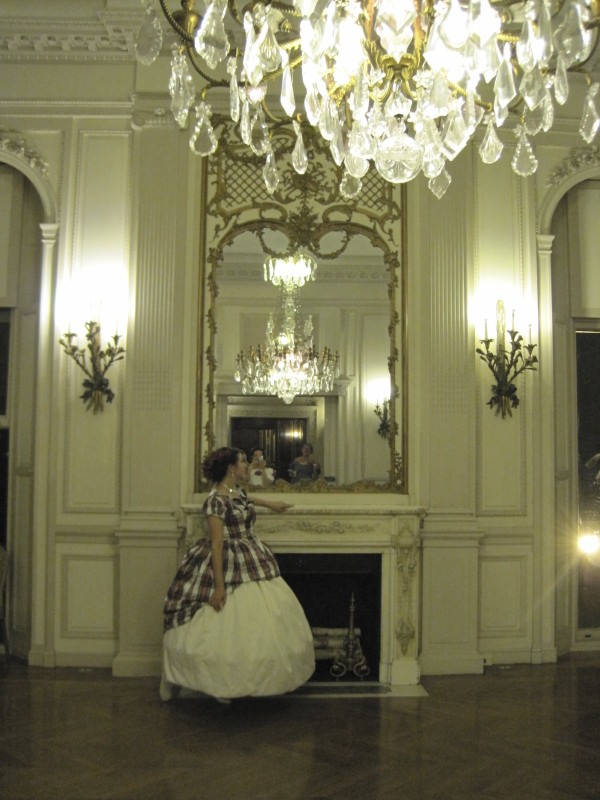
Oh my! Tartan drawers to match the tartan dress!
I was so happy to just BE in Ochre Court. Do you get that feeling from this picture? I’m just soaking it all in.
Exuberant might be a better word for me.
“I love Ochre Court THIS much!”
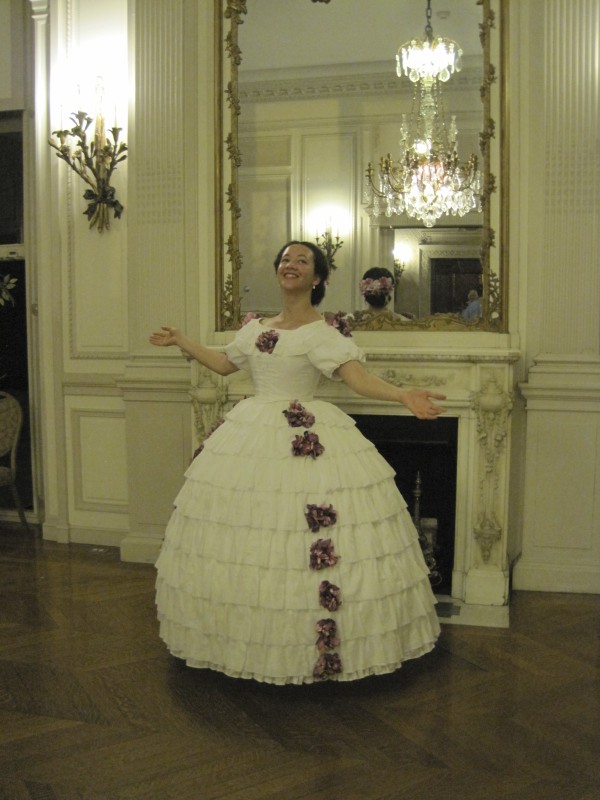
Posing by the fireplace in the white room. Isn’t it lovely?
Don’t we look fabulous???
The necessary bum picture, particularly amusing when wearing hoops.
One last glimpse of the back lawn before we pack up to leave.
I LOVE Ochre Court. I just wanted to drink it in as much as I possibly could.

That was a long one! But you made it! Thanks for sticking with me through all those photos. I sincerely hope that you were able to get a feeling of excitement and unrestrained happiness from the pictures that matched even half of my feelings from that night. It was truly spectacular. Thanks to all my lovely friends for assisting me in having such a marvelous time.

Final tally: 66 pictures from this event between two posts out of 1047 possible Ochre Court pictures… Honestly, I don’t think I did too terribly narrowing them down, considering the possibilities!

Newport Vintage Dance Week Part IV: Mid-Nineteenth Century Ball at Ochre Court

As you may already know if you’ve been reading this blog for awhile, the 1860s are my favorite period. I get super excited about them–especially the clothes! So you can imagine my absolute joy at being able to attend an 1860s ball during Newport Vintage Dance Week. But to make things even more amazingly wonderful, this particular ball was held in one of the most beautiful places we visited during the week! You can see pictures of last year’s 1860s Ochre Court Newport ball here, in an earlier post. In fact, Ochre Court is my favorite of any Newport venues I have ever entered, except maybe the Breakers… but we didn’t have a ball at the Breakers (because it is no longer open to the public, as far as I know), so for Newport 2012, Ochre Court was my top most favorite place!

Ochre Court was built in 1892 as a summer home for Ogden Goelet, a wealthy New York banker and developer, for $4.5 million. It was designed by Richard Morris Hunt, who also designed the Breakers, which is just down the street. In fact, Ochre Court is the 2nd largest Newport “cottage,” the Breakers being the largest. (All of this information came from the Newport Mansions website, which you can access by clicking the link at the beginning of the paragraph. It also has fantastic pictures, which you should check out if you’re at all interested!)

We came up the side road to enter Ochre Court. This is the side gate.
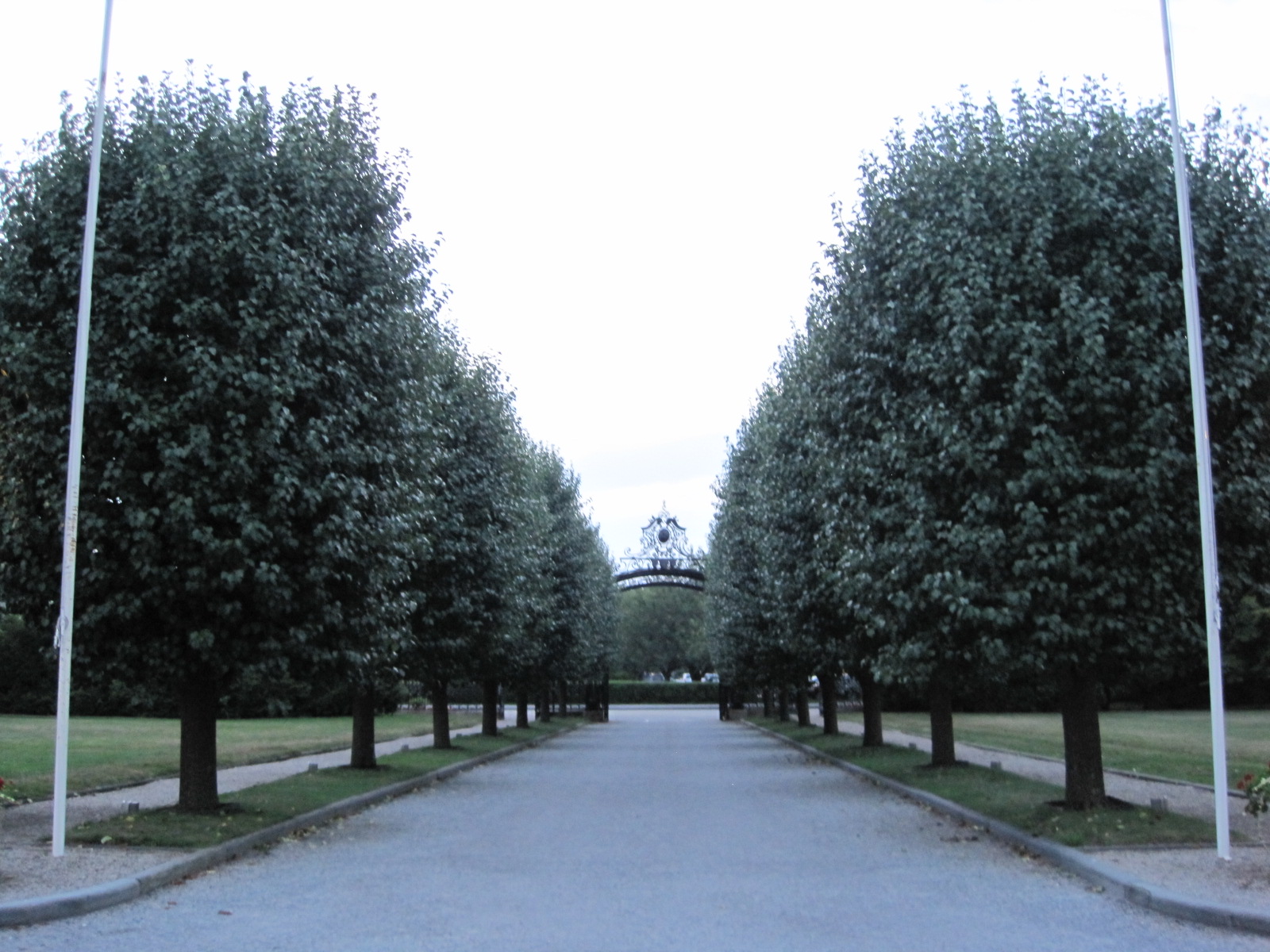
As you walk in the side gate you are greeted by the grand front drive to the right.
Looking down the main drive. Directly behind the camera is Ochre Court.
The grand main drive is just to the right. To the left is the entry to Ochre Court.
Looking up at Ochre Court. The arch at the bottom of the picture is the front entryway from the last picture.
This is the grand ballroom: the first room reached upon entering Ochre Court! It is three stories high with arched galleries on the second and third floors, which are reached by means of a fabulous red carpeted staircase (pictures of that are coming soon).
Pass through the grand ballroom and you emerge onto the back lawns which slope gently down toward the cliff and the water.

The neat thing about many of the balls at Newport is that multiple rooms on the same level of the mansions are open and available to us, and we are able to dance between rooms during the course of one dance!

This is the library, which is just off of the grand ballroom.
The grand ballroom.
Another view of dancers in the grand ballroom.
One more because it’s pretty!
This room wasn’t open last year! In my head it is the white room. It is also just off of the grand ballroom. We are dancing the Newport 2012 quadrille: Les Rats.
We’ve just finished a figure of the quadrille! Yay us!
Taking a break in the entryway.

Okay, this next bit takes a bit of explaining. Antonia expressed it very well in her post “Speed Virginia Reel at Ochre Court.” You can read the whole description by clicking the link, but here’s the short version: “The Virginia Reel is an interesting dance…there are always people who refuse to wait for the music and push the speed…Speed Virginia Reel doesn’t even try that hard, and instead strives to be insane. It was invented by teenagers a couple of months ago…and it doesn’t even pretend to be dancing to music.” Is your interest peaked?

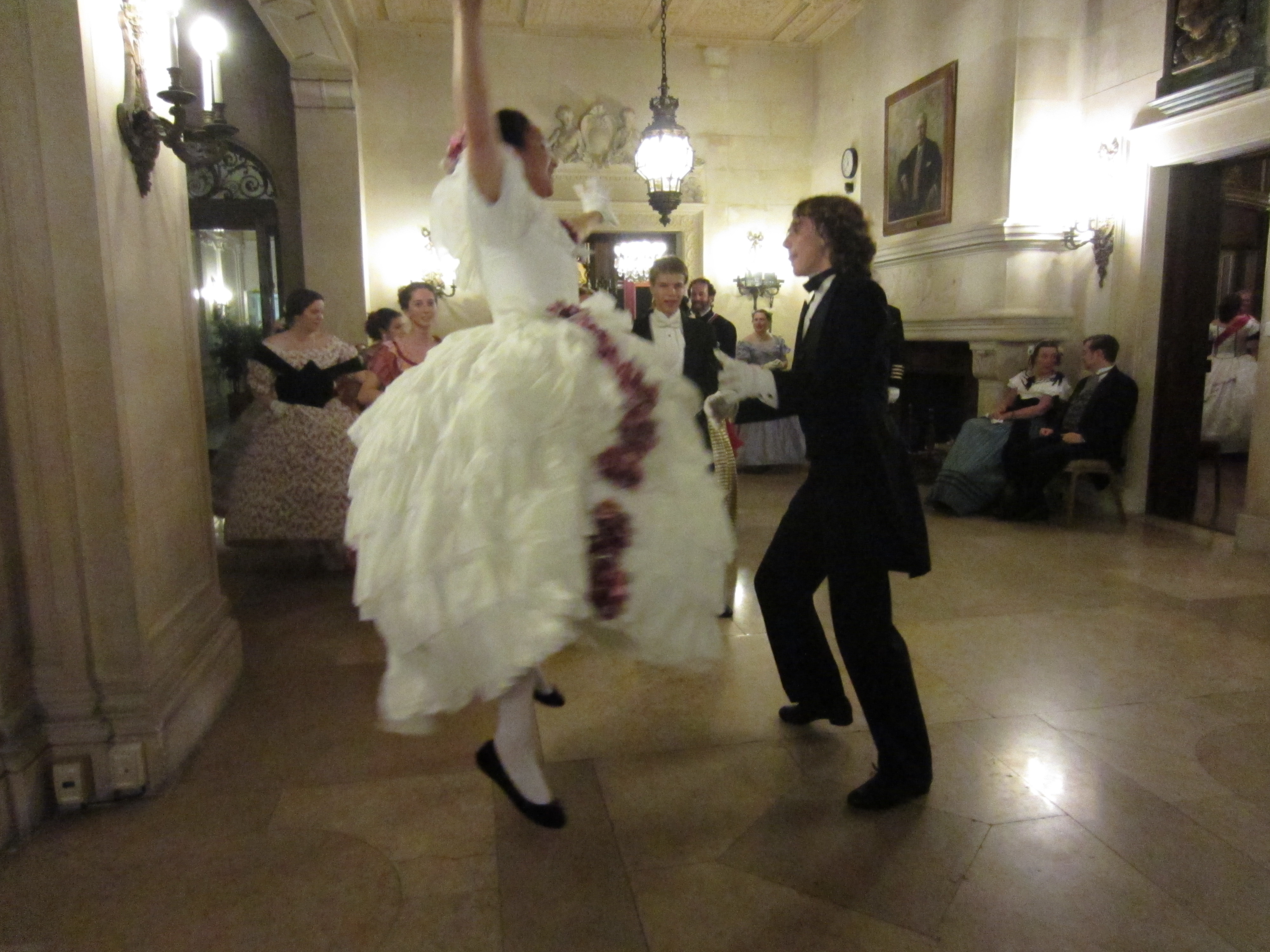
I hope so, because it was some of the most fun we young people had at this particular ball! It included many sweeping hoop skirts showing scandalous views of ladies’ drawers as well as a slide and fall on her bottom by none other than me! Unfortauntely, there are no pictures of me actually on the floor, so you’ll have to take my word for it (and I’m sure my fellow dancers would back me up!). Lucky for me I had two factors in my favor such that I didn’t hurt myself at all: 1-I wear a pretty hefty bum pad with my 1860s clothes to help my hoop stay paralell to the floor (I’m pretty sure I landed on this, because the floor is marble, and the fall didn’t hurt) and 2-there was so much adrenaline going around that even if it did hurt I didn’t feel it…I remember lying on the floor thinking “Yikes, I am lying on the floor,” and then jumping up again and continuing the dance! This dance was so much fun I really couldn’t rule out very many pictures, so I do hope that you don’t mind seeing a lot of Speed Virginia Reel, the all new 1860s dance craze!

Hoops and tails are flying! This is part of the grand ballroom, looking toward the dining room. We stationed ourselves in an uninhabited section of the room so as not to endanger others…
Just look at those hoops flying!
The corner people dance (or run…) various things together to begin the dance.
Flying tails!
Run!!!
You can see the momentum in the swinging hoops!
This part of the dance is called strip the willow. It involves the top couple turning each of the people below them till they meet at the bottom…
The top couple is just beginning to run to the top to start follow the leaders.
Scandalous drawers!
Even more is showing in this picture. I think this is the highest any skirt went…
The top couple runs down the middle of the other four couples, and the other couples have to spring apart to make space!
Really, the top couple just goes all out down the middle and hopes for the best (at least in the speedy version of this dance).
This picture is pretty awesome. The wind is ruffling my sails (skirt…) and I am clearly running, as I wouldn’t be able to stand at that angle without falling over otherwise…
More obvious evidence of running…
Look at those hoops sway!
Another favorite running picture! I’m sure you can see why!
I had to include this, because look at how high my skirt was swinging! It’s pretty epic!
Run, run, run!
Clearly, there was a lot of running and momentum in this dance.
Forward and backward, all while running.
Down the middle!
Follow the leader!
This is what was happening while the top couple circled the people below them.
Evidence of my fall! You can see one of my flower clumps on the floor that’s about to be picked up so it is out of danger!
Follow the leader around the column…running as fast as possible and missing a flower clump…
We made it, corsets, falling and all! I’m obviously excited, because look at how far off the floor I am! I LOVE this picture! Don’t you?

There was nothing sedate about this dance. What else is there to say? I have more fabulous pictures from the end of this event… but I think I’ll do a second installment post about this event to share them. So stay tuned!

Another Annabelle Adventure (Returning Heroes Ball 2012)

Alliterative, agreed? Ok, I’m done… Honestly, the words just came–I didn’t spend long on them! Last weekend I attended the Returning Heroes Ball hosted by the Commonwealth Vintage Dancers in Holliston, MA. As usual, it was full of fun and laughs. There were fabulous dresses all around (because of course one of the joys of a ball is to observe dresses–old and new) and wonderful refreshments as well. I don’t have pictures of other people, but I have pictures of me!… You can see a variety of people in the photos on Antonia’s blog, Experiments in Elegance

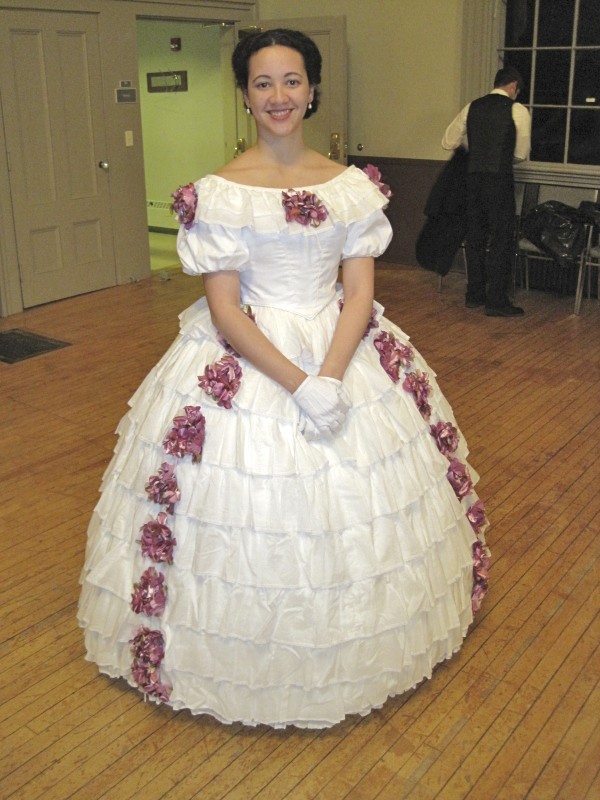
Me, in Annabelle. I really, really love hoop skirted dresses! And flounces! Whee!!!

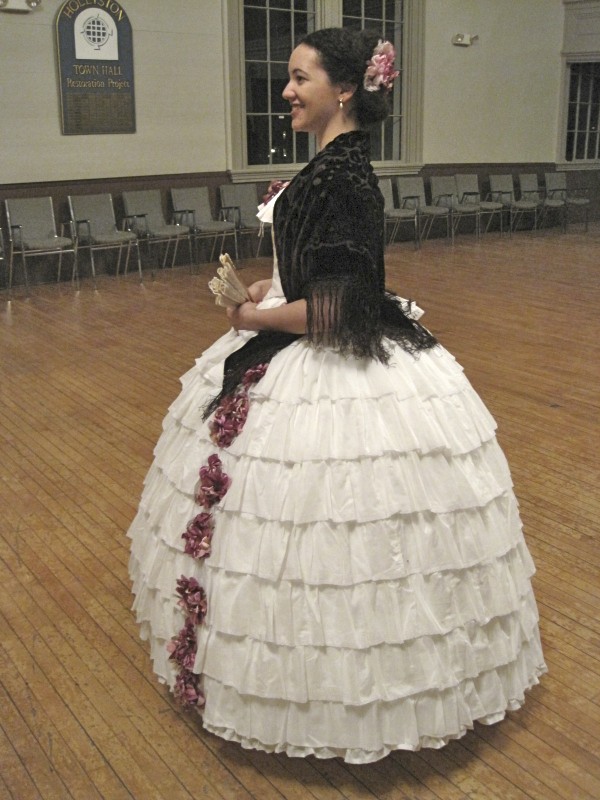
I recently gained a new accessory: a deep purple burnout silk velvet scarf, big enough to use as a shawl. The shawl was decommissioned from a friend’s modern wardrobe because it is rather intense for a modern look; however, it works wonderfully as a 19th century piece, I think! I’ve been waiting for about three months to try it out with this outfit… I think it is fabulous and nicely complements the purple in the flowers.  Do you think it works for an 1860s look?

Ooo... Purple silk velvet shawl. So cosy! (and stylish to boot!)
Thanks for taking the photos, gentlemen (you know who you are)!

I’ve been trying out more complicated, poof-filled hair styles in preparation for early 20th century styling and I put some extra effort into this hair-do to try out more poof-ing. From the front my hair has it’s normal 1860s style with a center part where each from section is slightly poofed and rolled back to join the low rolled chignon at the nape of my neck (above, left and right)… but from the back this most recent style has extra poof-age!

See the extra poof at the top of my head?
Poof close-up

 In terms of the hair-styling itself, I think I like the extra poof as it gives more dimension and adds a regal feel to the overall look. Do you like the added poof?

I also decided to rework the hair wreath I’d made for the German Cotillion back in October (left). I’m not sure I like it as a giant mass of flowers, I might rework it again into a crescent shape like the flower piece that matches Belle, my other 1860s ball gown (above right). In terms of the flowers, giant mass or crescent shape?

Very Purple Quilted Slippers

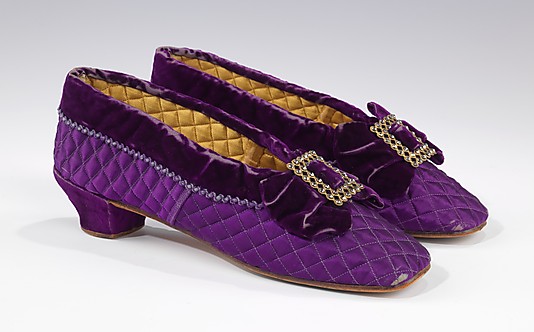
Recently, while looking through the Metropolitan Museum of Art’s Costume Collection for entirely unrelated items, I came across these very purple quilted slippers. I like them, but I also feel they are a little loud. Quilting? And purple? And velvet? And bows? There’s just a lot going on. They look pretty comfortable, though! How do you feel about these? And can you imagine what sort of dress would go with them? Perhaps a white cotton flounced one with purple trim

1865-1885 Silk Slippers (Metropolitan Museum of Art)