1797 Watermelon Sleeveless Bodice, Part III: Finished Garment

I’ve spent the last two posts sharing the details of inspiration, patterning, and making a 1797 sleeveless bodice. Now it’s time for photos!

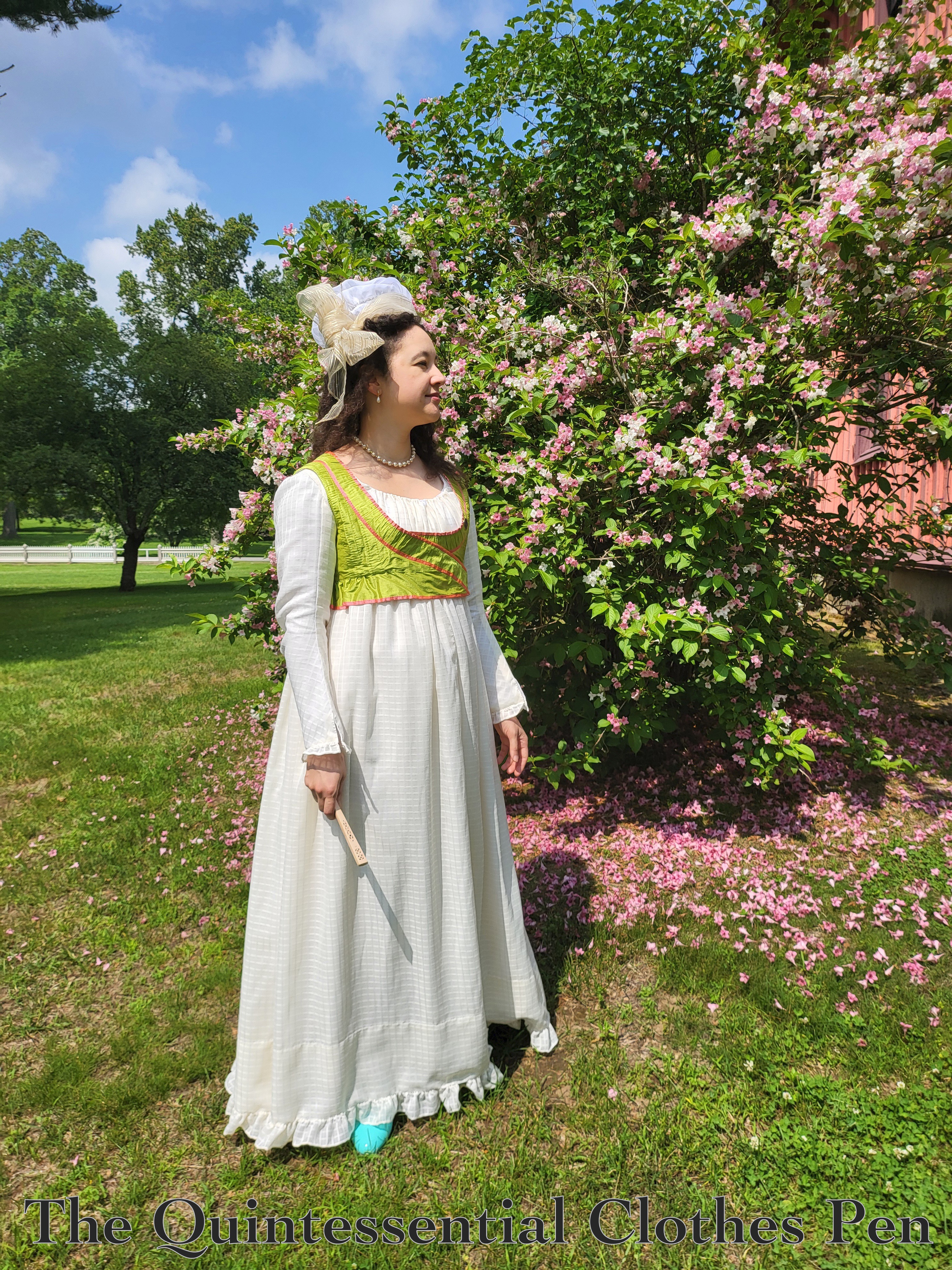
The new bodice is named for the vibrant colors I chose for it. Lime green! And pink! Ok, watermelons are a deeper shade of green, generally speaking, but the green and pink idea generally makes sense!

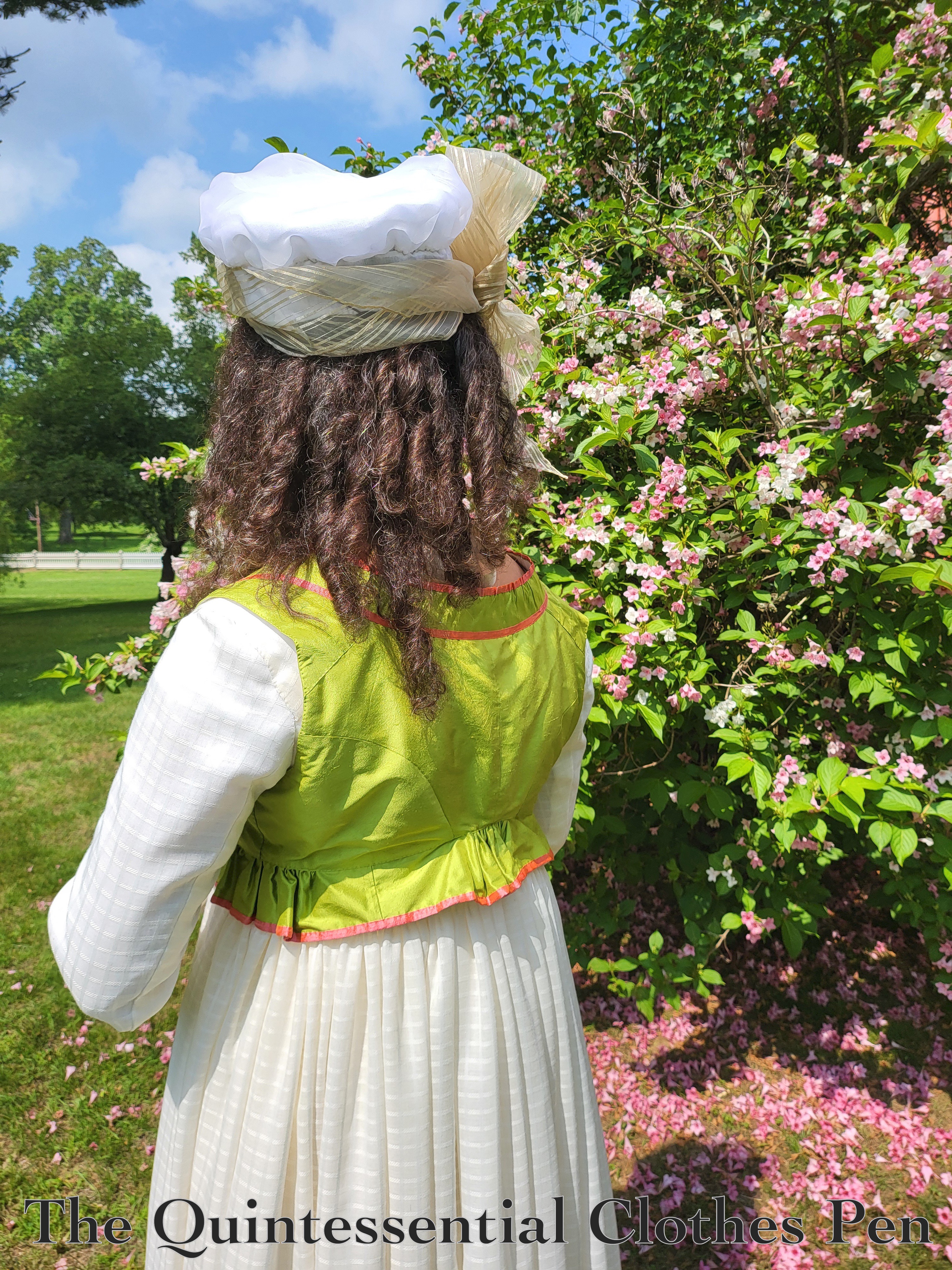
I enjoyed the minute details as I created this garment. In the photo below, the gathers of the peplum at the center back and along the sides are visible.

The back of the bodice rises up a bit, just as the dress underneath does. That is visible at a bit more of a distance.

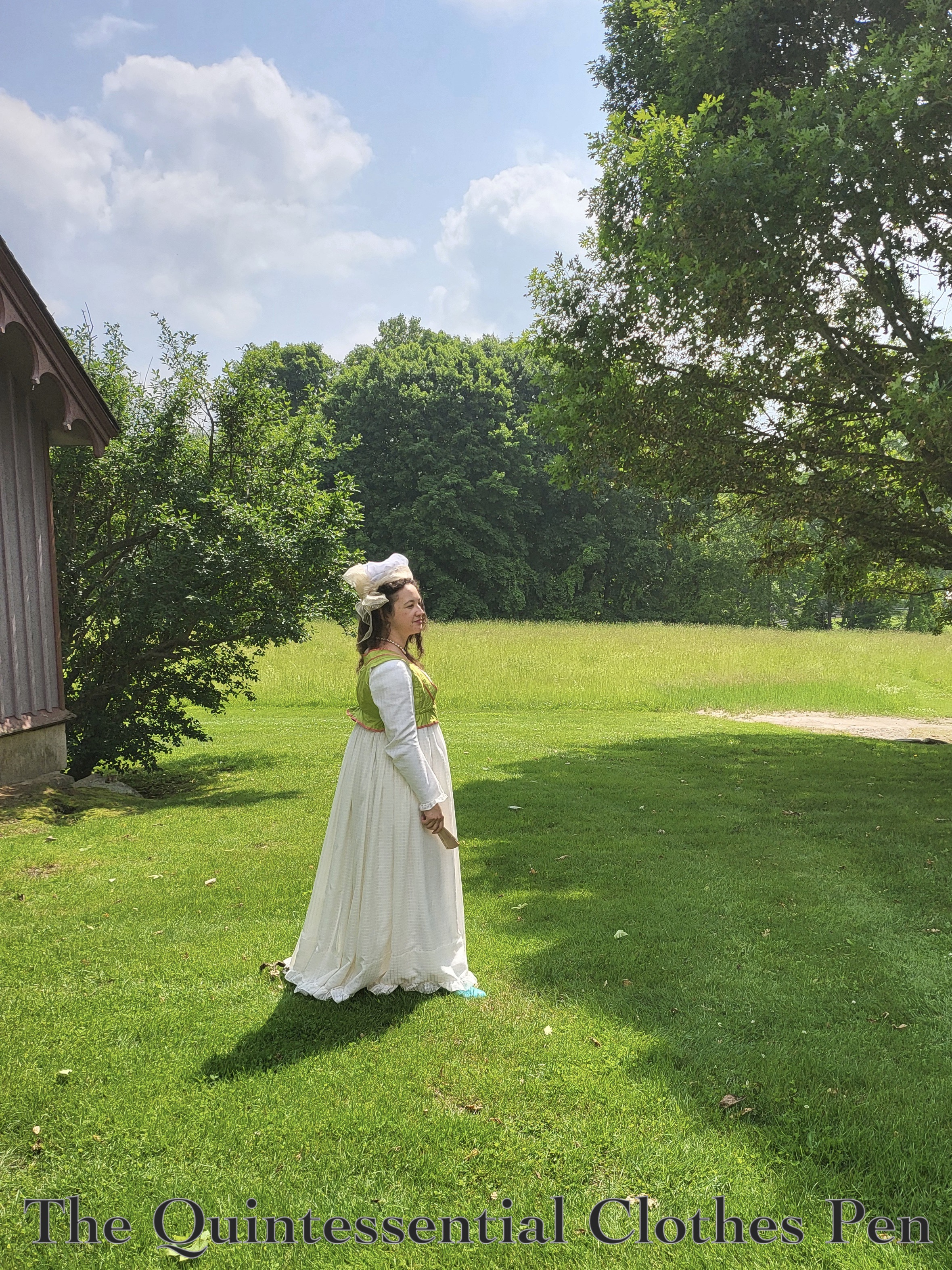
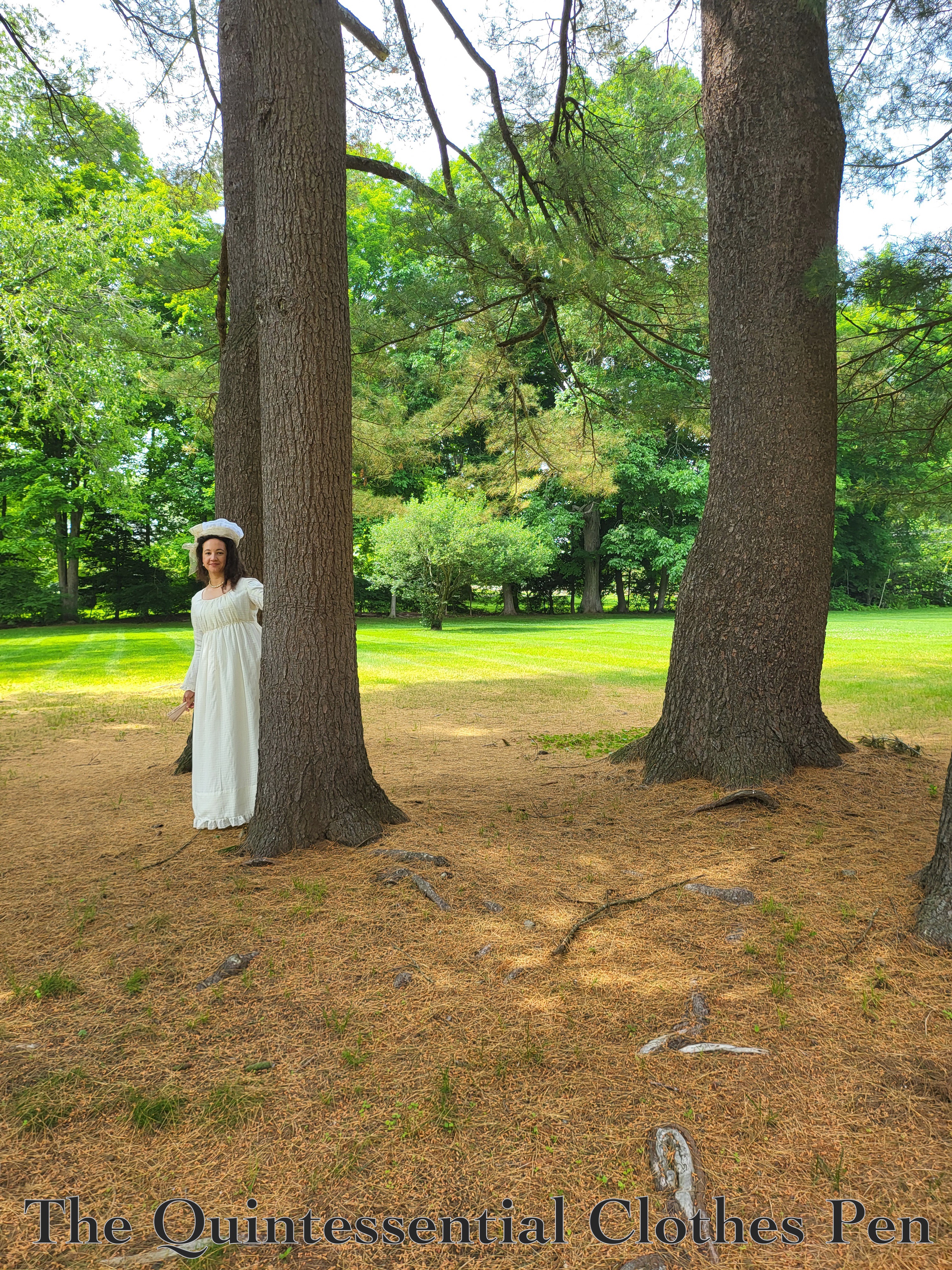
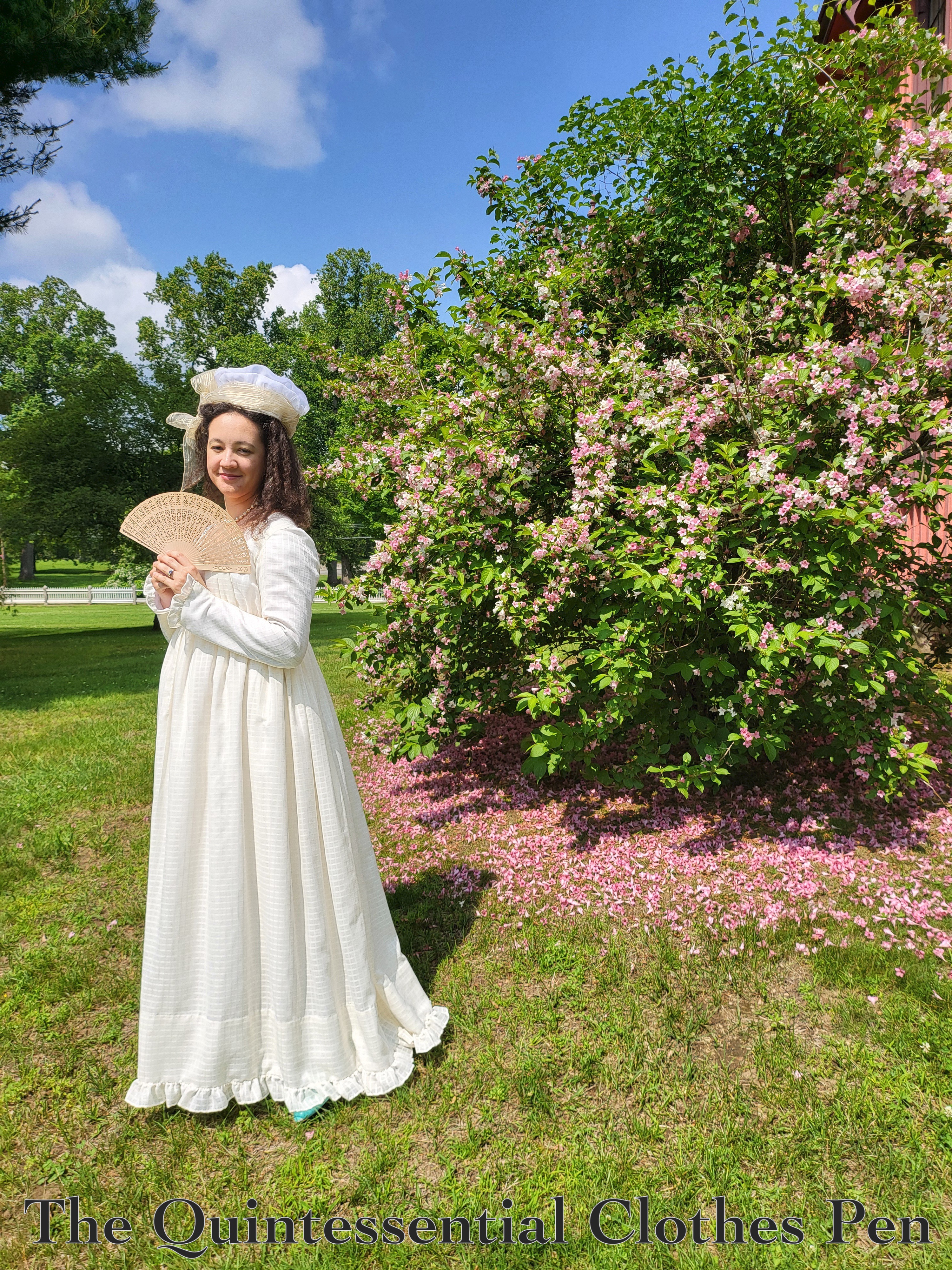
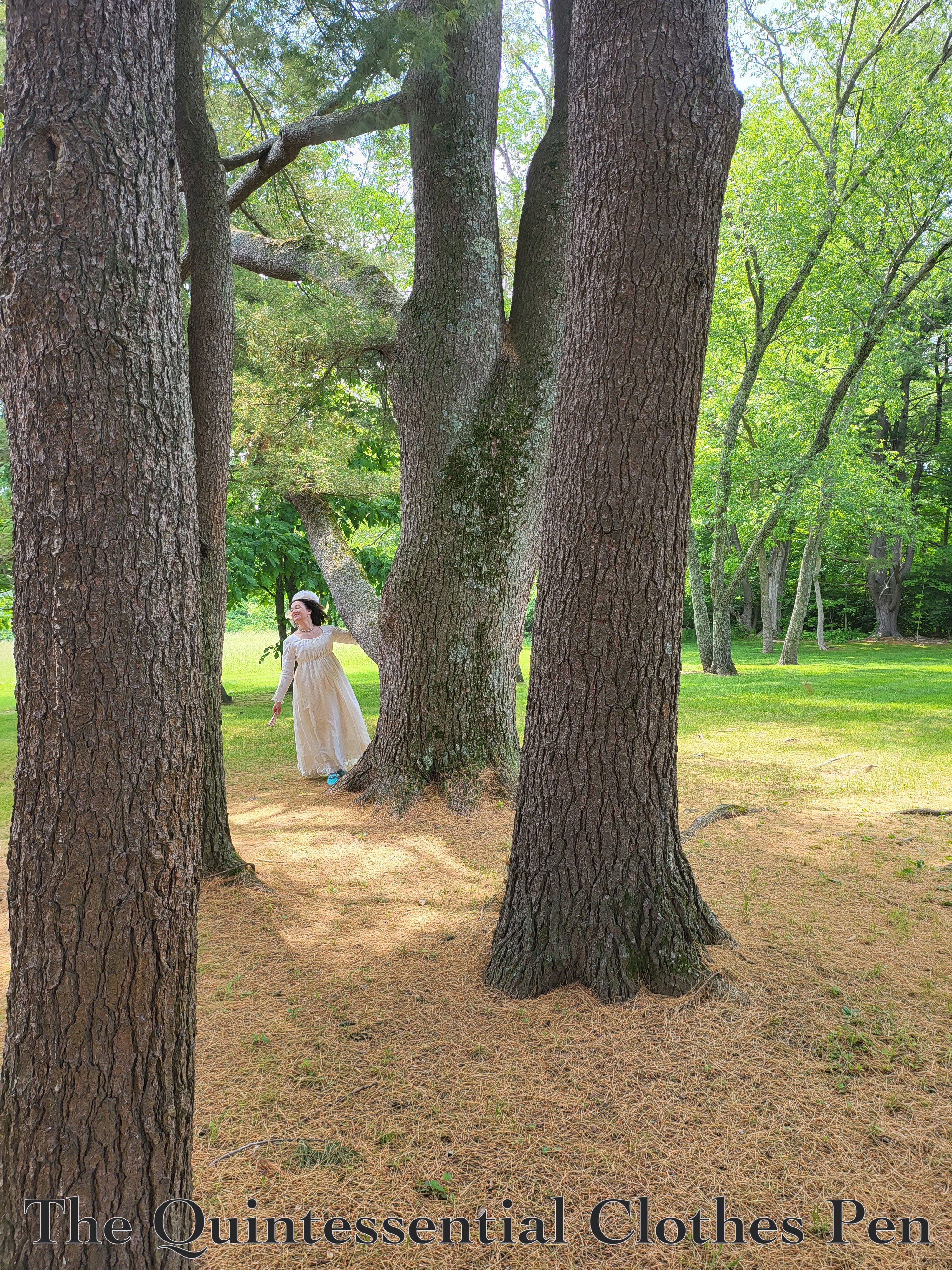
I wore the new bodice with my 1794 Windowpane Ruffled Dress and 1790s Organza Cap With Gold Stripe Trimming.

It was all very grand. Fluffy, elegant, and extremely fun to wear!

1797 Watermelon Sleeveless Bodice, Part II: Patterning & Construction

This story begins in my previous post (which you can read here) in which I share the backstory and inspiration for this garment. I’ll be carrying on from where I left off. But first, a quick side story!

Mr. Q saw the title of this post and asked “What is a watermelon sleeve?” An excellent question, I think! I explained that watermelon is my description fpr the colors of the garment I’m discussing. But… I do rather wonder what a “watermelon” sleeve might look like…! After all, there are many historical sleeves with fun names (bishop, bell, pagoda, beret, gigot, and mameluke all come to mind quickly, though I can’t think of any that are named after fruit. If you can, let me know!).

Leaving that tangent behind… back to the story!

Patterning

The pattern started with the lining pattern for the dress that I knew fit and would be worn under the sleeveless bodice as well as the bodice of “A Robe c. 1795 – 1803” on pages 44 and 45 of the original printing of Janet Arnold’s Patterns of Fashion 2. I liked the idea of the pleats on the exterior to provide interest on my otherwise solid fabric. It didn’t occur to me until very late in the process of making this garment that most of the pleats would be covered by the neck trim. Oops! Oh well! Below, a photo of the front of the bodice. The pleats are the topstitched lines running downwards from the shoulders.
I ended up with separate patterns for the exterior and lining front pieces, but the side back and back pieces were cut from the same pattern. I’ll explain how I made them.

For the front lining piece, I started with the dress lining, as pictured below. By starting with this, I knew that the sleeveless bodice would easily fit over the dress and have similar seam lines.
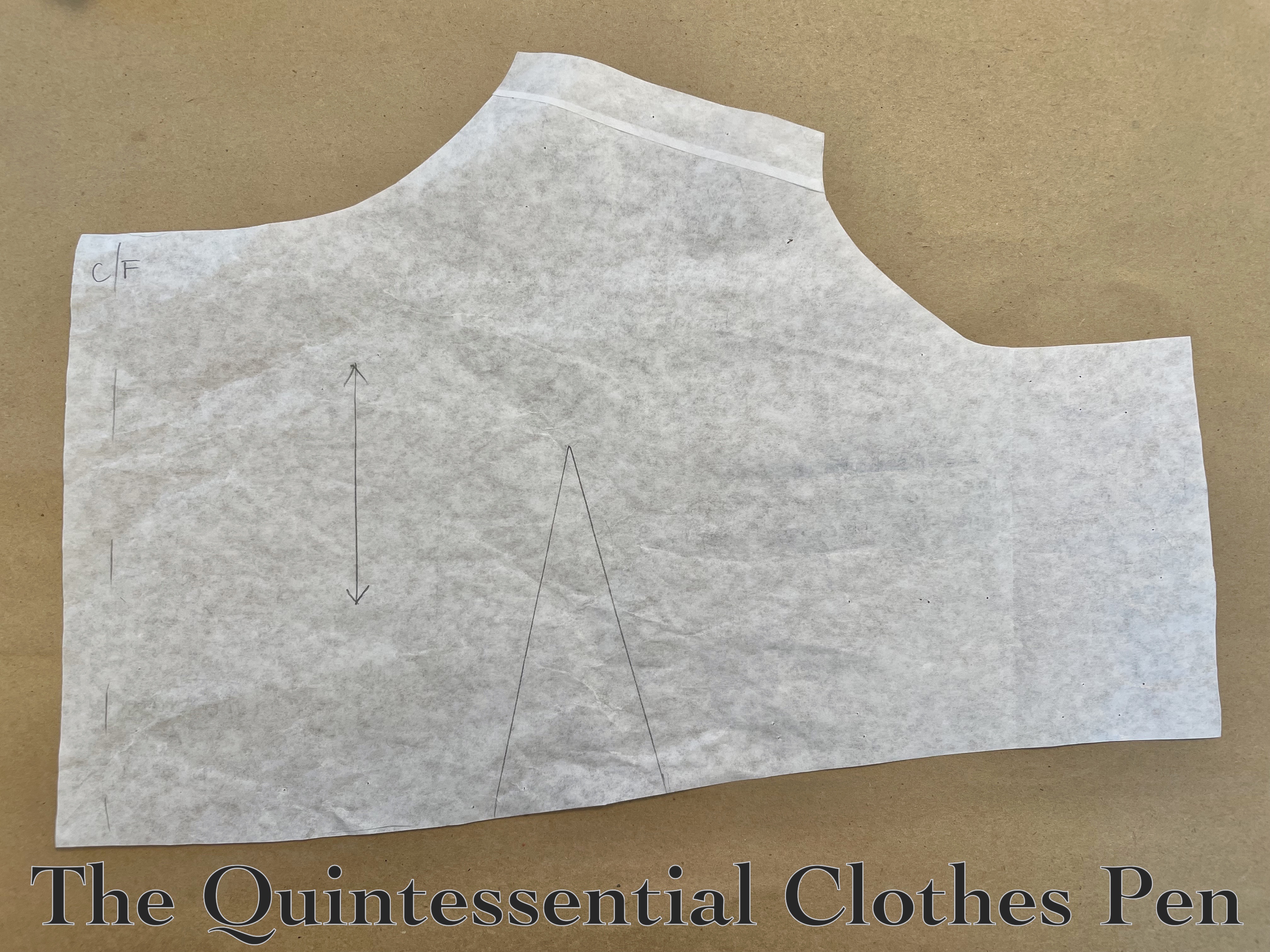
I adjusted this pattern to have a little bit of wearing ease by adding ¼” to the bottom edge, ¼” to the neck edge, ½” across the center back piece, and ¼” across the side back pieces.

To that, I superimposed the PoF robe because it had a very low front bodice (clearly intended to be worn with a dress underneath) and it had a front pattern piece that curved downward towards the front, with a separate side front piece. Ah ha! I could create a dart going towards the waist in the area between these two pieces and have a one piece lining while also easily having a two piece exterior to make the pleats easier! This would reduce bulk in the finished garment and allow for the necklines of the exterior and lining to be exactly the same.

The photo below shows the front pieces I ended up with. On the left is the lower part of the front lining (the shoulder area is extended with a separate shoulder piece in the lining) and the center front part of the lining. For the lining, these were cut as one piece (with the dart marked).
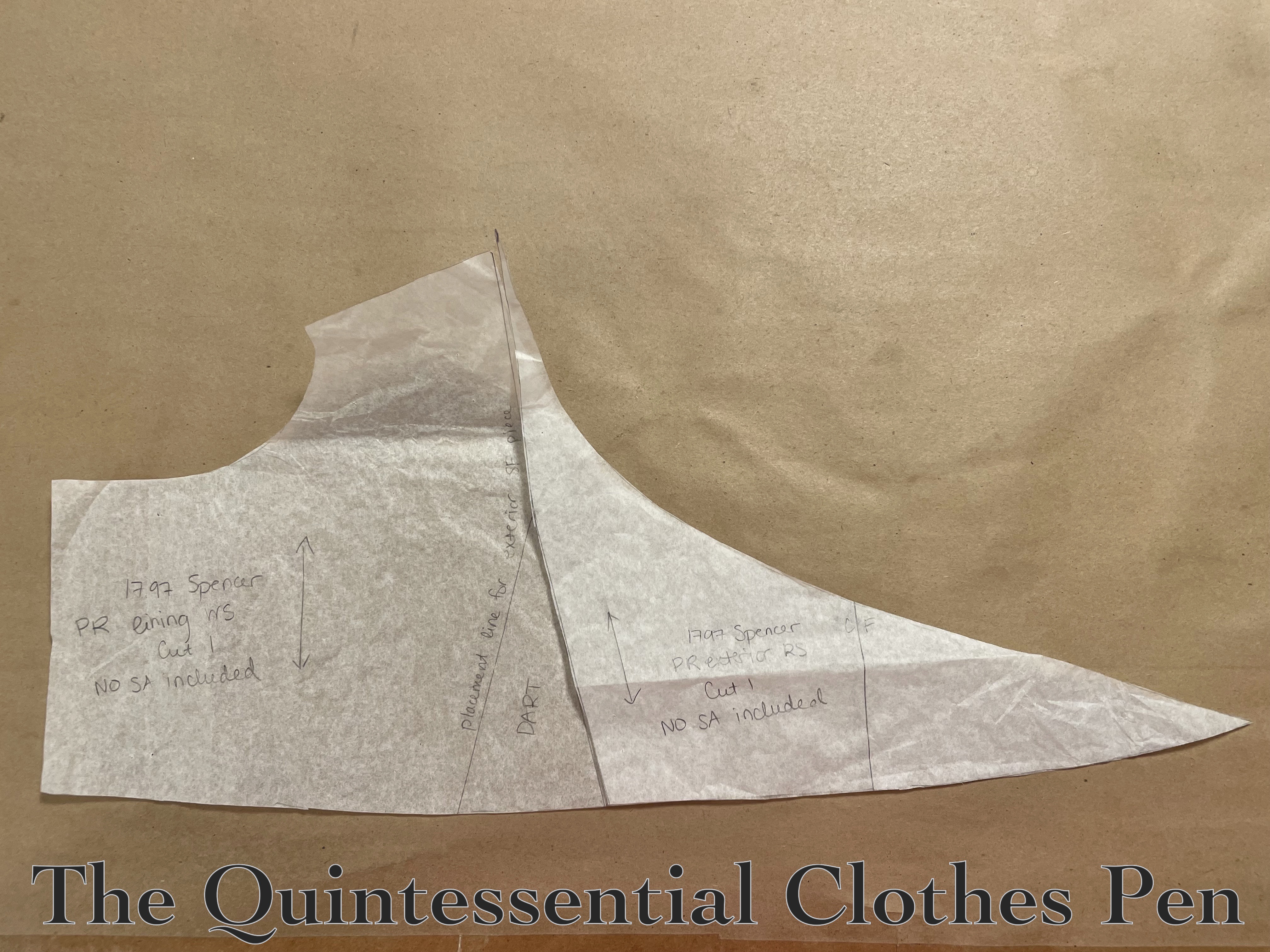
If you look carefully, you might notice that the grainline on the center front piece is off relative to the side piece. Why is that, you might wonder?

Well, for the front exterior I started with the lining piece but changed the single dart to be the pleats I’ve previously mentioned. I didn’t see bust darts in my inspiration fashion plate or observations of 1790s overdresses, but in 18th century dresses pleats are used used in varying depths to adjust a flat piece of fabric to fit the curves of a body, so I used that method.

First, I traced the lining pattern onto a new piece of paper, including the dart. Then, as you can see in the photo below, I cut along the dart edge closer to Center Front, then up a line that continued to the neck edge I wanted. (I also cut down to the bust point from two other points along the neckline, but later realized I didn’t need those cuts.)

Next, as you can see in the photo below, I rotated the center front piece down towards the dart, making that area a little narrower and creating space (essentially another dart) going up towards the shoulder. Then I drew my new grainline on the front piece for the exterior, heading up towards the shoulder. This is why it looks off relative to center front. When worn, those ‘darts’ are closed when the exterior is fitted over the lining and center front is pulled into its proper place on the body.

These exterior darts — hidden in the seam line — are what creates that downward curve to the pattern pieces that I observed in PoF.

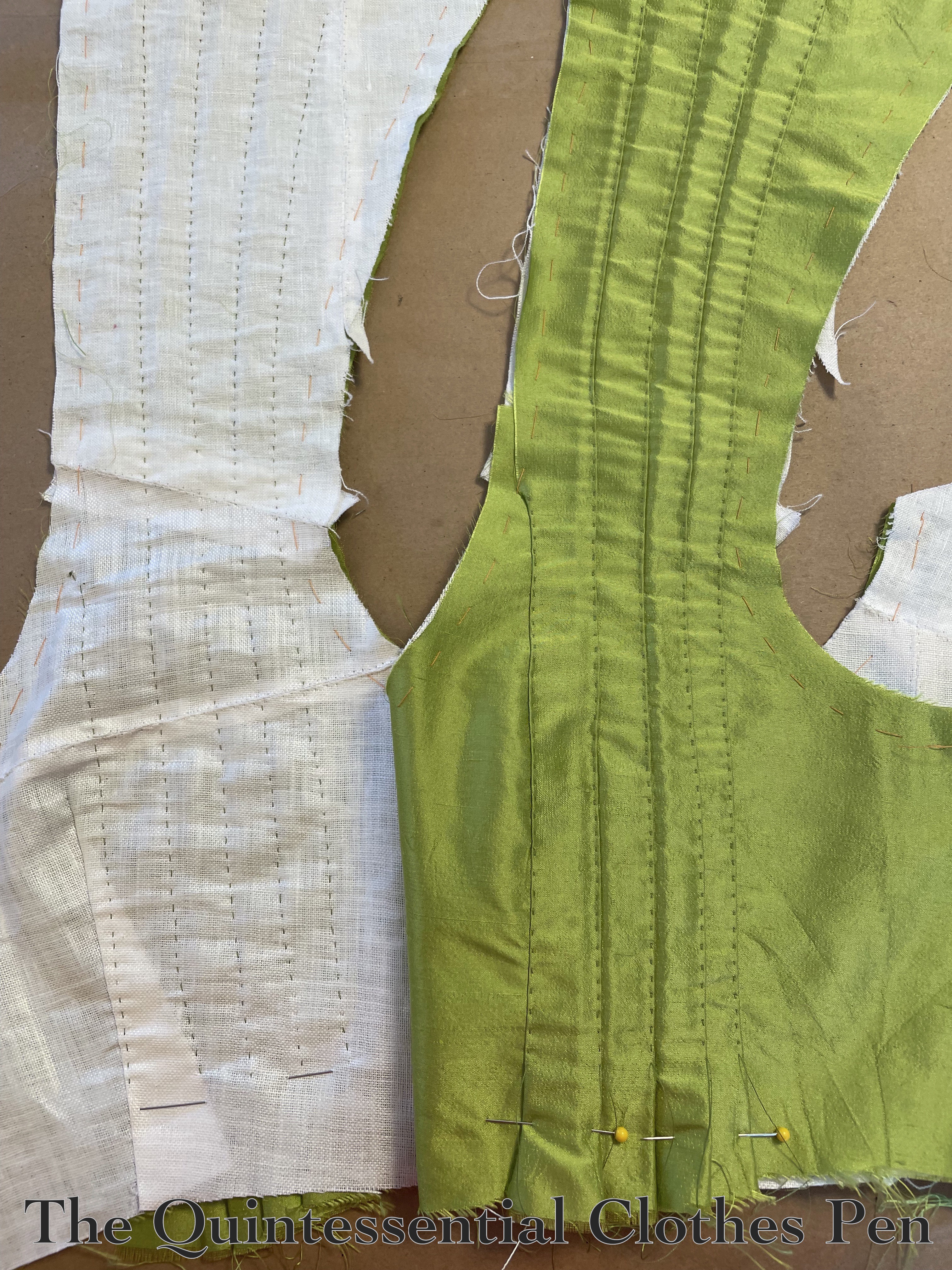
The two ‘darts’ are taken up in the pleated side front piece of the exterior, which is fitted over the center front piece and the darted bodice lining. In the photo below, the dart in the lining is visible on the left and the silk is pleated to fit and visible on the right.
After creating the paper pattern, I made a mockup and did a fitting to see how well my adjustments worked. They were pretty good, but I did have a few notes — I extended the bottom edge by a little more across the front, set the overlap shape I wanted (based on the fashion plate), set my armhole seam allowance, decided on the height of the peplum, and adjusted the front neckline to sit nicely over the dress.

I made these adjustments to my paper pattern and then moved on to cutting out my pieces in real fabric:

  • A proper left front lining
  • A proper right front lining
  • Proper left side front and center front exteriors
  • Proper right side front and center front exteriors
  • Straps in lining fabric
  • Side back pieces for lining and exterior
  • Center back pieces for lining and exterior

The Backstory: Construction

With a pattern established, I went down the rabbit hole of figuring out construction methods.

I had been reading Patterns of Fashion 6: The Content, Cut, Construction & Content of European Women’s Dress c. 1695-1795 and my mind was full of details and excitement about 18th century construction methods, so I happily went down a path of sewing in an 18th century manner! But… at some point in the middle of things I realized that I would need to combine some early 19th century construction methods into what I was doing, too, since my sleeveless bodice idea does span two different eras of construction styles.

For example, from an 18th century perspective turning seam allowances of the lining and exterior towards each other and whipping the pieces together made perfect sense. From a 19th century perspective, however, finishing the armholes with this method seemed odd (usually in the 18th century the seam allowance would have been left raw on the inside when the sleeve was attached, but I wasn’t adding sleeves!) and inserting a peplum into the bottom edge seemed odd, too (often a ruffle was applied on top of an edge, rather than being sandwiched between the exterior and lining, but that wasn’t the look I wanted). After many brain somersaults, I wound up mashing these two methods of construction together to create a transitional garment (which does actually make sense, since this was a transitional period for construction methods!).

Actually Making The Spencer

I thought it would be fun to use up linen scraps for the lining, rather than cutting into yardage from my stash. The lining pieces weren’t that big, right? Well, it turns out they were bigger than I thought. I ended up using 3 or 4 different types of white linen and adding in a fair number of piecing seams to get the shapes I needed for these lining pieces (you can see some extra seams in the lining in the previous photos). It definitely added time, but I had time while making this garment, so it was fine.

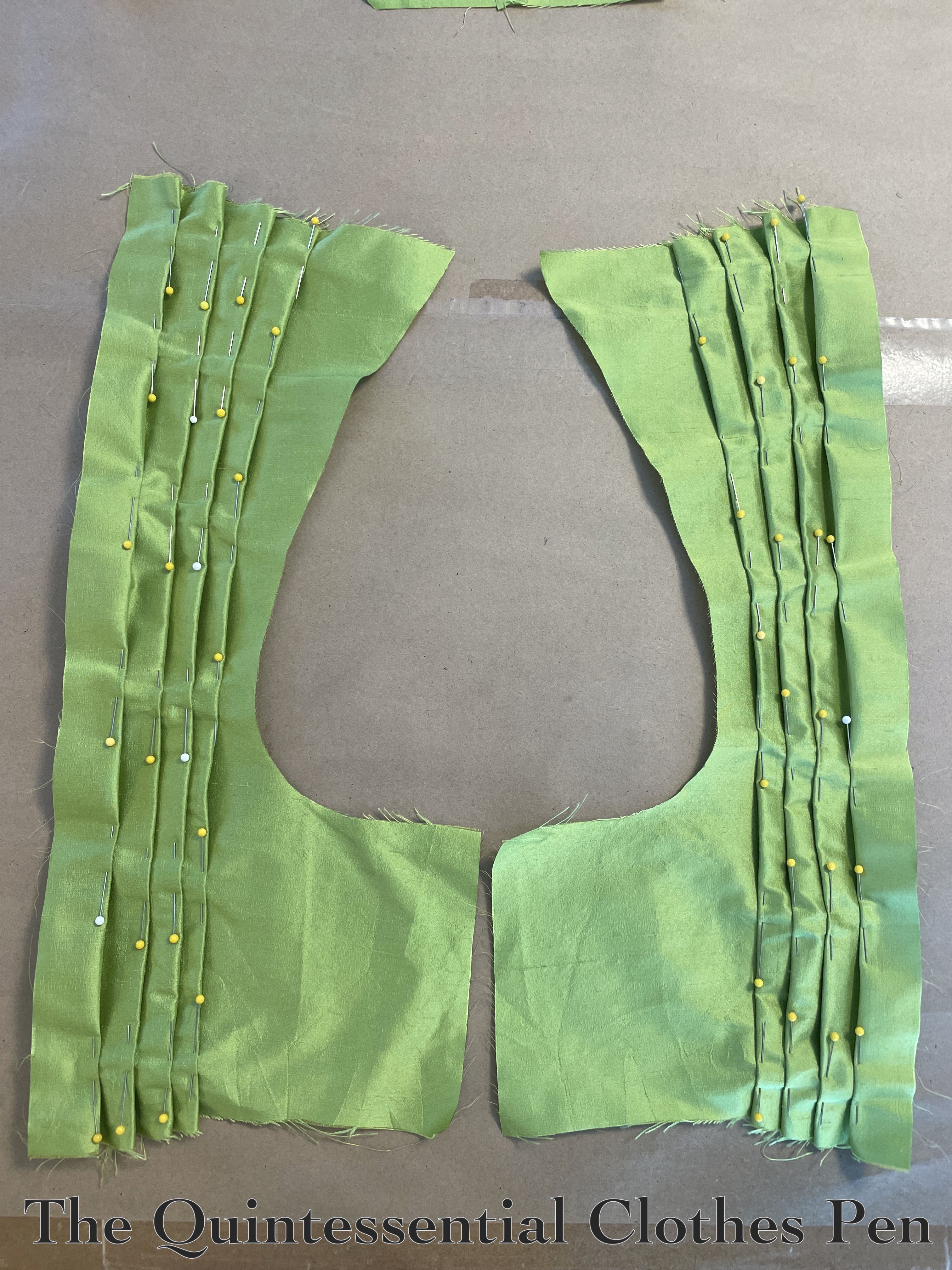
Once the lining pieces were ready to go I could cut the silk layers. The side front of the silk exterior had the shoulder straps included and was extra wide in order to create those all-important pleats. Below is a photo of what the pleats looked like before they were topstitched flat. They are not quite all the same depth and slowly spread out as they move towards the shoulder seam in the back (at the top of the photo).
Here is a summary of the 18th century elements I used in the construction of this garment: much piecing of the lining fabrics, whipping the lining pieces together along the seams, whipping the lining into the exterior around the edges, topstitched pleats in the front exterior for shaping over the bust, a shoulder seam that is topstitched onto the back piece, many edges bound in narrow strips of silk, and the neckline trim being tucked to shape around the neckline curve.

Here is a summary of the 19th century elements I used in the construction of this garment: gathering the peplum and sewing it to the bodice with right sides together then whipping the lining seam allowance on top and turning in the seam allowance of the armholes and whipping the lining into place.

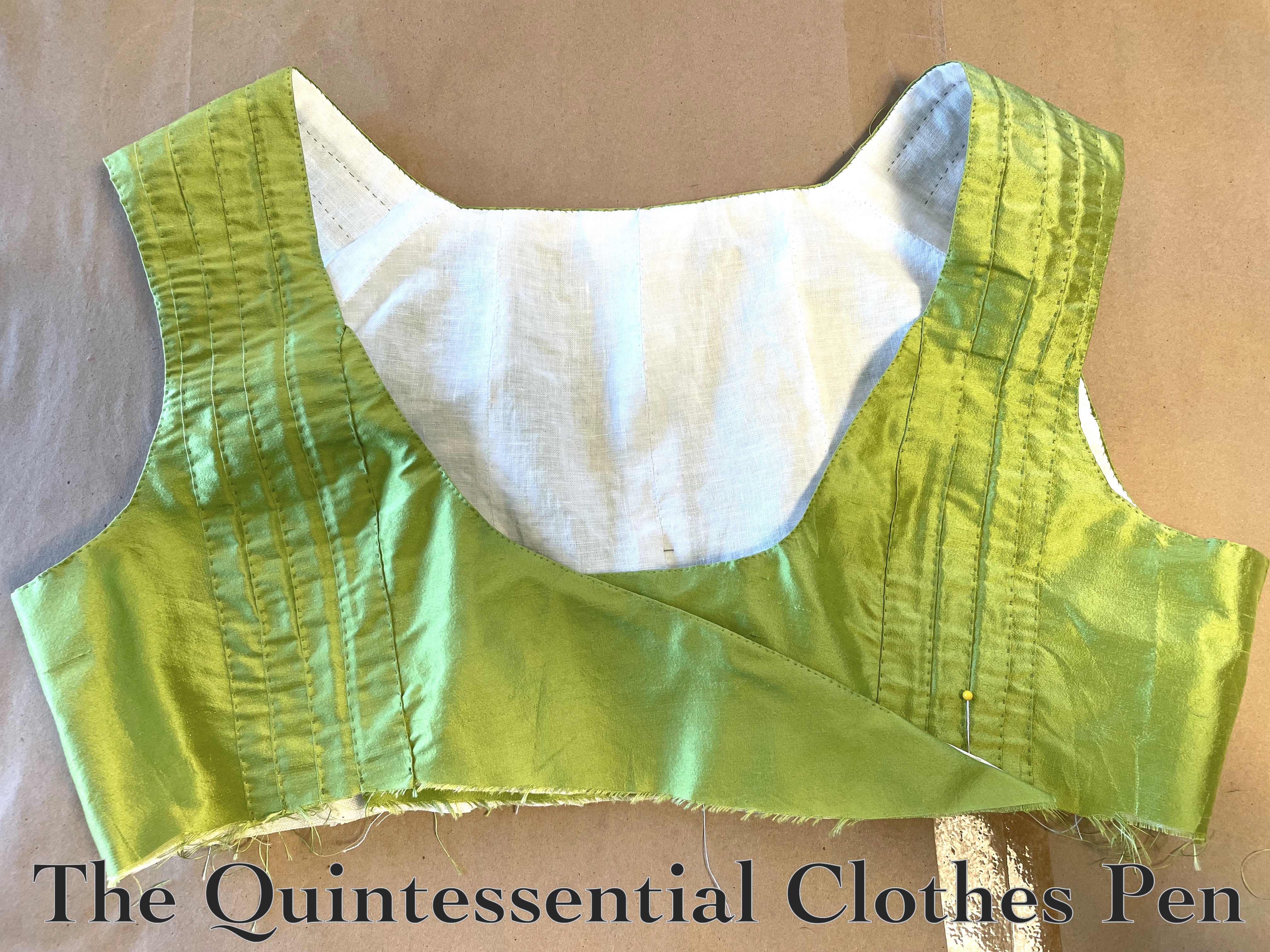
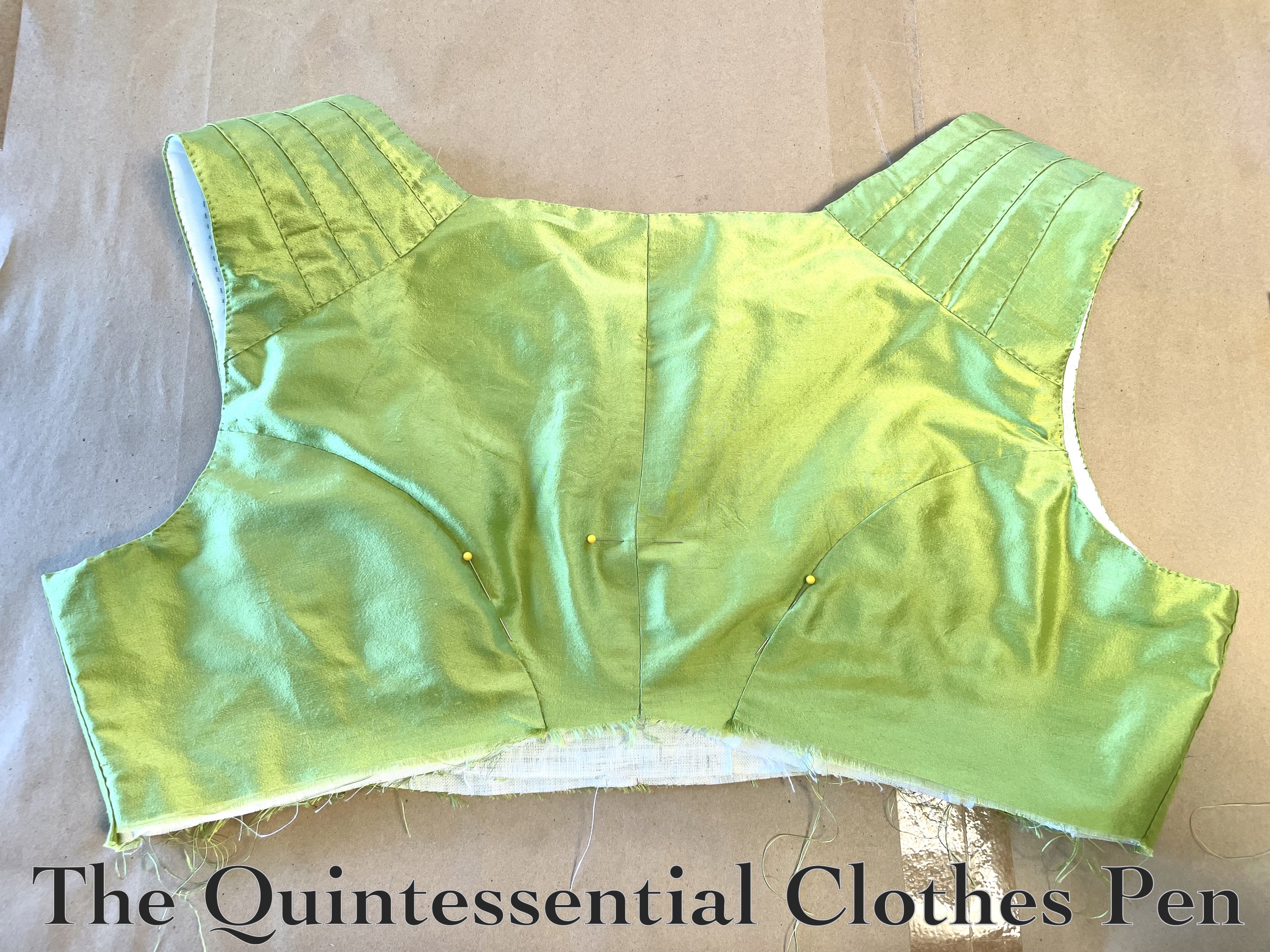
In the photo below, most of those methods have been employed to get the bodice to this state, which is basically finished aside from the peplum, neck trim, and closures.
The neck trim is a pieced strip of the green silk bound in running stitched ¼” wide strips of pink silk (hence the watermelon name!). The assembled band was running stitched along the outer edge and then eased into place around the neck edge. Below is the easing in progress. It took many pins!
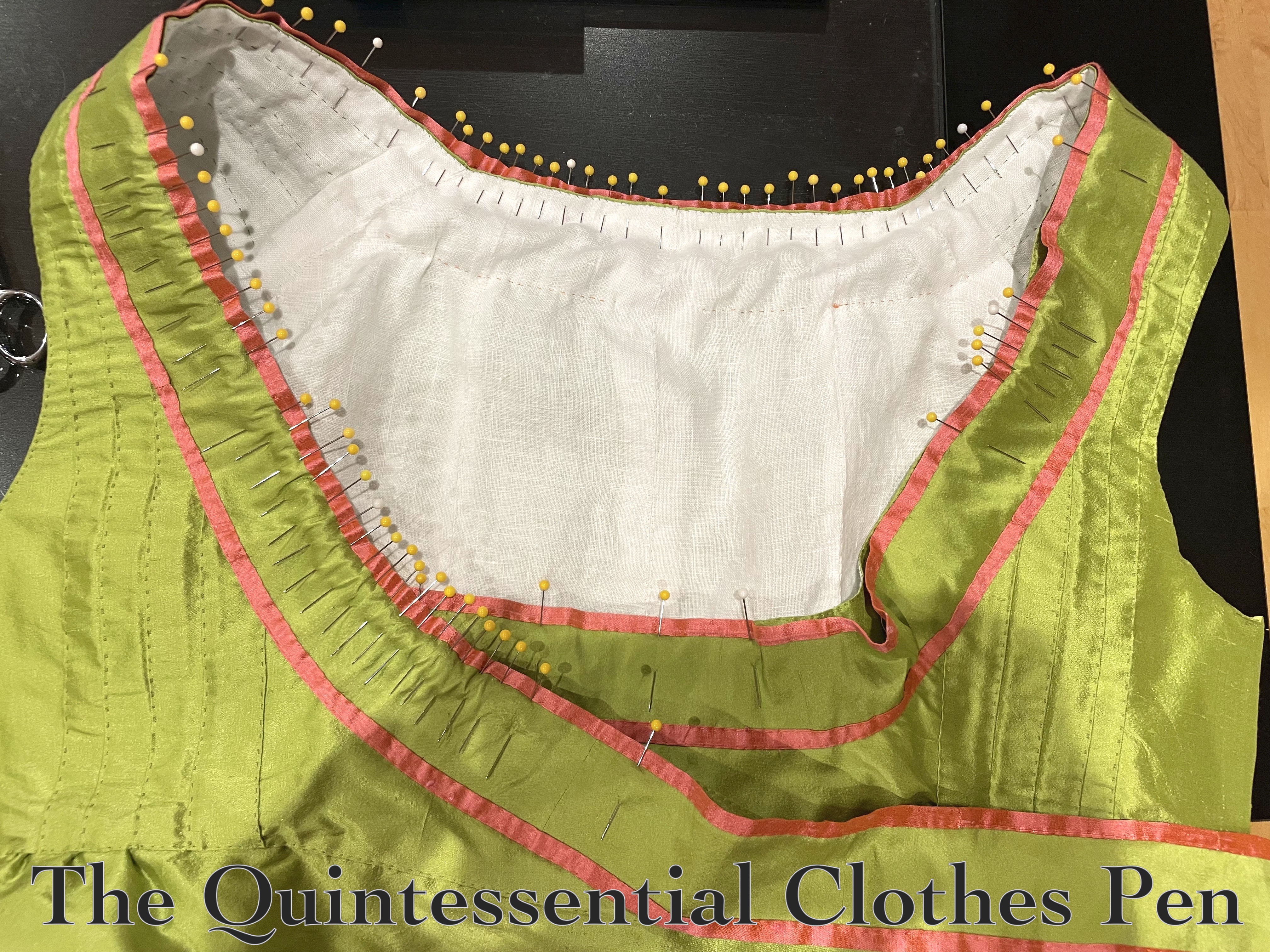
And here is a closeup. You can see some of the whip stitched piecing seams in the lining and the minute easing of the neckline edge of the trim.

And that was it…! Entirely hand sewn, with many small details, lots of justifying and research, and, in the end, a relatively small garment! Next time, photos of the finished garment being worn!

1797 Watermelon Sleeveless Bodice, Part I: Background & Inspiration

First:

The Backstory

As with last year, The Footwork and Frolick Society hosted a Bridgerton themed croquet afternoon this summer, which seemed like a great event to debut the 1794 dress I posted about making last fall (I did, in fact, wear the 1794 dress — you can see photos in this past post). My only hesitation about that idea was that the dress is all white, which didn’t feel quite as colorful as I might hope for given the Bridgerton theme. So I started brainstorming…

Prior to this brainstorming, I had happened across a 1 ½ yard piece of lime green silk in the discount bin at one of the local fabric stores for $6. Silk at that price felt too good to pass up, even in a very bright color and yardage too small for a dress. I figured I would find a use for it eventually!

During my brainstorming, I came back to the idea of the lime green silk… It seemed wonderfully bright and fitting for this particular intended purpose! And with a small yardage amount, it seemed perfect for a Directoire accessory.

What is Directoire? The Encyclopedia Britannica defines this style as the “Neoclassical style of dress, furniture, and ornament popular in France during the period of the Directory (1795–99).” Given that many of the inspiration images for my dress were French fashion plates from this period, or close to it, I think it is fitting to use the description of Directoire for this garment.

Choosing The Style

I first thought about making a sash (similar to the one I posted about in 2023 that hasn’t been worn yet), but decided I wanted something different to vary up my possible looks.

After looking at many fashion plates, books, and extant garments, I realized I was drawn towards spencers; however, when I really paid attention to dates it struck me that the popularity of those garments seems to be concentrated in the 1800s and 1810s when Neoclassicism had really settled in, dresses were not as fluffy as they still were in 1797, and the description of “spencer” was fully established. (I explain what a “spencer” is in this old post from 2011. There are many photos of extant examples included in that past post, as well.)

I really liked the idea of a sleeveless bodice. So I set about looking for specifically late 1790s examples of these over white dresses. It turns out that the sleeveless idea (in the specific date range of approximately 1794-1798) is unusual — though it is not uncommon to find long and short sleeved variations.

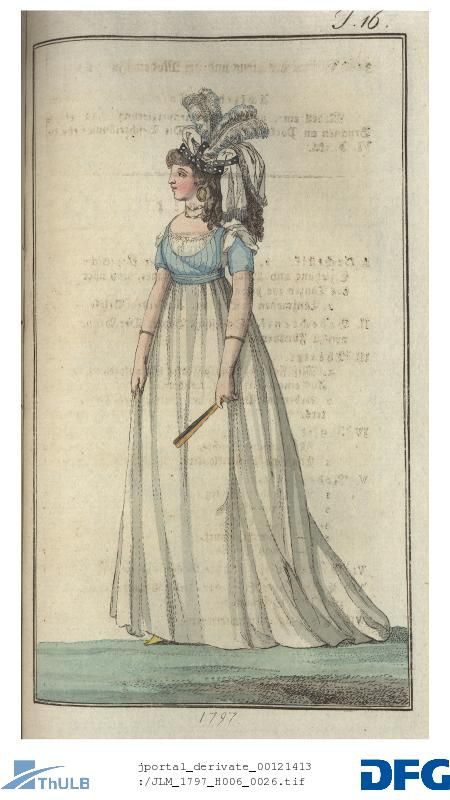
Below is an example of a short-sleeved bodice from the Journal des Luxus und der Moden (The Journal of Luxury and Fashion) in 1797. This German fashion journal was published in Weimar. You can click on the fashion plate below to go to the Rijksmuseum, where you can zoom in to see more detail!

Here is another example showing a long sleeved bodice (actually called a spencer in the description!). This was published in Costume Parisien in 1799. As you might guess from the name, this fashion journal was published in Paris.

Finalizing The Details

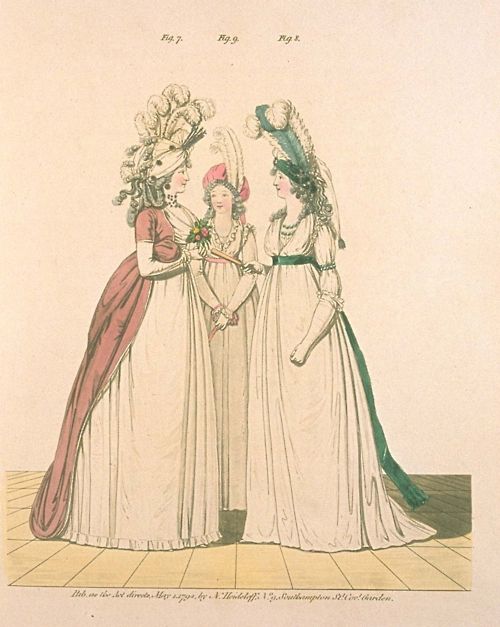
I decided to combine the crossover detail and vertical lines of the Luxus und der Moden style with a sleeveless variation visible on the left in this next fashion plate, which is from The Gallery of Fashion. This fashion journal was published in London by Nicolaus Heideloff. Clicking on the fashion plate will take you to the Metropolitan Museum of Art, where you can zoom in on the fashion plate and learn more about Heideloff.

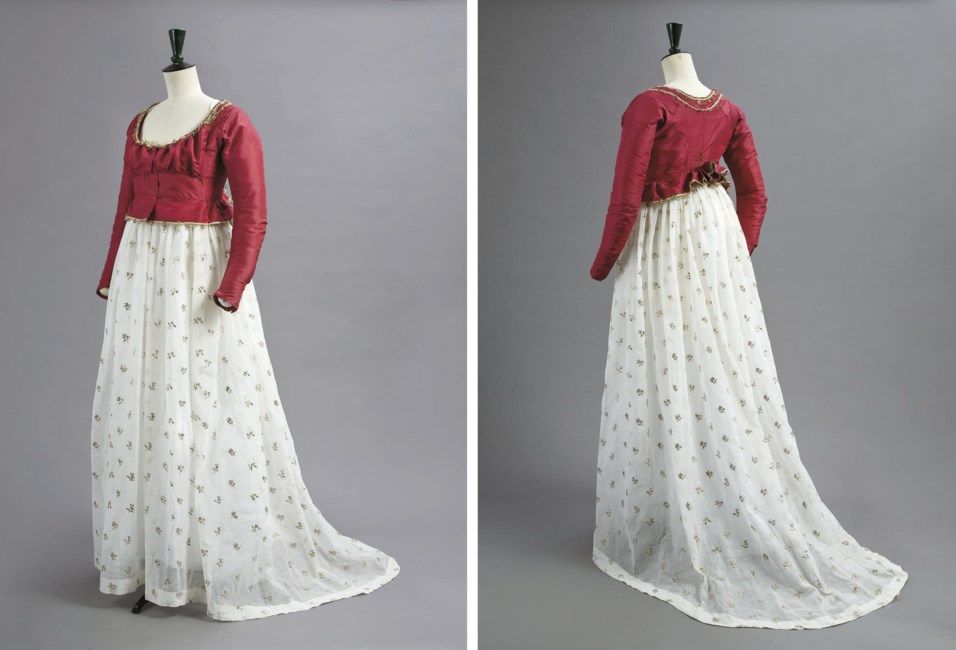
I also borrowed a peplum idea from the extant spencer below, which was sold by Christie’s in 2008. I liked the look of a peplum and appreciated how this one rises at the center back, which is a nice feature to highlight the rising back design element on the 1794 dress I planned to pair with this garment.

Many spencers have some sort of trimming around the edges. I was inclined to use something bright and silly to match the lime green silk and in the stash I found scraps of vibrant pink that went well with the green. I decided to use this as a edging, placing it in similar locations as on the Christie’s spencer.

And that means my plan was mostly in place! Next I had to think about how I would construct this garment and move on to patterning it. I’ll share about that in another post!

1794 Windowpane Ruffled Dress Outing

Back in October 2024, I posted about the inspiration and construction details of a freshly completed 1794 dress (you can view that past post here). At the time, I promised myself that I would figure out how to get my hair to look vaguely 1790s and find a fun opportunity to wear the dress and get photos!

Every few months after finishing the dress, I found the inspiration needed for a trial to figure out how to get my small-diameter-curly hair to look remotely like the billowing-larger-scale curls found in 1790s fashion plates. Of course, one could wear a wig… but I really enjoy using my own hair for these things! It’s a fun challenge, I think.

My first trial attempt was unsuccessful in the overall look, but I learned that curling iron curls didn’t look so far off as to be implausible. My second trial attempt taught me that the 1790s organza cap I made (finished even earlier, in 2023, and which you can read all about here, in a past post) that was intended for this outfit looked silly when perched directly on my head. It really, really needed volume so it appeared to be floating on my hair. Enter, a giant bun form. (The same bun form, in fact, that makes up the biggest part of my hair support for giant 1770s hair in this past post.)

See? The cap isn’t really on my head at all. It’s just floating on my hair. Aside from curling all of my hair, the only other part of creating this hairstyle was to artfully pin the curls up to make them elegantly descend from the cap on every side.

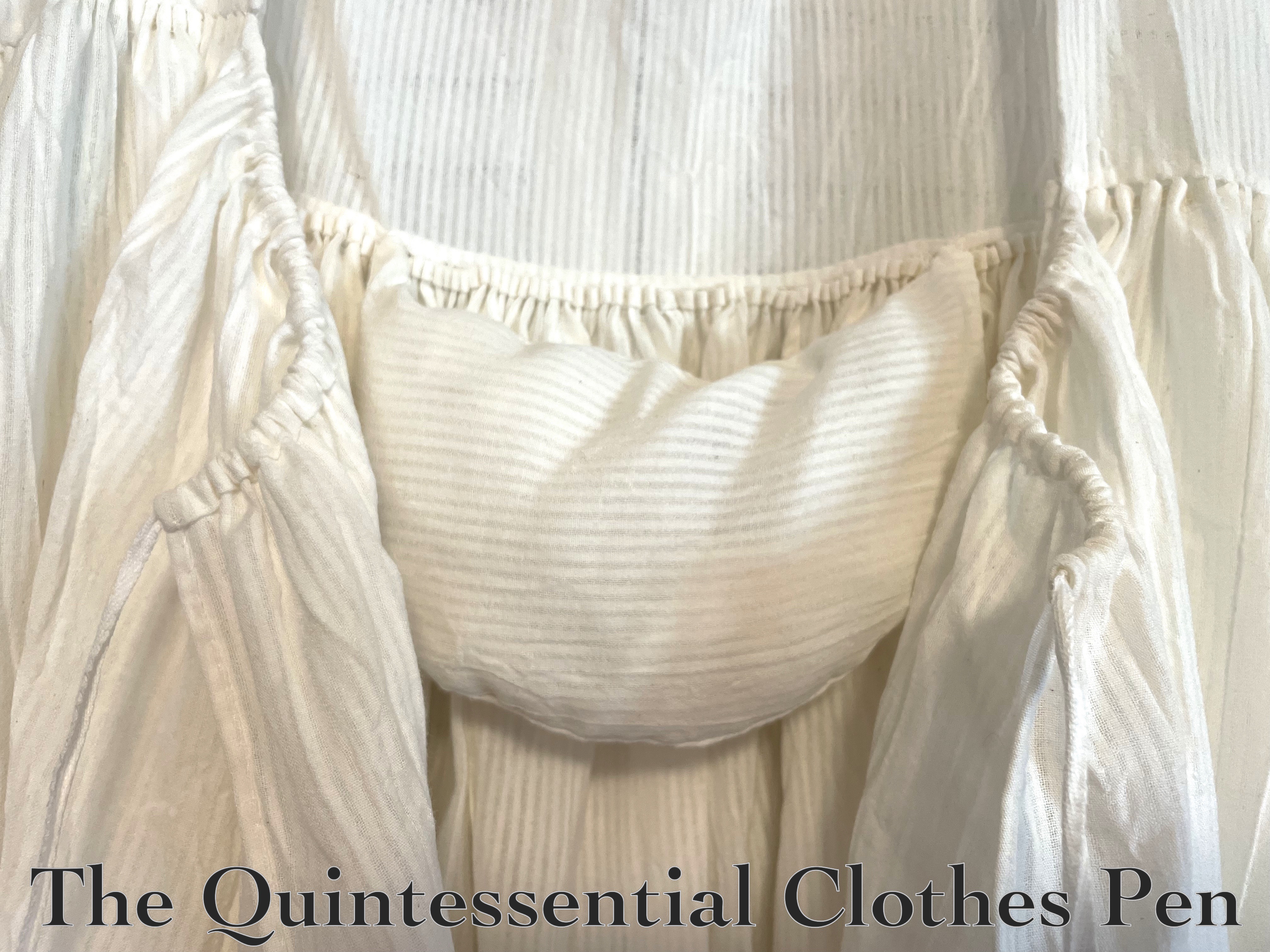
With this dress, I wore the foundations of the 1790s ensemble I’ve been putting together for the last few years. This included my entirely hand sewn c. 1785 Stays of Success and 1790s Petticoat & Bum Pad. Also finished in 2023 and 2024, this was the first real outing for the stays, which you can read all about in this past post, and for the petticoat and bum pad, which you can read all about in this past post.

The whole ensembles is super comfortable! The stays are, in fact, a success! And the layers, with their generously gathered skirts, are full of movement. The ruffles add a bit of fun. And the front closures on the petticoat and dress are definitely easy to use!

The only difficulty of wearing this dress came from the hem that just brushes the ground. Wearing it outside meant that it collected twigs, pine needs, and leaves that I was constantly removing. Not to mention the fact that the layers attracted multiple stinging bee-like creatures to get stuck between them! Ack! Luckily, kind people around me helped me separate the layers enough to let the winged creatures free, and not a single person was stung! Whew!

Perhaps this ensemble is better suited to a marble-floored walkway, but… it was breezy, and cool, and elegant to wear outside (when one ignored the bits of nature stuck in the hem ruffle!).

1794 Windowpane Ruffle Dress (HSM #10)

At this point, I’ve posted about most of the garments and accessories needed for the 1790s ensemble I’ve been slowly creating (you can read past posts here: stays, cap, sash, as well as petticoat and bum pad). The final piece (and perhaps one of the most essential pieces) is the dress!

I started this in 2023, along with most of the accessories, and finally finished in May 2024. My goal for this post is to document the inspiration and construction details of the dress (photos of the dress being worn will come later!).

Basic Information

To start, the information for the Historical Sew Monthly 2024 Challenge #10 UFO Spotter:

We all have an UnFinished Object or two (or ten!) Now’s the time to complete one of your unfinished historical costuming projects.

This dress was definitely a UFO! It’s been hanging in my sewing room for many months in a state of partial completion.

Just the facts:

Fabric/Materials: 3 ½ yards of 120″ wide ivory windowpane woven curtain sheer (probably polyester) and 1 yard of 58″ wide lightweight white linen for the lining.

Pattern: Adapted from the 1790s Round Gown pattern in The American Duchess Guide To 18th Century Dressmaking by Lauren Stowell and Abby Cox. I changed the front bodice to suit my goals and style as well as adding ruffles to the sleeves and hem.

Year: c. 1794.

Notions: 2 ½ yards of ¼” white cotton twill tape, 4 hooks and loops, and thread.

How historically accurate is it?: 95%. The pattern and construction methods are well researched and documented. The only points off, I’d say, are for the fiber content of the main dress fabric.

Hours to complete: 13.5 for the main dress construction + 11.5 for the ruffles = 26 hours of hand sewing.

First worn: Not yet!

Total cost: I paid approximately $10/yard for the main fabric and $6/yard for the linen. So, with the addition of the notions I would say this dress cost about $50 for materials.

A Few Observations

As with the 1790s petticoat I made (linked above in the introduction to this post) this dress is entirely hand sewn.

I had to go back through my records to figure out what I spent on the fabric for the dress. It’s been in my stash for years, so while I remember what store I purchased it from I had no memory of how much I paid. It turns out that I bought both the windowpane exterior fabric and the linen lining in 2012! At the time, I had no particular plan in mind for them, so they sat and waited… for over ten years! I’m excited to have finally put them to good use!

Inspiration

I’ve been interested in trying various garments and accessories in the American Duchess book since I first purchased it, and this 1790s idea felt like a good opportunity, especially since I could work from the undergarments out with the patterns and instructions all in one place.

The basic elements of the 1790s dress in the book worked for me, but I decided I wanted a different front bodice look, more like the gown on the right in the image below (rather than like the one on the left, which is more like what the sample in the book is shaped like). The painting below, La duquesa de Osuna como Dama de la Orden de Damas Nobles de la Reina María Luisa, by Augustín Esteve is dated between 1796 and 1797 (it is available on Wikimedia Commons). That’s a few years later than my date of 1794, but the gathered front and round neck shape is seen earlier, even in the 1780s in Chemise a la Reine styles (you can read more about this style, popularized by Marie Antoinette, here on the Fashion Institute of Technology: Fashion History Timeline page). There is another example of the front shape I was intrigued by in the Cora Ginsburg auction catalog from Spring 2023 on page 12.

In addition to the bodice shape, I was particularly inspired by the fashion plate below for the ruffles at the hem and wrists. Other fashion plates from this year show the same detail. The plate below, and more from 1794, can be seen on the Dames a la Mode website here.

I gathered my favorite inspiration, including those shown above, together on a Pinterest board, which you can see here if you are interested.

Construction

I mostly followed the directions in the American Duchess book, though I did have to adapt a few order of operations things in the bodice to accommodate my change in front style, as well as to accommodate adding the ruffles to the sleeve openings.

I started by assembling the bodice lining. Below is my bodice lining, ready for the exterior pieces to be added.

I didn’t take any further in-process photos, but I did document the completed garment. First, an image of what the front looks like when the front closure is done up. The exterior of the dress adjusts at the high waistline and the neckline with drawstrings.

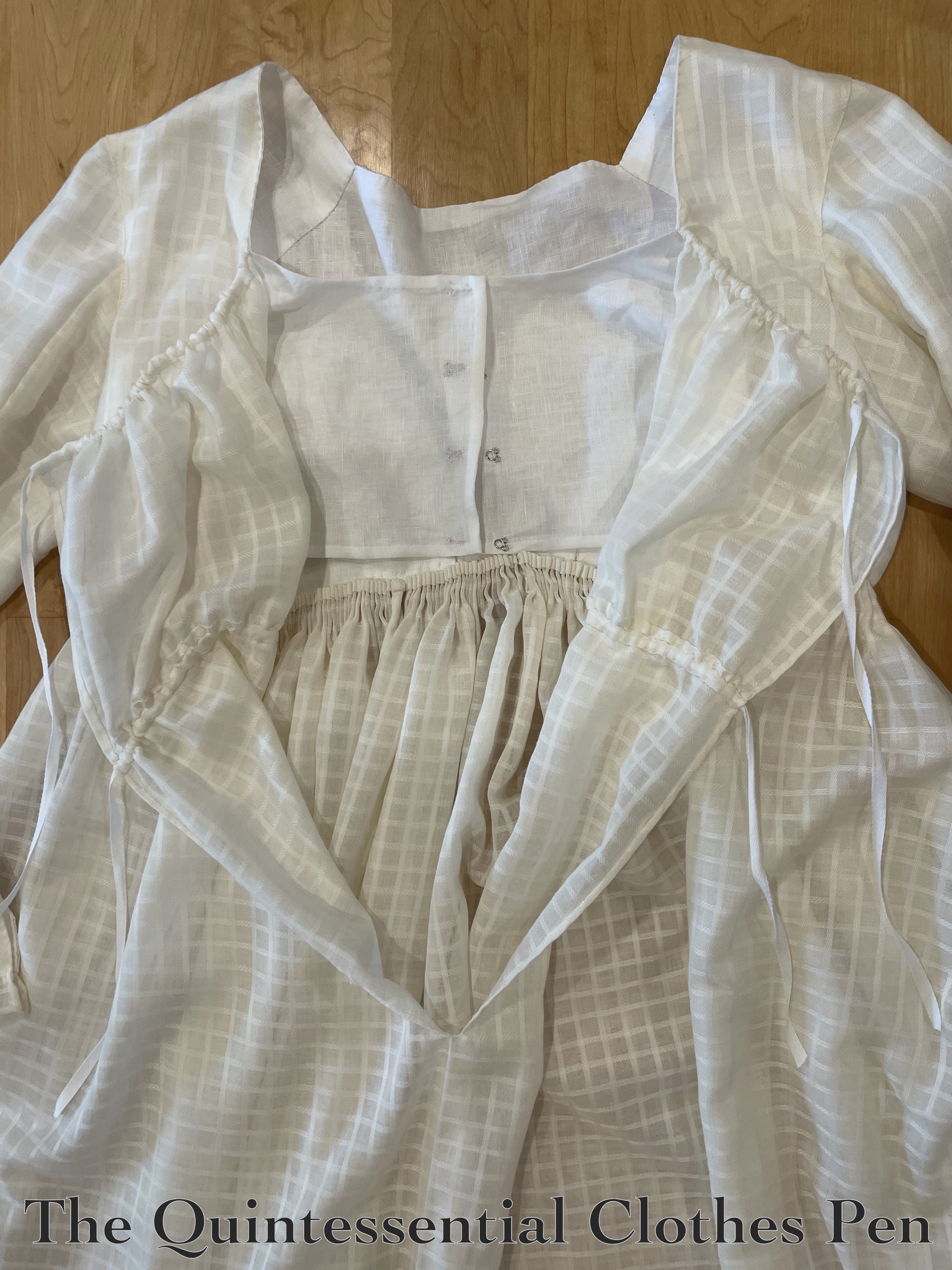
Then, below, is the dress with the front exterior opened up. Historically speaking, the lining would likely have been pinned in place, but I decided hooks would be simpler for me (and still adjustable with a little bit of sewing) and so my lining closes with 4 hooks and loops. The front skirt slit opening is lost in the gathers once the exterior of the dress is closed.

The next photo shows the back of the bodice, which curves up a little at center back in a very 1790s way, as well as the very full skirt that is attached across the back using cartridge pleats, creating a lovely series of folds.

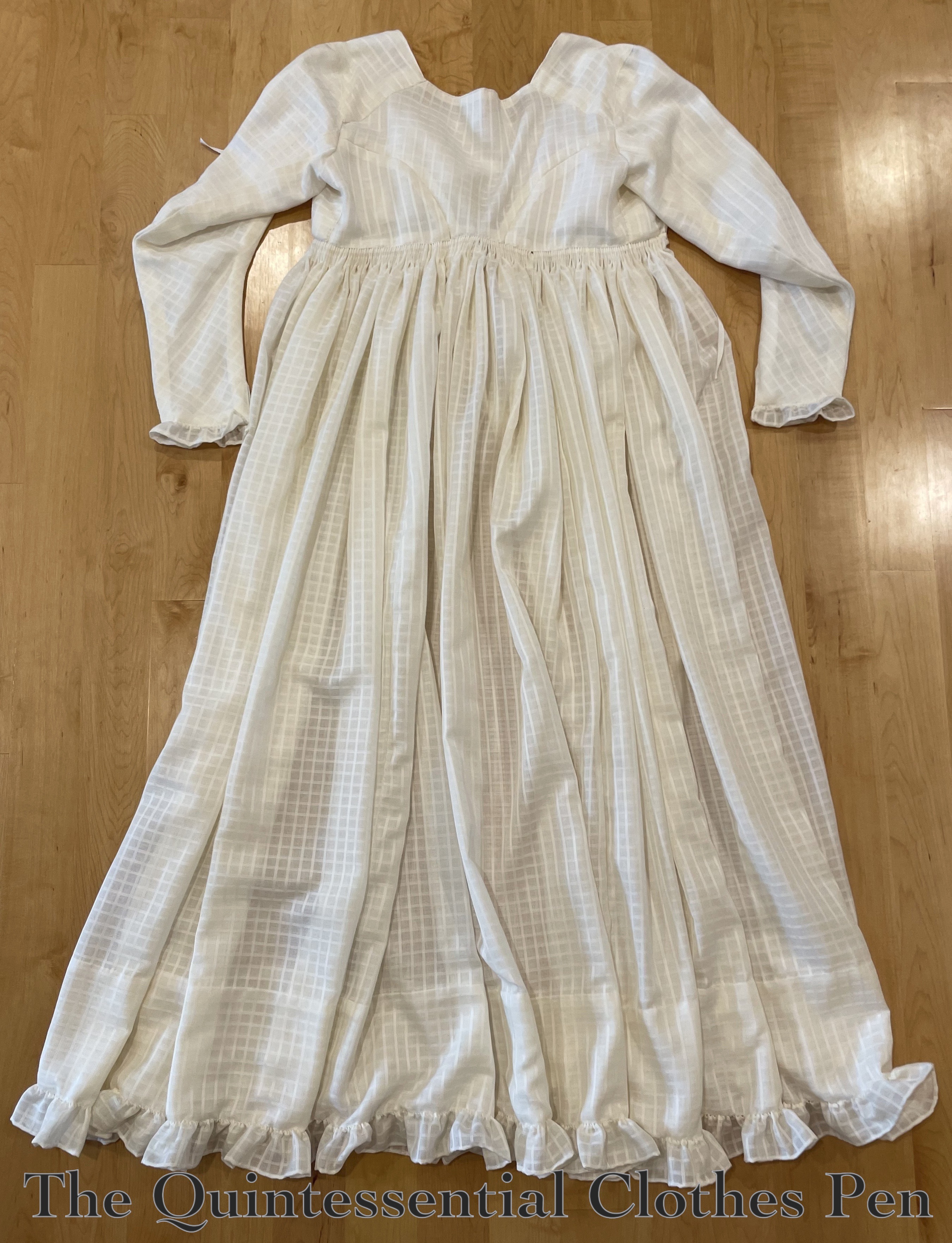
And here is a view of the entire back of the dress.

The final touch was to hem and then add all of the ruffles! I brought the basic rectangle shapes with me on trips and quietly introverted while hemming miles of edges. Eventually, they were all hemmed and connected. Then… I went back along one long edge on each ruffle section and ran whip gathers. Then, finally, I butted the edges to the sleeve hems and bottom edge of the skirt and whipped the ruffles into place.

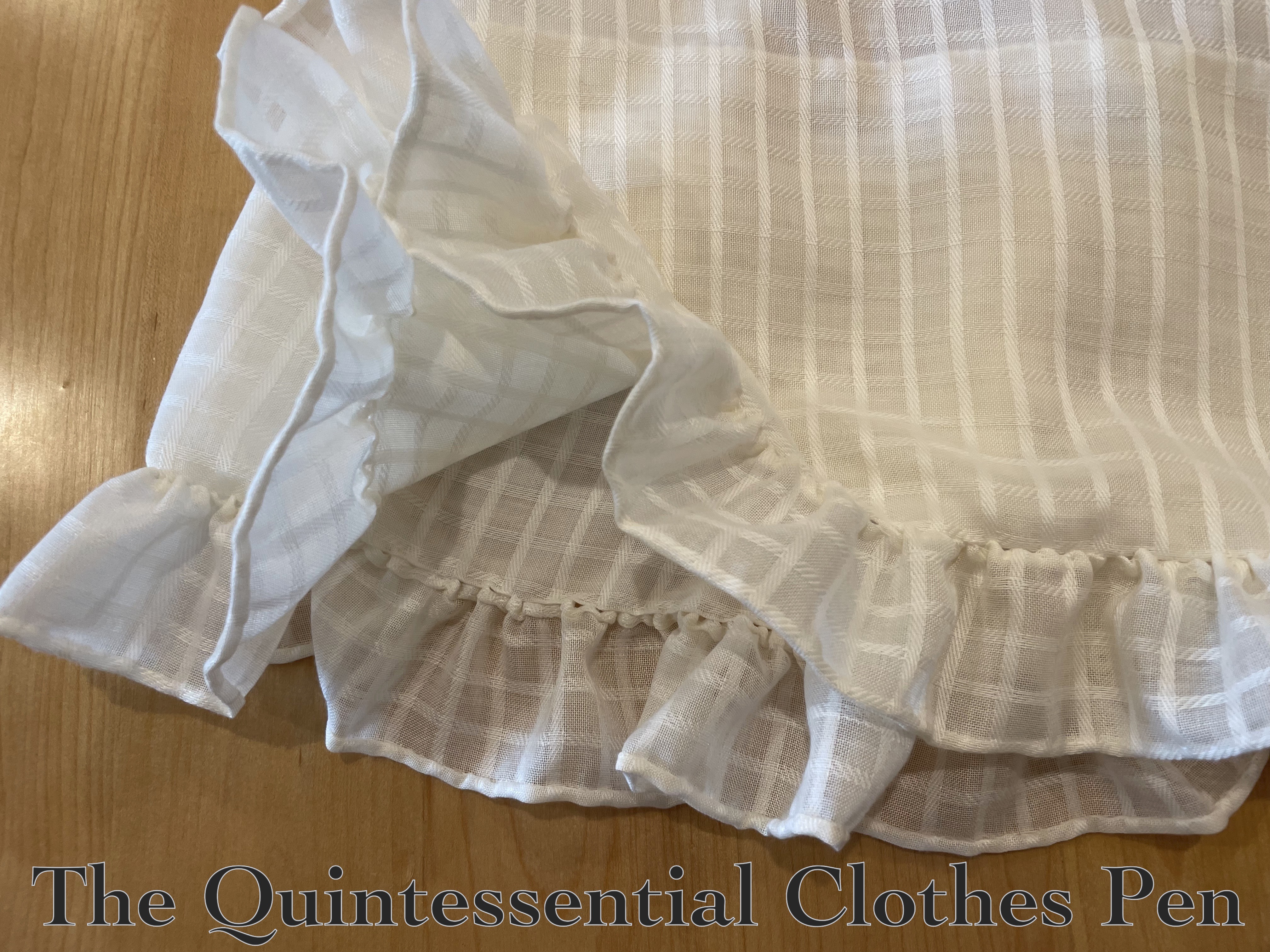
Below is a closeup of the hem ruffle, where the narrow hem of the ruffle and the butted edges are both clearly visible.

And here is a closeup of the sleeve opening, which again shows the narrow hems on the ruffle and butted edges of the ruffle and sleeve.

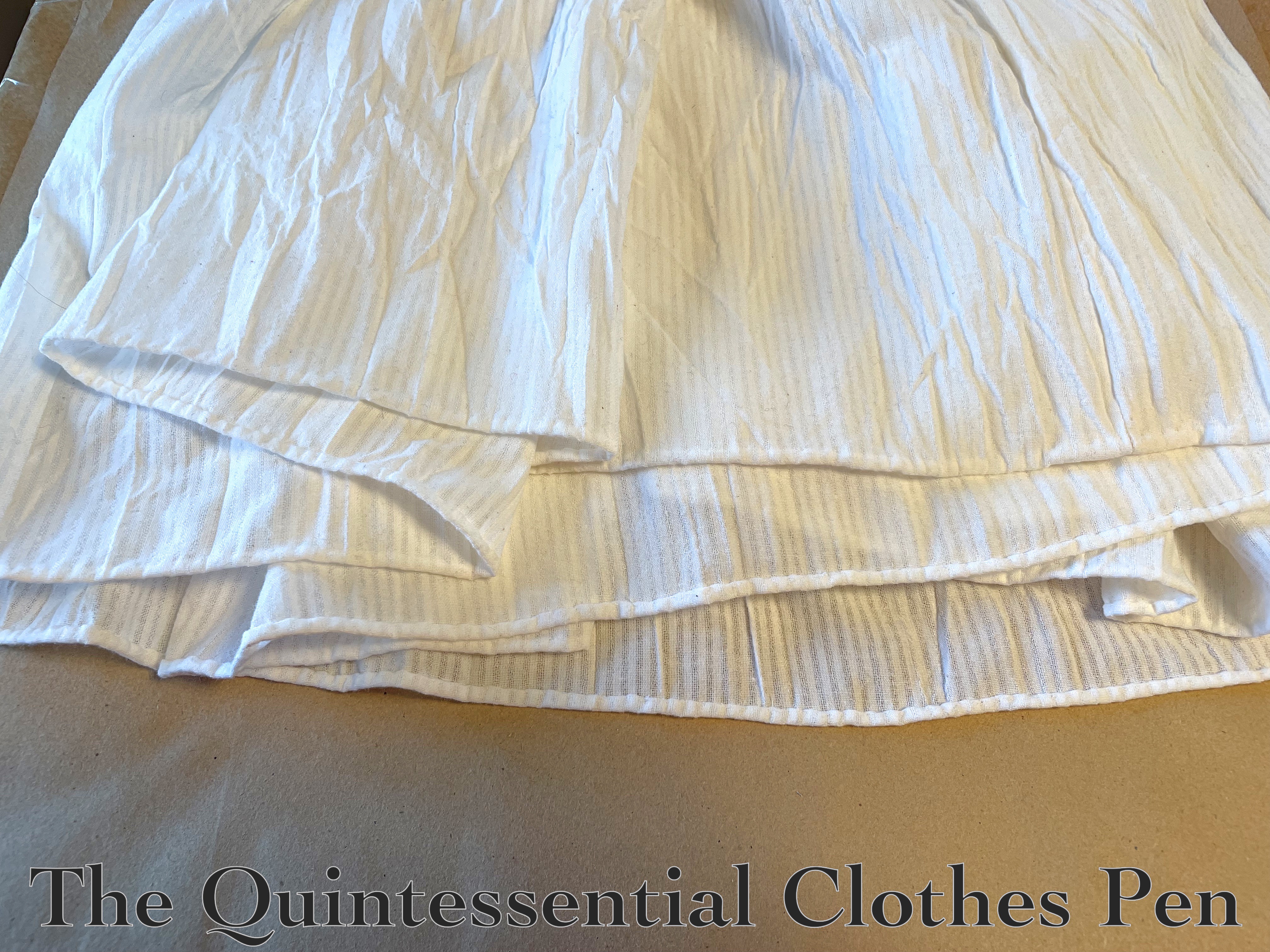
I did have one strange decision to make regarding the depth of them hem on the dress itself. It might not have struck you as odd that the hem is so deep (about 6″), but it does look slightly strange to me when I look at photos of the dress laid out, or when I see it without the petticoat underneath.

The reason for the unusually (for this period) deep hem is that my petticoat somehow ended up being a bit short, even with a narrow hem. I didn’t want to have the nice, smooth white expanse of this skirt broken by a section at the hem that wasn’t backed by a petticoat before the dense white of the ruffle. And I had lots of length in my dress exterior to play with.

I considered tucks to take up the length and provide opacity, but it looked ridiculous in this fabric and for this particular decade. Instead, I settled on this wide hem which is set at a height that makes the ruffle just brush the tops of my feet. The top edge of the deep hem just blends in when the petticoat is under the dress. Here is a view of the hem. Each of the squares is about ½”.

And that’s it! The dress is finally done! I’m super pleased that this UFO garment and the accessories to complete an ensemble are finished and that I have a whole new decade of clothing ready to wear.

Now, I’ve moved on to other sewing projects and trying to figure out how to use (mostly) my real hair to create a 1790s look so that I can get photos of the whole 1790s ensemble. More on that once I figure it out and get photos. In the meantime, thanks for reading this far and sticking with me through all of these minute details!

1790s Petticoat & Bum Pad (HSM #8)

This post is part of my ongoing and slow work on a 1790s ensemble.

Last year, I was working on a petticoat and bum pad to create a foundation for a dress. The petticoat was pretty much done by the end of the year. The bum pad needed just a final fitting for me to decide if I liked the plumpness before sewing it closed.

After a fitting when the dress was very close to done I determined that I did like the plump pad (stuffed with scraps of the white striped cotton the petticoat and bum pad are made of).

With the bum pad being good to go, I was finally able to finish up the petticoat!

This is my entry for the Historical Sew Monthly 2024 Challenge #8 Stripes and Dots:

Make something using striped or dotted material. The stripes or dots can be printed on the material, knitted/woven in to the material, or created with surface embellishment (ex: embroidery). Textural stripes or dots (i.e: those that are the same colour as the base fabric) are permitted!

This petticoat is made from fabric with a narrow woven in stripe.

Just the facts:

Fabric/Materials: Approximately 3 yards of white striped cotton.

Pattern: From The American Duchess Guide To 18th Century Dressmaking by Lauren Stowell and Abby Cox.

Year: c. 1795.

Notions: Approximately 1 yard of 1/4″ white cotton twill tape, 4 hooks and loops, and thread.

How historically accurate is it?: 100%. Entirely hand sewn, made from plausible fabric, using a pattern that is backed up by lots of research… I’d say this one is pretty accurate!

Hours to complete: About 2 ¼ hours.

First worn: Not yet worn.

Total cost: Approximately $4. The fabric was just $1 per yard when I purchased it years ago and the twill tape and hooks/loops were bought in super bulk and probably cost no more than $1 for all of the bits that I used.

More details:

The petticoat closes with a drawstring, as can be seen below. I love this, as it will make it easily adjustable (a common theme in my recent sewing projects!)

The front opening is finished on both sides with a narrow hem. It’s long enough that I didn’t feel the need to reinforce the bottom, as I don’t think I’m likely to rip it getting in and out.

The next photo shows that I left extra seam allowance at the sides and shoulder seams… again on the theme of garments being alter-able!

And finally, a hem! I needed to max out the length to accommodate the sheer dress that will be worn over this, so the hem is only about ¼”.

And that’s it! I’m excited to have another foundation piece for a new-to-me decade of clothing and I’m pleased that it is entirely hand sewn.

1790s Organza Cap With Gold Stripe Trimming (HSM #5)

I’ve been on a roll finishing up foundation and accessory projects that I started over the summer as smaller pieces of larger ensembles I have in the works! Today, I’m sharing about a hand sewn 1790s cap!

This accessory qualifies for the Historical Sew Monthly Challenge #5, Hair Apparel:

Make something worn in the hair or on the head.

Just the facts:

Fabric/Materials: ¼ yd white linen, ¼ yd white silk organza, ¼ yd gold striped polyester organza, and 1 yd ¼” white cotton twill tape.

Pattern: 1790s “Vigée le Brun” Turban Cap in the book The American Duchess Guide To 18th Century Dressmaking, by Lauren Stowell and Abby Cox.

Year: c. 1790.

Notions: Thread.

How historically accurate is it?: 95%. Polyester is obviously not historically accurate, but most of the materials,  methods, and hand sewing method are.

Hours to complete: 5.

First worn: Has not been worn yet.

Total cost: All of the materials are from the stash (leftovers from other projects), so let’s say free!

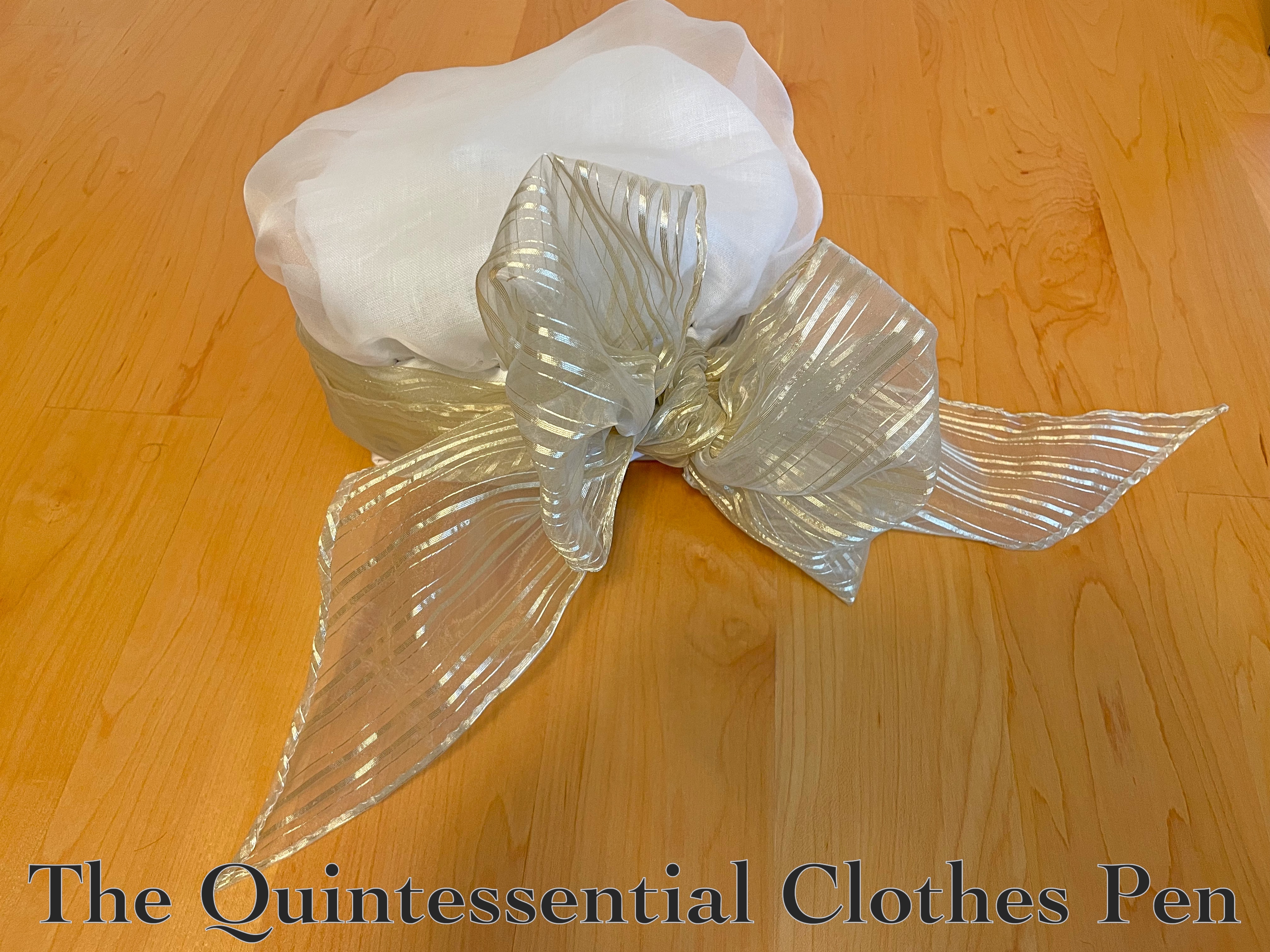
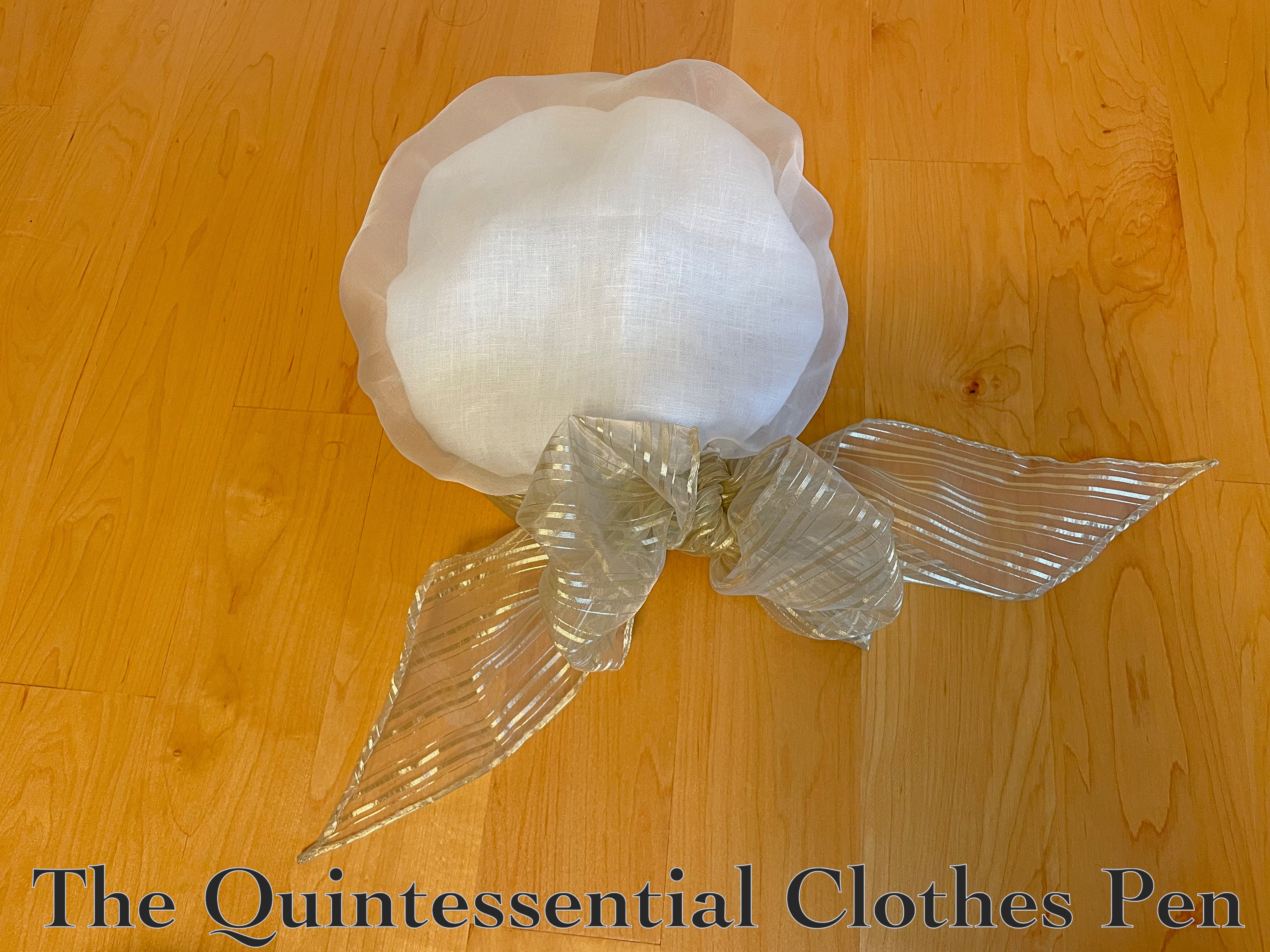
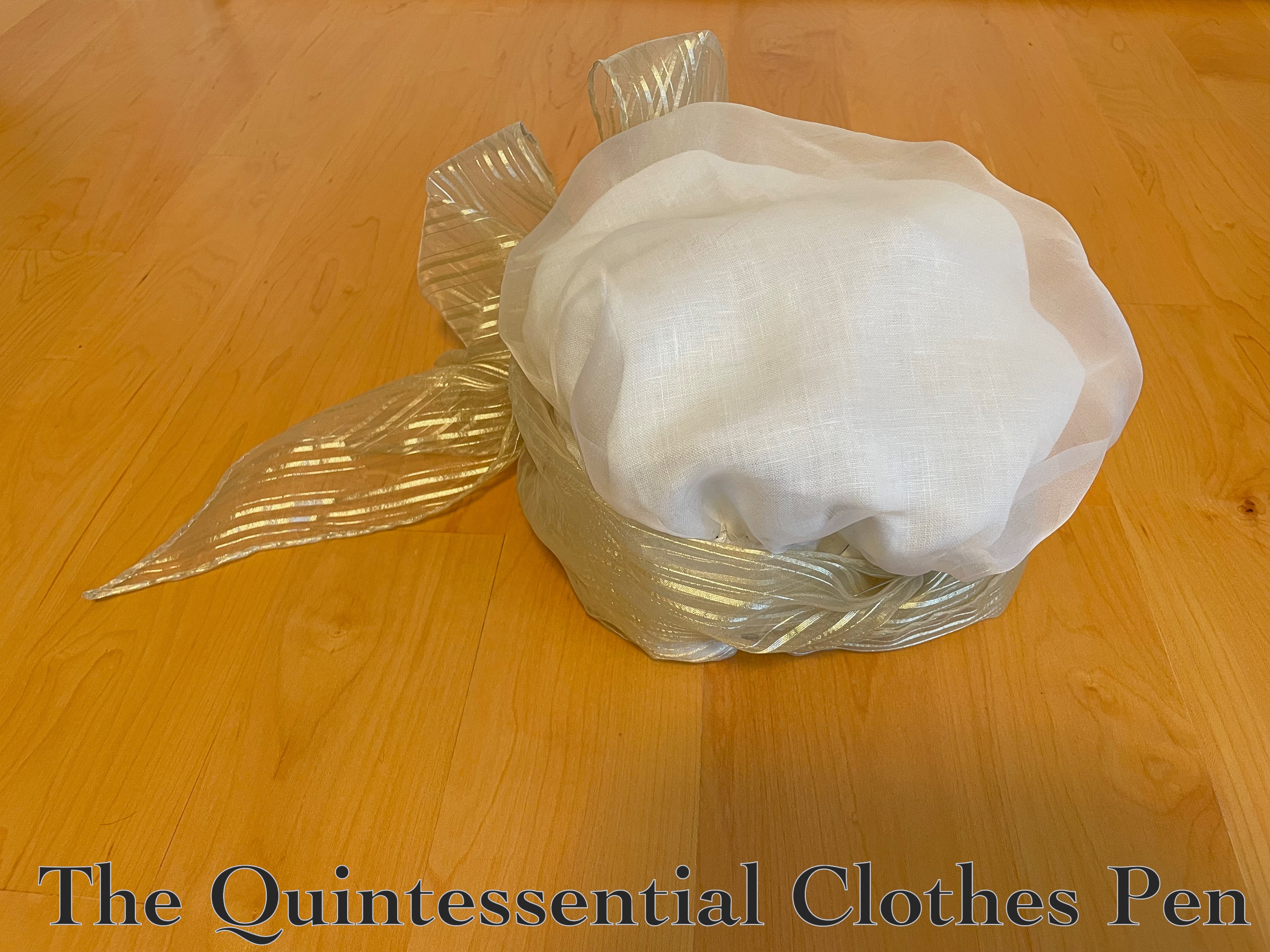
This is a fun accessory to add to my collection! I’m amused by the oversized crown and bow. The oversized crown, especially, is visible in the photo below.
The silk organza used for the outer crown is fun, but when considered with the all white dress in the works it seemed a bit monochromatic. So to liven things up a bit, I decided on a gold stripe organza (leftovers from my 1817 Duchess Gown) for the bow. It’s polyester, so points off for historical accuracy, but I like that it’s neutral but more interesting than white.

For now the cap is just living on my sewing table so the carefully pressed fabrics don’t crease. Hopefully, next year the cap will get an outing and be documented on my head!

HSM #3: Copper Colored 1790s Sash

I finished a project! It’s small, but I’m very pleased with it.

The project is a sash to be worn with an in-progress 1790s dress. The goal is to be slowly progressing towards an entire 1790s outfit, with all of the appropriate accessories.

I’ve enjoyed making lists of what those accessories might be and getting them cut out and lined up for mindless hand sewing. That way, even when life is busy and I don’t have time to think about a project, I can still make progress and have something to sew, which brings me great joy and a sense of calm.

This project takes its inspiration and instruction from The American Duchess Guide To 18th Century Dressmaking, by Lauren Stowell and Abby Cox.

I’m excited that the sash qualifies for the Historical Sew Monthly Challenge #3, Focus on the Fabric:

Make something in which the fabric colour/ texture/print/material etc. is the central feature of the design.

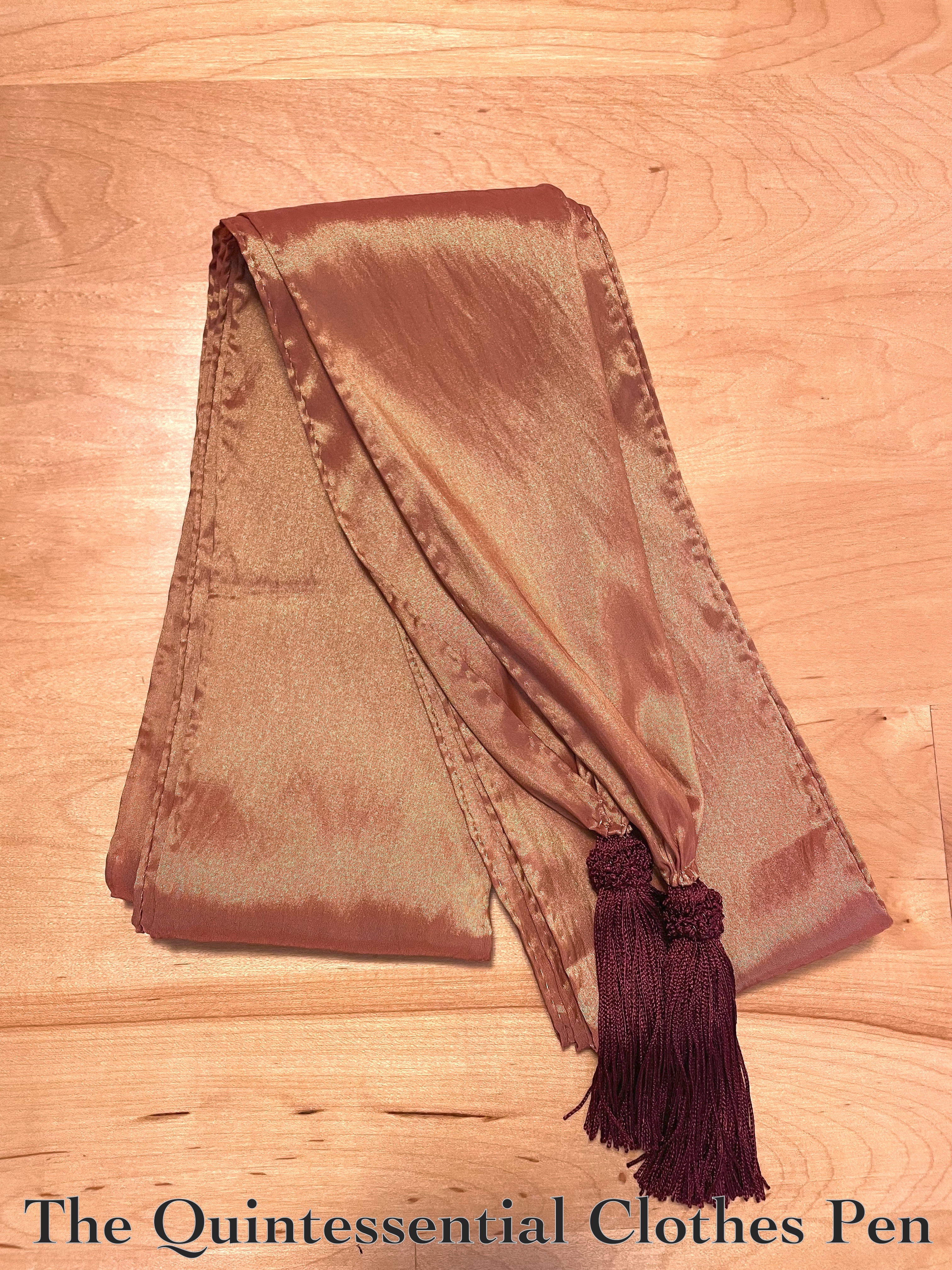
This fits the challenge in that the sash really isn’t at all about the construction details… The only cuts to the fabric were to make strips, and the only sewing is joining them and finishing the edges. So it really is all about the fabric!

Just the facts:

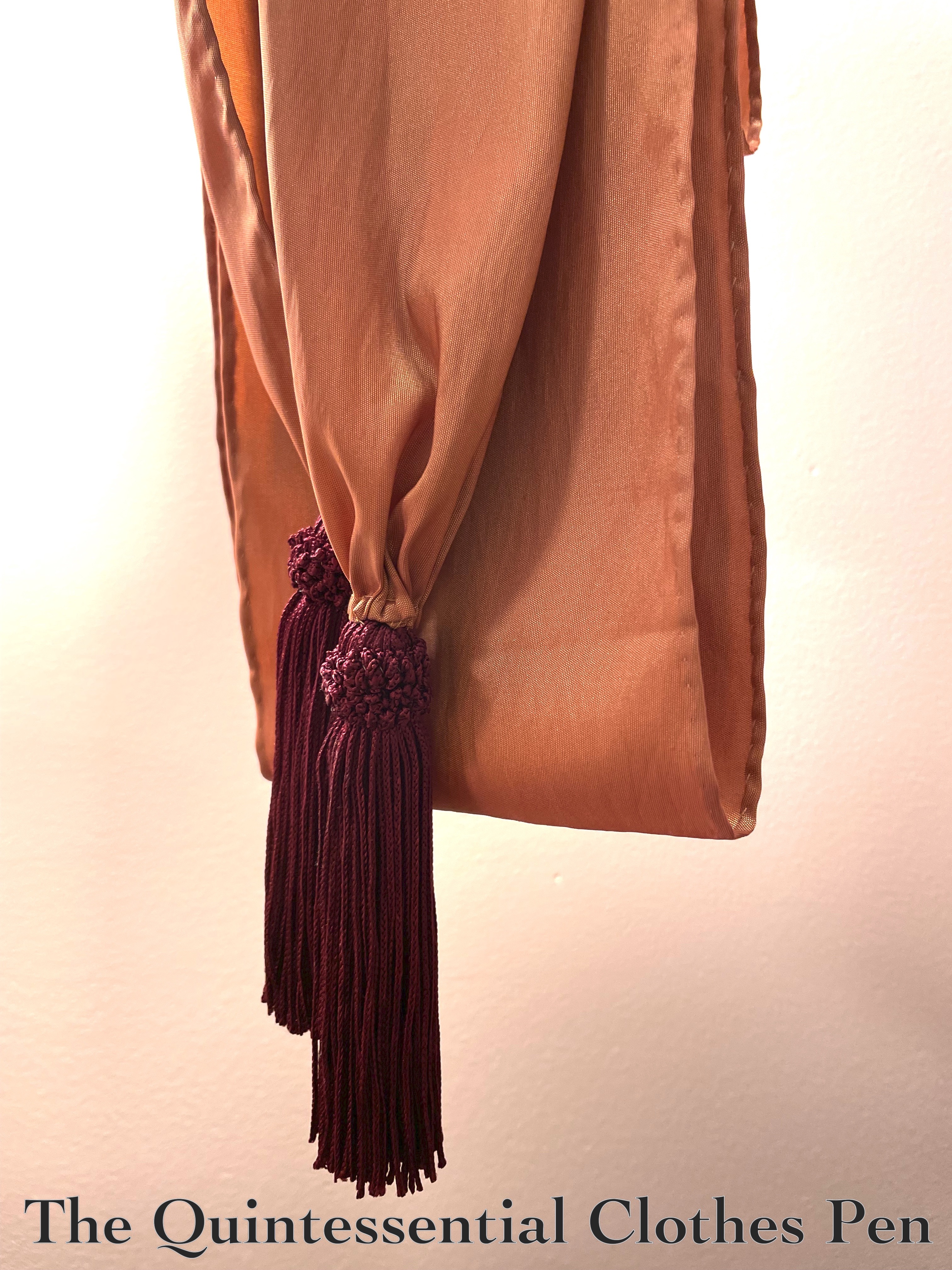
Fabric/Materials: ½ yard or so orange/gold shot polyester taffeta leftover from a very old project and 2 burgundy tassels.

Pattern: 1790s Sash in the book The American Duchess Guide To 18th Century Dressmaking, by Lauren Stowell and Abby Cox.

Year: c. 1790.

Notions: Thread.

How historically accurate is it?: 90%. Polyester is obviously not historically accurate, but the dimensions and hand sewing method are.

Hours to complete: 5.

First worn: Has not been worn yet.

Total cost: $2 for the tassels and let’s say $.50 for the thread. We’ll count the fabric as free. So, $2.50.

HSM #11: c. 1785 Hand Sewn Natural Linen Stays (Of Success!)

I recently finished up a series of blog posts that document the trials, tribulations, and triumphs of a new pair of 18th century stays. Here is the link to the most recent post (and I’ll include a link to all of the posts in the series at the end of this post).

I’m really, really excited that this pair of stays is complete! They are entirely hand sewn, which took quite a bit of time. And, they were a struggle to fit that ended in success. For both of those reasons, I’m excited that these qualify for the HSM Challenge #11: Style Starts At Home:

Make something which would generally be seen only within the household (ex: informal at-home wear, nightwear, undergarments)

How do these fit the challenge? Well, stays are an undergarment that would generally only be seen at home!

Just the facts:

Fabric/Materials: ⅔ yard natural linen for exterior (scraps from another project), 1 ⅓ yards thick/heavy white linen for interlining (scraps from another project), and ½ yard cream linen/cotton blend for lining

Pattern: 1785-1788 Half-Boned Stays from Mandy Barrington’s book Stays and Corsets: Historical Patterns Translated for the Modern Body

Year: c. 1785-1788

Notions: 29 10″-14″ zip ties that I cut to be 3/16″ wide for boning, 2 ½ yards 3/16″ wide natural linen twill tape for seam covering, 4 yards 1/2″ wide natural linen plain weave tape for binding, 3 yards white cotton cord for lacing, 1 yard ¼” wide cotton twill tape for front lacing, 2 yards ¾” wide cream cotton twill tape for straps, regular weight thread, and heavy weight thread

How historically accurate is it?: 90%. The pattern and methods are based on historical examples. The materials are pretty close, though the zip ties and cotton/linen blend aren’t perfect replicas of 18th century materials.

Hours to complete: I only kept track of about 50 hours, but my guess is that I spent at least 70-80 on these stays.

First worn: In May 2023 for photos.

Total cost: Approximately $40.

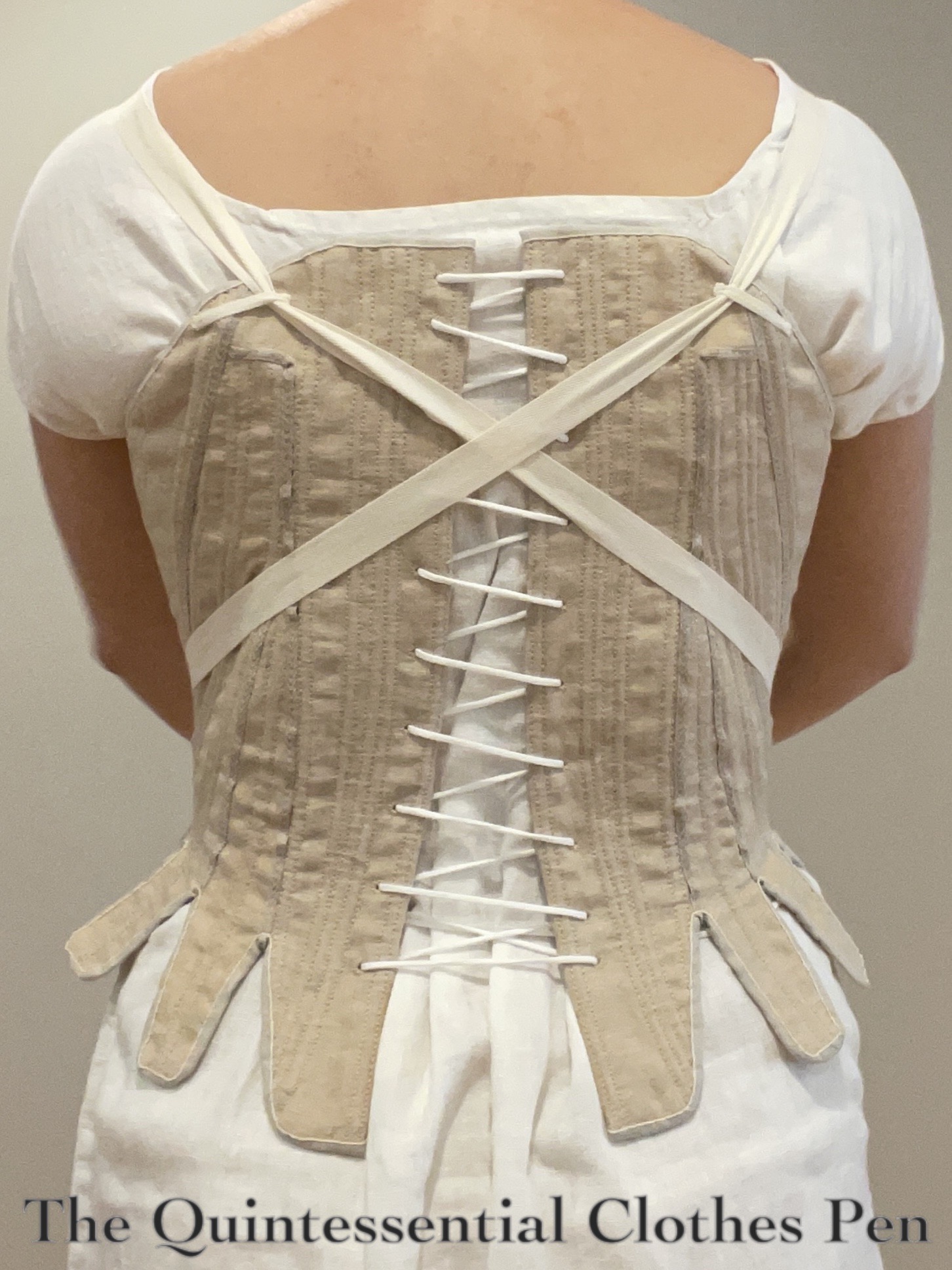
And, a few more photos: side and back view, as well as a view of the stays folded in half from the inside.

You can read previous posts in this series here:

c. 1785 Stays of Success, Part VII: Conclusion, Reflections, and Resources
c. 1785 Stays (Of Fail), Part VI: Finishing Construction Details
c. 1785 Stays (Of Fail), Part V: Middle Construction Details
c. 1785 Stays (Of Fail), Part IV: Early Construction Details
c. 1785 Stays (Of Fail), Part III: The Pattern
c. 1785 Stays (Of Fail), Part II: Fitting Update
c. 1785 Stays (Of Fail), Part I: Beginnings

c. 1785 Stays Of Success Part VII: Conclusions, Reflections, & Resources

Did you notice the change in the name of these stays??? I’ve decided to call them the Stays of Success instead of the Stays of Fail!

This is partly to give them a more uplifting name that brings joy instead of disappointment, but also because I finally took photos of them… and then proceeded to wear them around the house for a number of hours because they were actually quite comfortable! Success!

Conclusions and Musings

I want to start by exploring why I originally named this pair of stays the ‘Stays of Fail’. That is because, until very recently, I felt that this attempt at stays was a failure in terms of comfort. The comfort is what I based the original name of them on.

By the time the construction was almost done, I felt slightly better and that they were a (very struggle-y) learning opportunity. After adapting them, I was thinking that ‘Stays of Fail’ maybe should turn into ‘Stays of Learning’ (although isn’t that every project?!?) or maybe just c. 1785 Hand Sewn Natural Linen Stays (but that’s not very exciting!).

Stays of Success is more entertaining!

Reflections On The Process

Would I use the book Stays and Corsets: Historical Patterns Translated for the Modern Body by Mandy Barrington again?

My experience, as I moved forward with the construction process, was that I regularly lamented the focus of the book on modern theatrical methods, as I was aiming to produce historical stays. When I wanted to go back and get detailed information about the materials, construction methods, measurements of bindings, etc. I found that information just wasn’t included. It was especially frustrating when information was just missing–such as the locations of the front eyelets–even on a pattern taken from the original.

At one point, I thought I could get around the problem of lack of historical detail in the book by looking for the online record of the Chertsey stays that the pattern was based on. Clever, I thought! However, I can only find two images of them and it seems that aside from that they aren’t available to view online in full. (The back lacing can be seen here and a front view can be seen by Google image searching ‘Chertsey museum stays’, but clicking through to the museum website doesn’t lead to the image.)

This lack of information is why I heavily relied on Patterns of Fashion 5 (PoF5)–because all of the detailed information I wanted (and more!) is there. (I did have to extrapolate and make decisions based on the information in PoF5 since it is all for similar stays but not for the exact pair that I’ve patterned.)

So, while using this book was a valuable experiment, I don’t think I would be inclined to use it to create another historical support garment for myself. However, I can see the benefit of drafting a pattern with similar proportions for someone who is vastly different than the original pattern size, for theatrical purposes in particular. For that purpose, I wouldn’t be interested in replicating the historical details and so the omissions I mentioned would not be a detriment to the garment I would be intending to produce.

In the end, I’ve learned a lot about what this book can, and can’t, do and that is helpful even if I’ve been a bit frustrated along the way due to my goals being different than what the book is aimed at.

Further Experiments

Unfortunately, one of the fitting problems I encountered might be due to an alteration I made in the mockup to take in the waist (I’m taking ownership of my actions!). This inside photo of the mockup shows the center front and side area alterations I made.

After finishing the stays, I was curious to see how the mockup would fit if I compared it to the finished stays. It turns out that I basically had to add in the width I’d taken out in the mockup when I added my back gusset. Sigh!

In theory, my alterations should have made the mockup slightly smaller than the finished stays with the added gusset, but the odd thing is that the mockup dimensions (with the alterations) are pretty similar to the finished stays (with the back gusset added in). So perhaps the real fabric stay pieces shrunk or wound up being smaller than I thought? Who knows?!? I’m done puzzling on this one!

In The Meantime…

While wrestling with these stays, I decided that I didn’t want my lack of stays to hold me back from making dresses any further and so I decided to start a whole new pair of stays instead off dealing with this pair (at least for a short time).

I held off sharing about them for quite awhile because I wanted to finish the saga of these stays… but eventually I gave up, and at the end of 2022 had great fun sharing the success and construction of my c. 1785 Green Linen Stays.

Resources

This is not comprehensive by any standards, but I thought it might be helpful to collect some links that I’ve found useful for anyone who wants to know more, see other people’s stays, or people who are making stays themselves. (These sites were especially useful for seeing the process when I didn’t have PoF5 on my cutting table!)

You can read previous posts in this series here:

c. 1785 Stays (Of Fail), Part VI: Finishing Construction Details
c. 1785 Stays (Of Fail), Part V: Middle Construction Details
c. 1785 Stays (Of Fail), Part IV: Early Construction Details
c. 1785 Stays (Of Fail), Part III: The Pattern
c. 1785 Stays (Of Fail), Part II: Fitting Update
c. 1785 Stays (Of Fail), Part I: Beginnings