Edwardian Gown Eye Candy

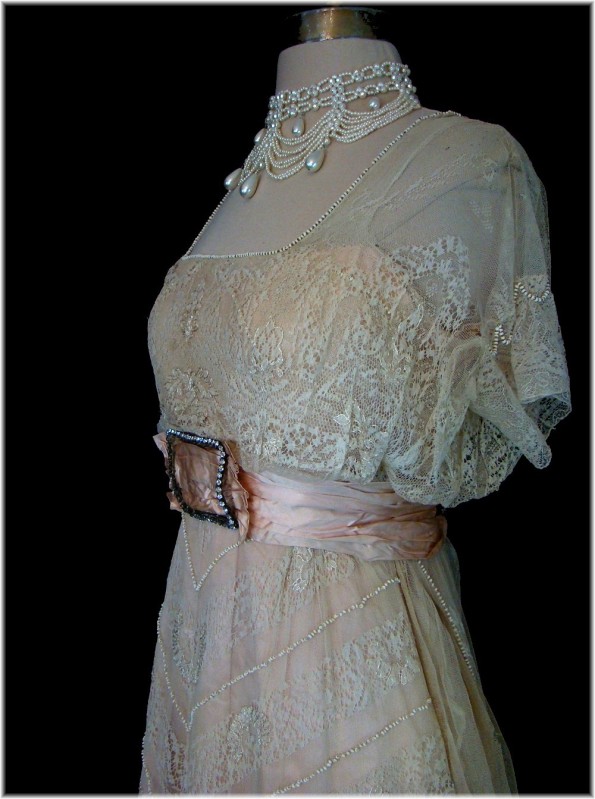
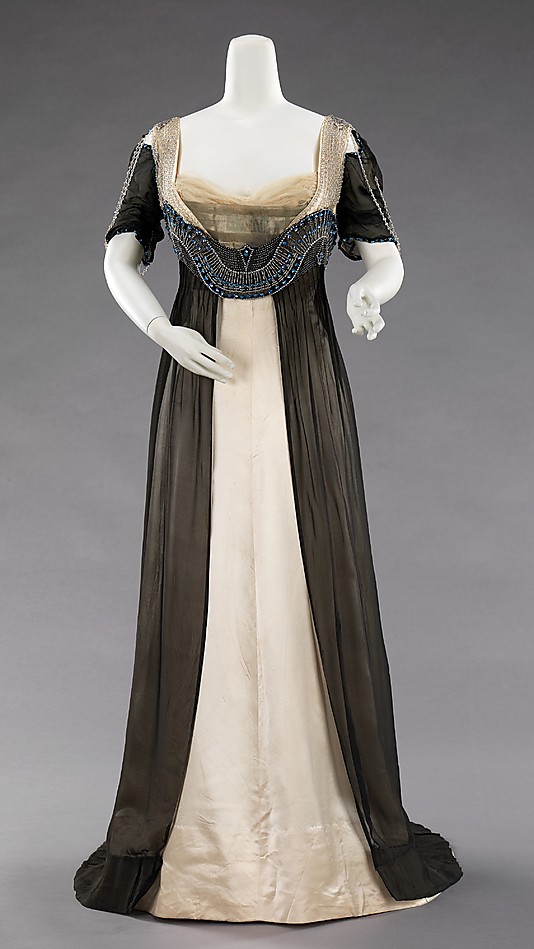
This fabulous vintage Edwardian dress was recently brought to my attention by one of you fabulous readers. It is for sale on eBay for $2,250! I certainly won’t be purchasing this original, but I absolutely think it is something to add to my body of inspirational images of clothing for future projects… The seller has included many pictures of the dress as well as background information on the dressmaker and a detailed description of the garment. I have included some of that information in addition to pictures for you to view here in this post.

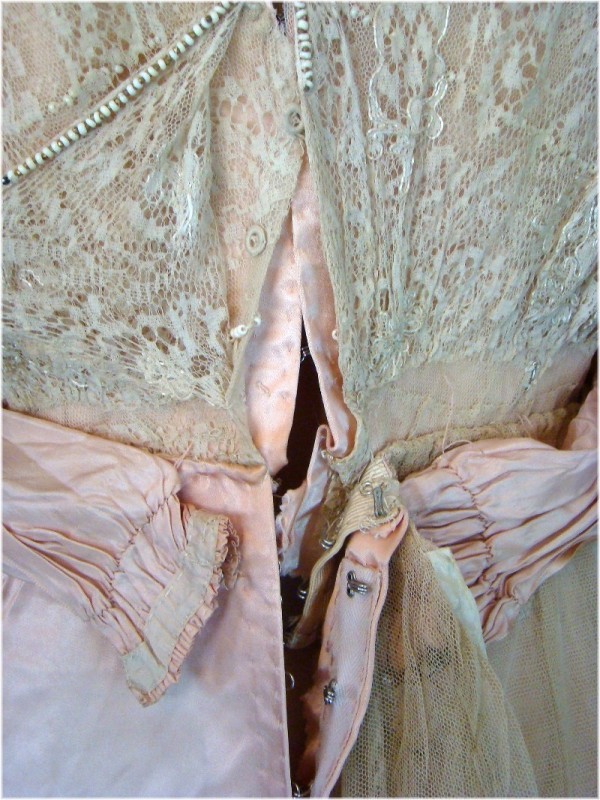
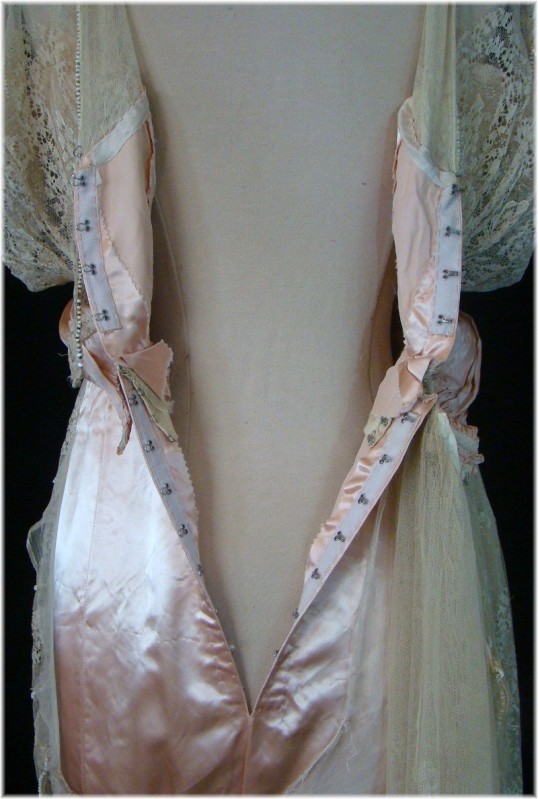
The lace is exquisite! The rhinestones add even more sparkle! I love that there are pictures which show the closures and construction details. I classify this gown as “drool-worthy.” What do you think? Do you like it? Or not? Why?

Some of the information from the eBay seller, labellevintage_inc:

“This was created by Mrs. Catherine Donovan who was originally from Ireland (b.1826) and studied fashion in Paris. She owned the couture shop “MRS. C. DONOVAN & CO” which was located at 29 East 55th St.in New York. Her dresses in 1910 were billed at $100 and up which was extravagant as a gown from her would cost over $4,000 today!

Many of her garments are found in Museums throughout the world. There are 4 dresses at the Metropolitan Museum of Art alone. But the detailing and workmanship of these garments are worth every penny in my opinion.

FABRIC:
This is made of peach satin (formerly peach silk) and covered in exquisite ivory lace with re-embroidered patterns done with silk thread. The lace gives hints of Orientalism (which was made popular by Paul Poiret ) with its Royal Pavillion shapes on the back panels. The rosette and belt details are done in peach silk.

This enchanting garment features a fitted satin strapless bodice covered with a blouson bodice of lace. The bodice features a low square neckline and the dolman sleeves are short. Both the neckline and arms are decorated with cream glass and gold painted cut steel beads. There is an inner netted bodice which helps with the weight of the dress.

The empire waist is decorated with a ruched sash which is adorned with rhinestones, each individually sewn on a gold lame’ backing in the shape of a buckle.

The straight satin skirt is covered in two tiers of lace at the front. Each tier is decorated with cream glass beads and gold steel cut beads in a chevron shape. The tier is separated with a silk band featuring a large silk rosette. The top tier is adorned with crystal cut glass beads around the hemline.

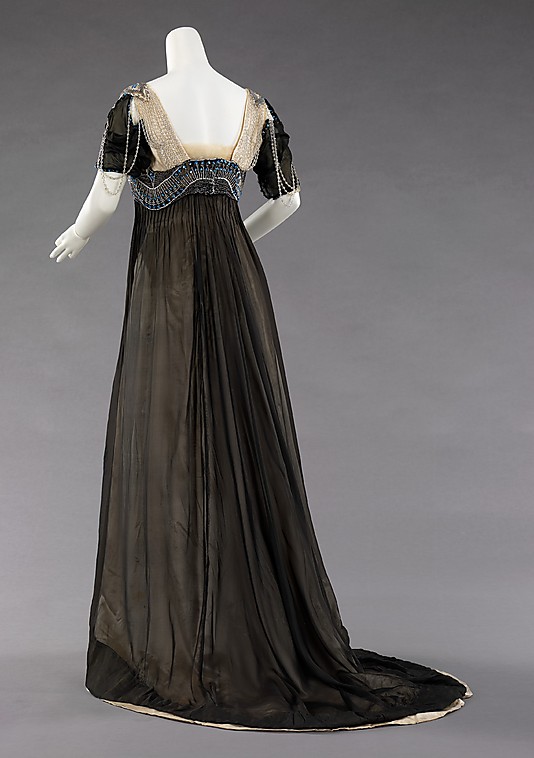
The back has a surplice detail on the bodice with the silk band closing at the back decorated with more rhinestones.

The lace skirt is made of 3 tiers with one extra panel which attaches to the finger as a drape or can be left hanging as a short train. The top tier and second tier are both decorated with crystal cut glass beads.

This closes with several snaps, hook & eyes and tiny crochet buttons at the back.”

Thank you, Kimberly, for bringing this dress to my attention!

Back Detail of the 1912 Tea Gown

A few posts ago, while I was sharing pictures of the Titanic Weekend in April, I included images of the front of  my new 1912 black and ivory silk tea gown and mushroom hat. Unfortunately, I didn’t have good pictures of the back of the dress at that time… but now I do, and it is time to post them!

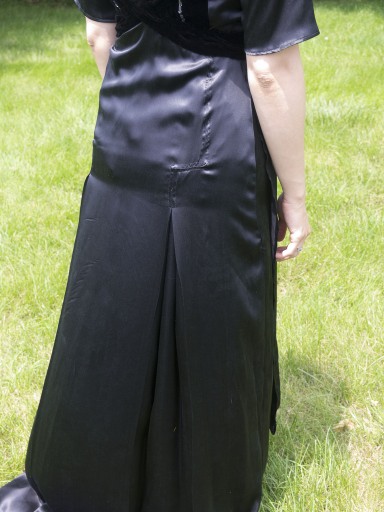
The back of my 1912 tea gown. I like the belt that crosses and swoops up (hard to see, except that the line of beading is interrupted by the belt) and the side back seams that end in pleats (it looks really cool while I’m walking!).
It’s a little hard to see in the first image, but the side back seams make a few intentional right corners before opening in inverted box pleats that help form the train. Here is a close-up of those seams: unfortunately, they pucker a little in the silk charmeuse because I didn’t think to stabilize them before starting to sew and snip corners… Let that be a lesson to you!
Another view of the back seam and pleats.
Here’s a side view, so you can see the front and the back.
And a recap picture of the mushroom hat.

I was able to wear my freshly painted and moved-button Astorias with this dress and others at Dress U recently, but you’ll have to wait to see pictures of the finished shoes–they’ll be coming in another post soon!

Titanic Weekend Part III: Pictures of the Events

Here we are, a third and final installment of posts related to my recent Titanic-themed weekend. You can read more about my tea gown and matching hat as well as my evening gown in previous posts. I think I’ll limit my commentary to captions. Here we go!

The weekend began with a casual Steerage Ball with a light and charming atmosphere.
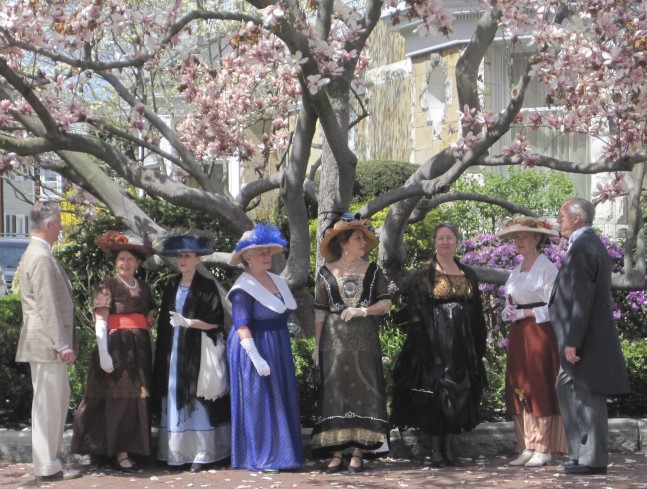
Saturday afternoon was a formal tea to relax after a morning dance workshop.
Fabulously dressed people were all around!
I do love flounces, in any period.
In lovely whites, a staple of the Edwardian wardrobe.
There were picturesque photo opportunities, of course.
And the men were just as fabulous looking as the ladies.
The weather was lovely and some people took the opportunity to talk a walk outdoors.
While others took advantage of a less strenuous opportunity for enjoyment indoors.
Saturday evening was a formal dinner and grand ball.
So we all donned our finest finery...
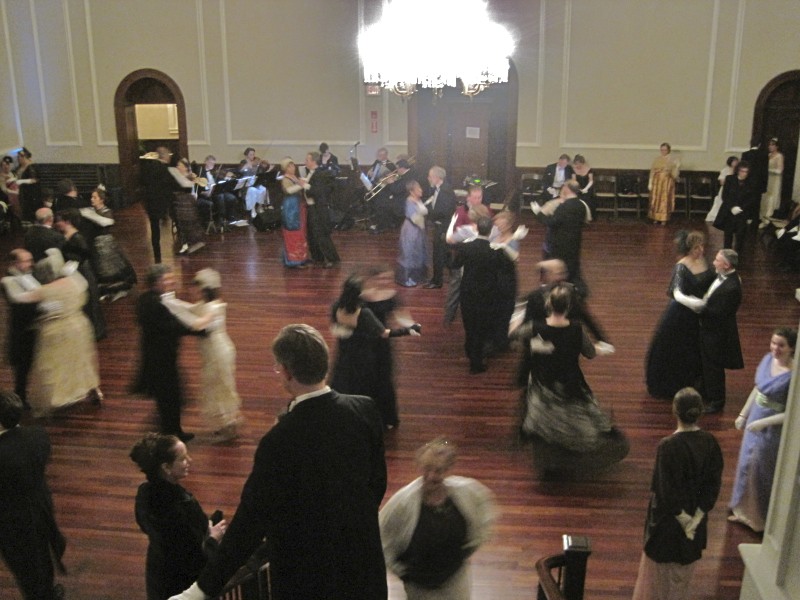
And after dinner, danced the night away to live music.
There was a balcony and staircase that added serious elegance to the room.
Dancing, dancing, dancing...
Of course, a girl must rest sometimes, and why not with a fabulous fan? The room did get quite warm.
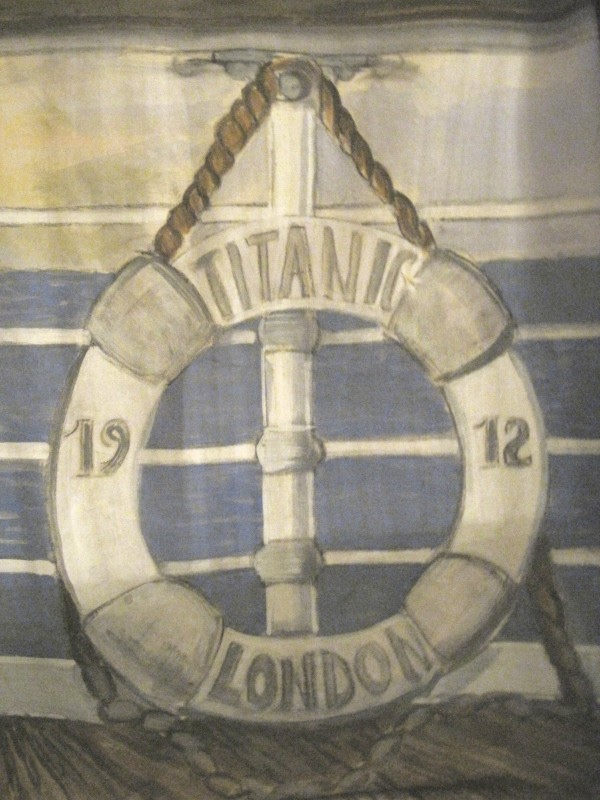
This backdrop was just lovely, and so perfect for pictures!
Picturesque!
Pictures were taken in abundance.
At 11:40pm (which is when the ship hit that ill-placed iceberg) we took part in a moment of silence to remember those who were lost followed by a haunting final waltz to the melancholy melody which was the last song played by the band as the Titanic sank.
On Sunday, I was able to wear my 1913 walking suit and hat on the Museum Stroll. I wore the blouse and skirt to the Steerage Ball, with a wonderfully simple, yet very Edwardian coiffure, but of course I didn't get pictures of that... oops. There were fabulous outfits all around, but it was difficult to get pictures given that we were spread throughout a museum!

All in all, a lovely weekend full of fabulous clothing, beautiful music, and wonderful dancing. What a recipe for amazing memories!

Titanic Weekend Part II: All About The New 1912 Day Ensemble

We took a rather in-depth look at my new 1912 evening gown. Now, on to the second 1912 ensemble that I also wore during the weekend: day gown and hat!

Gown and hat with (unbuttoned...) white kid opera gloves. I'm so pleased with the overall effect! Unfortunately, I don't have pictures of the back. There are cool details back there, so another fashion shoot will be required in the future...

This gown is constructed from silk charmeuse. The skirt is a single layer in addition to the overskirt panel in front. The bodice has a foundation of the same white cotton as my new evening gown. Mounted on to that cotton are (from the neck down) layers of ivory silk charmeuse, ivory silk flat lined with fabulous ivory colored diamond lace, black silk velvet, and black silk charmeuse. The overskirt panel is trimmed with matching silk velvet and the belt is constructed of the same. There are small buttons on the overskirt velvet trim (because, really, the Edwardians just loved adding buttons everywhere!). Because the back bodice mirrors the front in its style (which unfortunately I don’t have a picture of right now…), I had to be crafty with my closures. The dress has two places that open with hooks and bars: the left side from just under the arm to a few inches down the hip and the left shoulder seam around the neck to the center back of the collar. The effect is a form fitting dress that looks like it was magically donned. The side closure is straight forward, with the foundation layer hooking first, to take the tension of holding the dress tight, and the outer charmeuse layer hooking over that simply to stay closed. Again, the foundation is essential to achieving the elegant, effortless exterior. The neck closure is a series of hook and bars that turn different directions to accommodate the seams: front to back at the shoulder, hooks that hook up on the collar to attach it to the back neck, and hooks going sideways on the center back of the collar.

In addition to the gown, I also constructed what I call the “mushroom” hat, which you can read more about in this previous post. I created the pattern for the hat, which is basically just a shaped brim with circular side band. The side band support the crown, which is a circle that is pleated to create that “mushroom” shape. I love the hat! It lends such an air of Edwardian drama and elegance to the look! And I am so pleased the the “mushroom” shape worked out!

Hm… Patterning this dress… Well, the general skirt shape is from Janet Arnold, but it is adapted to have two symmetrical box pleats that terminate at the top in delightfully detailed seams (which I really, really need pictures of!). The bodice pattern was draped with many references to my inspiration image. I created a basic shape for the bodice and then cut in into the different pieces (ivory silk, ivory silk and lace, black velvet, and black charmeuse) so that each piece would fit together perfectly. The belt is slightly shaped but doesn’t actually have a pattern.

The dress is inspired by this image from a 1910 issue of the magazine Bon Ton.

I'm sure you can guess, but the dress I was referring to is the one on the right.

In the end I made a few changes: I added a train, discarded the white under sleeves (I made them, I tried them, and they just didn’t work! They pulled the bodice in all sorts of weird ways… Maybe if the were not so tight they wouldn’t pull so much? I am fine with having gloves cover my lower arms, anyway.), and drastically scaled back the beading. Perhaps you’ll remember my plan to bead this dress? Well, the beading was drastically scaled back because I didn’t like the beads I bought as much as I thought I would (they are rectangular and larger than I thought… not seed bead-y at all), I realized I didn’t want to devote as much time as it would take to do the amount of beading I originally intended, I didn’t have enough beads to bead all four panels as much as the one panel I completed and I didn’t want to buy more beads, and I didn’t like the beading motif I had created, nor was I inspired to change it. You can see that I did leave one outline shape of beading on the bodice in the velvet section, but the rest was scrapped. That one line is repeated front and back (symmetry, you know). I did actually complete the overskirt top panel, but decided not to use it after my scaling back plan was complete (you can see it, below). I’m going to keep the beaded panel and see if it finds its way onto another project one day… I would still love to do intense beading on a garment, but I’ll have to pick a different one, because it wasn’t measuring up to my expectations for this dress.

Scrapped beaded panel. A mix of silvery and black beads. I started in the center with the somewhat wonky lines, can you see improvement? I think it would have been distracting from the dress to have four panels like this.

Titanic Weekend Part I: All About The New 1912 Evening Gown

I recently returned from a successful Titanic-themed weekend of events, including multiple vintage dance opportunities. I’ve been working on some new clothing for these events since January, which you can read more about in my past posts relating to the 100th Anniversary of the Titanic. I’ve been rather remiss in posting updates about the progress of the new dresses I constructed for these events… So my first task is to share pictures of my attire and explain the inspiration and construction of the garments.

I created two new 1912 ensembles: an evening gown and a day gown with accompanying hat. Let’s start with the evening gown!
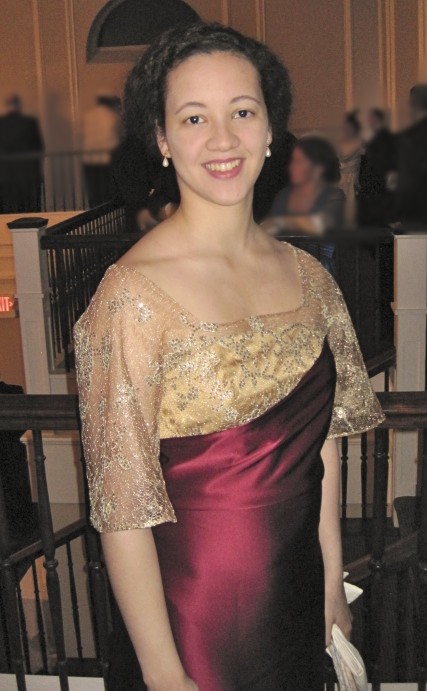
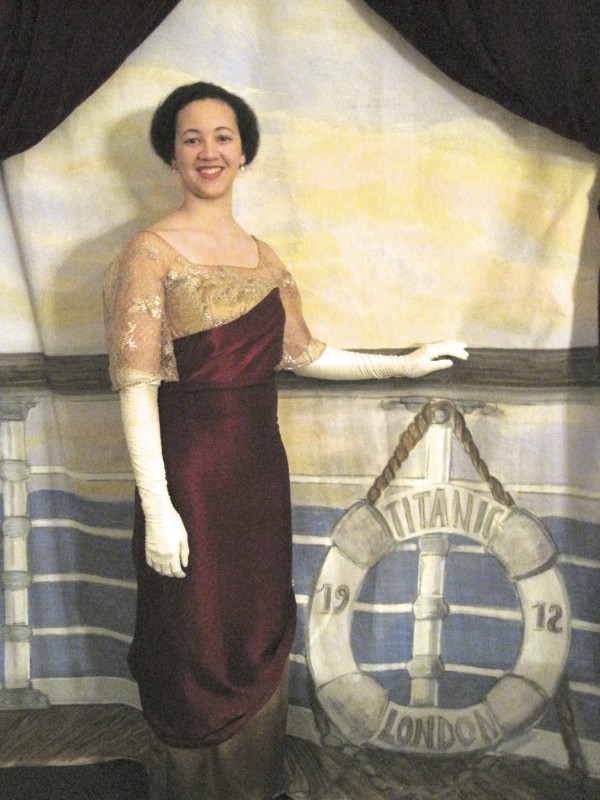
My camera had a challenging time capturing the colors and shimmering sequins on this gown, but this is a good representation of the colors. Look! I wore my ballroom dance shoes, which worked well, and my white kid opera gloves and pearl drop earrings... fabulous!
Fabulous painted backdrop! Perfect for taking photos, although my camera didn't quite catch the colors so well in this photo. I think this gown is so much more fabulous in person! I was told that the sequins just shimmer in subdued mood lighting.

This gown is burgundy silk charmeuse with a gold silk charmeuse underskirt. The bodice is gold silk layered under gold sequined net. The sleeves are the same gold sequined net flat lined with nude colored tulle: the tulle provides unnoticeable stability for the net layer. The burgundy layers are pleated up and held in place in two places by gold silk and sequined net covered buttons. The bodice and skirt are lined with brown cotton and the entire dress is mounted on a foundation of some extra white cotton which I have an excess of in my fabric stash. The foundation layer is essential to the drape of the dress, because it provides stability as well as a layer to attach all of the pleats and drapery points to. The foundation allows the burgundy silk to effortlessly hang and artfully fold without looking heavy or as though it serves to hold an weight. The foundation layer also supports the underskirt which is attached at about knee height (thus not extending all the way up to the waist and saving fabric). If you plan to create a draped Edwardian gown I strongly suggest that you include a foundation layer: the practice is historically accurate and will help your dress look effortless rather than heavy. This gown closes center back with hooks and eyes along the gold sequin area and a complicated series of further hooks and eyes at the top of the burgundy back drape. The hooks and eyes help create the tension that is required to keep the waist carefully draped in elegant folds across the waist.

There is not a hat associated with this gown because hats were not worn for formal evening events. I did create a wonderful Edwardian coiffure with loops and puffs of hair on the crown of my head surmounting the two front sweeps from the front as they swooped around the base of the back of my head. Unfortunately, I didn’t get any closeups of the style. I feel it is necessary to encourage you by saying that the more often I practice my Edwardian hair styling the faster I am and the better the styles look. You, too, can have fabulous Edwardian hair! Practice! Practice! Practice!

I draped the pattern for the foundation, bodice, and sleeves. The underskirt is a mix of information from the usual pattern book culprits (Janet Arnold and Norah Waugh) that I took in and then kept in mind while flat patterning a knee high underskirt pattern. The outer draped layer is just that: draped. It was a good challenge–I would have a hard time creating a flat pattern of that layer. All I can say is that it is just one rectangular piece of fabric that was sometimes frustrating and draped with many references to my inspirational images.

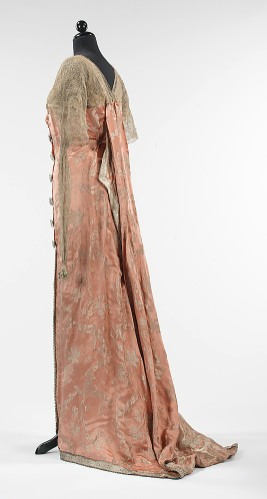
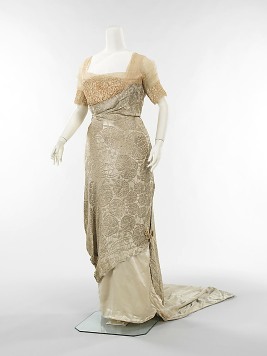
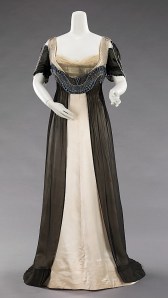
It turns out that the evening gown is a mash-up of two gowns (pictured below) at the Metropolitan Museum of Art. I think I started by aiming for the pink dress but wound up moseying my way along to the pale blue dress. Do you see the influence of both the pink and pale blue dresses? I do…

1914 Callot Soeurs evening dress
Side/Back of the same.
1911-1914 Callot Souers evening dress.
Side/Back of the same.

Resource: The Bartos Collection

Oh my goodness! This is such a cool and huge collection of photographs and fashion plates! Lauren over at American Duchess has been referencing images from the Bartos Collection for awhile now, but I didn’t get a chance to check it out for myself until just recently. It is WONDERFUL!

The collection focuses on the mid-19th century through the early 20th century. There are fashion plates and mounds of period photographs and pictures of extant clothing… If you love historic clothes and hats and hair you MUST VISIT! Here’s the link, again, because you must go visit and drop your jaw with me!

1910 Dress Inspiration and Classification Part II

It is time to share my classification of the dresses from my recent 1910 Dress Inspiration and Classification post. It turns out that not very many of you commented with your classification of the Edwardian dresses up for review. I’m sure you had opinions and you simply chose not to share them… but maybe next time you’ll want to join in! Without further ado, here’s what I think.

1: Favorite! (I love the gold trim on this dress! It is just SO exquisite!)

1910 Ball Gown (The Met)

2: Almost favorite (I had a hard time choosing between this and the one above.)

c. 1910 Worth Evening Dress (The Met)

3: Beautiful, but not my style (I just don’t like the beading on this very much…)

1909-1911 Worth Evening Dress

1910 Dress Inspiration and Classification

The next historically clothed event in my life is Titanic-themed and I have five busy weeks in front of me to prepare for it. I’m quite excited to see everyone’s clothes from a whole new era that is so different from the usual 19th century looks. I’ll share some of my progress on my emerging 1912 wardrobe soon, but for now here is a selection of inspirational dresses for your perusal!

In what order would you classify these dresses? You are welcome to create unique descriptions to describe the order you choose! I’ll let you comment and share my classification later (I want to avoid swaying anyone my way, you see).

1=Favorite! 2=Almost favorite 3=Beautiful, but not my style

1910 Ball Gown (The Met)
1909-1911 Worth Evening Dress (The Met)
c. 1910 Worth Evening Dress (The Met)

Another Annabelle Adventure (Returning Heroes Ball 2012)

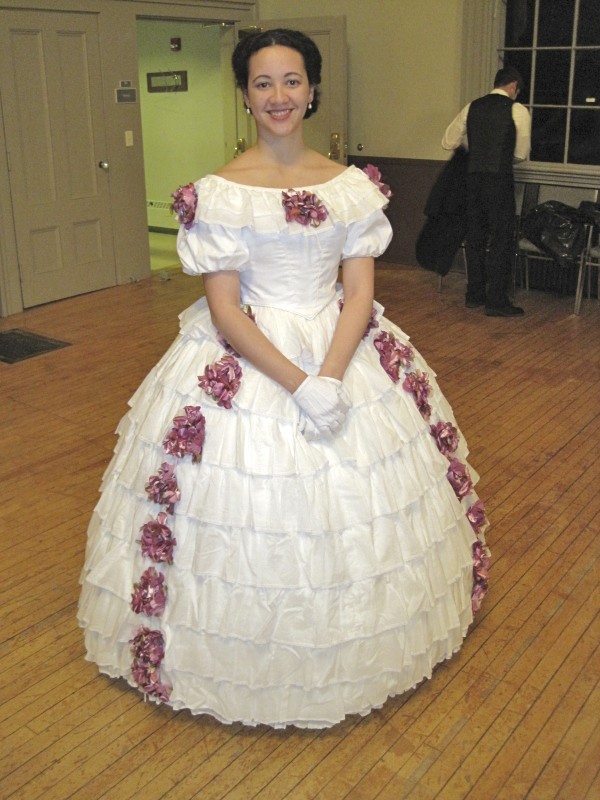
Alliterative, agreed? Ok, I’m done… Honestly, the words just came–I didn’t spend long on them! Last weekend I attended the Returning Heroes Ball hosted by the Commonwealth Vintage Dancers in Holliston, MA. As usual, it was full of fun and laughs. There were fabulous dresses all around (because of course one of the joys of a ball is to observe dresses–old and new) and wonderful refreshments as well. I don’t have pictures of other people, but I have pictures of me!… You can see a variety of people in the photos on Antonia’s blog, Experiments in Elegance

Me, in Annabelle. I really, really love hoop skirted dresses! And flounces! Whee!!!

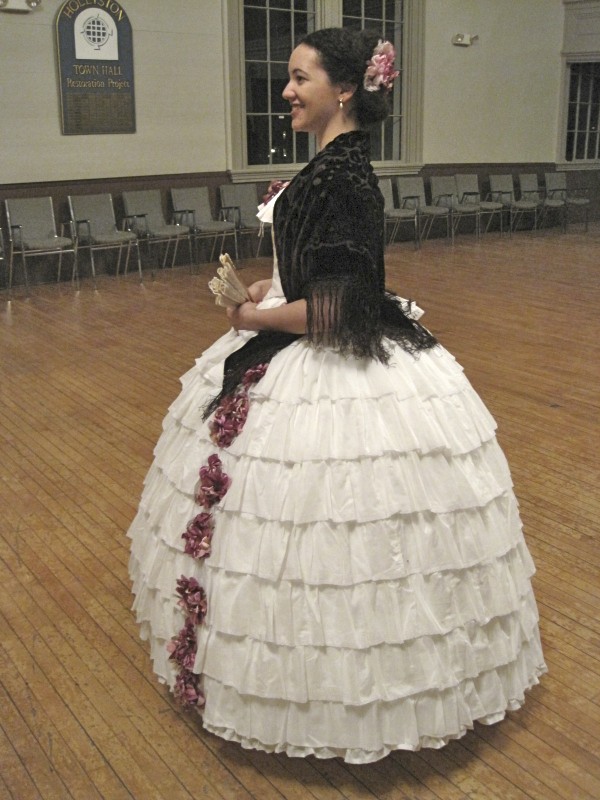
I recently gained a new accessory: a deep purple burnout silk velvet scarf, big enough to use as a shawl. The shawl was decommissioned from a friend’s modern wardrobe because it is rather intense for a modern look; however, it works wonderfully as a 19th century piece, I think! I’ve been waiting for about three months to try it out with this outfit… I think it is fabulous and nicely complements the purple in the flowers.  Do you think it works for an 1860s look?

Ooo... Purple silk velvet shawl. So cosy! (and stylish to boot!)
Thanks for taking the photos, gentlemen (you know who you are)!

I’ve been trying out more complicated, poof-filled hair styles in preparation for early 20th century styling and I put some extra effort into this hair-do to try out more poof-ing. From the front my hair has it’s normal 1860s style with a center part where each from section is slightly poofed and rolled back to join the low rolled chignon at the nape of my neck (above, left and right)… but from the back this most recent style has extra poof-age!

See the extra poof at the top of my head?
Poof close-up

 In terms of the hair-styling itself, I think I like the extra poof as it gives more dimension and adds a regal feel to the overall look. Do you like the added poof?

I also decided to rework the hair wreath I’d made for the German Cotillion back in October (left). I’m not sure I like it as a giant mass of flowers, I might rework it again into a crescent shape like the flower piece that matches Belle, my other 1860s ball gown (above right). In terms of the flowers, giant mass or crescent shape?

Project Journal: 1815-1820 Regency Ensemble Part IX: Completion of the Re-made Dress! (1812 Ball 2012)

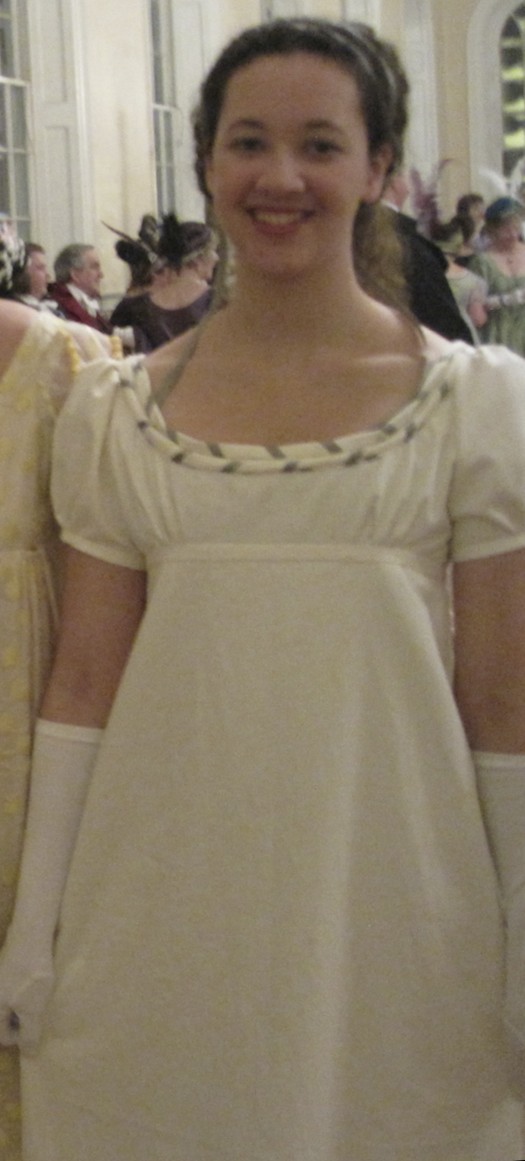
I am so pleased with my re-made 1819 dress. You can get the background here or read the sewing update here! In short, the new style shares only the skirt with its former self. The new ruffles are all hand hemmed and hand sewn on. The dress seams are a mix of machine and hand sewing, depending on if I felt like digging out the sewing machine or not. All of the bodice seams are flat felled by hand. The dress closes in the back with 4 mother of pearl buttons. Oh, and let me not forget that the dress no longer has built in petticoats. Part of the re-make was to create a separate petticoat from one of the two petticoat layers built into the dress. The petticoat ties under the bust and has a single button to close the top of the bust. It is just a sleeveless, simple version of the gown. I’ll have to take pictures sometime so I can share them. But the dress… It fits! It is ruffly! It has so much more style than it did before! Just to compare, the first picture is your first glimpse of its current style, and below that is from before the re-make.

The re-made 1819 dress, with ruffles!
The 1819 dress in its first incarnation.

Isn’t it more stunning than it previously was? I wore it to the Commonwealth Vintage Dancers’ 1812 Ball (ok, so my dress was a little forward thinking… maybe I have a time machine?). I had a lovely time, as expected. I made some new acquaintances and renewed some old ones, I was able to wear my recently purchased kid leather opera-length (which means over the elbow) gloves and a beautiful shawl one of my aunts gave me a few years ago, I got to practice my historic hair styling techniques (more to come on that point soon), and I danced! But let me stop writing, because really this post is about sharing pictures.

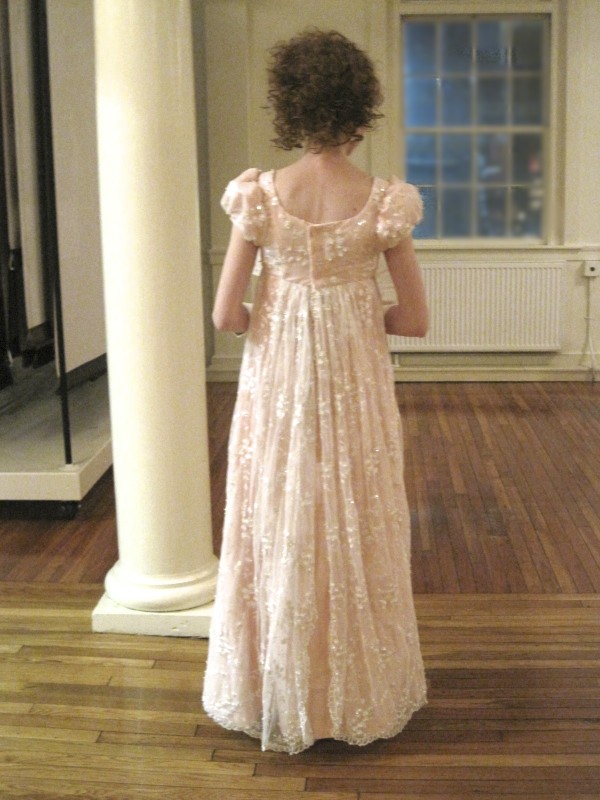
The back view of the re-made dress.
Friends: don't we make a lovely group? Ok, wait, but there's a funny face...
How about this one? Same group, but now I'm making the funny face. Rather a severe expression, don't you think?

 I’d just like to insert a comment here: looking again at these pictures, all the ruffles on the bodice of my dress really manage to make me look much more busty than I actually am… Hm… there are a lot of ruffles going on there!

My friend made this beautiful fan to go with her dress! It's hard to see the detail in this picture, but it's absolutely lovely.
Front of her new dress. She also has the super cute tiara, that is much more sparkly in person...
Back of her new dress.

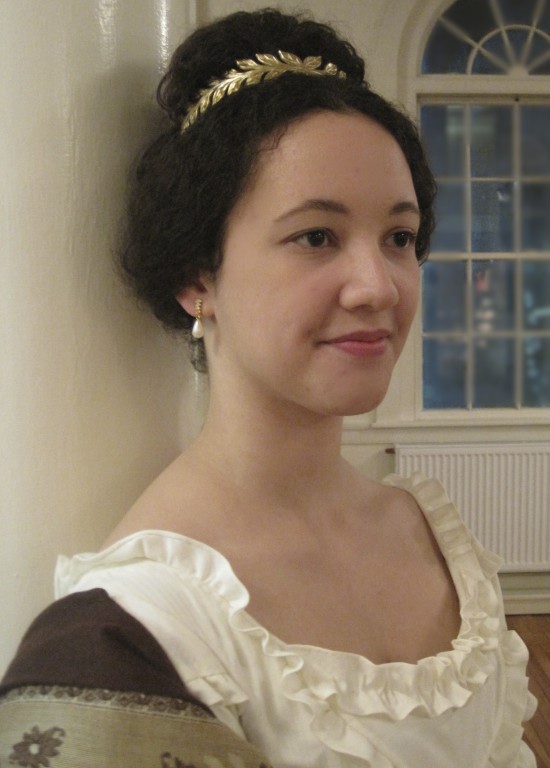
I’ll leave you with this image: a teaser for a soon-to-come post about the creation of this hair style!

Quite picturesque, I think. Thanks for taking the photos, Carly (and Mark)!