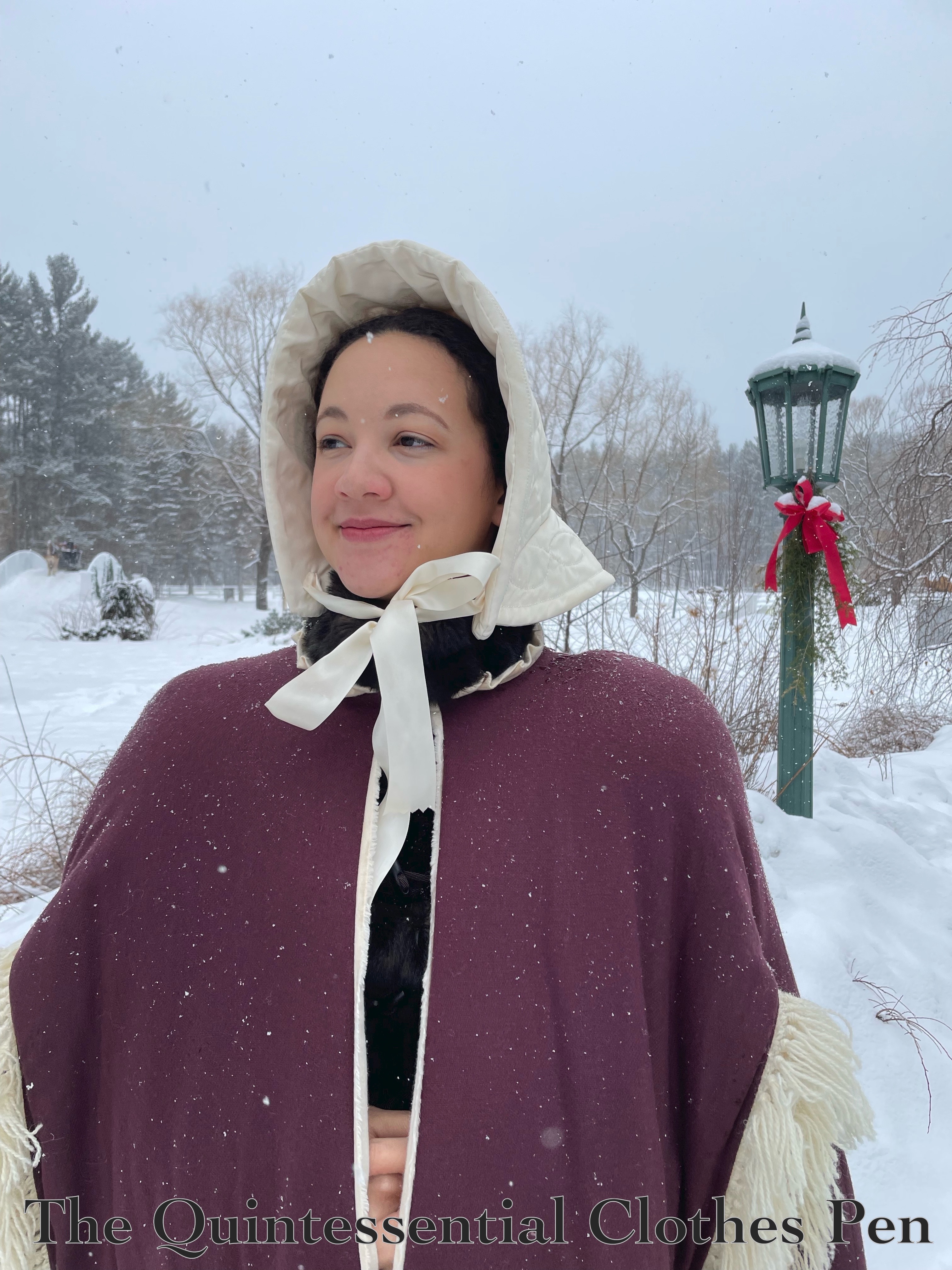
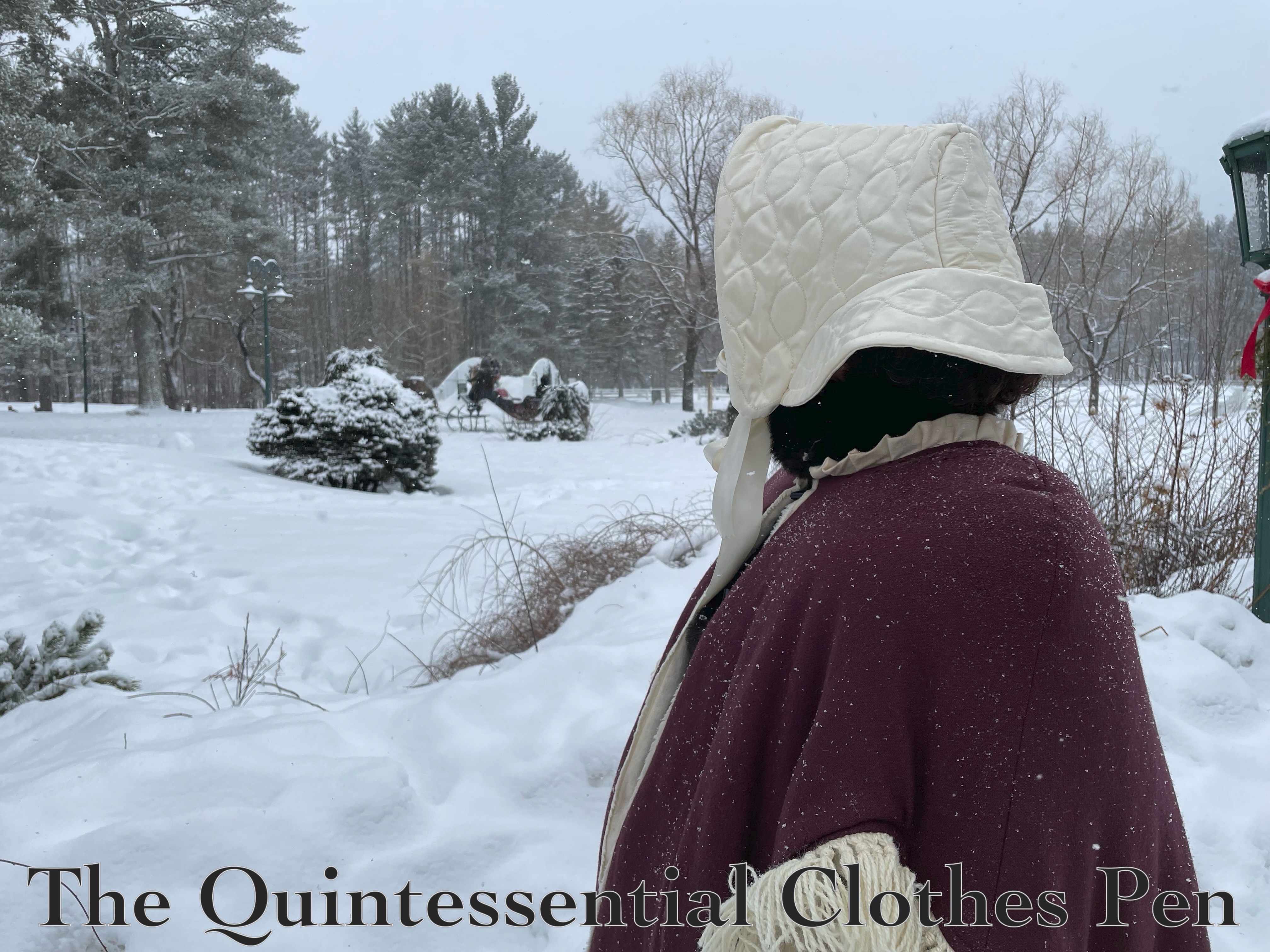
1850s Ivory Quilted Winter Hood (HSM #5)

I was mentally preparing for my 19th century winter adventure a few months ago by taking note of the suitable warm winter outerwear in my historic closet. One of the warmest garments I have is my 1855 Wool Cape; however, my thoughts ran along the lines of “I don’t have any 1850s winter appropriate headwear to go with the cape….”

That was easily remedied!
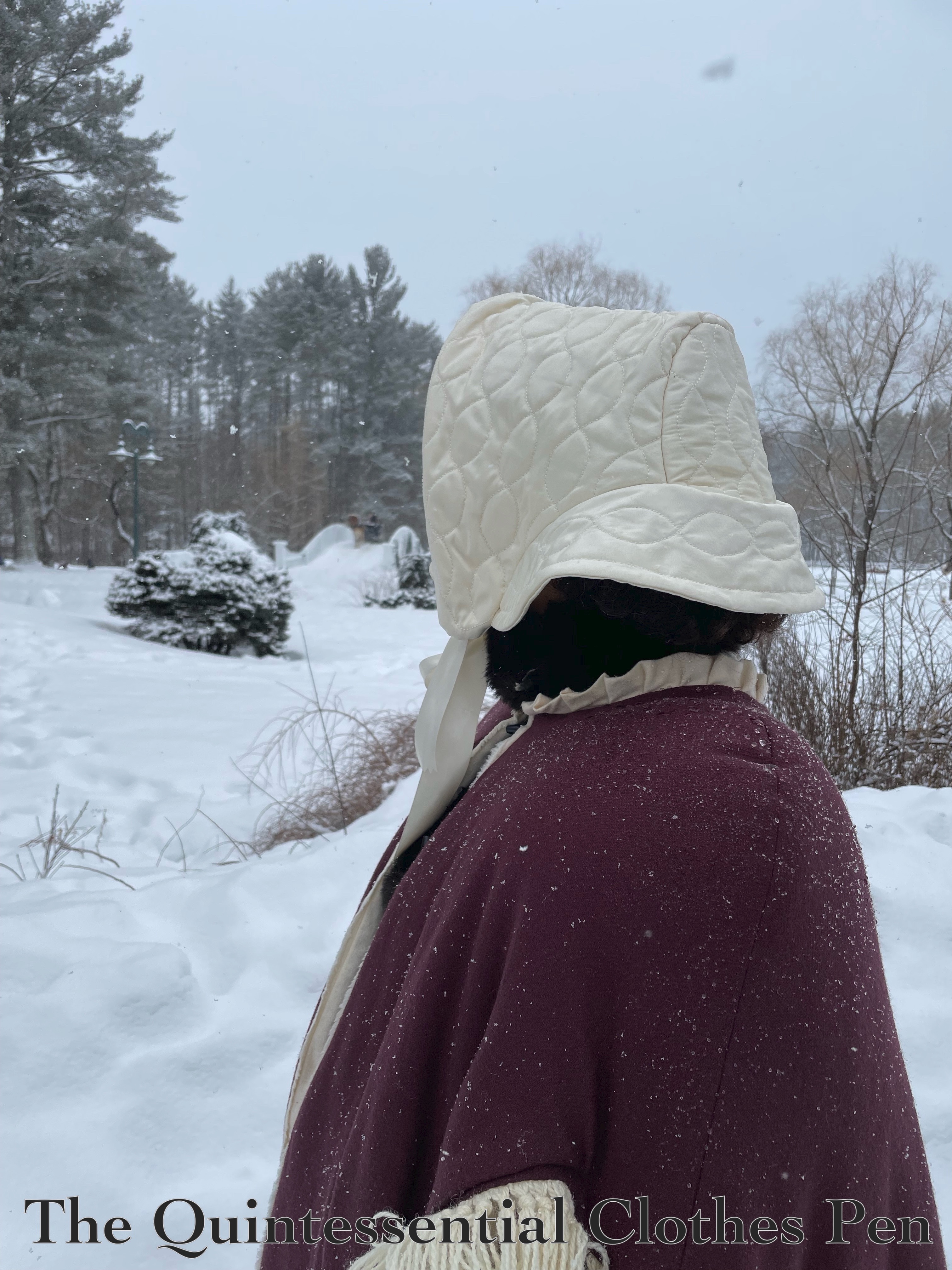
Last fall, I’d purchased Anna Worden Bauersmith’s Quilted Winter Hood pattern on a whim (the pattern was being discontinued for the moment and I didn’t want to miss out). I hadn’t had a project with a deadline in awhile and so I decided to quickly make up the Quilted Winter Hood for the winter adventure… by hand (including the quilting!), of course, because I can be a bit crazy sometimes.

Since the goal of the hood was to keep me warm, it is a perfect garment for the Historical Sew Monthly 2022 May Challenge! Protection: Create a garment that protects you from something: weather, dirt, wear, weapons, etc.

As such, here are the facts:

Fabric/Materials: ½ yd of ivory silk taffeta, ¾ yd  ivory cotton, and 1 yd cotton batting.

Pattern: Anna Worden Bauersmith’s Quilted Winter Hood.

Year: c. 1850.

Notions: 1 ¼ yds 1 ½” ivory satin ribbon, 1 yd millinery wire, approximately 45 yards of silk quilting thread, and regular sewing thread.

How historically accurate is it?: 90%. The pattern, construction methods, and fabric are all quite good and it is entirely hand sewn. I’m sure it’s not quite the same as an original, though.

Hours to complete: 13.

First worn: February 2022.

Total cost: $27 (approximately $17 for the materials and $10 for the pattern).

The pattern offers ideas for quilting patterns as well as detailed observations on extant hoods and their common features. While straight lines of various sorts seem more common for quilting patterns, I decided to go with the scalloped suggestion taken from a period magazine.

This front view photo looks like a little silly to me because of the very square shouldered silhouette (that isn’t 1850s at all!). It’s due to the 1890s sleeves that are underneath the 1855 cape…

A woman has to stay warm!
Some of my favorite inspiration hoods are on my Pinterest board for this project. (Many more quilted hoods can be found on Anna Worden Bauersmith’s Winter Hoods Millinery Pinterest board, as well.)
In the process of creating my board, I was drawn to a few other winter hoods and cloaks. That set me off down a brainstorming path to see what else I have in my too-full wool stash that could be made into more 1850s and 1860s winter outerwear!

Not that I need more… I’m only one person, after all, and how many wool capes can one person reasonably wear at once? But… there are at least two other hoods and another cape that I’m now seriously pondering. So this quilted hood (and the cape I already have) might just be the beginning of a whole series of mid-19th century winter outerwear someday. (And maybe I should eventually take a photo layering all of it at once, just to be silly!)

1815 Tree Bonnet (HSF #7)

You know how sometimes the best laid plans are waylaid by life? I had every intention of finishing this bonnet before the HSF deadline of yesterday, but along the way got side tracked by life and made conscious choices to do other things with my time instead of bonnet-ing. Oh well, it happens to the best of us!

IMG_4407
1815 bonnet (the more interesting side).

I made this bonnet to coordinate with my new Regency Tree Gown (which is why I’m calling it the Tree Bonnet). Lucky for me, it also fulfills the HSF Challenge #7: Accessorize and will coordinate with other items already in my closet (such as my 1819 brown spencer). I’ll be wearing the new gown, the spencer, and the bonnet this weekend for the Regency Dance Intensive, along with a lot of other Regency things, so be prepared for lots of pictures next week!

The facts:

Fabric: Silk twill, changeable silk taffeta for trim, and china silk for lining.

Pattern: Created by me.

Year: 1815.

Notions: Four approximately 8″ pieces of sage green polyester ribbon, a spray of wired millinery flowers, about 1 1/2 yds of navy silk ribbon for ties, about 3/4 yd of navy grosgrain ribbon for inner band, buckram for the base, millinery wire, cotton flannel for mulling, tacky glue, and thread.

How historically accurate?: 95% I’d say. There are a few polyester things, but the overall shape, impression, and majority of materials are accurate.

Hours to complete: 28? Hand finishing and trimming takes a long time, especially on hats, because the angles are weird, so it’s a slow process.

First worn: Not yet, but will be worn this weekend!

Total cost: $6ish for the silk twill bit, the green silk and china silk are remnants from other projects, the polyester bits are old and from the stash, the millinery flowers were from the stash, the buckram was maybe $4, the wire was probably $2… so about $12? I didn’t buy anything special for this bonnet, it’s all from the stash! Yay! Go me!

IMG_4408
Close-up of the pleated silk trim and rosette-like decoration. You can also see the pleats on the side band of the bonnet.
IMG_4409
The millinery flowers on the front of the bonnet.
IMG_4410
The more plain side.
IMG_4405
Inside of the brim, looking into the lining and hat band.

This week marks the end of the MpRSW (though I still have one more post to go about that), with the final goal aimed at yesterday, #5: Anything Left! I’d already completed some packing for this goal, and procurement of kite making supplies (yes, there will be a future mention of kites!), but this bonnet also qualifies!

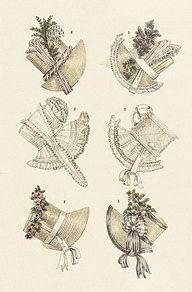
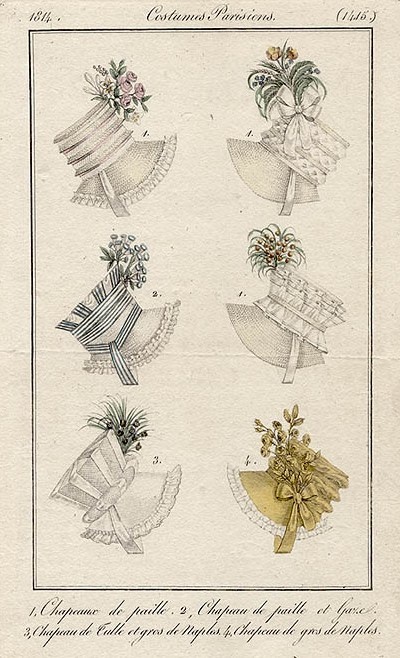
Now let me share some of my inspiration for this bonnet. There are more bonnet images on my 1810s Pinterest page as well.

9b8f7b45f7afff8db618554b973b5eab
From 1815. 
Volare digital capture
La Belle Assemblee, Parisian Promenade Hats, July 1816.
cf83f2dc91eb3bf303ba9087826b8419
Costume Parisien from 1814.
5aaaeddcc5533ec69fe92be1e72f8c83
Costume Parisien from 1815.

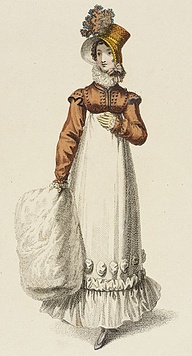
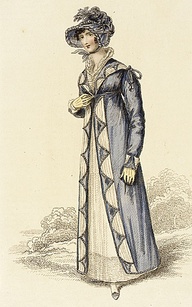
In trying to determine length of ties for the bonnet, I looked to some fashion plates that included people in them. Here are some of the best examples I found.

Volare digital capture
1813 afternoon promenade dress.
Volare Digital Capture
Ackermann’s Repository, Walking Dress, April 1817.
Volare Digital Capture
Ackermann’s Repository, Walking Dress, November 1817.
Volare Digital Capture
Walking dress 1815
61acb0c35e149289d55017462f06b675
EKDuncan – My Fanciful Muse: Regency Era Fashions – Ackermann’s Repository 1819
Volare Digital Capture
Ackermann’s Repository, Walking Dress, February 1818.
800b11831fa576966952e099671eae3e
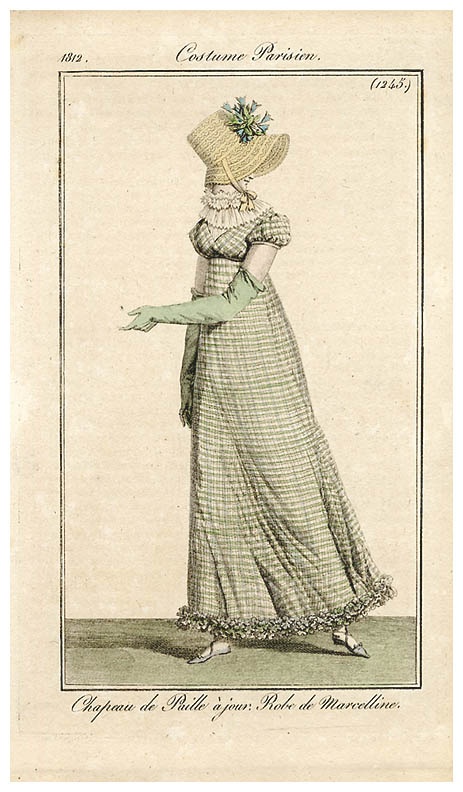
Robe de Marcelline, 1812 Costume Parisien

Well, there we are. I just finished sewing that pleated brim trim tonight, and I am glad to be done! It’s slow and slightly painful on the fingers. But pretty, so totally worth it!

Project Journal: 1822-1824 Ensemble Part I: Overview

Well, as you recently read, I have a 9 month sewing plan to get me through May of 2013. It’s not set in stone (which means that mostly I keep adding to it, not taking things away…), but it gives me a great overview of what I need to accomplish and by what month. Deadlines really help in getting things completed!

The first major portion of the sewing plan is an ensemble of clothing from about the year 1823. I’ve been doing lots of looking at fashion plates and extant clothing from the early 1820s, in books and online. Here’s a link to my pinterest board: 1820-1824. I had so many pins in the 1820-1829 board that I had to separate the decade, so I also have a separate pin board of 1825-1829.

The 9 month plan includes the following pieces: petticoat, ball gown, walking dress, muff, bonnet, and chemisette. I’ve added one more thing since the plan was created: a tippet to match the muff! Before I explain why I want these items (ie, where I plan to wear them!), let’s look at my inspiration for the items themselves!

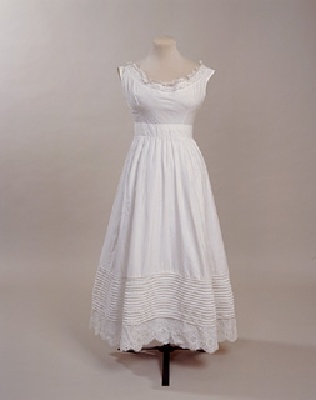
Petticoat. Manchester City Galleries. (I’m making a petticoat out of white cotton. It is entirely hand sewn.)
Actually a Dinner Dress (but I’ll use it as a ball gown). Ackerman’s Repository. May 1824. (I guess I lied about the year… I’ve been looking at the images so much I haven’t even glanced at the date in ages! Anyway… I’m making this in apple green silk with hand sewn silk organza appliqués.)
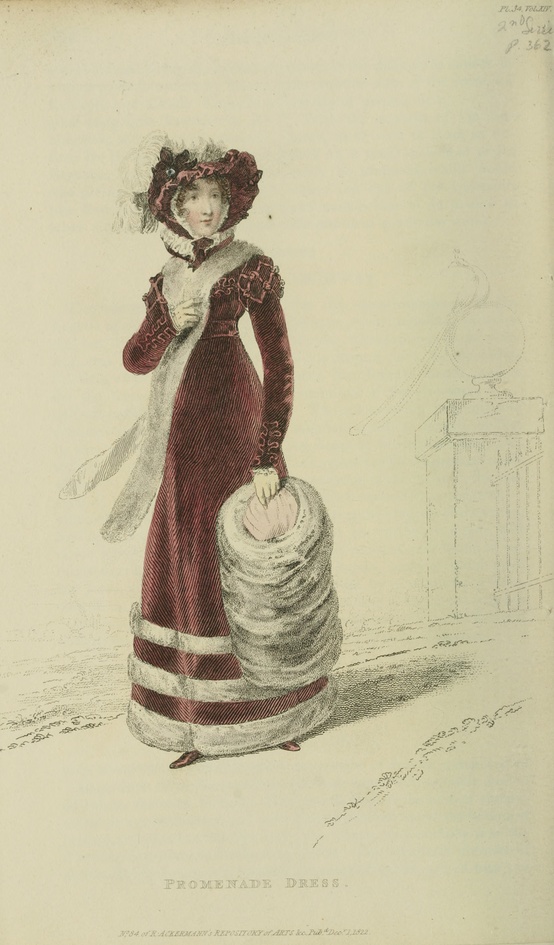
Promenade Dress. Ackerman’s Repository. December 1822. (I am making this out of deep, rich pinkish burgundy wool with hand sewn lavender silk trim.) This is also my inspiration for the tippet. (I’m making the tippet out of white faux fur.)
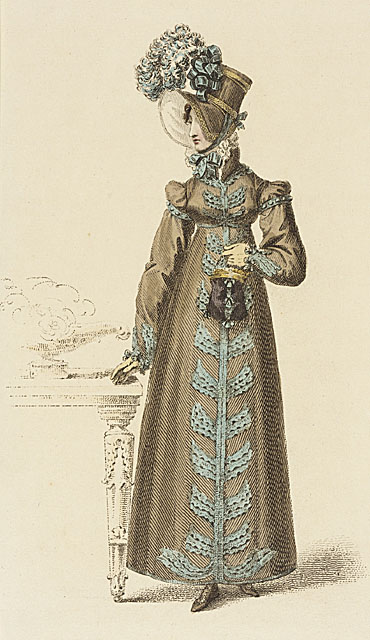
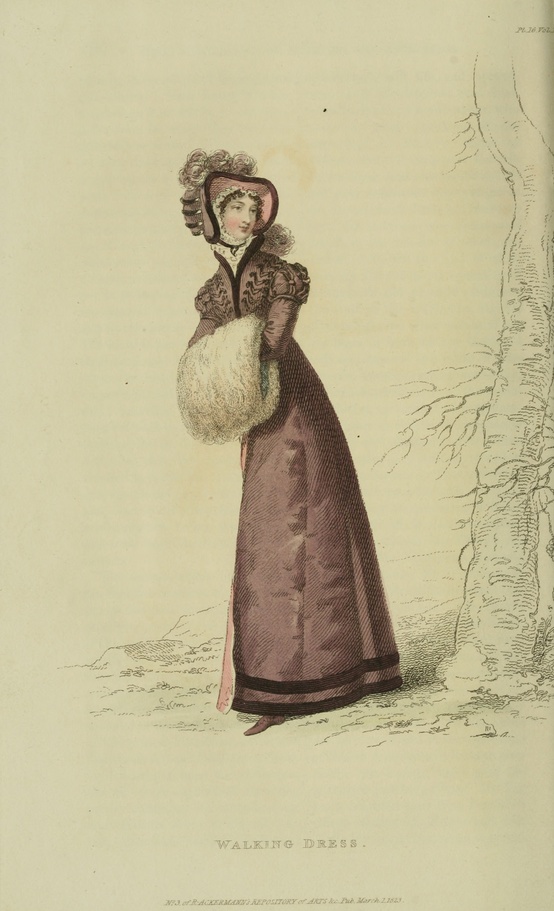
Walking Dress. Ackerman’s Repository. March 1823. (I think this is where I got the year 1823 from… This is another influence on my walking dress design, especially at the collar.) This is also my inspiration for my muff. (The muff will be the same fur as the tippet, lined with pale blue silk shantung.)
Bonnet. C. 1820. The Met. (I plan to make this in lavender to match the walking dress.)
Chemisette. c. 1810-1825. Snowshill Collection. (Yes, this is one of the ones in Janet Arnold. I plan to make this out of lightweight cotton and use my fluting iron! However, I have to say that if one thing in my December-to-do doesn’t make the cut, this would be it. I really want to take my time on this and play with my fluting iron, and I’m not sure I’ll have the time on this one…)

What is all of this for, you ask? I plan to wear the whole ensemble in December when I attend Fezziwig’s Ball, a 19th century ball hosted by the Commonwealth Vintage Dancers in Salem, MA. Since it’s a ball, I’m sure you understand why the petticoat and ball gown are required! But why the outerwear? Before the ball begins, ball-goers have the opportunity to go caroling around the streets! It’s really fun, and usually pretty cold. I need to stay warm, hence the wool walking dress, tippet, and muff. The chemisette is to fill in the collar of the walking dress, and the bonnet is really icing on the cake to help pull the whole ensemble together! As an added bonus, later this winter my friends and I hope to go ice skating in 19th century dress, so this will also be my ice skating outfit!