National Museum of American History First Ladies Exhibition behind-the scenes video

This video is a behind-the-scences look at the creation of the First Ladies Exhibition at the Smithsonian National Museum of American History.

It’s a really neat video! You get to see some insight into how the dresses and other pieces are displayed, how the dress forms that display them are created, as well as some great pictures of First Ladies and some very lovely dresses!

Bolero jackets of the 20th century: 1900-1909

A few posts ago, we took a look at Bolero jackets from the mid-19th century. Let’s look at them  in another context: Boleros from the early 20th century, with a hint of information from the 1890s as well.

1904 Dress with Bolero

What exactly is a Bolero jacket? The Oxford English Dictionary defines it as “A short jacket, coming barely to the waist; worn by men in Spain; applied to a similar garment worn  by women elsewhere, usually over a blouse or bodice.” This definition condenses the influence and origination of the Bolero down quite eloquently (of course, it is the job of the OED to eloquently distill all words down to a concise definition… but still, I do like this definition). The men’s style Spanish Bolero, with elaborate braiding and bright colors, influenced the style of women’s Boleros from the Victorian period. The following quotes from the OED provide more insight into the history of the Bolero (they also mention other styles of short jackets including the Zouave and the Eton).

“1892    Daily News 14 Nov. 6/3   The Zouave is as great a favourite as it has been for some seasons, and though it varies in form—being sometimes a bolero, sometimes a toreador, and sometimes a cross between an Eton jacket and a Zouave.
1893    Daily News 1 Apr. 2/4   The Zouave is quite as popular as it was last year.‥ Sometimes it is pure bolero.
1893    Lady 17 Aug. 178/1   Zouave Bodices are a feature of autumn gowns. (in the Zouave definition)
1899    Westm. Gaz. 6 July 3/2   Robbing the coat of its basque has created‥the bolero corsage, really an actual bodice, though appearing a bolero coat and skirt.”

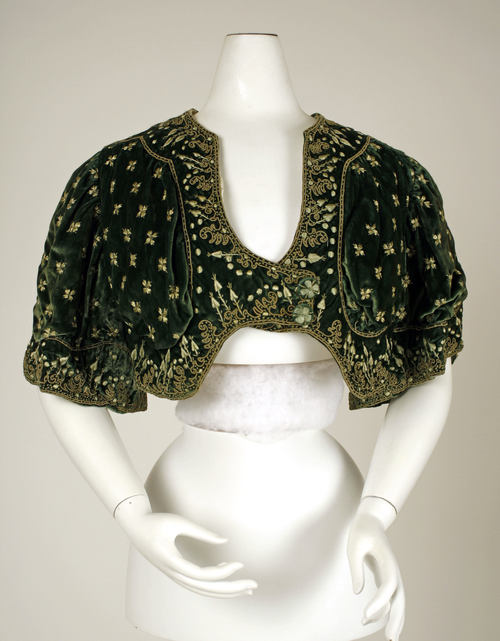
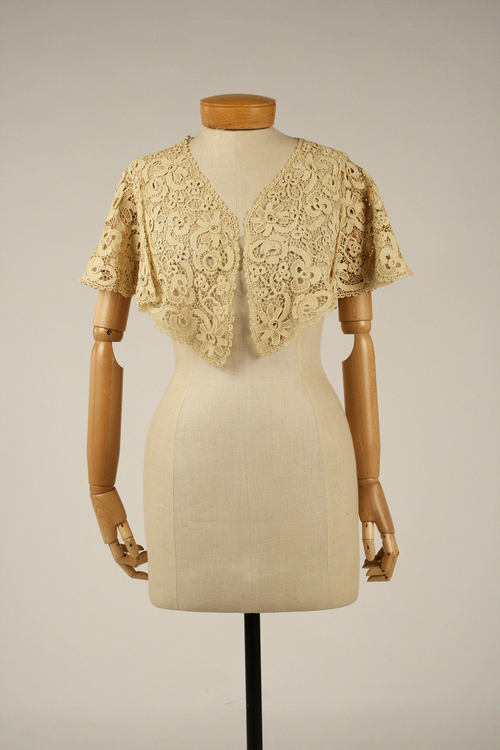
The flared skirt and small waist silhouette of women’s clothing during the first decade of the 20th century was well suited to the style of Bolero jackets, as they could help to visually balance the figure by adding just a small amount of width across the chest and shoulders.  Here are a few Boleros from the Metropolitan Museum of Art. One is silk velvet, elaborately trimmed. The other is lace. Can you imagine the dresses that would have accompanied these Boleros? Clearly, they were intended for different purposes. Perhaps the first was intended for evening wear and the second for an afternoon stroll or visiting friends?

c. 1905 Bolero from the Metropolitan Museum of Art
c. 1907 Bolero from the Metropolitan Museum of Art

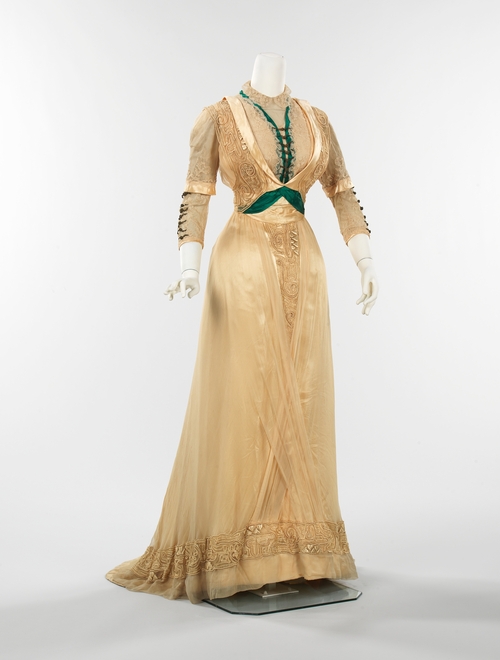
1901-1911 Dress

This dress is fabulous! What a wonderful piece of inspiration! It’s beautiful!

1901-1911 Dress at the Metropolitan Museum of Art

I absolutely love the subtle use of vibrant teal! It really spices up the dress. The cream satin and chiffon as well as the detailed trim are especially wonderful.  The carefully arranged layers are fascinating–they keep your eye moving while managing to not distract from the fabulous fit of the whole dress.

I think this must be one of those Edwardian dresses that has a complicated closure that is hidden under crisscrossing layers. I just can’t imagine any other closure that wouldn’t detract from the beauty of the dress!

I think this is also one of the dresses that has faked layers. It seems to be an illusion that there is a blouse then a vest then a jacket. I think it is probably just one layer with trim and then the outside jacket. It’s so hard to tell from the picture! That’s the beauty of these Edwardian confections… it’s so hard to figure out how they are made and how they close without actually being able to see its inside construction!

I simply adore this dress! I just keep repeating its praise… Beautiful!

Project Journal: Victorian Women’s Tailoring Part XI: Time to celebrate!

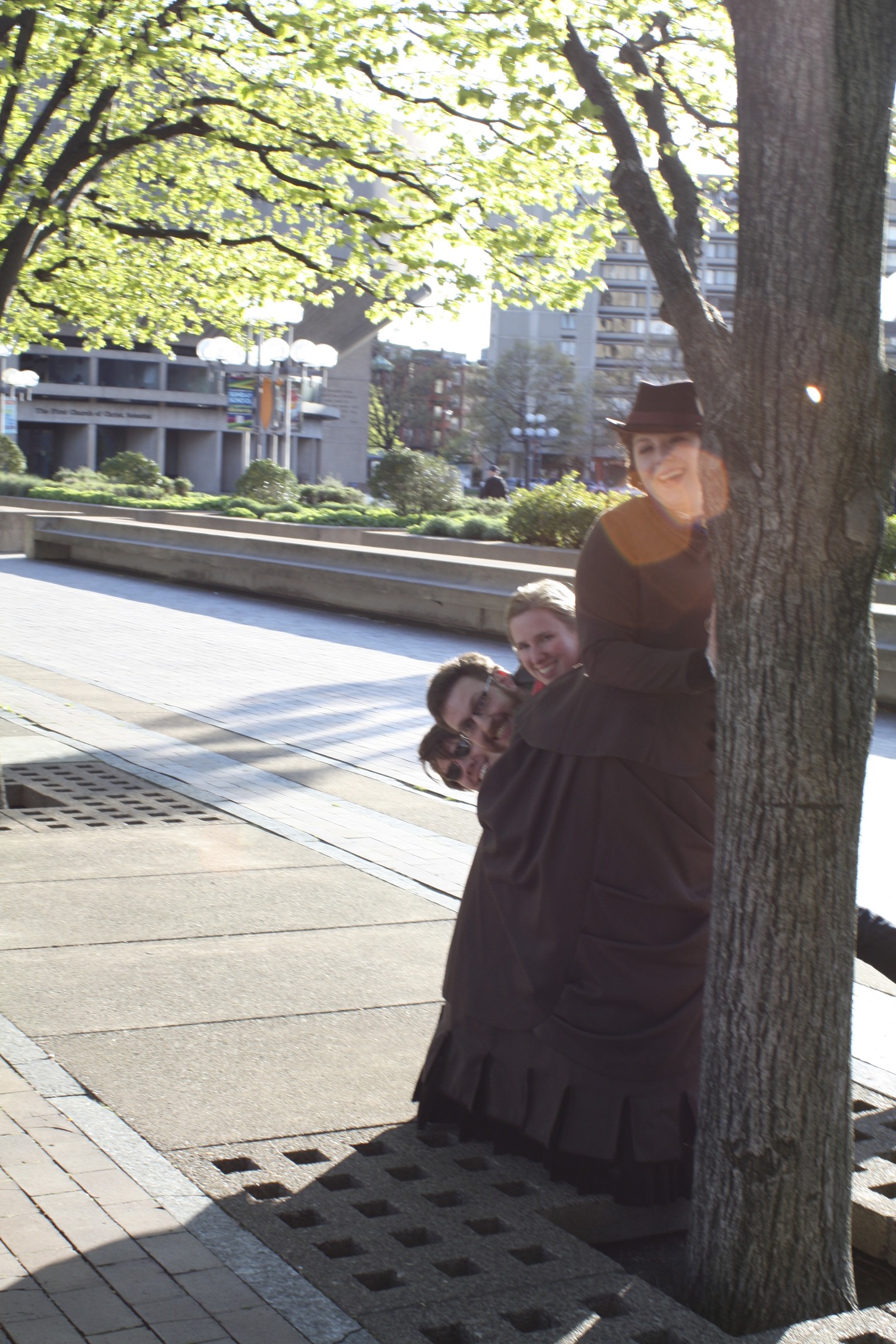
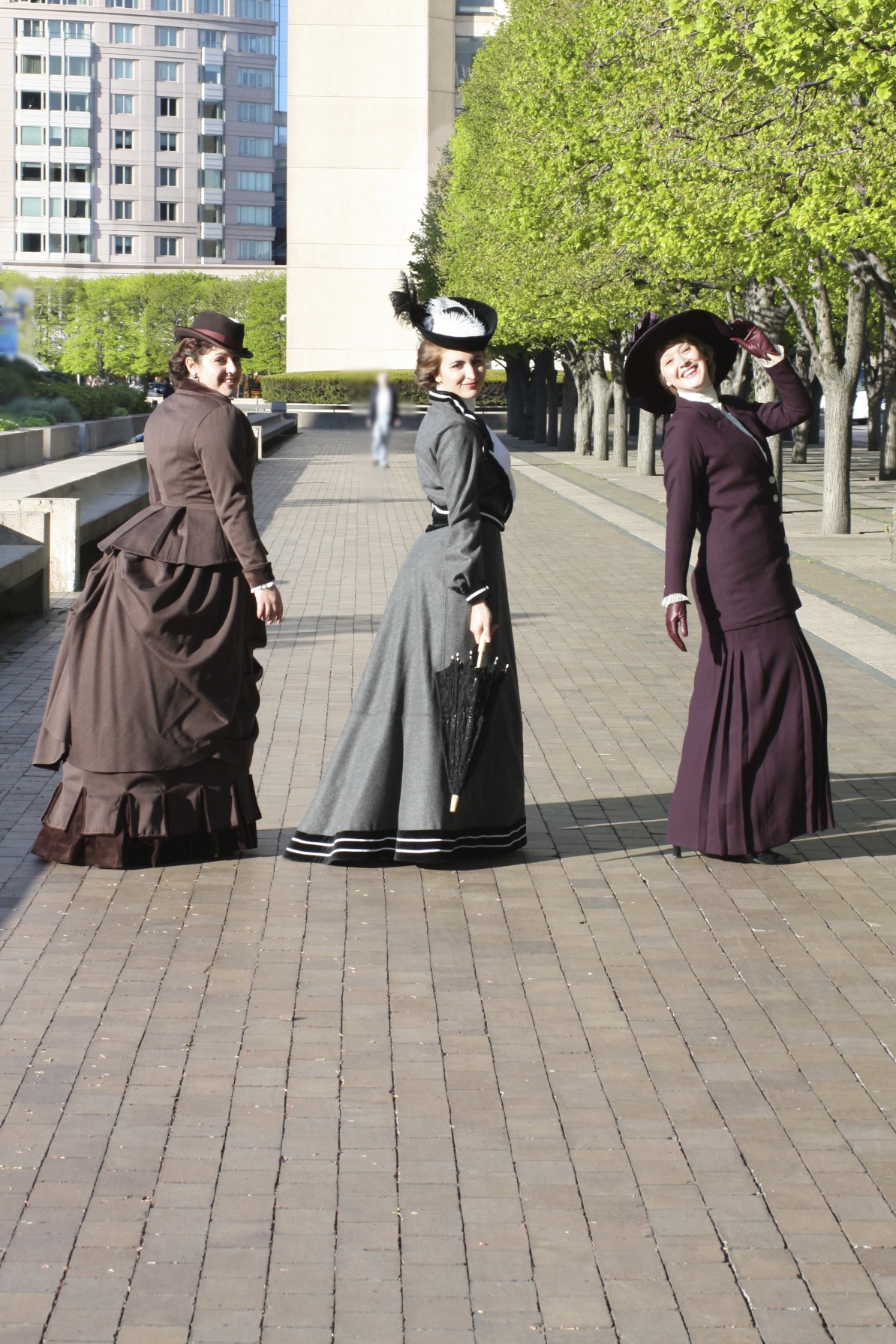
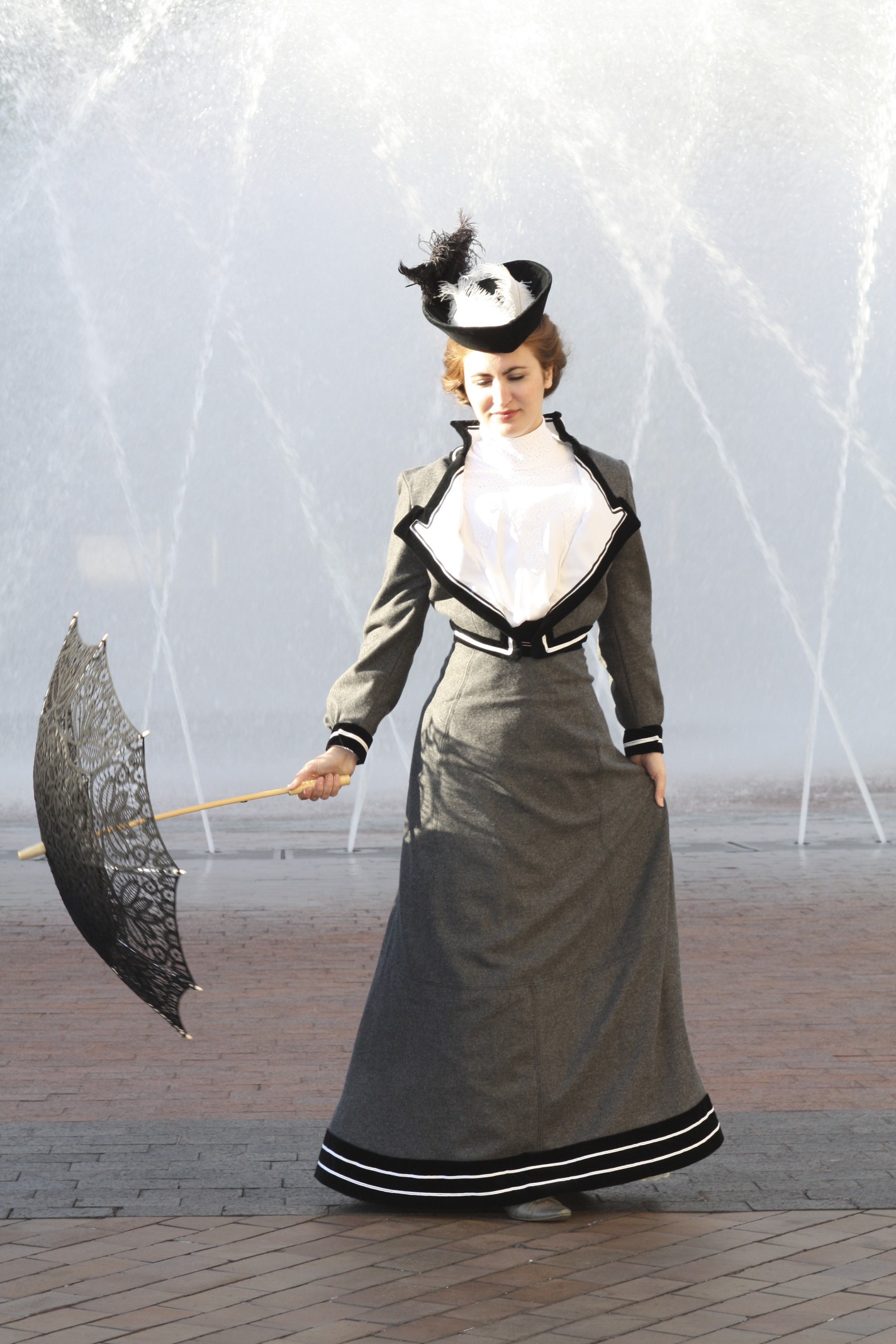
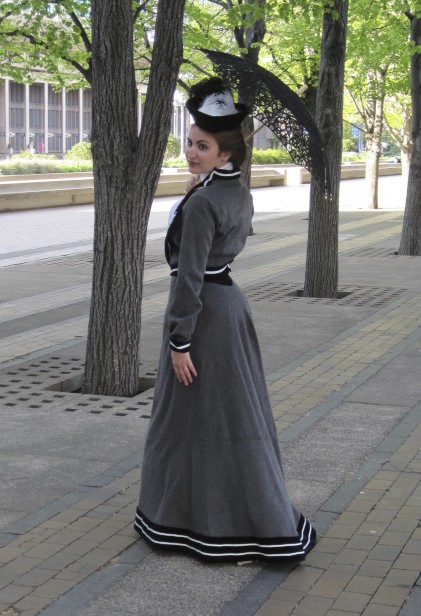
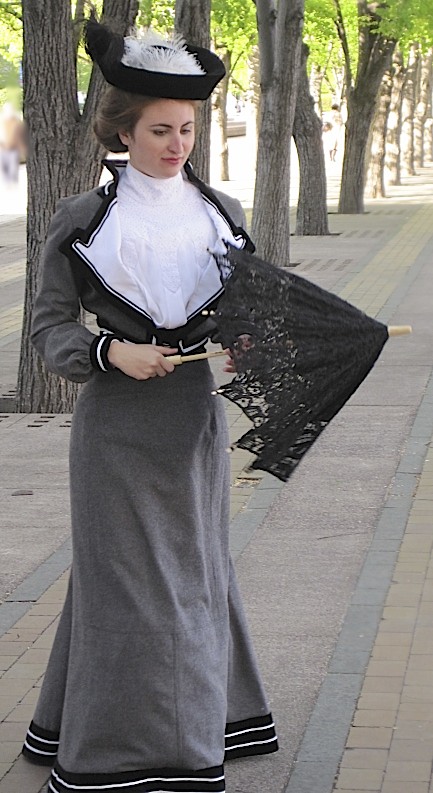
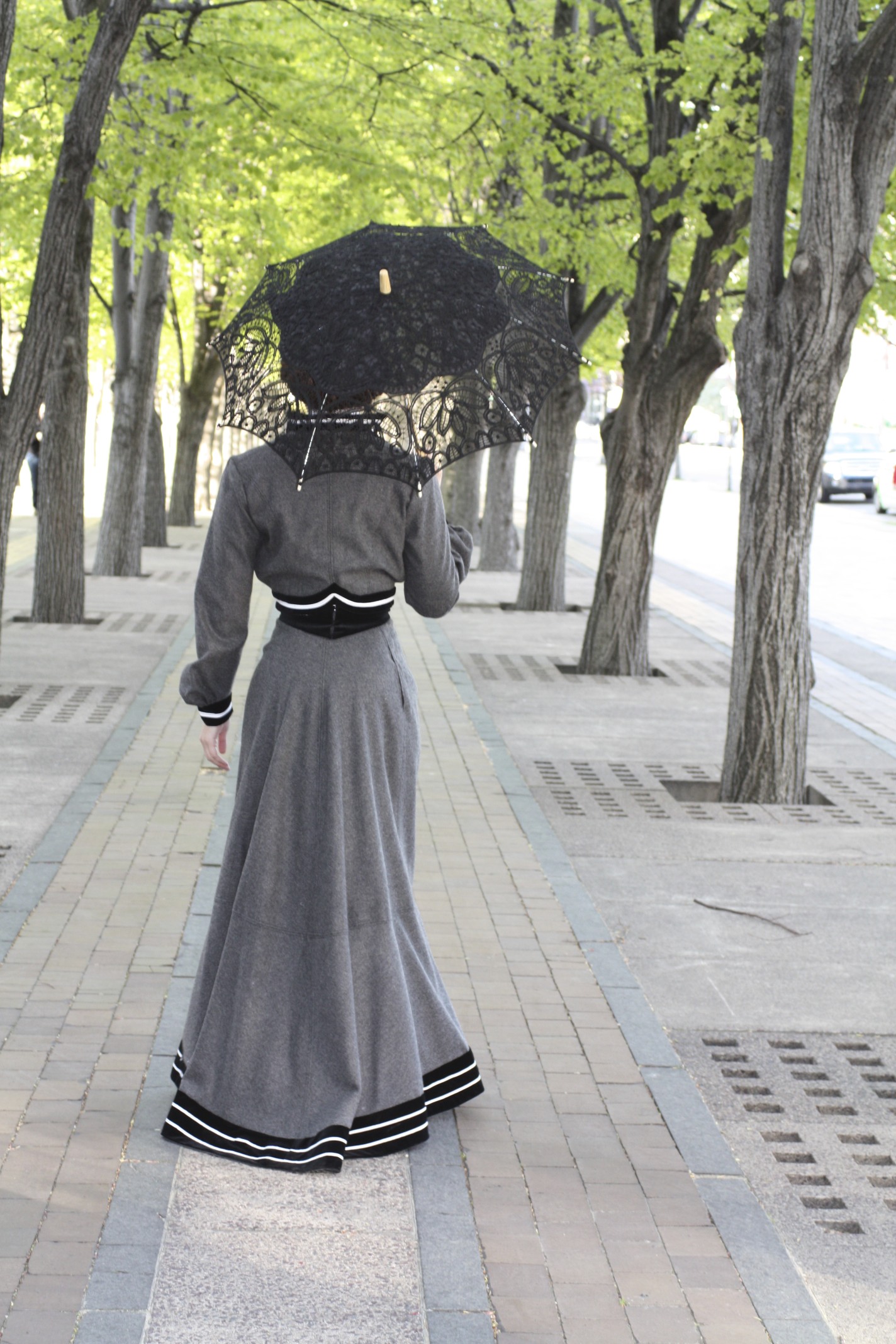
As a finishing touch to my Women’s Tailoring Project, I thought I’d share some silly pictures from my photo shoot with you! We received many strange looks and even had strangers whipping out their cameras to snap photos… I’m sure they were very confused about what was going on!

How many people fit behind a bustle???
Can a bustle hide behind a tree???
Waiting to cross the street...
Squeezing between cars (...I mean carriages...)
Let's all promenade!
Laughs are good, too!
Wait for me!
Strike a pose!
Don't forget to smile!
Trading hats and looking great.
Cut! I DID IT!!! Time to celebrate!

Project Journal: Victorian Women’s Tailoring Part X: 1913 Gallery

Here we finally are, at 1913! Let’s look at some truly lovely pictures!

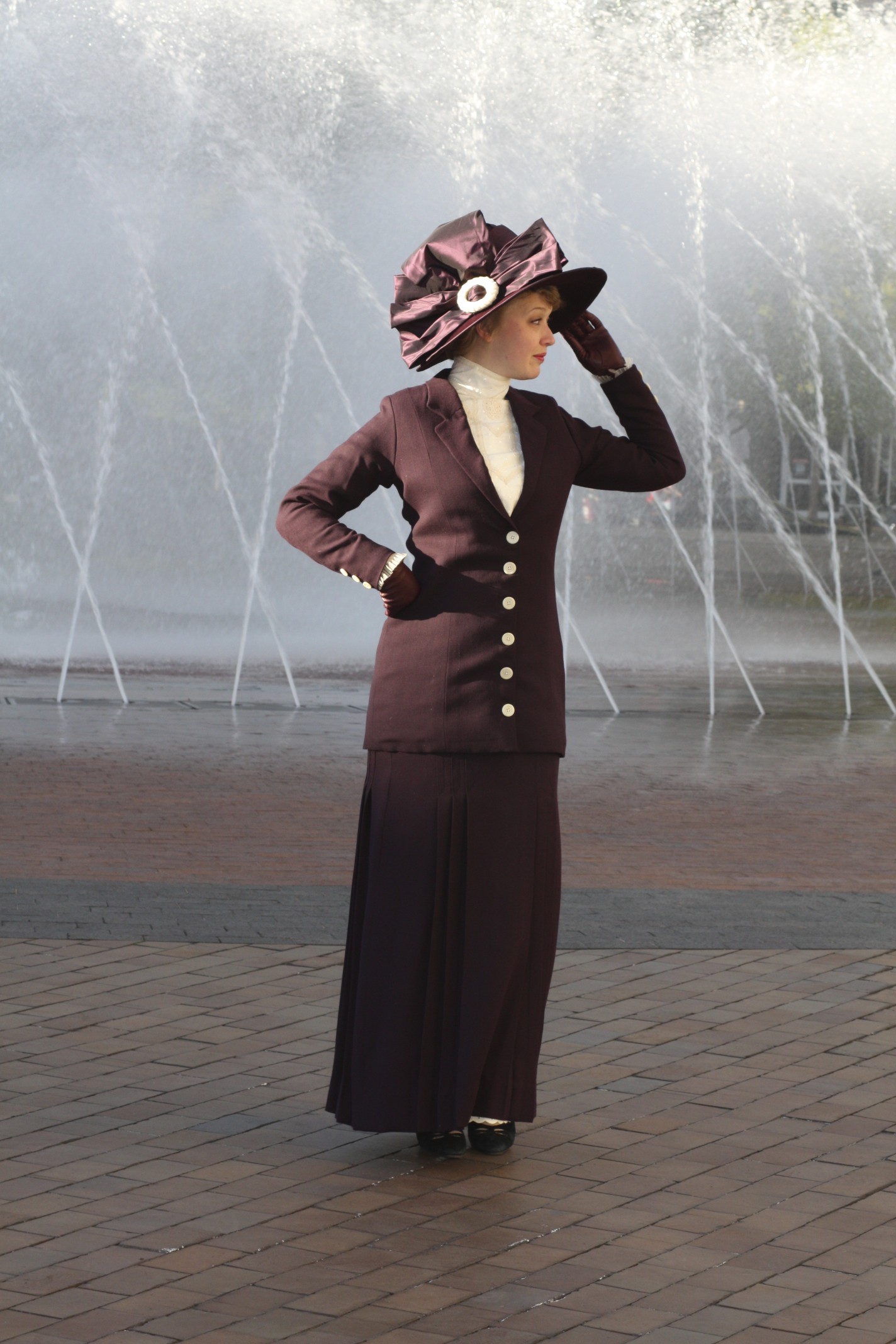
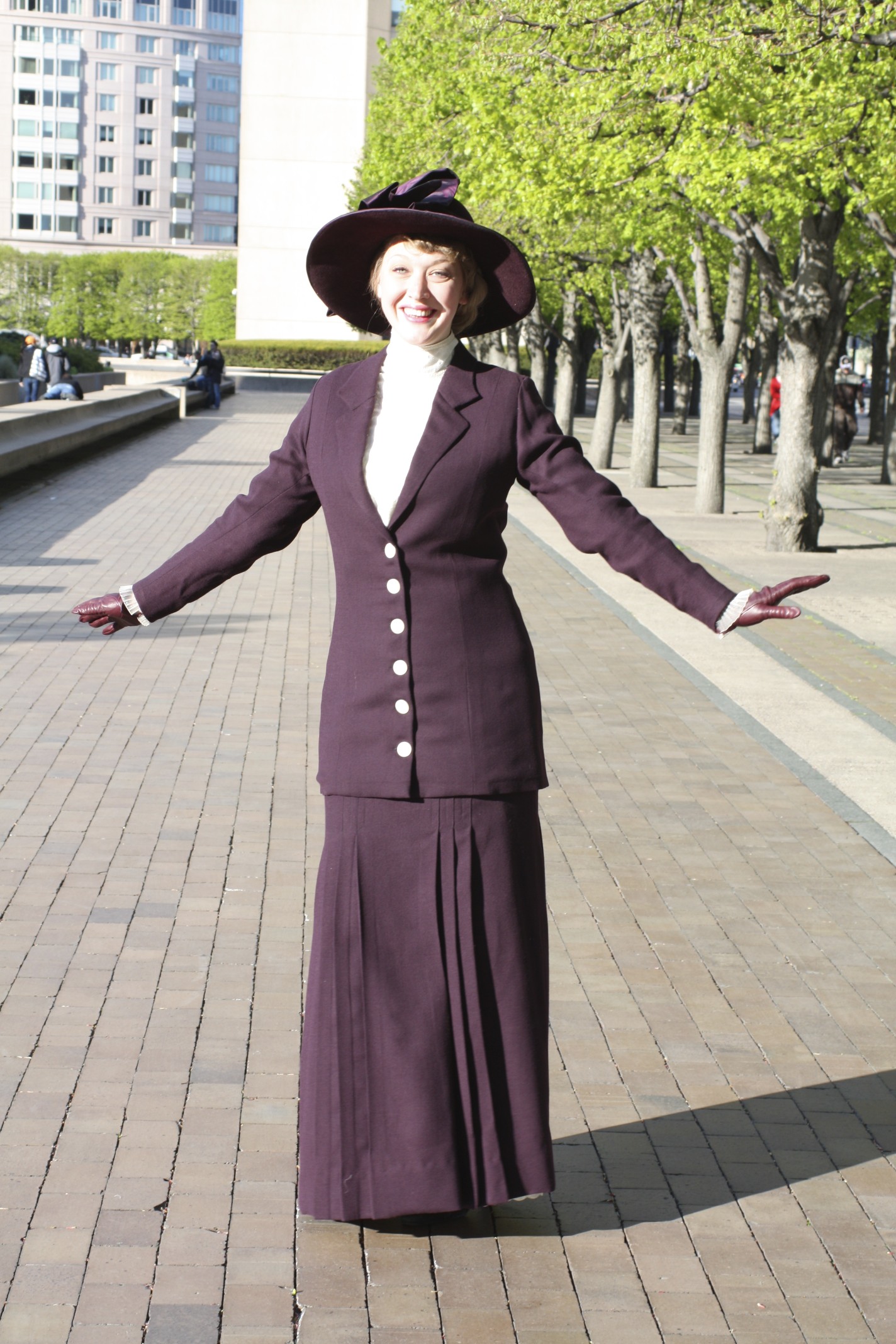
1913: Wool Suit. Wool Hat with matching Taffeta trim.
1913 Suit and Hat
1913 Suit and Hat
1913 Suit and Hat
1913 Suit and Hat
1913 Jacket and Hat
1913 Skirt, Blouse and Hat
1913 Blouse and Hat
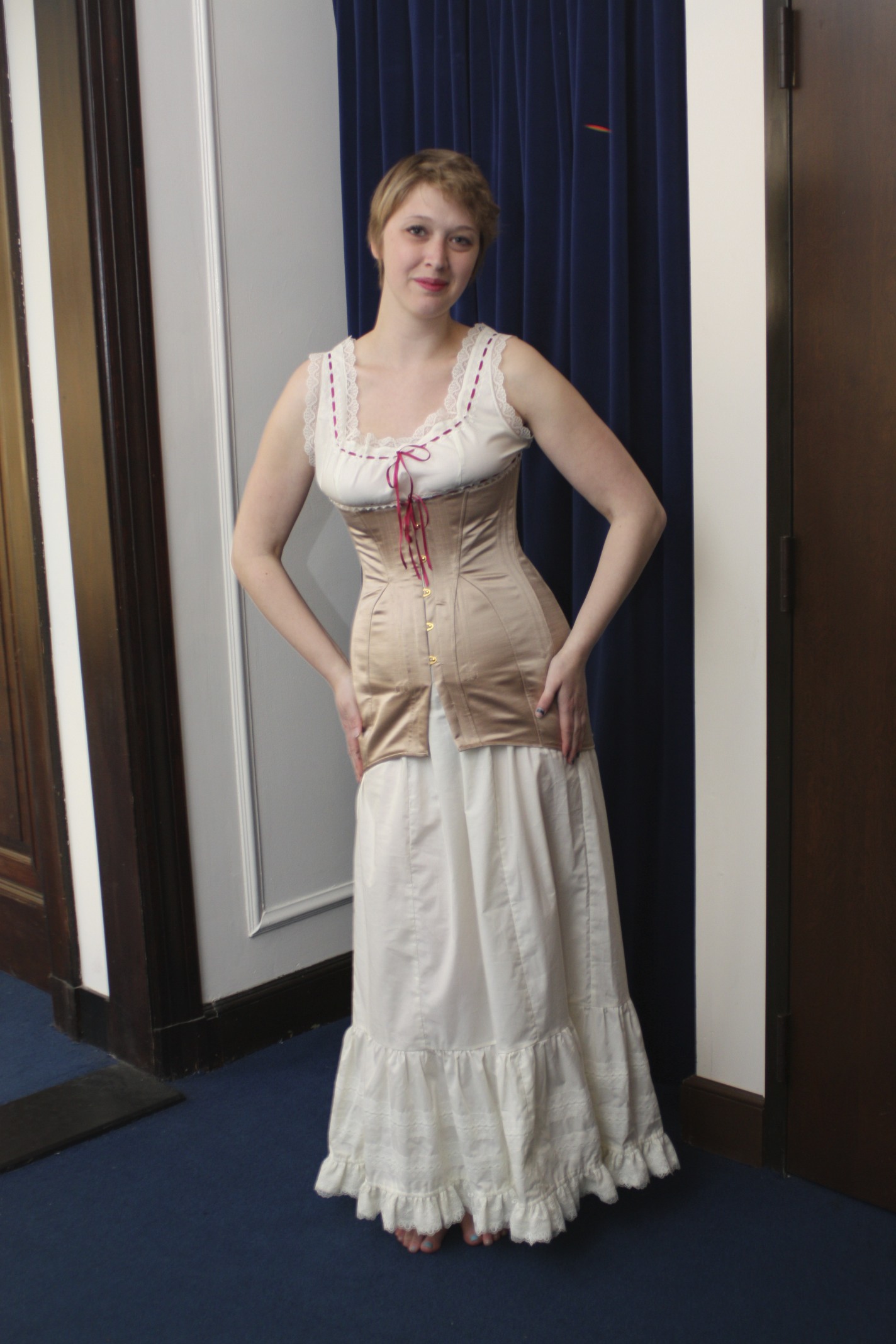
1913 Undergarments: Corset Cover and Petticoat
1913 Undergarments: Chemise and Corset
1913 Corset

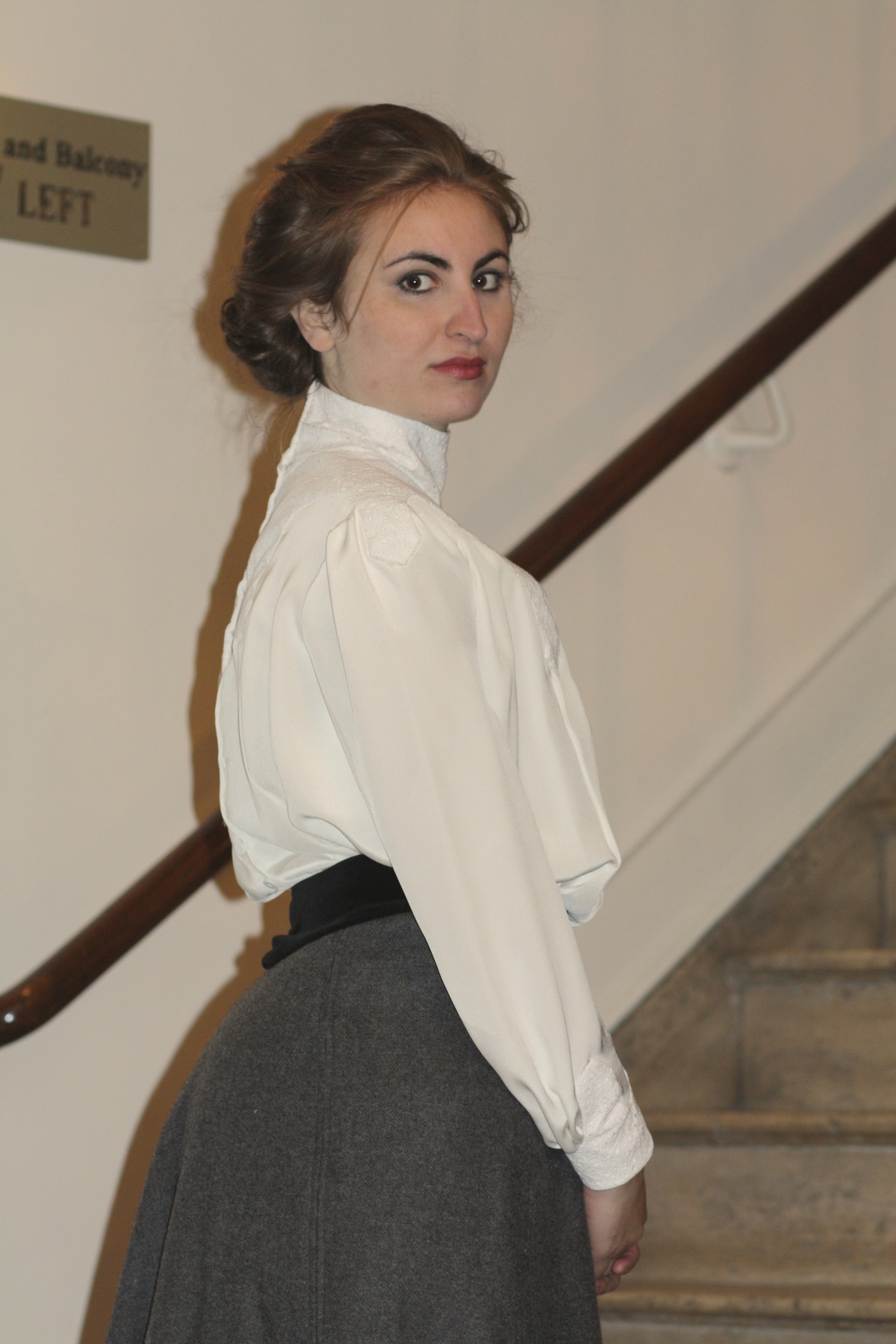
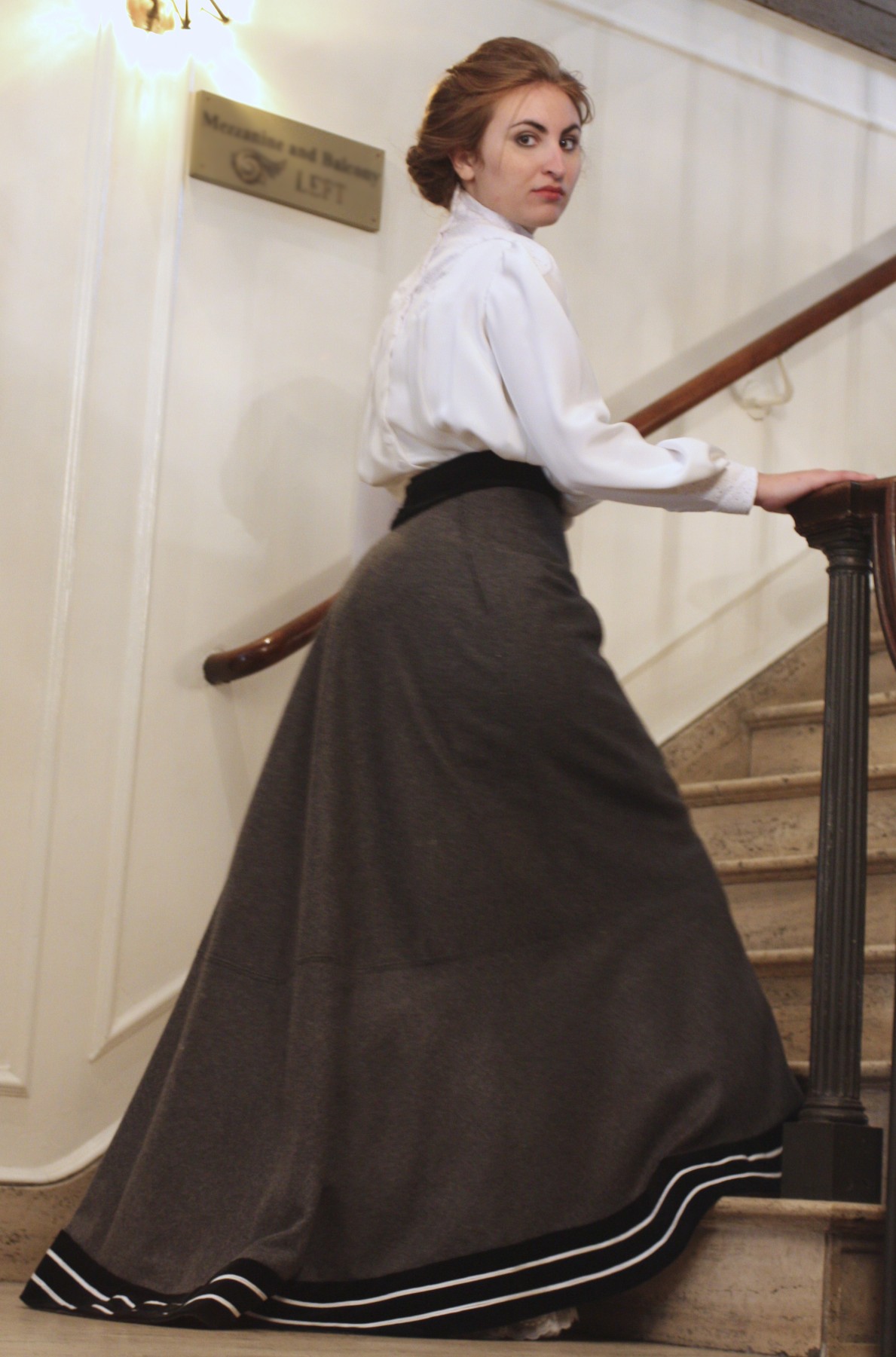
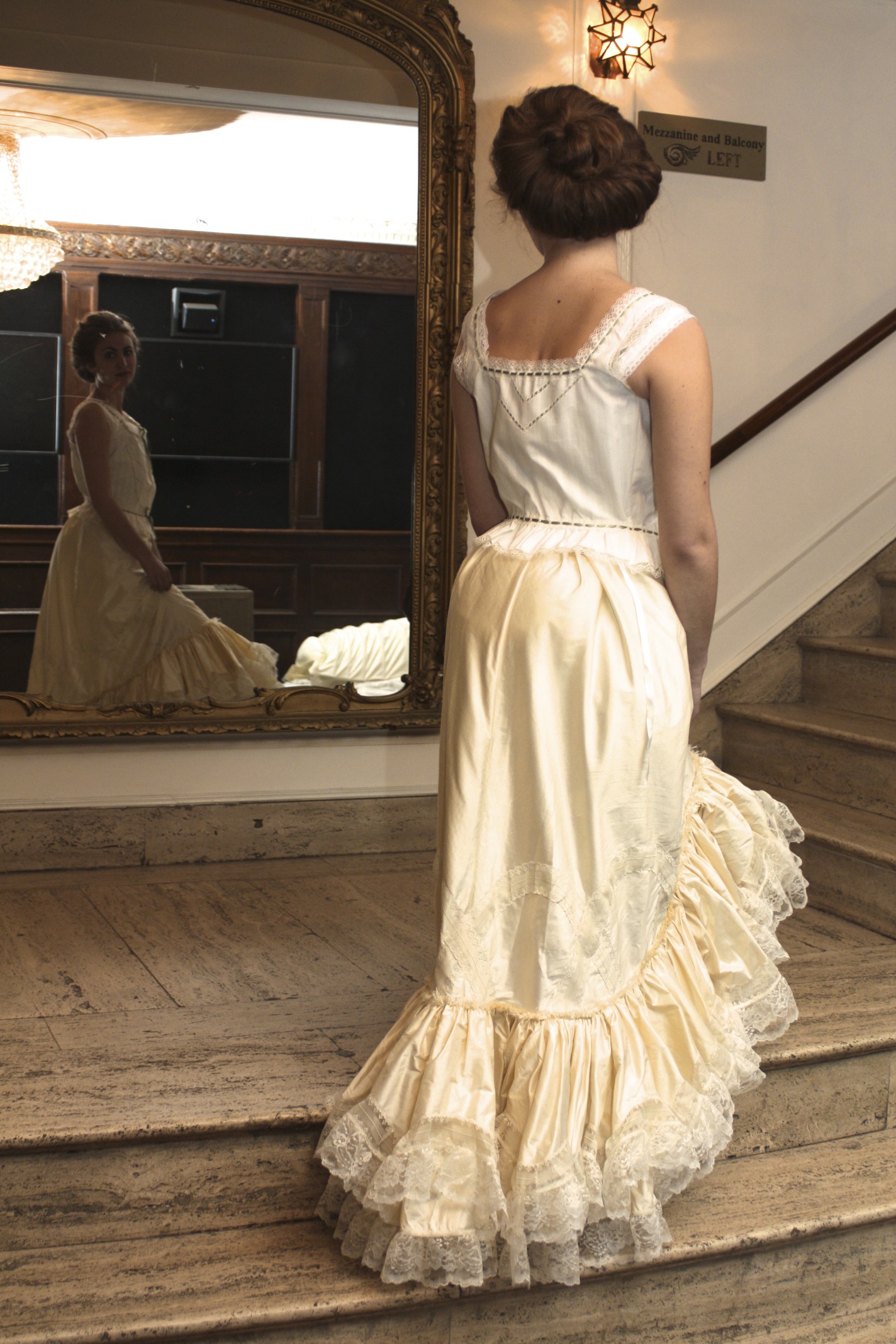
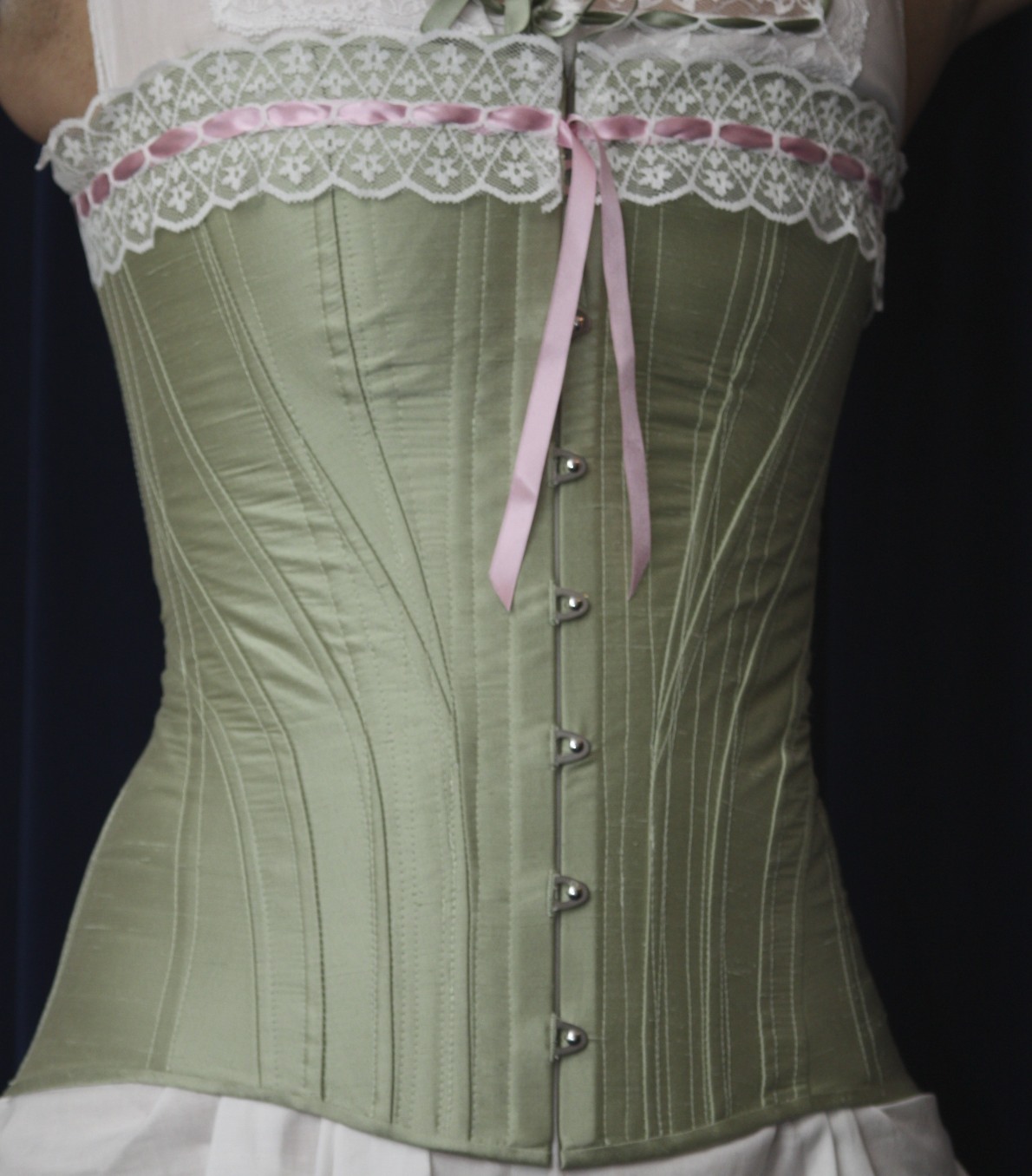
Project Journal: Victorian Women’s Tailoring Part IX: 1903 Gallery

Well, we just got to see my 1883 tailoring project. Now let’s enjoy taking a mental stroll with my 1903 tailored look! Again, there are lots of pictures to see!

1903: Wool jacket and skirt trimmed with cotton velvet. Velvet covered buckram Hat.
1903 Skirt and Jacket
1903 Blouse
1903 Skirt and Blouse
1903 Undergarments: Corset Cover and Petticoat
1903 Undergarments
1903 Corset Cover
1903 Undergarments: Combination and Corset
1903 Corset

Project Journal: Victorian Women’s Tailoring Part VII: Fitting 1913 Garments

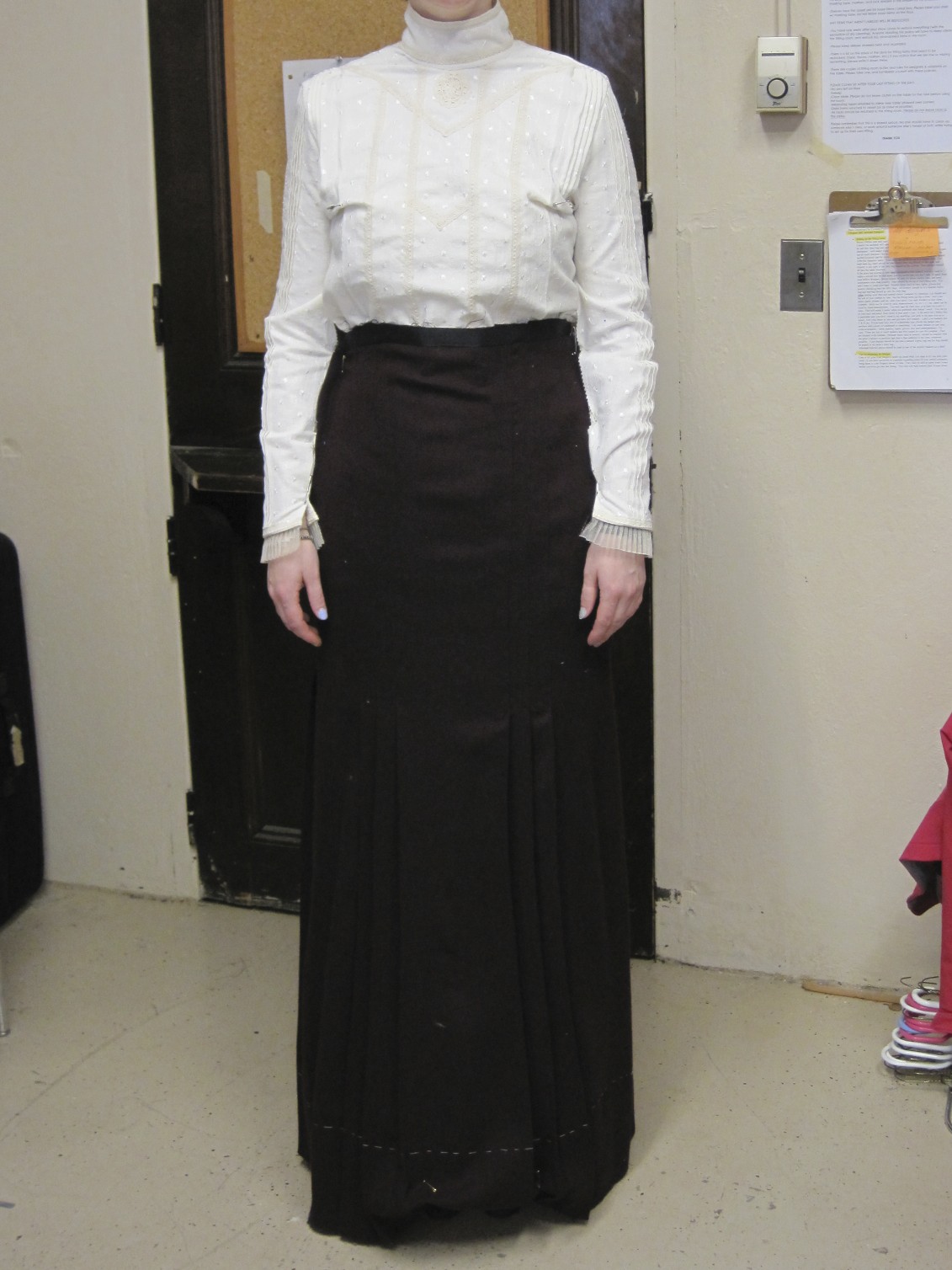
Finally, here are some pictures of my fitting for my 1913 tailored look!

We’ll start here, where you can see the mostly dressed view. This look is a tailored suit from 1913. In the picture you can see the pleated skirt. I actually wound up making the finished length longer than I originally thought I would.

The skirt is worn with an Edwardian blouse featuring cluny lace, pin tucks, pleats, and pleated cuffs.

To the right you can see the look with the unfinished jacket and hat. The jacket still has a mock-up collar and at this point there is no facing, so the interior canvas is visible on the lapels of the jacket.

This period is a strange mix of Victorian holdover clothing (like the blouse) and 20th century clothing (the tailored suit).

Under the skirt are undergarments that have slimmed down since 1883 and 1903 while still remaining numerous and Victorian in principle. On the left you can see the full length chemise which still features lace, pin tucks, and silk ribbon. The silhouette has narrowed considerably from the Victorian shapes of the 19th century, but the whole look is Victorian, not modern. The corset is much longer at this time, but the bones stop about four inches above the bottom edge so that movement is not impaired. This corset is constructed of a silk/linen blend that is flat lined with coutil. The seams are flat felled on the inside. It is edged in the same fabric cut on the bias. The top edge is also edged with lace and silk ribbon. To the right you can see the corset cover for this look: simple and straight forward, with just a small edge of lace. There is also a matching fabric petticoat for this look. The petticoat (or underskirt) is edged with a pin tucked ruffle and finished at the bottom with matching embroidery. It closes at the waist with a hook and eye. The chemise, petticoat, and corset cover are all constructed of the same ivory cotton.

Project Journal: Victorian Women’s Tailoring Part III: Mockups

I reached a point where all my patterns were complete! The next step was to make a mock-up, or toile, of each garment. My mock-ups are made out of muslin: their goal is to determine what changes I need to make to my patterns so that the garments will fit well before I cut and sew the garments out of my fashion fabrics.

By eliminating major fit issues in my mock-ups I am able to achieve a better fit in my final garments with fewer alterations. In these photos you can see the pins that mark the areas of the garments that I need to go back and change on my patterns so that the fashion fabric garments will fit better.

Look 1: 1883. In my brain this is the “bustle dress.”

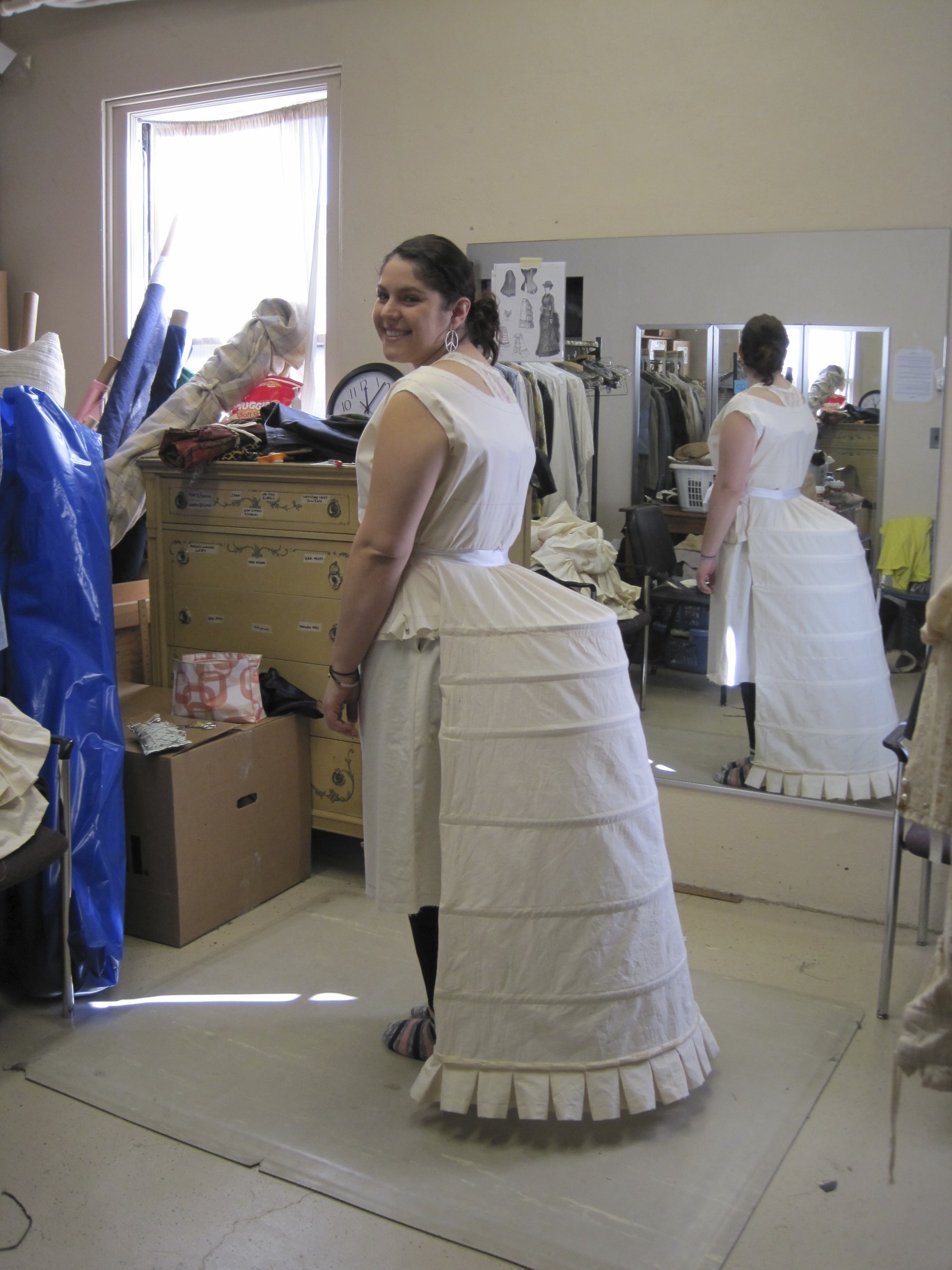
1883 mockups--including the bustle!
1883 mockups.
My inspiration "cheat sheet" for this look.

Look 2: 1903. This is the pigeon breast dress.

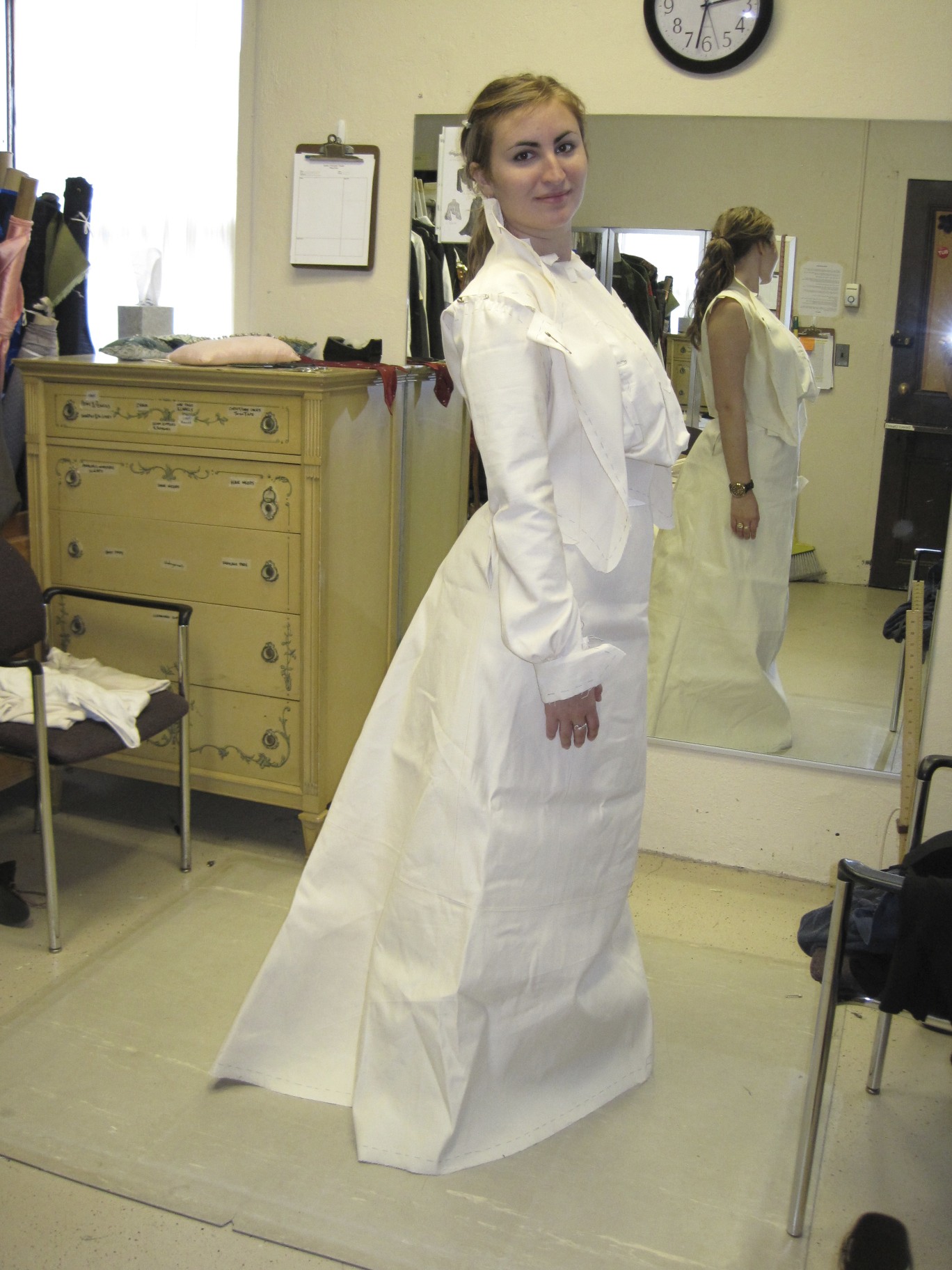
1903 mockups.
1903 mockups.
1903 garment inspiration "cheat sheet."

Look 3: 1913. This is the tubular suit look.

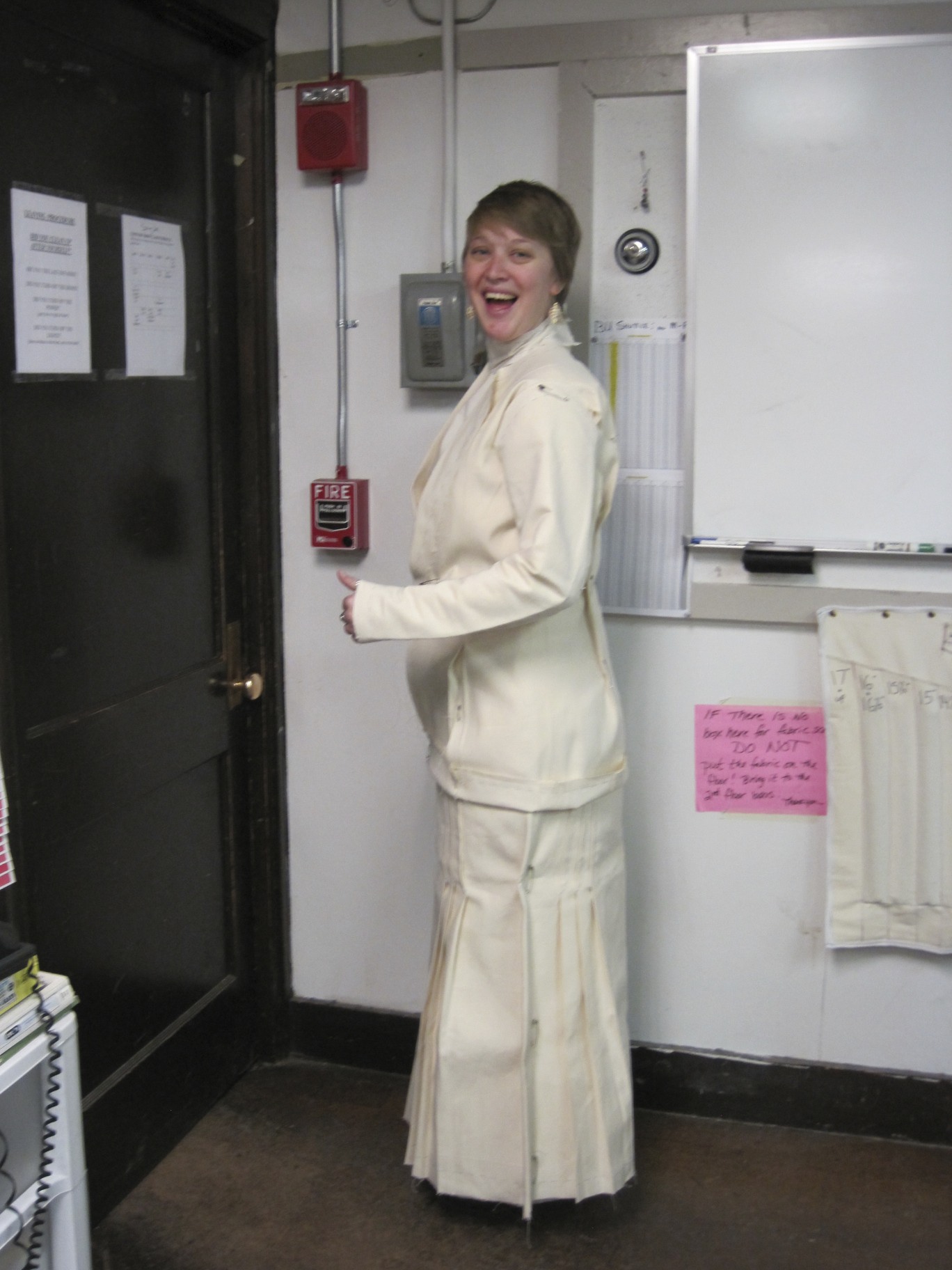
1913 mockups.
1913 mockups.
1913 "cheat sheet" for garments.

Yay! My project is on its way to becoming actual garments. There’s still more work to do, but it’s inspiring to see it beginning to take shape!

Project Journal: Victorian Women’s Tailoring Part I: Overview

My current historic sewing project is reproducing three tailor-made garments and their undergarments from the end of the 19th century. The project aims to show the development of women’s tailoring from the 1880s to the 1910s–essentially the turning point between a tailored dress and a suit.

Look 1: 1883.

This garment is characterized by its bustle. The bustle goes in and out of use, changing shape and size, throughout the 1870s and 1880s. In 1883 the bustle is at a point where I call it the “shelf bustle,” extending from the back at an almost ninety degree angle once being covered by the voluminous skirt layers. During the 1880s, in particular, “tailor-made” garments were fashionable, but these were essentially dresses, not suits.

Look 2: 1903.

This garment is characterized by its romantic figure, featuring “pigeon breast” blousing and gracefully flaring skirts. The foundation of this shape is the new corset design introduced at the turn of the century, augmented by extra padding at the bust and rear. Tailored looks of this period separated jackets from skirts, but still these do not qualify as suits.
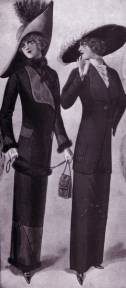
Look 3: 1913.

This garment stands between the corseted Victorian woman of the 19th century and the independent, working woman of the 20th century. Just a few years after this the rigid corset disappears in favor of new, lighter undergarments such as brassieres, knickers, camisoles, and girdles. Clearly, this garment is a suit, not a dress, but its undergarments remain in the past where dresses, not suits, were what women wore.

More journal entries will be coming with more information about each look as well as updates on the actual construction of these garments. Stay tuned!

Sources of Images:

1883. http://www.digitalchangeling.com/sewing/periodResources/Delineator-July1883/

1903. http://people.virginia.edu/~sfr/enam312/fashindx.html

1913. http://www2.uvm.edu/landscape/dating/clothing_and_hair/1910s_clothing_women.php