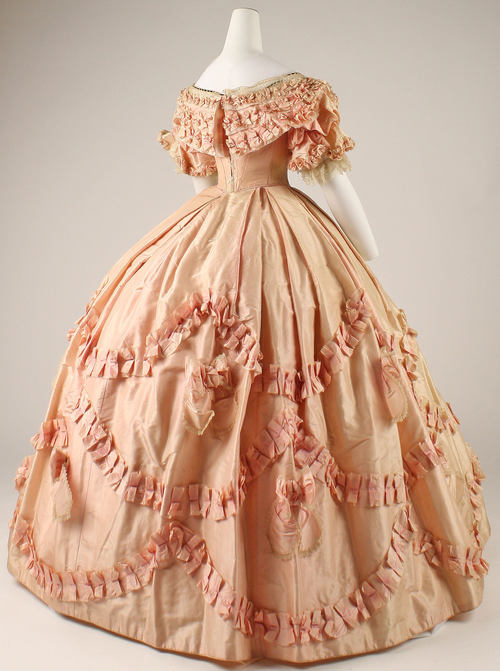
1860-1861 Dress

I found this dress while browsing the Costume Institute Collection Database at the Metropolitan Museum of Art website. It’s beautiful!

It’s actually one of my favorite 1860s dresses from museum collections. Why? Well, the color is particularly striking (it looks like it is constructed of peach/champagne shot silk) and the fullness of skirt makes my heart sing (it’s actually even bigger than the hoops under it, which is why it falls in pleats all the way to the hem).

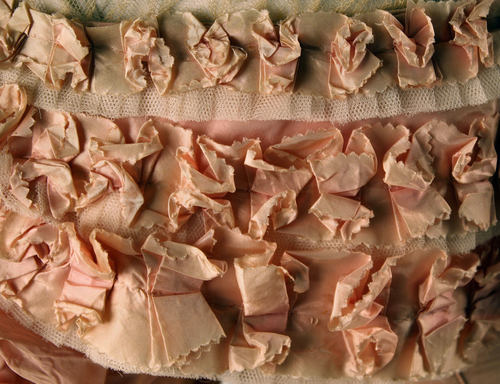
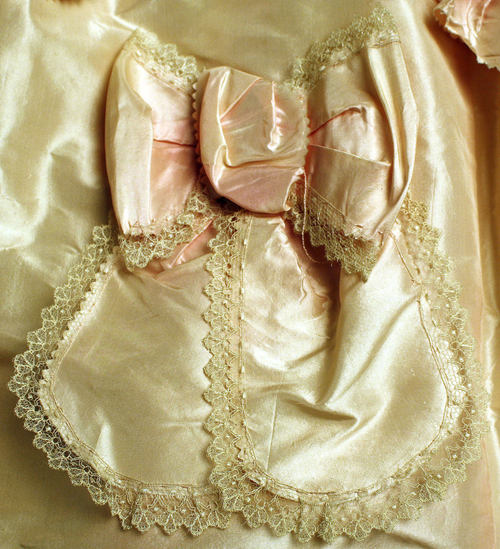
I also really love the trim! The scale of it is perfect for the 1860s, when trimmings occupied a large portion of the expansive skirts. The bertha and sleeves gracefully complement style of the dress, completing the look. The scalloped arrangement of trim on the skirt and the use of pleating to create the trim all add to my high opinion of this dress. Box pleating of this type was frequently used to adorn and trim garments in the 19th century, but this dress uses this trimming style to better effect than some. (There are close up pictures of the trim below.)

Bertha Trimming
Skirt Trimming

I plan on keeping this dress in mind for future 1860s reproduction dress ideas. I think it would be a fun and fabulous dress to wear to a ball!
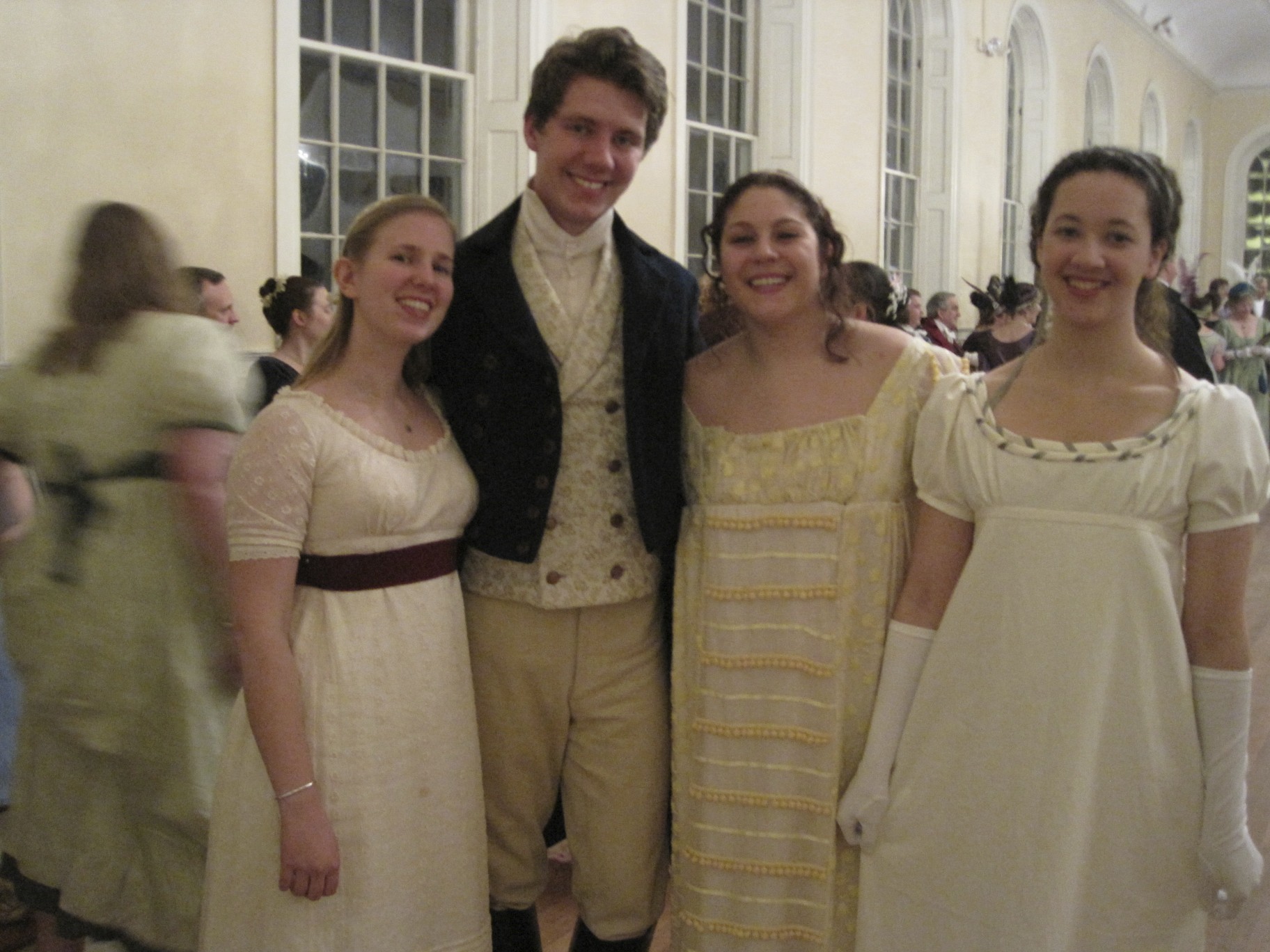
The 14 hour Regency dress (Sense and Sensibility Regency Ball 2011)

I’d decided months ago to attend  the Dancing with the Dashwoods (Jane Austen period) Ball recently hosted by the Commonwealth Vintage Dancers; however, I was in a sticky spot about what to wear! I did not have a dress appropriate to the period of this ball and I really needed to focus on my tailoring project… what to do?!?

Well, I decided to spend just one day making a cotton Regency dress. I quickly adapted a pattern from Norah Waugh’s The Cut of Women’s Clothes: 1600-1930 to my size and decided to forgo the mockup step. Cutting out the fabric is my least favorite part of making garments, so I tried to make that part go as quickly as possible.

In an effort to simplify things, I included two petticoat layers in the dress itself and decided not to worry about finishing my seams on the inside. The bodice also has two extra layers inside of it to keep it opaque. Each piece (of three layers) was treated as one piece when I went to sew it.

All in all, the basic seams went quickly. What slowed me down and took about a third of my time on the dress were the finishing steps of completing the neck trim and putting closures on the back. The trim took a fair amount of time to pin, stitch, and thread through the ribbon loops, and the hook and thread loop closures took time because it was getting late at that point…

Fast-forward to the ball! I had the good fortune to be able to bring along friends as well! It was crowded but super fun to dance in period costume and a period hall! Enjoy the photos!