Introduction To A New Thin-Gummy: 19CBRE

I’ve been inspired lately to read (and in some cases skim at the very least) 19th century etiquette manuals,  especially those books and sections that pertain to 19th century ballroom etiquette. What got me started was perusing various posts at the blog Recreating the 19th Century Ballroom. Barbara posts tantalizing snippets from these sorts of manuals and I wanted to see the context and read more, so I went back to the original sources.

Looking for one thing leads to another, as you probably know, and so it was with etiquette manuals. Once you find one you are led to others and it’s just one big rabbit hole. In my perusal of these manuals, I’ve come across amusing and interesting sections that I’d like to share. In addition, I’ve also started thinking about 19th century ballroom etiquette and how much or little a modern historic ballroom atmosphere can replicate. It’s really quite fascinating!

I’m planning a series of posts relating to this general topic, exploring some of my thoughts as well as sharing quotes from the manuals. I don’t want to commit to any sort of regular posting, but I’m thinking I’ll just intersperse these posts amongst my usual parade of dressmaking and event pictures with the abbreviation 19CBRE (19th Century Ball Room Etiquette) to note what these posts are about. (It’s not a typo, in these manuals, the word we now spell ballroom was separated into two words “ball room.”)

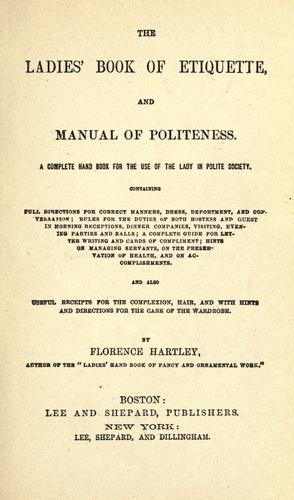
To start, here is a short quote from The Ladies’ Book of Etiquette, and Manual of Politeness (1873), page 14, source here:

Never use the phrases, “What-d-ye call it,” “Thin-gummy,” “What’s his name,” or any such substitutes for a proper name or place. If you cannot recall the names you wish to use, it is better not to tell the story or incident connected with them. No lady of high breeding will ever use the substitutes in conversation.
5697478-L

I am so guilty of using phrases like this in life (and at historic events…). I forget what I’m talking about within a few seconds of finishing a sentence sometimes! So when I want to continue the conversation these phrases pop right up. According to these 19th century standards, I’m of low breeding and obviously not polite… but in our modern world these phrases, while being casual, don’t mark you as being ill-bred, at least to me. I’ve spent time thinking about the fact that this very casual way of speaking is probably not appropriate for a 19th century lady, but that goes back to my currently unexplored thoughts about how far we choose to go when recreating the past at a public event such as a ball (a topic I’ll be sure to post about, someday!).

But thin-gummy is just so amusing! I really feel like I need to work that into modern conversation just because I can. In fact, I worked it into the title of this post and I hope you can imagine the grin on my face because of it!

Do you use these sorts of phrases in your modern life or at historic events? Had it ever occurred to you that in the 19th century these sorts of phrases were to be avoided?

Regency Intensive Dance Weekend 2014 Wrap Up

As promised last post, here are a few pictures from the two balls at April’s Regency Intensive Dance Weekend. Hopefully, you remember my descriptions of this weekend as being full of amazing learning opportunities and lovely memories with amiable people. Indeed, both balls left me with a feeling, expressed by Elizabeth Bennet in Pride and Prejudice, of being at a very pleasant house party or private ball, though indeed these events are open to the public.

IMG_8303
Dancers displaying their waltz at Saturday’s informal ball.

“It is your turn to say something now, Mr. Darcy. — I talked about the dance, and you ought to make some kind of remark on the size of the room, or the number of couples.”

He smiled, and assured her that whatever she wished him to say should be said.

“Very well. — That reply will do for the present. — Perhaps by and by I may observe that private balls are much pleasanter than public ones. — But now we may be silent.”

From Pride and Prejudice by Jane Austen, in Chapter Eighteen.

IMG_8485
Looking into Sunday evening’s formal reception, which included a balcony for the musicians (see them in the mirror?).
IMG_8526
The formal ball included lavish and delicious refreshments.
IMG_8530
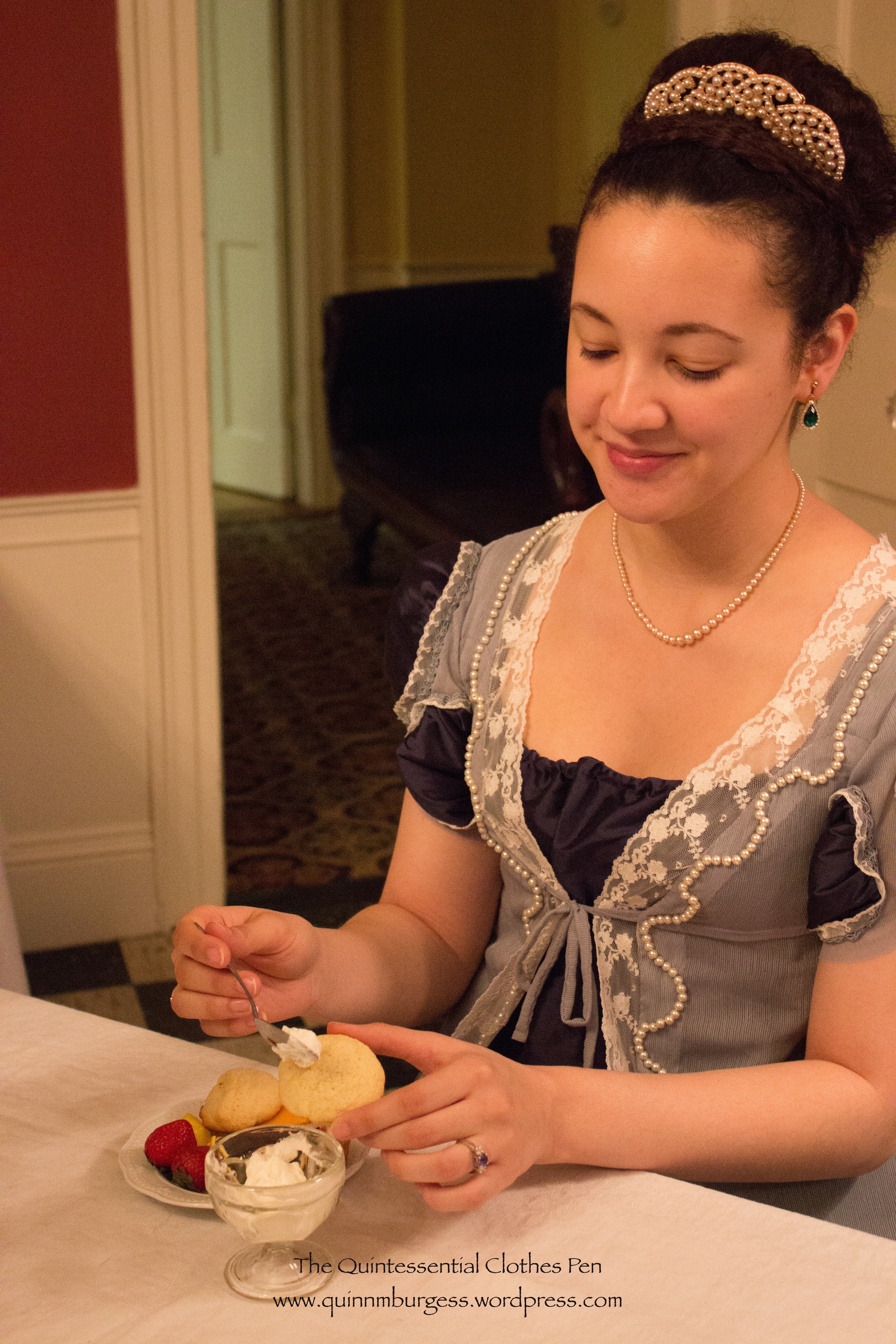
Taking a break from dancing to munch on some super yummy syllabub.

Indeed, we were dancing so often at the formal ball that we really didn’t get many pictures of the dancing in action, so you’ll just have to believe me when I express the elegance of the dancing and the ballroom scene.

You can read more about Sunday afternoon’s imaginary visit to Mansfield Park in this post and more about the new ball gown that I made for the Sunday evening ball in this post. You can read more about the entire weekend here, at Plaid Petticoats blog post about the weekend.

Imagine An Afternoon At Mansfield Park

This April, I was again blessed to be able to take a weekend and step out of my modern, incredibly busy life to join other like-minded individuals for a Regency Intensive Dance Weekend hosted by the Commonwealth Vintage Dancers. Here is the link to all of last year’s posts, which describe a weekend just as wonderful as this year’s turned out to be.

Saturday consisted of lots of dance class, followed in the evening by an informal ball. Sunday’s schedule had a little bit of dance class in the morning followed by a low-key afternoon of Regency non-dance activities and finished up with a reception and grand ball in the evening.

We took fewer pictures this year than last year, but we still captured the amazing essence of this wonderful event: Saturday’s ball really felt like an immersion into an intimate house party rather than a public ball, Sunday’s afternoon events were wonderfully relaxed and felt like an afternoon one might have while visiting Mansfield Park, and Sunday’s grand ball was amazing to behold and be a part of in terms of exquisite refreshments, companionable company, and excellent dancing.

Having so few pictures of the Saturday evening informal ball, I’ve decided to just include them in a second post which will have pictures from both balls. So then this post will be about Sunday afternoon’s event. Activities included sword demonstrations, playing various period card games, participating in or watching a “theatrical,” listening to a short and impromptu piano interlude, and delighting in the delicious refreshments and tea. Of course, there was also lively conversation, as you would expect! (We had hoped to have some outdoor actives, too, such as playing graces in the park and taking a walk, but unfortunately it was raining all morning and things were wet, so we decided to stay inside. In the end, it turned out to be just fine and we still had a lovely time!) 

IMG_8324
Cards and counting chips laid out and ready to participate in a game.

The “theatrical” was staged for us by a group of interested and theatrically inclined ladies. They only had perhaps a portion of an hour to prepare a few scenes from The Rivals for us (a play first performed in 1775 and written by Richard Brinsley Sheridan). It was highly enjoyable and, we, the audience laughed a lot! Indeed, The Rivals is one of the plays that is dismissed by the party in Mansfield Park when they are thinking of putting on a play (hence why I’ve specifically mentioned that the afternoon felt like visiting Mansfield Park!). In the book, they decide on another play in the end (Lovers’ Vows, from 1798), but it was neat to see scenes from one of the plays mentioned in the book!

“All the best plays were run over in vain. Neither Hamlet, nor Macbeth, nor Othello, nor Douglas, nor The Gamester, presented anything that could satisfy even the tragedians; and The Rivals, The School for Scandal, Wheel of Fortune, Heir at Law, and a long et cetera, were successively dismissed with yet warmer objections.” From Mansfield Park by Jane Austen, in Chapter Fourteen.

1558456_10152056657054327_3929073447392027700_n
Small props had been thought of ahead of time and provided extra amusement: the hat, cravat, and beard were a few of these amusing things!
984026_10152056657274327_5601943787191074466_n
Really, the scenes were amusing and acted with conviction.
10014634_10152056656819327_8573363852811564478_n
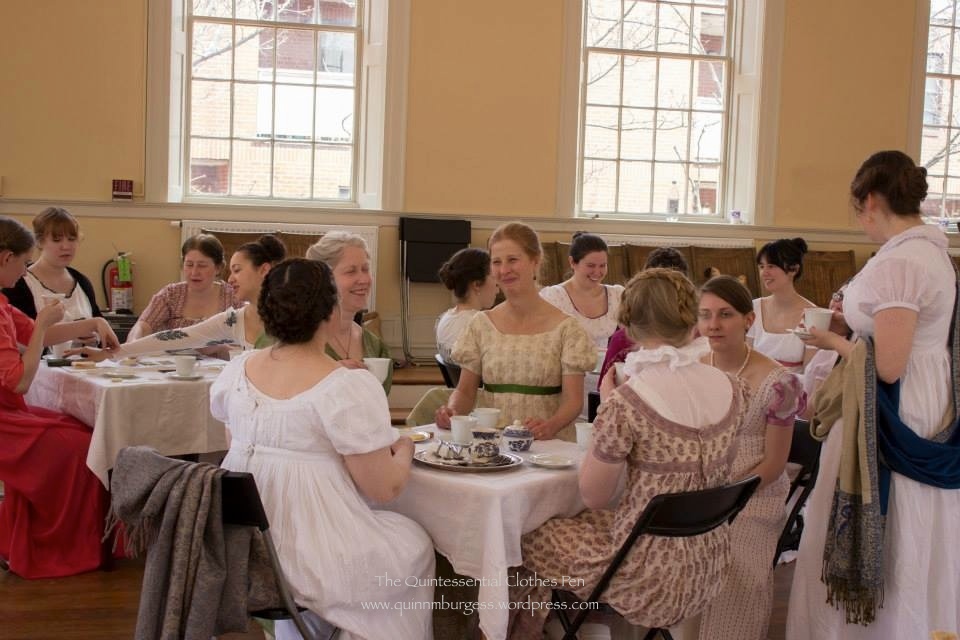
Delicious refreshments (we had a variety of scones, cookies, and cucumber sandwiches). Tea is being poured out in the background.
988470_10152056656939327_9019217807155517566_n
A portion of the party enjoying card games, conversation, and refreshments.

Our venue was built around 1816-1817 and provides a wonderful environment for Regency activities especially: beautiful windows, high ceilings, a lovely dance floor that lends itself to Regency style dancing, etc. I also like the creamy butter yellow walls with lovely white trim.

IMG_8416
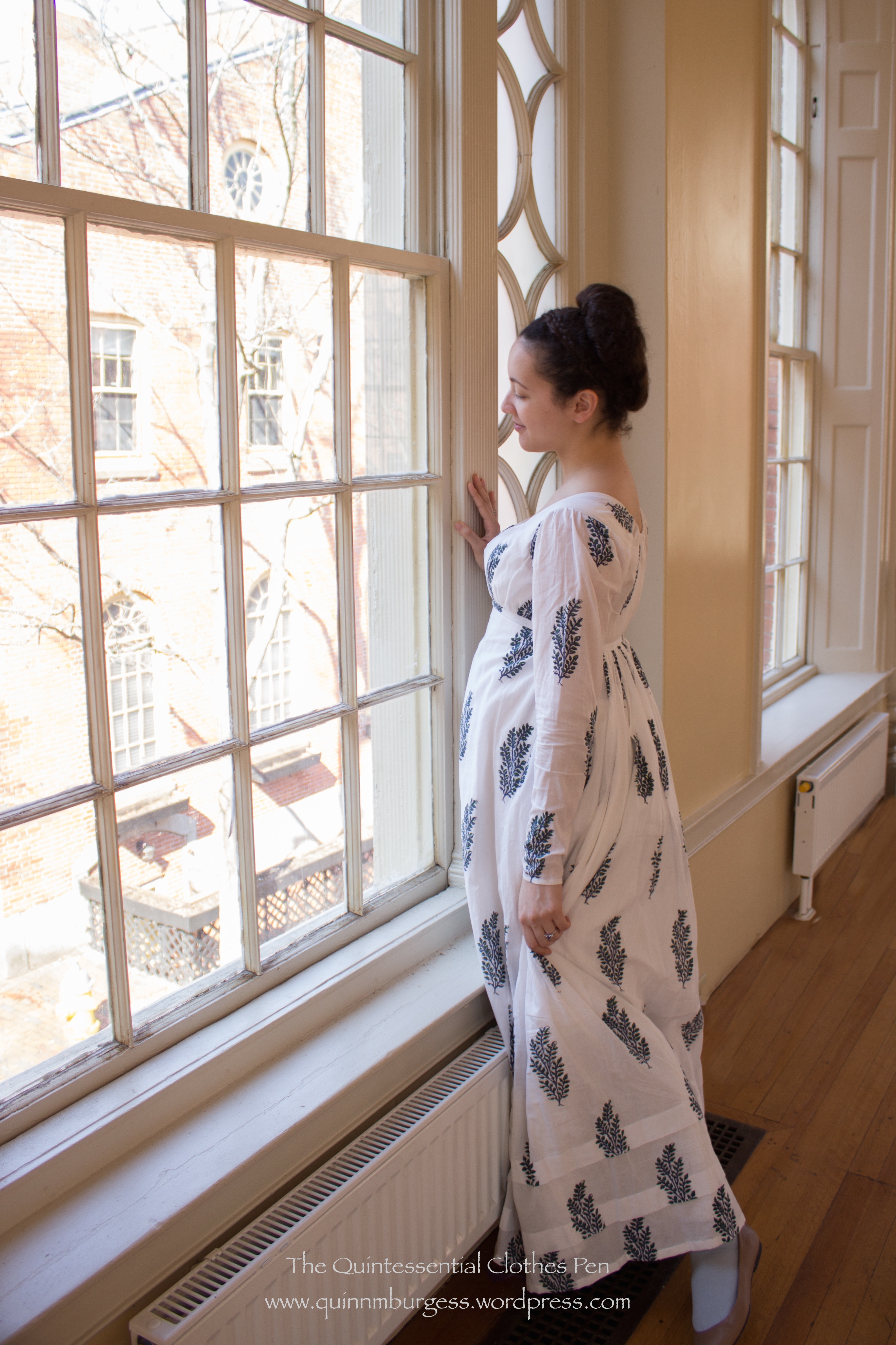
I wore my tree gown. I’m attempting to look pensively out the window hoping that Mr. Darcy will come by…
IMG_8418
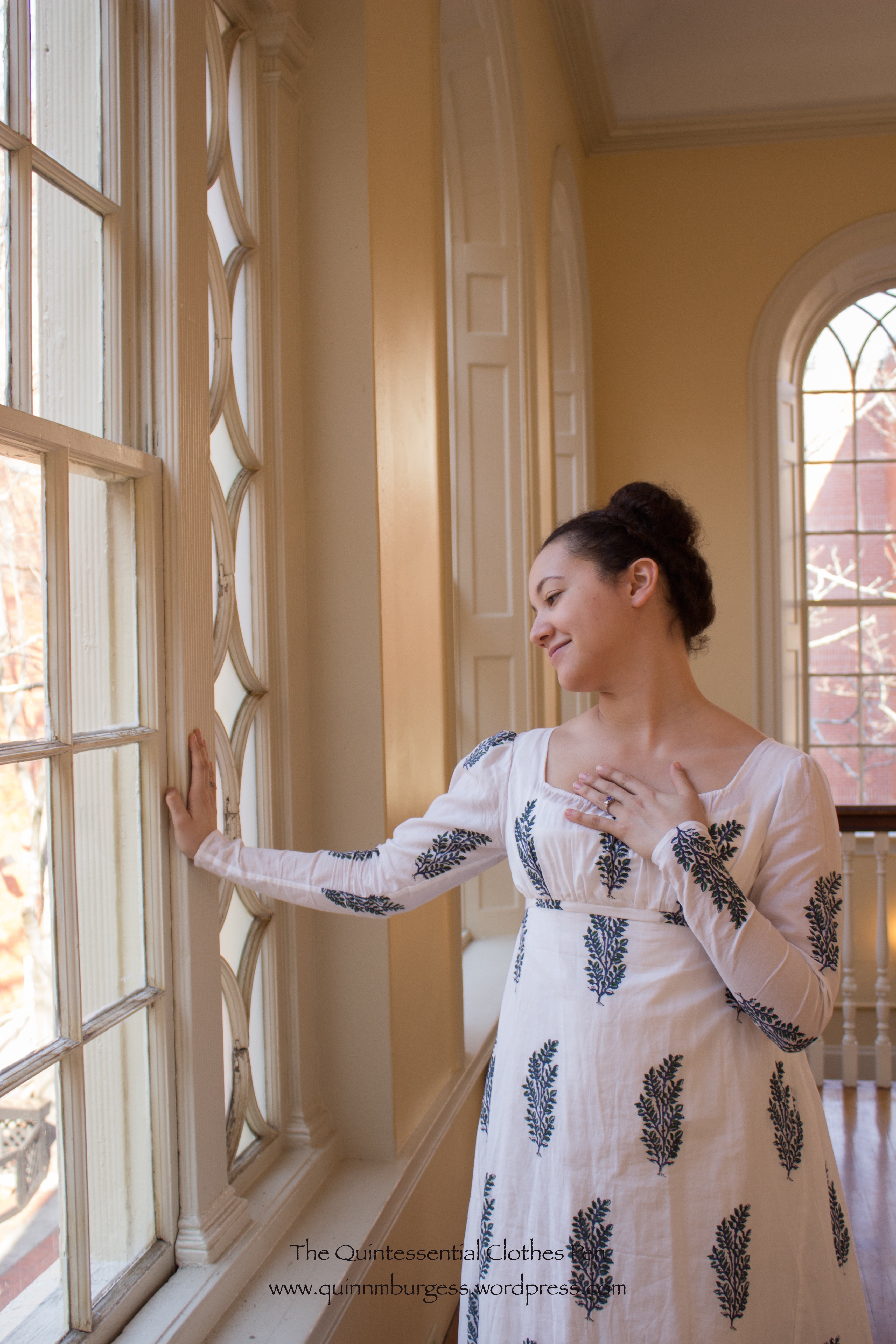
I’ve seen him! Be still my heart!

Yes, I know I’m mixing my books here. Perhaps I should have thought of myself as Fanny Price waiting to see a glimpse of Edmund Bertram out the window. Ah, but I don’t identify with Fanny so much as Elizabeth Bennet, so you’ll have to cope with my mixing of books!

Thankful For Suffrage

If you saw my last post, you were left guessing as to what event I was furiously sewing for. I think most you guessed that it had to do with women’s suffrage… Yay you! The entire event wasn’t really about suffrage, but suffrage was a part of it. We went down to Plymouth, MA to be a part of a historic village event that was linked to the main Thanksgiving parade in town.

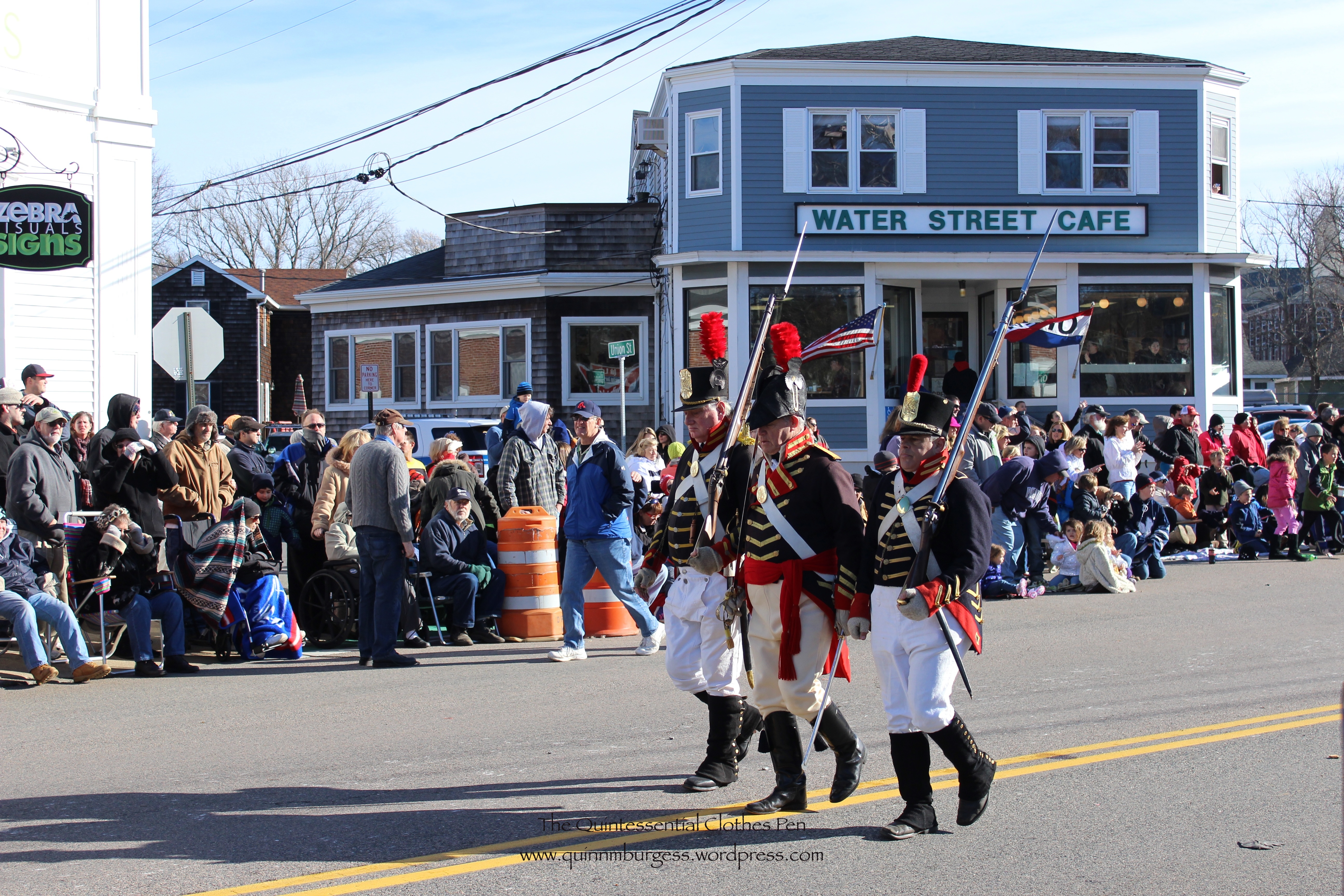
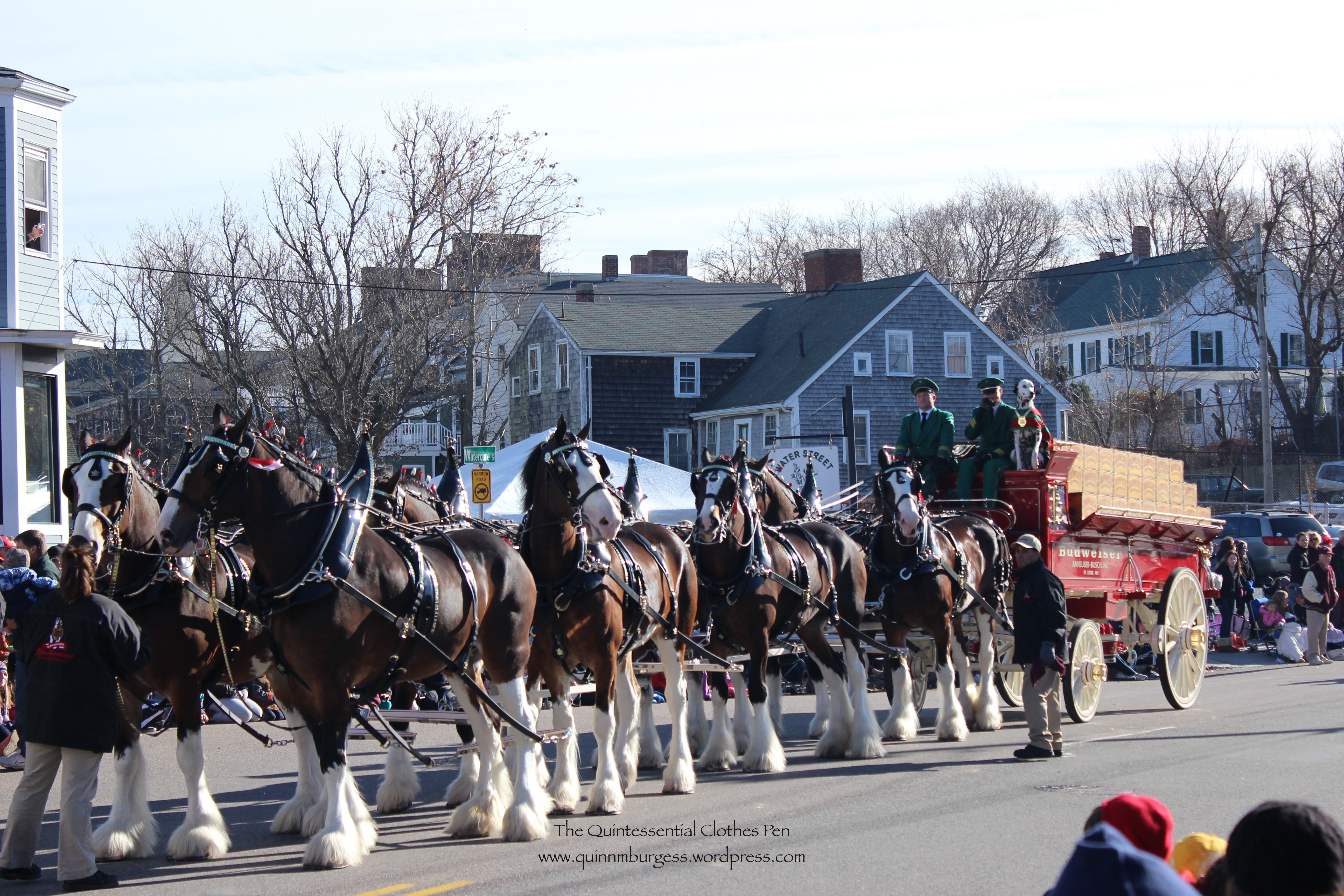
The historic village contained various groups from the early 17th century, groups from the 18th century, Marines from 1812, a unit from the Civil War, my usual dancing friends and I representing women’s suffrage c. 1914, and paratroopers from the 1940s. The parade was…a parade. There were historic groups in it (including some of the military groups I just mentioned), there were marching bands, there were floats, there were unicycles, and there were horses doing various things.

And I’ve got pictures! To start, here are some images of the parade:

IMG_7068
Happy Thanksgiving! The giant inflatable turkey was pretty amusing, especially when he had to slightly deflate to get his head under the power lines!
IMG_7024
Often these guys are dancing with us, but at this event they were hanging out in the 1630s as the Salem Trayned Band.
IMG_7088
Some of our other friends: 1812 Marines.
IMG_7077
8 beautiful (and large!) Budweiser Clydesdales.
IMG_7104
4 spirited horses pulling…
IMG_7105
A fancy Wells Fargo stage coach!
IMG_7119
A super snazzy green car, with bright green trim!
IMG_7177
Red, white, and blue confetti in the cold, clear air near the end of the parade route.

Next, here are some images of our representation of Suffragists and our setup in the historic village:

IMG_6903
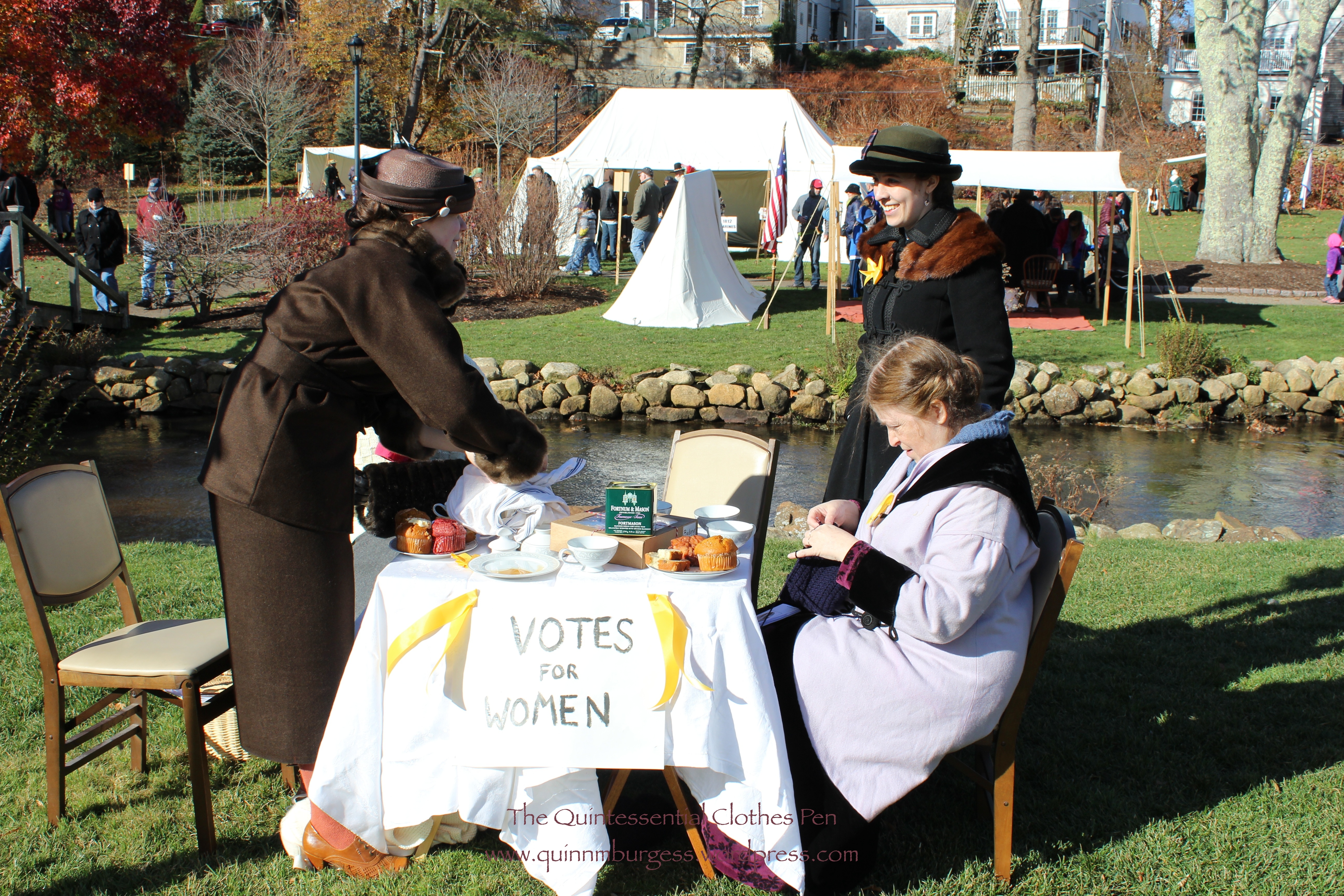
Setting up our tea table. Other setups included tents and smoking fires (it had rained the day before and everything was damp and mushy, so the fires didn’t really work…).
IMG_6900
Yes, we really did drink tea. In china cups. It actually was very nice to have hot beverages throughout the day given how cold it was outside!
IMG_6979
See, we’re drinking our tea!
IMG_6962
We didn’t march in the parade or parade around the historic village, but we did serenade the ducks in the creek behind us (and visitors walking by) with suffrage songs.
IMG_7208
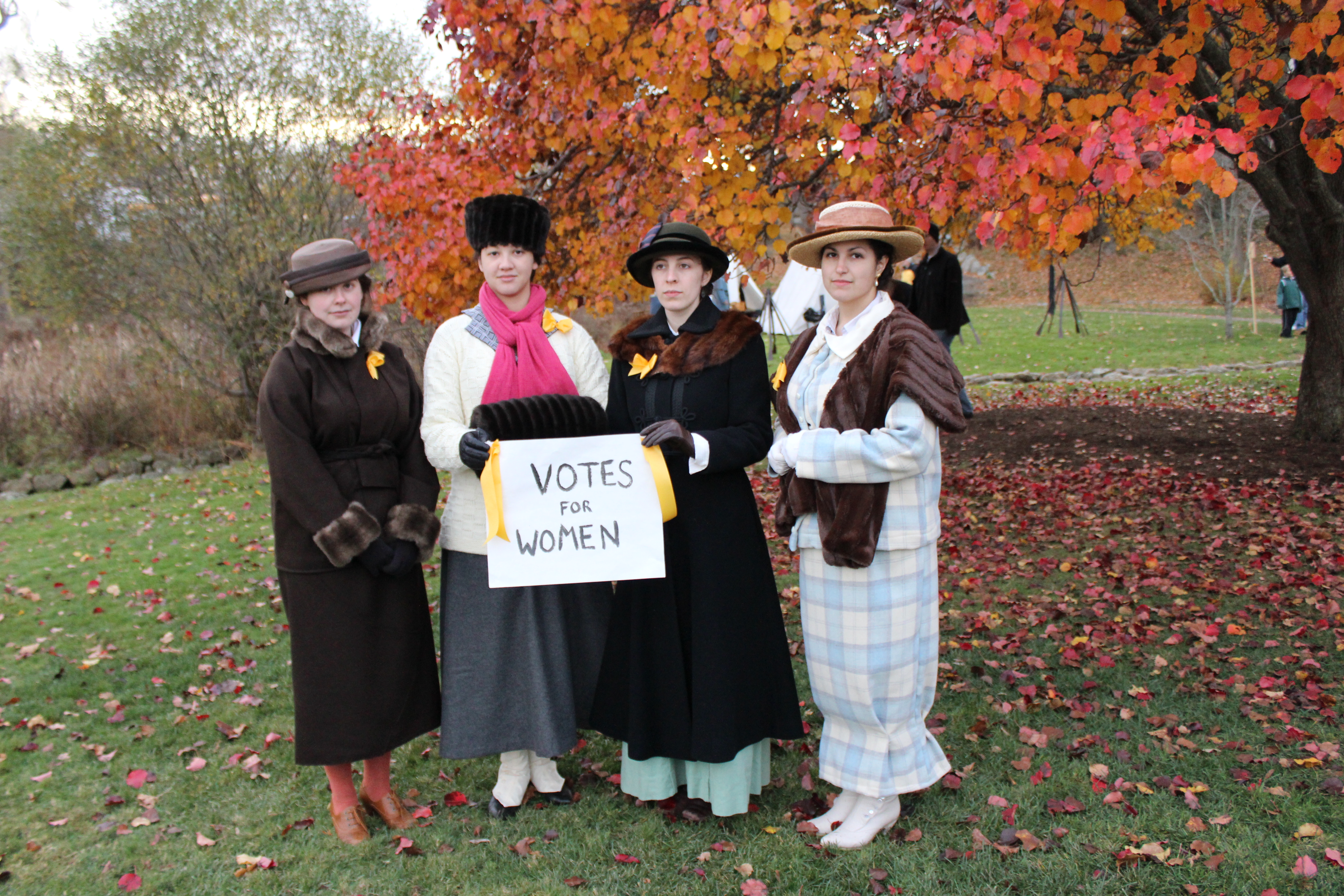
Here we are making “serious suffrage” faces.
IMG_7209
Ok, smile for the camera.

The best part is that in addition to sharing a little bit about history with the public and getting to watch the Thanksgiving parade in all its glory, I was able to use this opportunity to build and wear an outfit showing off my recently completed 1917 Knitted Sweater of Angorina. I had to plan for cold weather, but I didn’t want to cover up my sweater! So I planned a faux fur hat to match an existing muff, a wool skirt, a polyester crepe blouse (in this case, the polyester was a great choice, because the fact that it wouldn’t breathe would help me stay warm and use up a random bit of fabric in my stash that had no other project in its future!), and did a mostly unnoticeable revamp on my 1860s/can-look-like-other-decades fur muff (which was essential, it turned out, for keeping my hands warm!). And to look stylish, I made gaiters to turn my 1920s American Duchess Gibsons into 19-teens looking spat-boots. And all of the fabrics were from my stash! The gaiters might just be my favorite part of the outfit, and both they and my fur hat will qualify for the next two HSF challenges, so you’ll see more detailed information on those soon! All in all, I managed to stay warm, except for my feet! I wore thick tights, but I didn’t think to wear extra socks, and my toes and feet were SO cold! Note to self: wear thick socks next time an all day outside event in the cold is on the horizon…

And here is my brand new 1917 outfit:

IMG_6948
Yay! New hat, revised muff, new blouse, hand knit sweater, new skirt, and new gaiters, worn with my Gibsons, my modern cashmere lined leather gloves, my 1913 petticoat pinned up to shorten its length, and a golden yellow ribbon in support of women’s suffrage. I was able to completely finish my accessories, but the blouse and skirt didn’t get as far as closures. You can’t tell of course, but safety pins are great sometimes. These two garments now live in the “need to be finished” section of my sewing list.
IMG_6963
One of the only back views. The blouse has neat collar details (see those cute points?) and neat cuff details you obviously can’t see. When I eventually finish the blouse and skirt I’ll post more details about their design and construction.

Despite last minute sewing for all of us, we all looked good and had fun wearing clothes from the 1910s while sharing a bit of important history with the public:

IMG_7158
Brown wool suit with fur trim.
IMG_7144
A wool plaid hobble skirt and jacket and a lovely black wool coat with fur collar.

The 19th Amendment, which gave women the right to vote in the US, was ratified in 1920, after over 70 years of struggle. I think it’s fitting that Thanksgiving and women’s suffrage were related events for us ladies this year. In addition to many other things, we’re thankful for those who fought to get women the right to vote!

Product links in this post contain an affiliate code, which provides a small benefit to my shoe fund. This does not affect my impressions and reviews of this product.

A Little Visual Teaser

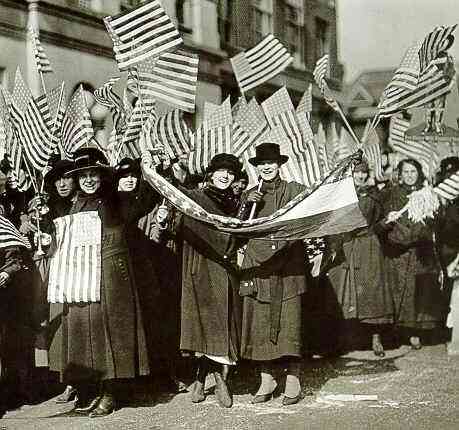
I’m sewing away furiously on an outfit for an event tomorrow. My head and feet accessories are complete, but I still need the important things like a skirt and blouse… So while I don’t have time for sewing pictures or completed garment pictures today, I thought I’d share a bit of visual research related to the event tomorrow. It’s up to you to imagine what sort of event I might be attending, and what sort of clothes I might be wearing…

USPS98STA083
Source
celebrating-19th-amendment1
Source
9541402866_850f31f67d_z
Source
Suffragists_Parade_Down_Fifth_Avenue,_1917
Suffragists “march in October 1917, displaying placards containing the signatures of over one million New York women demanding to vote.” Source

Knitting For Victory

My 1917 “Knit Sweater of Angorina” is finally complete! But, you’ll have to wait until my official HSF post to see it. In the meantime, I want to share a little bit of history that relates to knitting in WWI and, by extension, my new sweater.

WorldWarOneKnit07
World War I Red Cross poster encouraging knitting, ca. 1917

World War I started on July 28, 1914 and ended on November 11, 1918. The US entered the war on April 6, 1917. After the US joined the war, it didn’t take long before conditions in the trenches prompted the Red Cross to put out an urgent call for knitted goods for soldiers in the summer of 1917. Their immediate need was for one and a half million each of knitted wristlets, mufflers, sweaters, and pairs of socks. That’s a lot of knitting!

This section is quoted directly from historylink.org essay 5721:

The need for the socks was paramount: The trench warfare conditions under which the war was fought meant that soldiers spent weeks or months entrenched in wet and in winter freezing conditions.

For American soldiers in the trenches or on the march in France, warm socks made all the difference. The boots these soldiers wore (the 1917 Trench Boot) were made of heavy retanned cowhide with thick soles. Although in theory water-repellant, the boots ripped out at the seams fairly quickly. They had iron heels and five rows of hobnails (to prevent slipping) hammered into the soles. These hobnails conducted the cold from the frozen ground directly to the soldiers’ feet.

An improved version (1918) called the Pershing Boot added an extra sole and thus extra warmth, but a soldier could not bend his foot in the rigid boot and his feet remained cold, sore, and often wet. These boots were not insulated in any way, and soldiers took to wearing two pairs of thick wool sock. This required them to wear boots two sizes larger than their regular size. Allowing for wear and tear and the prudent practice of changing socks often in order to avoid contracting trench foot (a fungus), the need for a continuous supply of warm wool socks was endless.

As you would expect, not everyone could knit very well, so the quality of knitted goods being sent overseas varied, but a sock is a sock, even with dropped stitches and other mistakes, and it will still keep a foot warm! In support of the war effort, people began knitting everywhere: work, school, while on public transportation, at church… People who couldn’t knit were encouraged to buy yarn for those who could, and children were encouraged to do whatever they could to help their family members have time to knit. Personal knitting was looked down upon for being selfish, because it didn’t support the war effort or the soldiers.

This section is quoted directly from historylink.org essay 5721:

By mid-1918 the need for socks was so severe that the Red Cross begged knitters, “Don’t make sweaters … every pound of yarn that can be secured should be used for knitting socks” (quoted in MacDonald, 218). Some knitters conserved wool by using cotton yarn for the legs and wool for the feet. Wool was the best fiber for moisture absorption. Other knitters, stymied by the somewhat complicated mystique of turning the heel (i.e. knitting a heel flap and then picking up stitches along its sides to knit a gusset, forming the heel-shaped portion of the sock) began knitting heel-less tube socks. These drew praise from soldiers because they were more comfortable than socks with lumpy, poorly made heels.

The Seattle Red Cross operated a knitting machine that produced long knitted tubes. The tubes were cut into 27-inch lengths and the toes purled together by hand. “When the knitting machine is once ‘set up’ with gray yarn, it knits and knits and knits.” (The Seattle Times, December 2, 1917)

In September 1918, all American yarn retailers were ordered by the War Industries Board to turn over their stock of service yarn (any yarn in khaki, gray, heather, natural or white) to the Red Cross. For the next six weeks all yarn for war-effort knitting was available only through the Red Cross. This was done to ease the yarn shortage and to allow Red Cross knitting to continue uninterrupted. 

…The so-called War To End All Wars ended on November 11, 1918, when Germany surrendered. In the war’s final months, the American Red Cross turned its attention to the devastating 1918 influenza pandemic… Many [knitters] foreswore gray and khaki yarn for good, or so they thought. These same knitters would be the first to pick up their needles in December 1941, to once more “knit for victory.”

Quite an interesting bit of history, I think. Given this information, I can confidently say that my sweater would have been knit early in 1917, before the US joined the war. I encourage you to click through to historylink.org to read the entire article I’ve quoted here. It focuses on knitters in the Seattle, Washington area, but I’m sure reflects what other areas would have been like as well.

HSF #21: Trim For Evie In Time For A Ball

I’m taking a quick break from the 1950s adventure posts to insert my HSF #21 post into the mix. More 1950s coming soon!

It’s been on my sewing list for a few months to add a bit more trim to the sleeves of Evie, my most recent Civil War era dress, but I’ve been working on knitting my sweater and completing other projects, like my 1822 Walking Dress, so I hadn’t really been inspired to complete the trim. However, the Commonwealth Vintage Dancers were asked to run a ball as part of recent Civil War reenactments in Worcester, MA, and that gave me the perfect incentive to finish up trimming Evie! She also happens to be green, so this is my entry for the HSF Challenge #21: Green.

Oh yes, I forgot I had some other minor changes to make to Evie since I last wore her in March as well. Boring things, like changing out the boning at center back, and enlarging the armsceye a bit under the arm, and adding hooks and bars to connect the bodice to the skirt. I got all those things done, too, though they don’t get their own photographs. I really like the added trim. It gives the bodice a little bit more interest and helps balance out the immense skirt.

IMG_4987 - Version 2
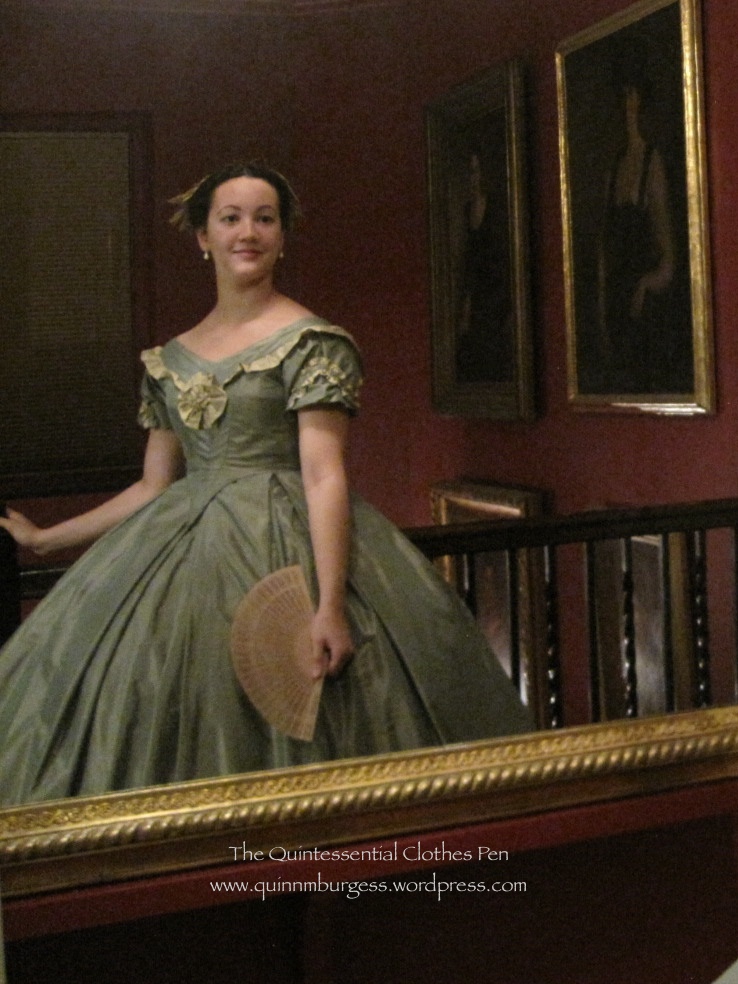
Here is Evie, with her new sleeve trim.
IMG_4988
Another view. The sleeve trim is a smaller scale version of the trim on the skirt.
IMG_4988 - Version 2
A cropped version of the picture above. I can’t decide which way I like it better, so I’m including both.
IMG_0138
And here is what the bodice of Evie looked like before I added the sleeve trim.

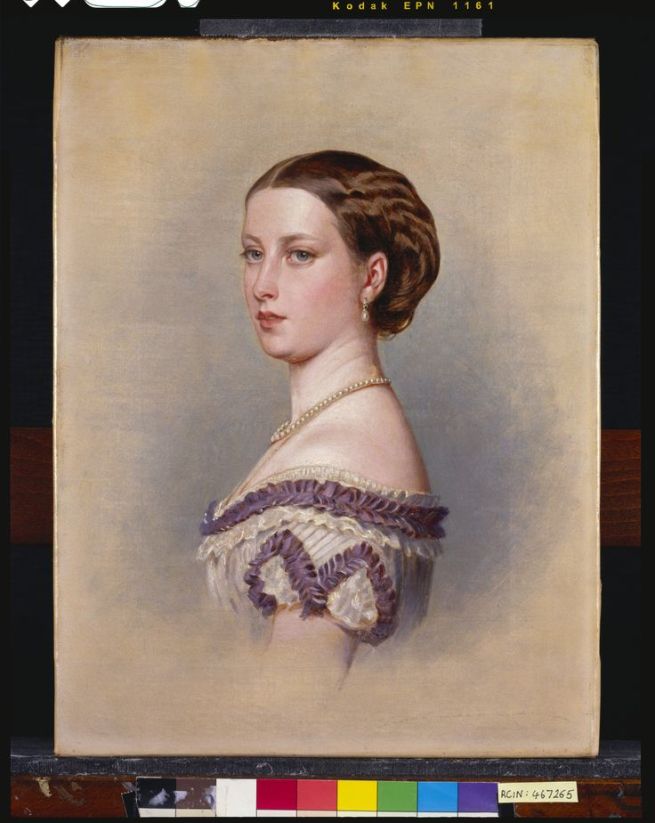
Most of the trim on this dress is based on two images I discussed in this previous post: a fashion plate from 1864 and a costume made by Tirelli Costumi. The sleeve trim is based off of yet a third inspiration source: the painting, below, of Princess Helena in the Royal Collection. It’s perfect that it’s from 1864, just like my inspiration fashion plate. It’s even better that it echoes the bertha trim I already had and the zig zag on my skirt.

b5e346822ebb9589dd64aca144479f35
This is a copy by William Corden (1819-1900) of the portrait of Princess Helena by Albert Graefle (RCIN 403988). The original was painted for Princess Helena as a birthday present for Queen Victoria on 24 May 1864. Princess Helena (1846-1923), nicknamed Lenchen, was the fifth child and third daughter of Queen Victoria and Prince Albert. She was lively, outspoken and something of a tomboy. In 1866, two years after this portrait was painted, she married Prince Christian of Schleswig Holstein and in 1916 they celebrated their Golden Wedding anniversary; she was the only child of Queen Victoria to do so. Queen Victoria recorded in her Journal that ‘Lenchen’s picture by Graefle, is extremely good & pretty’.

Now, the facts:

Fabric: small bits of leftover gold silk shantung and green silk taffeta from the construction of the dress.

Pattern: none.

Year: 1864.

Notions: only thread.

How historically accurate?: Well, shantung is not accurate, but silk is (and this doesn’t look very shantung-y). I give this trim a 98% on accuracy.

Hours to complete: 4? All hand sewn.
First worn: With the new trim, on October 11, to a Civil War ball.

Total cost: $0, because it’s leftovers!

Now for the bonus part of this post where I include pictures from the Civil War ball.

IMG_4993
The entrance to the building had these fabulous doors.
IMG_4991
Each section looked like this.
IMG_4941
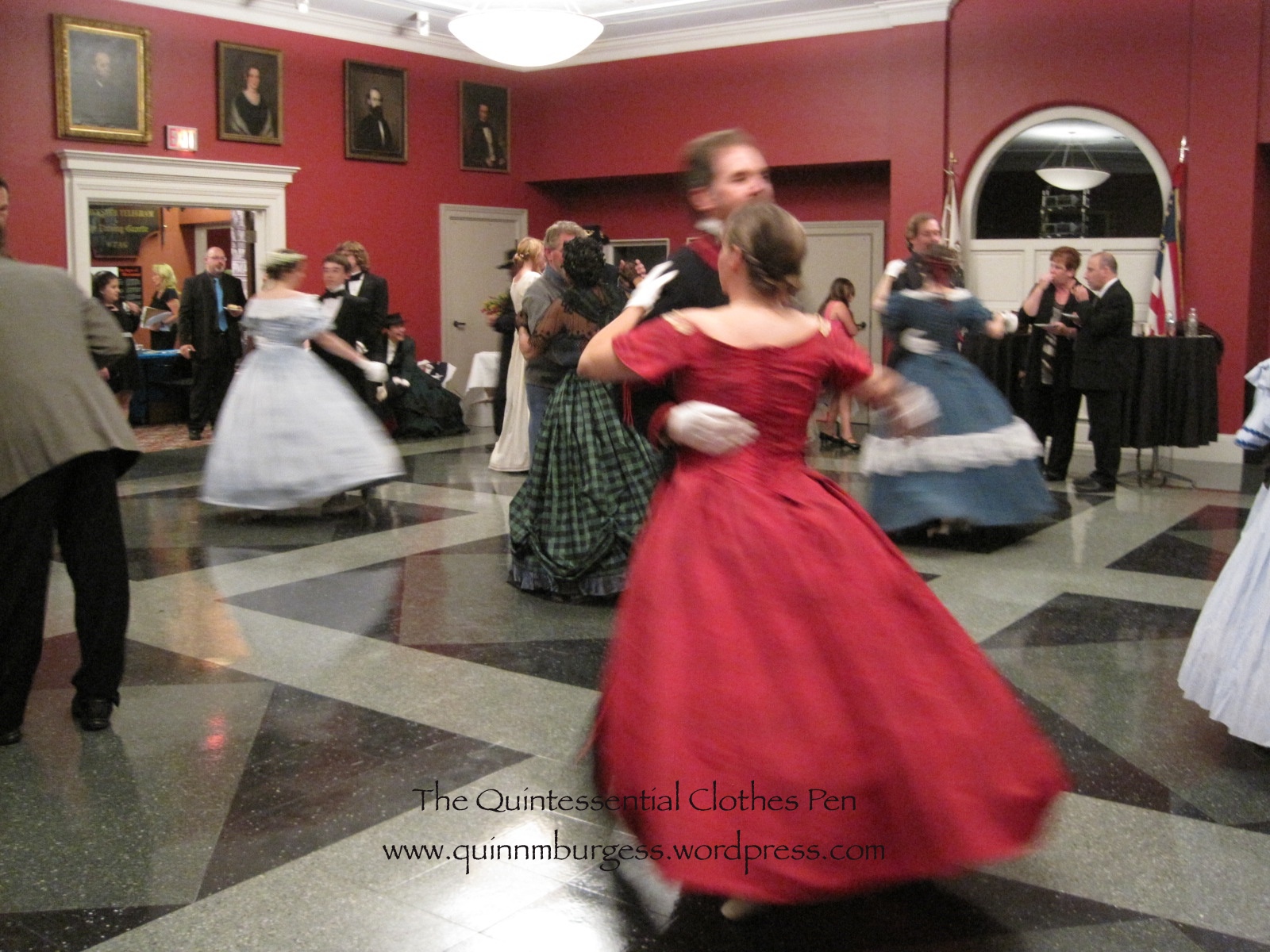
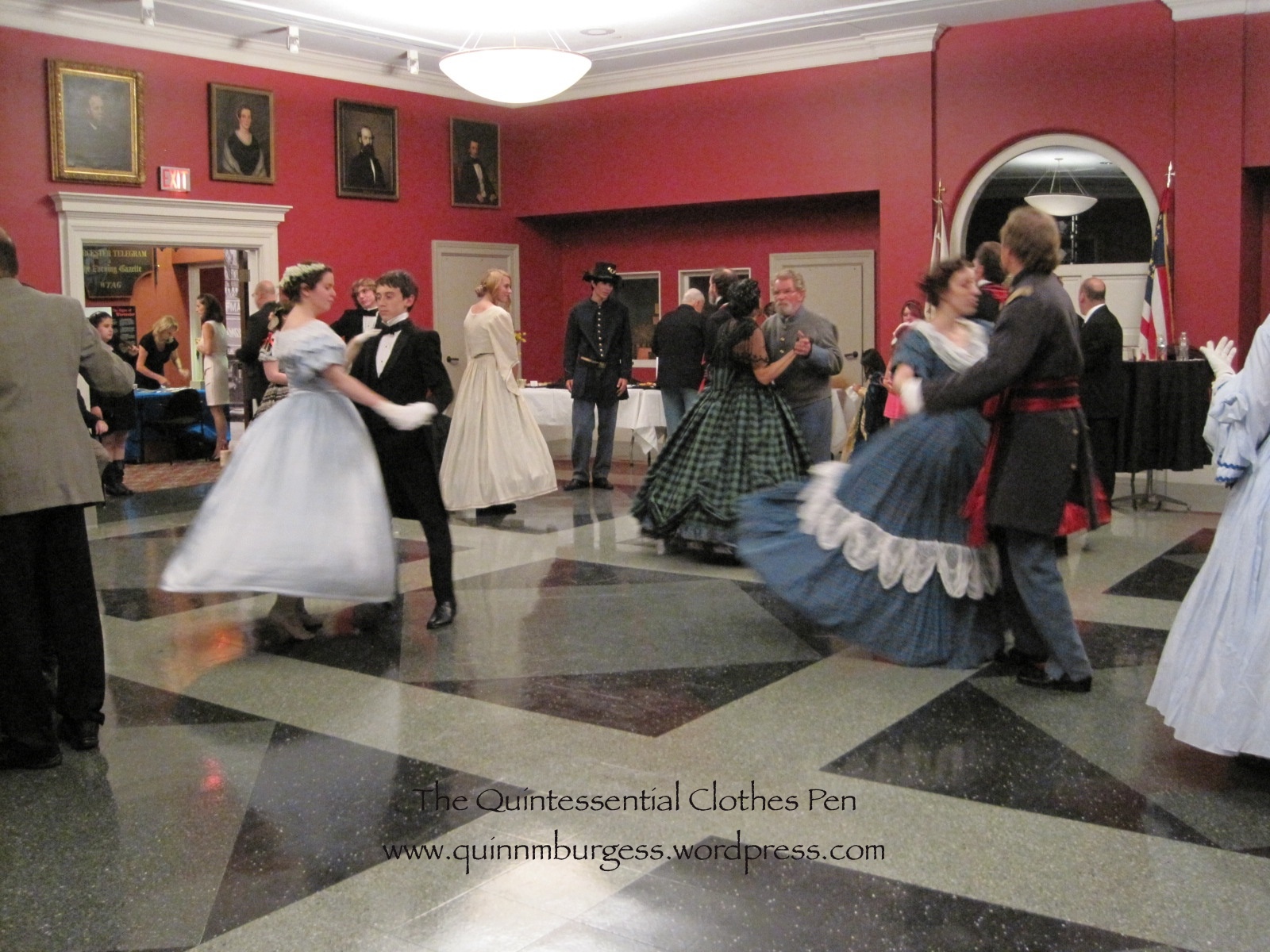
Dancing a waltz.
IMG_4934
Swinging skirts are fun!
IMG_4943
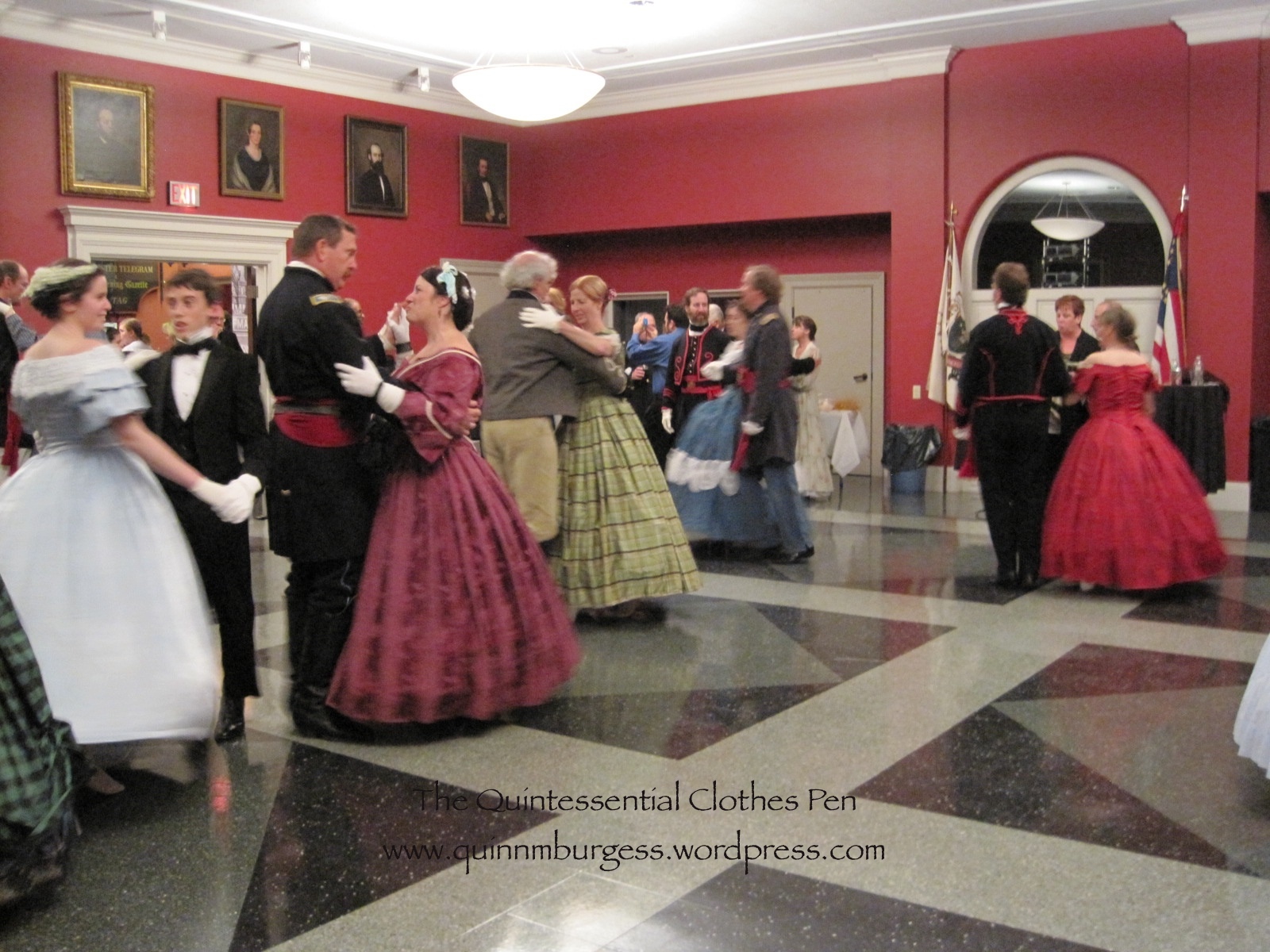
People looked very nice.
IMG_4946
And it was nice to see unfamiliar faces and meet new people.
IMG_4947
There was a constant swishing sound of skirts brushing against one another.
IMG_4961
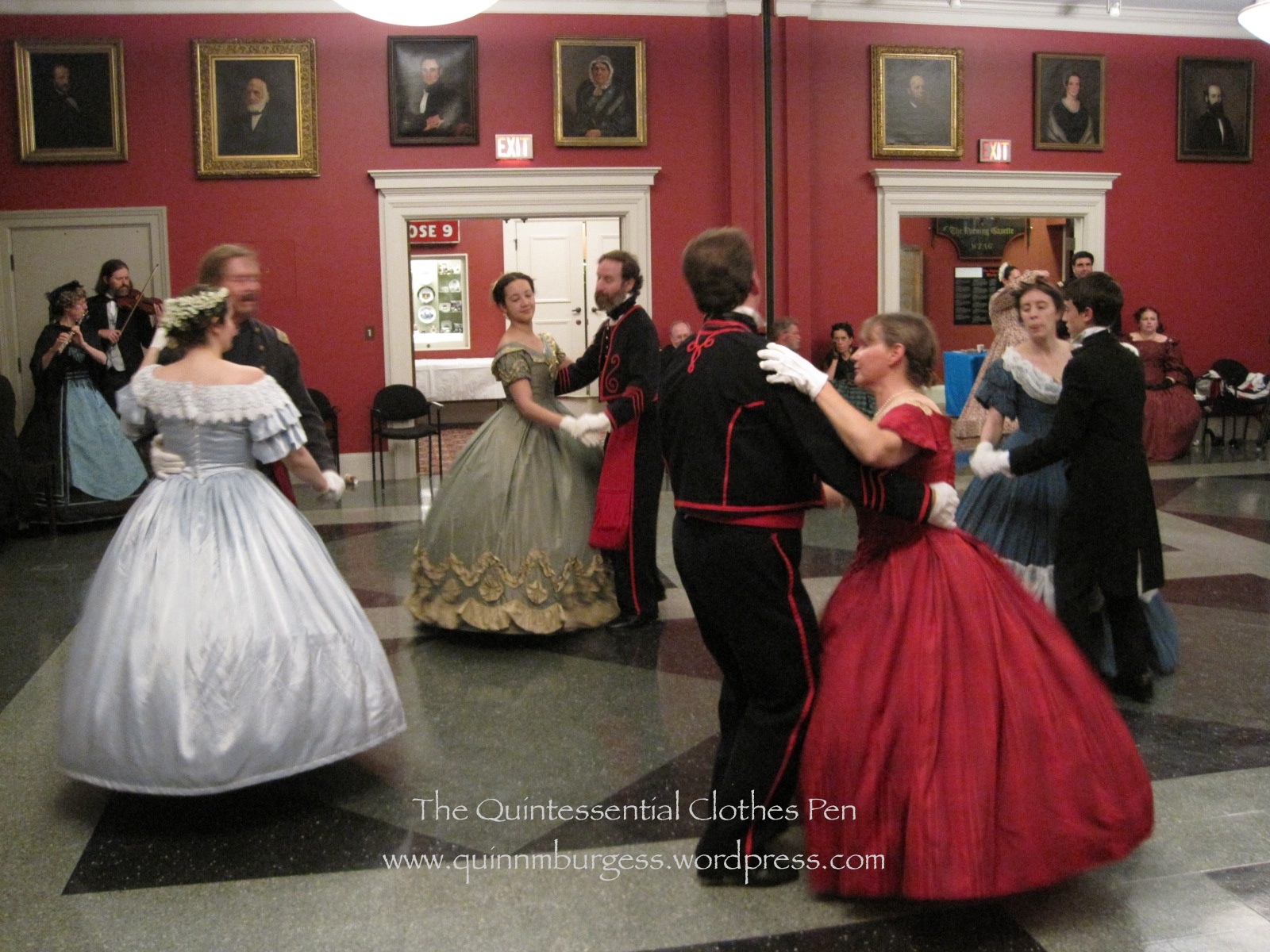
The Commonwealth Vintage Dancers interspersed short performances throughout the evening.
IMG_4964
This is the Triplet Galop Quadrille.
IMG_4955
The ball room had large, dark, seriously-faced portraits around the perimeter. I’m not sure they approved of all the dancing!
IMG_4954
There were also Civil War era flags that the reenactors had brought to help decorate the room. And here’s a full length shot of Evie with her new sleeve trim.

I had a lovely time. This ball was nicely different than our usual evening balls with all the new faces. My senses were most struck by the abundance of rather more sturdy and thick wools worn by the military gentlemen than I am used to feeling at most balls, when there are more gentlemen in smoother wool tailcoats. The occasional feel of the thicker wool on my left arm was a tangible, and rather transporting, connection to the past. It seems quite likely that at a ball held during the Civil War a lady would have felt more thick wool on uniformed gentlemen than she might have felt at a ball pre or post war when there would have been more civilian tailcoats at a ball.

Have I inspired you to want to learn 1860s dancing and attend a ball? I’ll end with this small encouragement for your attendance at the Commonwealth Vintage Dancers’ next Civil War events. The Commonwealth Vintage Dancers have a Civil War Dance Weekend coming up in November, 2013. It’s super reasonably priced and includes lots of dance classes, two balls, and a German. There’s no experience necessary. If you’re at all interested and in the New England area you should check it out, because we’re doing lots of awesome Civil War dancing in 2014 as well (they are listed at the bottom of the Civil War Dance Weekend link, above), and why not get started learning or brushing up sooner rather than later? I’d love to see you there!

1812 Guerriere Weekend Part II: The USS Constitution

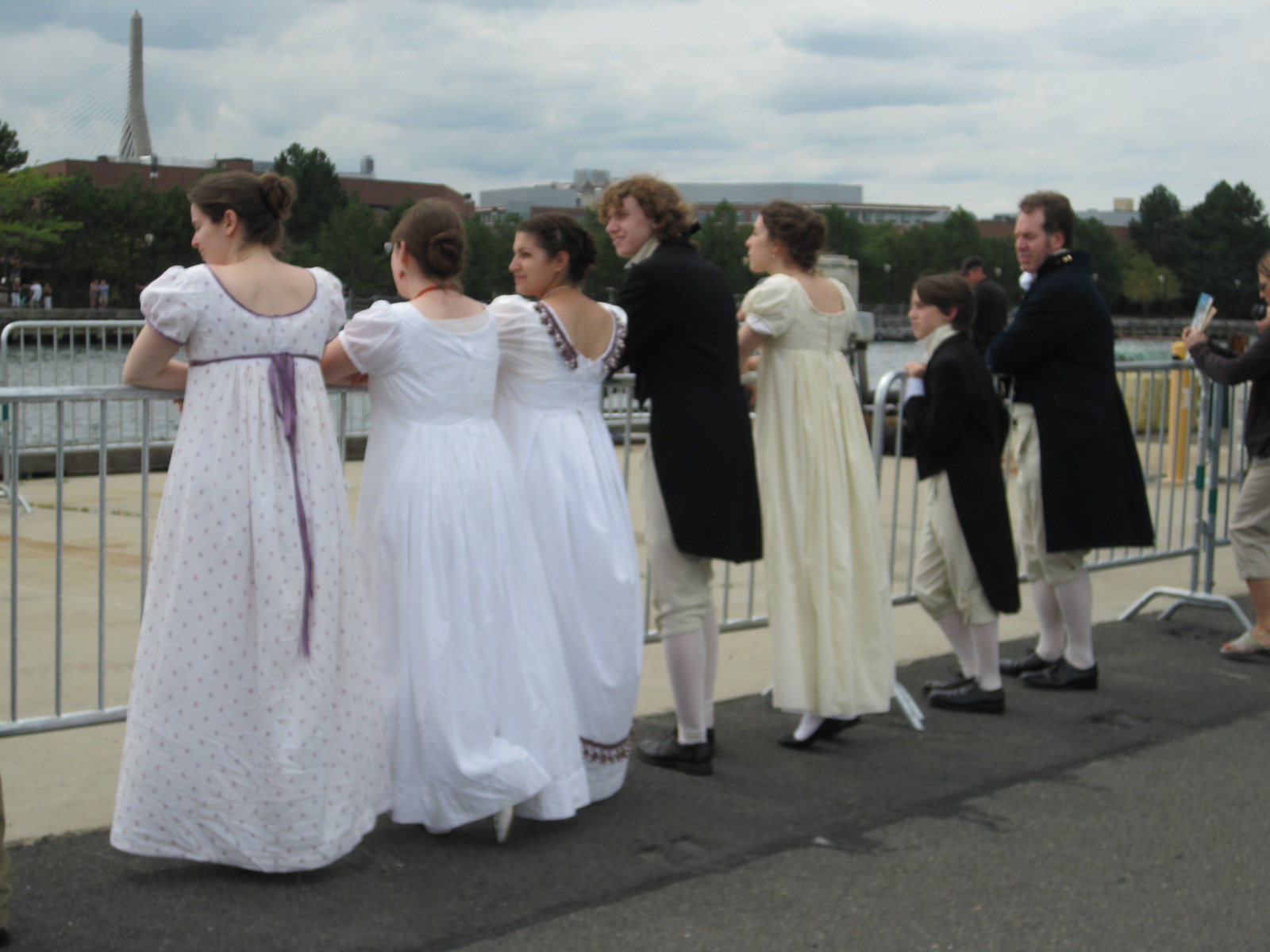
In this second installment of the Guerriere weekend, we’ll look at pictures relating to the USS Constitution and the USS Constitution Museum. As I mentioned in my first post about the weekend, I sorted the pictures  into loose categories to break them up for blog posting purposes. These pictures are all from Sunday, when the USS Constitution was tugged out of Boston harbor and sailed out in the Atlantic under her own power (this is one of the first times this has happened in about the last century! She is tugged and turned around every year or so, I think, but she doesn’t sail under her own power at those times.). From the Charlestown Navy Yard we could see the tugging, but unfortunately the open Atlantic was too far away for us to see her sailing under her own power. Despite that sad fact, it was still exciting to see her move!

Waiting for the Constitution to get under way. If you look really closely you can see her name poking out from behind our heads.
There she is, being tugged out of Boston Harbor.
Watching her being tugged away.
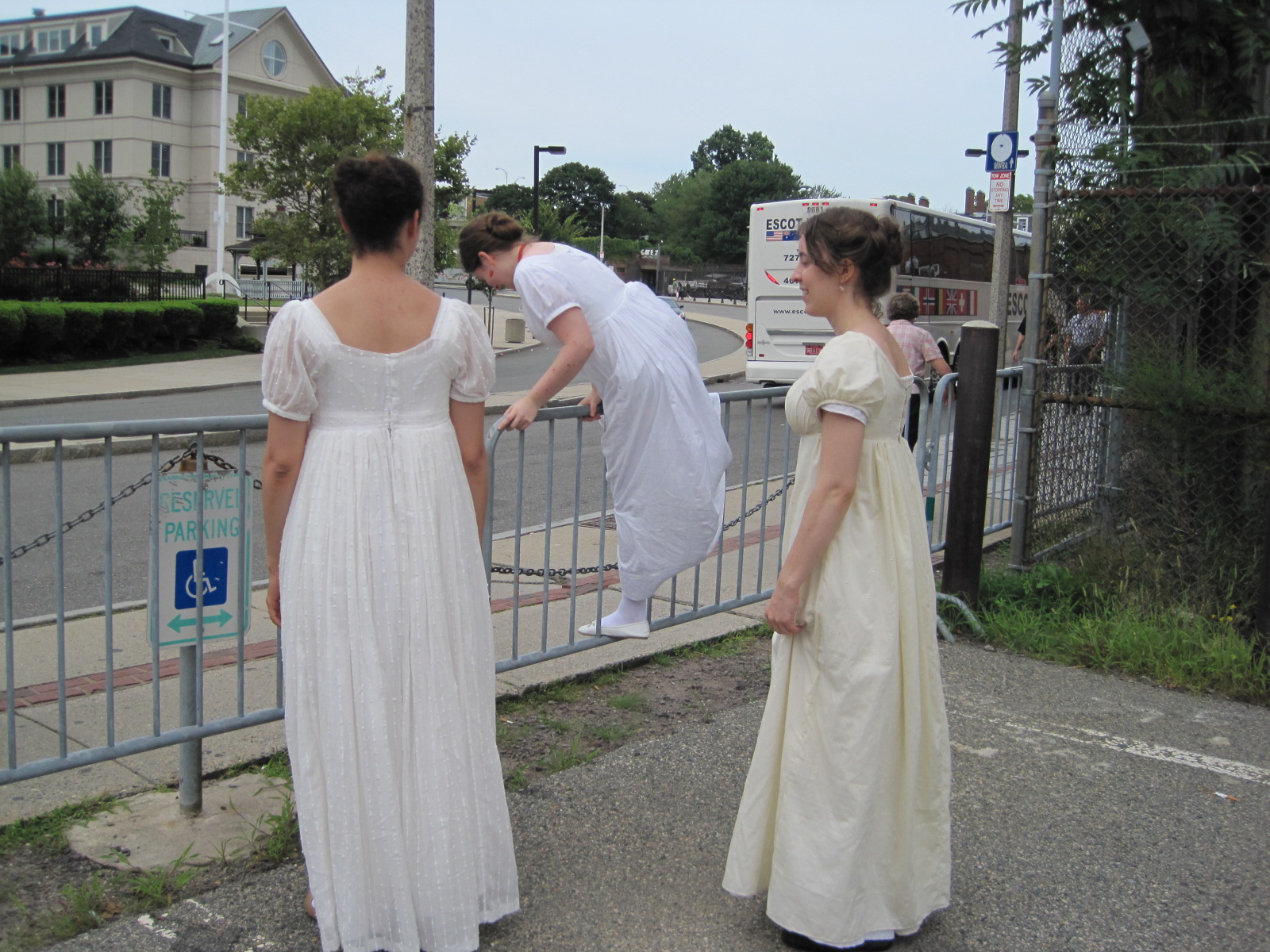
We wanted to be on the opposite side of the wharf for the Constitution’s return, so a few of us ran around (it was maybe 1/4 of a mile)… Along the way was a deserted parking lot we could either go around, or through… Of course we went through, which involved climbing/jumping/falling over the metal barricades… You should know that going around would have been an extra 90 feet or so of walking (ie. not much)…
But we made it without injuries! Here is the Constitution being tug pushed back into alignment to return to her docking area. You can see the modern marines furling the sails, so clearly, she actually did use them.
The four adventurous ladies who surmounted barricades to get great Constitution shots.
As she slowly glided into place we took the opportunity to wave at the reenactors and modern marines aboard. Some of them even waved back!
See all the people on the deck? Some of them, with the not modern shaped hats are the reenactors. It’s really cool that they were able to sail on the Constitution!
On our way back to join our friends we had time to stop at this large anchor.
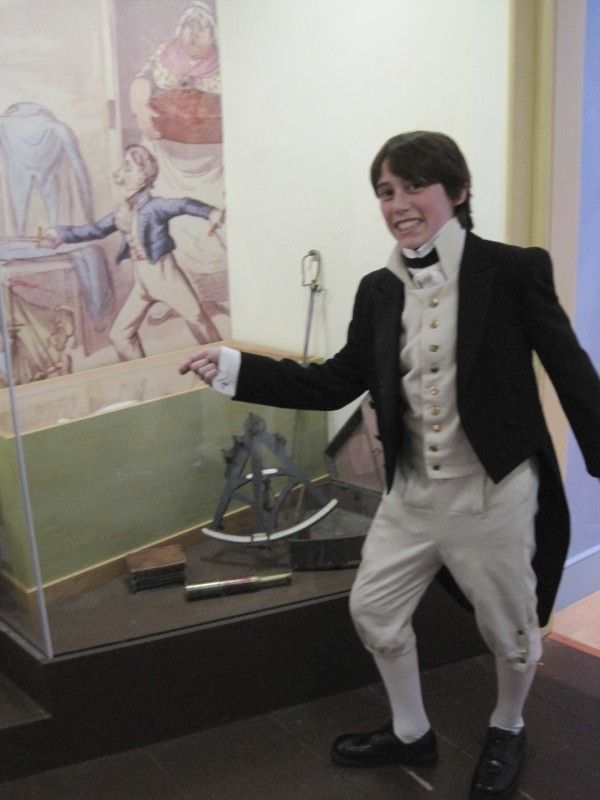
In the museum. The banner states the whole purpose of the weekend’s celebrations.
He’s not a cardboard cut out…
Upstairs at the museum is a hand’s on walk through being aboard the Constitution in 1812. At this point, you get to hoist Billy the Goat aboard for food stores (he’s stuffed and makes loud goat sounds as you hoist him!).
There were lots of paintings and informational signs to imitate.
Then there’s this great spot, where you can stand on a rigging rope and furl a sail. This rope is only about 6″ off the ground, but obviously the real sails are much higher up.
Yup. Here’s the real Constitution, with real modern marines in the rigging.
There are other interactive things as well. Here, I am scrubbing the deck!
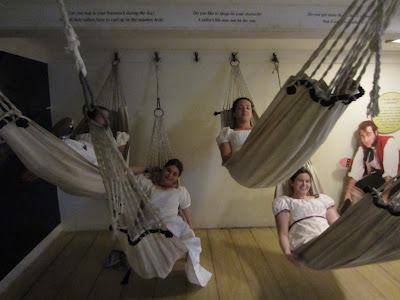
In this room, you can climb into hammocks. The floor is super squishy, in case you fall out! The hammocks were actually pretty comfortable. And you see the guy in the corner? He’s another cardboard cut out.

Fun day! It’s so neat to be a part of interesting and exciting things like the sailing of the Constitution. The next post about the weekend is gong to be wonderfully picturesque photos of us Lounging in the Commandant’s House! Stay tuned!

Project Journal: 1780s Ensemble Part II: More Research

As I mentioned in a recent post, I have decided to attend 2 events this month that will require clothing from the period 1775-1799 which I do not currently own and from a period I am not intimately familiar with. Thus I began this project in a flurry of research. After thinking of the popular styles, Robe a l’Francaise, Robe a l’Anglaise, Robe a la Polonaise, and Skirt and Jacket combination, I am left with one more possibility that was particularly popular in the late 1780s and 1790s: the Chemise Dress or Chemise de la Reine.

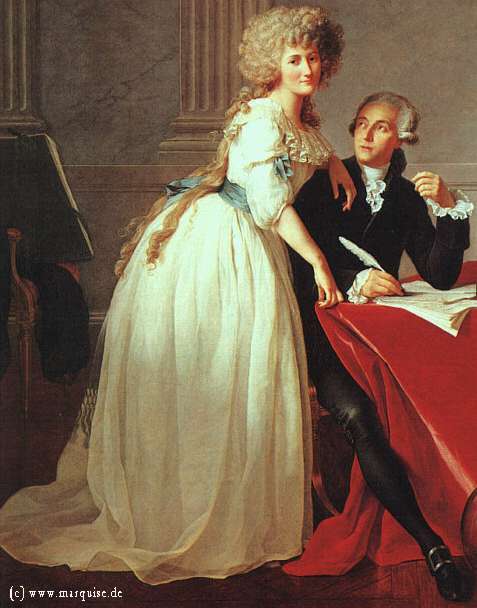
Les Lavoisiers by Jacques Louis David, 1788

The Chemise Dress is a descendant of the style of dress first worn by Marie Antoinette, called the Chemise de la Reine. This quote does a fantastic job of relating the social values surrounding this style in a quite amusing fashion! Aren’t you as amused as I am by this quote?

1784. When down dances my ribbon white, but so bepuckered and plaited, I could not tell what to make of her: so turning about, I cried, ‘Hey, Sally, my dear, what new frolic is this? It is like none of the gowns you used to wear.’ ‘No, my dear,’ crieth she, ‘it is no gown, it is the chemise de la rein’. ‘My dear,’ replied I, hurt at this gibberish, which I was half ashamed to own I did not understand; ‘What is it? You know I am not like you, master of French; let us have the name of your new dress in downright English.’  ‘Why then,’ said she, ‘if you must have it, it is the queen’ shift.’ Mercy on me, thought I, what will the world come to, when an oilman’s wife comes down to serve in the shop, not only in her own shift, but in that of a queen. (From Lady’s Magazine: Printed in The Cut of Women’s Clothes: 1600-1930 by Norah Waugh)

Well, at first I was thinking “Ah! This is the dress for me! It is fairly simple (and therefore quick) and looks very elegant.” But then I thought about three big deterrents: 1-the similarity of a simple white gathered dress to the clothing from the turn of the 19th century, when afternoon dresses were white and somewhat similar in character and style, 2-the amount of extra fabric needed for petticoats to achieve the soft draping of the skirt and 3-the two events I plan to wear this to (#1: a vintage ball, for which an elegant train would be entirely impractical and #2: an American Revolution colonial fair, for which I would be cold, have a train that would just get dirty, and a style of dress that is about 15-20 years in the future). Those arguments eliminated this style as a possibility, but I wanted to share it with you anyway, because I think it is lovely.

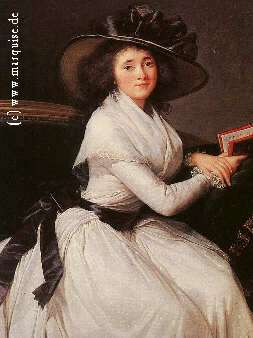
Here are some more examples of Chemise Dresses in various other paintings. (Also, take a look at the hats, aren’t they fabulous? They remind me of the scale of hats in the early 20th century. Can you see the resemblance?)

Comtesse de La Chatre by Elisabeth Vigee-Lebrun, 1789
Mme Seriziat by David, 1795

National Museum of American History First Ladies Exhibition behind-the scenes video

This video is a behind-the-scences look at the creation of the First Ladies Exhibition at the Smithsonian National Museum of American History.

It’s a really neat video! You get to see some insight into how the dresses and other pieces are displayed, how the dress forms that display them are created, as well as some great pictures of First Ladies and some very lovely dresses!