

Textiles and the natural world are inextricably linked. Until very recently, all textiles were made from flora (linen, raime, hemp) or fauna (wool, silk, fur), and dyed with flora and fauna. Flora and fauna also influenced the decoration of textiles, from Elizabethan floral embroidery, to Regency beetle-wing dresses, to Edwardian bird-trimmed hats. Celebrate the natural world (hopefully without killing any birds) with a flora and/or fauna inspired garment.
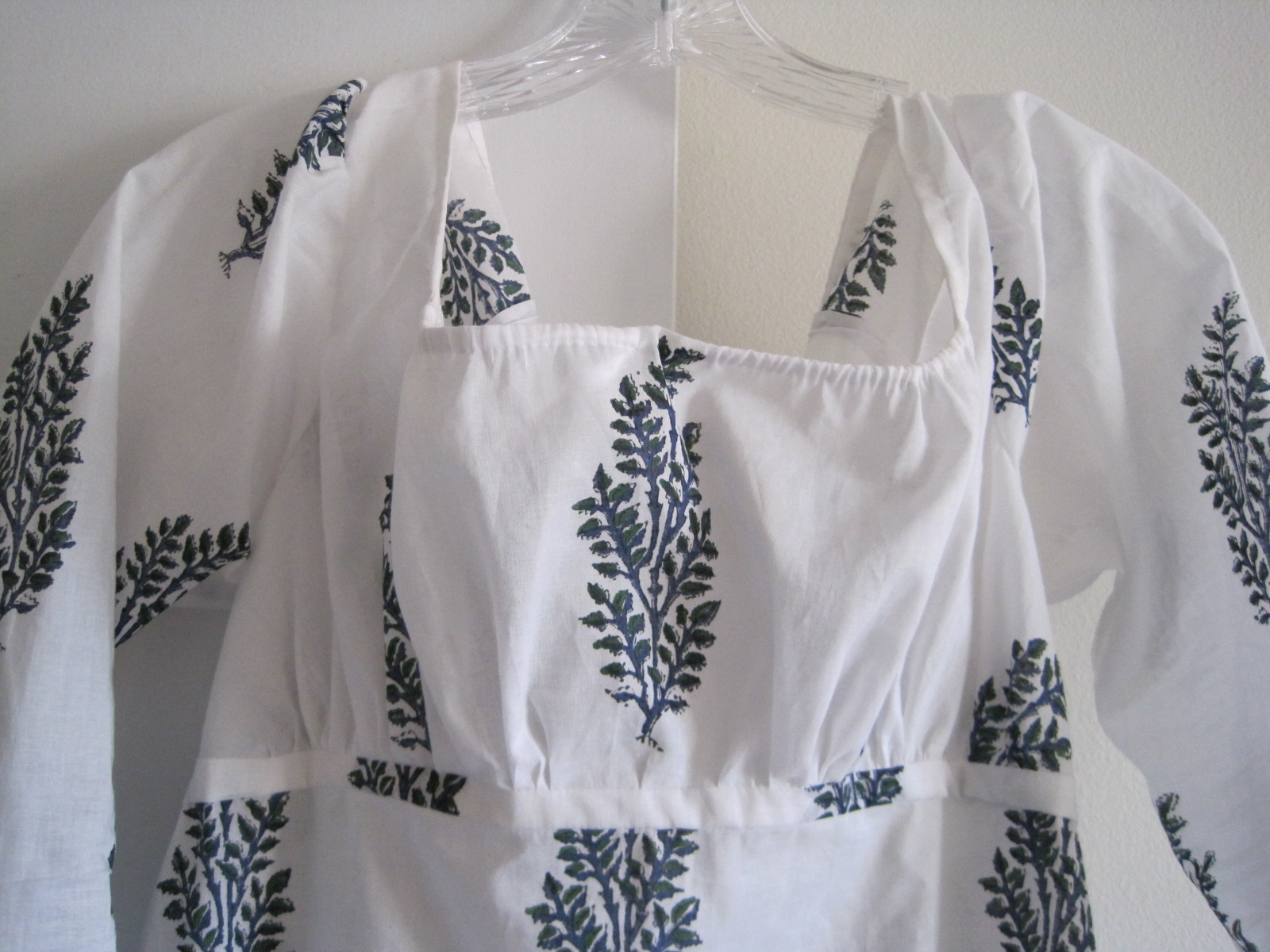
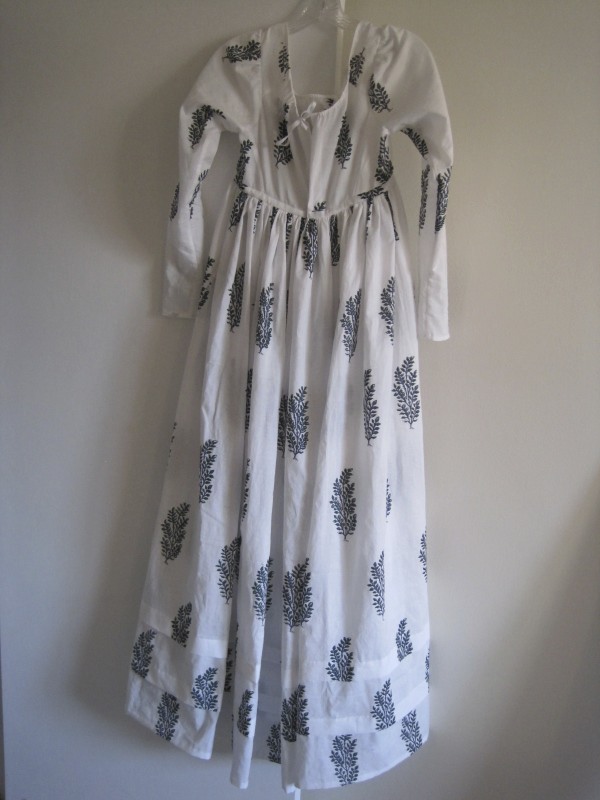
This is the description of the HSF Challenge #9: Flora and Fauna. I’m super excited about my garment: the all new 1815 Tree Gown I recently showed a sneak peak of as well as photos of in action during archery and outdoor lounging! The archery and outdoor lounging, in particular, include great pictures of the dress, so if you haven’t seen them yet, you really should go check them out!
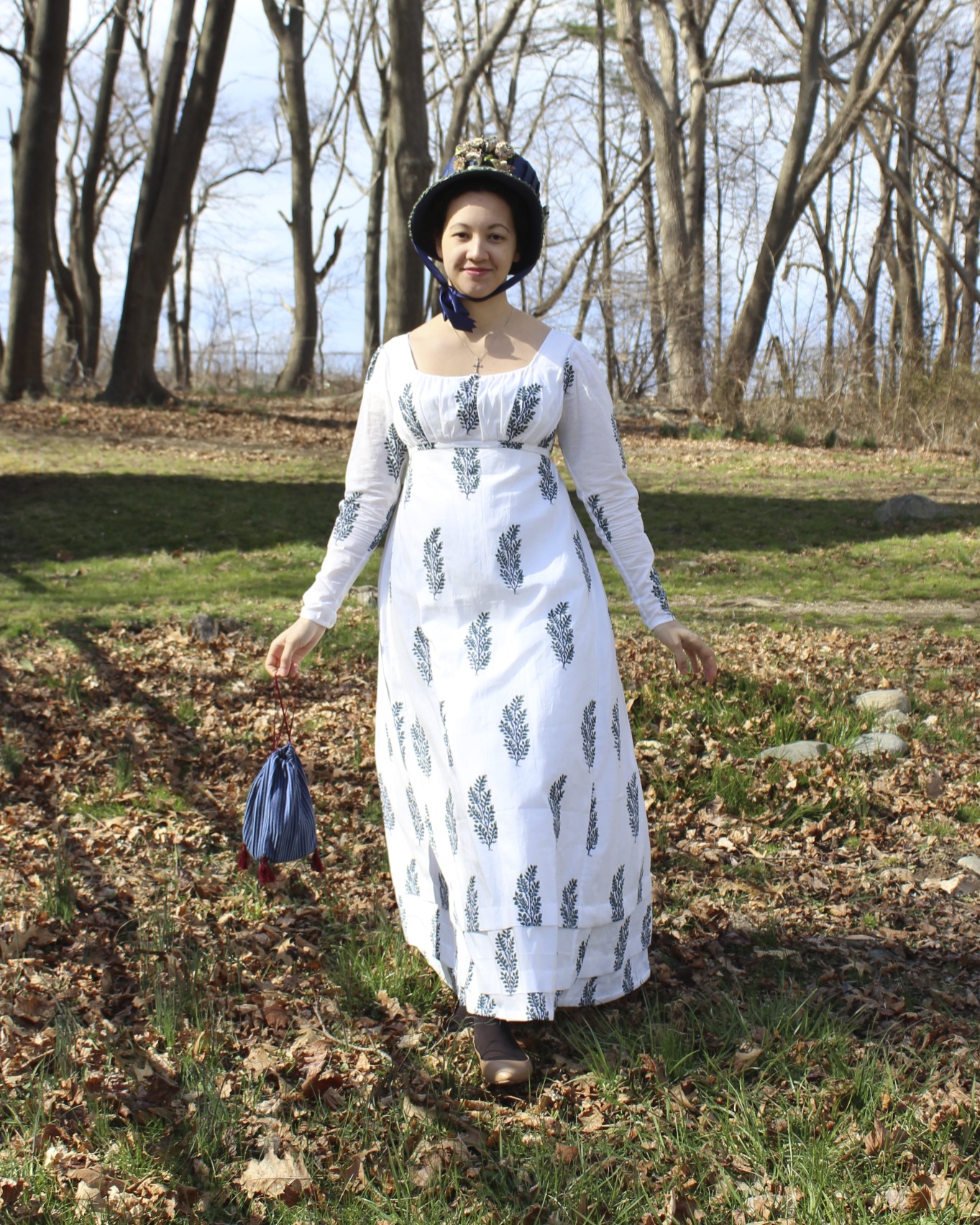
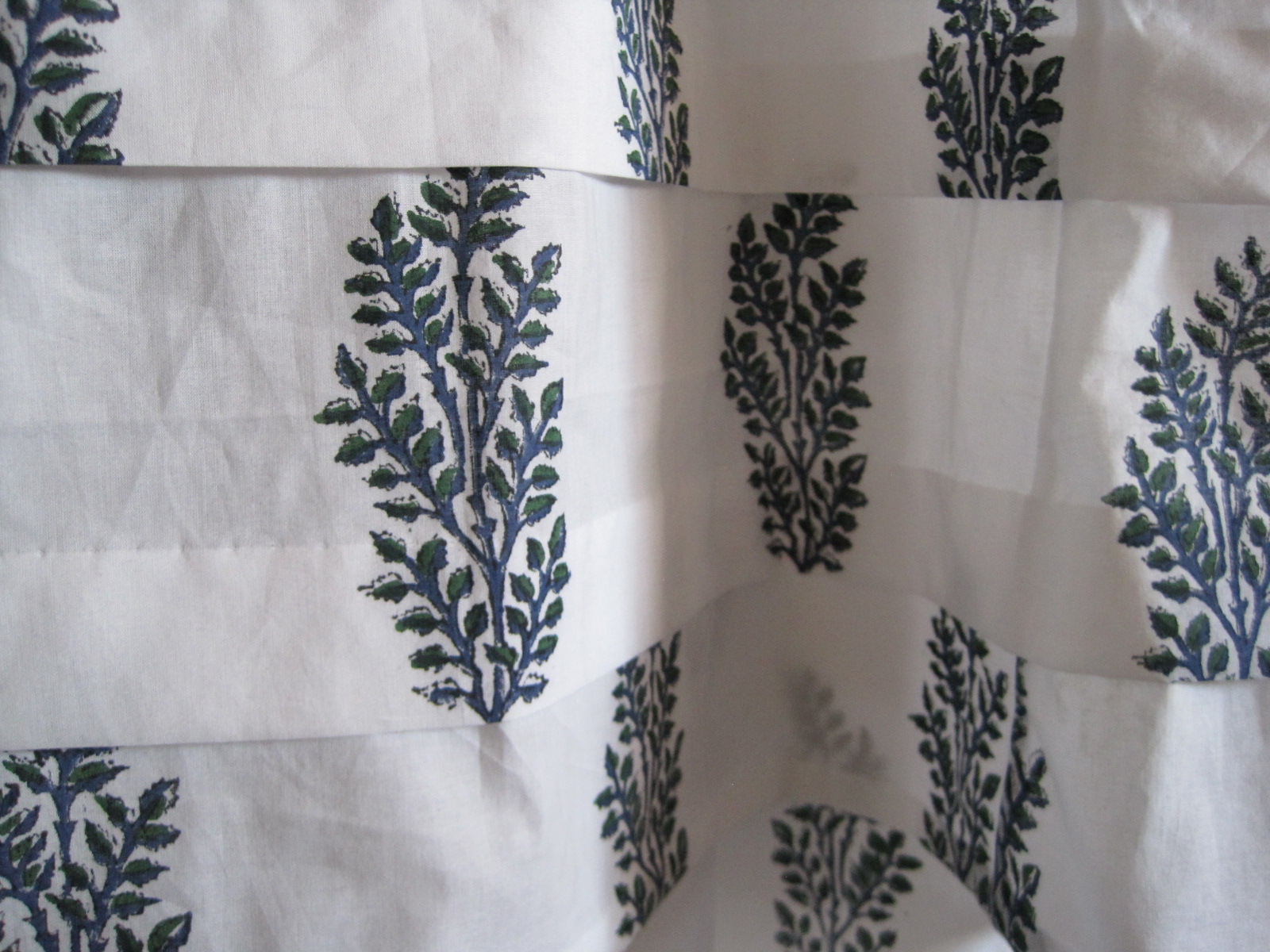
I love love love this dress! It’s super comfy and super cute. You might remember that I don’t own many printed or patterned clothes (modern or historic), but I branched out (haha, unintentional bad pun) with this one and I love the results! There’s something so refreshing about the classic white Regency dress that has been shaken up a bit with a bold print. Also, from the HSF perspective, it is made from cotton and printed with a flora inspired motifs! Double duty challenge fulfillment right there.
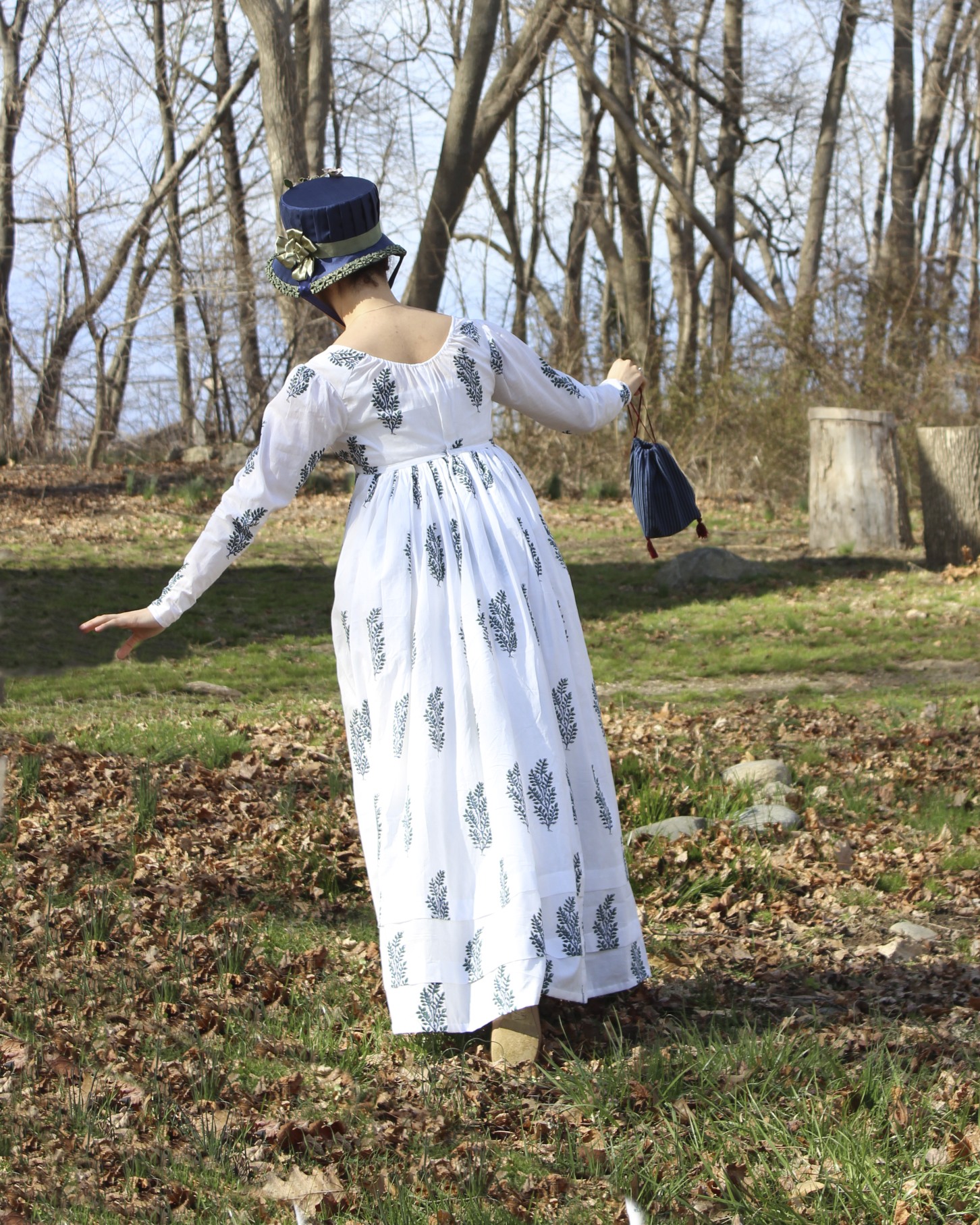
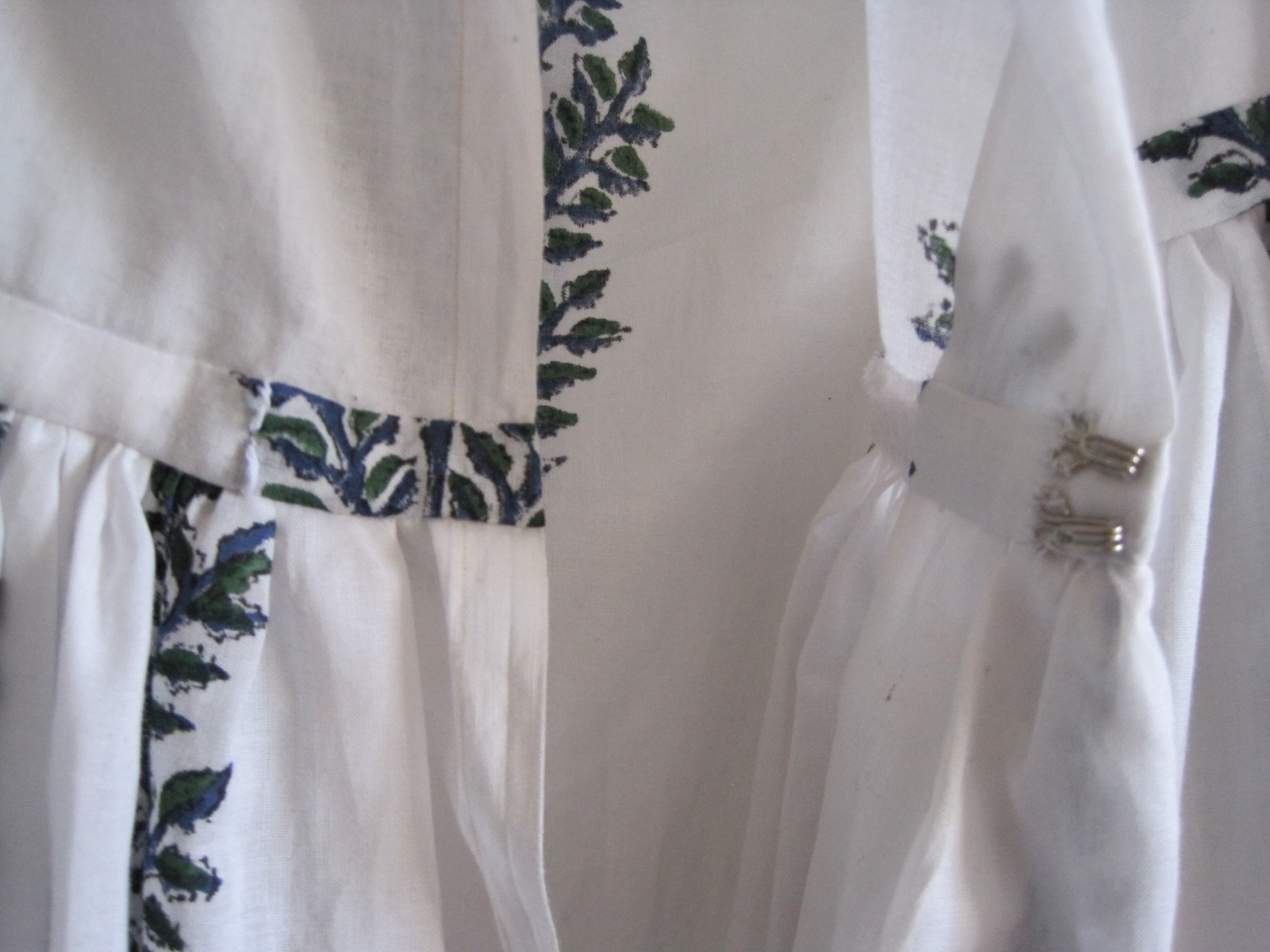
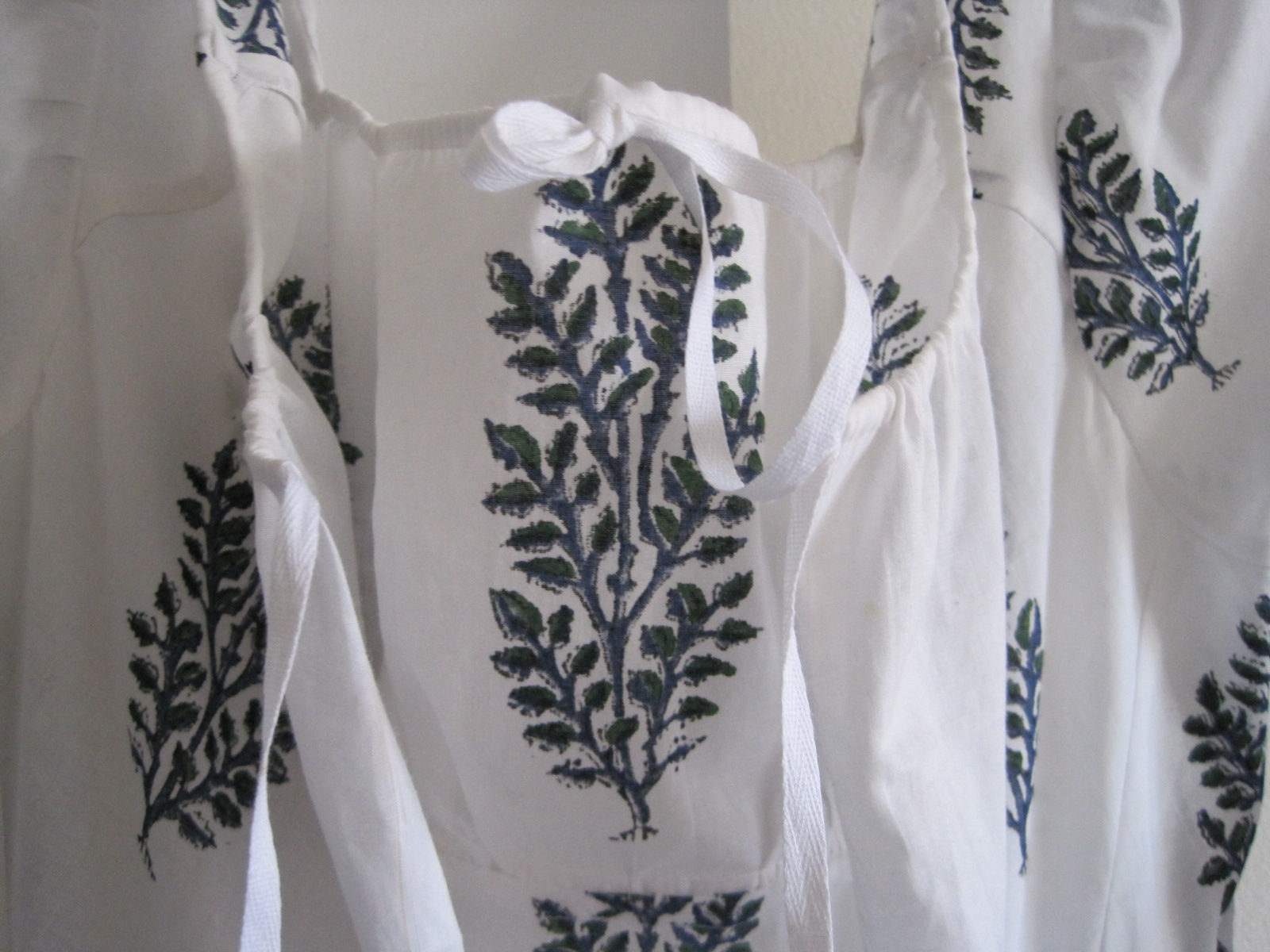
There are pictures of the interior construction of this dress in this previous post. To summarize, the dress is machine sewn on the inside seams and hand finished. Most of the interior seams are french seams. The dress closes at the back with hooks at the waist and a drawstring at the back neck. The front neck has a drawstring as well.
More facts:
Fabric: almost 5 yds of hand block printed sheer cotton (made in India and sold on eBay via Heritage Trading).
Pattern: loosely based on my other Regency gown patterns for my basic measurements, but adapted to resemble my main inspiration dress at the Met.
Year: 1815.
Notions: two hooks, about 1 yd of 1/4″ cotton twill tape, thread.
How historically accurate?: I give it 95% rating. Really, the only thing keeping it from “as accurate as can be with modern materials” is that it is machine stitched on the inside seams. It is hand printed fabric, sewn in historic ways, and hand finished.
Hours to complete: 16? Total? That’s not bad for me!
First worn: Regency Dance Weekend, mid-April 2013.
Total cost: $25 for the fabric (it’s almost doubled in price since I bought mine!), maybe another $1 for the notions?
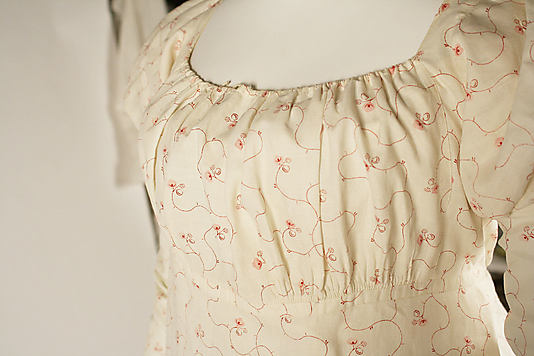
Now for inspiration. The dress is most closely based off of this dress at the Met. I changed some things, but I think the resemblance is quite clear.
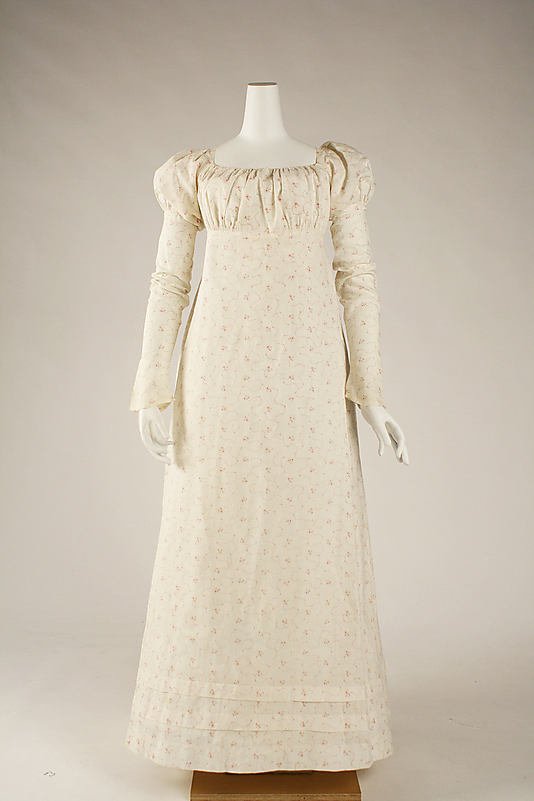
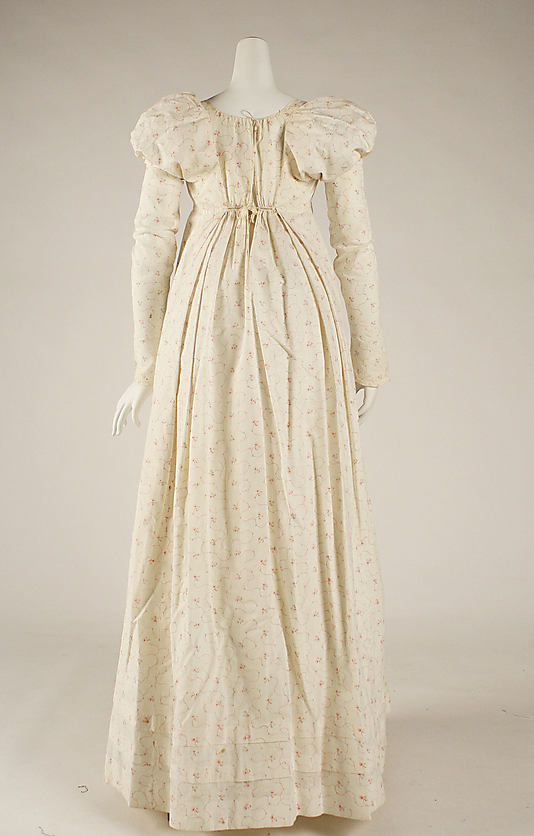
These two dresses were other more minor inspiration for the Tree Gown: 1812 yellow silk wedding dress and early 19th century slip, mostly for their square necks and back tie closures.
Eee! All I can say in conclusion is how much I love my Tree Gown!!!




















 The Quintessential Clothes Pen