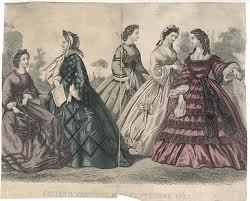
A waltzing Zouave?

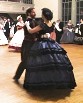
In my last post (Returning Heroes 1860s Ball 2011) I mentioned that one of my favorite moments of the night was dancing a waltz with a Zouave. First of all, what is a Zouave? Secondly, why would I be dancing a waltz with one at at 1860s ball???
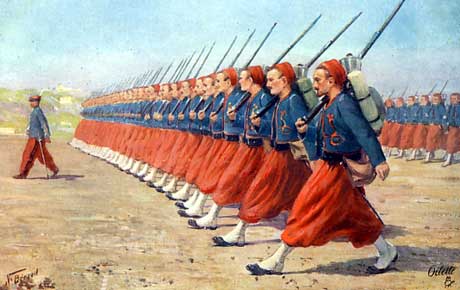
In the 1830s, the French military fighting in North Africa incorporated a tribe of fierce fighters into their ranks. These original soliders were renowned for their skills. In fact, in 1852 the French created three units of Zouaves to be entirely of Frenchmen. These French Zouaves achieved legendary status for themselves during the Crimean War (1854-1855). More detailed information about their involvement can be found in this history of Zouaves (this site also has some great pictures of Zouave regiments). The French Zouaves were quite inspirational to American forces during the American Civil War: both the Confederate and Union armies formed Zouave regiments who wore imitations of the French uniforms.
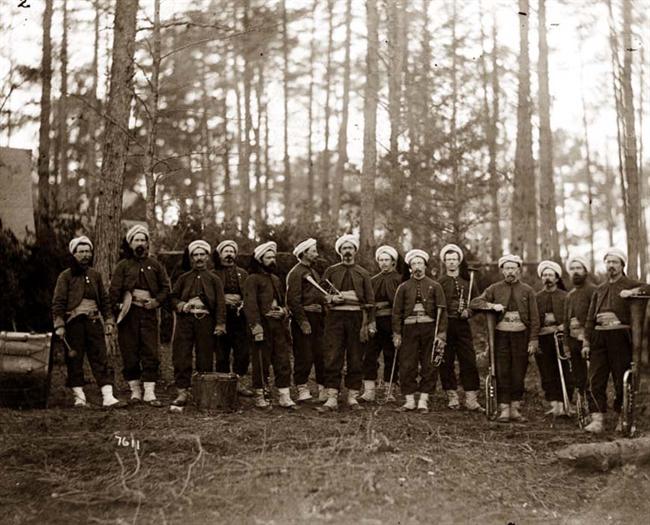
114th Pennsylvania Infantry (1861-1865)
Zouave Music Sheet 1850-1865

Now we know what a Zouave is. Why would I be dancing with one? Well, the idea of the Returning Heroes Ball is that “Gentlemen in uniforms of both sides of that great conflict are welcome.” So it is perfectly reasonable for a Zouave be dancing alongside the formally clothed men at the ball. Fun!
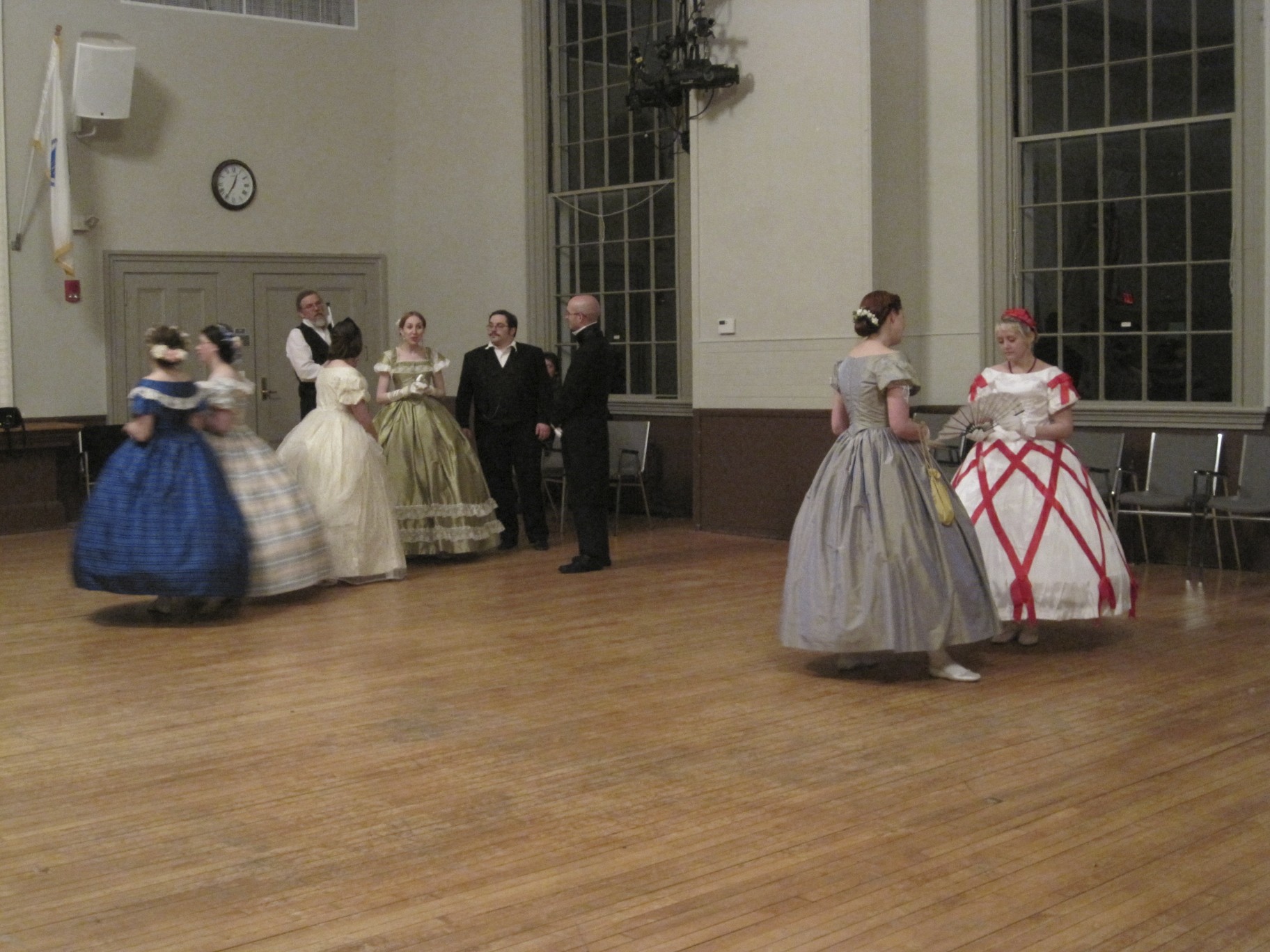
Returning Heroes 1860s Ball 2011

I was reminiscing recently and realized that I neglected to post about the Returning Heroes Ball hosted by the Commonwealth Vintage Dancers in March 2011! I had such a fantastic evening that I decided that late is better than never!

I have been dreaming of being in a room full of people all wearing crinolines and period menswear for years: the 1860s are my most favorite period! The night started out with all the ladies helping each other get dressed: lacing corsets, donning hoops and petticoats, fluffing skirts,  and securing bodices. Of course, it does take some time to get dressed, so while we were dressing the band was warming up and the men were standing around looking important and discussing… well, who knows what?

We were supposed to be using dance cards, but I was disappointed in that part of my dream as we wound up not using the dance cards that had been prepared. But that didn’t dampen my spirits for more than a minute or two, because the band started playing and we began to dance!

I have two favorite moments from the night: 1- dancing the Grand March in which every lady was wearing hoops (there was a lot of friction as well all spiraled around each other), the best part of which was joining in lines and progressing down the hall to “Dixie” and 2- dancing a waltz with a Zouave (see picture left).

Here’s a few more pictures (I should have taken more, but I was busy dancing!). I’ll just end with this video from the Returning Heroes Ball in 2007. It starts with a Grand March and starting at about 60 seconds “Dixie” is playing! Enjoy!

“Belle” of the ball (Fezziwig’s Ball 2010)

My first large sewing project for myself was, fittingly, an 1860s gown nick-named “Belle.” (This is the full story of Belle.) Owning a gown like this was a childhood fantasy for me, ever since my first days of loving Gone With The Wind. I finished construction of this gown about four years ago and since then I’ve lovingly stored it and its accompanying undergarments and hoops in my closet, alongside all my modern clothes.

I’ve been hoping for an opportunity to wear Belle for the last four years, not only to give a purpose to the dress I so lovingly created, but also to see how it feels to wear it for a hours at a time. I just recently attended an event called Fezziwig’s Ball, which was presented by the Commonwealth Vintage Dancers in Salem, Massachusetts. I was able to sing Christmas carols, dance, and have a real experience wearing Belle–and I was in the company of others who not only appreciated my hard work, but who had also worked hard to create and wear their own 1860s dresses!

I learned a vast amount of small details about the practicalities (or hindrances) of wearing 1860s clothing. For example, I understand now why vintage dances from this period turn constantly in the same direction: because your hoops gain so much momentum that they can only sustain fast, continuous movement in one direction, not changing directions. That particular sensation was just not as clear when I was practicing dancing in modern pants or knee length skirts. Also, I have  much clearer idea of why women would faint so often. Imagine dancing fast for four minutes in modern clothes, but then imagine doing the same amount of movement while laced into a corset! I felt faint after four minutes of fast dancing, and my corset wasn’t laced nearly as tightly as ladies would have been laced in the 1860s.

I had so much fun learning first hand and am quite sure I have more lessons in store for me in the future! I’m eagerly awaiting the next 1860s themed ball to be presented in March 2011 by the Commonwealth Vintage Dancers, the Returning Heroes Ball, a specifically 1860s Grand Ball.

My favorite period-the 1860s

Hoop skirts and crinolines make me so excited I get the wiggles. I was in ninth grade the first time I read Gone With The Wind. Scarlett O’Hara, while being a debatably lovable character in my mind, has inspired my absolute love of the 1860s, crinolines, hoops, and costume history ever since that first time I read the book. It only took once.

Years later, I am fascinated by costume, material, and social history. I get excited about the entire 19th century–but the only period that really gives me the wiggles remains the 1860s. There’s just something about women resembling giant moving cupcakes that is fascinating and inspiring.

There is something very dreamy about imagining the world these huge constructions moved through. The world had to adapt to these gowns: chairs for ladies had no arms and doors were wider to accommodate their skirts. Can you imagine wearing clothing five feet across? That’s two feet too wide to fit through a modern door! How does a person cope with that all day every day? Sometimes I can envision it and sometimes it just seems impossible. But these questions just remind me that THIS is why the 1860s are particularly fascinating to me.

Gone With The Wind is definitely a controversial story. I found this report to be an interesting and factual discussion of its merits and faults. It clearly states why it is such a classic story and how it glosses over reality. This blog also has an interesting post about Gone With The Wind, discussing if it is a “great American novel.”

As a side note, I love both the book and movie versions of Gone With The Wind. While both are moving, sweeping epics, the book has much more depth and character exploration than the movie. Thus, I encourage you to read Gone With The Wind for yourself and to be inspired by history and by skirts with a circumference of 124″!