The 14 hour Regency dress (Sense and Sensibility Regency Ball 2011)

I’d decided months ago to attend  the Dancing with the Dashwoods (Jane Austen period) Ball recently hosted by the Commonwealth Vintage Dancers; however, I was in a sticky spot about what to wear! I did not have a dress appropriate to the period of this ball and I really needed to focus on my tailoring project… what to do?!?
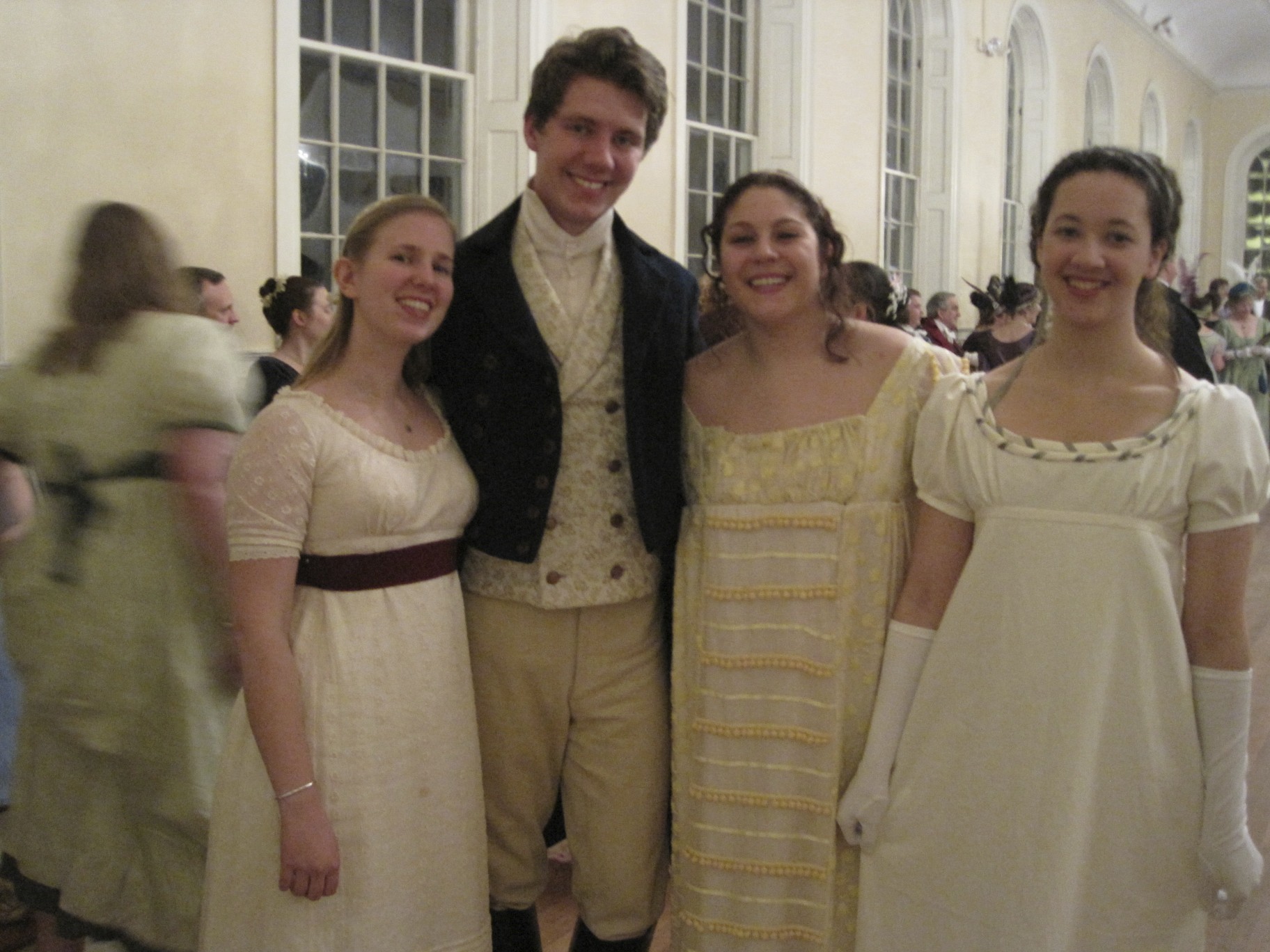
Well, I decided to spend just one day making a cotton Regency dress. I quickly adapted a pattern from Norah Waugh’s The Cut of Women’s Clothes: 1600-1930 to my size and decided to forgo the mockup step. Cutting out the fabric is my least favorite part of making garments, so I tried to make that part go as quickly as possible.

In an effort to simplify things, I included two petticoat layers in the dress itself and decided not to worry about finishing my seams on the inside. The bodice also has two extra layers inside of it to keep it opaque. Each piece (of three layers) was treated as one piece when I went to sew it.

All in all, the basic seams went quickly. What slowed me down and took about a third of my time on the dress were the finishing steps of completing the neck trim and putting closures on the back. The trim took a fair amount of time to pin, stitch, and thread through the ribbon loops, and the hook and thread loop closures took time because it was getting late at that point…

Fast-forward to the ball! I had the good fortune to be able to bring along friends as well! It was crowded but super fun to dance in period costume and a period hall! Enjoy the photos!

Project Journal: Victorian Women’s Tailoring Part III: Mockups

I reached a point where all my patterns were complete! The next step was to make a mock-up, or toile, of each garment. My mock-ups are made out of muslin: their goal is to determine what changes I need to make to my patterns so that the garments will fit well before I cut and sew the garments out of my fashion fabrics.

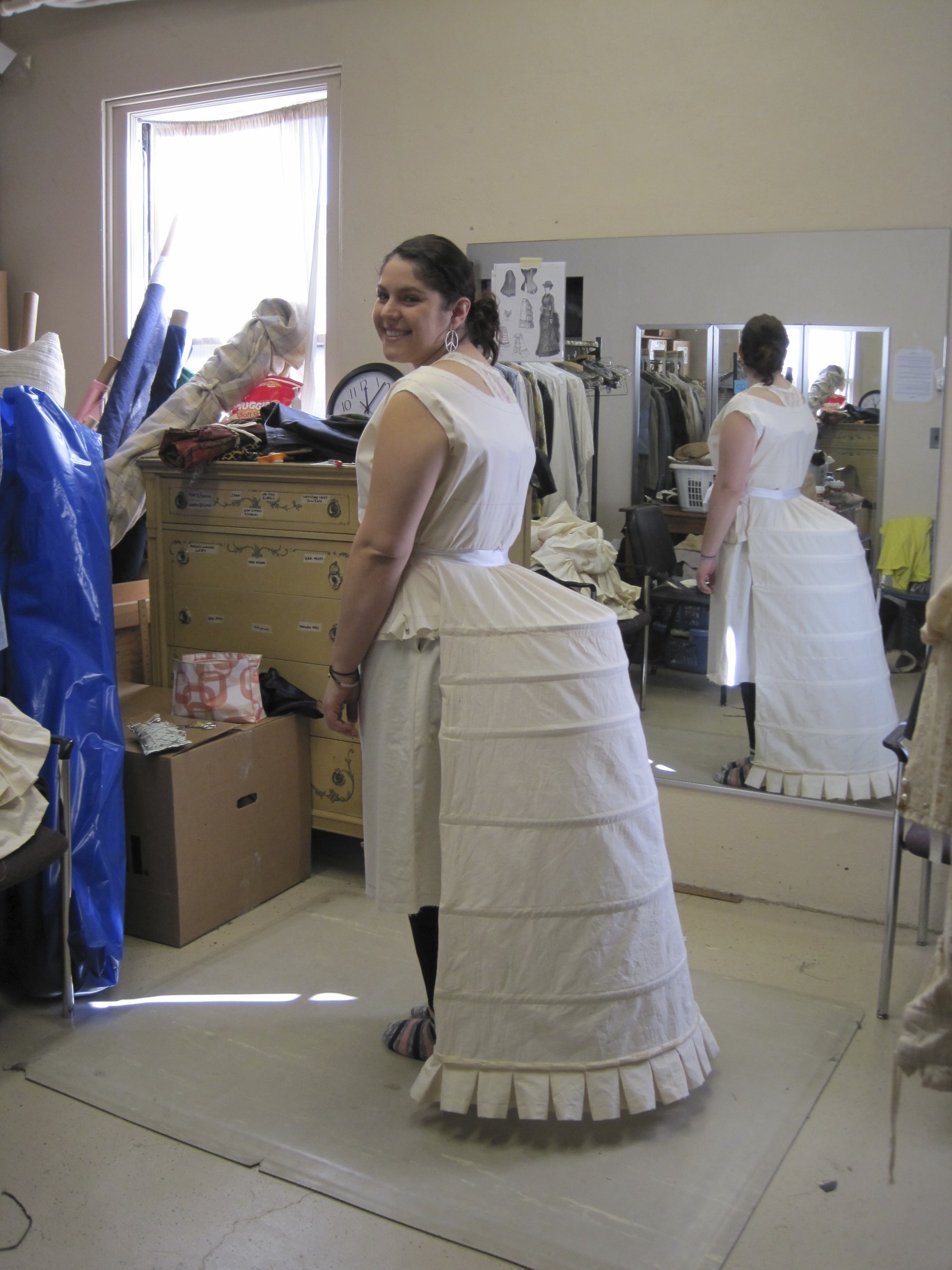
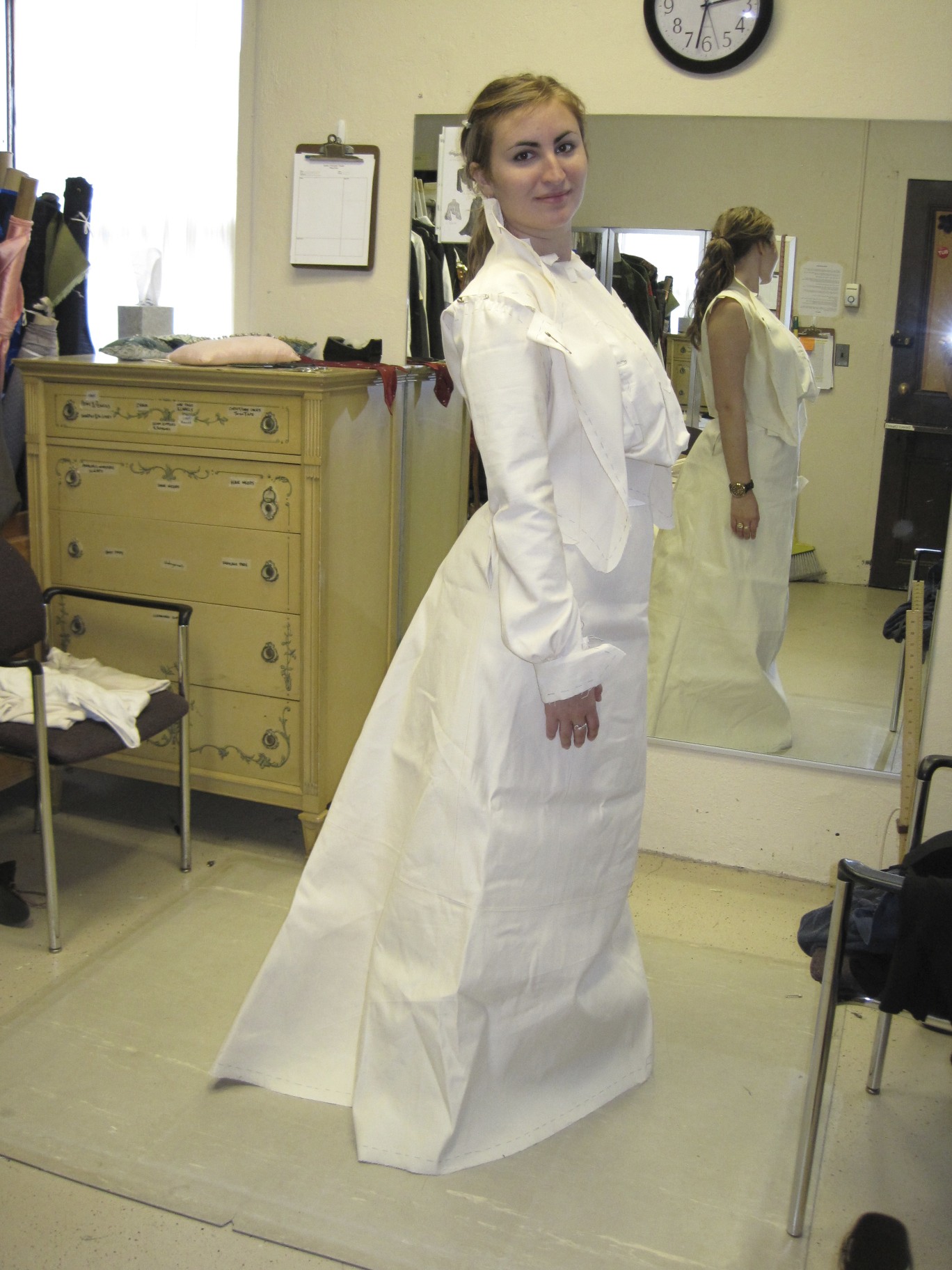
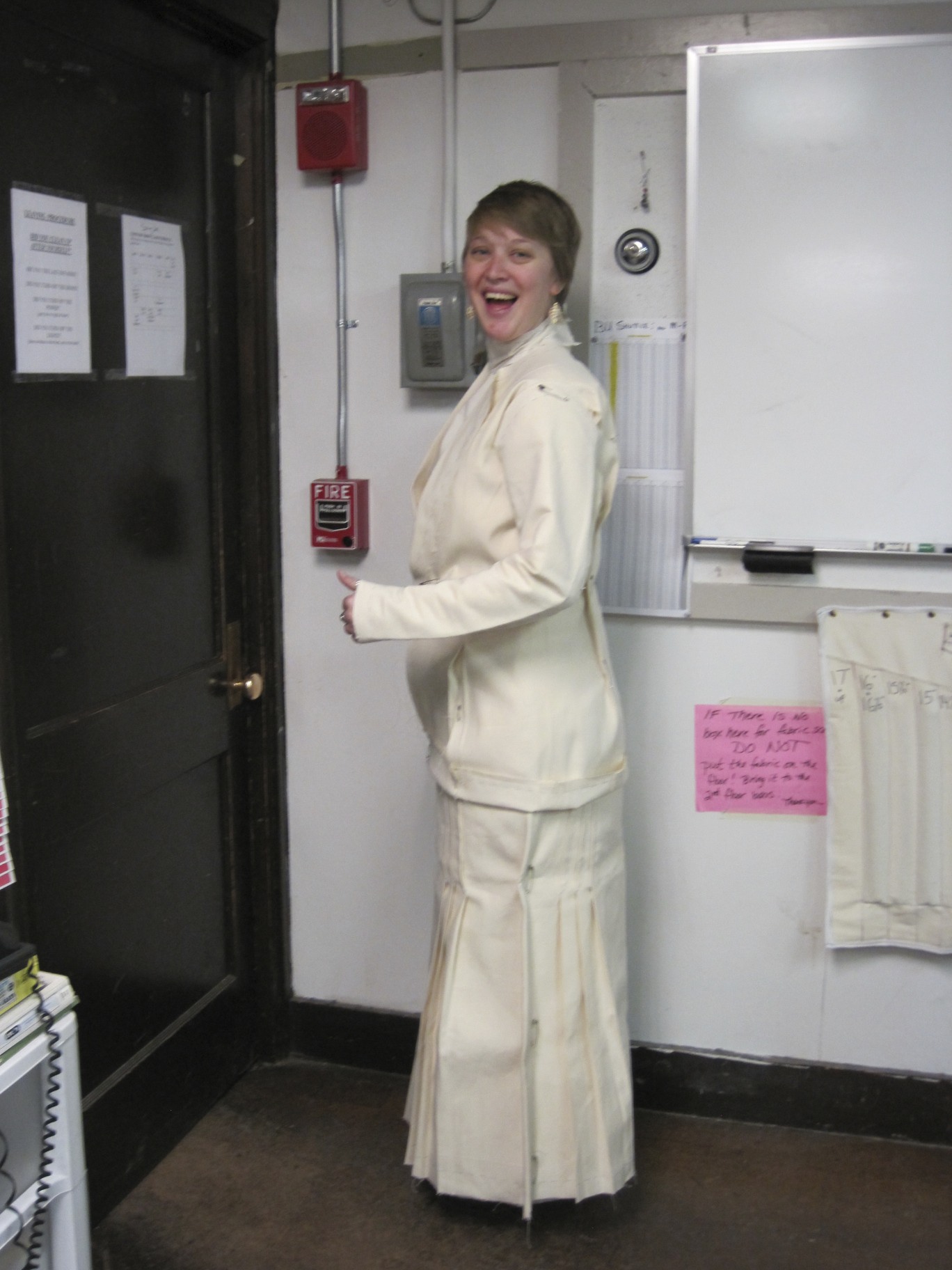
By eliminating major fit issues in my mock-ups I am able to achieve a better fit in my final garments with fewer alterations. In these photos you can see the pins that mark the areas of the garments that I need to go back and change on my patterns so that the fashion fabric garments will fit better.

Look 1: 1883. In my brain this is the “bustle dress.”

1883 mockups--including the bustle!
1883 mockups.
My inspiration "cheat sheet" for this look.

Look 2: 1903. This is the pigeon breast dress.

1903 mockups.
1903 mockups.
1903 garment inspiration "cheat sheet."

Look 3: 1913. This is the tubular suit look.

1913 mockups.
1913 mockups.
1913 "cheat sheet" for garments.

Yay! My project is on its way to becoming actual garments. There’s still more work to do, but it’s inspiring to see it beginning to take shape!

Project Journal: Victorian Women’s Tailoring Part II: Patterns

The first step of this women’s tailoring project was to research what exactly I wanted to recreate. That being finished, I embarked on the next task: to create patterns for each of the garments I would be building. Each look is made up of about 8 separate garments: a chemise/combination, corset, corset cover, petticoat, blouse, skirt, jacket, and hat (the 1883 look also includes a bustle). To create the patterns for these garments I used a combination of the methods mentioned below.

Basic Sloper: a starting point for patterning

The simple undergarment patterns such as the chemises and corset covers were drafted using my models’ measurements. Pattern Drafting for Fashion Design, by Helen Joseph Armstrong, was a great starting point for creating these shapes.

The corset patterns were adapted to fit my models from the book Corsets and Crinolines by Norah Waugh.

The petticoat patterns were created using a combination of methods. For all of them I found an image I wanted to recreate, then I either used the drafting method I used for chemises and corset covers, or I used a historic pattern that was lifted from a historic garment like the patterns for the skirts and jackets (mentioned below). The images came from a wide variety of books, including The History of Underclothes by C. Willett Cunnington, Everyday Fashions, 1909-1920, as Pictured in Sears Catalogs edited by JoAnne Olian, and Victorian Fashions and Costumes from Harper’s Bazaar, 1867-1898 edited by Stella Blum.

For the outer garments (skirts and jackets), I used patterns from historic garments that were resized to fit the models who will be wearing the garments. The patterns are lifted from historic garments and printed in books such as Patterns of Fashion 2: Englishwomen’s Dresses and Their Construction C. 1860-1940 by Janet Arnold, Turn of the Century Fashion Patterns and Tailoring Techniques by S. S. Gordon, and The Cut of Women’s Clothes: 1600-1930 by Norah Waugh.

In addition, I also consulted a variety of books to get more background information about the fabrics and colors, method of construction, and look, name and use of each garment. Other helpful reference books include, but are certainly not limited to, English Women’s Clothing in the Nineteenth Century: A Comprehensive Guide with 1,117 Illustrations by C. Willett Cunnington, Underwear: Fashion in Detail by Eleri Lynn, and Authentic Victorian Dressmaking Techniques edited by Kristina Harris.

For the hats, I found an image I liked and then used millinery reference books to get more information. Millinery books included From the Neck Up: An Illustrated Guide to Hatmaking by Denise Dreher and Edwardian Hats: The Art of Millinery by Anna Ben-Yusef, edited by R. L. Shep.

More coming soon! Next, a look at my mockups of these garments!