On the subject of summer picnics… We recently took advantage of a sunny Sunday afternoon to view two of the historic houses in nearby Waltham, Massachusetts: Stonehurst (completed in 1886) and the Lyman Estate (built in 1793). We ended the afternoon with a relaxing picnic on the lawn of the Lyman Estate. Pictures often say more than words, so without further delay… pictures!
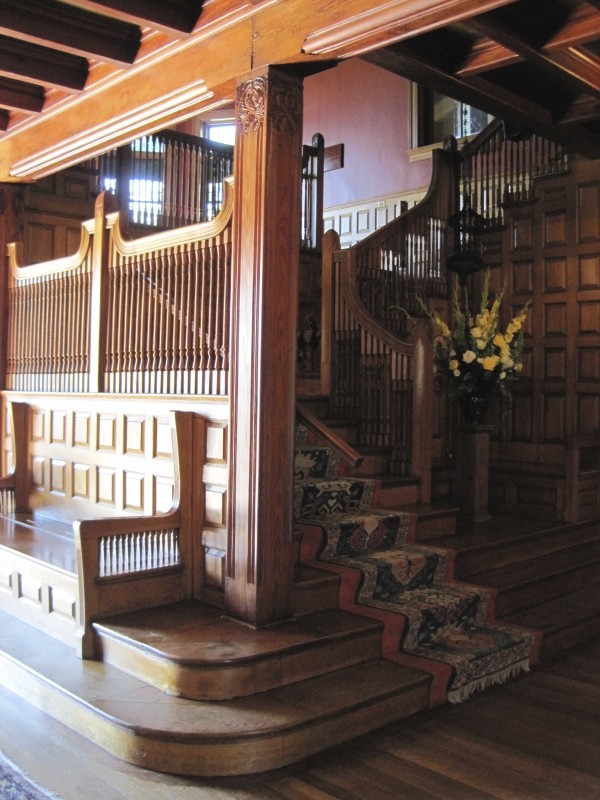
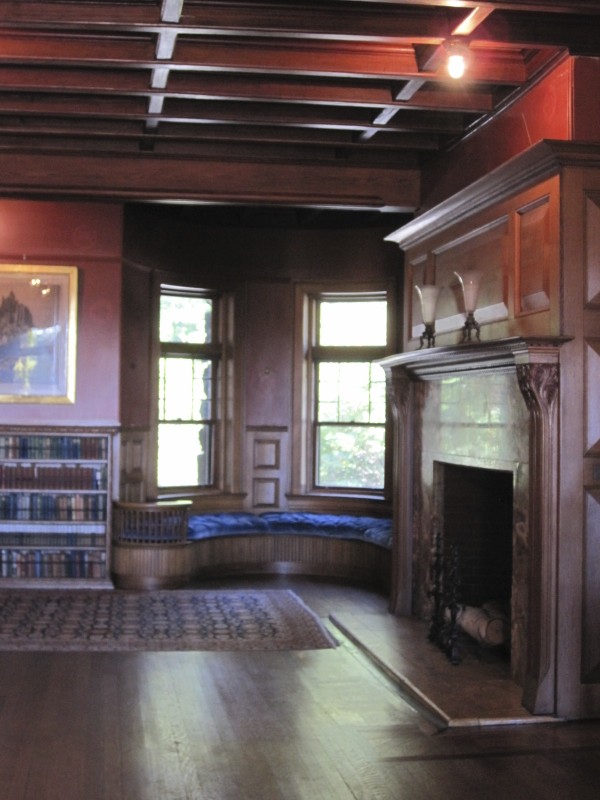
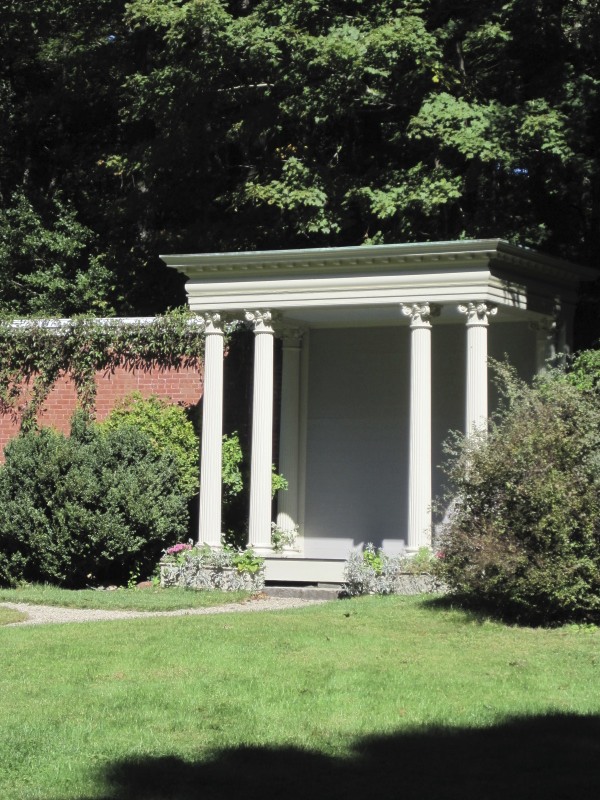
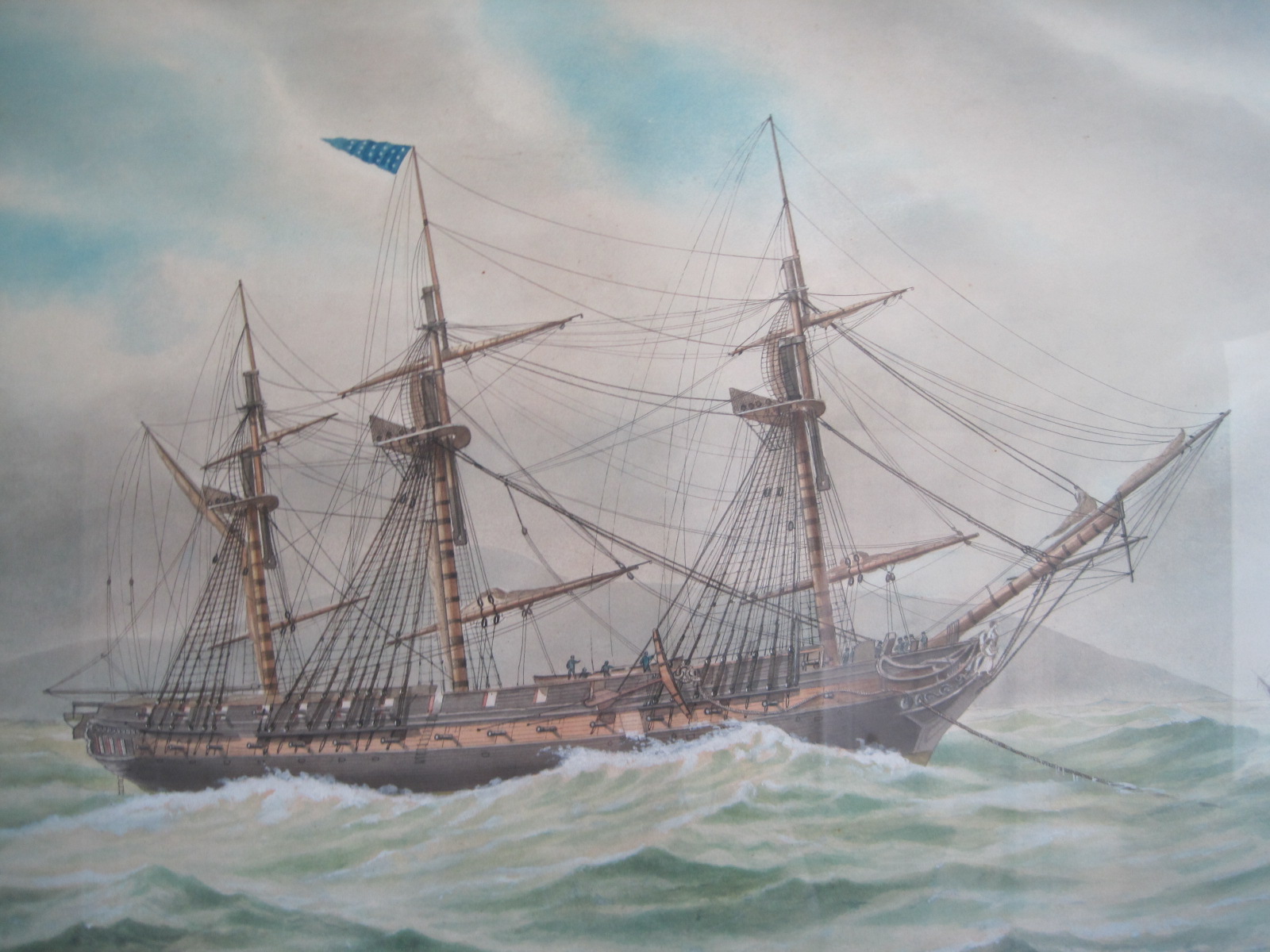
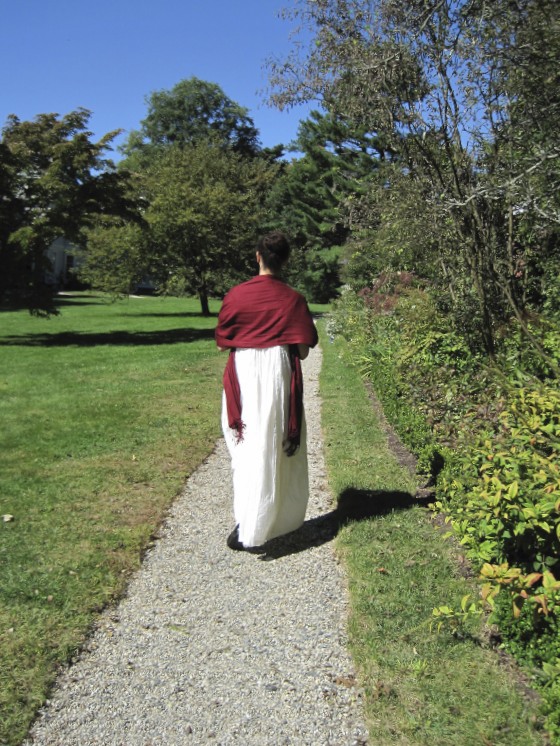
On the walk up the drive to Stonehurst, I passed this street sign, which was just begging to be photographed!The main stair in the front hall of Stonehurst.Also in the front hall. Stonehurst has all these cute little nooks and benches. This one was my favorite!Then on to the Lyman Estate, which has a very different feel. Light, airy, and Grecian… perfect for Regency!The ballroom of the Lyman Estate house.A fireplace at the opposite end of the house. Those tiles are really neat.One of the bedrooms upstairs. This house is often used for weddings, so I think this is often the bride’s dressing room.A painting of the USS Constitution! Fitting, considering our summer adventures relating to the Constitution. 1805.Lovely flowers outside the front door.The greenhouses at the estate are open to the public year round. This was where I visited last year for the Regency Holiday Tea.Finding an appropriate picnic spot.Taking a turn about the garden. Isn’t this a super cute picture???
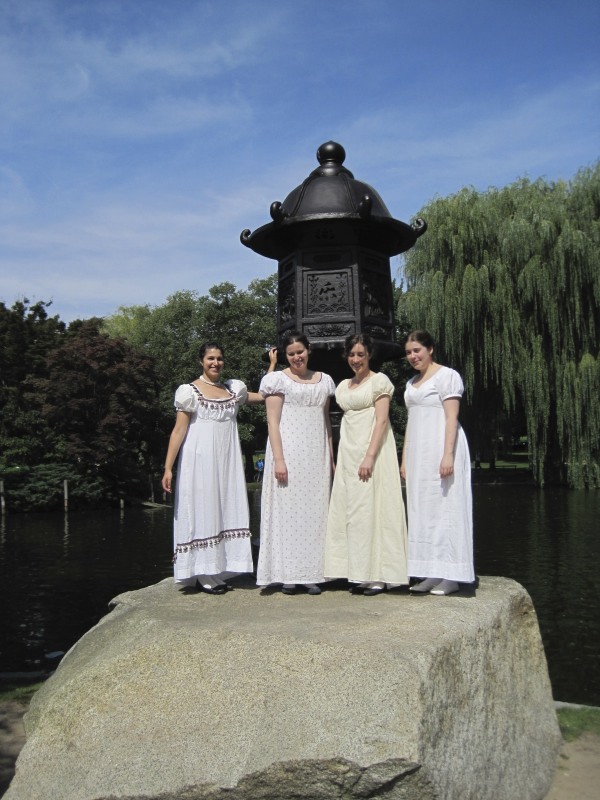
Summer is mostly over, here (although we did just have a nice, warm, sunny day that felt like summer…), but I haven’t finished sharing about summer picnics! To bring a little summer to you, here are a few pictures from a Regency picnic in the Boston Public Garden in August. The Boston Public Garden was established in 1837, so we were a little early, in our Regency dresses.
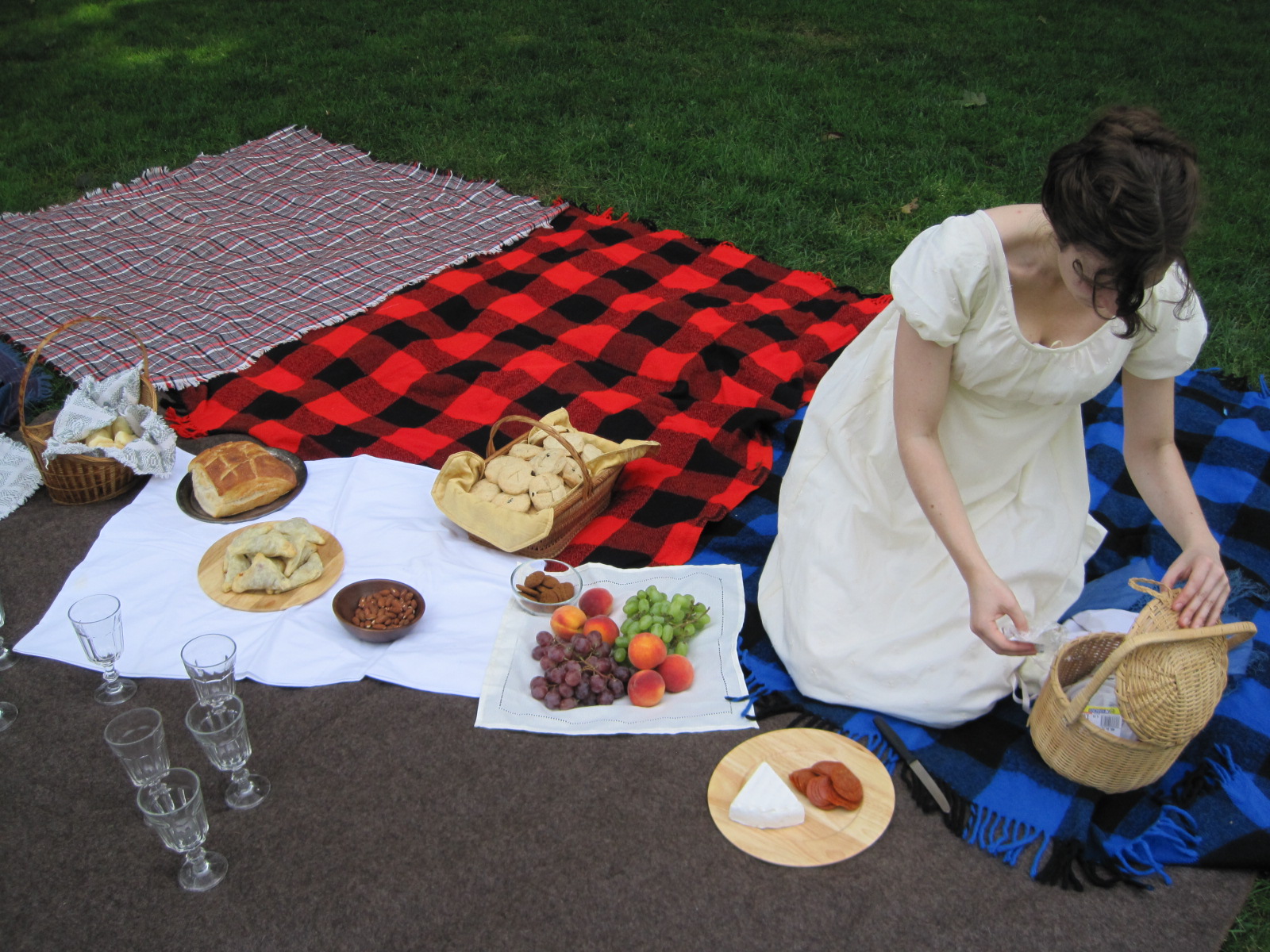
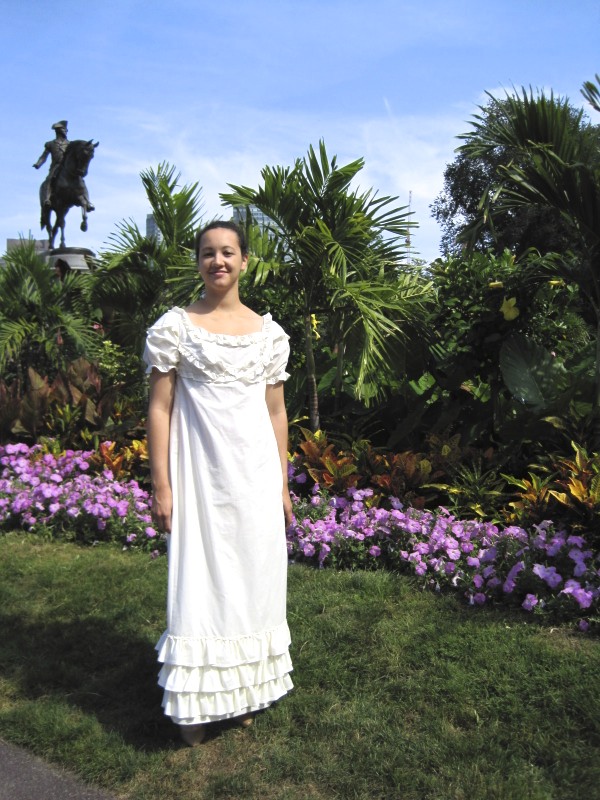
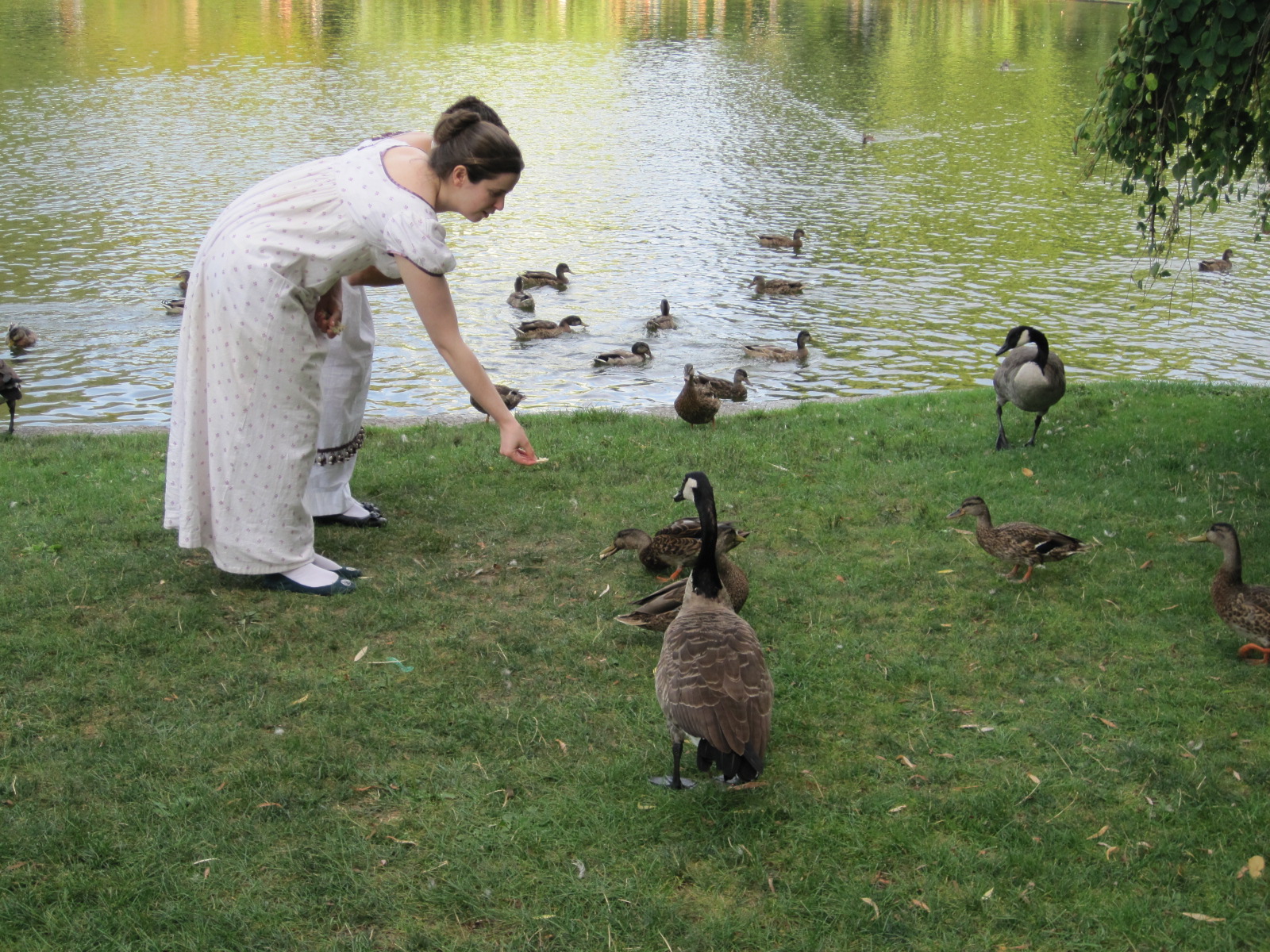
Laying out the simple fare on our wide expanse of blankets.Taking a walk around the garden, you run into all sorts of fun picture taking opportunities.I don’t think I’ve ever been to the garden in August. I have usually been there in May, when all of the flower beds are bursting with tulips. I didn’t realize they change the flower beds to tropical things! I was super surprised!I think that is George Washington.Not the usual Boston flora.Look at the size of those leaves!And hibiscus!I feel so tall sometimes…Squirrel? He was busy scrambling to get food for the winter.Watching the swan boats pedal by.It wouldn’t be Boston without the ducks and geese…
As I mentioned in my last post, the one where I shared pictures of my new 1812 under garments, there aren’t a whole lot of extant examples of sleeveless undergarments from the Regency period, so I had to take the research images I could find and extrapolate what was necessary for my dress from that information. Here are a few extant examples of sleeveless underdresses.
Early 19th century. Petticoat. The Met.Petticoat. 1800. Cotton. National Trust.Early 19th century cotton petticoat/underdress. MFA Boston.
It is fitting that this last one was worn by someone who lived in Boston, MA (that’s where I live). Neat! And isn’t the whitework at the hem lovely? Fashion plates and extant underdresses and petticoats from the early 19th century not uncommonly have hems that had white work and lace decorations. I didn’t incorporate that into my underdress… but maybe in the future I can make another such garment and include that detail!
Natalie Garbett also wrote a blog post about a sleeveless underdress that she made, which you can read by clicking this link. It’s super cute (and has hem trim)!
I actually didn’t find any sleeveless chemises, though I did come across mentions of them. I suppose a lady could have tucked up the sleeves of a normal chemise, or worn a sheer dress with the sleeves of the chemise showing through. Here’s an example of an early 19th century chemise with sleeves. This one is pretty ruffly, but the basic shape is the same, as is the gathering tie at the neck.
Remember I recently shared with you the square necked 1812 Ikea curtain gown? And I promised pictures of the accompanying undergarments? Now is the time! Please forgive the silly black and white checked walls in these photos… I took the opportunity of having people around to take photos of me in the garments, despite the lack of a fitting setting.
Chemise and short stays.
The chemise is constructed of linen, and despite its rather cute a line shape, it is actually just a tube with shoulder straps. The front has a draw string across it to help it shape over the bust, which I think is part of the reason the front looks so evenly distributed and full. As you can see, I chose to make a sleeveless chemise, specifically for the square necked gown.
Back view.
The back of the chemise is cut low and square to fit within the shape of the square necked gown. Next is a closeup of the stays so you can see more detail.
Short stays.
In this photo you can see the drawstring on the chemise. You can also see the front lacing stays better. They are essentially the same basic shape as my longer pink stays, with a few differences. The pink stays have a simple front, back, hip gusset, bust gusset construction, whereas these new stays have a back piece, side piece, and then front piece with the bust gussets. For this pair, I think I actually could do without one of the bust gussets, since it looks a little big. But it’s WAY too late now to change that! I had to cut the area under the arm pretty low to be comfortable, and I also had to move the straps a few times, especially in front. If they are too far out they cut into your arm joint when you try to move–not comfortable, let me tell you–but they needed to be pretty wide in order to accommodate the wide neckline of the square necked gown.
The stays are white cotton twill layered with two layers of cotton canvas, except the gussets and straps, which are just one layer of the canvas and one layer of the twill. The stays are bound with white cotton bias. They are boned (only at center front to stabilize the eyelets) with plastic wire ties. Despite the light boning they are quite stable when laced up. And let me just say how much easier it is to get dressed when your stays lace in front! So easy! Love it!
These stays were stitched by machine. I needed them done quickly and I wanted to be able to dance and sweat in them without having spent lots of hours hand sewing them. Also… at some point when I washed them (after the 1812 Guerriere weekend, when they were wet through from sweat) they got streaky. Now they are mostly off white, but still have bright white streaks. So I didn’t feel the need to make them super pretty and spend the time hand sewing them. I did hand sew the eyelets for the lacing. I thought about doing spiral lacing, but then when I made the eyelets I forgot to space them that way… so they don’t spiral lace.
Under dress.
The other new undergarment is this under dress–needed because of the sheerness of the dress fabric. So here it is. The skirt is the same dimensions as the square neck dress, and mounted to the bodice in the same way. The bodice also uses the same pattern, except that the front is not gathered. There is a small tuck on each side of the bust, but that’s it. The straps on the under dress are similar to the straps on the chemise and stays, so that they don’t interfere with the sheer sleeves of the gown. The under dress ties in back at the top and where the waist is. The day of these pictures one of the lower ties came off, so you can see the gap where a tie would normally be. Below the ties are an opening of about 8″ that allows me to get in and out of the garment. It all looks quite a-line in these photos, but with the dress on top the whole thing looks much more columnar.
Back of the underdress with the missing tie.
I think I’ll do another separate post with some of my research images for the sleeveless under garments. So for now, this is it!
In August for each of the last eight years, I have been blessed to be able to enjoy an annual trip to Cape Cod. By this point the trip feels just like going home: I know the places I like to go, that I like to eat (and they recognize me, even though I’m only there one week out of the year!), that I like to shop… and I only deviate from these things when I want something new–a sense of adventure.
Well, a few years ago I was encouraged to visit a new store, which I did, and since then I have returned on every visit to the Cape. What store, you ask? Vintage In Vogue. This unique vintage clothing store is run by the wonderfully passionate Maureen Leavenworth. Truly, Vintage In Vogue is a unique vintage store. Maureen really cares about the stories behind the items for sale and she takes the time to share those stories with you when you are interested in an object.
The store is full of fun things like shoes, hats, jewelry, furs, patterns, fashion plates, and of course, dresses. There are some pieces from the 19th century, as well as many items from the 20th century. There is also has a whole area devoted to vintage wedding gowns and accessories. This year as I was poking around looking at the fun things… I found a few things I decided to take home with me.
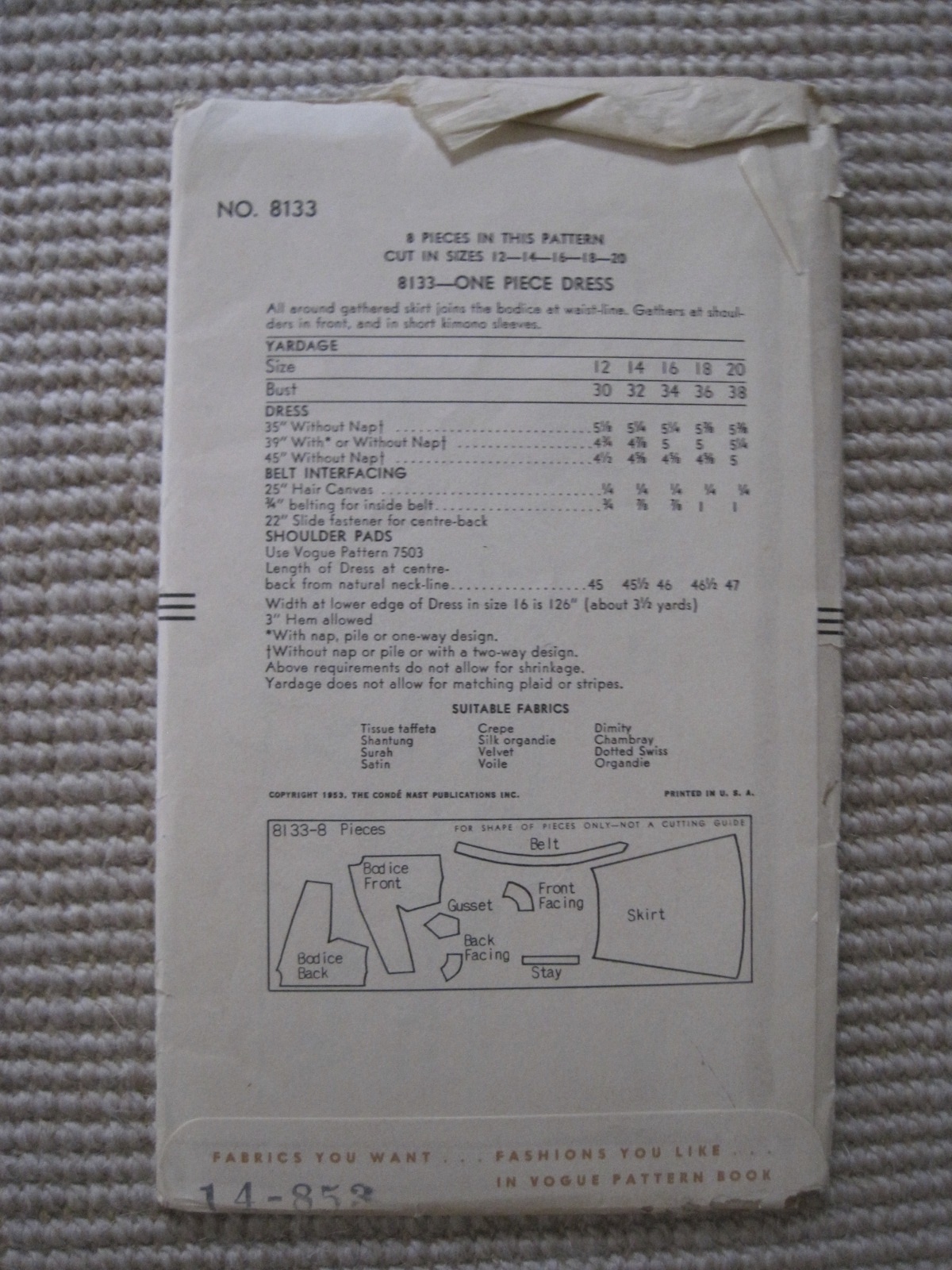
First, a 1950s vintage Vogue pattern!
Useful for when I find time to make a Mad Men inspired dress. The ruching on the shoulders is an interesting detail in this pattern.Back of the pattern envelope.
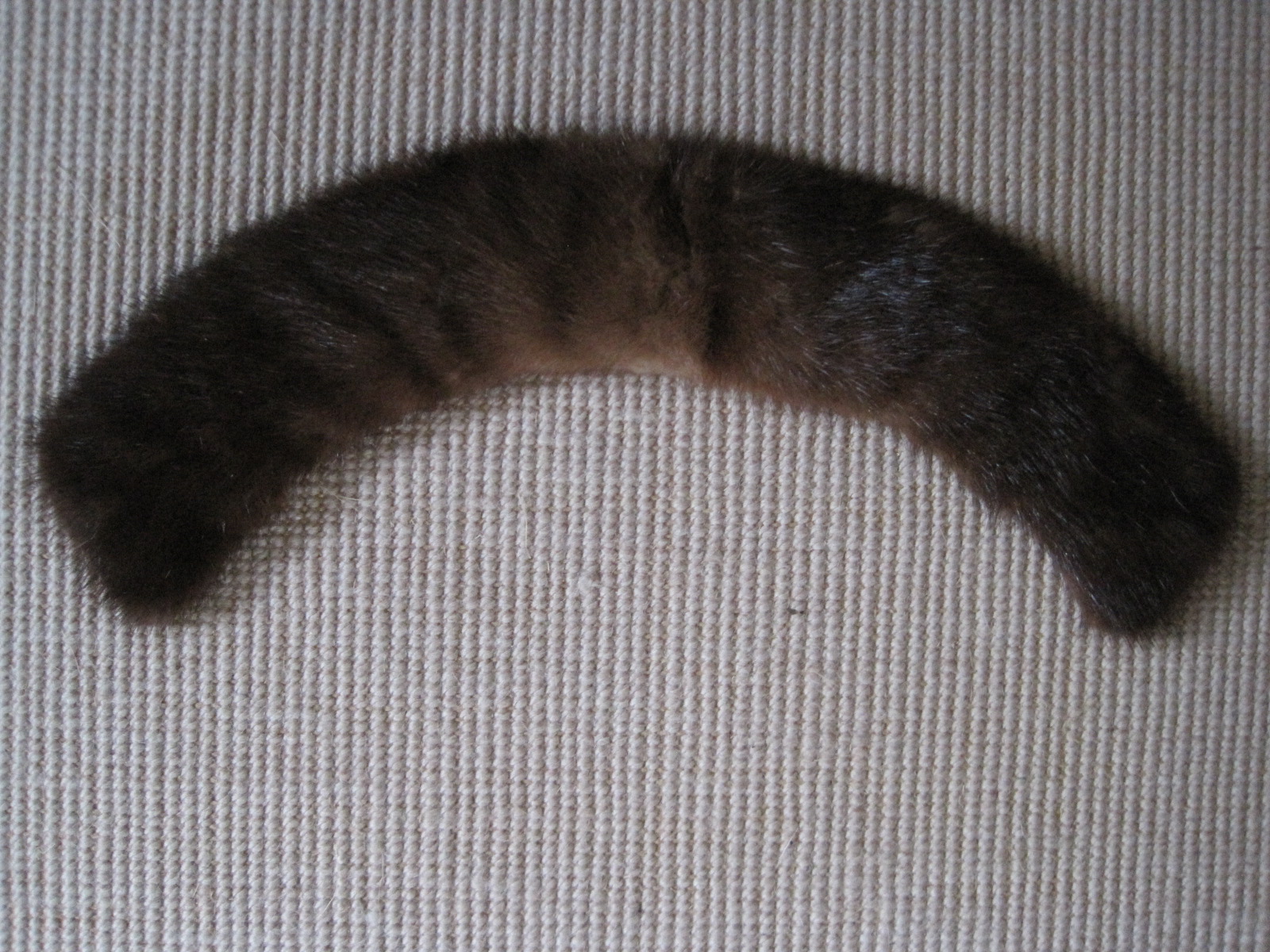
Then, a fur collar, separate from any garment that it once adorned.
I have a vision of turning the collar into a fur trimmed 1860s hat one day.
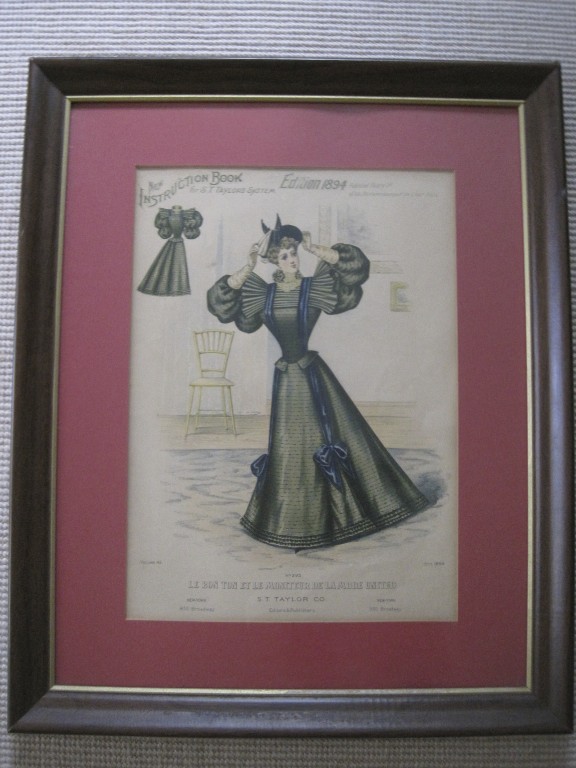
And, lastly, a framed fashion plate from 1894!
“La Bon Ton Et Le Moniteur De La Mode United” Published by S. T. Taylor Co., New York, October 1894.A close up of the fashionable lady.And of the back view of her dress.
I was very pleased with my finds. The pattern and fur collar have been put on the far back burner, but the 1894 lady enjoys a place of prominence on top of my dresser. I know that doesn’t sound very glamorous, but she has a light above her that I can turn on so it looks like she’s in a spot light, and she’s in a place where I see her every day as I’m getting dressed. It’s kind of perfect for me and my interests, actually, to see an image like this each morning.
My favorite picture of my new 1812 gown, from the Guerriere weekend at the Commandant’s House at the Charlestown Navy Yard in Boston.
Ok, I admit that it is not a very clever title, but it fits the subject matter perfectly!
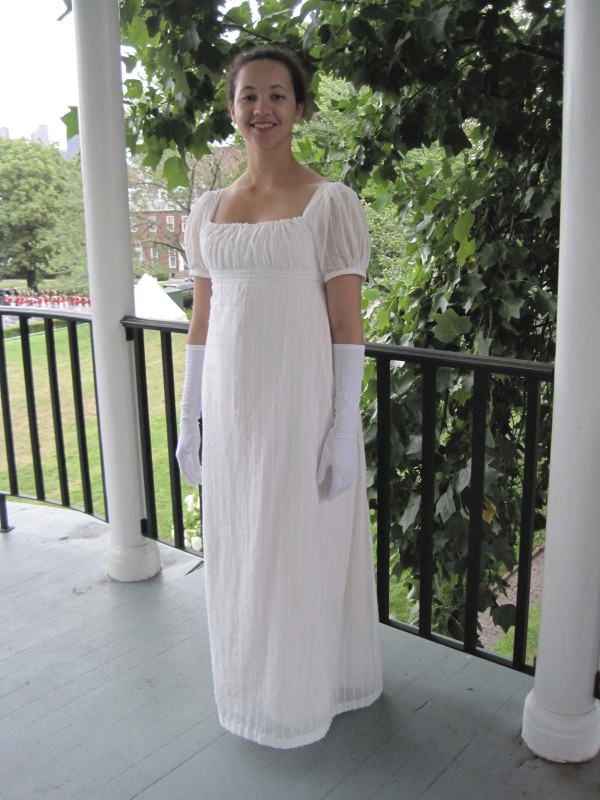
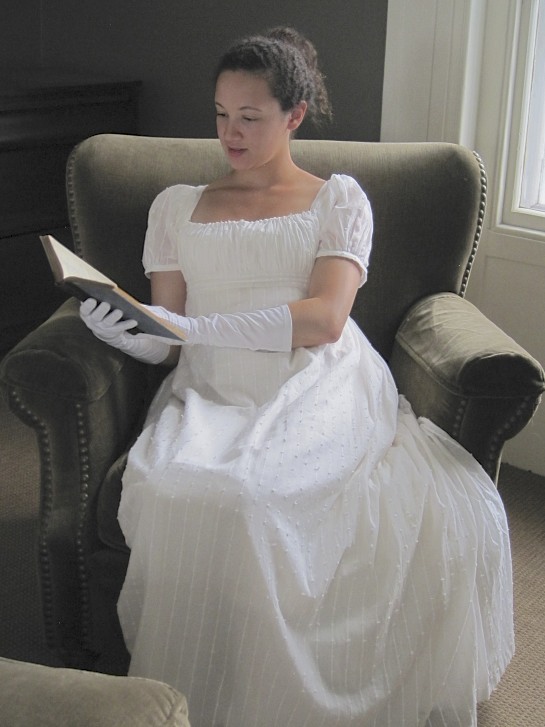
First, some details. This 1812 reproduction gown is constructed from 100% cotton curtains from Ikea. Yes, Ikea. You never know where you’re going to run across fantastic fabric. In fact, these Matilda curtains were made in India, which is very fitting for a Regency gown, because cottons in the early 19th century were being imported from India. It is very lightweight, sheer gauze with a 1/8″ vertical stripe spaced every 1″ across the fabric and with woven in dots every 1″ vertically. I bought a package of two curtain panels, each 55″ wide by 98″ long.
Does it look like a curtain dress? I’m sad to report that Mr. Q didn’t realize, until I explained it to him, that the idea of a curtain dress is a famous theme from Gone With The Wind… How could I have attached myself to someone who doesn’t know that? Opposites attract?
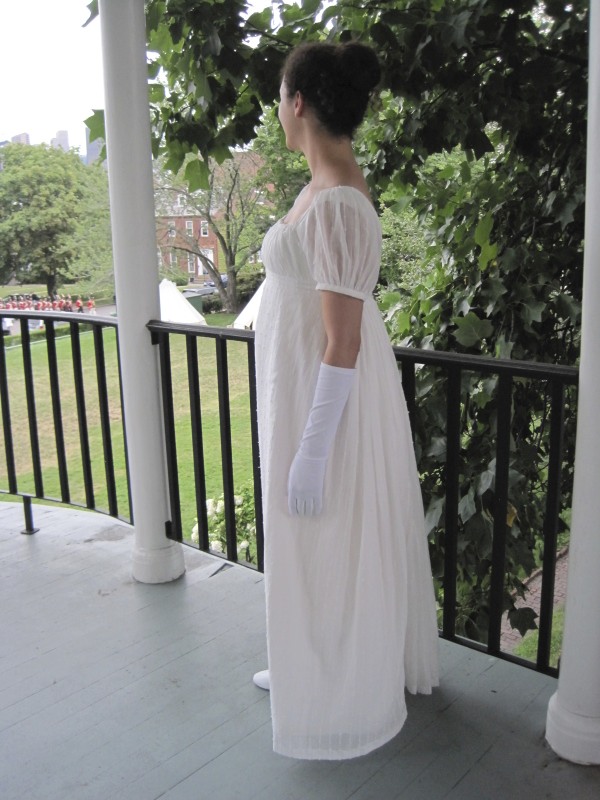
The skirt for the gown is a two panel tube, 43″ long by 110″ circumference. The front is stitched flat to the waistband and the remaining fabric is tightly gathered into the back across 13″. Center front and center back are actually the middle of the panels, so that the two seams are lost in the back gathers. The gown opens center back with hooks and eyes on the bodice and a narrowly hemmed slit that extends 8″ down the center of the back panel. The slit is also lost in the gathers. The waistband is 1″ wide. It was cut on the cross and has long tucks taken all around it so that it has three stripes spaced close together.
You can really see the difference between the flat front and the gathered back in this side view.
The bodice pattern is taken from Janet Arnold Patterns of Fashion I “c. 1806-1809 frock” and adjusted for fit and so that the entire front panel has a 2:1 gather ratio at the top and bottom (essentially, just more gathers than the original dress). What I really love about that pattern is the simplicity of the neckline. The bodice is cut separately from the straps, and the straps are cut on the straight grain, thus they fit really well with a wide square neck that stays square and doesn’t fall off your shoulders! GENIUS! Sometimes those historic tailors and dressmakers really amaze me with their sensible-ness. The bottom gathers are sewn to the waistband, but the top gathers are adjustable with a tie at center front. The ties are stitched to the armsceye seam allowance and can be tightened from center front then tucked inside the gown. The shoulder straps are folded in half with the fold towards the neck so that I didn’t have to finish that edge (another 19th century smart trick!). There is a stripe in the middle of each strap.
Oooo, wait, I love this picture too! Sometimes I think my smile is dorky, but not here! And the leaves make a lovely background. Anyway… you can also see the bodice details better in this photo.
The sleeves are a conglomeration of various patterns… essentially they are just a normal Regency short sleeve pattern with about 6″ extra fullness at the top and bottom which is gathered into the armsceye and the sleeve band. The sleeve bands are cut on the cross, like the shoulder straps, and on the fold. They are placed so that the stripe runs around them. I wanted them to puff more, so after these pictures I took a few tucks in the underarm seams of the sleeves so they can’t hang as low on my arms. We’ll see how that looks next time I wear the dress.
With regard to inside finishing… The skirt seams didn’t need anything, because they are selvedge edges. The hem is 1″ turned twice and stitched down with a small running stitch (stitches every 1/16″ to 1/8″). The waistband is faced on the inside with a second waistband (without worrying about having three stripes running around it) that encloses all of the gathers on the top and bottom. The armsceyes are bound with self fabric bias strips. The few bodice seams are flat felled. The top edge of the back of the bodice has a narrow hem.
You can see the fabric pretty well in this photo.
The best part about this dress is that it is the first entirely hand sewn reproduction garment I’ve made (I think). I’ve come pretty close in work I’ve done in the past, but I’ve always used a sewing machine for inside seams and things that won’t be seen. Not so with this one. There were two reasons for hand sewing it: 1-I wanted to have the satisfaction of it 2-I had a week to make the dress and a long road trip for about half of the week I had… you can’t use a sewing machine in a moving car as far as I know… but you can hand sew! So the second best part about this dress: I whipped it up in one week, with undergarments!
I hadn’t mentioned that part yet. To accomodate the wide, square neckline and sheer sleeves of this gown, I had to make three other new pieces as well! A sleeveless chemise to accommodate the square neck and sheer sleeves, an underdress/petticoat to add some opacity which also needed to have a square neck, and a new pair of stays in white (because my only other regency pair are pink… and that would have not been subtle at all!). To be fair and honest, I didn’t get all the inside finishing done on these four garments the first time I wore them, and I did use a sewing machine for the undergarments. I was saftey pinned into the stays… I was madly hemming the underdress the day of our final dress rehearsal… and the chemise had unfinished edges… but you couldn’t tell once I put the dress on! I still need to finish some of the undergarments, actually… so hopefully once I do that I can take some pictures of them and do a post detailing their construction! Also in the works is another underdress that can be worn under this white dress. It will be a nice medium Regency-like blue.
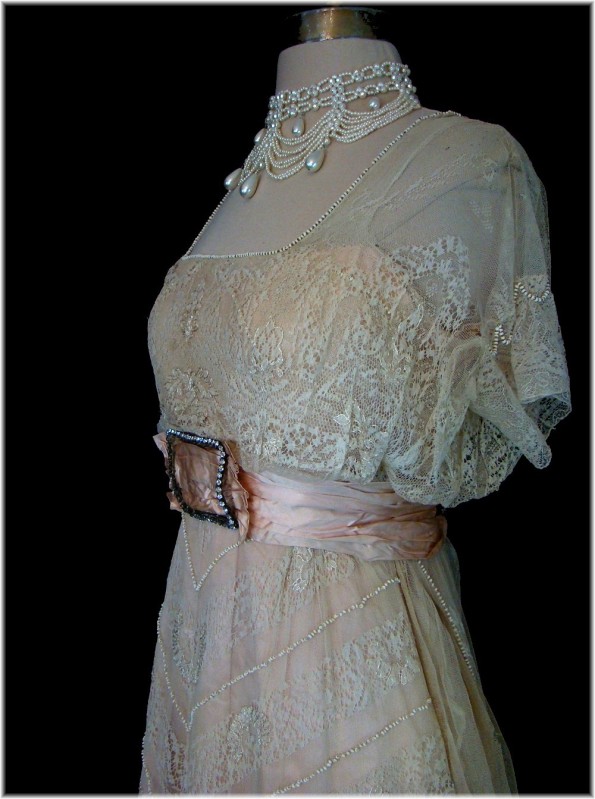
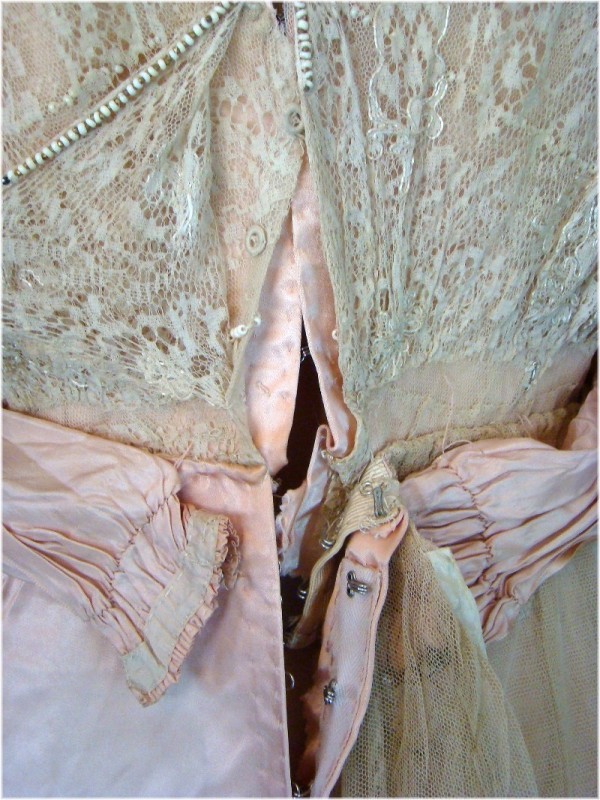
This fabulous vintage Edwardian dress was recently brought to my attention by one of you fabulous readers. It is for sale on eBay for $2,250! I certainly won’t be purchasing this original, but I absolutely think it is something to add to my body of inspirational images of clothing for future projects… The seller has included many pictures of the dress as well as background information on the dressmaker and a detailed description of the garment. I have included some of that information in addition to pictures for you to view here in this post.
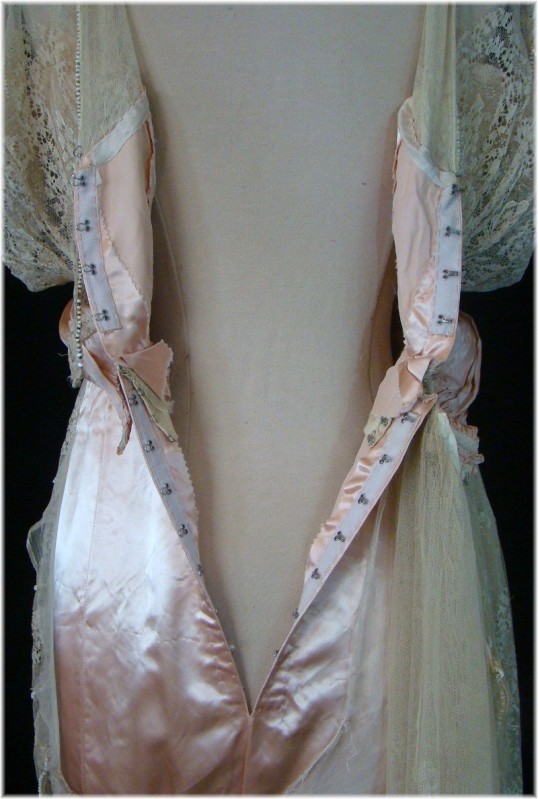
The lace is exquisite! The rhinestones add even more sparkle! I love that there are pictures which show the closures and construction details. I classify this gown as “drool-worthy.” What do you think? Do you like it? Or not? Why?
“This was created by Mrs. Catherine Donovan who was originally from Ireland (b.1826) and studied fashion in Paris. She owned the couture shop “MRS. C. DONOVAN & CO” which was located at 29 East 55th St.in New York. Her dresses in 1910 were billed at $100 and up which was extravagant as a gown from her would cost over $4,000 today!
Many of her garments are found in Museums throughout the world. There are 4 dresses at the Metropolitan Museum of Art alone. But the detailing and workmanship of these garments are worth every penny in my opinion.
FABRIC:
This is made of peach satin (formerly peach silk) and covered in exquisite ivory lace with re-embroidered patterns done with silk thread. The lace gives hints of Orientalism (which was made popular by Paul Poiret ) with its Royal Pavillion shapes on the back panels. The rosette and belt details are done in peach silk.
This enchanting garment features a fitted satin strapless bodice covered with a blouson bodice of lace. The bodice features a low square neckline and the dolman sleeves are short. Both the neckline and arms are decorated with cream glass and gold painted cut steel beads. There is an inner netted bodice which helps with the weight of the dress.
The empire waist is decorated with a ruched sash which is adorned with rhinestones, each individually sewn on a gold lame’ backing in the shape of a buckle.
The straight satin skirt is covered in two tiers of lace at the front. Each tier is decorated with cream glass beads and gold steel cut beads in a chevron shape. The tier is separated with a silk band featuring a large silk rosette. The top tier is adorned with crystal cut glass beads around the hemline.
The back has a surplice detail on the bodice with the silk band closing at the back decorated with more rhinestones.
The lace skirt is made of 3 tiers with one extra panel which attaches to the finger as a drape or can be left hanging as a short train. The top tier and second tier are both decorated with crystal cut glass beads.
This closes with several snaps, hook & eyes and tiny crochet buttons at the back.”
Thank you, Kimberly, for bringing this dress to my attention!
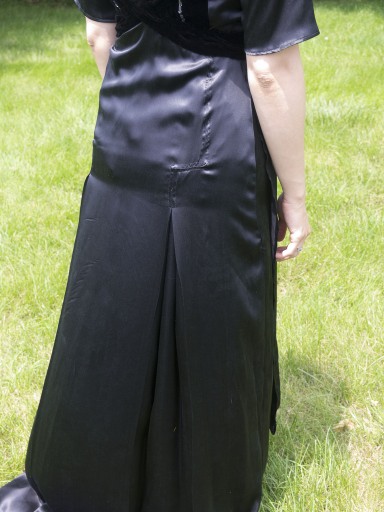
The back of my 1912 tea gown. I like the belt that crosses and swoops up (hard to see, except that the line of beading is interrupted by the belt) and the side back seams that end in pleats (it looks really cool while I’m walking!).It’s a little hard to see in the first image, but the side back seams make a few intentional right corners before opening in inverted box pleats that help form the train. Here is a close-up of those seams: unfortunately, they pucker a little in the silk charmeuse because I didn’t think to stabilize them before starting to sew and snip corners… Let that be a lesson to you!Another view of the back seam and pleats.Here’s a side view, so you can see the front and the back.And a recap picture of the mushroom hat.
I was able to wear my freshly painted and moved-button Astorias with this dress and others at Dress U recently, but you’ll have to wait to see pictures of the finished shoes–they’ll be coming in another post soon!
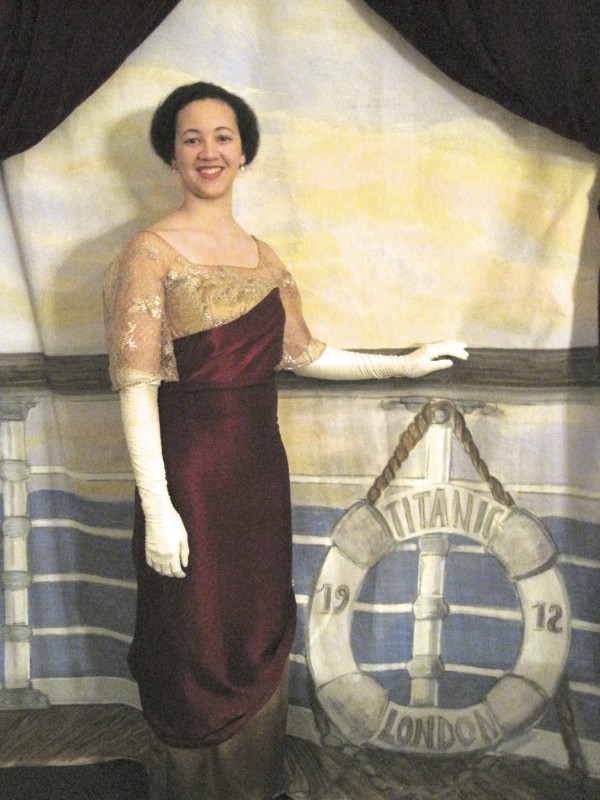
Here we are, a third and final installment of posts related to my recent Titanic-themed weekend. You can read more about my tea gown and matching hat as well as my evening gown in previous posts. I think I’ll limit my commentary to captions. Here we go!
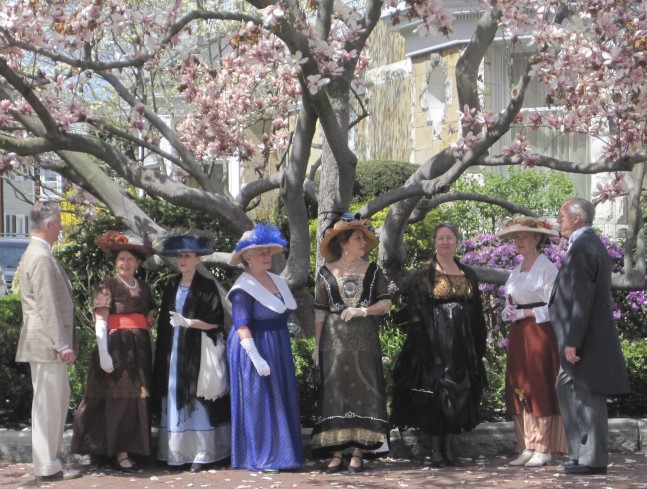
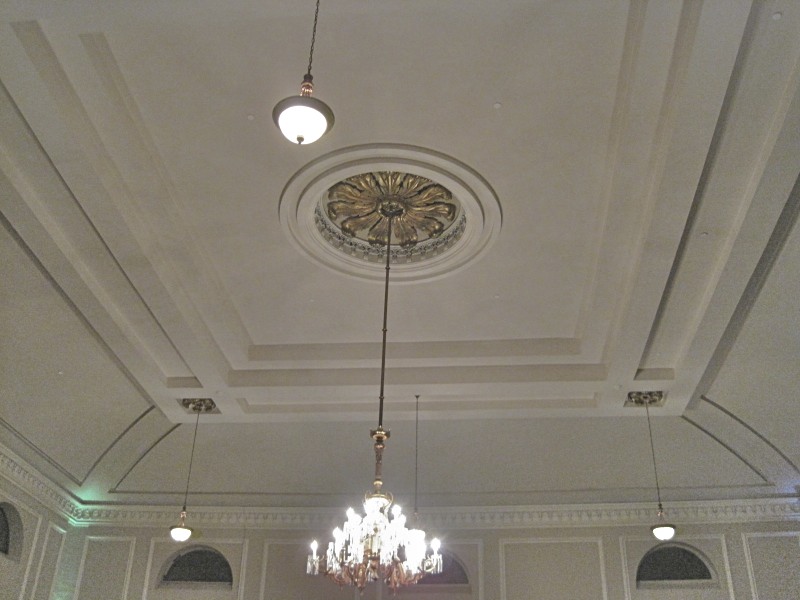
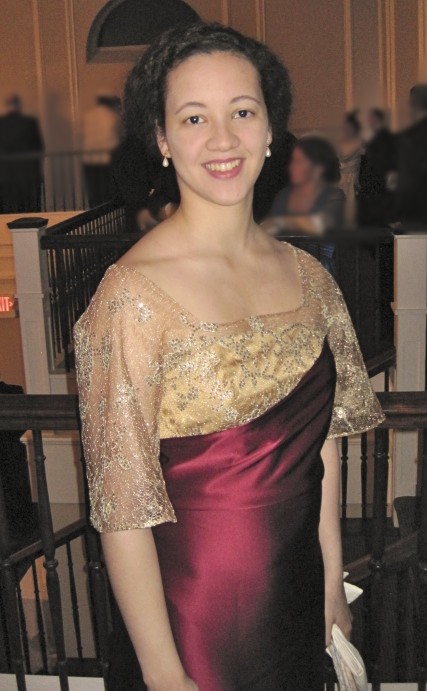
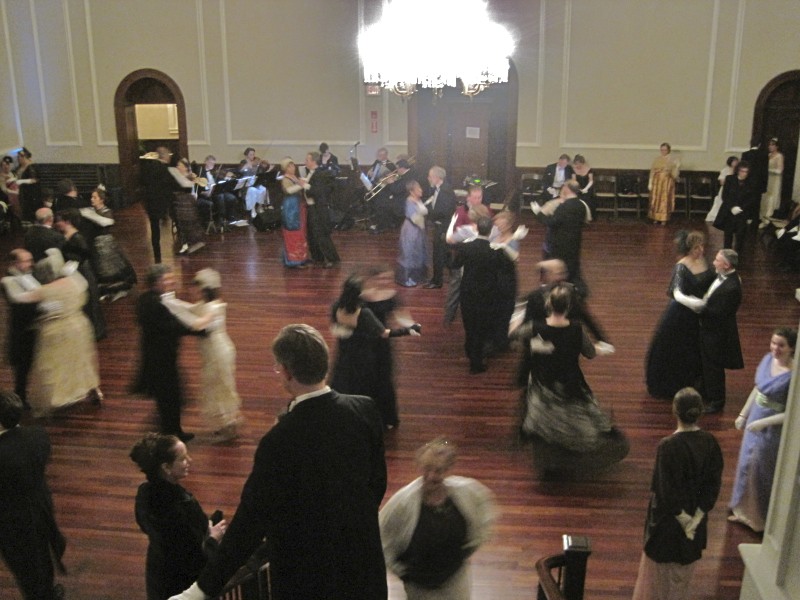
The weekend began with a casual Steerage Ball with a light and charming atmosphere.Saturday afternoon was a formal tea to relax after a morning dance workshop.Fabulously dressed people were all around!I do love flounces, in any period.In lovely whites, a staple of the Edwardian wardrobe.There were picturesque photo opportunities, of course.And the men were just as fabulous looking as the ladies.The weather was lovely and some people took the opportunity to talk a walk outdoors.While others took advantage of a less strenuous opportunity for enjoyment indoors.Saturday evening was a formal dinner and grand ball.So we all donned our finest finery...And after dinner, danced the night away to live music.There was a balcony and staircase that added serious elegance to the room.Dancing, dancing, dancing...Of course, a girl must rest sometimes, and why not with a fabulous fan? The room did get quite warm.This backdrop was just lovely, and so perfect for pictures!Picturesque!Pictures were taken in abundance.At 11:40pm (which is when the ship hit that ill-placed iceberg) we took part in a moment of silence to remember those who were lost followed by a haunting final waltz to the melancholy melody which was the last song played by the band as the Titanic sank.On Sunday, I was able to wear my 1913 walking suit and hat on the Museum Stroll. I wore the blouse and skirt to the Steerage Ball, with a wonderfully simple, yet very Edwardian coiffure, but of course I didn't get pictures of that... oops. There were fabulous outfits all around, but it was difficult to get pictures given that we were spread throughout a museum!
All in all, a lovely weekend full of fabulous clothing, beautiful music, and wonderful dancing. What a recipe for amazing memories!
We took a rather in-depth look at my new 1912 evening gown. Now, on to the second 1912 ensemble that I also wore during the weekend: day gown and hat!
Gown and hat with (unbuttoned...) white kid opera gloves. I'm so pleased with the overall effect! Unfortunately, I don't have pictures of the back. There are cool details back there, so another fashion shoot will be required in the future...
This gown is constructed from silk charmeuse. The skirt is a single layer in addition to the overskirt panel in front. The bodice has a foundation of the same white cotton as my new evening gown. Mounted on to that cotton are (from the neck down) layers of ivory silk charmeuse, ivory silk flat lined with fabulous ivory colored diamond lace, black silk velvet, and black silk charmeuse. The overskirt panel is trimmed with matching silk velvet and the belt is constructed of the same. There are small buttons on the overskirt velvet trim (because, really, the Edwardians just loved adding buttons everywhere!). Because the back bodice mirrors the front in its style (which unfortunately I don’t have a picture of right now…), I had to be crafty with my closures. The dress has two places that open with hooks and bars: the left side from just under the arm to a few inches down the hip and the left shoulder seam around the neck to the center back of the collar. The effect is a form fitting dress that looks like it was magically donned. The side closure is straight forward, with the foundation layer hooking first, to take the tension of holding the dress tight, and the outer charmeuse layer hooking over that simply to stay closed. Again, the foundation is essential to achieving the elegant, effortless exterior. The neck closure is a series of hook and bars that turn different directions to accommodate the seams: front to back at the shoulder, hooks that hook up on the collar to attach it to the back neck, and hooks going sideways on the center back of the collar.
In addition to the gown, I also constructed what I call the “mushroom” hat, which you can read more about in this previous post. I created the pattern for the hat, which is basically just a shaped brim with circular side band. The side band support the crown, which is a circle that is pleated to create that “mushroom” shape. I love the hat! It lends such an air of Edwardian drama and elegance to the look! And I am so pleased the the “mushroom” shape worked out!
Hm… Patterning this dress… Well, the general skirt shape is from Janet Arnold, but it is adapted to have two symmetrical box pleats that terminate at the top in delightfully detailed seams (which I really, really need pictures of!). The bodice pattern was draped with many references to my inspiration image. I created a basic shape for the bodice and then cut in into the different pieces (ivory silk, ivory silk and lace, black velvet, and black charmeuse) so that each piece would fit together perfectly. The belt is slightly shaped but doesn’t actually have a pattern.
The dress is inspired by this image from a 1910 issue of the magazine Bon Ton.
I'm sure you can guess, but the dress I was referring to is the one on the right.
In the end I made a few changes: I added a train, discarded the white under sleeves (I made them, I tried them, and they just didn’t work! They pulled the bodice in all sorts of weird ways… Maybe if the were not so tight they wouldn’t pull so much? I am fine with having gloves cover my lower arms, anyway.), and drastically scaled back the beading. Perhaps you’ll remember my plan to bead this dress? Well, the beading was drastically scaled back because I didn’t like the beads I bought as much as I thought I would (they are rectangular and larger than I thought… not seed bead-y at all), I realized I didn’t want to devote as much time as it would take to do the amount of beading I originally intended, I didn’t have enough beads to bead all four panels as much as the one panel I completed and I didn’t want to buy more beads, and I didn’t like the beading motif I had created, nor was I inspired to change it. You can see that I did leave one outline shape of beading on the bodice in the velvet section, but the rest was scrapped. That one line is repeated front and back (symmetry, you know). I did actually complete the overskirt top panel, but decided not to use it after my scaling back plan was complete (you can see it, below). I’m going to keep the beaded panel and see if it finds its way onto another project one day… I would still love to do intense beading on a garment, but I’ll have to pick a different one, because it wasn’t measuring up to my expectations for this dress.
Scrapped beaded panel. A mix of silvery and black beads. I started in the center with the somewhat wonky lines, can you see improvement? I think it would have been distracting from the dress to have four panels like this.






























 The Quintessential Clothes Pen