I’ve been stitching away at the re-make of my 1819 Regency gown. The progress:
the bodice and skirt ruffles are all being hemmed by hand and there is only one skirt ruffle left to complete
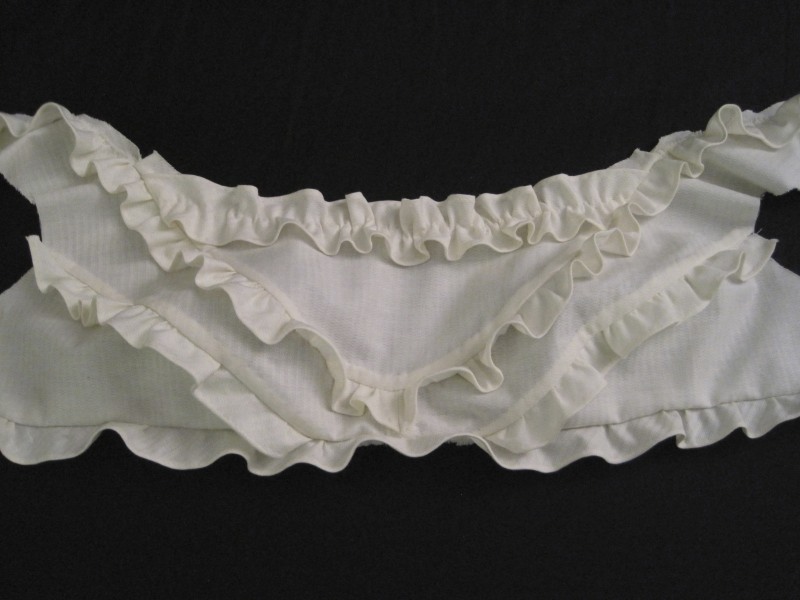
the bodice has been put together, with the exception of sleeves and the finishing of the neck edge
the seams on the bodice are finished by hand (each seam is flat felled to hide the raw edges on the inside)
Skirt ruffles in progress: I've actually completed more than is picturedThe hem and join of one skirt ruffle
The bodice seams with ruffles insertedThe rolled hem on the bodice rufflesCenter front on the bodice has a double edged ruffleThe flat felled seams on the inside of the bodiceThe flat felled seam used on each seam on the bodice and the hand sewn top stitching (which is only along these curved back seams)
Here is a refresher of the bodice inspiration image. My bodice looks like a reasonable interpretation to me. I am quite pleased with the progress and overall look so far. How do you think my interpretation compares?
The inspiration for my bodice
Lastly, here is the image of the sleeve I plan to use. I described the sleeve in my last post, an overview of my planned gown updates. The sleeve is on a page with many other sleeve variations from the 1830s, but I think that it will suit my 1819 Regency (pushing 1820s) dress quite well. I am debating the possibility of outlining the triangular inset with piping. Do you think that would suit the dress and be a faithful representation of the double line delineating the inset in the image? Alternatively, there is a possibility that I might use green piping or ribbon (the same shade of green used in my 1819 spencer) to delineate that line. But then must I also use the green somewhere else to create visual harmony? Hmm…
From the first few pages of Janet Arnold's early 19th century pattern book
I have decided to remake my ivory 1819 cotton gown for an upcoming Regency ball. Originally, my plan was to add trim to the dress as it currently exists, but I realized there were many things about the dress I wanted to change: with my new late Regency corset the neckline tended to sit away from my body in front, the back closure was too tight for comfort, the bust line in front was so high that it was very hard to get it to sit below my bust, the sleeve openings were uncomfortably tight, the sleeves weren’t puffed enough, I wanted to separate all the petticoat layers to be individual layers rather than petticoats built into the dress, and I wanted to add ruffles to the skirt to really bring it up to the years just before the 1820s. Indeed, the things I wanted to change were so numerous that I decided to just remake the dress!
In the end, the only thing that I decided to keep the same is the skirt base fabric… Using just one additional yard of the original fabric, I plan to complete the following changes: constructing an entirely new bodice with ruffled trimming, creating entirely new puffed sleeves with a cute v-shaped detail, making stand alone petticoats out of the original built in petticoats, and adding bias ruffles to the skirt.
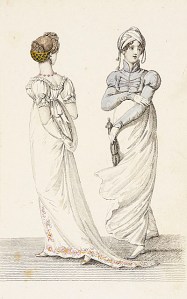
From Ackermann's Repository 1822
My dress is from the period just before the 1820s and I felt that I needed to go more in an 1820s direction with the new trimming and adornment. The main feature of trimming in the 1820s is wide sections of trimmings on the skirt, in combination with corresponding trim across the bodice and sleeves. Thus, there two horizontal lines of interest with a simple, unadorned mid-section (as in the fashion plate on the left, from 1822).
Before I had decided to make so many changes, my original intention was to simply add ruffles to the bottom hem, along the lines of the dress (below) from the Kyoto Costume Institute.
c. 1820 Silk Day Dress (Kyoto Costume Institute)Ribbon trim on 1819 dress before the remake
However, as I thought about it I realized that the ruffle style (above) just would not have a corresponding look to the current zig zag ribbon trim on the dress bodice (right). Those two styles did not make sense on one dress.
The logical step was to change the trim on the bodice. But remember that I had other complaints about the bodice as well… So came the decision to remake the bodice. But how to trim it to correspond with the ruffles on the skirt? I was not at all interested in the bodice trimming on the Kyoto dress for my dress, because the fabric doesn’t lend itself to that look. Well, I started researching trimming from the late 18-teens to see if I would be inspired. The image below is one of my favorites that didn’t make the cut, and there are more on my 1819 dress trimming ideas Pinterest board (thank you to Lauren, at American Duchess, for linking to her Pinterest board in a post and sparking my interest in this fabulous organization tool).
From Ackermann's Repository 1819
Many of my Pinterest images come from the same place: the blog “My Fanciful Muse” by EK Duncan. She has a series of posts that contain text and fashion plates from Ackermann’s Repository beginning in 1808 and going through 1828! Here is the link for the post on 1828: if you scroll to the bottom you will see a list of links to all of the previous years. It is absolutely fabulous! If you haven’t seen this yet you MUST visit! (Thank you for sharing, Evelyn!)
In the end, I decided on a combination of the two dresses in the image below: the ruffles on the skirt of the dress on the right (for some reason I really like the idea of ruffles on my skirt!) and the bodice of the dress on the left. The repeated use of ruffles on the skirt and bodice will produce the corresponding style I am aiming for. The sleeves will be a style from the first few pages of the first half of the 19th century Janet Arnold pattern book: a puffed sleeve with a triangular inset coming from the shoulder. I’ve wanted to use that sleeve style for months and now I finally have a way to use it that makes sense!
1820 illustration from Cunnington's English Women's Clothing in the Nineteenth Century (the illustration is based off of contemporary fashion plates)
I want to highlight this post from The Dreamstress: “Unveiling unveiled: how a fashion exhibition travels around the world.” It is a behind-the-scenes look at how pieces of historic clothing are transferred from museum to museum for exhibits. This post discusses the transportation of this one garment in particular. There are links to really neat pictures showing the process!
1933 Wedding Dress at the V & A
If you haven’t seen this post yet, you need to see it (especially the pictures!)!
I am leaving the Regency period for now to focus on preparing dresses from 1912 to wear to Titantic-themed events in April. I’m hoping that by starting early I will be able to spread the workload out and include lots of beautiful details.
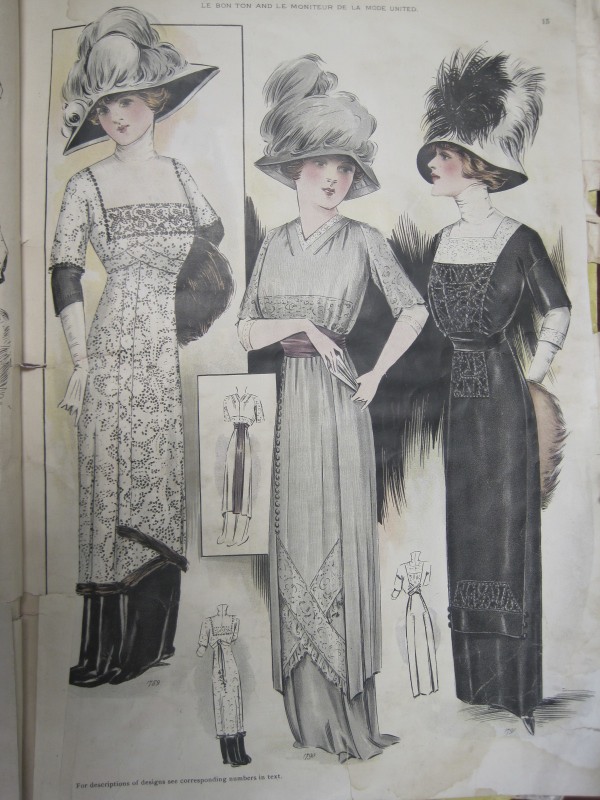
I am making the dress on the right side (the black one) and I plan to include beaded panels (this is why I am getting an early start!)… I can see a beaded pattern: the top and mid beaded sections appear to have an inner outlined area that mimics the exterior shape of the beaded panel and the remaining space appears to be filled in by zig zags. Similarly, the bottom panel appears to also be filled in with a zig zag pattern. (Or is it a pattern more curvy than a zig zag?)
(From Vol. 59 of the magazine Bon Ton)
I feel like I have a clear idea and can move forward with the beading, but at the same time I am doubting myself and thinking that perhaps I need to do more research on 1912 beading motifs. Do you think I can take creative license and go forward with the information I can glean from the Bon Ton image? I did find this example of an extant 1912 beaded dress that is similar on the one from Bon Ton.
1912 Beaded Ball Gown1912 Beaded Ball Gown
I don’t own any books that are specific enough to assist me in this search and various online searches have been generally disappointing. And yet it seems that someone out there must have some good information! Do you know of any sources for information on Edwardian beading motifs? I hope to hear from you, if you do have any ideas!
Despite the long name of this post… Here it is! My (almost) finished 1819 Regency Ensemble! The ensemble includes an early 19th century white linen chemise, 1815-1820 pink cotton corset, 1815-1825 ivory cotton gown, 1819 brown velvet Spencer, 1819 straw bonnet, and mid-19th century fur muff (ok, so it’s not quite as giant and droopy as a Regency muff… but it was cold outside!). You can click on the links to see more about each piece. There is more to come on the gown and bonnet.
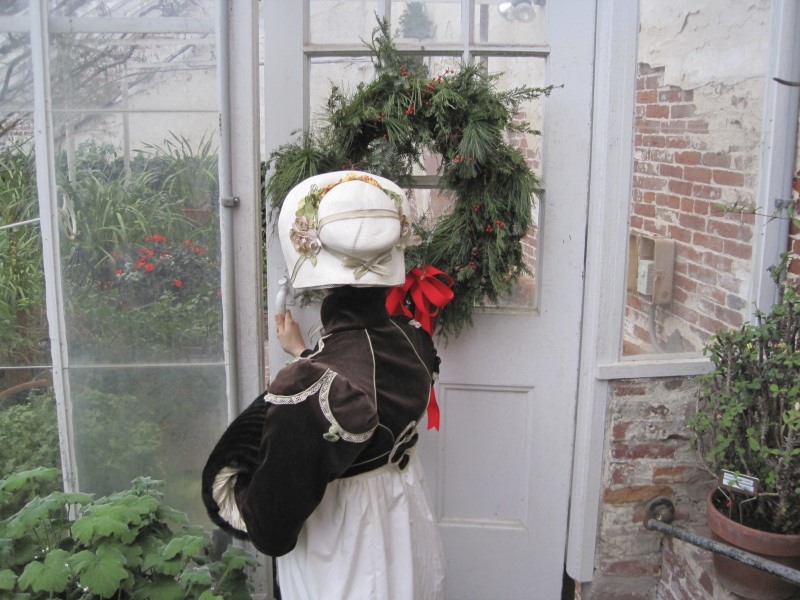
Right now I want to focus on the completed Spencer and its details. Please click on the link above to see my research for the Spencer: it is based off a Spencer at the Metropolitan Museum of Art. You can see pictures of the mockup Spencer here. The Spencer is constructed of brown cotton velvet that is flatlined with white cotton. It is trimmed with green cotton cording, vintage brown lace, and green tassels to match (Aren’t the tassels so adorable?).
1819 SpencerBack of the 1819 Spencer
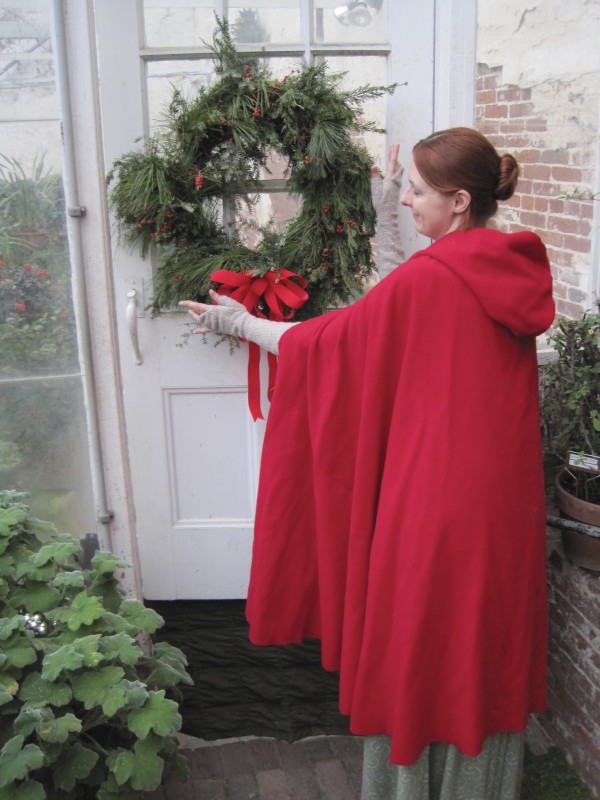
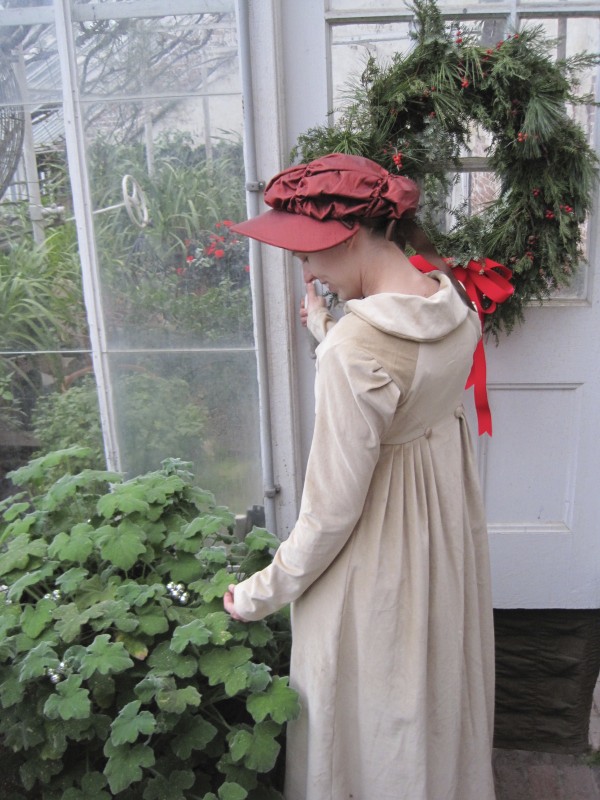
I wore this Spencer to the Massachusetts Costumers annual Regency Holiday Tea. This year, in addition to having tea, we visited the Lyman Estates Greenhouses, which were built in 1804 and added to in 1820, 1840, and 1930.
On to see more of the greenhousesOrnaments hanging from a tree!Picture time!Admiring the decorSo many beautiful things to look at
The tea was lovely and I do believe that my Spencer turned out wonderfully! Spencers are so adorable and varied. I hope to make more in the future… but there are other things to do before I go back to Spencers. The next big push is going to be Edwardian outfits for Titantic evens in April!
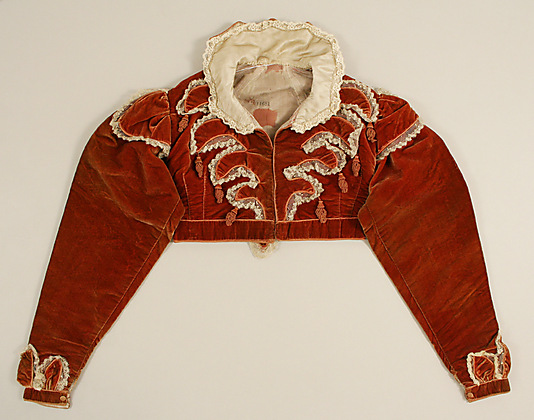
I recently shared with you my research for a Regency Spencer! I found many inspiring images, but below is the one that I chose to reproduce, with some creative license, of course. 1819 is the specific year much of my Regency ensemble is aimed at, so this Spencer fits in perfectly! Aren’t the tassels adorable?
1819-1822 Spencer at the Metropolitan Museum of Art1819-1822 Spencer Back
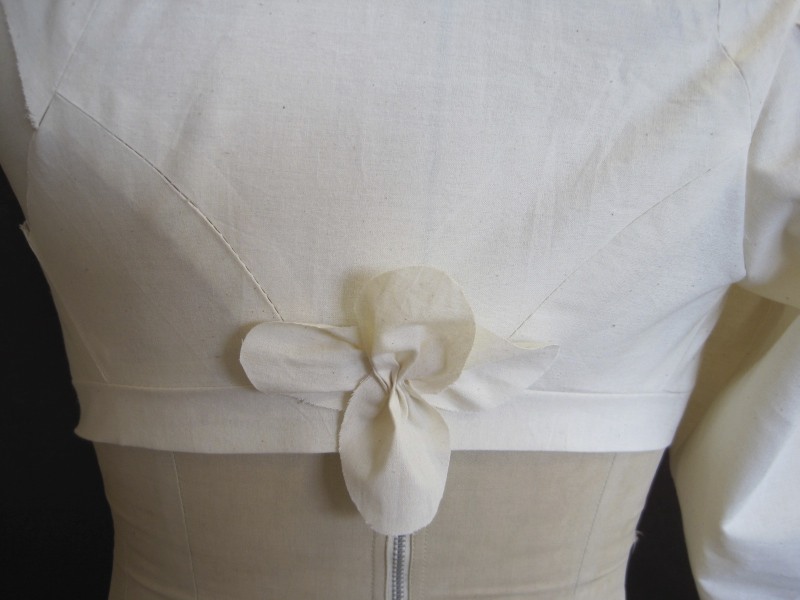
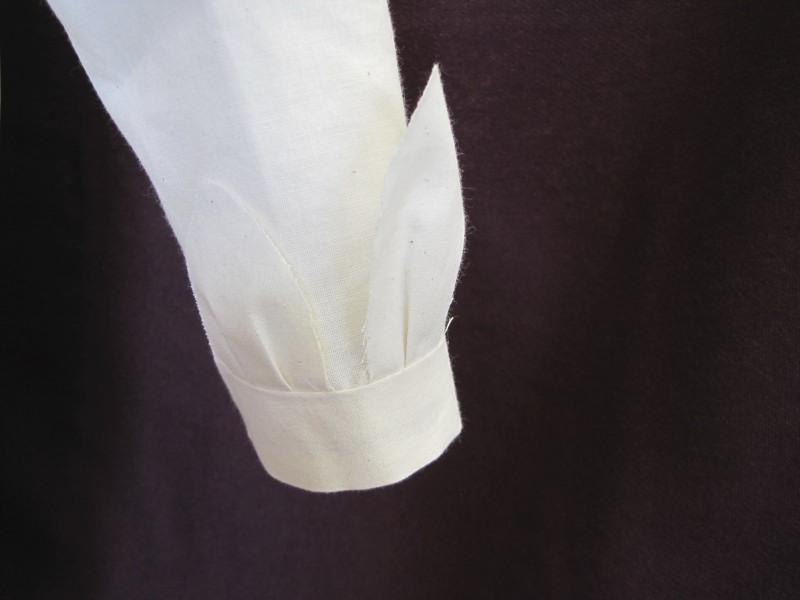
First of all, let me share pictures of the mock-up of this garment!
I draped the pattern and left seam allowance on the draped pieces (to eliminate the step of creating a paper pattern from my muslin) so I could move straight to the mock-up stage. In this case especially, I felt the mock-up to be essential to the fit of the spencer (especially the seams in the back) as well as to reaffirm the scale and placement of the decorative elements. Only after I had fit the Spencer and marked the necessary alterations did I rip open the seams and use the muslin to create a paper pattern.
1819 Spencer Mock-up1819 Spencer MockupBack: close upSleeve: close up
Coming soon will be pictures of the finished garment!
Let me start by explaining my reasoning about adding to my Regency wardrobe. You see, I had two events in mind for which I needed two different Regency looks: the Massachusetts Costumers annual Regency Holiday Tea and the Commonwealth Vintage Dancers 1812 Ball. What to wear???
“Well,” I thought, “I have an 1819 dress that I built last year for the Sense and Sensibility Ball… but I don’t have the right corset to wear under it. Nor do I have any way to make the ball gown into day wear… And, now that I think of it, what will I do with my hair for a day style???”
The first and most foundational step was to build a corset to provide the proper support and shape for the Regency period. You can see my research and construction of the corset in previous posts.
The next step was to turn my ball gown into day wear! Well, Spencers are a classic Regency garment that can perfectly disguise my ball gown by hiding the short sleeves and low neckline, thus turning it into day wear. Perfect! After the Spencer will come the adventure of finding a suitable hair/hat solution.
What is a Spencer? It is a short, waist length jacket from the 18th and 19th centuries first worn by men but quickly adapted into women’s wear. The garment is named after George John, the 2nd Earl of Spencer who was an English politician during the last quarter of the 18th century and the first quarter of the 19th century.
Early 19th Century Fashion Plate at LACMA (Spencer on the right)Fashion Plate, 1807 at LACMA (Spencer on the right)
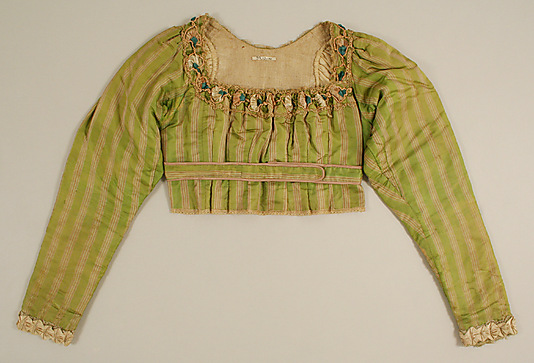
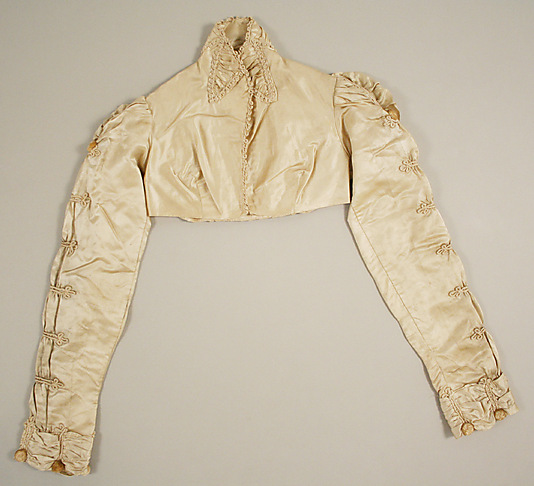
Right now I am interested in the Regency style Spencers, since that is what I will be making, so I will focus my research on that period. Here are some of the Spencers I found most inspirational for my reproduction. These garments are from the Metropolitan Museum of Art’s collection.
1819-1822 SpencerEarly 19th Century SpencerEarly 19th Century Spencerc. 1815 Spencer1814-1820 Spencerc. 1816 Spencerc. 1818 Spencer1804-1818 Spencer (That is a lot of tassels!)c. 1820 Spencer
Let’s leave the Spencer here, in the research stage, for today. More will be coming soon with mock-up pictures of my reproduction!
While looking for research images I did come across this blog post that shows a reproduction of an 1815 Spencer at the LACMA. The post (and her other posts as well) have great commentary about the research and construction of reproduction garments with lots of pictures included!
Well, it’s been a little bit of time since I shared with you my research and plan to build a Regency corset to accompany my 1819 gown. I’m excited to say that I was successful! The corset is complete, although I still plan to quilt a diamond pattern along front rib section within the next few months (I’ll share photos of that once it is complete). You can see the diamond quilting in the photos in the link, above.
The dummy isn't quite the right shape for this corset, but here it is!Corset back
This corset is constructed of two layers of pink cotton twill with a layer of coutil sandwiched between them to provide stability and support. I began construction by flatlining the coutil to the outer layer of twill. I sewed the non-gusset seams (the front and back pieces) together in these flat lined pieces, leaving the inside twill layer for later. Each gusset had all three layers flatlined together and sewn into place with the seam allowances pressed away from the gussets themselves. Then I went back and basted the inner twill pieces into place that had been left aside. I turned under the seams on these pieces and hand sewed them over the seam allowance of the gussets so that no seam allowance was showing.
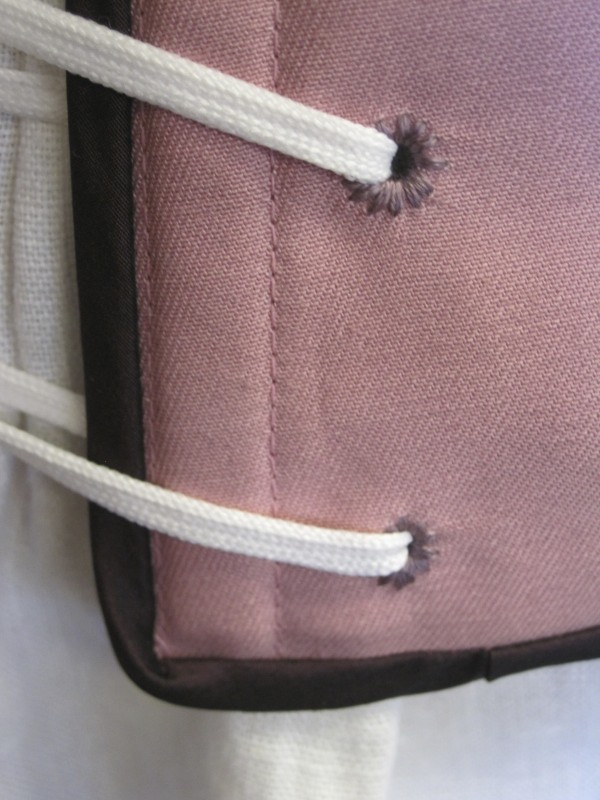
After completing the inside construction I bound the edges with purple bias silk taffeta, scraps from another project. The final step was to create eyelets. I decided to do these by hand in purple cotton embroidery floss. Each eyelet is reinforced with a metal jump ring that is caught under the thread on the inside of each eyelet. This reinforces the edge of each eyelet and keeps them from stretching out of shape when laced. The jump rings are only visible on the inside of the eyelets, where the stitching is bulkier because it passes over the rings.
Hand sewn eyelets, on the outside
The corset is lightly boned at center front and center back. I struggled over what material would be best to create the 2″ wide center front bone. Eventually I remembered a suggestion from a friend, Carly, who had used a creative option for boning that I decided would be perfect for this project. Home supply stores such as Home Depot and Loew’s sell plastic wire ties that are about 3/8″ wide and which come in lengths up to about 20″. The ties are a good 1/8″ thick, strong, but still bendable. They have a similar tension to a steel bone, but are a little thicker. And the nice thing is that you can cut and shape them easily with scissors! Of course, plastic boning is not historically accurate, but it is functional and affordable (a pack of these wire ties is about $5, and there are about 12 per pack) and creates a boned garment that feels similar to one boned with steel bones (and once you finish the garment, who would know?).
In this corset, each side of center back has a single bone. The 2″ wide center front bone is actually 5 wire ties attached to one other with (shhh!!!) masking tape! This is an experiment that I hope will work (I have slight fears that body heat might one day cause the tape to lose its grip and the bones to start to move around in funny ways, or worse, that the tape will leech sitcky goo onto the fabric that will stain the exterior). I put the center front bone in between the layer of coutil and the inside twill, so even if the masking tape does one day create stains, it is unlikely that the stains will make it to the outside of the corset.
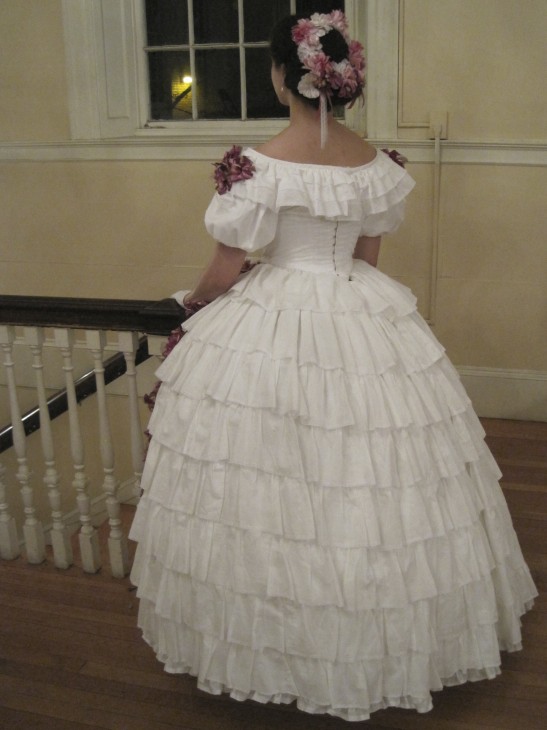
Over the summer I built Annabelle, a white flounced 1860 ball gown, in order to have an alternative to my dark blue 1860 ball gown. My intention was to adorn Annabelle with flowers, as in my inspiration fashion plate from Godey’s Lady’s Book (Annabelle is based off of the gown on the far right); however, I did not have time over the summer to add the flowers.
September 1860 "Dressed for a party" (Fitting title, don't you think?)
I decided to wear a be-flowered Annabelle to the Commonwealth Vintage Dancer’s German Cotillion last week. My original plan was to hand make the flowers from hand painted pink silk organza. I started on that endeavor, but the process was time consuming and so I have only made perhaps 100 flowers (first: cut 5 rounded point shapes, second: fray check the edge all around, third: gather the center of each flower). Each flower is about 1 1/2″ across. When I went to sew the flowers on the dress I realized two things that made me change my mind about using them: the flowers were too small for the scale of the dress and I would need so many more hundreds to make the look work. In the end I used purple millinery flowers, from the fantastic stash I mentioned in the post about my 1860 hair crescent, to adorn the dress. I actually really enjoy the purple flowers and the scale is far better for the overall look as well.
Annabelle with flowers!
I used matching flowers plus a few others in the pink family to create a wreath for my hair to match the dress.
Annabelle backMatching hair wreath
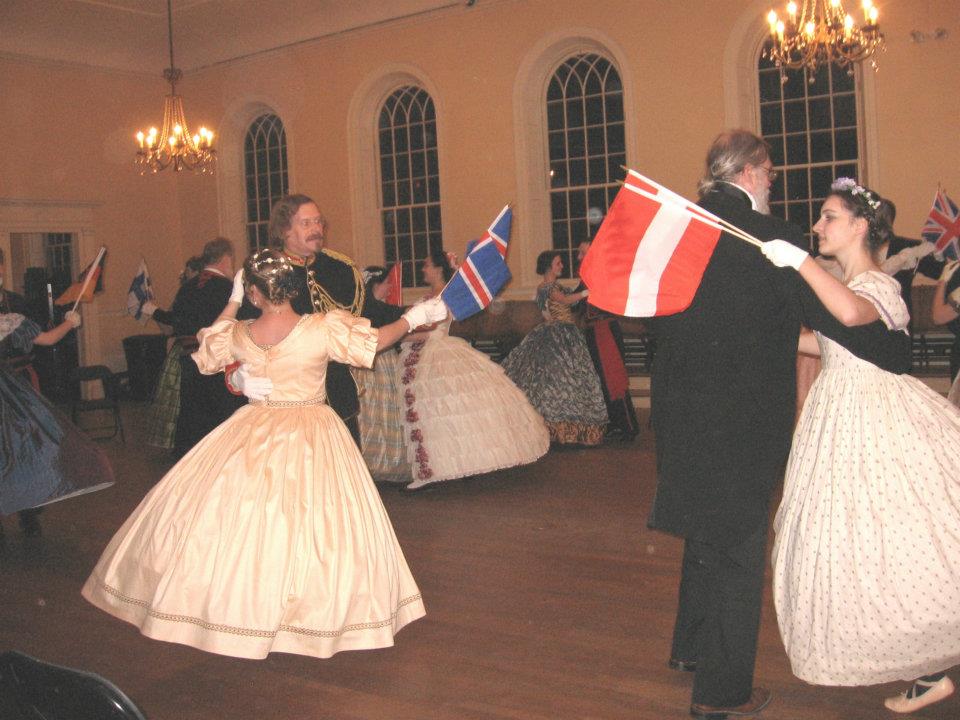
If you would like to see what Annabelle looked like without the flowers, you can visit the following posts and see pictures: Of Flounces and Dance Cards: Part I and Ochre Court 1860s Ball 2011. And, to finish off this post, here are a few pictures of Annabelle in action at the German!
Playing dance games at the German CotillionPlaying dance games at the German Cotillion
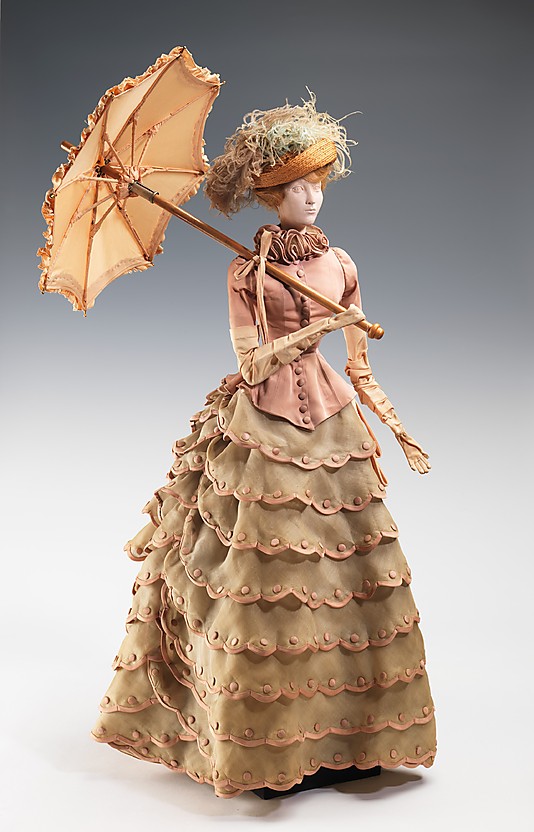
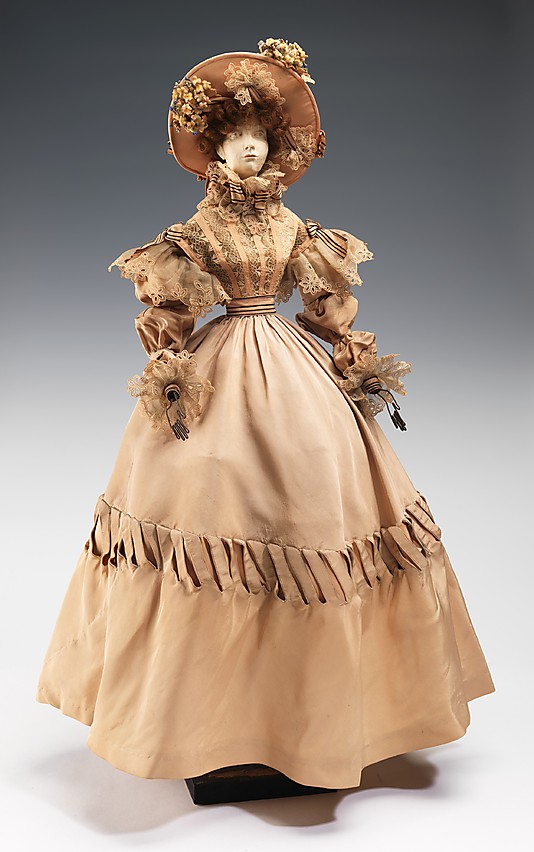
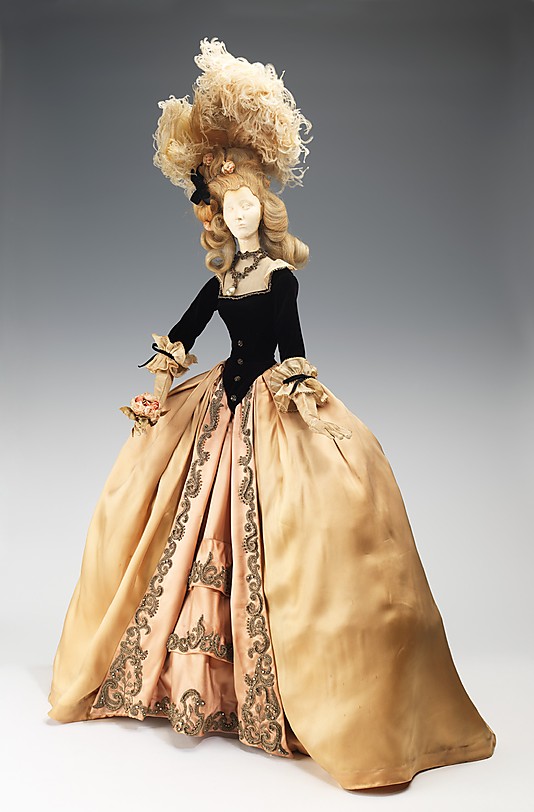
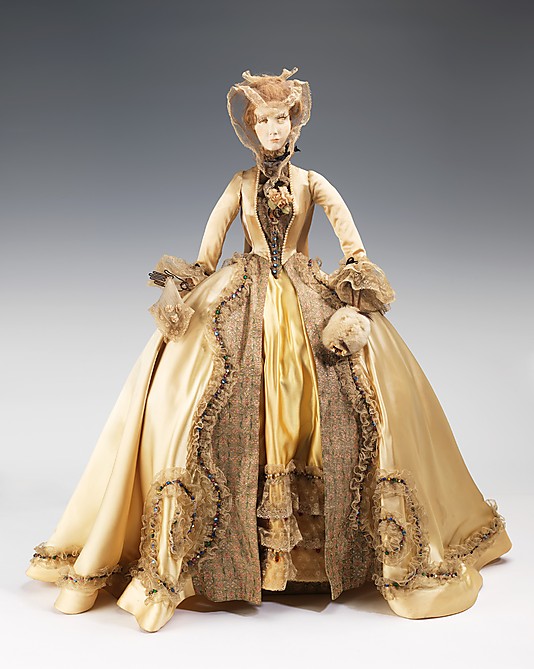
These fabulous 24″ dolls are at the Metropolitan Museum of Art. They have a compelling story, which you can read about here, on the Diary of a Mantua Maker’s blog. As noted, they are not entirely historically accurate, but they are beautiful, nonetheless. The details are exquisite! Here are some of my favorites: I encourage you to go to read and see more by clicking on the above link!
1884: Nina Ricci1867: Jacques Fath1828: Henriette Beaujeu1774: Jean Desses1733: Jean Bader






















 The Quintessential Clothes Pen