“Vintage in Vogue” Finds

In August for each of the last eight years, I have been blessed to be able to enjoy an annual trip to Cape Cod. By this point the trip feels just like going home: I know the places I like to go, that I like to eat (and they recognize me, even though I’m only there one week out of the year!), that I like to shop… and I only deviate from these things when I want something new–a sense of adventure.

Well, a few years ago I was encouraged to visit a new store, which I did, and since then I have returned on every visit to the Cape. What store, you ask? Vintage In Vogue. This unique vintage clothing store is run by the wonderfully passionate Maureen Leavenworth. Truly, Vintage In Vogue is a unique vintage store. Maureen really cares about the stories behind the items for sale and she takes the time to share those stories with you when you are interested in an object.

The store is full of fun things like shoes, hats, jewelry, furs, patterns, fashion plates, and of course, dresses. There are some pieces from the 19th century, as well as many items from the 20th century. There is also has a whole area devoted to vintage wedding gowns and accessories. This year as I was poking around looking at the fun things… I found a few things I decided to take home with me.

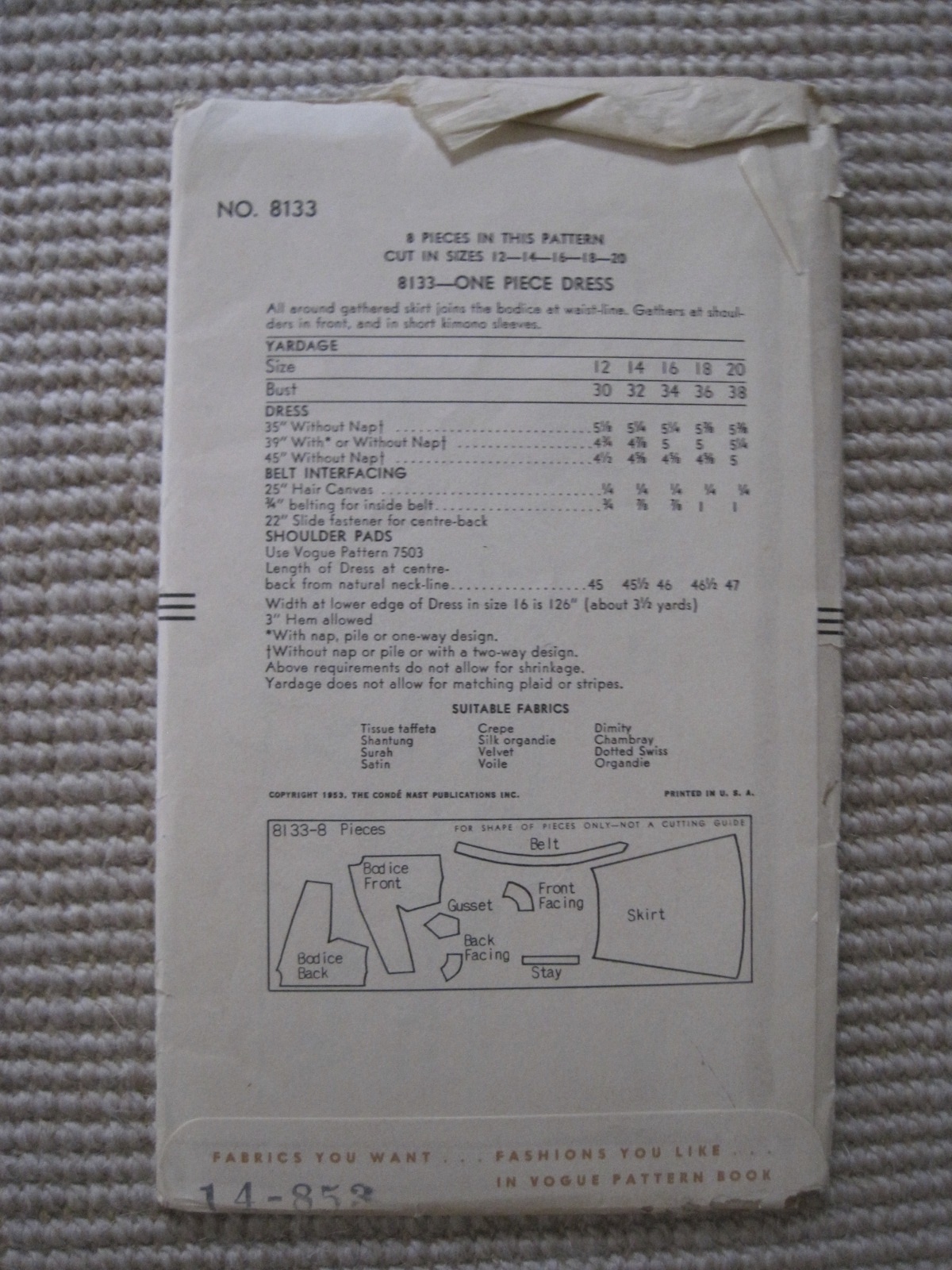
First, a 1950s vintage Vogue pattern!

Useful for when I find time to make a Mad Men inspired dress. The ruching on the shoulders is an interesting detail in this pattern.
Back of the pattern envelope.

Then, a fur collar, separate from any garment that it once adorned.
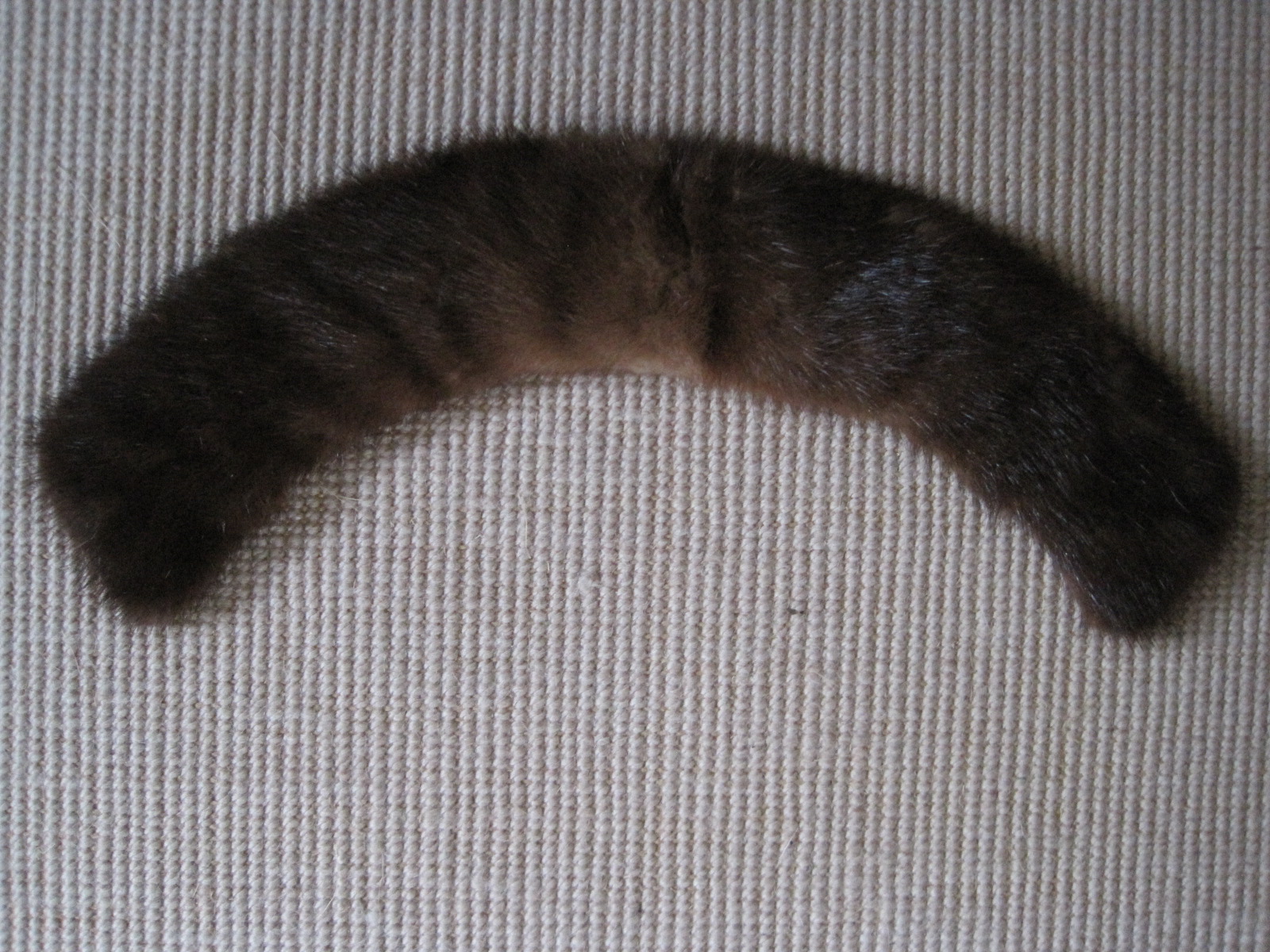
I have a vision of turning the collar into a fur trimmed 1860s hat one day.

And, lastly, a framed fashion plate from 1894!
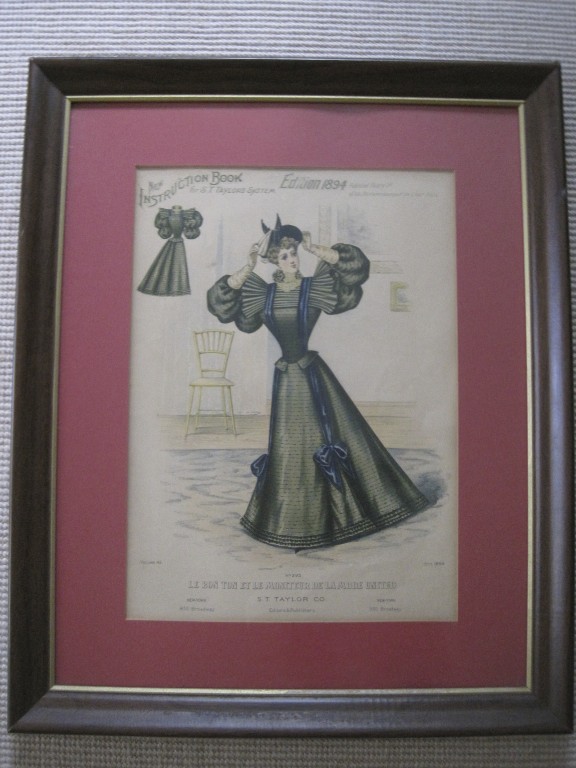
“La Bon Ton Et Le Moniteur De La Mode United” Published by S. T. Taylor Co., New York, October 1894.
A close up of the fashionable lady.
And of the back view of her dress.

I was very pleased with my finds. The pattern and fur collar have been put on the far back burner, but the 1894 lady enjoys a place of prominence on top of my dresser. I  know that doesn’t sound very glamorous, but she has a light above her that I can turn on so it looks like she’s in a spot light, and she’s in a place where I see her every day as I’m getting dressed. It’s kind of perfect for me and my interests, actually, to see an image like this each morning.
Newport Vintage Dance Week Part VIII: 1890s Soiree at Roger Williams Park Casino

Wow! I am so pleased that you are still here with me to share my copious yet fabulous memories from Newport Vintage Dance Week. The end is near, but not here yet… These pictures are from the last formal event Newport Vintage Dance Week will ever host: the 1890s Soiree at the Roger Williams Park Casino.

Built in 1896, the Casino at Roger Williams Park features a brick exterior and verandas…[in the] Colonial Revival architectural style of the late nineteenth century. The interior walls of the first floor are constructed of hand-finished wood panels, the original maple floors are intact, and details such as beveled mirrors and an emerald green tiled fireplace lend a formal and elegant air to the surroundings. Upstairs, the…grand [ball]room, with it’s birch floors, is painted in warm, rosy tones to evoke a sense of well being, a priority during the “Gay Nineties”. Plaster friezes and frescoes of cherubs and musical instruments adorn the 20-foot ceilings.

We arrived after sunset, due to a lot of last minute sewing, thus I didn’t manage to get pictures of the exterior of the building, but here is one courtesy of one of the catering companies that often does events at the venue (found via google).

The exterior of the Casino.

Now, before we proceed any further, I think we must ponder the definition of the word “casino.” To our modern minds, the word evokes a house of gambling, but that is not the appropriate definition for this particular venue. Here is Merriam-Webster’s first definition of the word: 1-a building or room used for social amusements; specifically: one used for gambling. Clearly, we were going out for social amusements! An example of the word in use (and related to our ball!): “on summer evenings dance bands would perform in the seaside casino.” So fitting!

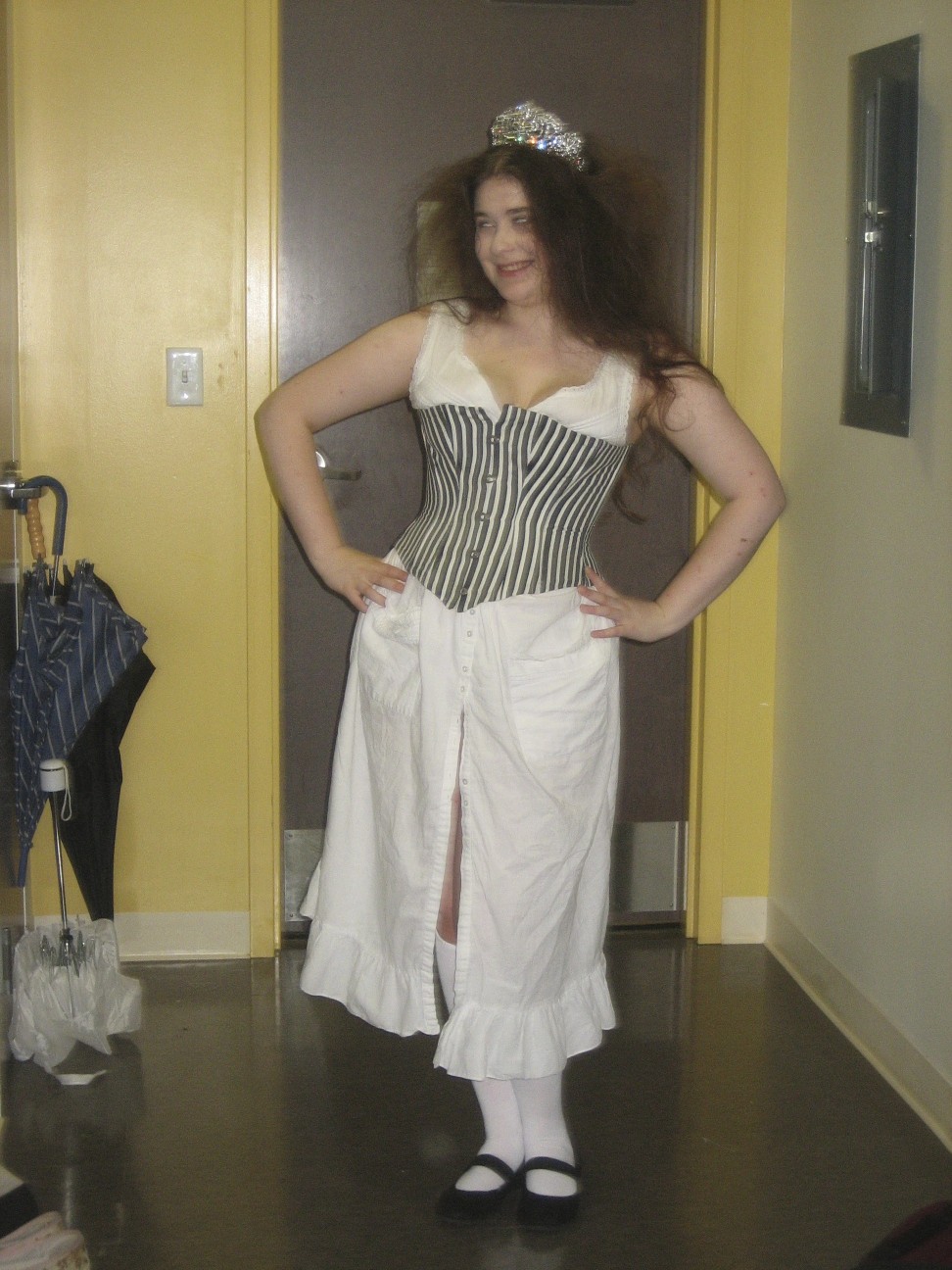
This is Friday afternoon. The ball was Friday evening…
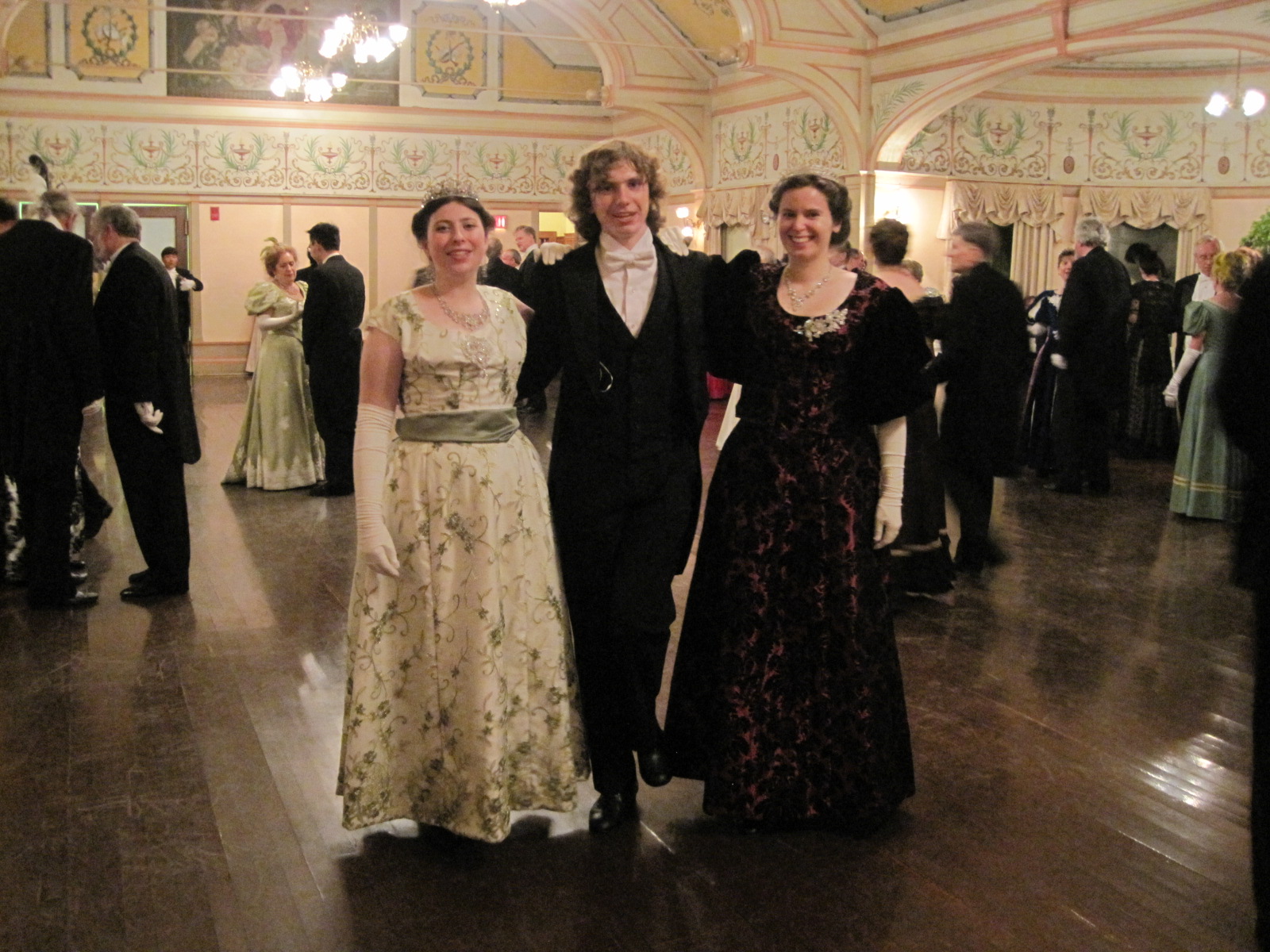
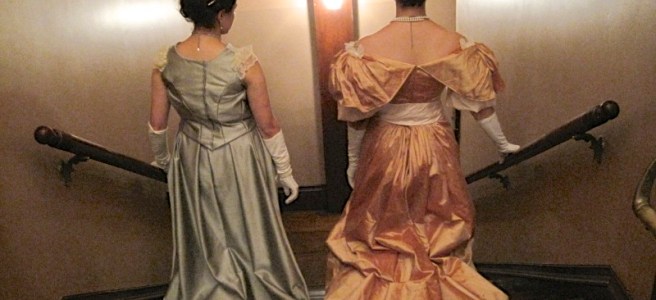
Getting ready to go wound up taking awhile because this decade needed lots of hair teasing and fussing from all of us to compliment the tiaras and bling!
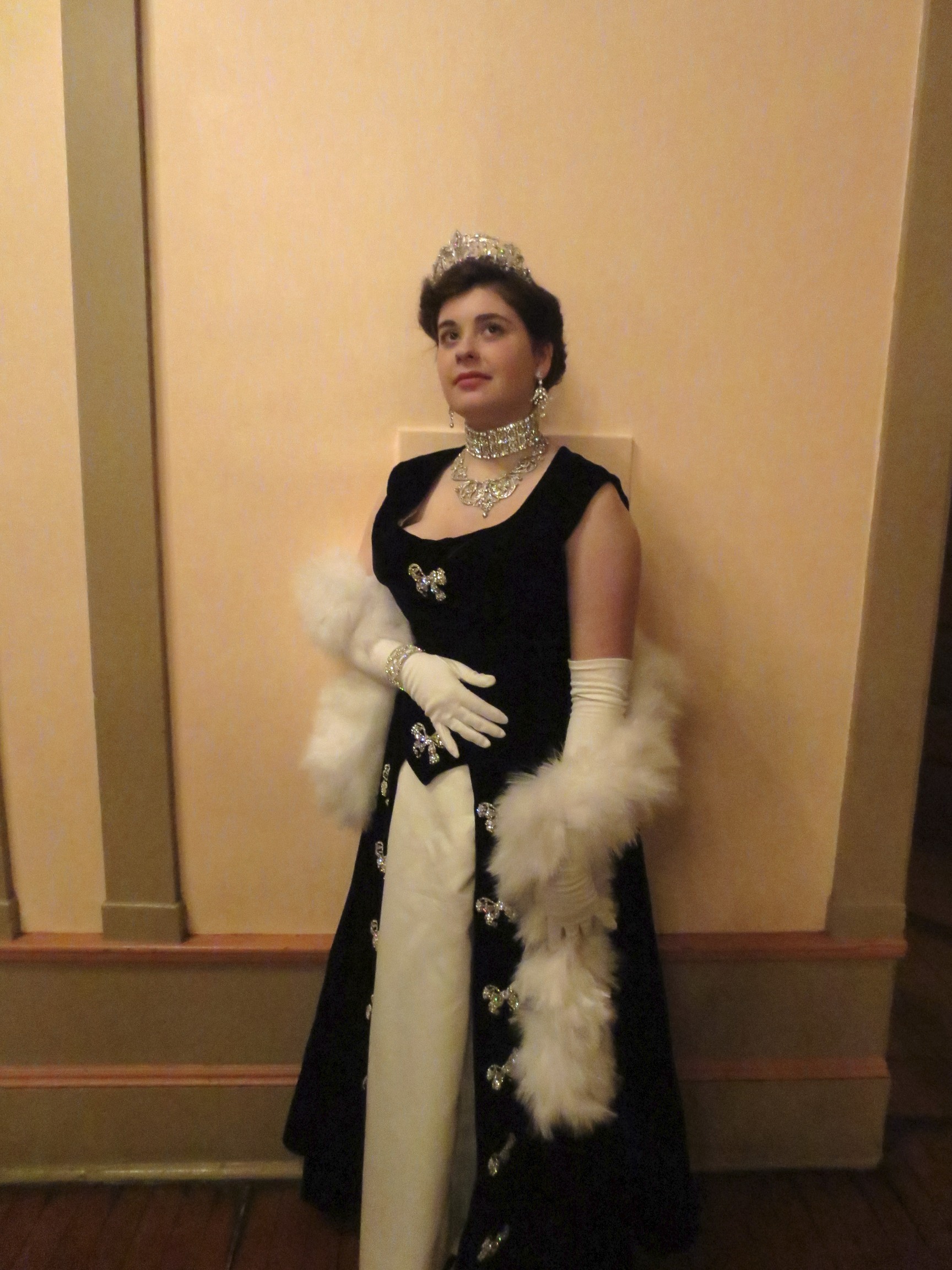
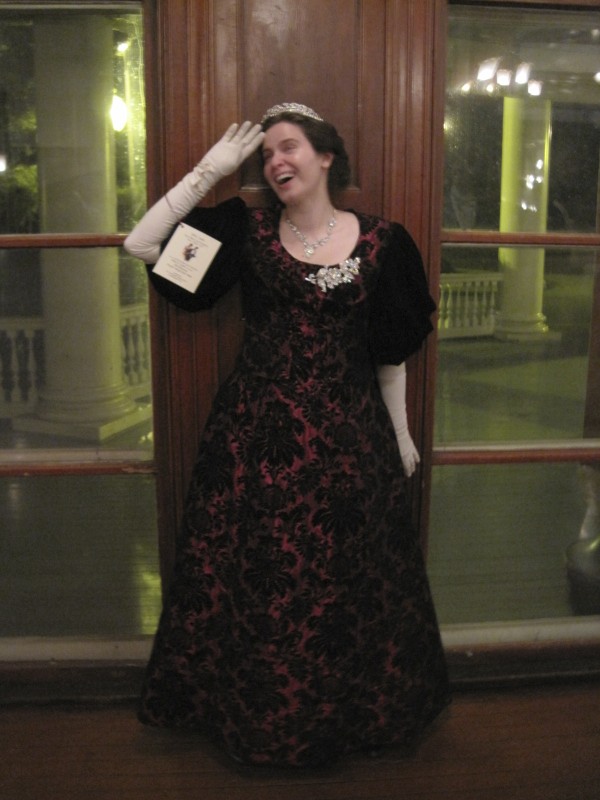
Dressed! And blinged!
Three all new dresses that were finished the evening of the ball!
Another last minute finish.
Luckily, everyone made it to the ball wearing clothes!
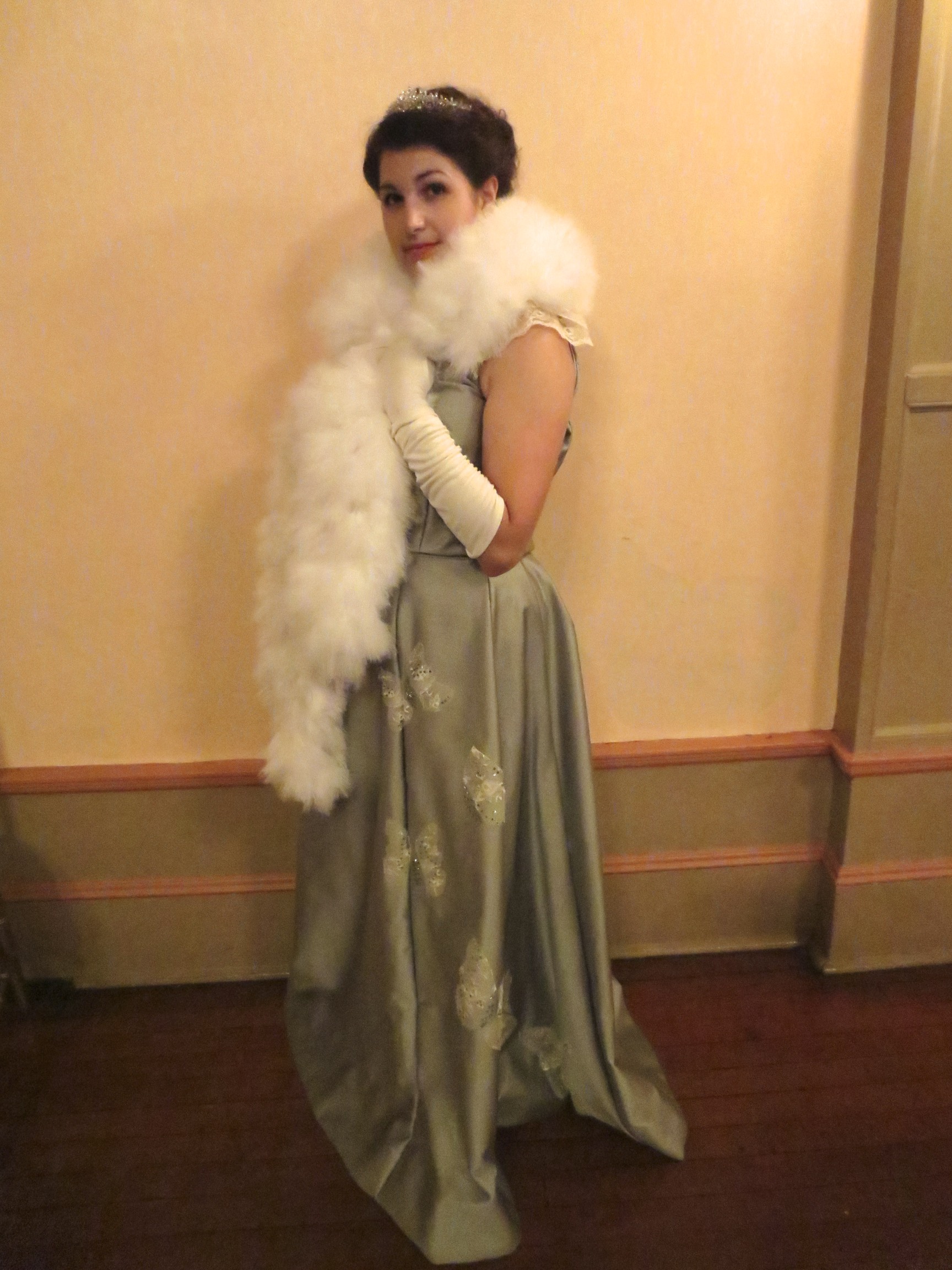
I made an all new 1893 silk ball gown for this event. I received many lovely compliments, including some that expressed the feeling that I had achieved both the silhouette of the period as well as the overall style and that I really looked as though I had stepped out of the past. Yay! Goal successfully reached!
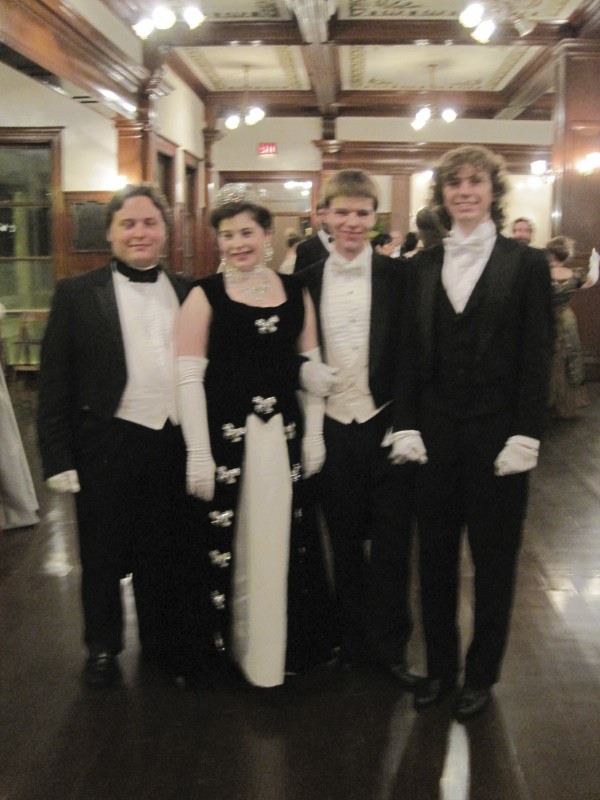
Another TNG picture. The bling was borrowed amongst all of us so everyone had sufficient sparkle.
Such a great ensemble! Adorable dress, fabulous feathers, and really awesome shoes!
A little blurry, but aren’t all the penguin-look-alikes fabulous?
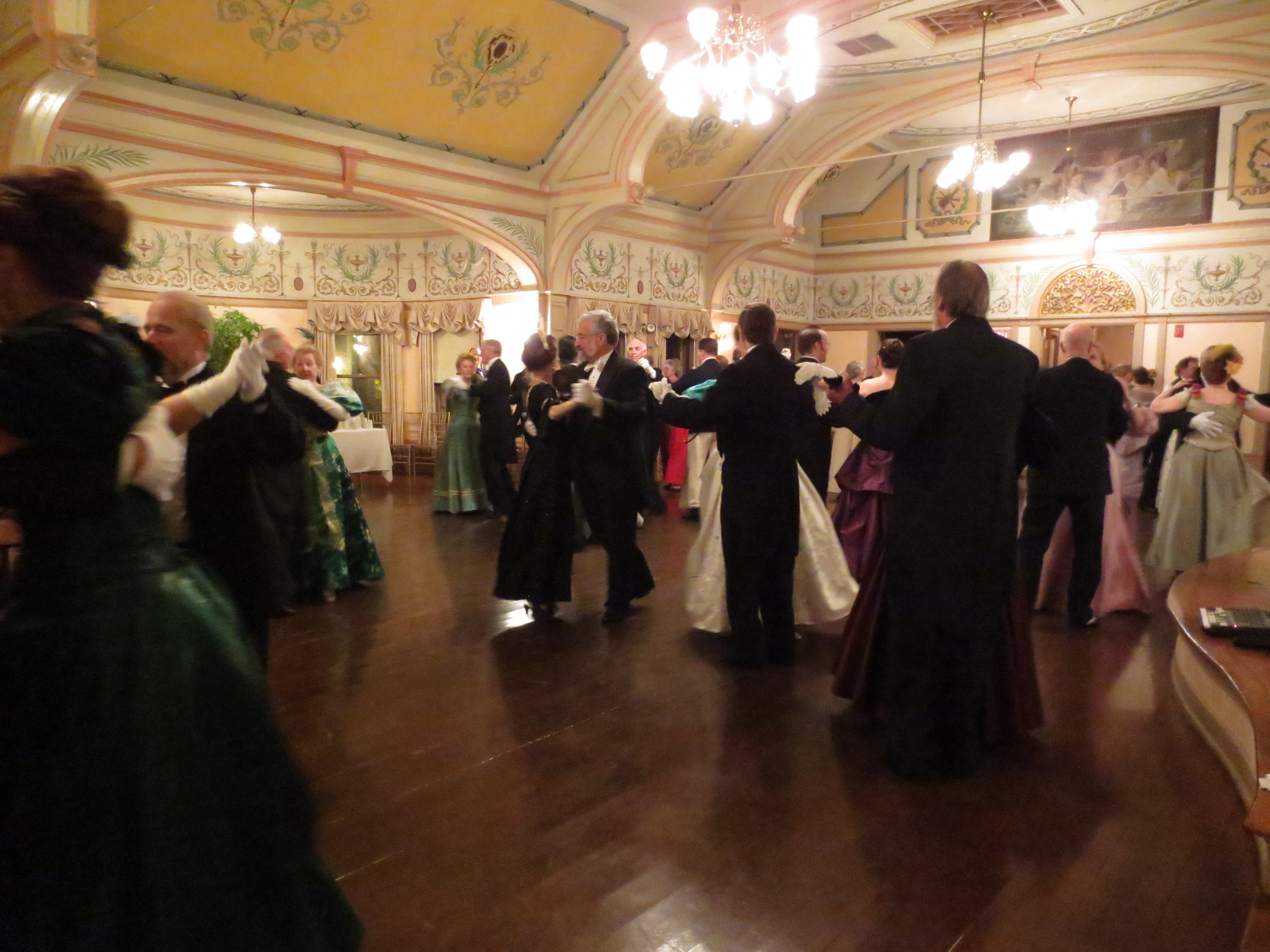
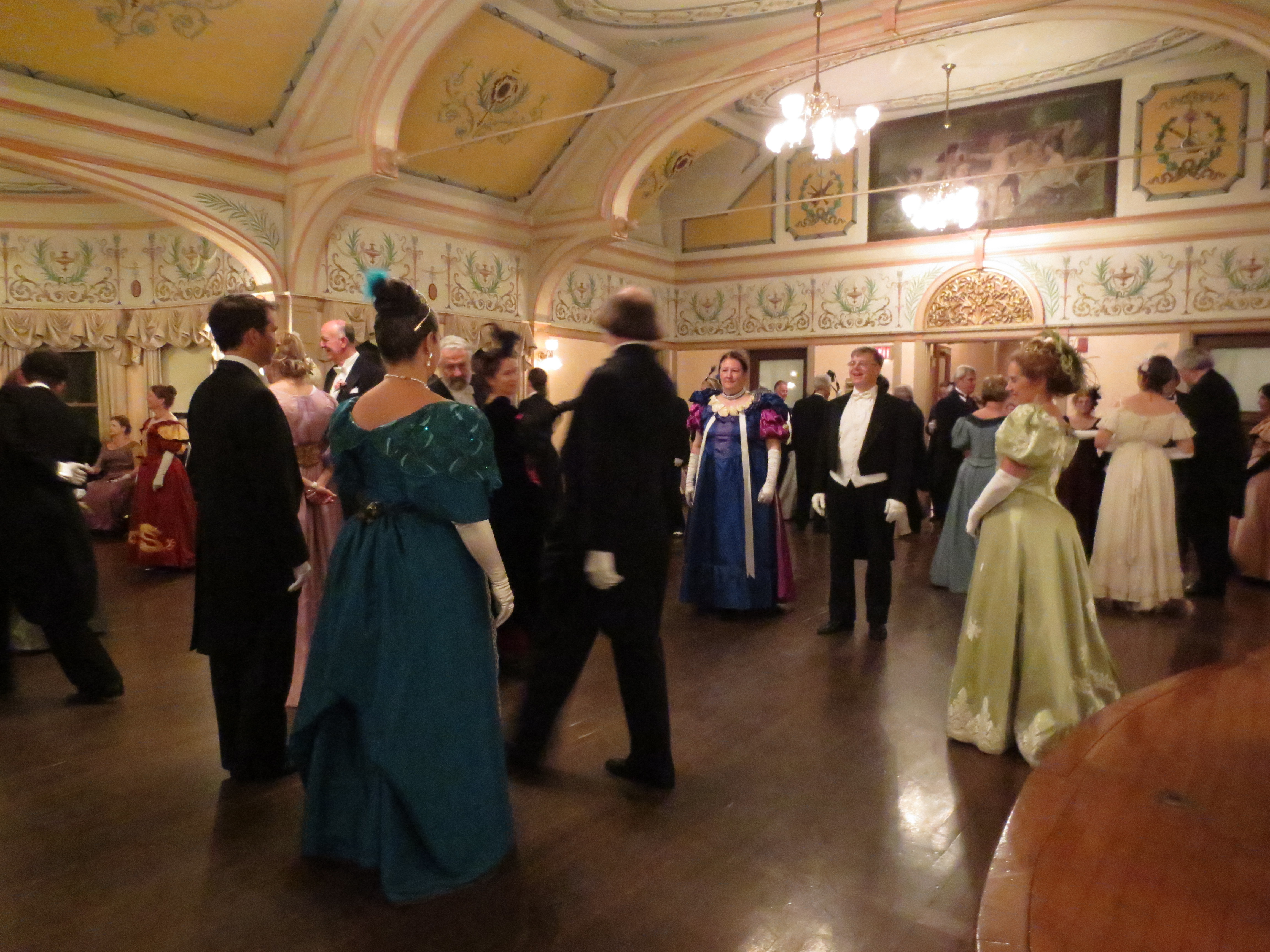
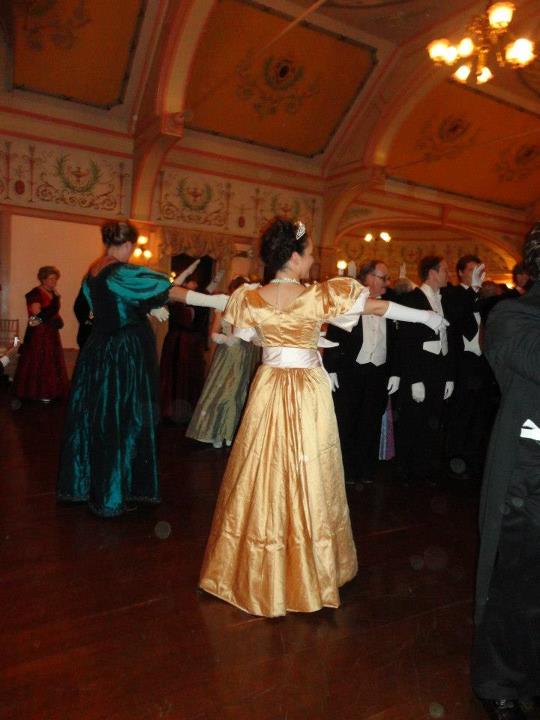
Dancers at the ball. This is the upstairs ballroom.
More wonderfully dressed dancers.
A figured dance, I believe. Isn’t the atmosphere amazing?
Directing traffic around a tight turn in the Grand March. This particular Grand March went up and down stairs multiple times!
The Cake Walk. It’s a silly dance that where you prance and posture around the room, or, if you are in TNG, you might participate in the “Zombie Cake Walk.”
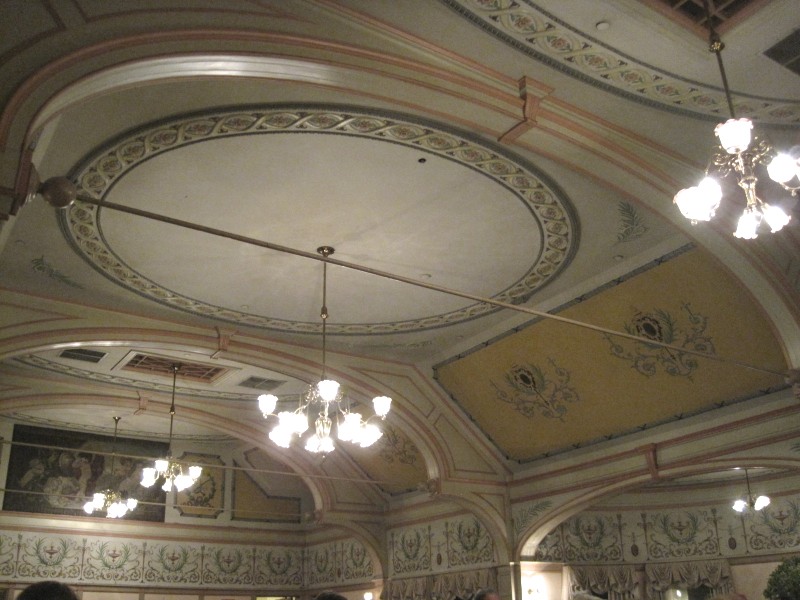
The ceiling of the upstairs ballroom.
Some TNG-ers dancing in the downstairs ballroom.
The ceiling of the downstairs ballroom.
The ballroom grew quite warm, but we discovered air vents in the floor!
Then we had people stand on them but didn’t tell them ahead of time about the nice, cool air… (insert sneaky laugh)
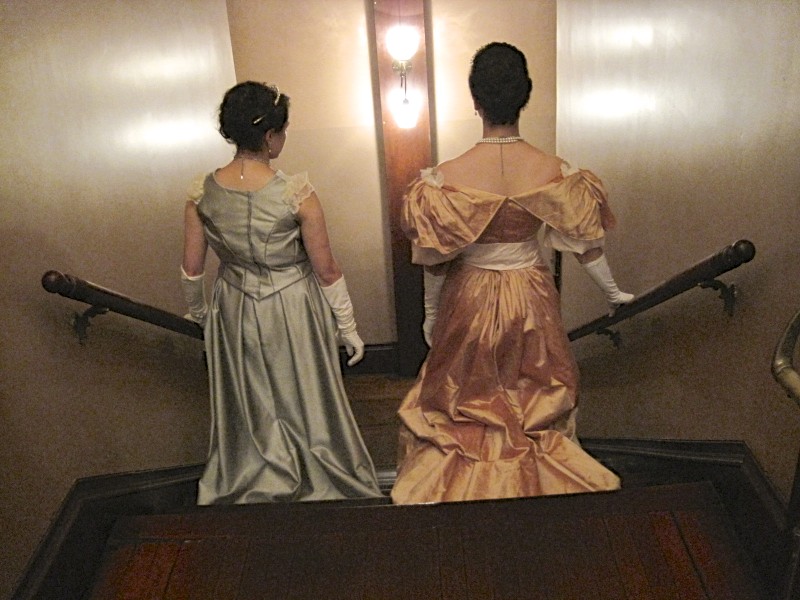
Preparing to leave. It was a long, fabulous week.

Final tally: 20 pictures out of 468 from this event.

Bolero jackets of the 20th century: 1900-1909

A few posts ago, we took a look at Bolero jackets from the mid-19th century. Let’s look at them  in another context: Boleros from the early 20th century, with a hint of information from the 1890s as well.

1904 Dress with Bolero

What exactly is a Bolero jacket? The Oxford English Dictionary defines it as “A short jacket, coming barely to the waist; worn by men in Spain; applied to a similar garment worn  by women elsewhere, usually over a blouse or bodice.” This definition condenses the influence and origination of the Bolero down quite eloquently (of course, it is the job of the OED to eloquently distill all words down to a concise definition… but still, I do like this definition). The men’s style Spanish Bolero, with elaborate braiding and bright colors, influenced the style of women’s Boleros from the Victorian period. The following quotes from the OED provide more insight into the history of the Bolero (they also mention other styles of short jackets including the Zouave and the Eton).

“1892    Daily News 14 Nov. 6/3   The Zouave is as great a favourite as it has been for some seasons, and though it varies in form—being sometimes a bolero, sometimes a toreador, and sometimes a cross between an Eton jacket and a Zouave.
1893    Daily News 1 Apr. 2/4   The Zouave is quite as popular as it was last year.‥ Sometimes it is pure bolero.
1893    Lady 17 Aug. 178/1   Zouave Bodices are a feature of autumn gowns. (in the Zouave definition)
1899    Westm. Gaz. 6 July 3/2   Robbing the coat of its basque has created‥the bolero corsage, really an actual bodice, though appearing a bolero coat and skirt.”

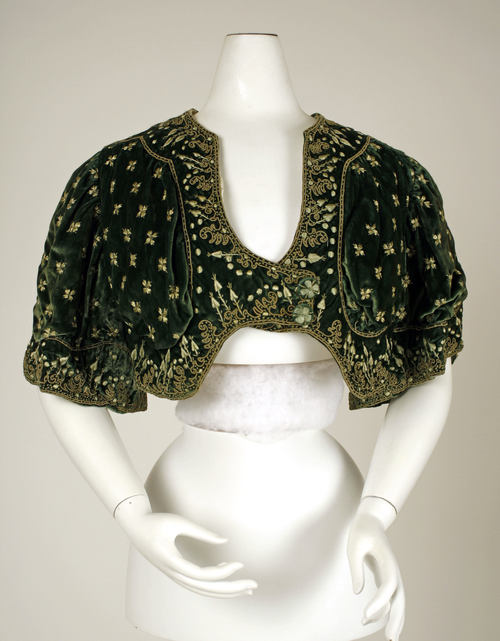
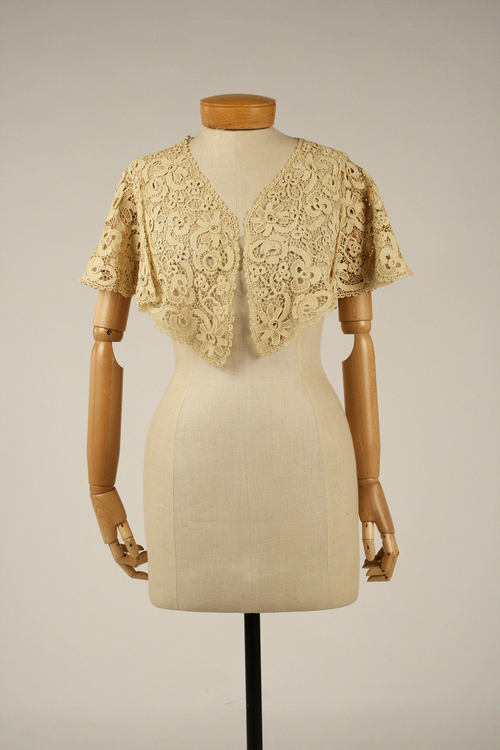
The flared skirt and small waist silhouette of women’s clothing during the first decade of the 20th century was well suited to the style of Bolero jackets, as they could help to visually balance the figure by adding just a small amount of width across the chest and shoulders.  Here are a few Boleros from the Metropolitan Museum of Art. One is silk velvet, elaborately trimmed. The other is lace. Can you imagine the dresses that would have accompanied these Boleros? Clearly, they were intended for different purposes. Perhaps the first was intended for evening wear and the second for an afternoon stroll or visiting friends?

c. 1905 Bolero from the Metropolitan Museum of Art
c. 1907 Bolero from the Metropolitan Museum of Art