Project Journal: Victorian Women’s Tailoring Part VI: Fitting 1903 Garments

Well, if you remember from a few posts ago, I completed my mockup undergarments and exterior garments for this 1903 look in muslin (the same fabric I used for the 1883 and 1913 mockups). But now I’ve completed first fittings for my garments in their actual fabrics!

Let’s start at the outside and work our way in. The exterior “suit” is two pieces: a jacket and walking skirt. Both layers are constructed of fairly heavy wool, so tightly woven it is almost like melton. Melton is a felted wool frequently used for outerwear and constantly used historically for it’s water resistance and ability not to fray–thus allowing tailors to leave their cut edges raw and not finish them with time intensive seam finishes. The walking skirt is intended for use out of doors: specifically for talking walks (hence the name) and promenading about in the public eye.

Under the jacket is a silk crepe blouse with a lace yoke, collar, and cuffs. If you look closely you can see the three points of the lace yoke on the blouse. The blouse is pulled off-center in this picture because of the alterations I needed to make-only one side has the alterations pinned.

Under the skirt there is a cream colored lace edged silk shantung petticoat. The petticoat has two circular, gathered ruffles at the bottom. The top ruffle has a wavy hem edged in lace and the bottom ruffle is edged in matching lace. There are also arches of lace above the ruffles.
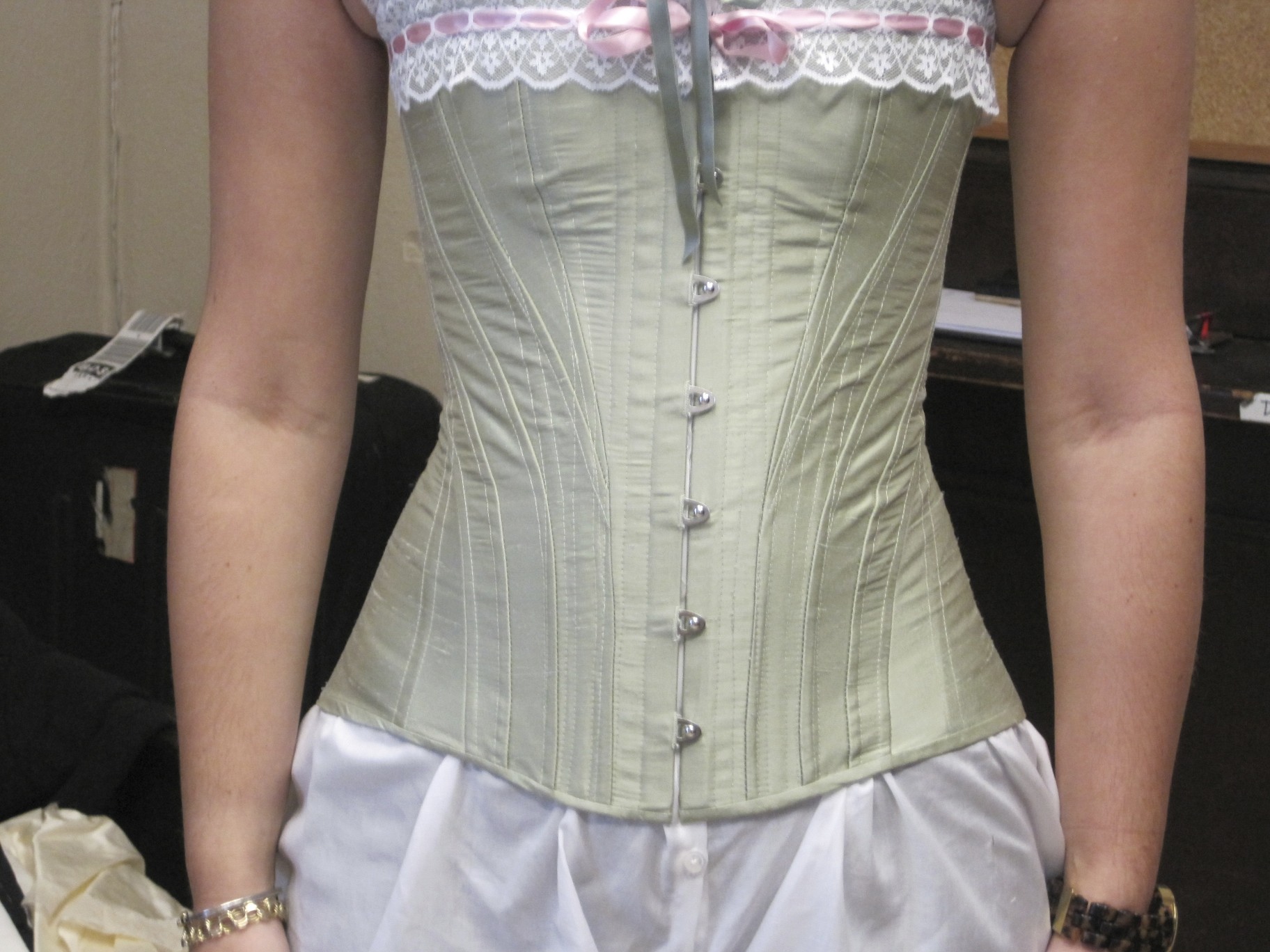
There is also a cream colored corset cover that is not pictured in these photos. This s-shape corset is made of green silk shantung flat lined with coutil. The seams are flat felled on the inside. The edges are bound in bias cut shantung and the top is also edged with white lace threaded with pink silk ribbon. Under the corset is a cotton combination that buttons up the front. A combination is an undergarment that is functions as a chemise but has bifurcated leg openings, like drawers. This pair is edged in white lace at the leg openings and neck edge. The neck opening is threaded with a green silk ribbon to coordinate with the corset.

Project Journal: Victorian Women’s Tailoring Part V: Fitting 1883 Tailor Made Suit

As you saw in my last post, the undergarments for my 1883 look are complete. The understructure, especially the corset and bustle, is essential to the creation of the silhouette in 1883: without these pieces the exterior garments would crumple and sag. The thing is, the exterior garment is tailored to fit this exact shape: if that silhouette is not created by the undergarments then the exterior garments just don’t fit!

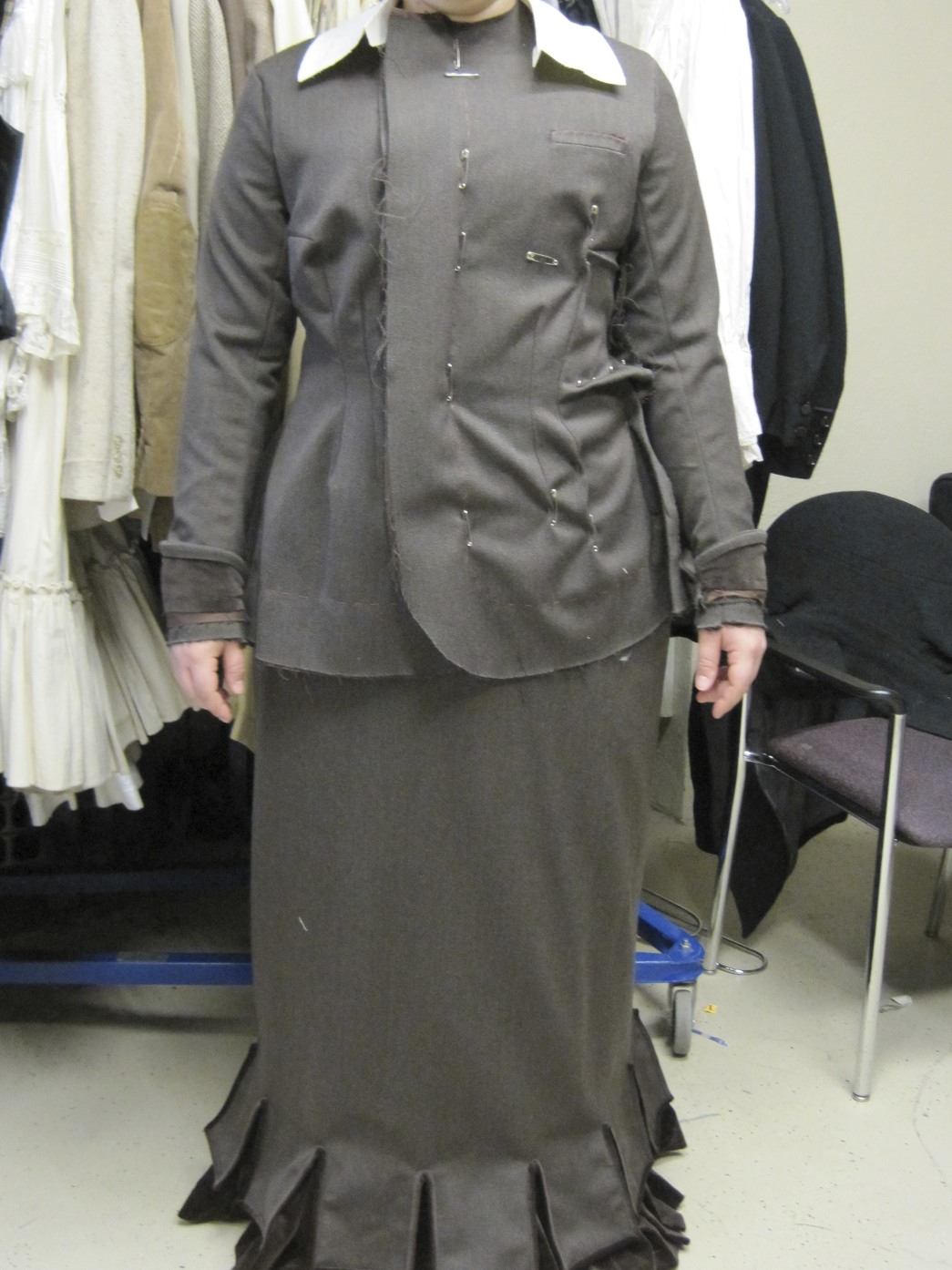
Let’s take a look at the exterior garments. First, the skirt. This skirt is many layers: the one you can see now I call the “foundation skirt.” It is the part of the skirt that hangs from waist to floor without any draping on it. In reality, the foundation skirt is actually made of two layers. The first layer is the one you can see with the velvet knife pleats along the hem–the knife pleats are 10″ high (ending just above the tabs in the wool)–but don’t be fooled, the knife pleats are attached to a cotton underskirt that extends up to the waist. Why? Multiple reasons: 1-this skirt is already super heavy with just one layer of wool and the velvet trim, and I haven’t even added the drapery yet; 2-the skirt is already super warm as well, it would be too warm with velvet all the way to the waist; 3-the Victorian mindset was to not waste precious money on beautiful fabrics that weren’t seen, so this technique of using cotton underskirts edged with fancy trim is very common; 4-velvet rather than cotton would add more bulk  to the circumference of the waist, and the goal is to make the waist as small as possible. You can’t see the pins, but I did have to make alterations at the waist, since the bottom edge was already finished. There are more skirt layers coming: a gathered and draped “back drape,” and an asymmetrically pleated “front drape.”

The jacket is the other exterior garment. This garment is actually a really good example of the alterations I almost always have to make before I am able to finish a garment. The left side is how the garment fit when I put it on my model. On the right side you can see all my safety pins moving and adding darts to make the jacket fit better. Although it looks wrinkly, once I stitch all those alterations it will actually allow the jacket to fit smoothly over the torso. You can also see my mockup collar on this jacket.

What comes next? Well, because I needed to basically take out all my front darts and seams and move them, I had another fitting with my model before starting to finish the garment. Unfortunately, I forgot my camera! I’ll try to finagle pictures, but they’ll be coming later. After the second fabric fitting I move on to finishing my garments completely!

Project Journal: Victorian Women’s Tailoring Part IV: Fitting 1883 Undergarments

I’ve put together my actual fabrics! First to fit is my 1883 undergarments. These garments are essentially finished and ready to be worn.

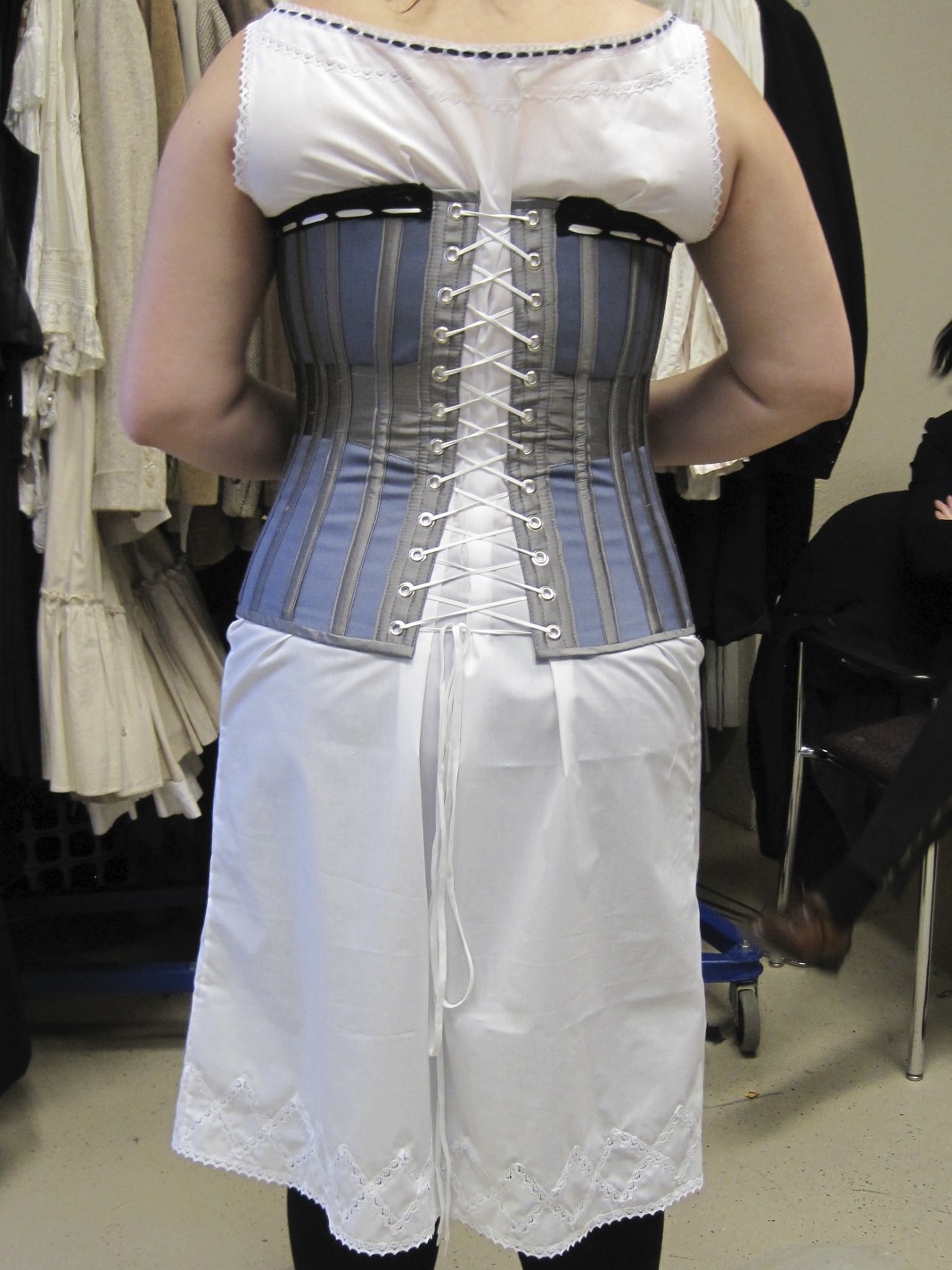
The first layer is a cotton chemise with intersecting zigzag pattern lace insertion at the hem and simple lace edging around the neck opening and armholes. The tie is navy silk ribbon.

The corset is blue cotton twill flatlined with coutil for stability and grey silk shantung boning channels. The top is edged with black lace and off white silk ribbon. The bust also features cording across the front panels as well as flossing at the top of the boning channels.

It’s hard to see the corset detail in the first picture, so here’s a close-up. You can actually see the cording in this picture. The waistband is decorative as well as helping to cinch in the waist. The top and bottom of the corset are bound in bias silk shantung.

Here’s a small back view as well. It looks like I could have laced the bottom half a little tighter!

The next layer is the cotton corset cover with pin tuck decoration and navy silk ribbon threaded through lace around the neck. The front closes with pearl buttons down the front. You can see the corset cover detail in the two pictures below

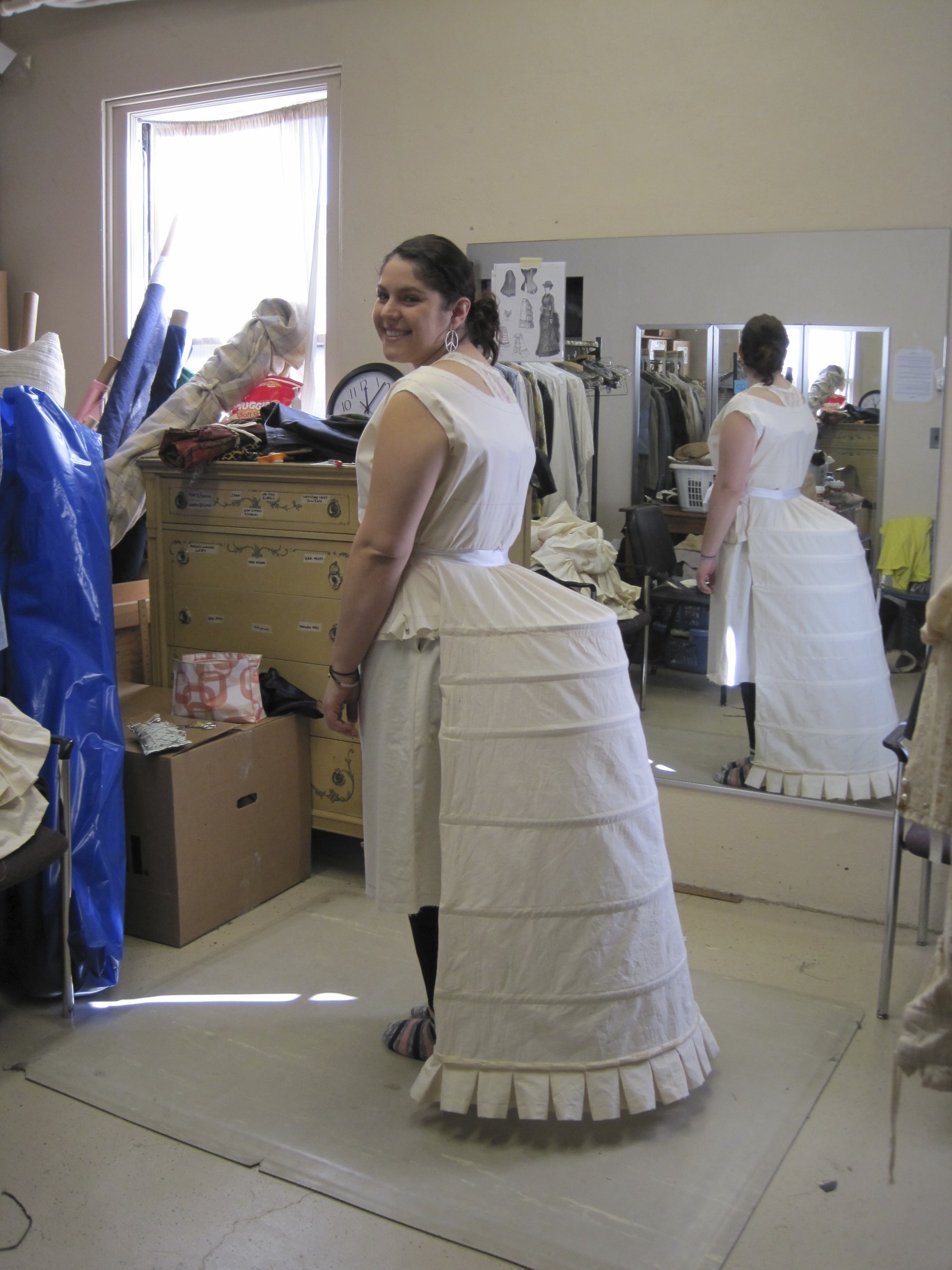
After the corset cover is the bustle itself! It is constructed of off-white striped cotton with hoop steel bones inserted into the horizontal channels. The bottom is finished off with a nice box pleat.

Back bustle view on the left!

On the right you can see the pin tuck detail on the corset cover.

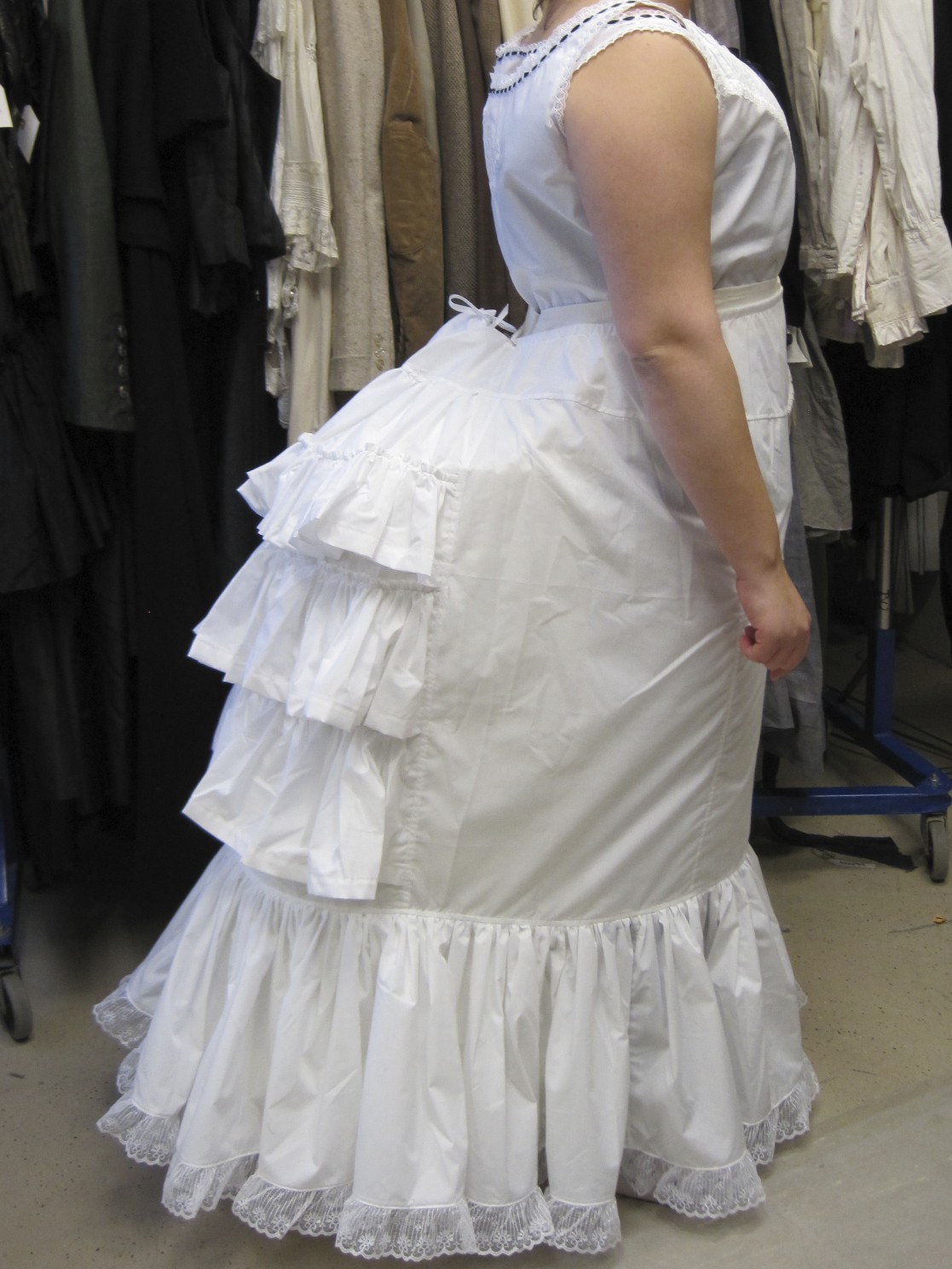
After the bustle comes the petticoat! It is constructed of cotton with lace edging. Here’s a front and side view. You can also see the pin tuck detail on the corset cover in the front view bustle picture.

The 14 hour Regency dress (Sense and Sensibility Regency Ball 2011)

I’d decided months ago to attend  the Dancing with the Dashwoods (Jane Austen period) Ball recently hosted by the Commonwealth Vintage Dancers; however, I was in a sticky spot about what to wear! I did not have a dress appropriate to the period of this ball and I really needed to focus on my tailoring project… what to do?!?

Well, I decided to spend just one day making a cotton Regency dress. I quickly adapted a pattern from Norah Waugh’s The Cut of Women’s Clothes: 1600-1930 to my size and decided to forgo the mockup step. Cutting out the fabric is my least favorite part of making garments, so I tried to make that part go as quickly as possible.

In an effort to simplify things, I included two petticoat layers in the dress itself and decided not to worry about finishing my seams on the inside. The bodice also has two extra layers inside of it to keep it opaque. Each piece (of three layers) was treated as one piece when I went to sew it.

All in all, the basic seams went quickly. What slowed me down and took about a third of my time on the dress were the finishing steps of completing the neck trim and putting closures on the back. The trim took a fair amount of time to pin, stitch, and thread through the ribbon loops, and the hook and thread loop closures took time because it was getting late at that point…

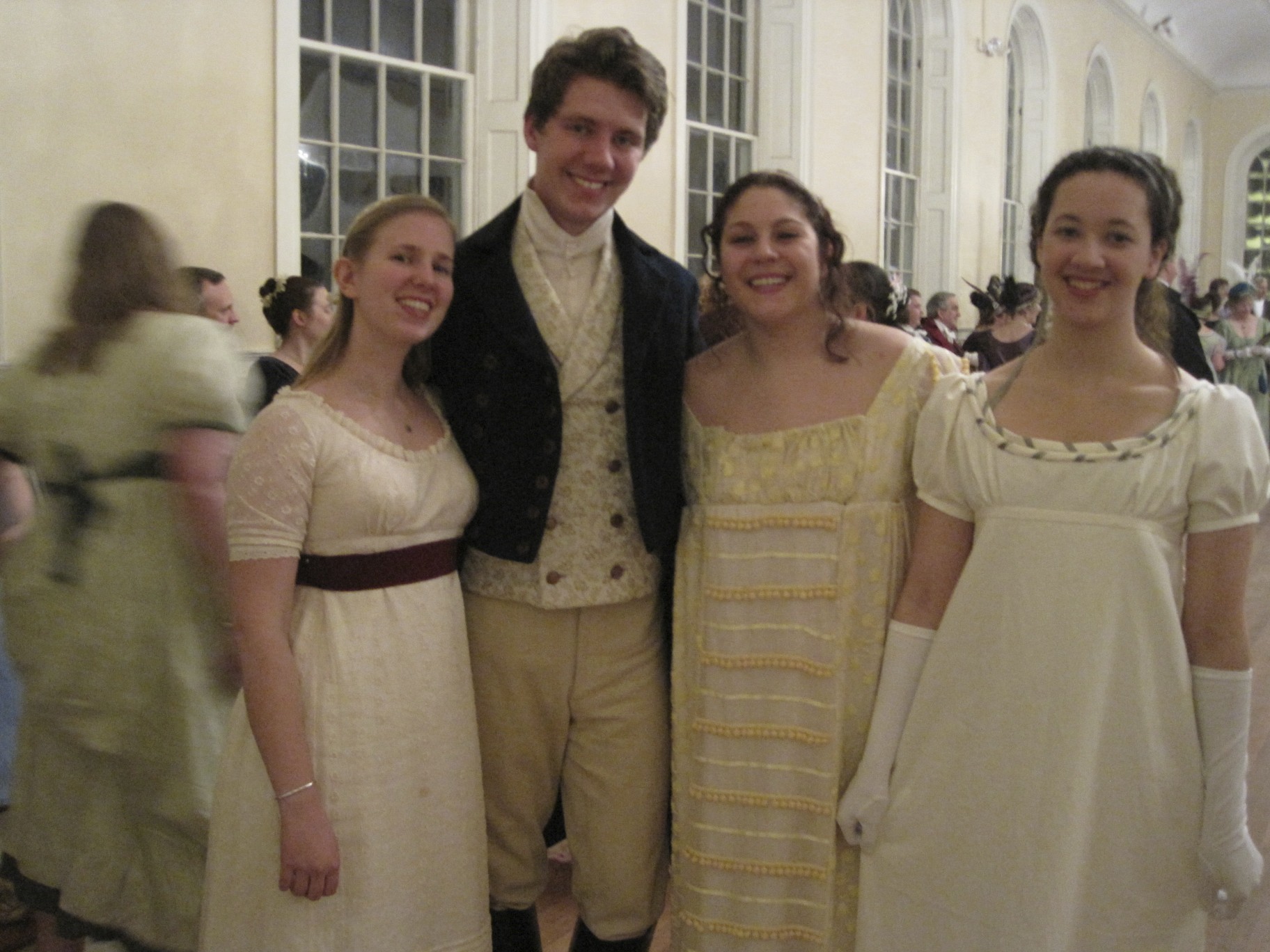
Fast-forward to the ball! I had the good fortune to be able to bring along friends as well! It was crowded but super fun to dance in period costume and a period hall! Enjoy the photos!

Project Journal: Victorian Women’s Tailoring Part III: Mockups

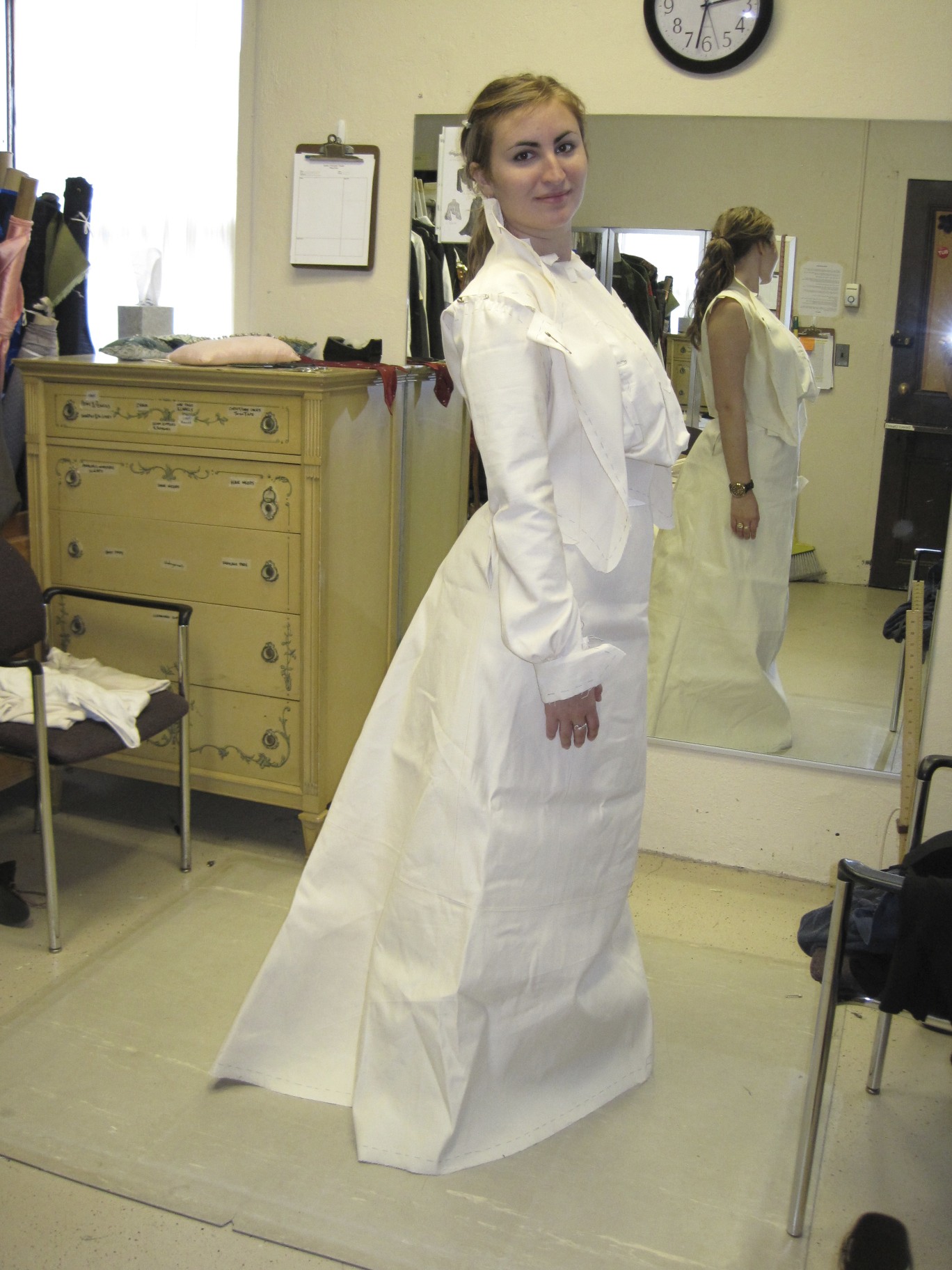
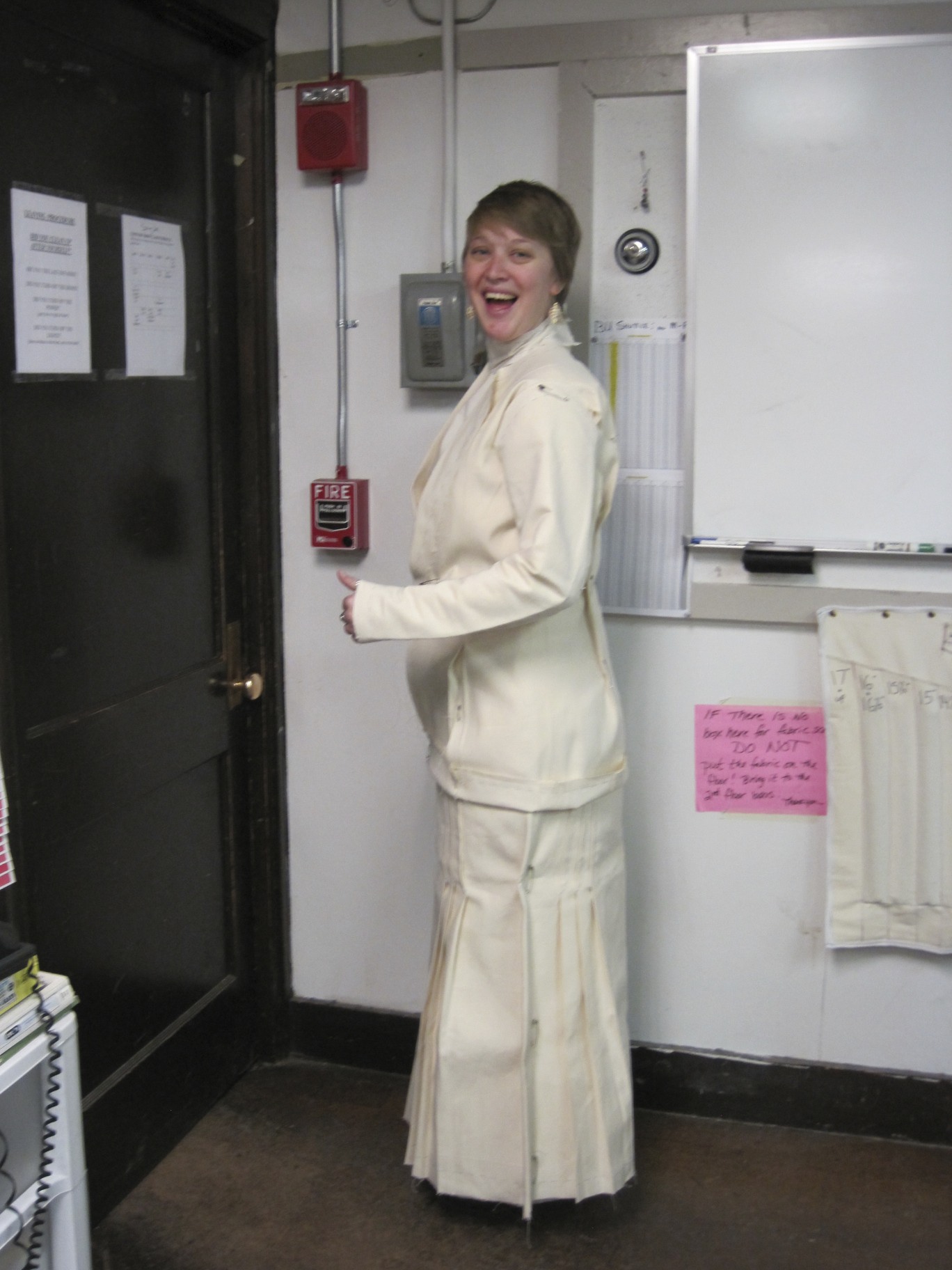
I reached a point where all my patterns were complete! The next step was to make a mock-up, or toile, of each garment. My mock-ups are made out of muslin: their goal is to determine what changes I need to make to my patterns so that the garments will fit well before I cut and sew the garments out of my fashion fabrics.

By eliminating major fit issues in my mock-ups I am able to achieve a better fit in my final garments with fewer alterations. In these photos you can see the pins that mark the areas of the garments that I need to go back and change on my patterns so that the fashion fabric garments will fit better.

Look 1: 1883. In my brain this is the “bustle dress.”

1883 mockups--including the bustle!
1883 mockups.
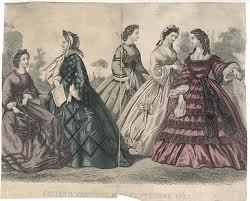
My inspiration "cheat sheet" for this look.

Look 2: 1903. This is the pigeon breast dress.

1903 mockups.
1903 mockups.
1903 garment inspiration "cheat sheet."

Look 3: 1913. This is the tubular suit look.

1913 mockups.
1913 mockups.
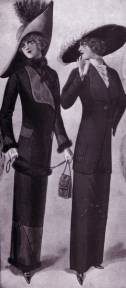
1913 "cheat sheet" for garments.

Yay! My project is on its way to becoming actual garments. There’s still more work to do, but it’s inspiring to see it beginning to take shape!

Project Journal: Victorian Women’s Tailoring Part II: Patterns

The first step of this women’s tailoring project was to research what exactly I wanted to recreate. That being finished, I embarked on the next task: to create patterns for each of the garments I would be building. Each look is made up of about 8 separate garments: a chemise/combination, corset, corset cover, petticoat, blouse, skirt, jacket, and hat (the 1883 look also includes a bustle). To create the patterns for these garments I used a combination of the methods mentioned below.

Basic Sloper: a starting point for patterning

The simple undergarment patterns such as the chemises and corset covers were drafted using my models’ measurements. Pattern Drafting for Fashion Design, by Helen Joseph Armstrong, was a great starting point for creating these shapes.

The corset patterns were adapted to fit my models from the book Corsets and Crinolines by Norah Waugh.

The petticoat patterns were created using a combination of methods. For all of them I found an image I wanted to recreate, then I either used the drafting method I used for chemises and corset covers, or I used a historic pattern that was lifted from a historic garment like the patterns for the skirts and jackets (mentioned below). The images came from a wide variety of books, including The History of Underclothes by C. Willett Cunnington, Everyday Fashions, 1909-1920, as Pictured in Sears Catalogs edited by JoAnne Olian, and Victorian Fashions and Costumes from Harper’s Bazaar, 1867-1898 edited by Stella Blum.

For the outer garments (skirts and jackets), I used patterns from historic garments that were resized to fit the models who will be wearing the garments. The patterns are lifted from historic garments and printed in books such as Patterns of Fashion 2: Englishwomen’s Dresses and Their Construction C. 1860-1940 by Janet Arnold, Turn of the Century Fashion Patterns and Tailoring Techniques by S. S. Gordon, and The Cut of Women’s Clothes: 1600-1930 by Norah Waugh.

In addition, I also consulted a variety of books to get more background information about the fabrics and colors, method of construction, and look, name and use of each garment. Other helpful reference books include, but are certainly not limited to, English Women’s Clothing in the Nineteenth Century: A Comprehensive Guide with 1,117 Illustrations by C. Willett Cunnington, Underwear: Fashion in Detail by Eleri Lynn, and Authentic Victorian Dressmaking Techniques edited by Kristina Harris.

For the hats, I found an image I liked and then used millinery reference books to get more information. Millinery books included From the Neck Up: An Illustrated Guide to Hatmaking by Denise Dreher and Edwardian Hats: The Art of Millinery by Anna Ben-Yusef, edited by R. L. Shep.

More coming soon! Next, a look at my mockups of these garments!

Project Journal: Victorian Women’s Tailoring Part I: Overview

My current historic sewing project is reproducing three tailor-made garments and their undergarments from the end of the 19th century. The project aims to show the development of women’s tailoring from the 1880s to the 1910s–essentially the turning point between a tailored dress and a suit.

Look 1: 1883.

This garment is characterized by its bustle. The bustle goes in and out of use, changing shape and size, throughout the 1870s and 1880s. In 1883 the bustle is at a point where I call it the “shelf bustle,” extending from the back at an almost ninety degree angle once being covered by the voluminous skirt layers. During the 1880s, in particular, “tailor-made” garments were fashionable, but these were essentially dresses, not suits.

Look 2: 1903.

This garment is characterized by its romantic figure, featuring “pigeon breast” blousing and gracefully flaring skirts. The foundation of this shape is the new corset design introduced at the turn of the century, augmented by extra padding at the bust and rear. Tailored looks of this period separated jackets from skirts, but still these do not qualify as suits.

Look 3: 1913.

This garment stands between the corseted Victorian woman of the 19th century and the independent, working woman of the 20th century. Just a few years after this the rigid corset disappears in favor of new, lighter undergarments such as brassieres, knickers, camisoles, and girdles. Clearly, this garment is a suit, not a dress, but its undergarments remain in the past where dresses, not suits, were what women wore.

More journal entries will be coming with more information about each look as well as updates on the actual construction of these garments. Stay tuned!

Sources of Images:

1883. http://www.digitalchangeling.com/sewing/periodResources/Delineator-July1883/

1903. http://people.virginia.edu/~sfr/enam312/fashindx.html

1913. http://www2.uvm.edu/landscape/dating/clothing_and_hair/1910s_clothing_women.php

“Belle” of the ball (Fezziwig’s Ball 2010)

My first large sewing project for myself was, fittingly, an 1860s gown nick-named “Belle.” (This is the full story of Belle.) Owning a gown like this was a childhood fantasy for me, ever since my first days of loving Gone With The Wind. I finished construction of this gown about four years ago and since then I’ve lovingly stored it and its accompanying undergarments and hoops in my closet, alongside all my modern clothes.

I’ve been hoping for an opportunity to wear Belle for the last four years, not only to give a purpose to the dress I so lovingly created, but also to see how it feels to wear it for a hours at a time. I just recently attended an event called Fezziwig’s Ball, which was presented by the Commonwealth Vintage Dancers in Salem, Massachusetts. I was able to sing Christmas carols, dance, and have a real experience wearing Belle–and I was in the company of others who not only appreciated my hard work, but who had also worked hard to create and wear their own 1860s dresses!

I learned a vast amount of small details about the practicalities (or hindrances) of wearing 1860s clothing. For example, I understand now why vintage dances from this period turn constantly in the same direction: because your hoops gain so much momentum that they can only sustain fast, continuous movement in one direction, not changing directions. That particular sensation was just not as clear when I was practicing dancing in modern pants or knee length skirts. Also, I have  much clearer idea of why women would faint so often. Imagine dancing fast for four minutes in modern clothes, but then imagine doing the same amount of movement while laced into a corset! I felt faint after four minutes of fast dancing, and my corset wasn’t laced nearly as tightly as ladies would have been laced in the 1860s.

I had so much fun learning first hand and am quite sure I have more lessons in store for me in the future! I’m eagerly awaiting the next 1860s themed ball to be presented in March 2011 by the Commonwealth Vintage Dancers, the Returning Heroes Ball, a specifically 1860s Grand Ball.

My favorite period-the 1860s

Hoop skirts and crinolines make me so excited I get the wiggles. I was in ninth grade the first time I read Gone With The Wind. Scarlett O’Hara, while being a debatably lovable character in my mind, has inspired my absolute love of the 1860s, crinolines, hoops, and costume history ever since that first time I read the book. It only took once.

Years later, I am fascinated by costume, material, and social history. I get excited about the entire 19th century–but the only period that really gives me the wiggles remains the 1860s. There’s just something about women resembling giant moving cupcakes that is fascinating and inspiring.

There is something very dreamy about imagining the world these huge constructions moved through. The world had to adapt to these gowns: chairs for ladies had no arms and doors were wider to accommodate their skirts. Can you imagine wearing clothing five feet across? That’s two feet too wide to fit through a modern door! How does a person cope with that all day every day? Sometimes I can envision it and sometimes it just seems impossible. But these questions just remind me that THIS is why the 1860s are particularly fascinating to me.

Gone With The Wind is definitely a controversial story. I found this report to be an interesting and factual discussion of its merits and faults. It clearly states why it is such a classic story and how it glosses over reality. This blog also has an interesting post about Gone With The Wind, discussing if it is a “great American novel.”

As a side note, I love both the book and movie versions of Gone With The Wind. While both are moving, sweeping epics, the book has much more depth and character exploration than the movie. Thus, I encourage you to read Gone With The Wind for yourself and to be inspired by history and by skirts with a circumference of 124″!