This Etsy shop (empireroom) has wonderful vintage lace for sale by the yard! The prices are very low and even better for bulk lace (over 20 yards). The seller, Jayne, has been quite helpful in providing me with information about bulk pricing and quantities. The only down side is that she is in Australia, so shipping is slightly expensive. But you should check out her selection anyway!
I have found other lace sources that have lower prices, but not for vintage lace! Usually the low prices are only for modern made lace, which means that a distinct measure of discernment is needed to choose lace that is the right scale, color, and pliability for the project.
Most of the lace listed on this site would work very well for a reproduction 19th century garment, I think. I can especially envision an Edwardian skirt or blouse embellished with some of this lace as edging or insertion, but I can also envision the lace being used to trim undergarments such as petticoats or chemises.
I thought I would just quickly share with you this 1812 Tailcoat Pattern. You can find it in the pattern section of Wm. Booth, Draper. The pattern actually has a wider date range on it than strictly 1812: it is listed as a tailcoat pattern 1800-1820. This is the description:
This tailcoat pattern is the first well made civilian tailcoat pattern specific to the first two decades of the 19th century. The pattern comes with three sizes: Medium, Large and XLarge. There are two options for the collar, comprehensive directions and documentation.
And here is the information about the quantity of fabric needed, etc. (the underlined sections are other items that Wm. Booth, Draper carries):
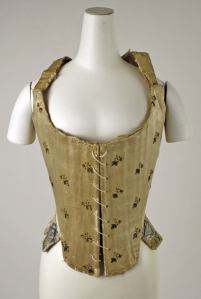
As I mentioned in my last post in this Project Journal, I decided to make a pair of stays like the one to the right. I like the unique features of these: specifically the use of colorful fabric, the fact that this is fully boned, and the cording in each seam as well as the absence of shoulder straps and tabs. I adapted a pattern from Corsets and Crinolines by Norah Waugh. The pattern I started with had straps and tabs but I eliminated those elements to reproduce the pattern of these inspirational stays.
Cane boning
I decided to use cane boning for these stays for a few reasons: 1) I wanted to try a new material for boning 2) cane boning is period correct for the 1780s 3) given the amount of boning needed for a fully boned pair of stays the cane boning was much more cost effective (you can see the quantity on the left–it was about $15 from Wm. Booth, Draper) and 4) the cane boning seemed like it would be super easy to manipulate and, most importantly, to cut (and it was! normal scissors easily cut the correct lengths needed and it was easy to round the ends a little bit as well!). I actually only wound up using approximately half of the cane boning that I bought, so that means that I have plenty to use for another future project!
The silk that I decided to use as my exterior fabric is a fabulous damask. I originally thought about stitching my boning channels through the exterior fabric (as in my inspirational piece) but decided against that idea on this fabric, because it would really have just been way to much going on with the pattern and so many stitch lines. You can see the silk pattern a few pictures father down.
Stitching the boning channels
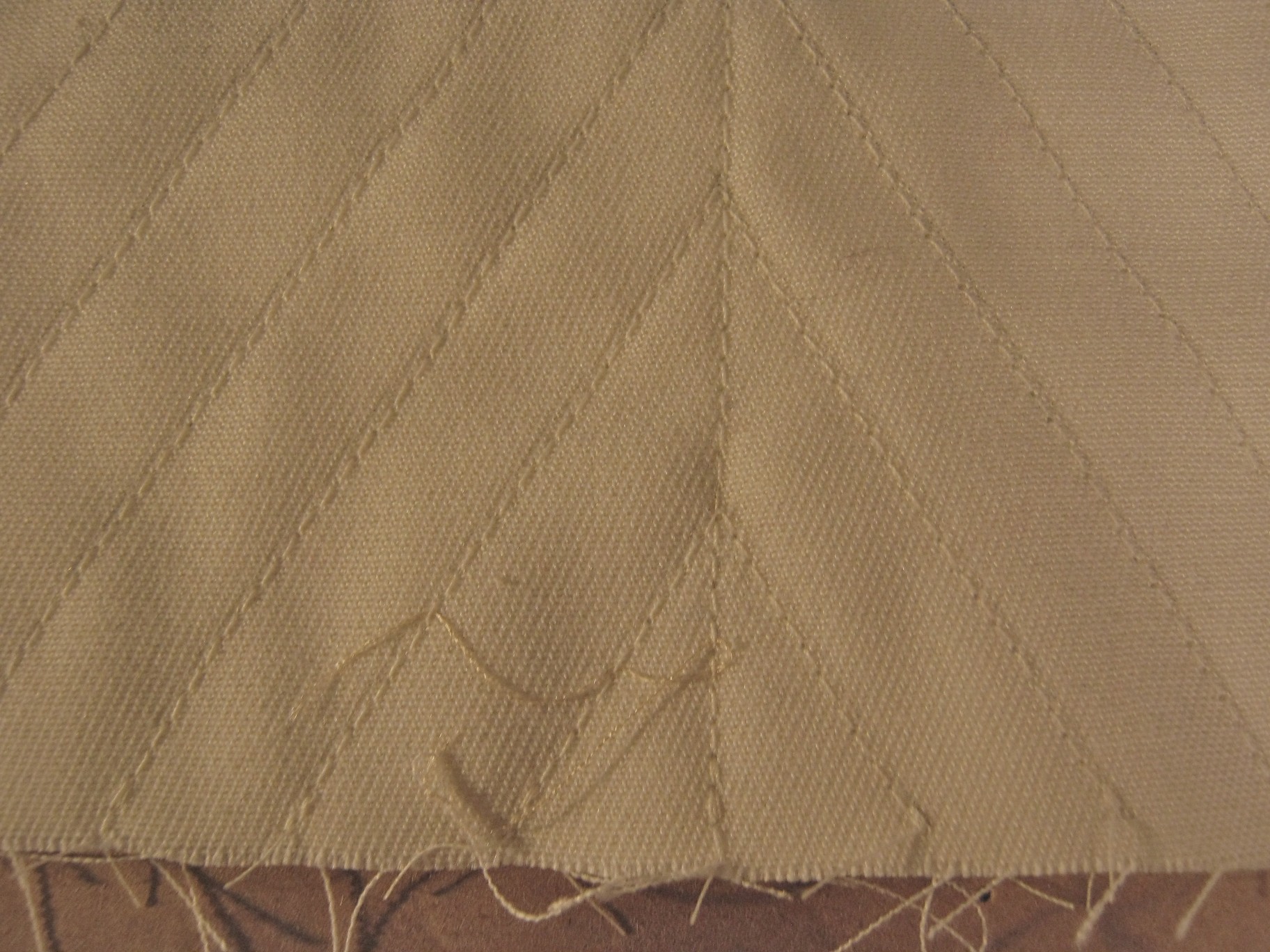
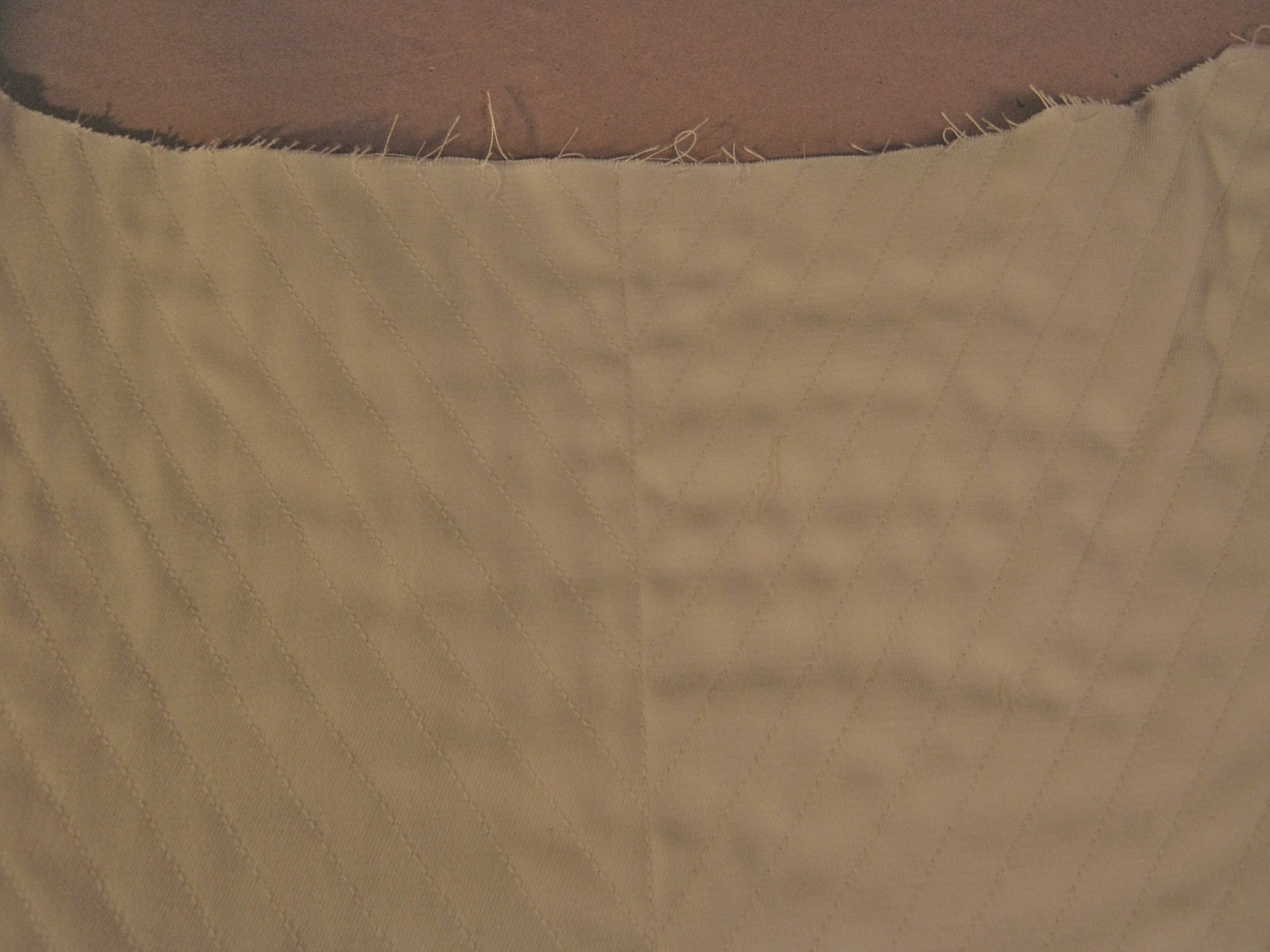
I didn’t want to stitch boning channels through my silk so I started the construction process by stitching the boning channels through two layers of cotton. You can see that I drew lines on the fabric so I could make nice, straight lines. The nice this about this is that I covered the pencil marking side with the silk, so on the inside of the finished corset all you can see is the stitching with no indication of pencil lines!
You can see the pencil guide lines on this side of the corsetOn this side there are no pencil lines!
I did want my silk to roll around the center back opening on each side and then be included in the seam attaching center back to the next piece, so I stitched those silk pieces into the seams of the cotton. I just kept the silk out of the way while sewing the boning channels. Then, once the boning was complete, I stitched the remaining silk pieces to the flapping center back pieces and turned the whole thing so that the silk was on the outside with the seams facing the side of the cotton that had the pencil lines drawn on. Thus, the silk is just a covering for the cotton, it is not actually attached into the seams of the cotton except on the inside at the side back seam. You can see what I mean in the pictures below.
Stays with the boning channels sewn (you can see that only the center back silk pieces are attached at this point)Stays with the cane boning inserted, before the silk is sewn onThe silk has been attached (you can see the cording and the pattern on the silk in this picture)
At this point the stays are almost finished! The last few tasks are to bind the edges (I’ll be using bias strips cut from the same cotton as the cording and lining) and work hand sewn eyelets along each side of center back. More pictures to come!
I’ve decided to build a Robe a l’Anglaise, in addition to a chemise and pair of stays to wear under it. You can look at this post to see pictures of the Robe a l’Anglaise. The style of stays that I plan to use is the one below left: no straps allow ease of movement in the upper body, which is more suitable for dancing. The corset on the right is from the same period: I include it for informational and comparison purposes. Many stays at this time were either made of patterned or colored cloth, as these two are, and I enjoy the use of color on the undergarments.
c. 1780 Wool and Linen Corset and the Metropolitan Museum of Artc. 1780 Silk Stays at the Metropolitan Museum of Art
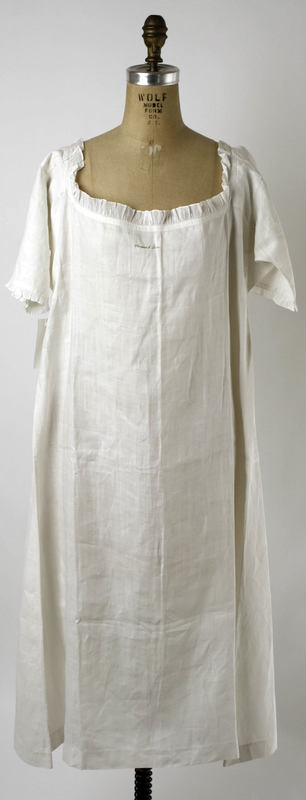
The chemises that were worn under these stays were fairly simple and almost always constructed of linen. Here are a few examples.
c. 1780 Linen and Cotton Chemise at the Metropolitan Museum of Art1780-1800 Linen Chemise at the Metropolitan Museum of Art1790-1810 Linen Chemise at the Metropolitan Museum of Art
I’ve collected some interesting (and sometimes conflicting) information regarding clothing from this period: these sources below were most helpful.
One of the best resources for this project is The Cut of Women’s Clothes: 1600-1930 by Norah Waugh. This book has images, patterns, contemporary quotes and construction details. It’s a great reference book to have access to for historic projects. Another wonderful reference book is Patterns of Fashion 1: 1660-1860 by Janet Arnold. This book is great supplement to Norah Waugh because it has an abundance of great drawings to explain the construction of garments. Another book that I know would have been useful to have is Seventeenth and Eighteenth-Century Fashion in Detailby Avril Hart and Susan North.
This website is also a great resource: La Couturiere Parisienne. It includes a fantastic collection of fashion plates, paintings, construction and pattern information, as well as fabric and color research for clothing from the 1400s through the 1900s. (Just a quick note that it can be viewed in English or German, and if you suddenly find yourself viewing it in German look to the top right for a little icon that you can click to switch it back to English.)
In terms of the materials needed for these items I found a great source for this project and future projects here: Wm. Booth, Draper. This website has all sorts of great things. For example, low prices on yardage of linen, cotton, and silk (in 18th century patterns and colors) and cane boning for corsets.
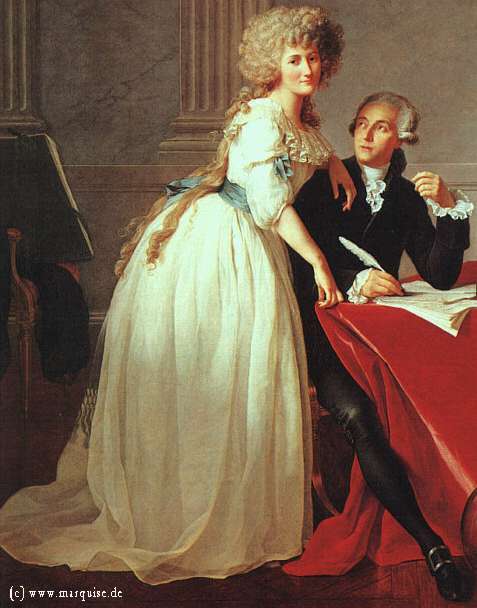
As I mentioned in a recent post, I have decided to attend 2 events this month that will require clothing from the period 1775-1799 which I do not currently own and from a period I am not intimately familiar with. Thus I began this project in a flurry of research. After thinking of the popular styles, Robe a l’Francaise, Robe a l’Anglaise, Robe a la Polonaise, and Skirt and Jacket combination, I am left with one more possibility that was particularly popular in the late 1780s and 1790s: the Chemise Dress or Chemise de la Reine.
Les Lavoisiers by Jacques Louis David, 1788
The Chemise Dress is a descendant of the style of dress first worn by Marie Antoinette, called the Chemise de la Reine. This quote does a fantastic job of relating the social values surrounding this style in a quite amusing fashion! Aren’t you as amused as I am by this quote?
1784. When down dances my ribbon white, but so bepuckered and plaited, I could not tell what to make of her: so turning about, I cried, ‘Hey, Sally, my dear, what new frolic is this? It is like none of the gowns you used to wear.’ ‘No, my dear,’ crieth she, ‘it is no gown, it is the chemise de la rein’. ‘My dear,’ replied I, hurt at this gibberish, which I was half ashamed to own I did not understand; ‘What is it? You know I am not like you, master of French; let us have the name of your new dress in downright English.’ ‘Why then,’ said she, ‘if you must have it, it is the queen’ shift.’ Mercy on me, thought I, what will the world come to, when an oilman’s wife comes down to serve in the shop, not only in her own shift, but in that of a queen. (From Lady’s Magazine: Printed in The Cut of Women’s Clothes: 1600-1930 by Norah Waugh)
Well, at first I was thinking “Ah! This is the dress for me! It is fairly simple (and therefore quick) and looks very elegant.” But then I thought about three big deterrents: 1-the similarity of a simple white gathered dress to the clothing from the turn of the 19th century, when afternoon dresses were white and somewhat similar in character and style, 2-the amount of extra fabric needed for petticoats to achieve the soft draping of the skirt and 3-the two events I plan to wear this to (#1: a vintage ball, for which an elegant train would be entirely impractical and #2: an American Revolution colonial fair, for which I would be cold, have a train that would just get dirty, and a style of dress that is about 15-20 years in the future). Those arguments eliminated this style as a possibility, but I wanted to share it with you anyway, because I think it is lovely.
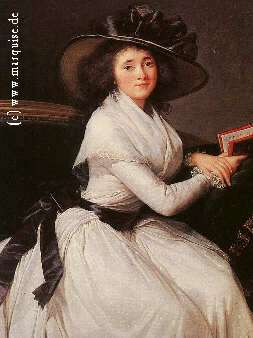
Here are some more examples of Chemise Dresses in various other paintings. (Also, take a look at the hats, aren’t they fabulous? They remind me of the scale of hats in the early 20th century. Can you see the resemblance?)
Comtesse de La Chatre by Elisabeth Vigee-Lebrun, 1789
I’ve decided to attend 2 events in September which require clothing from the last quarter of the 18th century (1775-1799). This decision is rather at the last minute when it comes to building new historic clothes: I now have exactly three weeks to make a decision about what to wear, pick out fabrics, make patterns, and complete the construction of the garments. Yikes!
So I’ve been busy researching this period because it is not within the realm of my previous historic clothing projects, which have generally focused on the 19th century. Unlike women’s clothing in the 19th century, for which I can recall silhouette, construction details, pattern shapes, and fabric choices and colors with far less research for each garment (because I’ve already done all that research and it’s all in my head…), I really need the research to be able to consider reproducing historic clothing from the 18th century. Here are some inspirational images I thought I would share!
Here’s how this conversation went in my head: “Where do I start?” I asked myself. “Silhouette?” I replied. “Ah, yes. That sounds good. But… what is the silhouette during this period? Hopefully not panniers!” because panniers, you see, require a lot more effort to produce and a lot more fabric to cover. “Well, let’s start by looking for some images,” I suggested. And here we go!
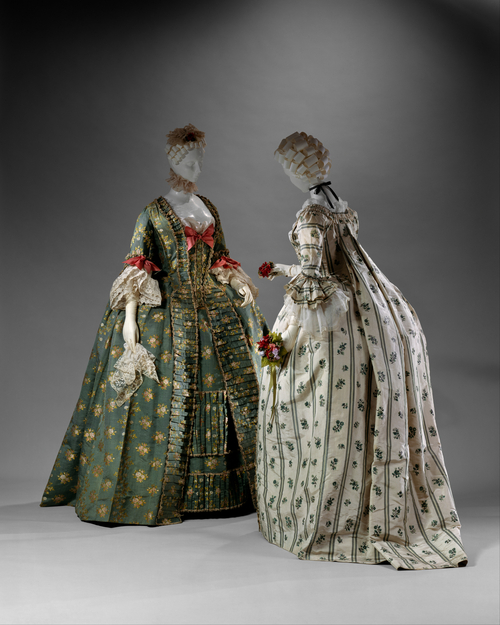
c. 1770 Silk Robe a l'Francaise at the Metropolitan Museum of Art
Now, you can see by looking at the above image that these gowns require panniers to achieve the exaggerated hip shape. You can also see that these gowns are Robes a l’Francaise, meaning robes in the French style. This style of gown has the characteristic pleating at center back that falls from the back neck line to the floor in one piece. This style, with the panniers and the Robe a l’Francaise, is not what I have the time to make in three weeks. So we move on!
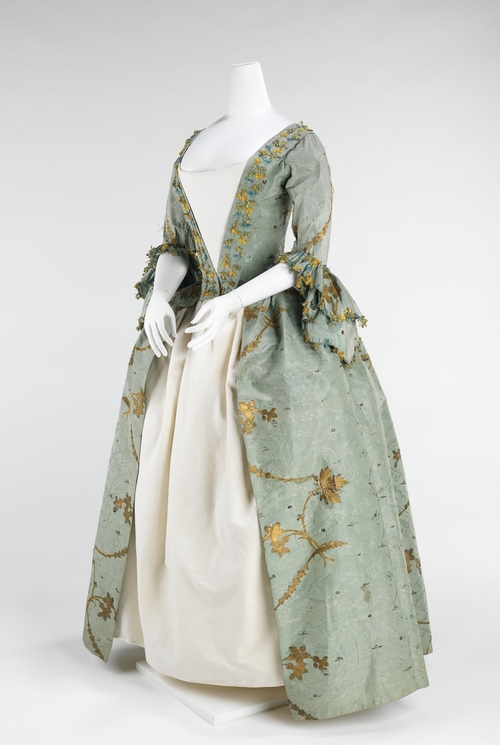
1770-1775 Silk Robe a l'Anglaise at the Metropolitan Museum of Art
In contrast to the Robe a l’Francaise, I am actually interested in the style of dress on the left: the Robe a l’Anglaise, or English style robes. This style evolved from the Robe a l’Francaise: over time the side back seams of the Robe al’Francaise were cut close enough together that the characteristic pleats were no longer used.
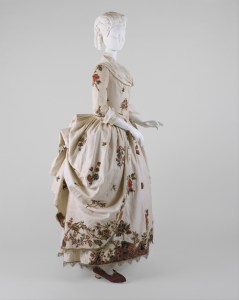
Below, you can see another two examples of gowns in the style of a Robe a l’Anglaise. These two are from the 1780s and you can see that the width of the hips has diminished from the 1770s. Note that all of these gowns have open fronts that show the petticoat underneath.
c. 1780 Cotton Robe a l'Anglaise at the Metropolitan Museum of Artc. 1780 Cotton Robe a l'Anglaise from the Metropolitan Museum of Art
1780-1785 Cotton Robe a l'Anglaise at the Metropolitan Museum of Art1780-1785 Cotton Robe a l'Anglaise at the Metropolitan Museum of Art
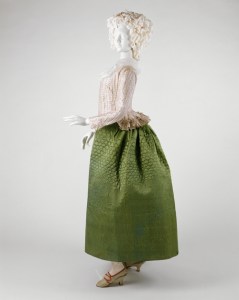
There are other options for this period as well: there is the style Robe a la Polonaise, which has a characteristic bunching of fabric across the back side as well as the skirt and jacket combination. I’m not interested in making a Robe a la Polonaise at this point, but a skirt and jacket combination is a possibility. You can see these styles below. There is another style as well: the Chemise Dress, but you’ll have to wait for my next post to see and read about it!
c. 1780 Linen Robe a la Polonaise at the Metropolitan Museum of Art
c. 1785 Silk Jacket at the Metropolitan Museum of Art
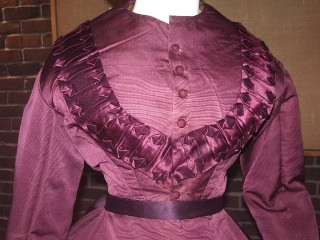
Just recently we looked at pleated trim on 1860s gowns. While I was thinking of that post I was reminded of this gown, which has fabulous pleated trim! It is in the historic costume collection at Smith College, in Northampton, Massachusetts. It was prepared for display and further storage during a historic clothing conservation workshop I took part in a few years ago.
I love the pleated trimming on this dress! It reminds me of origami, in that simple pleats and folds combine to create such a complicated looking outcome.
c. 1870 Dress at Smith Collegec. 1870 Dress at Smith CollegePleated trimming on c. 1870 Dress at Smith College
Did you look closely? The pleats are actually just box pleats whose outward pleats have been pressed up or down respectively at the very edges to create the diamond shapes. It’s so neat! I do hope to be able to use this pleated motif on a reproduction dress at some point. I’ll have to scrounge up lots of patience to make yards of a trimming that will be so detailed… but it will be amazing and if I do it in manageable sections it actually does sound like fun!
Flounced 1860s dresses seem to be pure confections: cupcakes iced with lace and frothy ruffles. That is the vision in my mind while I was looking for inspiration for my latest crinoline dress.
Fashion Plate from Godey's Lady's Book September 1859 "Dressed for a Party." (The dress on the right is the inspiration for my latest gown)
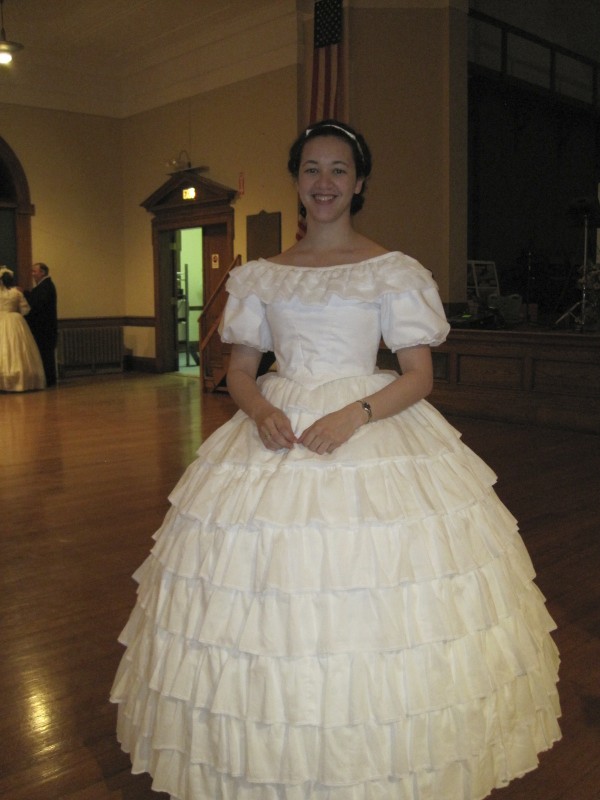
I already made one 1860s dress for myself. Named Belle, it is a dark blue satin and velvet gown with a three tiered skirt. It’s very heavy and a dark color: neither of those two features seemed fitting for a summer ball in temperatures around 80 degrees! And so I decided to create an all new gown… in my head this one is named “Annabelle.” (I hope you are also amused by the name!)
"Annabelle" my new 1860s ball gown
As you can see, there is one crucial element missing… the pink flowers! My goal is to make the flowers by hand from silk organza and to be perfectly honest, I ran out of time. I just decided to wear the dress as-is and finish the flowers later. I also ran out of time to bone the front, as you can see by the wrinkles along my tummy. No worries though, as I’m sure I’ll be able to wear this gown again.
"May I have this dance?" Side view of Annabelle.
In order to be to light and breathable, Annabelle is constructed entirely of cotton. The skirt has a medium weight cotton foundation to which cotton voile flounces are attached. The bodice is three layers of cotton for the sake of being opaque: two of medium weight cotton and one layer of voile. The layers are flatlined together and treated as one piece. The flounces on the skirt and bodice are cotton voile edged in narrow white lace.
This gown was flat patterned using research from books by Janet Arnold, Norah Waugh, and Kristina Harris. View this post about patterning from my Project Journal: Women’s Tailoring to see which titles I used and get a smidgeon of bibliographic information. The skirt pattern is fairly simple: a big tube cartridge pleated at the waist. The bodice has narrow v-shape seams front and back with puffed sleeves and a flounced bertha. It is worn over a chemise, corset, double thickness bum pad, hoops, and petticoat.
While this dress is eventually intended to be a reconstruction of the dress in the 1859 fashion plate above, I was also inspired by these other, similar fashion plates for further information. Enjoy!
Fashion Plate from Godey's Lady's Book October 1859 "The Soiree"Fashion Plate from Godey's Lady's Book August 1859 "Godey's Fashions for August"
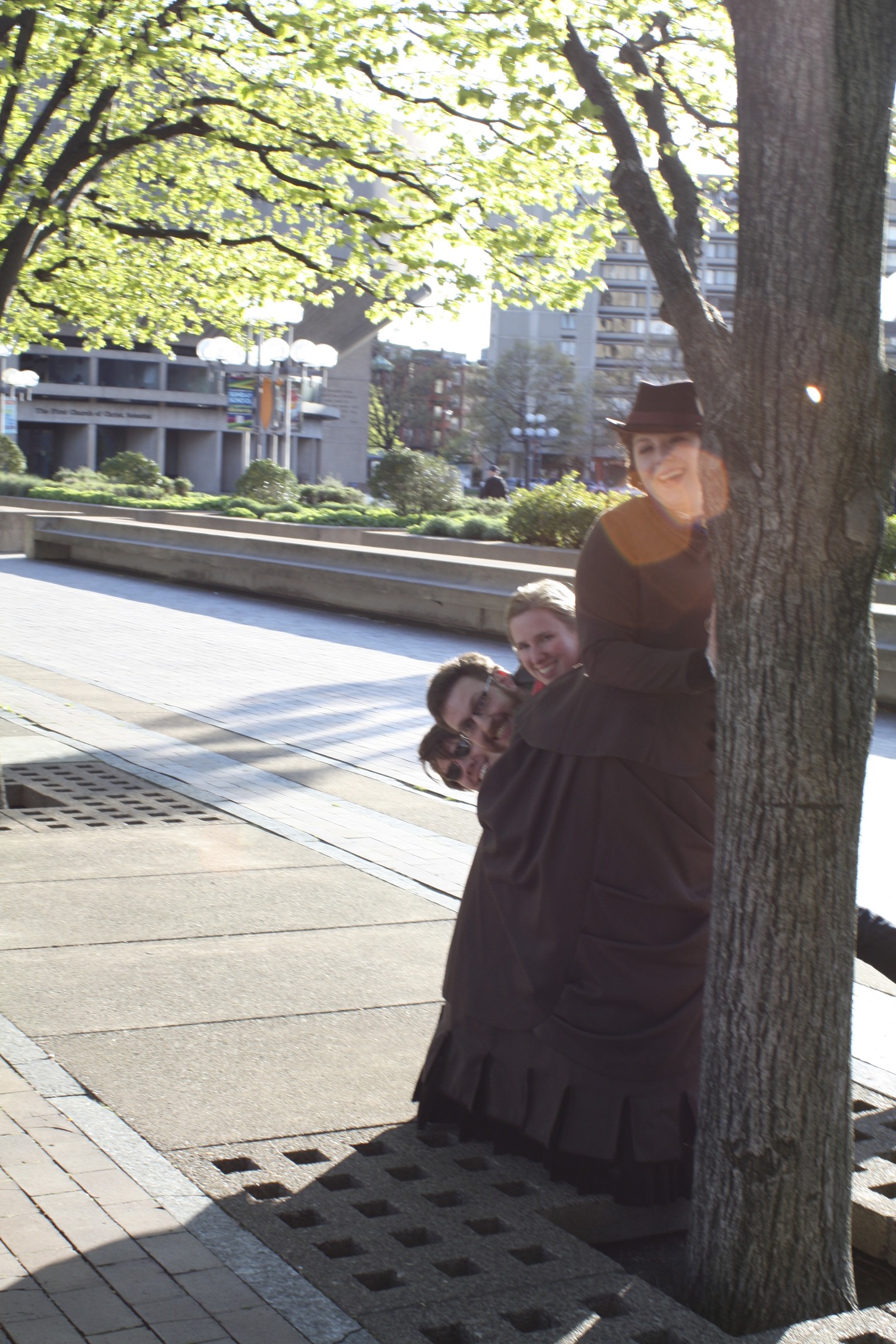
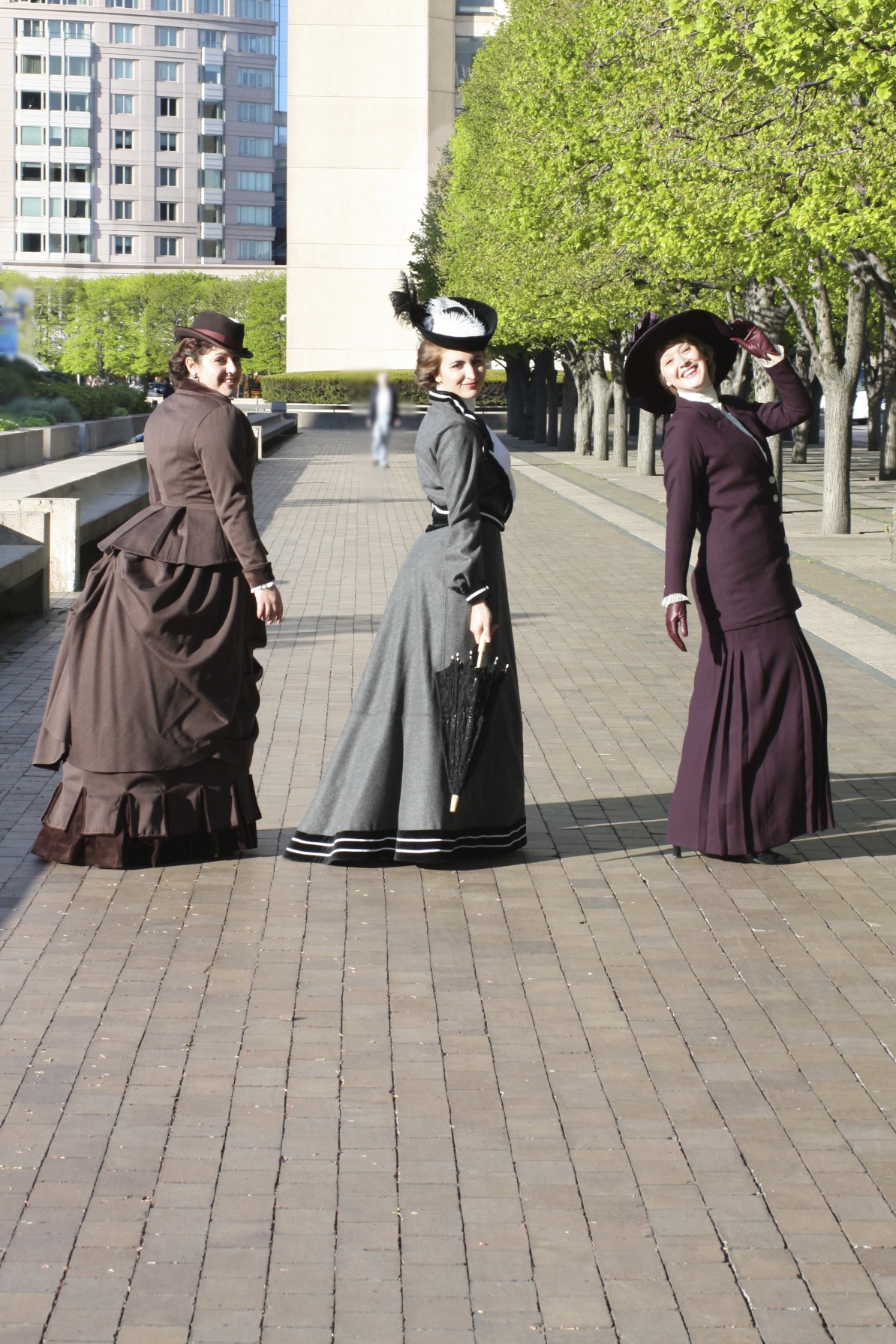
As a finishing touch to my Women’s Tailoring Project, I thought I’d share some silly pictures from my photo shoot with you! We received many strange looks and even had strangers whipping out their cameras to snap photos… I’m sure they were very confused about what was going on!
How many people fit behind a bustle???Can a bustle hide behind a tree???Waiting to cross the street...Squeezing between cars (...I mean carriages...)Let's all promenade!Laughs are good, too!Wait for me!Strike a pose!Don't forget to smile!Trading hats and looking great.Cut! I DID IT!!! Time to celebrate!
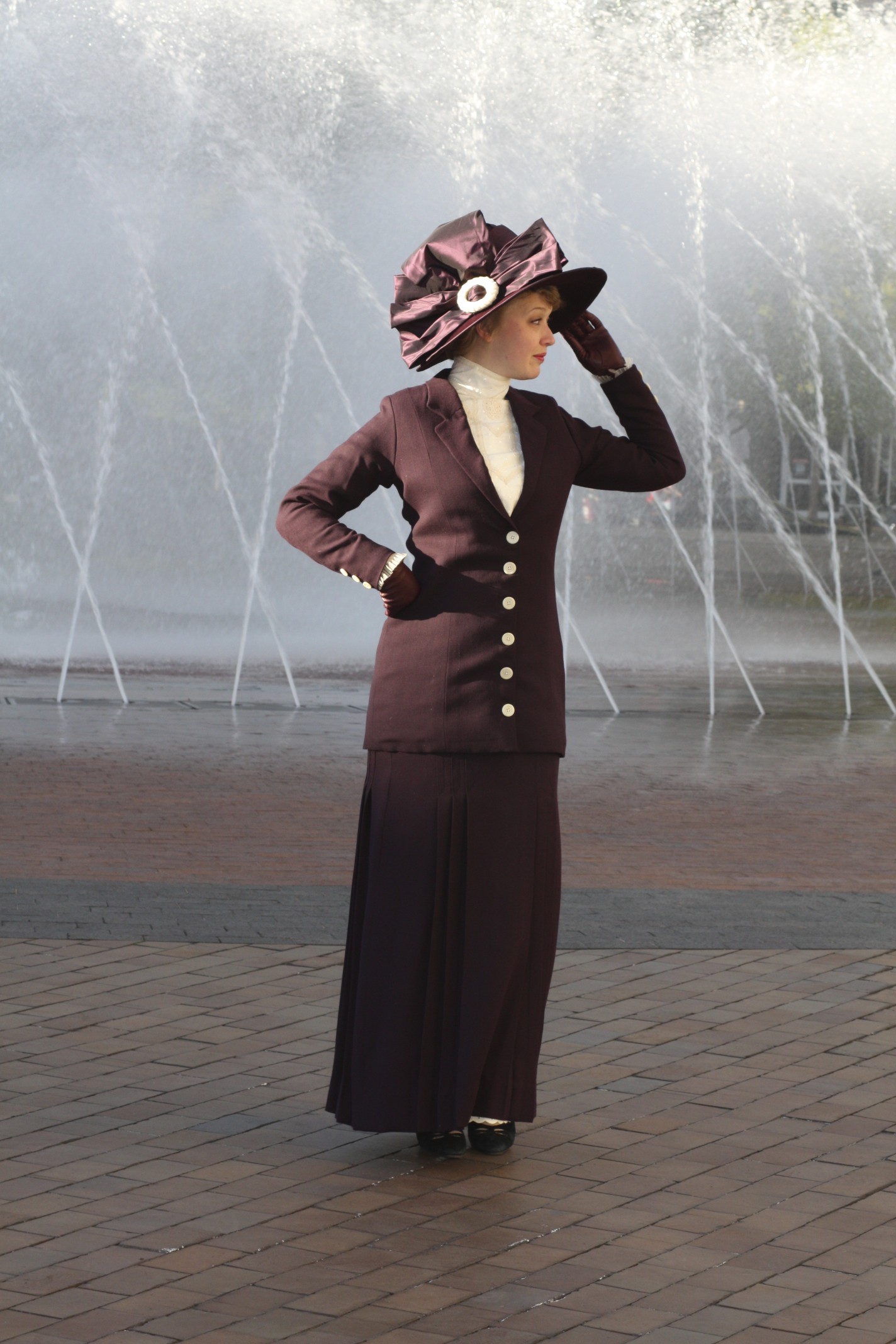
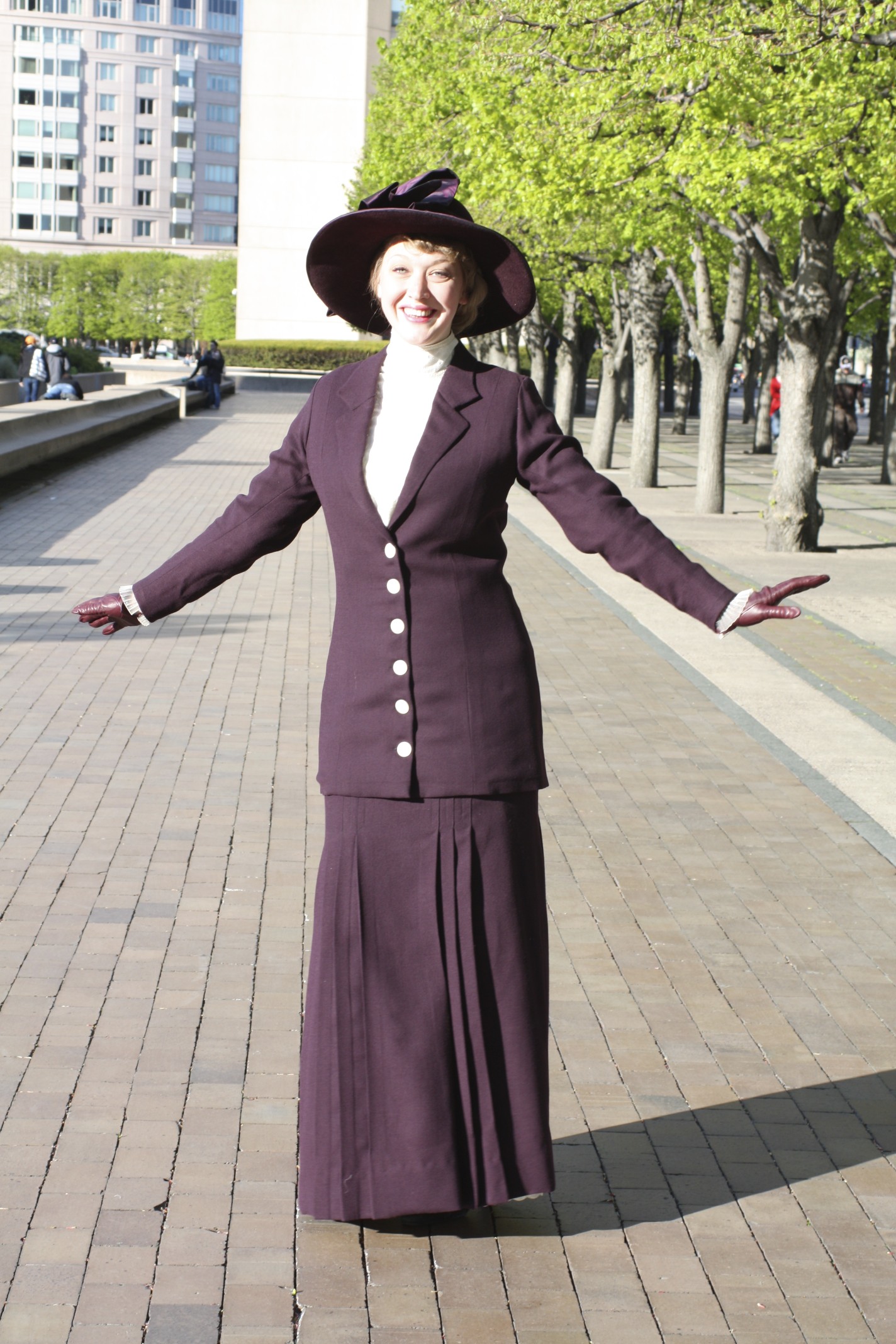
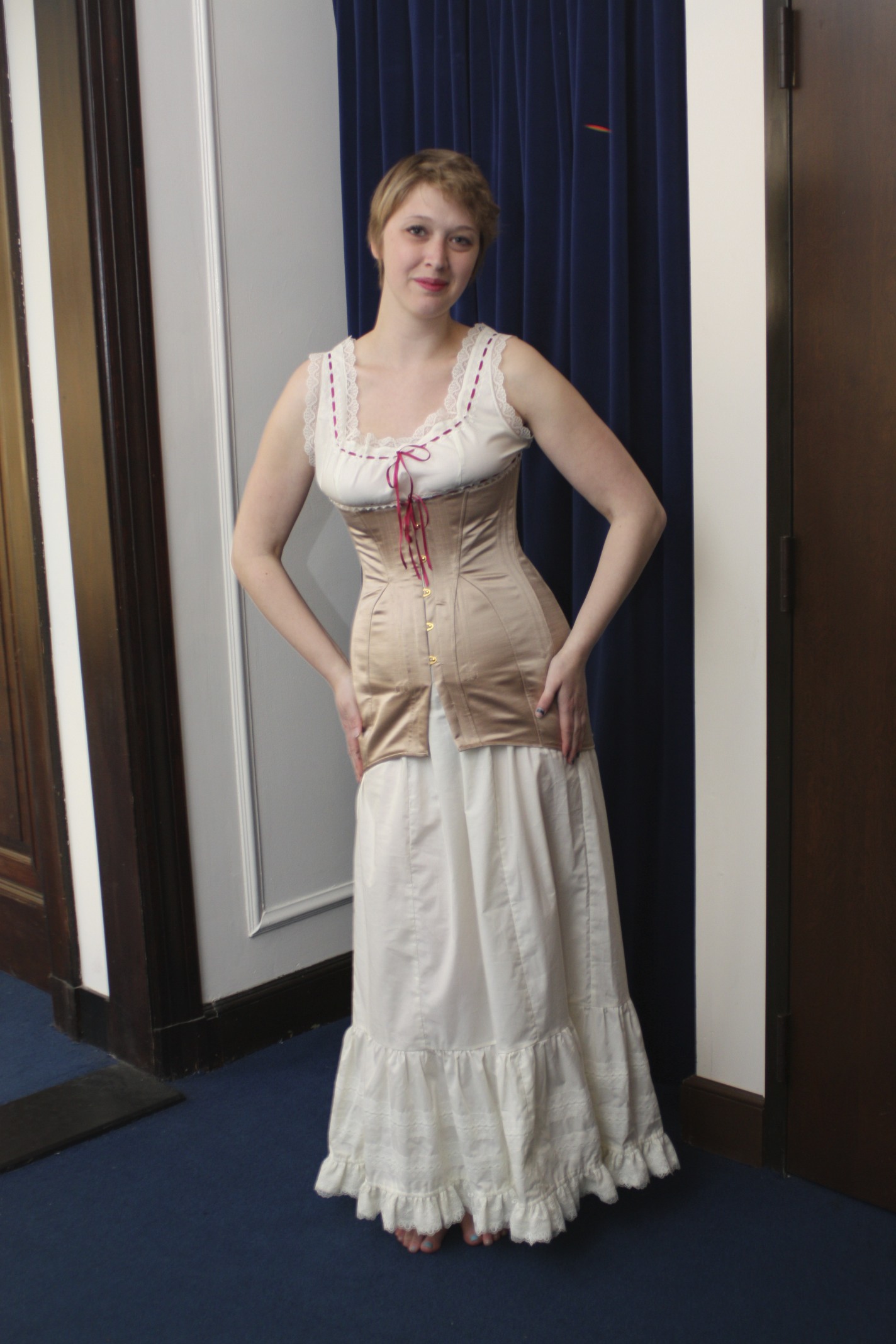
Here we finally are, at 1913! Let’s look at some truly lovely pictures!
1913: Wool Suit. Wool Hat with matching Taffeta trim.1913 Suit and Hat1913 Suit and Hat1913 Suit and Hat1913 Suit and Hat1913 Jacket and Hat1913 Skirt, Blouse and Hat1913 Blouse and Hat1913 Undergarments: Corset Cover and Petticoat1913 Undergarments: Chemise and Corset1913 Corset


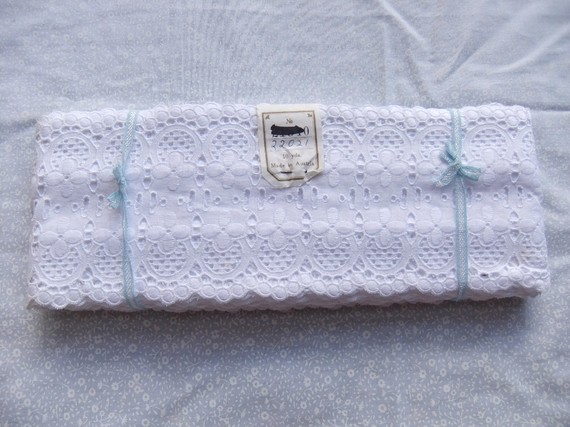 This Etsy shop (empireroom) has wonderful vintage lace for sale by the yard! The prices are very low and even better for bulk lace (over 20 yards). The seller, Jayne, has been quite helpful in providing me with information about bulk pricing and quantities. The only down side is that she is in Australia, so shipping is slightly expensive. But you should check out her selection anyway!
 I have found other lace sources that have lower prices, but not for vintage lace! Usually the low prices are only for modern made lace, which means that a distinct measure of discernment is needed to choose lace that is the right scale, color, and pliability for the project.
 Most of the lace listed on this site would work very well for a reproduction 19th century garment, I think. I can especially envision an Edwardian skirt or blouse embellished with some of this lace as edging or insertion, but I can also envision the lace being used to trim undergarments such as petticoats or chemises.























 The Quintessential Clothes Pen