On the subject of summer picnics… We recently took advantage of a sunny Sunday afternoon to view two of the historic houses in nearby Waltham, Massachusetts: Stonehurst (completed in 1886) and the Lyman Estate (built in 1793). We ended the afternoon with a relaxing picnic on the lawn of the Lyman Estate. Pictures often say more than words, so without further delay… pictures!
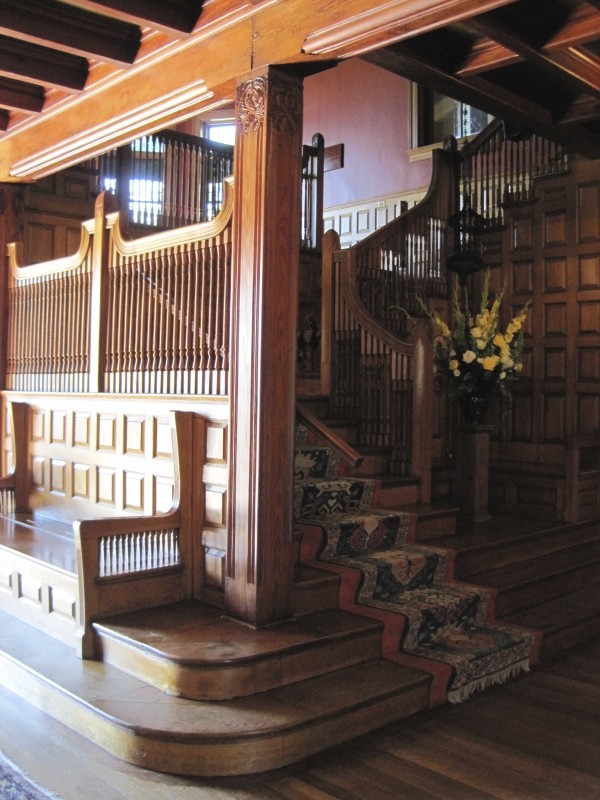
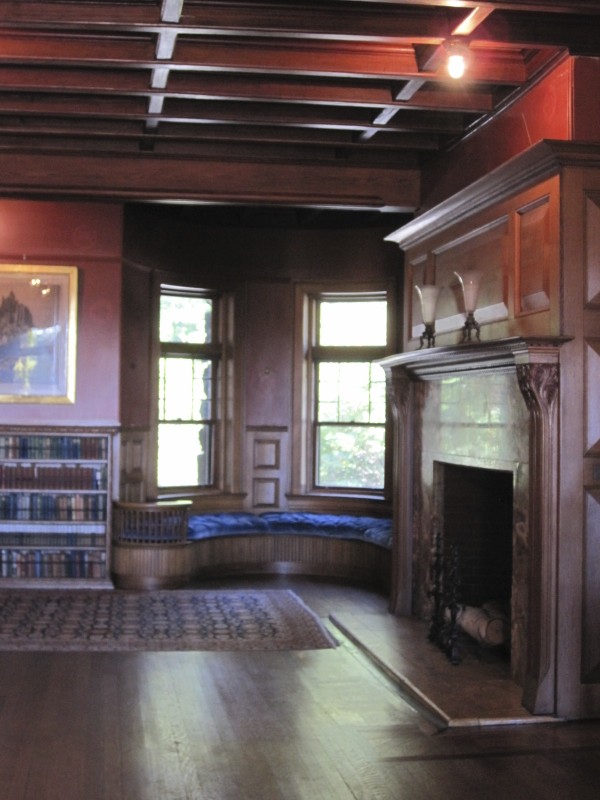
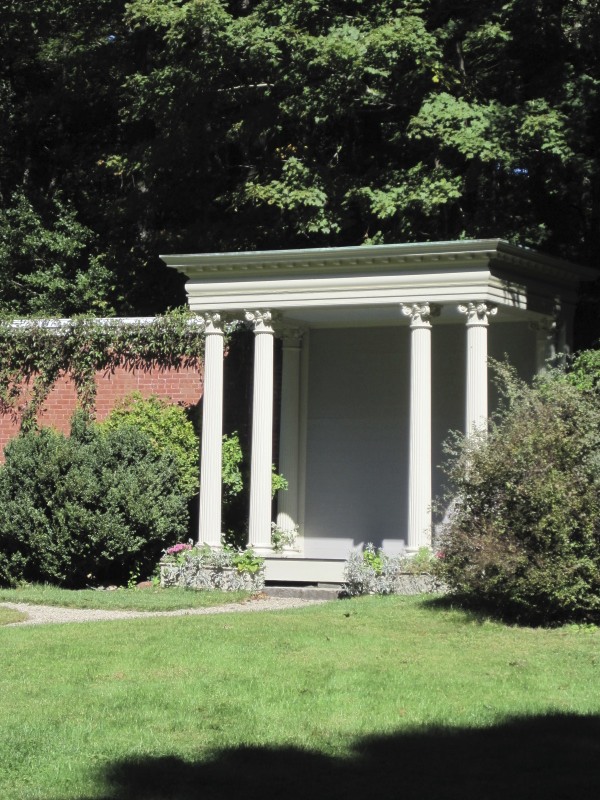
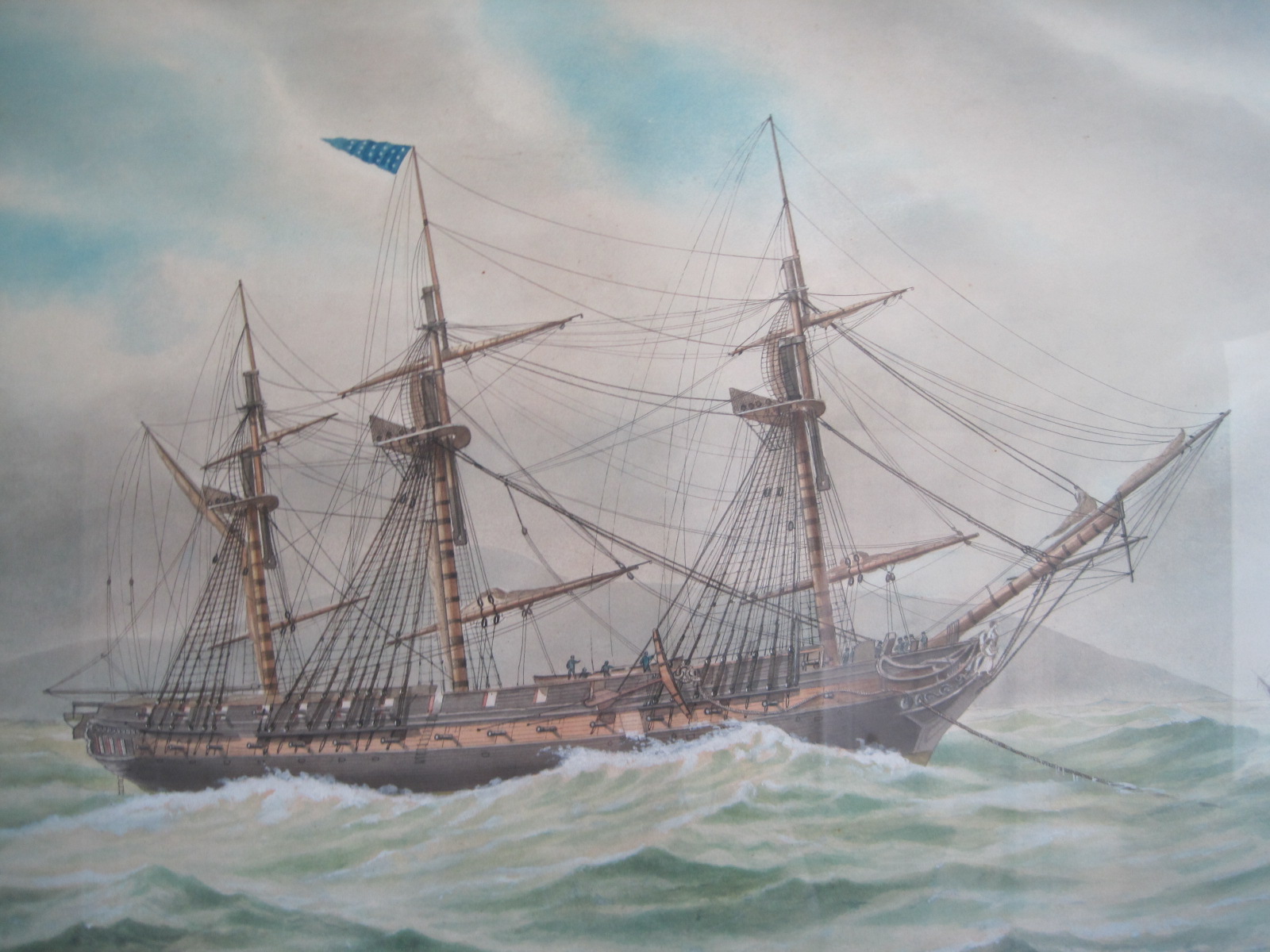
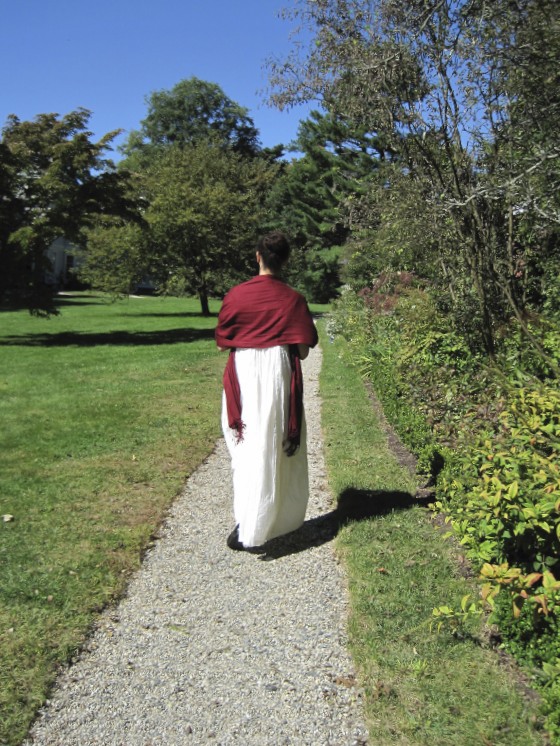
On the walk up the drive to Stonehurst, I passed this street sign, which was just begging to be photographed!The main stair in the front hall of Stonehurst.Also in the front hall. Stonehurst has all these cute little nooks and benches. This one was my favorite!Then on to the Lyman Estate, which has a very different feel. Light, airy, and Grecian… perfect for Regency!The ballroom of the Lyman Estate house.A fireplace at the opposite end of the house. Those tiles are really neat.One of the bedrooms upstairs. This house is often used for weddings, so I think this is often the bride’s dressing room.A painting of the USS Constitution! Fitting, considering our summer adventures relating to the Constitution. 1805.Lovely flowers outside the front door.The greenhouses at the estate are open to the public year round. This was where I visited last year for the Regency Holiday Tea.Finding an appropriate picnic spot.Taking a turn about the garden. Isn’t this a super cute picture???
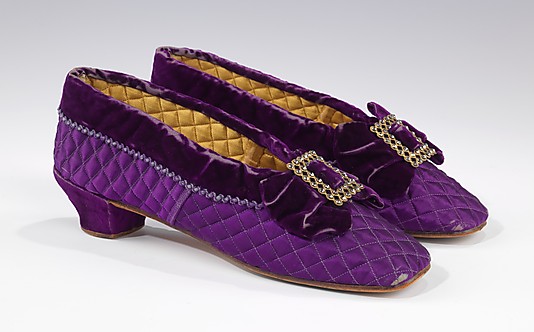
Recently, while looking through the Metropolitan Museum of Art’s Costume Collection for entirely unrelated items, I came across these very purple quilted slippers. I like them, but I also feel they are a little loud. Quilting? And purple? And velvet? And bows? There’s just a lot going on. They look pretty comfortable, though! How do you feel about these? And can you imagine what sort of dress would go with them? Perhaps a white cotton flounced one with purple trim…
1865-1885 Silk Slippers (Metropolitan Museum of Art)
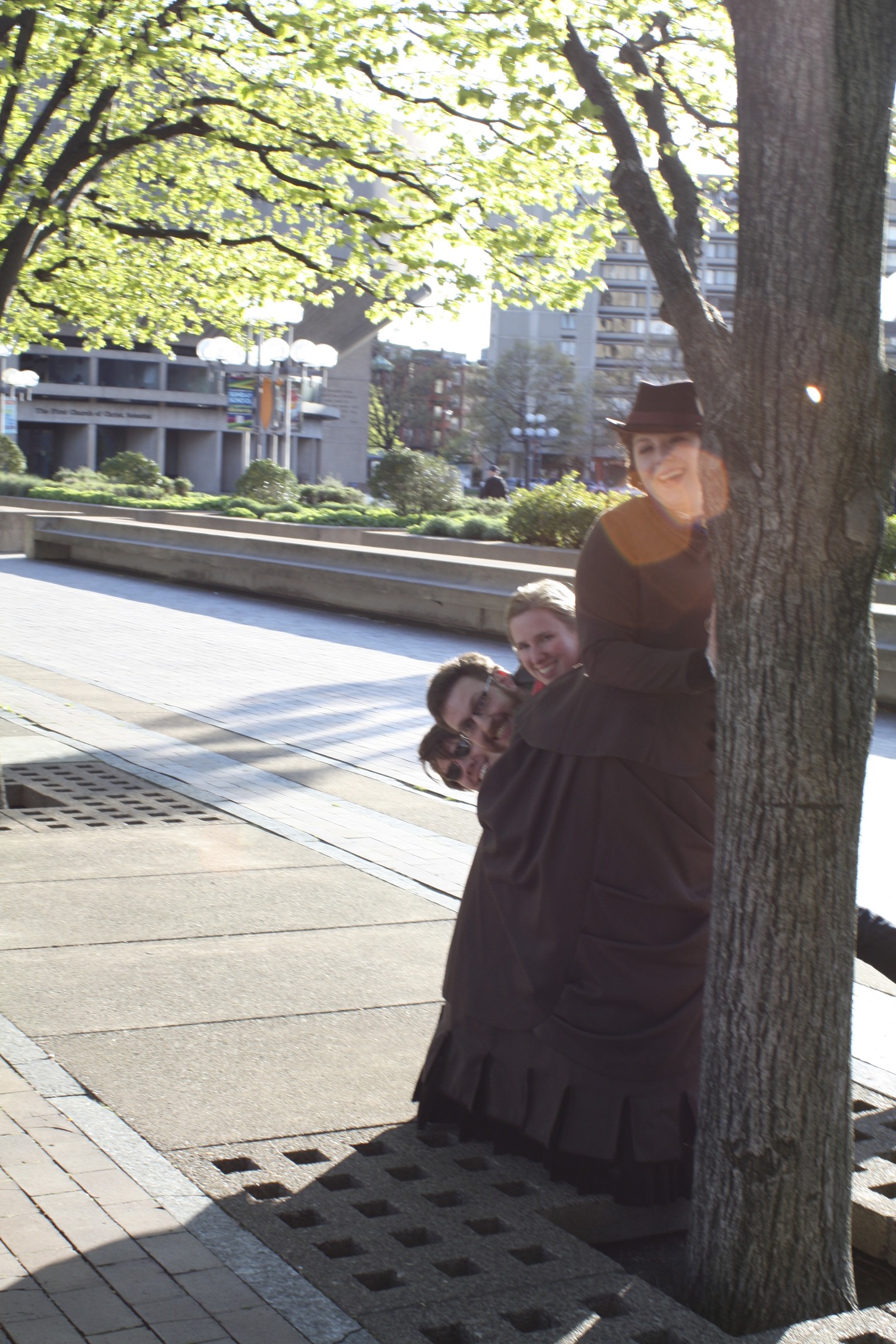
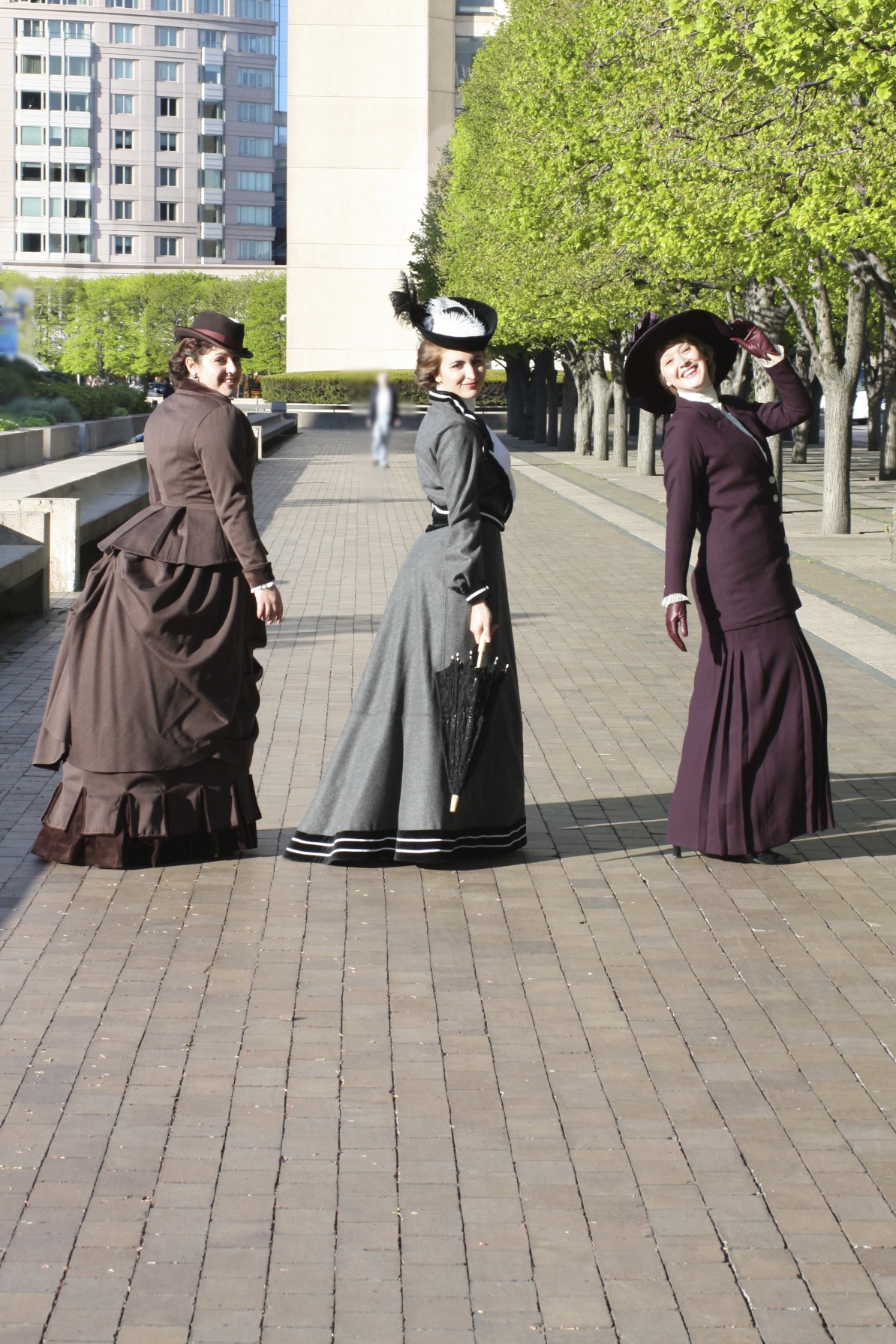
As a finishing touch to my Women’s Tailoring Project, I thought I’d share some silly pictures from my photo shoot with you! We received many strange looks and even had strangers whipping out their cameras to snap photos… I’m sure they were very confused about what was going on!
How many people fit behind a bustle???Can a bustle hide behind a tree???Waiting to cross the street...Squeezing between cars (...I mean carriages...)Let's all promenade!Laughs are good, too!Wait for me!Strike a pose!Don't forget to smile!Trading hats and looking great.Cut! I DID IT!!! Time to celebrate!
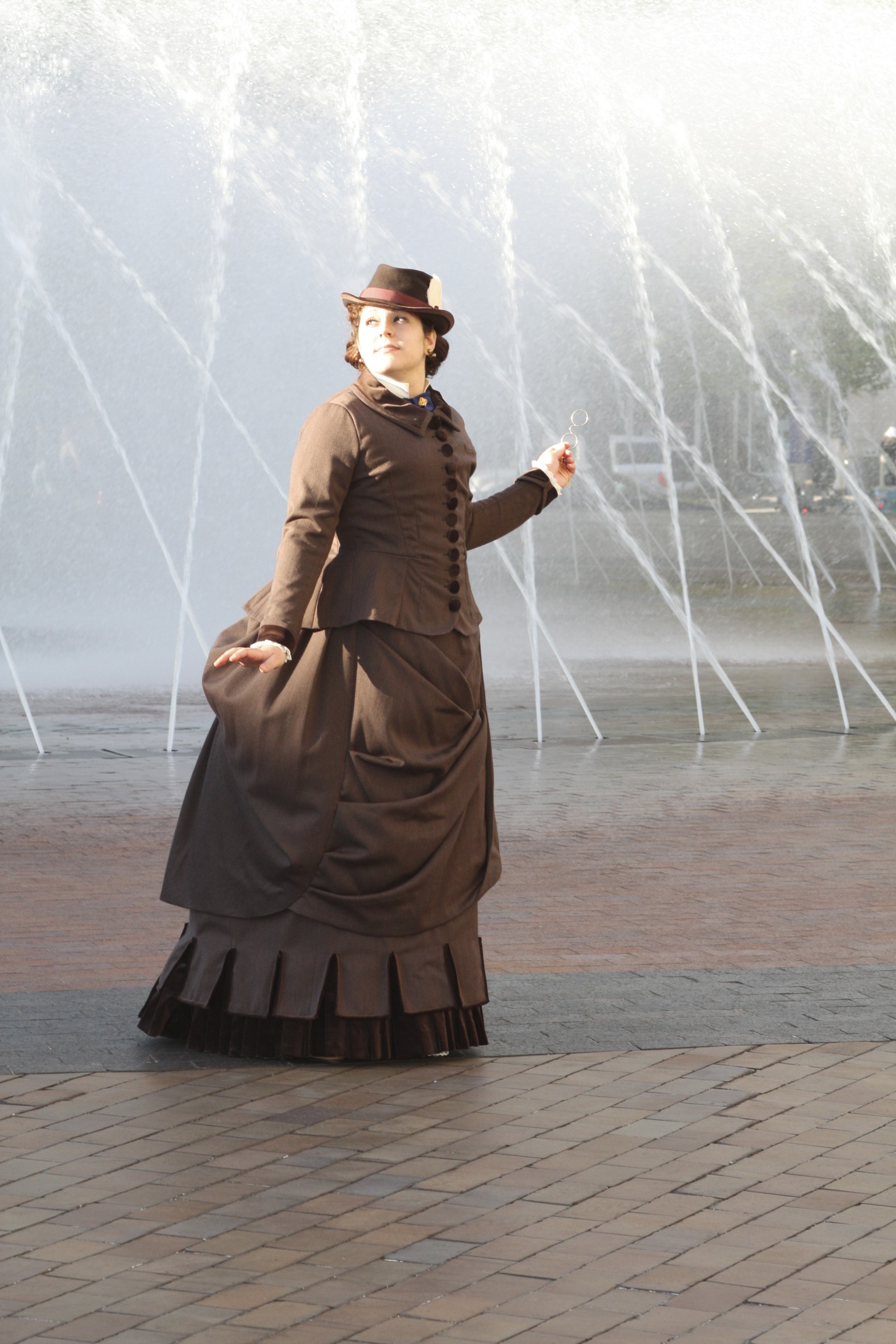
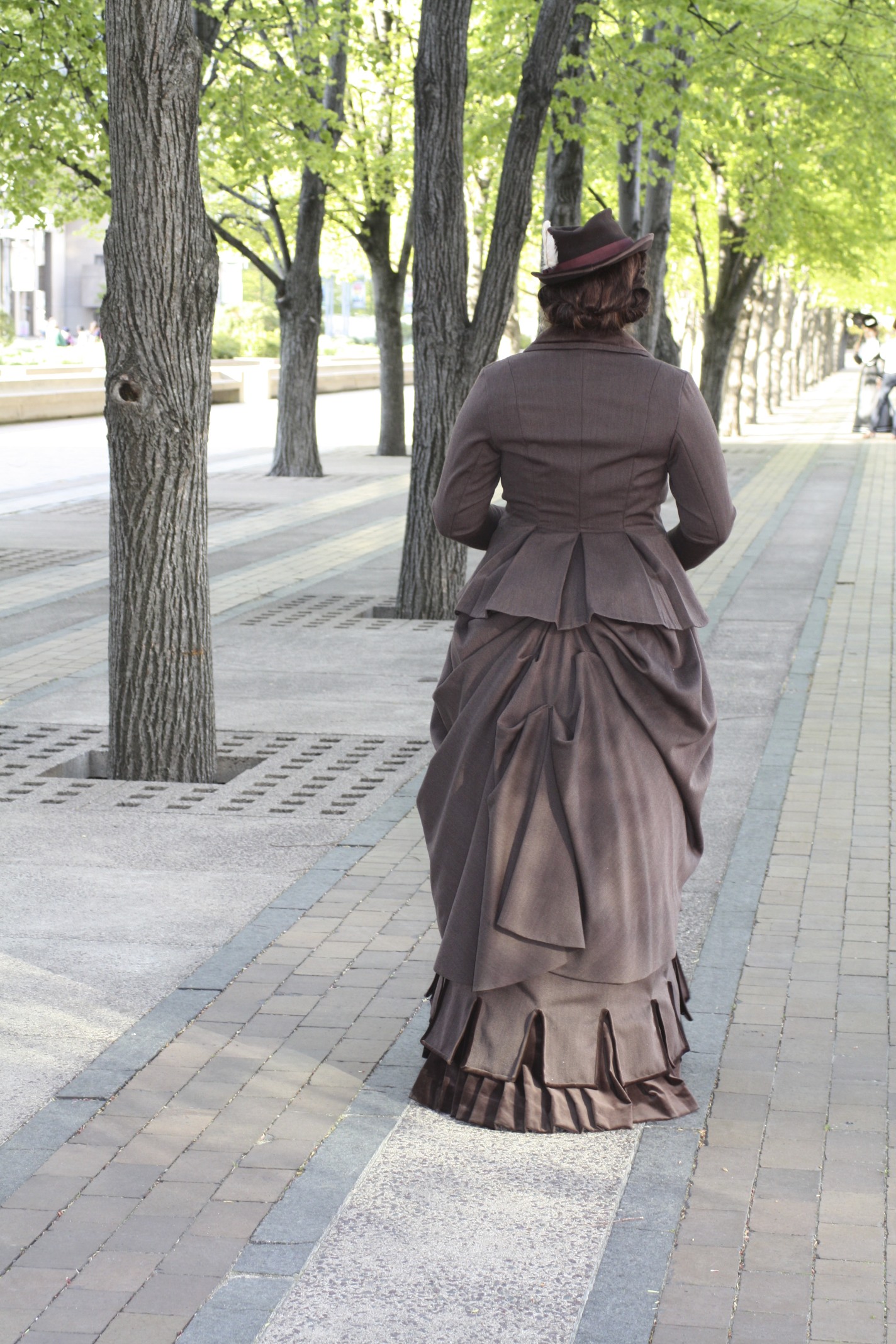
Oh my goodness my 1883 tailored bustle dress and undergarments are finally finished!!! YAY! Let’s glory in the beautiful pictures and the fabulous clothes… Since I can’t decide which pictures I like best, you get to see more than a few.
1883: Wool skirt and jacket with velvet trim. Wool hat trimmed with velvet and feathers.1883 Bustled Skirt1883 Bustled Skirt1883 Skirt and Jacket1883 Skirt and Jacket1883 Jacket and Hat1883 Undergarments: Petticoat and Corset Cover.1883 Undergarments: Bustle!1883 Undergarments: Chemise and Corset
As you saw in my last post, the undergarments for my 1883 look are complete. The understructure, especially the corset and bustle, is essential to the creation of the silhouette in 1883: without these pieces the exterior garments would crumple and sag. The thing is, the exterior garment is tailored to fit this exact shape: if that silhouette is not created by the undergarments then the exterior garments just don’t fit!
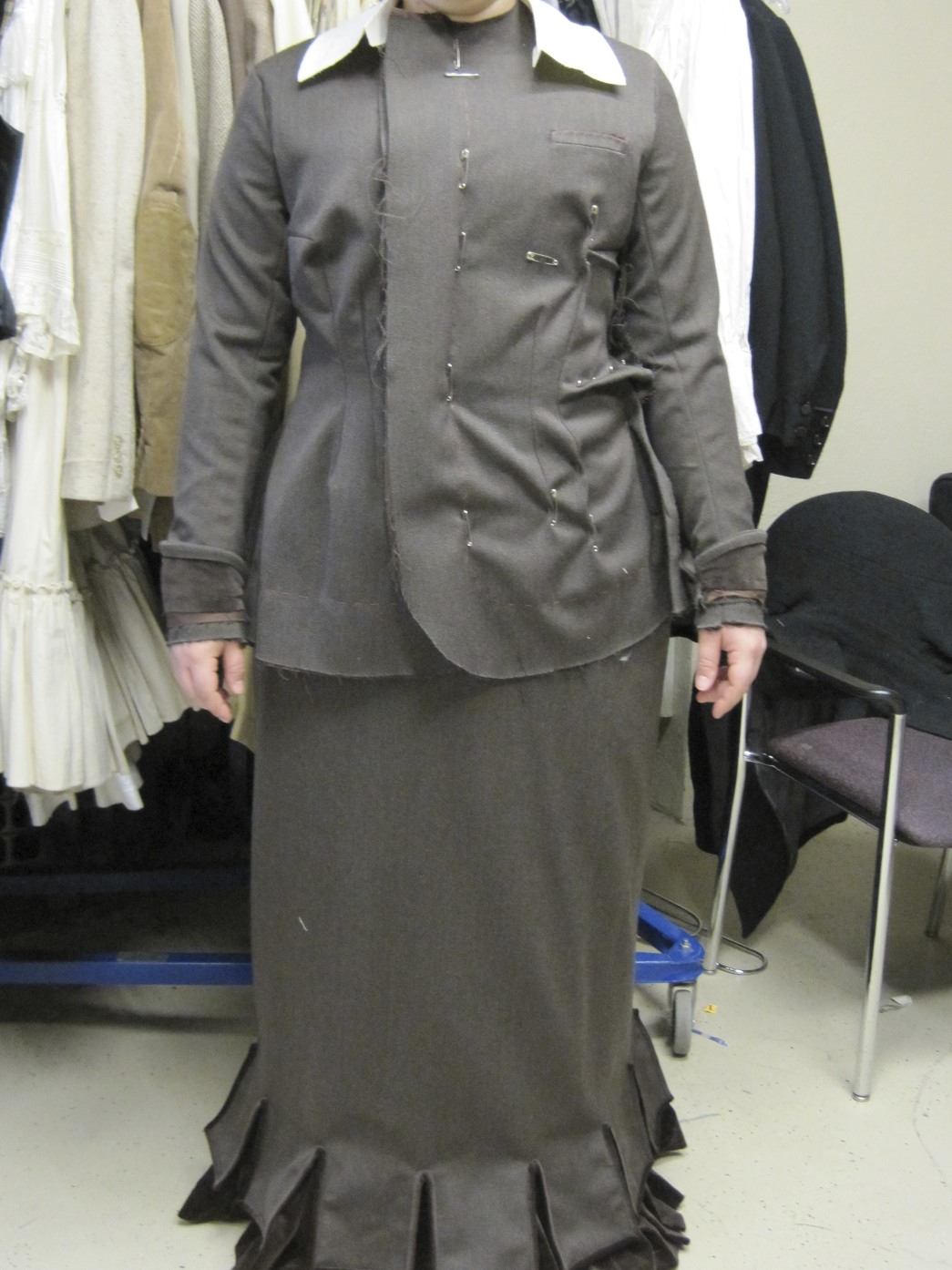
Let’s take a look at the exterior garments. First, the skirt. This skirt is many layers: the one you can see now I call the “foundation skirt.” It is the part of the skirt that hangs from waist to floor without any draping on it. In reality, the foundation skirt is actually made of two layers. The first layer is the one you can see with the velvet knife pleats along the hem–the knife pleats are 10″ high (ending just above the tabs in the wool)–but don’t be fooled, the knife pleats are attached to a cotton underskirt that extends up to the waist. Why? Multiple reasons: 1-this skirt is already super heavy with just one layer of wool and the velvet trim, and I haven’t even added the drapery yet; 2-the skirt is already super warm as well, it would be too warm with velvet all the way to the waist; 3-the Victorian mindset was to not waste precious money on beautiful fabrics that weren’t seen, so this technique of using cotton underskirts edged with fancy trim is very common; 4-velvet rather than cotton would add more bulk to the circumference of the waist, and the goal is to make the waist as small as possible. You can’t see the pins, but I did have to make alterations at the waist, since the bottom edge was already finished. There are more skirt layers coming: a gathered and draped “back drape,” and an asymmetrically pleated “front drape.”
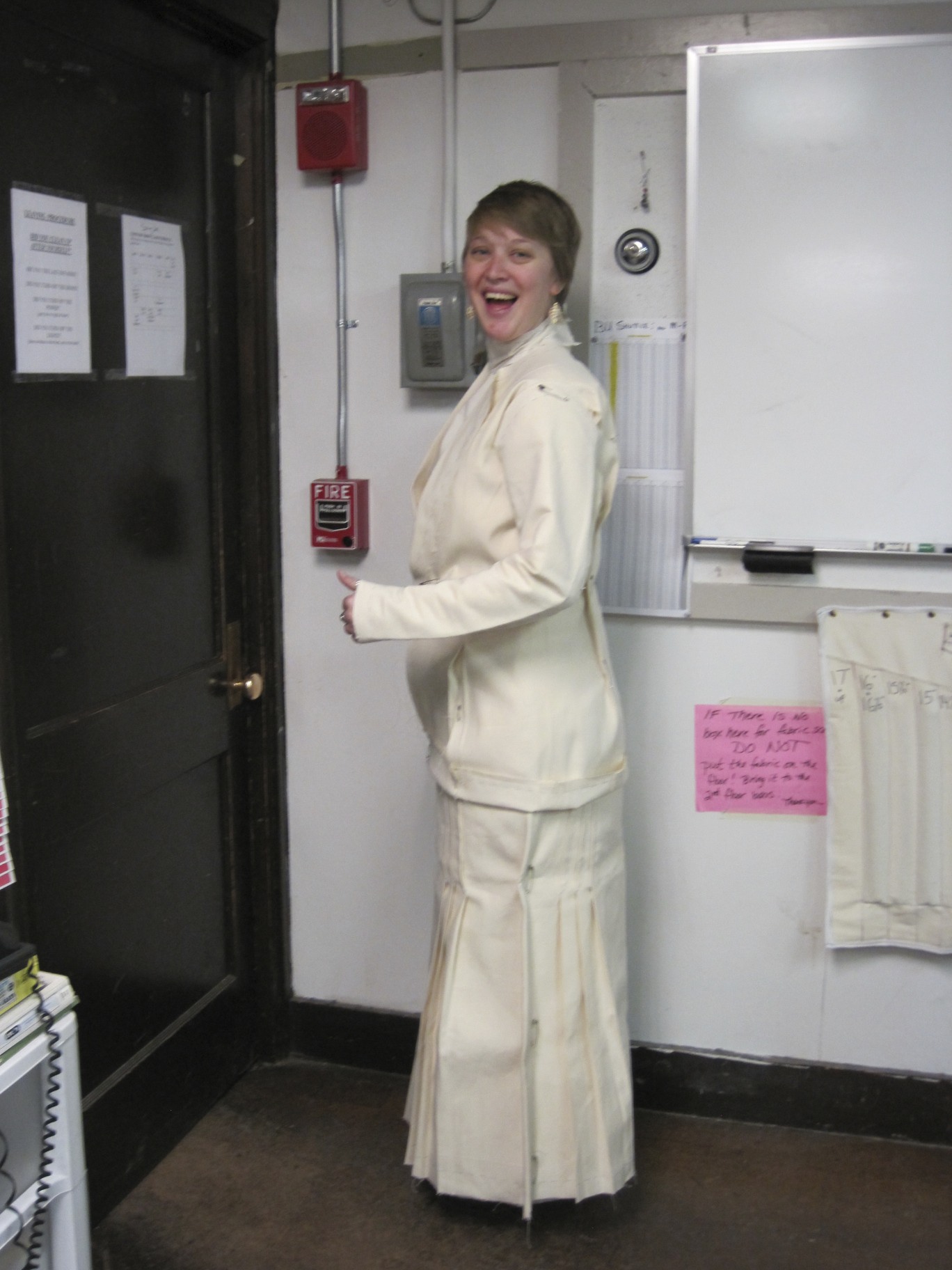
The jacket is the other exterior garment. This garment is actually a really good example of the alterations I almost always have to make before I am able to finish a garment. The left side is how the garment fit when I put it on my model. On the right side you can see all my safety pins moving and adding darts to make the jacket fit better. Although it looks wrinkly, once I stitch all those alterations it will actually allow the jacket to fit smoothly over the torso. You can also see my mockup collar on this jacket.
What comes next? Well, because I needed to basically take out all my front darts and seams and move them, I had another fitting with my model before starting to finish the garment. Unfortunately, I forgot my camera! I’ll try to finagle pictures, but they’ll be coming later. After the second fabric fitting I move on to finishing my garments completely!
I’ve put together my actual fabrics! First to fit is my 1883 undergarments. These garments are essentially finished and ready to be worn.
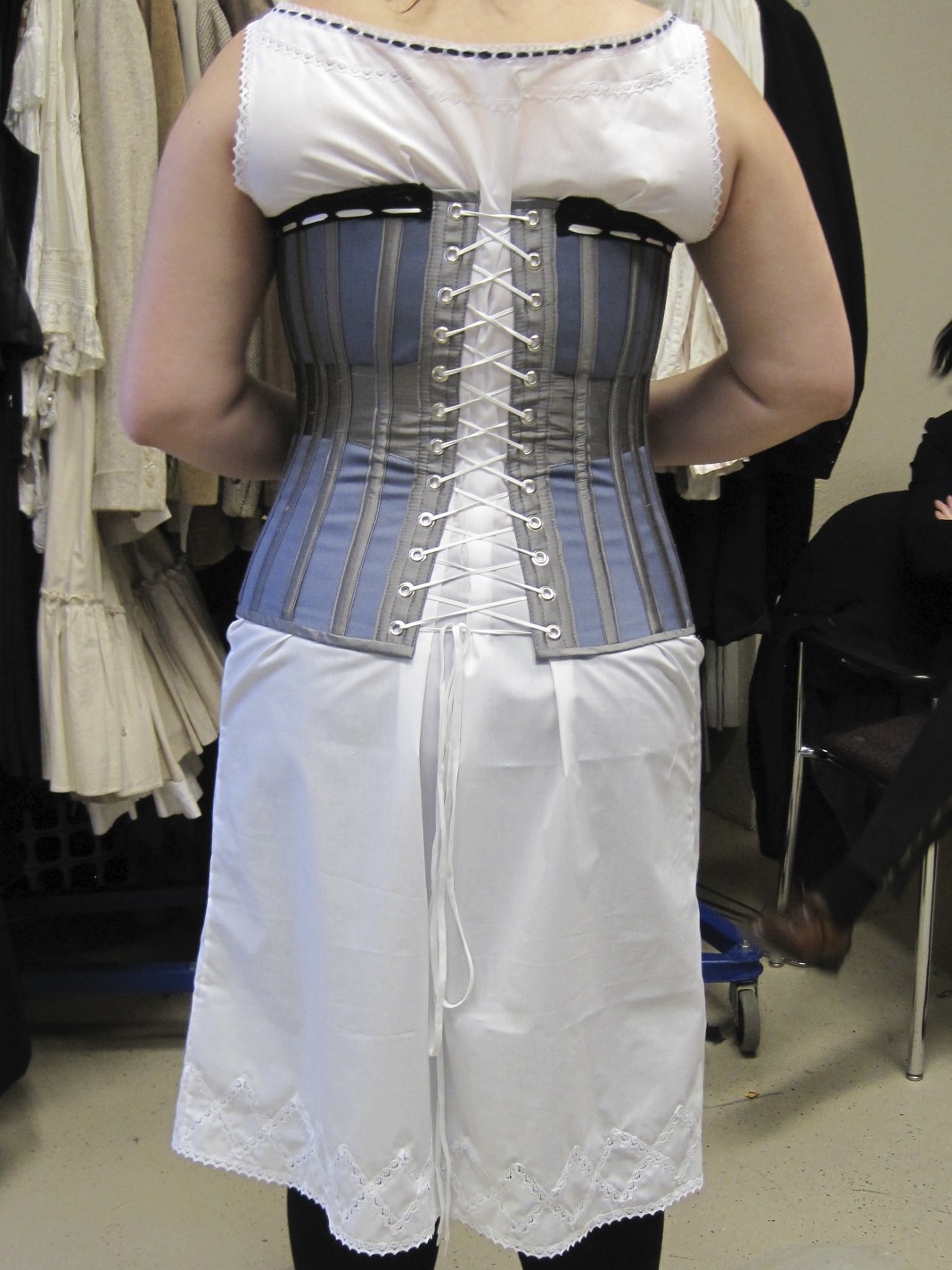
The first layer is a cotton chemise with intersecting zigzag pattern lace insertion at the hem and simple lace edging around the neck opening and armholes. The tie is navy silk ribbon.
The corset is blue cotton twill flatlined with coutil for stability and grey silk shantung boning channels. The top is edged with black lace and off white silk ribbon. The bust also features cording across the front panels as well as flossing at the top of the boning channels.
It’s hard to see the corset detail in the first picture, so here’s a close-up. You can actually see the cording in this picture. The waistband is decorative as well as helping to cinch in the waist. The top and bottom of the corset are bound in bias silk shantung.
Here’s a small back view as well. It looks like I could have laced the bottom half a little tighter!
The next layer is the cotton corset cover with pin tuck decoration and navy silk ribbon threaded through lace around the neck. The front closes with pearl buttons down the front. You can see the corset cover detail in the two pictures below
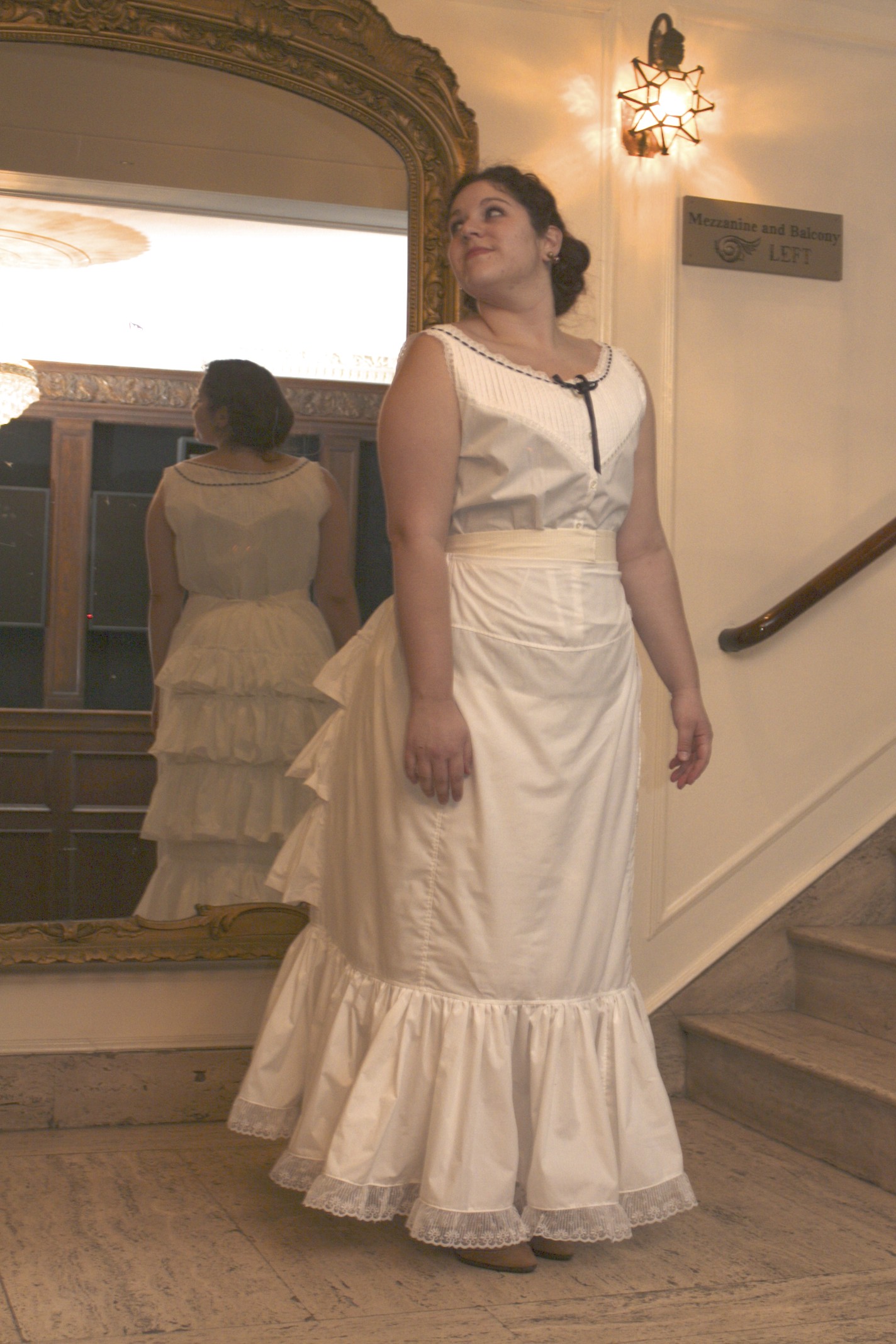
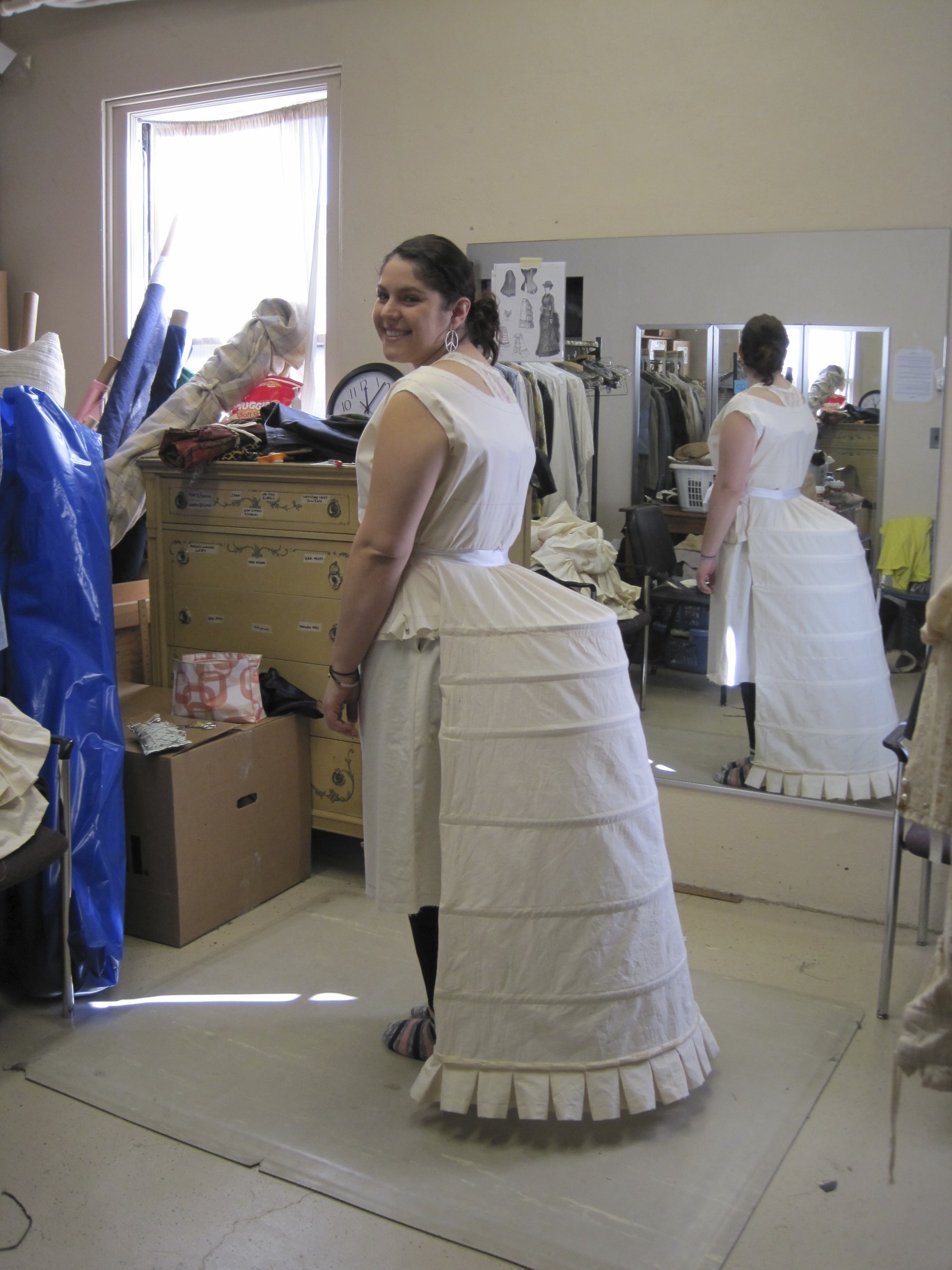
After the corset cover is the bustle itself! It is constructed of off-white striped cotton with hoop steel bones inserted into the horizontal channels. The bottom is finished off with a nice box pleat.
Back bustle view on the left!
On the right you can see the pin tuck detail on the corset cover.
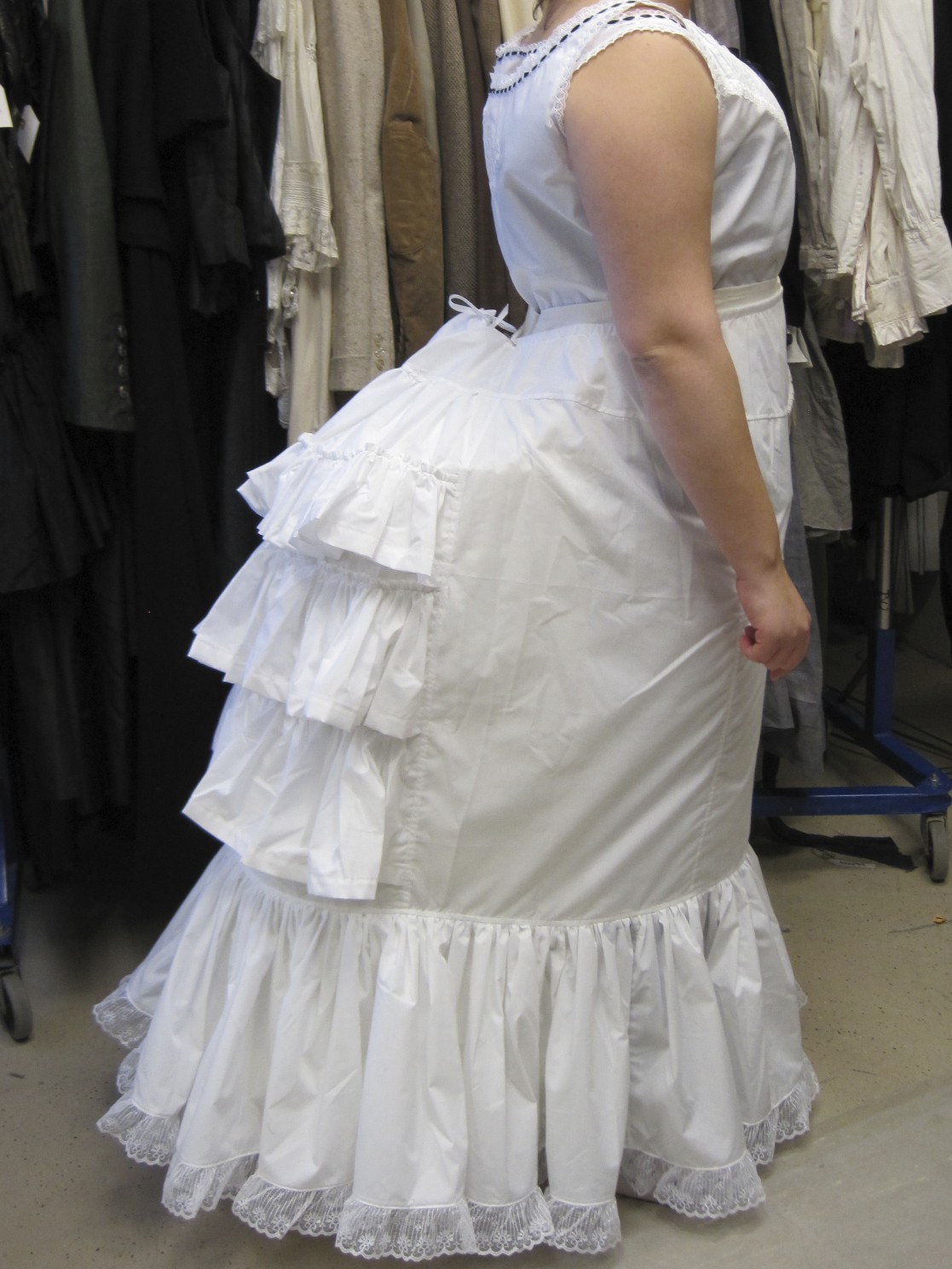
After the bustle comes the petticoat! It is constructed of cotton with lace edging. Here’s a front and side view. You can also see the pin tuck detail on the corset cover in the front view bustle picture.
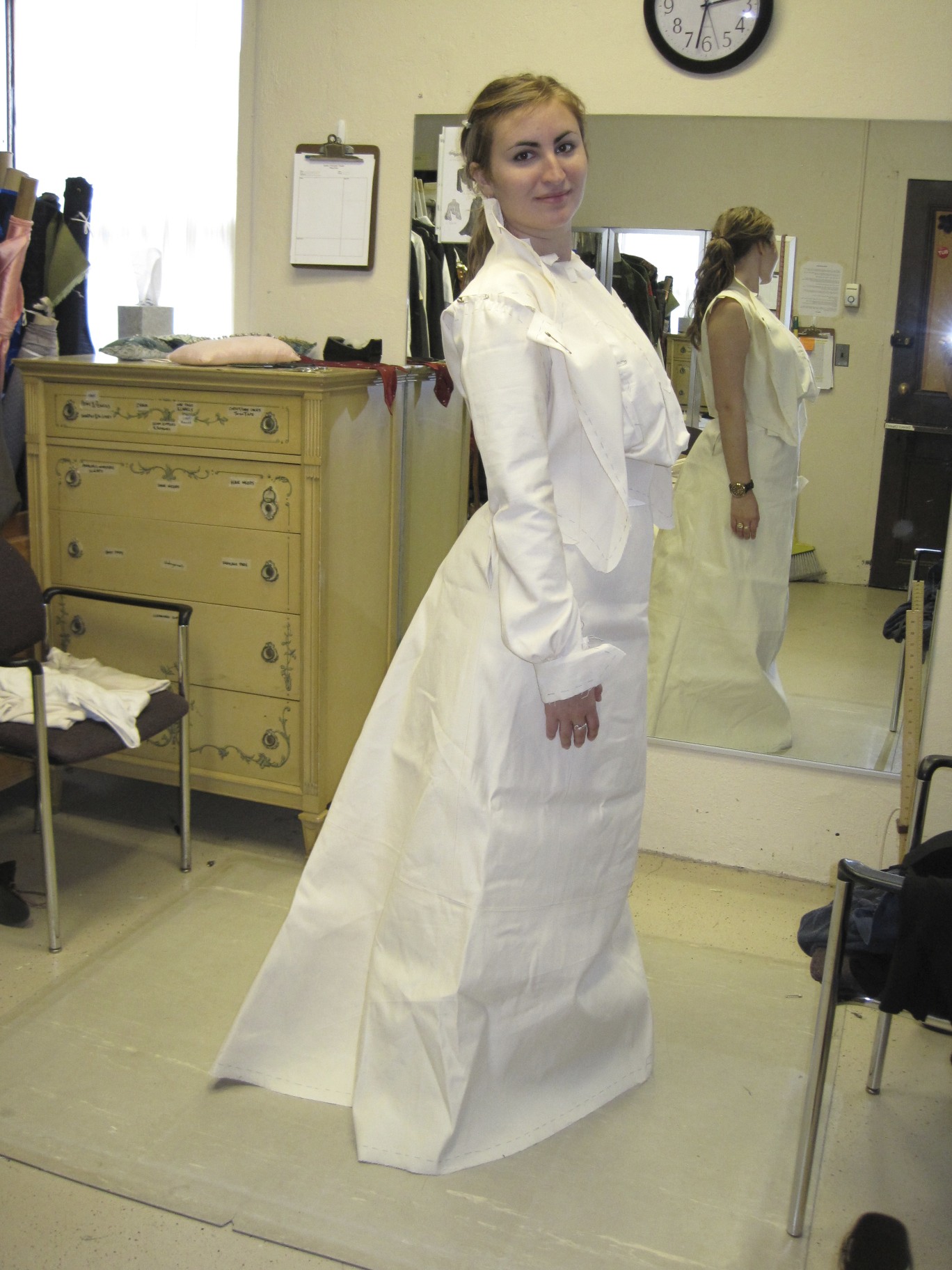
I reached a point where all my patterns were complete! The next step was to make a mock-up, or toile, of each garment. My mock-ups are made out of muslin: their goal is to determine what changes I need to make to my patterns so that the garments will fit well before I cut and sew the garments out of my fashion fabrics.
By eliminating major fit issues in my mock-ups I am able to achieve a better fit in my final garments with fewer alterations. In these photos you can see the pins that mark the areas of the garments that I need to go back and change on my patterns so that the fashion fabric garments will fit better.
Look 1: 1883. In my brain this is the “bustle dress.”
1883 mockups--including the bustle!1883 mockups.My inspiration "cheat sheet" for this look.
The first step of this women’s tailoring project was to research what exactly I wanted to recreate. That being finished, I embarked on the next task: to create patterns for each of the garments I would be building. Each look is made up of about 8 separate garments: a chemise/combination, corset, corset cover, petticoat, blouse, skirt, jacket, and hat (the 1883 look also includes a bustle). To create the patterns for these garments I used a combination of the methods mentioned below.
Basic Sloper: a starting point for patterning
The simple undergarment patterns such as the chemises and corset covers were drafted using my models’ measurements. Pattern Drafting for Fashion Design, by Helen Joseph Armstrong, was a great starting point for creating these shapes.
The corset patterns were adapted to fit my models from the book Corsets and Crinolines by Norah Waugh.
The petticoat patterns were created using a combination of methods. For all of them I found an image I wanted to recreate, then I either used the drafting method I used for chemises and corset covers, or I used a historic pattern that was lifted from a historic garment like the patterns for the skirts and jackets (mentioned below). The images came from a wide variety of books, including The History of Underclothes by C. Willett Cunnington, Everyday Fashions, 1909-1920, as Pictured in Sears Catalogs edited by JoAnne Olian, and Victorian Fashions and Costumes from Harper’s Bazaar, 1867-1898 edited by Stella Blum.
My current historic sewing project is reproducing three tailor-made garments and their undergarments from the end of the 19th century. The project aims to show the development of women’s tailoring from the 1880s to the 1910s–essentially the turning point between a tailored dress and a suit.
Look 1: 1883.
This garment is characterized by its bustle. The bustle goes in and out of use, changing shape and size, throughout the 1870s and 1880s. In 1883 the bustle is at a point where I call it the “shelf bustle,” extending from the back at an almost ninety degree angle once being covered by the voluminous skirt layers. During the 1880s, in particular, “tailor-made” garments were fashionable, but these were essentially dresses, not suits.
Look 2: 1903.
This garment is characterized by its romantic figure, featuring “pigeon breast” blousing and gracefully flaring skirts. The foundation of this shape is the new corset design introduced at the turn of the century, augmented by extra padding at the bust and rear. Tailored looks of this period separated jackets from skirts, but still these do not qualify as suits.
Look 3: 1913.
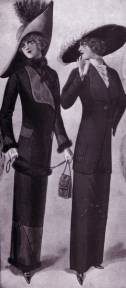
This garment stands between the corseted Victorian woman of the 19th century and the independent, working woman of the 20th century. Just a few years after this the rigid corset disappears in favor of new, lighter undergarments such as brassieres, knickers, camisoles, and girdles. Clearly, this garment is a suit, not a dress, but its undergarments remain in the past where dresses, not suits, were what women wore.
More journal entries will be coming with more information about each look as well as updates on the actual construction of these garments. Stay tuned!

























 Look 1: 1883.
 The Quintessential Clothes Pen